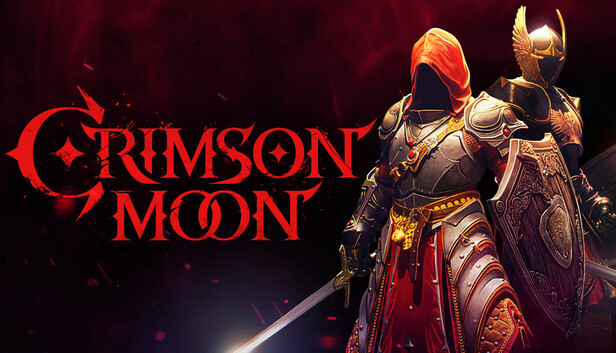
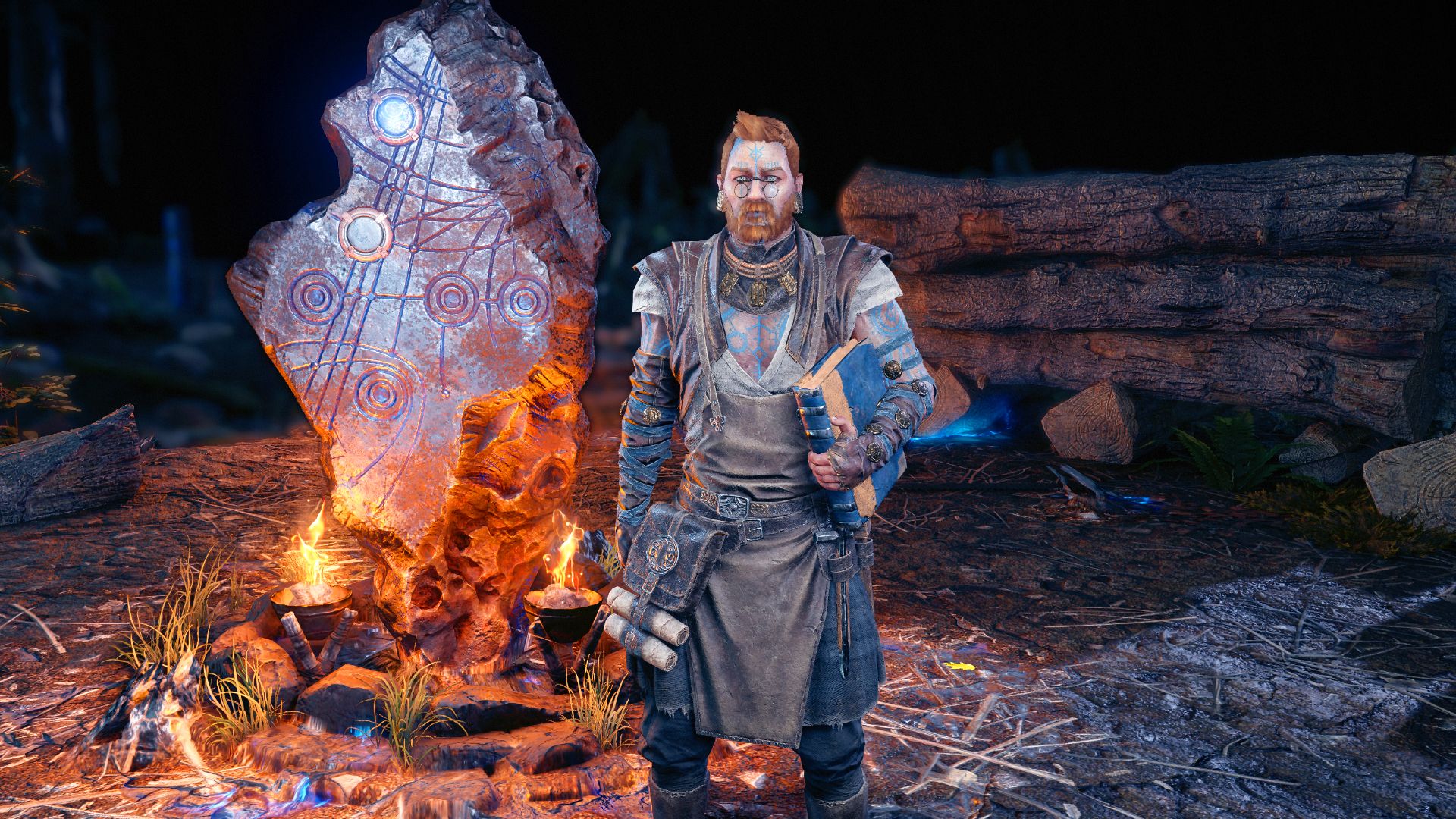
The city of Gildenarch has fallen. Once a holy jewel, it is overrun by demons, undead, vampires, and Hellgrowth abominations. Humanity’s last hope is the Order of the Crimson Moon, and its most feared weapon is you. Zad Archery Whether you crusade alone or slay together in co-op, the prophecy is yours to fulfill. Embody a Nephilim, a human-angel hybrid forged to defend the world from Hell. Master supernaturalpowers, weapons, melée combat, and angelic transformations to fight through brutal missions and survive boss encounters with the Dead Gods.
Blood-soaked Melée Combat Fight hordes of abominations with relentless, visceral combat
Single Player or Co-Op Crusade solo or slay together
High Risk, High Reward Missions Every successful run presents new missions, modifiers, and skill achievements
Upgrade to Superhuman Evolving Nephilim powers bestow temporary abilities for devastating attacks
Seek Sanctuary Between Runs The Church is your home base for upgrades, NPC interactions, and War Table planning
Set Your Difficulty Dynamic difficulty scaling allows every mission to match your skill but with higher difficulties come greater rewards
Screenshots
SystemRequirements
Minimum Requires a 64-bit processor and operating system
OS: Windows 11
Processor: Intel Core i5-8400 / AMD Ryzen 5 2600
Memory: 16 GB RAM
Graphics: Nvidia GeForce GTX 1070 / AMD Radeon RX 5700 / Intel Arc A580
DirectX: Version 12
Storage: 50 GB available space
Support the game developers by purchasing the game on Steam
InstallationGuide
TurnOff Your Antivirus Before Installing Any Game
1 :: Download Game 2 :: Extract Game 3 :: Launch The Game 4 :: Have Fun 🙂
You’d be forgiven for forgetting about them, given their low profile and drawn-out development times, but in today’s H1 investors call, CD Projekt’s vice president of investor relations Karolina Gnaś reassured everyone that they’re still happening—just not anytime soon.
Asked about Sirius, Gnaś mentioned the recent cuts to the development team, saying—as CD Projekt did when the layoffs happened—that the changes were made to meet “the current needs of the project.”
Latest Videos FromPC Gamer
“Pre-production is ongoing, and at this stage we are focused on testing different solutions and ideas we develop,” Gnaś said. “This project is very different from our other projects because it’s focused on multiplayer. So there’s a lot of learning and testing in this particular one.”
Sirius first came to light in 2021, when CD Projekt acquired The Molasses Flood, known for The Flame in the Flood, to work on a new game eventually revealed to be based on The Witcher. But the project ran into trouble a couple years later, and was paused and rebooted; in 2025, CD Projekt’s plan to maintain The Molasses Flood as an effectively independent studio also came to an end.
Despite how little we know about Sirius, we know even less about Hadar. It’s an all-new property, not based on The Witcher or Cyberpunk, although it will be similar to the extent that it aims to deliver “an emotional, open world experience.” But aside from that? It’s “progressing dynamically,” whatever that means, but it’s definitely not progressing rapidly: It too has been in the works since 2021, and Gnaś said it remains “in the concept phase,” essentially where it was five years ago.
But it does sound like things might be ready to start picking up speed. “We currently have over 30 people and expect to hire more, up to 50 developers by the end of this year,” Gnaś continued. “Right now the team is mostly focused on testing different approaches and ideas, and prototyping some gameplay elements.” And then, with an amusing note of finality: “This is it.”
Keep up to date with the most important stories and the best deals, as picked by the PC Gamer team.
Frankly, I’m not too bothered. I am genuinely curious about Hadar, because it’s an original thing; Sirius, not so much, because multiplayer’s not really my bag and a Witcher game that not all Geralt all the time is fundamentally less interesting to me anyway. But CD Projekt’s got enough big stuff cooking I already know about, so if it wants to horse around with these other things until 2033 (or whatever—I have no insights here, 2033 is just suitably far off), that’s fine by me.
With Marvel’s Wolverine on the horizon, we can’t help but be excited about slipping into some lovely yellow lycra and getting short, hairy, and angry. If you’re looking to slash through some enemies with everyone’s favourite berserker, we’ve got you covered.
While there aren’t tons of games dedicated solely to Logan, there are plenty of amazing titles featuring him. Here is our definitive top ten list of the best Wolverine video games to play right now.
1. X-Men Origins: Wolverine
Look, we know the film wasn’t especially good, but the movie tie-in video game was an absolute banger. It was one of the earliest titles where you could truly rip enemies to shreds in authentic Wolverine style, and the hack-and-slash action still holds up today. It’s a little rough graphically—having originally launched in 2009—but it remains a blast to play.
2. Marvel Rivals
Marvel’s take on the hero shooter genre is a fantastic time for anyone who doesn’t mind being assaulted by sheer visual scale. Wolverine serves as a furious melee disruptor in the roster. Despite getting up close and personal, he can hold his own very easily thanks to some clever character design choices. It’s an excellent multiplayer game if you want fast-paced competitive action.
3. Marvel Ultimate Alliance 3: The Black Order
A triumphant return to the iconic co-op action RPG style of yore, Marvel Ultimate Alliance 3: The Black Order lets you and your team fight through hordes of Marvel baddies. It’s a wonderfully chaotic game that’s perfect for friends and families looking for something a little more “brain-off, fun-up.”
4. Ultimate Marvel vs. Capcom 3
With newer fighting games missing the mark for some fans, now is an amazing time to revisit Ultimate Marvel vs. Capcom 3. This legendary crossover fighter pits classic Capcom icons against a huge roster of Marvel heroes, letting them battle to the death in fast-paced 3v3 combat. Grabbing the Ultimate edition nets you loads of content across various game modes—plus the chance to test your skills online.
5. Marvel’s Midnight Suns
Marvel’s Midnight Suns is simply brilliant. This tactical turn-based RPG puts you in the boots of an ancient demon slayer teaming up with iconic Marvel characters to fight off supernatural horrors. Beyond its incredibly deep deck-building mechanics, it features an amazing story packed with memorable hero interactions.
6. Marvel Snap
This counts, right? Wolverine is a card, after all! While the initial launch hype has settled, playing a few quick rounds of Marvel Snap is still one of the best ways to kill time between daily tasks—or while on the toilet. It’s a simple yet deeply engaging card game where you can lead Logan and other Marvel heroes to victory.
7. Marvel Cosmic Invasion
Marvel Cosmic Invasion brings back classic beat ’em up action with retro sensibilities and modern polish. You can choose from fifteen different playable heroes and team up with friends to smash through alien threats. With its authentic arcade feel, it stands out as one of the best modern co-op brawlers available.
8. Lego Marvel Super Heroes
Lego Marvel Super Heroes stems from the golden era of Lego gaming—where every title felt familiar yet endlessly entertaining. Even years after its release, the charming visual style hasn’t aged a bit, and the comedic writing is sublime. It’s the ultimate option for gaming with younger players, offering pure good vibes despite the cosmic-level threats.
9. Marvel MaXimum Collection
This retro bundle collects a massive lineup of 90s Marvel classics, letting you step into the shoes of various iconic heroes—Wolverine included. As a recent release, it’s a fantastic retro anthology for anyone looking to experience how comic book games used to feel during the arcade era.
10. Marvel’s Wolverine
While we haven’t played it yet, early looks are stunning. Given Insomniac Games’ incredible track record with the Marvel’s Spider-Man series, we have high expectations for Logan’s standalone adventure. Set within the same shared universe as Spider-Man, it promises a rich narrative payoff for fans following Insomniac’s Marvel universe.
Jason Coles
Jason likes to focus on roguelikes and co-op games; in a dream world he’d make a living writing about Dark Souls. As well as being a writer he also does personal training and accounting and can occasionally be seen on other people’s streams. Being a big fan of fluffy things means he has two cats, both of whom refuse to let him sleep, but at least they are cute.
Breathedge 2 is a humorous survivaladventure set in space, following an ordinary Man and his perfectly ordinary space problems. It’s a direct sequel to Breathedge, but don’t worry if you never played the first game: everything will be equally confusing to Breathedge veterans and complete newcomers alike. Serious Sam: Shatterverse
The Breathedge Corporation unexpectedly started a galaxy-wide war, built an enormous army of Coffinbots, and attacked the largest human settlements. The Man and his faithful companion, an AI living inside his spacesuit, accidentally derailed the Corporation’s plans for a swift takeover and instantly became the number-one target of every hostile Coffinbot out there. Apparently, fate still wasn’t satisfied. Having barely survived, our heroes suddenly find themselves under attack by their own allies.
EXPLORE
Breathedge 2 is a story-drivenadventure where exploring the world is a major part of the experience. Along the way, you’ll get to know the Man and his crew, learn more about life on the distant fringes of inhabited space, meet new characters, and gradually untangle the forces carving up the galaxy between them.
Explore abandoned stations, ruined settlements, shipwrecks, and plenty of places no reasonable person would ever think of entering. Discover other people’s stories, strange devices, useful junk, and completely useless one-of-a-kind treasures. Some discoveries will be funny, others strange or unsettling, and a few may help you understand what is actually going on and what part you have to play in it.
Screenshots
SystemRequirements
Minimum Requires a 64-bit processor and operating system
OS: 64-bit Windows 10/11
Processor: Intel Core i5-8400 / AMD Ryzen 5 2600
Memory: 12 GB RAM
Graphics: NVidia GeForce GTX 1660 6GB / AMD RX 5500 XT 6GB
DirectX: Version 11
Storage: 15 GB available space
Support the game developers by purchasing the game on Steam
InstallationGuide
TurnOff Your Antivirus Before Installing Any Game
1 :: Download Game 2 :: Extract Game 3 :: Launch The Game 4 :: Have Fun 🙂
The studio behind Star Wars Zero Company furloughed up to 80 percent of its staff in the lead up to the RPG’s launch, a Game File report reveals. That means affected staff are technically still employed by the company, but will receive no wage during the furlough period.
A representative from Bit Reactor confirmed the furloughs to Game File, though didn’t indicate how many employees are affected. The rep said uncertainty around the game’s launch performance was to blame for the furloughs, and that they were Bit Reactor’s decision and not EA or Disney’s.
Other sources claim up to 80% of the studio has been impacted. According to the Bit Reactor rep, it is hoped that furloughed workers will be brought back with full pay.
Latest Videos FromPC Gamer
A former Bit Reactor staffer, Zachariah Scott, who was let go by the studio earlier this year, addressed the furloughs on LinkedIn yesterday. “It is sick and weird to have all of these EA and Disney folks as well as Bitreactor Senior staff making all of these 10/10 posts about Star Wars Zero Company being such a huge success and praising the work of the team while seemingly concealing the fact that the team was furloughed weeks ago,” Scott wrote.
He went on: “It is a gross but all too common sight to see, another corporate game hitting the top of Steam while the team is left looking for work and cut off from any possible profit sharing. It would be such a different story if they had been upfront about it earlier, and now it feels like they’re trying to keep the team in a holding pattern with good vibes and more empty promises.”
Star Wars Zero Company was released on August 28 to near unanimous critical praise, with Ted Litchfield calling it “a new all-timer Star Wars game and a stunning debut for Bit Reactor”. The tactical RPG is currently the top selling game on Steam right now, and that’s only a third of the story: the game released for PS5 and Xbox consoles too.
It paints a pretty bleak picture of where the industry is at present: even a studio that has just shipped a critically acclaimed, well-selling Star Wars game published by EA is showing severe symptoms of decline in the days after launch.
Keep up to date with the most important stories and the best deals, as picked by the PC Gamer team.
This month I’ve been: veering between cable management heaven and hell with the Corsair Frame 4000X. The highly customisable PC case itself is lovely, but the thick braided cables I was limited to using became my nemesis.
The observation that building a PC enjoys a similar appeal to clicking Lego bricks together is far from an original thought; when handed a big ol’ box of PC case faceplates, side panels, and internal brackets, few could resist having a play. So, when I was left unattended with a box o’ bits for the Corsair Frame 4000X, I set to work on building my dream PC case.
First, it’s worth noting that a lot of the parts I’m about to talk about are compatible with the Corsair Frame 4000D PC case our Jacob reviewed. Second, let’s talk about the all-important aesthetics: there’s a range of options for faceplates and, as they’re largely tool-free, you can swap them out to your heart’s content. However, the RGB Flow front panel features an additional cable that you’ll need to feed behind the modular front panel I/O every time.
The faff of threading this wire behind the I/O module, plus the fact I thought the RGB Flow looks a bit like a Cylon, meant I swapped it out for some tasteful wood panelling pretty sharpish. Mounting the radiator in the front of the case also meant I wasn’t going to get the most out of the 4000X’s full glass front panel, or ‘pixel glass‘ face plate either.
Latest Videos FromPC Gamer
I aimed to build something that was business in the front, with the dark walnut face plate, and something of a party in the back, with at least some of my many Miku Hatsune figurines. To be honest, “But where will Miku sit?” dictates a number of my PC building decisions, and this build was no different. For example, internally you can choose between a full-size PSU shroud, or a compact version that proved the perfect perch for Miss Hatsune.
To rewind a bit, let’s talk about that modular I/O front panel. You can customise this and entirely swap it out. The MX-style green mechanical switch under the power button can be replaced for something more to your liking, and you’ve got a choice between a front panel with an audio jack, two USB Type-A ports, and one USB Type-C port—or an I/O module with only USB Type-C ports. I’m an old head, so I held on to my USB-A front ports.
(Image credit: Future)
Returning to the bigger picture, both the front and side panels can also be swapped out to dramatically change the look of the case too. Unlike the face plate, these aren’t completely tool free panels. Instead, the top and side panels are held in place with a number of thumb screws. That’s a fine compromise that balances both a secure attachment with easy-enough-detachment, though I do miss being able to pop off panels like I can on my Hyte Y40 at home.
But while we’re on the subject of disassembling this customisable PC case, allow me one complaint: I hate reading digital manuals. My big box o’ bits came with many smaller boxes, one of which featured a QR code on the underside of the lid. This takes you to a clearly labelled, nicely laid-out digital manual that I still hated scrolling through on my phone.
Keep up to date with the most important stories and the best deals, as picked by the PC Gamer team.
The rub is this: to check my understanding, it’s way easier to flip back and forth through a physical booklet rather than scrolling up and down on a screen. Also, if I lose the physical manual, then that’s my own fault—but if the digital manual disappears one day, that’s out of my hands in every sense.
You could opt for a flat steel side panel, thereby rendering your PC yet another boring black (or white) box, but where’s the fun in that?
Anyway, manual gripes aside, the side panels also only come in black and white, making for limited colourways with other build possibilities. You could opt for a flat steel side panel, thereby rendering your PC yet another boring black (or white) box, but where’s the fun in that? Another panel design lets you mount the Corsair Xeneon Edge LCD Touchscreen inside. While that would offer one more stage for my favourite Vocaloid, I wasn’t about to drop another 200 bucks on this accessory—even if it does come in a fetching ‘Atomic Purple‘. Instead, I went for a typical fishtank look with a tempered glass side panel.
The Frame 4000X offers plenty of other options for laying out hardware, though it’s less of a switch up inside compared to outside. Even Frankenstein’s monster still needs a heart, lungs, and a digestive system, after all. Still, the case supports Mini-ITX, Micro-ATX, ATX, and E-ATX motherboards. You’ve also got multiple Motherboard tray options—this includes both the very sturdy, very premium Elite motherboard tray, plus the RapidRoute 2.0, a holey-moley design that makes it easier to zip tie your cables wherever you need. The back of the case features plenty of velcro cable management straps, so I stuck with the standard steel tray.
Image 1 of 3
(Image credit: Future)
(Image credit: Future)
(Image credit: Future)
The inside of the case is pretty spacious, with room to support both a 360mm radiator installed up top, as well as one in the front of the case. The Infinirail system also makes it easy to customise the internal support brackets to fit whatever cooling system you’re working with.
Speaking of support, this case also features a height-adjustable anti-sag bracket for your GPU. Unfortunately, I only had a small form factor graphics card to hand for this build, so I wasn’t able to make the most of this feature. Not to worry though, because Miku was able to pick up the slack from her perch upon the PSU shroud.
(Image credit: Future)
Vocaloid brain rot aside, does any of that mean I was able to manifestmy dream PC case with the Corsair Frame 4000X? Firstly, all of the bits I picked, including the case, totted up to about $170. So, it’s definitely not the most affordable option, but that’s the price of going all in on an ecosystem offering plenty of options.
You can push the price down by building on top of 4000D instead, but then you’ll have to pay for parts that come with the newer case as standard, like that lovely full-tempered glass side panel. If that still sounds worth a go, you can configure your own Corsair Frame case here. Speaking of the 4000D, you can pick up a Corsair Vault version of this case in metallic purple for $130, so maybe I’ve found my dream PC case after all…
Image 1 of 4
(Image credit: Future)
(Image credit: Future)
(Image credit: Future)
(Image credit: Future)
There’s a lot to like about the newer 4000X’s space, ease of access, and customisability. Much like the 4000D, you can strip the 4000X to the bare frame and then build it back up to be a PC case your way. But with so many removable parts, such a breadth of customisability options nearly became a bit of a nightmare for a scatter-brained PC builder like me.
In my infinite wisdom, I decided to remove the entire PCI backplate—despite the backplate’s modular design encouraging you to unscrew only the select slats you need to secure your GPU. I realised my snafu way too late, and had to unscrew both the PSU shroud and the motherboard to get it back in place. Don’t ask me why I took it out to begin with—just learn from my mistakes.
(Image credit: Future)
That embarrassing episode aside, I did enjoy my time building with this case. I’m also definitely intrigued by whatever Corsair has lined up for its customisable PC case ecosystem—what’s holding me back from loving it right now, though, are the limited selection of colourways, and the pricing. But perhaps one day, sweet dreams will be made of this.
CAPTAIN TSUBASA 2: WORLD FIGHTERS Direct Download:
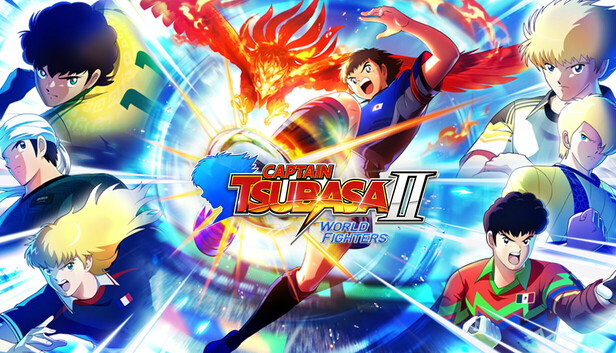
The next episode of Tsubasa’s riveting adventure is here! Enjoy the thrill of spectacular soccer actions with 110 playable characters and new sensational super moves. Challenge a friend in the field or support Tsubasa on his Journey, the ball is yours. METAL GEAR SOLID 4: Guns of the Patriots – Master Collection Version
• New and Improved Gameplay Action on the field has been enhanced with powerful new super moves that intensify every action, from passing to blocking. The updated system adds more strategy, especially in goalkeeper versus shooter duels featuring spectacular super shots and blocks from the original series characters.
• A Soccer World That is Bigger Than Before! Featuring 22 national teams, over 110 playable characters, and more than 150 cutscenes highlighting moves on the pitch! Previously unseen teams from the manga and original teams and characters clash in glorious, meticulous animation. The excitement of these once-in-a-lifetime moments has never been higher!
• Powerful and Inspiring Music Tadayoshi Makino (SpinSolfa), praised for his moving BGM tracks from the previous title, brings over 100 energized tracks to this iteration. Dare to compete with this exhilarating compilation of melodies perfectly suited to the high-octane action of Captain Tsubasa, the king of sports of anime, as Tsubasa and his teammates give their all on the pitch for the ultimate victory.
Screenshots
SystemRequirements
Minimum Requires a 64-bit processor and operating system
OS: Windows 11
Processor: Intel i5-10600K / AMD Ryzen 5-5600X
Memory: 16 GB RAM
Graphics: NVIDIA GTX 1650 Super (4 GB) / AMD Radeon RX 5600 XT (6 GB)
DirectX: Version 12
Storage: 22 GB available space
Support the game developers by purchasing the game on Steam
InstallationGuide
TurnOff Your Antivirus Before Installing Any Game
1 :: Download Game 2 :: Extract Game 3 :: Launch The Game 4 :: Have Fun 🙂
After the tremendous Return of the Ancients update to Path of Exile 2, it wouldn’t take much to convince me to play more of it. The action RPG is the best it’s ever been and finally feels ready to come out later this year. So when developer Grinding Gear Games says it’s dropping a new mini-league next week to fill some time before release, you can bet I’ll be there.
On September 4, the first PoE 2 event league, Forbidden Rites, will begin. It’s not like the other major updates we’ve seen with tons of balance changes and a whole new league mechanic. Instead, developer Grinding Gear Games is keeping this one pretty simple with a small twist to the campaign and a big rework to one of the most divisive endgame activities.
Ritual altars will show up during the campaign that spawn waves of monsters and reward you with loot. Some of them will spawn bosses on top of other bosses and will let you pocket a powerful unique item if you can survive the gauntlet. This is actually something that could already happen in the endgame version of the mechanic, so I can vouch for how fun it is to have bosses like the gorilla wielding a stone pillar appear out of thin air to crush you.
Latest Videos FromPC Gamer
I’m particularly thrilled with what GGG has done to the Trial of Chaos, the only thing in PoE 2 I actively avoided interacting with. Someone once described the Trial of Chaos as a mode where all you do is choose how you want to get kicked in the stomach. You kill monsters across multiple stages and pick deadly modifiers that only exist to make your life hell as you try to survive until the end. Some of the effects are quite nasty, like a 40% reduction to your defenses or bloody tendrils that hold you in place as every monster swarms you. Trust me, it’s a nightmare.
Path of Exile 2: Duelist Deep Dive & 0.5.5 Event League – YouTube
In the new Trial of Chaos, those modifiers won’t start out as painful as they do now, and they’ll finally offer something in exchange for the agony by giving you a small boost to the quality of loot that drops. These, along with the other improvements to the speed at which doors open and new rounds begin, will hopefully make Trial of Chaos a tolerable—and maybe even fun—way to unlock your ascendancy class, PoE 2’s version of subclasses.
Forbidden Rites will speed up the endgame progression so you can start exploring the endless world map earlier than you would in a normal league. There you’ll find glowing green ravines torn through the earth that will host maps filled with Abyss monsters. And the previous league mechanic, Expedition, will now be a core part of the game if you like setting off explosions in the ground and mowing down whatever comes crawling out.
Sadly, the patch that will hit alongside the new league won’t have the sweeping balance changes GGG had originally planned. Those will come with PoE 2’s full 1.0 release on December 11—which seems like a risky move for a game with so many interlocking systems, but, hey, we’ll see how it goes. That also means there won’t be a whole lot of mystery in the endgame when it comes to the best builds and mapping strategies. If it works in the current patch, it’s going to keep working in the next one, too.
Keep up to date with the most important stories and the best deals, as picked by the PC Gamer team.
Some people are so bummed about this they’re going to skip the league. I’m just going to use it as an opportunity to try something I’ve never done before. All the new clips of the new duelist class look killer. Maybe it’s time to finally put down the spells and try a melee character for a change so I can see what swords are all about when 1.0 hits.
CICADAMATA” is a fast-paced first-person [?platformer, %shooter, $speedrunner] – deployed into CASCADE under the “INITIATION SEVEN” CORE retrieval protocol – you have been enlisted as a CICADA. this is who you are now. VHOLUME
disconnect. obligations no longer bind you. proceed. tear flesh from bone.
my light in dark. my white rabbit.
+ become FAWN-A2 – assert control over numerous threats and dispatch them with [$ease/?needless_brutality]
+ utilize a maneuver sandbox using your MATA” and enter ZONE TIME to increase traversal efficiency :: / Hop, Skip And Jump To Save The World!” +
+ complete incursions in 15+ freeform levels across 6 spheres – i feel most alive in this {WONDERLAND}+
+ increase your clearance level, run out the clock, and compare records with other CICADAS globally % ONE OUTLIER. THAT IS ALL IT TAKES +
Screenshots
SystemRequirements
Minimum Requires a 64-bit processor and operating system
OS: Windows 10
Processor: Intel® Core™ i3
Memory: 2 GB RAM
Graphics: NVIDIA GeForce® GTX 1050 2GB
DirectX: Version 12
Storage: 1 GB available space
Support the game developers by purchasing the game on Steam
InstallationGuide
TurnOff Your Antivirus Before Installing Any Game
1 :: Download Game 2 :: Extract Game 3 :: Launch The Game 4 :: Have Fun 🙂
Tim Curry, the beloved English actor beloved for his pantheon of iconic, award-winning performances on stage, film, TV, and videogame screen, has died at the age of 80. First reported by TMZ, Curry died late Tuesday night at his home in Los Angeles.
Curry first carved his mark in the public consciousness as the cross-dressing pansexual mad scientist Dr. Frank-N-Furter in The Rocky Horror Show, the 1975 film adaptation of which still maintains a cult following as a midnight movie phenomenon. From there, he secured a decades-long list of cherished roles—as Darkness in Legend and Wadsworth in Clue; in The Hunt for Red October, Home Alone 2, and Spamalot; as Pennywise in It and acting as a piratical foil to Kermit the Frog in Muppet Treasure Island.
Powerfully flamboyant, artfully unhinged, and charmingly insidious, Curry extended his talents to live action and vocal performances in videogames as well. He played the titular role in Sierra’s first and third Gabriel Knight point-and-click adventures, and later voiced characters in Brütal Legend and Dragon Age: Origins.
Latest Videos FromPC Gamer
But he reached the pinnacle of his powers as Premier Anatoly Cherdenko in Command and Conquer: Red Alert 3, where he delivered what may very well be the single most triumphant line read in the history of acting. Nobody had ever before conveyed such a captivatingly absurd cocktail of energies while saying the word “space,” and it’s likely that no one ever will again.
Tim Curry is escaping to the one place that hasn’t been corrupted by capitalism. – YouTube
In a “Making of Gabriel Knight” feature included on the CD in 1993, Curry said it was “very exciting” to contribute his presence to videogames, because he welcomed “any new way to infiltrate myself into your minds.” And we certainly welcomed it, too.
Curry’s public presence receded as his health declined in recent years. He underwent brain surgery after suffering a major stroke in 2012, which left him partially paralyzed and affected his short term memory. But he was nonetheless welcomed by an adoring crowd at a 50th anniversary screening of The Rocky Horror Picture Show in October 2025—the same month he released Vagabond, his memoir chronicling his life and career.
In one of his last interviews, Curry told CBS News in 2025 that—while he wasn’t “galloping towards” death—he wasn’t afraid of it.
Keep up to date with the most important stories and the best deals, as picked by the PC Gamer team.
“I try to avoid it, as I think we all do,” Curry said. “But I suspect that in the end, I will welcome it.”