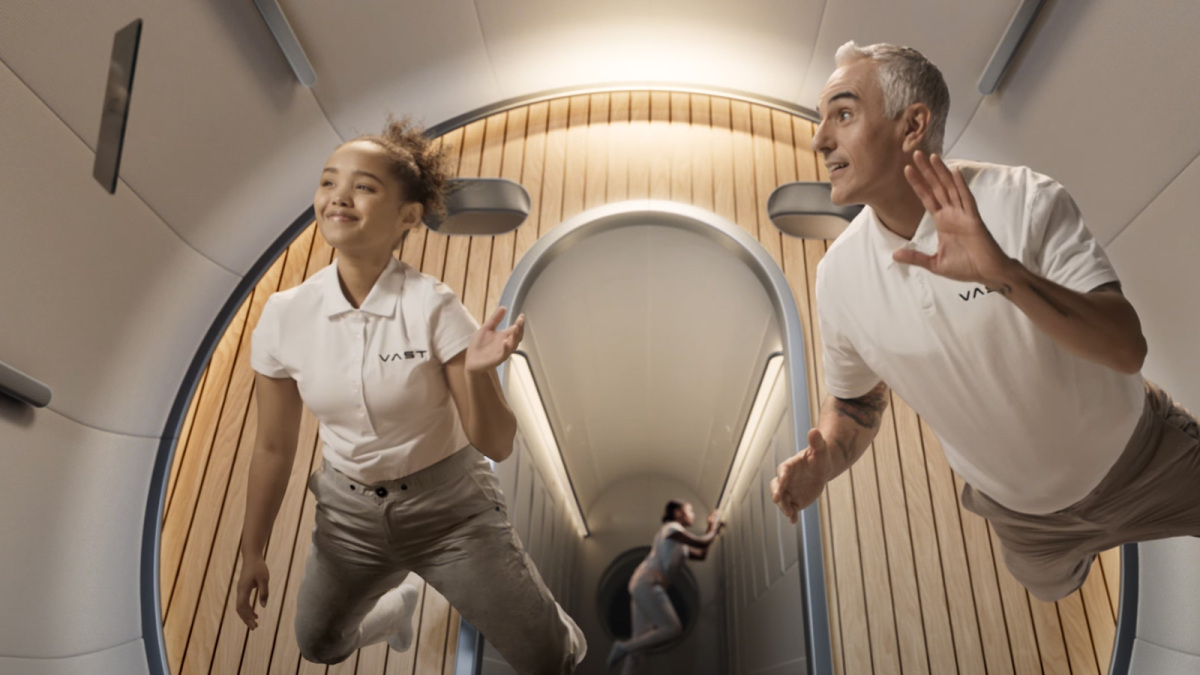
With all the talk of the International Space Station (ISS) reaching potential retirement in 2030, there’s the question of what comes next. Perhaps it’s commercial space stations like Haven-1, which is now slated for a 2026 launch. Its developer, Vast, now claims it’s completed the final welds on the 31,000-pound station, with only a few more alterations required before it’s ready to launch atop a Falcon 9 sometime next year.
If it launches on schedule, Haven-1 will be the first commercial space station of its type in low Earth orbit. With a brief, three-year lifespan and the ability to host up to four astronauts at a time for short-duration stays, the station is designed as a stepping stone to future station developments.
“If we stick to our plan, we will be the first standalone commercial LEO platform ever in space with Haven-1, and that’s an amazing inflection point for human spaceflight,” said Drew Feustel, Vast’s lead (and former NASA) astronaut (via Space.com).
The pace of development at Vast is fast. The company was founded in 2021, and less than two years ago, it was still figuring out materials for the station. Now it’s almost ready to launch. This is the kind of rapid advancement and iteration we’ve seen in other modern aerospace companies, like SpaceX, and could give Vast an advantage in the rush to get more capacity for just about everything into LEO. Having space for astronauts to rest safely while in orbit will have tremendous benefits as space becomes far more populous.
Indeed, SpaceX’s design philosophies featured heavily in Vast’s design of Haven-1.
“What SpaceX did—making it clean and functional at the same time—was something astronauts were skeptical of at first,” Feustel said. “But we came to appreciate the calmness of the environment.”
The interior will ditch the free wires and messy-looking bulkheads of the utilitarian ISS and instead opt for a smoother, softer look and feel, with soft pastel and wood tones making the interior feel more like an Earth-bound cabin than a classic space station.
“We think of ourselves as building destinations in space—places for people to live, work, and look back at Earth,” said Vast’s VP of communications, Eva Behrend.