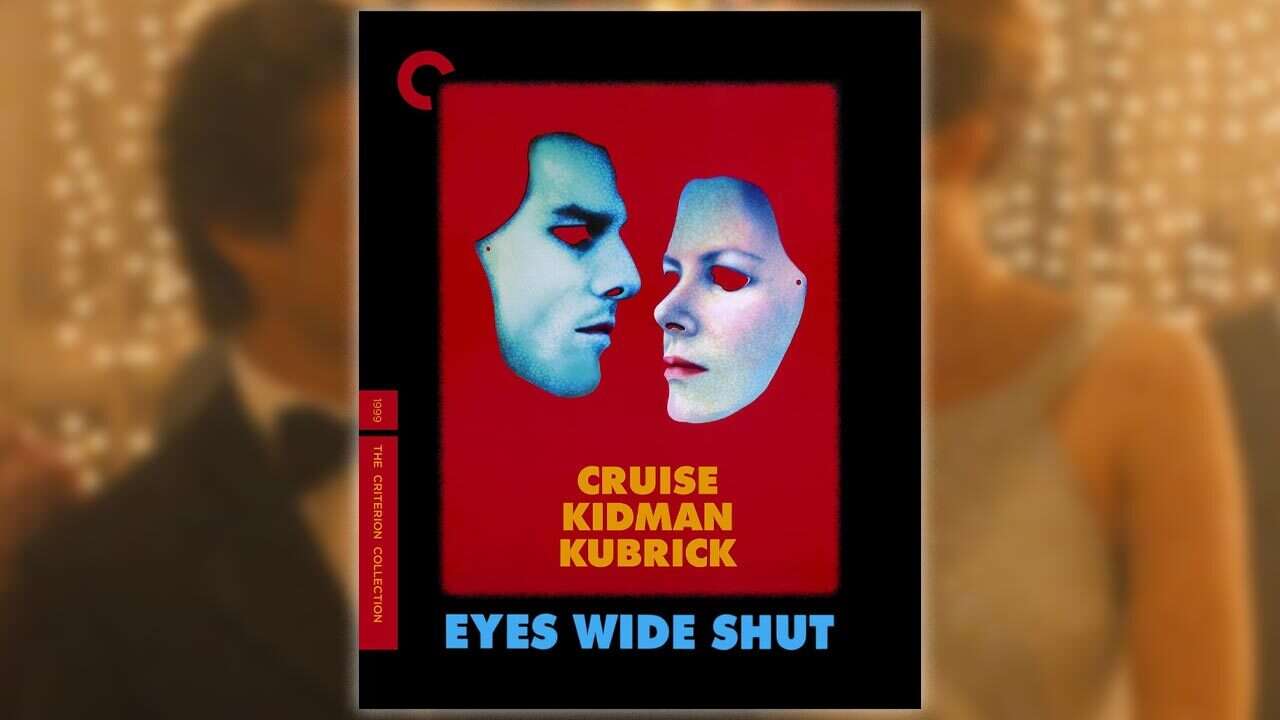
Kubrick’s Eyes Wide Shut 4K Uncensored Edition Gets 30% Preorder Discount At Amazon


Stanley Kubrick fans can save 30% on their preorder for The Criterion Collection edition of Eyes Wide Shut. The legendary filmmaker’s polarizing final movie arrives on 4K Blu-ray for the first time November 25. Preorders for Eyes Wide Shut’s 3-disc 4K Blu-ray edition are discounted to $35 (was $50) at Amazon. Criterion is also releasing a new 1080p Blu-ray edition the same day, and it’s also on sale for 30% off, dropping the price to $28.

Arguably Kubrick’s strangest–and certainly the most sexually explicit–film, Eyes Wide Shut was a major box office hit, but it proved to be too unsettling and weird for some critics and fans back in 1999. These days, though, many critics and fans alike consider Tom Cruise and Nicole Kidman film to be a masterpiece. While it’s only the second Kubrick 4K release from Criterion–Barry Lyndon became the first in July–nearly all of Kubrick’s movies are now available on 4K Blu-ray from other distributors.

Loosely adapted from Arthur Schnitzler’s novella Dream Story, Eyes Wide Shut follows doctor Bill Harford (Tom Cruise) and his wife, Alice (Nicole Kidman), as they confront their unconscious desires, jealousies, and fears inside of a version of New York City that feels a step removed from reality.

As mentioned, Eyes Wide Shut is only the second Kubrick film to receive a 4K Blu-ray edition from Criterion–most of his films, however, are available on 4K from different distributors. Barry Lyndon, Kubrick’s superb 1975 historical drama following a conman who infiltrates high society, is available for $31.64 (was $50) on 4K Blu-ray at Amazon. Barry Lyndon is a three-hour visual feast thanks to decadent cinematography and lavish costume designs. It was awarded the Academy Award for Best Cinematography.

It seems likely that Criterion will release more 4K Blu-rays of Kubrick’s work in the future. Barry Lyndon has been in the distributor’s catalog on standard Blu-ray since 2017. Criterion has standard Blu-ray editions of a few other Kubrick films, including Dr. Strangelove and The Killing.


The Shining: The Film Vault Limited Edition Steelbook (4K Blu-ray)

Kubrick fans will need to look outside The Criterion Collection to watch most of the director’s popular films on 4K Blu-ray, including The Shining, A Clockwork Orange, 2001: A Space Odyssey, and Full Metal Jacket. The Shining just joined The Film Vault, a collection of limited-edition 4K Blu-rays designed by Vice Press in partnership with Warner Bros., with a gorgeous new Steelbook Edition (shown above). Walmart is taking preorders for The Shining Steelbook Edition, and orders will begin shipping October 3. You can also get a Steelbook Edition of Full Metal Jacket for only $30 at Amazon.


Amazon also has a nice deal on the Stanley Kubrick 3-Film 4K Collection that drops the price to $43 (was $85). This box set includes The Shining, Full Metal Jacket, and 2001: A Space Odyssey.


Stanley Kubrick Movies on Blu-ray

Not all of Kubrick’s films have been restored on 4K Blu-ray. The 1956 film The Killing and Kubrick’s 1962 adaptation of Vladimir Nabokov’s novel Lolita are only available on standard Blu-ray. We’ve included a list of Kubrick movies on 1080p Blu-ray below. In a few cases, the standard Blu-ray edition is considerably cheaper than the 4K edition. Just be aware that many of the 4K editions also come with standard Blu-ray discs. In addition to standalone editions, there are a few Kubrick Blu-ray box sets, including a fancy Amazon-exclusive edition dubbed The Masterpiece Collection–it’s out of print and fairly expensive–and a region-free 9-film collection that’s very reasonably priced at just $37.


Stanley Kubrick Books

Stanley Kubrick's The Shining (Taschen)
Stanley Kubrick’s The Shining (Taschen)

If you love Kubrick’s films, you owe it to yourself to check out a few of Taschen’s superb books about the director’s work. Most recently, the premium art book publisher released an enormous two-volume hardcover set about The Shining. This exhaustive deep dive by J.W. Rinzler is based on hundreds of hours of interviews and mountains of research. It’s the definitive making-of account on Kubrick’s most popular film. The second book is a scrapbook with never-before-seen documents and photography from the production. The nearly 1,400-page box set is pricey at $125, but it’s simply incredible in scope. We’d highly recommend it.

We’d also recommend Taschen’s The Stanley Kubrick Archives, which is available in a large coffee table book edition and in a more budget-friendly, compact edition for $21. Taschen’s The Making of Stanley Kubrick’s 2001: A Space Odyssey is sold out, but Michael Benson’s Space Odyssey, published by Simon & Schuster in 2018, is a stellar read, too. For a Kubrick biography, you have several options, including the highly rated 2024 book Kubrick: An Odyssey.


Sign up for GameSpot’s Weekly Deals Newsletter:


visual studio – How to resolve “AADSTS7000215: Invalid client secret provided” error message?


I noticed in Microsoft Azure/Entra that the client secret associated with my app registration was set expire within two days, so I decided to perform a quick update. I have created the new client secret in Microsoft Azure and pasted it into my project in Visual Studio 2022 multiple times, but I am continually receiving the “AADSTS7000215: Invalid client secret provided” error message when attempting to open the project in debug mode.

My project is an MVC project using AspNet 9.0 with an associated appsettings.json file containing the configuration data (i.e. tenant ID, client ID, client secret, etc). All was working well until I changed the client secret and, yes, I have made certain to copy/paste the client secret and not its associated ID.

I have scoured the internet for answers, but I can’t seem to find a workable solution. At this point, all I know to do is simply copy the new client secret value into the appsettings.json file and rebuild the project.

Please let me know what I might be overlooking. Any assistance is greatly appreciated.

Smartphone addiction is real, and it can be terrible


I’m going to forego the usual light-hearted weekend banter today, because I want to talk about something I just met head-on, didn’t know much about, as learned how terrifying it can be. I’m talking about smartphone addiction.

Yes, it’s a real thing. Yes, it can be really bad.

Android & Chill

Android Central mascot

(Image credit: Future)

One of the web’s longest-running tech columns, Android & Chill is your Saturday discussion of Android, Google, and all things tech.

US labor board drops allegation that Apple’s CEO violated employees’ rights


The National Labor Relations Board has withdrawn “many of the claims” it made against Apple in relation to cases brought in 2021 by former employees, according to Bloomberg. In particular, it dismissed an allegation that Apple CEO Tim Cook violated workers’ rights when he sent an all-staff email that year, which said “people who leak confidential information do not belong” in the company. Cook also said in the email that Apple was “doing everything in [its] power to identify those who leaked” information from an internal meeting the previous week, wherein management answered workers’ questions about pay equity and Texas’ anti-abortion law.

Apple didn’t “tolerate disclosures of confidential information, whether it’s product IP or the details of a confidential meeting,” Cook wrote at the time. The NLRB has now withdrawn some of the claims made in complaints by former employee Ashley Gjøvik, including that Apple told employees not to disclose company communications, and that it had suspended Gjøvik in retaliation and fired her unlawfully. But, not all of the allegations have been withdrawn. Apple settled a separate case with Gjøvik back in April, which she announced as a win for workers, as the settlement required Apple to revise rules around employee agreements and discussions of company information to clarify “that employees can talk about their pay, working conditions, and union organizing without retaliation,” and speak to the press, among other things.

In addition dropping its claim that Cook’s email violated workers’ rights, the labor board is also withdrawing its allegation that the firing of activist Janneke Parrish, one of the leaders of the #AppleToo movement, broke the law. It’s dismissing its previous allegations that Apple broke the law by imposing confidentiality rules and surveilling workers or making them think they were under surveillance, as well. After an investigation, NLRB previously came to the conclusion that Cook’s email and Apple’s overall behavior were “interfering with, restraining and coercing employees in the exercise of their rights.”

Bloomberg says this is just one instance of the NLRB being more friendly to companies under President Trump. We’ve reached out to the NLRB for more information.

Correction, September 27, 2025, 6:42PM ET: This story incorrectly stated that the NLRB had withdrawn claims made against Apple in complaints filed by employees including Cher Scarlett. Scarlett’s charges against Apple, which relate to pay equity, suppression of wage discussions and constructive discharge, have not been withdrawn or dismissed.

This article has also been updated to include additional information about allegations by former employee Ashley Gjøvik that have been withdrawn, and about Apple’s previous settlement with Gjøvik.

The kings of vibe-racing are back


There are remasters, there are remakes, there are reboots and spiritual sequels. Tokyo Xtreme Racer is something else; it’s a full-on resurrection. It’s the return of a unique game series — and a developer — that had been all but dead for almost 20 years. But it’s not a reinvention or an overtly nostalgic tribute, either. It’s a continuation of the games in their original form, as if the past two decades had simply never happened. It’s the best racing game of 2005, released in 2025. It’s glorious.

You might know the series by one of its many other names: Shutokou Battle, or Tokyo Highway Battle, or Import Tuner Challenge, or Street Supremacy, or Highway 2000, or Wangan Dead Heat. Genki — the developer, not the accessories manufacturer — made literally dozens of games inspired by Japan’s street-racing scene between 1994 and 2006. Then it abruptly stopped. The studio retired its Genki Racing Project development arm and, save a couple of abortive attempts to make Shutokou Battle work on mobile, went very, very quiet.

But, just as abruptly, Genki Racing Project and Tokyo Xtreme Racer are back. The game surfaced in early access on Steam in January 2025, and just updated to its 1.0 version on Thursday, Sept. 25. I’ve been playing it since the early spring, and while there have been some notable tweaks and additions, Genki’s developers had the concept nailed to the wall from the start. Of course they did — in the world of Tokyo street-racing video games, they are the OGs. This is their world.

And what a seductive world it is. In Tokyo Xtreme Racer, the action only takes place at night, on the expressways and flyovers of Tokyo, and the only races are head-to-head challenges against rivals you happen upon by cruising the streets or hanging out in parking areas. Flash your beams at a rival and you both sprout health bars, fighting-game style. Contact chips away at these, but this isn’t really a vehicular combat game; the further ahead you are, the faster your rival’s health bar is eroded.

It’s extremely simple, and the challenge can vary a lot depending where you come upon a rival and the route they select. On the outer highways that span the dark void of the bay, races can be nothing more than straight-line drags that are over in seconds. On the C1 loop that twists and tunnels around the city center, a race against a tough opponent requires threading a needle through traffic and around blind high-speed bends, using as little brake as you can get away with while avoiding wall contact that can wipe away half your health.

The key thing to understand about Tokyo Xtreme Racer, though, is that it’s as much a kind of blissed-out, nocturnal, automotive Pokémon as it is a technical racing game. Much more so, in fact. It’s about grinding out races to increase your level, unlock perks, and earn credits for new rides and car upgrades. It’s about picking your way through the perk tree to unlock legendary tuner cars like the 1998 Nissan Fairlady Z or the 1987 Toyota Sprinter Trueno, and customizing them with neon underlighting, decals, and fat rims.

It’s about hunting down the colorful members of the dozens of racing teams that prowl the streets, hoping to eventually draw out their leaders. It’s about perusing the amusing bios of racers with aliases (B.A.D. Names, in the game’s lexicon) like Woodpecker Syndrome, Melancholic Jupiter, Foreign Bookkeeper, and Silent Mongoose. It’s about hanging out at the parking areas to check out rivals’ silhouetted 2000s fashions, engage in strangely courtly, sparring dialogue with them, and pick up clues about the mysterious Wanderers and how you can unlock the requirements to race them.

Following a custom pink Sprinter Trueno through nighttime streets in Tokyo Xtreme Racer Image: Genki

It’s a vibe, in other words. Tokyo Xtreme Racer might be the vibiest racing game around right now. And the vibes are only enhanced by the game’s look, which hasn’t evolved much since 2006, either technically or aesthetically, and is all the better for it. It’s a grainy, moonlit, PS2-ass world of flickering sodium streetlamps and vaguely looming skyscrapers, soundtracked with crunchy metal guitars, hammering techno beats, and wailing Hammond organ.

Accelerating into the endless night of Tokyo Xtreme Racer has been my gaming happy place in 2025 — which is all the more surprising since I somehow never played the series before, and have no specific nostalgia for it. I do have nostalgia for visions as specific and beautifully realized as this, though, crafted by people who’ve been doing it for decades and feel it in their bones. Tokyo Extreme Racer, I never knew you, but it’s great to have you back.


Tokyo Xtreme Racer is available now on Windows PC and will be released on PlayStation 5 at a later date. The game was reviewed on PC using a copy purchased by Polygon. You can find additional information about Polygon’s ethics policy here.


Private Spacecraft to Boost NASA Telescope’s Orbit for the First Time


NASA has announced that for the first time, it will contract out a private spacecraft to reboost one of its falling satellites: the Neil Gehrels Swift Observatory. The observatory has spent the past 20 years searching for gamma-ray bursts. The commercial company will launch a new reboosting spacecraft in spring 2026, hoping to raise the ailing satellite’s orbit and help it continue its work for many years to come.

NASA has reboosted its own satellites and spacecraft before, but it’s never contracted that job out to a private entity without it being part of the original mission parameters. Next year, though, that’s exactly what it’s going to do in an effort to keep this telescope working. Opting for someone else to do it is partially a matter of funding, but also of turnaround time. The contractor, Arizona’s Katalyst Space Technologies, could do it on a reasonable timeline, where NASA wouldn’t have been able to hit the target on its own.

“Given how quickly Swift’s orbit is decaying, we are in a race against the clock, but by leveraging commercial technologies that are already in development, we are meeting this challenge head-on,” Shawn Domagal-Goldman, acting director of the astrophysics division at NASA Headquarters, said (via Space.com).

NASA Swift spacecraft being worked on before launch.

Technicians checking the Swift observatory before launch.
Credit: Public domain

The Neil Gehrels Swift Observatory telescope launched in 2004 and monitors X-ray and UV-visible light at the location of gamma ray bursts, although it can also be used as a general multi-wavelength observatory. Originally designed for a mere two-year orbit, it’s enjoyed over two decades of operation, and NASA wants to keep it flying for a lot longer. However, as the Earth’s atmosphere has dragged it down lower and lower, it’s becoming at risk of deorbiting entirely, so it’s time to give it a boost.

Katalyst was funded with $30 million to build reboosting spacecraft as part of NASA’s Small Business Innovation Research (SBIR) scheme. Since the telescope was not originally designed for reboosting, Katalst must design a bespoke spacecraft that won’t damage the telescope.

If this mission proves successful, NASA has hinted that it may use more commercial ventures to reboost its spacecraft in the future.

Apple’s iPhone 17 will forever change how we take selfies – including on Android phones


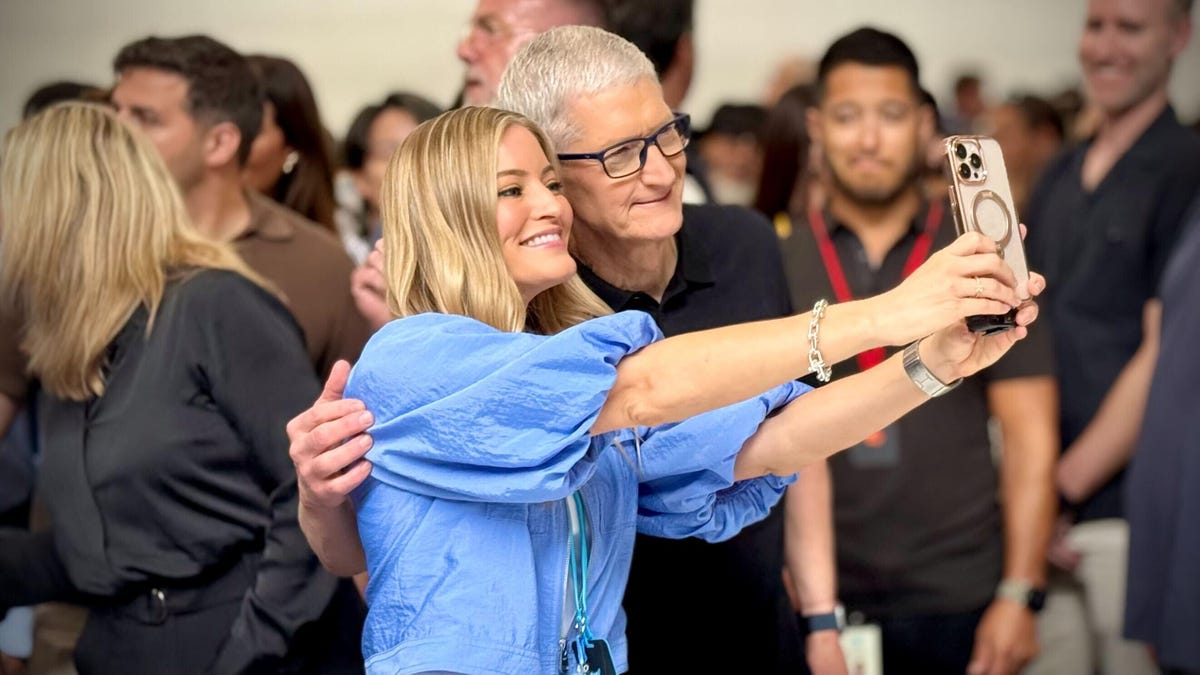
Selfie with iJustine and Tim Cook at 2025 Apple Event

Selfie with iJustine and Tim Cook at 2025 Apple Event.

Jason Hiner/ZDNET

We always knew people took a lot of selfies, but when Apple unveiled its 2025 fall devices, it revealed that iPhone users had taken over 500 billion selfies in the past year. Since there are about 1.5 billion iPhone users in the world, that’s an average of about 330 selfies a year per person.

iPhone 17 Center Stage seflie camera, example 1

In this selfie taken on the iPhone 17, you can see the level of detail in the face, hat, and the texture on the wall. You can also see the dynamic range in the clouds in the sky.

Jason Hiner/ZDNET

No wonder Apple decided to reimagine how the front-facing camera works on the iPhone this year.

In the process, Apple also gave the selfie camera a big upgrade in image quality. For those of us who take a lot of selfies, this is welcome news because the front-facing camera has been the weakest link among the iPhone cameras for years. And as Apple’s data shows, it may be the most used camera on the phone for lots of folks. 

Also: I’ve reviewed every iPhone 17 model, and my advice is something different this year

Apple gave all four phones in the iPhone 17 lineup the same upgrade to the selfie camera by taking it from a 12MP rectangular sensor to a 24MP square sensor that can take an 18MP image in either horizontal or vertical orientation. 

In fact, one of the coolest things about the new front-facing camera is that as soon as you invoke it, a new button pops up called the Center Stage button and when you tap it then it switches your photo between vertical and horizontal modes without you have to flip the camera around. In other words, you can hold it whichever way is most comfortable for you — typically vertical for most people — and the software will do all the work. 

Even better, you can click the Center Stage settings at the top of the window and turn on Auto Zoom and Auto Rotate. With that, the iPhone will now use AI to automatically identify all the people in your shot by putting boxes around their faces and then it will automatically switch between vertical and horizontal and wide and ultrawide to fit everyone in the shot.

Apple's Center Stage selfie camera interface

The interface for the front-facing camera on the iPhone 17 models now lets you switch between vertical and horizontal (right arrow) and set the Center Stage to use AI automatically zoom or swap between vertical and horizontal to get everyone in your group selfie shot (left arrow).

Screenshot by Jason Hiner

While Apple uses “Center Stage” branding for its new selfie camera, it’s a lot more powerful than the Center Stage feature on Mac and iPad that simply keeps you in the center of the frame on video calls. 

Also: I tested the iPhone 17 Pro Max, and here’s one big reason for a year-over-year upgrade

In fact, Apple’s new selfie camera in the iPhone 17 lineup is clearly the smartest selfie camera in the world. It’s so good that it’s tough to go back to using a static selfie camera on older iPhones and on Android phones. With that in mind, I would not be surprised to see Android phone makers adopt the square selfie sensor in their smartphones in 2026 and beyond. 

Apple went from lagging other flagship smartphones – which have been using 24MP selfie cameras since as early as 2018 — to leapfrogging all of them in one generation of phones. 

iPhone 17 Center Stage selfie camera, example 2

Here is the horizontal version of the selfie above, with all the same quality benefits of the new 18MP sensor. The only difference is that I hit the Center Stage button to switch to landscape mode. 

Jason Hiner/ZDNET

I’ve been testing the new selfie cameras on the various models of the iPhone 17 lineup for the past several weeks and I’m happy to report that it works as well as advertised and the front sensor is now worthy of taking high-quality photos and not just quick images to post on social media. 


Build a tower city all the way to heaven in this spiritual, yet logistics-heavy strategy game


The city-building genre is grossly overpopulated. Competing Simvilles predicated on wholly opposed theories about plumbing and traffic wardens stretch as far as the eye can see. As such, the genre must imitate real-life urban centres of the 20th century, and begin expanding vertically. Enter Stario: Haven Tower, the new strategy management sim from Chinese developers Stargate Games, in which you build upward through the realms of Sand, Mist, Rain, Frost, and Clear Skies until finally, your city stands among the Stars.

Continue reading “Build a tower city all the way to heaven in this spiritual, yet logistics-heavy strategy game”

visual studio – C# interactive console: how to fix error CS0234: The type or namespace name ‘RSA’ does not exist in the namespace ‘System.Security.Cryptography’?


I wanted to play around with the .NET cryptography classes in the C# interactive console in Visual Studio 2022 (v17.14.16). I tried creating the default instance of the System.Security.Cryptography.RSA class:

> var key = System.Security.Cryptography.RSA.Create();

I’m getting this error in the console:

(1,11): error CS0234: The type or namespace name 'RSA' does not exist in the namespace 'System.Security.Cryptography' (are you missing an assembly reference?)

When I type System.Security.Cryptography. in the interactive console to see what Intellisense suggests, only one type is suggested: CryptographicException; no other types are suggested:

Screenshot of C# interactive console showing Intellsense suggestions

In a .NET 9 web project, typing the same code shows a lot more types:

Screenshot of Intellisense in Visual Studio within a web project showing lots of types for the same namespace.

This leads me to believe I need to load a DLL file, which I can do using the #r directive in the console, but the trouble is, Microsoft says this should exist in netstandard.dll and System.Security.Cryptography.dll, but the project I’m using doesn’t have either of these DLLs in the bin/ directory.

How do I load the RSA class in the C# interactive console in Visual Studio 2022?

A one-day database event like no other


Future-proofing database infrastructure for scale, agility, and performance

RoachFest comes to Las Vegas this October to welcome enterprise architects, decision-makers, and application developers to gain expert insight into future-proofing infrastructures for scalability, resilience, and compliance.

Your ticket isn’t just access to an event—it’s an investment in your team’s success and your infrastructure’s future. Learnstraight from industry leaders about how CockroachDB enables seamless global scale, compliance, and performance in an increasingly complex business world.