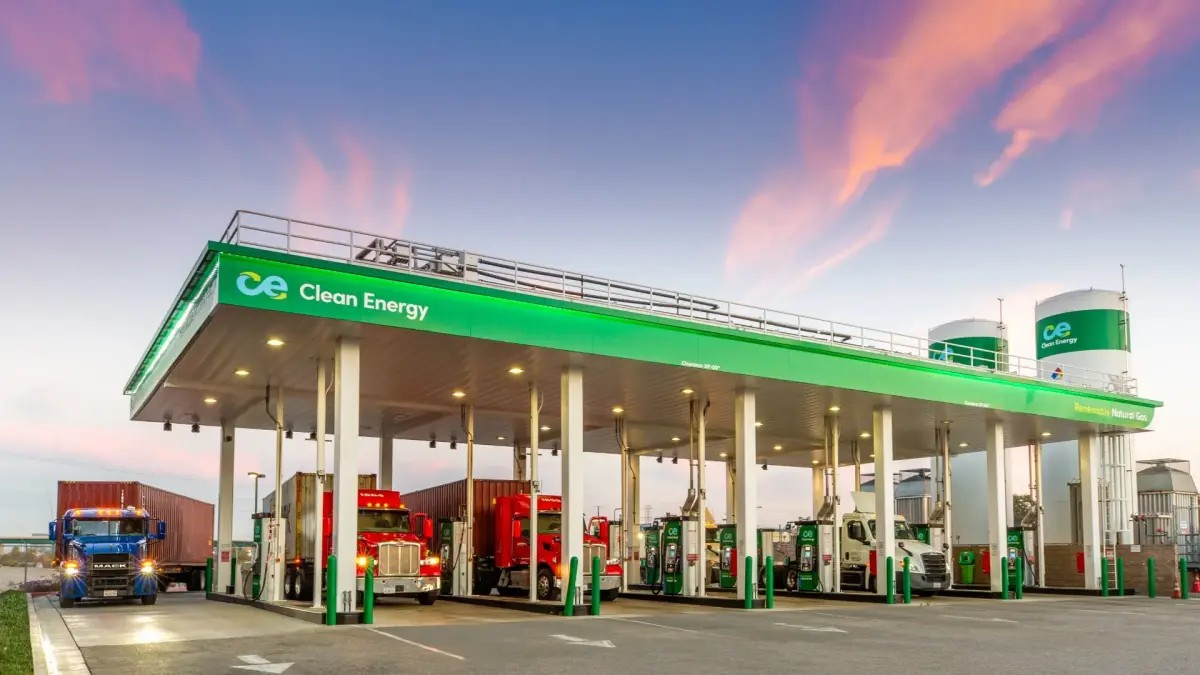
The expanded H2 fueling station is just the latest update for hydrogen.
Credit: Clean Energy Fuels Corp.
California is expanding its introduction of hydrogen buses with a second hydrogen fuel station for the Foothill Transit system. The project will help the state grow its current fleet of 33 hydrogen-powered buses and allow the zero-emissions transit provider to continue phasing out its 300-odd buses running on compressed natural gas.
It’s the latest win for hydrogen, which continues to gain momentum as the world confronts the reality of climate change.
California has always been a hotspot for green energy research, and it enthusiastically invests in pilot projects that look to power the world (or even just Los Angeles) more sustainably. There was the recent wave power initiative we covered a few weeks ago, but the list goes on.
“Renewable” natural gas has emerged as a part of this push, but it still comes with major caveats compared to more traditionally green technologies like hydrogen. The problem for hydrogen has always been the production and distribution of the fuel itself, requiring significant investment in a space where gasoline already has a two-hundred-year head start in building that infrastructure.

This Toyota hydrogen fuel rally car is one of a few high-performance vehicles with a hydrogen fuel cell replacing its gasoline motor.
Credit: Toyota
That’s what makes these sorts of projects important: They help establish that, when built, hydrogen infrastructure can pay dividends. This will be California’s second hydrogen fueling station, with the first having entered service in 2023. It was such a success that this follow-up project will bring at least another 19 hydrogen-cell buses into the system, with more planned.
Transportation broadly accounts for a little over a quarter of all greenhouse gas emissions, and that’s even more true for sparsely populated areas. The Australian government is investing heavily in hydrogen for its long-distance shipping problems, though some analyses show that it is less efficient than battery-electric. That’s largely because hydrogen, like gasoline, can be quickly pumped into a holding tank for refueling, where batteries require long-term recharge.
China is leaning even more heavily on hydrogen, trying to continue its historic rate of growth without continuing its historic rate of carbon emissions. The country recently unveiled an enormous 1,500-kilometer-long “hydrogen corridor” for refueling across the Shanghai, Jiangsu, Anhui, Jiangxi, and Hubei areas.
Hydrogen has clear disadvantages compared to electric for some applications, but its advantages make it indispensable in a future green energy mosaic.