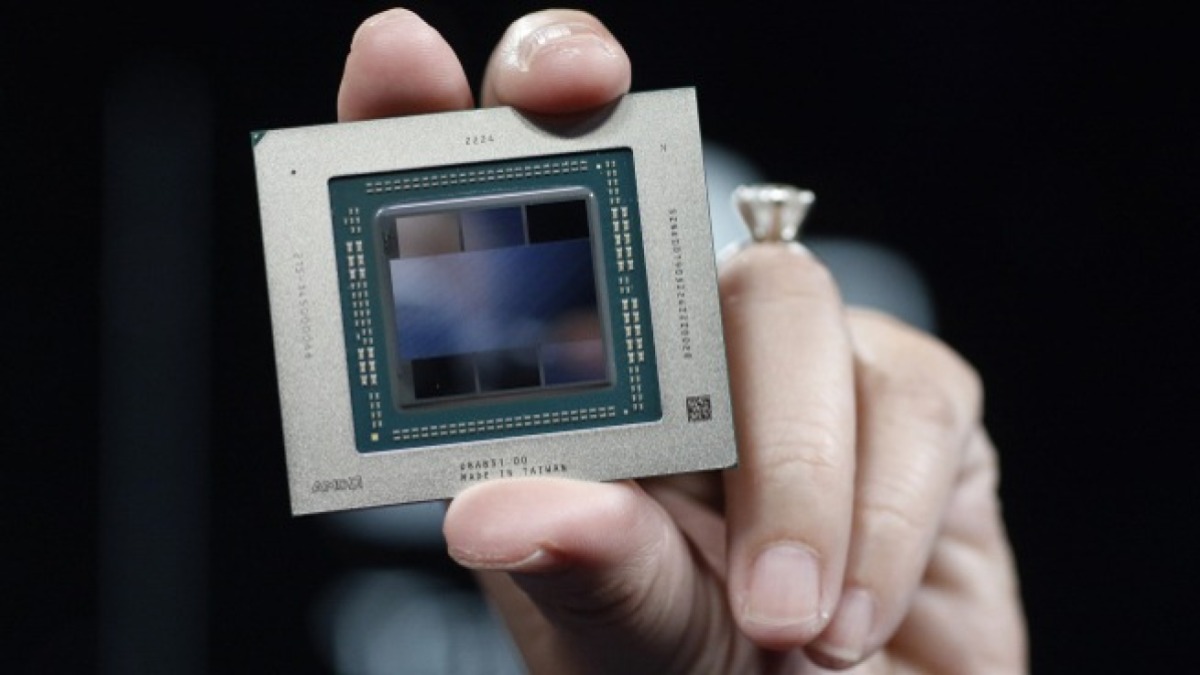
Don’t get your hopes up for discrete Radeon RX 9000-series GPUs in laptops anytime soon. An AMD executive recently covered a range of topics about the company’s highly anticipated new hardware in an interview with Notebookcheck—and during that talk, he sounded a note of caution about taking desktop graphics mobile in the near future.
“Our current graphics strategy is focused on the desktop market with RDNA 4,” Ben Conrad, AMD’s Director of Product Management for Client, said when responding to a question about RDNA 4 as a discrete GPU in a laptop. “So, I think you’ll see those types of products first in the future. Certainly, RDNA 4 and future graphics technologies will make it into mobile, whether they be on APUs or future products.”
It’s not all that surprising that AMD isn’t putting RDNA 4 into high-end gaming laptops as discrete GPUs. It seems focused on a solid launch for its Radeon RX 9000 series GPUs. The company announced them at CES when unveiling the AMD Radeon RX 9070 and RX 9070 XT. But, as VideoCardz points out, this means Nvidia will be uncontested for discrete laptop GPUs this go around.

Credit: AMD
With its latest generation of desktop graphics cards, AMD seems to be taking aim directly at midrange desktop gaming PCs. The company changed the Radeon RX naming structure slightly with the 9000 series, using tens instead of hundreds to denote different GPUs. The naming structure makes it easier for customers to compare AMD GPUs to Nvidia GPUs.
Just how fierce the 2025 competition will be between AMD and Nvidia gaming GPUs remains to be seen. And let’s not forget Intel’s Battlemage Arc B580, Intel’s best effort yet at breaking open the AMD/Nvidia lock on desktop gaming graphics. Intel also released the Arc B570, which impressed PCMag reviewers.
Nvidia’s Geforce RTX 5090 and 5080 hit retailers on Jan. 30, but high prices are raising concerns about their availability, even as reviewers are labeling the RTX 5090 a “beast.” AMD is shooting for March for its RX 9070 XT and RX 9070 release (according to PC Gamer), which gives Nvidia a head start. But if AMD’s GPU is a solid competitor, we’re looking at an excellent 2025 for gamers who want to upgrade. There’s still too much up in the air to declare Nvidia the take-all winner.