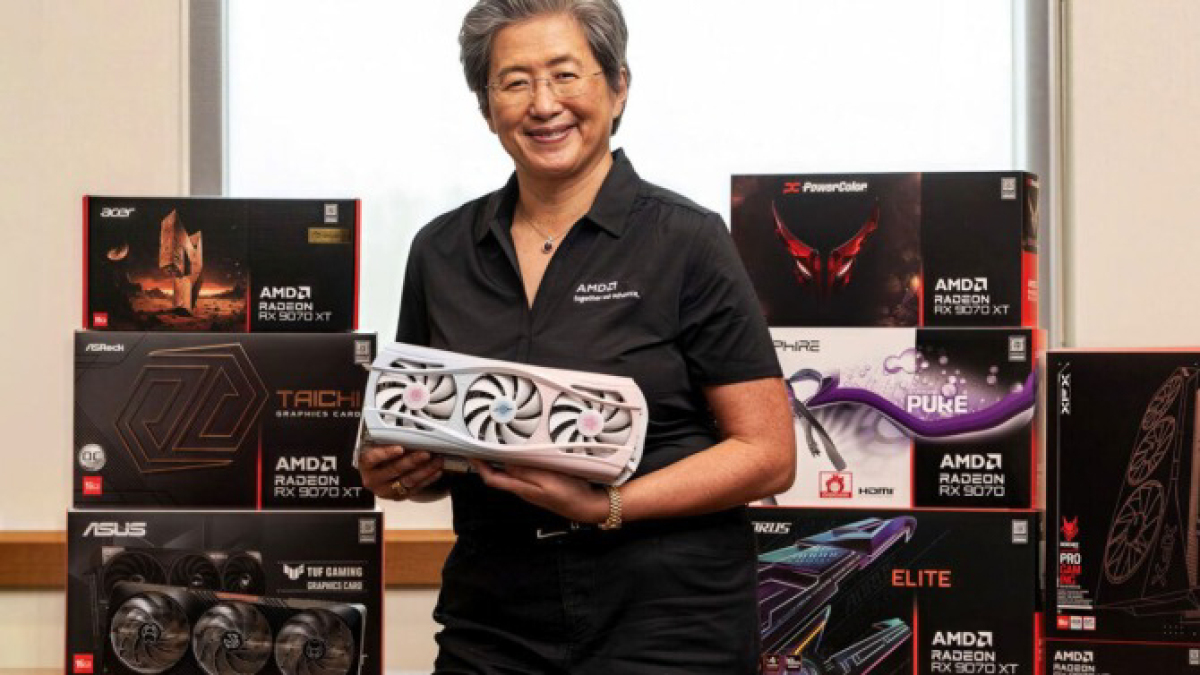
Even as AMD drums up excitement about next-gen chips, the company appears to be considering raising prices on its existing graphics processors. That’s the word from Wccftech, which notes that AMD appears to have alerted some partners regarding price increases on Radeon GPUs. AMD hasn’t publicly discussed pricing changes, so take this information with a grain of salt.
If price increases come to pass, it’s not clear when they’ll hit retailers. Given that we’re entering the thick of the holiday shopping season, this seems like an inopportune time to push increased prices on customers. That’s especially true if just AMD (or just Nvidia) jacks up the pricing. Shoppers are already dealing with strained budgets, so a sudden price increase from one of the two biggest GPU makers could translate into a boon for the one that holds steady.
As PCMag (our sibling publication) noted earlier this month, DRAM pricing surged this year. In the third quarter of this year, DRAM pricing increased by 171.8% year-over-year. The skyrocketing prices appear to have sparked some panic buying, which is even more bad news for average shoppers.

Credit: AMD
This isn’t the first time we’ve heard that tight DRAM supplies are driving up prices. Nvidia, which sometimes releases “Super” versions of its GPUs around the midpoint of the product cycle, has been quiet about the RTX 50 Supers. Recent rumors indicated that the green team might delay—or even skip—Supers, due to DRAM pricing pressure.
In Nvidia’s case, the GeForce RTX 5080 and versions of the 5070 seemed to be the likely targets for Super versions. Extra DRAM could play a significant role, making GDDR7 prices a crucial factor in overall GPU pricing.
DRAM isn’t the only tech seeing an unfortunate spike in pricing. NAND SSDs are rapidly becoming more expensive as cloud computing firms ramp up their spending on AI. If you are building a PC anytime soon, expect SSD prices to consume a significantly larger portion of your build budget than they would have a year ago.
As we mentioned when discussing Nvidia’s pricing conundrum last week, anyone planning a PC build in the near future may want to consider the potential for GPU price increases. Of course, that doesn’t necessarily mean that buying parts now is your only option. If you build a system now, you may beat GPU price increases, but you’ll pay steep prices for system memory. The more prices rise, the more attractive your aging gaming PC may seem.