Hardware startup Nothing said Thursday that it plans to make its affordable device brand, CMF, into an independent subsidiary with India serving as its headquarters for manufacturing and R&D.
The company first launched CMF in 2023 with a pair of earbuds and a smartwatch. Since then, it has introduced smartphones under the brand as well.
Nothing said that it is partnering with Indian ODM (Original Design Manufacturer) Optiemus to create a joint venture for manufacturing. While the startup didn’t reveal the ownership structure of this venture, it said that it aims to invest more than $100 million over the next three years, while creating over 1,800 jobs.
Nothing’s decision to choose India as CMF’s operational headquarters makes sense for a few reasons. CMF’s smartphones have been priced under $200, and that is the dominant category in India, with over 42% of phones shipped in Q2 2025 being in the $100-$200 price range, according to IDC.
India has also been Nothing’s strongest market with over 2% market share in smartphones. IDC told TechCrunch via email that Nothing was the fastest-growing brand in the country in Q2 2025, with 85% growth in shipments year over year.
“India will play a key role in shaping the future of the global smartphone industry. CMF has been well-received by the market since we launched it two years ago. With our end-to-end capabilities, we are uniquely positioned to now build it into India’s first truly global smartphone brand. Our joint venture with Optiemus is a key milestone toward making that vision a reality,” Nothing’s CEO Carl Pei said in a statement.
Techcrunch event
San Francisco | October 27-29, 2025
The company’s move comes after it poached Himanshu Tondon from Xiaomi’s spin-off brand POCO last month to be VP of Business for CMF.
From the start, Nothing was designed to be an antidote to Apple and its omnipresent AirPods. While Apple focused on a sort of all-purpose minimalism, Nothing adopted a hallmark transparent look that, if not altogether disparate (both pairs of wireless earbuds have a similar stem design), at least gave its Ear products a unique design language. That quest for being different extended into features, too. In 2023, Nothing introduced personalized EQ, giving it a visual and technological difference over Apple’s AirPods and eventually a ChatGPT integration, which was a first in the category.
But a lot happens in a few years, especially in a space as saturated as wireless earbuds, and while Nothing’s Ear are still a solid pair of earbuds, they feel… a little less of an earful. Apple now has its AirPods Pro 3 with high-tech features like real-time translation and heart rate monitoring, while non-Apple competitors in the same price range, like OnePlus and Google, aren’t pulling any punches with their own entrants into the space that offer personalized EQ, AI features, and noise-canceling that compete with pro-level gadgets.
Nothing Ear 3
The Nothing Ear 3 have solid sound, but flub the one thing that makes them unique.
Pros
Great sound
Solid ANC
They look very cool
Case feels premium
Cons
Super Mic is a super letdown
May not be worth the premium over last gen
But just in the nick of time, as Nothing’s flagship wireless earbuds seem to be falling behind, the company is back with its $180 Ear 3 that offer a new look and one truly unique feature for improving voice calls. As usual, Nothing is taking some chances, and not just in the visual department. For me, some of those risks are really paying off, but others… well, they’re not so super.
So much of Nothing is about looks. That’s not a knock on the company. This is technology that you wear, and because of that, appearance can be make-or-break. Chances are, if you’ve bought Nothing products in the past, you agree, which also means, if you saw Nothing teasing its Ear 3 wireless earbuds before its release, your eyebrows may have been raised.
I’m going to get straight to the point: the Ear 3 look great. I was worried at first that the Ear 3 may scale back on the transparent part of its wireless earbuds, but that’s not the case here at all. Sorry for the alarm bells, anyone who reads my blogs. Instead of a homogeneous black look on the outside of the stems, the Ear 3 goes with a metallic silver that really makes them look like a capital “G” Gadget. As Gizmodo’s Senior Editor, Consumer Tech, Raymond Wong, noted to me, this thing has big Talkboy vibes (shout out to Macaulay Culkin). There’s still a transparent shell that lets you see the internal components through the sides and back of the earbud stems.
The case also adopts the same metallic look, shedding the white version (there’s also still black) for an aluminum that both looks and feels genuinely different. The “Talk” button (more on that later) is also nice and shiny, inviting you to push it. This case now has some weight in your hand, and I really love that. No one wants to carry around heavy gadgets, but Nothing did a good job here of balancing the weight to make the case and buds feel premium without making it feel chunky.
The design language also feels more aligned across flagship audio products now, bringing together the Ear 3 and the Headphone 1, which have an aluminum finish. If you’re a fan of the Headphone 1, or prior Nothing buds, you’ll love the look of the Ear 3. Another thing you’ll love? The sound.
A much-needed audio upgrade
I thought the Ear were nice wireless earbuds when I first listened to them in 2024, but I’ve tested a lot of newer earbuds since then, and in that testing, my opinion has shifted. The Ear still hold it down, but the sound and ANC aren’t quite as premium as I’d like them to be, especially with a slight cost premium over brand new buds like the OnePlus Buds 4. In short, it was time for an upgrade.
According to Nothing, the Ear 3 now has a redesigned 12mm dynamic driver and “patterned diaphragm surface” that is meant to “lower total harmonic distortion from 0.6% to 0.2% versus the previous in-ear generation.” Nothing also says that the redesigned architecture increases bass response and delivers a wider soundstage. That’s all rhetoric, though, and at the end of the day, what you really want to know is, “Do these sound better than the last generation?” and in my anecdotal testing, they definitely do.
I tested the Ear 3 back to back with the Ear (which is actually newer than the Ear 2) and found that there was a lot less distortion when listening to C.W. Stoneking’s “Desert Isle”. There’s more spatiality in the Ear 3 than the Ear, making guitars and vocals sound like they’re in their own place instead of muddled together competing. Vocals in particular sound clear and natural, which is great if you’re like me and tend to listen to a lot of rock music. One vast improvement over the Ear is in the bass department. As I’ve said many times, I don’t particularly care about having a ton of bass in wireless earbuds, but I do appreciate a pair that can still provide low end without sounding over-compressed or super simulated. I’d say the Ear 3 do just that, especially after testing bassier music by listening to Daft Punk’s “Da Funk”.
As usual, I also dove into the Nothing X app and used Nothing’s personalized audio test to tune the Ear 3 to my specific hearing. I can’t overstate this enough: stop sleeping on your wireless earbuds’ companion app. There’s a big difference in the sound before using the personalized EQ and after, and while this won’t be the case with everyone, I’m 33 years old and a couple of decades of going to shows and listening to loud music means I could probably use a little assistance in the hearing department. The Ear 3 sound great out of the box, but personalized EQ really sends the audio over the top. In short, Nothing is still holding it down with its flagship-level sound, and the Ear 3 is an even bigger improvement generation-to-generation than its jump from Ear 2 to Ear.
Active noise cancellation (ANC), however, I found a little less improved generation-to-generation. Though to be fair, Nothing isn’t touting better noise canceling this time around. I gave the Ear 3 the obligatory subway test, and while they passed, they weren’t quite as formidable as my favorite noise-canceling wireless earbuds, Bose’s Quiet Comfort Ultra Earbuds (2nd Gen). They’re still much better than the similarly priced Galaxy Buds 3 FE from Samsung that I recently tested. I do think they’re slightly more noise-canceling than the last generation, though that could be due to Nothing’s redesign of the buds, which are meant to provide a better and more comfortable fit in your ears—that could create better passive noise cancellation and the illusion of stronger ANC.
Battery life is also only slightly improved. Nothing says the Ear 3 will get 5.5 hours of listening with ANC on, while the Nothing Ear was rated for 5.2 hours. This is nowhere near the best battery of wireless earbuds in this class; in fact, it’s a little under. Six hours is generally the standard nowadays. In my testing, I went from 100% to 80% battery in a little over 1 hour of listening at 70% volume with ANC on high.
So, that’s the good, pretty good, and just okay news about the Ear 3. But there are some things I really don’t like, so let’s talk about them.
Super Mic? More like soupy mic.
There’s one aspect of the Ear 3 that can’t be compared, since Nothing is the only company really trying it. I’m talking about the “Super Mic,” a new exclusive feature in the Ear 3 that lets you use microphones in the case for clearer calling and voice recording. By pressing the “Talk” button on the case, you can activate the feature and get recording or calling—one push activates the feature until you release the button, while a double-tap will turn the feature on until you turn it off.
According to Nothing, there are two Micro-Electro-Mechanical Systems (MEMS) mics inside the case that use beamforming to zero in on your voice and cancel out environmental noise at the same time. The Ear 3 also take advantage of bone-conducting capabilities that detect “microvibrations” in your jaw that are meant to detect speech. The process of relaying the results of your Super Mic voice is a bit convoluted. Nothing says your voice is “sent to the case antenna, relayed to the earbud antenna over Bluetooth, then passed to the phone.”
Per Nothing, Super Mic “focuses on your voice, cutting through surrounding noise (up to 95 dB) for clearer calls and voicenotes.” In theory, I love the idea. Wired earbuds are a big thing again, and a major part of that (outside the superior audio quality) is that they usually come with an on-cable mic for clearer calls. This theoretically makes the Ear 3 a best of both worlds situation, giving you wired earbud-level mics for calling (or better) while not having to deal with annoying wires.
The only problem is… the Super Mic doesn’t work as advertised. I ran the feature through a few different tests, and the results were varying degrees of muddy. At first, I played background music while using Super Mic to record my voice through my iPhone’s Voice Memo app. Instead of canceling out the background music (lo-fi beats playing at 75% volume from a Chromebook about a foot away from me), it mixed my voice and the beats together, creating a kind of muddled amalgam that wasn’t very pleasant to listen back to.
Similarly, I simulated subway noise (something more “environmental”) on YouTube at the same volume and distance, and the results were similar. My voice was still mixed in with the ambient sound that I hoped it would filter out. Super Mic did seem to work better out on the street near my office (a fairly busy part of downtown Manhattan), though I still wouldn’t describe the results as “super” in any way. Even when Super Mic effectively filters out environmental noise, I find the fidelity to be choppy and compressed-sounding at times. It’s nowhere near as pleasing to listen to as recording through the native mic on my iPhone 13.
Super Mic did filter out noise effectively while walking on the street next to ongoing construction and in a fast casual restaurant that was playing music, but it still picked up other people’s voices in settings where people were talking nearby, which would make using the feature in an environment with other people potentially problematic.
There’s also the issue of compatibility. Nothing says Super Mic is designed for voice calling in apps like Zoom, Teams, Google Meet, WhatsApp, WeChat, and is also supported in native voice memo apps on iOS and Android. However, Nothing makes it clear that the feature “isn’t optimized” for in-app voice messaging through third-party apps like Snapchat or native voice features in iOS Messages and the like. This is a long way of saying that your mileage may vary when it comes to Super Mic, and while compatibility can’t be blamed on Nothing—it’s up to Apple and Android to allow third-party mic access, and in what apps—it still limits the Super Mic feature, making its use a lot more restricted than it ought to be.
I reached out to Nothing about the issue I had with Super Mic, but haven’t yet determined if there’s an issue with the wireless earbuds or a problem with the feature. (Yes, I was using the right firmware and Nothing X build). Other reviewers have reported their own issues with Super Mic, too.
Good buds, but a little (ear)itating
When you make a big bet, you might lose a little money—no risk, no reward. No matter your rote idiom of choice, that sentiment tends to be true. Super Mic could be a cool feature if it’s refined, but for now, I would file it firmly in the “undwhelming” folder. Maybe it will improve with future software, but I can’t really guarantee that, so all I have to work with is what we have right now, which is to say a Super Mic that seems to be plagued by a serious case of Kryptonite.
The annoying part is that everything else about the Ear 3 is pretty solid. They look great, they sound great, and ANC is sturdy. The battery life leaves something to be desired, but it’s not so bad that it’s disqualifying. But this is what happens when you try to do something different sometimes, you gotta take the hits with the misses. Alright, I’m done with the corny euphemisms now, I swear.
The Ear 3 might falter out of the gate with a shoddy Super Mic feature, but if you like the way Nothing wireless earbuds look and you want solid sound and ANC, the Ear 3 are still worth a look. Just don’t expect to be taking any Zoom calls from a construction site with these things just yet.
Nothing has confirmed that the Nothing Phone 3 will use the Snapdragon 8s Gen 4 processor.
This isn’t the best Snapdragon chipset, but it should still deliver great performance.
This also comes as the company says the new phone is a ‘true flagship’ phone.
Nothing has been making some lofty claims about the Nothing Phone 3, asserting that it’ll be the company’s first “true” flagship phone. Now, it has officially revealed the phone’s chipset.
Nothing confirmed that the Nothing Phone 3 will be powered by the Snapdragon 8s Gen 4 processor. This is in line with a leak by tipster Yogesh Brar earlier today.
Company co-founder Carl Pei detailed the new chip in an official YouTube video:
We really have to outperform our previous flagship, so just compared to Phone 2, it’s going to be 36% faster on CPU, 88% stronger on GPU, and 60% stronger on the NPU. These are all theoretical numbers, but what it means in practice is it’s just gonna feel a lot snappier.
I have to point out that the Nothing Phone 2 launched in 2023 with 2022’s Snapdragon 8 Plus Gen 1 processor. So you’d certainly expect a notable performance leap when comparing a pseudo-flagship processor to a high-end chip from 2022.
What do you think of this chip choice for the Nothing Phone 3?
488 votes
The Snapdragon 8s Gen 4 isn’t Qualcomm’s best chipset, though, as that honor goes to the Snapdragon 8 Elite processor. The Snapdragon 8s Gen 4 doesn’t use Qualcomm’s powerful Oryon CPU tech and has a cut-down version of the Snapdragon 8 Elite’s GPU. In other words, you shouldn’t expect the Nothing Phone 3 to deliver better performance than devices like the Samsung Galaxy S25. Qualcomm’s chip also lacks 8K video recording, 4K/120fps slow-motion video, and mmWave 5G. These aren’t huge omissions in general, but they are notable cutbacks for a flagship Android phone that’s coming to the US.
The Snapdragon 8s Gen 4 still stands out thanks to its connectivity features, though, namely Bluetooth 6.0, Wi-Fi 7, and XPAN. The latter feature lets you use supported headphones/earbuds over Wi-Fi instead of Bluetooth to deliver higher-quality wireless audio at a longer range.
In any event, this chip should be more than fine for real-world performance and will be cheaper than the Snapdragon 8 Elite. That cheaper price theoretically allows Nothing to offer improvements in other categories. Speaking of pricing, Nothing previously stated that the phone will start at £800 (~$1,085) in the UK, matching the base Galaxy S25.
Got a tip? Talk to us! Email our staff at news@androidauthority.com. You can stay anonymous or get credit for the info, it’s your choice.
Privacy Space is coming to Nothing OS on the Phone 3a.
Users will be able to access the feature by swiping right while in the app drawer.
You can set separate passwords for Privacy Space and the App Locker.
The recently launched Nothing Phone 3a is getting an update. This update brings support for 4K video, provides a variety of camera enhancements, and adds a hotspot manager. It also includes an Android 15 feature that has been missing in Nothing OS 3 until now — Private Space.
One of the best features Android 15 offers is Private Space, a separate and locked profile you can use to hide apps from prying eyes. While Nothing didn’t initially add the feature to its Android 15 skin, it has now adopted it and is rolling it out to the Phone 3a.
According to the changelog, you’ll be able to access Nothing’s Privacy Space feature by going into your app drawer and swiping right. With this feature, you’ll be able to create a separate, secure space for your chosen apps and data, just like in the stock Android experience. You’ll also be able to set a separate password for Privacy Space and App Locker.
We first noticed that Nothing was working on this feature back in March. An APK teardown of the Nothing Launcher not only revealed references to Private Space, but also suggested that it would replace Nothing’s hidden icon feature that hides apps from the home screen.
Got a tip? Talk to us! Email our staff at news@androidauthority.com. You can stay anonymous or get credit for the info, it’s your choice.
Over the last few years, Nothing has proven that it can create compelling smartphones at excellent prices. Today, the company gave us our first tease of the Nothing Phone 3, and if it pans out the way Nothing claims, it could already be one of next year’s most interesting smartphones.
On X (formerly Twitter), Nothing CEO Carl Pei uploaded a five-minute video discussing the recent AI trend in consumer tech and, more importantly, how Nothing is thinking about AI. In short, the company’s next smartphone — the Nothing Phone 3 — could completely reinvent how we use and think about our phones.
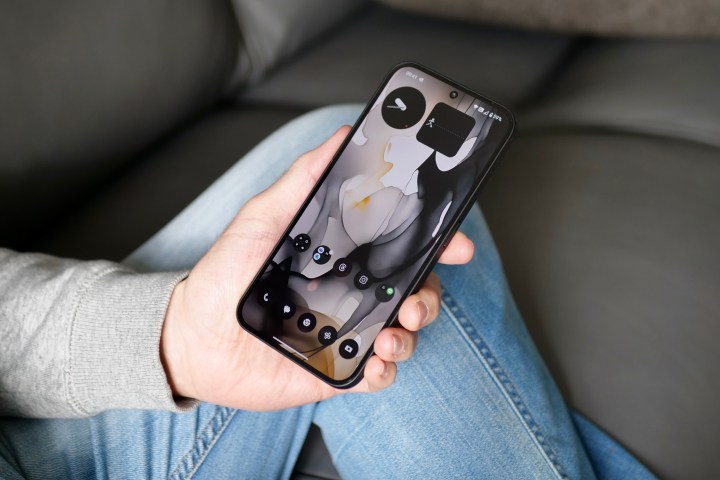
One way Nothing is going about this is with the “hub” — its AI-powered take on a smartphone home screen. The top of the hub has quick links/buttons to things like the weather, social media, your calendar, messages, etc. Below that is a smattering of “dynamic and context-aware” widgets. For example, it can automatically show a QR code for a boarding pass or concert ticket based on your calendar. Nothing says it wants the home screen to “move away from it just being a launcher for different apps and services” and to become a “hub of contextual, relevant information.”
Nothing’s AI-powered smartphone home screenNothing
The other big AI tool Nothing is working on is its own AI voice assistant. Nothing says its AI assistant can transform into a “companion” that’s personalized for each person using it. Nothing further explains that the AI assistant could appear on the home screen, lock screen, or even through a future Nothing Phone’s Glyph lights.
Nothing has only been developing these AI experiences over the last two months, so it’ll be a while before they’re ready for prime time. However, Pei confirms at the end of the video that Nothing will start rolling out these AI features with the Nothing Phone 3 in 2025.
Nothing’s AI assistant (with two white eyes) on its new home screenNothing
It’s unclear if everything demonstrated here will be available exactly as Nothing has described, but it’s clear that Nothing is thinking of it quite highly. In an email sent to Digital Trends, Nothing confirmed, “Phone (3), launching next year, [marks] a milestone in Nothing’s consumer AI journey, featuring both software and hardware advancements.”
As someone who’s been burned on grand AI claims with gadgets like the Rabbit R1, I’m personally quite excited to see what Nothing is working on. Time and time again, it’s been proven that dedicated AI gadgets aren’t the way forward — at least not right now. Whether it’s the Rabbit R1 or the Humane AI Pin, that product category clearly isn’t working. AI on smartphones has a lot more potential, but whether it’s Samsung or Google, so many smartphone AI tools have been relegated to things like photo editing and language translation. Those things are helpful, but they’re far from the AI revolution we keep being promised.
There's been a lot of hype around AI. Some great, some confusing. It’s great to see new companies rethinking the user experience and form factors. However, there is no doubt that smartphones will remain the main consumer AI form factor for the foreseeable future. With over 4… pic.twitter.com/ERJc7xhwBa
Nothing’s vision sounds a lot more ambitious, and it very well may not come together like the company is imagining. But what it’s trying to do sounds way more interesting than the AI features we have on phones today, and I can’t help but get excited about that.
It’s annoying we’ll have to wait until some point in 2025 for the Nothing Phone 3 to see what all of this ends up looking like, but I’m crossing my fingers that it’s worth the wait.