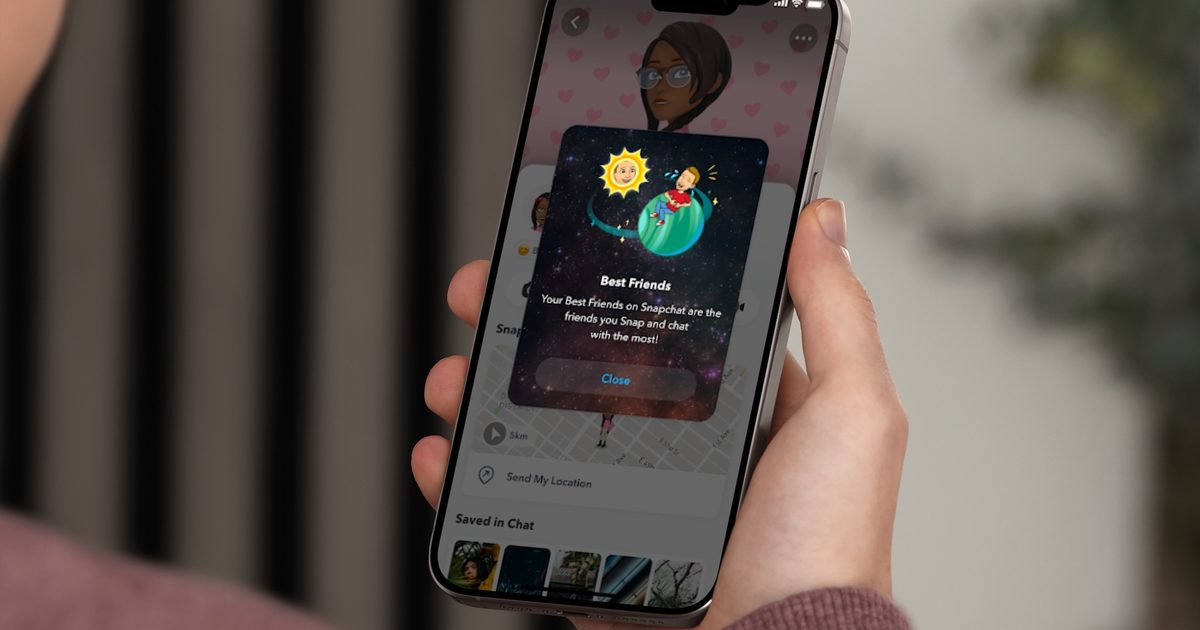
Snapchat+ includes several exclusive features, but few have generated as much curiosity as Snapchat Planets. Part of the app’s Friend Solar System, it transforms your Best Friends list into a planetary ranking, assigning each of your top eight friends a planet based on how often you interact.
From Mercury, which represents your closest friend, to Neptune, which represents your eighth closest, the system offers a quick visual snapshot of your interactions. But what do the different planets actually mean, and how does Snapchat decide who gets which one?
Here’s everything you need to know about Snapchat Planets, including the full order, what each ranking represents, and how to view your own Friend Solar System.
Snap
Snapchat Planets order
Snapchat’s Friend Solar System follows the same order as the real solar system, with each planet representing one of your top eight friends. The closer the planet is to the sun, the higher that person ranks in your Best Friends list based on your interactions.
The Snapchat Planets order is:
Mercury
Venus
Earth
Mars
Jupiter
Saturn
Uranus
Neptune
And yes, Pluto gets left out again.
Snapchat
Each planet represents a specific position in your Best Friends ranking, rather than a different type of friendship. Mercury is assigned to the friend you interact with the most, while Neptune represents your eighth closest friend. The rankings aren’t permanent and can change over time as your activity on Snapchat changes.
Snapchat
Snapchat Planets: What Each Ranking Means
Each Snapchat Planet represents your position in someone’s Best Friends list rather than a different type of friendship. Mercury is assigned to the friend you interact with the most, while Neptune represents your eighth closest friend, with the remaining planets falling in between.
Planet
Best Friends Rank
What it means
Mercury
#1
You’re their closest Snapchat friend based on interactions.
Venus
#2
You’re their second closest Snapchat friend.
Earth
#3
You’re their third closest Snapchat friend.
Mars
#4
You’re their fourth closest Snapchat friend.
Jupiter
#5
You’re their fifth closest Snapchat friend.
Saturn
#6
You’re their sixth closest Snapchat friend.
Uranus
#7
You’re their seventh closest Snapchat friend.
Neptune
#8
You’re their eighth closest Snapchat friend.
The planets are simply a visual representation of your Best Friends ranking and aren’t meant to measure the strength of a friendship. As your interactions on Snapchat change, your ranking can change too, meaning someone who’s Mercury today could move to Venus or Mars over time.
How Snapchat’s Friend Solar System Works
The Friend Solar System is one of Snapchat+’s exclusive features, designed to visualize your Best Friends list using the eight planets in our solar system. Instead of assigning numerical rankings, Snapchat represents each of your top eight friends with a planet, making it easier to see where someone stands based on how you interact on the app.
Your position in the Friend Solar System isn’t permanent. As your activity changes, whether that’s through snaps, chats, or other interactions, the rankings update to reflect those changes. Snapchat hasn’t disclosed the exact criteria behind the system, so there’s no guaranteed way to move someone higher in your rankings beyond interacting with them more frequently.
Best Friends and Friends badges
The Friend Solar System only applies to your Best Friends list, but you may also notice a Friends badge on some profiles. The two aren’t the same.
A Best Friends badge indicates that you and another user are among each other’s closest Snapchat contacts. A Friends badge simply means you have an active friendship on Snapchat, but the ranking isn’t necessarily mutual. In other words, someone can appear as your Mercury without you occupying the same position in their Friend Solar System.
How to see your Snapchat Planet
Once you understand how the Friend Solar System works, finding your Snapchat Planet only takes a few taps. Keep in mind that the feature is exclusive to Snapchat+ subscribers, so you’ll need an active subscription before you can view your rankings.
Snap
Step 1: Open Snapchat.
Step 2: Go to a friend’s Friendship Profile.
Step 3: Look for a Best Friends or Friends badge with a gold ring around it.
Step 4: Tap the badge.
Step 5: Snapchat will show which planet you are in that friend’s Solar System.
If you do not see a badge, it usually means you either do not have Snapchat+, Friend Solar System is not enabled, or you are not in that person’s visible friend ranking.
How to turn on Snapchat Planets
Before you can use Snapchat Planets, you need Snapchat Plus. Pricing can vary by region and plan, so the safest way to check the current cost is inside the Snapchat app or through Snapchat’s subscription page. Snapchat also offers multiple Plus-related plans in some regions, and availability can vary.
Once you have Snapchat Plus, you may still need to turn on Friend Solar System manually.
Step 1: Open Snapchat and go to your profile.
Step 2: Tap your Snapchat Plus membership card or banner.
Step 3: Open the Snapchat Plus feature management page.
When you start Persona 5: The Phantom X, you’ll be tasked with naming the protagonist by writing down your name on a worksheet fairly early. If you’ve played Persona games before, you may be familiar with the protagonists’ “official” names from the series, and want to use the canon name for this game, too.
Lucky for you, the canon name should have been filled in already, but if you accidentally deleted it or you don’t know if this is the real deal, then we explain more about the P5X protagonist’s canon name below.
What’s the protagonist’s canon name in Persona 5: The Phantom X?
In Japanese, the canon name for the Persona 5: The Phantom X protagonist is Nagisa Kamishiro. However, this doesn’t fit in the name slot for the English version of the game — so the canon name for the global version is Nagisa Kamisiro.
Ultimately, you do not have to name your character Nagisa, of course. You can literally name him whatever you want. You can name him Zoo Smell, if you want. (Just make sure to change both his first name and last name, if you wanted to. We saw a lot of names in the beta where only the first name was changed, for some reason.)
It should be noted that since this is a game with online friend capability, the name you set is your account name. You may want to pick something unique or you’ll be one Nagisa Kamisiro in an ocean of them. If you plan on adding a bunch of friends in-game, you may want to set your name as something your buddies can identify.
That is all to say that “canon” has different definitions across the board. Persona protagonists have had varying names across media. For example, the Persona 4 protagonist is named Souji Seta in the manga, but Yu Narukami in Persona 4 Arena and the anime adaption. Similarly, the protagonist from Persona 5 was named Akira Kurusu in the manga adaption, but has canonically been referred to as Ren Amamiya, which was the default name in Persona 5 Royal. (Ren is fine, but to me he’ll always be Akira!)
It’s entirely possible that Nagisa will appear elsewhere in other media with a different name, but we’re basing this off of the default name available to us in the beta that we played.
Can you change the protagonist’s name in Persona 5: The Phantom X?
Yes! If you went with Nagisa (or Zoo Smell, by our recommendation) and you’re regretting it, you can change your name for free once. After the first name change, you’ll need to pay 200 Meta Jewels (the premium currency that you can earn by playing the game) for every subsequent change.
You can change your name by clicking your profile icon at the top of your phone screen menu, but only after you’ve progressed a bit in the story. From there, click the ellipses above your set icon to access the name change feature.
Blitz Royale is a new limited-time game mode introduced in Fortnite Chapter 6 Season 3 Super that is available until Tuesday, July 15.
Blitz Royale is Fortnite as you know it, but at a much faster pace. Blitz Royale is meant for those on the go as each game can take five minutes or less. Although Blitz Royale is “made for mobile,” it’s available on every platform. As Blitz Royale will only be around until July 15, each week will feature an event to make your battles even more interesting.
Here’s everything you need to know about Blitz Royale in Fortnite, plus a breakdown of the weekly schedule.
What is Blitz Royale in Fortnite?
Blitz Royale is a Zero Build mode that pits 32 players against each other on a tiny map featuring fan favorite locations, Pleasant Park and Retail Row. Blitz Royale is available until Tuesday, July 15 and can be played as a solo, duo, or squad.
As Blitz Royale games are meant to be quick, every player will start the game with the same medallion or unique weapon — allowing you to immediately get into the fray.
To make things even faster, Blitz Royale incentivizes you to hunt down your enemies with the introduction of Blitz Level, which is a new system that will reward you with powerful weapons and boons as long as you’re eliminating opponents and surviving storm circles. As you gain more Blitz Levels, you’ll gain more weapons and boons — making you a force to be reckoned with.
If you’re having a hard time increasing your Blitz Level, you can get your hands on strong weapons and buffs through other means. There are a lot of golden chests containing power-ups scattered around the map, and periodically golden supply drops will fall out of the sky and grant you more medallions.
Fortnite Blitz Royale weekly events schedule
As Blitz Royale is only available for a month, it has been packed with weekly events to keep you coming back:
Fortnite Blitz Royale rewards
Along with the new game mode, you can earn two rewards from playing Blitz Royale:
Android 16, the next major revamp for Google’s smartphone operating system, has already reached platform stability. And now that all the key changes and upgrades have been locked in place, Google has finally shed light on its public release, sort of.
During a press briefing for The Android Show ahead of the Google I/O developers conference, a Google executive confirmed that the stable build of Android 16 will land on Pixel phones in June, with a fresh aesthetic makeover in tow.
It won’t feature the entire design UI overhaul with the new Material 3 Expressive elements in one go, as Google apps will continue to adapt it in the subsequent months. However, a beta build of Android 16 that lands later this month will give users a taste of the changes to come.
Google says Material 3 Expressive is the company’s “most researched update to the design system since its launch in 2014.” It embraces a youthful new UI design with bolder colors that brings over a dozen changes to elements such as app bars, button groups, and navigation bar, among others.
In addition to a June release schedule for Android 16 on Pixel devices, Google also revealed that it will land on Samsung phones later this Summer. That is likely going to begin with a beta program for One UI 8, which has already been spotted testing on Samsung’s flagship phones.
What’s new in Android 16?
As far as features go, Android 16 brings a host of notable changes. For photography enthusiasts, they will be greeted with new temperature and tint adjustment controls for more precise grading controls in the camera app, alongside a hybrid auto-exposure system. Support for the Advanced Professional Video (APV) codec is also part of the package to allow high-quality video recordings.
Tushar Mehta / Digital Trends
“Android 16 adds the capability for users of LE Audio hearing aids to switch between the built-in microphones on the hearing aids and the microphone on their phone for voice calls,” says Google. Notably, it enables support for the Wi-Fi 6 802.11az standard, which is more secure and scalable.
The Live Updates system in Android 16 introduces a new, and more minimalist approach to notifications that cover ongoing activities such as navigation and food delivery. Extensions, now going by the name “apps,” will also be a huge part of Android 16, allowing the Gemini assistant to get work done across different apps.
It already supports the Google suite of apps, such as Docs, Drive, Gmail, and Maps, alongside a small number of third-party options like Spotify, but more names will adopt it later this year. I already have the latest beta build running on my Pixel 9, and will soon report on the design and functional changes as the final set of changes start appearing in the coming weeks.
When Rockstar Games delayedGrand Theft Auto 6 into 2026, it likely came as a big relief to publishers who had anything on their slate for the back half of 2025. But 2026 is already shaping up to be an exciting, crowded year of big game releases, even without GTA 6.
Beyond sequels, there are plenty of promising original games on the horizon, like role-playing game SacriFire, Warren Spector’s stealth-action PvPvE game Thick As Thieves, and Animal Crossing-but-make-it-vampires indie Moonlight Peaks.
Game release dates are always in flux, though, so Polygon’s guide to the new video games coming out in 2026 will be regularly updated with new titles, release dates, and (inevitable) delays.
Has there ever been such a quickly improved product as the Pixel Watch? Google’s first attempt wasn’t great, but the Pixel Watch 2 was much better, and the Google Pixel Watch 3 was, frankly, excellent. So it’s safe to say there’s a lot of expectation riding on the Pixel Watch 4. Will it be a showstopper like the Pixel Watch 3? Or will Google come full circle and release another duffer, like the first Pixel Watch.
Here’s where you’ll find all the latest leaks and rumors surrounding the Pixel Watch 4. However, since we don’t have too many of those yet, we’ve also included a list of everything we’d like to see from the newest Pixel Watch.
Google Pixel Watch 4: Release and price
We haven’t seen any leaks pertaining to either of these yet, but it’s safe to assume the Pixel Watch 4 will arrive in the fall of 2025, and while a price rise isn’t our of the question, we haven’t seen anything to indicate Google will be putting prices up.
Google Pixel Watch 4: design and charging
We don’t have a lot of leaks for the Google Pixel Watch 4 yet, but what we do have suggests that not a lot will be changing in Google-land for the fourth Pixel Watch. According to leaks from OnLeaks and 91Mobiles, the Pixel Watch 4 will sport the same iconic round look, albeit with slightly smaller bezels around the display. The Pixel Watch 3 had reduced the larger bezels we’d seen on previous models, and it’s impressive that Google is further shrinking them down.
There are bigger changes around the back, with the biggest change being what’s missing. While the four sensors are still in place on the back of the device, there are no charging pins, potentially indicating that Google will be moving to wireless charging for the Pixel Watch 4. This isn’t a seachange by any means, as we’ve seen similar charging methods on the Samsung Galaxy Watch 7, but it is a nice addition.
Google Pixel Watch 4: What we want to see
The Pixel Watch 3 was a very good smartwatch, but it wasn’t perfect by any means. Here’s a brief list of improvements we’d like to see in the Pixel Watch 4.
An even longer battery life
Andy Boxall / Digital Trends
The Pixel Watch 3’s battery lif was pretty good by smartwatch standards, lasting around a day-and-a-half on a single charge. But we’ve seen a lot better recently, most distinctly from the OnePlus Watch 3. OnePlus’s smartwatch was capable of lasting multiple days on one charge, above and beyond pretty much every other smartwatch around.
Could the Pixel Watch match this performance? It’s entirely possible it won’t, but it shows that smartwatches can and should do better. The Pixel Watch 3 did well in terms of battery life, but we’re hoping the Pixel Watch 4 will knock it out of the park.
Fewer features locked behind the Fitbit paywall
Joe Maring / Digital Trends
Google’s purchase of Fitbit meant that it had a ready-built fitness platform for its smartwatches, and the Pixel Watch has become the most premium way to experience Fitbit’s excellent exercise and health tracking. Only, it doesn’t feel very premium, entirely because you still have to pay a subscription for Fitbit’s best features.
The pill is sugared a bit by the six months of free access to Fitbit Premium you get for buying the watch, but when you’re paying premium smartwatch prices, to not get premium features feels like you’re being cheated just a little bit. The Pixel Watch 4 is a premium smartwatch, and it needs to drop the subscription if it wants to continue to be seen as such.
Upgrade the smallest size
The Pixel Watch 3 finally introduced a second, larger size to the roster, and it’s fantastic. Only, now the 41mm size needs looking at, because, frankly speaking, it’s just too small.
Previous Mobile Editor Joe Maring loved the Pixel Watch 3, and didn’t have many negative thoughts about the smartwatch — but he did note that, even for his small wrists, the 41mm Pixel Watch 3 felt too small. And it’s easy to say why he’d think that; the Pixel Watch’s sleek and smooth design is iconic for the Google brand, but it makes a small watch feel even smaller, and that’s a problem when you’re shipping an already small watch. Apple offers its smallest Apple Watch Series 10 in a 42mm size, and it’s time that Google did the same with the Pixel Watch 4.
Better durability or better repairability
Andy Boxall / Digital Trends
The Pixel Watch 3 had all the usual durabilities you’d expect for a smartwatch, including swimmable water-resistance, but it was certainly scratch-prone, especially on the rear. Plus, that model had some terrible reports where repairability was concerned, meaning you were largely unable to replace that back panel if it became unsightly with scratches.
Granted, this isn’t a huge deal, but it’s one we’d still like to see Google iron out. A slightly tougher back panel would work wonders for Google’s Pixel Watch 4, but so would a dedication to repairability.
Smartwatches are now over 25 years old, but just over a decade ago, Apple helped kickstart the current smartwatch industry with the launch of the original Apple Watch. From a focus on fitness to a selection of apps and whimsical watch faces, early smartwatches bore little resemblance to the current best smartwatches with which we’re now accustomed.
The only problem with the Apple Watch is that it was, and still is, exclusive to the iPhone. To answer this and capitalize on the demand for smartwatches from Android users, Google and its partners developed an Android-powered alternative. After many iterations, Wear OS was born, but it still faces several challenges many years later.
To address these needs, companies such as OnePlus have turned to RTOS (Real-Time Operating System), a specialized type of operating system that’s perfect for low-power tasks where precision is required, such as timekeeping. However, is RTOS the answer to Google’s Wear OS woes? Let’s take a look.
The key benefits of RTOS
The Moto Watch Fit runs RTOS onlyNirave Gondhia / Digital Trends
RTOS has been around for a long time. Long before its applications in the smartwatch space, it has been powering a range of devices and technologies that you’ve likely benefited from. These include devices such as pacemakers for the heart, flight ticket booking platforms, and even RADAR.
Smartwatches that run RTOS are technically using a platform called FreeRTOS. It’s designed to enable the execution of a specific set of features on a single chipset with limited memory, and it doesn’t consume a significant amount of power to do so. Crucially, it offers a fast experience and allows you to utilize several advanced features, such as heart rate tracking, without requiring a large battery or a powerful chipset.
RTOS-based platforms have long been used in smart devices that don’t run Wear OS, such as smartwatches from Amazefit or Xiaomi, or some of the best fitness trackers. The precision of the OS means it’s ideal for features such as heart rate monitoring, but it comes with a key downside compared to Wear OS.
How Wear OS is better than RTOS
OnePlus Watch 3 (left) and Samsung Galaxy Watch 7Andy Boxall / Digital Trends
RTOS offers numerous benefits to users and watchmakers, but there is one major downside: limited app support. This means that the end-user is at the mercy of the company’s interpretation of fitness apps, features, and watch faces, and it also makes it much harder to switch platforms without losing data.
In comparison, Wear OS takes all of this away from the device maker and instead ensures continuity between different devices running the same platform. You have access to a wide range of Wear OS-compatible apps, and your data remains with you as you switch devices.
Much like your Android phone, Wear OS supports every major app and features a dedicated section within the Google Play Store. It’s designed to be a platform that powers every smart device, but given the need for a small battery in most wearable devices, it does so at the cost of power and efficiency.
The two competing implementations of RTOS
Workout options on the OnePlus Watch 3Andy Boxall / Digital Trends
Some companies are fully committed to the Wear OS platform. Samsung has long since abandoned its goals of developing its Tizen-based OS in favor of partnering with Google on Wear OS, while numerous third parties are also creating some of the best Android smartwatches.
However, companies like OnePlus and Motorola have demonstrated that RTOS can be a viable alternative for smartwatches, where battery life and efficiency are more crucial than advanced features. As a result, we have two different implementations of RTOS that both bring the same benefits.
Workout options on RTOS on the Moto Watch FitNirave Gondhia / Digital Trends
Motorola has just announced its new Moto Watch Fit smartwatch, which runs solely on the RTOS platform. That means the company had to develop a fitness app in-house, as well as several apps that replicate the core functionality of Wear OS. Meanwhile, OnePlus announced the OnePlus Watch 3 earlier this year, which combines RTOS and Wear OS into a single device through its innovative dual-architecture approach.
Crucially, both devices capitalize on the benefits of RTOS, but only one minimizes the potential downsides of RTOS.
Is RTOS the answer to Google’s Wear OS woes?
The OHealth companion app for the OnePlus Watch 3Andy Boxall / Digital Trends
Building a smartwatch with advanced fitness features isn’t easy. As Google continues to expand the functionality within Wear OS, it also means that modern Android smartwatches require even larger batteries. Unfortunately, this means companies must decide between large batteries, small displays, a high price, or a thick smartwatch, and a compromise in any area results in a subpar wearable experience.
It’s not surprising that companies have turned to RTOS, but could it be the answer to the key Wear OS problems? The biggest challenge is battery life, but while the Moto Watch Fit offers 16 days of battery life, it doesn’t provide the benefits of Wear OS. Instead, Google should consider OnePlus and its dual-architecture approach.
Andy Boxall / Digital Trends
The OnePlus Watch 3 seamlessly switches between the RTOS platform for all low-power tasks and Wear OS for more advanced features. The result is the best of both worlds, and a battery that lasts up to four times as long as Google’s own Pixel Watch 3.
If Wear OS is to provide a competitive challenger to the Apple Watch, it needs to solve the key problems. The OnePlus Watch 3 demonstrates that a dual-architecture approach with RTOS could be the solution, but if not, we’ll likely see more RTOS watches and fewer Wear OS watches in the future.
Summer is fast approaching, and that means it won’t be long before we see Samsung’s new Galaxy Z Flip 7 make its debut. While the Galaxy Z Flip 6 is a top-notch foldable, it also felt like Samsung phoned it in last year. That new model offered mostly modest improvements over the Z Flip 5, with the most significant ones being hidden under the hood, like thermal improvements, or generally underwhelming, like a larger cover screen that didn’t improve in any other meaningful way.
We’re hoping that Samsung does better with the Galaxy Z Flip 7 this year. The good news is that plenty of leaks and rumors suggest the company is on the right track to hit it out of the park in its seventh inning. Let’s dig in and go over everything we’ve heard so far about what to expect from Samsung’s flagship flip phone this year.
Samsung Galaxy Z Flip 7: Design
Joe Maring / Digital Trends
We’re not expecting any radical changes in the overall design of the Galaxy Z Flip 7 this year compared to its predecessor. Samsung generally takes a more iterative approach to the design of its foldables, refining the design each year with modest style and usability enhancements rather than making broader changes.
Some rumors have suggested that Samsung could move away from the softer, rounded edges of the Galaxy Z Flip 6 and prior models, adopting a “boxier” aesthetic this year. The theory is that this might be needed to accommodate new displays and a larger batter without compromising its slimness. However, most of the leaked renders we’ve seen indicate that if any such changes occur, they’re likely to be subtle. All the renders we’ve seen suggest that the button placement will remain the same.
The Galaxy Z Flip 7 may grow slightly taller and wider — some leaks have suggested dimensions of 166.6 x 75.2 x 6.9mm, compared to the Galaxy Z Flip 6, which comes in at 165.1 x 71.9 x 6.9mm, but other renders are barely distinguishable from the current model. Unconfirmed rumors point to the possibility of a titanium build, but we’d take those with a grain of salt, as Samsung has thus far reserved that material for its top-of-the-line Galaxy S25 Ultra.
Galaxy Z Flip 6 (left) and Galaxy Z Flip 5Joe Maring / Digital Trends
Samsung made some significant improvements to the hinge on the Galaxy Z Flip 6 last year, featuring a new “dual rail hinge” design that offers better shock distribution and moves more fluidly than ever while being rigid enough to let you prop the phone up at any angle. Samsung says that the Z Flip 6 hinge is rated for 200,000 folding and unfolding cycles. We were impressed with what Samsung did here, but it may not be finished if the rumors are accurate. The company has repeatedly said it’s focused on improving its hinges’ long-term reliability and durability as much as possible, and several sources suggest some of those improvements could arrive in this year’s model.
It’s an open question how much practical difference this will make in everyday use, but it could ensure that Galaxy Z Flip 7 owners can continue enjoying a solid and reliable hinge mechanism even if they hold onto their phone for several years. Sadly, there’s been little reporting on whether an improved hinge might also improve dust resistance. The Galaxy Z Flip 6 has an IP48 rating, which provides excellent water protection, but falls short on dust resistance compared to premium non-foldables, which typically carry an IP68 rating. The lower score for dust resistance is mainly due to the hinge and the flexible inner display, and there’s only so much Samsung can do here. Beach sand won’t be a problem — IP48 is enough to protect against particles larger than 1mm — but fine dust may remain an issue.
There’s been no word yet on what colors we can expect the Galaxy Z Flip 7 to arrive in. Samsung typically has some pretty fun shades for its Z Flip series, and we expect that will continue. However, what we’d really like to see is a return of the Bespoke Edition initiative that Samsung from the Galaxy Z Flip 3 and Galaxy Z Flip 4 era.
Samsung Galaxy Z Flip 7: Displays
Samsung Galaxy Z Flip 5 (left) and Galaxy Z Flip 6Andy Boxall / Digital Trends
Reliable sources, including display analyst Ross Young, believe the main foldable display will grow from the 6.7-inch size that’s been the norm for the past few years to an even larger 6.8-inch or 6.85-inch screen. While the width and height may increase to make room for this larger screen, Samsung is also expected to reduce the bezels.
Samsung’s display division showed off some impressive creaseless screen technology at this year’s Mobile World Congress (MWC), rivaling what we’ve seen in the Oppo Find N5. This has made some hopeful that the Galaxy Z Flip 7 could finally rival what OnePlus, Oppo, and Honor have already managed to pull off. Sadly, we’re not holding our breath on this one, as it’s probably too early for Samsung’s bleeding-edge screen tech to be ready for this year’s model. Multiple reports say Samsung will noticeably reduce the crease in this year’s model, which is still good news, but it may not go away entirely until the Galaxy Z Flip 8 comes around next year.
Samsung Galaxy Z Flip 6 (left) and Galaxy Z Flip 5Andy Boxall / Digital Trends
Meanwhile, the cover screen is rumored to become both larger and more functional. Most reports agree on a 4-inch display — a healthy increase from the 3.4-inch one of the Galaxy Z Flip 6. Some reports call it a “full-sized” or “full-width” screen, suggesting it could cover most of the front. Again, some of this increase will come from slimmer bezels. There’s a preponderance of evidence for this new cover screen, including comments from Young, leaked CAD renders, and images of early Z Flip 7 case designs.
Several sources suggest Samsung’s goal is to finally make the cover screen fully functional. Previous Galaxy Z Flip models limited the cover screen mostly to notifications, quick settings, and widgets. Even when the display went from 1.9 to 3.4 inches on last year’s Galaxy Z Flip 6, Samsung did little to improve the experience — it just made it bigger. The 720 x 748 resolution and 60Hz display made everything look sluggish and fuzzy, and you still couldn’t run apps on it without fiddling with settings and third-party tools.
We’re hoping that Samsung has listened to user feedback and taken a cue from the Motorola Razr Plus, which has a cover screen that leaves Samsung in the dust; a 4-inch display that’s just as limited as the current 3.4-inch one would be a major disappointment. Based on everything we’ve heard, the outlook is good, but we won’t know for sure until Samsung unveils this year’s foldables.
Samsung Galaxy Z Flip 7: Camera
Samsung Galaxy Z Flip 6Andy Boxall / Digital Trends
While the Galaxy Z Flip 7 is expected to take a nice leap forward in screen technology, it doesn’t look like Samsung will do the same for its camera system. By all reports, this year’s model will feature identical camera specs to the Galaxy Z Flip 6: a dual-camera array with a 50-megapixel (MP) primary wide lens and a 12MP ultra-wide, joined by a 10MP selfie camera under the main display.
Some of those cameras may gain new sensors under the hood for better light sensitivity and color reproduction, but most of the camera improvements will likely come from a more powerful image signal processor (ISP) inside this year’s model and the AI computational photography improvements from a more advanced neural processing unit (NPU).
Along those lines, Samsung may introduce more AI-driven features for editing and optimizing photos, further expanding its Galaxy AI Suite like it did for the Galaxy S25 lineup earlier this year. However, most of those also came to older Galaxy S-series and Z-series phones, so they may not be unique to the Galaxy Z Flip 7.
Samsung Galaxy Z Flip 7: Specs
Andy Boxall / Digital Trends
There’s been a running debate among analysts and leakers about whether this year’s Galaxy Z Flip 7 will pack in Qualcomm’s custom Snapdragon 8 Elite for Galaxy or Samsung’s own flagship Exynos 2500 chip. Early speculation pointed to the Exynos, but Samsung has reportedly been having production problems in producing enough chips to meet expected demand.
This is the same issue that reportedly led to Samsung scrapping its Exynos plans for the global Galaxy S25 models and going all-in on the Snapdragon 8 Elite. While there’s still evidence that the Exynos 2500 could be used in the rumored Galaxy Z Flip FE, it’s looking more likely that the Galaxy Z Flip 7 will follow the S25 lineup and go exclusively with Qualcomm chips, at least for its first run. North American models will likely use the Snapdragon 8 Elite either way, as Samsung hasn’t used Exynos chips in any of its flagships sold in the U.S. since 2015 and in Canada since 2016.
Memory and storage specs are likely to remain unchanged this year. The Galaxy Z Flip 6 was available in 256GB and 512GB storage capacities, both with 12GB of RAM, and all rumors point to the same for the Z Flip 7, so don’t hold your breath for a 1TB model.
Samsung Galaxy Z Flip 7: Battery and charging
Samsung Galaxy Z Flip 6 (bottom) and Samsung Galaxy Z Flip 5Andy Boxall / Digital Trends
The Galaxy Z Flip 7 could see a modest battery size increase, with reports pointing to a 4,300mAh cell — a 7.5% bump from the 4,000mAh battery in the Galaxy Z Flip 6. However, the real battery life improvements will likely come from other efficiency improvements, both technical and practical.
The Snapdragon 8 Elite chip has already proven itself a winner in battery efficiency, and several rumors suggest that the new displays will adopt a more power-efficient Color Filter on Encapsulation (CoE) technology, or what Samsung Display calls Eco²OLED. This first came to the Galaxy Z Fold 3 and has been refined on subsequent Z Fold models. There have also been rumors it could appear on next year’s Galaxy S26 Ultra.
Potential cover screen usability improvements will also offer a more practical way of increasing battery life. Since a four-inch panel draws less power than a 6.85-inch screen, the more you can do with the phone closed, the longer the battery will last. Most Galaxy Z Flip users find themselves flipping their phones open several times a day, even just to read an email or text message. If our experience with Motorola’s recent flip phones is any indication, we expect Galaxy Z Flip 7 users will need to do this far less often.
Leaks from early prototype testing indicate that the Galaxy Z Fold 7 could run for nearly an hour longer on a single charge despite having the same battery as its predecessor. This makes us optimistic that we can expect comparable improvements for the Galaxy Z Flip 7.
Unfortunately, there’s some bad news on the charging front: According to information from China’s 3C certification database, the Galaxy Z Flip 7 is expected to retain the same paltry 25W wired charging speeds as its predecessors. That’s disappointing but not altogether surprising; Samsung tends to take a conservative approach to charging speeds. The specific reasons for this aren’t entirely clear, but it helps reduce excessive heat in a cramped folding design and ensures the battery stays healthier in the long term.
Samsung Galaxy Z Flip 7: Software and features
Tushar Mehta / Digital Trends
In a surprising twist, the Galaxy Z Flip 7 could be one of the first Samsung phones to launch with One UI 8. That’s thanks to Google releasing Android 16 earlier than usual this year, with the next major release expected to land in June.
This means that Android 16 will be out by the time the Galaxy Z Flip 7 launches. It’s unlikely Samsung wants to be left behind, so it’s reportedly been hustling to have One UI 8 ready to go in time to take advantage of all the latest Android enhancements.
In addition to upgraded health tracking features, Audio Sharing, and enhanced anti-theft protections, Android 16 offers a native Desktop mode for the first time, allowing users to project a Chrome OS-like interface onto a larger screen. This has led to speculation that Samsung might include DeX support on the Z Flip 7 to provide its own desktop computing experience rather than simply relying on what Android 16 offers.
Some have even suggested that DeX could work with Samsung’s Flex Mode, allowing it to be used as a dedicated webcam for video calls on a larger screen. Nevertheless, these rumors remain speculative, and it’s equally possible that Samsung may choose to retire DeX in favor of Android’s more standard desktop mode.
Beyond the Android 16 features that One UI 8 will embrace, it’s a safe bet that we can also expect to see some new Galaxy AI features show up. There’s been no word on what these might be, and much of what Samsung has offered so far has leaned more toward the gimmicky. Most of the really useful ones, like Circle to Search, Magic Editor, and Gemini Live, come from Google, not Samsung.
Samsung Galaxy Z Flip 7: Release date and pricing
Samsung Galaxy Z Flip 6 (left) and Samsung Galaxy Z Flip 5Andy Boxall / Digital Trends
There’s been no reliable information about when Samsung plans to release the Galaxy Z Flip 7, but the odds are on a July event. While Samsung’s summer Galaxy Unpacked events were typically held in August, the company switched things up in 2023 by moving to July 26 for the Galaxy Z Flip 5 reveal. That continued into 2024, when Samsung went even earlier, with a July 10 event in Paris to unveil the Galaxy Z Flip 6.
Still, we don’t think that’s a trend. The July 10 event was likely scheduled to beat the 2024 Summer Olympics rather than a sign that Samsung plans to keep moving its events to earlier dates. If anything, the new timing for Android 16 and Samsung’s need to have One UI 8 ready will likely push things into late July or possibly even August.
As for the price, the Galaxy Z Flip 6 got a $100 price bump last year, raising the starting price to $1,099. This makes it more likely that Samsung will hold the line on pricing for this year’s models, which are expected to be available in the same 256GB and 512GB capacities for $1,099 and $1,219, respectively.
Smartphones are often blamed overwhelmingly for ruining the mental health of kids and fostering a wide range of issues such as showing digital addiction patterns or imbibing bad ideas from the internet or games.
As per research, however, smartphone ownership is not always a bad thing. On the contrary, it can be a well-being agent. The study, which was conducted by experts at the University of South Florida, analyzed the smartphone usage habits of 11 to 13-year-old kids.
Smartphones actually do good
USF
According to the experts behind the study, children who own a smartphone rank higher on well-being metrics and were less likely to show patterns of depression or anxiety. Moreover, they are more engaged with people in their real lives and generally feel better than kids without a smartphone.
Please enable Javascript to view this content
As per the expert panel behind the study, which also includes journalists, psychologists, and public health experts, it’s acceptable for kids as young as 11 years of age to own a phone, and that it could actually reap positive outcomes.
“We went into this study expecting to find what many researchers, teachers and other observers assume: smartphone ownership is harmful to children. Not only was that not the case, most of the time we found the opposite – that owning a smartphone was associated with positive outcomes,” said lead researcher, Justin D. Martin.
USF
Despite owning a smartphone, kids also more inclined to engage in activities such as exercise, have in-person interaction with friends, and report higher self-esteem, says Poynter Institute, which was also on the advisory panel.
The 88-page Life in Media survey report will now inform a nationwide study that will last over a span of the next 25 years, while data will be collected on a six-month basis.
Social media is the real harm
USF
Where the real problem begins is social media. “Children who often post to social media platforms were twice as likely than those who never or rarely post to report moderate or severe symptoms of depression, moderate or severe symptoms of anxiety and having sleep issues,” says the report.
Six out of ten students said they experienced some form of bullying online, triggering signs of depression, emotional stress, and exhibiting addictive patterns. Previous studies have also shown that young users often find it hard to part ways with social media, despite being aware of its negative impact on their academic and personal well-being.
The experts recommend that parents should discourage their children from posting frequently on social media, instead of taking away their phones. Another crucial recommendation is that kids should not be allowed to take smartphones to their beds.
USF
Based on student testimonies, the survey found that kids who take their phones in their bed don’t get enough sleep. Social media usage is to blame here. Children who post on social media get less sleep (8.9 hours vs 9.3 hours) than those who aren’t hooked to posting content online.
The Google Pixel 9a is a mid-range device with few compromises, and it promises to offer one of the best values of any phone. The handset has a lot of changes: Google ditched the camera bump, installed a new processor, and increased the screen size, all without increasing the price.
With Apple’s “midrange” device releasing not long ago in the form of the Apple iPhone 16e, it’s easy to draw comparisons between the two. The Google Pixel 9a is a more affordable device, and it beats the iPhone 16e in multiple ways.
Does the Google Pixel 9a have a 120Hz screen?
Yes, the Pixel 9a supports refresh rates between 60 and 120Hz. Its screen has a resolution of 1080 x 2424 with just over 422 pixels per inch (PPI) and a 20:9 aspect ratio. The display reaches a peak brightness of 2,700 nits — more than enough to comfortably use even in direct sunlight — and up to 1,800 nits with HDR enabled.
Google
So what does this mean for you? The variable refresh rate means the Pixel 9a can adjust on the fly, preserving power and prolonging battery life without sacrificing smoother animations and transitions. Compared to the iPhone 16e which does not have a 120Hz refresh rate, the Pixel 9a has a clear advantage.
Why does a 120Hz display matter?
For many users, an increased refresh rate is a luxury rather than a necessity. That said, it offers a lot of benefits over a lower refresh rate display. Faster refresh rates help to reduce motion blur during fast-moving videos and games, and it also helps minimize eye strain.
And it gets even better for photographers. The Pixel 9a has one of the best camera setups you can get for a phone in this price range. The refresh rate will also help when editing videos taken on the phone, zooming in during photo editing, and much more.
If you like mobile gaming, a higher refresh rate can give you an advantage. This holds especially true in competitive games where precision and response time is important. The display might not be the deciding factor for many buyers, but it’s a nice perk for anyone already looking to get their hands on a Pixel 9a.