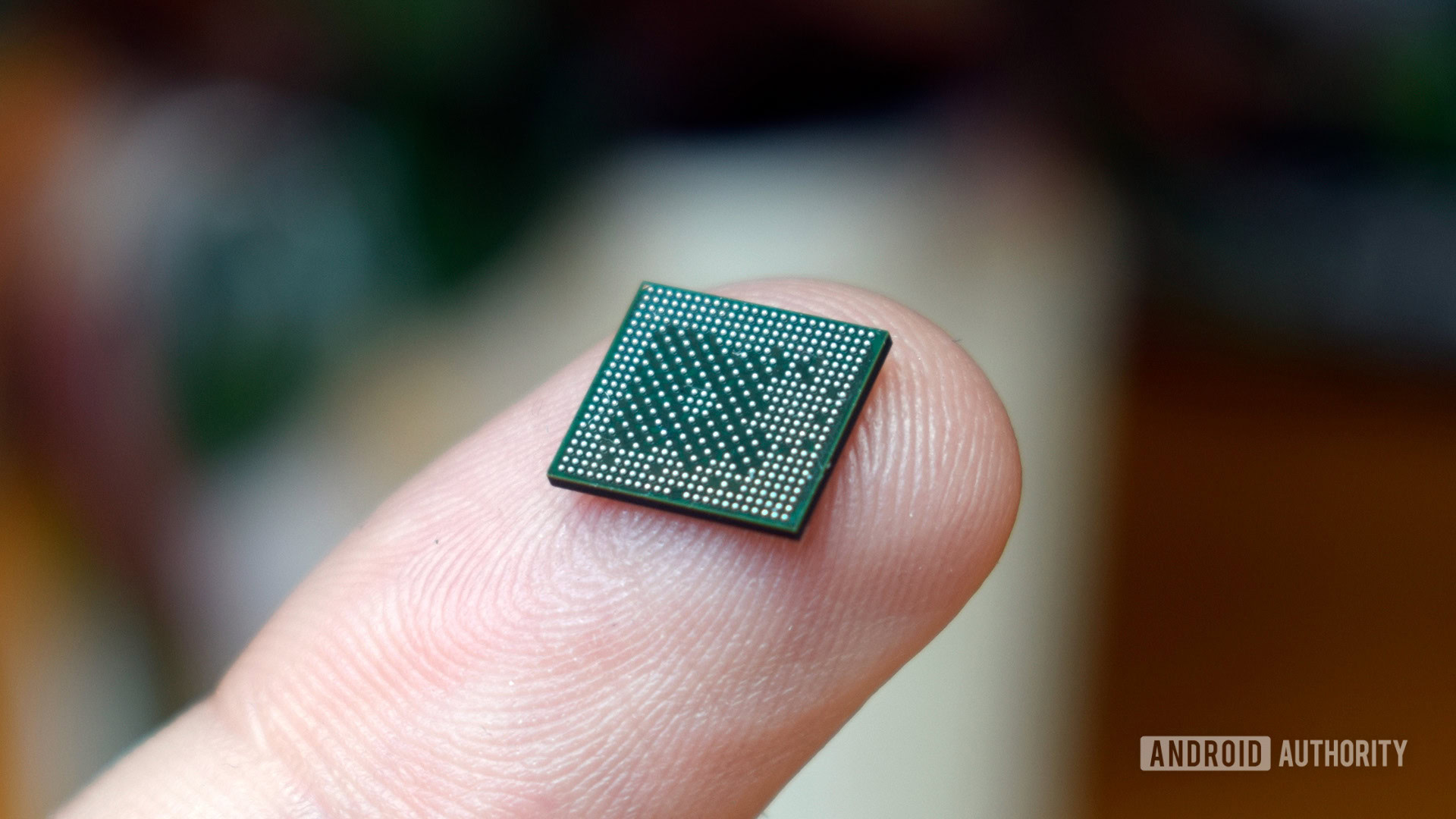
Flagship power or foldable flop?


In a first for Samsung’s foldables, the new Galaxy Z Flip 7 sports a Samsung Exynos processor instead of its usual Qualcomm Snapdragon chip. I’m reasonably convinced the Exynos 2500 looks more than good enough on paper, even if it won’t quite match the Snapdragon 8 Elite inside the Galaxy S25 series and Z Fold 7.

But the real proof is in the testing, so I’ve run the Galaxy Z Flip 7 through our usual suite of benchmarks to see just how far off the top spot it really is. For comparison, we’ve grabbed results from the latest flagships by Apple, Google, Samsung, and the MediaTek Dimensity 9400 found in vivo’s newest flagship. Let’s dive in.

Off-the-shelf vs custom CPU cores

Samsung Galaxy Z Flip 7 FE in both Black and White colorways unfolded partially on table

C. Scott Brown / Android Authority

The biggest divide in mobile chipsets these days is between those using “off-the-shelf” Arm Cortex CPU designs and those licensing Arm’s architecture to build custom CPUs. Apple and now Qualcomm fall into the latter camp, while Google, MediaTek, and Samsung stick with their configurations of Arm Cortex cores.

Historically, custom cores have outperformed the Cortex-X series in single-core tasks, which in turn often leads to strong multi-core scores — even when up against Cortex clusters packing more total cores. That’s still true today, and it matters because while most apps are multi-threaded, few come close to maxing out eight or ten cores. So single-core muscle still drives responsiveness and is a boon for gaming.

The Exynos 2500 uses the same Cortex-X925 core as the Dimensity 9400 (listed as Cortex-X5 on Samsung’s sheet). It’s not quite as quick as Qualcomm’s Phoenix CPU core, but the gap isn’t huge overall.

Exynos 2500 GeekBench 6 CPU

Robert Triggs / Android Authority

As you can see, the Exynos 2500 in the Z Flip 7 is about 18% slower than the 8 Elite in the S25, but it isn’t as far off the vivo X200 Pro’s MediaTek flagship. The lower single-core score likely comes down to clock speed (3.3GHz vs 3.6GHz) and some cache differences, but multi-core performance is surprisingly close.

Expectedly, the Exynos 2500’s Cortex-X trails the custom cores in Qualcomm’s Snapdragon 8 Elite and is even further behind Apple’s A18 Pro in single-core power. Despite having fewer cores, those chips’ sheer individual performances keeps them ahead in heavy multi-threaded loads too. This means the mainstream Galaxy S25 actually outpaces the pricier Flip 7 — at least in benchmarks. Still, the Exynos 2500 and Dimensity 9400 are only about 12% slower than Apple’s best, which is pretty nippy.

The Exynos 2500 CPU scores surprisingly close to MediaTek’s flagship Dimensity 9400.

Another perspective? The Exynos 2500 easily clears Google’s Tensor G4 by a comfortable margin, with a huge 64% lead in multi-core performance. While beating Google’s Tenor is hardly worthy of an award, it highlights that the chip is plenty fast for day-to-day use.

Modern flagship chips have long passed the point of simply being “fast enough.” Even if the new Exynos doesn’t top the charts, it’ll easily handle multitasking and future apps over its projected seven-year software lifespan. For a style-first phone like the Z Flip 7, that’s arguably right where it needs to be.

Another try at AMD graphics for mobile

Samsung Galaxy Z Flip 7 FE side view thickness

Hadlee Simons / Android Authority

One especially interesting part of recent Exynos chips is the use of AMD’s RDNA architecture for its Xclipse GPUs. It was among the first to bring ray-tracing to mobile, and Samsung claims the latest version is up to 28% faster than before. The Xclipse 950 GPU has grown this year — going from six Work Group Processors (WGP) and four Render Back-ends (RB) to 8WGP/8RB.

So what does that mean for actual performance, and can it keep up with Arm’s Immortalis and Qualcomm’s Adreno? The answer is… complicated.

Looking at the first test runs on their own, the Exynos 2500 does pretty well. It matches Apple’s A18 Pro in Wild Life Extreme and even outperforms it by 17% in ray-tracing. That lands it roughly between Apple’s chip and the even faster Snapdragon 8 Elite and Dimensity 9400. Not bad. However, the Snapdragon-powered Galaxy S25 is still 43% faster at standard rasterization, meaning way higher frame rates on Samsung’s mainstream flagship.

As before, the Exynos easily tops Google’s Tensor G4, scoring 76% higher in Wild Life Extreme. And we’ve rarely had complaints about real-world gaming on Pixels, aside from lowering settings in the most demanding titles. For typical gaming, the Exynos 2500 seems plenty solid, with AMD’s RDNA doing great work on ray-tracing that helps keep it competitive with the best.

Exynos 2500 bests Apple’s graphics performance, but is a long way off the fastest.

Unfortunately, once the stress tests kick in, the Exynos 2500’s performance drops sharply — falling even below the G4. This is almost certainly due to the compact Galaxy Z Flip 7 throttling to avoid overheating. We saw the same thing last year with the Z Flip 6’s Snapdragon 8 Gen 3.

Even the Galaxy S25 reins in its Snapdragon 8 Elite pretty quickly. Samsung is more conservative than most with regards to temperatures. As a result, we can’t draw too many conclusions about sustained GPU performance beyond noting the Flip clearly isn’t continually tapping into the Exynos 2500’s full graphics potential once things heat up.

Exynos 2500, the right choice for foldables?

Samsung Galaxy Z Flip 7 vs Flip 7 FE vs Fold 7

Hadlee Simons / Android Authority

There’s no doubt the Exynos 2500 is a capable chip, competing near the top for CPU tasks and even besting the iPhone in some GPU scores. It’s flagship-class silicon, even if it’s not the absolute fastest. Whether it’s the best choice for the Z Flip 7, though, is less clear.

Samsung has quite a chipset mix in its high-end products now: the Exynos 2400e in the Galaxy S FE, the Snapdragon 8 Elite in this year’s Galaxy S and Fold flagships, and the widespread use of last year’s Snapdragon 8 Gen 3 — including in the Z Flip 6.

Samsung Phones 2025 GeekBench 6 CPU

Robert Triggs / Android Authority

For everyday apps, the Z Flip 7 sits in the middle. It’s not as snappy as the 8 Elite but decidedly more powerful than the Exynos 2400e. Compared to last year’s Flip 6, however, there’s barely any uplift — just an 8% bump in multi-tasking performance. Hardly headline stuff.

Graphics arguably paint an even worse picture. The Exynos 2500 offers about an 11% ray-tracing improvement over the Flip 6, but it’s actually around 6% slower in standard rasterization. Thermal throttling hits hard, too — both Flip models end up worse off than even the budget Galaxy S24 FE under stress. That’s a testament to how tough the clamshell form factor is for heat. Equally, Samsung’s claim of a 28% uplift to ray-tracing over the 2400 is pretty optimistic; our result is closer to 22% coming from the FE, and even less from the flagship Exynos S24 model.

I can’t say for certain if the Exynos 2500 runs hotter than the 8 Gen 3, though its larger GPU core might not help. Either way, it’s clear the Exynos 2500 has much more potential than last year’s 2400, but it’s really just caught up to 2024’s Snapdragon 8 Gen 3. The $1,099 Z Flip 7 is effectively running last-gen performance — if that — especially considering its inability to sustain power under load.

The Z Flip 7 isn’t really any faster than the Flip 6, which is disappointing.

That doesn’t mean the Exynos 2500 is a bad match for the Z Flip 7. It’s just that it hasn’t meaningfully pushed the phone forward, and powerful chips always face heat constraints in small clamshells. Still, last year we noted that 8 Gen 3 performance was bountiful for typical flip-phone use — and the Exynos 2500 will handle those same workloads just as well. It’s definitely “good enough,” even if that won’t satisfy everyone. Personally, I’d love to see what the Exynos 2500’s GPU could do in a phone with proper cooling.

Whether Samsung’s Exynos-foldable gamble pays off might come down to battery life. With a larger 4,300mAh cell and a new chip, maybe the Flip will finally comfortably last into a second day. That’s something we’ll have to test, as Exynos has historically outperformed rival chipsets in the energy efficiency department.

Samsung Galaxy Z Flip 7

Samsung Galaxy Z Flip 7

Samsung Galaxy Z Flip 7

Largest ever Flex Window • 6.9-inch dynamic AMOLED 2X folding screen • 7 years of updates

Melds Galaxy AI with the new edge-to-edge FlexWindow

With a 6.9-inch main display and a 4.1-inch FlexWindow outer display, the Samsung Galaxy Flip 7 focuses on putting AI smarts in your pocket. Measuring just 13.74mm thick when folded, it’s the slimmest Z Flip phone yet. Packed with a 50MP camera and a suite of AI tools, Samsung calls the Z Flip 7 a “pocket-sized selfie studio.”

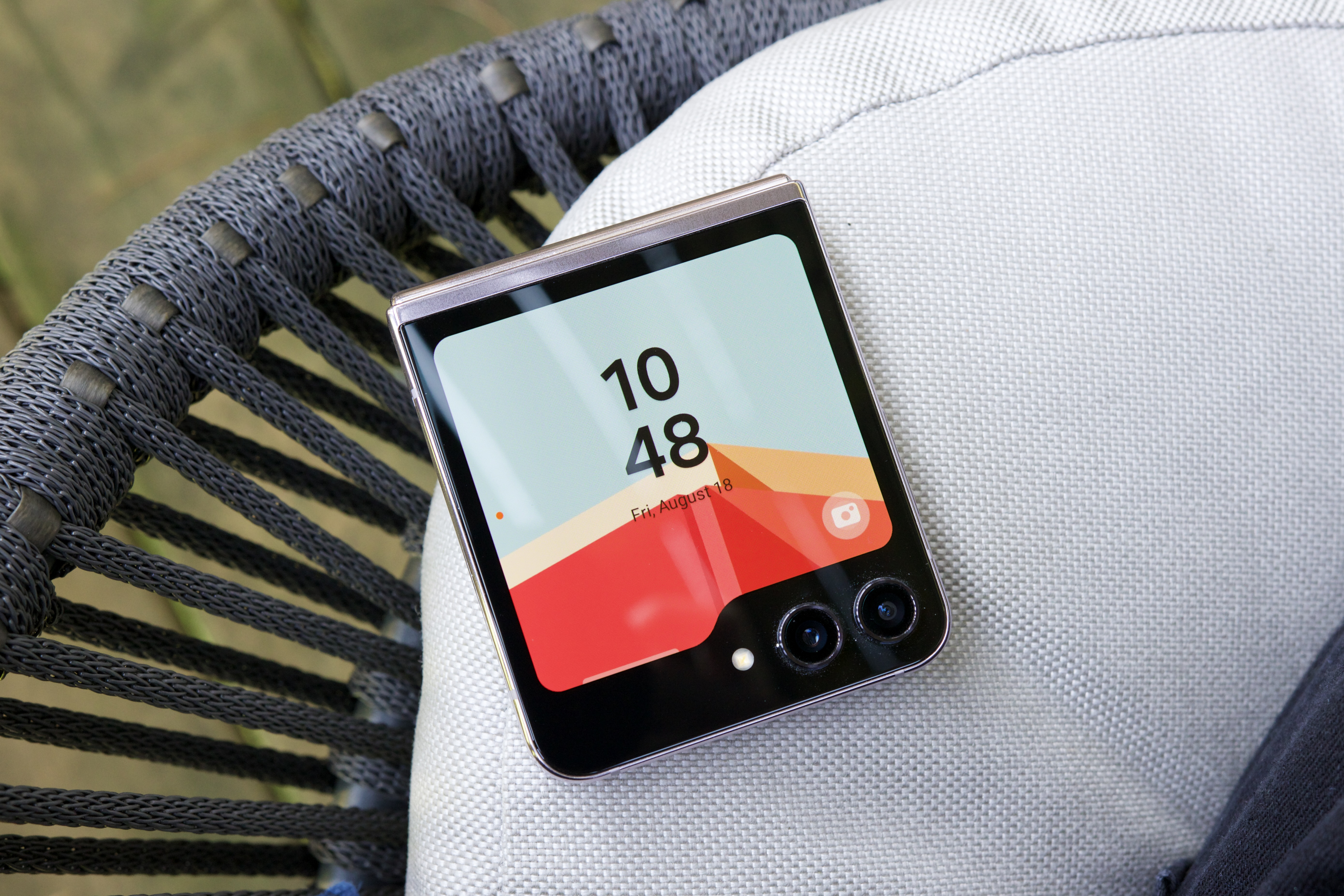
Samsung Galaxy Z Flip 7: Everything you need to know


Summer is fast approaching, and that means it won’t be long before we see Samsung’s new Galaxy Z Flip 7 make its debut. While the Galaxy Z Flip 6 is a top-notch foldable, it also felt like Samsung phoned it in last year. That new model offered mostly modest improvements over the Z Flip 5, with the most significant ones being hidden under the hood, like thermal improvements, or generally underwhelming, like a larger cover screen that didn’t improve in any other meaningful way.

We’re hoping that Samsung does better with the Galaxy Z Flip 7 this year. The good news is that plenty of leaks and rumors suggest the company is on the right track to hit it out of the park in its seventh inning. Let’s dig in and go over everything we’ve heard so far about what to expect from Samsung’s flagship flip phone this year.

Samsung Galaxy Z Flip 7: Design

We’re not expecting any radical changes in the overall design of the Galaxy Z Flip 7 this year compared to its predecessor. Samsung generally takes a more iterative approach to the design of its foldables, refining the design each year with modest style and usability enhancements rather than making broader changes.

Some rumors have suggested that Samsung could move away from the softer, rounded edges of the Galaxy Z Flip 6 and prior models, adopting a “boxier” aesthetic this year. The theory is that this might be needed to accommodate new displays and a larger batter without compromising its slimness. However, most of the leaked renders we’ve seen indicate that if any such changes occur, they’re likely to be subtle. All the renders we’ve seen suggest that the button placement will remain the same.

The Galaxy Z Flip 7 may grow slightly taller and wider — some leaks have suggested dimensions of 166.6 x 75.2 x 6.9mm, compared to the Galaxy Z Flip 6, which comes in at 165.1 x 71.9 x 6.9mm, but other renders are barely distinguishable from the current model. Unconfirmed rumors point to the possibility of a titanium build, but we’d take those with a grain of salt, as Samsung has thus far reserved that material for its top-of-the-line Galaxy S25 Ultra.

Samsung made some significant improvements to the hinge on the Galaxy Z Flip 6 last year, featuring a new “dual rail hinge” design that offers better shock distribution and moves more fluidly than ever while being rigid enough to let you prop the phone up at any angle. Samsung says that the Z Flip 6 hinge is rated for 200,000 folding and unfolding cycles. We were impressed with what Samsung did here, but it may not be finished if the rumors are accurate. The company has repeatedly said it’s focused on improving its hinges’ long-term reliability and durability as much as possible, and several sources suggest some of those improvements could arrive in this year’s model.

It’s an open question how much practical difference this will make in everyday use, but it could ensure that Galaxy Z Flip 7 owners can continue enjoying a solid and reliable hinge mechanism even if they hold onto their phone for several years. Sadly, there’s been little reporting on whether an improved hinge might also improve dust resistance. The Galaxy Z Flip 6 has an IP48 rating, which provides excellent water protection, but falls short on dust resistance compared to premium non-foldables, which typically carry an IP68 rating. The lower score for dust resistance is mainly due to the hinge and the flexible inner display, and there’s only so much Samsung can do here. Beach sand won’t be a problem — IP48 is enough to protect against particles larger than 1mm — but fine dust may remain an issue.

There’s been no word yet on what colors we can expect the Galaxy Z Flip 7 to arrive in. Samsung typically has some pretty fun shades for its Z Flip series, and we expect that will continue. However, what we’d really like to see is a return of the Bespoke Edition initiative that Samsung from the Galaxy Z Flip 3 and Galaxy Z Flip 4 era.

Samsung Galaxy Z Flip 7: Displays

The Galaxy Z Flip 7 is slated to get some very nice display improvements this year, both inside and out.

Reliable sources, including display analyst Ross Young, believe the main foldable display will grow from the 6.7-inch size that’s been the norm for the past few years to an even larger 6.8-inch or 6.85-inch screen. While the width and height may increase to make room for this larger screen, Samsung is also expected to reduce the bezels.

Samsung’s display division showed off some impressive creaseless screen technology at this year’s Mobile World Congress (MWC), rivaling what we’ve seen in the Oppo Find N5. This has made some hopeful that the Galaxy Z Flip 7 could finally rival what OnePlus, Oppo, and Honor have already managed to pull off. Sadly, we’re not holding our breath on this one, as it’s probably too early for Samsung’s bleeding-edge screen tech to be ready for this year’s model. Multiple reports say Samsung will noticeably reduce the crease in this year’s model, which is still good news, but it may not go away entirely until the Galaxy Z Flip 8 comes around next year.

Meanwhile, the cover screen is rumored to become both larger and more functional. Most reports agree on a 4-inch display — a healthy increase from the 3.4-inch one of the Galaxy Z Flip 6. Some reports call it a “full-sized” or “full-width” screen, suggesting it could cover most of the front. Again, some of this increase will come from slimmer bezels. There’s a preponderance of evidence for this new cover screen, including comments from Young, leaked CAD renders, and images of early Z Flip 7 case designs.

Several sources suggest Samsung’s goal is to finally make the cover screen fully functional. Previous Galaxy Z Flip models limited the cover screen mostly to notifications, quick settings, and widgets. Even when the display went from 1.9 to 3.4 inches on last year’s Galaxy Z Flip 6, Samsung did little to improve the experience — it just made it bigger. The 720 x 748 resolution and 60Hz display made everything look sluggish and fuzzy, and you still couldn’t run apps on it without fiddling with settings and third-party tools.

We’re hoping that Samsung has listened to user feedback and taken a cue from the Motorola Razr Plus, which has a cover screen that leaves Samsung in the dust; a 4-inch display that’s just as limited as the current 3.4-inch one would be a major disappointment. Based on everything we’ve heard, the outlook is good, but we won’t know for sure until Samsung unveils this year’s foldables.

Samsung Galaxy Z Flip 7: Camera

While the Galaxy Z Flip 7 is expected to take a nice leap forward in screen technology, it doesn’t look like Samsung will do the same for its camera system. By all reports, this year’s model will feature identical camera specs to the Galaxy Z Flip 6: a dual-camera array with a 50-megapixel (MP) primary wide lens and a 12MP ultra-wide, joined by a 10MP selfie camera under the main display.

Some of those cameras may gain new sensors under the hood for better light sensitivity and color reproduction, but most of the camera improvements will likely come from a more powerful image signal processor (ISP) inside this year’s model and the AI computational photography improvements from a more advanced neural processing unit (NPU).

Along those lines, Samsung may introduce more AI-driven features for editing and optimizing photos, further expanding its Galaxy AI Suite like it did for the Galaxy S25 lineup earlier this year. However, most of those also came to older Galaxy S-series and Z-series phones, so they may not be unique to the Galaxy Z Flip 7.

Samsung Galaxy Z Flip 7: Specs

There’s been a running debate among analysts and leakers about whether this year’s Galaxy Z Flip 7 will pack in Qualcomm’s custom Snapdragon 8 Elite for Galaxy or Samsung’s own flagship Exynos 2500 chip. Early speculation pointed to the Exynos, but Samsung has reportedly been having production problems in producing enough chips to meet expected demand.

This is the same issue that reportedly led to Samsung scrapping its Exynos plans for the global Galaxy S25 models and going all-in on the Snapdragon 8 Elite. While there’s still evidence that the Exynos 2500 could be used in the rumored Galaxy Z Flip FE, it’s looking more likely that the Galaxy Z Flip 7 will follow the S25 lineup and go exclusively with Qualcomm chips, at least for its first run. North American models will likely use the Snapdragon 8 Elite either way, as Samsung hasn’t used Exynos chips in any of its flagships sold in the U.S. since 2015 and in Canada since 2016.

Memory and storage specs are likely to remain unchanged this year. The Galaxy Z Flip 6 was available in 256GB and 512GB storage capacities, both with 12GB of RAM, and all rumors point to the same for the Z Flip 7, so don’t hold your breath for a 1TB model.

Samsung Galaxy Z Flip 7: Battery and charging

The Galaxy Z Flip 7 could see a modest battery size increase, with reports pointing to a 4,300mAh cell — a 7.5% bump from the 4,000mAh battery in the Galaxy Z Flip 6. However, the real battery life improvements will likely come from other efficiency improvements, both technical and practical.

The Snapdragon 8 Elite chip has already proven itself a winner in battery efficiency, and several rumors suggest that the new displays will adopt a more power-efficient Color Filter on Encapsulation (CoE) technology, or what Samsung Display calls Eco²OLED. This first came to the Galaxy Z Fold 3 and has been refined on subsequent Z Fold models. There have also been rumors it could appear on next year’s Galaxy S26 Ultra.

Potential cover screen usability improvements will also offer a more practical way of increasing battery life. Since a four-inch panel draws less power than a 6.85-inch screen, the more you can do with the phone closed, the longer the battery will last. Most Galaxy Z Flip users find themselves flipping their phones open several times a day, even just to read an email or text message. If our experience with Motorola’s recent flip phones is any indication, we expect Galaxy Z Flip 7 users will need to do this far less often.

Leaks from early prototype testing indicate that the Galaxy Z Fold 7 could run for nearly an hour longer on a single charge despite having the same battery as its predecessor. This makes us optimistic that we can expect comparable improvements for the Galaxy Z Flip 7.

Unfortunately, there’s some bad news on the charging front: According to information from China’s 3C certification database, the Galaxy Z Flip 7 is expected to retain the same paltry 25W wired charging speeds as its predecessors. That’s disappointing but not altogether surprising; Samsung tends to take a conservative approach to charging speeds. The specific reasons for this aren’t entirely clear, but it helps reduce excessive heat in a cramped folding design and ensures the battery stays healthier in the long term.

Samsung Galaxy Z Flip 7: Software and features

In a surprising twist, the Galaxy Z Flip 7 could be one of the first Samsung phones to launch with One UI 8. That’s thanks to Google releasing Android 16 earlier than usual this year, with the next major release expected to land in June.

This means that Android 16 will be out by the time the Galaxy Z Flip 7 launches. It’s unlikely Samsung wants to be left behind, so it’s reportedly been hustling to have One UI 8 ready to go in time to take advantage of all the latest Android enhancements.

In addition to upgraded health tracking features, Audio Sharing, and enhanced anti-theft protections, Android 16 offers a native Desktop mode for the first time, allowing users to project a Chrome OS-like interface onto a larger screen. This has led to speculation that Samsung might include DeX support on the Z Flip 7 to provide its own desktop computing experience rather than simply relying on what Android 16 offers.

Some have even suggested that DeX could work with Samsung’s Flex Mode, allowing it to be used as a dedicated webcam for video calls on a larger screen. Nevertheless, these rumors remain speculative, and it’s equally possible that Samsung may choose to retire DeX in favor of Android’s more standard desktop mode.

Beyond the Android 16 features that One UI 8 will embrace, it’s a safe bet that we can also expect to see some new Galaxy AI features show up. There’s been no word on what these might be, and much of what Samsung has offered so far has leaned more toward the gimmicky. Most of the really useful ones, like Circle to Search, Magic Editor, and Gemini Live, come from Google, not Samsung.

Samsung Galaxy Z Flip 7: Release date and pricing

There’s been no reliable information about when Samsung plans to release the Galaxy Z Flip 7, but the odds are on a July event. While Samsung’s summer Galaxy Unpacked events were typically held in August, the company switched things up in 2023 by moving to July 26 for the Galaxy Z Flip 5 reveal. That continued into 2024, when Samsung went even earlier, with a July 10 event in Paris to unveil the Galaxy Z Flip 6.

Still, we don’t think that’s a trend. The July 10 event was likely scheduled to beat the 2024 Summer Olympics rather than a sign that Samsung plans to keep moving its events to earlier dates. If anything, the new timing for Android 16 and Samsung’s need to have One UI 8 ready will likely push things into late July or possibly even August.

As for the price, the Galaxy Z Flip 6 got a $100 price bump last year, raising the starting price to $1,099. This makes it more likely that Samsung will hold the line on pricing for this year’s models, which are expected to be available in the same 256GB and 512GB capacities for $1,099 and $1,219, respectively.