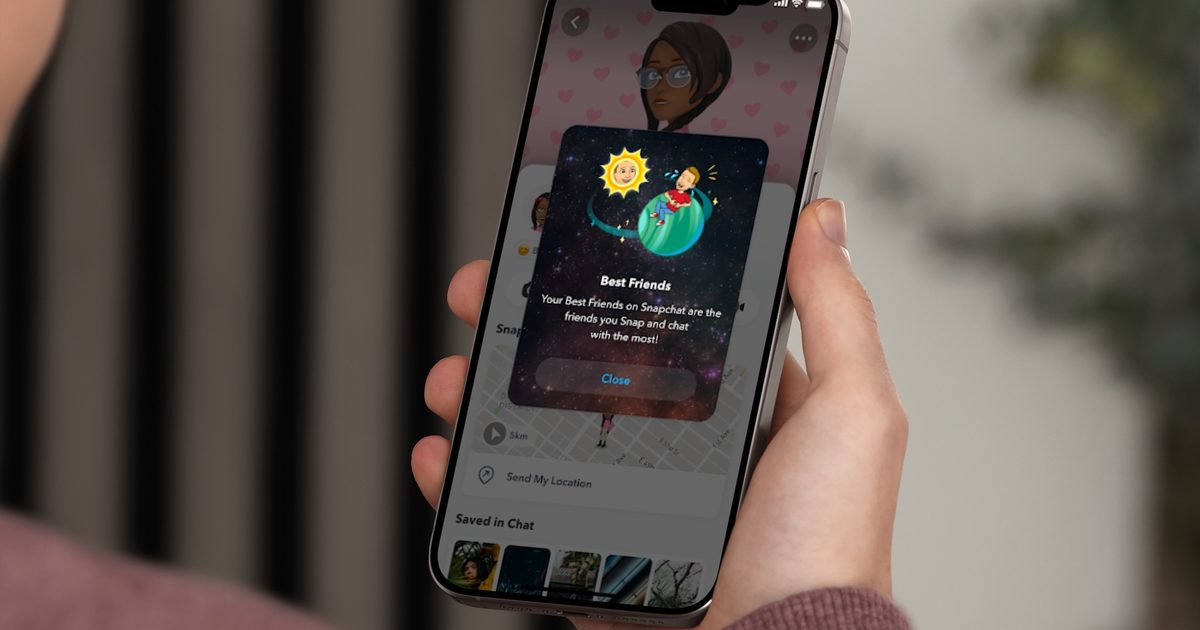
Snapchat+ includes several exclusive features, but few have generated as much curiosity as Snapchat Planets. Part of the app’s Friend Solar System, it transforms your Best Friends list into a planetary ranking, assigning each of your top eight friends a planet based on how often you interact.
From Mercury, which represents your closest friend, to Neptune, which represents your eighth closest, the system offers a quick visual snapshot of your interactions. But what do the different planets actually mean, and how does Snapchat decide who gets which one?
Here’s everything you need to know about Snapchat Planets, including the full order, what each ranking represents, and how to view your own Friend Solar System.

Snapchat Planets order
Snapchat’s Friend Solar System follows the same order as the real solar system, with each planet representing one of your top eight friends. The closer the planet is to the sun, the higher that person ranks in your Best Friends list based on your interactions.
The Snapchat Planets order is:
- Mercury
- Venus
- Earth
- Mars
- Jupiter
- Saturn
- Uranus
- Neptune
And yes, Pluto gets left out again.

Each planet represents a specific position in your Best Friends ranking, rather than a different type of friendship. Mercury is assigned to the friend you interact with the most, while Neptune represents your eighth closest friend. The rankings aren’t permanent and can change over time as your activity on Snapchat changes.

Snapchat Planets: What Each Ranking Means
Each Snapchat Planet represents your position in someone’s Best Friends list rather than a different type of friendship. Mercury is assigned to the friend you interact with the most, while Neptune represents your eighth closest friend, with the remaining planets falling in between.
| Planet | Best Friends Rank | What it means |
|---|---|---|
| Mercury | #1 | You’re their closest Snapchat friend based on interactions. |
| Venus | #2 | You’re their second closest Snapchat friend. |
| Earth | #3 | You’re their third closest Snapchat friend. |
| Mars | #4 | You’re their fourth closest Snapchat friend. |
| Jupiter | #5 | You’re their fifth closest Snapchat friend. |
| Saturn | #6 | You’re their sixth closest Snapchat friend. |
| Uranus | #7 | You’re their seventh closest Snapchat friend. |
| Neptune | #8 | You’re their eighth closest Snapchat friend. |
The planets are simply a visual representation of your Best Friends ranking and aren’t meant to measure the strength of a friendship. As your interactions on Snapchat change, your ranking can change too, meaning someone who’s Mercury today could move to Venus or Mars over time.
How Snapchat’s Friend Solar System Works
The Friend Solar System is one of Snapchat+’s exclusive features, designed to visualize your Best Friends list using the eight planets in our solar system. Instead of assigning numerical rankings, Snapchat represents each of your top eight friends with a planet, making it easier to see where someone stands based on how you interact on the app.
Your position in the Friend Solar System isn’t permanent. As your activity changes, whether that’s through snaps, chats, or other interactions, the rankings update to reflect those changes. Snapchat hasn’t disclosed the exact criteria behind the system, so there’s no guaranteed way to move someone higher in your rankings beyond interacting with them more frequently.
Best Friends and Friends badges
The Friend Solar System only applies to your Best Friends list, but you may also notice a Friends badge on some profiles. The two aren’t the same.
A Best Friends badge indicates that you and another user are among each other’s closest Snapchat contacts. A Friends badge simply means you have an active friendship on Snapchat, but the ranking isn’t necessarily mutual. In other words, someone can appear as your Mercury without you occupying the same position in their Friend Solar System.
How to see your Snapchat Planet
Once you understand how the Friend Solar System works, finding your Snapchat Planet only takes a few taps. Keep in mind that the feature is exclusive to Snapchat+ subscribers, so you’ll need an active subscription before you can view your rankings.

- Step 1: Open Snapchat.
- Step 2: Go to a friend’s Friendship Profile.
- Step 3: Look for a Best Friends or Friends badge with a gold ring around it.
- Step 4: Tap the badge.
- Step 5: Snapchat will show which planet you are in that friend’s Solar System.
If you do not see a badge, it usually means you either do not have Snapchat+, Friend Solar System is not enabled, or you are not in that person’s visible friend ranking.
How to turn on Snapchat Planets
Before you can use Snapchat Planets, you need Snapchat Plus. Pricing can vary by region and plan, so the safest way to check the current cost is inside the Snapchat app or through Snapchat’s subscription page. Snapchat also offers multiple Plus-related plans in some regions, and availability can vary.
Once you have Snapchat Plus, you may still need to turn on Friend Solar System manually.
- Step 1: Open Snapchat and go to your profile.
- Step 2: Tap your Snapchat Plus membership card or banner.
- Step 3: Open the Snapchat Plus feature management page.
- Step 4: Find Solar System or Friend Solar System.
- Step 5: Toggle it on.
