Sequoia’s Matt Miller is exiting the firm after making headlines earlier this year


The writing was on the wall, seemingly. 

Sequoia Capital partner Matt Miller announced on Wednesday that he’s leaving the powerhouse outfit after a 12-year career to build his own new firm focused on European founders. He added he will remain a venture partner with Sequoia and maintain his board seats while fleshing out the “specifics of what is to come next.”

London-based VCs like Saul Klein, Tom Hulme, Mattias Ljungman, and Miller’s colleague Luciana Lixandru congratulated Miller, who moved to the city in 2021 to lead Sequoia’s expansion into Europe. 

Still, few could be surprised by Miller’s news –  not after he tussled at the start of the year with former colleague Michael Moritz, who Miller reportedly tried and failed to oust from the board of the fintech Klarna almost immediately after himself joining it. Sequoia soon after apologized for supporting the move, replacing Miller with another Sequoia investor, Andrew Reed.

Buddy.ai is using AI and gaming to help children learn English as a second language


In 2014, Ivan Crewkov moved his family from Serbia to the U.S. as his startup, Cubic.AI, was preparing to launch a Kickstarter campaign for its smart speaker. A week before the campaign was supposed to go live, Amazon launched its Echo smart speaker, rendering Cubic.AI essentially dead in the water.

“It was a disaster,” Crewkov told TechCrunch. “It made zero sense to compete with Amazon and Google; we ended up selling the company [two years later].”

But the experience wasn’t a total loss. Moving his family from Serbia to the U.S. meant putting his daughters, used to speaking Russian at home, into English-speaking schools. His eldest daughter started working with an online tutor, and when Crewkov realized that the tutor was reading scripted answers, the idea behind his next and current startup, Buddy.ai, was born.

“I just realized that we could probably create an AI character that would do the same things if lessons are scripted,” Crewkov said. “My daughter struggled; she was our first tester and our first user.”

Buddy.ai is an animated, multimodal, conversational character tutor meant to help children learn English as a second language. The company works as a subscription app that consumers can download. The company has also started working with schools in countries like Brazil as well.

Crewkov said that despite their background working in voice-based AI, it was challenging to get the business off the ground. When they started, they thought they would be able to get the product to market within six months, a goal Crewkov now refers to as “naive.” Instead, it took years.

Because the product is aimed at children, the company had to navigate the Children Online Privacy Act (COPA) and similar laws in other countries. Plus, it’s a tough problem to crack. The AI had to be trained not just to understand human voice, but understand children’s voices speaking in languages they didn’t fully know yet.

“We are trying to understand a 4-year-old Brazilian girl who is trying to say her first words in English at the same time is a 4-year-old Arabic girl from Saudi Arabia,” Crewkov said. “Completely different accents and completely different languages. We just started collecting data in countries that there were no hardcore regulation like COPA and trained the first model on that data.”

But the company prevailed, and now seven years later the company is approaching 55 million downloads and works with more than 22 million students annually.

Buddy.ai just raised a $11 million seed round led by BITKRAFT Ventures with participation from One Way Ventures, J Ventures, and Point72 Ventures, among others.

Crewkov said that fundraising for Buddy.ai was tough from the beginning, and despite the rise of interest in AI, this round was still a slog. He said they spoke to 186 investors to close this seed round. BITKRAFT just happened to be the second firm they spoke to, and Crewkov said that they were the perfect fit for what his company was doing.

“We were specifically interested in finding a fund with expertise in the gaming field and that’s why we are so in love with BITKRAFT,” Crewkov said. “Children treat Buddy as a game. A fun fact is most of the downloads are actually made by children who just want to play with buddy.”

The company plans to invest all of the capital into product development. Crewkov said that despite the company’s age and traction, thus far he considers the tech to be pretty underdeveloped. Buddy.ai plans to hire a head of game design and a head of UX design with this latest round.

Crewkov added that a big push for the company is to add on more languages and continue to build out its relationships with schools.

Buddy.ai is not the only company looking to use AI characters to help people practice a new language. Univerbal is another that has raised $2 million in venture capital. Loora has raised $21.3 million. Buddy.ai’s approach of focusing on children learning English as a second language helps it stand out.

“We just believe that the future is hybrid where AI tutors and AI agents can really help teachers,” Crewkov said. “You just need to provide a lot of practice, practice daily. We will never had enough teachers to do that, it’s the prefect applications to AI.”

Hollywood’s Olivia Wilde launches a VC firm


Actress Olivia Wilde, famous for her roles in “Tron: Legacy” and “Don’t Worry Darling,” quietly launched venture firm Proximity Ventures late last year, according to Bloomberg.

She launched the early- and growth-stage investment fund with Neil Sirni, formerly of Roc Nation’s venture division Arrive; Jason Mack, formerly of Mack Ventures; and Santi White, the musician also known as Santigold.

The firm plans to invest in companies that are in the consumer and enterprise sectors. The firm has already inked four investments, including Pendulum Therapeutics, a biotech company.

Proximity expects to hold a first close next month.

TechCrunch reached out to Proximity Ventures for comment and will update if we hear back.

13 companies from YC Demo Day 1 that are worth paying attention to


Famed Silicon Valley startup accelerator Y Combinator on Wednesday kicked off its two-day “Demo Day” event that showcases what the most recent YC batch, S24, companies are building.

Unsurprisingly, AI companies dominated the day, with startups looking to apply the technology to problems like estate planning and settlements, Elayne; automating clinical trial data, Baseline AI; and helping companies get goods through customs, Passage.

Sectors like fintech, healthcare, and web3, which dominated YC cohorts of the past, were noticeably quieter, or completely absent, from Wednesday’s presentation.

Here are the companies worth paying attention to from the first day of Demo Day. Spoiler alert: Pretty much all use AI.

What it does: Automates moving baggage at airports with robots

Why it’s a fave: This seems like an ideal use case for robots, considering that collecting and moving baggage at airports is an entirely manual process, which can also be dangerous. This may also be technology that airports would actually be willing to pay for.

What it does: AI automation of clinical trial documents

Why it’s a fave: I’m a fan of anything that is aiming to make clinical trials work better and run faster, considering how important they are in the process of getting new drugs and treatments to market. The company claims it can save companies $18 million in costs and lost revenue, which seems like a notable improvement.

What it does: AI-powered estate planning and settlements

Why it’s a fave: As someone who has watched a family member navigate this process, I’m glad someone is building a better solution. Plus, the fact that Elayne is looking to reach consumers through their employers is a smart way to get more people thinking about this before they have to.

What it does: Automated testing for AI voice agents

Why it’s a fave: There are so many startups building customer support AI systems, but do they work? I think Hamming’s strategy of testing out these AI customer service bots is a needed service in this growing ecosystem.

What it does: Data centers in space

Why it’s a fave: This company stood out because it seems like an extreme moonshot, and yet it’s already landed customers and is launching a demonstrator satellite next year. The concept of using solar energy to power data centers may be one we might want to consider doing on Earth, too.

What it does: Helps cities optimize transit

Why it’s a fave: Ontra Mobility’s quest to help local governments better utilize their public transit options is a solid one. Most cities don’t have the budget to expand public transit options despite population growth, so figuring out a smarter way to utilize what options they already have makes sense.

What it does: AI-assisted customs support

Why it’s a fave: Considering how easy it is for consumers to get packages held up by customs, I can only imagine how complicated the importing process is for companies moving a lot of goods across the border all the time.

What it does: AI Price optimization

Why it’s a fave: This is a super interesting approach to ecommerce pricing. Promi’s AI looks to help companies offer data-informed fluctuating discounts to customers that change based on interest and activity. This makes a lot of sense.

What it does: TurboTax for building rebates

Why it’s a fave: Personally I’m a fan of any company that helps consumers or other companies unlock the government incentives they are eligible for. I like RetroFix’s approach in particular because it’s unlocking government money for contractors to make buildings more sustainable.

What it does: Automates government approvals for construction projects

Why it’s a fave: This is the kind of application AI was made for. SchemeFlow’s software helps construction companies automate technical reports shrinking the process to minutes. Further impressive, the young company has already generated reports for more than 400 construction projects.

What it does: Synthetic datasets for vision models

Why it’s a fave: There is only so much quality data available for large language models to train on, which leaves many LLM companies tempted to get data from sources they shouldn’t — or aren’t allowed to. Help stop AI companies from illegally scraping data? Sounds like a good goal to me.

What it does: Network of in-space refueling stations

Why it’s a fave: The space industry is booming; many entrepreneurs are looking to build and send satellites, rockets, and other devices up into space. Building a company that services this growing economy seems like a smart strategy.

What it does: Helps businesses become employee owned

Why it’s a fave: The company’s mission to help companies transition into employee owned is a novel one. Selling a company to its employees helps create wealth for the employees and generally results in a bigger payout for the seller. Sounds like a win-win.

SparkLabs closes $50M fund to back AI startups


SparkLabs — an early-stage venture capital firm that has made a name for itself for backing OpenAI as well as a host of other AI startups such as Vectara, Allganize, Kneron, Anthropic, xAI, Glade (YC S23) and Lucidya AI — is gearing up to double down more startups in the space. The VC firm announced Tuesday that it has closed a new $50 million fund, AIM AI Fund, which will back AI startups out of its own AIM-X accelerator in Saudi Arabia as well as other AI startups across the globe.

SparkLabs’ new fund and its wider investment aims underscore the bigger trends that have swirled around artificial intelligence for the last few years. The explosion of interest in generative AI in particular has led to a surge of startups in the space, as well as a rush of investors looking for the next Open AI — or at the least, a startup that a bigger company might snap up as it looks to sharpen its own AI edge.

It also points to how the AI opportunity continues to widen beyond Silicon Valley. AIM-X is an AI-focused startup accelerator that SparkLabs launched earlier this year in the kingdom as part of its AI Mission, a national initiative to bolster AI technology over the next five years.

There has been a significant increase in AI startups on a global scale over the past few years. As of March 2024, more than 210 AI unicorns, valued at over $1 billion, have emerged, per the Edge Delta report. Yet despite it being a global phenomenon, the U.S. overall still leads the pack for founding the most AI startups between 2013 and 2022 with 4,633 startups, according to the report.

About 35% of SparkLabs’ new fund will support accelerator participants, with the remaining 65% targeted at making Series A and Series B investments beyond Saudi Arabia, according to co-founder and CEO of SparkLabs Bernard Moon.

“The accelerator will seek a minority allocation for Saudi Arabia or MENA investments, about 10%-20%,” Moon said. “The majority will be just the best AI startups regardless of location… I assume the majority in the U.S.”

The average check size for accelerator participants will be $200,000, but it can go up to $500,000 in unique situations, Moon told TechCrunch. The Series A and Series B investments will be between $1 million and $5 million, Moon added. It aims to invest between 50 and 70 companies in total from the fund.

SparkLabs did not name its limited partners, but Moon said its LPs include a government fund of funds.

Its first batch will be announced live at the GAIN Summit (Global AI Summit) in Riyadh next Tuesday, September 10. Moon exclusively told TechCrunch that SparkLabs has already invested in 14 startups, the first batch, via the AI fund:

  • viACT: a Hong Kong-based AI video analytics for workplace safety and construction management.
  • IdeasLab: a New York-based startup that has built AI solutions for analyzing body movements without using sensors
  • Ahya: a Pakistan-based startup that has built an AI-powered climate software for measurement, analysis, reporting, reduction of emissions, and transacting carbon offsets.
  • Swirl: a video platform in India that uses AI to help brands connect with customers on their websites and mobile apps through features like videos, user-generated content (UGC) reviews, video ads, and live shopping.
  • Contents.com: an AI content creation platform in Italy
  • Orko: a Singaporean AI-enabled EV fleet management platform
  • Layla: an AI-powered travel startup in Germany
  • Roughneck AI: a San Francisco-based multimodal real-world data platform for deep learning applications
  • Arctech Innovation: a startup that spun out from the London School of Hygiene & Tropical Medicine, using AI to create sensor-enabled products for the detection of pests and diseases
  • OptimHire: an AI-enabled recruitment platform in San Francisco
  • WideBot AI: an Arabic generative AI platform in Riyadh
  • Orbo AI: a Mumbai-based startup that has built an AI-powered tool to help beauty brands boost loyalty, engagement, and sales.
  • Vyrill: an AI-powered video intelligence and marketing platform in San Francisco
  • Stack Tech Farm: an agritech startup that specializes in vertical farming in Berlin.

SparkLabs has more than 14 funds across the globe and two funds in Saudi Arabia. It has invested in over 550 startups globally.

Ben Horowitz Declares War on Michael Moritz


A social media spat between billionaire tech investors is raising questions about the journalistic independence of three-year-old news outfit SF Standard, after a reporter representing the outlet reached out to sources for a story about VC Ben Horowitz and his wife Felicia.

The Standard’s sole backer is another longtime VC, Michael Moritz, and on Thursday night, in a tirade on the X platform, Horowitz called the “coming article” a “cheap hit piece” directed by Moritz and accused Moritz of “having his fake disinformation ‘newspaper’ fabricate hit pieces on his business rival, me.” Horowitz’s business partner, Marc Andreessen, later waded in to echo the accusations and lob a few more insults for good measure.

TechCrunch has reached out to both Moritz and SF Standard Executive Editor Jon Steinberg for comment. Moritz has yet to respond, but in an emailed statement to TechCrunch, Steinberg writes: “I can confirm [reporter] Emily Shugerman is working on a story about the Horowitzes for the San Francisco Standard. Beyond that, I can’t comment on the substance of our piece prior to publication.”

The Standard has previously covered news about Horowitz and Andreessen; it has also published news about Moritz. Interestingly, some of its coverage has been about thousands of acres of rural land north of San Francisco that is being acquired by tech entrepreneurs and investors, including both Moritz and Andreessen.

Winning a Gold medal is a lot like being a VC, according to Olympic champion Kristen Faulkner


Kristen Faulkner’s astonishing Olympic success of two gold medals stems from lessons learned from her former career as a venture capitalist.

Faulkner was an associate investor at Threshold Ventures, and at Bessemer Venture Partners before that, leaving the VC world in 2021 to pursuing cycling. She wasn’t initially scheduled to ride in the 158-kilometer (98-mile) road cycling race but took her teammate Taylor Knibb’s spot at the last minute. Faulkner passed the favorites to win gold that day. She won a second medal as part of the gold-winning US women’s velodrome track cycling team.

“As a VC, you sit down with entrepreneurs every single day who are going to do something they’re passionate about. They have these big ideas. They’re taking risks,” she told Fortune, add that such thinking helps her win races. “If a VC thinks there’s a 50% chance the company is going to be successful, that doesn’t mean they go 50% all-in for the company. When you invest, assess the risk and make your decision, but then you go all-in. You don’t look back. You have to commit. I think that’s something that shaped me.”

Farmblox puts the control into farmers’ hands with its AI-powered sensor-reading platform


Nathan Rosenberg, the founder of farm automation platform Farmblox, said if there is one thing to know about trying to sell technology to farmers, it’s that you can’t tell them what to do.

“[Farmers] are multigenerational,” Rosenberg told TechCrunch. “It is not a profession, it’s more a community, a way of life, and you need to respect that. You can’t come in as a Silicon Valley tech person and tell them what to do.”

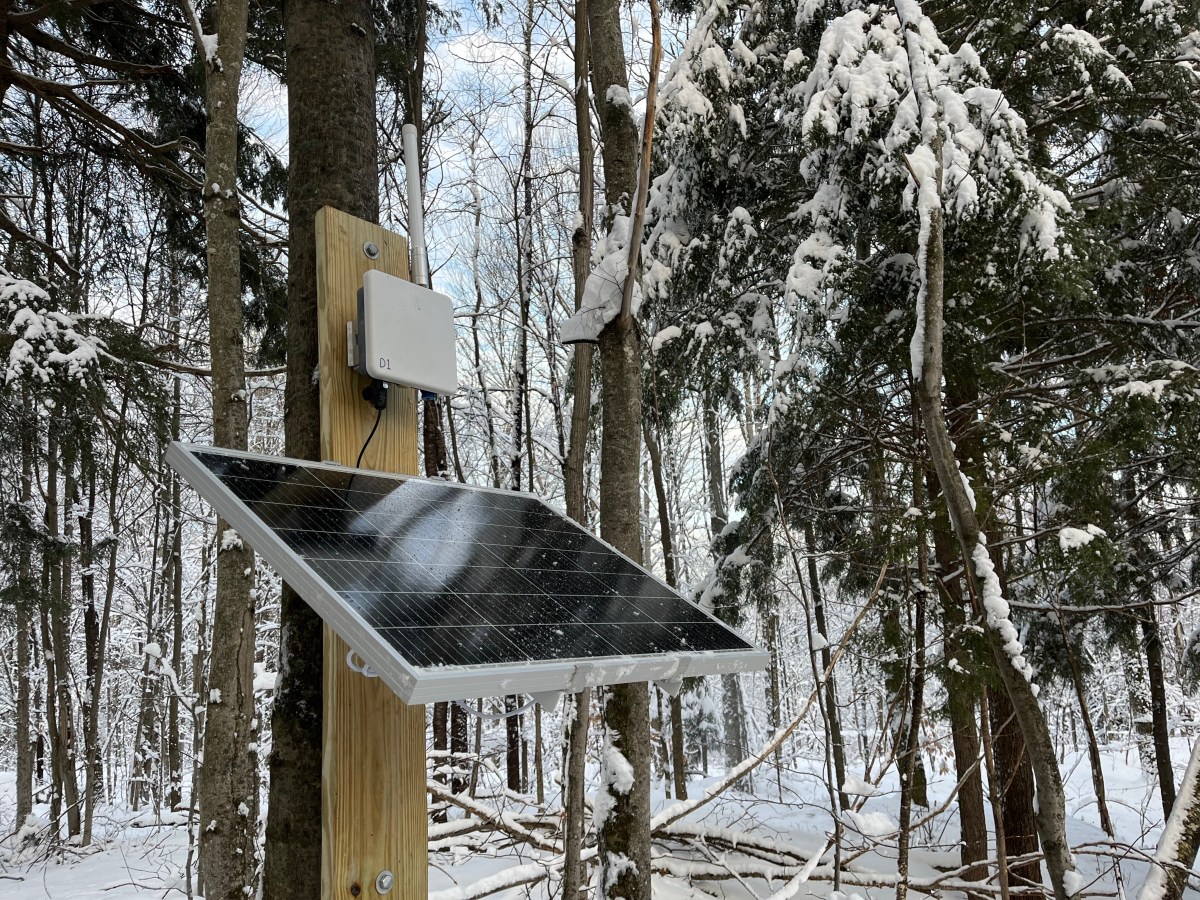
Rosenberg said that’s why his startup Farmblox is approaching agtech a little differently than companies that have come before it. The startup created a solar-powered connected monitor; farmers hook it up to the third-party sensors they are already using, allowing them to track things like soil moisture levels and water waste in a less-manual way. That information is translated back to an AI-powered automation platform that farmers can check from anywhere.

“If you say I can increase your yield with this fancy AI thing, they aren’t going to believe that, but they will believe in not having to go out and check on this specific thing,” Rosenberg said.

The company signed on 55 farms in 18 months, and Rosenberg credits this to the fact that Farmblox gives farmers the control to customize and implement the systems themselves.

“It’s very important for us that the farmer install us themselves,” Rosenberg said. “We don’t do white glove service. Of course we are here if they need it, but they do it all themselves with very little documentation.”

Rosenberg said Farmblox is meant to help solve the biggest issue facing farms right now: labor shortages. Farmblox is meant to help farms reduce the number of people they need to work on a farm at a given time. He said that when he was a teenager, he had a part-time job on an organic farm that involved just walking around constantly to check sensors. It wasn’t efficient. Farmblox looks to automate that.

The company now covers more than 14,000 acres of farm land with Rosenberg using his earnings as a top three developer on Minecraft to bootstrap the startup. Farmblox just raised $2.5 million in a seed round led by Hyperplane with participation from Slow Ventures, MHS Capital and Service Provider Capital.

Vivjan Myrto, the founder and managing partner at Hyperplane, told TechCrunch he got introduced to Farmblox at a startup event held by his Boston-based firm. Hyperplane had backed a handful of other agtech startups and through that, Myrto discovered that a growing problem for farms will be the increasing shortage in water.

While Farmblox isn’t specifically focused on saving water or water waste, it can help farms track that. The fact that the company has already seen the traction, didn’t hurt either. “We were very impressed that this team has basically bootstrapped this from their dorm room to [more than] 50 customers in 18 months,” Myrto said. “In this industry, automating farms has been very costly and very cost prohibitive. What is unique about Farmblox is the bay station is solar powered and very cheap. It has data and sensors that are way ahead of everyone else.”

Farmblox started with high-margin tree-based crops including maple, vineyards and orchards because the sensors can remain on the same trees after a harvest; with other crops like tomatoes, the whole plant is pulled up each season. Rosenberg said he expects the startup will move down into lower-margin crops in the future.

The company will use the seed funding to expand to more farms.

“We are building tools around not just monitoring and giving real-time data to the farmer but really connecting that with automation flows to create new and exciting bundles of solutions that they can deploy on the farm,” Rosenberg said.

ICONIQ Growth raises $5.75B seventh flagship fund


ICONIQ Growth has raised $5.21 billion across two funds associated with the seventh growth fund family, according to SEC filings. However, the firm’s actual fundraise was $5.75 billion, according to a source familiar with the firm. 

The late-stage investment unit is a part of ICONIQ Capital, which launched in 2011 as a private office managing capital of some of the most prominent and wealthiest people in tech, including Mark Zuckerberg and Jack Dorsey, has met its target of $5.75 billion, according to meeting information from New Mexico State Investment Council, the Wall Street Journal reported in March 2022. 

ICONIQ Growth didn’t immediately respond to a request for comment. 

The fund size is a substantial increase from Iconiq’s Fund VI target of $3.75 billion. 

ICONIQ Growth’s latest fund haul is impressive, given that many other large-growth investors failed to reach their targets by a long shot. Most notably, Tiger Global closed its latest venture capital fund at $2.2 billion, the firm’s smallest fund since 2014, Bloomberg reported. Tiger initially planned to raise $6 billion, less than half its predecessor vehicle of $12.7 billion the firm closed in March 2022. 

The two giant funds aren’t in exactly the same position. Tiger Global was widely criticized for investing capital too quickly at exorbitant prices during the 2020 and 2021 tech boom (though it always pushed back on the idea that it was overpaying). And, unlike Tiger Global, which has been actively selling secondary stakes to realize liquidity, ICONIQ Growth has been shopping for secondary positions, according to two sources.

The entity’s fundraise likely means that its backers are relatively pleased with the firm’s investment strategy. 

ICONIQ Growth has realized several dozen exits from its portfolio in recent years, including the IPOs of Snowflake, Airbnb, GitLab and HashiCorp, according to PitchBook data. In 2023, ICONIQ Growth invested $1.1 billion into 22 companies, it says, and its portfolio includes startups like Drata, Canva, Ramp, ServiceTitan, Writer and Pigment.

The firm’s Fund VII-B has raised $3.95 billion from 291 investors, while Fund VII closed on $1.26 billion from 462 backers, according to regulatory filings.

ICONIQ Growth’s seventh vehicle will invest in 20 to 25 tech companies,  according to meeting information from New Mexico State Investment Council, Buyouts Insider reported reported in March 2022.