Apple updated the AirPods Pro with a USB-C charging case in September 2023. Other changes at the time included improved IP54-rated dust resistance for both the earbuds and the case, and lossless audio with Apple’s Vision Pro headset.
Apple says all of its refurbished products undergo “full functionality testing” and are “put through a thorough cleaning process and inspection.”
Keep in mind that Amazon is currently selling brand new second-generation AirPods Pro with a USB-C charging case for $189.99 in the U.S., which is a much better deal than Apple’s refurbished store is offering for the earbuds.
Note: MacRumors is an affiliate partner with Amazon.
The “Apple ID” era is officially over. The transition from “Apple ID” to “Apple Account” went from a rumor to an official announcement to something that has now been fully completed. As of this week, the account.apple.com website is fully updated with Apple Account branding. “Apple ID is now Apple Account,” the page says. “You can still sign in with the same email address or phone…
In select U.S. states, residents can add their driver’s license or state ID to the Wallet app on the iPhone and Apple Watch, providing a convenient and contactless way to display proof of identity or age at select airports and businesses, and in select apps. The list of states where the feature is available currently includes Arizona, Maryland, Colorado, Georgia, Ohio, Hawaii, and most recently…
Following over three months of beta testing, iOS 18 was finally widely released to the public on Monday, September 16. The update is available in the Settings app under General → Software Update on the iPhone XS and newer. Below, we have highlighted eight key new features included in iOS 18, and Apple shared a complete list of new features and changes last week. Note that Apple…
It’s the end of an era. It has been confirmed that the latest iPhones do not come with Apple stickers in the box, breaking a 17-year tradition dating back to the original iPhone. Marques Brownlee shared an unboxing video that confirms the new iPhone 16, iPhone 16 Plus, iPhone 16 Pro, and iPhone 16 Pro Max do not include Apple stickers in the box, as part of Apple’s goal of removing plastic…
Apple was able to introduce significant gains in battery life across the entire iPhone 16 lineup, and new regulatory information from Brazilian agency Anatel (via Blog do iPhone) reveals just how much battery capacity has increased compared to the iPhone 15 lineup. iPhone 16 – 3,561 mAh, up 6.3 percent iPhone 16 Plus – 4,674 mAh, up 6.6 percent iPhone 16 Pro – 3,582 mAh, up 9.4…
Wednesday September 18, 2024 11:34 am PDT by Juli Clover
Apple today released a new firmware update for all AirPods Pro 2 and AirPods 4 models. The AirPods Pro 2 firmware has a build number of 7A302, up from 7A294, and the AirPods 4 firmware has a build number of 7A304. There is no word yet on what’s included in the firmware, but it comes just a week after Apple last updated the AirPods Pro 2 firmware to add iOS 18 features like support for head…
Update: Young has since said under-display Face ID is no longer expected for the iPhone 17 Pro. His previous response was sent in error. Original story follows. While the iPhone 16 series just began arriving to customers today, there are already rumors about the next-generation iPhone 17 series. In a post shared on social media platform X on Thursday, display industry analyst Ross…
We’ve got a clue for today’s Wordle ready and waiting to go—simply scroll down until you see it and enjoy the instant boost it brings to your Sunday game. On the way there you’ll probably notice our tips too, designed to give every guess a quick and easy boost. Need more? Then you’ve got more. The answer to the September 22 (1191) Wordle’s around here too, just click and win.
Wow, that went from very wrong to very right in an instant, and only took one final guess to properly polish off. Brilliant. Wonderful. So when’s the next Wordle? Tomorrow? Fine. If your game didn’t go as well as mine, take a look at today’s clue. You’ve got this.
Wordle today: A hint
(Image credit: Josh Wardle)
Wordle today: A hint for Sunday, September 22
This word means to instruct or educate. The subject itself could be anything from the letters of the alphabet to astrophysics, so long as learning’s involved it doesn’t matter.
Is there a double letter in Wordle today?
There are no double letters in today’s Wordle.
Wordle help: 3 tips for beating Wordle every day
If you’ve decided to play Wordle but you’re not sure where to start, I’ll help set you on the path to your first winning streak. Make all your guesses count and become a Wordle winner with these quick tips:
A good opener has a mix of common vowels and consonants.
The answer could contain the same letter, repeated.
Avoid words that include letters you’ve already eliminated.
You’re not racing against the clock so there’s no reason to rush. In fact, it’s not a bad idea to treat the game like a casual newspaper crossword and come back to it later if you’re coming up blank. Sometimes stepping away for a while means you can come back with a fresh perspective.
Today’s Wordle answer
(Image credit: Future)
What is today’s Wordle answer?
Finish the week with a win. The answer to the September 22 (1191) Wordle is TEACH.
Keep up to date with the most important stories and the best deals, as picked by the PC Gamer team.
Previous Wordle answers
The last 10 Wordle answers
Previous Wordle solutions can help to eliminate guesses for today’s Wordle, as the answer isn’t likely to be repeated. They can also give you some solid ideas for starting words that keep your daily puzzle-solving fresh.
Here are some recent Wordle answers:
September 21: SEVEN
September 20: SMOKE
September 19: PRESS
September 18: FULLY
September 17: BEAUT
September 16: HONEY
September 15: RECUR
September 14: BROAD
September 13: HARSH
September 12: BRASS
Learn more about Wordle
(Image credit: Nurphoto via Getty)
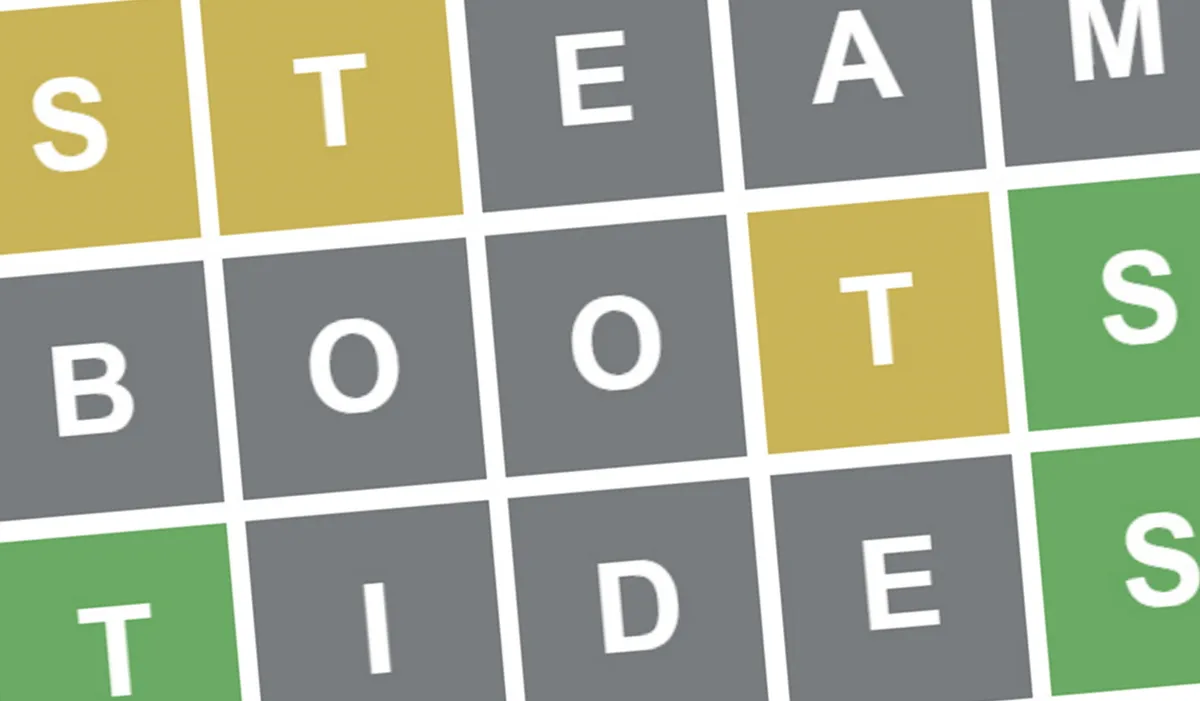
There are six rows of five boxes presented to you by Wordle each day, and you’ll need to work out which five-letter word is hiding among them to win the daily puzzle.
Start with a strong word like ALIVE—or any other word with a good mix of common consonants and multiple vowels. You should also avoid starting words with repeating letters, so you don’t waste the chance to confirm or eliminate an extra letter. Once you’ve typed your guess and hit Enter, you’ll see which letters you’ve got right or wrong. If a box turns ⬛️, it means that letter isn’t in the secret word at all. 🟨 means the letter is in the word, but not in that position. 🟩 means you’ve got the right letter in the right spot.
Your second guess should compliment the first, using another “good” word to cover any common letters you might have missed on the first row—just don’t forget to avoid any letter you now know for a fact isn’t present in today’s answer. After that, it’s just a case of using what you’ve learned to narrow your guesses down to the correct word. You have six tries in total and can only use real words and don’t forget letters can repeat too (eg: BOOKS).
If you need any further advice feel free to check out our Wordle tips, and if you’d like to find out which words have already been used you can scroll to the relevant section above.
Originally, Wordle was dreamed up by software engineer Josh Wardle, as a surprise for his partner who loves word games. From there it spread to his family, and finally got released to the public. The word puzzle game has since inspired tons of games like Wordle, refocusing the daily gimmick around music or math or geography. It wasn’t long before Wordle became so popular it was sold to the New York Times for seven figures. Surely it’s only a matter of time before we all solely communicate in tricolor boxes.
In this SportStream segment, James will discuss How to Elevate your Sports Video with Broadcast Production Tools. Major Broadcasters and regional sports networks have created the production standard that your audience expects. Discover the latest broadcast production tools and techniques to take your sports video content to the next level. Join industry experts as they share insights and demonstrate cutting-edge technologies that enhance video quality and production efficiency. Join SportStream as we introduce the graphics, analysis, replay and other tools that help you deliver the content that your sports fans expect.
It sounds like you’re dealing with a common issue where the Git pull only syncs the commit history without updating your actual code files on the second PC. Since you’re working with two computers using the same account and repo, let’s go through a few steps to troubleshoot and resolve this.
1. Check the Branch
First, make sure both computers are on the same branch. Git won’t update files if you’re pulling on a different branch.
In the terminal on the second PC, run:
git branch
If you’re not on the same branch as your first PC, switch to the correct branch:
git checkout {name}
2. Pull the Latest Changes
It’s possible the pull command isn’t fetching the latest changes properly. Try these commands to ensure you’re pulling the most recent code:
git fetch origin
git pull origin {name}
3. Check for Uncommitted Changes
Sometimes if there are local changes on the second PC, Git won’t apply the new changes from the repo. Run:
git status
If you see any uncommitted changes, you’ll need to either commit or stash them before pulling.
To temporarily stash your changes:
git stash
Then pull the changes:
git pull
Once the pull is successful, you can reapply your stashed changes:
git stash apply
if something doesn’t work let me know.
also I recommend to use a software different from vscode for git, like gitkraken
have a good day
Credit: NASA, ESA, CSA, STScI, Janice Lee (STScI), Thomas Williams (Oxford), PHANGS Team
On a clear night with dark skies, you can catch a glimpse of the Milky Way, a luminous arc stretching across the horizon. To the unaided eye, its translucent clouds are simply beautiful splashes in the night, their grandeur inspiring hundreds of creation myths. But a telescope reveals subtle structures within and outside the Milky Way that show how our own galaxy and others formed, explain their evolution through cosmic time, and even hint at their fate.
A galaxy is a massive collection of gas, dust, and huge numbers of stars and their solar systems, all held together by their mutual gravity. Our own galaxy exists within a neighborhood of closely gathered galaxies known as the Local Group. In the vastness of space, galaxies are arranged in filaments, clusters, and sheets, which form superstructures on a still larger scale.
Estimates of the number of galaxies in the universe range from 200 billion to 2 trillion. Dwarf galaxies may contain less than a thousand stars. At the other extreme of mass, supergiant galaxies can encompass a hundred trillion stars in orbit around the galactic center. The Milky Way also has a supermassive black hole at its core: Sagittarius A* (pronounced “A-star”).
The Milky Way above the Atacama Large Millimeter/submillimeter Array, above the European Southern Observatory in the Chilean Andes, a collaborator in the multi-facility Event Horizon Telescope. Inset: Sagittarius A* as seen through the Event Horizon Telescope. Credit: ESO/José Francisco Salgado, EHT Collaboration
With respect to structure, there are three types of galaxies: spiral, elliptical, and irregular. Scientists also classify galaxies according to the activity at their core, such as a supermassive black hole. Around 10% of known galaxies are active, which means their luminous centers shine hundreds or thousands of times brighter than the combined light of their stars. These active galactic nuclei or quasars are what happens when a supermassive black hole devours a large amount of matter. Jets of high-energy photons blast from the quasar’s rotational poles, reaching tens or hundreds of light years into intergalactic space.
The Milky Way is not considered an active galaxy—at least, not right now—but according to NASA it likely experienced a “burst of activity” within the past few million years.
Spiral Galaxies
By far the most common type of galaxy, spiral galaxies have a bright, dense core of stars collected in a central globe, from which two or more spiral arms extend in a wide, flat disc. Most have a supermassive black hole at their center. (Sagittarius A* accounts for some 4.3 million solar masses, a measurement that won the 2020 Nobel Prize for Physics.)
Spiral galaxies often have roughly spherical halos, composed of gas, dust, old stars, star clusters, and dark matter—invisible material that does not emit or reflect light but still has a gravitational pull on other matter. Clusters of stars form in stellar nurseries, regions rich in gas and dust found within a spiral galaxy’s arms, while older stars can be found throughout the disk and halo.
Spiral galaxies account for the vast majority of galaxies, outnumbering other types by no less than two to one; the Hubble project gives a conservative figure of 60%, while the Sloan Digital Sky Survey’s higher-end population estimate identified as many as 77% of all galaxies as spiral galaxies.
Spiral galaxies, as seen by the JWST. Glowing dust appears in shades of red and orange. Older stars are blue. Diffraction spikes indicate that these galaxies may have central active supermassive black holes. Credit: NASA, ESA, CSA, STScI, Janice Lee and Elizabeth Wheatley (STScI), Thomas Williams (Oxford), PHANGS Team
About two-thirds of spiral galaxies are barred spirals, in which the central disk is stretched out into a ribbon. The Milky Way belongs to this class, as well as our nearest galactic neighbor, the Andromeda Galaxy.
Elliptical Galaxies
Older and scarcer than spirals, elliptical galaxies have shapes ranging from long, narrow ovals to spheres. Unlike spirals, elliptical galaxies don’t have much ambient gas and dust, and they show little discernible organization or structure. Member stars orbit around the galactic core in random directions, and little of the gas needed to form new stars remains.
Honorable Mention: Globular Clusters
Globular clusters are often mentioned in the same breath as galaxies, so they deserve a nod. A globular cluster can contain anywhere from tens of thousands to “many millions” of member stars, and globular clusters are found within nearly all galaxies. The Milky Way has no fewer than 157, but more globular clusters are thought to exist within the innermost regions of the galaxy which are shrouded in an obscuring veil of gas and dust.
Lenticular Galaxies
Lenticular galaxies are a kind of cross between spirals and ellipticals. They have the central bulge and disk common to spiral galaxies, but lenticular galaxies don’t have arms. However, like ellipticals, lenticular galaxies have older stellar populations and not much ongoing star formation.
There are two leading theories about how lenticular galaxies evolved. One suggests these galaxies are late-in-life snapshots of older spirals whose arms have mostly faded or dispersed. The other proposes that they are what remains after the mergers of spiral galaxies, à la the fate that will eventually befall the Milky Way and Andromeda.
In September 2024, the James Webb Space Telescope captured this collision in progress between an elliptical galaxy and a special type of spiral galaxy called a Seyfert galaxy, collectively known as Arp 107. Credit: NASA, ESA, CSA, STScI
Irregular Galaxies
A surprising number of galaxies don’t quite fit the spiral/elliptical archetypes. These strange and contrarious sky objects may have shapes from teardrops to needles, hooks, and rings. They aren’t a special, exotic type of galaxy. Instead, it’s thought that many irregular galaxies might be spiral galaxies seen edge-on, distorted by gravitational lensing, or ancient elliptical galaxies disrupted by greater tidal forces.
On a Cosmic Scale
It’s easy to feel small, looking up at the Backbone of Night. Our Solar System alone is an easy three light years wide, and it’s barely a rounding error in comparison with the galaxy as a whole. The Orion arm of the Milky Way we reside in is a thousand light years thick from bottom to top, and almost a hundred thousand light years wide from edge to edge.
Webb’s First Deep Field (2022) captured a galaxy cluster, SMACS 0723, in truly unprecedented detail. This image contains thousands of galaxies. Credit: NASA, ESA, CSA, and STScI
Galaxies are truly gigantic, but they’re dwarfed by the larger-scale structures to which they belong. The Milky Way galaxy, Andromeda, and all our respective satellites form a cluster known as the Local Group. The Local Group and hundreds of others like it form the Virgo Supercluster, which is itself one of four “lobes” of the Laniakea Supercluster: a cosmic structure of mind-boggling size whose common gravitational center is known as the Great Attractor. With its combined mass of 10¹⁵ M☉, our Virgo Supercluster is perhaps 0.1% of the total mass of the complex—and yet, the Great Attractor has a gravitational pull that suggests a mass ten times the mass of the entire Virgo Supercluster.
Laniakea and its neighboring superclusters are constituent parts of the Pisces-Cetus Supercluster Complex, a gigantic filament almost a billion light years long. Galactic filaments are the largest known structures in the universe. The largest, known as the Hercules-Corona Borealis Great Wall, is thought to be ten billion light years long.
Looking that far out means looking back in time. The most distant galaxies are often also the oldest, so the light we see today shows us a picture of the galaxy as it existed when the light was emitted, billions of years in the past. The very oldest appear to us today as they did just a few hundred million years after the Big Bang. For example, astronomers used the JWST to identify CEERS J141946.36+525632.8 or “Maisie’s Galaxy” formed about 13.2 billion years ago, when the universe was just 390 million years old. Another distant galaxy named GLASS-Z12 has a light travel distance or lookback time of 13.6 billion years, which means it had formed no less than 13.6 billion years ago: well within the cosmic Dark Ages, before reionization of the Universe was complete. But due to the expansion of the universe, its current proper distance is some 33.2 billion light-years.
Redshift
The speed of light is a kind of universal speed limit, and if the universe began 13.8 billion years ago, then you’d think the visible universe could only be 13.8 billion years wide at most. But there’s more to the story. Galaxies like GLASS-Z12 can be so far away because the universe itself is expanding. Scientists first discovered this due to a phenomenon called Doppler shifting, or redshift. Light waves from approaching objects are compressed, which makes them seem shorter and thus “bluer” than they are. Objects moving away from an observer will lengthen and shift toward the red instead. The Z12 in GLASS-Z12’s name describes its Doppler shift or redshift.
In calculating the size of the visible universe, astronomers including Edwin Hubble and Georges Lemaître discovered that light from distant galaxies was redshifted, with an increase in wavelength corresponding to their distance from Earth. If everything was expanding, though, where had it all started? From that central question arose the idea of the Big Bang. Hubble, meanwhile, lent his name to a mathematical law describing the expansion of the universe—and the space telescope that substantiated his work.
Galaxies near and far are a favorite target for Hubble’s spiritual and technological successor, the James Webb Space Telescope, built to investigate (among other things) how galaxies form, grow, merge, and eventually fade. Since its 2021 debut, the JWST has set and broken record after record for the biggest, oldest, and most distant galaxies ever discovered. Another of Webb’s key objectives: to check and refine astronomers’ models of dark matter and the Hubble constant, both of which are key to the expansion of the universe. Cold dark matter may be invisible by normal methods, but it still has a gravitational pull. Invisible or not, if it’s there, the JWST will find it.
The advent of 3D printing technology, or additive manufacturing, has revolutionized traditional manufacturing processes, introducing a shift toward more dynamic and flexible production capabilities. Initially conceived as a tool for rapid prototyping, 3D printing has evolved to play a substantial role in actual production, affecting a wide range of industries from aerospace to consumer goods. This introduction explores how 3D printing integrates into modern manufacturing and why it’s considered a transformative technology.
How Has 3D Printing Transformed the Manufacturing Industry?
3D printing has altered the manufacturing landscape by enabling companies to convert digital designs into physical objects with unprecedented speed and precision. This capability allows for faster product development cycles, as prototypes can be quickly created, tested, and modified. The technology also supports mass customization, allowing for products to be tailored to individual specifications without the need for expensive molds or tooling. As a result, 3D printing is not just a production method but a strategic tool that can enhance competitiveness and innovation.
What Are the Core Technologies Behind 3D Printing?
3D printing encompasses various technologies, each suited to different applications based on their operational mechanisms and the materials they use.
Stereolithography (SLA)
SLA technology uses a laser to cure liquid resin into hardened plastic in a process that builds up layers to form solid objects. This technique is highly precise, making it ideal for creating complex geometries with smooth surfaces.
Fused Deposition Modeling (FDM)
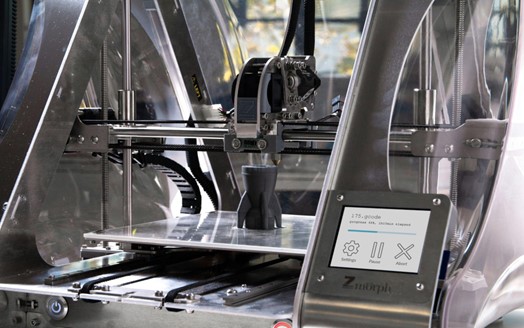
FDM works by extruding thermoplastic filaments through a heated nozzle, layer by layer, to create an object. It is one of the most commonly used 3D printing technologies due to its cost-effectiveness and the ability to use a variety of 3D printing materials.
Selective Laser Sintering (SLS)
SLS technology uses a laser to sinter powdered material, typically nylon, to create strong and durable parts. Unlike SLA and FDM, SLS does not require support structures as the powder acts as its own support.
Digital Light Processing (DLP)
Similar to SLA, DLP technology cures liquid resin with light, but it uses a digital light projector to flash a single image of each layer all at once, making it faster than SLA.
How Do 3D Printers Work?
The process of 3D printing begins with a digital file that represents a three-dimensional object. This file is sliced into thin layers which the printer will then build one at a time from the bottom up. Each layer is printed directly on top of the previous one, gradually creating a fully-formed object from the base upward. The specifics of this process can vary significantly depending on the type of 3D printing technology used.
What Materials Can Be Used in 3D Printing?
The versatility of 3D printing is partially due to the wide array of materials that can be utilized. These include:
Plastics
Thermoplastics are the most common materials for 3D printing, popular for their ease of use and versatility in applications from consumer goods to automotive components.
Metals
Metal printing is used for applications that demand high strength and durability, such as aerospace and automotive parts.
Ceramics
Used for items that require high thermal and chemical stability, ceramics can be 3D printed for specialized applications in electronics and medical implants.
Composites
Composite materials combine plastics with additives like carbon fiber to enhance the strength and durability of printed items without significantly increasing weight.
What Are the Advantages of 3D Printing in Manufacturing?
3D printing brings several benefits to manufacturing that include, but are not limited to:
Customization: Ability to tailor products to individual needs without additional costs.
Speed: Rapid prototype and production speeds that accelerate time to market.
Waste Reduction: Additive manufacturing minimizes waste compared to traditional subtractive manufacturing methods, such as machining.
What Are the Limitations and Challenges of 3D Printing?
Despite its potential, 3D printing also faces limitations and challenges that can include:
Material Limitations: Not all materials can be printed, and some may not meet the same strength standards as traditionally manufactured items.
Costs: High costs of materials and 3D printers can be a barrier to entry for some businesses.
Technological Constraints: The size and complexity of objects that can be printed are often limited by the capabilities of the printer.
The transformative impact of 3D printing in manufacturing is undeniable, promoting innovation, efficiency, and customization. As technology advances, the potential applications and benefits of 3D printing continue to expand, reshaping the manufacturing industry in profound ways.
How Is 3D Printing Used Across Different Industries?
The flexibility and adaptability of 3D printing technology allow it to be employed across various sectors, each harnessing its potential in unique ways to enhance product development, customize products, and optimize supply chains.
Aerospace and Defense
In the aerospace and defense industry, 3D printing is valued for its ability to produce lightweight, complex components that reduce the overall weight of aircraft and spacecraft. This weight reduction translates to improved fuel efficiency and lower costs. Parts such as turbine blades, bracketing, and even entire satellite chassis are now being fabricated using 3D printing methods.
Automotive
The automotive sector utilizes 3D printing for both prototyping and production. Manufacturers are able to produce parts on demand, which reduces inventory costs and waste. Customized parts for high-performance vehicles are also made using 3D printing, allowing for a high degree of personalization and innovation.
Healthcare
In healthcare, 3D printing has a profound impact, particularly in the creation of custom prosthetics, implants, and anatomical models used for surgical preparation. This technology provides patients with devices that are perfectly matched to their individual anatomical requirements, improving outcomes and patient comfort.
Consumer Goods
From custom jewelry and fashion accessories to home decor and even footwear, 3D printing allows consumers to order products that are customized to their personal tastes and needs. It also enables designers to experiment with new materials and complex designs that were previously impossible to create.
Case Studies: Successful Implementations of 3D Printing in Manufacturing
Several companies have showcased the effectiveness of integrating 3D printing into their manufacturing processes. For example, a well-known automotive manufacturer has utilized 3D printing to produce spare parts on-demand, significantly reducing their inventory and logistics costs. Similarly, a major player in the aerospace sector now prints functional parts used in commercial jet engines, showcasing the durability and reliability of 3D-printed components.
Future Trends in 3D Printing for Manufacturing
Looking ahead, 3D printing is set to become even more integral to manufacturing processes. Advances in 3D printing technology are expected to improve print speeds and material properties, expanding the range of applications. The development of new materials and techniques, such as 4D printing where objects can reshape or self-assemble over time, are likely to open new avenues for innovation.
How to Implement 3D Printing in a Traditional Manufacturing Setup
For businesses looking to integrate 3D printing within traditional manufacturing frameworks, several steps can be followed:
Assessment: Evaluate which parts and components are suitable for 3D printing based on their design complexity and functionality.
Training: Invest in training for staff to manage 3D printing technologies effectively.
Equipment Investment: Select the appropriate 3D printers that align with the business’s specific manufacturing needs.
Legal and Regulatory Considerations in 3D Printing
The adoption of 3D printing in manufacturing also raises several legal and regulatory concerns. Issues such as intellectual property rights, particularly with easily replicated designs, pose significant challenges. Furthermore, safety standards and liability in the use of 3D-printed products, especially in critical applications like medical and aerospace, must be rigorously defined and enforced.
What Is the Economic Impact of 3D Printing on Manufacturing?
3D printing can significantly influence the economic landscape of manufacturing by reducing costs associated with storage, waste, and logistics. Moreover, it can spur economic activity by enabling more localized production and reducing the need for imported goods.
How Does 3D Printing Contribute to Sustainability in Manufacturing?
Environmental sustainability is another significant advantage of 3D printing. It offers:
Reduced Waste: Less material is wasted in additive manufacturing compared to subtractive methods.
Energy Efficiency: Advances in technology are continually improving the energy efficiency of 3D printers.
Recycling Capabilities: The potential for using recycled materials directly in the production process.
What Are Common Misconceptions About 3D Printing?
Despite its many benefits, several misconceptions about 3D printing persist. These include the belief that 3D printing is suitable for all manufacturing needs or that it is always a cheaper alternative. In reality, the application of 3D printing must be judiciously chosen, focusing on situations where its unique capabilities provide the greatest benefits.
Conclusion
The transformative role of 3D printing in manufacturing is profound and far-reaching. As it continues to evolve, the breadth of its applications will expand, further embedding its utility in modern manufacturing landscapes. The future of 3D printing promises not only enhanced production capabilities but also the potential to profoundly reshape economic, regulatory, and environmental frameworks within the industry.
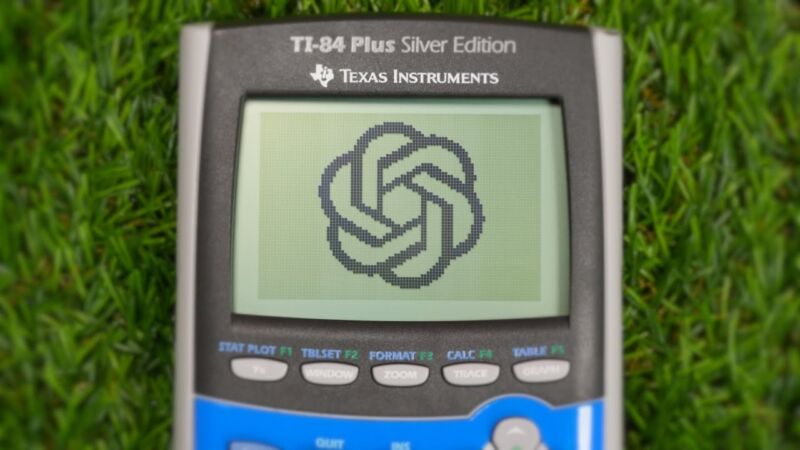
On Saturday, a YouTube creator called “ChromaLock” published a video detailing how he modified a Texas Instruments TI-84 graphing calculator to connect to the Internet and access OpenAI’s ChatGPT, potentially enabling students to cheat on tests. The video, titled “I Made The Ultimate Cheating Device,” demonstrates a custom hardware modification that allows users of the graphing calculator to type in problems sent to ChatGPT using the keypad and receive live responses on the screen.
ChromaLock began by exploring the calculator’s link port, typically used for transferring educational programs between devices. He then designed a custom circuit board he calls “TI-32” that incorporates a tiny Wi-Fi-enabled microcontroller, the Seed Studio ESP32-C3 (which costs about $5), along with other components to interface with the calculator’s systems.
It’s worth noting that the TI-32 hack isn’t a commercial project. Replicating ChromaLock’s work would involve purchasing a TI-84 calculator, a Seed Studio ESP32-C3 microcontroller, and various electronic components, and fabricating a custom PCB based on ChromaLock’s design, which is available online.
The creator says he encountered several engineering challenges during development, including voltage incompatibilities and signal integrity issues. After developing multiple versions, ChromaLock successfully installed the custom board into the calculator’s housing without any visible signs of modifications from the outside.
“I Made The Ultimate Cheating Device” YouTube Video.
To accompany the hardware, ChromaLock developed custom software for the microcontroller and the calculator, which is available open source on GitHub. The system simulates another TI-84, allowing people to use the calculator’s built-in “send” and “get” commands to transfer files. This allows a user to easily download a launcher program that provides access to various “applets” designed for cheating.
One of the applets is a ChatGPT interface that might be most useful for answering short questions, but it has a drawback in that it’s slow and cumbersome to type in long alphanumeric questions on the limited keypad.
Beyond the ChatGPT interface, the device offers several other cheating tools. An image browser allows users to access pre-prepared visual aids stored on the central server. The app browser feature enables students to download not only games for post-exam entertainment but also text-based cheat sheets disguised as program source code. ChromaLock even hinted at a future video discussing a camera feature, though details were sparse in the current demo.
ChromaLock claims his new device can bypass common anti-cheating measures. The launcher program can be downloaded on-demand, avoiding detection if a teacher inspects or clears the calculator’s memory before a test. The modification can also supposedly break calculators out of “Test Mode,” a locked-down state used to prevent cheating.
While the video presents the project as a technical achievement, consulting ChatGPT during a test on your calculator almost certainly represents an ethical breach and/or a form of academic dishonesty that could get you in serious trouble at most schools. So tread carefully, study hard, and remember to eat your Wheaties.
New features in ARES Mechanical 2025 prove that Graebert’s software for mechanical design in DWG is a mature, robust solution that continues to grow.
During Graebert’s neXt event this year, Robert Graebert, Chief Technical Officer at Graebert GmbH, and Dani Ramiro, Marketing Manager at Graebert Japan, provided a detailed overview of ARES Mechanical, including the exciting new features shipped with the version 2025. In this article, we’ll cover the highlights of the presentation, but if you’d like to see the full-length keynote, you can watch a replay on YouTube: “2D Mechanical Drawings in DWG: ARES Mechanical Product Overview.”
The keynote covered the following topics:
The Importance of Supporting Legacy 2D Mechanical Drawings in DWG
ARES Mechanical is Graebert’s solution for mechanical design in the widely used DWG format. It combines powerful CAD tools based on ARES Commander with a full set of industry-specific features to quickly create and modify 2D mechanical drawings.
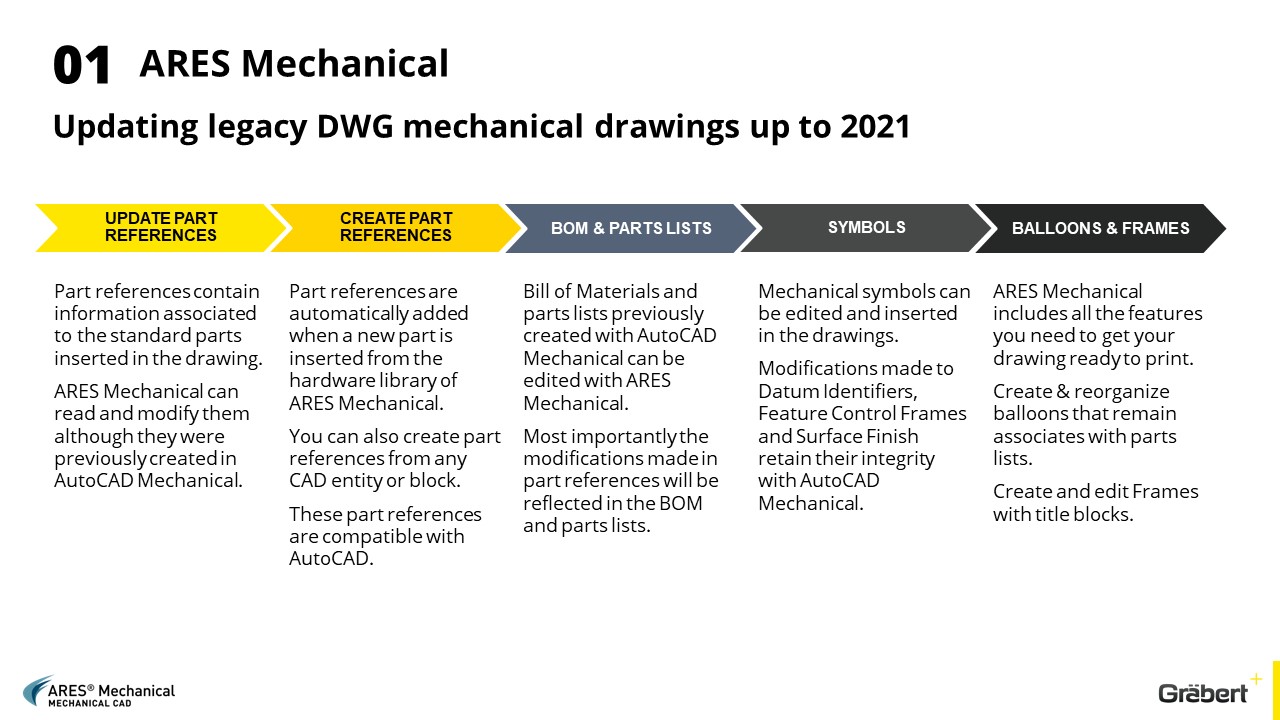
ARES Mechanical supports legacy mechanical drawings created in AutoCAD Mechanical (up to version 2021 of the AutoCAD Mechanical DWG file format). This means ARES Mechanical offers an affordable, practical way to continue working with these mechanical drawings, without being restricted to a single CAD program.
Existing Part References, Parts Lists, Bills of Materials, Balloons, and Symbols are all supported, and are fully compatible with AutoCAD Mechanical. Customers often need to update parts information in part references and produce updated drawings. With ARES Mechanical, these legacy files can be updated and maintain their compatibility with AutoCAD Mechanical when saved.
Why ARES Mechanical Is an Excellent Value
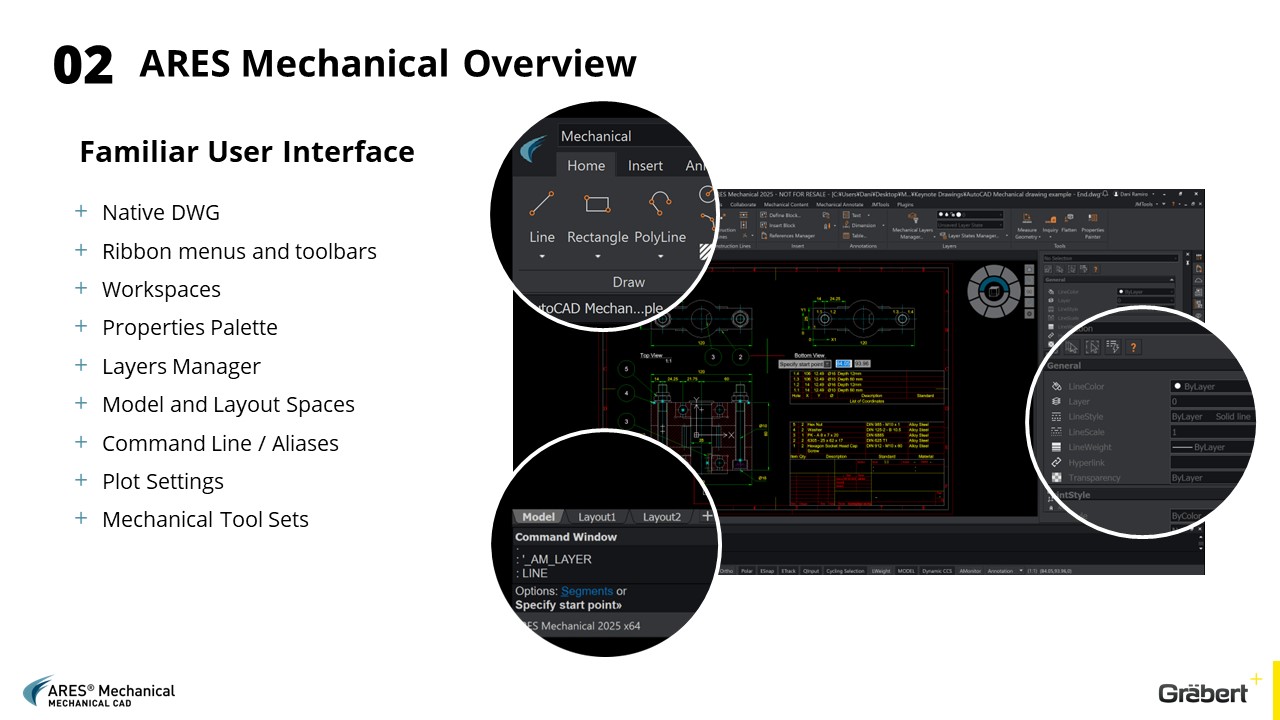
Since ARES Mechanical is based on ARES Commander, it has a familiar user interface, giving users the ability to work with the command line, layers, and customized workspaces, plus much more. They can also choose to display features in toolbars or a ribbon, as desired.
ARES Mechanical includes a Mechanical Workspace, which contains a specialized set of tools for mechanical design. These standardized tools are important to keep consistency across designs, drawings and manufacturing processes.
With this in mind, ARES Mechanical assists with the creation and modification of mechanical drawings according to all leading standards, including ISO, ANSI, DIN, BSI, and JIS.
Furthermore, the support for layer groups and the Mechanical Layers Manager offer significant time savings where these features are commonly used. For example, users may automatically separate layers by parts — even in legacy AutoCAD Mechanical drawings.
In addition to its native support for DWG, ARES Mechanical supports a wide variety of other file formats, including AutoCAD Mechanical DWG up to 2021, PDF, and some of the most common 3D file formats, such as STEP and IGES.
Mechanical Content
Using standardized mechanical content for mechanical design and manufacturing offers several advantages, such as improvements in consistency and efficiency.
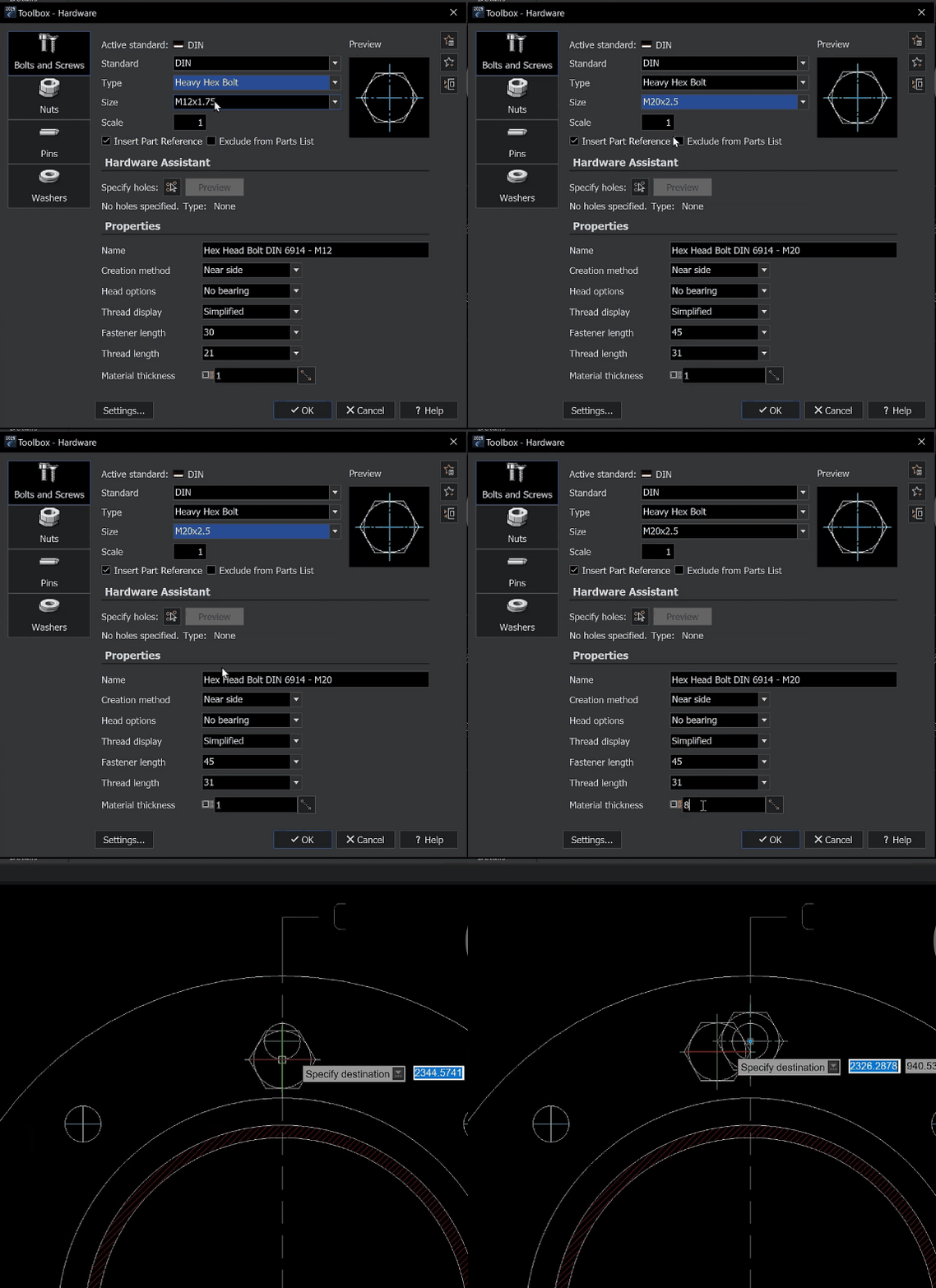
ARES Mechanical includes standard mechanical parts to produce accurate drawings, such as hardware, screw connections, and various hole types. The 3DFindit Palette integrates an extensive library of CAD models from more than 6,000 suppliers directly into ARES Mechanical, allowing users to insert Part References as well.
The ARES Mechanical Toolbox allows users to insert standardized mechanical parts with just a few clicks.
Mechanical Annotations
Mechanical annotations are vital for communicating important information throughout the design and manufacturing process. ARES Mechanical includes standard mechanical annotations that can be read and modified from AutoCAD Mechanical, including Part References, BOMs, Parts Lists, Balloons, Frames, and Symbols.
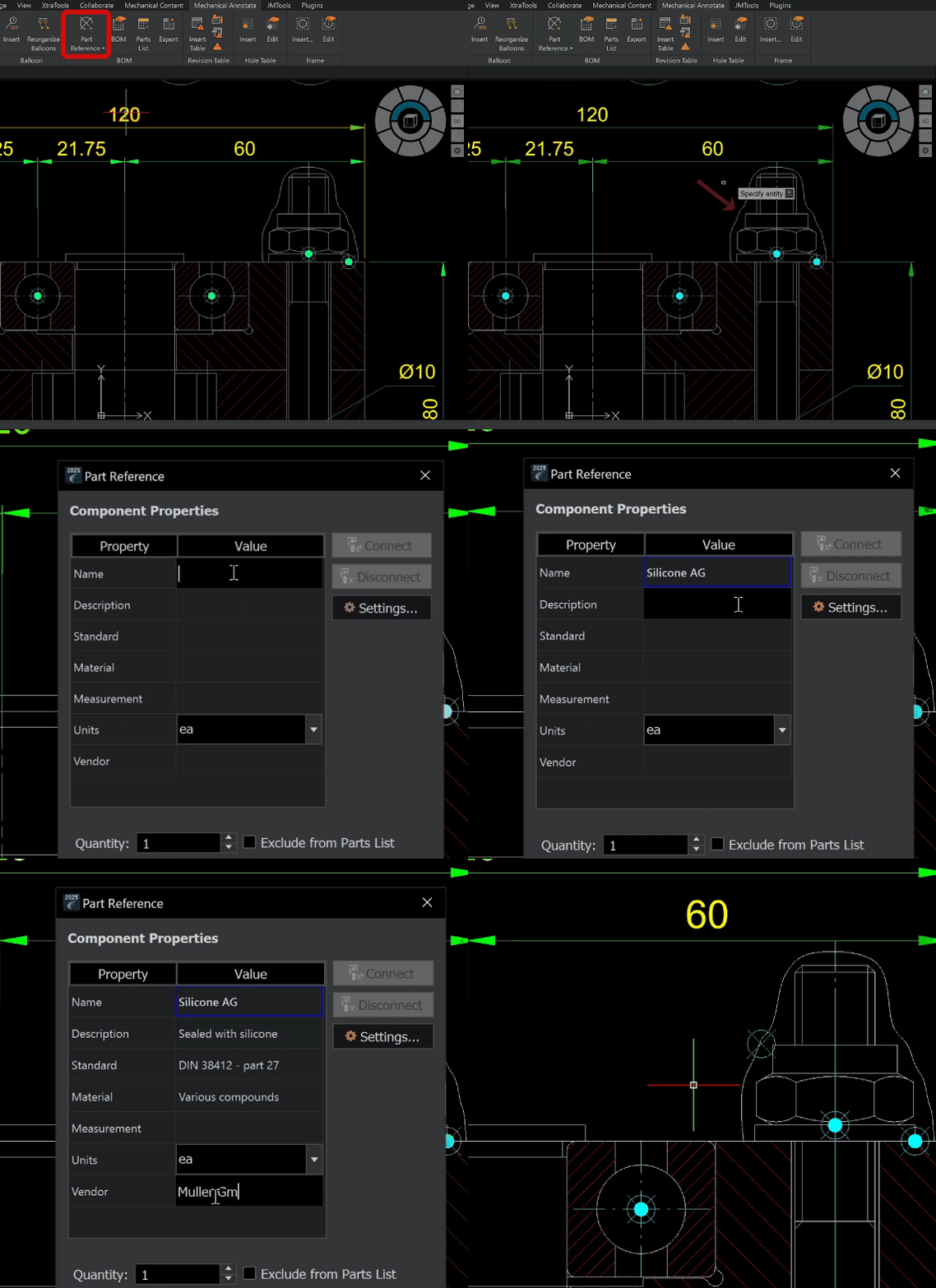
Part References are fully customizable and can be inserted from the Mechanical Annotate ribbon tab.
The Nesting Manager
Traditional 2D CAD software relies on manual methods to prepare drawings for metal cutting, but the Nesting Manager in ARES Mechanical offers precise automated nesting instead, minimizing scrap and optimizing part placement. Users can adjust multiple parameters such as plate size, minimum part and plate clearance, and parts multiplier. The tool can be run multiple times so users can compare results and select the best option.
Run the Nesting Manager multiple times with different sheet sizes to compare results.
New Features in ARES Mechanical 2025
ARES Mechanical continues to evolve as a solid alternative to AutoCAD Mechanical. Read on to learn about the exciting new features included in version 2025!
Support for AutoCAD Mechanical DWG 2021
ARES Mechanical 2025 now supports AutoCAD Mechanical DWG files up to version 2021.
This means that mechanical entities such as Part References, Symbols, BOM, etc. can be opened and modified in ARES Mechanical, and vice versa, maintaining the legacy data.
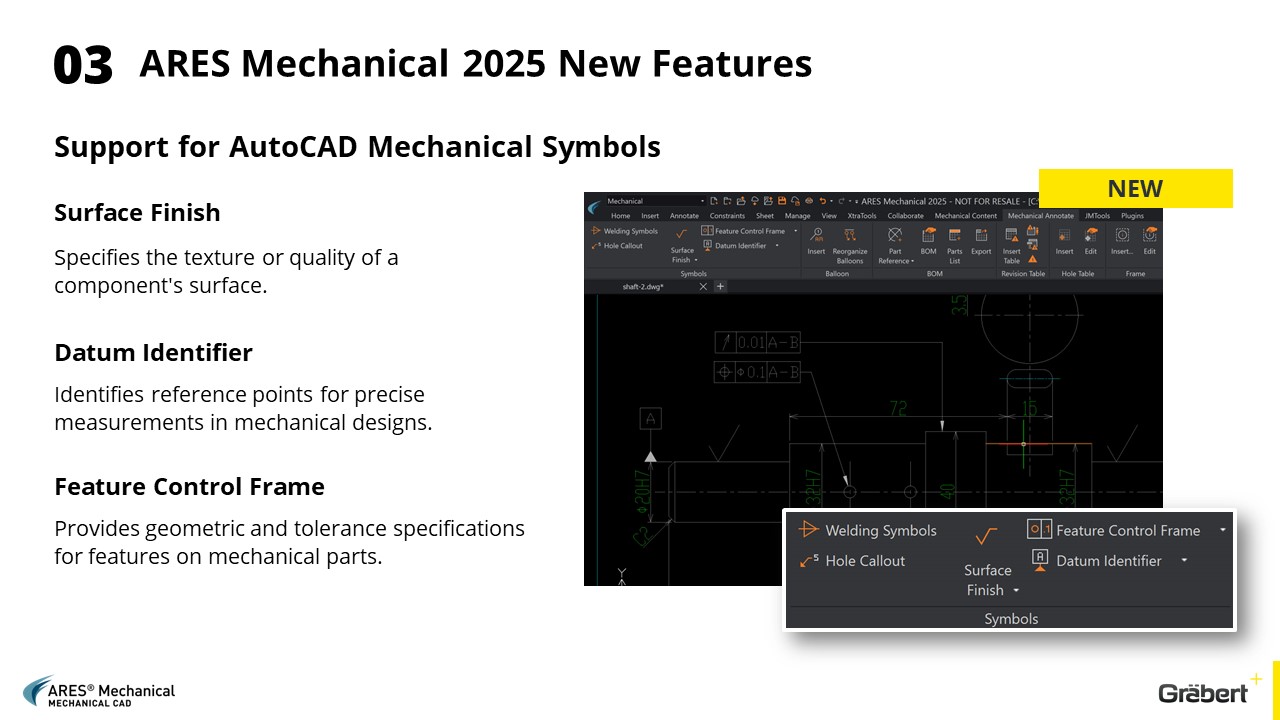
Support for AutoCAD Mechanical Symbols
Essential engineering drawing symbols like Surface Finish Symbols, Datum Identifiers, and Feature Control Frames are now supported.
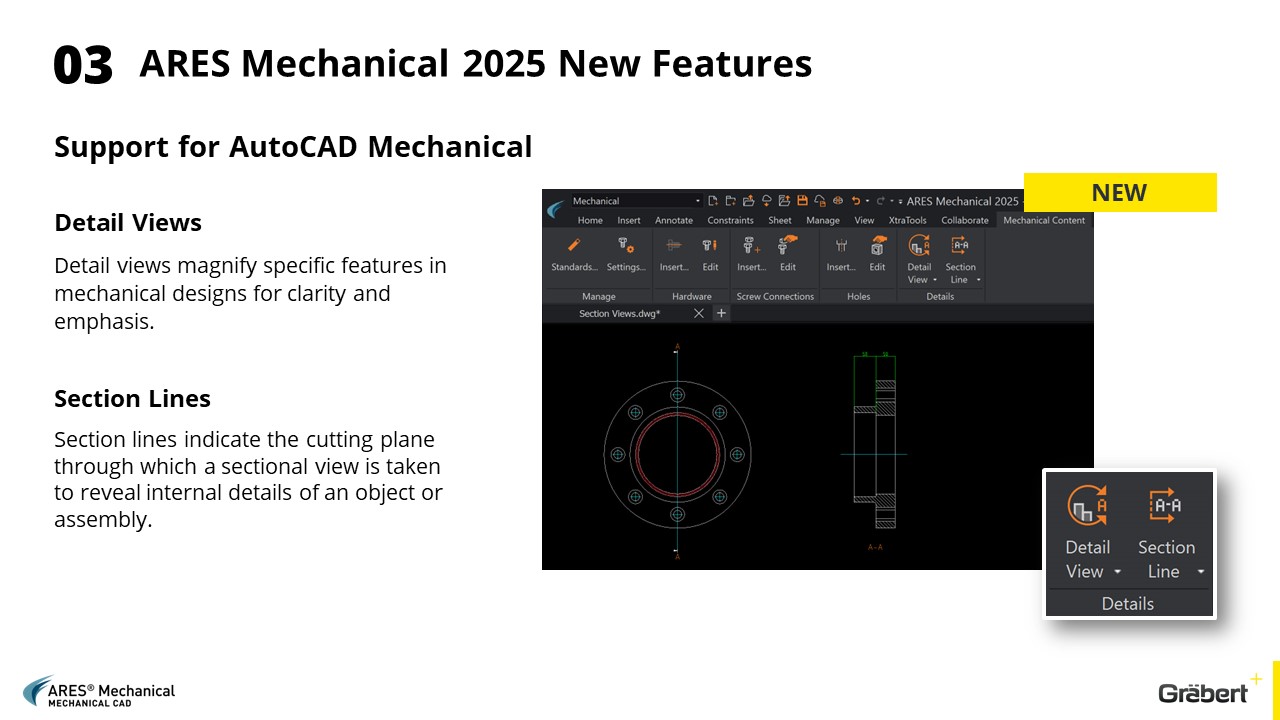
Support for AutoCAD Mechanical Detail Views and Section Lines
Detail Views magnify specific features in mechanical designs; Section Lines indicate the cutting plane through which a section view is taken. ARES Mechanical 2025 recognizes Detail Views and Section Lines created in AutoCAD Mechanical.
JMTools Ribbon
Mechanical drafters frequently invest significant time detailing mechanical parts. To dramatically reduce this time, we have developed a new suite of tools designed to streamline the preparation of these drawings.
ARES Mechanical 2025 includes a new ribbon tab named JMTools, which includes time-saving drafting tools to speed up the creation of 2D mechanical drawings. These include dimensioning tools, drawing tools, and utilities.
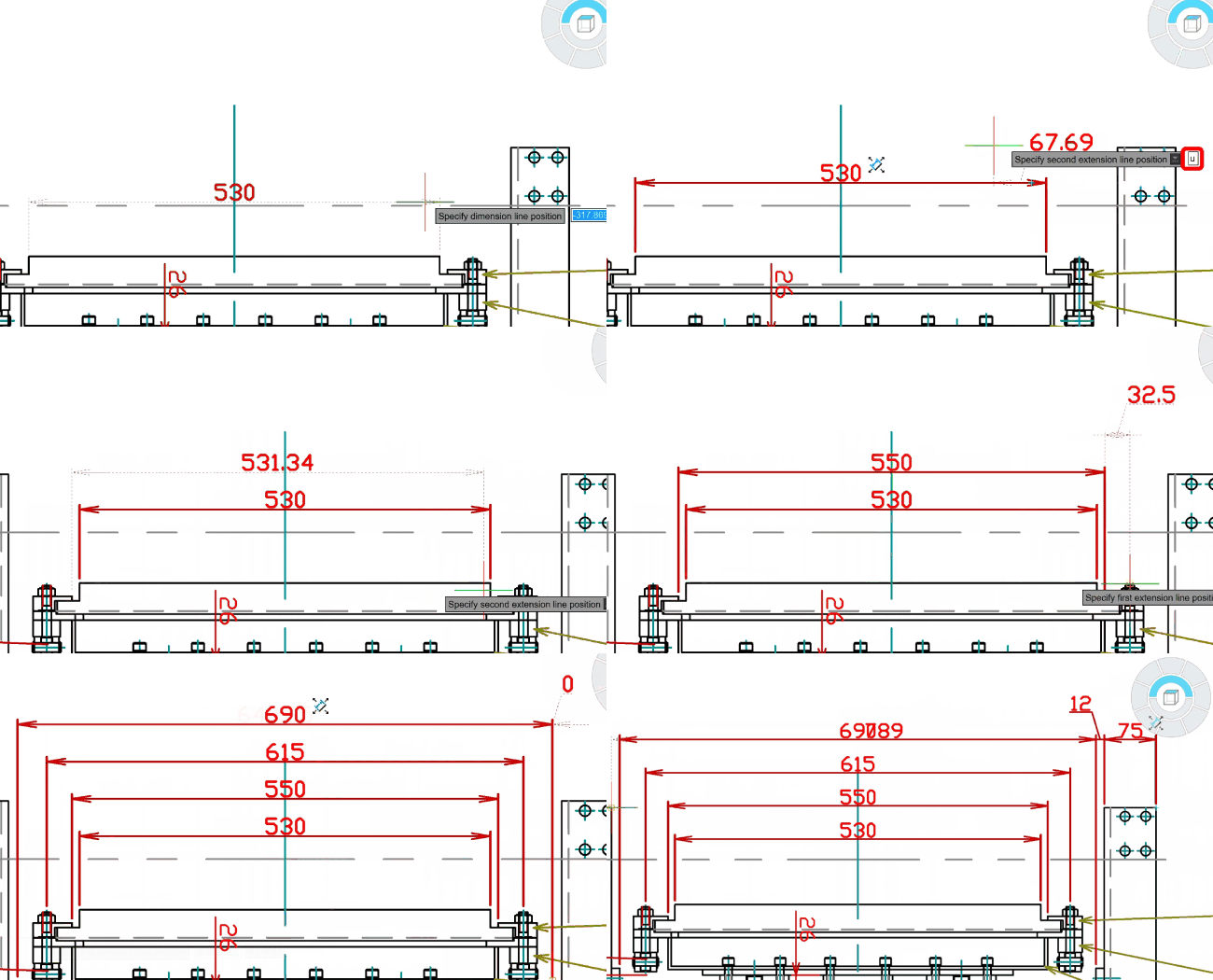
For example pressing the “U” key jumps to the next stacked dimensions, ensuring that these dimensions are equally vertically spaced.
After inserting the dimensions, it is possible to seamlessly connect or divide them using the “Join Dimension” or “Insert Dimension” tools. These efficient tools save valuable time by eliminating the need to delete and re-insert dimensions in case of errors.
The JMTools ribbon includes handy tools such as the ability to draw, insert, and break running dimensions with ease.
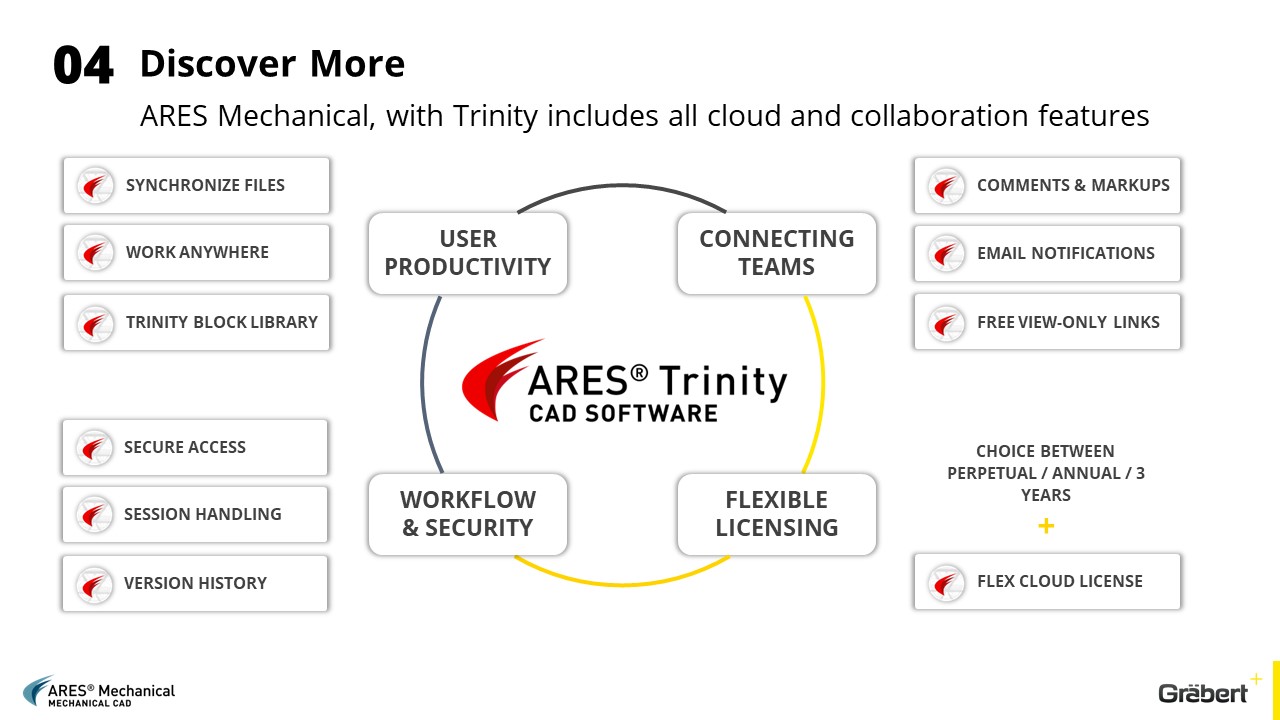
Because ARES Mechanical is based on ARES Commander, users with an ARES Trinity subscription or maintenance plan can benefit from ARES Trinity features for cloud and collaboration, such as synchronizing files over the Internet, view-only links, comments and markups, and email notifications. (Please note, however, that the mechanical features are not yet accessible in ARES Kudo and ARES Touch.) Visit the ARES Trinity page for more information.
Cloud and Collaboration Features in Action
As an example, if a drafter wants feedback on a DWG drawing from a colleague, the Trinity collaboration features allow the drafter to:
Save the DWG to their preferred cloud storage service (Google Drive, OneDrive, Dropbox, etc.)
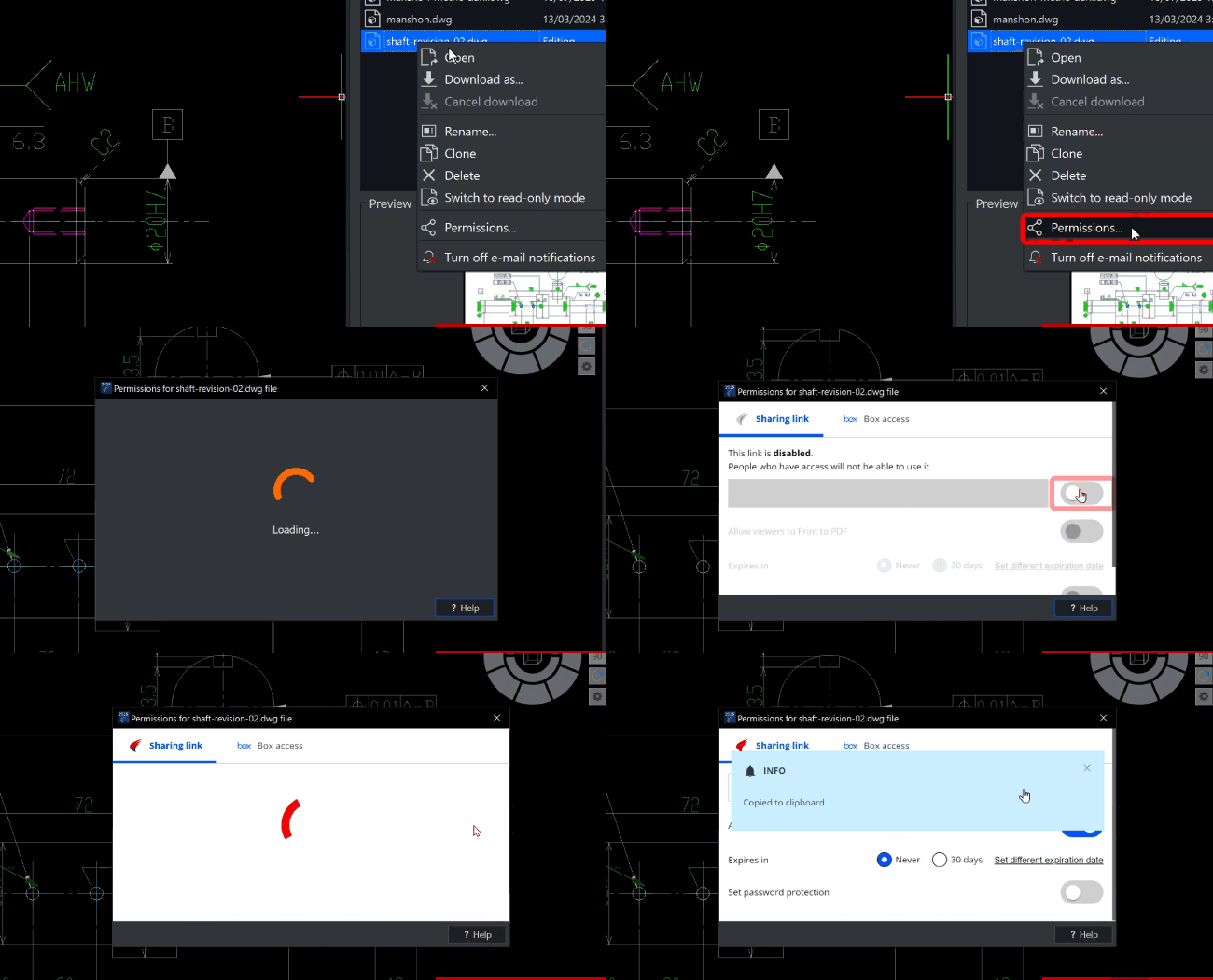
Create a unique view-only link for the colleague to check online, without the hassle of sending PDFs or email attachments.
Automatically receive email notifications when comments and markups are added.
Share your mechanical drawings by creating a View-Only link that can be viewed in any web browser.]
In turn, the colleague can:
Open the generated view-only link in any web browser. The link always ensures access to the latest version of the DWG file.
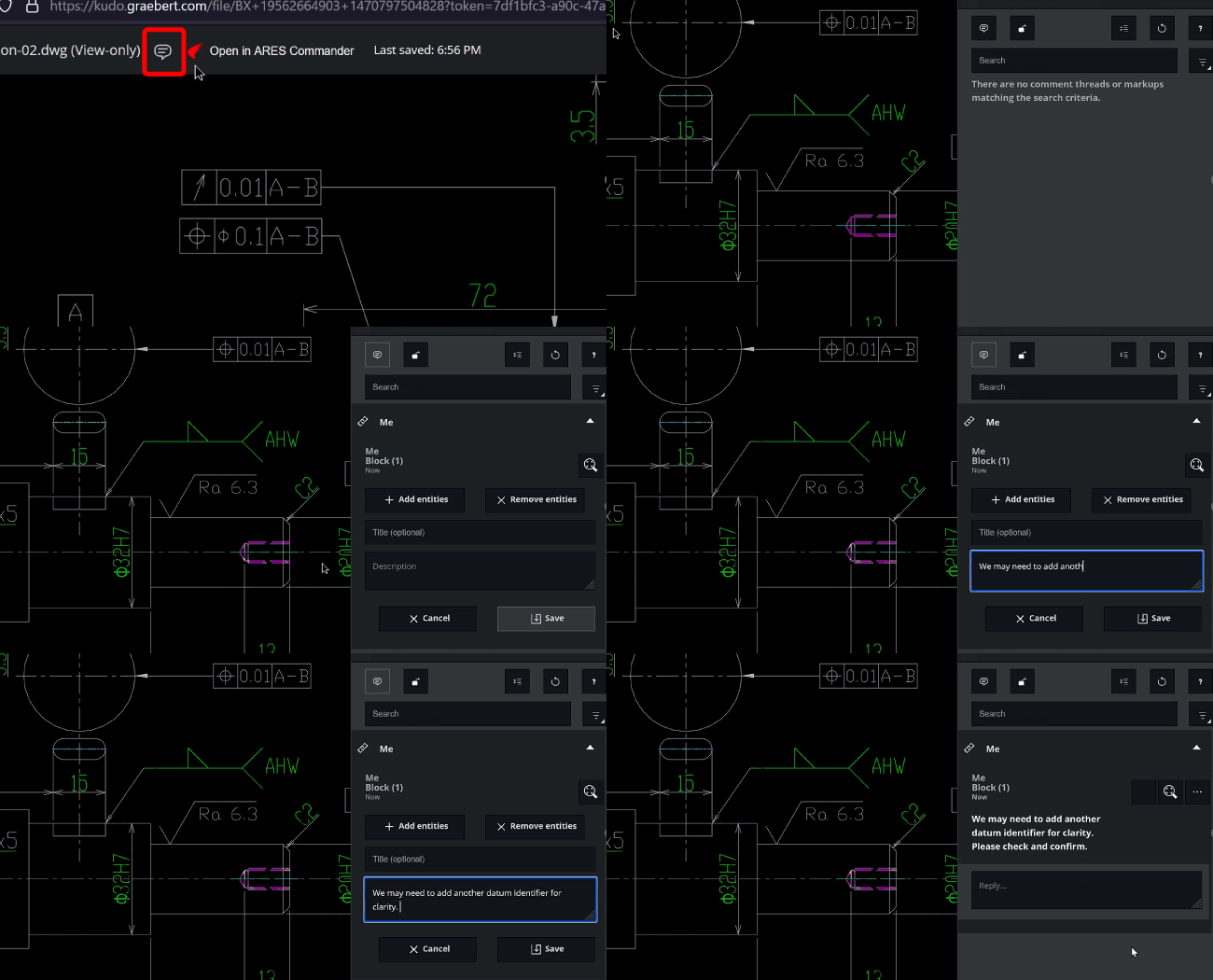
Add comments and markups using a free Graebert Account, which don’t alter the original file, but provide additional information.
Share and leave feedback on DWG drawings using the Comments and Markups palette.]
The Future of ARES Mechanical
At the end of the keynote, a Q&A section was held to address questions about ARES Mechanical:
Question:
What are the challenges of maintaining legacy mechanical data today that ARES Mechanical can help to solve?
Robert Graebert’s answer:“Maintaining legacy mechanical data poses several challenges in today’s digital environment, including compatibility issues, and loss of information. Legacy mechanical data may be stored in outdated file formats or incompatible CAD systems, making it difficult to access and utilize.
ARES Mechanical provides support for a wide range of file formats, including not only common standard formats such as DWG and DXF, but also compatibility with AutoCAD Mechanical DWG files, ensuring seamless interoperability with existing data without the need for complex conversions or data migrations.
Not only that, combined with the online cloud and collaboration features of ARES Trinity, users can better streamline their design work, and keep better track of file updates in real time.”
Question:
What does the future for ARES Mechanical look like?
Robert Graebert’s answer: “We aspire to position ourselves as the premier alternative to AutoCAD Mechanical, and our ongoing efforts are dedicated to crafting a superior CAD program capable of seamlessly replacing it. In recent years, we have intensified our software development to ensure compatibility with AutoCAD Mechanical DWG files within ARES Mechanical, preserving all intelligent data intact. I am confident that we have now reached a level of maturity where prospective users will recognize and value ARES Mechanical’s key advantages, including its robust functionality and diverse range of licensing options.”
ARES Mechanical 2025 Free Trial
With ARES Mechanical 2025, you can open AutoCAD Mechanical DWG legacy drawings and make modifications without losing any data. Speed up your 2D mechanical drafting with ARES Mechanical 2025 today!
A committee of experts from top U.S. medical centers and research institutes is harnessing NVIDIA-powered federated learning to evaluate the impact of federated learning and AI-assisted annotation to train AI models for tumor segmentation.
Federated learning is a technique for developing more accurate, generalizable AI models trained on data across diverse data sources without mitigating data security or privacy. It allows several organizations to collaborate on the development of an AI model without sensitive data ever leaving their servers.
“Due to privacy and data management constraints, it’s growing more and more complicated to share data from site to site and aggregate it in one place — and imaging AI is developing faster than research institutes can set up data-sharing contracts,” said John Garrett, associate professor of radiology at the University of Wisconsin–Madison. “Adopting federated learning to build and test models at multiple sites at once is the only way, practically speaking, to keep up. It’s an indispensable tool.”
Garrett is part of the Society for Imaging Informatics and Medicine (SIIM) Machine Learning Tools and Research Subcommittee, a group of clinicians, researchers and engineers that aims to advance the development and application of AI for medical imaging. NVIDIA is a member of SIIM, and has been collaborating with the committee on federated learning projects since 2019.
“Federated learning techniques allow enhanced data privacy and security in compliance with privacy regulations like GDPR, HIPAA and others,” said committee chair Khaled Younis. “In addition, we see improved model accuracy and generalization.”
To support their latest project, the team — including collaborators from Case Western, Georgetown University, the Mayo Clinic, the University of California, San Diego, the University of Florida and Vanderbilt University — tapped NVIDIA FLARE (NVFlare), an open-source framework that includes robust security features, advanced privacy protection techniques and a flexible system architecture.
Through the NVIDIA Academic Grant Program, the committee received four NVIDIA RTX A5000 GPUs, which were distributed across participating research institutes to set up their workstations for federated learning. Additional collaborators used NVIDIA GPUs in the cloud and in on-premises servers, highlighting the flexibility of NVFLare.
Cracking the Code for Federated Learning
Each of six participating medical centers provided data from around 50 medical imaging studies for the project, focused on renal cell carcinoma, a kind of kidney cancer.
“The idea with federated learning is that during training we exchange the model rather than exchange the data,” said Yuankai Huo, assistant professor of computer science and director of the Biomedical Data Representation and Learning Lab at Vanderbilt University.
In a federated learning framework, an initial global model broadcasts model parameters to client servers. Each server uses those parameters to set up a local version of the model that’s trained on the organization’s proprietary data. Then, updated parameters from each of the local models are sent back to the global model, where they’re aggregated to produce a new global model. The cycle repeats until the model’s predictions no longer improve with each training round.
The group experimented with model architectures and hyperparameters to optimize for training speed, accuracy and the number of imaging studies required to train the model to the desired level of precision.
AI-Assisted Annotation With NVIDIA MONAI
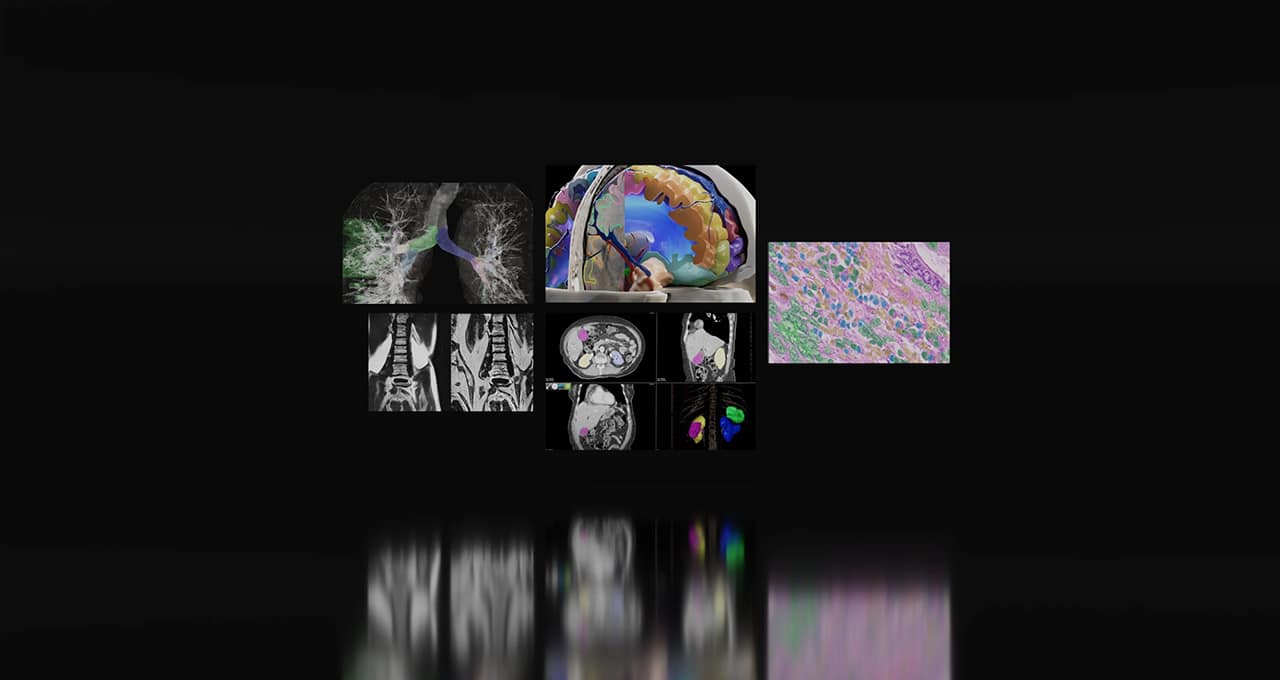
In the first phase of the project, the training data used for the model was labeled manually. For the next phase, the team is using NVIDIA MONAI for AI-assisted annotation to evaluate how model performance differs with training data segmented with the help of AI compared to traditional annotation methods.
“The biggest struggle with federated learning activities is typically that the data at different sites is not tremendously uniform. People use different imaging equipment, have different protocols and just label their data differently,” said Garrett. “By training the federated learning model a second time with the addition of MONAI, we aim to find if that improves overall annotation accuracy.”
The team is using MONAI Label, an image-labeling tool that enables users to develop custom AI annotation apps, reducing the time and effort needed to create new datasets. Experts will validate and refine the AI-generated segmentations before they’re used for model training.
Data for both the manual and AI-assisted annotation phases is hosted on Flywheel, a leading medical imaging data and AI platform that has integrated NVIDIA MONAI into its offerings.
Once the project is complete, the team plans to publish their methodology, annotated datasets and pretrained model to support future work.
“We’re interested in not just exploring these tools,” Garrett said, “but also publishing our work so others can learn and use these tools throughout the medical field.”
In the space of just five years, China’s OEMs have been able to close the gap on legacy OEMs in the West, matching sales volumes and in many cases outperforming them in terms of quality, performance, and innovation.
To find out what’s driving automakers’ progress in China, this report explores key trends and market intelligence, including:
Top performing Chinese carmakers and their market positioning
Automotive competition in China and how it’s driving technological advancements
Chinese brands’ global ambitions and exports
Insights from 2024’s Beijing motor show
Find out more by downloading our report, “Understanding the rise of China’s OEMs: Key players, global ties, and future potential.”