Hello reader who is also a reader, and welcome back to Booked For The Week – our regular Sunday chat with a selection of cool industry folks about books! Once again, the dastardly autumn breezes have blown my schedule all out of whack, so no cool industry person this week. Instead, here is a short excerpt from another weird story I starting writing, also containing poultry for some reason.
Atop the council manse pokes a lone grey-black spire, scorched gruesome and slanted like a broken finger.
Above the hill that holds the manse the sky cracks forever.
Below the hill that lifts the manse the village sits, chirping like electrical wires with the collective crow of the eighty eight ash-grey roosters that mistake the ever-cracking sky for a never ending dawn.
And no-one who lives their wakes, because no-one who lives there sleeps. It’s the roosters, you see. They never stop crowing, so it’s always time to get out of bed.
If you ask the people who live there why they don’t just get rid of the roosters, they’ll say: Well, it’s not their fault. They’re just doing what roosters do. Crowing at cracked sky.
If you ask them why they’ve never tried to find a way to fix the sky, they’ll just say: Well, it was like that when we got here.
If you ask the roosters why the sky is cracked, they tend to just shit themselves, continuing to crow at what they’re quite certain is a never ending dawn.
As always, let me know what you’re reading below, and let us pray for a return to guest-hood next week. That, or I could just get on top of my emails. Book for now!
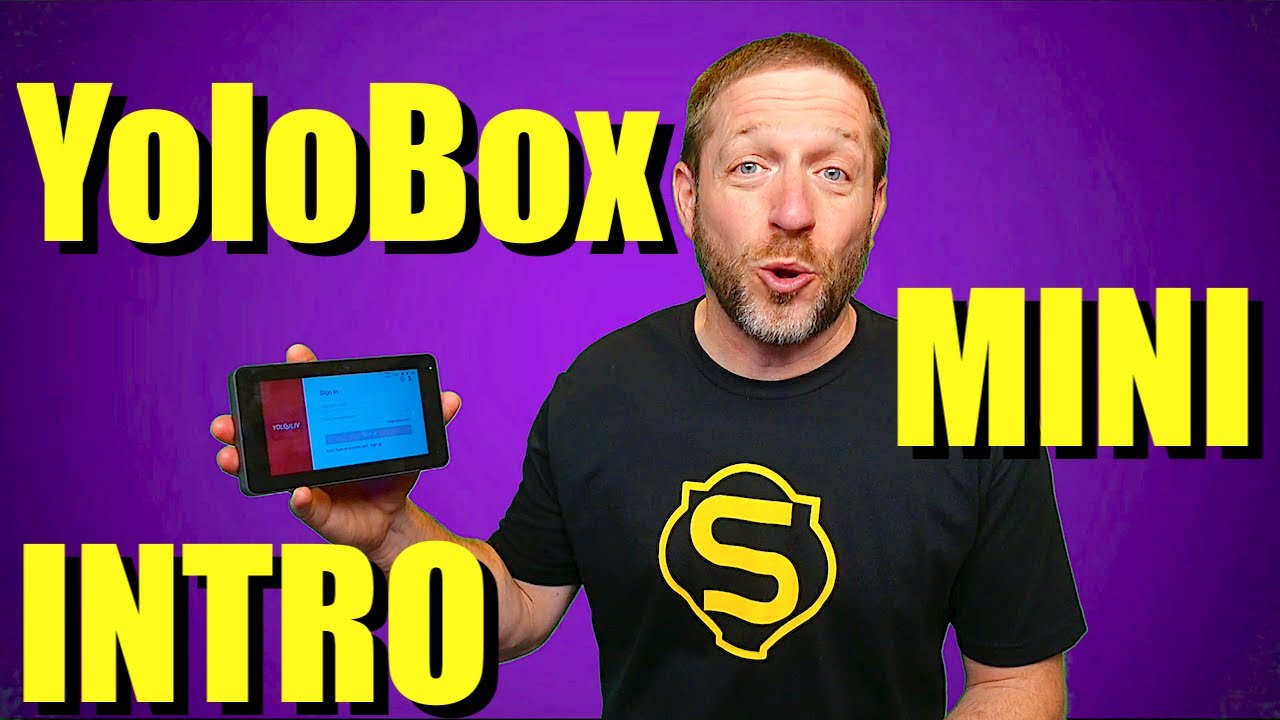
In this YouTube video, Anthony from StreamTek introduces the tiny YoloBox Mini. An all-in-one powerhouse in the palm of your hand for live production.
YoloBox Mini is a super portable live streaming encoder, monitor and recorder that is capable of incorporating many powerful features for high end work! As the name suggests, it’s very small compared to almost all other live streaming solutions. You can fit it in your pocket, especially perfect for live events that require high mobility. If you’re looking for a mini but mighty live streaming solution for mobile live streaming needs, YoloBox Mini is your best choice.
I’m trying to setup Visual Studio 2022 with some libraries using vcpkg.
I have set my vcpkg.json to something like this, I’m trying to get it working with
manifest mode.
I can generate but can’t build this, as it says it can’t find the FL headers.
I understand I can try to set the headers manually in project properties but even then it doesn’t seem to be linking the library properly.
A vcpkg list says no packages are installed, I can also run vcpkg install instead of through cmake then vcpkg list shows me stuff. But obviously CMake places the
“vcpkg_installed” folder within my root/build/ folder. And I’ve checked that the headers and libraries are there.
How can I get the IDE to actually find the headers and link properly after configuring and then trying to build? Isn’t this meant to be automatically found when I configure and build. Also I’m not sure if manifest mode is enabled (when doing the cmake configure to get dependencies) as I can’t seem to find the location on VS2022, everything I try follow has VS2019 and they set it through Project Properties -> vcpkg and enable it there but I can’t find anything of the sort on 2022.
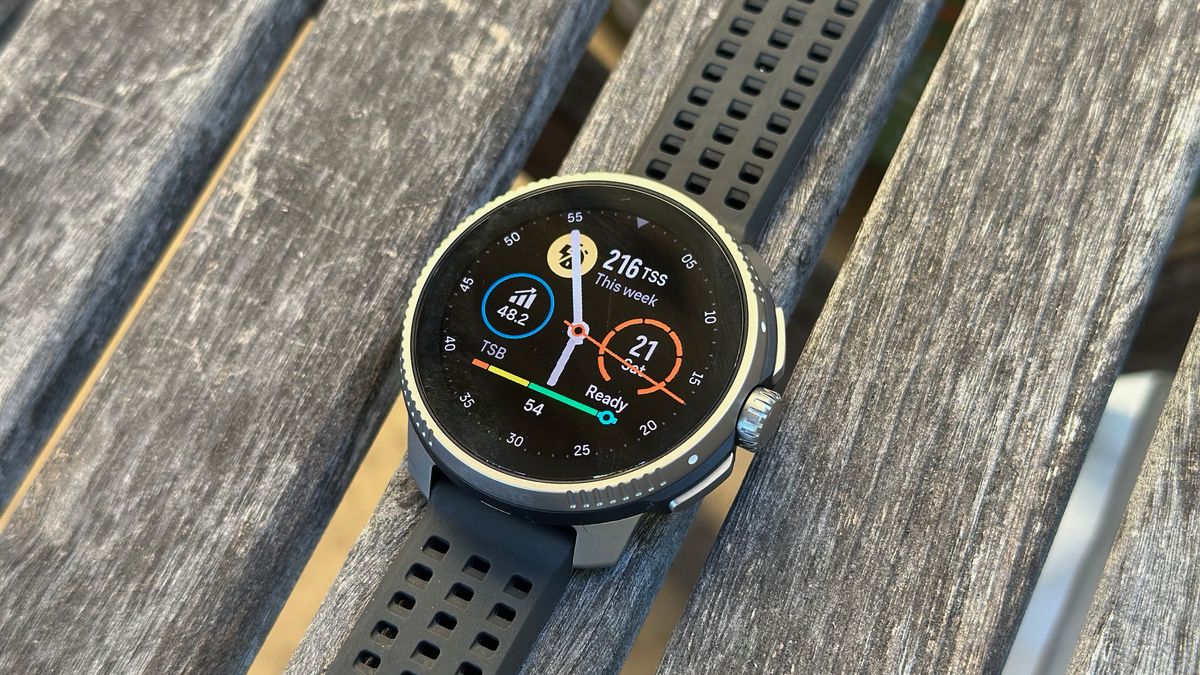
I received a Suunto Race review unit in mid-May, only for Suunto to release a newer Race S the following month with doubled heart rate LEDs, a lighter design, and few downgrades for $100 less. That, along with a bundle of Wear OS watches from Samsung, Google, and OnePlus to test all summer, put it on my back burner.
So yes, this Suunto Race review is nearly a year out of date from its late 2023 launch. It stayed in my mind, though, because it has most of the main ingredients I want in a modern running watch: a bright AMOLED display (sorry, MIP fans), a 16-day battery life, dual-band GPS, training load data borrowed straight from TrainingPeaks, downloadable topographic maps, and a unique app store for downloading niche training tools.
Once I found the time to put it through its paces, the Suunto Race software — particularly its SuuntoPlus apps — took a long time to master, but it rewards you for the effort. Perhaps my biggest issue with the Suunto Race is with the fundamentals: when I tested its HR and GPS accuracy, they didn’t quite live up to my expectations.
That said, this is a very strong watch for the $450 price range, giving the equally-priced Garmin Forerunner 265 and COROS APEX 2 Pro a run for your money.
Suunto Race review: Price, availability, and specs
(Image credit: Michael Hicks / Android Central)
The Suunto Race was released in October 2023. The newer Race S launched in June 2024, adding a few new software features that also arrived on the Suunto Race.
It starts at $449 for the stainless steel version and $549 for the titanium version, which weighs slightly less and has double the map storage space. The steel versions ship in All Black, Midnight Blue, Birch White, and “UTMB World Series,” which has a black case and unique strap. The titanium edition ships in Charcoal and Amethyst.
Swipe to scroll horizontally
Suunto Race specs
Category
Suunto Race
Dimensions
49 x 49 x 13.3mm
Weight
69g (titanium) or 83g (steel)
Band
22mm silicone, fits 125-175mm wrists
Materials
Glass fibre reinforced polyamide case, stainless steel or titanium bezel
Protection
10ATM, sapphire crystal glass
Display
1.43-inch (466 x 466) AMOLED, 1,000 nits
Storage
16GB (steel) or 32GB (titanium)
Health data & sensors
HR, HRV (stress and recovery), SpO2, sleep analysis, altimeter, compass
Mapping and tracking
Downloadable topo maps for any region; dual-band (L1 + L5) GPS, GLONASS, GALILEO, QZSS, BEIDOU
Battery life
60 days; 65 GPS hours; 40 dual-band GPS hours
Suunto Race review: What you’ll like
(Image credit: Michael Hicks / Android Central)
Most fitness watch brands are transitioning from MIP to AMOLED displays, and the Suunto Race is exhibit A for why it’s a good thing. You’re getting a watch that lasts over two weeks per charge or about 40 hours, using four satellite systems and dual-band GPS simultaneously, and still getting a 1,000-nit, high-res display. I don’t begrudge people who need max battery life like the 90-day Garmin Enduro 3, but I’d say the Suunto Race has hit the good-enough threshold for most athletes.
The Suunto Race uses a rotating crown and start/back buttons, giving you three customizable shortcuts for the crown press and top/down long-presses. You can prioritize functions like the flashlight, music controls, notifications, alarms, or weather. The crown shortcut highlights one pinned widget, so you can jump quickly to data like your training progress widget or workout logbook, or open the compass or map quickly.
(Image credit: Michael Hicks / Android Central)
The Suunto app splits off between a Home feed of your workouts, a Calendar view, a Training Zone — which summarizes your recent Training Load, Intensity, Impact, and Recovery — and a map view with heat maps that show where Suunto users train. Unlike other apps that put more focus on health, sleep, paid coaching, or tie-ins to other products, Suunto keeps things focused on training, which I appreciate.
In particular, the Training Zone section is pretty neat. You get a Suunto Coach text summary that clearly describes your recent progress, before you dive into the charts and numbers. You see a weekly summary of your training load and training stress (aka intensity) that’s compared against your chronic training load for a form (Training Stress Balance) score. It all may sound complicated at first, but once you memorize the acronyms, it provides a ton of useful context for serious runners.
I especially like how Suunto provides an Intensity chart that shows how much time you spend in HR zones 1–5 across the week, as well as pace zones and running power zones. I wrote about wanting better training load zone analysis recently, and Suunto checks many of those boxes.
(Image credit: Michael Hicks / Android Central)
You can download offline maps across hundreds of countries and territories, with the maps split up for the larger countries. In the U.S., for example, I downloaded Northern California (2GB), but most other states (and many countries) are smaller. Most people will be able to make do with the standard 16GB of storage unless you frequently travel for training; downloading maps is painfully slow, so you’re not going to want to swap map packs often.
Next you can create a route, either by using the simple map creation tool and tapping waypoints or importing a GPX file from third-party apps like Strava. You can also find other people’s public routes using heatmaps, though you may not find many except in major population areas or national parks. Uploading them to your watch is quick and managing your route library is painless.
Speaking of third-party integrations, Suunto offers plenty of SuuntoPlus apps made by third-party tech brands or community members, filling the gaps left behind in Suunto’s software. You can add SuuntoPlus apps on the watch itself, naturally integrating the new tech into your favorite sports modes. They also let you sync with certain devices, including the CORE Body Temp sensor I tested earlier this year.
Suunto Race review: HR and GPS accuracy
(Image credit: Michael Hicks / Android Central)
Suunto Race GPS accuracy tests
How I test
For GPS accuracy, I use my Garmin Forerunner 965, which beat other dual-band GPS watches from COROS, Polar, Samsung, and Apple in previous tests. For testing optical HR accuracy, I use my COROS Heart Rate Monitor, which compared favorably against a HRM chest strap.
At the end of multiple runs and a long hike, the Suunto Race added at least one-tenth of a mile to each activity compared to what my Garmin Forerunner 965 tracked. Given how well the latter usually does for dual-band GPS accuracy, that had me worried about the Suunto Race’s own accuracy. Analyzing the charts, though, the answer is a little more complicated.
Image 1 of 3
(Image credit: Michael Hicks / Android Central)
(Image credit: Michael Hicks / Android Central)
(Image credit: Michael Hicks / Android Central)
In each of the GPS paths above, the Suunto Race (blue line) generally matches my location, sometimes doing better than Garmin (orange) at knowing which side of the trail I’m on. The immediately obvious problem is how every one-second reading seems to fling me from one diagonal to another, like I’m a running back practicing my juking skills.
I’m still moving forward and avoiding the drastic tracking issues I see with GPS-only watches like the Pixel Watch 3; I don’t want to give the impression that Suunto does terribly here. But without fail, after every mile Suunto is an extra one-hundredth of a mile ahead of Garmin, and by the end of a long workout the gap adds up.
Image 1 of 5
(Image credit: Michael Hicks / Android Central)
(Image credit: Michael Hicks / Android Central)
(Image credit: Michael Hicks / Android Central)
(Image credit: Michael Hicks / Android Central)
(Image credit: Michael Hicks / Android Central)
I also took both watches out on a ten-mile hike; by the end, Suunto had added two-tenths of a mile. You can see in the screens above how well it does tracking me in dense foliage, never losing me the way most smartwatches would. But whether my signal is obscured or direct, you see that same frantic zig-zagging effect at random moments.
(Image credit: Michael Hicks / Android Central)
The Suunto Race doesn’t have a track run activity, but it did pretty well at matching my lane-3 sprints around my local track, despite some wobbliness. It ended up adding about 80m to my total after ten laps. (Garmin’s track line is artificially centered because of its Track Run activity, so ignore it.)
This watch is old enough that Suunto is probably past the point of algorithm fixes, but I feel like Suunto is close to nailing its tracking, in some ways better than other dual-band watches at avoiding straying lines.
Suunto Race HR accuracy tests
(Image credit: Michael Hicks / Android Central)
With the Suunto Race’s optical heart rate monitor, I’d already heard that Suunto doubled the LED sensors in its Race S successor watch and tweaked its algorithm in response to Race HR criticism. So I compared it against my COROS Heart Rate Monitor to see how it matches against a reliable optical sensor (the above chart says “Garmin Forerunner” because my COROS synced to that watch).
For all four activities, the Suunto’s HR average fell 1–2 bpm short. During the 15K run above, the Race always stays close, but it’s apparent how its reading never quite catches up to my actual heart rate, averaging 2 bpm short (166 vs. 164).
(Image credit: Michael Hicks / Android Central)
During a shorter 10K, the gap was only 1 bpm, but the shorter timeline makes it easier to see moments where Suunto’s reading dips and rises at odd increments while the secured COROS band has my heart rate staying steady. That has me suspecting that the Suunto Race does have small tracking blips that add up, and that the Race S’ extra LEDs might help with that.
(Image credit: Michael Hicks / Android Central)
For my final track workout, the Suunto Race struggled. Some gaps might be due to inconsistent pausing after laps, but that doesn’t explain the Race registering me at my max 200 bpm during my first 800m; trust me, I wasn’t running that hard yet. Otherwise, there were two clear moments where its HR was ten bpm above my actual rate, and two moments where it was ten bpm below. The overall average was just 2 bpm off, but I wasn’t thrilled with the data.
Overall, I’d say the Suunto Race’s GPS accuracy is good enough to get by and better than whatever GPS-only watch you currently have, but it could be better. As for heart rate, this is a watch where I’d probably recommend you keep wearing an external heart rate monitor if you need hyper-accurate results, but it’s otherwise good enough to give you accurate HR zones for your training load data.
Suunto Race review: What you won’t like
(Image credit: Michael Hicks / Android Central)
Aside from my complaints about accuracy, my biggest note with the Suunto Race is its weight. Suunto sent me the titanium model, and at 69g, it’s on the heavy side for a running-focused watch; most other flagships weigh in the mid-50s with a silicone band, or use a nylon band to hit that range. I feel a little bit of wobble when pumping my arms hard, though it’s still not as heavy as, say, a Samsung or Apple Ultra watch.
My issue is that most buyers will choose the 83g stainless steel Race to save money. For people used to all-steel watches, they won’t mind, but many runners will find that weight onerous. That’s why many runners will prefer the 60g Race S, accepting the smaller and less-protected display.
(Image credit: Michael Hicks / Android Central)
While I never mind running with my phone, the Suunto Race mandates it if you want music playlists or contactless payments. Some of this is outside of Suunto’s control — it’s hard for smaller brands to get banks and streaming services to play ball — yet many runners will choose other brands because they can’t do without music storage and NFC.
While I praised most of the main Suunto app tools, one conspicuous absence is any kind of free training plan software that adapts to your recent workouts, like you get with Garmin or COROS. Suunto has a list of SuuntoPlus app integrations for training guides, but most of them (like TrainingPeaks) require a payment or syncing your data regularly with another platform. I’d argue Suunto needs its own native equivalent.
As for other missing features other fitness brands offer, Suunto doesn’t have safety tools like location sharing, challenges, gear tracking, or the option to pre-select multisport options. You won’t find any ECG or skin temp readings, either.
Lastly, I’m not the biggest fan of Suunto’s watch face system. You can only save nine to the watch, and they’re hidden in the SuuntoPlus store with only 21 total options by my count, none of them especially pretty or creative. You can’t add a custom background, most faces only let you add three complications at most, and syncing faces to the watch is weirdly slow.
Competition
(Image credit: Michael Hicks / Android Central)
The Garmin Forerunner 265 is ranked as our best running watch because it offers great training tools without costing as much as flagship models. Compared to the Suunto Race, it has some deficiencies: its Gorilla Glass 3-protected display isn’t as bright or scratch-proof. It only has breadcrumb navigation, with maps reserved for the 965. Its plastic bezel doesn’t look nearly as classy. And while their daily battery isn’t so different (16 vs. 13 days), the Suunto Race crushes the Forerunner 265 for dual-band GPS hours (40 vs. 14 hours).
Still, it has its perks! The Forerunner 265 is significantly lighter, even if you don’t buy the smaller 265S, and it has the upside of contactless payments and music storage if you want to go phone-less for your run. It also does slightly better on the GPS accuracy front, and offers both daily suggested workouts and adaptable Garmin Coach training plans. Whether you prefer the up/down buttons or Suunto’s crown is a matter of preference.
(Image credit: Michael Hicks / Android Central)
Aside from Garmin, Suunto’s biggest fitness-watch rivals are COROS and Polar. The COROS APEX 2 Pro also costs $449, and thanks to its MIP display it can last 30 days per charge, though its 26-hour dual-band GPS tracking still falls short of Suunto’s. It has a titanium bezel, ECG readings, 32GB for downloadable maps, comparable training load software, and downloadable training plans.
The Polar Vantage V3 is a pricier $599, making it a hard ask unless you’re considering the titanium Suunto Race. It, too, has all the training guidance, recovery recs, accurate GPS and heart rate data, and full-color maps on an AMOLED display that you could ask for. I especially like its tests for things like muscle soreness and current VO2 Max.
Suunto Race review: Should you buy it?
(Image credit: Michael Hicks / Android Central)
You should buy the Suunto Race if…
You need a long-lived AMOLED running watch with in-depth training metrics.
You want premium features at a mid-range running watch price.
You want the Suunto Race’s 10ATM water resistance, sapphire glass, and extra week of battery life compared to the Suunto Race S.
You shouldn’t buy the Suunto Race if…
The Suunto Race S, with its revamped HR data, lighter design, and lower price, appeals to you more.
You need music storage or contactless payments.
You want an adaptive training program that sends workouts to your wrist based on past activities.
My review title says it all: The Suunto Race is near the finish line for me.
The Suunto Race S allegedly fixed some of the optical HR issues and made it even more affordable and more comfortably lightweight. Once Suunto catches up on adaptive training plans and a couple of other areas, it’ll have everything I’d want in a running watch at a lower price tier than other brands, like COROS except with AMOLED instead of MIP displays.
Still, as comparatively minor as the Suunto Race accuracy issues are compared to other mainstream smartwatches, they’re big enough that I’ll happily turn to other brands that avoid those issues.
Marathoner AMOLED
The Suunto Race arguably beats other $450 running watches like the Garmin Forerunner 265 and COROS APEX 2 Pro in key areas. It has a 16-day battery life, dual-band GPS, advanced training metrics, downloadable offline maps, and strong water and scratch protection.
If you wanted to learn about how to get into gonzo journalism or the history behind it, keep reading.
Originally credited to Hunter S. Thompson, gonzo journalism is the style of writing where you’re covering a topic or event, but you’re mixing your own thoughts and experiences into the writing.
With gonzo journalism, you are almost a character in the story and it matters who you are and how you see the world or go through some experiences.
You’re still reporting on the event or topic you’re covering, but it’s from a much more personalized angle than you would as a traditional reporter.
In the current world, we see more first-person reporting than back then, especially with people able to publish their own content online. It’s a style audiences are used to reading compared to before it started to be published.
At the time that gonzo journalism started to become popular, it was a new form of writing that most people had not yet experienced.
Throughout this article, we’re going to go through the history of gonzo journalism, what makes it different than other types of writing, and how you can get into writing these types of pieces if that is your goal.
What is gonzo journalism?
According to Wikipedia, “The word ‘gonzo’ is believed to have been first used in 1970 to describe an article about the Kentucky Derby by Hunter S. Thompson, who popularized the style.”
Bill Cardoso, an editor at the Boston Globe, said, “‘Gonzo’ was South Boston Irish slang describing the last man standing after an all-night drinking marathon.”
This is a perfect description of Thompson’s style of writing and how he approached journalism.
Gonzo journalism is a style of writing that takes out objectivity and is written as a first-person narrative. There is often a level of satire mixed with social critique where the writer is the protagonist throughout the piece.
When practicing gonzo journalism, your background and perspective as a writer is essential to include.
While Thompson had a brash-style of writing, not all gonzo journalism is as edgy. Sometimes it’s simply personalized news reporting.
Instead of writing about the Kentucky Derby and reporting the facts of the event, Thompson wrote about the drunken debauchery in the local city and the area around the Derby itself. He shared his own thoughts and experiences as he went through the event while also reporting on the surrounding events.
Cardoso (editor at The Boston Globe), loved the piece and said, “This is it, this is pure Gonzo. If this is a start, keep rolling.”
This piece kicked off what was called the “new journalism movement” where journalists started to push the boundaries and reach outside the traditional rules of journalism.
Another famous piece that displays gonzo journalism is Fear and Loathing in Las Vegas by Hunter S. Thompson. While it is technically fiction, it is written in the gonzo journalism style.
Fear and Loathing in Las Vegas is a great book to read if you want to fully immerse yourself in this style of writing and learn how it works.
Outside of Thompson, Tom Wolfe is another famous gonzo journalist. His book, The New Journalism, outlined how journalism was starting to change and the new writers leading the charge.
Lester Bangs from Rolling Stone magazine is one of the first gonzo journalists to bring this style of writing to music. (You might know him better from the movie Almost Famous where he’s played by Philip Seymour Hoffman.)
Bangs brought his own experiences and thoughts to his writing, which music journalists hadn’t done up until that point.
Source: https://unsplash.com/photos/Hb6uWq0i4MI
Why is it called gonzo journalism?
Gonzo journalism is rumored to be called that due to a comment made by Cardoso when he was describing “The Kentucky Derby is Decadent and Depraved.”
It’s a slang term from the Boston Irish meaning “the last man standing,” and it was an apt description for Thompson’s satirical writing.
Thompson believed that journalism could never be truly objective. He thought that personal bias played a role in all journalism because writers are human. Because he operated from this belief, he birthed an entire new style of journalism.
How to get into gonzo journalism
If you want to become a gonzo journalist, you’re going to need a unique perspective and writing voice.
So much of this type of writing is based on style and personality as opposed to following traditional journalism writing style.
If you come from an academic writing or journalism background, you’ll need to practice writing creatively and injecting your opinion. This will feel foreign at first!
Most schools do not teach how to inject your main character persona into your writing, so it can be a steep learning curve.
However, it’s a good time to get into gonzo reporting because there’s more examples to follow and ways to learn than ever before.
You can also start to publish your own work online (on a website or social media) faster than people could before where they had to go through traditional publishing routes.
Find stories that others would care about
While it would be great to write journal-style posts all day and draw in readers, what separates that from gonzo journalism is that there’s an event or particular topic that is being covered.
You’ll want to find interesting angles and people to cover so you can include your own experiences, thoughts, and opinions.
For example, you could write a personalized story about attending Comic Con in your city and your own experiences at it.
You could grow your career by either writing about a certain type of niche or you could grow your career by having a writing voice that stands out.
Work on your writing style
It can be hard to write in a gonzo journalism style since it goes against what most of us were taught in school.
If you’re like me, we were taught that even writing “I” or any first-person stories were always a no-no.
You’ll want to practice sharing your own thoughts and experiences in a first-person narrative.
Telling your own stories and mixing them into what you’re currently experiencing is hard, but it’s necessary to get your style where it needs to be.
Immerse yourself in a topic or experience
One of the top ways you’re going to get your foot in the door of this industry is by having pieces to show editors.
You’re going to have to start publishing pieces as much as you can, even if it’s on your own website.
Ideally, you can find a publication to share your work, but all of us have to start somewhere. If you have to start on your own website, it’s a perfectly great place to start getting the ball rolling.
Submit and pitch your work
Once you have some samples published, you’re going to need to get them into the hands of as many editors as you can.
You’ll need to think deeply about why they would want to publish your work and what they get out of it.
You’ll want to come up with stories and unique angles to work on in your pitches so you can get an editor excited about green lighting an article for you.
If you’re wondering what opportunities exist for freelance writers in 2024 (hint: there are plenty!) then make sure to register for the free webinar coming up on September 26, 2024 called How to Successfully Break Into Journalism in 2024! You’ll learn about the different types of journalism and what you may best be suited for, and the top skills successful journalists need and what it can lead to.
I was once like you. I thought EmuDeck was just a quick and easy way to set up emulators on my Steam Deck, and despite using it for years, I never thought more of it than that. But slowly over the past few months, EmuDeck has become one of the most essential apps I have installed on my gaming PC.
EmuDeck showed up on the scene in 2022, originally built as a “collection of scripts that allows you to autoconfigure your Steam Deck” for emulation. It will install your emulators, configure them, create directories for your games, and hook into apps like Steam ROM Manager so you can see all of your emulated games in your Steam Deck library. It’s been an essential tool for retro and emulation enthusiasts since release, but EmuDeck has grown into something much more powerful — and it’s not slowing down.
Always humble beginnings
Jacob Roach / Digital Trends
Although most of the documentation for EmuDeck is signed by the “EmuDeck team,” a sole developer remains the main producer of the project — DragoonDorise on GitHub. Speaking with the developer, he told me that the Steam Deck actually wasn’t the inspiration behind the project. “The very first code I built was because when I bought my Odin,” he told me. The Odin is a handheld emulator built on Android. “I didn’t want to do all the setup manually again.”
Get your weekly teardown of the tech behind PC gaming
EmuDeck was originally built for Android, and it was under the name Pegasus Installer. “Everything started with the RetroidPocket 2 and the Pegasus frontend. Setting that up was a chore, so I tried to automate it,” the developer told me. Eventually, the Steam Deck was revealed, and DragoonDorise said it was “a huge deal” for him. “I was lucky enough to get [a Steam Deck] on the first wave and that’s how EmuDeck was born. It took me a weekend to release the first version, and boy, it was rough… but it worked.”
Pegasus Installer became EmuDeck, and at first, it was just for the Steam Deck. Given the handheld form factor and problems getting around desktop mode without a keyboard and mouse, EmuDeck made perfect sense. If nothing else, it minimized the amount of time you’d need to spend on the desktop, all while installing and configuring everything you need through a single, easy-to-use package. But it didn’t stop there.
Eventually, the ROG Ally came out, following on the Steam Deck’s success. And EmuDeck responded in kind by developing a Windows version of the utility. Now, you’ll find installers for SteamOS, Windows, ChimeraOS, Android, and general Linux distros. You can get EmuDeck on just about any platform now as a quick and easy way to set up your emulators, but I’ve been so drawn to the utility for everything it does beyond its core function.
More than emulation
Jacob Roach / Digital Trends
EmuDeck could’ve stopped at just being a utility that automatically configures a bunch of emulators, but it’s grown to encompass a ton of additional features. Here’s a sampling:
Compressor — Compresses your ROM library to reduce its size.
Auto save — Automatically saves your progress in emulated games when closing them so you don’t need to manually create a save state.
Cloud sync — Uses an online storage service like Box or Google Drive to store and sync your save files for emulated games.
EmuDecky — A plug-in specifically for the Steam Deck that allows you to access emulator hotkeys from the Steam Deck’s game mode.
Local multiplayer — Allows you to start local multiplayer games for emulated titles.
Rom Library — A dedicated second Steam Library for the Steam Deck filled only with emulated games.
Game mode — A tool that bypasses Windows processes to launch directly into Steam Big Picture mode.
That is just a sampling, too. EmuDeck has a slew of smaller features, from a BIOS checker to Retro Achievements support to migration utilities that allow you to carry your entire library to other systems. All of these features were developed on top of the “gazillion of hours invested in testing” of the core of EmuDeck, too, according to DragoonDorise.
There’s even a collection of homebrew games built into the app.Jacob Roach / Digital Trends
Although I’ve used most of EmuDeck’s features on various machines, game mode has really made the difference in the way I play PC games. As anyone who’s tried to set up a console-like PC knows all too well, you need a keyboard and mouse on hand to at least get into whatever controller-support interface you’re using (usually Steam), and even then, notifications, start-up apps, and other pesky windows can get in the way. With game mode, I’m finally able to have the console-like PC experience I’ve dreamt about for years.
Rebirth of the Steam Machine
Digital Trends
Ever since Valve tried (and failed) to get the Steam Machine to catch on, there’s been countless attempts to make a small form factor PC behave like a console. You start it, grab a controller, and plop down on the couch to start playing games. Although there are ways to get close to that experience — specifically with Linux distros like ChimeraOS or HoloISO — you’ve always needed to settle either for a portable keyboard or spotty compatibility due to Linux. Game mode gets around that entire issue.
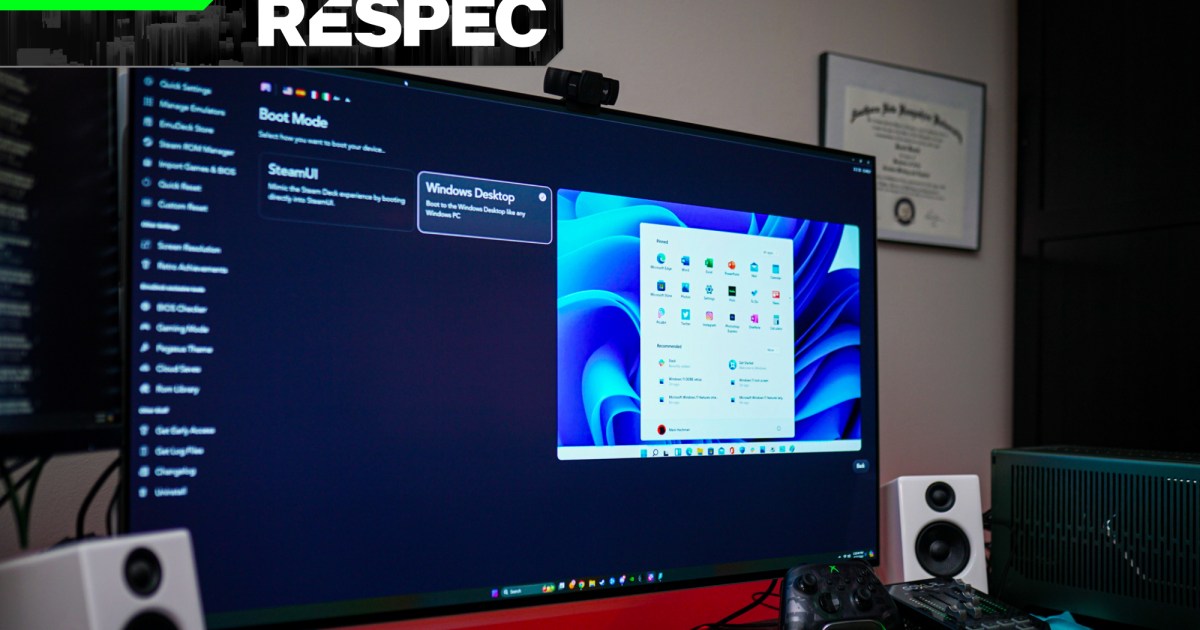
DragoonDorise describes it like this: “What it does is replace your Windows desktop with Steam, so it boots faster into Big Picture mode — it’s kind of like a Steam Deck.” You can already have Steam immediately launch into Big Picture mode — the controller-friendly interface that mirrors the Steam Deck — and you can set Steam as a startup app. But game mode is doing more than that in EmuDeck.
Jacob Roach / Digital Trends
From what I can tell, it’s doing two main things. First and most important is that it never starts (or at least significantly limits) Windows File Explorer. You might think of File Explorer as just a way to browse your files, but the process in Windows actually does a lot more. It commands the taskbar, your desktop wallpaper, the Start menu, and even your desktop icons. EmuDeck runs a PowerShell script to bypass all of the junk you don’t need for a living room setup and goes directly into Big Picture mode. It takes only a few seconds — if I don’t turn on my TV fast enough, I’ll completely miss the script running.
The other thing it does is suppress notifications and other windows that try to go on top of the Big Picture interface. In my case, I have a VPN installed on my living room PC, along with an outdated AMD driver that I don’t use. I may get everything in order for the PCs I use for work, but when I’m sitting down to relax and game, I’m lazy. They aren’t causing problems, and I couldn’t care less. Both want to command the screen when I sit down and power on my PC and EmuDeck’s game mode stands in the way to block them.
Jacob Roach / Digital Trends
As impressive as game mode is, it can’t actually log you into Windows. Thankfully, I’ve found a simple way around that if you aren’t concerned about security. Go to the Registry Editor and head to the following path: HKEY_LOCAL_MACHINE\SOFTWARE\Microsoft\Windows NT\CurrentVersion\PasswordLess\Device. Then, set the value of DevicePasswordLessBuildVersion to 0. Restart your PC, press Windows + R and enter netplwiz. Uncheck the box that requires a password, click Apply, enter your current password, and you’re done.
With this setup, I’m able to press the power button on my PC, turn on a controller, and start playing. Since I started using EmuDeck in this way, I haven’t had to break out a Bluetooth keyboard. It feels like I’m properly playing on a console — just with much better performance.
An essential app
Jacob Roach / Digital Trends
EmuDeck started as a way to set up emulators on the Steam Deck, but it’s become a critical part of my PC setup since then. Never since I installed Special K — make sure to read my column on that app — have I found something that will go on any new PC I build. Game mode is the main draw for me, but I’ve engaged with EmuDeck’s other features, too. I have a treasure trove of ROMs on an external hard drive, and EmuDeck allows me to sync my saves between my PC and Steam Deck, as well as keep my configuration consistent between devices.
Even better, most of what EmuDeck offers is free. New features, particularly those developed by EmuDeck alone, first show up for members of its Patreon, but you can get a lot of functionality out of EmuDeck — including its core function of setting up emulators — free of charge. And if you want to sign up and get the latest features, it’ll run you about $35 per year.
Since installing EmuDeck, I’ve played retro classics I would’ve never touched, modded modern games in ways I never thought was possible, and let my consoles gather dust as I transition all of my gaming to PC. If you’re even remotely interested in emulation, give EmuDeck a shot — you’ll be impressed by how powerful it really is.
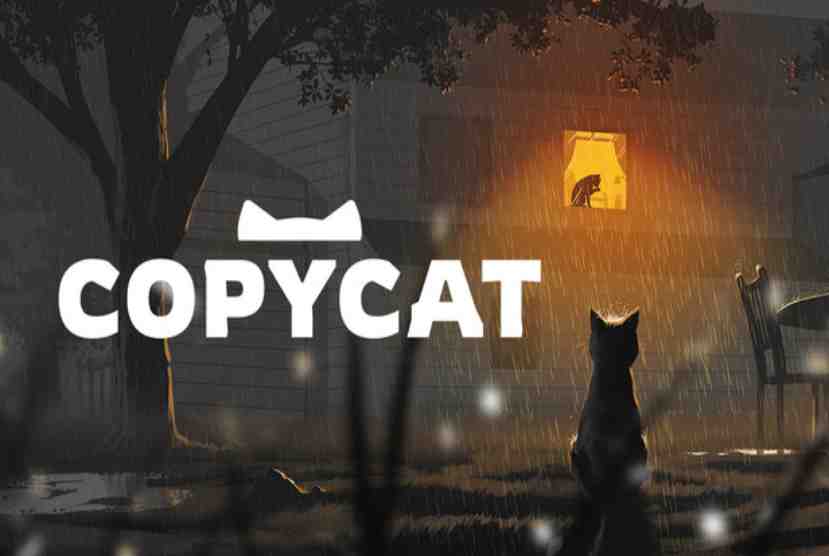
Copycat is a narrative-driven indie game about a pet who learns to deal with abandonment, and a human forced to surrender. Together, two souls go on a journey to discover the meaning of family and home. The game’s colourful visuals delight the senses while exploring dark thematic depths. Journey on an emotional rollercoaster that pulls at the heartstrings and reminds you how it feels to be left behind. We follow the tale of Dawn, a sceptical shelter cat who would much rather be in the wild than be readopted again. Dawn actually believes she is a wild cat. And plans on escaping as soon as she gets the chance. Dawn has second thoughts when she meets new owner Olive, a lonely older Aussie mourning the disappearance of her beloved furry companion. Together Dawn and Olive develop an intimate friendship, as two broken hearts mend one another and learn to beat as one. Forklift Simulator
Everything changes when Olive falls ill, and a stray copycat steals Dawn’s place in the home—forcing Dawn onto the streets. Wander alleyways, fences and rooftops as you learn about the true meaning of home. The reflective pacing of the game allows you the opportunity to indulge in the emotions of love, loneliness and letting go as you progress throughout the story. Copycat is fully voice acted, featuring hours of dialogue and a talented voice cast. Original music score by Daniel Bunting.
Features and System Requirements:
The game is designed for group play, making it an excellent choice for parties or gatherings. Multiple players compete to out-copy their opponents, adding a social and interactive dimension.
Different game modes or challenges keep the game fresh and exciting, with opportunities to customize rules for a unique experience each time.
While skillful mimicry and strategy play key roles, there is also an element of luck involved, ensuring that every player has a chance to win.
Screenshots
System Requirements
Requires a 64-bit processor and operating system
OS: Windows 10/11 (64 bit)
Processor: Intel Core i5-4690K (3.5 GHz) / AMD FX-8300 (3.3 GHz)
Memory: 16 GB RAM
Graphics: GeForce RTX 2080 / AMD Radeon RX 5700 XT (8 GB VRAM)
Storage: 20 GB available space
Sound Card: DirectX compatible sound card
Support the game developers by purchasing the game on Steam
Installation Guide
Turn Off Your Antivirus Before Installing Any Game
1 :: Download Game 2 :: Extract Game 3 :: Launch The Game 4 :: Have Fun 🙂
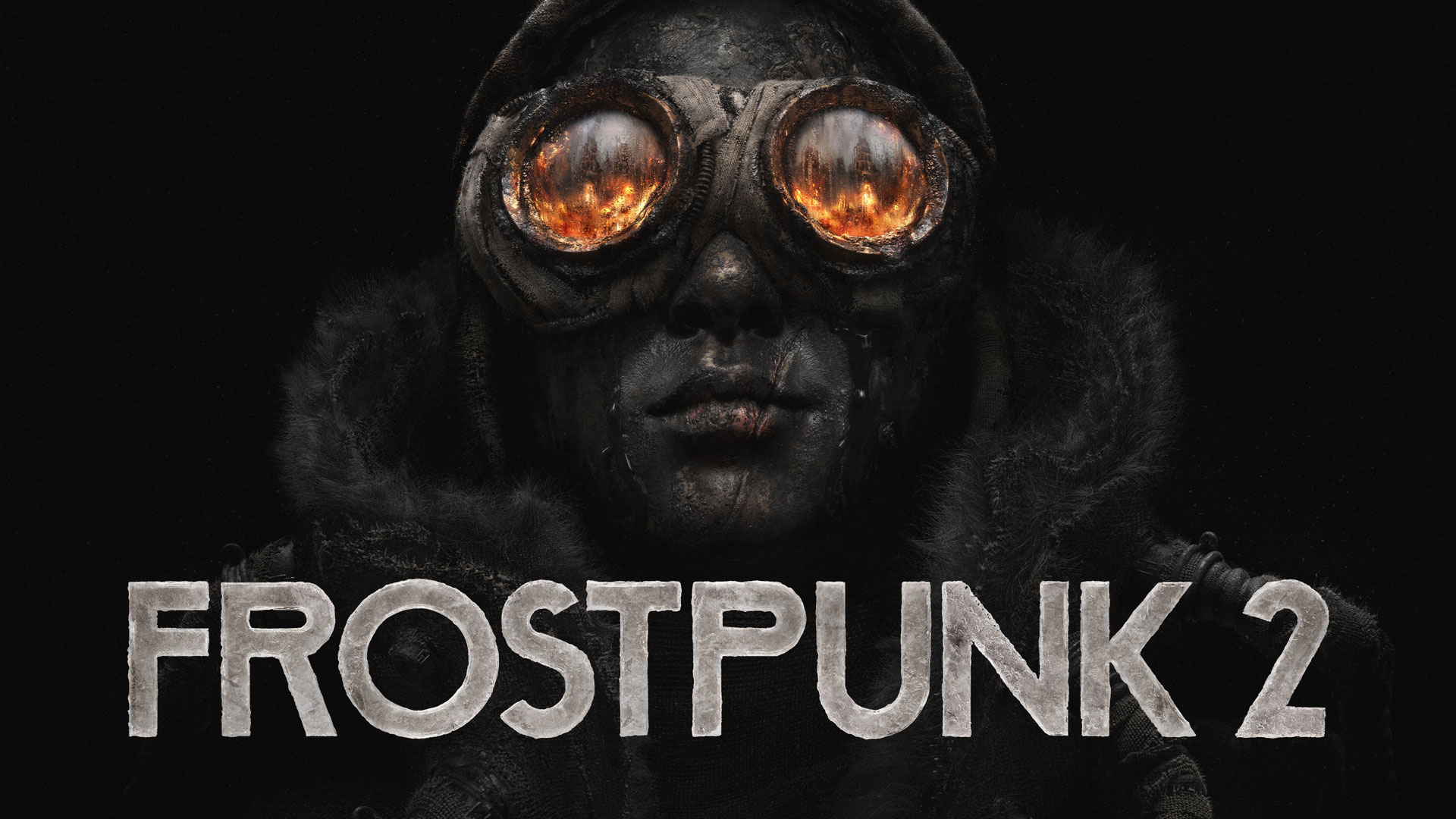
In the corridors of 11 Bit Studios, there’s an old saying: the hardest challenge for a band is recording a second album that surpasses the debut. This sentiment echoed through our minds when thinking about a sequel to Frostpunk. The first game was designed not necessarily to be followed by a direct sequel but to establish a world that could host different kinds of games. And yet, here we are, more than six years later, on the eve of Frostpunk 2’s launch on Windows PC and PC Game Pass.
Creating something new always comes from a desire to say something fresh—whether it’s a new idea, a new story, or an innovative gameplay experience. The challenge for us was to ensure we had something meaningful to say about life in a post-apocalyptic city that would resonate just as deeply as the first game, but on a much larger and more evolved scale. We wanted to explore new aspects of human survival that felt both familiar and entirely new, delivering a true and creatively necessary sequel.
It didn’t feel right to simply have players survive a harsher winter or a more violent storm. That wouldn’t push the boundaries or fulfil our ambitions. By late 2019, the vision for Frostpunk 2 had begun to take shape, taking a significant step beyond basic survival. A 30-year leap forward, in fact—because that’s how much time has passed between the first and second games. While the original Frostpunk was all about keeping a single city alive and holding onto hope in an all-freezing world of despair, the sequel treats society itself like a fluid. Humanity has tamed the frost, and now it’s time to grapple with ideologies and visions of the future.
As the newly elected Steward, replacing the deceased Captain, it’s the player’s role to manage this fluid society—a society that can flow, boil, or even ignite. Players must navigate the needs of factions, knowing when to push for votes, even if it means becoming entangled in a web of conflicting promises. Sometimes, it’s better to step back, letting the whims of delegates play out, and observe the consequences. Frostpunk 2 is not about authoritarian rule, but about political and ideological conflict.
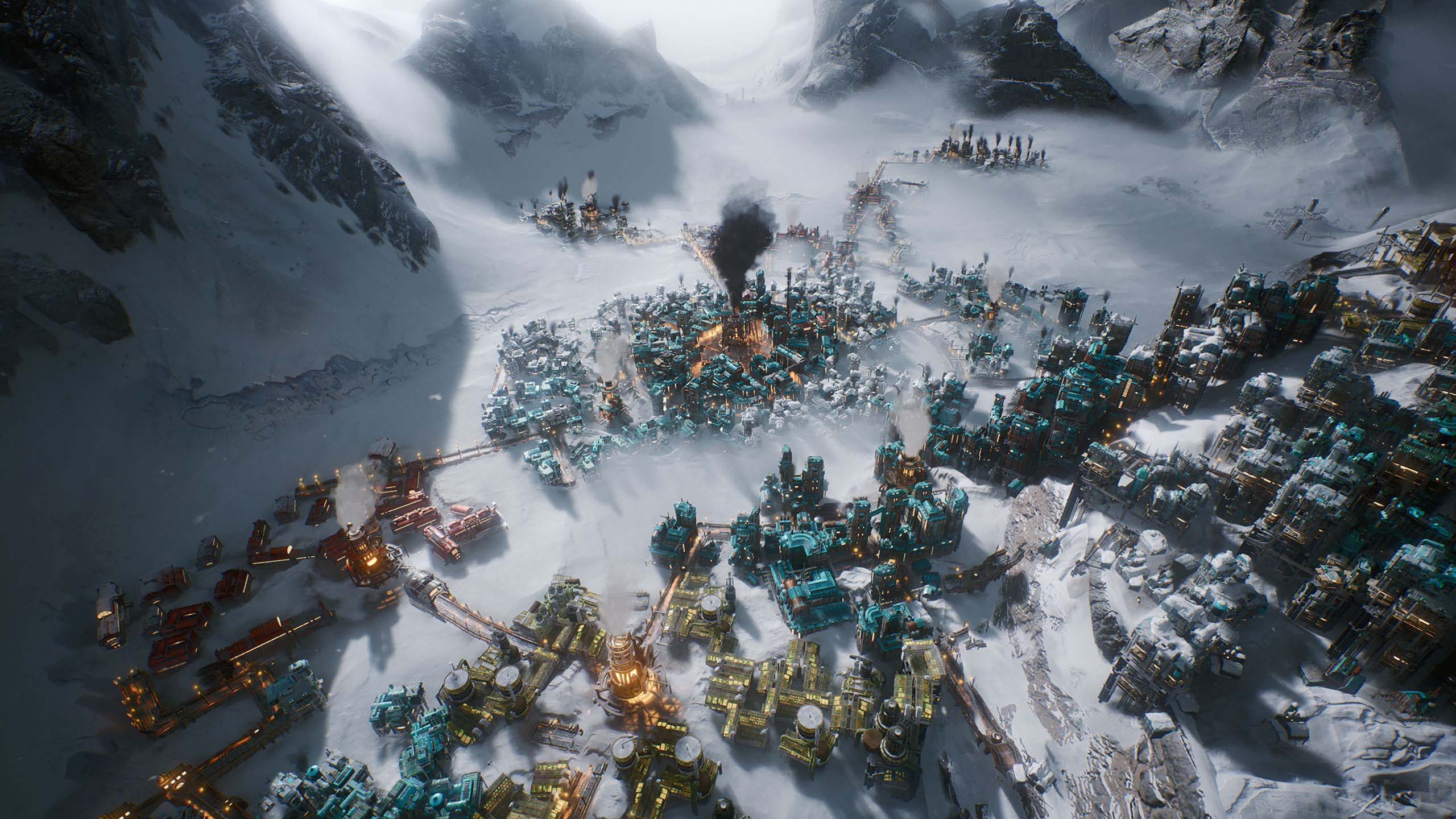
The “society survival” aspect of the first game is elevated in Frostpunk 2. To truly feel the weight of long-term decisions, we’ve scaled up the game. Instead of days, weeks and months pass. Instead of constructing individual buildings, you’ll be building entire districts. The societal impact is also more profound in Utopia Builder mode, which is similar to the Endless mode from the original game. Here, players can freely develop their cities and societies, unhindered by the narrative constraints of the campaign.
And for those eager to take their creativity further, we’re introducing mod support with our Frostkit tool. Starting in beta, it will eventually allow players to modify nearly every aspect of the game—from maps and models to entire scenarios. With all of this, we couldn’t be more excited to welcome players back to the frozen world of Frostpunk 2, launching today for Windows PC, with Game Pass.
Frostpunk 2
11 bit studios
☆☆☆☆☆
★★★★★
Frostpunk 2 elevates the city-survival genre to a new level. Take the role of a Steward and lead your city through a cascade of calamities taking place in a postapocalyptic, snowy setting. Build large city districts with their string of endless needs and demands. Navigate through conflicting interests of factions that populate your metropolis. As the needs of the city grow and factional power at its core rises, only you can steer the society towards an uncertain future.
The city grows
The world is overtaken by an ever present winter, which makes expansion of the city the only way for the survival of mankind. In order to grow, the metropolis needs resources like coal and oil, just like its citizens require food and warmth. In Frostpunk 2, it’s your job to tackle this never ending circle of supply and demand.
City districts
Your city is divided into zones serving different purposes, such as housing or extraction. It’s up to you to build new ones and make sure that those already existing work in perfect unison.
Special buildings
In time, you will have to build places like City Hall or Research Institute. Inside these buildings, you will put forth laws and projects to ensure that your city develops in the proper direction.
Colonies
To ensure that your city growth will not falter, you have to venture into the frostland. There, you can build extensive colonies that will provide all the necessary resources.
Perlis of human nature
The number of your citizens steadily grows, making the task of governing them and satisfying their demands all the more challenging. As the Steward you will have to maneuver carefully across the interests of many groups inhabiting the city.
New Londoners
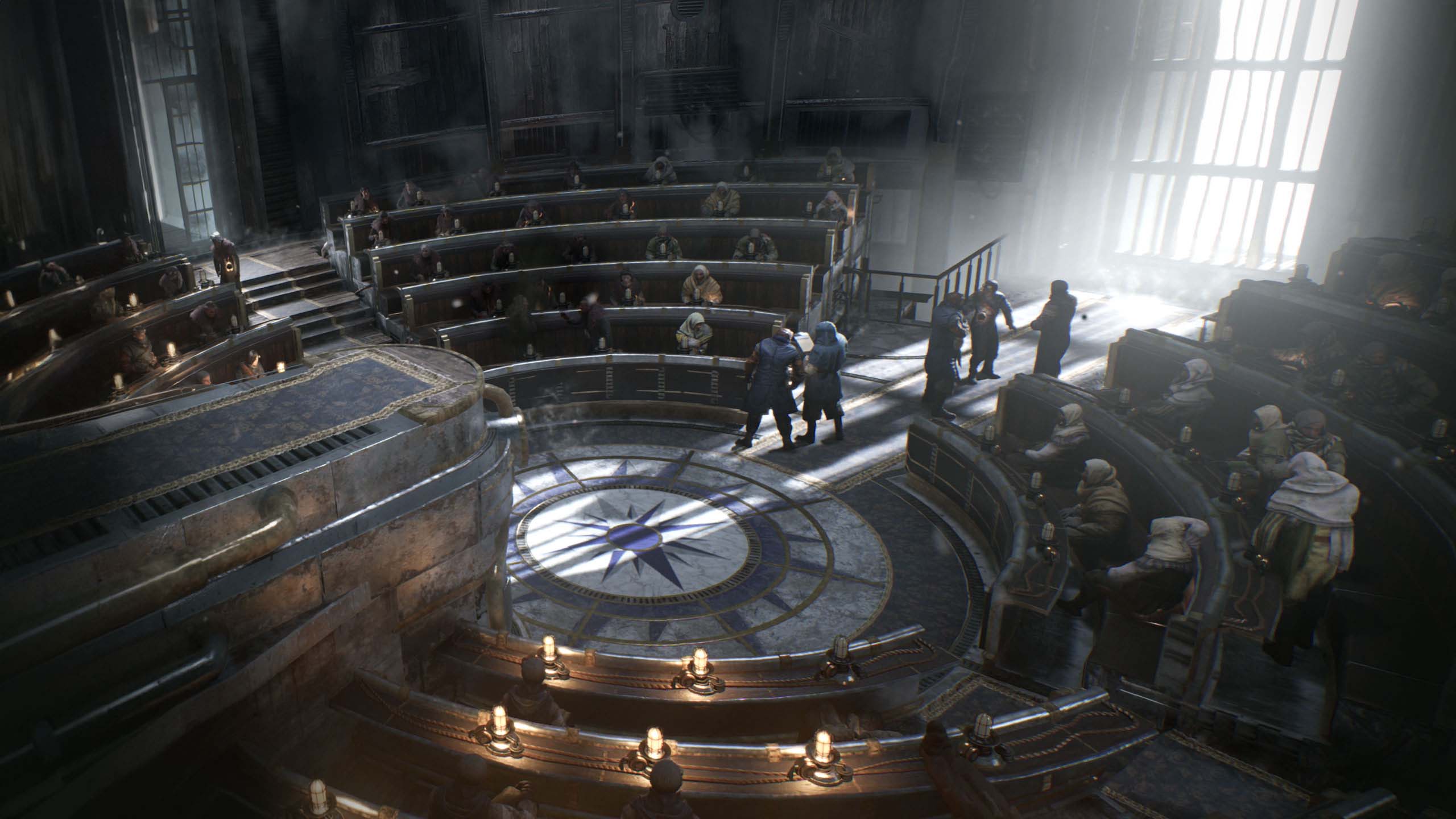
Your citizens can form communities and factions, each with different ideas for the city’s future. In the Council Hall you’ll put forth laws and negotiate them with the faction’s delegates.
Council Hall
Support of every faction inside the Council Hall costs dearly, as one’s faction ascension breeds discontent among others. That means you have to carefully think through every alliance.
Towards progress
The Research Institute is where you forge the city’s future. Each new project must be entrusted to a faction, forcing you to maneuver and form strategic alliances.
Factions
People of your city want to have a voice in how you run things. Each faction has its own ideology and ideas for the future, yet they also have one thing in common – insatiable thirst for power. Choose your allies in the Council Hall wisely.
Story Mode and Utopia Builder
The story of Frostpunk 2 introduces a multi-chapter saga set in the frozen wastes. Spanning across the life of the Steward this campaign lets you feel the burden of leadership as you take the responsibility for thousands of lives. At the same time, the sandbox mode called Utopia Builder with infinite play time leaves you room for boundless social and infrastructural experiments.
The US Department of Justice (DoJ) is set to wrap its case in the Google antitrust trial, after an eventful two weeks in the courtroom.
The tech giant is accused of engaging in monopolistic behavior by strategically acquiring certain companies and controlling the adtech industry’s most widely-used tools and exchanges. The lawsuit was filed in 2023 by the DoJ and a coalition of eight states seeking to “restore competition” on the web.
The trial began on September 9, and the DoJ has been laying out its case that Google has attempted to monopolize control of the ad network, server, and exchange, beginning with its acquisition of advertising company DoubleClick in 2008.
Lawyers for the government argued that the move made Google’s ad server the default choice and left publishers with few alternatives. By integrating its ad exchange and server, Google has an unfair edge in ad auctions, and it manipulates auction rules and drives up cost, the DoJ alleged. Advertisers taking the stand — including Gannett, NewsCorp, Index Exchange, The Trade Desk, Scope3 and others — have backed up these allegations, stating that they have felt trapped by Google’s tactics, and at the same time felt compelled to use the company’s products to remain competitive.
Notably, the DoJ obtained numerous seemingly damning internal Google emails and presentations suggesting that the company was fully aware of the advantage it would gain through the DoubleClick grab and how it would impact competitors.
For instance, in 2009, Google’s former president of global display advertising, David Rosenblatt, said in an email that Google’s control of the ad market would be akin to owning both Goldman Sachs and the New York Stock Exchange. “If we execute …we’ll be able to crush other networks, and that’s our goal,” he wrote.
Meanwhile, current and former Google executives and managers have been caught contradicting themselves when presented with such emails, brushing them off or attempting to talk their way around them.
For its part, Google argued that the government is focusing on just a narrow sliver of the advertising market (that is, banner ads at the top and sides of web pages). In an opening slide deck, it said that the ad technology industry is “intensely competitive, with new entrants all the time.” The company claimed that there is “no monopoly power,” and that its share in a “two-sided market” has decreased even as the company’s revenue has increased.
Further, Google is arguing that sellers and buyers are free to choose multiple ad tech tools (and do); that it makes its products interoperable with those of its rivals; and that it has sought to create value for advertisers, publishers and users. In 2024, “this is the commercial reality,” the company said.
Google, which will soon have to begin its defense, is said to have earned $200 billion in 2023 alone through ad placement and sales.
The case will ultimately be decided by a judge (what’s known as a “bench trial.”) Google avoided a jury trial by making a roughly $2.3 million payment to the DoJ. The $2,289,751 check covers a portion of the damages sought by the plaintiffs, and ensures that a judge will make the final decision in the case. Google’s team of lawyers described it as a strategic decision that will help ensure a quicker resolution.
This is the second antitrust trial faced by Google in the last two years. Earlier this year, the company lost a case centered around its search business; Judge Amit Mehta ruled that the company had engaged in anticompetitive behavior to maintain its dominance, calling Google a “monopolist.” The penalties attached to that ruling are as yet unannounced.
Want to create church bulletins that people can’t wait to dive into and read?
This STUNNING collection of Church Bulletin templates is so perfect and will last you ALL YEAR!!! Every season and holiday is totally covered but best of all, they’re absolutely FREE (for a limited time, if you promise to leave an honest review after download) when you use special discount code during checkout: YEAHIMFREE
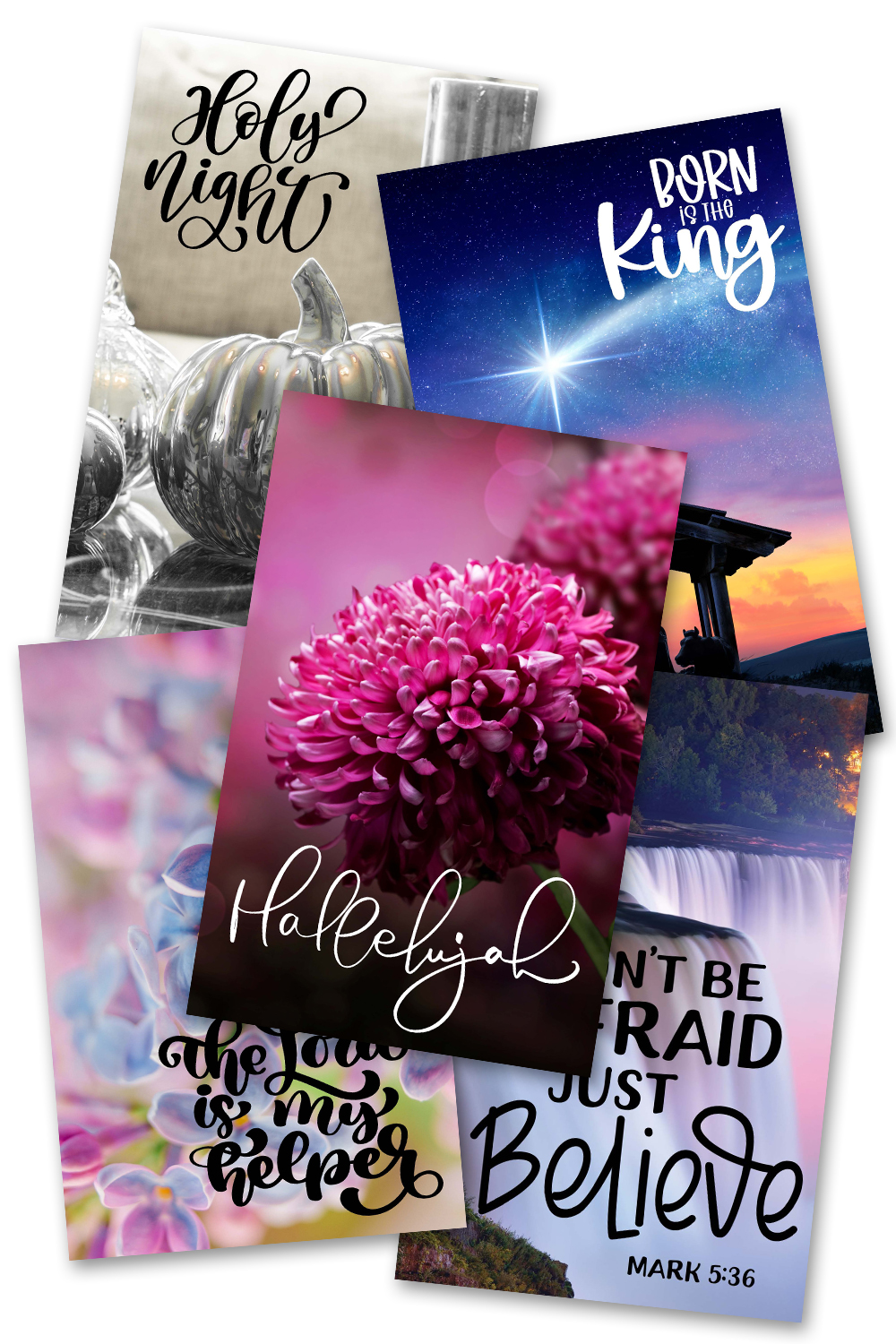
These bi-fold (8.5″ x 11″) PDF pages are jam-packed with gorgeous cover images and quotes. Perfect for changing up your design for different seasons and celebrations.
You’ll never run out of design ideas for creating your next church bulletin!! It’s blank inside so you can add in ways to connect with and contact your church, and any other important info such as:
Weekly / Monthly Updates
Service Schedule
Sermon Notes
Motivational and Inspiring Quotes
I am so excited for you to download this printable Church Bulletins set!!
Phrases include:
Holy night, Thanksgiving, Grace always wins, You’re more valuable than rubies, Warm wishes this festive season, Be still and know, Be Thankful, Glory to God, Enjoy today, Happy new year, Happy Valentine’s day, Grateful thankful blessed, Merry Christmas, His mercy endures forever, Happy Memorial day, Thank you veterans, 4th of July, Easter blessings, O holy night, But the greatest of these is love 1 Corinthians 13:13, Happy father’s day, God will never stop loving me, Happy mother’s day, Thankful for God, Away in a manger, Happy spring, My grace is sufficient for you, Hello Summer, Joy to the world, Be still & know Psalms 46:10, Merry Christmas Matthew 1:21, You are loved, Let all creation rejoice, Made to worship, Have faith, Hello Winter, The spirit of God helps us in weakness, Welcome autumn, Hello fall, Gotta have faith, Start today with Jesus, His mercies are new every morning, Merry Christmas Isaiah 7:14, Not perfect just forgiven, Stronger than the storm, Prayer works, Walk by faith, Live by faith, With God all things are possible Matthew 19:26, She is rooted & grounded in the love & mercy of the Lord, You are loved I have loved you with an everlasting love I have drawn you with unfailing kindness Jeremiah 31:3, God is within her she will not fall psalm 46:5, He counts the stars & calls them all by name, He is risen Matthew 28:6, Love never fails 1 Corinthians 13:8, Loved by Jesus, Made to worship Psalm 95:1, Make today amazing, Let your light shine before men that they may see your good works and glorify your Father which is in heaven Matthew 5:16, & the greatest of these is love 1 Corinthians 13:13, Guard your heart Proverbs 4:23, He heals the brokenhearted and binds up their wounds Psalm 147:3, He is before all things Colossians 1:17, His love moves mountains, I can do all things through Christ who strengthens me Philippians 4:13, Jesus above all, If God is for us who can be against us Romans 8:31, It is well with my soul, God is love, Faith can move mountains, But first pray, Be strong and courageous…, Be the light, Service is delight…Charles Spurgeon, Don’t be afraid just believe Mark 5:36, For we walk by faith not by sight 2 Corinthians 5:7, I know that you can do all things and that no purpose of yours can be thwarted, Count it all joy James 1:2, Hallelujah, The Lord is my helper, Soli deo Gloria, The God who gives life, Love never fails, With God all things are possible, Amen, Pray more worry less, Fully known deeply loved, My times are in your hands Psalm 31:15, Give thanks, You are a new creation, Happy Easter, Born is the king, He is risen just as said, By His wounds we are healed Isaiah 53:5.
It’s kind of hard to choose favorite pages because they are all GORGEOUS, but I do have a few.
Feast your eyes on the festive collection of church bulletin covers. There’s twinkly Christmas trees, sparkly baubles, glittery snowflakes, and MORE!
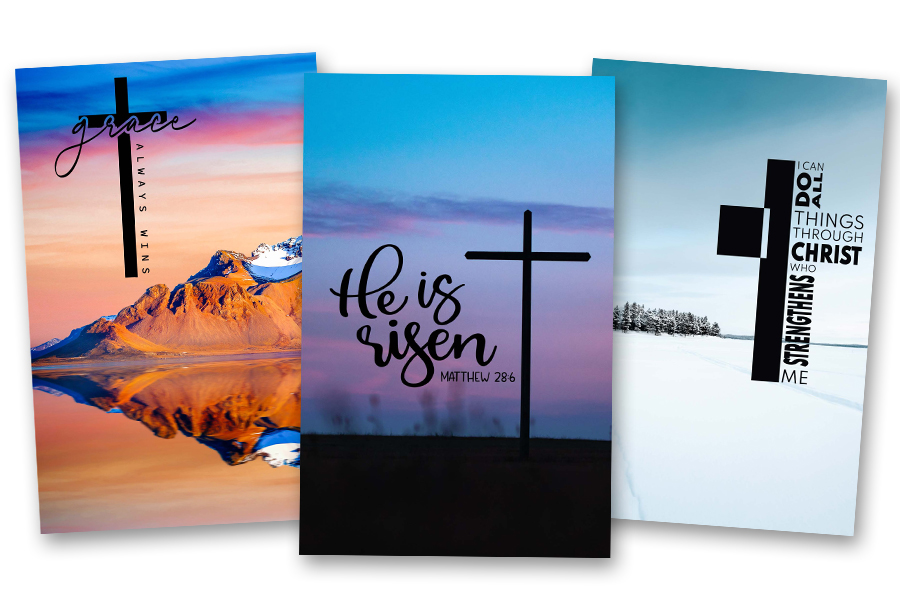
The cross is a beautiful symbol to remind us what Jesus Christ did for all of humanity. You’ll enjoy creating BEAUTIFUL church resources featuring the majestic cross, perfect for Easter!
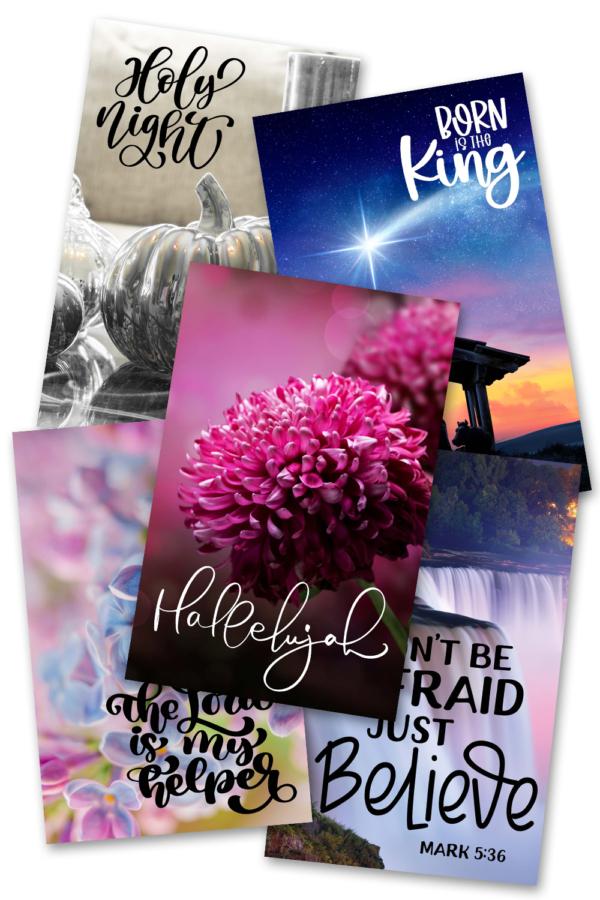
I take so much inspiration from flowers. These flower images will make beautiful bulletin sheets that’ll be sure to fill readers with happiness and joy and are perfect for Spring!
Do you feel inspired when you glance up at the sky? I LOVE the natural gradients and breathtaking colors of the sky any time of day! You’ll find images of the sky in varying moods and times of the day to create STUNNING church bulletin pamphlets!
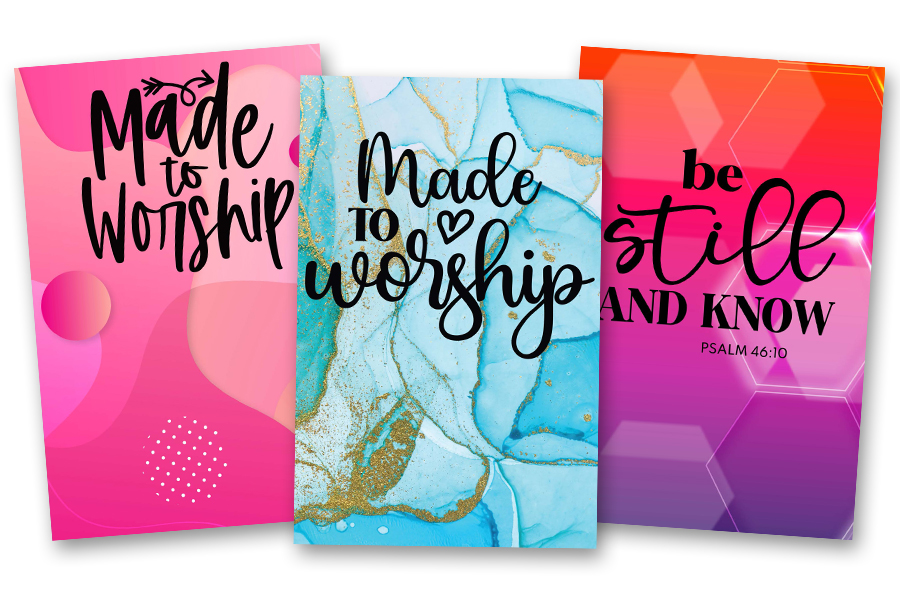
Wanna create cool and modern church service guides? You’ll love this pretty selection of printable templates in bright, BOLD colors!
Is there anything more relaxing than an ocean breeze and the sound of waves swooshing on the shoreline? I don’t think so! These ocean scenery images are the perfect cover designs for your church bulletin guides in the summer!
There’s soooo many more included. Grab them below…