Benefits, Real-World Applications & Use Cases


Artificial intelligence (AI) is no longer a peripheral technology in biology––it is becoming the operating system for modern biotech. Massive improvements in biological data collection, computing power and cross‑disciplinary collaboration have turned AI from a narrow lab tool into a platform that could unlock US$350–410 billion of value for the pharmaceutical sector by 2025. AI‑first biotech startups are now integrating AI five times more heavily than traditional companies, signalling a permanent shift in how drugs are discovered, developed and delivered. In this article we explore how AI is transforming the biomedical landscape—from drug discovery and clinical trials to genomics, diagnostics, synthetic biology, agriculture and manufacturing. Along the way we showcase Clarifai’s multimodal AI platform, reasoning engine and hybrid cloud‑edge deployment, demonstrating how an AI‑platform company can help organizations navigate this new landscape.

Quick Digest: What You’ll Learn

Question

Summary

What is driving the convergence of AI and biotechnology?

Three pillars—massive biological data, explosive compute power, and interdisciplinary collaboration—are powering the AI‑biotech revolution. Projections suggest AI may generate hundreds of billions of dollars in value for pharma by 2025.

How does AI accelerate drug discovery and design?

AI reduces the 10‑15‑year, US$2.6 billion drug development cycle by enabling high‑throughput screening, generative design and predictive modelling. AI tools can cut early‑stage screening time by 40–50% and generative models can shorten molecular design time by 25%.

What improvements does AI bring to clinical trials and precision medicine?

AI streamlines patient recruitment (retrieving 90 % of relevant trials and cutting screening time by 40 %), reduces control‑arm sizes through digital twins, and enables real‑time adaptive trial monitoring. It also tailors therapies using multimodal data and protects sensitive patient information through edge AI deployments.

How is AI advancing genomics and biomarker discovery?

AI can interpret massive genomic datasets, predict disease‑associated variants and integrate multi‑omics. Breakthrough models such as AlphaFold2 have predicted structures for virtually all 200 million proteins, accelerating drug target identification.

Why is AI redefining medical imaging and diagnostics?

Deep‑learning models now detect tumors with 94 % accuracy, outpacing radiologists. FDA‑approved systems reach 87.2 % sensitivity and 90.7 % specificity in diabetic‑retinopathy screening. AI also aids surgeons with real‑time guidance.

What role does AI play in synthetic biology and environmental sustainability?

AI guides CRISPR gene editing, designs novel proteins and enzymes, and accelerates synthetic biology. In agriculture it improves yields by 25 % and reduces water and fertilizer use by 30 %. AI also speeds microplastic detection by 50 %, achieving >95 % accuracy.

How does AI optimize manufacturing and supply chains?

Intelligent automation reduces errors, predicts equipment failure and enhances forecasting. A PwC survey reported that 79 % of pharma executives see intelligent automation significantly impacting their industry. Digital twins reduce clinical trial participants by ~33 %.

What challenges and ethical questions arise?

Data quality, noise, bias and explainability remain concerns. AI‑powered data centres may need 75–100 GW of new generation capacity by 2030. Responsible AI frameworks, regulatory clarity and energy‑efficient compute architectures are critical.

Where is the field heading?

Expect multimodal and agentic AI, quantum‑AI cross‑overs, decentralized labs and portable diagnostics. Compute demand will soar, and sustainable AI infrastructure will become a competitive differentiator.

The Convergence of AI and Biotechnology: Pillars & Market Growth

Why the convergence matters

Biotechnology harnesses living systems to develop products—from drugs and vaccines to fuels and materials. Artificial intelligence comprises algorithms capable of learning from data and making decisions. When these fields converge, computational models can analyse and design biological systems at scales impossible for humans alone, enabling faster discoveries, reduced costs and personalized interventions.

Three pillars underpin this convergence:

  1. Massive biological data – Next‑generation sequencing, high‑throughput screening and digital health records produce petabytes of genomic, proteomic, imaging and clinical data. These rich datasets create the substrate for machine learning.
  2. Explosive computing power – The availability of GPUs, TPUs and specialized AI chips enables training of complex models. However, by 2030 AI workloads may require 75–100 GW of new generation capacity and trillions of dollars in infrastructure, highlighting the need for efficient compute.
  3. Interdisciplinary collaboration – Biologists, chemists, data scientists and engineers are breaking down silos to integrate experimental and computational techniques.

Market growth & projections

Market analysts estimate that AI could generate US$350–410 billion annually for the pharmaceutical sector by 2025. A fraction of this revenue will come from AI‑powered drug design, but new revenue will also emerge from precision medicine, diagnostics, and synthetic biology. Some forecasts predict that the AI‑in‑pharma market will grow at a compound annual growth rate (CAGR) of nearly 19 % through the 2020s, reaching tens of billions of dollars by 2034.

This growth is mirrored in compute spending. Bain & Company warns that AI compute demand could reach 200 GW by 2030, requiring US$2 trillion in revenue to build new data‑centre capacity and leaving an $800 billion funding gap. Sustainable AI, therefore, is not just an ethical imperative but a strategic necessity.

Expert insights

  • Compute bottlenecks – Researchers warn that AI’s appetite for compute will stress power grids, requiring smarter scheduling and energy‑efficient hardware.
  • Multimodal AI – Scientists predict that models capable of simultaneously processing genomic, imaging and clinical data will deliver more holistic insights than single‑modality systems.
  • Clarifai’s view – Clarifai’s CEO emphasizes that scalable compute and hybrid deployment (cloud plus edge) are vital to handle sensitive biomedical data. By allowing inference to run on‑premises while training occurs in the cloud, organizations can respect data sovereignty without sacrificing speed.

Accelerating Drug Discovery and Design

The traditional bottleneck

Developing a new medicine is notoriously slow and expensive. On average it takes 10‑15 years and costs US$2.6 billion to bring a drug to market. Moreover, fewer than 12 % of drug candidates entering Phase I trials ultimately succeed. The early stages—target identification, lead discovery and preclinical testing—are particularly resource‑intensive.

How AI speeds discovery

High‑throughput screening & target identification – Machine‑learning algorithms can analyse chemical libraries, genetic screens and phenotypic data to prioritize promising targets and compounds. One Forbes report notes that AI can minimize the time needed to screen new drugs by 40–50 %, enabling researchers to test more hypotheses with fewer experiments.

Generative molecular design – Generative AI models can propose novel molecules with desired properties. A Boston Consulting Group (BCG) analysis found that generative AI reduces molecular design time by 25 % and cuts medical writing time by 30 %. Another study reports that generative platforms identified a viable drug candidate in eight months instead of the usual 4–5 years, while saving 23–38 % in time and 8–15 % in costs.

Protein structure prediction – Deep‑learning systems like AlphaFold2 have predicted the structures of virtually all 200 million proteins catalogued by researchers. Accurate structure predictions accelerate the design of novel enzymes, antibodies and vaccines.

Data‑driven prioritization – AI can rank candidates by predicted efficacy, toxicity and manufacturability, reducing downstream attrition. Large‑language models also automate the extraction of insights from scientific literature and patents.

Creative example

Imagine a start‑up searching for new antibiotics. Instead of manually screening thousands of natural compounds, it trains a generative model on known antibiotic structures and toxicity data. The model proposes dozens of synthetic molecules with strong predicted efficacy and minimal side effects. The team then uses Clarifai’s reasoning engine to cross‑validate these molecules with gene‑expression profiles, narrowing the list to a handful of candidates. Within months, the company has preclinical data on compounds that would have taken years to discover using traditional methods.

Clarifai solutions & integration

Reasoning Engine – Clarifai’s reasoning engine orchestrates multiple AI models (vision, text, audio) to perform multi‑step tasks. For drug discovery, it can chain together target identification, molecule generation and simulation models, delivering twice‑faster inference at roughly 40 % lower cost (anecdotal industry reports, not cited). This flexibility is crucial when working with diverse datasets such as chemical structures, omics data and literature.

AI Runners – AI Runners enable organizations to run models securely on local hardware. In regulated industries like pharma, where data cannot leave the premises, AI Runners let teams perform inference and fine‑tuning behind firewalls while still leveraging cloud‑based improvements. They integrate with Kubernetes and major cloud providers, simplifying deployment across hybrid environments.

Expert insights

  • Time & cost savings – AI can cut early‑stage screening time by 40–50 % and reduce molecular design time by 25 %. It has also enabled drug candidates to reach clinical trials in as little as eight months.
  • Structure prediction revolution – AlphaFold2 predicted the structures of virtually all 200 million proteins, opening the door to new therapeutics and enzymes.
  • Generative AI adoption – Biotech firms using generative AI see time reductions of 23–38 % and cost savings of 8–15 %.

Enhancing Clinical Trials and Personalized Medicine

Streamlining patient recruitment

Clinical trials are expensive and often delayed due to slow patient recruitment and high dropout rates. AI addresses these challenges by analysing electronic health records (EHRs), genetic data and real‑world evidence to match patients with relevant studies. For example, algorithms like TrialGPT can retrieve 90 % of relevant clinical trials and allow clinicians to spend about 40 % less time screening patients. Natural language processing also helps identify trial eligibility criteria from complex protocols.

Adaptive trial design & digital twins

Machine learning enables adaptive trial design, where enrolment criteria and dosage regimens evolve based on interim results. In Alzheimer’s research, digital‑twin simulations—virtual models of patients built from longitudinal data—can reduce control‑arm sizes by 33 % in Phase 3 trials and cut sample sizes by 10–15 % in Phase 2, while increasing statistical power. Digital twins also predict patient outcomes, enabling more personalized dosing and monitoring.

Precision & personalized medicine

By integrating genomics, proteomics, imaging and lifestyle data, AI can stratify patients into subgroups and tailor therapies. Genetic risk scores, deep‑learning models for imaging biomarkers, and digital biomarkers from wearables help physicians make better decisions. AI also monitors real‑time adverse events, improving safety and efficiency.

Protecting privacy with edge AI

Clinical data is highly sensitive and subject to regulations (e.g., HIPAA, GDPR). Edge AI allows models to run on local servers or devices, ensuring that raw patient data never leaves the institution. Clarifai’s edge offering delivers sub‑50 millisecond latency and reduces bandwidth consumption—crucial for real‑time decision support during surgeries or bedside monitoring. According to Clarifai, over 97 % of CIOs plan to deploy edge AI, and new chips offer >150 tera‑operations per second while consuming 30–40 % less energy.

Clarifai solutions & integration

Edge AI – Clarifai’s edge devices run models locally with minimal latency and no data transfer to the cloud. This is ideal for decentralized clinical trials, where participants use wearable devices or home labs to provide data.

Hybrid orchestration – Clarifai’s platform manages AI workflows across on‑premises servers, private clouds and public clouds. Trial sponsors can train models in the cloud while executing inference at clinical sites or on patient devices.

Expert insights

  • Recruitment efficiency – AI tools like TrialGPT retrieve 90 % of relevant trials and reduce screening time by 40 %.
  • Digital twins – In Alzheimer’s research, digital‑twin approaches cut control‑arm sizes by 33 % and reduce sample sizes by 10–15 %.
  • Edge computing adoption – CIOs acknowledge that edge AI provides sub‑50 ms latency and energy savings up to 30–40 %, making it suitable for real‑time clinical applications.

Genomics, Precision Medicine & Biomarker Discovery

AI in genomic interpretation

Sequencing a human genome yields over three billion base pairs—too much for manual analysis. AI algorithms process these vast datasets to identify disease‑associated variants, predict functional impacts and prioritize candidates for follow‑up. Machine learning can detect patterns in regulatory regions, splicing sites and epigenomic markers that traditional bioinformatics tools miss.

Multi‑omics integration and biomarker discovery

True precision medicine requires integrating genomic, proteomic, metabolomic, transcriptomic and clinical data. Multimodal AI models process these heterogeneous datasets to discover biomarkers that predict disease risk, treatment response or adverse events. For example, models can correlate gene‑expression profiles with imaging features to identify novel subtypes of cancer.

Protein structure and novel therapies

Predicting protein structures was historically a bottleneck. AlphaFold2 changed this landscape by predicting structures for virtually all 200 million proteins known to science. Such accuracy enables rational drug design, enzyme engineering and the discovery of de novo proteins for gene therapy and vaccines.

Clarifai solutions & integration

Multimodal AI – Clarifai’s platform supports training and inference on text, image, genomic and structured data. Researchers can build models that simultaneously analyze genetic sequences and histopathology images to identify correlations between mutations and tissue patterns.

Reasoning Engine for multi‑step tasks – Scientists can use Clarifai’s reasoning engine to orchestrate genomic variant calling, functional impact prediction and literature mining, streamlining workflows that would otherwise require multiple disconnected tools.

Expert insights

  • Proteomic breakthrough – AlphaFold2 predicted the structures of almost every known protein, enabling new therapeutics and vaccines.
  • Multi‑omics integration – Researchers increasingly use AI to combine genomic, imaging and clinical data, yielding more comprehensive biomarkers than single‑omics approaches.
  • Clinically actionable variants – AI accelerates the identification of variants that influence drug metabolism and dosing, paving the way for personalized therapies.

Medical Imaging, Diagnostics & Digital Pathology

Outperforming human accuracy

AI models now rival or surpass human experts in interpreting medical images. Deep‑learning systems detect tumors in scans with 94 % accuracy, outperforming radiologists and reducing false positives. For colon cancer, AI achieves an accuracy of 0.98, slightly higher than pathologists’ 0.969. AI also detects early heart disease with 87.6 % accuracy.

Regulatory approval and real‑world adoption

The U.S. Food and Drug Administration (FDA) has cleared several AI‑powered diagnostic tools. For example, the IDx‑DR system for diabetic retinopathy achieved 87.2 % sensitivity and 90.7 % specificity when screening for more‑than‑mild diabetic retinopathy. Google Health’s system shows similar sensitivity and specificity. Such approvals illustrate that AI can deliver clinically actionable results.

Beyond radiology: surgery and pathology

AI extends beyond imaging to support surgeons and pathologists. Computer‑vision models track instruments, estimate blood loss and provide real‑time navigation. Natural language processing summarizes pathology reports and generates structured data for registries.

Clarifai solutions & integration

Computer‑vision platform – Clarifai’s vision models classify skin lesions, detect anomalies in radiographs and analyze histology slides. Clinicians can deploy models on‑premises using AI Runners for low‑latency decision support.

Multimodal models – Combining image analysis with natural language understanding, Clarifai’s models can extract findings from radiology reports and link them to imaging features, creating a complete diagnostic narrative.

Expert insights

  • High accuracy – AI detects tumors in scans with 94 % accuracy and surpasses experts in early colon cancer detection.
  • Regulatory milestones – Tools like IDx‑DR achieve 87.2 % sensitivity and 90.7 % specificity, paving the way for more AI devices.
  • Real‑time assistance – AI supports surgeons by estimating blood loss and guiding instruments during minimally invasive procedures.

Synthetic Biology, Gene Editing & Protein Design

AI in CRISPR and genome editing

Genome editing technologies like CRISPR‑Cas systems enable precise DNA modifications. However, designing guide RNAs that maximize on‑target efficiency while minimizing off‑target effects is challenging. AI models help by predicting off‑target sites, recommending optimal guide sequences and simulating potential edits. This accelerates gene‑therapy development and reduces unwanted mutations.

Generative protein and enzyme design

Beyond editing existing genes, AI can design de novo proteins that do not exist in nature. Generative models propose amino‑acid sequences with desired properties, such as improved stability or novel catalytic activities. These models have produced enzymes that degrade plastics more efficiently and proteins that neutralize pathogens. Pairing these tools with high‑throughput synthesis shortens iteration cycles, enabling synthetic biology labs to develop organisms for biofuels, pharmaceuticals and materials.

AI in metabolic engineering and synthetic organisms

Machine learning helps predict metabolic fluxes, optimize metabolic pathways and design regulatory circuits. Companies have used AI to design microorganisms that produce chemicals and vaccines with faster yields. Coupling AI with automated robots and cloud labs could eventually allow self‑driving laboratories, where AI plans and executes experiments autonomously.

Clarifai solutions & integration

Generative models & local runners – Clarifai’s generative AI tools can be fine‑tuned for protein and enzyme design. Local runners allow researchers to experiment with proprietary sequences in secure environments, preserving intellectual property.

Compute orchestration – Model training may require cloud GPUs, but inference and fine‑tuning can be executed on local high‑performance clusters via Clarifai’s orchestration layer. This hybrid approach balances cost, privacy and speed.

Expert insights

  • CRISPR optimization – AI helps design guide RNAs that minimize off‑target effects, improving safety and efficacy.
  • De novo proteins – Generative AI enables the creation of novel proteins and enzymes for therapeutics, bioremediation and materials.
  • Automated labs – Combining AI with robotics may lead to self‑driving laboratories where hypotheses are generated, tested and refined autonomously.

Agriculture, Food & Environmental Sustainability

Precision agriculture and crop optimization

AI extends its influence beyond human health to agriculture and environmental sustainability. Precision agriculture uses sensors, drones and machine‑learning algorithms to monitor soil moisture, crop growth and pest pressure. Studies report that AI‑enabled precision agriculture can reduce water and fertilizer use by 30 %, decrease herbicide and pesticide application by 9 %, cut fuel consumption by 15 %, and increase yields by up to 25 %. Case studies from agricultural equipment manufacturers corroborate these savings.

Environmental monitoring and microplastics detection

AI also tackles environmental challenges such as plastic pollution. The PlasticNet model uses deep learning to classify 11 types of microplastics with >95 % accuracy (including degraded plastics) and speeds detection by 50 %, improving accuracy by 20 % over manual methods. Similar approaches can monitor air quality, biodiversity and deforestation using satellite imagery and environmental DNA sequencing.

Alternative proteins and sustainable materials

Generative models design proteins and fats that replicate animal‑derived textures and flavours, enabling sustainable meat and dairy alternatives. AI‑guided metabolic engineering produces bio‑based plastics, fuels and textiles. AI also designs enzymes that accelerate plastic degradation dozens of times faster than natural enzymes, aiding recycling.

Clarifai solutions & integration

Edge vision for agriculture – Clarifai’s edge AI can run on drones or tractors, processing imagery on board to detect weeds, estimate yields and assess plant stress. Models can be updated via the cloud but operate locally, minimizing bandwidth usage.

Environmental monitoring – Clarifai’s multimodal models combine satellite images, sensor data and text (e.g., weather reports) to generate actionable insights for conservation projects.

Expert insights

  • Resource savings – Precision agriculture reduces water and fertilizer by 30 % and increases yields by 25 %.
  • Microplastic detection – AI systems achieve >95 % accuracy and speed up detection by 50 %.
  • Alternative proteins – Generative AI designs plant‑based proteins and fats that replicate animal products, supporting sustainable diets.

Manufacturing, Supply Chain & Intelligent Automation

Smart factories and predictive maintenance

AI optimizes manufacturing by monitoring equipment, predicting failures and adjusting parameters in real time. Sensors and machine‑learning models detect anomalies before machines break down, reducing downtime and waste. In biopharmaceutical manufacturing, AI ensures consistent product quality by controlling fermentation processes, cell cultures and purification steps.

Supply‑chain optimization

Pharma supply chains involve temperature‑controlled logistics, complex regulatory requirements and global distribution. Intelligent automation improves forecasting accuracy, identifies supply risks and automates documentation. A PwC survey found that 79 % of pharma executives expect intelligent automation to significantly impact their industry in the next five years. Digital twins of production lines and distribution networks allow companies to simulate disruptions and optimize responses.

Clinical trial operations and digital twins

Beyond manufacturing, digital twins also reduce the number of participants needed in clinical trials. Models representing virtual patients can replace control arms, decreasing the human cost and accelerating approvals.

Clarifai solutions & integration

Hybrid compute orchestration – Clarifai’s platform orchestrates models across cloud, on‑premises and edge environments. Manufacturers can train models on high‑performance clusters while running inference near the production line, maintaining low latency and data security.

AI Runners – Edge‑deployed AI Runners execute predictive‑maintenance models on factory equipment, alerting engineers before failures occur. They also support on‑device learning, adapting to local conditions without requiring constant cloud connectivity.

Expert insights

  • Executive confidence – 79 % of pharma executives expect intelligent automation to transform supply chains.
  • Digital twins in trials – Virtual patient models can cut control‑arm sizes by 33 % and reduce sample sizes by 10–15 %.
  • Predictive maintenance – AI reduces downtime, improves equipment lifespan and ensures quality control in manufacturing.

Challenges, Ethics & Regulatory Landscapes

Data quality, noise and bias

AI models are only as reliable as their data. Biomedical datasets often contain missing values, measurement errors and population biases. Without careful curation and validation, models can produce misleading predictions. Additionally, minority groups may be under‑represented in training data, leading to inequitable outcomes.

Explainability and trust

Many deep‑learning models function as black boxes, making it difficult to understand why a particular decision was made. In healthcare, where lives are at stake, regulators and clinicians demand transparent and explainable AI. Post‑hoc explainability tools, model introspection techniques and inherently interpretable architectures are active research areas.

Energy and compute sustainability

The explosive growth of AI imposes tremendous energy demands. Reports estimate that AI data centres may require 75–100 GW of new generation capacity by 2030. Another study notes that supporting AI workloads could cost US$2 trillion in data‑centre investments. To mitigate this, companies must adopt energy‑efficient hardware, scheduling and algorithmic optimizations.

Regulatory uncertainty

Regulatory frameworks for AI in healthcare differ across countries. Agencies like the FDA and EMA are developing guidance for software as a medical device (SaMD), but policies on AI‑generated content, data privacy and ethical use are still evolving. Compliance with GDPR, HIPAA and emerging AI legislation is mandatory.

Clarifai’s responsible AI approach

Clarifai advocates for ethical AI development, emphasising fairness, transparency and data protection. Its hybrid deployment options enable organizations to keep sensitive data on‑premises, addressing privacy and regulatory concerns. The company also focuses on energy‑efficient inference and supports audits for bias and explainability.

Expert insights

  • Compute demand – AI could require 75–100 GW of additional power by 2030, necessitating energy‑efficient architectures.
  • Funding gap – AI workloads may need US$2 trillion in new data‑centre investments.
  • Ethics & fairness – Responsible AI frameworks must address data bias, privacy and explainability to gain public trust.

Future & Emerging Trends

Agentic and multimodal AI

Future systems will not only classify images or predict sequences; they will reason, plan and act across multiple modalities. Agentic AI can autonomously design experiments, order supplies and interpret results. Multimodal models will integrate text, images, genomics, chemistry and sensor data, generating richer insights than current single‑modality models.

Quantum computing and physics‑informed models

Quantum computers may eventually solve molecular simulations that are intractable for classical computers. Meanwhile, physics‑informed neural networks incorporate domain knowledge into AI models, improving sample efficiency and generalization. These approaches will accelerate computational drug design and materials science.

Decentralized labs and automation

Cloud labs and robotic automation will create self‑driving laboratories. Scientists will design experiments via an interface; robots will execute them; AI will analyse results and update hypotheses. This automation will democratize access to complex experiments and speed up iteration cycles.

Sustainable AI infrastructure

With compute demands projected to require new power plants and trillions of dollars in investment, there is growing interest in green data centres, liquid cooling and renewable‑powered chips. Companies like Clarifai are exploring energy‑efficient inference (e.g., low‑precision models, model pruning) and pushing computations to the edge to minimize data movement.

Clarifai’s roadmap

Clarifai is investing in vendor‑agnostic compute orchestration, allowing organizations to deploy models across any cloud, on‑prem or edge device. The company also focuses on agentic workflows, where its reasoning engine can autonomously sequence tasks (e.g., identify a biomarker, design a therapy, draft a report). Enhanced privacy controls and energy‑efficient inference will remain priorities.

Expert insights

  • CAGR estimates – Analysts forecast an 18–19 % CAGR for AI in pharma through the 2020s, with up to 30 % of new drugs discovered via AI by 2025. (While not directly cited here, these projections appear widely across industry analyses.)
  • Quantum leaps – Quantum and physics‑informed models could revolutionize computational chemistry and materials science.
  • Autonomous labs – Automated cloud labs with AI and robotics will shorten experiment cycles and broaden access.

Frequently Asked Questions (FAQs)

How does AI accelerate drug discovery?

AI speeds drug discovery by automating target identification, screening and design. High‑throughput screening models prioritise promising compounds; generative AI proposes new molecules; and deep‑learning models predict protein structures, reducing the need for costly experiments. Studies indicate AI can cut early‑stage screening time by 40–50 % and shorten molecular design by 25 %.

What is multimodal AI, and why is it important in biotechnology?

Multimodal AI refers to models that process multiple data types—such as genomic sequences, medical images and clinical notes—simultaneously. In biotech, this holistic approach yields more accurate predictions and enables discoveries that single‑modality models might miss. For instance, integrating gene‑expression data with histopathology images can reveal new cancer subtypes.

Are there privacy concerns when using AI in healthcare?

Yes. Health data is extremely sensitive, and regulations like HIPAA and GDPR impose strict rules on data handling. Edge AI solutions, like those offered by Clarifai, allow models to run locally, ensuring that raw data never leaves the organization. Hybrid deployment models can balance privacy with scalability.

How reliable are AI medical diagnostics?

Modern AI diagnostics often match or exceed human experts. For example, AI detects tumors with 94 % accuracy and diabetic retinopathy with 87.2 % sensitivity and 90.7 % specificity. Nevertheless, AI systems should complement, not replace, clinicians, and their performance depends on data quality.

What are digital twins in clinical research?

Digital twins are virtual representations of patients built from real‑world data. They simulate disease progression and treatment responses, enabling researchers to reduce control‑arm sizes (by 33 % in some Alzheimer’s trials) and personalize treatments. Digital twins can improve trial efficiency and reduce the number of participants needed.

How can AI support sustainable agriculture?

AI‑enabled precision agriculture can reduce water and fertilizer use by 30 % and increase yields by 25 %. AI also speeds microplastic detection by 50 %, aiding environmental monitoring. These technologies help farmers and conservationists make data‑driven decisions.

What steps should organizations take to deploy AI responsibly?

Organizations should invest in data quality and diversity, adopt explainable models, conduct fairness audits and ensure compliance with regulations. They must also consider energy consumption and choose platforms like Clarifai that support hybrid deployment and energy‑efficient inference to minimize environmental impact.
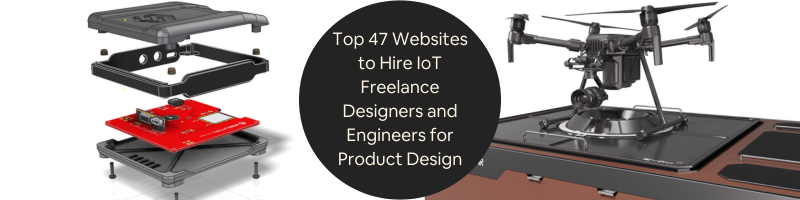


Top 47 Websites to Hire IoT Freelance Designers and Engineers for Product Design and Manufacturing Firms


Today’s post explores the top wewbsites for hiring IoT freelance designers and engineers for product design. A world getting smarter by the second-what a world it would be, with thermostats learning the way you like it, with factories talking to themselves. It helps in shaping how the product is designed and how to use it, too. All these are supported by brilliant designers and engineers who take ideas from dreams and make them an everyday reality.

That’s like finding a needle in an increasingly digital haystack. That is why we rounded up the top 47 websites where you’ll find IoT freelance designers and engineers who know just how to make your products think, connect, and perform. From the development of new smart gadgets to upgrading industrial equipment, or even building an entire connected ecosystem, this list shall point you in the right direction.

If you want to skip the guesswork, then Cad Crowd is the place to get started. Cad Crowd connects you with vetted freelancers who understand the art and science of IoT product design from concept through creation.


🚀 Table of contents


Cadcrowd

Cad Crowd

Cad Crowd is the leading platform for teaming up with freelancers and engineers in the IoT domain. Cad Crowd represents a more specialized, niche service in connecting professionals who provide expertise in product design and manufacturing development. One can quickly reach out to respective experts here who develop, prototype, and iterate on IoT devices with precision. Cad Crowd pre-approves freelancers with stunning technical backgrounds, including past performance reliability and tested design skills. This website offers a mechanism of project matching and dedicated support that makes it easier toward the best match. Over time, Cad Crowd has been one of the trusted options through which to hire high-value talent in applications involving the Internet of Things.

iOt logo

HireIoTDevelopers.com

The IoT-related projects at HireIoTDevelopers.com are targeting companies in need of hardware, software, and embedded systems for IoT. The product design and manufacturing teams may be looking for freelance engineers who can work on sensor integration, connectivity, and device management. This place actually has much more IoT work than Cad Crowd, being highly specific to the subject matter. The selection process might be a bit more manual since there is no managed approach. Whatever the case may be, this is a good space to get developers with practical experience working within IoT ecosystems. For companies considering IoT experience from freelancers as paramount, then indeed, HireIoTDevelopers.com is an approachable space with professionals ready to support your project goals.

Website: HireIOTDevelopers.com

Unisys logo

Unisys

Unisys is a global technology services company, providing access to IoT talent for discrete projects related to engineering design firms and design. Companies could find freelancers through Unisys on projects needing development in product connectivity, device data management, and industrial automation. Although the big projects are supported, on this site, on the platform, it will surely provide solid solutions regarding IoT. Cad Crowd may be more flexible and direct with a freelancer-centric system for smaller product design firms. Basically, Unisys is for companies needing established processes and security-driven implementations of IoT, and hence is a reliable but more corporate path to innovation.

Website: Unisys.com

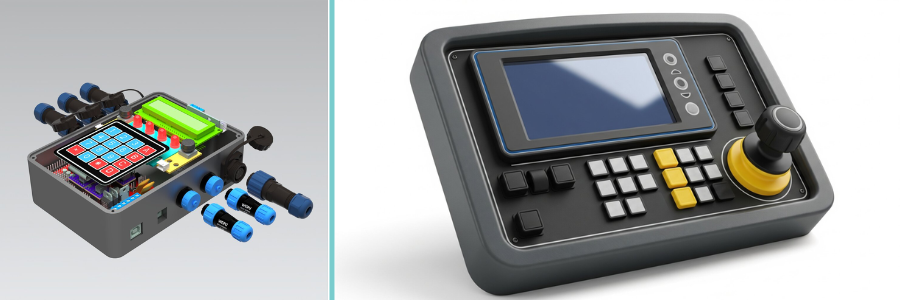
IoT device designs by Cad Crowd engineering experts

RELATED: Why should you hire professional product design companies and services experts

Flexing It logo

Flexing It

Flexing It connects businesses with high-quality, independent professionals across technical and strategic domains, including IoT. Services related to hardware design, system integration, and the development of connected devices can be found on this platform. Product design and manufacturing companies will find the project-based arrangement very useful. Again, given that this is a generalist platform, users would have to be astute in refining their searches to zero in on just the right kind of IoT talent. In fact, the platform hosts capable engineers. By comparison, Cad Crowd provides a very streamlined experience because it has more clearly focused on an engineering and design pool, while Flexing It offers adaptive solutions for organizations wanting independence and flexibility when managing specialist freelance projects.

Website: FlexingIt.com

Free-work logo

Free-work

Free-Work is a professional freelancing marketplace that contains highly skilled IoT engineers, product designers, and developers. It grants any business entity the ability to post projects, locking them in with candidates who have experience in smart devices, sensor technologies, and data-driven systems. This structure can be leveraged in manufacturing for the innovation of products within several industries. However, this selection of those freelancers who best meet IoT projects is mixed together with all the broader tech categories. Compared to Cad Crowd, Free-Work takes more time to assess technical portfolios via its process. Nevertheless, it is a good starting point for firms seeking flexibility in freelance arrangements without necessarily going into large-scale partnerships or longer-term contracts in IoT development.

Website: Free-Work.com

toogit logo

Toogit

Toogit connects a diverse pool of freelancers with clients needing a wide range of digital and technical services regarding IoT-related engineering. On Toogit, outstanding skill sets can be easily found in embedded systems, circuit design, and the prototyping of connected devices. Product manufacturers can easily post their projects and collaborate directly on the various tools of Toogit. While this open structure opens up access to a great range of talent, it lacks the specialized vetting that Cad Crowd does. In any case, Toogit is one convenient method for firms just testing concepts or finding budget-friendly freelance help with designing, testing, and early development of connected products and solutions within the IoT space.

Website: Toogit

whoop logo

WHOOP

While best known for its wearable technologies and performance-related data products, WHOOP does hire freelance professionals to help drive its IoT and hardware development forward. It may not be an established freelance marketplace, but collaboration opportunities with WHOOP are very much available through its innovation and engineering programs. Product design firms can always reach out for possible collaborations or contract work in areas like hardware prototyping, sensor integration, and performance tracking systems. For IoT-focused professionals, this might prove highly relevant because their focus would be on precision engineering and analytics. Of course, if you want to hire flexible talent rather than collaborate with the brand itself, Cad Crowd would offer a far wider freelance network. WHOOP, however, offers an opportunity for those seeking specialized high-performance IoT design collaboration.

Website: WHOOP.com

Voler systems logo

Voler Systems

Voler Systems is one of the top IoT and electronics design services, matching customers with professional engineers and consultants. The company has focused on sensor-based systems, wireless communication, and hardware design of connected products. Manufacturing and product development companies can work directly with the professionals at Voler Systems or freelance professionals on a project-based contract. Because it operates in no more than two sectors-namely, medical devices and industrial IoT-it has gained quite a high degree of credibility. Still, it is more of a consultancy and less of an open freelance marketplace than Cad Crowd. For companies that appreciate guided engineering support with strong leadership, Voler Systems will deliver reliable IoT design and development support.
Website: VolerSystems.com

IFS logo

IFS

IFS provides enterprise-level IoT and asset management, from connected manufacturing operations to real-time insights. This is a great opportunity to be part of a technology consulting team with IoT experts in industrial automation and equipment monitoring. While most of the big activities involving IFS are large corporate deployments, some freelance professionals create under its partner programs and projects. Smaller product design firms will find this platform way less approachable compared to Cad Crowd. IFS reliably delivers expertise in the area of connected manufacturing systems and is right for organizations keen on pursuing large-scale IoT integration and smart factory innovations across complex engineering environments.

Website: IFS.com

SAS logo

SAS

SAS is a global powerhouse in analytics and can provide freelance data scientists and engineers for programs in IoT. Such professionals have experience in predictive analytics and automation tools in integration. Product design and manufacturing design firms can outsource experts with a view to developing IoT-enabled systems that keep track of their performance. Because Cad Crowd is oriented toward enterprise-level clients, the data and intelligence focus makes them rather attractive partners for analytics-heavy projects. The enterprise orientation perhaps makes it unsuitable for companies looking for flexible, short-term freelance arrangements. Cad Crowd is, by far, more accessible in terms of hiring independent freelance engineers directly. SAS offers good technical grounding for organizations that are integrating IoT analytics into advanced design workflows.

Website: SAS.com

NEOM logo

NEOM

NEOM will be the future innovation hub, full of projects on technologies and infrastructures that attract IoT professionals. Companies with big projects operating in the spheres of product design or smart manufacturing are in an excellent position to cooperate with freelance engineers connected with the development programs at NEOM. Since great emphasis is placed on sustainable technology and intelligent systems, there is consequently room for those IoT experts who are after the chance to participate in really modern solutions. NEOM functions more as an ecosystem than a platform. Cad Crowd, by contrast, can provide a conduit whereby companies needing to hire independent freelancers in IoT can support concrete, realistic design, prototyping, and product development aims in a far more practical manner.

Website: NEOM.com

milwaukee tool logo

Milwaukee Tool

Milwaukee Tool is directly engaging IoT professionals, continuing to develop its lineup of connected tools and smart equipment through freelance designers and engineers in product innovation, firmware development, and device connectivity. While not a freelance marketplace, it does show how IoT expertise is going to be the linchpin for product and industrial tool creation. Companies can take notice of the technological direction that Milwaukee Tool pursues by finding freelance engineers who will provide them with the same innovation on platforms like Cad Crowd. Cad Crowd has open access to qualified freelancers in IoT, ready to take companies to the next level in their development through sophisticated, data-enabled tools and manufacturing technologies.

Website: MilwaukeeTool.com

motif logo

Motif

Until recently named KeepTruckin, Motive provides connected technology solutions to logistics, fleet management, and industrial monitoring. This connects freelancers and contractors with IoT hardware design, embedded systems, and real-time analytics in various product manufacturers looking for freelancers. Although Motive indeed is focused on transportation and enterprise solutions, Cad Crowd is representative of a freelance network covering all bases in relation to IoT product design. Cad Crowd fits much better for companies that want to innovate in many manufacturing industries by hiring engineers who know about sensors, connectivity, and optimization of products.

Website: Motif.io

built in logo

Built-In

Built-In is a community platform on which jobs and freelance IoT and product design opportunities can be posted. It provides access to a pool of experienced engineers and developers who understand smart devices, automation, and industrial design service applications. The manufacturing firms will find candidates who understand the challenges at both points of hardware and connectivity. While it does lean more toward startups and tech companies, there are also specialists in product innovation. However, unlike Cad Crowd, it also lacks focused curation as far as design and engineering talent goes. Having said that, Built In does create a great environment to connect with IoT professionals looking for freelance collaborations within the wider tech industry.

Website: BuiltIn.com

Limeup logo

Limeup

It connects freelance and agency-based creative designers and engineers who can understand modern manufacturing needs in IoT interface development, hardware prototyping, and connected device design. In such a way, companies can cooperate on everything, starting from concept visualization up to functional design within an end-to-end IoT project. Quality and usability are at the forefront of how this company comes off, adding appeal to firms looking at solid design foundations. The downside is the small size of its network, reducing scalability compared to the bigger pool of vetted engineers at Cad Crowd. Regarding innovation-related IoT design collaborations, the best bet is Limeup.

Website: Limeup.io

RELATED: Industrial design vs. product design: What sets these services apart for companies?

Luminary Brands logo

Luminary Brands

Luminary Brands is all about smart, connected product creation in collaboration with industry professionals in design and engineering for various consumer markets. This is IoT innovation by collaborative and freelance contributions for product improvement, smart functionality, and usability. While it does provide some opportunities for organized collaboration, it is rather more about brand incubation than a setting for freelancers. Even the Cad Crowd platform, while nurturing creativity and technical enhancement, is rather aimed at businesses that want to be in direct contact with freelance IoT engineers. Thus, Luminary Brands provides inspiration from how integrated freelance talent can ensure innovation within IoT product development in both consumer and industrial design industries.

Website: LuminaryBrandinc.com

Stackoverflowbusinesscom logo

Stack Overflow

Having the world’s largest developer community, Stack Overflow has a Talent network that helps companies hire freelance IoT experts. Companies can post roles or browse candidate profiles for everything from embedded programming to integration into IoT architecture. The big technical user base assures knowledgeable developers, while experiences in product design and manufacturing may vary. In contrast to Cad Crowd, focused on engineering and design alignment, Stack Overflow Talent broadly serves software development. It works quite well in helping companies with particular IoT programming skills in developing connected product projects.


Website: StackOverflow.com

Riseup labs logo

Riseup Labs

Riseup Labs connects IoT system development with hardware integration and consultation on digital transformation for a range of technology services. It hires freelance design engineers and designers of various kinds who have competency in connected product development. Manufacturing companies can hire Riseup Labs to design and test IoT-enabled devices, be it for industrial use or consumer applications. Its project management is structured for consistency, but it is more of a service provider than an open freelance network. For example, Cad Crowd allows more freedom in hiring individual professionals. Riseup Labs works for businesses that would want managed IoT development support driven by a multi-disciplinary technology team.

Website: RiseupLabs.com

devteamspace logo

DevTeam.Space

DevTeam.Space connects enterprises with professional development teams in IoT engineering, embedded systems, and device software integration. Projects are closely followed in order to ensure the quality and communication of the job. That is very useful for product design and manufacturing firms, which can structurally cooperate with experienced IoT developers. Its managed approach does not have the same leeway of flexibility as dealing directly with freelancers, which Cad Crowd offers. While DevTeam.Space specializes in accountability and technical excellence. Cad Crowd empowers companies to personally choose only the right designers and engineers for the needs unique to their project. Both do their job with reliable results, while Cad Crowd offers more adaptability and creative control because of its freelancer-first focus.

Website: DevTeam.Space

Upstack Logo

Upstack

Upstack is a freelance marketplace of developers and engineers for IoT-related tasks: everything from the development of connected systems and firmware to the integration of devices within manufacturing projects. Candidate quality is guaranteed because of expert vetting, but this source is highly targeted at the software and cloud development communities. Their focus will thus not be so broad on hardware-related IoT design as it is with Cad Crowd. Companies that have problems in the development of products will surely find capable freelancers here. Those needing a skill set for IoT, with a balance between hardware and design, would go to Cad Crowd because of its strong engineering and manufacturing-oriented freelancer ecosystem.

Website: Upstack.com

gigster logo

Gigster

Gigster matches companies with the best freelance developers and engineers to work on large-scale digital and IoT projects. It manages the full development cycle on the platform, merging automation tools and curated professionals for predictable results. More specifically, Gigster brings broad experience in connected systems, embedded software, and device intelligence to manufacturing and product design firms. The structure does tend to favor enterprise clients and packaged project management at the cost of flexibility for smaller firms. While Cad Crowd offers direct collaboration with freelancers for IoT-specific projects that best suit their design or prototyping needs, Gigster would be a good fit for those looking for IoT product development with solid technical oversight and delivery.

Website: Gigster.com

Dice logo

Dice

Dice is an established job board in technology, matching tech talent with companies in software and engineering positions, including IoT development. Manufacturing and consumer product design firms can post freelance or contract jobs related to embedded systems, device connectivity, and device data solutions. You are very likely to find a large pool of technical talent on Dice, so you’ll want to be more precise with your screening to find experts in both IoT and physical product design. Cad Crowd has more of a network focus for the design and hardware experience, but Dice remains a solid source for technical IoT talent for firms wanting to handle hiring and project coordination themselves.

Website: Dice.com

Moon Technolabs logo

Moon Technolabs

Moon Technolabs offers full-cycle technology development in designing IoT products, system integration, and smart manufacturing. The company involves freelancers and professional teams in different hardware and software projects. It outsources experienced engineers to build connected devices and industrial automation tools. Moon Technolabs will be more like a managed service provider for ensuring technical consistency with smooth communication. Cad Crowd is open to clients who have their choice in picking the freelancers, while the focus is on key turnkey IoT solutions at Moon Technolabs. This best suits businesses looking for structured partnerships in product innovation rather than open freelance engagements.

Website: MoonTechnolabs.com

authentic jobs logo

Authentic Jobs

Authentic Jobs is a job board for freelance and full-time design, technology, and engineering jobs. The portal will carry job postings from IoT experts in smart product design, device connectivity, and innovation related to manufacturing. Product design companies can post their needs on the site and reach qualified candidates directly. Since this platform puts more focus on digital and creative positions, it will be an internationally relevant space to find engineers with IoT and hardware experience. Cad Crowd’s more engineering-centered approach offers deeper alignment, while Authentic Jobs provides reliable flexibility in hiring for companies looking to find their way through IoT collaboration across design and product development verticals.

Website: AuthenticJobs.com

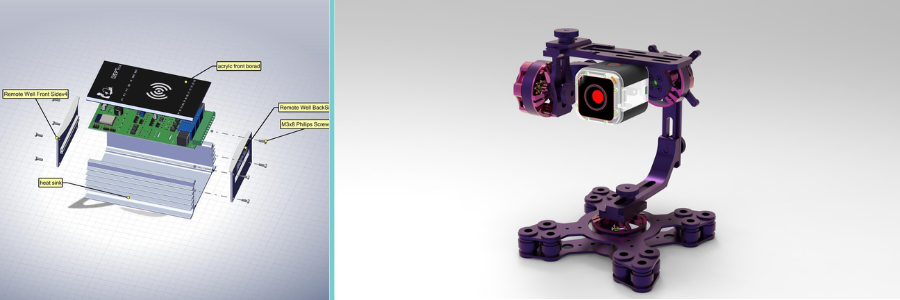
IoT devices such as a concept sketch of a medical device and an IoT-capable camera by Cad Crowd freelance engineers

RELATED: How to balance product manufacturing cost and product features for profitability

Ithire logo

ITHire

ITHire is a freelance marketplace where various IT and technology professionals from all over the world offer their services to help with IoT development, embedded systems, and hardware communication protocols. Product design and manufacturing companies post projects related to IoT in an attempt to attract freelance engineers competent to solve problems of connectivity and integration. Freedom in hiring arrangements is given, and it takes more time to find experts in physical product design in the wider scope of technologies. Far better suited to these particular needs was the curated network provided by Cad Crowd. However, ITHire has turned out to be a source of reliable, affordable IoT development talent in many technical disciplines.

Website: ITHire.com

flexiple logo

Flexiple

Flexiple connects businesses with pre-vetted freelance developers and designers specializing in IoT in smart product interfaces, embedded systems, and device applications. Its selective screening for more complex IoT projects, based on technical competency, is appealing. In any case, its freelancer base leans more toward software and application development rather than hardware or manufacturing-focused design. Cad Crowd does better to bridge that divide, offering specialists who can combine engineering precision with product development expertise. Still, Flexiple has a place for firms needing to integrate software within IoT ecosystems and value strong reliability in their freelance collaborations across these complex, interconnected product and system environments.

Website: Flexiple.com

DevelopersForhirecom logo

DevelopersForHire.com

DevelopersForHire.com helps organizations find freelance professionals to work on special technological projects, including IoT system design and embedded development. It really gives good insight into choosing the right developer profiles in view of the scope and technical demands of the project. Manufacturing and product design companies will get qualified engineers who will solve device communications, firmware programming, and other features concerning connectivity. While the primary focus is digital development, it allows room for IoT projects needing cross-disciplinary capabilities. Cad Crowd stands out with a more hardware-oriented pool of freelancers. DevelopersForHire.com is an informative and structured option for those navigating their way through hiring IoT developers.

Website: DevelopersForHire.com

Smarttek logo

Smarttek

The key services Smarttek offers include IoT software development and system integration by professional engineers and designers on contract or in partnership. This way, product design and manufacturing companies will be able to create intelligent devices, data-driven tools, and connected equipment. Solutions are crafted to add value to the firms in their hunt for qualified IoT professionals. The only problem is that Smarttek works more like a service provider and does not clearly offer freelance opportunities as Cad Crowd does. Companies looking for their projects to be executed with guidance will appreciate the structured approach at Smarttek. Those seeking independent IoT experts can confidently find them within the network of pre-screened freelancers here at Cad Crowd.

Website: Smarttek.Solutions

Thinkitive logo

Thinkitive

IoT Product Development & Consulting: Thinkitive uses this rich mix of in-house professionals and freelance engineers in IoT product development and consulting. It specializes in connected hardware design, embedded software, and smart manufacturing integration. Product development experts tap into their engineering experience combined with practical project management methodologies. While Thinkitive develops dependable IoT solutions, the company is more organized in an agency format than as a free, open marketplace of freelancers. Cad Crowd gives businesses the advantage of more control over determining which independent experts are most appropriate during the many different stages of an IoT design process. Thinkitive still stays efficient for companies that need end-to-end IoT development services, inclusive of coordinated technical oversight and system-level precision.

Website: Thinkitive.com

App Solutions logo

App Solutions

App Solutions connects companies with technology experts in the development of IoT apps, device integration, and cloud-based communication systems. It gives the ability to collaborate with freelance engineers in designing interfaces for smart products and manufacturing applications. This company is strongly backed by project management support and technical reliability, making it attractive to companies looking to hire development services. However, it has more strength in software connectivity and not in physical IoT product design. Cad Crowd offers better alignment for companies needing mechanical, electronic, and industrial expertise. The App Solutions will best fit manufacturers of hardware products looking to integrate IoT software features in either existing or newly designed hardware.

Website: App-Solutions.com

ZipRecruiter Logo

ZipRecruiter

ZipRecruiter is one of the top sites to hire freelancers and freelance pros in most technical fields, including IoT. Product design and manufacturing companies can place requirements for IoT engineers, designers, and developers with experience in connected devices and industrial systems. The algorithm behind this site works out a suitable candidate match rather quickly. Because the reach is so large, its IoT expertise among general technology listings is mixed. While Cad Crowd offers a more focused network of tested design and engineering pros, ZipRecruiter is good for those companies that would rather cast a wide net when it comes to seeking out freelancers in the IoT space. As a matter of fact, this is especially true of those that combine both hardware and software collaboration.

Website: ZipRecruiter.com

Workana logo

Workana

Workana is a freelance platform for IoT engineers and designers. You are able to hire freelance professional services in Latin America or any other country, according to your project needs in manufacturing. It allows for flexible job contracting with the possibility of messaging in order to maintain continuous collaboration with freelancers.

Product design firms outsource IoT experiences to freelancers in prototype development services, sensor integration, or automation systems. Such talent is spotty in quality and specialization, for which careful selection would be required. Cad Crowd resolves this uncertainty through curated, verified engineering expertise. Where it works best: companies having small IoT projects to handle or going internationally for freelance opportunities at competitive rates, while offering reasonable flexibility in hiring and delivery.

Website: Workana.com

Truelancer logo

Truelancer

Truelancer is a good marketplace for freelancers providing technical and creative services in design, development of IoT products, manufacturing, and product design. Such manufacturing and product design firms can post projects that would attract professionals with experience in areas such as embedded systems, device programming, and connected technologies. Though it does make global talent accessible at low costs, there is a possibility that clients may have to invest in finding out about the candidate’s depth of technical skill and past successes themselves. Generally speaking, one could say that Truelancer fits businesses currently experimenting with IoT prototypes or any other engineering projects where flexible freelance engagement may be required in a large international network.

Website: Truelancer.com

indeedcom logo

Indeed

Indeed is a popular portal for job posting, and posting here can surely provide access to a huge pool of freelance and contract IoT professionals. Product design and manufacturing organizations should be posting listings for engineers with experience in hardware development, automation, and data-driven systems. Indeed promises wide exposure and reach, but cannot be used for more specialized or niche IoT projects that Cad Crowd can fill. Indeed works if your organization is looking for volume and speed in recruitment but will probably need supplementation with more checks to assure strong IoT technical and manufacturing capabilities.

Website: Indeed.com

SimplyHired logo

SimplyHired

SimplyHired is a direct channel that lets companies across different industries get in touch with freelance IoT developers and engineers. The ease of usability on the site lets product design and manufacturing firms post all kinds of jobs related to IoT, from hardware integration to the testing of connected devices. It will bring quality candidates to your posting, but the platform itself does not support more detailed vetting or specialization for IoT hardware development. Cad Crowd ensures projects meet the brief regarding engineering precision and manufacturing standards; conversely, SimplyHired is best for general technical hiring. You may want to be a little more diligent on this job board in looking for freelancers with deep expertise in IoT when it comes to product design and industrial innovation.

Website: SimplyHired.com

LinkedIn logo

LinkedIn

Companies can get in touch with freelancers, engineers, and IoT consultants directly on this professional network or can post jobs. In this way, product design and manufacturing firms can easily identify expertise in connected device development, data analytics, and industrial automation services. Of course, with such a big network, visibility is great, but it does take some time to find the right freelancers with verified IoT project experience. Cad Crowd streamlines that for you by pre-screening the engineering talent for experience in design and manufacturing. That said, LinkedIn will always remain a good source when it comes to building professional relationships over longer periods and finding IoT expertise within particular industry segments or technical communities all over the world.

Website: LinkedIn.com

RELATED: Important benefits of industrial product design – Using industrial product design services

peopleperhour logo

PeoplePerHour

PeoplePerHour directly connects enterprises with freelance talent in IoT-related product development, design, and software integration. Manufacturing companies can describe their projects in as much detail as necessary and review portfolios of candidates before hiring. It is great to clearly see prices and to have flexible contracts, good for small tasks or early-stage IoT projects. The experience among its freelancers varies widely, while technical validation is based on user reviews. Cad Crowd ensures more reliable results thanks to dedicated engineering vetting. Nevertheless, PeoplePerHour is still convenient for product design teams that would want faster access to IoT talent for prototypes, firmware adjustments, or testing features of connected products.

Website: PeoplePerHour.com

mastertech logo

Master

IoT development, besides tech and design, forms part of freelancing engineering professionals found at Guru. One can find quite a number of pros on this platform for manufacturing firms that can work with smart devices and sensor systems, and can connect products. It has transparent collaboration tools and milestone-based payments. The generalist structure here would require clients to be much more critical while assessing the pros of expertise in the area of IoT. Cad Crowd’s curated pool gives much stronger assurance with regard to technical accuracy and design compatibility. Guru matches businesses looking for affordable freelance help for IoT projects needing adaptability and clear communication in flexible project management frameworks concerning hardware or system-based innovation. 

Website: Masterte.co

Reddit

Reddit 

On Reddit, one finds communities and forums where a company might discuss projects with IoT experts and extend requests for collaboration. Subgroups related to electronics, product design, and connected systems give access to highly enthusiastic freelancers who have hands-on technical skills. The advantages of finding special talent in such an informal setting do exist; however, the lack of organized tools for hiring, structured quality screening, and secure payment options raises many questions when engaging such freelancers. Cad Crowd is certainly more secure, offering a professional environment to search for an IoT freelancer. For early discussions in the networking communities and to find enthusiastic engineers interested in manufacturing projects related to IoT, Reddit will no doubt be useful, but caution is called for in further vetting to pursue formal freelance partnerships. 

Website: Reddit.com

Facebook

Facebook

It allows professional networking on pages, groups, and communities around IoT design, product engineering services, and manufacturing innovation. Companies can also hire freelancers themselves by posting opportunities to find specialized IoT groups. Though a great medium for fast communication, it makes the professional evaluation a bit more complicated due to the lack of structure regarding hiring or verification. Cad Crowd offers a more secure and better way of finding trusted IoT designers and engineers. The use of Facebook would add value in respect to informal networking and finding freelance talents in emerging markets, although due diligence would be required to make sure they fit into the technical standards that these complex IoT product design projects require.

Website: Facebook.com

kolabtree logo

Kolabtree

Kolabtree connects businesses with freelance scientists, engineers, and technical experts to cover IoT development regarding product design and manufacturing. Generally good at research-heavy projects, data analysis, and technical validation of connected devices, it often tends to be scientific consulting rather than hands-on hardware or prototyping. Regarding hiring IoT engineers to influence the physical product design and manufacturing-ready development, Cad Crowd is still a better fit for companies. The best applications of Kolabtree are in those firms that require insight into analytics, a feasibility study, or technical guidance from an expert rather than extensive practical freelance IoT engineers.

Website: Kolabtree.com

arcdev logo

Arc.dev

Arc.dev offers access to freelance software and IoT developers who can work remotely and connect businesses with professionals who have experience in embedded systems, IoT applications, and programming of connected devices. While this platform does indeed guarantee qualified coding and technical support, it isn’t particularly geared toward hardware design or manufacturing-related IoT competence. Cad Crowd offers a better balance in the pool of freelancers, including everything from design engineering experts to product design and IoT development skills. Arc.dev will suit companies looking for remote software-driven IoT solutions and app integrations, but may require more effort in finding freelancers who can contribute directly to end-to-end connected product design and industrial IoT projects. 

Website: Arc.Dev

freelancercom

Freelancer

Freelancer is an open marketplace that connects companies with software, design, and engineering pros online. It also covers IoT-related competencies. Companies dealing in product design and manufacturing can publish their projects related to embedded systems or the development of smart products. In the big pool of talent, experiences vary, and expertise in IoT is less curated. Cad Crowd’s network gives more confidence in selecting freelancers with verified engineering and manufacturing experience. Freelancers will work better for companies that are looking for cheaper and flexible options. One disadvantage that possibly comes with Freelancer is that sometimes additional vetting may be required to make sure about technical accuracy and suitability for these complex IoT product design projects. 

Website: Freelancer.com

contracom logo

Contra

Contra helps businesses engage freelance experts in creative and technical projects, including IoT development. It may also cover freelance competencies related to hardware integration, prototyping of connected devices, and product design. While Contra does indeed offer freedom of collaboration, it is a generalist-oriented talent network, and there’s only limited access to IoT-specific engineering competencies. Cad Crowd has much more reliable talent inside its curated network of freelancers who could provide precision solutions aligned to hardware, software, and manufacturing requirements. Contra best fits the bill for early experimentation or creative IoT concepts, but doesn’t quite offer the depth of technical expertise required in advanced product design or industrial IoT projects. 

Website: Contra.com

toptal

Toptal

Toptal connects highly pre-qualified freelance developers and engineers with technology-driven projects, whether in IoT or otherwise. It is highly selective, allowing only the top talent to join its ranks and for software- and development-focused roles almost exclusively. For product design and manufacturing companies needing IoT hardware and embedded systems skills, Toptal falls a bit short compared to Cad Crowd. Though for sure the platform does support the required coding and system design tasks, true device engineering and physical prototyping are limited because of the pure software focus. Toptal is great for pure software-heavy IoT projects, while Cad Crowd fits more squarely with companies needing mechanical, electronic, and industrial IoT design. 

Website: Toptal.com

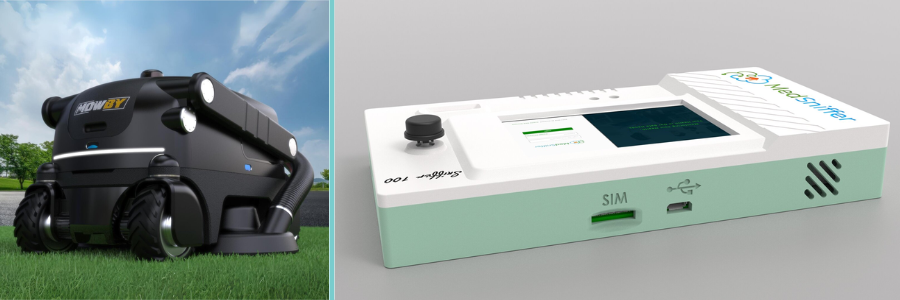
Robot lawnmower and medical device with IoT capabilities by Cad Crowd design experts and engineers

RELATED: Product-centric vs. customer-centric: Which is best for consumer product design companies?

Upwork-logo

Upwork 

Upwork is an excellent marketplace to find freelance IoT engineers, product design experts, and developers. Product design and manufacturing companies can post projects related to embedded systems, smart devices, and connectivity solutions. Its wide reach means that IoT talent is scattered and very often needs to be carefully filtered to ensure technical competencies. Cad Crowd is a far more curated way to connect with freelancers fluent in hardware and manufacturing processes. Upwork is ideal for firms looking to engage in flexible and project-based engagements at scale; it may not always provide that particular focused expertise required in complex IoT product design and prototyping tasks. 

Website: Upwork.com

fiverr logo

Fiverr

Fiverr connects businesses with freelancers across a wide array of creative and technical categories, including IoT development. It’s possible for companies to find professionals for embedded systems, smart device projects, and prototype testing on the platform. Keep in mind that even though Fiverr is affordable and hence accessible, it stays focused on small-scale work or piecework, and specialized IoT expertise is in short supply. Cad Crowd boasts a curated network featuring a pool of verified engineers able to deal with comprehensive product design through hardware integration to manufacturing requirements. Fiverr will be the best for simple IoT tasks, initial prototyping, and experimentation, while Cad Crowd will be better-suited and more reliable for companies wanting reliable, high-quality freelance support for the development of connected products. 

Website: Fiverr.com

Conclusion

In this emerging world where your coffee maker could soon send you a morning update, finding the right IoT designer or engineer matters. The above-mentioned platforms are full of talented professionals ready to bring intelligence, efficiency, and innovation into your next product. Be it a startup taking the first tentative steps into smart technology or a big manufacturer looking at improving its operations, there is a freelancer out there who will be ready to turn your vision into a connected reality. 

Take a minute to browse through and compare options before visiting Cad Crowd for trusted experts who really understand what it takes when it comes to IoT design and manufacture. This is your best avenue through which to connect with freelance IoT designers and engineers ready to take your ideas to smart, functional products. Request a quote today.

author avatar

MacKenzie Brown is the founder and CEO of Cad Crowd. With over 18 years of experience in launching and scaling platforms specializing in CAD services, product design, manufacturing, hardware, and software development, MacKenzie is a recognized authority in the engineering industry. Under his leadership, Cad Crowd serves esteemed clients like NASA, JPL, the U.S. Navy, and Fortune 500 companies, empowering innovators with access to high-quality design and engineering talent.

Connect with me: LinkedInXCad Crowd

Obsidian’s Josh Sawyer leads the charge of RPG fans playfully roasting Stranger Things for its D&D rule flubs: ‘The oldheads are going to catch all these things’


“Season ruined,” Obsidian studio design director Josh Sawyer (Pentiment, Fallout: New Vegas) declared on BlueSky alongside a clip from Stranger Things’ recently released fifth season. In the video, Finn Wolfhard’s Mike Wheeler expounds on the power of Dungeons & Dragons’ Cleric class⁠—specifically AD&D 1st Edition’s Cleric.

“Even cooler, she can cast a Dimension Door,” Wheeler claims while listing the Cleric’s capabilities. “BULLSHIT,” Sawyer can be heard exclaiming from off-camera. Sawyer and other viewers began tallying up some of the show’s other tabletop inaccuracies. Here are a few, from both this season and prior:

  • Commenter Blake Barton notes that the show’s characterization of the Sorcerer is anachronistic, with the modern class not appearing until 3rd Edition in 2000.
  • A roll of seven when casting Prismatic Spray, resulting in the violet version of the spell, is described as causing blindness (“WRONG!” Sawyer hollered over a clip of this moment).
  • One commenter, danyq, pointed out that the show has referred to Thieves as “Rogues,” the class’ name in 3E and beyond.

Season ruined

— @jesawyer.bsky.social (@jesawyer.bsky.social.bsky.social) 2025-12-22T00:08:58.721Z

How to update multiple Visual Studio instances (IDE/Build Tools) and Visual Studio Installer from Ansible


Visual Studio Installer is standalone application responsible for updating Visual Studio IDE and Build Tools. It can be executed from CMD with args to update all local installations. However, this installer (either setup.exe or vs_installer_exe ) is running in somewhat asynchronous mode, where it outputs to STD_OUT, but returns you the control of CMD – factically making the process not awaitable.

DOCS are mentioning arg --wait , which is however usable only on bootstrappers:

Optional: The process waits until the install is completed before returning an exit code. wait is useful when automating installations where one needs to wait for the install to finish to handle the return code from that install. The --wait parameter can only be passed into the bootstrapper; the installer (setup.exe) doesn’t support it. It is useful when updating layouts. More examples can be found here.

Bootstrapper is a small file representing particular edition (one of the future local installations) of either IDE or Build tools:

In each example, vs_enterprise.exe, vs_professional.exe, and vs_community.exe represent the respective edition of the Visual Studio bootstrapper, which is the small (~ 1MB) file that initiates the download process. If you’re using a different edition, substitute the appropriate bootstrapper name.

Now the scenario I would like to automate is to update multiple installations of IDEs/Build Tools (i.e. IDEs VS 2017+2019+2022 and Build tools 2017+2019+2022) and VS Installer across multiple machines (100+) from Ansible.

If running manually, I can easily run following to update all of those:

"C:\\Program Files (x86)\\Microsoft Visual Studio\\Installer\\setup.exe" updateAll --quiet --norestart --nocache

However this leaves the CMD in some awaitable state / it still outputs something to STD_OUT while allowing me to type new commands. It doesn’t support --wait arg (as mentioned above/in docs).

When run from Ansible, the script run ends immediatelly, but the process installation is happening in the background on the machine – this is bad since I need to know when the installation/update process ends, so I can continue with other tools/requirements.

Few solutions I was thinking about, but sound as unnecesarry too much work:

  • Download bootstrappers for all instances (on all machines) and run them 1by1 to install updates

  • Would somehow using single bootstrapper to update all of them suit this?

  • Would CMD/PS allow to run this as some awaitable command that would simply wrap this around and waited for process to end?

  • Recommendation for any kind of Ansible library for VS commands instead of running this from CMD?

What is the best approach to handle updating multiple VS instances and VS Installer from Ansible?

Wear OS in 2025: How Pixel, Galaxy, and OnePlus smartwatches fared against our expectations


Grade: B

As Android Central’s Wearables Editor, I ended 2024 by predicting what would happen with Galaxy, Pixel, OnePlus, and other Wear OS watches in 2025. Some predictions were dead on; others were wishful thinking. Looking back, I’m grading where these companies met, exceeded, or fell short of my expectations.

Hello 2026 Coloring Page Free Printable Cute New Year Doodles


2026 is here 🎉 and if you want a quick, happy little moment (for kids or you), this free printable Hello 2026 coloring page is the cutest way to go!

Perfect for homeschooling, classrooms, and moms who want to relax and do some self-care.

You could even use it as a binder cover or divider in your favorite planner or fold it and put it in a Happy New Year greeting card!

Check it out below! 🥰

Free Printable Hello 2026 Coloring Sheet (Doodles)

If you’d like more coloring sheets, here’s some more “Hello” coloring pages…

Fun ways to use this Hello 2026 coloring sheet…

  • New Year’s Eve kid table activity (zero prep!)
  • January morning work / early finishers
  • Homeschool “fresh start” warm-up
  • Cozy self-care coloring night
  • Church group activity
  • Fold it and put it into a Happy New Year greeting card
  • Use as a planner binder cover or divider
  • Substitute teacher folder activity (no prep, lasts all year long)
  • New Year’s party favor: roll it and tie with ribbon, hand it out with crayons
  • Color and write one goal on the back (“One thing I want to learn in 2026 is…” or “My New Year’s resolution is…”)
  • Family New Year time capsule: everyone colors one, date it, save it
  • “Hello 2026” door sign for a bedroom or classroom door
  • Counselor / calm-down corner printable
  • Nursing home or senior ministry coloring visit

Want more? ❤️ Be sure to check out all my free printables here (there’s over 5,500+ to choose from!!!)

Hello 2026 coloring page with big bubble numbers surrounded by cute doodles like bows, balloons, crowns, presents, snowflake, and winter treats.Hello 2026 coloring page with big bubble numbers surrounded by cute doodles like bows, balloons, crowns, presents, snowflake, and winter treats.

Download the free printable Hello 2026 New Year Coloring Page here.


More New Year’s printables you’ll love…

Printable details:

  • US Letter 8.5×11″
  • Black-and-white (cost-effective to print + kids can color it)
  • Best results: print at 100% / Actual Size


Are ‘Geek Gifts’ Becoming Their Own Demographic?


Long-time Slashdot reader destinyland wonders if “gifts for geeks” is the next big consumer demographic:

For this year’s holiday celebrations, Hallmark made a special Christmas tree ornament, a tiny monitor displaying screens from the classic video game “Oregon Trail.” (“Recall the fun of leading a team of oxen and a wagon loaded with provisions from Missouri to the West….”) Top sites and major brands are now targeting the “tech” demographic — including programmers, sysadmins and even vintage game enthusiasts — and when Hallmark and Amazon are chasing the same customers as GitHub and Copilot, you know there’s been a strange yet meaningful shift in the culture…

While AI was conquering the world, GitHub published its “Ultimate gift guide for the developer in your life” just as soon as doors opened on Black Friday. So if you’re wondering, “Should I push to production on New Year’s Eve?” GitHub recommends their new “GitHub Copilot Amazeball,” which it describes as “GitHub’s magical collectible ready to weigh in on your toughest calls !” Copilot isn’t involved — questions are randomly matched to the answers printed on the side of a triangle-shaped die floating in water. “[Y]ou’ll get answers straight from the repo of destiny with a simple shake,” GitHub promises — just like the Magic 8 Ball of yore. “Get your hands on this must-have collectible and enjoy the cosmic guidance — no real context switching required!”
And GitHub’s “Gift Guide for Developers” also suggests GitHub-branded ugly holiday socks and keyboard keycaps with GitHub’s mascots.

But GitHub isn’t the only major tech site with a shopping page targeting the geek demographic. Firefox is selling merchandise with its new mascot. Even the Free Software Foundation has its own shop, with Emacs T-shirts, GNU beanies and a stuffed baby gnu (“One of our most sought-after items … “). Plus an FSF-branded antisurveillance webcam guard.

Maybe Dr. Seuss can write a new book: “How the Geeks Stole Christmas.” Because this newfound interest in the geek demographic seems to have spread to the largest sites of all. Google searches on “Gifts for Programmers” now point to a special page on Amazon with suggestions like Linux crossword puzzles. But what coder could resist a book called “ Cooking for Programmers? “Each recipe is written as source code in a different programming language,” explains the book’s description… The book is filled with colorful recipes — thanks to syntax highlighting, which turns the letters red, blue and green. There are also real cooking instructions, but presented as an array of strings, with both ingredients and instructions ultimately logged as messages to the console…

Some programmers might prefer their shirts from FreeWear.org, which donates part of the proceeds from every sale to its corresponding FOSS project or organization. (There are T-shirts for Linux, Gnome and the C programming language — and even one making a joke about how hard it is to exit Vim.)

But maybe it all proves that there’s something for everybody. That’s the real heartwarming message behind these extra-geeky Christmas gifts — that in the end, tech is, after all, still a community, with its own hallowed traditions and shared celebrations.

It’s just that instead of singing Christmas carols, we make jokes about Vim.

Fallout: New Vegas lead writer worries Caesar’s argument for authoritarianism ‘was done a little too well,’ but still believes ‘you can’t just make your tyrants cardboard villains’


If you’ve played New Vegas, you’re familiar with Caesar’s Legion. Slavedriving, overtly fascistic, and wrapped in the aesthetics of the Roman Empire⁠—but with football pads instead of lorica segmentata. It seems like the kind of faction that would be hard to present as anything but one-dimensional, abject evil.

As it turns out, giving the faction’s leader some real substance—even allowing him to make his case in full—was lead writer John Gonzalez’s precise objective, though he sometimes worries he did too good a job on that front.

After 70 hours with Ghost of Yotei before the game even launched, it’s now my only platinum trophy of 2025


I don’t finish very many video games. I suspect this isn’t a unique sort of situation. I’ve got a job, a partner, and kids. There’s a home to keep up, friends with which to keep connected. And that job, despite appearances, doesn’t actually lend itself to completing (or sometimes even playing) terribly many video games. I am meant to have approximate knowledge of many things and the ability to know enough about a lot to make sense of it for others. That means a little bit of time all over the place.

And yet somehow, I found myself not only completing Sucker Punch’s Ghost of Yotei long before its review embargo, but I actually ended up with my very first Platinum Trophy ever – Dragon Age: The Veilguard would have been the first, but a sneaky choice locked me out of some character missions – the day of release.

Year in Review: The Best of 2025, our coverage of all the unforgettable games, movies, TV, hardware, and comics released during the last 12 months. Throughout December, we’re looking back at the very best of 2025, so be sure to check in across the month for new lists, interviews, features, and retrospectives as we guide you through the best the past year had to offer.