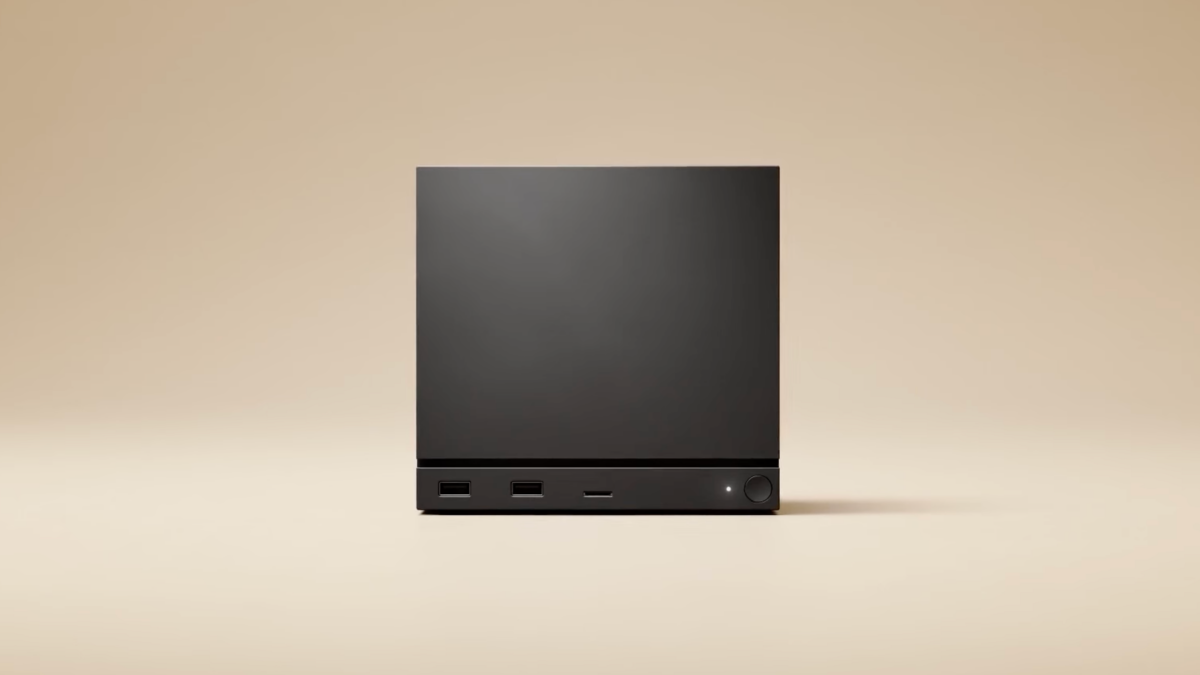
AMD has confirmed that the highly anticipated Steam Machine will launch in early 2026. AMD CEO Lisa Su reaffirmed the timeline during the company’s Feb. 3 earnings call, giving hope to gamers waiting for Valve’s 4K-capable living room gaming PC.
Valve first announced the Steam Machine in November 2025. The compact PC features a semi-custom AMD Zen 4 processor with six cores and 12 threads running up to 4.8 GHz, paired with an RDNA 3 GPU that has 28 compute units and 8GB of GDDR6 VRAM. Valve claims the system is over six times more powerful than the Steam Deck and supports 4K gaming at 60 frames per second with FSR upscaling. The system runs SteamOS 3, a gaming-first operating system based on Arch Linux with the KDE Plasma desktop, and will be available in 512GB and 2TB storage options.
In an update published Wednesday, Valve said that while it’s still planning to ship the Steam Machine (and two accessories, the second-generation Steam Controller and the Steam Frame headset) in the first half of 2026, folks may need to wait a little longer.
“When we announced these products in November, we planned on being able to share specific pricing and launch dates by now,” the company wrote. “But the memory and storage shortages you’ve likely heard about across the industry have rapidly increased since then. The limited availability and growing prices of these critical components mean we must revisit our exact shipping schedule and pricing (especially around Steam Machine and Steam Frame)….We have work to do to land on concrete pricing and launch dates that we can confidently announce, being mindful of how quickly the circumstances around both of those things can change.”
AMD also revealed its semi-custom SoC for the next Xbox—which is expected to cost a pretty penny—is ready to support a 2027 launch. However, there have been rumors around that the AI-induced RAM crunch could push the new Xbox and even the next-gen PlayStation beyond 2028. Microsoft’s next Xbox is likely to have AMD’s Magnus APU, Zen 6 and Zen 6c CPU cores, and an RDNA 5-powered GPU. Leaked specs point to a dual-die architecture with 70 RDNA 5 compute units, 48GB of unified memory, and support for GDDR7 memory.