
Why Wiz really turned down Google’s $23B offer


Welcome back to Week in Review. This week, we’re coming at you right off the heels of TechCrunch Disrupt! If you missed it, we’re highlighting conversations from Perplexity CEO Aravind Srinivas, WordPress co-founder Matt Mullenweg, and Disney star turned space CEO Bridgit Mendler. Of course, we’ve got news from the rest of the tech world as well. Let’s do it.

Why did Wiz turn down $23 billion? Wiz co-founder and CEO ​​Assaf Rappaport said at TechCrunch Disrupt that turning down Alphabet’s offer was “the toughest decision ever,” but they did so because they believed the cloud security space is a $100 billion opportunity for the company. At the time Wiz turned down the offer, the startup had a private valuation of $12 billion. The CEO admitted that they also had other offers, though none as big as Google’s.

Apple had a big week of reveals, including the latest additions to the M-series of chips. The company unveiled the new M4 Pro, which debuts alongside the tiny new Mac mini and the M4 Max, the latter of which is coming to the MacBook Pro line as an upgradeable option. Apple also gave a refresh to its desktop accessories, switching them from Lightning to USB-C. But the charging port for the Magic Mouse is still awkwardly on the bottom.

Dropbox is laying off 20% of its workforce. In a letter to staff, CEO Drew Houston said the cloud company is undergoing a “transitional period” and that the goal was to make cuts in areas where Dropbox has “over-invested” while designing a “flatter, more efficient” team structure. The reduction in headcount will affect 528 employees.


This is TechCrunch’s Week in Review, where we recap the week’s biggest news. Want this delivered as a newsletter to your inbox every Saturday? Sign up here.


News

Image Credits:Kimberly White for TechCrunch / Getty Images

What is plagiarism? At TechCrunch Disrupt, Perplexity CEO Aravind Srinivas was asked how the company defined “plagiarism.” Srinivas wouldn’t say directly, but he was adamant that Perplexity “always cites its sources” and doesn’t claim ownership of any content. Read more

OpenAI could be building its first AI chip: OpenAI is working with TSMC and Broadcom to build an in-house AI chip for running AI models, which could arrive as soon as 2026, Reuters reports. Read more

Turn your design into a reality: Arcade AI is a new type of marketplace that allows customers to input their ideas into a generator that then produces a variety of design options to be brought to life as tangible pieces of jewelry. Read more

From Disney Channel to CEO: Former Disney star Bridgit Mendler joined TechCrunch Disrupt to discuss how she founded Northwood Space and why the space startup is committed to solving “unsexy problems.” Read more

AI comes for recruiters: LinkedIn is taking the wraps off its latest AI effort: Hiring Assistant. The product is designed to take on a wide array of recruitment tasks, from ingesting scrappy notes to turn into job descriptions, to sourcing candidates and engaging with them. Read more

Matt Mullenweg makes his case: The WordPress co-founder and Automattic CEO said at TechCrunch Disrupt that he’s not worried that the recent legal drama between his company and WP Engine may lead to a fork of the open source WordPress software. In fact, he said he’d welcome it. Read more

Olivia Wilde, VC: Actor and director Olivia Wilde quietly launched venture firm Proximity Ventures late last year, according to Bloomberg. The firm has already inked four investments, including biotech company Pendulum Therapeutics. Read more

Slice makes its mark in India: Fintech Slice merged with North East Small Finance Bank, marking a rare instance of a startup successfully entering India’s tightly regulated banking sector. The merger transforms Slice into a banking entity following months of regulatory scrutiny. Read more

An easier way to code: Announced at GitHub’s annual conference in San Francisco, Spark is an experiment launching out of its GitHub Next labs that allows you to quickly build a small web app using nothing but natural language. Read more

Turn text into a podcast: Meta released an “open” implementation of the viral generate-a-podcast feature in Google’s NotebookLM. Called NotebookLlama, the project can generate back-and-forth, podcast-style digests of text files uploaded to it. Read more

Zoox calls Tesla’s bluff: Zoox co-founder and CTO Jesse Levinson is doubtful that Tesla will launch a robotaxi ride-hailing service next year. The “fundamental issue is they don’t have technology that works,” he said at TechCrunch Disrupt. Read more

And the winner is … : The winner of the Startup Battlefield 200 competition at TechCrunch Disrupt is Salva Health. The company’s Julieta device is a portable, AI-powered breast cancer detection device that eliminates barriers to early screening, ensuring access even in remote areas. Read more

Fisker collapsed under the weight of its founder’s promises


Welcome back to TechCrunch’s Week in Review — TechCrunch’s newsletter recapping the week’s biggest news. Want it in your inbox every Saturday? Sign up here.

Over the past eight years, famed vehicle designer Henrik Fisker suggested his EV startup would deliver on a lot of promises, but none came true. As Fisker looks for an unlikely rescue, employees told TechCrunch that the blame rests largely on the shoulders of the husband-and-wife team who steer the company.

This week also had a major disturbance in the fintech space. After years of missteps and struggles, the banking-as-a-service fintech Synapse officially went bankrupt. Based on Synapse’s filings, as many as 100 fintechs and 10 million end customers could have been impacted by the company’s collapse.

Elon Musk just got a lot of cash for xAI. The AI startup raised $6 billion at an $18 billion pre-money valuation as it aims to compete with OpenAI, Microsoft and Alphabet.

In other big money moves, Google is investing nearly $350 million into Flipkart. The new investment gives the Walmart-owned Indian e-commerce startup a valuation of $36 billion. Google, which reaches more than half a billion people in India, identifies the South Asian nation as a key overseas market. 

News

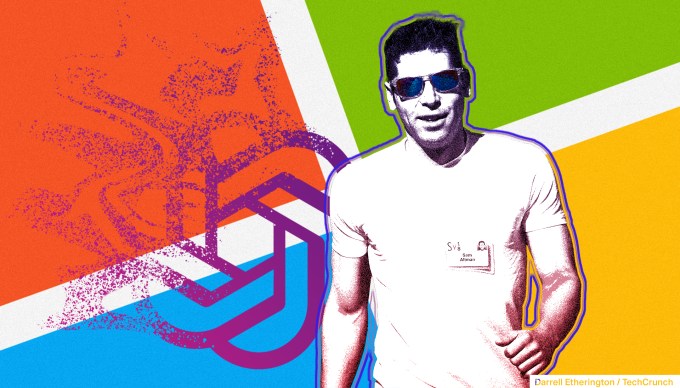
Sam Altman walking away from a dissolving OpenAI logo
Image Credits: Darrell Etherington with files from Getty under license

Was Sam Altman fired from Y Combinator?: Paul Graham is setting the record straight. In a series of posts on X, the Y Combinator co-founder brushed off claims that Sam Altman was pressured to resign in 2019 due to potential conflicts of interest. Read More

Spotify doles out Car Thing refunds: Spotify is facing backlash over its decision to discontinue support for its in-car streaming device, Car Thing. Spotify has now instituted a refund process, but some users are asking the company not to brick their devices. Read More

Are earbuds the future of AI hardware?: Unlike generative AI gadgets like Humane’s Ai Pin and Rabbit’s R1, Iyo is aiming to build its technology into an already successful category: the Bluetooth earbud. Read More

Firefly forges on: On the heels of personal tragedy, the Tel Aviv-based startup has raised $23 million for its “infrastructure as code” solution to the growing issue of cloud asset management. Read More

Is Apple going to “sherlock” Arc?: Apple is reportedly planning to release a new technology called “smart recaps” in iOS 18, which appears to closely mimic Arc Search’s innovative “Browse for me” functionality. Read More

Misinformation is so back: A pair of new studies offers evidence that misinformation on social media has the power to change people’s minds. Find out who was most responsible for the vast majority of “fake news” in the studied time periods. Read More

AI models have favorite numbers too: Engineers at Gramener performed an experiment where they asked several major LLM chatbots to pick a random number between 0 and 100 — and the results were fascinating. Read More

Mistral unveils coding model: The French AI startup has released its first generative AI model for coding, dubbed Codestral, which is designed to help developers write and interact with code. Read More

Say hello to meme tech: Is it time to disrupt the meme industry? With Meme Depot, founder Alex Taub aspires to build a comprehensive archive of any meme imaginable with a crypto-focused business model. Read More

AI comes for tutors: The arrival of AI bots is posing a threat to long-established tutoring franchises and professional tutors, and the leading apps are from China. But do they actually help students learn? Read More

Analysis

onyx motorbikes-james Khatiblou
Image Credits: Bryce Durbin

What happens to a company when its founder dies?: Onyx Motorbikes was already in trouble — and then its 37-year-old owner passed away unexpectedly with no will or succession plan, leaving behind millions of dollars in debt. Rebecca Bellan reports on how the ensuing battle for control has put Onyx in legal limbo. Read More

The ‘edgelords’ at OpenAI: Meredith Whittaker has some candid thoughts about the current leadership at OpenAI. Mike Butcher sat down with the Signal president to discuss what she describes as a disrespectful “frat house” contingent of the tech industry in a wide-ranging conversation. Read More

Don’t expect IPOs from these startups: While 2024 is looking to be a better year for tech startups going public, there’s still a number of high-profile companies that are wanting to wait just a little bit longer. From Plaid to Figma, Rebecca Szkutak rounds up the companies that aren’t itching to go public just yet. Read More

Google lays off workers, Tesla cans its Supercharger team and UnitedHealthcare reveals security lapses


Welcome, folks, to Week in Review (WiR), TechCrunch’s regular newsletter that recaps the week that was in tech. This edition’s a tad bittersweet for me — it’ll be my last (for a while, anyway). Soon, I’ll be shifting my attention to a new AI-focused newsletter, which I’m super thrilled about. Stay tuned!

Now, on with the news: This week Google laid off staff from its Flutter, Dart and Python teams weeks before its annual I/O developer conference. A total of 200 people were let go across Google’s “Core” teams, which included those working on app platforms and other engineering roles.

Elsewhere, Tesla CEO Elon Musk gutted the company’s team responsible for overseeing its Supercharger network in a new round of layoffs — despite recently winning over major automakers like Ford and General Motors. The cuts are so complete that Musk suggested in an email that they’ll force Tesla to slow the Supercharger network’s expansion.

And UnitedHealthcare’s CEO, Andrew Witty, told a House subcommittee that the ransomware gang that hacked U.S. health tech giant Change Healthcare — UnitedHealthcare’s subsidiary — used a set of stolen credentials to access Change Healthcare systems that weren’t protected by multifactor authentication. Last week, UnitedHealthcare said that the hackers stole health data on a “substantial proportion of people in America.”

Lots else happened. We recap it all in this edition of WiR — but first, a reminder to sign up to receive the WiR newsletter in your inbox every Saturday.

News

Hallucinations, hallucinations: OpenAI is facing another privacy complaint in the EU. This one — filed by privacy rights nonprofit noyb on behalf of an individual complainant — targets the inability of its AI chatbot ChatGPT to correct misinformation it generates about individuals.

Just walk out … of Sam’s Club: Sam’s Club customers who pay either at a register or through the Scan & Go mobile app can now walk out of the store without having their purchases double-checked. The technology, unveiled at the Consumer Electronics Show in January, has now been deployed at 20% of Sam’s Club locations.

TikTok circumvents Apple rules: TikTok is presenting some users with a link to a website for purchasing the coins used to tip digital creators on the platform. Typically, these coins must be bought via in-app purchase — which requires a 30% commission paid to Apple — suggesting TikTok might be attempting to skirt Apple’s App Store rules.

NIST’s GenAI platform: The National Institute of Standards and Technology (NIST), the U.S. Commerce Department agency that develops and tests tech for the U.S. government, companies and the broader public, has launched NIST GenAI, a new program to assess generative AI technologies, including text- and image-generating AI.

Getir pulls out: Getir, the quick commerce behemoth, has pulled out of the U.S., U.K. and Europe to focus on Turkey, its home country. The company — once valued close to $12 billion — said that the move would impact thousands of gig and full-time workers.

Analysis

Inside the Techstars “cold war”: Brilliant reporting by Dom peels back the curtains on a year of financial losses and employee cuts at startup accelerator Techstars, whose CEO, Maëlle Gavet, has been a controversial force for change.

AI-powered coding: Yours truly takes a look at Copilot Workspace, somewhat of an evolution of GitHub’s AI-powered coding assistant Copilot into a more general tool — building on recently introduced capabilities like Copilot Chat, which lets developers ask questions about code in natural language.

Autonomous car racing: Tim Stevens dives into the Abu Dhabi racing event that pitted a driverless car against a Formula 1 driver.