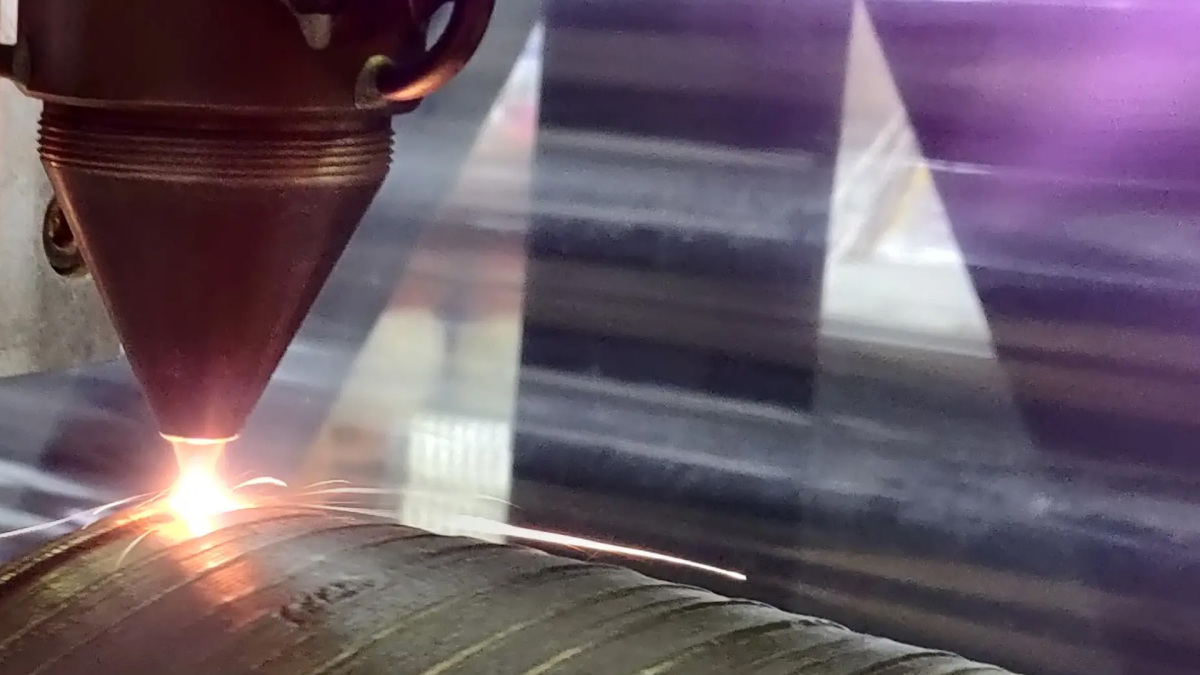
Many different components go into making modern spacecraft, and with the help of a UK-based launch vehicle technology company called Skyrora, the ESA is developing a new one. Tanbium is a new alloy that offers higher burn time and temperature capability than traditional high-temperature nickel-based alloys like C103 and IN718, but offers great strength and resilience. It’s also up to 30% lighter, and since it’s laid down using 3D printing, material waste is cut by up to 95%.
The specifics of what goes into Tanbium haven’t been revealed yet, but the material will be applied using direct energy deposition to coat rocket engine components like nozzles and combustion chambers. As it stands, the ESA and the UK are reliant on US imports of C103 and other alloys. Developing Tanbium would be one way to increase the UK and ESA’s independence, while offering notable improvements in material quality and applicability to modern spacecraft design.
The new material’s trial process will begin before the end of the year. It will include 3D printing trials, validation of the resultant material, mechanical testing, and analysis of whether the alloy can be produced at scale economically. Skyrora will take the lead on integrating the new material using its Skyprint systems to 3D print rocket components far faster than traditional manufacturing techniques.

Credit: Skyrora
Metalysis will supply the Tanbium as an alloy powder created using its patented FFC Cambridge solid-state electrochemical technology. Thermo-Calc Solutions, in conjunction with ICME, will handle the alloy design.
“This project reinforces Skyrora’s commitment to sovereign launch capability and materials innovation,” said Derek Harris, Skyrora’s director of business development and communications. “The UK and Europe are currently heavily dependent on the US for C103 alloy, which is used across aerospace propulsion. Tanbium will enable full domestic sourcing…As a European launch vehicle manufacturer, not only will Tanbium align with our long-term vision for sustainable, high-performance space hardware, but it will also contribute to the ESA’s net zero space ambitions.”
With Tanbium’s more robust design compared to traditional alloys, it is expected to help extend the lifespans of individual components significantly. For spacecraft designed for deep space missions (or for reusable spacecraft), these kinds of material choices make a significant impact on their economic viability.
“Using this Tanbium alloy, the consortium are addressing a critical challenge for ultra-high temperature applications in Europe,” said ESA technical officer Simon Hyde. “They are opening a potentially rich seam for space applications and providing Europe with a resilient supply chain.”