‘Get On the Train,’ NVIDIA CEO Says at ServiceNow’s Knowledge 2024


Now’s the time to hop aboard AI, NVIDIA founder and CEO Jensen Huang declared Wednesday as ServiceNow unveiled a demo of futuristic AI avatars together with NVIDIA during a keynote at the Knowledge 24 conference in Las Vegas.

“If something is moving a million times faster every 10 years, what should you do?” Huang asked, citing rapid advancements in AI capabilities. “The first thing you should do is instead of looking at the train, from the side is … get on the train, because on the train, it’s not moving that fast.”

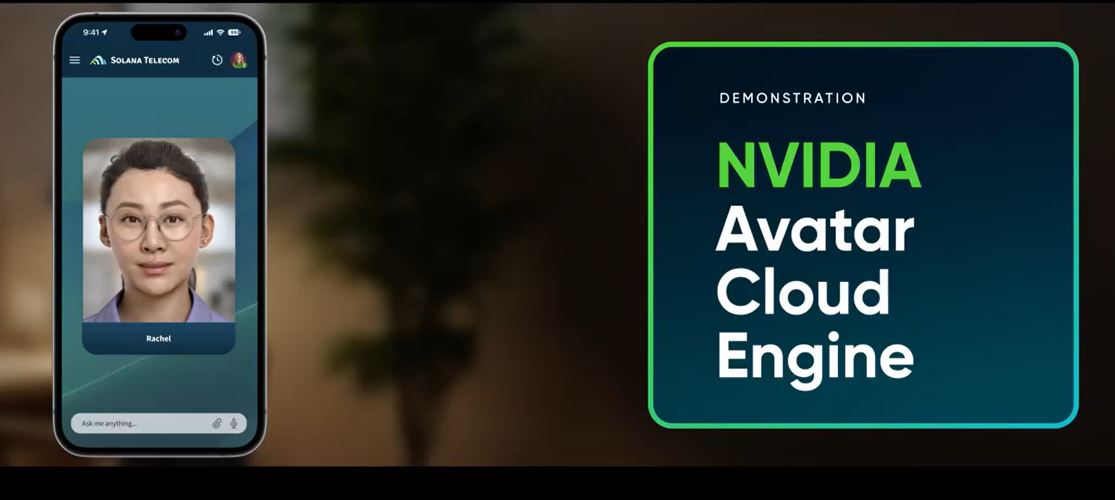
The demo — built on NVIDIA NIM inference microservices and NVIDIA Avatar Cloud Engine, or ACE, speech and animation generative AI technologies, all available with NVIDIA AI Enterprise software — highlighted how AI advancements support cutting-edge digital avatar communications and have the potential to revolutionize customer service interactions.

The demo showed a customer who was struggling with a slow internet connection interacting with a digital avatar. The AI customer service avatar comes to the rescue –  swiftly diagnoses the problem, offers an option for a faster internet connection, confirms the customer’s credit card number and upgrades their internet connection immediately.

The futuristic demonstration took place in front of thousands of conference attendees who were eager to learn about the latest enterprise generative AI technology advancements, which promise to empower workers across the globe.

“We’ve transitioned from instruction-driven computer coding, which very few people can do, to intention-driven computing, which is connecting with somebody through intention,” Huang said during an on-stage conversation at the conference with ServiceNow Chief Operating Officer Chirantan “CJ” Desai.

The moment is another compelling example of the ongoing collaboration between ServiceNow and NVIDIA to explore more engaging, personal service experiences across various functions, including IT services, human resources, customer support and more.

The demonstration builds upon the companies’ plan to collaborate on robust, generative AI capabilities within enterprise operations and incorporates NVIDIA ACE and NVIDIA NIM microservices.

These avatars are designed to add a human-like touch to digital interactions, improving customer experience by providing empathetic and efficient support.

These include NVIDIA Riva for automatic speech recognition and text-to-speech, NVIDIA Audio2Face for facial animation, and NVIDIA Omniverse Renderer for high-quality visual output.

ServiceNow and NVIDIA are further exploring the use of AI avatars to provide another communication option for users who prefer visual interactions.


Visit this link to watch a recording of Huang and Desai presenting the digital avatar demo at the Knowledge 24 keynote. 

###END###

New Atomos AtomOS Delivers F-Log2 & SRT Streaming


Atomos is pleased to announce the release of AtomOS 11.06.00 for Atom OS11 devices (Ninja V, V+, Ninja, Ninja Ultra, Shogun, Shogun Ultra, and Shogun Connect). This update introduces support for Fujifilm F-Log2 and SRT streaming.

Fujifilm F-Log2:

Allows users of Fujifilm cameras to leverage the full potential of the F-Log2 format within AtomOS 11 devices. This includes:

  • A more accurate colour processing when shooting and monitoring in F-Log2
  • F-Log2/REC709/BT2020 gamma/gamut combination for YCC video.
  • Using the F-Log2/REC709/BT2020 combination as the output setting for ProRes RAW workflows.
  • Employing the same colour settings for both ProRes RAW and proxy recordings.

Enhanced Content Creation: F-Log2 support allows users to capture high-quality visuals with Fujifilm cameras within the Atomos ecosystem.

SRT Streaming:

AtomOS 11.06.00 introduces full support for SRT (Secure Reliable Transport) streaming. This enables users to stream in both “Caller” and “Listener” modes, easily configured through their Atomos Cloud Studio (ACS) account, similar to setting up RTMP or RTMP/S destinations.

Reliable Streaming: SRT streaming ensures reliable video transmission even over unreliable networks, allowing for seamless live content delivery.

The update can be downloaded from the Atomos support page: https://www.atomos.com/product-support/

c++ – Visual Studio showing strange errors


I’ve been trying to code with C++ in Visual Studio 2022, however, some weird errors have been showing off. It is about the source files. Like it said “Cannot find source file —.h”. (I don’t have an image here)

I figured out this is because I didn’t put the MinGW files into Visual Studio. So I did it like this question. And the files I imported are from CodeBlocks from this directory C:\Program Files\CodeBlocks\MinGW\x86_64-w64-mingw32\include

However, now it shows another bunch of errors and this time I have no idea what does it mean:enter image description here

Some errors:

E0169 expected a declaration

E0135 namespace “std” has no member “type_info”

E0130 expected a ‘{‘

E1835 attribute “nothrow” does not apply here

and hundreds of more errors and still idk why did they occur.

Please explain to me why did this happen and also give me a tutorial to use CPP properly on Visual Studio 2022 (I’m using Windows)

How to Find a Book Editor You Can Trust


On our network of sites, we’ve covered topics like how much you should expect to pay for an edit, what you ought to send an editor, how to get on your editor’s good side, how to edit a book, and much more.

As for your host on today’s article, I’m a full-time book editor, author and ghostwriter.

I’ve written, coauthored, or ghostwritten eight books and have edited dozens more. I’m well-versed in self-publishing, and I’ve helped a handful of clients craft proposals for traditional publishing, one of which was picked up at the tail end of 2016.

In other words, I’m in the trenches every working day.

Through this column, I hope you’ll learn what I wish I would have known about editing and editors when I first became serious about writing as a business.

To that end, let’s get to what may be the most pressing topic for a new author seeking to self-publish.

How to find an editor

You could search the Internet for “editor,” “book editor,” or “Help, I need an editor ASAP,” but you will be overwhelmed with choices.

Even that last search phrase has more than 200,000 hits, and most of those seem to be video editors. So how are you supposed to find the right editor for your book?

Try each of these steps until you find one that nets you at least a few good leads.

1. Seek referrals from other writers

The best advertising for an editor is a satisfied client.

Talk with your fellow writers, whether online or in real life, and ask who they recommend.

However, you may encounter a Catch-22: better editors’ schedules may be packed, and you may not want to wait a few months for them even to begin working on your book.

That’s when you proceed to Step 2.

2. Seek referrals from that referral

If your writer friend has provided a glowing review of his or her editor, but that editor doesn’t have room for you in their schedule (or they don’t provide the specific kind of editing you need), kindly and quickly ask that editor for a referral to another editor.

Most experienced editors have professional connections they’ll be more than happy to leverage in order to help a writer.

But what if you don’t have any writer friends who’ve used an editor?

3. Check pre-vetted lists

Instead of searching the entire Internet for an editor, consider these sites that have already compiled lists of qualified, capable editors:

Whether you use these sites or other compilations, be sure to read up on how a list was curated.

Did the editor have to pay to be listed? (The EFA requires a yearly subscription.) Did someone else have to vouch for their work in order to be added? (Other writers vouched for editors on K. M. Weiland’s list.) Could they simply add themselves? (Fiverr, Upwork, etc.)

Always conduct due diligence.

4. Utilise Social Media

Social media platforms like Twitter, LinkedIn, and Facebook offer invaluable resources for you when seeking an editor. Within these platforms, there are numerous groups and communities dedicated to writing, editing, and publishing.

You can join these groups to network with fellow authors and editors, share experiences, ask for recommendations, and even find editors directly advertising their services.

By engaging with these online communities, writers can tap into a vast pool of editorial talent and connect with professionals who can help refine their work to its fullest potential.

5. Professional Organizations

Professional organizations such as the American Society of Journalists and Authors (ASJA) or the Chartered Institute of Editing and Proofreading (CIEP) serve as invaluable resources for you when seeking an editor.

These organizations typically have directories or databases of experienced editors available for hire, along with resources and guidelines to help writers navigate the editing process effectively.

By joining such organizations, you can gain access to a network of reputable professionals who can provide expert editorial services tailored to your specific needs.

Additionally, these organizations often offer workshops, conferences, and other events where you can further develop their skills and connections within the editing community.

6. Writer’s Conferences 

Writer’s conferences, such as the Association of Writers & Writing Programs (AWP) conference, offer fertile ground when seeking editors.

These events attract a diverse array of literary professionals, including editors from publishing houses, literary magazines, and freelance backgrounds. When attending these conferences, you can seize the opportunity to network with editors during panel discussions, workshops, and networking events.

Many editors participate as speakers or panelists, providing valuable insights into the editing process and offering opportunities for one-on-one interactions.

By engaging with editors at writer’s conferences, you will be able to forge meaningful connections, pitch work, and potentially secure editorial partnerships to enhance the quality of your writing projects.

7. Local Writing Groups

Local writing groups serve as excellent resources for writers in search of editors.

These groups often consist of passionate writers who are eager to support one another in their writing endeavors. Within these communities, writers can often find members who have experience working with editors or can provide recommendations based on their own experiences.

Additionally, writing groups may host events or workshops focused on the editing process, where writers can learn more about finding and working with editors effectively.

By participating in local writing groups, writers not only gain access to potential editors but also foster connections with fellow writers who can offer valuable insights and support throughout the editing journey.

8. Literary Magazines and Journals

Literary magazines and journals are valuable resources for writers seeking editors to refine their work. Many of these publications offer editing services or can connect writers with experienced editors in their network.

For instance, “The Paris Review” provides editorial services for writers looking to polish their manuscripts before submission. Similarly, “Granta” offers manuscript consultations where writers can receive feedback and guidance from experienced editors.

These opportunities not only help writers improve their work but also provide valuable networking connections within the literary community.

Additionally, some literary magazines like “Poets & Writers” maintain directories of editors, making it easier for writers to find the right editorial support for their projects. By engaging with literary magazines, writers can access a wealth of editorial expertise to elevate their writing to the next level.

9. University Writing Centers

University writing centers provide great opportunities for writers when seeking editing assistance. These centers typically employ trained writing tutors who can provide feedback on drafts, assist with grammar and style, and offer guidance on the editing process.

For example, the writing center at Harvard University offers one-on-one consultations where writers can receive personalized feedback on their writing projects. Similarly, the University of California, Berkeley’s writing center provides online resources and workshops to support writers at all stages of the writing process.

By utilizing university writing centers, writers can access expert editorial support and improve their writing skills in a collaborative and supportive environment.

10. Online Forums and Communities 

Online forums and communities, such as Reddit’s r/writing, serve as vibrant hubs for writers seeking editors. These platforms provide spaces for writers to connect with editors, exchange feedback, and share resources.

For instance, the subreddit r/HireAnEditor offers a platform for writers to post job listings and connect with freelance editors for various projects.

Additionally, forums like Absolute Write and WritingForums.org host sections dedicated to editor recommendations and services.

By engaging with online writing communities, writers can tap into a diverse pool of editorial talent, receive valuable feedback on their work, and establish professional relationships that enhance the quality of their writing projects.

11. Self Publishing Platforms

Self-publishing platforms like Amazon’s Kindle Direct Publishing (KDP) or IngramSpark are other viable avenues for writers seeking editing services.

These platforms often offer editing packages or connect writers with professional editors who specialize in their genre.

For example, KDP’s Author Services provides editing options ranging from basic proofreading to comprehensive editing services. Similarly, IngramSpark offers access to Ingram’s network of professional editors who can assist writers with refining their manuscripts.

By utilizing self-publishing platforms, writers can access affordable and reliable editing services to ensure their work is polished and ready for publication.

How to vet an editor

After discovering a handful of editors who seem like a good fit, you’ll want to spend more time ensuring that they’re the right person for you and your book.

After all, you’ll be closely working with them on something that’s likely very close to you.

By investing time up front to find the best candidate, you may just succeed in landing a great editor on your first try, saving you the hassle of further back-and-forth emails with more editors.

Vetting an editor can be as simple as two steps, though each of these steps could require a fair amount of work on your part.

1. Do your research

Before contacting an editor, comb through your prospective editor’s website.

Carefully read about the kinds of editing they offer. Browse through the books they’ve edited. Read their endorsements.

If you’re really intent on learning about what it’s like to work with that particular editor, consider reaching out to one of that editor’s clients. Find the editor on social media to see what he or she is like apart from their writing work. Conduct a search with just the editor’s name to see what the rest of the web may say about them.

2. Ask specific questions

Don’t waste your time (or theirs) to discover information that’s already online.

Do as much homework as you can before contacting an editor by email or phone. However, you will undoubtedly have specific questions that can only be answered by contacting your prospective editor.

Here’s a list to help you think through what you ought to know about your editor before contracting to work with him or her:

  • What types of editing do you offer?
  • How much do you charge?
  • How long have you been editing?
  • Can you put me in touch with other clients you’ve worked with?
  • What experience do you have in [insert your genre]?
  • What’s your process in working with writers?
  • What software do you use to edit?
  • Will you send me a contract before work commences?
  • Can we schedule a face-to-face meeting [or Zoom] prior to beginning work together?
  • How often (and how) will you be in contact with me during the editing process?
  • Do you offer a sample edit?
  • When is payment due?
  • What are my options for payment?
  • Will you be nice to me?

For more questions for your editor, check out this article. Despite what they may do to your manuscript, most editors I know actually are nice people.

They love to read as much as you do, and their goal for your book is the same as your goal for your book: to make it the best it can be with the time and resources allowed to them.

Finding the right editor for your book can be challenging, but if you approach it from a professional mindset and follow the suggestions in this article, you should be able to find someone who can make your book shine.

May your search for an editor be short and successful.

Have you worked with an editor before? Share your experiences in the comments below.

Bryan Fuller Has Departed Friday the 13th Prequel Series Crystal Lake


Mrs. Voorhees Friday the 13th

Image: Paramount Pictures/Warner Bros.

Friday the 13th prequel series Crystal Lake hasn’t aired a single episode and it already has a body count. The series, set for streaming on Peacock through A24, will no longer have Bryan Fuller—the Hannibal creator who’s no stranger to leaving projects early, including American Gods and Star Trek: Discovery—guiding the summer-camp slaughter.

Fuller broke the news in a post shared to his Instagram and X accounts. “Adapting classic horror is something I have some experience with. These shows require a vision that elevates and transforms, as well as delivers what audiences have come to expect, which is an ambitious and risky endeavor. It requires people to take the leap with me,” he wrote. “When it works, as with Hannibal, the results can be powerful for the storytellers and the audience. I couldn’t be more proud of the work my co-showrunner Jim Danger Gray and I were able to accomplish with our brilliant writing staff despite the challenges we faced.”

Fuller continued, “For reasons beyond our control, A24 has elected to go a different way with the material. We hope the final product will be something Friday the 13th fans all over the world will enjoy.”

A report in Variety quotes Fuller’s social media post and characterizes the show’s writer, executive producer, and showrunner as having been “fired from the show due to creative differences.” However, the trade notes there’s still hope for the series itself, citing an unnamed source as confirming “the series order remains in place with hopes to line up a new showrunner as soon as possible.” Also, in contrast to a report last year that Fuller had cast original Friday the 13th star Adrienne King in the series, Variety writes that “production had not begun on the series, nor had any casting taken place.”


Want more io9 news? Check out when to expect the latest Marvel, Star Wars, and Star Trek releases, what’s next for the DC Universe on film and TV, and everything you need to know about the future of Doctor Who.


Best AI tool for digital art creation 2024


AutoDraw

Choosing Optimal Hardware and Software for Your Company’s 3D Architectural Renderings


Architectural rendering has existed since the Renaissance era. Previously, designers visualized their plans through sketching. Since then, 3D architectural rendering services have revolutionized design and architectural fields. The world has come a long way from the traditional paper sketches. Today, architects and designers can create 3D architectural renderings to explain ideas and express themselves.

Creating art no longer requires long hours of drawing, mountains of paper stacks, and endless designs. All it takes is merely clicking a button to correct a simple single error. However, your company must choose and use the best hardware and software for your 3D architectural rendering projects to make this possible and doable.

Hardware for 3D architectural renderings

As far as hardware is concerned, it would help to remember that 3D rendering is a complex process that can also be very time-consuming. The 3D rendering procedure calls for computing power. This power comes from two completely different sources: the CPU and the GPU.

The Central Processing Unit (CPU) is your processor. This option is for lower-end rendering software because the CPU doesn’t have the same rendering power as the GPU. On the other hand, the Graphics Card or GPU is relatively faster than the CPU because it serves what it was designed to do: render graphics. The GPU can also deliver much better results than the CPU, with some software having the option to switch between these two processing units.

The rendering process uses up your PC’s cores and needs processing power. There are fewer cores in your CPU than in your GPU. The other processes that run on the PC also constantly use them. The GPU has more cores than the CPU, and its primary purpose or function is to render graphics. Therefore, having a great graphics card is better than a good CPU for 3D architectural renderings.

RELATED: What are Architectural Rendering Costs, Rates, and Pricing for Companies?

Hardware specs and requirements for 3D architectural renderings

All 3D architectural rendering designers require computers that have more powerful hardware specifications. If you don’t have a capable computer, even simple tasks will take a long time to load, while basic actions will be delayed several minutes. This level of inefficiency is downright unacceptable in any professional setting.

It would help if you chose a powerful CPU that can make your selected 3D computer graphics program work without any frustrating lags. Here are vital factors to consider when searching for a CP for your 3D architectural rendering projects:

Clock speed

The clock speed denotes the rate at which a central processing unit (CPU) delivers instructions. Many modern CPUs support a feature known as dynamic overclocking, also often referred to as Turbo Boost. This momentarily boosts the clock speed as needed to meet the demand.

Number of cores

A core is the CPU’s part that crunches numbers. A CPU that has more cores can perform more tasks simultaneously. Cores are specifically important regarding CPU rendering since CPU rendering engines designate a single bucket to every core.

Price

You can get CPUs at different price ranges. However, the best ones for 3D architectural renderings belong to the high-end category, with several CPUs known to have a much better value for money than others.

RELATED: How Can Real Time Rendering Services Help Companies Stand Out in the Digital Era?

Software for 3D architectural renderings

hardware1

In the realm of 3D architectural visualization services, numerous factors must align for successful 3D rendering. Yet, at the forefront stands the critical choice of software. The software you select plays a pivotal role in determining the quality, speed, and ultimate outcome of your architectural visualization projects.

Rendering software programs have varying prices, with several essential software programs being free while the rest can cost you a few thousand dollars. Their sophistication is the main difference between these different software programs. The sophistication of any rendering software entails quite a lot in terms of its function and several critical roles.

You’ll want to begin with more straightforward software if your company is less experienced. Alternatively, if you’re an experienced company, you’ll likely find using a more expensive 3D architectural rendering software more satisfactory. Higher-end software will provide more customization options for skilled users.

Everything depends on your specific needs and requirements. You can begin with something other than professional software. If your company has little business yet or you’re a smaller company, you won’t benefit much from software worth several thousand dollars that only a small team will use. You have to buy your software according to your unique needs.

RELATED: What are Architectural 3D Visualization Costs, Service Fees & Rates for Companies?

What to look for in 3D architectural rendering software

Since the software you use can make or break the results of your 3D architectural rendering projects, you must remember several essential qualities to look for before settling for one.

Availability

3D applications are available for different fields and industries. If you’re working on architectural design, you’ll likely use SketchUp, Rhino, or Autodesk Revit. But if you’re in the field of 3D architectural rendering or visualization, 3DS Max might be your go-to tool. If you’re working with animation or VFX, use Maya, Houdini, and Cinema 4D.

hardware2

It means that before anything else, you must determine if there is an available rendering engine option for the software you plan to use. Some rendering software programs are only available to a few applications. This can be especially tricky since a few might have modeling limitations. That’s why you must select a render engine that meets your application requirements.

Ease of use

Your idea is the most important thing as far as your 3D architectural rendering projects are concerned. You don’t want there to be a long waiting time or figure out how something should be done and then spend countless hours just trying it. You’d hope your 3D architectural rendering software is easy to learn and use, with its power not compromised. Spending more time being creative instead of waiting will be so much better.

Flexibility

Every craft has its own needs, so the best software must be able to do everything as much as possible. 3D architectural visualization scenes, for instance, are usually enormous and feature several billions of polygons required for more detailed buildings and specific vegetation used as part of the backdrop.

On the other hand, VFX requires a constant information flow between the software in the pipeline whose scenes go to Maya from 3DS Max and back again, complete with liquids, smoke, particles, fire effects, and more. The key here is flexibility, and the 3D rendering software must be able to render anything you have in mind and fit it seamlessly into your pipeline as much as possible.

Price

Money is a serious consideration. Aside from all the technical aspects and elements involved, the price tag plays a significant role in your chosen software. There are many options available, but the best software is one that hits the sweet spot between power and price. It should be affordable enough and still can do what it needs to do without cutting corners.

RELATED: 3D Rendering Costs & 3D Visualization Prices for Firms

Realism

Many clients look for photorealism when choosing 3D architectural rendering software. Photorealism refers to how close an image is compared to the real world. The viewer should believe the existence of the subject somewhere in the real world, whether it’s a crazy alien or a cozy house.

For this level of realism to be possible, your 3D architectural rendering software must have the ability to calculate lighting in the real world with precise light reflections, refractions, and bounces. The materials should also abide by real-world physics to look right. This realism can be crucial to prototyping real-world items before they are manufactured. Using the right 3D architectural rendering software will give you a great idea of how a design will respond to and look under the light.

Reliability

Your rendering software will gather all the essential data you’ve made and transform it into an image, whether a still or an animation frame. It means that you need reliable software so you can be sure that it will always work. It should also be designed from scratch to deal with your most significant and most complex projects, regardless of the heaviness of the scene or how silly it may seem. You would want to be supported even if your software is unreliable.

hardware3-1

Speed

Your 3D rendering software should be extra fast if creativity is your craft. Spending a long time waiting for your render to be completed rather than pushing your creativity’s limits doesn’t sound smart. This is why harnessing the power of all available hardware makes the big difference between a good and excellent result. The 3D rendering software you choose must leverage both GPU and CPU and use all machines available in your network so you can take advantage of your hardware and work the fastest way possible.

How Cad Crowd can help

Cad Crowd can help you find the best 3D architectural rendering services that use the best hardware and software combination at their disposal.

Ecommerce Business Intelligence: Features, Gains, Costs


SAP BusinessObjects Business Intelligence

Oracle Business Intelligence

Basic ecommerce BI capabilities

Advanced visualization capabilities

Native: with other SAP products.

Via SAP Translator Program or RFC interface: with third-party software.

Native: with other Oracle products.

Via Oracle connectors: with third-party software.

Native: with Microsoft products.

Via APIs: with third-party software.

Seamless integration with any required business solution (including legacy software) and third-party systems.

Compliance with global data security standards.

Compliance with global data security standards.

Compliance with global data security standards.

Compliance with all required global and regional ecommerce data protection regulations.

Pricing 50 users/ 3 years of use

Upon request to the vendor

Expect to pay initial setup fees + configuration, customization, and integration fees + maintenance and support fees.

~$370,000 depending on the use of data integration functionality.

NB: Updates and maintenance costs as well as analytics server administrator rights fees are not included.

$200,000 with data-sharing rights for all users.

NB: may require updates and maintenance costs.

Upfront investments of $50,000$1,000,000, depending on solution complexity.

Unlimited number of users, integrations, and any required advanced capabilities included.

No additional fees.

Elite Dangerous gets its own kick in the Steam ratings shin over real money ship sales


Just yesterday, Morgan observed that tanking a game’s Steam rating has become a reflexive response to PC gaming grievances big and small. Now, as Helldivers 2’s user review average recovers from its weekend PSN account linking fiasco, another game is being hit with a smaller, but still conspicuous, influx of negative Steam user reviews.

The recent reviews for space sim Elite Dangerous are sitting at a “Mixed” rating as some players express disappointment over new offers in the game’s store.

Always-on video portal lets people in NYC and Dublin interact in real time


A new sculpture going live on Wednesday in the Flatiron South Public Plaza in New York is not your typical artwork. It combines technology, sociology, anthropology and art to let people interact with one another in real time in two places. In this case, it’s between New York City and Dublin.

The Portal itself is an impressive piece of work, weighing in at 3.5 tons, with a footprint of around 11.5 by 11.5 feet. Portals.org, the organization behind the project, did not want to share the hardware specifications beyond the size of the video screen, which is around 8 by 8 feet, prefering to maintain the idea that it’s a portal as opposed to a screen.

As the organization describes them, “Portals are an invitation to meet fellow humans above borders and prejudices and to experience our home — planet Earth — as it really is: united and one.” They were originally conceived by Lithuanian entrepreneur Benediktas Gylys.

While the concept is cool, the underlying software technology that drives it comes from Video Window, a British company that originally created software and hardware for the purpose of connecting employees in remote locations — at home or in other offices — with an always-on connection. In this case, they have taken the same concepts and applied them to the Portal.

Video Window CEO Daryl Hutchings says that the Portal needs many of the same features as a business, with a few caveats. “Any videoconference software is basically designed for scheduled meetings, so you schedule a time, you click on the link and then it lasts for X amount of time,” Hutchings told TechCrunch. “So that’s all well and good when it’s a scheduled call, but obviously when you’re doing an always-on connection like the Portal, there’s inevitably connection problems.”

When those problems crop up, most software eventually gives up, but Video Window is designed to help solve the connection issues via their APIs and keep going, which is essential for this use case.

Another major consideration for this always-on technology is making sure that it’s secure. You don’t want people being able to take control of the connection, and Video Windows software also is helping in that regard.

Nicolas Klaus, head of partnerships at portals.org, says that security was a key consideration for the city before it would agree to have one installed. “The cities we work with, including New York, are concerned about data security. Can we ensure privacy of the data?” That’s something that Hutchings says is built into the software, so that it’s not possible to “Zoom bomb” a Portal as we saw in the early days of the pandemic.

Klaus said the fact that they are working with Video Window, which counts many well-known companies as customers, has helped when working with governments to put their minds at ease around security. “That Video Window has been working with very established clients including Netflix, Apple and SAP and some of the biggest companies, that also take a lot of care about data security, has also been really helpful,” he said.

Governments are sometimes concerned about having an always-on connection to another country, but portals.org has been building these installations since 2021. It started with a Portal connecting Vilnius, Lithuania, and Lubor, Poland, and so far they have been able to effectively resolve these issues with participating countries.

“And simply the experience that over the past three years we have been able to maintain a 24/7 live stream almost without interruptions in other cities gave a lot of confidence to Dublin and New York City to join the network,” Klaus said.