Why is it important to optimize telemedicine with the help of computer applications?


Home Business Magazine Online

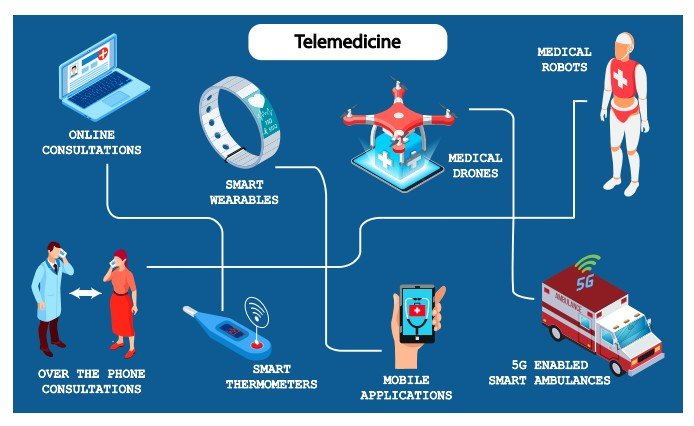
Optimizing telemedicine with computer applications can improve the quality, accessibility, and efficiency of healthcare services, benefiting both patients and healthcare providers. Telemedicine is a sector within the healthcare system that maximally utilizes information technologies in its operations. It significantly simplifies the interaction between healthcare professionals and improves the doctor-patient relationship. This opens up more opportunities for residents in remote regions who may not have full access to offline treatment. The global community places high hopes on telemedicine. And specialists develop software products, which improve the industry’s operations and takes it to a new level.

Functions of telemedicine

Telemedicine, as a branch of medicine, is intended for:

  • improving the quality of patient care by enhancing the accessibility of medical services for patients;
  • collecting patient data with automatic analysis of their health indicators;
  • monitoring of conducted research;
  • training of medical staff, conducting conferences, and roundtable discussions;
  • organizing the work of clinics and the interaction between doctors and patients;
  • scheduling and timetabling for healthcare professionals in various fields.

All of this becomes possible thanks to the use of digital technologies and applications, both computer-based and mobile. The effectiveness of the industry and the quality of services provided depend on how skillfully software products are used by healthcare professionals and patients.
Capabilities of Telehealth applications

Development companies release software products to support the industry. Their capabilities include:

  • online appointment scheduling with specialists at the clinic;
  • ordering medical supplies at pharmacies;
  • generating electronic prescriptions;
  • organizing video conferences;
  • collecting all patient data into a unified system;
  • organizing remote patient monitoring with health monitoring control and timely conducting of examinations and analyses;
  • reducing healthcare system expenses by saving resources (physical and energy resources);
  • establishing interaction between the smart devices used by patients and their electronic health records in the system.

Overall, such a software product should guarantee ease of use for three parties:

  • healthcare professionals—providing quick access to patient information, the ability to issue prescriptions, referrals for tests, and access to final data on conducted examinations;
  • patients—facilitate easy registration and login to the system, data entry, appointment scheduling with the doctor, and communication with them in a convenient manner;
  • administrators—ensure access rights management; allow for quick updates to the software product; provide the ability for automatic data backup.

The development of applications is accompanied by a number of challenges:

  • lack of unified healthcare standards;
  • lack of secure servers to maintain data confidentiality;
  • challenges with integration with third-party applications;
  • the issue of educating patients on how to use the software product.

The global community asserts that the future lies in telemedicine. Therefore, the future also lies in software products, which are now constantly being improved and equipped with new features. The release of new applications that meet the needs of both doctors and patients is an important stage in the development of healthcare. This will provide opportunities to enhance the quality of the healthcare system and create an optimal approach to developing individual medical protocols.

The post Why is it important to optimize telemedicine with the help of computer applications? appeared first on Home Business Magazine.


Mysterious family of malware hid in Google Play for years


An image illustrating a phone infected with malware

A mysterious family of Android malware with a demonstrated history of effectively concealing its myriad spying activities has once again been found in Google Play after more than two years of hiding in plain sight.

The apps, disguised as file-sharing, astronomy, and cryptocurrency apps, hosted Mandrake, a family of highly intrusive malware that security firm Bitdefender called out in 2020. Bitdefender said the apps appeared in two waves, one in 2016 through 2017 and again in 2018 through 2020. Mandrake’s ability to go unnoticed then was the result of some unusually rigorous steps to fly under the radar. They included:

  • Not working in 90 countries, including those comprising the former Soviet Union
  • Delivering its final payload only to victims who were extremely narrowly targeted
  • Containing a kill switch the developers named seppuku (Japanese form of ritual suicide) that fully wiped all traces of the malware
  • Fully functional decoy apps in categories including finance, Auto & Vehicles, Video Players & Editors, Art & Design, and Productivity
  • Quick fixes for bugs reported in comments
  • TLS certificate pinning to conceal communications with command and control servers.

Lurking in the shadows

Bitdefender estimated the number of victims in the tens of thousands for the 2018 to 2020 wave and “probably hundreds of thousands throughout the full 4-year period.”

Following Bitdefender’s 2020 report, Mandrake-infected apps seemed to vanish from Play. Now, security firm Kaspersky has reported that the apps reappeared in 2022 and went unnoticed until now. Besides a new round of decoy apps, the Mandrake operators also introduced several measures to better conceal their malicious behavior, avoid analysis from “sandboxes” used by researchers to identify and study malware, and combat malware protections introduced in recent years.

“The Mandrake spyware is evolving dynamically, improving its methods of concealment, sandbox evasion, and bypassing new defense mechanisms,” Kaspersky researchers Tatyana Shishkova and Igor Golovin wrote. “After the applications of the first campaign stayed undetected for four years, the current campaign lurked in the shadows for two years, while still available for download on Google Play. This highlights the threat actors’ formidable skills, and also that stricter controls for applications before being published in the markets only translate into more sophisticated, harder-to-detect threats sneaking into official app marketplaces.

A key feature of the latest generation of Mandrake is multiple layers of obfuscation designed to prevent analysis by researchers and bypass the vetting process Google Play uses to identify malicious apps. All five of the apps Kaspersky discovered first appeared in Play in 2022 and remained available for at least a year. The most recent app was updated on March 15 and removed from the app market later that month. As of earlier this month, none of the apps were detected as malicious by any major malware detection provider.

One means of obfuscation was to move malicious functionality to native libraries, which were obfuscated. Previously, Mandrake stored the malicious logic of the first stage in what’s known as the application DEX file, a type of file that’s trivial to analyze. By switching the location to the native library libopencv_dnn.so, the Mandrake code is harder to analyze and detect because the native libraries are more difficult to inspect. By then obfuscating the native library using the OLLVM obfuscator, Mandrake apps were even more stealthy.

The chief purposes of Mandrake are to steal the user’s credentials and download and execute next-stage malicious applications. But these actions are carried out only in later-stage infections that are served only to a small number of carefully selected targets. The primary method is by recording the screen while a victim is entering a passcode. The screen recording is initiated by a control server sending commands such as start_v, start_i, or start_a. The researchers explained:

When Mandrake receives a start_v command, the service starts and loads the specified URL in an application-owned webview with a custom JavaScript interface, which the application uses to manipulate the web page it loads.

While the page is loading, the application establishes a websocket connection and starts taking screenshots of the page at regular intervals, while encoding them to base64 strings and sending these to the C2 server. The attackers can use additional commands to adjust the frame rate and quality. The threat actors call this “vnc_stream”. At the same time, the C2 server can send back control commands that make application execute actions, such as swipe to a given coordinate, change the webview size and resolution, switch between the desktop and mobile page display modes, enable or disable JavaScript execution, change the User Agent, import or export cookies, go back and forward, refresh the loaded page, zoom the loaded page and so on.

When Mandrake receives a start_i command, it loads a URL in a webview, but instead of initiating a “VNC” stream, the C2 server starts recording the screen and saving the record to a file. The recording process is similar to the “VNC” scenario, but screenshots are saved to a video file. Also in this mode, the application waits until the user enters their credentials on the web page and then collects cookies from the webview.

The start_a command allows running automated actions in the context of the current page, such as swipe, click, etc. If this is the case, Mandrake downloads automation scenarios from the URL specified in the command options. In this mode, the screen is also recorded.

Screen recordings can be uploaded to the C2 with the upload_i or upload_d commands.

Neither Kaspersky nor Bitdefender provided attribution for the group or what its motives are for spreading a spyware and credential-stealing app as sophisticated as Mandrake. The apps Kaspersky discovered appear in the table below. Google has since removed them from Play. Additional indicators of compromise can be found in the Kaspersky post.

Package name App name MD5 Developer Released Last updated on Google Play Downloads
com.airft.ftrnsfr AirFS 33fdfbb1acdc226eb177eb42f3d22db4 it9042 Apr 28,
2022
Mar 15,
2024
30,305
com.astro.dscvr Astro Explorer 31ae39a7abeea3901a681f847199ed88 shevabad May 30,
2022
Jun 06,
2023
718
com.shrp.sght Amber b4acfaeada60f41f6925628c824bb35e kodaslda Feb 27,
2022
Aug 19,
2023
19
com.cryptopulsing.browser CryptoPulsing e165cda25ef49c02ed94ab524fafa938 shevabad Nov 02,
2022
Jun 06,
2023
790
com.brnmth.mtrx Brain Matrix kodaslda Apr 27,
2022
Jun 06,
2023
259

The Casting of Frank Stone Preview – Breaking Down The Game’s Cutting Room Floor Feature And Scope Of Choice


The Casting of Frank Stone may have new elements due to its ties to Dead by Daylight, but it remains a Supermassive horror game at its core. By that, I mean it’s a narrative-focused, choice-driven adventure that can result in numerous different outcomes based on your decisions and reaction time to sudden button prompts. Characters can be permanently killed off due to your actions, and this blueprint has given past Supermassive works like Until Dawn and especially The Quarry (which boasted 186 different outcomes) plenty of replayability for fans who wanted to see every possible route the story could take. This has typically meant restarting the entire game, but The Casting of Frank Stone eases this process thanks to a new destination called the Cutting Room Floor.

This mode opens after you’ve beaten the game once, but it will be available at the start for owners of the Deluxe Edition. The Cutting Room Floor displays the web of possible outcomes, locked and unlocked, for every narrative fork in each chapter. It also shows the number of collectibles you’ve found or can be found. 

Every decision has a percentage number representing the number of players who chose it, and this statistic will continually fluctuate as more people play. You can replay any segment, which means you can preserve your choices from a previous section of the game and only change later outcomes, and vice versa. Since some outcomes can only be experienced by making a specific combination of decisions, the Cutting Room Floor seems like a great, streamlined way to witness the different story permutations and go collectible/achievement hunting without replaying unnecessary stretches or the whole game.   

How many different directions can the story take? When I asked Supermassive Games this question, creative director Steve Goss told me that the sheer number of outcomes won’t be as vast as The Quarry’s. Instead, he says to compare the game to Until Dawn’s structure. The team aimed to write a more tightly written tale for The Casting of Frank Stone to facilitate more satisfying character arcs and resolutions. That said, you’ll still be making plenty of decisions, and the Cutting Room Floor will make it easier than ever to revisit those choices and make new ones.

The Casting of Frank Stone launches on September 3 for PlayStation 5, Xbox Series X/S, and PC. Click the banner below to visit our cover story hub for more exclusive stories and videos.

You Can Now Make an AI Clone Of Yourself on Instagram


Have you ever wished you could clone yourself and delegate your job’s most repetitive tasks to that clone? Beginning this week, Instagram, Facebook Messenger, and WhatsApp users in the United States can create “AI characters” that mimic their own personalities and interests. While Meta says anyone can create an AI character aimed at making people laugh and generating memes, most of the characters’ appeal lies in their ability to interact with users’ fans on their behalf. 

Users can find the new feature in AI Studio, a tool Meta introduced Monday specifically for its digital clones. AI Studio is also accessible via Instagram’s message feature, where users can tap the new “Create an AI chat” option. From there, users have two character options: regular AI characters, which are designed mainly for fun, and “creator AI,” which are meant to serve as extensions of business owners, content creators, and celebrities.

On the regular character end, users can generate what are essentially personalized chatbots. Based on Meta’s examples, these seem to be entertainment- or education-oriented: A chef character helps users learn how to cook, while a soccer trivia character delivers, well, soccer trivia. Characters appear to be capable of inline image generation, so if a user requests a picture of a mid-century modern living room, Meta’s open source Llama 3.1 model can whip one up on the spot. 

A creator AI responding to an influencer's DMs on their behalf.


Credit: Meta

Meta’s creator AI options, on the other hand, seem to be a lot more practical. Rather than ignoring the thousands of direct messages that land in their inboxes on a regular basis, businesses, influencers, and celebrities can build AI characters that match their own personalities, knowledge, and linguistic style, then use those characters to respond to followers on their behalf.

For businesses, this could mean answering customer questions or directing frazzled customers to the right helpdesk; for internet personalities, using AI to respond to story replies or DMs could offer a new way to interact with doting fans. (Meta discloses when users are chatting with an AI character to avoid confusion.) 

Meta is just one brand offering content creators an AI-powered path toward expanding their online presence. Captions, a generative AI platform for video, announced Tuesday a new tool called “AI Twin” that allows users to create their own photorealistic digital copies. Users can then use text inputs to create videos using their personalized avatar—no actual camera required. Unlike Captions-designed avatars, these personalized avatars are accessible only to the user who made them, helping to dispel worries about AI-generated misinformation or targeted deepfakes.

Synthesia, a synthetic media generation company, also offers an AI doppelganger product, while Dawn AI allows users to create AI copies of themselves with artistic flair.


15 Signs Of A Job Interview Scam And Fraudulent Job Offers


In an increasingly digital job market, the convenience of online job applications comes with its own set of risks, including the growing prevalence of job scams and fraudulent job offers. These scams can be sophisticated, preying on job seekers’ eagerness and trust. Falling victim to such schemes can have serious consequences, from financial loss to identity theft.

It’s crucial to be vigilant and informed to protect yourself from these deceptive practices. In this blog, we will outline clear signs of a job interview scam and fraudulent job offers, helping you navigate your remote job search safely and confidently. By recognizing these red flags, you can avoid potential pitfalls and ensure that your job search remains a positive and productive experience.

15 Signs Of A Job Interview Scam And Fraudulent Job Offers

Job interview scams are unfortunately common, and they can be difficult to spot if you’re not aware of the warning signs and mistakes to avoid while applying for a remote job. Here are 15 telltale signs that a job interview might be a scam:

1. Unsolicited Job Offers:

Receiving a job offer out of the blue, especially if you haven’t applied for the position or don’t remember applying. Job offers that promise exceptionally high salaries, benefits, or perks that seem unrealistic for the position.

2. Immediate Job Offer Without an Interview:

Being offered the job immediately without a formal interview process or after a very brief and informal interview without matching your skills to the job.

3. Lack of Company Information:

Difficulty finding information about the company online, including a lack of a professional website or LinkedIn presence.

4. Vague Job Descriptions:

Job descriptions that are overly vague, with little information about the role, responsibilities, or qualifications required.

5. Requests for Personal Information:

Asking for sensitive personal information such as Social Security numbers, bank account details, or copies of your ID early in the process.

6. Unprofessional Interview Process:

Interviews conducted via unconventional methods for the role, such as instant messaging apps, without a video or phone call.

7. Upfront Payment Requests:

Being asked to pay for training, software, background checks, or other job-related expenses upfront. If you see a phishing scam and the company has taken money from you, report it to Internet Crime Complaint Center.

8. Pressure to Act Quickly:

Being pressured to make quick decisions, such as accepting the job offer immediately or providing personal information without time to think it over.

9. Poor Unprofessional Communications:

Emails or messages containing numerous spelling and grammatical errors, or written in a very unprofessional manner. Communication that feels unprofessional, rushed, or overly informal, which can indicate a lack of legitimacy.

10. Nonexistent Information About the Recruiter:

Difficulty finding any information about the recruiter or hiring manager online, including on professional networking sites like LinkedIn.

11. Promises of High Pay for Little Work:

Offers that promise unusually high pay for minimal effort or responsibilities, which can be a major red flag.

12. Unable to Connect With Others at the Company:

Inability to speak with or verify the identities of other employees at the company, indicating a lack of transparency.

13. Suspicious or Generic Email Addresses:

Receiving communication from generic or suspicious email addresses (e.g., Gmail, Yahoo) rather than a company domain.

14. Lack of Clear Job Title or Reporting Structure:

Unclear job titles or reporting structures, making it difficult to understand where you fit within the organization.

15. Nonexistent Physical Address:

The company’s physical address either doesn’t exist or leads to a non-business location when searched online.

10 Questions to Ask Yourself If You Suspect a Job Interview Scam

Job interview scams can be sophisticated and convincing, making it essential to stay vigilant, especially if it’s a remote job. If you suspect that a job interview might be a scam, ask yourself the following questions to help determine its legitimacy:

1. Did I Apply for This Job?

Did I actively apply for this position, or did the offer come unsolicited?

2. Is the Job Offer Too Good to Be True?

Does the job offer promise unusually high pay, benefits, or perks for minimal effort or experience?

3. Are They Asking for Personal Information Too Soon?

Is the company requesting sensitive personal information, such as my Social Security number, bank account details, or copies of my ID, early in the process?

4. Is There a Request for Upfront Payment?

Am I being asked to pay for training, software, background checks, or other job-related expenses upfront?

5. Is the Communication Professional?

Are the emails or messages I’ve received well-written and professional, or do they contain numerous spelling and grammatical errors?

6. Can I Find Information About the Company and Recruiter?

Is there sufficient information available online about the company and the recruiter, including a professional website and LinkedIn presence?

7. Is the Job Description Detailed and Clear?

Does the job description provide specific details about the role, responsibilities, and qualifications required, or is it overly vague?

8. Am I Being Pressured to Make Quick Decisions?

Is there undue pressure to accept the job offer immediately or to provide personal information without adequate time to think it over?

9. Can I Verify the Company’s Physical Address?

Does the company have a verifiable physical address, or does the address lead to a non-business location?

10. Have I Been Able to Connect With Others at the Company?

Have I been able to speak with or verify the identities of other employees at the company, or does the company seem to lack transparency in this regard?

By asking yourself these questions, you can better assess the legitimacy of a job offer and protect yourself from potential scams. If you have any doubts, it’s always a good idea to conduct thorough research and trust your instincts before proceeding further.

Avoid Fraudulent Job Offers and Job Scams With DailyRemote

If you encounter any of these signs during your job search, proceed with caution. It’s important to research the company thoroughly, trust your instincts, and never provide personal or financial information until you are certain the job offer is legitimate.

Finally, the best way to avoid frauds and scams is to search jobs on legitimate job sites and job boards. You can also reach out to us on contact@dailyremote.com if you ever want to report a company that indulges in such activities.

DailyRemote is a widely trusted remote job board and only lists legitimate and real work at home jobs. All of the jobs on our site are highly vetted, safe, and maintains a quality standard. We only list jobs that we’re confident are from respected and well-known companies. Join like-minded people in our


Programming, Fluency, and AI


It’s clear that generative AI is already being used by a majority—a large majority—of programmers. That’s good. Even if the productivity gains are smaller than many think, 15% to 20% is significant. Making it easier to learn programming and begin a productive career is nothing to complain about either. We were all impressed when Simon Willison asked ChatGPT to help him learn Rust. Having that power at your fingertips is amazing.

But there’s one misgiving that I share with a surprisingly large number of other software developers. Does the use of generative AI increase the gap between entry-level junior developers and senior developers?

Generative AI makes a lot of things easier. When writing Python, I often forget to put colons where they need to be. I frequently forget to use parentheses when I call print(), even though I never used Python 2. (Very old habits die very hard, there are many older languages in which print is a command rather than a function call.) I usually have to look up the name of the pandas function to do, well, just about anything—even though I use pandas fairly heavily. Generative AI, whether you use GitHub Copilot, Gemini, or something else, eliminates that problem. And I’ve written that, for the beginner, generative AI saves a lot of time, frustration, and mental space by reducing the need to memorize library functions and arcane details of language syntax—which are multiplying as every language feels the need to catch up to its competition. (The walrus operator? Give me a break.)

There’s another side to that story though. We’re all lazy and we don’t like to remember the names and signatures of all the functions in the libraries that we use. But is not needing to know them a good thing? There’s such a thing as fluency with a programming language, just as there is with human language. You don’t become fluent by using a phrase book. That might get you through a summer backpacking through Europe, but if you want to get a job there, you’ll need to do a lot better. The same thing is true in almost any discipline. I have a PhD in English literature. I know that Wordsworth was born in 1770, the same year as Beethoven; Coleridge was born in 1772; a lot of important texts in Germany and England were published in 1798 (plus or minus a few years); the French revolution was in 1789—does that mean something important was happening? Something that goes beyond Wordsworth and Coleridge writing a few poems and Beethoven writing a few symphonies? As it happens, it does. But how would someone who wasn’t familiar with these basic facts think to prompt an AI about what was going on when all these separate events collided? Would you think to ask about the connection between Wordsworth, Coleridge, and German thought, or to formulate ideas about the Romantic movement that transcended individuals and even European countries? Or would we be stuck with islands of knowledge that aren’t connected, because we (not the AIs) are the ones that connect them? The problem isn’t that an AI couldn’t make the connection; it’s that we wouldn’t think to ask it to make the connection.

I see the same problem in programming. If you want to write a program, you have to know what you want to do. But you also need an idea of how it can be done if you want to get a nontrivial result from an AI. You have to know what to ask and, to a surprising extent, how to ask it. I experienced this just the other day. I was doing some simple data analysis with Python and pandas. I was going line by line with a language model, asking “How do I” for each line of code that I needed (sort of like GitHub Copilot)—partly as an experiment, partly because I don’t use pandas often enough. And the model backed me into a corner that I had to hack myself out of. How did I get into that corner? Not because of the quality of the answers. Every response to every one of my prompts was correct. In my postmortem, I checked the documentation and tested the sample code that the model provided. I got backed into the corner because of the one question I didn’t know that I needed to ask. I went to another language model, composed a longer prompt that described the entire problem I wanted to solve, compared this answer to my ungainly hack, and then asked, “What does the reset_index() method do?” And then I felt (not incorrectly) like a clueless beginner—if I had known to ask my first model to reset the index, I wouldn’t have been backed into a corner.

You could, I suppose, read this example as “see, you really don’t need to know all the details of pandas, you just have to write better prompts and ask the AI to solve the whole problem.” Fair enough. But I think the real lesson is that you do need to be fluent in the details. Whether you let a language model write your code in large chunks or one line at a time, if you don’t know what you’re doing, either approach will get you in trouble sooner rather than later. You perhaps don’t need to know the details of pandas’ groupby() function, but you do need to know that it’s there. And you need to know that reset_index() is there. I have had to ask GPT “Wouldn’t this work better if you used groupby()?” because I’ve asked it to write a program where groupby() was the obvious solution, and it didn’t. You may need to know whether your model has used groupby() correctly. Testing and debugging haven’t, and won’t, go away.

Why is this important? Let’s not think about the distant future, when programming-as-such may no longer be needed. We need to ask how junior programmers entering the field now will become senior programmers if they become overreliant on tools like Copilot and ChatGPT. Not that they shouldn’t use these tools—programmers have always built better tools for themselves, generative AI is the latest generation in tooling, and one aspect of fluency has always been knowing how to use tools to become more productive. But unlike earlier generations of tools, generative AI easily becomes a crutch; it could prevent learning rather than facilitate it. And junior programmers who never become fluent, who always need a phrase book, will have trouble making the jump to seniors.

And that’s a problem. I’ve said, many of us have said, that people who learn how to use AI won’t have to worry about losing their jobs to AI. But there’s another side to that: People who learn how to use AI to the exclusion of becoming fluent in what they’re doing with the AI will also need to worry about losing their jobs to AI. They will be replaceable—literally—because they won’t be able to do anything an AI can’t do. They won’t be able to come up with good prompts because they will have trouble imagining what’s possible. They’ll have trouble figuring out how to test, and they’ll have trouble debugging when AI fails. What do you need to learn? That’s a hard question, and my thoughts about fluency may not be correct. But I would be willing to bet that people who are fluent in the languages and tools they use will use AI more productively than people who aren’t. I would also bet that learning to look at the big picture rather than the tiny slice of code you’re working on will take you far. Finally, the ability to connect the big picture with the microcosm of minute details is a skill that few people have. I don’t. And, if it’s any comfort, I don’t think AIs do either.

So—learn to use AI. Learn to write good prompts. The ability to use AI has become “table stakes” for getting a job, and rightly so. But don’t stop there. Don’t let AI limit what you learn and don’t fall into the trap of thinking that “AI knows this, so I don’t have to.” AI can help you become fluent: the answer to “What does reset_index() do?” was revealing, even if having to ask was humbling. It’s certainly something I’m not likely to forget. Learn to ask the big picture questions: What’s the context into which this piece of code fits? Asking those questions rather than just accepting the AI’s output is the difference between using AI as a crutch and using it as a learning tool.

Ogu And The Secret Forest Free Download (v1.0)


Ogu And The Secret Forest Free Download By WorldofpcgamesOgu And The Secret Forest Free Download By Worldofpcgames

Ogu And The Secret Forest Direct Download:

Explore the wonderful world with baby Ogu! ‘Ogu and the Secret Forest’ is a 2D adventure game with hand-drawn characters and various types of puzzles. Befriend bouncy characters and defeat strange creatures to unravel the mystery of the charming world. Explore various types of areas. Each area has a unique atmosphere and story. Solve puzzles and find hints to reveal secrets and mysteries that are undisclosed for a long time. From recognizable classic puzzles to unique ones, various types of puzzles are waiting for you to visit. The power of the Great One has been shattered and lots of vicious adversaries are keen on gathering the scattered pieces of the Great One’s power. Overcome these fearsome enemies to save the world.

Put on your explorer’s hat and go find various awesome hats and masks! Dress Baby Ogu with these items and some of them might have some special skills attached. There are many landmarks out there. Draw fancy objects and landscapes to discover new lands and you might also find hints in them. Meet friends on your journey and help those in need. They might help you with their unique skills or gifts. You’re not alone in this world! Once in a while I stumble upon a game that is just pure joy playing through, and following a cute platypus on a larger than life adventure was weirdly soothing at a spiritual level. At its core this is a modern take on the classic adventure games of old with treasure hunting, dungeon crawling and clever puzzles.

Features and System Requirements:

  • Ogu and the Secret Forest’ is a 2D adventure game with hand-drawn characters and various types of puzzles.
  • Explore various types of areas. Each area has a unique atmosphere and story.
  • Solve puzzles and find hints to reveal secrets and mysteries that are undisclosed for a long time.

1 :: Operating System :: Windows XP/7/8/8./10.
2 :: Processor: 2.2Ghz or faster Dual Core
3 :: Ram :: 8 GB RAM
4 :: DirectX: Version 9.0
5 :: Graphics:: 2GB Dedicated VRAM
6 :: Space Storage:: 10 GB space

Turn Off Your Antivirus Before Installing Any Game

1 :: Download Game
2 :: Extract Game
3 :: Launch The Game
4 :: Have Fun 🙂

Join the Hell Let Loose Update Preview Today!


We are delighted to invite Xbox Insiders on Xbox Series X|S consoles to join the Hell Let Loose Update Preview. Team17 is working on new and exciting features for this epic World War II, first person shooter and would love for you to try them out and get your feedback! To participate in the Hell Let Loose Update Preview, you will need to either own Hell Let Loose OR have access to the title via an active Game Pass subscription.

What’s New:

Join the preview today and Xbox Insiders will be able to use the console server browser! This will allow you to select and join any server you want from the Enlist menu. This means that you have more control over what maps you play and who you play with.

About the Game:

Join the chaos of war and be a part of the most iconic battles of the Eastern and Western Fronts, including Carentan, Omaha Beach, Stalingrad, Kursk and more. Hell Let Loose drops you into the action, where you will have to fight across fields, bridges, forests, towns and more war-torn environments! Lumbering tanks will be dominating the battlefield and crucial supply chains fueling the frontlines, you are essential to the colossal, combined arms warfare.

If you want to learn more, please visit the Hell Let Loose Website!

How to Participate:

  1. Sign-in on your Xbox Series X|S console and launch the Xbox Insider Hub app (or install the Xbox Insider Hub from the Store first if necessary)
  2. Navigate to Previews > Hell Let Loose
  3. Select Join
  4. Wait for the registration to complete and be directed to the Store and install Hell Let Loose

NOTE: To participate in the Hell Let Loose Update Preview, you will need to either own Hell Let Loose OR have access to the title via an active Game Pass subscription.

NOTE: This playtest is only available on Xbox Series X|S consoles.

NOTE: If you already have Hell Let Loose installed, please restart your console after the registration has completed to ensure you get prompted to update to the Hell Let Loose Update Preview version.

NOTE: If you wish to revert to the publicly available version of Hell Let Loose, you will need to leave the Hell Let Loose Update Preview via the Xbox Insider Hub. This will prompt an update reversion to occur.

How to Provide Feedback:

If you experience any issues while playing Hell Let Loose, don’t forget to use “Report a problem” so we can investigate:

  • Hold down the home button on your Xbox controller.
  • Select Report a problem.
  • Select the Games category and Hell Let Loose subcategory.
  • Fill out the form with the appropriate details to help our investigation.

Other resources:

For more information: follow us on X/Twitter at @XboxInsider and this blog for announcements and more. And feel free to interact with the community on the Xbox Insider SubReddit.


Visual Studio thread execution stops on a non-breakpoint


I have a MAUI application, which has two different runtimes (? idk what to call this where I can choose either the Windows or Android version, nor what to call it when I choose one vs the other),

different runtimes

and depending on which one I pick and whether I choose to run the app in my tablet, the code will stop in a thread like so

thread hitting a non-breakpoint and stopping

and I have no idea why it always stops here in debug mode. I do not have a breakpoint here.

I can click "continue" to move past it with no problem. In other parts of my code where it stops like this, I have to "continue" multiple times as multiple different threads will stop at the same spot.

I looked up similar issues to this, and there is a SO post from 10 years ago, but it’s not entirely the same thing since it didn’t appear to have anything to do with threading. Most of my research found posts where VS is supposed to hit a breakpoint but doesn’t. This is the reverse problem: threads are breaking execution where there is no breakpoint. Why does this happen and how do I get it to stop?

Low-Income Homes Drop Internet Service After Congress Kills Discount Program


An anonymous reader quotes a report from Ars Technica: The death of the US government’s Affordable Connectivity Program (ACP) is starting to result in disconnection of Internet service for Americans with low incomes. On Friday, Charter Communications reported a net loss of 154,000 Internet subscribers that it said was mostly driven by customers canceling after losing the federal discount. About 100,000 of those subscribers were reportedly getting the discount, which in some cases made Internet service free to the consumer. The $30 monthly broadband discounts provided by the ACP ended in May after Congress failed to allocate more funding. The Biden administration requested (PDF) $6 billion to fund the ACP through December 2024, but Republicans called the program “wasteful.”

Republican lawmakers’ main complaint was that most of the ACP money went to households that already had broadband before the subsidy was created. FCC Chairwoman Jessica Rosenworcel warned that killing the discounts would reduce Internet access, saying (PDF) an FCC survey found that 77 percent of participating households would change their plan or drop Internet service entirely once the discounts expired. Charter’s Q2 2024 earnings report provides some of the first evidence of users dropping Internet service after losing the discount. “Second quarter residential Internet customers decreased by 154,000, largely driven by the end of the FCC’s Affordable Connectivity Program subsidies in the second quarter, compared to an increase of 70,000 during the second quarter of 2023,” Charter said.

Across all ISPs, there were 23 million US households enrolled in the ACP. Research released in January 2024 found that Charter was serving over 4 million ACP recipients and that up to 300,000 of those Charter customers would be “at risk” of dropping Internet service if the discounts expired. Given that ACP recipients must meet low-income eligibility requirements, losing the discounts could put a strain on their overall finances even if they choose to keep paying for Internet service. […] Light Reading reported that Charter attributed about 100,000 of the 154,000 customer losses to the ACP shutdown. Charter said it retained most of its ACP subscribers so far, but that low-income households might not be able to continue paying for Internet service without a new subsidy for much longer.