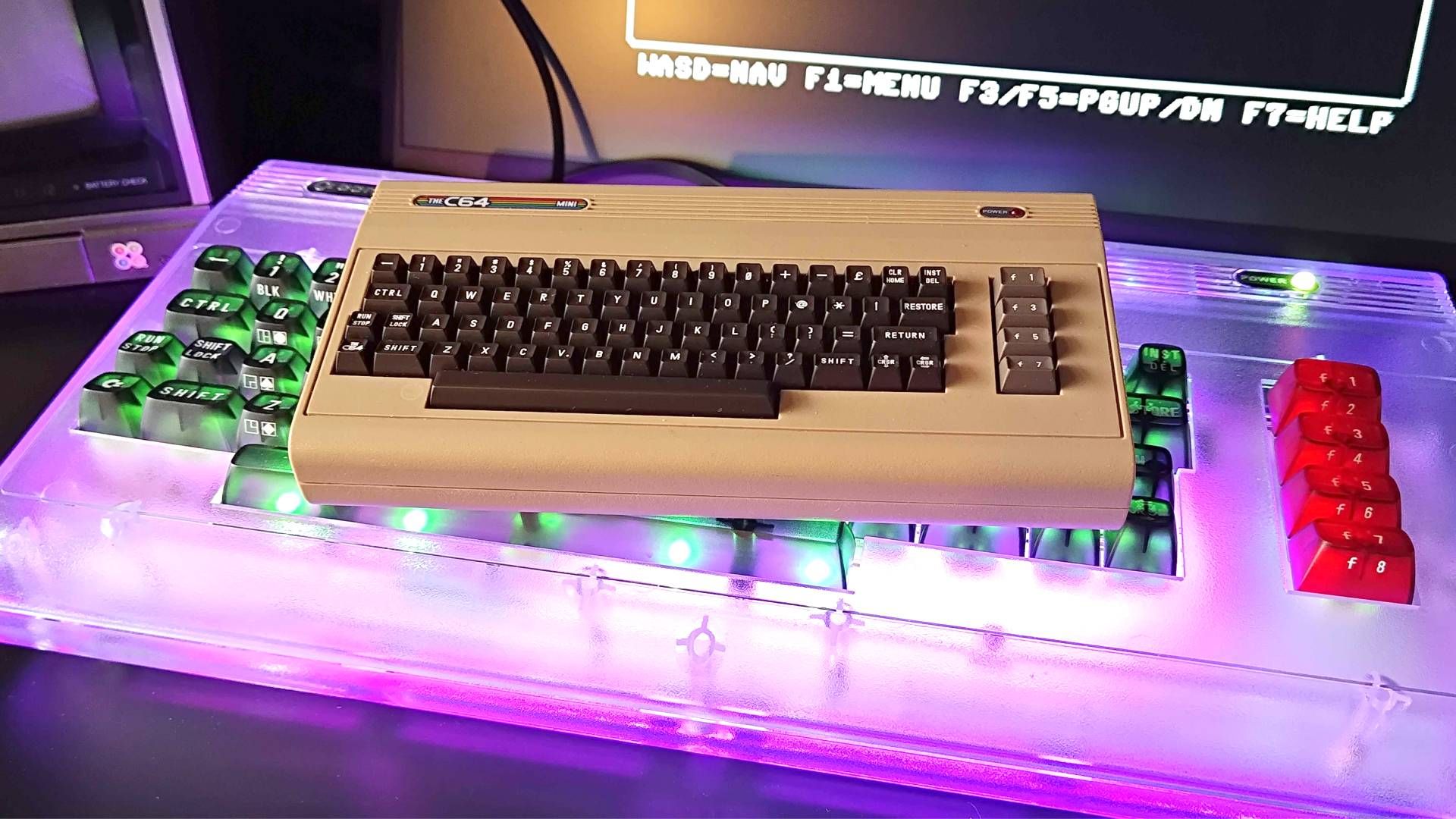
Messing around with old retro gaming setups is absolutely my bag, but trying to use microcomputers like the C64 can be a drag. Unlike consoles, PC precursors largely have to put a bit more effort into running games than simply blowing on a cartridge and jamming it in, and while the shiny new Commodore 64 Ultimate helps arm the iconic system with brand new tricks, I totally get why some of you might still go for its plug-and-play mini predecessor.
For what it’s worth, I think comparing the Commodore 64 Ultimate to the C64 Mini (THEC64) is silly. Yes, both machines are offering up access to the same game library and the microcomputer’s BASIC coding environment, but the new FPGA system is pretty much an exact hardware replica of the original, whereas Retro Games Ltd’s small doohickey feels more like a best retro console contender.

Yet, keeping your bank account happy isn’t the only reason to grab a C64 Mini over the new Ultimate machine. It’s actually a more logical jumping-on point for newbies than the more expensive and inherently complicated-to-use FPGA machine. That’s not to say any of those latter traits are actually a bad thing, as you pretty much get what you pay for and will have access to more advanced, authentic features. However, if you just want a taste of some microcomputing classics with little effort, the plug-and-play console is a better fit.
Microcomputing convivence

There are absolutely two camps of retro gamers out there, and the C64 Mini absolutely caters to the minimalist collectors. By that, I’m describing the sort of player who still wants something pretty to sit pretty on a shelf, while being able to quickly tap into a system’s library on a modern screen. If that sounds like you, then you’ve likely already got a collection of tiny consoles like the NES and SNES classic editions or the Sega Genesis (Mega Drive) Mini, and they are undoubtedly one of the quickest ways to play a curated library on something physical.
That said, the C64 Mini does break tradition somewhat compared to those other tiny systems with its functionality. For starters, it natively lets you run your own backed-up games using a USB drive, so you aren’t stuck with just the 64 classics built in. Amusingly, that does mean that if you grab the OG Beige model instead of the newer Black edition with a reduced “neo-retro” collection of 25 adventures, you can potentially still play all those same games, and some of them are even free.
The C64 Mini also, perhaps surprisingly, provides access to BASIC, Commodore’s programming language. In theory, that means you can plug in a USB keyboard and start coding your own programs like it’s 1982, and while that’s hardly surprising given you can do the same on a PC using emulators, it still means you can use it as a dedicated device for trying out old school game development.

What I will say is that if you’re serious about getting into C64 game development, I would only use the mini for messing around. The console’s emulator will run code far slower than an actual assembly, and while you can save your creations to USB, it is a bit fiddly and temperamental. I’d still largely view the C64 Mini as an easy gateway to playing digitized games or even just its included collection, which does provide plenty of staples from the era.
One of the other biggies with the C64 Mini is that it comes with a USB joystick. It really has no choice in the matter since its tiny replicated keyboard isn’t actually usable, but it does mean you’ll be able to kick back on the couch and play games from the get-go. It will also work with a wide variety of wired controllers, meaning you won’t have to get gud with a stick if gamepads are your weapon of choice.
This is actually one of the few things the Commodore 64 Ultimate doesn’t quite nail, as it currently lacks USB controller compatibility. You do instead get a double helping of original DB-9 ports, so you can use a bunch of OG joysticks, Atari gamepads, or my personal favorite, a Sega Master System controller, but it does mean you won’t be able to use digital remakes like the recently announced Quickshot 2 (at least not right now).

I should clarify that I get why the Ultimate both forgoes including a joystick and USB controller compatibility. It does come with a fully functioning keyboard, and since the OG microcomputer wouldn’t have come with a specific stick, sticking to the original format makes sense. The system’s enthusiast target audience will likely already have something they’d rather use, or potentially even just stick with keys by default, with the contrasting casual players pretty much relying on the accessory that comes with the Mini.
Ultimate by name…

What I’m about to say feels incredibly cheesy, but there’s a reason why the new FPGA C64 is called the Commodore 64 Ultimate. I see it as pretty much the last rung on the platform’s ladder, one that you’ll consider after getting a feel for what you want from a microcomputer. The trick here is that you won’t necessarily know what you want until you actually try other available options, and the C64 Mini makes for a cheap place to start.
Whether or not you choose to climb up the C64 setup ladder fully depends on your appreciation for authenticity. I personally think hardware is a crucial component of the retro gaming experience, and mini plug-and-play systems that use software emulation can only take you so far. The sensation of using all the original buttons and dials, as well as hearing the delightful sounds like floppy drives and cassette decks, all help capture original vibes you may remember fondly or potentially missed out on.
Traditionally, you’d have to use original hardware to actually embrace those traits, and that comes with its own specific hurdles. While I’ve covered how to connect retro consoles to your TV or monitor, and I dedicate a lot of time to using OG hardware within new setups, devices that replicate circuitry using FPGA (Field Programmable Gate Array) tech make for a more reliable alternative.

Enter the Commodore 64 Ultimate, a device that leverages an FPGA chip in that very manner, while technically going a step further than typical systems. As I already said in my full review, this device is a C64 in every way that matters, boasting full compatibility with all original accessories, games, CRT displays, and even the original SID chips for sound, all while throwing HDMI connectivity and USB drive support into the mix.
I don’t know about you, but that all helps explain why it costs over $300. We’re talking about a proper enthusiast-grade remake of the original Commodore 64 that preserves the hardware in multiple ways, and even the external shell is nearly identical to the ’80s microcomputer (providing you go for the beige rather than the flashy translucent, RGB-clad, Starlight edition).
My point here is that the Commodore 64 Ultimate is for those of you who want to have C64 cake and eat it too. I.e, you’d like original, authentic functionality paired with modern conveniences like HDMI output, and it really is the definitive way to experience the microcomputer if you have the cash. I do think it’s your final pitstop if you’re still exploring options, though, and while I know there will be gatekeepers who’d suggest avoiding cheaper emulation devices at all costs, it is worth considering the C64 Mini first to see if you even vibe with the system’s library.
Looking to play on the go? Swing by the best retro handheld options for emulation devices and more. Those of you using Valve‘s portable will want to also check out the best Steam Deck accessories and best Steam Deck docks to enhance your hybrid setup.