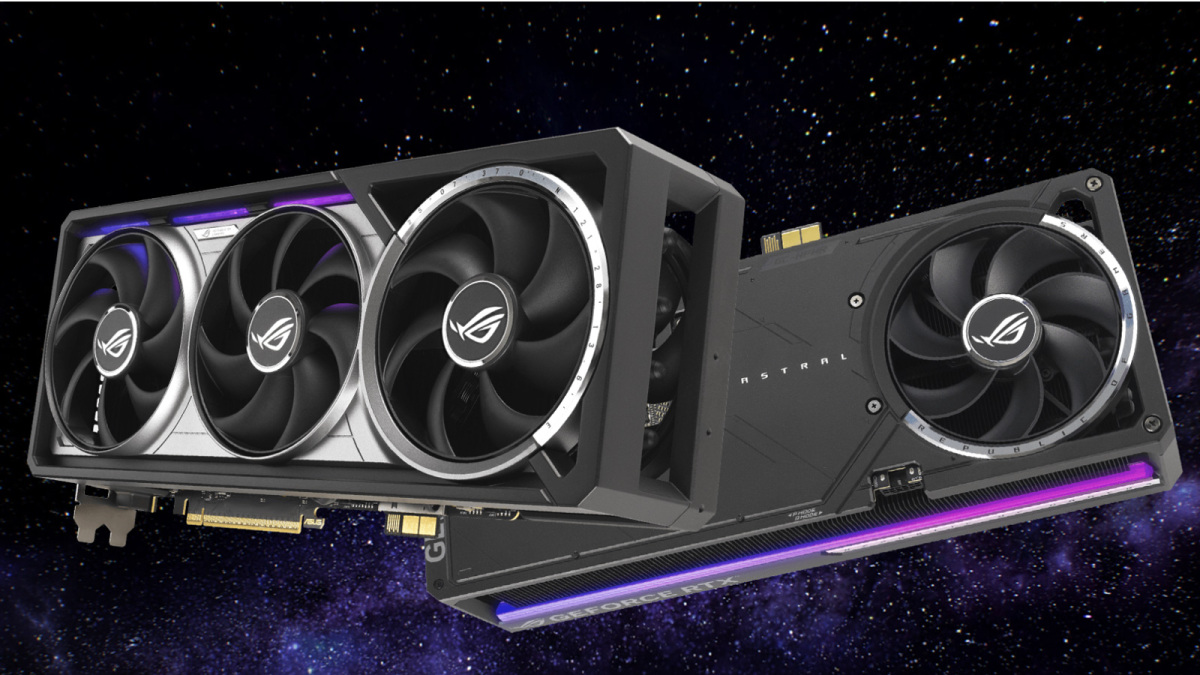
Asus has officially launched the new BTF versions of its RTX 5090 and RTX 5070 Ti graphics cards, each sporting the specialized GC-HPWR stealthed power connector. This unique way of powering the graphics card uses a small port module at the far end of the card and plugs directly into a specialized slot on the motherboard. That port delivers all the power the card needs, with no additional power cables required.
The Asus BTF, or Back to the Future, naming scheme might not seem relevant, but it’s supposed to be taken more literally than its movie namesake. BTF is about putting connectors out of sight, on the “back” of the board, mostly. All while pushing this new standard for the “future.” It’s a little clumsy, and probably why the brand is now using the BTF moniker instead, but the idea remains to make systems less cable-heavy, whilst giving a cleaner front look and feel. That should also enable easier system maintenance.
For graphics cards, that means hiding the ugly 16-pin Nvidia power connector or more traditional 8-pin PCIe power cables. The new RTX 5090 and 5070 Ti BTF editions sport the new GC-HPWR Asus power connector, which the company recently showed off as being able to handle well over 1,000W of power—far more than even the RTX 5090 pulls. They also have the 16-pin 12v-2×6 power connector as an alternative for those who prefer to use that.

Credit: Asus
That’s the main update for this generation of BTF cards: The new power connector design is optional. It comes with an attachable adapter that makes that connection with the additional power port on the motherboard. Without it, gamers can simply use the standard Nvidia 16-pin connector.
The cards themselves are relatively standard versions of the GPUs, though VideoCardz reports there’s an overclocked version of the RTX ROG Astral 5090, alongside a stock-clocked version. The RTX 5070 Ti only has one version, but it does come in an optional white color scheme.
With the ongoing issues Nvidia has faced with overheating of its RTX 50-series power connectors, the industry has been looking to alternative ways to manage power deliver. Although Asus’ is bespoke and requires a specific motherboard to use the unique connector, it could be something that catches on. It might be expensive, but the peace of mind that your $2,000 + GPU won’t break during regular use might just be worth it.