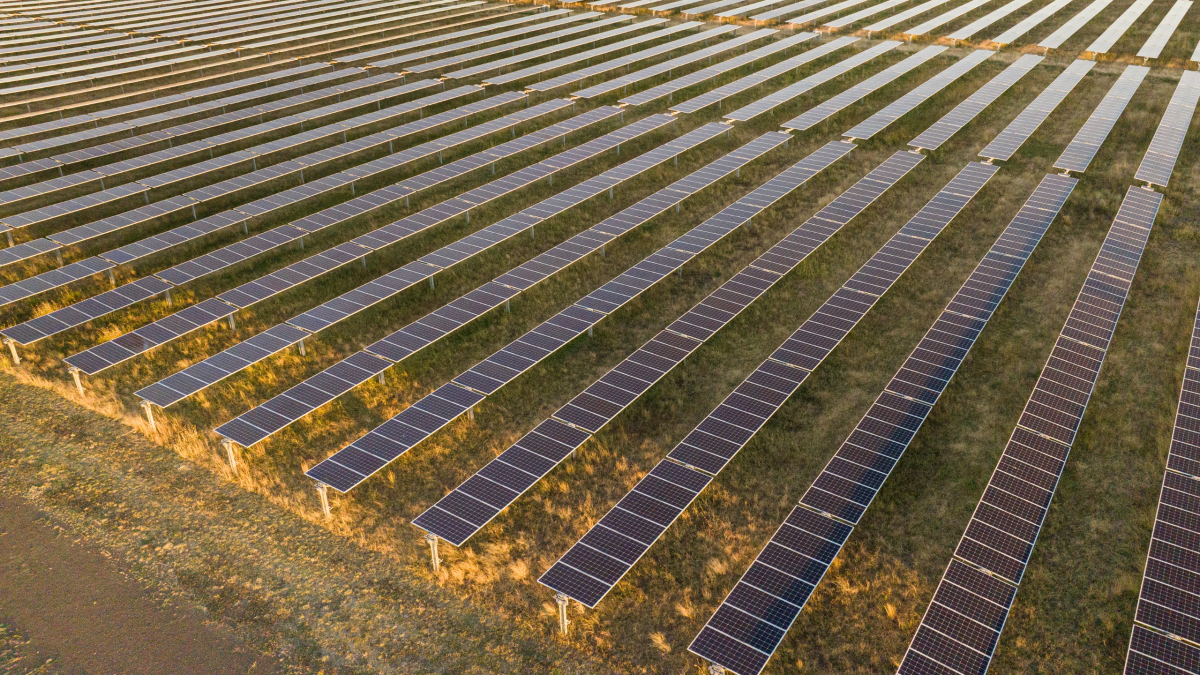
Solar power has definitively taken over in Australia, the sunniest continent on Earth, to such an extent that the government is proposing a new program offering at least three hours of free electricity to everyone each day. It’s a testament to just how far renewable electricity generation has come, at least for those countries gifted with helpful climates.
The pilot project would roll out in New South Wales, South Australia, and South-east Queensland, with more territories planned for the future.
The program is designed to address a common issue across all grids: peaks and troughs. Power usage fluctuates significantly over a 24-hour period, and solar power generation fluctuates in tandem with the day-night cycle. Since these two cycles don’t perfectly sync, we end up with periods of low demand and high generation, as well as periods of high demand and low generation.
In the past, this has led to the creation of schemes for grid-side energy storage and release, in which you accept that people aren’t using enough energy at times and try to store the excess for later use. The Solar Sharer program exists to address the problem in a different way: by encouraging people to use power more evenly throughout the day and, hopefully, eliminating the need for storage technologies altogether.
If it works, people will adjust their behavior to do energy-intensive tasks during their 3-hour free period, and so have fewer energy-intensive tasks left to do while general use is high. In exchange for the hassle of extra scheduling, people get direct savings in the form of free dish-washing, laundry, car charging, and more.

Credit: Viktoriya Skorikova/Getty Images
The only real problem is that, by definition, the lowest-use hours are those during which people have trouble using their appliances. The biggest reason midday is such a low-use time is that people are typically out of the house. This means that if individuals want to take advantage of their midday window of free power, they’ll have to schedule their appliances to start at a specific time of day.
The best overall impact would be on people with large-capacity batteries in the home, which can often be programmed to start charging at certain times of the day. This would allow at least some free electricity to be stored and released during peak times, but of course, the battery itself is far from free.
Overall, it’s an interesting proposition for a country that has some of the best solar potential anywhere. It could be a better use of excess power than the typical forms of power storage, but it remains to be seen whether Australians will prioritize the savings this program could offer over the convenience of rarely having to plan their power usage ahead of time.