
NVIDIA AI Cloud Ecosystem Expands Worldwide to Meet Global AI Compute Demand


The NVIDIA AI Cloud ecosystem is accelerating the global buildout of AI factory infrastructure. Partners are expanding capacity to meet growing demand from enterprises, startups, nations, AI labs and developers scaling agentic AI applications. 

NVIDIA AI Clouds are a growing ecosystem of purpose-built clouds serving the exploding token demand behind today’s most popular AI applications. These AI clouds have been co-designed with NVIDIA’s full-stack AI infrastructure to meet surging demand for AI from enterprises, startups and nations looking for new vendors and regional capacity. 

They combine NVIDIA accelerated computing, networking and AI software to help partners support training, fine-tuning, inference, agentic AI, physical AI and sovereign AI deployments. Specific configurations vary by partner and workload.

AI cloud partners choose NVIDIA for the best economics — lowest token cost, best throughput per watt — to run frontier and open source AI. Built with NVIDIA accelerated computing, networking and AI software, these clouds bring AI factories closer to where data, developers, users and industries are, helping customers train, tune and run agentic AI applications at scale. The ecosystem spans nearly every geography, supporting regional and sovereign AI capacity for frontier model builders, enterprises, startups, software providers and national AI programs.

“Every company and every country needs AI factory infrastructure to turn data into intelligence,” said Jensen Huang, founder and CEO of NVIDIA. “NVIDIA AI Clouds bring full-stack AI factories closer to the regions, industries and developers building the next generation of AI, from model training to real-time inference and AI agents that will transform how people and organizations work.”

Broad AI Cloud Ecosystem

AI cloud providers, telcos, sovereign AI builders and vertically integrated infrastructure providers are building AI factories with NVIDIA to serve customers across frontier AI, enterprise AI, telecommunications, developer clouds and national AI programs.

Regional growth is accelerating across Southeast Asia, Australia and the Americas, with NVIDIA AI Clouds now reaching six continents following the addition of Cassava in Africa and Claro in South America.

NVIDIA AI Clouds are pairing large-scale AI factory buildouts with demand from leading AI labs, enterprises, governments and digital service providers. Partners including CoreWeave, Firmus, IREN and Nscale are expanding AI infrastructure to support frontier model development, enterprise AI, agentic applications and high-volume inference.

Across regions, NVIDIA AI Clouds are bringing AI factories closer to local industries and sovereign AI ecosystems. Partners including Firebird, GMI Cloud, Indosat Ooredoo Hutchison, Lambda, Naver Cloud, Sharon AI, Yotta and YTL are supporting emerging AI companies, national AI initiatives, financial services, telecommunications, manufacturing, education, healthcare and developer ecosystems.

For governments and regulated industries, regional AI clouds can support sovereign controls and local compliance requirements. For developers and enterprises, they can reduce friction in accessing accelerated infrastructure for AI agents, enterprise copilots, digital workers and other AI services that must run close to users and data.

Firmus Expands AI Factory Footprint Across Australia and Asia-Pacific

Firmus Technologies is expanding its AI factory footprint across South Australia and Southeast Asia, building energy-efficient infrastructure to support growing demand for large-scale training, inference and agentic AI workloads.

Through Project Southgate, Firmus is developing AI factories in Tasmania, Melbourne, South Australia and New South Wales, with an emphasis on renewable power, advanced cooling and modular infrastructure that can bring capacity online faster. The company has also deployed AI infrastructure in Singapore through a partnership with ST Telemedia Global Data Centres.

Firmus is using NVIDIA’s accelerated computing and reference architecture as part of its buildout, with NVIDIA DSX helping streamline AI factory design, deployment and operations.

Engineered in alignment with the NVIDIA DSX platform, the liquid-cooled Firmus HyperCube is designed to fast-track modular AI Factory builds and optimize for low cost per token. Firmus is innovating across the AI factory supply chain, including cooling and energy.

“AI agents are creating a new class of industrial-scale demand for tokens, and Asia-Pacific needs AI factories that can be built faster, liquid-cooled more efficiently and operated at gigawatt scale,” said Tim Rosenfield, co-CEO of Firmus. “Together with NVIDIA, Firmus is building liquid-cooled, AI infrastructure designed to deliver AI tokens as efficiently and rapidly as possible for the region’s most important customers.”

CoreWeave Advances Physical AI and Next-Generation AI Factories

CoreWeave is expanding its NVIDIA AI Cloud platform to support the next wave of agentic AI, physical AI and frontier model workloads. 

An early adopter of NVIDIA Vera Rubin and the NVIDIA Vera CPU, CoreWeave is also among the first to adopt NVIDIA Spectrum-X Ethernet Photonics, helping provide the networking foundation for million-GPU AI factories. CoreWeave is extending its platform for robotics and physical AI workflows, including using NVIDIA Cosmos 3, the latest frontier world foundation model, to help teams generate synthetic data, fine-tune models and accelerate robotics data flywheels. Leading AI labs, including Anthropic, build on CoreWeave’s infrastructure to support frontier models at scale.

“AI factories are becoming the foundation for the agentic era,” said Michael Intrator, cofounder, chairman and CEO of CoreWeave. “Together with NVIDIA, CoreWeave is building the full-stack cloud infrastructure that gives AI labs, enterprises and developers the performance, scale and reliability they need to turn frontier models, AI agents and physical AI systems into production applications.”

Nebius Builds an Open Physical AI Workbench for Agentic Workflows

Nebius is expanding its NVIDIA AI Cloud with a full-stack platform for training, inference and physical AI development.

An early adopter of NVIDIA Vera Rubin, Nebius is building integrated AI infrastructure from silicon to software, including its Nebius AI Cloud, Token Factory inference layer and new Physical AI Workbench. The workbench brings technologies including NVIDIA Cosmos 3, NVIDIA Isaac Sim and Isaac GR00T into composable workflows that can be assembled by AI agents, helping robotics and autonomous systems teams move faster from simulation and synthetic data to training and evaluation.

“Developers should be able to build AI systems without spending weeks wiring together infrastructure,” said Arkady Volozh, founder and CEO of Nebius. “With NVIDIA, Nebius is creating an AI cloud where AI  agents can compose the tools, data and compute needed to accelerate AI workloads — from robotics and life sciences to the enterprise — from experimentation to production.”

NVIDIA Exemplar Cloud Momentum

Since NVIDIA introduced Exemplar Cloud last year, six NVIDIA Cloud Partners have achieved Exemplar Cloud status: CoreWeave, Crusoe, Lambda, Nebius, Vultr and YTL. The growing roster reflects increasing demand for AI cloud infrastructure that can deliver consistent performance, reliability and efficiency for production AI workloads.

These providers are helping raise the performance bar across the AI cloud ecosystem, giving enterprises, developers and AI labs more validated options for scaling training, inference and agentic AI services.

Engineered for AI Factory Economics

As AI shifts from model development to reasoning and high-volume inference, the measure of infrastructure is no longer just capacity announced but also the economics of token output driven by platform utilization, uptime, long asset life and the breadth and depth of useful AI agents people can put to work. 

Built on NVIDIA full-stack AI factory platforms, AI Clouds help partners optimize infrastructure for these measures.

Cost per token is the total cost of ownership metric that directly accounts for hardware performance, software optimization, ecosystem support and real-world utilization. NVIDIA delivers the lowest cost per token in the industry, driven by delivered token throughput, software optimization and full-stack codesign across compute, networking, memory and storage.

DSX Helps AI Clouds Bring Capacity Online Faster

NVIDIA AI Clouds are adopting the NVIDIA DSX platform to design, build and operate AI factories.

DSX brings together validated reference designs, simulation, software and ecosystem technologies to help cloud providers bring capacity online faster, operate more efficiently and maximize revenue.

DSX Sim helps teams model and validate AI factories before deployment. DSX Flex helps AI factories dynamically adapt workloads to grid conditions. DSX MaxLPS helps power-constrained AI factories maximize compute within a fixed power budget, enabling up to 40% more GPUs. DSX OS helps automate lifecycle management and operations at scale.

DSX helps AI Clouds reduce deployment risk, improve resiliency, deliver more tokens per watt and achieve the lowest cost token.

Strava declares war on scrapers ahead of IPO


AI companies have grown into data-hungry entities as their models require ever-larger datasets to train on. To meet that need, many AI startups defy long-standing internet conventions — like respecting robots.txt files, which signal to automated crawlers which parts of a website are off-limits — and scrape data aggressively. This has forced websites to restrict access to their data and, in some cases, strike licensing deals with AI companies. Fitness and social running company Strava is making a move in this direction by restricting its website and introducing fees for developer access.

To stop scraping, the company is increasing security around its website and will now only allow authenticated users to view certain data. Earlier, users were able to see details like public profiles and fitness club listings without logging in. The company is putting all that data behind authentication to protect it from unauthorized AI scraping.

On the API front, developers could previously start building apps on Strava through a free, tiered access program — applying for basic access first, then requesting more as their app grew. Now the company is adding a flat $11.99 per month fee for all developers, though it noted the price may vary by geography.

Strava said its developer community has grown from 185,000 members last year to 241,000 this year, and the company plans to continue supporting them. As part of that, Strava also plans to add support for Model Context Protocol (MCP), an emerging standard that lets AI assistants and apps access external data in a structured way, giving Strava more control over exactly what gets shared and how.

The company is also planning to retire some API endpoints — discrete access points that let outside apps pull specific data, like club details — to protect user data. Strava had already tightened API rules in 2024, banning its use for AI training and limiting third-party apps from displaying other users’ data. Those changes drew backlash from developers who said their apps would be severely affected.

While some developers may accept paying a subscription fee, sunsetting certain API endpoints could still impact dependent apps. Strava is giving developers a 90-day grace period before making these changes.

In an interview with TechCrunch, Michael Martin, Strava’s CEO, said unchecked AI scraping could be the death knell of the public internet.

“AI companies are ruthlessly scraping public websites, given their endless need for training data, which is degrading site performance across the board,” Martin said. We’ve had multiple instances in the last several months where performance has been diminished and, in some cases, impaired. Beyond scraping the public sites, they’re also trying to use our API to get access to our data, ignoring API terms.”

He noted that Strava has refused overtures from leading AI labs seeking data licensing deals. He specifically singled out Perplexity, saying the AI search startup routed its scraping through aggregator services to obscure its origin despite being turned away. This is consistent with Perplexity having been accused of similar behavior elsewhere in the past.

Martin also flagged server overload caused by poorly built vibe-coded apps, whose API calls are often inefficiently structured and generate a disproportionate load on Strava’s systems. It’s a pattern: when Meta banned third-party chatbots from WhatsApp last year, it made a similar argument about system overhead.

The timing probably isn’t coincidental. Strava confidentially filed for an IPO earlier this year, and its move to protect its data may be intended to signal data discipline to prospective investors. The comparison to Reddit’s 2024 crackdown on API access is one Martin was quick to address. Unlike Reddit, which priced API access by the number of calls (making it unaffordable for many app developers), Strava is betting a flat fee keeps the developer ecosystem intact.

“We want the users to feel that they own their data and feel comfortable with how we are controlling and securing it. But we want the developers to continue to flourish and grow,” Martin said.

When you purchase through links in our articles, we may earn a small commission. This doesn’t affect our editorial independence.

Apple’s smart glasses have been delayed into 2027, report claims


Apple‘s oft-rumored smart glasses probably aren’t coming this year.

A new report by Bloomberg’s Mark Gurman says the glasses are planned for “late 2027,” with the reason being unspecified development roadblocks.

Just last month, Gurman said Apple was working on four different designs for its smart glasses, with a planned unveiling in late 2026 and a launch in 2027.

Apple still considers the smart glasses, which would be a direct competitor to the Meta Ray-Bans, a very important part of its future lineup, according to Gurman’s latest report. The devices will likely have cameras for capturing photos and videos, as well as microphones and speakers for phone calls and music. AI integration and health-related features should be big selling points, too.

Design-wise, Apple is reportedly looking into four different variants: One with a larger, rectangular frame (think Ray-Ban Wayfarers), one with a slimmer rectangular design, and two oval designs, one larger and one smaller. Color options that Apple is said to be looking into include light brown, ocean blue, and black.

As for the price, Gurman has a range, but it’s not very precise: They could cost anywhere between $200 and $500 in the U.S.

As far as the also-rumored, cheaper version of the company’s Vision Pro mixed reality headset goes, that’s probably not coming until 2028 or even 2029, wrote Gurman.

Nvidia RTX Spark’s gaming battery life will be ‘better than anything you’ve seen before on RTX laptops’


The new Nvidia RTX Spark is an Arm-powered system-on-chip (SoC) set to be the heart of new super thin-and-light gaming laptops and mini PCs. It comes packing up to 20 Grace CPU cores and up to 6188 CUDA cores in its GPU, alongside up to 128 GB unified LPDDR5x memory. And one of the most tantalising things of having an Arm chip powering a genuinely gaming-capable skinny laptop is the promise of unprecedented gaming battery life.

During our pre-Computex briefing on the introduction of the new “superchip” product marketing lead, Mark Aevermann was careful not to make any definitive promises of extreme battery life, despite calling it “the most efficient pc chip ever built”. But he did note that we “should expect it to be much better than anything you’ve seen before on RTX laptops.”

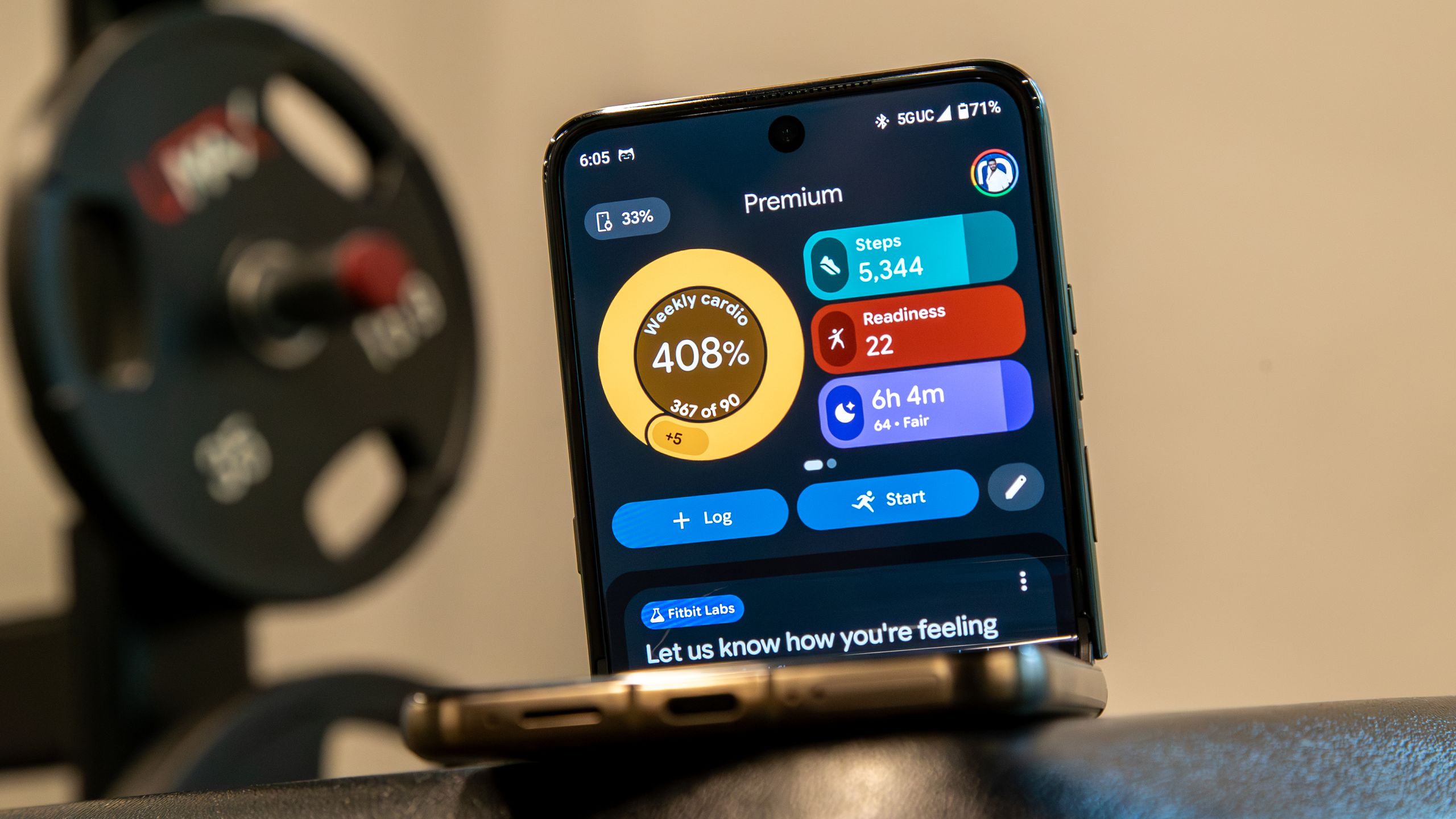
I actually don’t hate the new Google Health app, but it could still use some work. Here are my highlights after testing the revamped Fitbit app, and how I think Google can improve


The revamped Google Health app (formerly Fitbit) has landed alongside the new Fitbit Air, and while not everyone is happy with the changes, my experience has been pretty positive.

I’ve been using the new UI for six months, staring with the Health Coach preview launches toward the end of 2025, and while the upgrade to Google Health has brought in some useful changes and features, there are still some improvements I would like to see. These are my biggest highlights after spending some time with the new Google Health app.

A welcome redesign and AI overload

The Google Health app focus metrics

(Image credit: Derrek Lee / Android Central)

I should start by saying that, unlike some long-time Fitbit users, I was not married to the old Fitbit app design, which I found dull and uninteresting.

Latest Videos From

Everyone Has Their Targets Set on the MacBook Neo


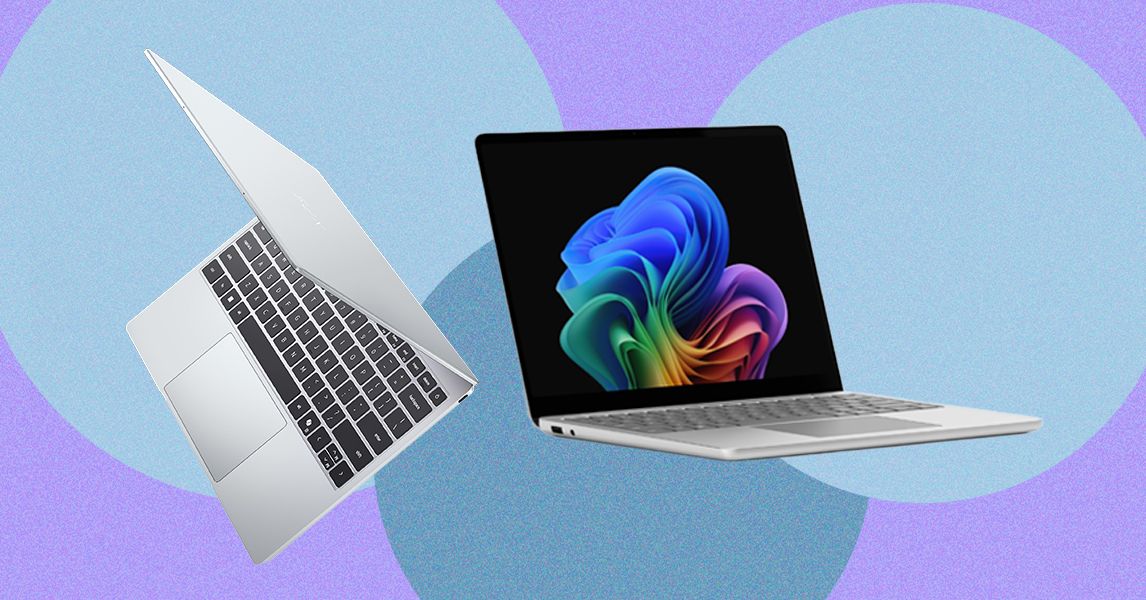
Yet it’s only $699 (or $599 for students). The XPS 13 makes similar trade-offs as the MacBook Neo. First, it starts with only 8 GB of RAM and 256 GB of storage. It also starts with a slower Intel Core 5 processor (note: not Intel Core Ultra). I’ll be interested to find how the performance and battery life stack up against the MacBook Neo, but Dell is clearly taking notes from Apple, which used a slower iPhone chip in the Neo instead of an M-series laptop-grade processor.

What’s nice about the Dell XPS 13, though, is that you can scale it up appropriately. The MacBook Neo is capped in both storage and memory, but the XPS 13 can be configured up to 32 GB of RAM and 1 TB of storage.

I’ve been testing a lot of $500 to $600 laptops recently from companies like Acer, Lenovo, and HP, many of which take a more conventional Windows approach to rivaling the MacBook Neo by offering better specs at lower prices. They all have 16 GB of RAM and use more powerful chips, too. But none challenge the MacBook Neo in display quality and chassis materials. That doesn’t mean there isn’t a place for something like the HP OmniBook 3, but it doesn’t play for the same audience as the Dell XPS 13 and MacBook Neo.

The Wrong Direction

Inevitably there would be a company that thinks it can ride on the success of the MacBook Neo without understanding what makes it tick. Last week, Microsoft announced two versions of its Surface Laptop for Business PCs: a higher-end 13.8-inch model and a cheaper 13-inch device. The 13.8-inch model is a more standard refresh, implementing Intel’s new Core Ultra X7 368H Panther Lake chip—and most notably, it still starts with 16 GB of RAM.

The smaller 13-inch model is where things get problematic. Despite its starting price of $1,200, that configuration only comes with 8 GB of RAM. Don’t get too caught up in the price, since business PCs always come with an up charge. The starting RAM is the eyebrow-raising spec. Unlike the new Dell XPS 13, Microsoft isn’t tricking this out with a thinner chassis and an upgraded screen—it’s just giving you less computing power and calling it good.

And to be fair, this “optional” 8 GB model is coming later this year, separate from the 16 GB and 24 GB versions. But it’s hard to imagine Microsoft being willing to sell an 8 GB laptop in 2026 if Apple hadn’t paved the way. While there’s no 2025 Surface Laptop 13 for Business for direct comparison, the consumer version of the Surface Laptop 13 started with 16 GB of RAM. This feels like a straight generational downgrade.

Image may contain Computer Electronics Laptop Pc Computer Hardware Computer Keyboard and Hardware

Microsoft Surface Laptop for Business, 13-inch.

Wish of Witch Free Download (V23457099)


STARDUST Wish of Witch Preinstalled Worldofpcgames

STARDUST: Wish of Witch Direct Download:

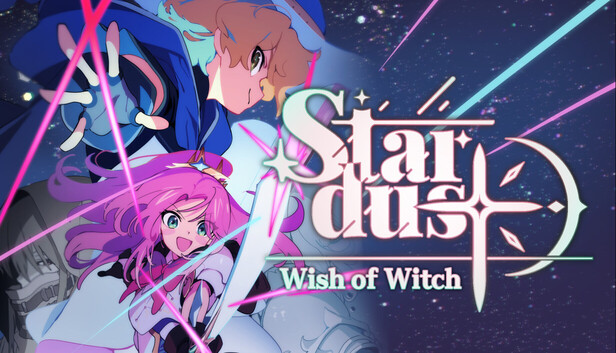
STARDUST: Wish of Witch is a single-player SRPG beautifully crafted in pixel art. Follow the secret of the wish-granting star and join the adventure of the girl “Star” and the mage “Yu”.

STARDUST: Wish of Witch is a turn-based single-player pixel SRPG that reimagines the charm of classic strategy RPGs for the modern era. Players traverse battlefields in an adventure centered on stars and fate, growing alongside characters with distinct personalities and stories. A delicately breathing pixel world combined with dramatic presentation delivers a sweeping fantasy journey.

A World of Adventure and the Star That Grants Wishes
The secrets bound to the stars, the journey of a boy and a girl—and a story of growth along the way.

The tomboyish warrior “Star” and her childhood friend, the mage “Yu”, set out on an adventure!

What awaits them at the end of the road?

Vivid Pixel Life Brought to the Screen

Full sprite animations paired with cinematic direction Starvester

create a deep sense of immersion, as if you were adventuring in a living world.

Strategic Depth That Carries on the SRPG Tradition

Building on the fundamentals of turn-based tactics, a card system expands combat depth and variables even further.

Experience refined strategy that both SRPG veterans and newcomers can enjoy.

Thrilling Turn-Based Battles Forged by Counters and Combos

Read your opponent’s moves and turn the tide with counters and combos.

Every decision can decide victory or defeat—tense moments await.

Features and System Requirements:

One of the best games of the decade joins Chained Echoes and over 16 other JRPG love letters in this upcoming crossover


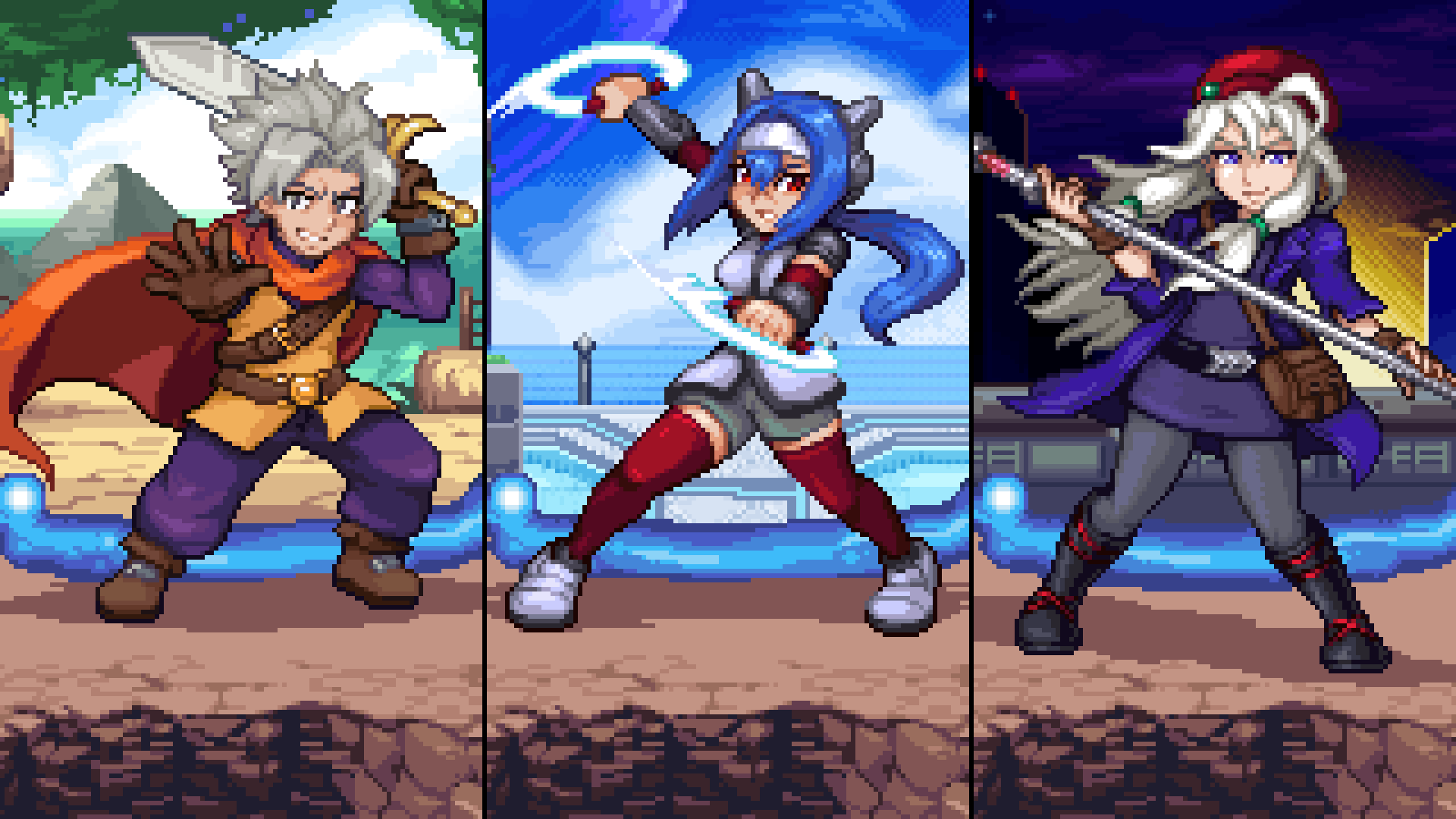
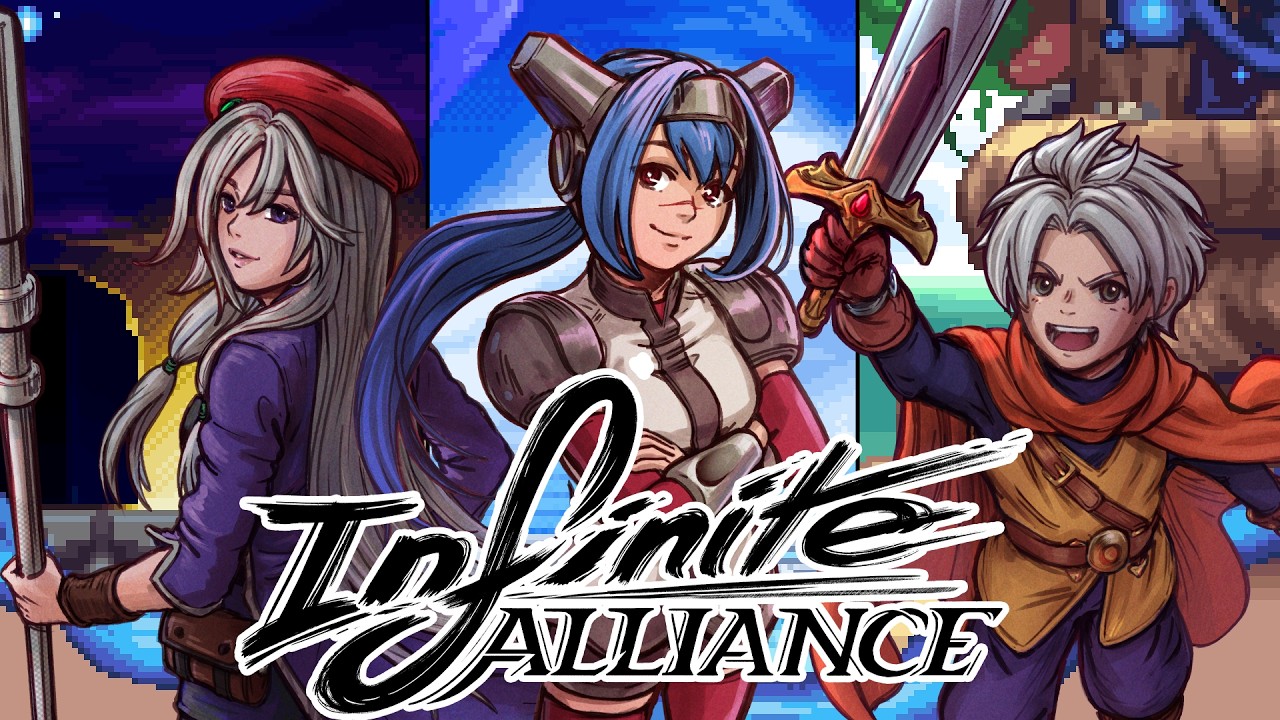
Infinite Alliance was already shaping up to be an unmissable crossover event for fans of JRPG-inspired games and it’s now become even more of an exciting proposition thanks to the inclusion of CrossCode, one of the best RPGs – or perhaps even one of the best games, period – of the decade.

For those out of the loop, Infinite Alliance is an upcoming free turn-based game that’s bashing together heroes and villains from a bunch of JRPG love letters. Genre favorites like Chained Echoes and Kingdom of the Dump were already part of the line-up alongside more under-the-radar gems, but publisher Electric Airship recently announced that CrossCode, Cosmic Star Heroine, and Seed of Nostalgia will also be included.

CrossCode, Seed of Nostalgia, & Cosmic Star Heroine join Infinite Alliance! (OFFICIAL TRAILER) – YouTube
CrossCode, Seed of Nostalgia, & Cosmic Star Heroine join Infinite Alliance! (OFFICIAL TRAILER) - YouTube


Watch On

The ‘Minecraft’ Movie Sequel Gets a New Name and First Look


Say hello to the second Minecraft film—or as it’s now known, A Minecraft Movie Squared. 

The new name was unveiled during the Minecraft Live event, which didn’t just stop at the official name. Production’s already underway in New Zealand, so director Jared Hess and the returning adult cast got on camera to hype up the sequel. Along with Kirsten Dunst as Alex—the female character option in the game—the next big new get is Matt Berry. While he voiced a Nitwit in the first movie, he’s a flesh-and-blood person in the sequel. The Fallout star didn’t say who he’ll be, but his outfit looks similar to Steve’s, leading fans to believe he’ll play an evil counterpart. (Possibly Herobrine, an urban legend amongst the game’s community.)

When the original A Minecraft Movie hit theaters last year, it became a tiny phenomenon. It made nearly a billion dollars and Jack Black’s “chicken jockey” line was such a moment (and briefly involved actual chickens) that he had to tell younger theatregoers to behave more properly. This new movie’s probably going to be even bigger, especially since there’s an in-game build challenge attached to it that could see the best player-made creation get featured in Squared’s end credits.

You can learn the details of that challenge here, while everyone else can expect A Minecraft Movie Squared to hit theaters on July 23, 2027.

Want more io9 news? Check out when to expect the latest Marvel, Star Wars, and Star Trek releases, what’s next for the DC Universe on film and TV, and everything you need to know about the future of Doctor Who.

There’s one game Don’t Nod narrative designer Nina Freeman won’t ever uninstall from her PC, because it’s banned on Steam: ‘It’s tragic, because everyone should play this game’


Disk Cleanup

Welcome to Disk Cleanup, our regular weekend feature delving into the PCs of PC gaming luminaries. Come back every weekend to read a new interview, digging into the important questions, like “How tidy is your desktop?” and “What game will you never uninstall?”

Publishers of the ’90s loved a boxed video game collection, which is why Nina Freeman’s earliest PC gaming memory is playing Rodent’s Revenge. Released in 1991 as part of Microsoft Entertainment Pack 2 Rodent’s Revenge was about a mouse pushing blocks around to trap cats. “I didn’t have a computer until I was 10, so I think I played this on my friend’s computer, or at school or the library,” says Freeman, a freelance game developer who has worked with developers like Fullbright and Don’t Nod Montreal. “I don’t remember how it works, but I remember playing it … it was sort of like a puzzle horror game, if you will.”

Freeman gained prominence in the games industry for her autobiographical video games such as Cibele and Last Call, exploring subjects like relationships and sexuality. She has also worked as a level designer on the first-person narrative adventures Tacoma and Open Roads, and was a writer and principal narrative designer on Lost Records: Bloom & Rage. Freeman is currently working on a new, unannounced project with Don’t Nod, as well as on an indie horror game called Size Zero with her husband and fellow game designer Jake Jeffries. “Progress is slow as a snail, but technically I have that on the back burner,” she says.