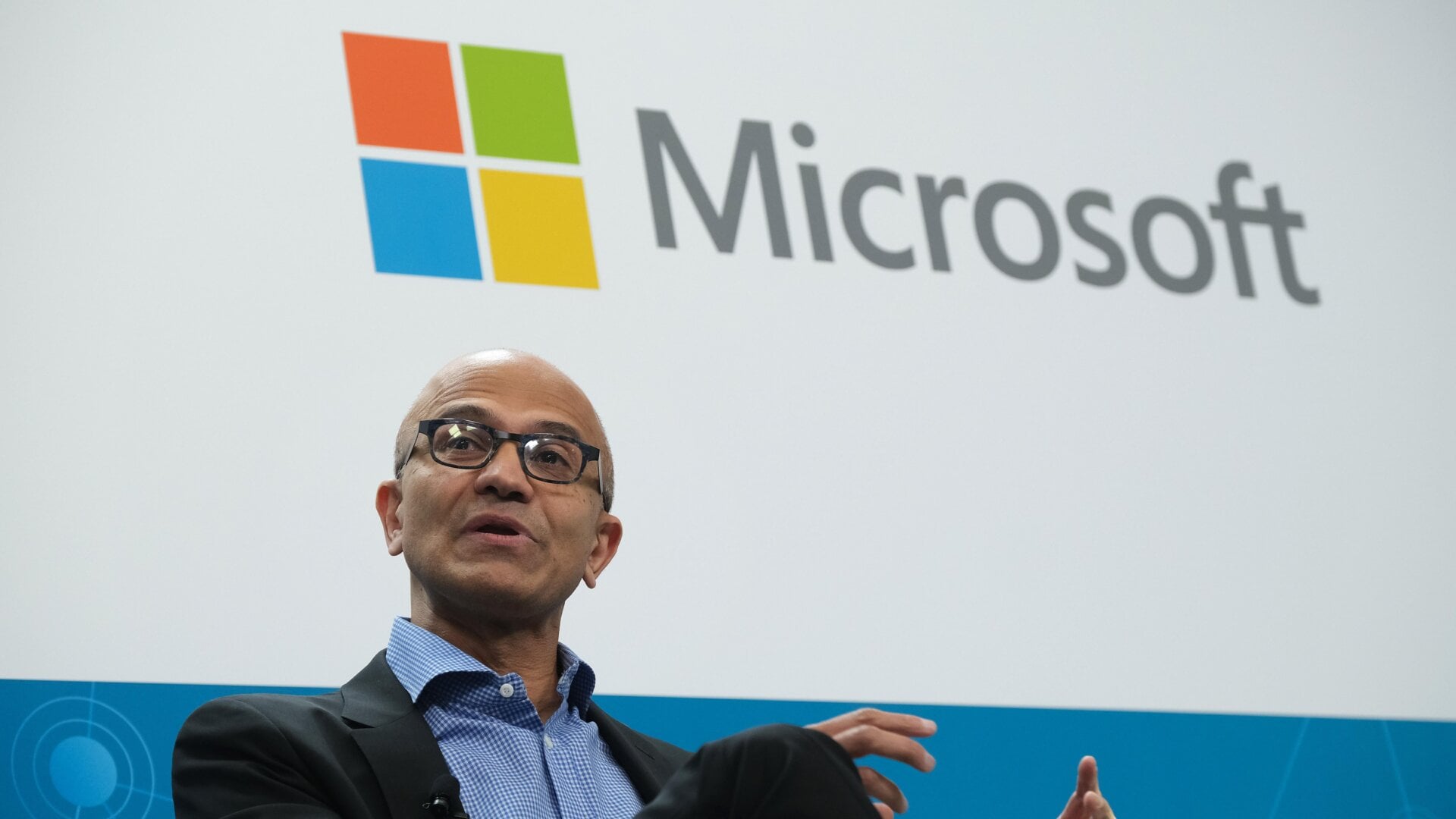
Two more news organizations are suing OpenAI and Microsoft over the supposed use of their journalism to train AI.
A lawsuit filed by The Seattle Times and Newsday argued that with the advent of AI, the journalism industry could become “broken beyond repair.” The lawsuit described generative AI as “a snake eating its own tail” that could “destroy the very organizations” that produce the content it’s trained on.
“AI products like ChatGPT and CoPilot are touted as producers of content, but in fact they are rapacious consumers, devouring human-authored content and delivering back to the world copies and derivative imitations of that same original content they consumed to achieve their commercial objectives,” the lawsuit said.
Back in 2023, The New York Times sued OpenAI and its partner/investor Microsoft over alleged copyright infringement; other publications have followed suit as the case continued. The Seattle Times’ lawsuit is particularly notable because Microsoft and OpenAI have funded some of the organization’s journalism projects and fellowships.
A Microsoft spokesperson told GeekWire that the company is “surprised by the lawsuit” but is “always happy to sit down and explore solutions to this type of dispute.”
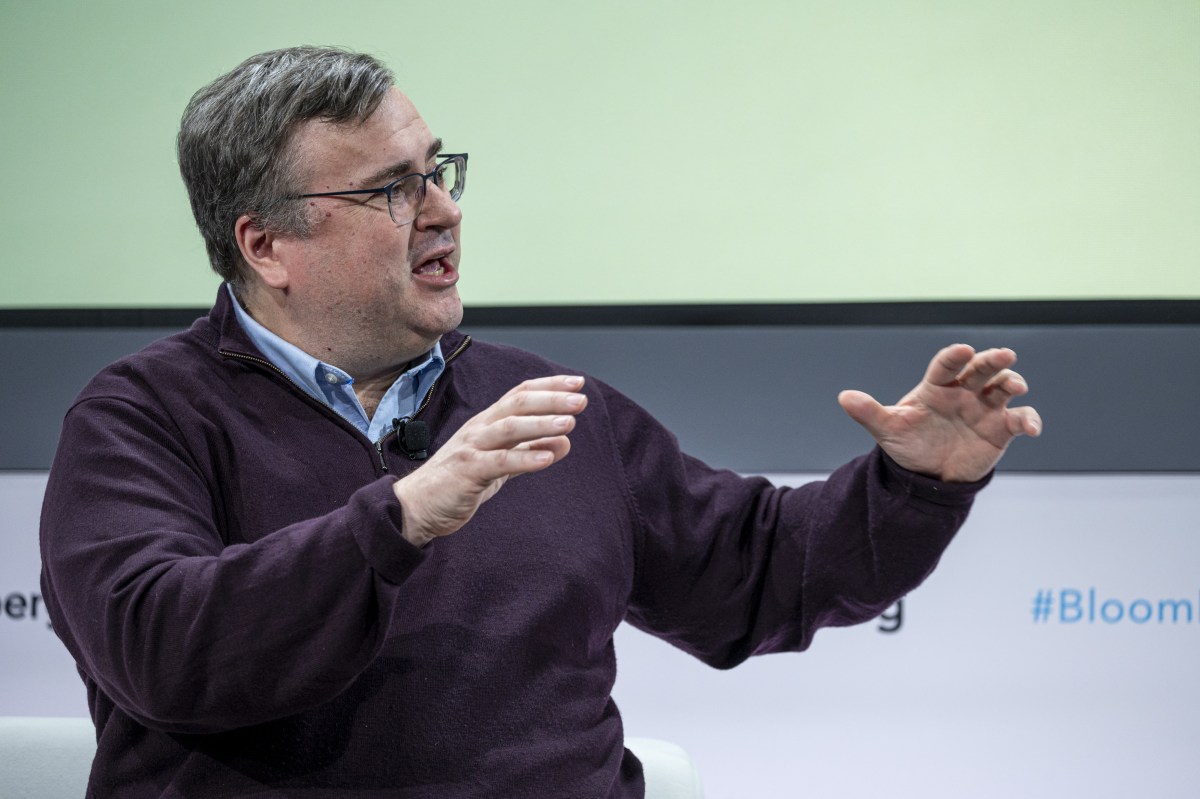
Hoffman was on Microsoft’s board when it invested its first $1 billion into OpenAI in 2019. Hoffman was one of OpenAI’s original investors and served on the model maker’s board until he stepped down in 2023, citing too many potential conflicts of interest to continue. He was also on Microsoft’s board when the tech giant entered into one of those non-acquisition, acqui-hire deals for $650 million with his AI startup Inflection AI. Microsoft hired Inflection co-founder Mustafa Suleyman through that deal.
Hoffman said on a recent episode of his “Possible” podcast, while talking with Microsoft CEO Satya Nadella, that he’s ready to go “founder mode” with his latest AI startup, Manus. Manus is a drug discovery company that raised over $50 million through a couple of seed rounds last year. Hoffman is an investor, as is General Catalyst.
Hoffman is cited as a co-founder of Manus and chairman of the board, not the CEO, though. That job belongs to Dr. Siddhartha Mukherjee, a physician, biologist, and Pulitzer Prize-winning author of the 2011 book “The Emperor of All Maladies: A Biography of Cancer.”
Still, Hoffman said he’s excited to give Manus more attention.
“One of the things I realized over the last month was that, we’re seeing such progress with Manus. I need to get back to founder mode,” he said. He believes the startup is making progress on “Move 37” AI, meaning AI that supersedes human creativity in chemistry, especially to combat various cancers, he added.
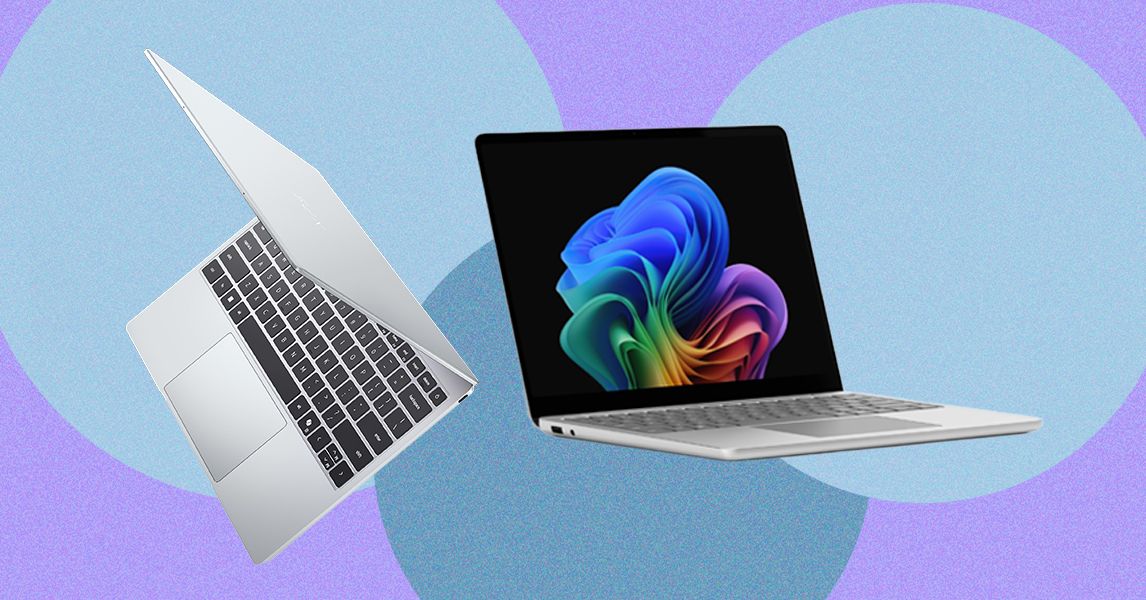
Yet it’s only $699 (or $599 for students). The XPS 13 makes similar trade-offs as the MacBook Neo. First, it starts with only 8 GB of RAM and 256 GB of storage. It also starts with a slower Intel Core 5 processor (note: not Intel Core Ultra). I’ll be interested to find how the performance and battery life stack up against the MacBook Neo, but Dell is clearly taking notes from Apple, which used a slower iPhone chip in the Neo instead of an M-series laptop-grade processor.
What’s nice about the Dell XPS 13, though, is that you can scale it up appropriately. The MacBook Neo is capped in both storage and memory, but the XPS 13 can be configured up to 32 GB of RAM and 1 TB of storage.
I’ve been testing a lot of $500 to $600 laptops recently from companies like Acer, Lenovo, and HP, many of which take a more conventional Windows approach to rivaling the MacBook Neo by offering better specs at lower prices. They all have 16 GB of RAM and use more powerful chips, too. But none challenge the MacBook Neo in display quality and chassis materials. That doesn’t mean there isn’t a place for something like the HP OmniBook 3, but it doesn’t play for the same audience as the Dell XPS 13 and MacBook Neo.
The Wrong Direction
Inevitably there would be a company that thinks it can ride on the success of the MacBook Neo without understanding what makes it tick. Last week, Microsoft announced two versions of its Surface Laptop for Business PCs: a higher-end 13.8-inch model and a cheaper 13-inch device. The 13.8-inch model is a more standard refresh, implementing Intel’s new Core Ultra X7 368H Panther Lake chip—and most notably, it still starts with 16 GB of RAM.
The smaller 13-inch model is where things get problematic. Despite its starting price of $1,200, that configuration only comes with 8 GB of RAM. Don’t get too caught up in the price, since business PCs always come with an up charge. The starting RAM is the eyebrow-raising spec. Unlike the new Dell XPS 13, Microsoft isn’t tricking this out with a thinner chassis and an upgraded screen—it’s just giving you less computing power and calling it good.
And to be fair, this “optional” 8 GB model is coming later this year, separate from the 16 GB and 24 GB versions. But it’s hard to imagine Microsoft being willing to sell an 8 GB laptop in 2026 if Apple hadn’t paved the way. While there’s no 2025 Surface Laptop 13 for Business for direct comparison, the consumer version of the Surface Laptop 13 started with 16 GB of RAM. This feels like a straight generational downgrade.
As tensions between President Donald Trump and Europe continue to simmer, the continent is accelerating its moves to reduce its addiction to US technology. Cities and governments are ditching Microsoft Office for open-source alternatives, shifting to European cloud hosting for local AI, and moving defense data to systems without American involvement. Nowhere has this been more clear than in France.
Over the last few months, the French government has sped up its efforts to develop and deploy its own technology for government officials. The country has, arguably, emerged at the head of Europe’s growing digital sovereignty push, which aims to cut some reliance on US-based technology over concerns around data security, the Trump administration’s unpredictability, and changing prices. French budget minister David Amiel recently called for the state to “break free” from American systems and use those it can control.
“We are not just explaining what we want to do,” Stéphanie Schaer, the head of DINUM, France’s digital transformation ministry, tells WIRED over a call on the nation’s video-calling platform Visio. “We already did it in a few matters.” So far, more than 40,000 French government staff have started using the home-grown video platform, while the rest will move away from Zoom, Microsoft Teams, and others by 2027. “We are confident enough to use it every day and we are not dependent on just one actor that will tell us you have to use my video conference,” Schaer says.
Across France’s central government agencies and vast civil service, officials plan to shift to as many French, European, and open source technology alternatives as possible in the coming years. Schaer says it is important for the French government to be in control of the technology that it is using, with data being stored locally in the country, not abroad.
As part of this, DINUM has been developing a set of productivity tools, collectively called “LaSuite,” since at least 2023. As well as Visio, it includes instant messaging app Tchap, Messagerie instead of Gmail or Outlook, Fichiers for documents and file sharing, plus text editing software Docs, and Grist for spreadsheets. Some of the software is still in beta and has not been fully rolled out to French officials yet. However, Tchap already has 420,000 active users, Schaer says, with 20,000 civil servants adopting it each month.
“We are based on open source software. So we don’t develop all the code,” Schaer says. There are public plans for newfeatures, although code is published on Microsoft-owned Github. All data handled by the alternatives has to be processed in France and stored with providers who have approval from the country’s cybersecurity agency ANSSI. Earlier this month, the Dutch government moved its open-source code off of GitHub and onto a Forgejo instance hosted on government-owned servers.
While open source is key, the French government is also working with other countries and private firms on the development of its tools. “We can reuse what has been developed by the community and we contribute to this community,” Schaer says. For instance, Visio, which can host calls of up to 150 people and has AI transcription of calls, is built on technology from French firms Outscale and Pyannote.
While Schaer’s department is aiming to lead by example, all of France’s central government agencies have to come up with plans to move away from US tech—across office software, antivirus, AI, databases, and more—by this fall. On April 23, French officials also announced the country will move its health data platform away from Microsoft to local cloud provider Scaleway, after a years-long decision process.
Microsoft is planning to get rid of more US employees via its first voluntary buyout program, CNBC reports. The buyout program will reportedly be offered to US employees at “the senior director level and below whose years of employment and age add up to 70 or higher,” and could cover up to 7 percent of the company’s US workforce.
With around 125,000 employees in the US as of June 2025, that could mean up to 8,750 will be offered a paid exit when Microsoft begins its program in May. That’s a smaller figure than the 15,000 or so employees the company laid off in May and July of 2025, but still significant, particularly if the majority of employees do take the buyout.
“Our hope is that this program gives those eligible the choice to take that next step on their own terms, with generous company support,” Microsoft’s executive vice president and chief people officer Amy Coleman shared in a memo viewed by CNBC.
Engadget has contacted Microsoft to confirm the existence of the voluntary buyout program and other details CNBC reported. We’ll update this article if we hear back.
Microsoft used its 2025 layoffs to streamline layers of management and its video game business, but these new cuts may have a lot more to do with AI. Not necessarily because the company’s adoption of AI tools has made employees redundant, but rather because Microsoft continues to aggressively spend on AI infrastructure. The company said it spent $37.5 billion in capital expenditures during Q2 2026, much of which went toward data center buildout.
If there’s one thing the gaming industry loves more than hype cycles, it’s a good ol’ value shake-up. And right now, Xbox Game Pass is right in the middle of one. Microsoft has officially cut prices across Game Pass tiers, making the service easier on the wallet at a time when subscription fatigue is very, very real. But, as always, there’s a twist. And it’s a big one.
The price drop that comes with a twist
Let’s get the numbers out of the way first, because they’re genuinely compelling. Xbox Game Pass Ultimate has dropped from $29.99 to $22.99 per month, while PC Game Pass now costs $13.99 instead of $16.49. That’s not pocket change. Over a year, that’s a noticeable saving, especially for players juggling multiple subscriptions.
Game Pass Ultimate has become too expensive for too many players. Starting today, we’re dropping the price from $29.99 to $22.99/month. Future Call of Duty titles will no longer join Game Pass Ultimate on day one. They will join this tier the following holiday after launch (about…
But here’s the catch. New entries from Call of Duty are no longer launching day one on the service. Instead, they’ll arrive much later, roughly a year after release. Just to be clear, older Call of Duty titles aren’t going anywhere, so the back catalog remains intact. What’s gone is the instant access to one of gaming’s biggest annual releases, which, let’s be honest, was a huge part of Game Pass’s flex.
The community is… conflicted
The reaction? Exactly as chaotic as expected. There’s a sizable chunk of genuinely relieved players. You see, not everyone subscribes to Game Pass for Call of Duty, and for those users, this feels like getting a discount without losing anything meaningful. If COD wasn’t part of the weekly rotation anyway, the lower price is a straight-up win.
Then there’s the other side. For a lot of players, Game Pass built its reputation on the idea of “pay once, play everything day one.” Losing a flagship franchise from that promise feels like a crack in the foundation. It’s not just about Call of Duty; it’s about what this could mean going forward.
Microsoft just lowered Game Pass prices while quietly removing Call of Duty Day One launches.
They’re charging you less for a worse product and calling it ‘a response to feedback’.
And then comes the third wave of takes, arguably the most interesting. Some fans are now asking if Microsoft should go even further and start trimming other bundled perks like EA Play or Fortnite Crew to reduce prices even more.
The thinking is simple. If removing one expensive piece lowers the cost, why not customize the whole thing?
Why Microsoft drew the line here
Here’s where the conversation shifts from emotional to practical. Call of Duty isn’t just another title in a catalog. It’s a yearly blockbuster with a massive, loyal player base that often buys the game regardless of subscriptions. That creates a strange value mismatch. Either players were going to pay for it anyway, or they didn’t care about it much in the first place.
Xbox gave up more than $300 million in sales of Call of Duty on consoles and PCs last year – Bloomberg
From Microsoft’s perspective, that makes it an incredibly expensive inclusion with limited upside. Worse, it likely eats into direct sales, turning what should be a revenue driver into a cost center. And while some fans are calling for more cuts, like removing EA Play, it’s not so simple. Game Pass thrives on being an all-in-one ecosystem. Start unbundling too much, and it risks turning into a fragmented, pick-and-pay service that loses its identity.
With Microsoft even exploring bundling services like Netflix into Game Pass, stripping away more perks would start to chip away at its whole “all-in-one” appeal. At that point, it’s not a powerhouse bundle anymore; it’s just a menu with items missing.
The End of “Too Good to Be True”?
For years, Xbox Game Pass felt like a cheat code. Day-one AAA games, a massive library, and a price that almost didn’t make sense. But eventually, reality caught up. Keeping a giant like Call of Duty in that mix from day one was always going to be expensive, and more importantly, unsustainable.
Microsoft
And honestly, this change feels like Microsoft finally admitting that. Instead of hiking prices even further, they’ve trimmed one of the costliest perks and made the service more accessible again. It’s not perfect, and sure, some fans will miss the old days, but this feels less like a downgrade and more like a smart reset. Not as flashy, but a lot more built to last.
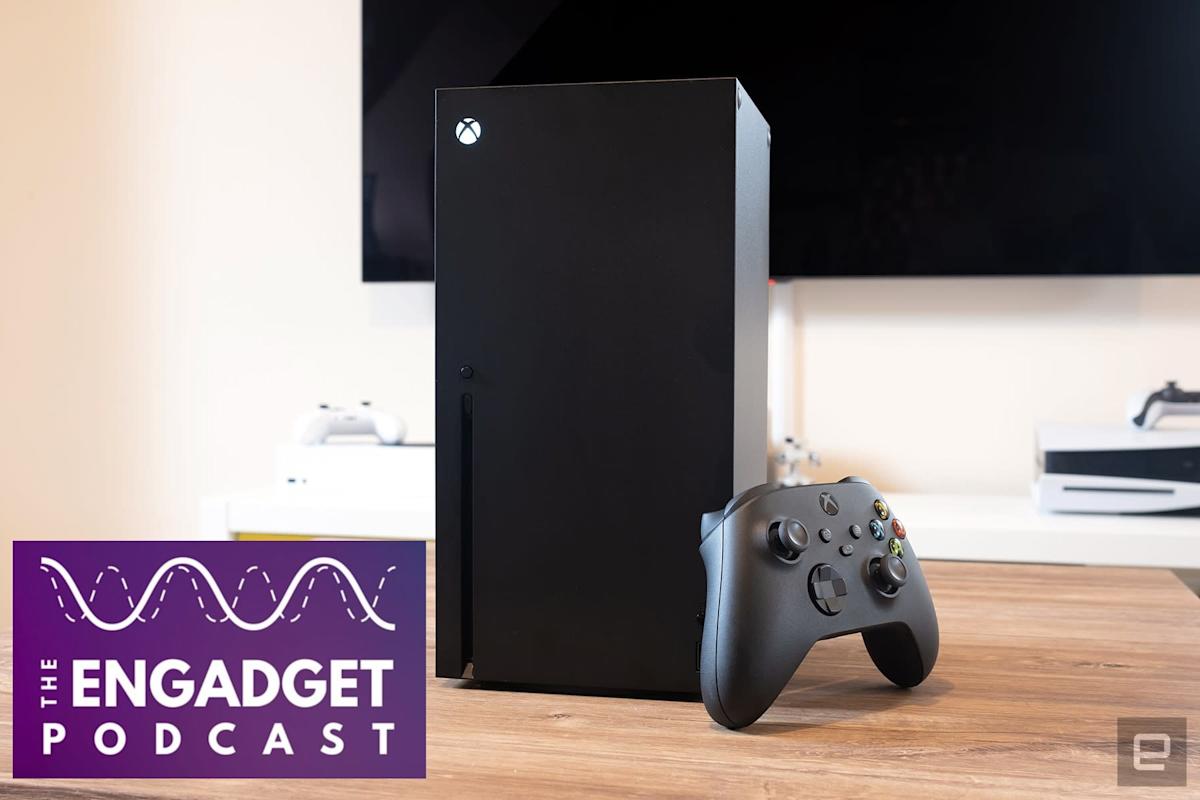
This week, we’re diving into the big changes at Xbox and what it all means for Microsoft’s gaming future. Phil Spencer, the longtime face of Xbox, announced he’s retiring last week. He’ll be replaced by Microsoft’s former CoreAI CEO Asha Sharma, instead of his longtime deputy Sarah Bond, who plans to leave the company. Will this change actually help the beleaguered Xbox division, or is it another example of Microsoft shoving AI into everything?
Also, Samsung held its latest Unpacked event this week to announce its new Galaxy S26 family. They look pretty much the same as last year, but the Ultra model includes a unique privacy feature that can instantly make the screen unreadable to bystanders. It’s one of those features we expect to see in every phone eventually.
Subscribe!
Topic
Xbox leadership falls apart. what happens next with Phil Spencer and Sarah Bond out? – 1:53
Samsung Unpacked: Privacy display on the S26 Ultra looks amazing – 27:27
U.S. Defense leadership gives Anthropic a Friday deadline to let it use Claude as it sees fit – 42:38
MrBeast editor accused of insider trading on Kalshi – 50:40
Discord delays age verification program after user revolt – 54:09
Around Engadget – 1:04:04
Pop culture picks – 1:08:21
Credits
Hosts: Devindra Hardawar and Igor Bonifacic Producer: Ben Ellman Music: Dale North and Terrence O’Brien
It has been nearly two years since Microsoft CEO Satya Nadella predicted that generative AI would take over knowledge work, but if you look around a typical law firm or investment bank today, the human workforce is still very much in charge. Despite all the hype about “reasoning” and “planning,” a new study from training-data company Mercor explains exactly why the robot revolution is stalled: AI just can’t handle the messiness of real work.
A reality check for the “replacement” theory
Mercor released a new benchmark called APEX-Agents, and it is brutal. unlike the usual tests that ask AI to write a poem or solve a math problem, this one uses actual queries from lawyers, consultants, and bankers. It asks the models to do complete, multi-step tasks that require jumping between different types of information.
The results? Even the absolute best models on the market—we are talking about Gemini 3 Flash and GPT-5.2—couldn’t crack a 25% accuracy rate. Gemini led the pack at 24%, with GPT-5.2 right behind it at 23%. Most others were stuck in the teens.
Why AI is failing the “office test”
Mercor CEO Brendan Foody points out that the issue isn’t raw intelligence; it’s context. In the real world, answers aren’t served up on a silver platter. A lawyer has to check a Slack thread, read a PDF policy, look at a spreadsheet, and then synthesize all that to answer a question about GDPR compliance.
Humans do this context-switching naturally. AI, it turns out, is terrible at it. When you force these models to hunt for information across “scattered” sources, they either get confused, give the wrong answer, or just give up entirely.
The “Unreliable Intern”
For anyone worried about their job security, this is a bit of a relief. The study suggests that right now, AI functions less like a seasoned professional and more like an unreliable intern who gets things right about a quarter of the time.
That said, the progress is terrifyingly fast. Foody noted that just a year ago, these models were scoring between 5% and 10%. Now they are hitting 24%. So, while they aren’t ready to take the wheel yet, they are learning to drive much faster than we expected. For now, though, the “knowledge work” revolution is on hold until the bots learn how to multitask p
Way back in March of 2019, this weird thing happened where a relatively insignificant tech nonprofit called OpenAI became a “capped” for-profit company—whatever that is. The month earlier, OpenAI had announced the creation of an uncanny, über-powerful language model called GPT-2 that was supposedly just too dangerous to release. Then in November, OpenAI seemingly changed its mind and GPT-2 was released after all.
OpenAI said in the blog post about the release that it saw, “no strong evidence of misuse so far,” but added that it was impossible to “be aware of all threats.” Most people never used GPT-2, because OpenAI never injected it into a viral chatbot.
As someone who wrote about this at the time, it was puzzling to watch it all play out. OpenAI seemed like small potatoes, but it was also building creepy AI tech, and shifting in public image from being a do-gooder computer lab advertising its trepidation about harming a hair on anyone’s head to an enterprise that needed to ship something asap because it was clearly promising someone, somewhere, that they were going to get rich.
Document discovery from Elon Musk’s lawsuit against OpenAI and Microsoft has provided a tiny window into what was actually happening inside Microsoft during this bizarre time for this bizarre company, and how the transition may have turned OpenAI into the money-hungry beast it is today, with revenues growing tenfold between 2023 and 2025.
GeekWire’s Todd Bishop dug through the cache of emails, memos, texts and the like from Microsoft and OpenAI, and what he found was revealing. Microsoft, and CEO Satya Nadella in particular, had invested heavily in OpenAI by then, and were not quiet during OpenAI’s uneasy transition to for-profit status. Nor were they shy about the need to make money as soon as possible. Absolutely none of this should come as a surprise, but it makes for fascinating reading anyway.
During that gap where GPT-2 was sitting there unreleased and OpenAI had recently become a capped nonprofit, Microsoft’s chief financial officer, Amy Hood, weighed in about the company’s concerns about that “capped” part. She wrote in a July 14 email to a group including Nadella, “Given the cap is actually larger than 90% of public companies, I am not sure it is terribly constraining nor terribly altruistic but that is Sam’s call on his cap.”
GPT-3, which was even more exciting than GPT-2 was released in 2020, and the first version of OpenAI’s language model, Dall-E was released in January 2021. The next month, Microsoft and OpenAI were negotiating an additional injection of money from Microsoft, and Sam Altman wrote an email to Microsoft, saying “We want to do everything we can to make you all commercially successful and are happy to move significantly from the term sheet,” and he added that he wanted “to make you all a bunch of money as quickly as we can and for you to be enthusiastic about making this additional investment soon.”
In November of 2022, ChatGPT was released, and as you know, all hell broke loose. In January of 2023, Nadella sent a text message to Altman, saying “when do you think you will activate your paid subscription for ChatGPT?”
Altman said he was “hoping to be ready by end of jan, but we can be flexible beyond that. the only real reason for rushing it is we are just so out of capacity and delivering a bad user experience,” and asked “any preference on when we do it?”
“Let me think about it and weigh in. Overall getting this in place sooner is best,” Nadella replied. Two weeks later, he followed up and asked “how many subs have you guys added to ChatGPT?”
Three days later, the paid version of ChatGPT launched.
It’s been quite the year for CoreWeave. In March, the AI cloud infrastructure provider went public in one of the biggest and most anticipated IPOs of the year that didn’t live up to its hype.
Another setback took place in October, when a planned acquisition of the cloud provider’s business partner, Core Scientific, faltered due to skepticism from the acquisition target’s shareholders.
In the meantime, the firm has acquired a number of different companies, its stock has gone up and down, and it’s been both criticized and lauded for its role in the booming AI data center market.
In an interview at the Fortune Brainstorm AI summit in San Francisco on Tuesday, CoreWeave’s co-founder and CEO, Michael Intrator, defended his company’s performance from critics, noting that it was in the midst of creating a “new business model” for how cloud computing can be built and run. Their collection of Nvidia GPUs is so valuable, they borrow against it to help finance their business. The executive seemed to imply: If you’re charting a new path, you’re destined to encounter some road bumps along the way.
“I think people are myopic a lot of times,” Intrator said when questioned about his company’s occasionally unstable stock price. “Yes, it is seesawing,” he admitted, while noting that the CoreWeave IPO took place not long before President Trump’s tariffs went into effect — a notably uncertain moment for the overall economy.
“We came out into one of the most challenging environments, right around Liberation Day and, in spite of the incredible headwinds, were able to launch a successful IPO,” the CEO told Brainstorm editorial director Andrew Nusca. “I couldn’t be prouder of what the company has accomplished,” he added.
CoreWeave’s stock may have debuted amid the economic doldrums of March but its price has gone on quite the journey since then. It debuted at $40 and, over the past eight months, has climbed to well over $150, but currently rests at around $90. Its more wary critics have compared it to a meme stock due to its penchant for going up and down.
Techcrunch event
San Francisco | October 13-15, 2026
Some of the uncertainty around CoreWeave’s stock has been credited to the company’s hefty level of debt. Not long after CoreWeave announced a deal on Monday to issue even more debt to finance its data center buildout, its stock dropped some 8%.
Intrator seems to see his company as a disruptor, one whose unconventional tactics may take some getting used to. “When you introduce a new model, when you introduce a new way of doing business, when you disrupt what has been a static environment, it’s going to take some people some time,” he said during his appearance Tuesday.
CoreWeave actually started its corporate life as a crypto miner but in short order built itself into a pivotal provider of “AI infrastructure” to some of the tech industry’s most major players. In that role, it provides GPUs to AI developers and has made major partnerships with Microsoft, OpenAI, Nvidia, Meta, and other tech titans.
Another topic broached Tuesday was the notion of “circularity” within the AI industry. “Circular” business deals, in which a small number of powerful AI companies invest in one another, have frequently been criticized and have raised questions about the industry’s long-term economic stability. Perhaps not surprisingly, since Nvidia is one of its investors and its supplier of GPUs, Intrator swatted away such concerns. “Companies are trying to address a violent change in supply and demand,” he said. “You do that by working together.”
Since the IPO, CoreWeave has continued to make efforts to expand its business. After it acquired Weights & Biases, an AI developer platform, in March, it went on to acquire OpenPipe, a startup that helps companies create and deploy AI agents through reinforcement learning. In October, it also made deals to acquire Marimo (the creator of an open source notebook) and Monolith, another AI company. It also recently announced an expansion of its cloud partnership with OpenAI and said it has plans to move into the federal market, where it wants to provide cloud infrastructure to U.S. government agencies and the defense industrial base.