Iran-Linked Hackers Are Sabotaging US Energy and Water Infrastructure


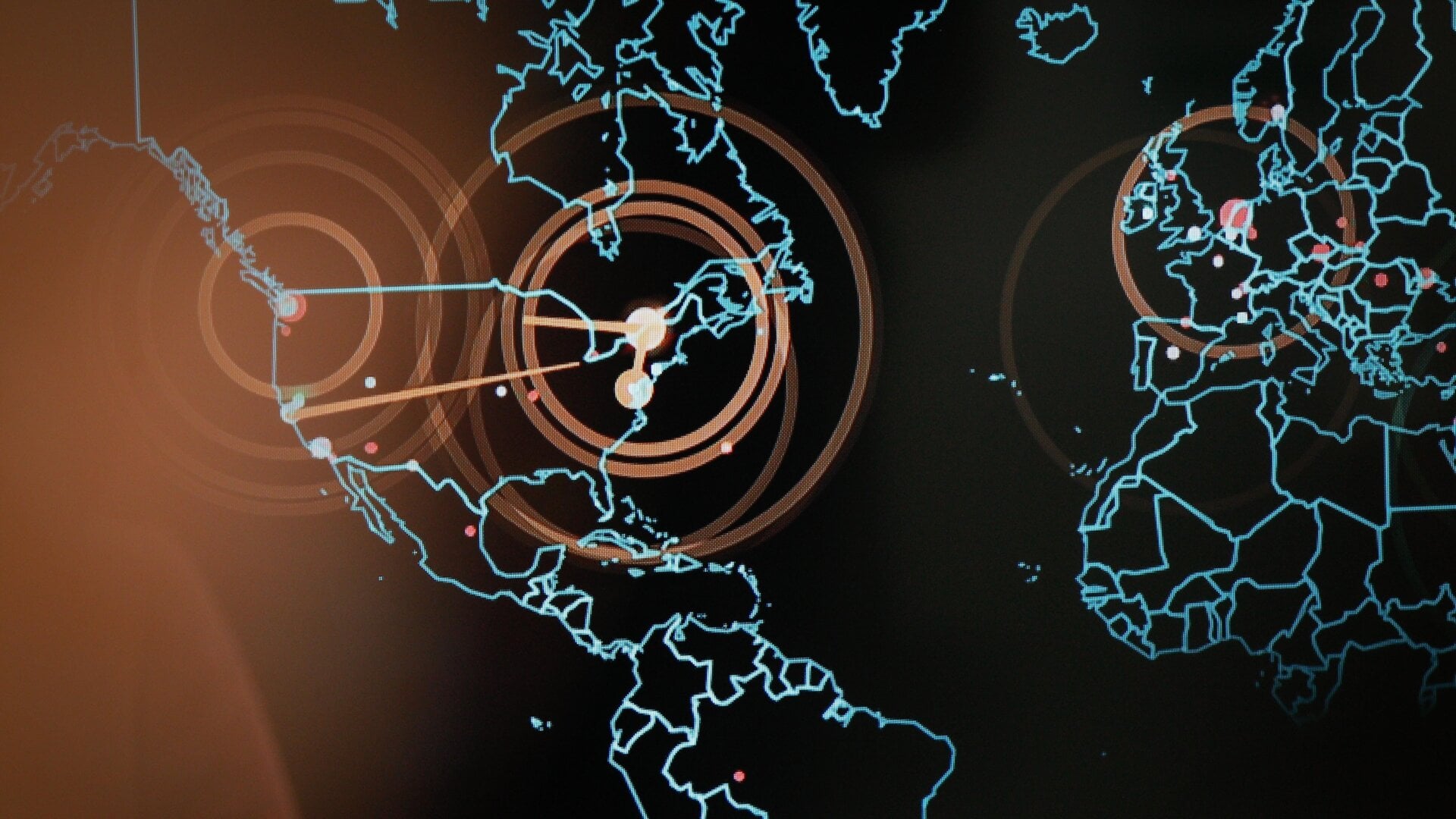
As US President Donald Trump threatens wholesale demolition of Iran’s infrastructure in the midst of an escalating war, Iran now appears to have already reciprocated with its own form of infrastructure sabotage: A hacking campaign hitting industrial control systems across the United States, including energy and water utilities, that US agencies say has had disruptive and costly effects.

In a joint advisory published Tuesday, a group of US agencies including the FBI, the National Security Agency, the Department of Energy, and the Cybersecurity and Infrastructure Security Agency warned that a group of hackers affiliated with the Iranian government has targeted industrial control devices used in a series of critical infrastructure targets including in the energy sector, water and wastewater utilities, and unspecified “government facilities.” According to the agencies, the hackers have targeted programmable logic controllers (PLCs)—a type of device designed to allow digital control of physical machinery—in those facilities, including those sold by industrial tech firm Rockwell Automation, with the apparent intention of sabotaging their systems.

By compromising those PLCs, the advisory warns, the hackers sought to change information on the displays of industrial control systems, which can in some scenarios cause system downtime, damage, or even dangerous conditions. “In a few cases, this activity has resulted in operational disruption and financial loss,” it reads.

When WIRED reached out to Rockwell Automation, a company spokesperson responded in a statement that it “takes seriously the security of its products and solutions and has been closely coordinating with government agencies in connection with” Tuesday’s advisory, and pointed to documents it has published for customers on how to better secure their PLCs.

Though the advisory doesn’t specify a particular group responsible for the hacking campaign, it notes that the attacks are similar to those carried out in by the Iran-linked group known as CyberAv3ngers, or the Shahid Kaveh Group, starting in late 2023. That team of hackers, believed to work in the service of the Iranian Revolutionary Guard Corps, inflicted several waves of attacks against Israeli and US targets in recent years, including gaining access to more than a hundred devices sold by industrial control system technology firm Unitronics and most commonly used in water and wastewater utilities.

This is a developing story, please check back for updates.

Unmasking the Paramilitary Agents Behind Trump’s Violent Immigration Crackdown


In the early morning last September 30, hundreds of federal agents swarmed the South Shore Apartments, a beige brick building on Chicago’s South Side. As feds in body armor rappelled down from a Black Hawk helicopter overhead, others crashed through the building’s doors with battering rams, rounding up residents at gunpoint.

A group of burly, masked agents wearing helmets and bulletproof vests, and toting suppressor-equipped M4 rifles, moved through the hallways in a rapid, tightly organized file. Padraic Daniel Berlin, a 34-year-old Michigan native and son of a Detroit firefighter, held Yoda, his Belgian Malinois, on a leash. David Dubar Jr., a 53-year-old onetime construction worker, followed closely behind him. Their team leader, Corey Myers, a Marine veteran from the Border Patrol’s Tucson sector, checked apartment doors. Paul Delgado Jr., a standout cross-country runner in high school, was the final member of the entry team.

The four men are members of the Border Patrol Tactical Unit, or BORTAC. Based mainly out of Fort Bliss, with at least 11 detachments stationed around the United States, BORTAC and its sister unit, Border Patrol Search, Trauma and Rescue, or BORSTAR, were once reserved for desert rescues, executing high-risk warrants, conflicts with armed drug cartels, and manhunts.

Under Donald Trump, however, they have been sent into the streets of major US cities. The result is the largest known deployment of BORTAC and BORSTAR agents in US history, a fact made difficult to pin down due to the government’s secrecy around their operations. Many of the agents’ identities have remained hidden from the public. The decision to use an offensive, heavily armed paramilitary units for street-level immigration sweeps in American cities is a first—a bellwether of the Trump administration’s project to militarize domestic law enforcement operations.

Myers, Berlin, Dubar, Delgado, and their teammates seemed keyed up. The intelligence briefing they received claimed the building was controlled by Tren de Aragua, a Venezuelan street gang the Trump administration categorized—despite contrary evidence amassed by its own intelligence services—as a foreign terrorist organization. Gang members were supposedly occupying the building and storing grenades, handguns, and rifles on the second floor, where a suspect with an open warrant for firearms possession lived. This intelligence was never released or substantiated, and Illinois later launched an investigation into whether the property owner had sent baseless claims to the feds. But at that moment, it didn’t matter.

At every door approached by his team, Berlin yelled, “Police! Speak to me now or I’ll send the dog!” In a second-floor unit, the BORTAC team detained one man. Further down the hall, Myers noticed “signs of forced entry” and smashed open the door. Tolulope Akinsulie, an undocumented immigrant from Nigeria, happened to be hiding in the bedroom. Without issuing a warning or verbal command, Berlin let go of Yoda’s leash and the Malinois pounced, sinking its teeth into Akinsulie’s leg as he screamed in agony. Yoda bit Akinsulie repeatedly in the leg, hip, and hands before Berlin called the dog off and his team placed the man in cuffs. Akinsulie, who was not a target of the raid and has no known history of violent crime or gang affiliation, was treated for his injuries and taken to the Broadview Processing Center to face removal proceedings.

Berlin’s actions that morning were not isolated. He was involved in at least five uses of force during Operation Midway Blitz, the Trump administration’s 2025 surge of hundreds of immigration agents into Chicago and surrounding communities. Nor were the actions of his team, according to a WIRED analysis of US government records, which appeared to escalate tensions with civilian onlookers rather than quell them. Since last year, BORTAC and BORSTAR have fronted several of the US government’s invasions of its own cities, often engaging in almost theatrical uses of force that litter newscasts and social feeds, adding a new salience to US Border Patrol Special Operations Group’s self-proclaimed status as the “tip of the spear.”


Elon Musk’s X Appears to Be Violating US Sanctions by Selling Premium Accounts to Iranian Leaders


In recent weeks, Elon Musk has followed president Donald Trump’s lead, slamming Iranian government officials and supporting the thousands of protesters railing against the regime. He even provided free access to his Starlink satellites in the midst of a nationwide internet blackout.

But while publicly proclaiming his support of the protesters, Musk’s company X appears to be profiting from the very same government officials he railed against, potentially violating US sanctions in the process, according to a new report from the Tech Transparency Project (TTP) shared exclusively with WIRED.

TTP identified more than two dozen X accounts allegedly run by Iranian government officials, state agencies, and state-run news outlets which display a blue checkmark, indicating they have access to X’s premium service. These accounts were sharing state-sponsored propaganda at a time when ordinary Iranians had no access to the internet, and their messages appeared to be artificially boosted to increase reach and engagement, which is a key aspect of X’s premium service. An X Premium subscription, which is the only way to receive a blue checkmark, costs $8 a month, while a Premium+ subscription, which removes ads and boosts reach even further, costs $40 a month.

At a time when the Trump administration is threatening Iran with possible military action if it does not meet demands related to nuclear enrichment and ballistic missiles, X appears to be undermining those efforts by providing a social media bullhorn for the Iranian government to spread its message.

“The fact that Elon Musk is not just platforming these individuals, but taking their money to boost their content through these premium subscriptions and give them extra features also means he’s undermining the sanctions that the US and the Trump administration are actually applying,” Katie Paul, the director of the TTP, tells WIRED.

X did not respond to a request for comment, but within hours of WIRED flagging several X accounts belonging to Iranian officials, their blue checkmarks were removed. The rest of the accounts identified by TTP but not shared with X continue to display a blue checkmark.

The White House directed WIRED to the Treasury when asked for comment. A Treasury spokesperson said they do not comment on specific allegations but “we take allegations of sanctionable conduct extremely seriously.”

At the end of last year, protests broke out in the Iranian capital of Tehran on December 28 over the continuing devaluation of the Iranian rial against the dollar and a widespread economic crisis in the country. Over the following days, tens of thousands of protesters poured onto the streets in cities across the country, calling for regime change and the end of Supreme Leader Ayatollah Ali Khamenei’s 37-year reign.

In response, the regime brutally cracked down on protesters, arresting tens of thousands of people and killing thousands more. The true death toll is still unknown but could be much higher than currently reported.

Trump signaled his support for the protesters in a post on Truth Social on January 2, promising to come to their rescue. “We are locked and loaded and ready to go,” he wrote. Musk quickly followed Trump, calling Khamenei “delusional.”

On January 5, Gholamhossein Mohseni-Ejei, the head of Iran’s judiciary, who had a blue checkmark at the time, wrote in a post on X, “This time, we will show no mercy to the rioters.” Ejei was among the accounts whose blue checkmarks were removed on Wednesday after WIRED contacted the company.

A few days later, X changed the Iranian flag emoji on the platform to one used before the 1979 revolution, featuring a lion and sun. On January 14, Musk announced that anyone with a Starlink device would be free to access the internet in Iran without a subscription. At the time, Starlink devices were the only viable way of getting online after the government imposed a near total internet blackout.

RFK Jr. Says He’s Ending the War on Protein. It Doesn’t Exist


In a somewhat baffling directive, US Health Secretary RFK Jr. claims he’s “ending the war on protein.”

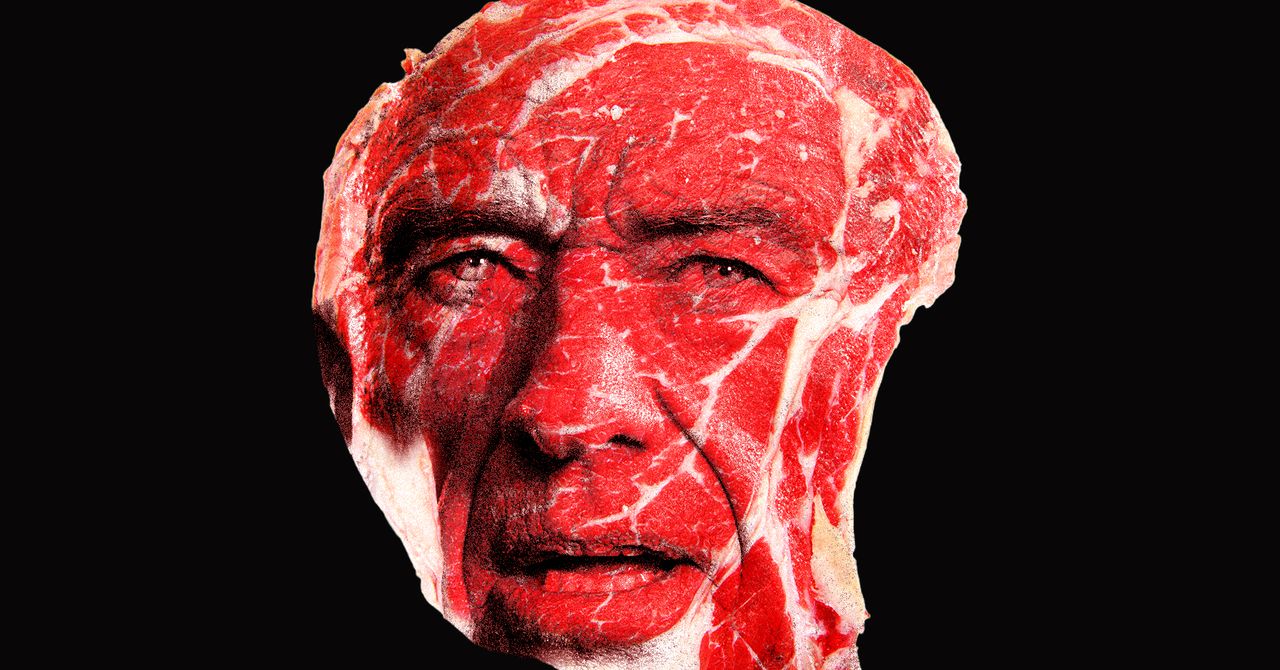
The announcement, posted to White House’s X account on January 11 alongside an ominously lit photo of Kennedy, came as part of the federal government’s 2025-2030 Dietary Guidelines, which now prioritize protein “at every meal.” Some of the advice—particularly the avoidance of ultra-processed foods and added sugars—has been well received by dietary experts and health organizations like the American Heart Association. But other aspects of it represent shake-ups that defy scientific consensus. For example, the recommendation of consuming saturated fats found in full-fat milk, butter, and beef tallow contradicts previous nutritional guidance, which generally advised limiting saturated fats.

But one of the biggest takeaways from the new food guide—which will influence everything from SNAP to school lunches—is that Americans should be consuming more protein, ideally from animals.

“Today the lies stop,” Kennedy, leader of MAGA’s brawnier and crunchier offshoot, the “Make America Healthy Again” movement, said in an announcement about the new guidance on January 7. “ Protein and healthy fats are essential and were wrongly discouraged in prior dietary guidelines.”

The thing is, there is no war on protein. If ever there was one, it was lost long ago. Americans have quite literally never been as obsessed with protein as they are today, with consumption levels in the United States reaching record highs, even as protein deficiency is nearly nonexistent.

Still, Kennedy’s screed makes sense in the context of a MAGA movement that has made body image, fitness, and masculinity central tenets.

“They’re trying to tie it into the war on masculinity, the war on warrior culture. All of this stuff is connected,” said Colin Davis, a personal trainer and political commentator who has been critical of MAGA’s encroachment into the fitness space.

In August, Kennedy and Defense Secretary Pete Hegseth posted videos online of themselves doing push-ups and pull-ups as part of what they called the “Pete and Bobby Fitness Challenge.” Hegseth also convened an unprecedented meeting of US generals in Quantico, Virginia, in September to accost them over the military’s fitness and grooming standards. “It’s completely unacceptable to see fat generals and admirals in the halls of the Pentagon,” Hegseth said to the hundreds of generals in attendance.

President Trump himself has connected his movement to fitness through his friendship with UFC CEO Dana White, orchestrating a number of campaign appearances at UFC events in 2024. These de facto rallies put the then-presidential candidate in close proximity to young, physically fit men who would sometimes launch into post-fight rants supporting him; Trump would go on to flip the young male vote by a nearly 30-point margin in his favor during the 2024 election. In June, the White House is hosting a UFC cage fight as part of America’s 250th anniversary celebrations, Trump has said.

Some experts say Kennedy’s reworking of the dietary guidelines is a continuation of that project, in particular the emphasis on animal proteins, projecting a form of idealized masculinity by playing into long-held and well-researched cultural perceptions around food and gender.

“ There’s a long-standing association of men with meat, fire, cooking outdoors,” said Charlotte Biltekoff, professor of food, wine and culture at the University of California, Davis. “And women with lighter food, dieting for weight loss, vegetables, fruits and salads.”

All of this serves to put the president and his broader political movement into the proximity of a kind of aspirational masculinity that is high agency, strong, physically attractive, and neatly situated within traditional gender roles.

Google and Apple reportedly warn employees on visas to avoid international travel


Law firms representing Google and Apple have warned that employees who need a visa stamp to re-enter the United States should avoid leaving the country due to longer-than-usual visa processing times, according to Business Insider.

BI says it has viewed memos from BAL Immigration Law (which represents Google) and Fragomen (which represents Apple). 

“Given the recent updates and the possibility of unpredictable, extended delays when returning to the U.S., we strongly recommend that employees without a valid H-1B visa stamp avoid international travel for now,” the Fragomen memo reportedly said.

A State Department spokesperson told BI that embassies are “now prioritizing thoroughly vetting each visa case above all else.”

Salon also reports that “hundreds” of Indian professionals who traveled home to renew their U.S. work visas in December have had their U.S. embassy appointments canceled or rescheduled due to new requirements for social media vetting.

TechCrunch has reached out to Google and Apple for comment. Both companies, along with other large tech employers, issued similar warnings in September when the White House announced that employers would have to pay a $100,000 fee for H-1B visa applications.

Trump’s TikTok deal is another step closer to finally actually happening


Remember back in September when President Donald Trump signed an executive order that seemingly finalized some of the terms of a deal to spin off TikTok’s US business? Three months later, that same deal is apparently one step closer to being official.

According to Bloomberg, TikTok CEO Shou Chew told employees that TikTok and ByteDance had signed off the agreement for control of TikTok’s US business. It sounds like terms of the deal are roughly the same as what Trump announced earlier this year. A group of US investors, including Oracle, Silver Lake and MGX will control a majority of the new entity while ByteDance will keep a smaller stake in the venture.

According to Chew’s memo, the deal is expected to close January 22, 2026. “Upon the closing, the US joint venture, built on the foundation of the current TikTok US Data Security (USDS) organization, will operate as an independent entity with authority over US data protection, algorithm security, content moderation and software assurance,” he wrote according to Bloomberg.  TikTok didn’t immediately respond to a request for comment.

Notably, it’s still not clear where Chinese officials stand on the deal. Trump said back in September that China was “fully on board,” but subsequent meetings between the two sides have so far produced vague statements. In October, China’s Commerce Ministry said it would “work with the U.S. to properly resolve issues related to TikTok.”

If a deal is indeed finalized by next month, it will come almost exactly a year after Trump’s first executive order to delay a law that required a sale or ban of the app front taking effect. He has signed off several other extensions since.

Trump Says Nvidia Can Sell the H200 Chip to China


Donald Trump says he’s going to allow Nvidia to sell the H200 artificial intelligence chip to China, according to a new post from the president on Truth Social. The move will still bar Nvidia from selling its more advanced Blackwell chips to China, but it’s still considered a win for the tech company since the lower quality H20 chip had been sidelined by the Chinese government for supposedly not being powerful enough.

Trump wrote Monday that he had informed China’s president Xi Jingping that he will allow the sale of H200 chips “under conditions that allow for continued strong National Security.” Trump did not explain what those conditions might be, but said Nvidia will pay the U.S. government 25% from sales of the chips to China.

Over the summer, Nvidia and AMD agreed to give the U.S. government 15% of revenue from chip sales to China in a bizarre quid pro quo arrangement, according to the Financial Times. Experts noted at the time that no private company had ever entered into such a deal and the legality was questioned. Trump’s second term has been filled with extreme actions that often confound experts in a given field. Can presidents just unilaterally declare birthright citizenship null and void? Virtually every constitutional expert says no, but the U.S. Supreme Court has taken up the case, and if members of the conservative-dominated court so choose, they could very well invalidate the 14th Amendment.

Trump touted the sale of H200 chips as a win for U.S. workers Monday, though it still needs to be formally finalized by the U.S. Commerce Department, which handles export controls. But federal agencies under Trump aren’t exactly in the business of second guessing him these days.

“This policy will support American Jobs, strengthen U.S. Manufacturing, and benefit American Taxpayers,” wrote Trump. The president went on to claim that President Joe Biden’s administration had “forced” U.S companies to spend billions of dollars building “‘degraded’ products that nobody wanted,” which he called a terrible idea that slowed innovation and hurt American workers. Obviously those “degraded” products are created that way to give the U.S. a technological edge, just as his government has supposedly tried to do.

“That Era is OVER! We will protect National Security, create American Jobs, and keep America’s lead in AI,” wrote Trump. “NVIDIA’s U.S. Customers are already moving forward with their incredible, highly advanced Blackwell chips, and soon, Rubin, neither of which are part of this deal.”

As Bloomberg notes, the Chinese government urged potential customers to reject the less powerful H20 chips. It wasn’t an outright ban, and there’s still reportedly demand for the H20 in the country, but it still probably applied some pressure on the U.S. to reexamine the issue if the world’s second largest market for chips was unlikely to bite.

Nvidia CEO Jensen Huang has been cozying up to Trump during the president’s second term, just like virtually every other tech CEO in the country. And it looks like Nvidia’s lobbying has really paid off. David Sacks, the so-called AI and crypto czar, also pushed back on security concerns about selling chips to China, according to the New York Times. Sacks and Huang have reportedly argued that selling the more advanced chips to China will make the country more dependent on U.S. tech.

It remains to be seen what will happen to the SAFE CHIPS Act, a bipartisan bill unveiled last week to restrict any efforts by Trump to loosen the export restrictions, according to Reuters. The bill is sponsored by Republican Senator Pete Ricketts and Democrat Chris Coons. Opposing Chinese tech influence seems to be the only thing that most elected Republicans and Democrats can agree on, though it often doesn’t matter what Congress says when Trump wants something. For example, the TikTok ban was bipartisan legislation that even Trump supported until he pulled a 180 in 2024. Trump has unilaterally extended enforcement of the ban several times while a deal is worked out. The next deadline is Dec. 16.

“My Administration will always put America FIRST,” Trump wrote Monday. “The Department of Commerce is finalizing the details, and the same approach will apply to AMD, Intel, and other GREAT American Companies. MAKE AMERICA GREAT AGAIN!”

President Trump is scheduled to visit Beijing and meet with Xi in April.

Trump’s Media Company Set To Roll Out Polymarket-Like Prediction Market on Truth Social


Donald Trump appears to be getting back into the casino business, in a manner of speaking. 

This time it won’t be Atlantic City slot machines and roulette tables: On Tuesday, the president’s media firm, Trump Media & Technology Group Corp., announced it was partnering with the digital asset exchange Crypto.com to make prediction markets available via Truth Social.

The new product, called “Truth Predict,” will enable Truth Social users to bet on a wide range of future events like election outcomes, sports, and commodity prices. These wagers will take the form of prediction contracts, which are typically priced in cents and reflect the percentage of confidence bettors have in a potential outcome. If you bet correctly, the contract settles for $1, but if you’re wrong, it goes to zero.

TMTG’s new offering will compete with existing prediction markets like the US-regulated Kalshi and Polymarket, which is headquartered in New York but hasn’t offered services to US customers since reaching a settlement with the Commodity Futures Trading Commission in 2022.

Truth Predict plans to launch in the US first and then expand internationally “once all the requisite requirements are met.” The product will begin beta testing soon, according to Tuesday’s announcement.

President Trump was the largest shareholder in TMTG, but after winning the general election last year, he transferred 114,750,000 shares worth around $4 billion to a trust controlled by his son Donald Trump Jr. A Securities and Exchange Commission filing suggests President Trump maintains indirect control of the shares.

Digital prediction markets present a few thorny philosophical questions. Proponents say there is value to decentralized prognostication, arguing that the betting markets give people a window into what the masses actually think will happen, free from the influence of powerful corporations and political interests.

“The point of Polymarket is that from the perspective of traders, it’s a betting site, but from the perspective of viewers it’s a news site,” Ethereum founder Vitalik Buterin said on X last year. “There are all kinds of people (including elites) on Twitter and the internet making harmful and inaccurate predictions about conflicts, and being able to go and see if people with actual skin in the game think that something has a 2% chance or a 50% chance is a valuable feature that can help keep people sane.”

But sites like Polymarket have also been criticized for offering war markets where users can bet on ongoing and potential geopolitical conflicts. “Will China invade Taiwan in 2025?” currently sits at a 3% chance on Polymarket, while “Will the U.S. invade Venezuela in 2025?” is at 14%.

The present level of liquidity betting on these events isn’t likely to influence their outcomes, but critics argue that if enough money flows into any one market in the future, it could incentivize powerful interests to tip the scales and make something – an assassination, a coup, a war – happen in real life.

“It’s an extreme example, but any prediction market about an influenceable event will start to either incentivize action or subsidize the inevitable if sufficiently liquid enough, even if that wasn’t the original intention,” said Zach Rynes, a community liaison for the decentralized oracle network Chainlink, on X last year. “If these markets traded with $100 million+ liquidity, would that change the outcome? Maybe not, but if insider traded, would they not be subsidizing war? I don’t think prediction markets are passive observers; their existence influences outcomes when operating at scale.”

CFTC regulations prohibit event contracts that reference terrorism, assassination, war or any other illegal activity, so US-approved firms don’t offer direct invasion markets like Polymarket’s. But that doesn’t mean those marketplaces are free from potentially controversial incentives: On Kalshi, gamblers can wager on the number of deportations in Trump’s first year of office, or whether leaders like Venezuelan President Nicolás Maduro will remain in power through 2025 (though Kalshi, in an effort to disincentivize assassination, does note that in the case of Maduro’s death, the market would pay out the last traded price rather than settling to $1 or zero).

Those controversial incentives could appear even more tangled on a prediction markets platform so closely affiliated with the president of the United States.

Gizmodo reached out to Truth Social for comment and will update if we hear back.

Hasan Piker Will Never Run for Office


Are you gonna collaborate?

Yeah.

All right. What’s your favorite sandwich?

That’s a tough one because I love all of them. I would say a New Jersey sub from this institution called Sorrento’s around Freehold. A Number 14, which is a combination, I believe, of like Number 7 and Number 12. [Eds. note: Sorrento’s menu says the Number 14 is a combo of a Number 5 and a Number 12 called the Pig Special.] So an Italian sub from a real New Jersey institution, and if not that, then a Wawa Club sandwich.

I really appreciate how specific that was. Thank you. First video game you ever bought?

I pirated a lot because I was in Turkey growing up, so it was virtually impossible for us to get like a lot of video games. As far as purchase, it could be Metal Gear Solid 2 for the PlayStation 2, or I guess a Pokémon game.

So let’s rewind 34 years. You were born in New Jersey. You spent the majority of your childhood in Turkey.

Yeah.

You’ve talked before about that upbringing. You’ve characterized it as a very privileged one. How did that experience, now that you’re able to look back and reflect, affect your worldview? How does that turn you into the person that you are today?

There’s massive income inequality in Turkey that almost resembles America now, but that’s still far worse in Turkey. For that reason, if you’re above board, if you’re relatively affluent, you come across as very wealthy in comparison to the average person.

I’ve never sheltered people from that truth, but I did grow up fairly affluent. It was very positive in the sense that I didn’t have to worry about making ends meet or having to take on a job or anything like that. My parents’ main concern was to make sure that I wasn’t spoiled, so I didn’t get everything I wanted.

Outside of that, I would say that as a young boy I was sent to public school in Turkey. I think it was a good thing that my parents did that because it made me understand that there were very different income brackets with people living in very different conditions.

You moved to the United States for college, right? What was surprising to you about that transition?

When I came to college, this is literally what I wanted. Other people were like, “I want to be an astronaut,” “I want to be a teacher,” “I want to be a race car driver.” I was like, “I want to go to college in America.”

So I loved it. I was so stoked to be here, and I had all of these beliefs. You know, this is a land of freedom, land of prosperity, right?

Right.

This is where I’m gonna make a name for myself, make a career for myself.

Slowly but surely, experiences growing up or going to college and then onwards living in America, slowly chipped away at that dream. Piece by piece.

Yeah.

It’s interesting because in comparison to other fresh-off-the-boat immigrant stories, I did it. I am living the American dream, but I just realized that it’s not something that is readily accessible for all.

Zuckerberg caught on hot mic telling Trump ‘I wasn’t sure’ how much to promise to spend on AI in the US


Mark Zuckerberg has certainly come a long way in his relationship with President Donald Trump. Almost exactly a year after the president threatened the Meta CEO with imprisonment, the two sat side-by-side at a White House dinner, alongside numerous other tech CEOs.

The nearly three dozen CEOs and execs in attendance took turns praising and thanking Trump. But Zuckerberg’s comments were especially notable. In one moment that was widely shared on social media, Trump turns to Zuckerberg and asks “how much are you spending, would say, over the next few years?” Zuckerberg responded that it was “probably going to be something like, I don’t know, at least $600 billion through [20]28 in the US.” Trump seemed to approve. “That’s a lot, thank you Mark, it’s great to have you.”  

But it was a hot mic moment captured later between the two that was especially telling. Zuckerberg, turning to Trump, apologizes and says “sorry, I wasn’t ready …I wasn’t sure what number you wanted to go with.” 

You can watch the whole moment play out in the clip below:

While Zuckerberg has spent the last year trying to curry favor with Trump, their interactions show just how much those efforts have been paying off. A year ago, the then-former president was threatening the Facebook founder with jail time. Now, after donating $1 million to his inauguration, changing Meta’s policies and renouncing DEI, adding a pro-Trump booster to his board, paying $25 million to settle a four-year-old lawsuit  and several private meetings, the two seem to have patched things up. Not only is Zuckerberg promising to spend massive amounts on money in the US on AI infrastructure, he’s seemingly confirming that Trump approves of the specific number.