ASML CEO Christophe Fouquet: No one is coming for us


Every time you use AI, you are, in some small way, depending on a 42-year-old, 44,000-person Dutch company that spends €4.5 billion each year to advance its technology.

ASML, headquartered in the Netherlands, makes the machines that make the chips that make AI possible. More specifically, it makes the only machines in the world capable of printing the microscopic patterns on silicon wafers that define the most advanced semiconductors — a process called extreme ultraviolet lithography, or EUV. The machines are roughly the size of a school bus, take months to assemble, involve hundreds of suppliers, and cost anywhere from $200 million to upwards of $400 million apiece depending on the generation (prices that give even ASML’s biggest customers pause occasionally).

That monopoly has made ASML the most valuable company in Europe, worth over $530 billion. And with the four largest American tech companies — Microsoft, Meta, Amazon and Google — committing more than $600 billion in AI infrastructure spending this year alone, demand for ASML’s machines has surged to the point where the company has openly said the world won’t have enough chips for years.

All that demand has also made ASML a target. Substrate, a San Francisco startup founded by a protégé of Peter Thiel, has raised more than $100 million and been valued at over $1 billion on the claim that it can build a rival lithography machine. Separately, there have been reports that former ASML engineers in China have partly reverse-engineered the technology, a prospect with enormous geopolitical implications.

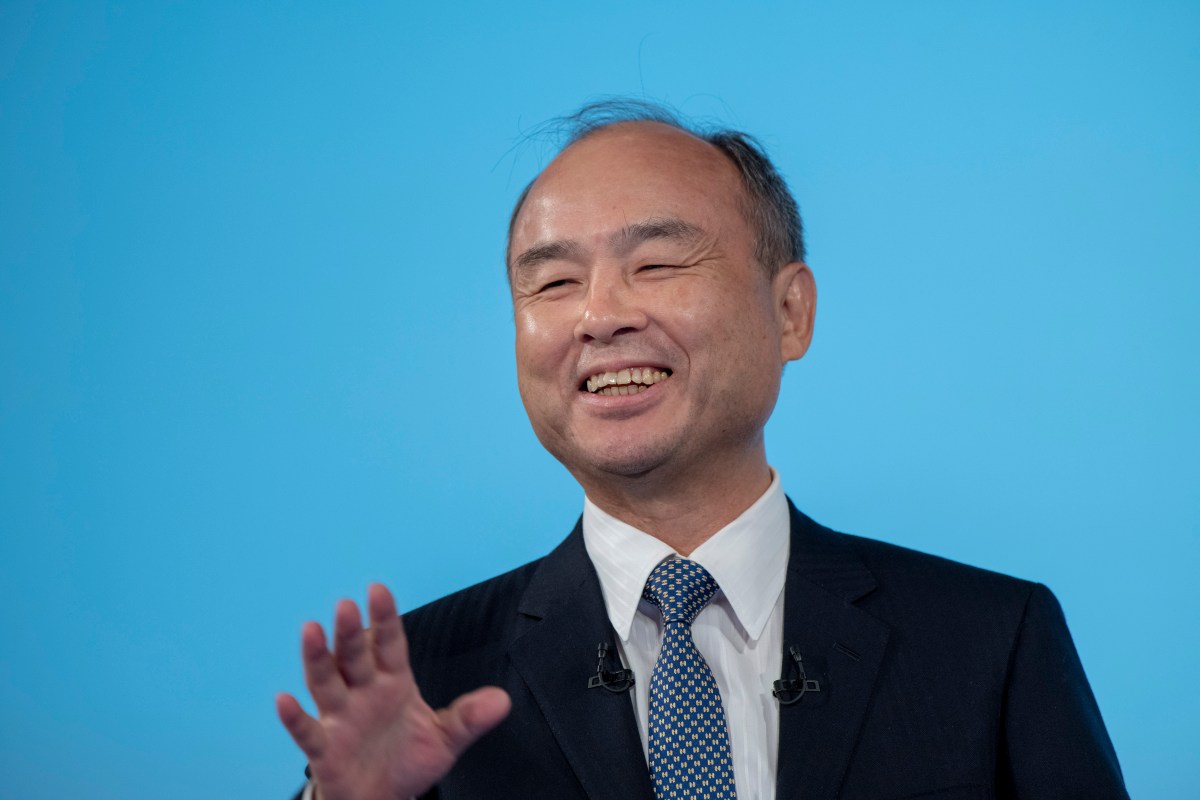
Christophe Fouquet, who became ASML’s CEO in 2024 after more than a decade at the company, sat down with this editor on the rooftop deck of his Beverly Hills hotel Tuesday morning ahead of his appearance at the Milken Institute Global Conference. Dressed in a blue suit and white shirt, he was relaxed — even when the conversation turned to the rivals.

This interview has been lightly edited for length and clarity.

TC: Did you see the AI explosion coming?

Techcrunch event

San Francisco, CA
|
October 13-15, 2026

CF: No, not at all. We worked very hard, but not with the idea that this would come. You went from a concept — something people thought would eventually arrive — to ChatGPT, which was really the first good example of what AI could do. And now I think we look at AI as the next revolution, not only industrial but societal. Did I see it coming? No. Sitting in the middle of it every day, sometimes we wake up in the morning and still check that what is happening is really happening.

The big question everyone has is whether the supply chain can keep pace with demand. Can it?

The demand is such that the market overall will be supply-limited for quite a bit. Right now, the biggest bottleneck seems to be in chip manufacturing. We, as an equipment supplier, follow our customers, and so far we’ve followed them pretty well — but we know we have to step up our entire supply chain and capacity. If you talk to the hyperscalers, I think they will tell you that for the next two, three, even five years, they’re not going to get enough chips.

TSMC made news recently saying your latest machines are too expensive. How do you respond?

An EUV system, if you look at the price, is going to be more expensive than a low-NA system, but the cost of making a wafer with this tool on some advanced layers will be cheaper. We can get 20%, 30% cost reduction.

[Editors note: both machines Fouquet is referring to here are EUV machines — the same fundamental technology. NA stands for numerical aperture, a measure of how finely a machine can focus light onto a chip. Low-NA EUV is the current generation; high-NA EUV is ASML’s newest generation, capable of printing even finer patterns but carrying a price tag of $350 million or more apiece. Fouquet is arguing that even though the new machine costs more, it produces chips more cheaply.]

I get a lot of questions about whether it’s going to be this month or next month or the month after. And I usually say it doesn’t really matter, because we designed high-NA for the next 10, 20 years. You can go back to the press from 2016, 2017, and you’ll find the same quotes — low-NA EUV was very pricey. We know what happened after that. The same will happen with high-NA.

There’s a startup called Substrate, backed by Peter Thiel, claiming it can build a rival lithography machine. What do you think of it?

Wanting to have it and having it — that’s still a huge difference. The challenges of lithography are many. Being able to make an image is a starting point, but you need to make that image in very high quantity, at very low cost, at high speed, and with nanometer accuracy. I always say the only reason ASML could build an EUV machine is because 80% of it already existed, based on previous knowledge and products built over time. We had to solve one problem — getting EUV light — and that alone took 20 years. When you start from scratch, the challenge is enormous. I’ve seen a lot of claims. I’ve seen a few pictures. But we had our first EUV picture 30 years ago, and we still needed 20 more years of hard work to turn it into a manufacturing system.

What about xLight, a laser startup partly backed by the U.S. government that wants to work with you?

xLight is focusing on one element of our EUV machine — the source that creates the light. The source we have can be extended for many years to come, and we know how to scale it. What xLight is doing is a new source that still has to be built and proven. The only question is whether it provides a performance or cost advantage over what we have. I think the jury is still out. We are working with them so they can demonstrate their technology — we feel that’s a responsibility on our side. But it’s still a very long journey.

There are also reports that former ASML engineers in China have reverse-engineered your machines.

To reverse-engineer anything, you first need to have the machine. And there is no EUV machine in China — we never shipped any tools there. All the tools we have shipped, we know where they are. They’re either in use with customers, and we track those, or they’ve been dismantled and came back to us. The idea that one of our systems is in China is simply wrong. And because our EUV technology has never been exported there, we also have no people in China trained on EUV.

Very early on, when restrictions came in, we created a complete separation within the company between those who can access EUV technology, documents and training, and those who cannot. Our team in China sits on the other side of that line. The facts point to very little, if any, progress at all. It’s hard for people to accept that because access to this technology is so important.

On export controls more broadly — Jensen Huang was here last night arguing that companies should sell globally, that more corporate revenue means more tax dollars for a company’s home country. He also said the important thing is to keep the best and latest closer to home. Do you agree?

I think he’s totally right. What he adds — and I think this is what Nvidia has done — is that you can keep a technological advantage by maintaining a generation gap in what you sell. Nvidia sells a few generations back, and that lets them find the balance between still doing business and not handing a strong competitive advantage to countries where you won’t sell the latest. We believe the same approach should apply to our products. Today we ship tools to China — allowed by export controls — but it’s a tool we first shipped in 2015. If you apply Jensen’s philosophy to our situation, Nvidia is working with roughly an eight-generation gap. We’re looking at two or three. There’s room for rationalization — finding the right balance between not doing business at all, losing a major opportunity, and strongly inviting others to compete with you.

How do you assess where things stand with the current administration on all of this?

There is a good dialogue, which is very important. I think there’s a genuine understanding of what business needs, but there’s still the challenge of finding the right balance between all the different voices and interests. The dialogue is there, and we appreciate that. I’ve been in Washington many times. At least the discussion is happening. But it’s a very complex topic.

You don’t seem concerned about anyone short-cutting your technology.

People like to have the greatest technology, but they tend to forget what it took to build it. It’s been many years of work — not only at ASML but with our suppliers. Many different groups of people solving very difficult problems, and then one company bringing it all together using decades of lithography expertise to turn it into a manufacturing system. This is in no way easy. And I think that’s also our best protection. It’s simply what it took to put it together.

When you purchase through links in our articles, we may earn a small commission. This doesn’t affect our editorial independence.

How to watch Jensen Huang’s Nvidia GTC 2026 keynote


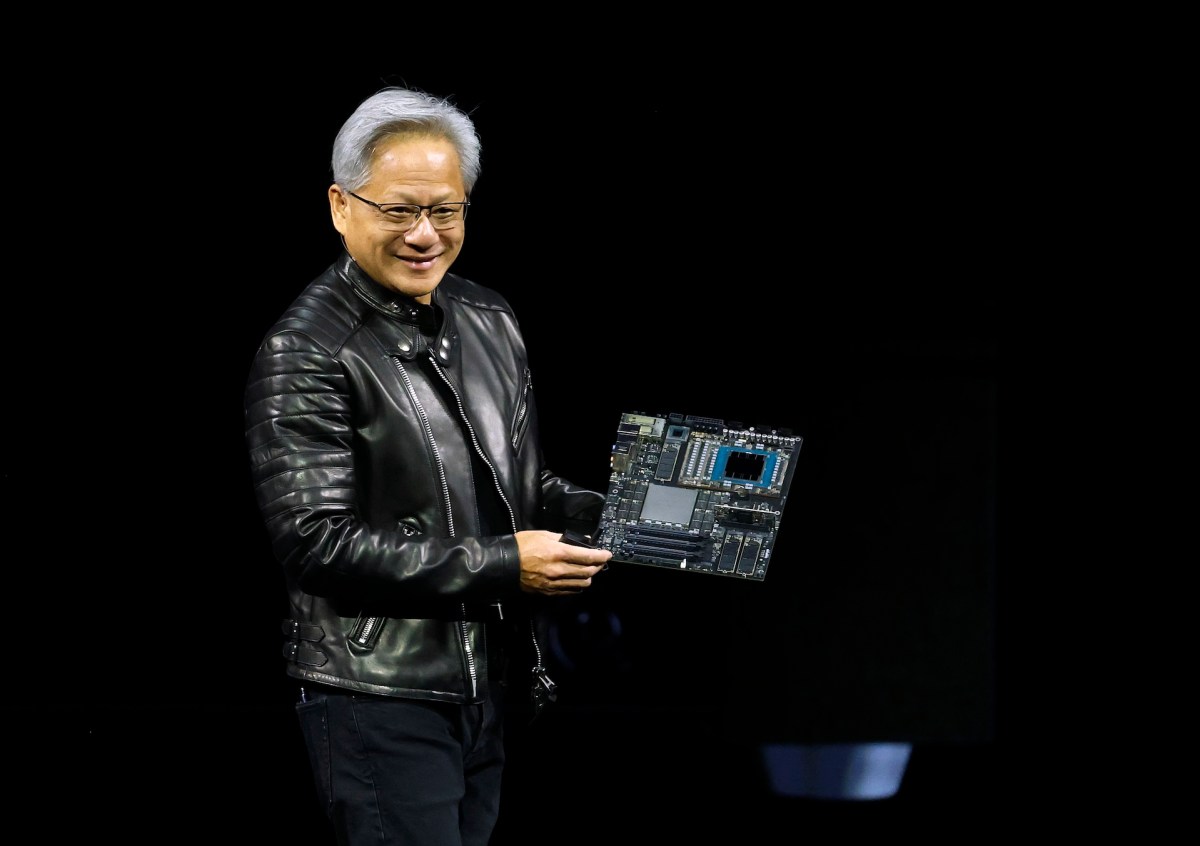
Nvidia kicks off its annual GTC developer conference in San Jose, California, next week with CEO Jensen Huang’s keynote scheduled for Monday at 11am PT / 2pm ET.

GTC — which stands for GPU Technology Conference — is Nvidia’s flagship annual event, where the chipmaker typically uses the spotlight to announce new products, champion partnerships, and lay out its vision for the future of computing. Huang’s keynote will focus on Nvidia’s role in the future of computing and AI. You can watch the two-hour address in person at the SAP Center or livestream the talk on the event’s website.

The broader three-day event is focused on what’s coming next for AI across industries including healthcare, robotics, and autonomous vehicles, among others.

On the software side, it’s rumored that Nvidia will release an open source platform for enterprise AI agents, dubbed NemoClaw, as originally reported by Wired. The platform would give businesses a structured way to build and deploy AI agents (software that can carry out multi-step tasks autonomously) and would position Nvidia to mirror similar offerings from companies like OpenAI.

On the hardware side, the company is also rumored to be releasing a new chip designed to accelerate the AI inference process — the process by which an AI model applies what it has learned to generate responses or make decisions, as distinct from the initial training process, which requires far more computing power. Faster, cheaper inference is widely seen as one of the last bottlenecks to scaling AI applications broadly. The chip, if confirmed, would represent Nvidia’s latest bid to dominate not just the training market, where it already commands an estimated 80% share, but the inference market as well, where competition from custom chips built by Google, Amazon and others is fast intensifying.

Kevin Cook, a senior equity strategist at Zacks Investment Research, told TechCrunch that attendees should also expect to learn what the company plans to do with its relationship with Groq, the inference company Nvidia reportedly paid $20 billion late last year to license its technology. There’s a lot of curiosity around this tie-up, given that Jonathan Ross, Groq’s founder, Sunny Madra, Groq’s President, and other members of the Groq team agreed to join Nvidia to help advance and scale that licensed tech.

There will, of course, also be a range of partnership announcements and demonstrations showcasing Nvidia’s AI capabilities across industries.

Techcrunch event

San Francisco, CA
|
October 13-15, 2026

Nvidia has another record quarter amid record capex spends


Chip giant and world’s most valuable company Nvidia reported record profits in its most recent quarter on Wednesday, as demand for AI compute continues to skyrocket.

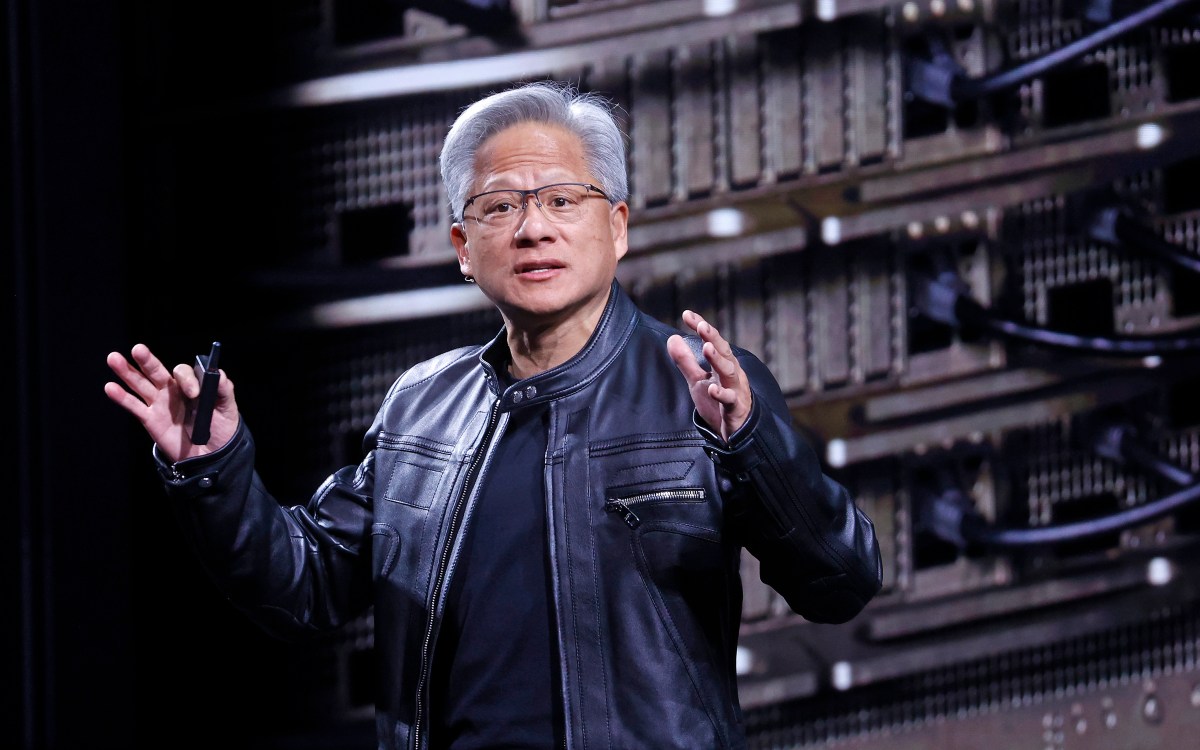
“The demand for tokens in the world has gone completely exponential,” CEO Jensen Huang said on a call with analysts following the results. “I think we’re all seeing that, to the point where even our six-year-old GPUs in the cloud are completely consumed and the pricing is going up.”

The company reported $68 billion in revenue in the most recent quarter, up 73% from the prior year, with $62 billion of that revenue coming from the company’s data center business.

Notably, Nvidia divided the data center revenue into $51 billion in compute revenue (largely GPUs) and $11 billion in networking products like NVLink. The company reported $215 billion in revenue for the full year.

As in previous quarters, the company did not report any revenue from chip exports to China, despite the recent lifting of export restrictions by the U.S. government. “While small amounts of H200 products for China-based customers were approved by the US government, they have yet to generate any revenue, and we do not know whether any imports will be allowed into China,” Colette Kress, the company’s chief financial officer, said.

“Our competitors in China, bolstered by recent IPOs, are making progress,” she continued, in an apparent reference to Moore Threads’ IPO in December, “and have the potential to disrupt the structure of the global AI industry over the long term.”

During the investor call, Huang also addressed the company’s pending investment in OpenAI, which has been reported at $30 billion.

Techcrunch event

Boston, MA
|
June 9, 2026

“We continue to work with OpenAI toward a partnership agreement. We believe we are close,” Huang said. He also referenced partnerships with Anthropic, Meta, and Elon Musk’s xAI. However, statements Nvidia filed with the U.S. Securities and Exchange Commission on Wednesday emphasized that there was “no assurance” an investment would take place.

Huang also addressed concerns about the sustainability of tech companies’ capex commitments, saying he believed the compute investments would soon bring revenue.

“In this new world of AI, compute is revenue. Without compute, there’s no way to generate tokens. Without tokens, there’s no way to grow revenues,” Huang said. “We’ve reached the inflection point and we’re generating profitable tokens that are productive for customers and profitable for the cloud service providers”

Uber will soon have you riding in style in a driverless Mercedes-Benz S-Class


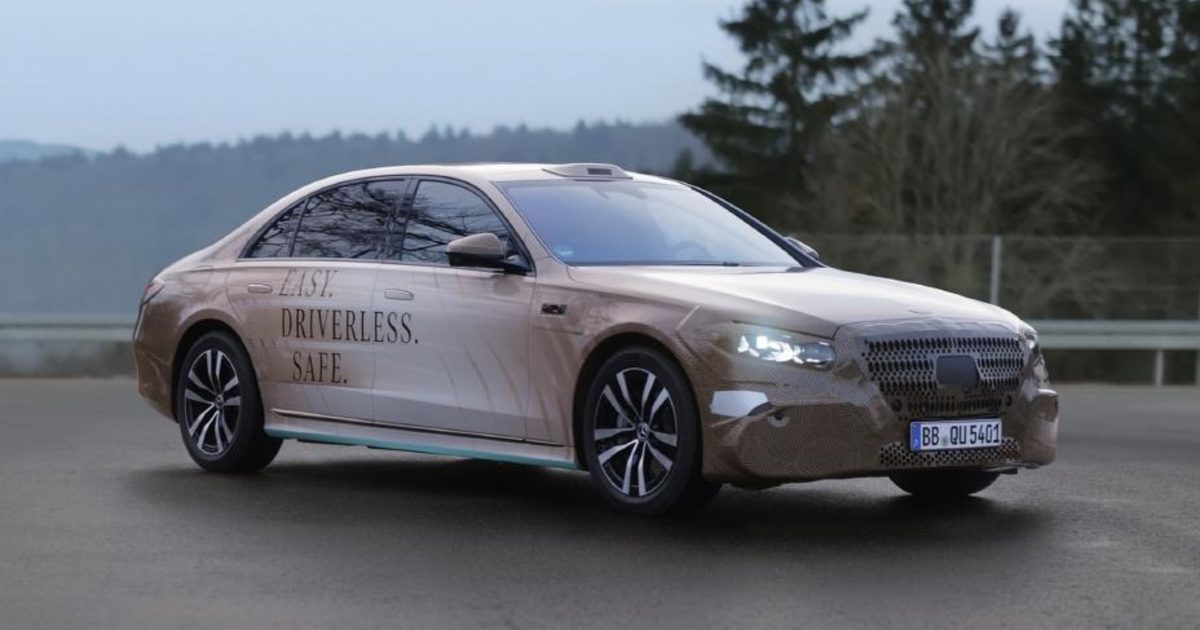
Uber, Nvidia and Mercedes-Benz have joined hands to develop a fleet of luxurious robotaxis based on the German carmaker’s S-Class platform. The companies recently confirmed the collaboration as part of a broader effort to build a global robotaxi ecosystem that combines Mercedes’ luxury sedan with Nvidia’s autonomous driving technology and Uber’s ride-hailing network.

The partnership builds on Uber’s ongoing work with Nvidia announced in October last year, in which Nvidia’s DRIVE AV software and DRIVE Hyperion architecture are being used to make vehicles “level 4 ready.” This means the vehicles will be capable of operating without human intervention in predefined conditions.

Mercedes-Benz says it has selected the new S-Class as the core vehicle for its robotaxi plans, citing the sedan’s advanced engineering and software architecture. The luxury model will be integrated with Mercedes’ proprietary MB.OS operating system, which provides a foundation for partners to build autonomous applications on the vehicle’s computing platform.

There’s no clear launch timeline yet

Uber’s role in this partnership is to integrate these autonomous vehicles into its ride-hailing service, enabling users to summon robotaxi through the Uber app. While no firm launch timeline has been announced, the partnership is aimed at deploying autonomous robotaxi services in several major cities worldwide.

The collaboration comes as competition in the robotaxi space continues to intensify. Companies like Waymo and Tesla have already tested robotaxis on public roads, but the sector faces growing regulatory and safety scrutiny. Waymo, for example, is currently under investigation after multiple incidents of its robotaxis violating traffic laws were reported last year.

Trump Says Nvidia Can Sell the H200 Chip to China


Donald Trump says he’s going to allow Nvidia to sell the H200 artificial intelligence chip to China, according to a new post from the president on Truth Social. The move will still bar Nvidia from selling its more advanced Blackwell chips to China, but it’s still considered a win for the tech company since the lower quality H20 chip had been sidelined by the Chinese government for supposedly not being powerful enough.

Trump wrote Monday that he had informed China’s president Xi Jingping that he will allow the sale of H200 chips “under conditions that allow for continued strong National Security.” Trump did not explain what those conditions might be, but said Nvidia will pay the U.S. government 25% from sales of the chips to China.

Over the summer, Nvidia and AMD agreed to give the U.S. government 15% of revenue from chip sales to China in a bizarre quid pro quo arrangement, according to the Financial Times. Experts noted at the time that no private company had ever entered into such a deal and the legality was questioned. Trump’s second term has been filled with extreme actions that often confound experts in a given field. Can presidents just unilaterally declare birthright citizenship null and void? Virtually every constitutional expert says no, but the U.S. Supreme Court has taken up the case, and if members of the conservative-dominated court so choose, they could very well invalidate the 14th Amendment.

Trump touted the sale of H200 chips as a win for U.S. workers Monday, though it still needs to be formally finalized by the U.S. Commerce Department, which handles export controls. But federal agencies under Trump aren’t exactly in the business of second guessing him these days.

“This policy will support American Jobs, strengthen U.S. Manufacturing, and benefit American Taxpayers,” wrote Trump. The president went on to claim that President Joe Biden’s administration had “forced” U.S companies to spend billions of dollars building “‘degraded’ products that nobody wanted,” which he called a terrible idea that slowed innovation and hurt American workers. Obviously those “degraded” products are created that way to give the U.S. a technological edge, just as his government has supposedly tried to do.

“That Era is OVER! We will protect National Security, create American Jobs, and keep America’s lead in AI,” wrote Trump. “NVIDIA’s U.S. Customers are already moving forward with their incredible, highly advanced Blackwell chips, and soon, Rubin, neither of which are part of this deal.”

As Bloomberg notes, the Chinese government urged potential customers to reject the less powerful H20 chips. It wasn’t an outright ban, and there’s still reportedly demand for the H20 in the country, but it still probably applied some pressure on the U.S. to reexamine the issue if the world’s second largest market for chips was unlikely to bite.

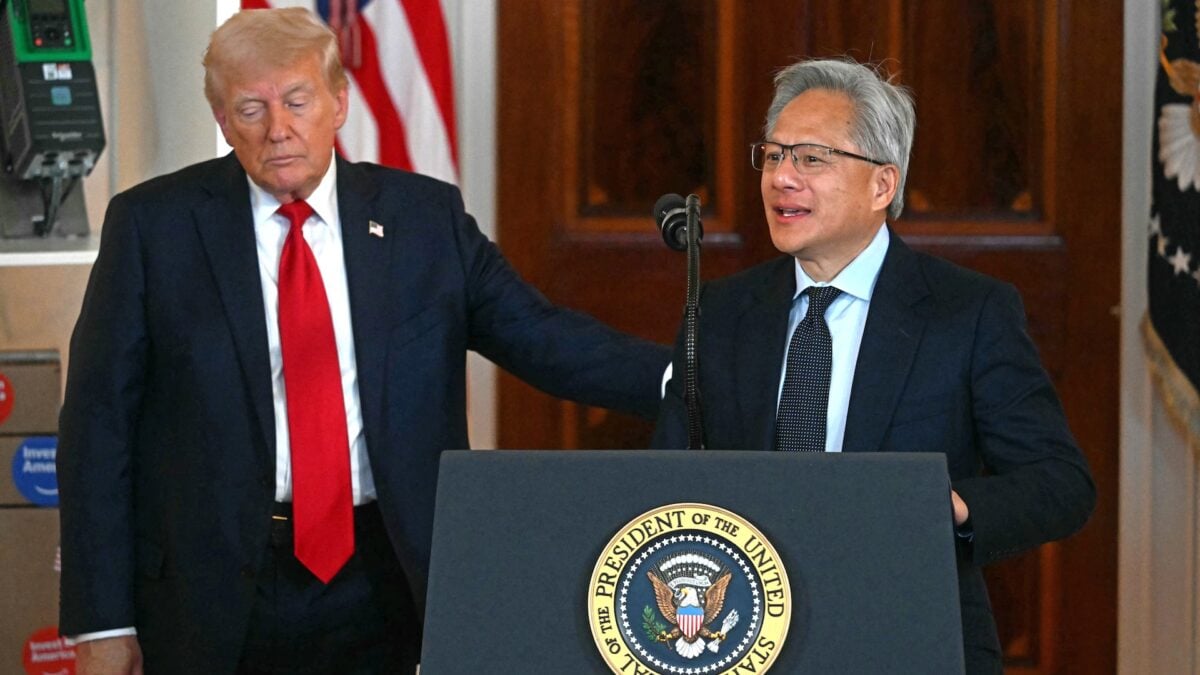
Nvidia CEO Jensen Huang has been cozying up to Trump during the president’s second term, just like virtually every other tech CEO in the country. And it looks like Nvidia’s lobbying has really paid off. David Sacks, the so-called AI and crypto czar, also pushed back on security concerns about selling chips to China, according to the New York Times. Sacks and Huang have reportedly argued that selling the more advanced chips to China will make the country more dependent on U.S. tech.

It remains to be seen what will happen to the SAFE CHIPS Act, a bipartisan bill unveiled last week to restrict any efforts by Trump to loosen the export restrictions, according to Reuters. The bill is sponsored by Republican Senator Pete Ricketts and Democrat Chris Coons. Opposing Chinese tech influence seems to be the only thing that most elected Republicans and Democrats can agree on, though it often doesn’t matter what Congress says when Trump wants something. For example, the TikTok ban was bipartisan legislation that even Trump supported until he pulled a 180 in 2024. Trump has unilaterally extended enforcement of the ban several times while a deal is worked out. The next deadline is Dec. 16.

“My Administration will always put America FIRST,” Trump wrote Monday. “The Department of Commerce is finalizing the details, and the same approach will apply to AMD, Intel, and other GREAT American Companies. MAKE AMERICA GREAT AGAIN!”

President Trump is scheduled to visit Beijing and meet with Xi in April.

SoftBank’s Nvidia sale rattles market, raises questions


Masayoshi Son isn’t known for half measures. The SoftBank founder’s career has been studded with eyebrow-raising bets, each one seemingly more outrageous than the last.

His latest move is to cash out his entire $5.8 billion Nvidia stake to go all-in on AI. And while it surprised the business world on Tuesday, it maybe should not. At this point, it’s almost more surprising when the 68-year-old Son doesn’t push his chips to the center of the table.

Consider that during the late 1990s dot-com bubble, Son’s net worth soared to about $78 billion by February 2000, briefly making him the richest person in the world. Then came the ugly dot-com implosion months later. He lost $70 billion personally – which, at the time, was the largest financial loss by any individual in history — as SoftBank’s market cap plummeted 98% from $180 billion to just $2.5 billion. 

Amid that terribleness, Son made what would become his most legendary bet: a $20 million investment in Alibaba in 2000, one decided (the story goes) after just a six-minute meeting with Jack Ma. That stake would eventually grow to be worth $150 billion by 2020, transforming him into one of the venture industry’s most celebrated figures and funding his comeback.

That Alibaba success has often made it harder to see when Son has stayed too long at the table. When Son needed capital to launch his first Vision Fund in 2017, he didn’t hesitate to seek $45 billion from Saudi Arabia’s Public Investment Fund – long before taking Saudi money became acceptable in Silicon Valley.

After journalist Jamal Khashoggi was murdered in October 2018, Son condemned the killing as “horrific and deeply regrettable” but insisted SoftBank couldn’t “turn our backs on the Saudi people,” maintaining the firm’s commitment to managing the kingdom’s capital. In fact, the Vision Fund actually ramped up dealmaking soon after.

That didn’t turn out so well.

Techcrunch event

San Francisco
|
October 13-15, 2026

A big bet on Uber generated paper losses for years. Then came WeWork. Son overrode his lieutenants’ objections, fell “in love” with founder Adam Neumann, and assigned the co-working company a dizzying valuation of $47 billion in early 2019 after making several previous investments in the company. But WeWork’s IPO plans collapsed after it published a famously troubling S-1 filing. The company never quite recovered – even after pushing out Neumann and instituting a series of belt-tightening measures – ultimately costing SoftBank $11.5 billion in equity losses and another $2.2 billion in debt. (Son reportedly later called it “a stain on my life.”)

Son has been mounting another comeback for years, and Tuesday will undoubtedly be remembered as an important moment in his turnaround tale. Indeed, it will likely be recalled as the day SoftBank sold all 32.1 million of its Nvidia shares – not to diversify its bets but instead to double down elsewhere, including on a planned $30 billion commitment to OpenAI and to participate (it reportedly hopes) in a $1 trillion AI manufacturing hub in Arizona. 

If selling that position still gives Son some heartburn, that’s understandable. At about $181.58 per share, SoftBank exited just 14% below Nvidia’s all-time high of $212.19, which is a strong look. That’s remarkably close to peak valuation for such a huge position. Still, the move marks SoftBank’s second complete exit from NVIDIA, and the first one was exceedingly costly. (In 2019, SoftBank sold a $4 billion stake in the company for $3.6 billion, shares that would now be worth more than $150 billion.)

The move also rattled the market. As of this writing, Nvidia shares are down nearly 3% following the disclosure, even as analysts emphasize that the sale “should not be seen as a cautious or negative stance on Nvidia,” but rather reflects SoftBank needing capital for its AI ambitions.

Wall Street can’t help but wonder: does Son see something right now that others do not? Judging by his track record, maybe — and that ambiguity is all investors have to go on.

Nvidia says two mystery customers accounted for 39% of Q2 revenue


Nearly 40% of Nvidia’s second quarter revenue came from just two customers, according to a filing with the Securities and Exchange Commission.

On Wednesday, the chipmaker reported record revenue of $46.7 billion during the quarter that ended on July 27 — a 56% year-over-year increase largely driven by the AI data center boom. However, subsequent reporting highlighted how much of that growth seems to be coming from just a handful of customers.

Specifically, Nvidia said that a single customer represented 23% of total Q2 revenue, while sales to another customer represented 16% of Q2 revenue. The filing does not identify either of these customers, only referring to them as “Customer A” and “Customer B.”

During the first half of the fiscal year, Nvidia says Customer A and Customer B accounted for 20% and 15% of total revenue, respectively. Four other customers accounted for 14%, 11%, another 11%, and 10% of Q2 revenue, the company says.

In its filing, the company says these are all “direct” customers — such as original equipment manufacturers (OEMs), system integrators, or distributors — who purchase their chips directly from Nvidia. Indirect customers, such as cloud service providers and consumer internet companies, purchase Nvidia chips from these direct customers.

In other words, it sounds unlikely that a big cloud provider like Microsoft, Oracle, Amazon, or Google might secretly be Customer A or Customer B — though those companies may be indirectly responsible for that massive spending.

In fact, Nvidia’s Chief Financial Officer Nicole Kress said that “large cloud service providers” accounted for 50% of Nvidia’s data center revenue, which in turn represented 88% of the company’s total revenue, according to CNBC.

Techcrunch event

San Francisco
|
October 27-29, 2025

What does this mean for Nvidia’s future prospects? Gimme Credit analyst Dave Novosel told Fortune that while “concentration of revenue among such a small group of customers does present a significant risk,” the good news is that “these customers have bountiful cash on hand, generate massive amounts of free cash flow, and are expected to spend lavishly on data centers over the next couple of years.”

NVIDIA, AMD may soon start selling new AI chips in China to comply with US restrictions


To comply with the U.S.’ restrictions on exporting advanced semiconductor technology to China, chipmakers NVIDIA and AMD will soon begin selling new GPUs made for AI workloads in China, Taiwanese tech publication Digitimes reported, citing supply chain sources.

NVIDIA plans to sell a stripped-down AI GPU, code-named “B20,” while AMD is looking to target AI workload needs with its new Radeon AI PRO R9700 workstation GPU, Digitimes reported, adding that the companies will likely start selling these AI chips in China from July.

Earlier this week, Reuters reported that NVIDIA is working on a new budget AI chip built on its Blackwell architecture for China that is expected to be priced at $6,500-$8,000. In comparison, the company sells its H20 GPUs for $10,000-$12,000 each.

NVIDIA on Wednesday said it had incurred a $4.5 billion charge in Q1 due to licensing requirements impacting its ability to sell its H20 AI chip to companies in China, and it couldn’t ship an additional $2.5 billion of H20 chips in the quarter due to the restrictions. The company forecast that licensing requirements would result in an $8 billion hit to the company’s revenue in Q2.

AMD’s Radeon RX 9060 XT Could Do Budget GPUs Better Than Nvidia


We’ll need to see if a 9060 can beat the RTX 5060, but what’s more important is if it manages to maintain its price after launch.

In the battle of the low-end, 60-class graphics cards, AMD wants to see if it can pull off the same sucker punch of price and performance it gave Nvidia during the launch of its mid-range GPUs. The graphics card maker offered the first, sparse details on its Radeon RX 9060 XT graphics processors late Tuesday at Computex. The card may offer enough power for your PC to hit solid gaming performance at 1440p resolution, similar to the $450 Nvidia GeForce RTX 5060 Ti, on cheaper gaming rigs. The real inflection point of this latest card will be whether you can actually buy it for its base price.

The Radeon RX 9060 XT is the step down in GPU performance from the RX 9070 that AMD launched back in March. It’s based on the same RDNA 4 microarchitecture of the mid-range cards, but with 32 of the company’s latest compute units compared to the 56 on the higher-end card. The GPU comes with two options: one with 8 GB and another with 16 GB of GDDR6 VRAM. The version with more memory will be better for your rig long-term, especially if you plan to hook your PC up to a 1440p monitor and run the latest, more graphically intensive games.

AMD did not offer us the full range of specs, which makes it hard to pin down just where this GPU will land in terms of raw performance compared to Nvidia’s latest cards. While the number of RDNA 4 compute units—the core clusters on AMD cards that process the thousands of calculations necessary for graphically intensive tasks—offers a vague impression of performance compared to the RX 9070, AMD didn’t provide any charts to compare FPS between games. The GPU runs on a 3.13GHz boost clock and has between 150W and 182W of board power compared to the 2.54 GHz clock and 304W board power on the company’s Radeon RX 9070 XT.

Without a price tag, it’s impossible to judge how much of a step down the latest card is compared to the RX 9070. AMD didn’t offer any word on a non-XT variant, either. The card will require a PCIe 5.0 x16 interface, the same as its other cards. AMD doesn’t craft its own GPUs and instead relies on AIC (add-in card) makers to produce its cards. We’ll update this article if AMD announces details on price or availability during its Computex keynote.

The crown jewel of AMD’s current lineup of graphics cards is the RX 9070 XT. AMD made headlines when it set the suggested sale price of the GPU at $600, only $50 more than the 9070, but it packs enough performance to get playable framerates out of multiple intensive games at 4K with a fair amount of ray tracing settings turned up. Unfortunately, because of a combination of tariffs and stock woes, the 9070 XT ended up priced at over $800 and as high as $1,000 at some online retailers.

We’ve seen prices fluctuate regularly over the past several months, but a near 20% price inflation to what should be a mid-range card is simply too much to stomach. However, the lower-end GPUs are faring better. The RTX 5060 Ti MSRP is set at $450, and the lowest price we’ve seen so far is $480. The $300 RTX 5060 is sitting closer to $320 from some AIC makers like Gigabyte. A fair number of Nvidia’s lowest-end GPUs are currently listed as “Out of Stock” or “Coming Soon” on sites like Newegg and Best Buy. Those buying a lower-end GPU are more price sensitive than people who can drop $2,000 on an RTX 5090 without blinking. AMD has even more impetus to set a price people can afford, and make sure it can keep costs level when the card finally hits store shelves.

How to watch NVIDIA CEO Jensen Huang deliver the Computex 2025 keynote


Computex 2025 is approaching, and it’s sure to bring a ton of announcements about the latest chips, laptops, gaming devices and more from leading brands. The event in Taipei will kick off on Monday, May 19 with a keynote from NVIDIA CEO Jensen Huang at the Taipei Music Center. There will be a livestream for anyone not attending in person, so you can watch along on the or channel.

Huang’s keynote is scheduled for 11PM ET/ 8PM PT on May 18 (11AM on May 19 in Taiwan Time), and we can expect to hear all about the company’s developments in the AI space. It’ll be followed that same day by a keynote from Qualcomm CEO Cristiano Amon. Computex this year will, perhaps unsurprisingly, focus heavily on AI, with the overall theme being “AI Next.” It’ll also highlight products in three categories: AI & Robotics, Next-Gen Tech and Future Mobility.

An estimated 1,400 exhibitors will be in attendance, , Acer and AMD, all of which have previously at . Computex 2025 will run from May 20 to May 23.