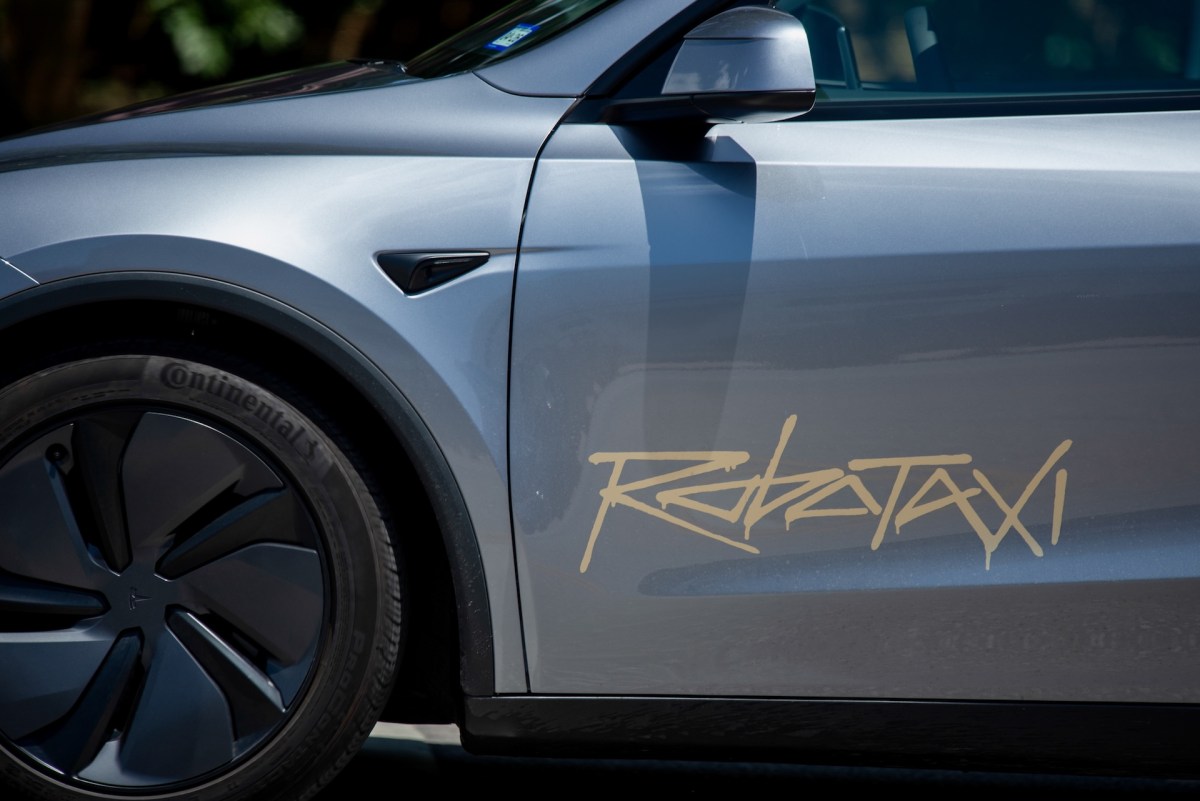
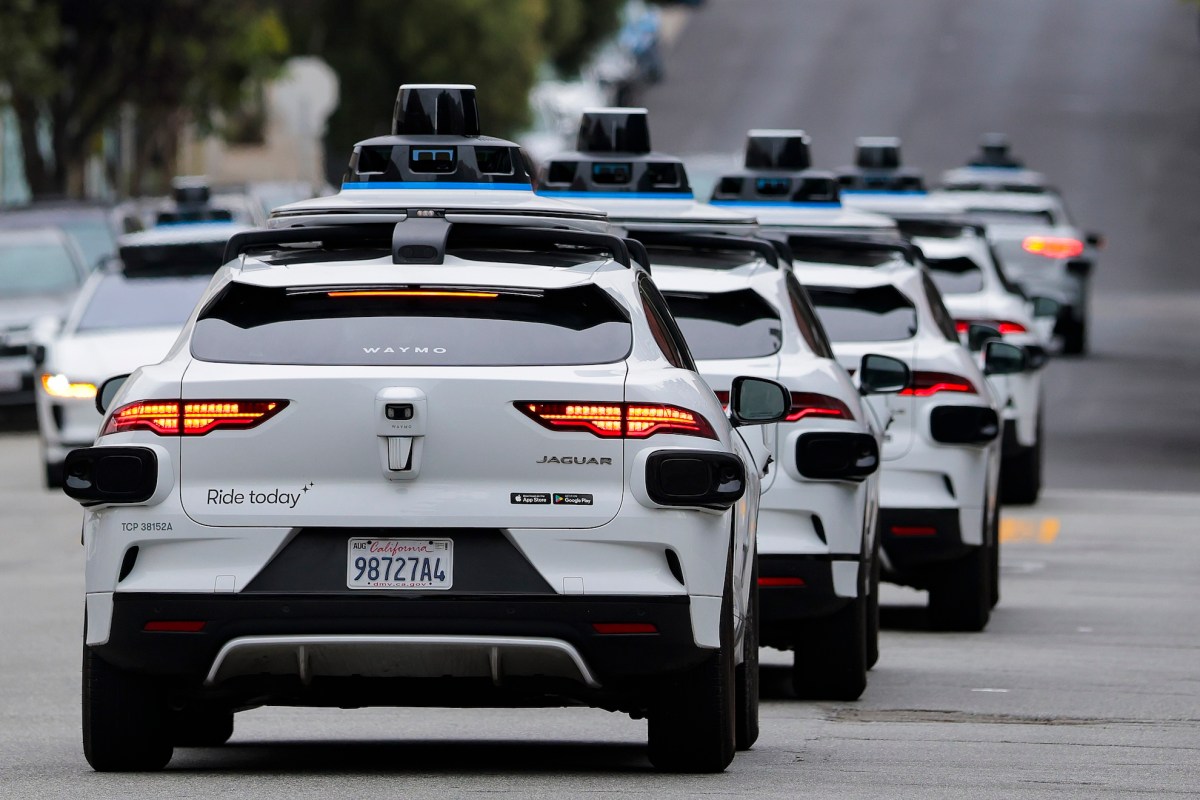
The Nevada Transportation Authority unanimously approved three permits Thursday that will allow Tesla, Uber, and Waymo to operate commercial robotaxi services in Clark County, home to Las Vegas. Together, these permits would deploy up to 8,000 robotaxis across the county over the next 12 months.
Tesla’s permit allows it to deploy up to 5,000 robotaxis, while Waymo is allowed operate up to 1,000 autonomous vehicles over the next year. Uber was also approved for 1,000 robotaxis, which it will operate through partnerships with Hyundai subsidiary Motional and Zoox. Zoox already holds an autonomous vehicle network company permit that allows it to operate 100 robotaxis.
Whether these companies will be able to launch that many robotaxis is an unanswered question. Testimony from Tesla representatives and the other companies suggests the answer is no.
“The 5,000 has always been a ceiling for us,” said Eric Early, Tesla’s Cybercab chief engineer, during the meeting. “I don’t think we’ll be in a position by this time next year to deploy 5,000 vehicles, and it’s not [because of] the technology. … I think we would be extremely happy and satisfied if we could get ourselves up to 2,500, maybe a bit higher than that in the next year.”
Even if these three companies roll out only half of those totals, Clark County — and Las Vegas specifically — is shaping up to be a major robotaxi battleground, with Tesla, Uber (via its autonomous vehicle partners Motional and Zoox), and Waymo all competing for the same riders.
That kind of fast, large-scale robotaxi deployment is poised to change the city — and specifically its workforce. Depending on who you ask, these companies will either deliver a whole new category of jobs designed to maintain, charge, and clean these vehicles or will wipe out an entire category of workers: human taxi and gig drivers.
Representatives from the Livery Operators Association and local taxi companies opposed the permits, arguing the approvals move too far, too fast.
“These applications raise two grave concerns,” said Kimberly Maxson-Rushton, a lawyer representing the Livery Operators Association, at the hearing. “One deals with the oversaturation of the commercial transportation industry as a whole in Nevada,” she said. “And the second one deals with the overcrowding of the roadways, and specifically the Golden Triangle.”
The Golden Triangle, an area between the airport and Las Vegas Boulevard and the surrounding area, is where most of the AV testing has occurred to date. Motional is also testing in the downtown area and in a shopping district known as Town Square.
Uber has tried to position itself as the Goldilocks option in this fight, advocating for a hybrid approach in which ride-hailing networks are made up of humans and robotaxis. The company has even lobbied for a system that would require robotaxis to operate on a ride-hailing network that also uses human drivers, a stance that puts it at odds with Waymo and doubles as a hedge against its own autonomous ambitions falling short of Tesla’s or Waymo’s.
Uber made a similar pitch during the NTA meeting, noting that a hybrid approach would allow cities to gradually integrate vehicles to meet peak demand rather than flooding the market all at once.
When you purchase through links in our articles, we may earn a small commission. This doesn’t affect our editorial independence.
Welcome back to TechCrunch Mobility, your hub for the future of transportation and now, more than ever, how AI is playing a part. To get this in your inbox, sign up here for free — just click TechCrunch Mobility!
I am back from vacation. What did I miss? Turns out, quite a lot — including the end of the Uber-Waymopartnership in Phoenix. Uber and Waymo still have robotaxi service partnerships in Atlanta and Austin. The question is not if, but when will these agreements end? But that isn’t the most intriguing question, in my opinion. I am far more intrigued by how these two companies will behave once the remaining partnerships end.
There is already tension with Uber executives taking not-so-subtle shots at Waymo. I expect that once the partnerships end, these thinly veiled barbs will be replaced with more direct action. One battleground will be policy, specifically markets where robotaxi companies are angling to get access.
This week, we saw another interesting development in the autonomous vehicle industry on the federal stage. National Highway Traffic Safety Administration administrator Jonathan Morrison issued a directive to autonomous vehicle developers, stating that it is unacceptable for their vehicles to interfere with first responders or law enforcement.
The money quote: “Let me be clear: the inability to detect and appropriately respond to such situations represents a functional insufficiency. Emergency scenes are not rare or extreme ‘edge cases.’ As such, NHTSA is today issuing a call to action for AV developers and operators to immediately focus their resources on fixing this issue.”
Morrison’s letter never calls out any one robotaxi company and it was sent to every AV developer listed in the Department of Transportation’s Standing General Order. But it sure seems like Morrison is directing the agency’s ire at Waymo.
A previous TechCrunch investigation found that Waymo — which operates the largest robotaxi fleet in the United States, with vehicles in cities such as Los Angeles, Phoenix, and San Francisco — has had repeated run-ins with first responders. And just this week, San Francisco supervisor Bilal Mahmood said he plans to submit a letter of inquiry to examine how autonomous vehicles affected public transit services and emergency responders following a July 4 fireworks show that resulted in massive gridlock. Local news outlets reported that numerous Waymo robotaxis had to be towed after running out of power during the lengthy traffic jam.
Morrison’s letter has gravitas. But will there be substantive consequences for AV developers? It’s hard to tell at this point. For now, the NHTSA has demanded companies present the agency with “solutions” by the end of the month.
One more news item from the feds. Take a look at the new 2026 Regulatory Plan and Unified Agenda, which was updated last week. It contains a long list of proposed changes to Federal Motor Vehicle Safety Standards (FMVSS) requirements, which govern vehicle design and equipment requirements. These proposed changes could help autonomous vehicle companies like Tesla and Zoox, which are developing vehicles without steering wheels, pedals, or other features required on human-driven cars.
We usually focus on venture deals, but this week I wanted to highlight Rivian and the sale of 86.25 million Class A common shares priced at $15.50 each (that includes an added 11.25 million in additional shares that underwriters opted to buy).
In all, Rivian said it expects to raise $1.32 billion in new capital. The raise comes at a notable time for the EV maker. The company started delivering its new R2 SUV last month and recently raised its sales forecast for 2026. The company said it now expects to deliver between 65,000 and 70,000 vehicles after outperforming its own expectations in the second quarter due to robust growth quarter-over-quarter in EDV and R1, coupled with the introduction of R2 deliveries.
The company didn’t explain the reason for the raise. But as a reminder, Rivian is not yet profitable and scaling up production of the R2 — or any vehicle for that matter — isn’t cheap!
Other deals that got my attention …
Bidbus, a Los Angeles-based startup that built a digital marketplace where multiple dealers can bid on a car, raised $15 million in a Series A funding round led by Ibex Investors. Mucker Capital, FJ Labs, Motley Fool Ventures, Data Point Capital, Walter Ventures, and the Car Dealership Guy’s Yossi Levi also participated.
Lyft said it plans to acquire Serveo’s bike-share business in Spain. Terms weren’t disclosed, but the ride-hailing company said it is expected to close this year.
TaiSan, a U.K. battery startup, raised £4.65 million in a seed funding round co-led by Eos Advisory and the Midlands Engine Investment Fund II. InnoEnergy, AFI Ventures, EverQuest Capital Partners, Exergon, Heartfelt Ventures, Adeline Arts & Science, Techmind, angel investor François Badelon, and matched funding from Innovate UK also participated.
Notable reads and other tidbits
Image Credits:Bryce Durbin
AssuranceAmerica, a U.S. insurance provider, confirmed a data breach that affected the personal information and driver’s license numbers of 6.9 million people, making it the largest known spill of Americans’ driver’s license information this year.
Beta Technologies, the electric vehicle takeoff and landing developer, completed operational flights conducted under the U.S. Department of Transportation and Federal Aviation Administration’s new eVTOL Integration Pilot Program. The flights covered about 275 nautical miles covering Virginia and Maryland.
Longtime followers of Tesla will remember the heady days when Elon Musk battled various short sellers of the company’s stock. Musk is more polarizing than ever, and one exchange-traded fund creator has found a way to tap into that negative sentiment with two new anti-Elon exchange-traded funds.
GM brand Chevrolet built an all-American EV truck. Senior reporter Tim De Chant asks, Why is nobody buying it?
Manna Aero, the Ireland-based autonomous drone delivery startup, is scaling up in the United States with a factory and operations center in Tulsa, Oklahoma, that it says will employ 1,000 in the next few years.
Slate Auto teamed up with Crayola to offer its EV truck and SUV customers vehicle wraps in five crayon colors. (Reminder: The basic Slate EV vehicle isn’t painted. Instead, it comes in a gray composite material that can be customized with a vehicle wrap. The company has hundreds of options to choose from.)
One more thing …
TechCrunch podcast Build Mode just launched its third season, and it’s a banger. Build Mode is hosted by Isabelle Johannessen, who heads TechCrunch’s Startup Battlefield program. Unlike Equity — the TC podcast I co-host along with Anthony Ha and Sean O’Kane — Build Mode is designed to help early-stage founders.
The new season kicks off with Precursor Ventures founder and managing partner Charles Hudson, who talks about what early-stage founders need to know before raising their first institutional round.
For the past 10 years, Uber’s annual Lost & Found Index has provided a rather quirky anthropological snapshot of its riders — and even a few insights into society. The annual catalogue of millions of forgotten items ranges from mundane modern-day tools such as smartphones and laptops, to more eyebrow-raising objects like live fish, an ankle monitor, a toboggan, a package of live butterflies, and a single Louboutin shoe.
This year, Uber is using the report to highlight the same old problem of lost items with a new twist: robotaxis. Thousands of items (it’s a bit too new for millions) were left behind in robotaxis on Uber’s ride-hailing network in the past year, the company said Tuesday. There were the usual suspects of phones, keys, wallets, passports, and headphones, along with a few items that strayed into the who-is-this-rider category: a set of dentures, an “I Heart Hot Dads” bag, and a blue hat that reads “Emotional Support Human.”
Beyond this entertaining list lies a business opportunity, if a minor one. Even in a future of robot taxis, someone still has to return the things passengers leave behind.
Uber has spent the past several years locking up dozens of partnerships with autonomous vehicle (AV) technology companies. But it really wasn’t until March 2025, when the “Waymo on Uber” robotaxi service launched in Austin, that the commercial wheels on its AV business started turning. Since then, Uber and Waymo have also started a robotaxi service in Atlanta. Uber has added other AV companies to its app in the past year, including Motional in Las Vegas and Avride in Dallas, although these still have human safety operators behind the wheel.
That Uber has already logged thousands of lost items in just 12 months gives some sense of just how many robotaxi rides have been completed on its app. The underlying message here is that Uber’s existing network is already set up to reunite riders with their lost items, including a 15-pound yo-yo, one large black marble duck, a Squishmallow, and a Charli XCX poster.
When an Uber rider forgets belongings in a robotaxi, the process for recovering them is similar to any other Uber ride: open the app, click the activity tab, select the trip during which the item was lost, and contact customer support. Riders are then able to message, chat, or call a support agent. If the item is located, they have two options: pay $15 for an Uber Courier driver to provide same-day local delivery, or pick up the belonging in person from an AV depot, where the vehicles are stored and serviced.
Uber Courier is a rebrand of Uber Connect, which launched in 2020 and allowed users to send packages and personal items between local addresses. But Uber says there is more to its robotaxi support network than repurposing existing services.
“With tens of millions of lost items reported on Uber each year, we’ve spent the last decade building systems that help riders quickly and seamlessly reunite with their belongings,” Amy Satrom, global head of autonomous support at Uber, said in a statement. “As autonomous rides continue to scale on Uber, we’re bringing that same expertise to AVs — combining our fleet operations, support teams, and hybrid network to make getting a lost item back simple, even when there’s no driver behind the wheel.”
In February, the company announced Uber Autonomous Solutions, a new business division that conveys its bigger ambitions around driverless tech. The division provides companies with a suite of services that handle all the tasks associated with operating a robotaxi, self-driving truck, or sidewalk delivery robot business, including software and support services.
And Uber clearly means to make AVs a major revenue driver. The company plans to offer robotaxi rides through its app in as many as 15 cities globally by the end of the year and has said it intends to be the largest facilitator of AV trips in the world by 2029.
When you purchase through links in our articles, we may earn a small commission. This doesn’t affect our editorial independence.
For years, Uber talked about becoming a super app. Then Waymo started picking up passengers in San Francisco, and the conversation grew more urgent. The company has been trying to embed itself inside the AV industry — as a data provider, an investor, and a distribution platform — but the consumer-facing bet may be just as important.
Two weeks ago, Uber held its annual GO-GET product event in New York and announced something its executives had been circling for a long time: users in the U.S. can now book hotels inside the Uber app, through a partnership with Expedia Group, with access to more than 700,000 properties worldwide. Uber One members — the company’s subscription tier at $9.99 a month — get 20% off a rotating list of 10,000 hotels and 10% back in credits. Vacation rentals through Vrbo will follow later this year, along with restaurant reservations via OpenTable. In the meantime, a “Shop for Me” feature lets users order from stores that aren’t even on the platform.
The announcements, taken together, were the most concrete picture yet of something Uber has been trying to conjure since at least 2019: that an app with 199 million monthly active users could become the app they use for nearly everything.
Praveen Neppalli Naga, Uber’s CTO, offered the clearest explanation of the company’s thinking at TechCrunch’s StrictlyVC event late last month in San Francisco. The super app concept has existed for years in India and Southeast Asia, he noted, but U.S. versions have mostly flopped by bolting services onto traffic rather than building toward a reason to stay.
His answer to what fits? Membership. Every new category — food, groceries, now hotels — gives someone another reason to pay for Uber One. “I take Uber, go to the airport, take a flight, take another Uber, go to a hotel, go to a restaurant,” he said. “There is a flow you can actually build into it.”
Flights are not available yet, though Naga didn’t rule them out. Uber tried flight booking in Europe years ago without success. “First let’s get the hotel things done,” he said. Financial services sound like a possibility too — Uber already offers a debit card to drivers in Mexico — though how far that goes, or when, remains unclear. Said Naga: “Never say never.”
Uber isn’t alone in this race. Airbnb, arguably the company most directly threatened by Uber’s hotel push, announced its own transportation ambitions in late March — a partnership with Welcome Pickups to offer airport transfers in 125 cities across Asia, Europe, and Latin America, structured to keep users inside the Airbnb app rather than sending them to Uber. Meanwhile, Elon Musk has spent three years promising to turn X into an “everything app” in the WeChat mold, and is now nearing what he describes as a long-stated goal: X Money, a banking and payments platform built inside the social network, is expected to launch publicly soon. X claims 500 million monthly active users.
Techcrunch event
San Francisco, CA | October 13-15, 2026
The big question is how many super apps the American market will actually support. WeChat works in China partly because the alternative was a patchwork of inferior options. In the U.S., people already have apps they like for most of what Uber wants to do. Getting them to consolidate inside a single platform requires either a compelling reason — Uber One’s discounts, say — or a seamless enough experience that switching feels worth it.
Uber’s bet is that its installed base is the moat. Its users have already handed over a credit card. Convincing them to book a hotel, or order from a store they’d never find on Uber Eats, is an easy lift compared with convincing them to download something new. Its most recent earnings, reported a few days ago, suggest Uber Eats may be the strongest argument for that thesis: delivery revenue grew 34% year over year in the first quarter, to $5.07 billion, making it easily the fastest-growing part of the business and pulling almost even with mobility in gross bookings.
Uber’s stock is still down about 8% from a year ago — suggesting that Wall Street isn’t fully convinced. But the company says that 50 million people are now paying for Uber One, and together they account for roughly half the company’s total bookings.
When you purchase through links in our articles, we may earn a small commission. This doesn’t affect our editorial independence.
Uber has a long-term ambition that goes well beyond shuttling passengers: the company eventually wants to outfit its human drivers’ cars with sensors to soak up real-world data for autonomous vehicle (AV) companies — and potentially other companies training AI models on physical-world scenarios.
Praveen Neppalli Naga, Uber’s chief technology officer, revealed the plan in an interview at TechCrunch’s StrictlyVC event in San Francisco on Thursday night, describing it as a natural extension of a nascent program the company announced in late January called AV Labs.
“That is the direction we want to go eventually,” Naga said of equipping human drivers’ vehicles. “But first we need to get the understanding of the sensor kits and how they all work. There are some regulations — we have to make sure every state has [clarity on] what sensors mean, and what sharing it means.”
For now, AV Labs relies on a small, dedicated fleet of sensor-equipped cars that Uber operates itself, separate from its driver network. But the ambition is clearly much larger. Uber has millions of drivers globally, and if even a fraction of those cars could be transformed into rolling data-collection platforms, the scale of what Uber could offer the AV industry would dwarf what any individual AV company could assemble on its own.
The insight driving the program, Naga said, is that the limiting factor for AV development is no longer the underlying technology. “The bottleneck is data,” he said. “[Companies like Waymo] need to go around and collect the data, collect different scenarios. You may be able to say: in San Francisco, ‘At this school intersection, I want some data at this time of day so I can train my models.’ The problem for all these companies is access to that data, because they don’t have the capital to deploy the cars and go collect all this information.”
Becoming the data layer for the entire AV ecosystem is a pretty smart play, particularly considering Uber years ago abandoned its own ambitions to build self-driving cars (a move that co-founder Travis Kalanick has publicly lamented as a big mistake). Indeed, many industry observers have wondered if, without its own self-driving cars, Uber might one day be rendered irrelevant as AVs increasingly spring up around the globe.
The company currently has partnerships with 25 AV companies — including Wayve, which operates in London — and is building what Naga described as an “AV cloud”: a library of labeled sensor data that partner companies can query and use to train their models. Partners, which Uber plans to more aggressively invest in directly, can also use the system to run their trained models in “shadow mode” against real Uber trips, simulating how an AV would have performed without actually putting one on the road.
Techcrunch event
San Francisco, CA | October 13-15, 2026
“Our goal is not to make money out of this data,” Naga said. “We want to democratize it.”
Given the obvious commercial value of what Uber is building, that positioning may not last long. The company has already made equity investments in numerous AV players, and its ability to offer proprietary training data at scale could give it significant leverage over a sector that right now depends on Uber’s ride marketplace to reach customers.
When you purchase through links in our articles, we may earn a small commission. This doesn’t affect our editorial independence.
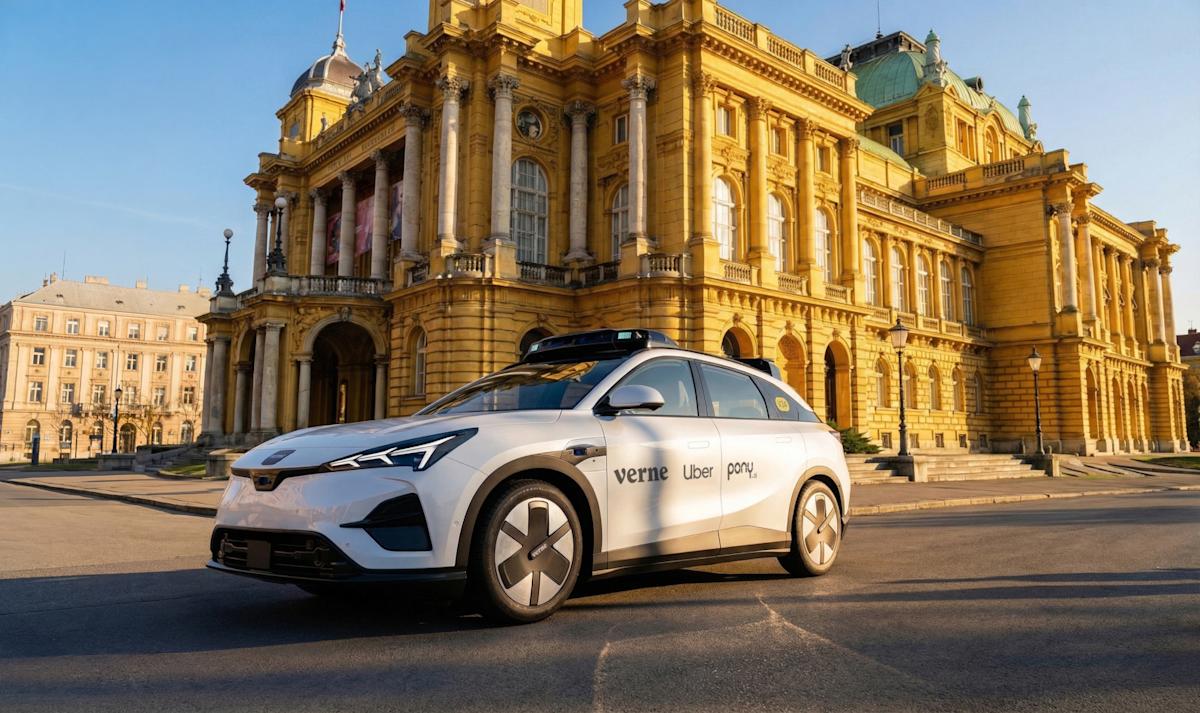
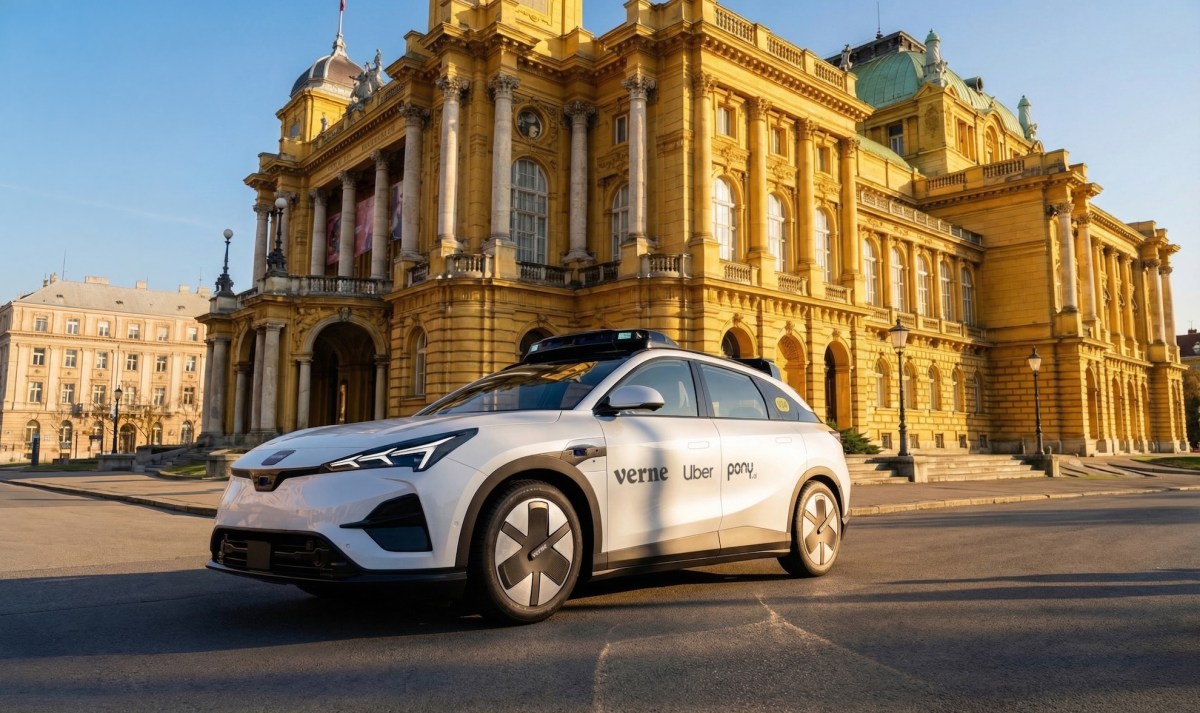
Uber and Chinese company Pony.ai are gearing up to launch a robotaxi service for Europe, starting with Zagreb in Croatia. The companies are working with Croatian company Verne, which will provide the service ecosystem and operational framework for the service. They’re using Arcfox Alpha T5 vehicles made by Beijing-based automaker BAIC Motor powered by Pony.ai’s Gen-7 autonomous driving system. Initially, the autonomous rides will be offered on Verne’s app, but they will eventually be available through Uber.
In their announcement, the companies said they have already started on-road testing in Zagreb, where the service will be available “soon.” They’re hoping to expand it to other European cities in the future, and then to more markets, with the goal of deploying a fleet with thousands of robotaxis over the next few years. Verne will be in charge of securing regulatory approval for the rollouts, while Uber has agreed to invest in the Croatian company.
This is but one of Uber’s partnerships centering around its efforts to offer more and more driverless rides to its passengers. Just earlier this month, it announced that it was launching a pilot program for a robotaxi service in Tokyo in late 2026 with Nissan and UK self-driving startup Wayve. Uber also started offering robotaxi rides to passengers in Las Vegas at the same time. The fleet deployed in the city is made up of Hyundai Ioniq 5 autonomous EVs, developed in partnership with Motional.
Mate Rimac, the founder of Croatian electric vehicle maker Rimac Group, started working on electric robotaxis seven years ago. Now, part of his vision is coming to fruition through a strategic partnership between Uber, Chinese autonomous vehicle company Pony.ai, and his own robotaxi startup Verne.
The three companies announced plans Thursday to launch a commercial robotaxi service in Europe, starting in Zagreb, Croatia. Pony.ai will supply the autonomous driving system and a robotaxi called the Arcfox Alpha T5 that was developed with Chinese automaker BAIC. Verne will own and operate the fleet, and Uber will provide its vast ride-hailing network.
The ride-hailing giant also indicated it intends to invest an undisclosed amount into Verne and support future expansion as a strategic partner.
The companies didn’t provide a specific launch date for the commercial service, though on-road testing in Zagreb — where Rimac Group is based — is already underway.
Verne doesn’t have the same name recognition as Waymo or Tesla — at least not in the United States. But it has the same outsized ambitions.
Verne started in 2019 as a project called Project 3 Mobility (or P3) within Rimac Group, a growing ecosystem of companies that includes hypercar maker Rimac Bugatti, Rimac Energy, and Rimac Technology. Mate Rimac holds a 23% stake in the group.
There were occasional updates about the project, but it wasn’t until July 2024 — when Verne launched with 100 million euros in funding — that the public got a more detailed look at its plans.
Techcrunch event
San Francisco, CA | October 13-15, 2026
Rimac’s vision has always been for Verne to operate an urban robotaxi service with purpose-built two-seater electric vehicles. That might sound like an odd mission for the person behind the Nevera, an electric hypercar that starts around $2.2 million. But as he explained to this reporter a couple of years ago, Rimac was never interested in making a high-volume EV that humans would drive — precisely because he believes that autonomous vehicle technology will make that business obsolete.
“It will take a while, but it’s coming; I’m sure about that,” he’d told me at the time.
Verne isn’t developing its own self-driving system. Instead, the company is focused on the urban electric vehicle, the ride-hailing app, and the back-end infrastructure to manage the fleet, including cleaning and maintenance.
Verne plans to produce its robotaxi EVs at a new factory in Lučko, Croatia, expected to begin operations later this year.
Verne hasn’t launched the two seaters yet, nor did it provide an update on the vehicles in its announcement with Uber and Pony.ai. The company said in November that it had produced and tested 60 verification prototypes.
For now, the Verne robotaxi service will use the Pony.ai-BAIC vehicle, the Arcfox Alpha T5. Users will be able to hail one via Uber as well as through Verne’s own app.
Verne is starting small with its commercial launch, but it has plans to scale to a “fleet of thousands of robotaxis over the next few years,” according to Thursday’s announcement. And its aspirations go far beyond the borders of Zagreb, the capital of Croatia and home to Rimac Group.
“Europe needs autonomous mobility that can move from testing to a real service,” said Verne CEO Marko Pejkovic, in a statement. “At Verne, we are bringing together the technology, platform, and operational capabilities required to make this a reality, starting in Zagreb before expanding to new markets.”
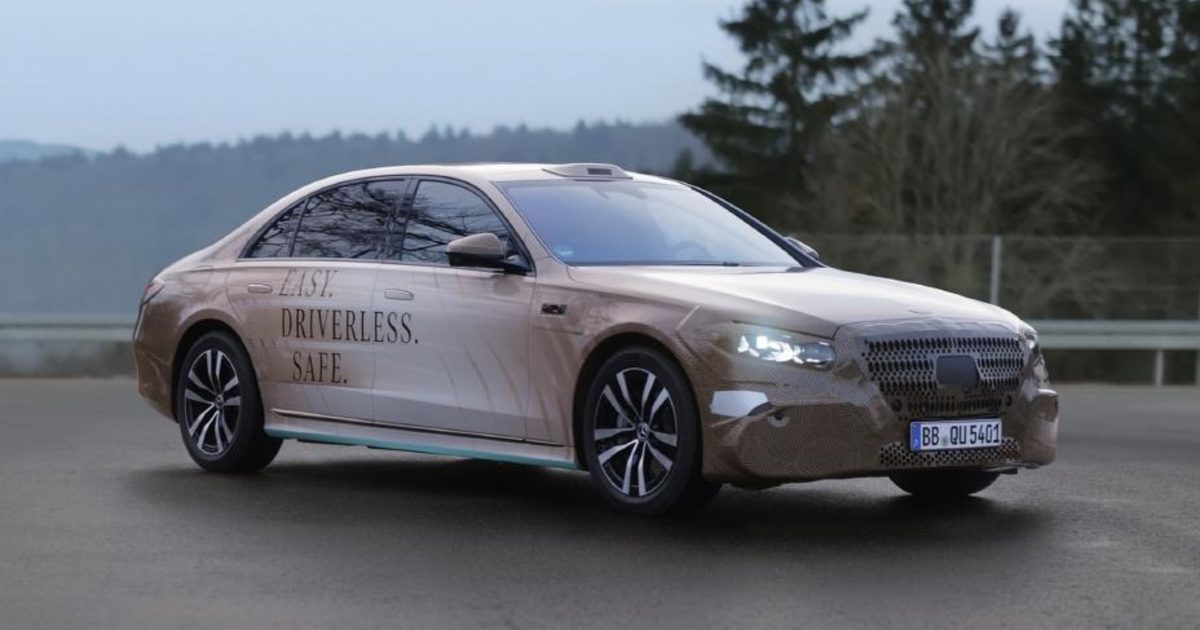
Uber, Nvidia and Mercedes-Benz have joined hands to develop a fleet of luxurious robotaxis based on the German carmaker’s S-Class platform. The companies recently confirmed the collaboration as part of a broader effort to build a global robotaxi ecosystem that combines Mercedes’ luxury sedan with Nvidia’s autonomous driving technology and Uber’s ride-hailing network.
The partnership builds on Uber’s ongoing work with Nvidia announced in October last year, in which Nvidia’s DRIVE AV software and DRIVE Hyperion architecture are being used to make vehicles “level 4 ready.” This means the vehicles will be capable of operating without human intervention in predefined conditions.
Mercedes-Benz says it has selected the new S-Class as the core vehicle for its robotaxi plans, citing the sedan’s advanced engineering and software architecture. The luxury model will be integrated with Mercedes’ proprietary MB.OS operating system, which provides a foundation for partners to build autonomous applications on the vehicle’s computing platform.
There’s no clear launch timeline yet
Uber’s role in this partnership is to integrate these autonomous vehicles into its ride-hailing service, enabling users to summon robotaxi through the Uber app. While no firm launch timeline has been announced, the partnership is aimed at deploying autonomous robotaxi services in several major cities worldwide.
The collaboration comes as competition in the robotaxi space continues to intensify. Companies like Waymo and Tesla have already tested robotaxis on public roads, but the sector faces growing regulatory and safety scrutiny. Waymo, for example, is currently under investigation after multiple incidents of its robotaxis violating traffic laws were reported last year.
New York’s latest state budget includes new disclosure requirements for businesses that use personal data to set different prices for different shoppers — for example, charging you more if you have a history of splurging.
Businesses that use personalized pricing are now required to tell customers, “This price was set by an algorithm using your personal data,” according to The New York Times.
It’s not clear how widespread this practice actually is among online retailers. An Uber spokesperson told the NYT that the company is now showing this disclosure to New Yorkers, although they described the law as “poorly drafted and ambiguous” and insisted that Uber only uses geography and customer demand to calculate its dynamic pricing.
The National Retail Federation filed a lawsuit to stop the law, but a federal judge allowed it to move forward.
Lina Khan, former chair of the Federal Trade Commission and now co-chair of the mayoral transition team for Zohran Mamdani, told the NYT that the law will be an “absolutely vital” tool for the government, but she also suggested there’s a “ton more work to be done” to regulate the practice.
Drivers for ride-hailing apps like Uber and Lyft will soon have the right to unionize in California as independent contractors, thanks to a bill signed Friday by Governor Gavin Newsom.
This is part of a larger deal between lawmakers, unions, and ride-hailing companies, resulting in the passage of separate bills supporting lower insurance requirements for Uber and Lyft, along with union rights for their drivers. When the deal was first announced in August, Newsom described it as an “historic agreement between workers and business that only California could deliver.”
The Associated Press reports that more than 800,000 drivers will gain the right to join a union and collectively bargain for better pay and benefits. Ramona Prieto, Uber’s head of public policy for California, told the AP in a statement that the two bills “represent a compromise that lowers costs for riders while creating stronger voices for drivers.”