Google on Wednesday launched the screen-less Fitbit Air fitness tracker in India, but is pricing at ₹13,999 (roughly $146), ostensibly positioning it as a premium device. Comparatively, the device costs $99 in the U.S.
Unveiled in May, the Fitbit Air features health and fitness tracking, like 24/7 heart rate monitoring, heart rhythm monitoring with A-fib (atrial fibrillation) alerts, blood oxygen level, resting heart rate, heart rate variability, sleep stages, and duration.
The device’s screen-less form is a bid to tap into the growing popularity of screen-less devices as people shy away from screens, opting for distraction-free health gadgets like Whoop’s fitness bands and Oura’s rings — though the new Fitbit is more pocket-friendly.
The health tracking space now has screen-less devices from Garmin, Fitbit founders’ new company, Luffu Link, as well as from Indian startups like Noise and Urban, which have been trying to undercut their Western rivals on price.
The Fitbit Air is available for purchase on the Google Store and retail partners, including Flipkart, Croma, Reliance Digital and Vijay Sales, from October 2. Google is also offering a free, three-month Google Health premium membership with the new band.
When you purchase through links in our articles, we may earn a small commission. This doesn’t affect our editorial independence.
India’s digital payment share has increased over the years, with the Unified Payment Interface (UPI) growing to over 750 million daily transactions. With an aim to reach over a billion daily transactions, Dilip Asbe, MD and CEO of the National Payments Corporation of India, which oversees UPI, thinks AI would be heavily involved in the next phase for user growth, fraud prevention, and credit distribution.
During an interview with TechCrunch at Mumbai Tech Week (MTW) 2026 last month, Asbe said AI could drive the next half a billion users with NPCI, India’s central bank, and the government working together.
“AI will be used very effectively when we look at the next wave of UPI, and that includes all aspects, including reaching new users. We must use AI effectively to protect our current citizens, to find fraud, and to find mules. AI must also be used to provide credit to all the users and merchants who have digital footprints,” he said. “We must use AI to look at the voice and multilingual solutions to make onboarding simpler.”
Many companies have talked about voice as an interface being important in India for chatting with companies or systems. Asbe believes that it is early days for that, as voice models will need to be more accurate. NPCI launched a voice assistant-based interactive system in 2023. Asbe noted that adoption for that yet to take off, and with the right use case, voice can become a critical component in the payment ecosystem.
AI in finance and regulations
In the U.S., startups and public companies are racing to add AI to finance. Coinbase and Robinhood now allow agents to trade on users’ behalf, and OpenAI lets you load personal account data into ChatGPT to get financial advice. NPCI has shown some demos around agentic commerce and payments with Razorpay last year. However, there hasn’t been a wider rollout of some of these capabilities.
NPCI’s CEO thinks that with robust regulations and a framework, India can also adopt AI-powered finance. He said that there should be enough protection for users and mitigation for risk — and in case something goes wrong, the system should be able to look at the instructions and consent given by the user to an agent.
Besides the usage of models, Asbe thinks that the Indian finance ecosystem has an opportunity to build small language models.
“We believe that the models will differentiate from each other based on the data sets that are made available to them,” he said. “We have a very rich data set in our ecosystem. I think there is a big opportunity for Indian companies — the banks, FinTechs, and the ecosystem — to create small language models which are sharp, specific, and as deterministic as possible.”
Last year, NPCI launched a model called FIMI to solve user disputes. Asbe noted that it is serving over a million users to cancel mandates and resolve issues, and is scaling fast.
During the conversation, Asbe said that UPI apps have very low switching costs and most core features are shared. He noted that PhonePe and Google have poured millions into their apps to attain their market position. He said that if new apps find viable business models within the fintech ecosystem, their share will rise.
“I believe that there are multiple issues why we see this concentration risk exist, and one of the important reasons is the availability of a viable commercial model. The moment we see the commercial model being available to the ecosystem, I believe newer players will start investing very heavily,” Asbe said.
In 2024, the payment body spun off its BHIM UPI app to make it more competitive and grow its usage. While its transaction volume has grown, its overall market share is around 1%. Asbe said that with BHIM, there is no particular target market share NPCI is eyeing. But it wants to make it a sovereign and secure alternative to other apps, Asbe said.
India is one of the biggest digital economies, and investors around the world will be looking at the regulatory landscape to put money into newer fintech solutions and make the market more competitive.
When you purchase through links in our articles, we may earn a small commission. This doesn’t affect our editorial independence.
The Indus app is powered by Sarvam’s locally trained 105-billion-parameter model — a measure of the AI’s scale and sophistication — andlaunched at the AI summit. The app supports 22 Indic languages and mid-sentence code-switching (the ability to fluidly mix languages mid-conversation, like switching between Hindi and English), which helps the assistant better understand the context of a query. Currently, the application doesn’t support offline usage, and it doesn’t have any integrated feature with the device to invoke the AI assistant through a shortcut.
The partnership is a potential testing ground for both companies to gauge the appetite for an India-focused chatbot.
“With this partnership, the first thing we want to do is get the Indus app to consumers,” said Ravi Kunwar, HMD’s CEO and Vice President for India and APAC, in an interview with TechCrunch. “Once they start using it, we will move to phase two to focus on driving more traction and stickiness. Right now, by pre-loading the app, we want to be more accessible to users,” he said.
The Vibe 2 5G is a mid-range Android phone with a 6,000mAh battery and a price tag of ₹10,999($114). Kunwar added the devices in the Vibe series of smartphones will also get the chatbot, and the company is also expected to launch a feature phone with Sarvam AI integration in the coming months.
That feature phone integration may ultimately prove more significant for both companies. HMD held a 4% share of India’s feature phone market in 2025, but its smartphone share was negligible — the company doesn’t even appear in the top 15, according to analyst firm IDC.
While it’s early days for Indus, the download numbers reflect that. Nearly three months after its launch, the app has been downloaded just over 293,000 times in India across platforms, according to Appfigures. By comparison, ChatGPT was downloaded 43.9 million times in the country.
It’s a big gap, but the strategy behind the HMD deal may matter more than the early numbers. Bundling a regional AI assistant with affordable hardware — particularly feature phones — is one of the more direct distribution plays available in a market as large and linguistically diverse as India, where English-language AI tools have limited reach. For investors and operators watching how AI adoption gets seeded in emerging markets, this partnership is worth tracking.
Sarvam has been one of India’s marquee AI startups. Beyond the Indus app launch, the company has focused on enterprise partnerships, especially for voice-based solutions. It is on track to become one of the most funded AI startups in the country, with reportssuggesting a funding round of $300 million at a $1.5 billion valuation is in the works.
When you purchase through links in our articles, we may earn a small commission. This doesn’t affect our editorial independence.
Apple is in talks with major Indian banks as it prepares to introduce Apple Pay in the country sometime in the middle of 2026, reports Bloomberg.
Apple is said to be in discussions with ICICI Bank, HDFC Bank, and Axis Bank, according to people with knowledge of the matter who spoke to the publication.
The report corroborates a story in January by Business Standard that said Apple Pay was preparing to go live in the Indian market before the end of the year. The Times of India also earlier reported the India plans for Apple Pay.
Today’s report says Apple is talking through the plan with global payment networks Mastercard and Visa. UPI dominates digital payments in India, and Apple Pay is expected to support the state-backed payments interface, which allows customers to instantly transfer money and bills.
Apple Pay launched more than 10 years ago, and is already available across 89 markets globally. Late last year, India’s central bank approved new rules that allow biometric authentication like Touch ID and Face ID for digital payments. The country’s authentication methods previously relied on one-time passwords sent over SMS messages.
The timing comes at a good moment for Apple in India. The company recorded its highest quarterly shipments in the country during Q3 2025, reaching 5 million units and securing fourth place in the market for the first time, according to IDC data. Apple is also rapidly expanding its retail presence in India, with a sixth store opening in Mumbai on Thursday.
In his Power On newsletter today, Bloomberg’s Mark Gurman said Apple will have a three-day stretch of product announcements from Monday, March 2 through Wednesday, March 4. In total, he expects Apple to introduce “at least five products.”
Subscribe to the MacRumors YouTube channel for more videos.
A week ago, Apple invited selected journalists and content creators to an “Apple Experience” in…
Apple CEO Tim Cook was among a handful of top tech executives who attended a classified CIA briefing warning that China could attack Taiwan by 2027, according to a sweeping investigative report by The New York Times ($).
The previously unreported briefing was apparently held in a secure room in Silicon Valley in July 2023. The meeting is said to have been arranged at the request of the…
Apple’s software engineers are testing iOS 26.3.1, according to the MacRumors visitor logs, which have been a reliable indicator of upcoming iOS versions.
iOS 26.3.1 should be a minor update that fixes bugs and/or security vulnerabilities, and it will likely be released within the next two weeks.
Last month, Apple released iOS 26.2.1 with bug fixes and support for the second-generation…
At last week’s India AI Impact Summit in New Delhi, industry leaders convened to discuss the future of artificial intelligence and how best to squeeze it into parts of your life you haven’t even considered. Notably absent was Bill Gates, who dropped out hours before his scheduled keynote over the ongoing scrutiny about his presence in the Epstein Files (though he continues to deny any wrongdoing). While the convention was reportedly a bit chaotic, what with the protests and all, the luminaries from around the tech world present nonetheless kept things upbeat and optimistic, declaring “full steam ahead” on the technological hype train carrying our speciesand planet off a cliff.
Also in attendance was OpenAI’s Sam Altman, who earned numerous headlines over the course of the event for his words and antics. His buzz blitzkrieg started on Thursday at a seemingly easy photo-opp layup with Indian Prime Minister Narendra Modi and other AI executives all raising their joined hands in a celebratory display of industry-wide solidarity. Altman and the former colleague and present CEO of Anthropic to his left, Dario Amodei, notably refused to complete the chain and hold each other’s hands, making for an all-too-poignant moment. Altman would continue to make news throughout the summit for his comments on the industry’s “urgent” need for global regulation and his sneaking suspicion that companies might actually be using AI as a scapegoat to whitewash their layoffs.
Altman started off by saying the claims about ChatGPT consuming “‘17 gallons of water for each query’ or whatever,” are “completely untrue, totally insane, no connection to reality,” before qualifying that, OK, maybe it was a valid concern when his company “used to do evaporative cooling in data centers.”
He went on to say that there is “fair” concern about the amount of energy data centers eat to crank out the most soulless slop you’ve ever seen, but suggested the onus of responsibility for dealing with AI’s ravenous appetite falls to the energy sector itself, which Altman feels needs to “move towards nuclear or wind and solar very quickly.”
Altman then stunned the crowd and firmly re-entered the discourse with a mind-blowing truth bomb for those who still felt AI was consuming too much energy.
“It also takes a lot of energy to train a human,” Altman rejoined euphorically. “It takes like 20 years of life, and all the food you eat before that time, before you get smart. And not only that, it took like the very widespread evolution of the hundred billion people that have ever lived and learned not to get eaten by predators and learned how to figure out science and whatever to produce you, and then you took whatever you took.”
It is true that every person and the sum total of human civilization have consumed a sizable amount of energy (and water) to get to where we are today. While the value comparison of a nascent tech industry and its models to the entirety of civilization and human beings may have elicited adulation at the summit, Altman got an icier reception from the internet. Social media quickly took to roasting the remarks as “dystopian” and “deeply antisocial and antihuman.”
Perhaps further illuminating the backlash, Altman’s energy comments butt up against the frustrating lack of transparency within the industry our collective futures now hinge upon. There are currently no regulations in place requiring data centers to disclose their water and energy consumption. Furthermore, center employees and business partners are typically muzzled by nondisclosure agreements. This has made reporting and research on the true expenditure levels a tricky figure to pin down.
At least we’ve got Sam to keep us informed while waiting for some clarity about what’s actually going on and being used in those centers.
India has been one of the top recipients of remittances in the world for more than a decade. Inward remittances jumped from $55.6 billion in 2010-11 to $118.7 billion in 2023-24, according to data from the country’s central bank. The bank projects that figure will reach $160 billion in 2029.
This means there is an increasing market for digitalized banking experiences for non-resident Indians(NRIs), ranging from remittances to investing in different assets back home.
Aspora (formerly Vance) is trying to build a verticalized financial experience for the Indian diaspora by keeping convenience at the center. While a lot of financial products are in its future roadmap, the company currently focuses largely on remittances.
“While multiple financial products for non-resident Indians exist, they don’t know about them because there is no digital journey for them. They possibly use the same banking app as residents, which makes it harder for them to discover products catered towards them,” Garg said.
In the last year, the company has grown the volume of remittances by 6x — from $400 million to $2 billion in yearly volume processed.
With this growth, the company has attracted a lot of investor interest. It raised $35 million in Series A funding last December — which was previously unreported — led by Sequoia with participation from Greylock, Y Combinator, Hummingbird Ventures, and Global Founders Capital. The round pegged the company’s valuation at $150 million. In the four months following, the company tripled its transaction volume, prompting investors to put in more money.
The company announced today it has raised $50 million in Series B funding, co-led by Sequoia and Greylock, with Hummingbird, Quantum Light Ventures, and Y Combinator also contributing to the round. The startup said this round values the company at $500 million. The startup has raised over $99 million in funding to date.
After pivoting from being Pipe.com for India, the company started by offering remittance for NRIs in the U.K. in 2023 and has expanded its presence in other markets, including Europe and the United Arab Emirates. It charges a flat fee for money transfer and offers a competitive rate. Now it also allows customers to invest in mutual funds in India. The startup markets its exchange rates as “Google rate” as customers often search for currency conversion rates, even though they may not reflect live rates.
The startup is also set to launch in the U.S., one of the biggest remittance corridors to India, next month. Plus, it plans to open up shop in Canada, Singapore, and Australia by the fourth quarter of this year.
Garg, who grew up in the UAE, said that remittances are just the start, and the company wants to build out more financial tools for NRIs.
“We want to use remittances as a wedge and build all the financial solutions that the diaspora needs, including banking, investing, insurance, lending in the home country, and products that help them take care of their parents,” he told TechCrunch.
He added that a large chunk of money that NRIs send home is for wealth creation rather than family sustenance. The startup said that 80% of its users are sending money to their own accounts back home.
In the next few months, the company is launching a few products to offer more services. This month, it plans to launch a bill payment platform to let users pay for services like rent and utilities. Next month, it plans to launch fixed deposit accounts for non-resident Indians that allow them to park money in foreign currency. By the end of the year, it plans to launch a full-stack banking account for NRIs that typically takes days for users to open. While these accounts can help the diaspora maintain their tax status in India, a lot of people use a family member’s account because of the cumbersome process, and Aspora wants to simplify this.
Apart from banking, the company also plans to launch a product that would help NRIs take care of their parents back home by offering regular medical checkups, emergency care coverage, and concierge services for other assistance.
Sequoia’s Luciana Lixandru is confident that Aspora’s execution speed and verticalized solution will give it an edge.
“Speed of execution, for me, is one of the main indicators in the early days of the future success of a company,” she told TechCrunch over a call. “Aspora moves fast, but it is also very deliberate in building corridor by corridor, which is very important in financial services.”
On Friday, the South Korean gaming company confirmed to TechCrunch that it has acquired a “north of 75% stake” in Nautilus, the gaming studio popular for its cricket enthusiast-focused Real Cricket franchise.
The Pune-based studio will continue to operate independently after the deal, which is expected to close by the end of the month, with all its 45 employees remaining on Nautilus’s payroll, Krafton told TechCrunch.
Founded in 2013, Nautilus has garnered millions of downloads for its Real Cricket franchise, which currently has five titles, including Real Cricket 24 and Real Cricket Premier League.
Real Cricket 24Image Credits:Nautilus Mobile
Krafton aims to strengthen Nautilus’s “core competence” in mobile cricket games — where demand is high in cricket-loving India — by refining its existing titles in the short term and exploring new genres in the long term, Sean Hyunil Sohn, CEO at Krafton India, said in an interview.
“Our development capability in Nautilus will help Krafton double down on its India gaming strategy, and together, we can probably build more games, more genres, both for the Indian market and global market going forward,” Nautilus CEO Anuj Mankar told TechCrunch.
Nautilus CEO Anuj Mankar Image Credits:Nautilus
The company plans to expand Nautilus’ presence to other geographies over time.
India’s mobile gaming market is growing steadily, driven by a large base of young smartphone users. Mobile games dominate the country’s overall gaming industry by spending, accounting for 77.9% of total revenue, per market intelligence firm Niko Partners. The firm also estimates that the country’s mobile gaming revenue will grow from $640 million in 2023 to $1.1 billion by 2028.
Krafton, which saw 119.3% year-over-year growth in its net profit last year to roughly $889 million (KRW 1.3 trillion), sees India as a promising and key market to continue its success. However, most of the growth from India has so far come from its flagship title for the local audience, Battlegrounds Mobile India (BGMI), which hit its highest-ever sales last year and surpassed 200 million downloads.
The company has other titles, including Bullet Echo India, Road To Valor, and CookieRun. However, they have not yet helped repeat the success story of the battle royale game, a localized version of PUBG.
The deal could help Krafton move beyond BGMI and explore new avenues of success, including cricket and other sports games, to attract new gamers.
Sean Hyunil Sohn, CEO, Krafton India,Image Credits:Krafton
Sohn told TechCrunch that while Nautilus’ potential was the reason for the initial investment, Krafton found its role as a minority stakeholder limiting in terms of supporting the studio’s content development. Gaining a controlling stake, he said, would allow for deeper collaboration and greater involvement in core development efforts with Nautilus.
“We strongly believe that cricket games have a lot of potential. And we want to work with Nautilus to make the best effort possible to really realize the potential of this market, not just in India, but in other cricket-playing nations and other countries, which are becoming more active in cricket,” said Nihansh Bhat, corporate lead development at Krafton India, told TechCrunch.
JetSynthesys will remain a “significant minority” investor in Nautilus Mobile and will continue to work with the studio on areas, including eSports. The company has already worked with the studio to help partner its Real Cricket game with cricket teams, including those associated with the Indian Premier League, the world’s most lucrative cricket tournament in India.
“We will, over a long period of time, want to look at, of course, increased revenue, increased user base, improved retention, all the usual things, and hopefully new deals as well,” Bhat said on the question of how Krafton would measure the deal’s success post its completion.
Until now, Krafton has invested over $200 million in India, excluding the Nautilus Mobile.
Krafton’s 20% investments in India have been in gaming and gaming-adjacent companies, though the company also invested in Indian startups, including the payments platform Cashfree, audio platform Kuku FM, and influencer marketing platform One Impression. It also backed funds, including gaming-focused Lumikai and IMM Investment’s first India fund.
“We are looking at the opportunity for acquisitions, moderate investments, and even business collaboration with notable players in the country,” Sohn said.
Nautilus will join the 14 other game studios Krafton operates in markets around the world.
Smartwatch shipments in India dipped annually for the first time in 2024, as consumers moved away from cheap, unknown brands. Apple bucked the broader trend, however, with a reported 2.4x growth for the year.
According to data from analyst firm Counterpoint, India’s smartwatch shipments dropped 30% year-on-year in 2024. Signs of slowing sales emerged last year, as the market was flooded with unknown brands. The trend aversely impacted established domestic players, slowing the pace of innovation as a result.
As the broader market faltered, Apple Watch saw a 141% increase in its shipments last year. That growth bucked a 57% decline for the company in 2023, according to Counterpoint.
Counterpoint senior analyst Anshika Jain told TechCrunch that the Apple Watch saw an uptick last year as, “some experienced users gradually moved to advanced smartwatches” for better health insights, smartphone integration, and other features absent on cheaper devices.
“We expect this growing trend to continue in 2025,” she added.
The growth in Apple Watch shipments aligns with the the iPhone’s expanding marketshare in the country. Apple emerged as one of the top-five smartphone vendors in India last year, with a roughly 10% share in in Q4.
However, Apple Watch’s sizable growth ultimately had little impact on its overall share of the 35 million smartwatches shipped in India last year, according to IDC. Counterpoint, which does not share absolute shipment figures, told TechCrunch that the Apple Watch comprised roughly 2% of India’s entire smartwatch market in 2024.
Apple Watch’s success boosted overall premium smartwatch (priced above $230) shipments in India, with 147% growth. The Series 10 was the top model, followed by the Series 9. The Apple Watch cumulatively captured 50% of the total premium smartwatch segment in the country, per Counterpoint.
Samsung and OnePlus were the other top players in the premium segment last year, with a 4% and 1% market share, respectively.
The deal, finalized this week, marks a significant exit for Wingify’s founder Paras Chopra, who built the SaaS startup without external funding since its inception in 2010.
The annualized revenue of the profitable Delhi-based startup, known for its popular website testing service VWO, recently touched $50 million. Chopra will retain a minority stake in the firm, one of the sources said.
Wingify and Everstone didn’t immediately respond to requests for comment.
Wingify serves over 4,000 clients across 90 countries, competing with global players like Optimizely and Google Optimize.
The acquisition adds to Everstone’s growing technology portfolio. The private equity firm has been actively investing in India’s technology sector, seeing opportunity in profitable, bootstrapped companies with global reach.
Accel has raised $650 million for its eighth India fund as the U.S. venture firm expands its investment strategy in the South Asian market.
The new fund follows the firm’s seventh India fund secured in March 2022. Accel — which has backed companies including e-commerce group Flipkart, food delivery platform Swiggy and software group Freshworks — has established itself as India’s most successful venture firm, serving as the first institutional investor in its portfolio companies.
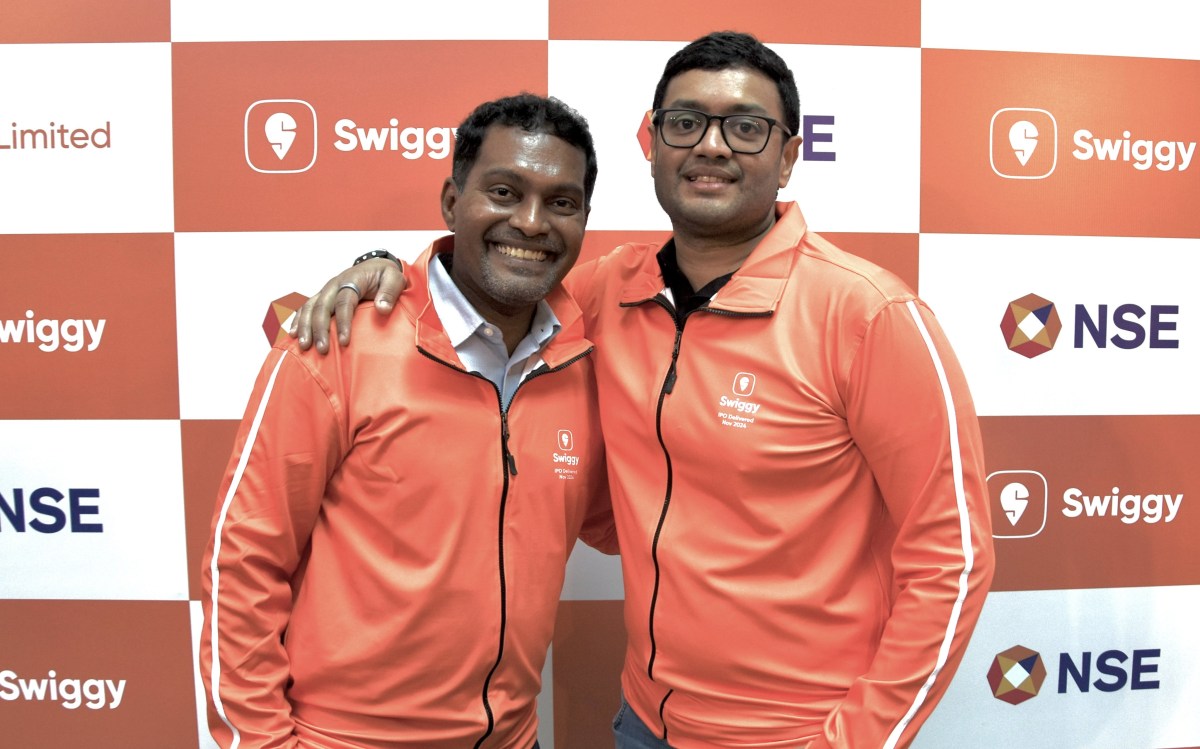
The firm wrote the first institutional cheque for Flipkart at a $4 million post-money valuation — an investment that has since surged in value, with Flipkart now worth more than $36 billion. Partner Anand Daniel led Swiggy’s seed round at a $2m pre-money valuation. Swiggy went public in November in what was the largest global technology IPO of 2024, at a valuation of $11.3 billion.
By 2022, the firm’s top-performing startups had collectively exceeded $100 billion in valuation.
The Indian startup dynamics has changed a lot since Accel first entered more than a decade ago. A key shift has been the increasing number of public listings, addressing previous criticisms. More than half a dozen Accel-backed Indian companies, including manufacturing platform Zetwerk and jeweller Bluestone, are set to go public this year, TechCrunch previously reported.
“India is fast becoming a promising hub for tech IPOs driven by its strong capital markets and a thriving innovation ecosystem that continues to attract substantial investor interest,” Daniel (left in the above picture) told TechCrunch in November.
Accel also remains one of the few Silicon Valley investors that hasn’t separated its Indian unit, while rivals Sequoia and Matrix have cut ties with their respective India funds in recent years.
The firm has recently deepened its focus towards rural India, betting against conventional wisdom that businesses serving affluent consumers in smaller cities and towns can achieve sustainable success.