BBS-era “door” games are preserved by the site Break Into Chat, along with their history. Now the site’s actually traced the origins of several ANSI art screens in the 1980s and “how different people later transformed the original images,” starting from one of the most popular bulletin board systems in St. Louis, Missouri.
“Fire Escape” was curator of the authoritative list of bulletin board systems in St. Louis’s area code and sysop of the area’s most popular board. Like many sysops of that time, Fire Escape enlivened her bulletin board by finding and repurposing older ANSI art. Eventually her BBS had 18 different logon screens in its rotation, many of which featured flames or mushroom clouds or made liberal use of red and yellow. Break Into Chatfollows the trail:
Some, maybe even most, of Fire Escape’s logon screens had actually been adapted from old school “public domain” ANSI art drawn in the late 1980s and early 1990s by folks such as Michael C. Ling, Lora Ruffner (aka “Ebony Eyes”) and Violet Stymacks…. Stymacks was unusually generous with her ANSI art. When she first began drawing, she combed through Fidonet node lists looking for bulletin boards with interesting or inspiring names. When she found one, she would draw an ANSI screen that fit the board’s theme, then send it to the sysop. Eventually, sysops began seeking her out, too. By late 1990, she claimed that 500 bulletin boards were using her screens. Three years later, that total had tripled, according to Boardwatch . I believe it — I have located more than 1,100 of her pieces so far. She was so prolific that it would be surprising if she hadn’t reused or remixed her own work over the years…
[D]id they intend for other people to do so? Or would they have considered such borrowing or adapting as “ripping” or just plain “stealing”? These questions have dogged the BBS, ASCII art, and ANSI art scenes from the beginning. A freelance writer named Patrick Grote grappled with this ethical dilemma in 1990. He had begun to publish archives of ANSI art that he had collected from various public messageboards and networks. But what were people allowed to do with the ANSI screens in these collections? Was it okay to modify them? “Tough call,” Grote said. “I know some people copyright their screens by inserting a little ‘(C)’ on it,” Grote wrote in a README file included in these collections. “Is this ‘true’ copyrighting? I would say yes, but then again, I don’t feel like having any legal action taken against me for using an ANSI screen. In my opinion, I would say leave the ones that say ‘(C)’ alone, but make every effort to contact the artist and ask for permission….”
When I corresponded with Fire Escape this year, she admitted her memory wasn’t what it used to be, but felt certain that she had not asked any artists for permission because she didn’t know who they were or how to reach them. “I figured if anyone had an issue, I’d just remove the screen,” she said.
The case as presented by Rebelzize seems fairly open and shut: A volunteer team being sued by a former volunteer over contributions excised from the project? There are potential material benefits to consider: Skyblivion has a level of scope and popularity that could leave participation in it as strong a resume line as shipping a commercial game. Fallout London’s developers even pivoted to being their own indie studio.
But that’s not a clear-cut monetary incentive, and the clout of participation is contingent on productive contribution to the project. While it is worth noting that we only have Rebelzize’s accounting of events, I think there are green flags pointing to his trustworthiness:
The call to action is for pro bono legal aid in line with the project’s overall volunteer nature, not fundraising.
The former volunteer is not named, and Rebelzize urges against the sort of Reddit gumshoe sleuthing you see so often in these situations.
Skyblivion as a whole has run for a long time without major scandal.
Unless you, the reader, are or know a lawyer with expertise in IP/GDPR cases—check out Skyblivion’s website to contact them, in that case—there’s not much for a given fan of the project to do. Rebelzize noted that he has paid legal help lined up should the call for volunteers fail. Even if a lawsuit is filed, it does not sound—at least from this vlog—like it could imperil Skyblivion’s release. I have questions, but ideally this whole situation will resolve cleanly enough that we never know exactly what happened:
What, specifically, did this volunteer work on in the game?
Did redoing this work have any bearing on Skyblivion’s delay from 2025 into ’26?
What happened here interpersonally? Was there an issue of crediting the work done? Are there any missing details that, if they don’t justify the volunteer’s legal threat, at least make it more understandable?
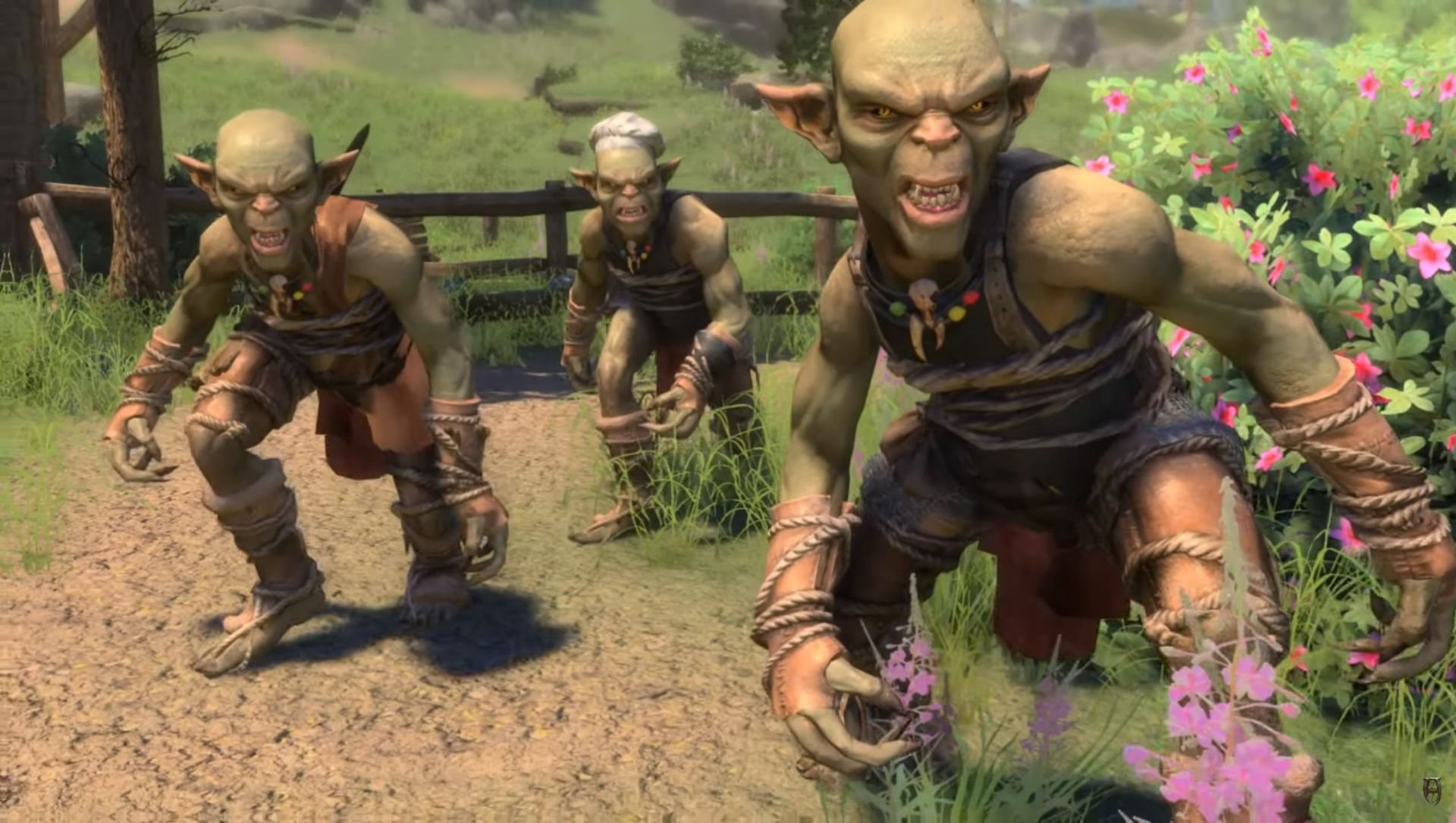
At last call, Skyblivion was still scheduled to release this year, but time is running short for that goal. We Elder Scrolls-likers at PC Gamer have been excited about it for years. Skyblivion promises a more ground-up remake of TES 4: Oblivion—complete with radically redesigned dungeons and biomes—in Skyrim’s engine. This is in contrast to the more graphics-focused Oblivion Remastered we got in 2025.
Keep up to date with the most important stories and the best deals, as picked by the PC Gamer team.
While science fiction lore tells us that humans will meet extraterrestrial life in the form of little green men, the detail that should raise hairs this Halloween is this: the search for extraterrestrial intelligence took a major leap forward with AI, and it increasingly focuses on AI agents built by humans listening for AI agents built by aliens.
Some scientists have suggested that extraterrestrial civilizations, if they exist, could be billions of years older than humanity. Such civilizations might have developed technologies far beyond humanity’s, including forms of AI.
Breakthrough Listen and the SETI Institute are bringing agentic AI into the daily search for extraterrestrial intelligence. At theAllen Telescope Array in Northern California, agents can now steer the instrument, enhance and correct incoming data, and apply AI models to the incoming stream — all from a single natural language request. The NVIDIA Holoscan platform processes the massive streams of sensor data, giving agents live data to act on.
The result is a faster, more adaptable search for potential signals from extraterrestrial life and technologies. “As our new agentic observatories reach out into the universe, what they find may have much more in common with themselves than with the humans who created them,” said Andrew Siemion, Bernard M. Oliver chair for SETI at the SETI Institute and principal investigator of Breakthrough Listen. “But this isn’t something to fear. Rather, it’s a breakthrough in translation.”
Terabits a Second, Processed in Flight
Radio telescopes generate enormous volumes of data, creating a challenge for scientists who need to identify potentially interesting signals as observations unfold.
At the Allen Telescope Array, DAQIRI, a Holoscan platform library, enables the telescope to pull terabits per second of sensor data straight into GPU memory so observations are processed in flight rather than filling hard drives. CyberEther, a signal-processing framework developed at the SETI Institute, does the math using NVIDIA CUDA-X libraries including cuFFT and cuBLAS.
Nexus, a web-based observatory orchestrator, acts as the agent harness. It gives agents a single source of truth for instrument state, compute resources and pipelines and lets researchers monitor packet loss, read live spectrograms and rewrite signal-processing blocks — all by prompting in natural language. The system can handle 2.4 terabits per second on NVIDIA RTX PRO 6000 Blackwell GPUs, with inference running on premises, next to the instrument.
Put together, the system enables an agent to steer a telescope’s antennae, calibrate and focus the instrument for a clean signal, catch and fix data errors and plot the result. Agents compress what would take humans weeks or years into hours.
Science Fact, Not Fiction
The pipeline has already proven itself, achieving the first real-time AI detection of a pulsar — a rapidly spinning stellar remnant that pulses like a cosmic lighthouse — in the Crab Nebula.
Next, the team is evaluating open models including NVIDIA Nemotron for cases where data locality and turnaround matter most and for observatories that may someday run offline on the far side of the moon.
This year’s smartphone crop wasn’t the most exciting. Iterative releases, paired with steep price increases, made it much easier to keep your money in your wallet. As an enthusiast (and someone with column inches to fill), it’s been difficult to watch. Foldables provided a breath of fresh air, but I can’t help wondering whether better devices are on the horizon.
Thankfully, the roadmap for the next few months gives us a bit more to look forward to. I can see myself getting excited about several upcoming devices, including from some names you wouldn’t expect.
Just because 2026 has shaped up to be an expensive dud doesn’t mean there’s no reason to get excited about smartphones going forward.
Which upcoming phone are you most excited about?
35 votes
Motorola Signature 27
At first glance, it might seem odd that I’m this excited about the upcoming Motorola Signature 27. It’s not a revolutionary folding form factor, and it’ll most likely be expensive when it launches. However, it’s a shift for Motorola and a device we desperately need in the US marketplace. I’m not naive enough to think Samsung will suddenly wake up and become the relentless innovator it was years ago. Still, more competition is a positive, and I like what Motorola brings to the table.
The Signature 27 is expected to have the new Snapdragon 8 Elite Extreme Gen 6 chipset, an impressive camera system, and a large battery. Moto is also promising 7 years of software support, which is what you’d expect from a flagship. Unfortunately, it is 2026, and I’m sure the phone will carry a hefty price tag.
However, Moto has a chance to offer a real alternative in a way others can’t. The company’s devices are in carrier stores, with all the potential for discounts and trade-in offers that come with that. Buyers will have access to generous financing, and Moto has a chance to siphon off curious buyers used to adding $30-40 a month to their phone bill.
I don’t think it’s a device Motorola can use to turn the tide, but I’ve loved the Razr series for years, and it will be welcome to have a third viable option alongside Samsung and Google.
Samsung Galaxy S27 Ultra
Stephen Radochia / Android Authority
It goes against every fiber in my body to be genuinely excited about a new Samsung (non-folding) phone, but here we are with the Galaxy S27 Ultra. I feel like we’ve been teased for years, and I kept telling myself there’s no way the company would roll out the same general design again. It seems like the upcoming Galaxy S27 Ultra is where we will finally see a break.
The phone will sport a new look, as Samsung is redesigning the camera bar. It’ll also come with a long-overdue upgrade under the hood. We’ve seen Samsung start to dabble in silicon-carbon batteries in the latest Z Fold 8 series — including an unspecified percentage of silicon in the anode. The Galaxy S27 Ultra is expected to go all the way this time; even though the cell capacity, at a rumored 5,700mAh, will still be below much of the overseas competition, it’s a step in the right direction.
While I can criticize Samsung for a lot of its hardware decisions, the software has been solid. One UI 9 remains an excellent experience for Samsung fans, and One UI 10 promises more of the same. I wish the company integrated its AI strategy a bit better into the daily user experience (Now Brief is painful), but there’s plenty to like about the company’s overall software efforts. Combined with (finally) refreshed hardware, the Galaxy S27 Ultra promises to be a good one.
Google Pixel 11a
Stephen Radochia / Android Authority
I’m looking forward to the Pixel 11a, not because it promises to be an outstanding upgrade, but because I can’t wait to see what Google does with its midrange phone. The Pixel 10a just saw an unsightly price increase, jumping to $600. I know prices are shifting and costs are rising, but something doesn’t sit right with the phone at that price.
Still, all is not lost, and Google has a chance to impress with the Pixel 11a. I lived with a relatively unchanged spec sheet on the Pixel 10a because I felt keeping the price the same mattered more than anything. If Google keeps the Pixel 11a at an elevated price, I’d like to see something in return. I am sure we wouldn’t get more RAM, but the Tensor G6 chipset returning to the A-series would go a long way toward easing frustrations.
As much as people like to whine about the Pixel 10a, it still offers more than what you can usually get at that price — especially with all the Pixel extras. However, $600 is $600 for a midrange phone, and we’re justified in asking for as much as we can.
OnePlus 16
Stephen Radochia / Android Authority
It’s absolutely cruel that OnePlus chose this year to abandon the US market, as the OnePlus 16 is shaping up to be a monster. The phone is expected to feature the Snapdragon 8 Elite Extreme Gen 6 chipset, an upgraded camera, and a 9,000mAh silicon-carbon battery. Pair that with the already impressive OnePlus charging speeds, and you’d get a phone that could easily be the battery champ of 2027. I got phenomenal battery life from my OnePlus 15, and I can’t even imagine what a cell of that size could produce.
Although I’m frustrated the phone won’t be easy to pick up in the US, diehards will still have luck importing global versions. I have no issues using overseas devices on T-Mobile, and plenty of MVNOs run on their network that should be solid as well (I’ve also used Mint Mobile).
Samsung Galaxy TriFold 2
Stephen Radochia / Android Authority
I understand it felt like exactly 30 people got to pick up a Galaxy Z TriFold, but I was one of them, and I haven’t kept quiet since then. It completely changes how you want to use your phone, and if I didn’t have to keep switching my SIM around to test new devices, it would be my daily driver without a second thought. Unfolding your phone to reveal an expansive 10-inch display with a wider aspect ratio is fantastic for work, watching video, and web browsing. It’s ridiculously expensive, but as Ferris Bueller would say, I highly recommend one if you have the means (or a business account you can write off).
Naturally, rumors of a sequel got me excited. I’m sure the phone will get the usual spec bump, and I don’t have any pressing notes on the design. However, I’d love for Samsung to work on the price. If the Galaxy Z TriFold 2 were released at $2,500, it wouldn’t exactly be affordable, but it would make it more of a conversation. Flagship smartphone prices are inching towards $1,500, and foldables start around $2,000. A $2,500 price point and higher production numbers might get the TriFold 2 into more hands, and I’m telling you, you’ll love the experience.
2026 may not have been the most exciting year for smartphones, but the next few months should make up for it if you didn’t buy anything. I may be one of the few left who think smartphones can still be exciting, and 2027 should prove me right.
Valve recently admitted that it has a problem with AI slop games and clones flooding Steam—it doesn’t know what to do about it just yet, but it at least acknowledges that it’s an issue. Now we have Roblox, speaking from the other side of that coin in its Q3 2026 shareholder letter, in which it bragged that the July release of Build, its AI-powered “prompt-to-game creation tool,” users have published more than 70,000 games.
“During the last three months, we have witnessed an inflection point in AI adoption and content generation in the gaming industry overall, and on Roblox in particular,” the letter states. “AI-enabled game creation, automation in code generation and AI supported asset creation are leading to an explosion of content. The time it takes to go from an idea to a playable game is compressing dramatically, and so is the time it takes to adapt a game for new devices.”
The “explosion of content” remark is what jumps out at me first and foremost. Is that really a good thing—content, in explosive quantities? That is essentially what Valve is facing on Steam that’s widely considered a problem—an ever-growing mountain of content—yet in the world of Roblox, it’s a feature, not a bug. And Roblox is not looking to stem the tide.
Latest Videos FromPC Gamer
“We have been embracing AI to accelerate creation since the first release of Roblox Studio Assistant in December 2023,” the letter continues. “Over the past month, more than 80% of the top 100 games on Roblox (ranked by hours engaged) used AI tools to accelerate creation, and the number of daily asset uploads to the Roblox cloud tripled month-over-month.
“Since Q2, time spent using AI tools (including Build, Studio Assistant, and external AI via MCP) tripled among our top creators, and those using our MCP server daily grew nearly 5x. In Q3, Break and Steal an Egg and Huss Valley were both created almost entirely with AI and both broke into the Roblox top 20 (ranked by concurrent players). Build is our new prompt-to-game creation tool. Since its alpha launch in New Zealand, Singapore, Serbia and Thailand, more than 500,000 users have used Build—and have published over 70,000 games.”
As content becomes abundant, attention and connection become scarce. What sets our distribution apart is that it runs on social connections.
Roblox
Take a moment to think about that: Build launched in July, five months ago, which means we’re looking at a rough average of 14,000 games per month. And that’s with Build still not fully launched yet, so only a fairly small portion of the Roblox userbase has access to it. I can’t help but wonder, with a certain sense of alarm, what will happen when the doors are opened to more populous parts of the world.
Roblox, however, says it is “uniquely positioned to capture this moment,” which is seeing “traditional barriers to software and content creation” giving way to a focus on “distribution, audience aggregation, monetization, discovery, and safety.”
Keep up to date with the most important stories and the best deals, as picked by the PC Gamer team.
To further capitalize on that, Roblox has kicked off two new initiatives: Roblox Everywhere, revealed in September as a way to make Roblox games playable outside of the Roblox platform, and the Universal Player, which is basically the reverse of that: “AI is used to seamlessly import any existing game into the Roblox cloud platform while transforming it to run multiplayer, on any device (at the upper edge of the device’s performance capabilities), with instant join, instant UGC updates, local 3D, and access to Roblox services for discovery, safety, communication, and monetization.”
That’s interesting: Details are scant but the idea seems to be to make Roblox a platform for all game developers, akin to Steam, GOG, or the PlayStation Store, with minimal fuss or muss: Just make your game, then zippity-pow it through the AI machine, and suddenly you’ve got a full-on Roblox game and access to a massive audience that previously would’ve been much more of a headache to reach. And Roblox gets basically the same: Its goal “is to capture 10% of the global gaming market and an even greater share in the US.”
“As content becomes abundant, attention and connection become scarce,” the letter says, extolling the virtues of Roblox’s platform. “What sets our distribution apart is that it runs on social connections: people come to Roblox to play with their friends, so every new game can reach players through an existing social graph, through friends inviting friends, and through social influencers, which we believe enables great content to find its ideal audience faster than on any other platform.”
Maybe Roblox is right. Hell, maybe EA chief Andrew Wilson was right—maybe the future really is all about billions of people cranking out content while corporations fight over where to put it all. It’s hard to argue that Roblox hasn’t put up serious shareholder value so far, after all, and while Steam doesn’t have shareholders it’s still making bank, AI slop problem or no. Still, I can’t say that making speed and quantity the key indicators of success really represents the kind of future for videogaming that I’d like.
Salesforce has agreed to acquire Rune Technologies, a startup that builds AI software to help the U.S. military predict supply needs and manage logistics from the field, for $375 million in cash and stock, Resilience Media reported.
The acquisition underscores Salesforce’s push into defense tech through Missionforce, its business unit serving national security and defense agencies. Since Missionforce launched last year, its business has grown 80% year over year, driven in part by a new 10-year, $5.6 billion contract with the U.S. Army, the company said in a blog post. By integrating Rune’s frontline logistics data, Missionforce will extend beyond back-office administrative planning to support battlefield operations.
Since its founding in 2024, Rune has raised a total of $30 million from investors, including Andreessen Horowitz, Point72 Ventures, and IQT, a CIA-backed nonprofit venture firm formerly known as In-Q-Tel. The startup was last valued at $127 million when it raised a Series A led by Human Capital last year, according to PitchBook.
Salesforce has been on an acquisition spree this year. In addition to Rune, the CRM giant agreed to buy AI agent platform Fin (formerly Intercom) for $3.6 billion, bought Qualified for $1.2 billion, and signed an agreement to buy Listen Labs after the startup walked away from a $125 million Series C term sheet at a $1.5 billion valuation, as TechCrunch reported.
Salesforce didn’t respond to a request for comment.
Nvidia is in talks to guarantee billions in debt financing for AI cloud provider Nscale’s planned Anthropic data center in West Virginia, The Information reported Thursday. Bloomberg later corroborated the report. Anthropic has signed a $44.6 billion contract for the project’s first building alone, according to Nscale’s IPO filing. In essence, the chipmaker would be co-signing a customer’s loans, a sign of how hard the AI industry is working to keep its buildout plans afloat as investors grow jittery about the amounts of money involved.
The proposed arrangement would help Nscale secure financing for the electricity and construction costs of its West Virginia campus. Under what’s known as a residual value guarantee, Nvidia would step in if Nscale defaulted on construction payments, temporarily take over the facility, and help find a buyer and new tenant, according to The Information.
Nvidia’s earlier support for cloud providers has mostly covered leases and chip purchases, not construction.
The stakes are high for Nscale, which is seeking to go public at a valuation of up to $35 billion despite growing concerns about its ability to deliver on ambitious data center projects.
Anthropic’s contract with Nscale covers the first 460-megawatt building at Nscale’s West Virginia campus, which is expected to use Nvidia’s next-generation Vera Rubin chips. The companies are also discussing a second deal worth roughly $45 billion for another building.
This month, Microsoft pulled out of a planned Nscale site in England after grid power for it was pushed into the 2030s.
Nvidia has been a major financial backer of the sector, extending roughly $170 billion in investments and credit support to neoclouds and large customers, according to The Information. That includes $1 billion in convertible financing committed to Nscale in September.
Neoclouds, which rent out AI computing power without a cash-rich core business behind them, have come under pressure from investors. Shares of CoreWeave, Nebius, and IREN had each fallen more than 30% in October as of last week, CNBC reported.
The proposed guarantee would deepen Nvidia’s financial ties to Nscale while helping secure a major customer for its chips. Anthropic, one of the largest buyers of AI computing power, has spread its infrastructure spending across multiple chipmakers. One investor told The Information that Anthropic’s involvement likely explains Nvidia’s interest in keeping Nscale’s project on track.
The discussions also come as Anthropic faces questions about how it will finance its own rapid expansion. The company filed to go public this week, but Blackstone has warned investors that Anthropic may receive a below-investment-grade credit rating after its IPO. A junk rating would raise Anthropic’s borrowing costs and could push it to keep relying on stronger partners to back its debt.
When you purchase through links in our articles, we may earn a small commission. This doesn’t affect our editorial independence.
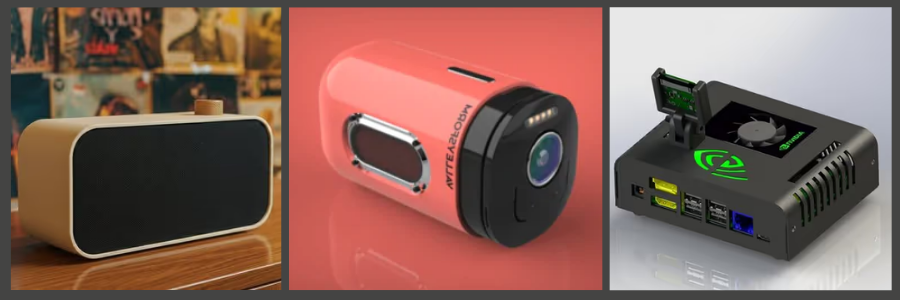
How do you validate a product idea before prototyping? Most failures happen not because it’s poorly designed, but rather because it solves problems customers don’t really have or aren’t willing to pay for. Product Validation exists to address this kind of challenge. It is done before investing in expensive prototype design services or manufacturing, to check first whether people are genuinely interested in your idea. The simple feedback and comments can help in revealing areas of improvement so the design can be adjusted before manufacturing begins. To help you in developing a product with high-quality renderers and help in presenting the idea, browse Cad Crowd and connect with vetted professionals now.
What’s the cheapest way to validate a product idea?
One of the most doable and cheapest ways of validating a product is by researching your competitors and the market before spending money on prototypes or manufacturing. This can be done simply by looking at products that already solve the same problem and studying them. This can help in understanding what’s already available in the market and identifying gaps and opportunities where your idea could offer something better.
Search bestseller and review sections for gaps.
One easy way to validate the product is to search and explore best-selling products on platforms like Amazon, Etsy, or other industry-specific marketplaces. This can help in showing what customers are willing to buy and it shows what’s already in the marketplace. It is often misunderstood how a competitive market is deemed a bad thing. This is not really the case, it just means that customers are actively looking for alternative solutions.
Read 1-star and 2-star reviews on competing products.
Low-rated reviews are often left unread but it could be one of the best free sources of customer feedback. Reading these can give the new product designer a better understanding of how customers disliked the product. It shows problems like poor quality, missing features, confusing designs, or products that didn’t perform as expected. This helps in knowing what to improve in your product and not just focus on what it can do.
Looking for complaints that have been repeatedly posted across different brands can be helpful. This proves a universal challenge or struggle that customers experience and could be a real market gap that your product can solve. These reviews can give you a direction on what to do and not do. It helps in building a product that they’re willing to pay for instead of just assuming what customers need.
Analyze competitor pricing tiers.
It matters to check the competitor prices to compare products and features. It helps in positioning your product and in understanding what customers are already willing to pay for. Here, you’d have a better insight of the budget, mid-range, and premium products every brand can offer. Comparing the pricing tiers can actually help you in deciding how your product is positioned in the market. Here, you can decide to focus on being the more affordable choice, with extra features or create a premium product with a proven added value. It is important to understand the competitor pricing early to help in setting realistic expectations when it comes to profit margins. It helps in avoiding pricing too low or high.
Check search volume and trend direction.
To check in trends and demands in the market, you can use tools like Google Trends and keyword search. This helps to see whether people are actively searching for products like yours. It can show if there’s really a public interest in a product category. It shows whether it’s growing, staying steady, or declining over time. This helps in deciding and positioning your product to check if there are really potential customers. The search trends can also help you to understand when and where interest is strongest. It helps in providing information that can guide your product development, marketing, and launch timing. Even a strong product can fail in the market because of decreasing demand. This is why it is important to check the search trends before actually committing to the design development.
Scan past crowdfunding campaigns in your category.
You can opt to explore and browse Kickstarter, Indiegogo, and other crowdfunding platforms to see how similar products performed. This helps in knowing how each campaign has reached its funding goals, how much it has raised, what rewards it offered, and how it presented its products. It can give you guidance and a better understanding of what attracts most customers as well as what kind of ideas gain support. Although reading only successful campaigns can be tempting and make you feel inspired. Reading unsuccessful ones can be valuable too. Doing this can help in better understanding what lessons were learned and what went wrong. It shows how the products struggled in the market. This platform also provides real purchase-interest data from people who were willing to spend money.
It also matters to list down the main competitors and do a comparison check based on key features and pricing. This can be done in a simple chart or spreadsheet. Doing this helps in seeing which products offer basic, mid-range, or premium features at different price points. With new product design services, this benchmarking makes it easier to understand where your product fits and how it can stand out from all those existing options. If you have observed a gap wherein there are only a few or no products in that category, it could be a great opportunity for you. However, it’s not always perceived as a guaranteed win. This is because sometimes the gap exists because the customers aren’t really interested in that combination of features and pricing. It is best to confirm and check whether the gap is a real opportunity or not.
How do you validate demand through customer interviews?
One of the best ways to find out the weak points, strong points, and opportunities for a product is to conduct customer interviews. It can help to talk to 10-12 people who closely match your target customer. This includes considering your ideal age group, profession, or lifestyle. According to research, this number can help in identifying common opinions and repeated patterns that can add value to your feasibility. (Statistics Solutions, 2025, citing Guest et al., 2006)
Recruit strictly from your target profile.
In doing customer interviews, it matters to stick to speaking with people who genuinely match your target customer. This is because their feedback can represent a greater number of target customers. Talking with friends and family may give biased data since they tend to be supportive. It may not be able to reflect what real buyers think unless they actually fit your intended market. To better do this, it is best to look for participants in places where your potential customers already spend time. This includes online communities, forums, social media groups, Reddit, or existing customer lists. Their feedback matters since they are likely your potential customers and could give you a clearer picture of their needs.
Ask about current workarounds, not your idea.
When doing the interview, it is best to avoid pitching the idea right away. The most ideal approach is to ask open-ended questions like, “How do you currently solve this problem?” or “What’s the most frustrating part of your current solution?” This can help in encouraging customers to speak their mind and talk honestly about their experience instead of just listening and reacting to your product idea. Before spending money on DFM services, it matters to understand what customers already do and know if they spend money to solve the problem. This can give a better signal of real demand. In the interviews, ask their daily routines, habits, frustrations, and workarounds. These can reveal whether the problem is important enough for people to pay for a better solution
If you pitch your product idea during the early part of the interview process, customers tend to be just polite rather than honest. It is actually best to avoid talking about the product early. Positive feedback does not necessarily always show signs of demand; it could simply mean they’re just supporting or encouraging you. Instead of just pitching your ideas, what could help is learning about their problems, habits, and current solutions first. Listening to them talk about their frustrations can introduce a way to talk about your product. This is a more natural approach and would be able to receive more honest insight about it.
Use “why” questions to find root causes.
During the interviews, as you talk with the customers, they can express their frustrations but may leave out the real symptoms of the problems. To reveal the real opportunities, it is best to ask follow-up questions “Why does that bother you?” or “Why is that important?” This helps in identifying what the actual pain points behind their frustrations are. When this question is revealed multiple times, it can reveal the root cause and how it can be solved.
Ask indirect willingness-to-pay questions.
Directly asking customers, “Would you pay $50 for this product?” can be misleading and would just make them say yes but never really purchase it. It is better for the product concept designer to ask questions first that reveal how customers currently spend money to solve the problem. Study what products or services they’re already using and how much they cost. It can give a more realistic view of their willingness to pay.
Look for patterns before concluding anything.
One positive piece of feedback can make you feel inspired to go on, but it actually does not equate to a winning product idea. This single person may just be excited to explore ideas or may be just a supportive person. It does not fully represent the larger target market. It’s best to look out for common patterns across multiple conversations. This can give a stronger signal that the problem is worth solving.
Turn Customer Feedback Into a Clear Product Concept
Turn your early interview insights into an attractive concept by hiring a freelance product designer on Cad Crowd. From sketches into concepts or visual prototypes before investing in full development, Cad crowd has vetted professionals for you. Check it now.
Can a landing page prove demand before you build anything?
A smoke-test landing page refers to a simple way of testing whether people are genuinely interested in your product. It’s not about asking directly what they think of your product; you create a basic page that explains the problem your product solves, shows a concept image or render, and asks visitors to take an action. This calls them to join the waitlist, sign up for updates, or request early access.
Build one page with a single, clear value proposition.
To create a good landing page, it should be able to communicate the product idea clearly. It should be easy to read and understand for the buyers and attractive enough for them to stop and look. Focus only on one main problem and one main solution. It does necessitate explaining possible features. The visitors should have a basic understanding once they see the page. It is important to send too many messages or different selling points as it could confuse them.
Use a short explainer video if the concept is hard to picture.
It is common to struggle in explaining a product in just words or images. This is why some landing pages would add a short explainer video to help customers see how it works. It is not necessary to build a full prototype; a simple demonstration using 3D animation services or sketches, or product rendering, can be enough to show the concept and the benefits. One example is Dropbox. Here, the founder just created a demo video to explain the idea before building the full system. It has helped potential users to understand and has expressed their strong interest. (Shortform, 2026)
Track email signup rate as the core metric.
A landing page should only provide valuable insights when the right people are viewing it. The most common misconception is trying to attract many people, but really, it is more important to only focus on reaching people who actually match your target market. Even though it’s only a small group, it is considered most valuable if they provide more useful feedback rather than having thousands of visitors who are not actually interested in buying.
Segment signups by traffic source.
It is usual to track numbers of visits in your landing page, but also pay attention to where those visitors come from. It is helpful to track signups by sources like social media, online communities, ads, search traffic, or email campaigns. This can be valuable information in knowing what channel or platform attracted people to take an interest in your product.
Test pricing or feature framing on the page itself.
The landing page can also help in testing more than whether people are interested in the product. It can also show what aspects or features of the product attract them the most. This can be done by testing different versions of the page with applied changes like headline, benefits, or key features. This can help the design for manufacturability company in seeing which gets the stronger response.
How do surveys reveal what people will actually pay?
Surveys can only work best after you have identified and understood your audience through an interview, research, or landing page. When this was done by sending out randomly. It could just create misleading results since respondents have no idea about your product.
Use the Van Westendorp price sensitivity meterT
Coming up with an ideal pricing can actually be a struggle because customers may give unrealistic answers when asked: “Would you pay $X for this product?” This can be fixed using the four-question method from Van Westendorp Price Sensitivity Meter. The simple questions asked entail when the product feels too cheap, a good bargain, expensive but still worth considering, or too expensive to buy.
Survey your waitlist or interview list, not a cold audience.
It is important to only send out to a focused group of people who expressed interest in the product. This could be the group of people who are on your waitlist, landing page signups, or interviewed participants. These people would give more insightful responses and feedback because they have also shown interest and they know the relevant problems and solutions.
Ask people to rank features, not rate them all highly.
In a survey, avoid just having the customers rate each feature, as it could lead to them just rating everything highly. A better approach is to have them rank the features to know which one is their most prioritized feature. This forces them to choose and reveal what matters the most to them which gives the product engineer a good idea of the product concept. For instance, they can choose a longer battery life over lower cost.
Cross-tab results by segment.
The survey results can become even more useful when you look beyond the overall average. Customers have different needs, budgets and priorities. It is important to break down the responses by factors like age, lifestyle, profession, usage habits, or spending behavior. This can help in seeing which groups have shown the strongest interest in the product.
Treat stated willingness-to-pay as directional, not final.
Survey responses do not guarantee buying decisions. Customers can answer them, but they do it in a more hypothetical way. It is not always the reality when spending their own money. Manufacturing companies use survey results are used to identify a reasonable price range. It’s better used for understanding a customer’s expectation when it comes to pricing. The strongest validation comes from when the customers take real actions. This included joining a pre-order or placing initial deposits.
Are pre-orders and crowdfunding real validation?
One of the strongest ways to validate interest is pre-orders and crowdfunding. It can test the customers whether they’re truly interested and willing to make a purchase. This requires customers to take real action by committing money before they even receive the product.
Choose Kickstarter or Indiegogo based on your funding model.
When you launch a crowdfunding campaign, it is important to choose a platform that meets your funding needs and business strategy. Kickstarter uses an all-or-nothing mode. This means you can only receive the funds if the campaign has reached its goal. This would create urgency and could show an even stronger market validation. The catch, however, is that when you miss the target, you won’t receive anything.
Understand realistic odds before you commit.
Crowdfunding can be deemed a power move, but it does not really guarantee success. In early 2025, only 42% of Kickstarter campaigns reached their funding goal. This means that more than half of the population did not meet their target and received nothing. Of the successful campaigns, the most successful raised the most money relatively, with many campaigns bringing in less than $10,000. (Statista, 2025; SearchLogistics, 2026)
What design fidelity does each validation step actually require?
Validation Stage
How Detailed It Needs to Be
Typical Deliverable
Competitor & marketplace research
None
Spreadsheet or notes only
Customer interviews
A simple idea sketch is enough
Hand sketch or simple concept board
Smoke-test landing page
A more realistic-looking design
Photorealistic 3D render
Surveys
Realistic visual is needed
Photorealistic 3D render or product photos
Pre-orders / crowdfunding
A near-final product appearance is needed
Photorealistic render or a working prototype to strengthen the trust
In here, you can observe that not all ideas would require a prototype right away. Early validation can be done and executed just with sketches and visuals. Detailed prototypes and realistic designs are only needed when money is required from the customers.
How do you score a go/no-go decision?
Area to Check
Go
No-Go
Cheapest Way to Check
Demand
3+ interviewees independently describe the same pain/weak points
People do not show a clear or repeated interest in solving the problem
Customer interviews with potential target market
Competition
A clear gap or underserved segment exists
Many similar products already exist and there is no clear reason customers would choose yours
Research competitors, reviews and marketplaces
Margin
Target retail price comfortably covers a 3-5x markup over landed cost
Production costs are too high, which leaves little profit even at a realistic selling price
Rough cost estimate vs. survey pricing
Acquisition cost
A believable, affordable channel to reach buyers exists
It is quite unclear how to find customers without spending too much on marketing
Test interest through a simple landing page and measure responses and feedback
Before committing to invest in a product, check the signals first. If there are two or more “no-go” areas, then it could be a signal to revisit the idea before proceeding to prototyping. This helps in avoiding spending money on ideas that are not likely to succeed.
Frequently asked questions
How many customer interviews do I actually need?
The ideal number is around 10-12 for a homogeneous target audience.
Do I need a working prototype to run a Kickstarter campaign?
Not really, most successful campaigns can successfully launch with photorealistic renders and not working prototypes. A prototype may help in building trust but it’s not necessarily a requirement.
What’s the difference between a survey and a smoke test?
A survey is more about asking people what they think they’d do. A smoke test, like a landing page with an email signup, is a channel for measuring what people actually do when given a real choice.
What if my product idea fails the go/no-go scorecard?
Treat it as valuable information and not actually a verdict. It can help in improving the design in a way that it can appeal to more buyers. It does not mean to fully abandon an idea.
Product validation is not really a single yes-or-no test. It’s not straightforward to know the answer. It is a step-by-step process that can be of help in reducing risks before committing to a design development. The practical approach is to start with the low-costs method before proceeding to more expensive ones like pre-orders and crowdfunding. The goal is to collect a stronger proof of demand. It does not need to be all expensive. It just needs clear visualizations to start. When you need a professional to test your concept or create clear visualizations for your surveys and landing page, Cad Crowd can help connect you with vetted freelancers to do customer-ready designs. Contact us for a free quote.
MacKenzie Brown is the founder and CEO of Cad Crowd. With over 18 years of experience in launching and scaling platforms specializing in CAD services, product design, manufacturing, hardware, and software development, MacKenzie is a recognized authority in the engineering industry. Under his leadership, Cad Crowd serves esteemed clients like NASA, JPL, the U.S. Navy, and Fortune 500 companies, empowering innovators with access to high-quality design and engineering talent.
Responding to fears that Marathon’s future will dictate Destiny support, Bungie product head Josh Deane encourages players to support only the games they enjoy.
In a lengthy blog post sharing hopes for a “new forever Destiny” and “Destiny ‘Legacy'” project, Deane noted that, “we will all tell you that nothing can help bridge us into [the] future more than for Marathon to rapidly evolve and become sustainable.”
On the heels of some heady talk of business plans, milestones, and project progress bars, some readers interpreted this as a sign that the health of Destiny 2 hinges on the state of Marathon. While it’s surely true that greater success for Marathon would put Bungie in a healthier spot as a business, Deane stresses, in a series of tweets, that “in no way is the Destiny plan contingent upon Marathon.”
Latest Videos FromGamesRadar+
“I understand my intent is being mistranslated here and that’s on me,” he says of his Marathon comments. “Play what inspires you, whatever it is. Mainly hoping we can accomplish our goals in both lanes with a stronger relationship with our entire community!”
“Just looking to serve players that love both/either worlds while we build the future,” a separate reply adds. “But definitely not asking players to support x to get y, and not building the plan that way. Just personally believe that there is an empowering force for that future if there is shared encouragement, and respect, as a Bungie community!”
Two additional replies narrow the focus. “Don’t buy Marathon as a donation or offer anything else,” Deane says. “It’s our job to show up for you.”
“Only buy or play a thing that inspires you from us / you think is cool!” he reiterates. “We will find our way back home with Destiny.”
Weekly digests, tales from the communities you love, and more
Now-former Marathon game director Joe Ziegler, another in a string of high-profile departures, previously told us that Marathon was never meant to replace Destiny 2, nor did the two games necessarily have a lot of overlap in player appeal. In urgent efforts to bolt on a compelling PvE mode, Bungie’s actively injecting a little bit more Destiny into Marathon today.
(Image credit: Bungie)
In September, Bungie acknowledged that Marathon “did not reach as many players as we had hoped.” The game’s active user base has collapsed since launch – down from a peak of 88,000 on Steam to a daily average in the range of 2,000 or 3,000. Some decline is expected for any live game post-launch, but Marathon is definitely struggling, and it has been for months with seasonal updates failing to rekindle the game.
The player response echoes a feedback loop also seen in Destiny 2 PvP: as lower-skill or casual players leave Marathon, lobbies become more grueling, queue times get longer, and getting into the game or making meaningful progress becomes more difficult with hardcore veterans pouncing on any fresh meat. Marathon’s unflinchingly harsh design philosophy already turned some people away at the door, and this spiral only made things worse. But the game’s problems, like offering compelling reasons to redo seasonal progression after mandatory wipes, run deeper.
Some people learned to love the pain, of course, as Andy does in our Marathon review. I also put 130 hours into the game in what now feels like a cough syrup fever dream. But after many costly years in development, Bungie’s going to need more than a small group of sickos to keep Marathon alive. So even if the two games are decoupled, the future of Destiny and Marathon remains uncertain.
I wanted to add a big of a longer blurb here for the video this week from Tim Runia.
That’s not because I wanted to dive into the complexities of creating videos but because there is a key message here that holds true regardless of what you are shooting or editing.
You can see how he takes a set of shots involving some rather mundane action and turns it all into something else entirely.
He walks through the decisions behind the transformation, from arranging foreground and background elements to create depth, to using contrasting clothing colors and controlling the light to help the subject stand out.
The real starting point here is deciding what the audience should feel, which gives each later technical choice a clear purpose.
The tutorial then connects those visual choices to filming and editing.
Tips such as a wide shot establishing the setting with medium shots and close-ups bringing attention to actions and expressions.
He demonstrates how holding a shot a little longer can create curiosity, how a subtle move toward the subject can build anticipation, and how room ambiance, footsteps, a zipper, and carefully chosen music make the scene feel complete.
For beginners, this offers a manageable exercise to try at home: take one ordinary activity and experiment with framing, light, shot selection, and sound.
Intermediate creators can use it to examine why technically competent footage sometimes lacks atmosphere or emotional impact.
Its value lies in showing how these skills work together, giving you a practical way to make your next sequence feel more deliberate and tell a clearer story.
Can Studio Lighting Be Ready in Seconds? – 60 Second Studio EP.2
This is Part Two of a series with Gabriel VIP tackling a familiar obstacle for all video creators: getting everything ready before you can press record.
As part of his 60 Second Studio series, this week he takes a look at how remote controls, lights that share the same control app, and saved lighting presets can speed up the process.
He shows how these changes reduce his lighting setup time from 70 seconds to just 17, including restoring the colors and brightness settings he changes when filming other footage.
These are all improvements that cost nothing, such as keeping the background tidy and preparing memory cards after footage has been safely backed up.
For any beginner and intermediate creator, it shows how the small, repetitive tasks that make filming feel like a chore can be streamlined.
Remember the key point here which is that replacing equipment is generally optional; the practical lesson is to build a repeatable routine that makes starting your next video easier.
Filmora 16 – Fix Shaky Footage for Smooth Camera Movement
The introduction of high definition footage into the hands of the average user was in itself a huge leap forward for all of us.
However, with that introduction came two technical problems.
The first was that even the slightest hint of a shot being out of focus was magnified by the high definition capture resulting in footage that looked terrible.
Fortunately with most modern devices, whether cameras or phones, the new breed of auto-focus systems have caught up.
The second problem has not been quite as simple to fix.
That problem is shaky footage.
Many, many creators these days are working handheld and that, combined with high definition, can result in footage that can be pretty hard to watch!
Whilst it is true that onboard stabilization features have improved and are improving all the time, we are still left with software stabilization as the final solution.
Currently there are two main types of stabilization available in most editing software.
One is the old school type that tries to analyze the footage, identify the unwanted movement and compensate for it.
In many cases this can be enough, but usually it means you as the operator to some degree need to understand what type of stabilization is needed in order to guide the software.
On top of that, there will always be some amount of cropping done to the image in applying the process meaning you lose of of your original full frame.
The other type of stabilization currently getting better and better is AI driven.
This form of stabilization analyzes the images of the footage, identifies what should be moving and what should not and applies the fix.
However it adds an extra step in that it “rebuilds” the outer perimeter of the image that would normally be lost.
You can see the Filmora version in action below.
How to Color Grade Specific Areas in Filmora 16 – Color Mask
A few weeks back Filmora updated to version 16 and as I mentioned at the time, they seem to have (mercifully) taken a little break from all the AI stuff!
One of the new features I liked was the greater flexibility being offered in the area of masking.
They have always had pretty good masking features but the new one is really good.
It allows you to apply multiple masks at the same time but more importantly, apply color correction and grading to each mask.
The video below show what you can do with it.
Techniques for Working with Highlight Effects in PowerDirector
This next video explores Power Director’s Highlight effects and how you can use them to draw the viewer’s attention to a particular part of a video or photo.
The tutorial demonstrates options such as glows, spotlights, flashlights, and masks, showing how each changes the look of the image or video footage.
It walks through the controls available for customizing these effects, including their position, size, feathering, shadow, and color.
As you can see for yourself, it seems to be a fairly specific kind of effect but possible worth having up your sleeve at any given time.
4 Cutting Tricks Every Video Needs in CapCut (Pro Editors Use Them All)
Agnes from Dina and Agnes takes over the helm for this week with a very helpful tutorial on editing cuts.
Bear in mind that Dina and Agnes work exclusively in CapCut and as a result all their tutorials are aimed at that editor.
However many of their videos, like this one, apply to any editing situation using any video editor.
With most editing jobs there is a lot of emphasis placed on effects and corrections and a bunch of other stuff but your core action as actually making cuts.
In this video Agnes runs through some great information giving an understanding of when, where, how and most importantly, why you should make a cut.
Basic Training for Adobe Premiere Elements 2027, Part 3 of 8
In part three of his Adobe Premiere Elements 2027 basic training series, Steve Grisetti explains how to assemble a video project and work with clips on the timeline.
He introduces the basic editing moves involved in placing and arranging footage, helping you understand how your individual clips fit together into a sequence.
The tutorial also explores ripple editing which is how changes to one clip can shift the footage that follows, and demonstrates how to remove unwanted gaps between clips.
This is probably the key video in his series given that you will spend most of your time editing working on the timeline.
This One Change Makes You Look Confident On Camera (Even If You’re Not)
As a person who absolutely hates being in front of the camera, I’ll take any advice going!
In this video Chris runs through some very handy tips for anyone wanting to appear confident on screen.
Year ago I was involved in the music industry and I remember seeing quite a big singer at that time just before he was going on stage to perform.
It is still a vivid memory because the guy was bent over a bucket at the side of the stage, throwing up violently!
Later I asked him what that was all about and he told me it was a pretty regular occurrence.
He also told me he had long since given up on expecting to feel totally comfortable while performing, but had mastered the art of appearing comfortable, and that was as good as it was going to get!
So the trick here is that even if you don’t feel comfortable, you should at least look comfortable.
Easy Picture In Picture for your YouTube Videos in DaVinci Resolve
One of the reasons I use DaVinci Resolve as a video editor is because of the Color page.
This is one of the most powerful features of Resolve and once you come to grips with it, it becomes easily the best in class for getting clips right.
However! One of the downsides of using Resolve is that it is aimed at pro editors.
The result of that is that the program seems to be pretty complicated from the outset.
In reality, it is not that complicated but when it comes to pulling off simple effects, it certainly can seem so!
The key to this is knowing how to do it in the first place because once you know, suddenly it is simple!
Here’s how to create a Picture in Picture effect using resolve.
Key Takeaways
Tim Runia teaches how to make ordinary scenes cinematic by focusing on audience emotions and utilizing techniques like framing and lighting.
Gabriel VIP shares tips for quick studio lighting setup, reducing preparation time significantly while emphasizing the importance of developing a routine.
Filmora 16 introduces improved stabilization options, both traditional and AI-driven, to fix shaky footage effectively.
New Filmora features allow for advanced masking and color grading capabilities, enhancing editing flexibility.
Agnes from Dina and Agnes explains essential cutting tricks in CapCut, emphasizing the importance of timing and purpose in cuts.