38 Top Tips for Outsourcing Physical Product Development with US Product Design Firms


Outsourcing the whole physical product development design process in the US is a pretty smart move if a company wants balance high-quality production and flexible innovation. Working with prototyping design firms in the US could be a convenient choice since it may be easier to handle. Communication is also smoother, which helps avoid misunderstandings and keeps the project moving more efficiently. This keeps things moving faster while ensuring that in every process, there are fewer mistakes from not understanding the technical specifications.

It is better to outsource experienced professionals who know their way around and can handle the complexities of prototyping, engineering, and preparing a product for manufacturing. Cad Crowd can connect businesses with the specialized talents to make it easier to find the right freelancer for design and engineering. In Cad Crowd, top-tier professionals are guaranteed to be vetted and ready to take on your projects to success. 

RELATED: The Importance of Iteration in Product Development & Working with Product Design Companies

1. Defining your product vision

Before even reaching out to any US product design firm, it is best to have a solid idea of what this product is actually supposed to be. A well-defined concept about the project and the product will lead to reducing confusion during the product’s initial meetings. It is a must to have a clear vision about the project because it will guarantee that everyone is on the same page, and this will avoid any confusion that could lead to delays.

2. Understanding the scope of the product

During the initial phases of planning, a clear definition of the scope of work, who it is for, and what problem it solves should be addressed. It is important that it should not be too vague, and it should be intentional about what it wants to deliver. Being specific in requirements makes it easier for external partners and the team to follow and deliver expected accurate results.

3. The importance of US-based firms

Picking a US-based product concept design firm simplifies the legal and logistical challenges a product development may face. It is simpler in a way that the local rules are already defined, and the specific standards are straightforward. Less time is needed to figure things out. It actually helps in expediting the whole process from a rough idea to market. 

4. Choosing the Right US Design Firm

In choosing a design firm in the US, it does not follow a one-size-fits-all. Companies have their own strengths and niches. It is important to do market research and narrow down choices based on the project needs, like the technology they use, industrial equipment, vision, and relevant experiences. All this could impact development success and reduce the learning curve. 

RELATED: How to Calculate a Product Development Cost Estimate for New Products

5. Evaluating portfolios and case studies

When looking at a 3D design firm’s portfolio, it’s more than just the flashy 3D renders because the photos cannot tell the functionality of the product. A strong portfolio should be able to tell a story behind the design. Design firms can easily give an aesthetic design, but not all can deliver one that is aligned with the purpose of the building, as to why it was built. It is really about seeing if they have that talent and the ability that can solve a real-world problem, or are they just someone who is good at making things look appealing. 

6. Assessing technical capabilities

Technical Capabilities also matter in choosing a potential partner. The work experiences they have must be aligned with the capabilities the project requires. This means that the portfolio should be able to show similar complexity to the project, or they have specialized technical knowledge that can be applied to the project. This reduces the risk of a failed experiment. 

7. Recognizing differences in time zones

There are a lot of things to consider when choosing product designers. Employing a US firm will mean that the client is accepting the time zone they are working in. It is beneficial if both parties are in the same time zone, but if not, then it is best to plan an ahead-of-time communication schedule to avoid delays. There should be a consistent meeting to help in maintaining momentum and reducing misunderstandings with technical details and design intent.

8. Setting a realistic budget

Before partnering, there should be a set budget in mind. This makes it easier to narrow down US design firms. Once settled, the budget should also be shared with them, so they know the limitations and construction. From there, a prioritized list of features could be discussed and agreed on based on financial constraints. 

RELATED: Prototyping Techniques Utilized for Complex Products at New Product Design Companies

9. Understanding the design process

Most of the established product rendering design firms have a structured design process. Familiarizing oneself with these stages helps in understanding where the team is now in the timeline. It helps in tracking milestones effectively and efficiently. 

product design and development firms

10. Communication

In outsourcing, it is only a success if there is consistency and transparent communication between an internal and an external team. Utilizing healthy communication is a safe haven that can help avoid misunderstandings, which can result in expensive design mistakes and delays. In order to have an effective partnership, it is important to instill transparency. By having this, it will ensure that the development will be faster because there is no confusion that is standing in the way that can delay it. 

11. Protecting intellectual property

Since a client or a company is dealing with an external party or team, it will be much more efficient to have a security and protection for the shared ideas and sketches or any documentation, having this can make sure fraud and stealing will not happen. This can be ensured by having a Non-Disclosure Agreement (NDA) in place. 

12. Evaluating prototyping speed

Since the market is quite competitive, the ability to make and iterate quickly via 3D printing services or CNC machining is a major asset. It is best to ask firms if they have their own prototyping equipment right there in the office to conduct changes easily and quickly. 

RELATED: Wearable Product Development: 6 Key Challenges for Product Development Companies

13. Looking for manufacturing links

When looking for a top-tier design firm, it goes beyond the drawings they can do, but also the established relationships they have with their manufacturers. Having a solid long-term connection with manufacturers says a lot about the firm. It means that they have a reliable partnership and have built trust with each other. This connectivity ensures quality in outputs and large-scale production requirements. 

14. Checking references and reviews

In choosing, it is definitely important not to rely on just word of mouth but to dig into references, reviews, and verified testimonials to ensure that the 3D modeling design firm is reputable. Portfolios are not enough to tell how good a company is. Yet, it is okay and understandable to screen and ask about a firm’s reliability and how they handle the pressure that is happening every day. 

15. Navigating regulatory compliance

Depending on what industry you are in, the product needs to meet specific standards like UL, FCC, or even the FDA before you are allowed to sell it. The rules could have changed, so it is important to be prepared beforehand by knowing what’s required for compliance to have a better grasp of these certifications. It is important to comply with these because it will make sure that your product is up to the standards and will keep everyone safe.

16. Managing cultural alignment

Working with a firm that actually shares your business culture and work ethic can lead to a much smoother collaboration, generally. Having a shared value promotes harmony and culture in the partnership, applying this will make it a lot easier to connect with each other. More than just having a matched schedule, it is about making sure that the partner’s professional integrity aligns with your own internal standards to avoid conflicts and errors in the future.

17. Emphasizing sustainability

Since the world is leaning more towards sustainable approaches, the 3D design professional chosen should be able to understand and execute manufacturing processes that are aligned with green construction. Discussing material choices and life-cycle assessments can ensure product alignment with the environmental goals. 

RELATED: Why Product Design Services Use Photorealistic Rendering for Marketing New Products

18. Planning for Scalability

Working on a product is simple, not a one-time launch; it should be future-ready. Which means that the design firms you are in partnership with should be able to cater to a larger-scale production. 

19. Reviewing contractual terms

Since you will be working with an external team, a thorough review of contract terms is strictly needed to ensure that there is a retention of full rights to the final design. Payment schedules should also be clearly identified, as well as terms regarding completion milestones. Setting terms avoids conflicts and disputes that may arise later on. 

20. Maintaining internal ooversight

Having an external does not mean just letting them be. There should still be an internal member to oversee the work they’re doing and keep track of the progress. This ensures consistency and quality of work, aligning them to the original design intent and vision.

21. Handling revision cycles

Not all designs are final, some need to be checked.  This is why iteration and revision cycles are important in discussion to know and plan how to handle it. Some new invention design firms may only have limited iterations offered, and this could affect the whole design development process. A flexible design firm has the capacity to adjust to changes and refine the design based on testing and feedback, and all of these should be agreed on during the initial meeting. 

3D product modeling designers

22. Evaluating risk management

To ensure the design firm can handle potential design flaws, it is best to discuss with them their experience with and how they manage them. Having an approach to risk management safeguards the company’s investment and keeps the project aligned with the schedule. It is crucial to keep the company away from risks and errors because it can make the product and the company fail due to these matters. 

RELATED: Why 3D Product Models Are Replacing Traditional Photography for Product Design Companies

23. Maximizing market readiness

In reality, outsourcing is more than just designing a product, but about ensuring that the product will be ready to be sold in the real world. A good design would mean nothing if it can’t stand in the market. This is why it is important to work with product design professionals that go beyond creativity and visuals and know their way around with the essential documentation needed to make the product market-ready.

22. Building long-term partnerships

Outsourcing is not just a one-time transaction. It’s more effective to think of them as a long-term partner since it is possible that after the first production, they’d also do the future upgrades as well. Once the connection is built, they’d be able to adapt to your brand’s style and identity, making them an easy party to work with. 

23. Understanding domestic manufacturing benefits

One of the biggest advantages of choosing a US design firm is its quality control in prototyping and initial production. From here, there could be faster feedback from closely monitoring issues. US design firms also have speedy production, accelerating turnaround time for testing and adjustments if needed, reducing high costs and time.  Having to employ and utilize what the firms offer can keep the product development standing, thus it will allow room for more improvements.

24. Utilizing professional feedback

An effective product design and development team can take professional feedback into a fresh perspective for refinement and improving the product. It is always best to be transparent with comments and feedback to have a healthy discussion on how to improve the product for the betterment of the product. 

25. Adapting to market trends

US-based design companies are at the forefront of the global design trends and consumer preferences, which is one of the advantages. This makes it easier to have their input on what’s trending in the market and apply it to the product. 

26. Strengthening competitive advantage

Outsourcing has given companies the luxury of access to skills and expertise that are not available within their internal team. And instead of being limited by in-house skills, having an external specialist makes a big difference and edge when it comes to innovation. Having it does not mean it just improves functionality and creativity, but it also speeds up the whole development process, which is really needed so that quality products can be reached. 

RELATED: How to Use 3D Product Modeling and 3D Product Photography for Company Advertising

27. Streamlining the workflow

A professional design for manufacturability (DFM) firm not only offers talents, but having them will only mean that clients can also adapt and be familiarized with their way of working. Rather than having to guess around, which will make them just figure out how they do things, it is necessary to follow their structured workflows to keep the project organized and seamless. 

28. Selecting the right materials

Material selection determines the feel and durability of the product. US design firms can have input on how to choose a material based on the product’s purpose, the budget, and manufacturing plans. They know their way around in balancing it and finding a perfect fit for the product. 

29. Understanding duty and tariffs

It is crucial to consider the final product’s manufacturing location and related taxes because it is a must, and even if the manufacturing design firm is the only part of the project that is outsourced, it is crucial to know these things. In order to prevent risks and maintain the product’s transparency, a reputable design business can assist in negotiating the finished product’s classification and taxation.

3d product modeling services

30. Identifying design patents

In product development, it is easy to focus on how it works, but the look it has could actually be valuable. Design firms know unique parts of the drawing and guide you to apply for a design patent application. This helps in protecting and securing a design from getting copies. 

31. Navigating product liability

When a design is carefully thought out, it reduces the risks of accidents that could damage the company’s image. A professional US design firm knows how to weigh and prioritize safety standards to protect not only the consumer but the company’s reputation. 

RELATED: Tips for Product Design Firms: Validate New Product Ideas & Squash Launch Failures

31. Implementing quality control

To set expectations of the output, there should be an established criteria o r benchmarking for the quality control. This ensures that every unit is checked based on the provided metrics and meets the standard performance set.

31. Leveraging open innovation

Fresh ideas often come from areas outside your usual comfort zone. A versatile US design firm can bring new and fresh insights that can give creative and unique innovation to the product for its betterment. 

32. Monitoring global regulations

When the company has plans to sell goods abroad, it has to follow the global environmental standards. This is applicable to all companies, even if you are already located in the US. Having experienced US product concept development experts by your side helps ensure that your products can pass the required processes to meet the global standards.  

33. Staying current with hardware trends

The trends for sensors, batteries, and microchips constantly change, and this could be a problem if the team assigned does not have any knowledge of handling this. A US design team can handle this so that the product to be launched won’t have outdated technology. 

34. Securing supply chain redundancy

In sourcing parts, it is advantageous to have multiple suppliers to work on your product. The design firm can utilize having other vendors to handle other batches to reduce the risk of halting production due to one supplier’s failure. 

35. Managing customer expectations

A good US new product design firm knows how to communicate the vision and original intent based on the product design. It should clearly tell how it should be used and what it is for. Having a user-friendly strategy that keeps the users from having any problems is what an intuitive design means.

36. Integrating feedback loops

Feedback is important in improving a product. It includes all useful information on how it fits the user experience. It is important to create a system where feedback is given quickly from the early prototype to the final design. Doing this ensures that the product is refined in alignment with market demands and needs.  Feedback is really helpful because it makes it possible to have a product that is already up to the standards, and if errors are identified using the feedback, it will be much easier and faster to solve the problem.

RELATED: How Successful Companies Utilize 3D Product Modeling Services for Compelling Product Imagery

37. Leveraging local ecosystems

Since the US design firms are located in areas where there are a lot of innovation hubs, such as Silicon Valley, Boston, and Austin, there is access to a sufficient number of expert ecosystems. Tapping and getting involved in this network helps in providing more resources for more specialized testing or manufacturing. 

product design expert designers

38. Evaluating software compatibility

In choosing a CAD design firm, ensure that the version of CAD software is compatible with your internal system. This is to ensure that you can access the drawings and provide feedback. This makes the whole process more organized and seamless. 

How Cad Crowd can be a help?

If you are not sure about your project or any development that you are in the process of making, this platform is for you. Yes, creating and finishing a task can be a little more overwhelming and exhausting, yet with Cad Crowd, you can have the suitable designers and product engineering professionals here, they can also help you with making sure that every product is made with quality and is up to the standards not just by the client but also with the people who are the target market of it. 

Cad Crowd is a platform that continues to serve the clients to have a connection and partnership with the different talents, professionals, experts, and even freelancers. It has a massive pool of craft 3D artists that has a specialization for whatever case you need. They can truly help make the clients, companies, and businesses turn their dream vision into a reality that can be sold in the competitive market. When outsourcing for talents that could be a great help, Cad Crowd is a place where you can never go wrong.

We all know that finding the right and suitable talents can be a lot challenging, yet with this platform, it will be much more efficient to get the job done. Cad Crowd is a valuable place to be. Rather than relying on a single person, Cad Crowd can give you access to multiple and various prototype engineering professionals who could have a significant effect on your company. This place not only covers one specialization, but also includes different fields. It means that you can have the chance to explore different ideas that can be a match for your project needs. 

RELATED: Product-Centric vs. Customer-Centric: Which Is Best for Consumer Product Design Companies?

The following are some of the factors that Cad Crowd helps:

Talent matching

One factor that a lot of clients and companies stick with using the platform Cad Crowd is that they give out the best and most reliable person or team for the project. It is hard and can be pretty challenging to recruit freelancers yourself, but with the Cad Crowd, it helps you discover and identify professionals and freelancers who specialize in specific tasks, such as project designing, design engineering services, architectural, electronics, and more. By having Cad Crowd, clients not only save time, but also their resources, which leads to having the best talents that can work and really understand their work. 

Flexibility and scalability

Traditional ways often lean on having a team that is working for the long term. But with Cad Crowd, you can only employ them for a short period of time, whether it be project-based. Having a full team for the long term can cost a company a lot of money, but with this, you only have to pay for what you are availing of. This flexibility can help companies that are just starting in the market. In terms of scalability, you can only employ the said freelancers when you need them, and if not, you can always make room. 

Collaboration and communication

Professionals and product rendering freelancers sometimes tend to work remotely, with Cad Crowd you can track every change, review the progress, and check the work of the said professionals. This guarantees that, despite working away, clients can still have control of the projects. Collaboration and communication allow for any ideas and visions to help the product, without this, misunderstandings are prone to happen, which can delay the process.

Risk reduction

Employing the wrong talent can affect the whole development of the product; it can lead to delays and failure. Cad Crowd is the answer to this as they already have the skilled professionals who are knowledgeable about the projects and can offer guiding the whole process. Safety is what keeps everyone using any product. When safety is guaranteed, trust is already given, and with that trust, any company and client can thrive. 

RELATED: Sustainable Product Design and Product Development Principles for Firms to Consider

Conclusion

Outsourcing physical product development to U.S. design firms is a significant move that can lead to success. Having suitable approaches, such as planning, communication, and budgeting, minimizes the room for errors, which makes the project a success. Yet, it is challenging to have the right product design for assembly services professionals and talents that could do the work, but with Cad Crowd, any problems can be solved in no time. 

Even if traditional U.S. firms offer reliability and expertise, Cad Crowd makes it possible to have the best talents, have flexibility, and allows for collaboration to happen. Cad Crowd has a massive pool of talent who can make sure that clients will have the right one and are a match to their needs. By being able to converge outsourcing strategies with the right tools and platforms, companies and clients can have a product that is ready for market. Contact us for a free quote.

author avatar

MacKenzie Brown is the founder and CEO of Cad Crowd. With over 18 years of experience in launching and scaling platforms specializing in CAD services, product design, manufacturing, hardware, and software development, MacKenzie is a recognized authority in the engineering industry. Under his leadership, Cad Crowd serves esteemed clients like NASA, JPL, the U.S. Navy, and Fortune 500 companies, empowering innovators with access to high-quality design and engineering talent.

Connect with me: LinkedInXCad Crowd

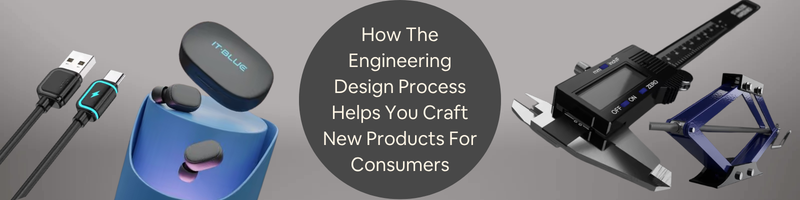
How the Engineering Design Process Helps You Craft New Products for Consumer Goods Firms


The engineering design process, the kind of work that you can tell from the name alone, isn’t for the fainthearted. You need the willingness, the resolve, and the bloody-mindedness to keep going in the face of many setbacks and challenges, or, in some cases, the nerve to quit. Now that sounds quite interesting, so what is it exactly?

According to The Accreditation Board for Engineering and Technology (ABET), the engineering design process is an iterative workflow for devising components, products, or systems to meet specific needs. ABET says the process uses the applied sciences to turn resources into a practical, useful object. At this point, you wonder, “Why does a formal definition of anything always sound awfully boring and mouthful?” Boring as the definition might be, it’s true.

The definition goes on to state that the fundamental parts of the process involve specifying the objectives, conducting analysis, constructing, running tests, and performing evaluation. In general, not entirely unlike the empirical way of the scientific method. If we’re talking specifically about product design, the process needs to take into account some realistic constraints such as budgets, technical feasibility, user-friendliness, environmental impact, and so forth. 

RELATED: Top 30 Recruiters for Electrical Engineers, Staffing Agencies, And Recruiting Companies for US Engineers

Because an engineering design process can be as complex as ABET suggests, it shouldn’t come as a surprise that everybody needs assistance from experienced engineering design professionals and designers to develop a new product. And by “everybody” we do mean absolutely everybody, from creative inventors and startups to design firms and big companies. When it comes to hiring NPD (New Product Development) professionals, Cad Crowd has consistently been at the top of the recommendation list. It has a massive network of talents you need, flexible hiring options, affordable rates, and, best of all, a guarantee of design accuracy. 

What’s in an engineering design process?

The expectation is that when you’ve finished the process and done so well, you’ll end up with engineering solutions for crafting a new product. A solution can be as simple as a ball bearing to reduce friction in a mechanical system, or as complex as using 3D printing services to fabricate intricate parts. It can also be as exceedingly complex as creating a high-tech communication device or building an engine from the ground up. Despite the wide variety of products, functions, and features, the engineers working on them follow roughly the same steps throughout the design process.

  1. Problem Identification: You can’t develop a solution for a problem unless there’s a problem that needs solving to begin with. From the business side of things, a problem signals a market opportunity you can pursue. Perhaps you can create a product, offer it as a solution to the problem, and make a profit from it.
  1. Research: the next step is to analyze the problem to gather more information. Why does this problem exist? Has anyone attempted to solve it before? Have any of those attempts succeeded? If they failed, why and how miserably did they fail?
  1. Solution Ideas: Knowing that a problem exists and that no one has a good solution, now it’s time to ask yourself whether there’s something you can do to solve it. And for every idea you have, how different is it from the others? This is the point where the actual design process begins. The design engineer and designer handle much of the work here, conducting experiments and simulations to generate possible solutions, in this case, a concept. They produce sketches and CAD drawings, which eventually become some sort of formula, or a recipe that they like to refer to as “product requirements,” just to make it sound a bit more technical.
  1. Prototypes: based on the product requirements, the process steps into the prototyping phase. The prototype is typically known as the Proof of Concept (PoC) model. But this won’t be the only prototype you need to build. There will be many more before you get to the final production version.
  1. Evaluation: Every prototype iteration must undergo a series of tests and evaluations to determine how well it works, or whether it works at all. In a proper evaluation, the product (or prototype) is tested across various usage scenarios to assess usability, performance, durability, and overall alignment with the product requirements.
  1. Refinements: The data gathered from the evaluation phase serves as a guide for improving the product. Refinements can take many forms, such as better materials or a simpler user interface. Sometimes a prototype needs a complete redesign if you discover serious flaws during evaluation. Steps 4, 5, and 6 run in a loop due to the iterative nature of the tasks. When the prototype design experts finally builds a prototype that meets all the product requirements, the circle stops spinning, so you can move on to the next phase.
  1. Production: the design is finalized and ready for mass production.

RELATED: Top Reasons to Hire Engineering Consultants & Engineering Consulting Firms

new product design services

It’s a systematic method that engineers and designers follow to develop a functional product that solves (presumably) a complex problem. This makes good sense because if the problem is anything but complex and intricate, there’s little point in spending time, money, and effort on the whole exercise. Say a toy car makes squeaky noises each time you open and close one of the doors. It doesn’t take a licensed engineer to determine that the hinges need some lubrication. When you’re talking about the engineering design process, the “identified problem” is likely a whole lot more complicated than that.

It’s worth noting that the engineering design process is often collaborative and multidisciplinary. You’ll need input from an industrial designer, a prototype fabricator, a programmer if the product is an electronic device, a market researcher, and even the manufacturer to help optimize the design for mass production. Customers might also be directly involved in beta testing and feedback generation. 

In what ways is it important?

Much of the engineering design process, no matter what specific product you want to build, revolves around four major steps: discovery, ideation, development, and optimization. One of the key elements of the entire process is iterative design. The product development team has to repeatedly re-evaluate and refine the prototype until they build a truly optimized solution. They learn from every test result and mistake in every iteration, so they adjust the approach to better suit the goals. Sometimes, and probably more often than not, this iterative loop presents one or two unexpected issues with the design.

This isn’t entirely bad, because you can then ensure the next prototype iteration won’t carry the same surprises. The engineering design process is important to product development in many ways. Everything you do across the steps outlined above contributes to product quality, budget efficiency, and your chances of commercial success after launch. Here are just a few examples of how it can help you set the course for the project.

RELATED: 7 Steps of the Engineering Design Process Used by Freelance Engineers & Companies

Decide which design approach is best

In nearly all cases, a modern-day product development project can be categorized under one of the following three approaches.

Adaptive design A great portion of your work in an adaptive design approach will be about creating an adaptation of an existing product. Still remember why the problem exists? And that there have been some attempts to offer a solution, but none have worked quite as well as expected? There are plenty of product categories in which manufacturing and engineering development have practically ceased, leaving you with hardly anything to do but make minor changes to the already-established form.
An easy example of such a product is the claw hammer, which has remained essentially the same since the 1920s, maybe even earlier. Seriously, what can you do to improve the design? Maybe you can introduce a new material or a handle with a unique ergonomic shape, but other than those, nothing really. Another example is the modern laptop, with its recognizable clamshell design developed mainly in the 1980s – 1990s. Several decades after the first PowerBook came to market, laptop design hasn’t changed much since.
The work is somewhat easy with adaptive design, mostly because you’re using an already-established basic conceptual design and only making changes wherever possible. Changes can be in the form of dimensions, power specifications, and aesthetics. But no matter what modifications you propose, the final product should not look strikingly different from the existing ones.
Development design You also start with an existing idea. However, a development design approach requires you to build a product that’s markedly different from the initial concept. We’re pleased to say that the best examples of such an approach were Nokia phones from the past. Nokia made dozens of mobile phone models, including the bar, flip, leaf-shaped, the slider, the twist, the camcorder look-alike, the gamepad aesthetic, and so on. Underneath, most of those models ran the same operating system, but the shapes were unique enough that you could easily tell them apart from miles away.
Another example could be CRT monitors, which have now been replaced by thin plasma or LED screens. Cars can also make the case for development design. The exterior might be all about aesthetics, but powertrain technology has advanced so much that you now have electric and hydrogen-fueled models. Some cars are hybrid, combining internal combustion and electric motors to power the drivetrain.
So, development design means you take an existing product and build a distinct variety based on that. This new variety has to have unique characteristics to the point where you can objectively call it “different.”
New design It’s the most difficult design approach of them all. Very few, if any, product developments are actually a new design. It takes some real ingenuity, scientific insight, great foresight, and a good chunk of imagination. Think of the invention of the wheel, the first general-purpose computer, and the Benz Patent-Motorwagen. What do you think is the latest genuinely original physical product design? It’s probably something invented decades ago, maybe centuries even. 

RELATED: How Do Engineers Evaluate Different Design Ideas?

consumer product design firm

Every problem can have one or more possible solutions. And there can be different ways to develop the most efficient solution when it comes to product concept design services. For instance, you discover that the typical lawn mowers use blades that need sharpening every 20 hours or so of usage. You can either focus solely on the blade (adaptive design), create a new lawn mower model to accommodate the new blades (development), or build entirely new equipment for cutting grass (new design).

Although all the approaches share the same goals (that is, providing a more user-friendly way to cut grass and maintain a lawn mower), each has a different difficulty level, with “new design” being the most challenging. The best design approach is always the one you feel most comfortable with, both in terms of technical capabilities and budget.

Understand the competitions

Any information you can get about products similar to your idea can play a huge role in how you proceed with product development. This is not to say that you’ll end up copying some design elements. Quite the contrary, you may want to avoid having any resemblance to the competitors for both legal and technical reasons. Some companies include a “patent attorney” in the new product development team for one purpose: making sure that any part of the product idea isn’t a copy of an already patented design. This way, they don’t have to pay royalties to the patent holder.

RELATED: Top 101 Sites for Freelance Engineering Jobs, Mechanical Design Projects, & Remote Work

From a technical perspective, the information should contain a list of all the available design solutions (to the identified problem you’re trying to solve). There might be one or two competitors selling similar products. Even if your idea isn’t identical to those products, your design may come across as unoriginal. We’re not saying you won’t make a sale for that reason alone because it’s simply untrue. Case in point: smartphones. Every single one of them looks pretty much the same at a glance, and yet millions of people still rush to buy the latest fad every few months.

But that’s more like an exception than the rule, so tread with caution. For a lot of other products, however, knowledge of existing designs will prevent you from pursuing some kind of an imitation of a solution that has been attempted before. It also must have been an ineffective solution; you wouldn’t have discovered the problem in the first place. But why waste time and money making a copy? Making a unique alternative would be a better use of your creativity and resources.

Focus on the “functions”

Anybody would expect that “goals” and “functions” are basically the same, but this isn’t always the case. If the goal of a product development is, for instance, to build a safe stepladder, it only makes sense to say that the ladder in question must work or function safely. While it’s true to a certain degree, the engineering designer can make you understand that there’s a real difference between the two.

RELATED: IoT Electronic Device Design Tips for Startups Working With Electronics Engineering Companies

A goal is often stated in a general fashion. It’s the final objective, so no matter what you do in the development work, the end product has to fulfill that very purpose. At the same time, the engineering design process is all about doing experiments with all sorts of design options until you get everything right. The experiments only end when the design meets the objective. But the good thing is that it’s not a freestyle experiment in the sense that you have guardrails and constraints to keep it focused on the main goal.

Function is all about “what the product can do to make it safe” for users. And it turns out there’s a lot it can do. Say the spreaders have a locking mechanism that prevents the rails from snapping together while in use. You can also include anti-slip feet so the stepladder doesn’t move around as easily. A tool tray may seem like an add-on rather than a main feature, but it improves safety by giving users a convenient place to put their hammers and spanners. Perhaps you want to use safety handrails or rear braces for certain designs, too.

Such a technique opens the door to greater creativity, too. Referring back to our previous example of a lawnmower, the goal for a product designer is to make a more user-friendly version of the equipment with less frequent blade sharpening. If you’re stuck with designing new blades and using a peculiar onboard sharpening mechanism, you’ve practically enforced an unnecessary constraint that limits design exploration. Constraints are useful in many cases, but not when the development is still in its early phases. Keep in mind that the main function of a lawn mower is to cut grass.

Would it be possible to use non-metal blades? Does adding a string trimmer attachment make sense? The engineering design process helps you focus on functions that enable the product to meet its objectives. It converts a general statement of goals into a much more specific to-do list. If you have a particularly big team, you can probably even run a simultaneous (as opposed to sequential) design development.

RELATED: Top 32 Sites for Freelance PCB Designer Jobs & Remote Electronics Engineer Work Projects 

electronics design firm

Avoid disasters

Not every product development effort succeeded. In fact, many of them proved disastrous enough that the makers had to face costly consequences.

  • Remember the Concorde? The spectacular crash in 2000 led the authorities to strip the supersonic passenger plane of its airworthiness. Long story short, it’s no longer produced.
  • What about the exploding Samsung battery? Manufacturing defects caused many Galaxy Note 7 units to overheat and explode. Samsung was forced to recall the units, causing an estimated revenue loss of US$17 billion.
  • Lancia Beta, anyone? The exotic, terminally rust-prone car cost the company a fortune through a buyback program. But even after spending a tremendous sum of money, Lancia never fully recovered from the PR disaster caused by the poorly built model.

Catastrophic failures can happen for many different reasons, however, can be avoided with the help of the right design engineering firm at your side. Failures can happen due to the lack of understanding of the problem, incorrect design requirements, incomplete market research, inadequate testing and evaluation, faulty assembly, manufacturing defects, and so forth. An engineering design process, thanks to its iterative and collaborative nature, should at least minimize the risk of mistakes. This doesn’t suggest in any way that those companies failed to follow their own engineering design process. It’s just that the products were so complex, it’s possible that at some point in the development, somebody didn’t think something through and started a daisy-chain of issues.

RELATED: Key Factors to Consider When Vetting Engineering Firms for Design & Consulting Services

Closing thoughts

An engineering design process is more than just a simple checklist you need to go through in a product development project. It is a checklist, alright, but more importantly, every item on the list keeps you on the right track while giving you the freedom to be just playful enough with your creative engineering side. It’s a systematic problem-solving method used by companies everywhere to decide what to make next and how to build it as efficiently as possible.

There might be some little variations in how different design for manufacturability (DFM) companies handle the process, but for the most part, it’s fundamentally the same. They discover problems, set out to develop a solution, test it, find mistakes, go back to the drawing board, and repeat until they iron out all the details. One of the biggest differences, in fact, lies in those companies’ abilities to put the engineering design process to good use. Some companies do an excellent job at discovering problems and market research, but are terrible at prototyping and optimization. A few have what it takes to take a “new design” approach, while others are experts in adaptive design.

RELATED: Top 33 Electronic Device Design Services Companies for Engineering & Product Design Firms

How Cad Crowd can help

Very rarely is a product development firm perfect in everything, and this is where Cad Crowd comes as a balancing force. It doesn’t really matter if you’re a small 3D design firm trying to break into the market with a new product, an established company looking to bring on board specialists’ perspectives, or anything else in between; you can always count on Cad Crowd to connect you with the best talents to boost your engineering design process. With flexible hiring options, an easy project management dashboard, and a massive network of experienced professionals, it’s safe to say that you can always find qualified engineers and designers on the platform to reinforce your team. Contact us for a quote.

author avatar

MacKenzie Brown is the founder and CEO of Cad Crowd. With over 18 years of experience in launching and scaling platforms specializing in CAD services, product design, manufacturing, hardware, and software development, MacKenzie is a recognized authority in the engineering industry. Under his leadership, Cad Crowd serves esteemed clients like NASA, JPL, the U.S. Navy, and Fortune 500 companies, empowering innovators with access to high-quality design and engineering talent.

Connect with me: LinkedInXCad Crowd

A Startup Guide to Concept Design for Hardware with Product Design Services Companies


So you have an idea for the next “big” thing that will revolutionize the world. Maybe it struck you in the shower. Maybe it struck you in the wee hours of 3 in the morning when you’re half-awake and chatted with your cat. You drew something vaguely potato-wing-like on a napkin, and now you’re certain that it will shake up at least three markets. To the exhilarating and sometimes frightening world of hardware concept creation!

Hardware development is not a weekend hack-a-thon to build a new app. There are no quick patches or magical “undo” buttons when you find that your prototype’s battery roasts like a toaster oven on steroids. That is precisely why there are concept design services. It is the step that prevents your idea from becoming a costly paperweight.

Startups like to downplay how complicated this stage can be. There are drawings to figure out, user requirements to go over, materials to keep in mind, and prototyping techniques to schedule. Leave any of these behind, and you’ll have something lovely on Instagram but breakable in half when a toddler lays hands on it.

The best news is, you don’t have to do this on your own. Product design service firms are experts at taking goofy ideas and turning them into viable, manufacturable designs. Hiring professionals up front will protect you from unwarranted expense and torturous revisions. Places like Cad Crowd enable you to get in touch easily with seasoned product designers who both know how to be creative and also understand engineering. They’re your concept design safety net.

Here, we will take you through the basics of hardware concept design without blowing your mind with techno-jargon. We will also touch on why sketches matter more than you know, running tests on assumptions without spending a fortune, and what you can expect when working with design services companies. There will be some laughs, some cautionary tales, and plenty of real-world tips along the way. When you are finished, you will have a clear vision for taking your “potato with wings” and making it a polished product that has a legitimate chance at succeeding in the marketplace.


🚀 Table of contents


The thrill and terror of your first hardware idea

All entrepreneurs have experienced that shivery moment when a flash of inspiration hits you. Your mind leaps ahead to the media spotlights, the TED talk, and the yacht you will one day buy. But between your scribbling in the notebook and your first prototype, harsh reality will snap you back to attention with a large rubber glove.

Hardware does not play nice. While software may be a question of painting a virtual image, hardware is a question of sculpting marble. As soon as you take away too much, you can’t just hit “undo.” No, there is something about watching your “innovative” design splatter its initial drop test onto a cold concrete floor. It wobbles, flails, and then your brilliant idea is torn to smithereens like a disappointed LEGO set after a fit from a toddler.

This is where concept design saves your sanity. It has nothing to do with making pretty pictures. Concept design experts ask difficult questions before you invest hard money. It forces you to see options, consider functionality, and consider manufacturability. Good product design services companies will even shoot holes in your plan to prevent it from falling apart literally.

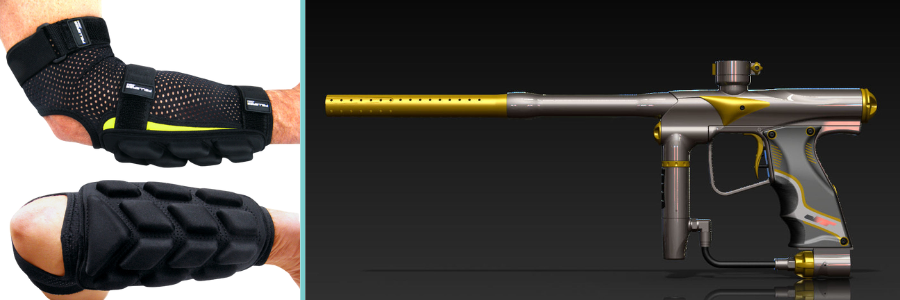
Product design of a sports and training sleeve and paintball gun by Cad Crowd design freelancers

RELATED: What are proven product design principles when working with companies & freelancers?

What concept design really is (Jargon-free)

Hardware concept design is really the translation office from your imagination to the factory floor. What you are doing here is taking your idea and making it something that can be translated, tested, and ultimately made.

It involves sketches, renderings, rough models, and lots of “what if” talking. Unlike industrial design, which is deeply interested in form and appearance, or engineering design, which drills into technical detail, concept design is the playpen where art and science meet.

Consider a Venn diagram where one of the circles is “Looks Cool,” and the other is “Actually Works.” Concept design is the lovely overlap. It is why your shiny toy won’t need duct tape to function.

Good concept design is also narrative. A business-grade rendering or mockup tells investors, fellow colleagues, and potential clients, “This exists. This is happening.” And when you use a service like Cad Crowd to source designers, you are not just hiring a pair of hands. You are getting access to people who understand how to take your idea and make them understand clearly without your needing to defend your napkin scribble in a boardroom.

Turning brain sparks into tangible plans

Do not rush off to your CAD software or 3D printing design service just yet. Step back and ask yourself: Does anyone actually need this thing? Founders are prone to falling in love with what they’ve created, only to discover later that no one else wants it either.

Begin with market research. It does not need to be a grueling spreadsheet endurance test. Interview prospective users. Blog. Observe what people grumble about in criticisms of products that already exist. If your device resolves a genuine pain point, you are already ahead of half the startups in the world.

Next, describe your product’s major functions. What is it solving for you? What sets it apart? Keep it brief. There is a temptation to pack it with every conceivable feature. Now your sleek smart toothbrush doubles as a music player, weather checker, and espresso machine. That is feature creep, and it is the bane of good hardware design.

Product design companies can help here, too. They’ve seen what works, what doesn’t, and what eats through a budget faster than “crowdfunding fiasco.” A company you find through Cad Crowd can help your idea flow into a tight, buildable idea without your laying out one dime on tooling.

Sketches, renderings, and rough models

Don’t underestimate the authority of a poor drawing. Some of the greatest products ever created were badly drawn. Perfection isn’t the goal here. Communication is the goal.

Start with pencil sketches. Even if your drawings in elementary school were better, you can still mark principal shapes and functions. Once you have a number of promising leads, go to digital media like CAD.

They enable you to experiment with proportions, dimensions, and mechanical components more accurately.

Your professional design team can bring it to life. They make it possible for stakeholders to see your product as real. Photo-realistic images are something that product design experts can do well. These can be used to entice investors or test consumer appeal on social media. Platforms like Cad Crowd introduce you to designers who can turn your gadget into a million-dollar product before manufacturing a prototype.

If you’re the do-it-yourself type, you can make crude models using foam, cardboard, or even clay. Low-cost models allow you to try out size and ergonomics without jeopardizing expensive materials. You may find that your hand-held device is child-proof but painful for an adult. Worse to find that out than after a complete production run.

Prototyping without burning your wallet

At some point, your sketches and CAD models must leave the virtual world. That is where prototyping fits in. It is like the ugly teenager phase of your product. It is not yet attractive, but it is growing really fast. Rapid prototyping is within surprisingly easy reach. 3D printing lets you make physical models rapidly and inexpensively. You can try out shapes, fit, and even primitive functions without selling your kidney for the price of production. Foam models are another inexpensive way to check ergonomics. They are the action figure figurine form of your product: inexpensive, small, and surprisingly enlightening.

CNC machining costs more but produces more accurate and durable prototypes. It’s convenient if you need to test-run mechanical pieces or stress areas. Regardless of what you choose to do, don’t fall into the thinking trap that your first prototype must be perfect. It is meant to fail where you did not expect it. That is what it is for.

It is at this point that most entrepreneurs fear, believing that defective prototypes will scare away investors or partners. Actually, the fact that you are working towards refining and testing your idea indicates that you are mature. Product design services companies, especially those you can access through Cad Crowd, can guide you through prototyping design services without resource wastage. They know what areas can be started with for trial purposes and what can be done on the next round.

RELATED: Designing for visual impact with your product design services company

Manufacturing and material considerations prior to pledge

Oh, materials. They are the unsung heroes and sometimes villains of hardware creation. Get it wrong, and your product cracks, warps, or costs more to make than you wanted. Get it right, and you can save money, increase longevity, and get your product to be more appealing.

Start by considering the environment in which your product will exist. Will it see moisture, heat, or abuse? A fashion plastic can be stylish-looking, but it could melt faster than an ice cream cone at the beach on a hot summer day if it’s exposed to high temperatures. Metals are strong but heavy, and some composites are light but stiff. There are always compromises with each.

Manufacturability is as much a consideration as appearance. Some materials are harder to machine, mold, or assemble. If your product requires exotic parts or impossible tolerances, factories will avoid you or charge you an outrageous sum. It is for this reason that hiring a product design services company in the beginning is a good idea. They can identify manufacturing nightmares in advance before you become infatuated with a design that cannot be produced in quantity.

Another thing to consider is sustainability. Consumers have become increasingly conscious of saving the environment (as we all should). By using recyclable materials on your product, you can attract consumers that promotes sustainability. Like the designers from Cad Crowd, they can help you and your engineering design firm find a balance between sustainability, quality, and price.

Designing with product design services firms

Working with a product design services firm is like leaving your baby with a babysitter for the first time. You worry that they will mess it up or, worse still, will attempt to make it “better” in a way you don’t like. But a good design partner will treat your conception carefully and react with proficiency that you can never reproduce by yourself.

Start by looking for prospective partners. Look for portfolios that match your product’s level of style and complexity. Check out reviews and testimonials. Don’t be afraid to ask for references or samples of similar projects.

In any aspect of life, communication is always the key. Always know what you want, especially regarding the project deadline and allocation of money. Ask for updates, even if it’s a drawing or scribbles. A professional designer can’t deliver your expected results if you can’t communicate clearly what you need.

Legal protection is also important. Use of non-disclosure agreements (NDAs) to protect your intellectual property. Most professional CAD design services will require it and will willingly sign.

Platforms like Cad Crowd make it easier for you to complete your team. They can connect you with screen-tested designers and engineers specializing in hardware concept design or CAD. Especially, if you require assistance in creating starting sketches, 3D modeling, or production-ready file preparation, you can find the perfect match for you without wasting months asking for recommendations.

Lastly, don’t forget cooperation is a two-way street. Hear criticism out. Experienced designers may propose changes that maximize usability, minimize cost, or ease manufacturing. While it stings to leave behind your original idea, the changes often are between a product that fails and a product that succeeds.

Common mistakes first-time founders make

Every new hardware startup founder has a horror story to tell. Some of them are funny in hindsight. Some of them are a nightmare. Listening to them can spare you the expensive mistakes.

One of the biggest mistakes in business is adding more features to a product. It all starts with a simple idea, let’s say you want to produce a cooler bottle that keeps drinks cold for longer hours. Next, you want to include a Bluetooth speaker, a cup warmer, and a built-in blender. Now, the final product is more expensive than the latest game console. This reminds you to keep your product simple and not add unnecessary features just because it’s in the latest trend.

Another common mistake is neglect of design for manufacturability services. You may create a beautiful product that looks wonderful, but is impossible to produce at an affordable price. Factories are not magic. If you specify super-tiny tolerances or unique parts never made before, expect stratospheric prices or pleasant rejection letters.

Forgetting to test is another classic repeat offender. You’re convinced your design is perfect, so you launch straight into manufacturing. And you discover that the battery lasts only twenty minutes, or the hinges collapse at slight pressure. Iteration is dull, but it’s much cheaper than recalling ten thousand dead units.

Finally, poor communication can swamp even a good project. When you are vague with your product design services company, you invite miscommunication. Specific instructions, attainable expectations, and regular feedback prevent frustration from both sides. Cad Crowd makes it a lot easier to locate communicative, talented designers, but you still need to speak up.

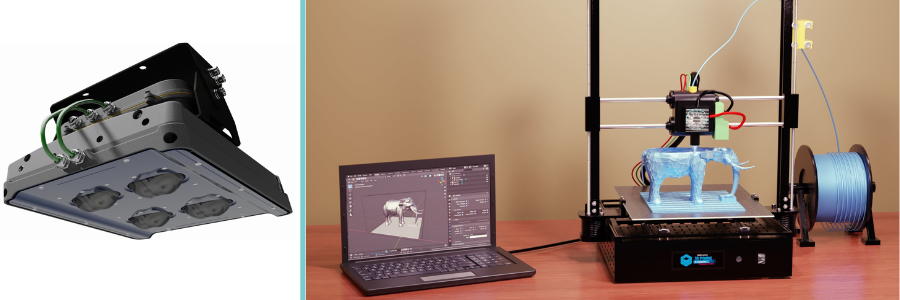
Product and hardware design of an LED lamp and 3D printer by Cad Crowd design freelancers

RELATED: How innovative design techniques can supercharge your new product concept

The magic of iteration and feedback loops

Iteration isn’t sexy, but this is where the magic happens. Every incredible piece of hardware you adore, from your favorite headphones to your appliances in the kitchen, had thousands of iterations before it went to market. Even Apple and Dyson, those industry giants, test and iterate furiously.

Each revision is picking up something new. Maybe your device is cumbersome to hold, or maybe one button’s placement is confusing for users. These small adjustments, repeated time and again, make a good product into a great product through prototype engineering services.

User testing is worth its weight in gold. Show your prototype to someone who has never seen it before and observe what they do. They will press the wrong button, flip it over, or use it in a way that you never dreamed. It’s an eye-opener, but it teaches you things that no spreadsheet ever could.

Never give up on failure. Treat every mistake as a veil for progress. The earlier your mistakes, the earlier your growth. Work with your product design services company to incorporate critiques, re-doing designs, and building improved prototypes. Cad Crowd’s network of designers can guide you through such loops efficiently and steer clear of wasteful setbacks.

Bonus tips for navigating the wild world of hardware design

Even with the best design, hardware development tends to surprise you. These are some other tricks to put in your regular bag and maybe avoid a surprise crash:

But packaging can shatter or create the first customer impression. Packaging design services decide shipping expenses, shelf life, and even safety. Involve your product design company in packaging decisions. Designers on sites like Cad Crowd can suggest functionalities that are affordable, aesthetic, and functional.

Don’t accept the first manufacturing offer at face value. Research alternatives like injection molding, vacuum forming, or die casting. Another option, usually, will be cheaper or improve the quality. A skilled designer will walk you through the pros and cons without getting bogged down with details.

Real-life situations

Just imagine the pet feeder; the first designs were stunning on paper. However, when the first batch of manufactured products arrived, the hinge on the lid failed after a few cycles. Customers posted videos of cats blissfully trashing the feeders like furry little engineers. The company recalled the product and re-engineered the hinge, an expensive lesson in testing in real-world environments.

And another founder wanted to create a wearable fitness tracker with a revolutionary clasp system. They skipped user testing because “everyone knows how to use a clasp.” But they didn’t. The clasp was so user-unfriendly that customers wore the tracker backwards or broke it attempting to buckle it. A single round of user testing could have avoided months of embarrassment and lost sales.

It’s because of anecdotes like these that iteration, open feedback, and collaboration with product development experts are so crucial. A good designer will not just provide you with neat files. They will burst bubbles in assumptions, suggest ways to make it better, and guide you around pitfalls that have swallowed up other founders whole.

RELATED: The 5 stages of prototyping for any new product idea for product design service companies

The role of branding in hardware concept design

It’s easy to take only care of the physical aspects of your product and neglect branding. Branding, however, is not merely logos and color schemes. Branding is what informs your design decisions from the start. Is your product sleek and futuristic? Friendly and playful? Outdoor-inspired and tough? These decisions determine everything from material selection to button shape.

Your designer can incorporate branding into the concept phase. If, for instance, your company is concerned about sustainability, that should guide your selection of materials and packaging. If your item is aimed at a high-end market, your concept design should be sophisticated and precise. Cad Crowd’s network has designers who know branding as part of the larger picture and will make sure your product and your brand are a natural fit.

Getting ready for manufacturing like a pro

Once you have already planned your product, you must prepare for large-scale production. This is the most underestimated phase for the first-time businessman. For them to create a successful product, they need detailed drawings, clear specifications, and clear illustrations. That’s why sloppy documentation and management can result in a very expensive failure.

Work with your product design services firm to create manufacturing-ready documents. Double-check every measurement, every tolerance, and every material specification. Don’t rely on the manufacturing design firm to “figure it out.” They will produce exactly what you give them, which can mean producing 10,000 pieces with a defect that could have been identified early on.

You ought also to think about production locations.  Home-country production can be easier in terms of communication and quality control, but foreign production can be less expensive, but needs to have great screening and perhaps longer lead times.  Think in terms of shipping, tariffs, and variations in communication styles.  A seasoned global manufacturing designer will make this easier to do.

Holding sanity together through the highs and lows

Hardware construction is a series of rollercoasters. There will be a time when you will wonder why in the world you ever thought that your plan was a good idea, but that’s fine. Remember to surround yourself with positive peers, mentors, or even online communities of fellow founders. Share your stories, and sometimes, a word of encouragement here and there from someone who has walked in your footsteps can make all the difference.

Failures are redirections. These are your long-term motivations. Keep in mind that you’re making something real, that people can hold, use, and keep close to their hearts. That’s worth the headaches. Knowing you’re leaving a legacy.

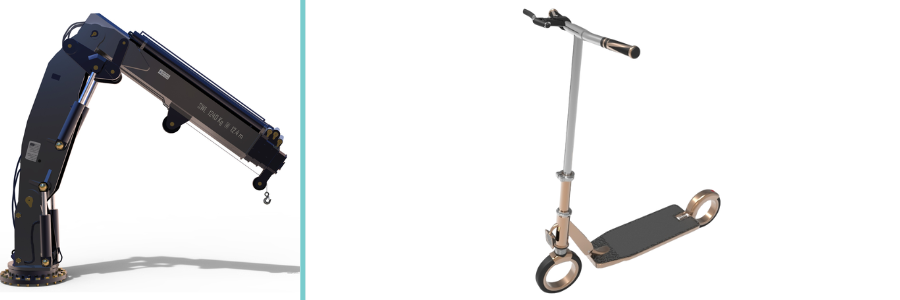
Hardware design of an operator crane and scooter by Cad Crowd product design experts and freelancers

RELATED: How CAD turns your idea into a prototype for CAD design companies & freelance services

One last push toward action

You now have information, game plans, and a little bit of sound advice. But information does not build a product. Action does. Start sketching. Research your market. Get in touch with a product design services company. Sites like Cad Crowd wait in the wings with a group of good designers who can transform your “someday” idea into a real, producible product.

Don’t wait until your concept is perfected because it won’t be. Perfection is the progress killer. The sooner you get your idea in motion, the sooner you can learn, adapt, and build something amazing. The world doesn’t need another napkin drawing that has been left behind. It needs your idea, refined, experimented with, and ready to take over the world. Request a quote today.

author avatar

MacKenzie Brown is the founder and CEO of Cad Crowd. With over 18 years of experience in launching and scaling platforms specializing in CAD services, product design, manufacturing, hardware, and software development, MacKenzie is a recognized authority in the engineering industry. Under his leadership, Cad Crowd serves esteemed clients like NASA, JPL, the U.S. Navy, and Fortune 500 companies, empowering innovators with access to high-quality design and engineering talent.

Connect with me: LinkedInXCad Crowd

How CAD Modernizes Product Concept Design at Industrial Design Services Companies


The classic napkin drawing has finally found its match. What used to begin with scribbled concepts and hours spent taking things back to the drawing board is today an extremely digitized, lightning-paced, and amazingly accurate process – and all thanks to Computer-Aided Design, or CAD design services. Today’s industrial designer does not need to struggle through trial-and-error fiddling or cumbersome prototypes that require weeks of rewriting. They use the digital might of CAD to visualize, simulate, and optimize ideas prior to making a single part.

Here comes the revolution. CAD and industrial design coming together is not a trend, but a complete paradigm shift in bringing ideas to product reality. Whether it’s consumer electronics, medical devices, wearables, or smart kitchen appliances, CAD tools are turning sketches into complex, production-worthy products quicker than ever before.

And when it comes to staying ahead in this fast-moving design world, Cad Crowd has emerged as the go-to company. More than just a talent pool, Cad Crowd is a global hub of elite CAD designers and industrial engineers who are rewriting the rules of concept development – one digital model at a time.

But how, precisely, is CAD fueling this revolution? Let’s take a closer look at the sexy, streamlined, and unexpectedly human face of computer-aided design.


🚀 Table of contents


From Scribbles to solids: CAD as the designer’s superpower

Concept design is both thrilling and agonizing. It’s the design rollercoaster where imagination gallops full-speed ahead, only to be brought back into check by the harsh realities of cost, manufacturability, and schedule. Not so long ago, this process was driven by crumpled-up pencil mark-ups, clumsy foam models, and the prayer that you got the first guess right. Those analog mockups were tangible, no doubt – but also slow, delicate, and agonizingly unforgiving when it came to redrawing.

Then, computer-aided design (CAD) emerged on the scene like a superhero cape-clad crusader for industrial designers.

With the powerhouse software of SolidWorks, Rhino, AutoCAD, and Fusion 360, the industrial design expert’s crude sketch can morph into a stunning, precise 3D model in the blink of an eye. Need to carve an ideal curve? Adjust the thickness of a casing? Try out if the design can withstand a drop? CAD makes all these possible on your screen – with the added advantage of undo keys and unlimited iterations. It’s almost like going from charcoal sketch to sculpting with light.

What used to take days using clay or cardboard now takes hours or even minutes. But more significantly, it means that designers have the liberty to experiment without fear. If it does not work, it is a quick fix – not a complete redo.

CAD didn’t simply update concept design – it’s turbocharged it. It takes nebulous ideas and turns them into proven, buildable concepts, closing the gap between imagination and manufacturing. Now, designers don’t only imagine – now, they model, simulate, and iterate those imaginations with speed and accuracy. That’s the true superpower.

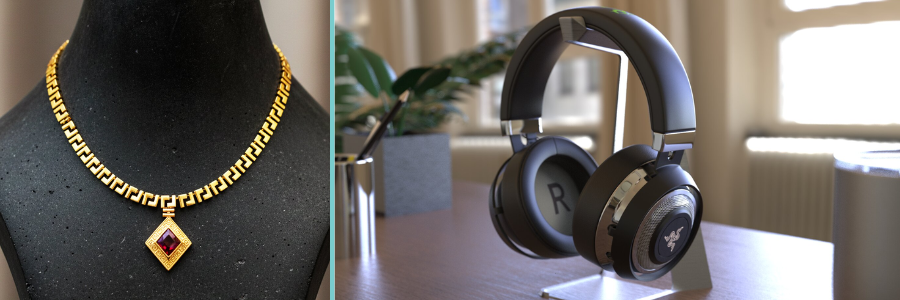
3D product design of a luxury necklace and headphones by Cad Crowd design experts

RELATED: How to reduce new product development risks for design services companies

Speed, precision, and no guesswork: How CAD is redefining product design

There’s that magic moment in the life of every product – when it transitions from a crude drawing or delicate prototype into something you can actually produce. That used to take an exhausting period of time. Weeks of revisions. Months of reworks. But CAD (Computer-Aided Design) has entirely revamped the playbook.

Now, once an idea is captured digitally, the actual work starts – quickly. Designers can try out immediately how a hinge will function after 10,000 cycles. Want to test airflow through a snug casing full of sensitive electronics? Model it in minutes. Wonder how the product will appear in chrome versus matte black under lighting in the showroom? Render it and observe every nuance of the reflection.

This is not a time-saver – it’s a power shift. CAD provides industrial design companies with accuracy and authority unimaginable in the past. No more assumptions, no more “wait and see.” Each design decision is supported by actual data, virtual simulations, and testing that reveal flaws before anything physical is created.

The result? Improved products. Improved decisions. Fewer surprises.

Rather than responding to issues after prototyping or production, designers are actually addressing them ahead of time in the concept stage. They’re not only creating products – they’re creating confidence in the process. CAD enables groups to see further in advance, to construct smarter from the beginning, and to optimize that pivotal process from idea to real-world innovation.

That’s not evolution. That’s brainy design – and a significant step up in how we give ideas life.

CAD + collaboration = Creative firepower

Contemporary product design isn’t the isolated, lone genius scribbling concepts on a napkin anymore. Now, it is a complex interplay between industrial designers, mechanical engineering experts, UX specialists, marketers, and even users who will ultimately be utilizing the product. That is, it’s a team effort – one that requires perpetual communication, quick iteration, and accommodation.

But in the past, concept design was not exactly a workshop of collaboration. Legacy tools – such as static sketches, foam mockups, and unnecessary email chains – were buggy and unwieldy. They were slow to accommodate the speed of innovation and the demand for real-time commentary. Designers could spend weeks honing a concept, only to discover the engineers couldn’t implement it – or that marketing had a whole different idea.

Then CAD came along – and the world changed.

Computer-Aided Design transformed the way teams ideate, iterate, and bring to life. Particularly today, with cloud-based CAD software and collaborative spaces, the design process has gone truly global. A Toronto designer can model the outside of a product while a Berlin engineer works on the internal features. Meanwhile, a Seoul UX consultant is testing how it handles in a user’s hand. It all occurs in real time, with changes automatically tracked, revisions stacked effortlessly, and no one excluded from the loop.

It’s not only efficient – it’s lightning in a bottle. This kind of transparency and integration stimulates creativity. With less siloing and more collaborative input, teams can share out-there, unconventional ideas and actually pursue them without missing deadlines. CAD unleashes diverse thinkers to collaborate in a common digital sandbox, where walls come down and innovation blooms.

This collective magic not only speeds things up. It improves things. It provides a window of opportunity for multidisciplinary innovations and brings design to the people. You no longer have to have everyone in the same room – or even on the same continent – to form something remarkable.

And this is precisely where Cad Crowd becomes the secret weapon. Cad Crowd is not merely a freelance platform. It’s a network of premium CAD designers and engineers at your disposal. Want a team that can turn your napkin sketch into a fully realized, ready-to-manufacture prototype? Done. Want someone to craft a beautiful enclosure or 3D print-optimize your product? Someone in the Cad Crowd community has already figured out a better way to do it.

With Cad Crowd, you’re not just outsourcing tasks – you’re building a remote dream team that’s already aligned with the pace and expectations of modern design. They speak the language of collaboration, and they live inside the CAD ecosystem. That’s the new creative firepower – and it’s lighting up the future of product development.

Digital twins: CAD as the secret behind smarter, sleeker products

From voice-activated thermostats to palm-top drones that deploy midair, products these days are supposed to be geniuses straight out of the box. But all that smarts – sensors, circuit boards, batteries, Bluetooth modules – must be shoehorned into increasingly slender, more ergonomic packages. Getting that magic to work without the product burning up, frying itself, or shaking apart is no small thing.

This is where CAD comes in as the silent hero.

With CAD, designers don’t simply draw good-looking shells – they create digital twins: precise virtual replicas that replicate how the real product will perform. Such models do much more than depict dimensions. They model real-world stress, thermal flow, electromagnetic interference, and even how consumers may touch the product.

Suddenly, designers and product design engineers aren’t operating in the dark anymore. They’re not guessing if a new case will heat up too much or whether a button will be easy to press. They’re trying it – all of it – before any prototype is even created.

For companies providing industrial design services, this makes all the difference. Function and design no longer need to battle for supremacy; they’re created simultaneously. Redesigns are fewer, development cycles are quicker, and a lot more confidence entering manufacturing is the new reality.

In short, CAD-enabled digital twins are making smart product design a precision engineering endeavor – and the outcomes are simply nothing short of brilliant.

Goodbye silos, hello synergy: How CAD unites design, engineering, and manufacturing

In the past, product development was a disconnected experience between designers, engineers, and manufacturers. Designers would design something wonderful, engineers would struggle with making it feasible to produce, and manufacturers would be left to figure it out – oftentimes from nothing more than a sketchy drawing and a hopeful smile. The outcome? Miscommunication, redesigns, blown budgets, and much frustration.

That antiquated model is rapidly disappearing, thanks to CAD. By beginning the design process in computer-aided design software, groups now share the same digital language. CAD files can be seamlessly transferred from design to engineering to manufacturing. A 3D model is more than an idea – it’s a living, breathing data source that everyone can collaborate on in real time.

Now, designers don’t have to speculate whether their concepts are manufacturable – they can check for manufacturability in an instant. Engineers can get involved early, making important adjustments on the fly. And manufacturing design experts? They receive accurate, detailed geometry that drives tooling and production without the need for a complete rework. What once was three disconnected steps now becomes one intelligent, integrated workflow.

This is where Cad Crowd excels. Their independent CAD professionals don’t work independently – they communicate and work with engineers and production staff to produce designs that are not just beautiful but also feasible to build. Whether prototyping or gearing up for full-on manufacturing, Cad Crowd keeps everyone on the same page and moving fast.

No more silos. No more cumbersome hand-offs. Just unadulterated synergy – concept to creation.

3d rendering of products by Cad Crowd design and manufacturing experts

RELATED: The simple secret to unlocking new product innovation at design services companies

Iteration without the price tag: Why CAD makes experimentation affordable

Money speaks in product development – and at the concept phase, it screamed. Each design adjustment came with physical prototypes, delayed times, and material expenses. A single miscalculation could land you back to square one, losing thousands on tooling or replicating costly molds. It was a heart-pounding, wallet-emptying procedure.

Enter CAD, and all of this is different. Suddenly, testing six various housing arrangements doesn’t take six prototypes. Want to know how a new grip texture will feel? Model it and calculate the results – no injection mold needed. Need to test out another material? Replace it virtually and compare performance characteristics, all in a virtual space.

This is more than a change in workflow – it’s a radical redefinition of what iteration is. CAD eliminates the cost barrier to play. You can experiment without breaking the bank by committing to an expensive physical process each time. It converts “What if?” from a cost risk into a creative invitation.

That’s where Cad Crowd excels. Their seasoned product design services celebrate this CAD-fueled freedom, working in tandem through speedy back-and-forth iterations to hone your idea into a refined, production-critical masterpiece. They don’t only provide a design – They co-evolve it with you.

And since Cad Crowd’s talent base works remotely and on demand, you’re not financing overhead – you’re financing results. That means every development step remains affordable, scalable, and totally in sync with your project objectives.

So go ahead: push the boundaries. With CAD and Cad Crowd, iteration is no longer a cost; iteration is a step forward.

Where aesthetic meets engineering brilliance

Industrial design is not simply a matter of producing something that functions – it’s a matter of producing something that people will actually use. It’s the skill of finding a balance between beauty and performance, between emotion and accuracy. If a product is stylish but fails on day one, it’s bound for the landfill. If it’s sturdy but ugly and uninspired, it sits on store shelves in retirement. The magic occurs when form and function become one – and that’s precisely where CAD and engineering design services enter the scene.

Computer-Aided Design (CAD) turns design from guesswork to computed creativity. Those sleek curves and lines? With CAD, they’re not only pretty – they’re designed. Surfacing software allows designers to shape forms that are as functional as they are lovely. Vent holes are part of the design language, not an afterthought. An ergonomically tested smartwatch can be designed digitally, without a single prototype being produced, while internal layout and strength are optimized.

CAD bridges the gap between engineering reality and design intent. It is no longer a fight of wills to make a product visually pleasing or functional. You can do both now – and you should.

That’s why Cad Crowd is a game-changer. Their network of freelancers consists not only of CAD drafters and engineers, but also industrial designers who know that visual beauty isn’t icing on the cake – it’s in the recipe. These professionals design products that make eyes pop, hands reach out, and work perfectly. With Cad Crowd, your design doesn’t have to sacrifice style for function. You get both – engineered to perfection.

How CAD gives industrial design firms a manufacturing jandoff boost

In industrial design, a great idea is worthless if it can’t be transferred seamlessly to the production floor. That’s where CAD (Computer-Aided Design) really rocks – it closes the gap between the design studio and the factory floor with speed and accuracy, especially with design for manufacturability services.

When designers design models in CAD, they’re not merely creating something that is pretty. They’re creating digital products that are producible day one. These files can be exported directly into CNC machines, 3D printers, or injection molds without interference. This is because CAD preserves data fidelity so high that what is produced is precisely what was created, down to the micron.

Which means less surprise when parts arrive on the factory floor. With design-for-manufacturing principles integrated into the CAD process, expensive production mistakes are cut down to size, and time-to-market receives a significant improvement. From creating a prototype smart device in San Francisco to producing a large quantity of custom enclosures in Shenzhen, you can count on the same CAD file to produce reliable results.

This flexibility is a game-changer for industries like consumer electronics device companies and medical devices, where speed, precision, and quality are non-negotiable. Industrial design firms can now adopt distributed manufacturing strategies – printing or molding across multiple locations – all seamlessly powered by CAD.

And if you need CAD designs production-ready from the get-go? Cad Crowd brings you in contact with veteran designers who know the entire pipeline. These are not merely artists – they are engineers who create models developed to conform to actual manufacturing. From racing a deadline to ramping up a product launch, Cad Crowd provides you with the CAD know-how that keeps production moving smoothly.

Crowdsourced design, solution-oriented: How Cad Crowd is revolutionizing the game

Crowdsourcing isn’t what it used to be – and that’s a good thing. What once had a reputation for being a fast-and-cheap shortcut is now a powerful engine for innovation, especially in the world of CAD and industrial design. At the forefront of this transformation is Cad Crowd, a platform that’s turned the typical design process on its head by tapping into a global network of brilliant minds.

Cad Crowd offers more than just freelance help – it brings a hybrid approach that combines open design challenges with curated, one-on-one collaboration. Companies can launch design contests to spark a flurry of inventive ideas, then choose the standout designer from the crowd to bring the concept to life. It’s a clever blend of creativity and execution, where fresh perspectives meet serious engineering muscle.

For startups, entrepreneurs, and fast-scaling businesses, Cad Crowd offers a vital shortcut through the expensive and time-consuming world of in-house design. Hiring a full team isn’t always realistic – especially when agility matters. Cad Crowd acts as your virtual product design department, ready when you are, no overhead required. Whether you’re working on a consumer gadget, medical device services, or rugged industrial equipment, you get access to pre-vetted CAD professionals who understand your goals and work seamlessly to deliver stunning, functional results.

This isn’t just about slashing budgets – it’s about leveling up. Cad Crowd empowers you to pursue cutting-edge product ideas without sacrificing quality or speed. You don’t have to choose between affordability and excellence. You get both – plus the added benefit of working with a team that’s laser-focused on solving your specific design problem.

By merging global collaboration with top-tier engineering, Cad Crowd is reshaping how great products get made. It’s not just a design platform. It’s a launchpad for the next big thing.

CAD is the future – and the now

Computer-Aided Design is more than a tool of the future – it’s redefining the product development game today. With innovation hurtling ahead, CAD technology is being powered by AI-assisted design recommendations, generative modeling, real-time simulation, and even topology optimization. Product development experts don’t have to do it alone anymore; they’re working alongside smart systems that process millions of data points and design iterations within seconds.

Nevertheless, in this maelstrom of progress, there is one thing that does not waver: technology is just as strong as the minds that direct it. The human element – creative instinct, hands-on know-how, and a gut feeling for what works – is irreplaceable. AI can propose forms, but it can’t comprehend market forces or emotional design. It can refine a shape, but it can’t sense the gravity of a customer’s expectation.

That’s where Cad Crowd is different. It’s not merely a venue to hire a person who has the capability to work with CAD software – it’s where businesses encounter innovative professionals who understand how to leverage these tools strategically and creatively. These are the engineers-turned-designers who think like them, create like entrepreneurs, and mold like artists.

CAD is the driving force behind contemporary design. But visionaries continue to drive. Cad Crowd is not only a part of the CAD revolution – it’s a leader in it. When you want designs that look great on the screen but translate into the real world, this is where you’ll discover the talent that can get that done.

RELATED: Speeding up product development with new product design services companies

Wrapping it up: Why Cad Crowd leads the pack

It’s easy to use CAD. It’s not so easy to master it.

The top industrial design experts understand that CAD is not merely about quicker drafting or more glamorous renders. It’s about revolutionizing how product ideas are developed, tested, tweaked, and released. It’s about accelerating time to market, increasing design excellence, and minimizing waste – all while extending creative horizons.

Cad Crowd doesn’t just ride this wave – they help build it. By connecting companies with elite CAD professionals around the globe, they empower businesses of all sizes to modernize their product concept design workflows. Whether you’re launching a revolutionary wearable or refreshing an existing product line, Cad Crowd makes it smarter, faster, and more scalable.

From concept sketches to manufacturable 3D files, from photorealistic rendering to functional prototyping, they’ve got the talent and tools to transform even the roughest idea into something market-ready.

In a world where the next big idea could come from anywhere, Cad Crowd ensures you’re ready to design it, model it, and bring it to life – with CAD precision and creative fire. This isn’t something that you can just find or get anywhere. It’s a result of years of expertise and well-honed skills from being in the industry. 

So go ahead – dream big. CAD’s got your back. And Cad Crowd is ready to help. Get a free quote today.

author avatar

MacKenzie Brown is the founder and CEO of Cad Crowd. With over 18 years of experience in launching and scaling platforms specializing in CAD services, product design, manufacturing, hardware, and software development, MacKenzie is a recognized authority in the engineering industry. Under his leadership, Cad Crowd serves esteemed clients like NASA, JPL, the U.S. Navy, and Fortune 500 companies, empowering innovators with access to high-quality design and engineering talent.

Connect with me: LinkedInXCad Crowd