How CAD Modernizes Product Concept Design at Industrial Design Services Companies


The classic napkin drawing has finally found its match. What used to begin with scribbled concepts and hours spent taking things back to the drawing board is today an extremely digitized, lightning-paced, and amazingly accurate process – and all thanks to Computer-Aided Design, or CAD design services. Today’s industrial designer does not need to struggle through trial-and-error fiddling or cumbersome prototypes that require weeks of rewriting. They use the digital might of CAD to visualize, simulate, and optimize ideas prior to making a single part.

Here comes the revolution. CAD and industrial design coming together is not a trend, but a complete paradigm shift in bringing ideas to product reality. Whether it’s consumer electronics, medical devices, wearables, or smart kitchen appliances, CAD tools are turning sketches into complex, production-worthy products quicker than ever before.

And when it comes to staying ahead in this fast-moving design world, Cad Crowd has emerged as the go-to company. More than just a talent pool, Cad Crowd is a global hub of elite CAD designers and industrial engineers who are rewriting the rules of concept development – one digital model at a time.

But how, precisely, is CAD fueling this revolution? Let’s take a closer look at the sexy, streamlined, and unexpectedly human face of computer-aided design.


🚀 Table of contents


From Scribbles to solids: CAD as the designer’s superpower

Concept design is both thrilling and agonizing. It’s the design rollercoaster where imagination gallops full-speed ahead, only to be brought back into check by the harsh realities of cost, manufacturability, and schedule. Not so long ago, this process was driven by crumpled-up pencil mark-ups, clumsy foam models, and the prayer that you got the first guess right. Those analog mockups were tangible, no doubt – but also slow, delicate, and agonizingly unforgiving when it came to redrawing.

Then, computer-aided design (CAD) emerged on the scene like a superhero cape-clad crusader for industrial designers.

With the powerhouse software of SolidWorks, Rhino, AutoCAD, and Fusion 360, the industrial design expert’s crude sketch can morph into a stunning, precise 3D model in the blink of an eye. Need to carve an ideal curve? Adjust the thickness of a casing? Try out if the design can withstand a drop? CAD makes all these possible on your screen – with the added advantage of undo keys and unlimited iterations. It’s almost like going from charcoal sketch to sculpting with light.

What used to take days using clay or cardboard now takes hours or even minutes. But more significantly, it means that designers have the liberty to experiment without fear. If it does not work, it is a quick fix – not a complete redo.

CAD didn’t simply update concept design – it’s turbocharged it. It takes nebulous ideas and turns them into proven, buildable concepts, closing the gap between imagination and manufacturing. Now, designers don’t only imagine – now, they model, simulate, and iterate those imaginations with speed and accuracy. That’s the true superpower.

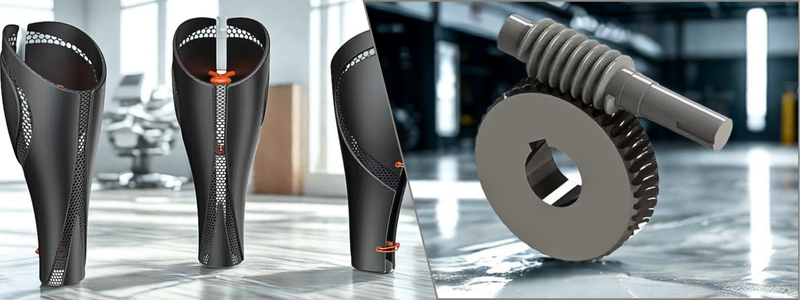
3D product design of a luxury necklace and headphones by Cad Crowd design experts

RELATED: How to reduce new product development risks for design services companies

Speed, precision, and no guesswork: How CAD is redefining product design

There’s that magic moment in the life of every product – when it transitions from a crude drawing or delicate prototype into something you can actually produce. That used to take an exhausting period of time. Weeks of revisions. Months of reworks. But CAD (Computer-Aided Design) has entirely revamped the playbook.

Now, once an idea is captured digitally, the actual work starts – quickly. Designers can try out immediately how a hinge will function after 10,000 cycles. Want to test airflow through a snug casing full of sensitive electronics? Model it in minutes. Wonder how the product will appear in chrome versus matte black under lighting in the showroom? Render it and observe every nuance of the reflection.

This is not a time-saver – it’s a power shift. CAD provides industrial design companies with accuracy and authority unimaginable in the past. No more assumptions, no more “wait and see.” Each design decision is supported by actual data, virtual simulations, and testing that reveal flaws before anything physical is created.

The result? Improved products. Improved decisions. Fewer surprises.

Rather than responding to issues after prototyping or production, designers are actually addressing them ahead of time in the concept stage. They’re not only creating products – they’re creating confidence in the process. CAD enables groups to see further in advance, to construct smarter from the beginning, and to optimize that pivotal process from idea to real-world innovation.

That’s not evolution. That’s brainy design – and a significant step up in how we give ideas life.

CAD + collaboration = Creative firepower

Contemporary product design isn’t the isolated, lone genius scribbling concepts on a napkin anymore. Now, it is a complex interplay between industrial designers, mechanical engineering experts, UX specialists, marketers, and even users who will ultimately be utilizing the product. That is, it’s a team effort – one that requires perpetual communication, quick iteration, and accommodation.

But in the past, concept design was not exactly a workshop of collaboration. Legacy tools – such as static sketches, foam mockups, and unnecessary email chains – were buggy and unwieldy. They were slow to accommodate the speed of innovation and the demand for real-time commentary. Designers could spend weeks honing a concept, only to discover the engineers couldn’t implement it – or that marketing had a whole different idea.

Then CAD came along – and the world changed.

Computer-Aided Design transformed the way teams ideate, iterate, and bring to life. Particularly today, with cloud-based CAD software and collaborative spaces, the design process has gone truly global. A Toronto designer can model the outside of a product while a Berlin engineer works on the internal features. Meanwhile, a Seoul UX consultant is testing how it handles in a user’s hand. It all occurs in real time, with changes automatically tracked, revisions stacked effortlessly, and no one excluded from the loop.

It’s not only efficient – it’s lightning in a bottle. This kind of transparency and integration stimulates creativity. With less siloing and more collaborative input, teams can share out-there, unconventional ideas and actually pursue them without missing deadlines. CAD unleashes diverse thinkers to collaborate in a common digital sandbox, where walls come down and innovation blooms.

This collective magic not only speeds things up. It improves things. It provides a window of opportunity for multidisciplinary innovations and brings design to the people. You no longer have to have everyone in the same room – or even on the same continent – to form something remarkable.

And this is precisely where Cad Crowd becomes the secret weapon. Cad Crowd is not merely a freelance platform. It’s a network of premium CAD designers and engineers at your disposal. Want a team that can turn your napkin sketch into a fully realized, ready-to-manufacture prototype? Done. Want someone to craft a beautiful enclosure or 3D print-optimize your product? Someone in the Cad Crowd community has already figured out a better way to do it.

With Cad Crowd, you’re not just outsourcing tasks – you’re building a remote dream team that’s already aligned with the pace and expectations of modern design. They speak the language of collaboration, and they live inside the CAD ecosystem. That’s the new creative firepower – and it’s lighting up the future of product development.

Digital twins: CAD as the secret behind smarter, sleeker products

From voice-activated thermostats to palm-top drones that deploy midair, products these days are supposed to be geniuses straight out of the box. But all that smarts – sensors, circuit boards, batteries, Bluetooth modules – must be shoehorned into increasingly slender, more ergonomic packages. Getting that magic to work without the product burning up, frying itself, or shaking apart is no small thing.

This is where CAD comes in as the silent hero.

With CAD, designers don’t simply draw good-looking shells – they create digital twins: precise virtual replicas that replicate how the real product will perform. Such models do much more than depict dimensions. They model real-world stress, thermal flow, electromagnetic interference, and even how consumers may touch the product.

Suddenly, designers and product design engineers aren’t operating in the dark anymore. They’re not guessing if a new case will heat up too much or whether a button will be easy to press. They’re trying it – all of it – before any prototype is even created.

For companies providing industrial design services, this makes all the difference. Function and design no longer need to battle for supremacy; they’re created simultaneously. Redesigns are fewer, development cycles are quicker, and a lot more confidence entering manufacturing is the new reality.

In short, CAD-enabled digital twins are making smart product design a precision engineering endeavor – and the outcomes are simply nothing short of brilliant.

Goodbye silos, hello synergy: How CAD unites design, engineering, and manufacturing

In the past, product development was a disconnected experience between designers, engineers, and manufacturers. Designers would design something wonderful, engineers would struggle with making it feasible to produce, and manufacturers would be left to figure it out – oftentimes from nothing more than a sketchy drawing and a hopeful smile. The outcome? Miscommunication, redesigns, blown budgets, and much frustration.

That antiquated model is rapidly disappearing, thanks to CAD. By beginning the design process in computer-aided design software, groups now share the same digital language. CAD files can be seamlessly transferred from design to engineering to manufacturing. A 3D model is more than an idea – it’s a living, breathing data source that everyone can collaborate on in real time.

Now, designers don’t have to speculate whether their concepts are manufacturable – they can check for manufacturability in an instant. Engineers can get involved early, making important adjustments on the fly. And manufacturing design experts? They receive accurate, detailed geometry that drives tooling and production without the need for a complete rework. What once was three disconnected steps now becomes one intelligent, integrated workflow.

This is where Cad Crowd excels. Their independent CAD professionals don’t work independently – they communicate and work with engineers and production staff to produce designs that are not just beautiful but also feasible to build. Whether prototyping or gearing up for full-on manufacturing, Cad Crowd keeps everyone on the same page and moving fast.

No more silos. No more cumbersome hand-offs. Just unadulterated synergy – concept to creation.

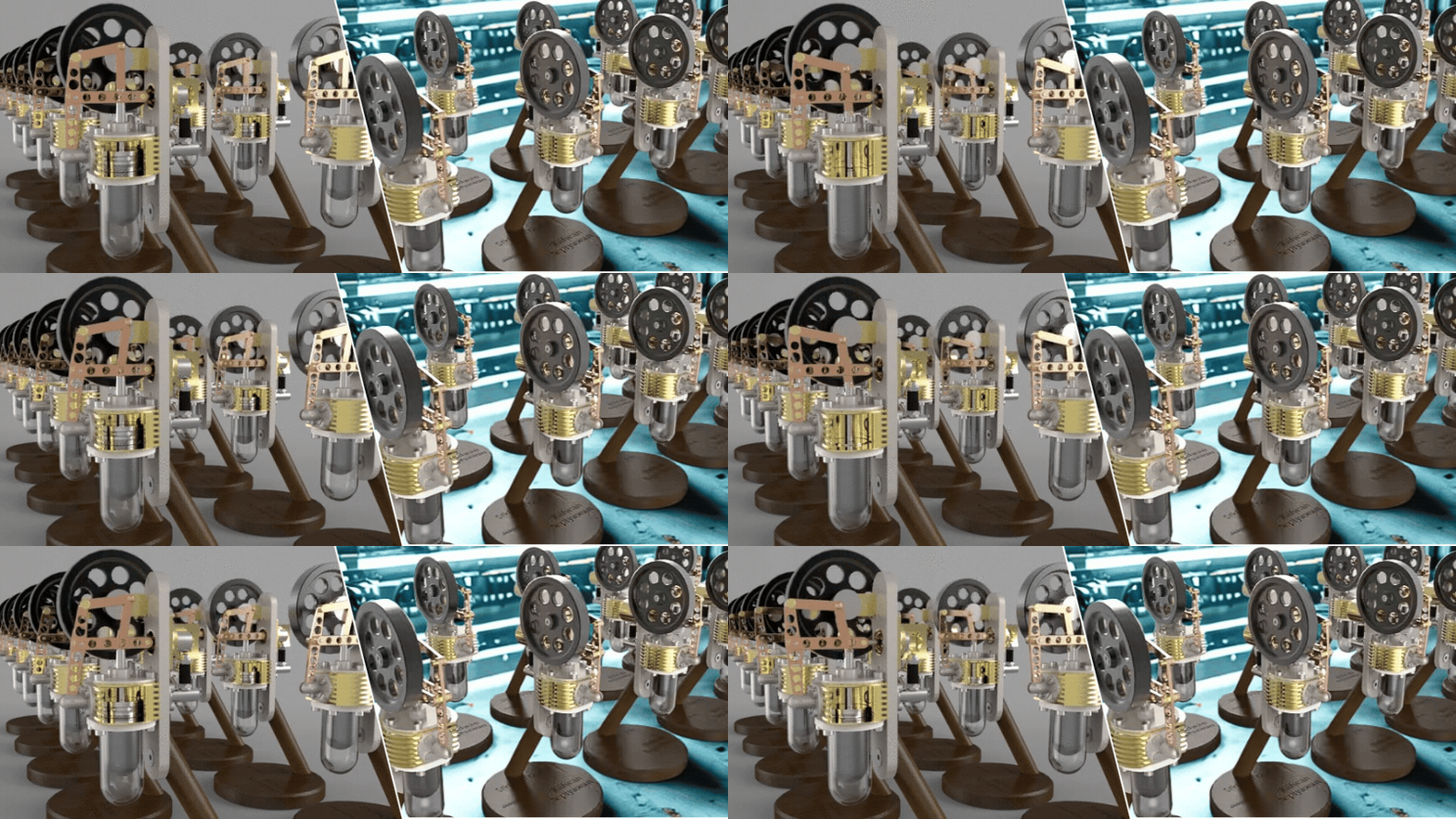
3d rendering of products by Cad Crowd design and manufacturing experts

RELATED: The simple secret to unlocking new product innovation at design services companies

Iteration without the price tag: Why CAD makes experimentation affordable

Money speaks in product development – and at the concept phase, it screamed. Each design adjustment came with physical prototypes, delayed times, and material expenses. A single miscalculation could land you back to square one, losing thousands on tooling or replicating costly molds. It was a heart-pounding, wallet-emptying procedure.

Enter CAD, and all of this is different. Suddenly, testing six various housing arrangements doesn’t take six prototypes. Want to know how a new grip texture will feel? Model it and calculate the results – no injection mold needed. Need to test out another material? Replace it virtually and compare performance characteristics, all in a virtual space.

This is more than a change in workflow – it’s a radical redefinition of what iteration is. CAD eliminates the cost barrier to play. You can experiment without breaking the bank by committing to an expensive physical process each time. It converts “What if?” from a cost risk into a creative invitation.

That’s where Cad Crowd excels. Their seasoned product design services celebrate this CAD-fueled freedom, working in tandem through speedy back-and-forth iterations to hone your idea into a refined, production-critical masterpiece. They don’t only provide a design – They co-evolve it with you.

And since Cad Crowd’s talent base works remotely and on demand, you’re not financing overhead – you’re financing results. That means every development step remains affordable, scalable, and totally in sync with your project objectives.

So go ahead: push the boundaries. With CAD and Cad Crowd, iteration is no longer a cost; iteration is a step forward.

Where aesthetic meets engineering brilliance

Industrial design is not simply a matter of producing something that functions – it’s a matter of producing something that people will actually use. It’s the skill of finding a balance between beauty and performance, between emotion and accuracy. If a product is stylish but fails on day one, it’s bound for the landfill. If it’s sturdy but ugly and uninspired, it sits on store shelves in retirement. The magic occurs when form and function become one – and that’s precisely where CAD and engineering design services enter the scene.

Computer-Aided Design (CAD) turns design from guesswork to computed creativity. Those sleek curves and lines? With CAD, they’re not only pretty – they’re designed. Surfacing software allows designers to shape forms that are as functional as they are lovely. Vent holes are part of the design language, not an afterthought. An ergonomically tested smartwatch can be designed digitally, without a single prototype being produced, while internal layout and strength are optimized.

CAD bridges the gap between engineering reality and design intent. It is no longer a fight of wills to make a product visually pleasing or functional. You can do both now – and you should.

That’s why Cad Crowd is a game-changer. Their network of freelancers consists not only of CAD drafters and engineers, but also industrial designers who know that visual beauty isn’t icing on the cake – it’s in the recipe. These professionals design products that make eyes pop, hands reach out, and work perfectly. With Cad Crowd, your design doesn’t have to sacrifice style for function. You get both – engineered to perfection.

How CAD gives industrial design firms a manufacturing jandoff boost

In industrial design, a great idea is worthless if it can’t be transferred seamlessly to the production floor. That’s where CAD (Computer-Aided Design) really rocks – it closes the gap between the design studio and the factory floor with speed and accuracy, especially with design for manufacturability services.

When designers design models in CAD, they’re not merely creating something that is pretty. They’re creating digital products that are producible day one. These files can be exported directly into CNC machines, 3D printers, or injection molds without interference. This is because CAD preserves data fidelity so high that what is produced is precisely what was created, down to the micron.

Which means less surprise when parts arrive on the factory floor. With design-for-manufacturing principles integrated into the CAD process, expensive production mistakes are cut down to size, and time-to-market receives a significant improvement. From creating a prototype smart device in San Francisco to producing a large quantity of custom enclosures in Shenzhen, you can count on the same CAD file to produce reliable results.

This flexibility is a game-changer for industries like consumer electronics device companies and medical devices, where speed, precision, and quality are non-negotiable. Industrial design firms can now adopt distributed manufacturing strategies – printing or molding across multiple locations – all seamlessly powered by CAD.

And if you need CAD designs production-ready from the get-go? Cad Crowd brings you in contact with veteran designers who know the entire pipeline. These are not merely artists – they are engineers who create models developed to conform to actual manufacturing. From racing a deadline to ramping up a product launch, Cad Crowd provides you with the CAD know-how that keeps production moving smoothly.

Crowdsourced design, solution-oriented: How Cad Crowd is revolutionizing the game

Crowdsourcing isn’t what it used to be – and that’s a good thing. What once had a reputation for being a fast-and-cheap shortcut is now a powerful engine for innovation, especially in the world of CAD and industrial design. At the forefront of this transformation is Cad Crowd, a platform that’s turned the typical design process on its head by tapping into a global network of brilliant minds.

Cad Crowd offers more than just freelance help – it brings a hybrid approach that combines open design challenges with curated, one-on-one collaboration. Companies can launch design contests to spark a flurry of inventive ideas, then choose the standout designer from the crowd to bring the concept to life. It’s a clever blend of creativity and execution, where fresh perspectives meet serious engineering muscle.

For startups, entrepreneurs, and fast-scaling businesses, Cad Crowd offers a vital shortcut through the expensive and time-consuming world of in-house design. Hiring a full team isn’t always realistic – especially when agility matters. Cad Crowd acts as your virtual product design department, ready when you are, no overhead required. Whether you’re working on a consumer gadget, medical device services, or rugged industrial equipment, you get access to pre-vetted CAD professionals who understand your goals and work seamlessly to deliver stunning, functional results.

This isn’t just about slashing budgets – it’s about leveling up. Cad Crowd empowers you to pursue cutting-edge product ideas without sacrificing quality or speed. You don’t have to choose between affordability and excellence. You get both – plus the added benefit of working with a team that’s laser-focused on solving your specific design problem.

By merging global collaboration with top-tier engineering, Cad Crowd is reshaping how great products get made. It’s not just a design platform. It’s a launchpad for the next big thing.

CAD is the future – and the now

Computer-Aided Design is more than a tool of the future – it’s redefining the product development game today. With innovation hurtling ahead, CAD technology is being powered by AI-assisted design recommendations, generative modeling, real-time simulation, and even topology optimization. Product development experts don’t have to do it alone anymore; they’re working alongside smart systems that process millions of data points and design iterations within seconds.

Nevertheless, in this maelstrom of progress, there is one thing that does not waver: technology is just as strong as the minds that direct it. The human element – creative instinct, hands-on know-how, and a gut feeling for what works – is irreplaceable. AI can propose forms, but it can’t comprehend market forces or emotional design. It can refine a shape, but it can’t sense the gravity of a customer’s expectation.

That’s where Cad Crowd is different. It’s not merely a venue to hire a person who has the capability to work with CAD software – it’s where businesses encounter innovative professionals who understand how to leverage these tools strategically and creatively. These are the engineers-turned-designers who think like them, create like entrepreneurs, and mold like artists.

CAD is the driving force behind contemporary design. But visionaries continue to drive. Cad Crowd is not only a part of the CAD revolution – it’s a leader in it. When you want designs that look great on the screen but translate into the real world, this is where you’ll discover the talent that can get that done.

RELATED: Speeding up product development with new product design services companies

Wrapping it up: Why Cad Crowd leads the pack

It’s easy to use CAD. It’s not so easy to master it.

The top industrial design experts understand that CAD is not merely about quicker drafting or more glamorous renders. It’s about revolutionizing how product ideas are developed, tested, tweaked, and released. It’s about accelerating time to market, increasing design excellence, and minimizing waste – all while extending creative horizons.

Cad Crowd doesn’t just ride this wave – they help build it. By connecting companies with elite CAD professionals around the globe, they empower businesses of all sizes to modernize their product concept design workflows. Whether you’re launching a revolutionary wearable or refreshing an existing product line, Cad Crowd makes it smarter, faster, and more scalable.

From concept sketches to manufacturable 3D files, from photorealistic rendering to functional prototyping, they’ve got the talent and tools to transform even the roughest idea into something market-ready.

In a world where the next big idea could come from anywhere, Cad Crowd ensures you’re ready to design it, model it, and bring it to life – with CAD precision and creative fire. This isn’t something that you can just find or get anywhere. It’s a result of years of expertise and well-honed skills from being in the industry. 

So go ahead – dream big. CAD’s got your back. And Cad Crowd is ready to help. Get a free quote today.

author avatar

MacKenzie Brown is the founder and CEO of Cad Crowd. With over 18 years of experience in launching and scaling platforms specializing in CAD services, product design, manufacturing, hardware, and software development, MacKenzie is a recognized authority in the engineering industry. Under his leadership, Cad Crowd serves esteemed clients like NASA, JPL, the U.S. Navy, and Fortune 500 companies, empowering innovators with access to high-quality design and engineering talent.

Connect with me: LinkedInXCad Crowd

Design Intent in CAD: Communication Guidelines for CAD Services Firms & Freelance Professionals


It is said that office legends spring from either great triumph or massive failure. There were once some rumors among CAD groups that there was a floating bracket legend. According to this, there once existed a napkin sketch client, a CAD sage nodded in blind belief, and the project manager assured everyone that it was all done. Two weeks passed, and the team opened up the file to be greeted with beautifully modelled bracket swimming unrestrained without any need to keep it back to something. It was exact, elegant, but totally useless.

It was not the client, not the software, nor the designer’s skill. The issue was that there was no clear sense of the design’s purpose.

CAD intent is the recipe family secret ingredient. It’s that which can’t be visually detected in the final product, but omit it, and it won’t be the same. It’s the “why” for each of the decisions: why the hole is there instead of somewhere else, why the part must bend and not stay straight, why this edge must have a chamfer and not that edge.

To freelance engineers and CAD design service companies, design intent capability is between exhilarating and infuriating work. Cad Crowd, a venture-capital-backed website that businesses turn to in order to get visibility in front of CAD professionals, has seen projects swell when there was clear communication and burst when there was poor communication. Design intent is not high-brow art. It is the cornerstone of professional-quality CAD work.


🚀 Table of contents


Why design intent matters more than you think

Design intent matters because every CAD design is more than a string of lines on the screen. It’s a story. A bicycle frame is more than tubes; it needs to be strong enough to ride down mountain roads but not so heavy. A coffee maker housing is more than a shape; it needs to be something the human hand can wrap around and hold up to the occasional kitchen disaster.

Small errors get magnified when design intention is lost. Do you recall the “Door Handle Debacle of 2021”? The design team that redid the office created a chic, modern handle. It was pretty on the designs. No one drew, however, that the handle needed to withstand the occasional harsh pull of a courier who had many packages. On the first day, the first handle snapped like a twig. Redesigning took nearly three times the original budget for the engineering design firm.

Not to take intent in business is to be reminded of billable hours, unhappy clients, and potential reputation loss. To freelance writers, it can make what was otherwise a sure thing into a free revision marathon.

Design intent is all the priorities. What can’t possibly be changed? Where’s the stretchy material if it has to be changed? In what circumstances will it be placed? Figuring these out upfront saves time, money, and misery.

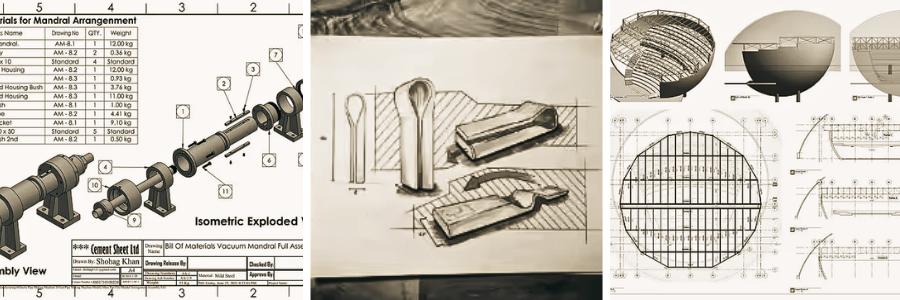
3D rendering and CAD drawing of engineering and floor plans by Cad Crowd design experts

RELATED: The impact of 3D architectural renderings on custom home design with 3D design services firms

Anatomy of clear communication in CAD projects

Transparency communication is not just the sending of sketches. It’s comprehension. The following are the bare minimums:

  • Dimensions: The lifeblood of the model

Dimensions are not numbers. They’re your design’s genetic code. A single misapplied diameter or missed tolerance will destroy a whole project. A freelancer shared a cautionary story about a wonderfully machined piece that could not be assembled together because gap tolerance was called out but not specified. The prototype produced was flawless, but would not fit together. The fix cost dollars and pride.

  • Constraints: The invisible guardrails

Constraints govern your parts. Disregard them, and your assembly is totally at large. There existed a legendary demonstration of a part pirating similar to a pirate mill in an unconstrained motion test simulation. Engineers merely laughed afterwards when they were serene.

  • Assembly behavior: Show, don’t guess

Never assume how it all fits together. Show it. Reproduce or animate an exploded view. The misplaced pivot label or reverse face reference can be the source of failures for product design companies.

  • Document every assumption

If you chose stainless steel to give corrosion resistance, note it. If you allowed tolerance drift in trying to save production expense, note it. Written assumptions avoid “I assumed you meant this” misadventures.

  • Visuals over verbal instructions

Pictures are not sufficient if words fail. Therefore, an annotated screenshot can put a stop to hundreds of emails. Cad Crowd experts often remark that annotated screenshots save time, build trust, and earn a perceived level of professionalism.

  • Timeless design intent, communication tools, and techniques

Computer-aided design in these times is made possible through advanced tools, but tools are useless if there is miscommunication.

Parametric modeling is domino magic. Alter one parameter, and the rest take care of themselves. But that magic’s only going to occur if your initial parameters are a true representation of the intent of the design. A single bad reference can wreak havoc down the road.

Piles of “final_final_REAL_final.stp” files in directories are a cry for help. Proper versioning software does not do this. Use naming conventions or versioning capabilities inherent in the software. Cloud environments facilitate sharing and tracking so easily.

Annotations are kludgy, but they’re a lifesaver. Use arrows, labels, and comments on your CAD model itself. A two-minute screen capture may be worth more than ten paragraphs of explanation by your 3D modeling expert.

Cloud software enables worldwide teams to collaborate in real time. A freelancer joked it was like going from yelling down a canyon to having a clear phone line.

Checklists are dull but save lives. An unremarkable list, check tolerances, check materials, test assemblies, is what can detect errors before they kill you.

These abilities are utilized daily by Cad Crowd specialists. Site clients observe that things go more smoothly merely because they can have these specialists break down.

Connecting the gap between clients and CAD specialists

The gap between what a client is envisioning and what the designer is translating can be enormous. The bridging requires humor, patience, and visionary thinking.

A good kick-off meeting gets everyone singing from the same songbook. Don’t talk about deadlines. Priorities? What are the absolute necessities? What can be relaxed if there are limitations? What is “better” to the customer?

  • The power of probing questions

Freelancers have a secret too: questions. A friendly but direct question can elicit helpful information. For example, “How should this hinge move when loaded?” will reveal an assumption that will save days of redo time for your manufacturing design expert.

  • Feedback loops are your friend

Don’t send one done file and hope for luck. Send draft versions. Ask for feedback. Small tweaks early are cheaper and easier to do than huge fixes late.

  • Honest timeline conversations

If your client is changing direction mid-project, just describe to them what this does to deadlines and budget. This way, you can both agree on moving deadlines.

Cad Crowd makes it possible. Customers can choose among experts by price portfolios and profiles. They can be matched with the customer communication style.

Freelancers vs. companies: Communication styles

Freelancers and CAD firms do have their reasons, but communications differ.

  • Freelancers: The improvising agressives

Freelancers improvise. CAD design freelancers move quickly and are able to turn on a dime and react to the off-the-cuff offer. Freelancers deliver first-hand, personal one-to-one communication that creates the feeling of working as if it were personal and off the cuff. Freelancers are like jazz musicians who can turn tempo on a dime.

  • CAD companies: The orchestras in structure

CAD businesses provide formality. They’ve formalized project management processes, multiple levels of quality checks, and point-to-point communication protocols. They’re the symphony orchestra: they practice, they sync, and they deliver with consistency.

A small model will appreciate a freelancer’s flexibility. A big, high-profile meeting with many stakeholders will require a business’s formalism. Cad Crowd has both, and it’s easy to pair up right.

Avoid these common pitfalls

  1. The mystery dimension: Never let a critical measurement happen by accident. Missing data can hijack production and cost you thousands.
  2. File naming horror: Avoid giving files such names as “final_FINAL_useTHIS.stp.” Systematic naming spares everyone headaches.
  3. Bad feedback: To ask a designer, “make it pop” without definition irks. Define precisely what you want done.
  4. Material assumptions: If your material is aluminum, but your steel master drafter will make the weight and cost, this can lead to problems. Clarify with your steel detailing engineering expert always.
  5. Cutting motion tests: A floating bracket or binding hinge is only funny when performing a repair. Test assemblies in their entirety.
3d rendering and schematic drawing of scuba equipment by Cad Crowd design experts

RELATED: Key factors to consider when vetting engineering firms for design & consulting services

Advanced means of design intent communication

Effective communication is sufficient, but advanced methods place collaboration on another plane. Advanced methods go beyond the minimum and even avoid slight miscommunications.

  • Make a design intent document

A design intent document is your reference for your CAD model. It specifies the most important characteristics, constraints, and priorities that will dictate all decisions. Include diagrams, references, and even comments to modify in the future. It’s a source of truth for everyone.

  • Use storyboards or scenarios

Customers may struggle to explain how they’re really going to be using your product. Try storyboards or use cases. If you’re designing a folding chair, draw out an obvious sequence of photos: someone unfolding it, sitting down, and folding it up to take off. Those little details inform you of what sizes and tolerances matter for customers and consumer product design firms.

  • Hold regular review meetings

Review meetings are not milestones, but are used in order to validate questions of understanding and confirmation. Keep such meetings as light and happy as possible. Jokes can ease the tension and make work fun.

  • Offer such simulation aids early to such individuals

Simulation software need not be reserved for the very last step. Stress, motion, and heat transfer can be simulated ahead of time to verify if the design intent is being met or not. Show these simulations to customers. An animation of a part deforming under load will be more persuasive than a list of numbers in a block of text.

  • Utilize collaborative annotation platforms

Shared marking is made possible by today’s CAD software. Have your clients mark up on the model. Request them to mark up what concerns them. This keeps send-and-return via email out of the picture and places feedback ina more workable form. Cad Crowd experts would always recommend such creative approaches because they keep surprises later on at bay. Investing time up front, you save hundreds of hours in the future.

Using humor as a tool in CAD projects

CAD projects are today painfully technical. Tolerances, assemblies, and files can drain the humor out of a room faster than a terrible software patch. Humor is the cure.

A carefully made joke at review time can convert potentially confrontational talk into constructive talk. During the time when the team discovered a malfunctioning label in the duck prototype, the team named the work “Duck_v1” as a stopgap. Tension was alleviated by laughter, and the team promptly corrected the error.

Humor also builds rapport. A freelance product designer who adds a bit of an ironic remark to a work-in-progress window will find that he or she gets more positive feedback from clients. CAD services companies that set a friendly tone for meetings have higher employee and customer morale.

You will even come across freelancers in Cad Crowd with CAD bloopers or humorous analogies in their portfolios. These extra flourishes are personality-catching and bring collaboration to the human touch.

Good and bad communication: Real-life case studies

The bracket redemption

A small company hired a freelancer in Cad Crowd to build an element of a prototype. The freelancer was initially provided with half of the instructions and worked out the first draft of the portion that could not be accommodated within the assembly. Instead of panicking, the freelancer booked a video conference, asked to read questions, and asked to see pictures of the assembled product. Within a week, the revised design was installed perfectly and improved the overall strength of the prototype done by prototype design services. The freelancer’s communication with the client was so excellent that they employed the freelancer on five more projects.

The ghost of unnamed files

A small firm did not version. Six copies of the same document titled “FINAL_use_this” existed in different directories. When they unknowingly printed the incorrect one and shipped it off to production, the mistake cost them tens of thousands of dollars. They then hired Cad Crowd to get them a more communicative company. The new customer had a proper naming convention for files and versioning, so the client avoided going any further insane.

The miracle coffee maker

One of our entrepreneur business owners ordered CAD services from Cad Crowd to create a new coffee maker. The crew spent a design intent document that nailed down all the things that mattered: the handle had to be cool to the touch, the reservoir had to be a clean-out to be easy to clean, and the base had to be substantial enough to double as a support for the occasional kitchen disaster. They storyboarded out an epic morning coffee ritual disaster as a product, even. The product was a first-work prototype by product engineering services.

Building lasting relationships through communication

Cad’s top performers aren’t just accomplishing things. They build relationships. A freelancer who remembers a client’s tolerance range or checks in with a client to ask how a prototype was performing in the field is remembered.

The clients also know it. With feedback that is informative, timely payment, and acknowledging good work, loyalty is shown. If a client acknowledges clear communication by a designer, then the designer will be eager to give priority to his or her next project.

In Cad Crowd, repeat business has been attained through good communication by numerous freelancers and businesses. They know that more long-term relationships are less stressful and more lucrative than continually seeking new clients.

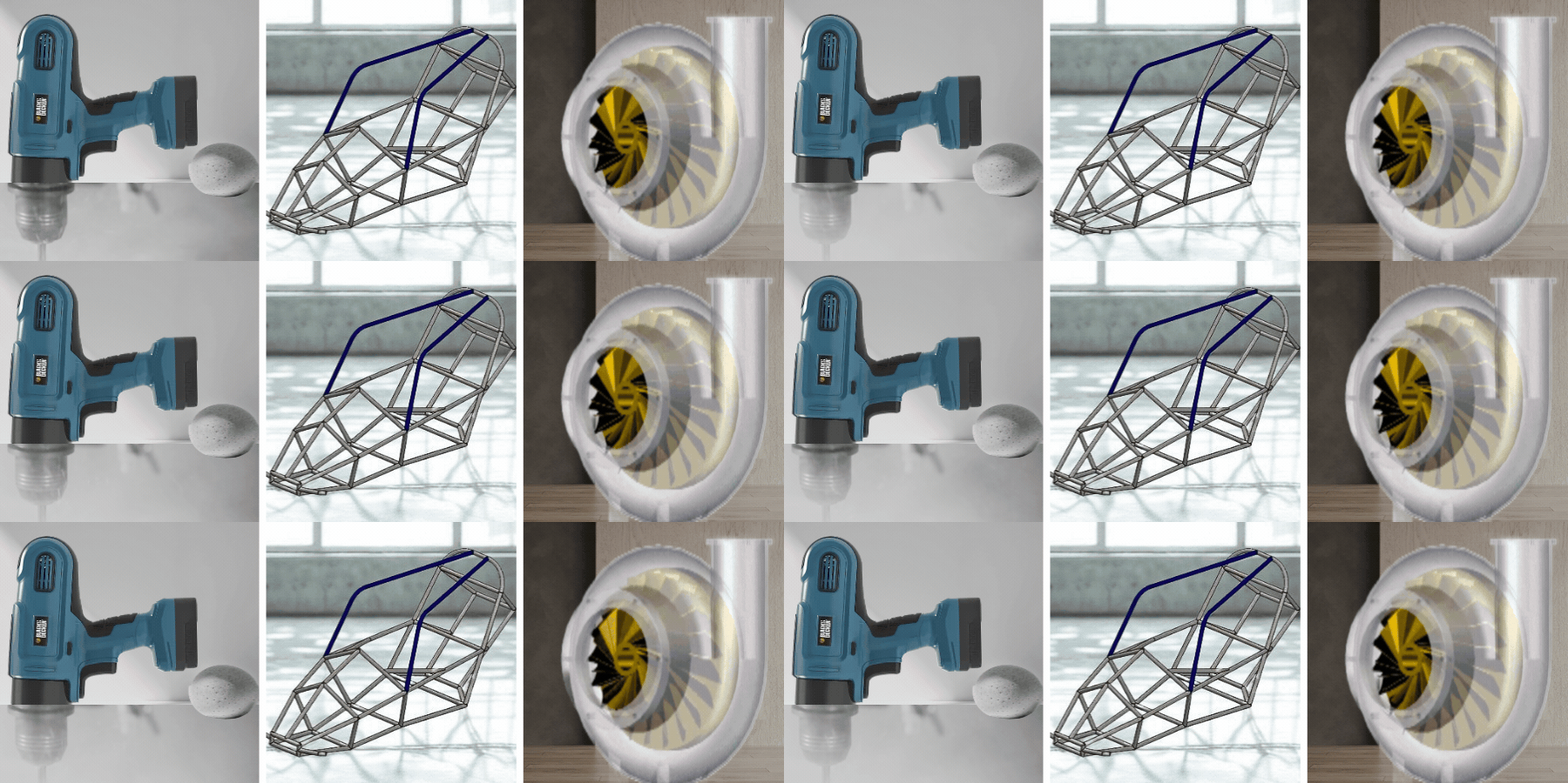
PCB and sheet metal designs by Cad Crowd freelance experts

RELATED: A guide to electronic product design for manufacturing with PCB design firms & engineers

Cad Crowd’s contribution to better communication

Cad Crowd is not only a place where one would be in a position to locate CAD talent. It is an open platform where communication skills are accorded the same respect as technical skills. Here at Cad Crowd, we can give you a chance as customers to browse through our professionals’ portfolios, read reviews, and even connect with them. The open platform allows the customers to choose the professionals who best fit their communication style.

Cad Crowd also supports milestone projects. Phasing a project provides clients and specialists with a feeling of conformity. It reduces misunderstanding and gives room for adjustment before a fantastic issue turns into a problem, especially for prototype engineering firms.

The presence of many different kinds of specialists in Cad Crowd is another advantage. You can demand a person who gets back to you in the moment and will perform their best work if talked to personally, or an entire CAD firm that has set communication standards; you will find a good one.

Familiar communication challenges and the way forward to overcome them

  • Language differences: With a worldwide market, language confusion may cause confusion. Always try to converse in English, as this is the universal lingua franca, the same with simple-to-interpret images, and concise e-mails documenting key decisions.
  • Assumed knowledge: Most of the time, designers assume that customers have at least a little knowledge of CAD. But this is risky, not all customers have technical knowledge. Make sure you don’t use technical jargon if you don’t know that they do. If a customer is unsure, clarify.
  • Scope creep: Client-added functionality on a project without the client’s awareness of influence. Address such changes early. Describe how they impact cost and schedule before continuing.
  • Time zone differences: Time zone differences are normal in global collaborations. Set proper expectations about response time. Use shared documents so work can be started asynchronously.

Cad Crowd website makes the challenges accessible through messaging windows and open profiles. Clients can select experts with experience in time zones and working cultures.

The human side of CAD communication

There is a person behind every CAD model. There is perhaps a designer working late into the night fixing an eleventh-hour revision. A customer might be putting life savings into a new concept. To hear the human hand brings compassion and patience.

Building rapport with each other, even if it’s a small talk about a dog or a favorite video game, makes work fun. Work is enjoyable if people are interacting beyond employment.

Cad Crowd makes these encounters possible by enabling product development freelancers and businesses to meet and introduce themselves and their abilities. Clients scanning through profiles are more apt to attribute a pleasant personality or an amusing anecdote to help them select a designer.

Design intent as a unique selling point

Clarity of intent is not. screwing up. It’s being frugal. Companies that consistently bring good design to the table build reputations as good collaborators. Freelancers who raise good questions and don’t get into trouble are remembered and talked about positively.

A client who has two equally competent CAD experts to choose between will most probably choose the one capable of communicating. Cad Crowd is the best platform where experts have the opportunity to exhibit those abilities. Portfolios that demonstrate communication ability in addition to technical expertise secure more projects.

RELATED: 7 tips for naming new invention designs when you hire a product design company

Final checklist for communicating design intent

Finally, here’s a checklist that you can apply immediately:

  • Maintain a design intent document for each project.
  • Maintain unambiguously defined critical dimensions and tolerances.
  • Parametric modeling on a need-to basis only.
  • Strict version control is enforced.
  • Provide labeled graphics or screen dumps.
  • Ask tough questions during kickoff meetings.
  • Project stages broken up with feedback.
  • Human communication by way of humor.
  • Scope change and timeline impact were made transparent.
  • Long-term relationships with respect and follow-up established.

Your ideas deserve clarity

Design intention is the rhythm of CAD projects. It takes a napkin doodle and turns it into a product that can be made accurately. It prevents floating brackets, offset holes, and last-minute redesigns in terror. Above all, it builds trust and competence between customers and CAD specialists.

No matter if you’re a freelancer, CAD services company, or idea owner client, communication is your biggest asset. Cad Crowd enables you to speak with individuals in no time at all who not only know the software but also the art of collaboration, questioning, and listening.

If you’re prepared to get your idea to product without all the drama or broken pieces, think Cad Crowd today. Think CAD services companies and freelance experts who will bring your ideas to the top designs. Your next blockbuster project is worth partners who know that design intent isn’t so much a process step but the road to success. Get a free quote here.

author avatar

MacKenzie Brown is the founder and CEO of Cad Crowd. With over 18 years of experience in launching and scaling platforms specializing in CAD services, product design, manufacturing, hardware, and software development, MacKenzie is a recognized authority in the engineering industry. Under his leadership, Cad Crowd serves esteemed clients like NASA, JPL, the U.S. Navy, and Fortune 500 companies, empowering innovators with access to high-quality design and engineering talent.

Connect with me: LinkedInXCad Crowd

How to Reduce Costs on 3D Product Development with Remote CAD Experts for Companies


In order to stay competitive in today’s market, businesses are always seeking ways to reduce expenses and increase production speed. One affordable approach is to use freelancing websites to discover CAD professionals who can work remotely. By contracting out 3D product design, businesses may potentially cut costs on salaries, software licensing, and employee training. In addition to tapping into global expertise, they may tailor their resource allocation to match the unique requirements of each project.

Cutting expenses without sacrificing quality is becoming more of a need as competition in product development heats up. Having in-house skills, particularly for specialized fields like 3D and CAD modeling, may be rather costly. Companies now have a state-of-the-art option for outsourcing the employment of remote CAD professionals thanks to the proliferation of dispersed work, even as freelance platforms continue to grow in popularity. You may acquire the results you need without breaking the bank by utilizing their services instead of recruiting full-time employees or big corporations.

Cad Crowd is an excellent platform that can put you in touch with freelance professionals in 3D product design and CAD solutions. It is also one of the most reliable and easy-to-use websites for locating reliable freelance CAD experts. Their product development processes may be streamlined, and they can save a ton of money with the help of remote CAD experts. This article takes a look at several tried-and-true ways for cutting costs when working with remote CAD specialists, and how platforms like Cad Crowd may be an integral part of your strategy.


🚀 Table of contents


Understanding the need for cost reduction in 3D product development

Before discussing the strategies, let’s understand why cost-saving during 3D product development is important. Conventional product development costs can be high, especially for organizations involved in areas such as consumer electronics, automobiles, or furniture design, where design intricacy is high and product development time windows are short.

Traditional in-house development challenges

  • Salaries and benefits: Paying the entire CAD staff on a full-time basis has fixed benefits, salaries, and long-term liabilities for product design companies. These turn out to be extremely expensive for organizations that need expert talent for a short term or just a single project.
  • Training and maintenance: CAD software is continually updated. To accommodate this, in-house personnel require regular training, which is both expensive and time-consuming.
  • Overhead costs: Maintaining an in-house team incurs significant costs, including office space, machinery, software licenses, and other administrative expenses. These costs are compounded in those firms that have large, full-time design teams.

By utilizing remote CAD experts, these firms can eliminate these problems and have a less costly alternative to 3D product development.

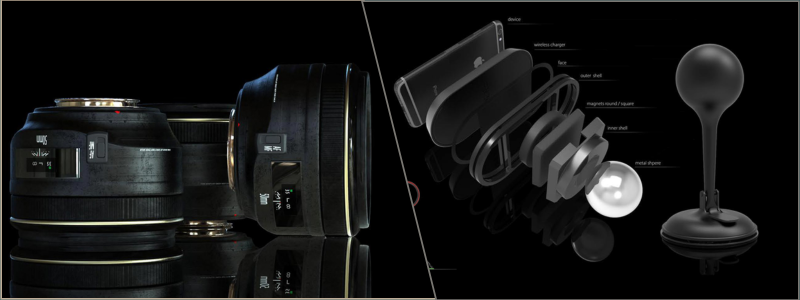
Product design of camera lenses and wireless phone charger by Cad Crowd product development designers

RELATED: A guide to electronic product design for manufacturing with PCB design firms & engineers

Cost-saving strategies utilizing remote CAD experts

In today’s rapidly evolving and competitive corporate world, businesses are constantly seeking cost-reduction methods without compromising on output quality. One area where this holds true is in product development for businesses that are CAD-intensive. Utilizing remote CAD experts has tremendous potential for cost savings and improved project outcomes. By utilizing the services of freelance websites and remote working, companies can access superior talent without incurring the costs associated with traditional recruiting. The following are some methods that companies can use to reduce costs by hiring remote CAD experts.

Utilize freelance websites as a pool of global talent

The most effective method of reducing the cost of product development is by utilizing freelance platforms like Cad Crowd. The websites fill the gap between companies and a worldwide community of specialists to whom they might outsource and assign work on their projects. Through these locations, companies can hire 3D CAD design services of various skill levels and experience, and thereby have the option to select experts whose certification precisely matches the project requirements. This reluctance to flexibility reduces the dangers of unnecessary fixed costs of staff.

  • Expertise in reserve: Rather than employing generalists, companies can have the appropriate CAD professionals with the proper skills for every phase of the project in reserve. To perform tasks such as prototyping, high-level design, or testing, the appropriate specialist can be employed.
  • Pay-as-you-go model: Freelancers are compensated on a project-by-project basis, allowing the company to scale up or down resources based on project demands. It is much less expensive than paying an employee’s full-time salary, which might not be required in the long term.
  • World talent pool: Freelance platforms provide the opportunity to hire experts from around the world. Most often, experts from countries with lower living costs can offer competitive prices without compromising quality.

By accessing this large pool of talent worldwide, companies can be confident they are obtaining the maximum value for the exact skills they require. By doing so, they can cut costs without sacrificing quality.

Streamline project scopes and timelines

One benefit of employing remote CAD professionals is that resources can be quickly scaled to meet the precise requirements of a given project. A remote specialist works on specific steps in a product development cycle, thus avoiding wasteful costs for consumer product design companies. For instance, a firm may need the services of a CAD professional during the conceptual design or prototyping stage, but not for the entire process.

How to make the most out of scopes?

  • Split projects into stages: Breaking the whole product development process into phases, such as creating ideas, elaborately designing, and prototyping, enables companies to hire freelancers to outsource easily for the specific phases where they are needed.
  • Specify specific project milestones: Clearly defined project milestones for all stages enable distant CAD professionals to work in unison and deliver results on time, eliminating opportunities for delays that can lead to additional costs.
  • Limit project scope: Avoid broadening the project scope. Once firms accomplish what needs to be done to push the product ahead, they can acquire laborers specifically for such projects and avoid unnecessary expenses.

The remote work nature enables businesses to take a project-based approach, where they only pay for the work that must be done, without over-scaling resources.

Minimize software and equipment costs

CAD hardware and software may be quite costly, especially when purchasing licenses and hosting software for an in-house staff. Remote CAD professionals typically own their own subscription for commercial software such as AutoCAD, SolidWorks, or Rhino. Thus, product engineering companies don’t need to make regular payments for software subscriptions and hardware upgrades, which could be extremely costly in the long run.

Benefits of freelancers’ tools

  • Software license costs saved: Freelancers have their own licenses for software, and thus, companies are able to save on the exorbitant initial expenditure of purchasing and maintaining licenses for costly CAD software.
  • Upgraded tools: Freelance CAD professionals are generally keen to update their tools to the latest versions, enabling them to utilize the best available tools for creating high-quality designs.
  • Tailor Your Skills: The majority of freelancers choose tools based on their working style. Therefore, companies are working with individuals who can provide the majority of the productivity through tools they are familiar with and have mastered. Even some freelancers utilize open-source CAD packages or specialty equipment to reduce costs. Enjoying the benefit of it, companies can cut even more from their equipment and software expenses.

RELATED: How 3D CAD modeling is transforming design and manufacturing industries at design companies

Reduce overhead with remote work infrastructure

One of the most significant benefits of outsourcing remote CAD experts is avoiding the overheads associated with maintaining an office setup. With remote work, organizations can avoid the expense of expensive real estate, office space, and office supplies. Remote work also enables organizations to recruit specialists from regions with lower living expenses, allowing them to hire top professionals without incurring a premium.

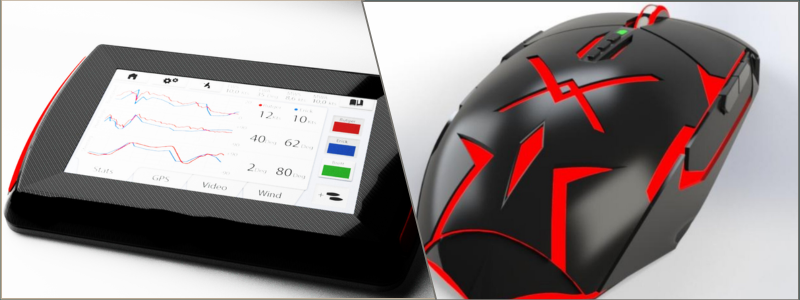
3D product rendering of an advanced scout and vital tracker and a gaming mouse

Points of relevance for cost minimization

  • No office space: Freelance CAD engineers work from their respective locations, thus avoiding the expense of office space, utility bills, and office equipment, which are very high recurring expenses.
  • Lower administrative costs: Working remotely means companies do not need to bear costs on HR personnel, office management, and physical equipment. This results in lean operations with less overhead expense.
  • Lower-cost-of-living locations: Remote employment enables your company to hire CAD professionals outside your home country. This represents a savings in labor costs without compromising quality and expertise.

The ability to hire anywhere provides companies with the flexibility to strategically reduce operating expenses, enabling them to offer competitive pricing without compromising on design quality.

Take advantage of collaboration and communication tools

Advances in project management software and virtual communications technology have enabled remote work to be easier and more efficient than ever. Ease of collaboration despite different time zones is facilitated by tools like Slack, Zoom, Trello, and Google Drive, which ensure instant communication, feedback, and file exchange. Proper utilization of these instruments ensures that companies can ensure their remote workers are collaborating effectively, thereby providing faster project timelines and lower costs for design engineering companies.

Proper utilization of tools

  • Slack and Zoom: Communication and regular check-ins are easy with these tools, keeping remote CAD experts on the same page with objectives and project timelines.
  • Trello and Asana: Project management applications keep projects well-organized, tasks assigned with clarity, and deadlines respected, without unnecessary delays or misunderstandings.
  • Version control and file sharing: Cloud programs like Google Drive, Dropbox, and GitHub provide a straightforward method for storing, sharing, and versioning project files. Such programs have the capacity to monitor changes and recover the most recent version of a project at any time.

By utilizing these collaboration and communication tools effectively, businesses can enhance productivity and minimize time wastage due to delays, making the remote working process more cost-effective and efficient.

Take advantage of expertise with minimum commitment

One of the greatest advantages of using web-based services such as Cad Crowd is that organizations are able to tap into the services of experts without necessarily committing to having long-term in-house staff. This kind of flexibility in human resources enables organizations to hire the services of 3D product design experts for short-term projects or specific endeavors without committing to full-time employment.

Benefits to organizations

  • Flexibility: Businesses can hire freelancers on a project-by-project basis, tailored to the level of work and specific needs. This maintains the expenses associated with a full-time in-house team at a minimum.
  • On-demand talent: Offsite CAD professionals have high levels of experience and specialisation, so businesses can tap into the talent they need without losing time to conduct lengthy recruitment processes.
  • Cost predictability: With freelancers, businesses have a clear upfront cost because they are only paying for the work that has been completed. This eliminates the need to budget for employees’ wages, benefits, or other long-term costs.

This flexibility is particularly useful for companies with project requirements that vary or require specialized skill sets on an ad-hoc basis. The capability of accessing remote specialists on an ad-hoc basis enables the company to pay for what they consume, with variable costs kept to a minimum and in check.

Having CAD professionals at their disposal remotely provides companies with multiple options to reduce their payments without compromising the quality of the design. By utilizing freelance sites, reducing project scope, minimizing software and equipment costs, reducing overhead, and leveraging collaboration tools, businesses can achieve significant savings.

Secondly, having the ability to hire on-demand talent also enables businesses to remain flexible through open innovation services and not make long-term commitments, which remote working makes all the more appealing in today’s competitive age. By embracing these tactics, businesses can streamline operations, reduce costs, and access the best talent at every stage of product development.

RELATED: 10 design principles for product development & industrial design services teams

Why Cad Crowd is the best tool for reducing costs in 3D product development

In 3D product design, it is not always quite so easy to balance quality and cost. Cad Crowd is very convenient in such situations, as it is the first port of call for companies that want to cut costs without sacrificing quality. Cad Crowd provides companies with access to a worldwide pool of highly skilled freelance CAD experts, making it easy to find the best skill set for the task at hand.

Most valuable, perhaps of all, is the pre-screened talent pool of Cad Crowd. Every freelancer on the platform is thoroughly screened and assessed to ensure they possess the proper qualifications and experience required to complete the job. This cuts down on the time wasted by businesses poring over dozens of resumes or portfolios—Cad Crowd has done the legwork for you, so it is easier to find the correct person to do the job in front of you. If you need help from seasoned 3D modeling experts, prototypers, or design-for-manufacturing experts, Cad Crowd can provide that assistance.

The second reason businesses employ Cad Crowd is that it provides an affordable price option. With worldwide access to top talent, companies can recruit exceptional candidates at a lower cost than they can through local hiring or traditional recruitment agencies. This makes businesses accessible because they receive high-quality work, which is crucial in today’s economy.

Cad Crowd also offers convenience in collaboration. The website features built-in communication, file transfer, and project management facilities, enabling companies and freelancers to collaborate seamlessly. Such an effective process not only saves time but also reduces the risk of delays, ensuring the project remains on track and within budget.

In brief, whether you need an expert for one job or long-term cooperation, Cad Crowd makes it possible to get the best CAD expert to fulfill your requirement easily and save money and gain more.

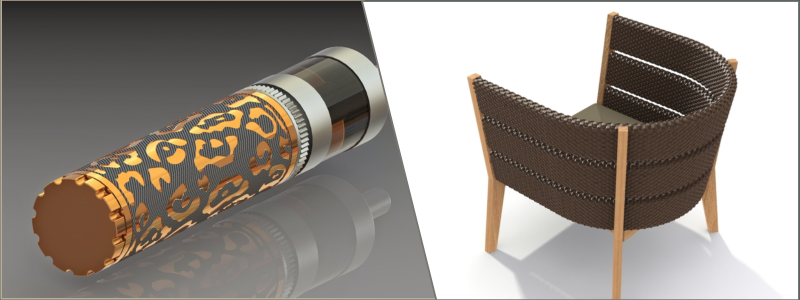
Product design of an electric cigarette and wicker chair

RELATED: How much does NPD cost? Rates & pricing for services at top design companies

Conclusion

Reducing the cost of 3D product rendering and design services is not a matter of compromise; it is a question of creative financial management and leveraging the benefits of the flexibility and expertise offered by independent specialists. With the types of services that exist, such as Cad Crowd, companies can now access the best CAD brains at an affordable price, which is often too costly with the in-house option.

Either by utilizing flexible staffing, efficient software, or by being able to ramp up resources independently, remote CAD professionals offer a cost-effective solution for companies to stay competitive in this fast-paced economy.

With the right strategies in place, such as best-practice project scoping, the smart application of collaboration tools, and the controlled deployment of freelance resources, companies can save a significant amount of money without sacrificing the quality and operational efficiency required to successfully deliver 3D product design.

Cad Crowd is here to help

Collaboration with technologies such as CadCrowd exposes firms to the best freelance CAD engineers and designers in the market, who offer sector-specialized expertise and customized solutions. Whether you’re a new start-up that must get a new product out to market quickly or an established company looking to streamline your design process, working with experienced professionals ensures you receive high-quality work at a small fraction of what it would cost to have in-house personnel on the payroll.

For more information on how Cad Crowd can assist with your 3D product design and to receive a personalized quote, contact our dedicated experts who are committed to making your dreams a reality. Get your free quote today!

author avatar

MacKenzie Brown is the founder and CEO of Cad Crowd. With over 18 years of experience in launching and scaling platforms specializing in CAD services, product design, manufacturing, hardware, and software development, MacKenzie is a recognized authority in the engineering industry. Under his leadership, Cad Crowd serves esteemed clients like NASA, JPL, the U.S. Navy, and Fortune 500 companies, empowering innovators with access to high-quality design and engineering talent.

Connect with me: LinkedInXCad Crowd