Baby Product Design: Safety Standards, Testing, and CPSC Rules for Juvenile Goods


Baby products are things that need an intensive process before being manufactured officially. The CPSC enforces these requirements under the CPSIA and other laws while applicable ASTM standards provide safety guidelines. Depending on the baby product, there are some that requires third-party testing, certification, and appropriate age grading before being produced in the market. Designing products for babies and young children isn’t just about being functional and appealing. It also needs to follow and meet strict safety requirements that are designed mainly to protect children from any potential hazards, which make compliance a very important part of the design process right from the very beginning. 

In this article, we will explore the different safety standards, testing requirements, and CPSC rules that significantly apply to baby and juvenile products in the United States. We highlight the specific role of CPSIA, ASTM standards, certification, third-party testing, age rating, and how these requirements can significantly influence the product development. Platforms like CadCrowd helps in connecting you with new product design professionals who can best support the technical side of developing compliant products.

What is the CPSC and why does it matter for baby product design?

The U.S. Consumer Product Safety Commission (CPSC) is known as the Federal Agency that is mainly responsible for protecting the public from any unreasonable risks of injury or death that’s associated with consumer products. CPSC plays a very important role, especially when it comes to baby and juvenile products. It oversees products that are designed or primarily intended for children that are 12 years old or younger. The agency established federal product safety laws and regulations, enforces mandatory safety requirements, monitors products for any potential hazards, investigates product-related injuries and concerns, and takes enforcement action when needed.

RELATED: How Much Does It Cost to Develop a New Physical Product? A Complete 2026 Breakdown

The CPSC also works collaboratively with retailers and manufacturers to recall products that expose safety risks. Some of the product categories needed to be addressed with hazards, especially involving small parts, flammability, lead, phthalates, structural integrity, and other safety risks. For manufacturers and designers, compliance must not be treated only at the final inspection performed just before the specific product reaches the market. Instead, safety and regulatory requirements must be considered all throughout the design and development process. 

Several features must be thoroughly considered such as material selection, construction methods, component choices, dimensions, and intended age range can significantly affect compliance. Taking these things into consideration helps best in reducing costly redesigns, production delays, failed testing, recalls, and serious enforcement issues in the long run.
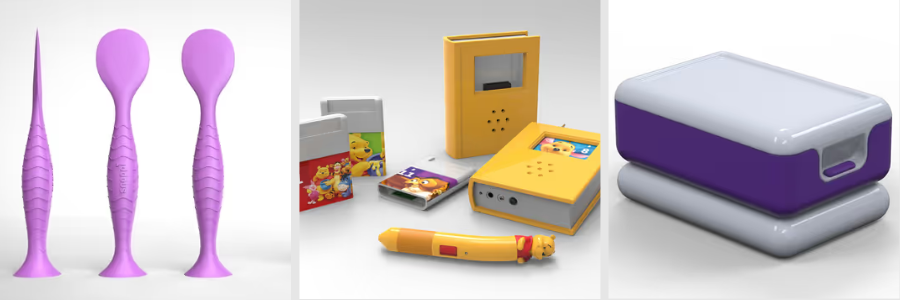
baby and infant products

What does CPSIA require for children’s products?

The Consumer Product Safety Improvement Act (CPSIA) establishes significant requirements especially for children’s products that are manufactured in the United States. The requirements specifically depend on what the product is, its specific use, and its applicable safety rules. Areas include testing, certification traceability, and limits on certain chemicals used. 

Third-party testing

Significant children’s products should be tested by a CPSC-accepted third-party testing laboratory to ensure compliance with applicable federal safety requirements. The testing requirements highly depend on the product category and the rules that specifically apply to it. Manufacturering companies must identify the essential requirements early in the design process instead of just waiting until the product is already ready for production. 

RELATED: Top 31 Websites to Hire Toys & Games with CAD Design and 3D Modeling Freelancers

Children’s product certificate

A children’s product certificate, or CPC, is known as a document that is issued by the importer or manufacturer certifying that the specific product complies with all the applicable children’s product safety rules and requirements. The CPC is highly based on the results of required third-party testing and must determine the product, applicable regulations, testing laboratory, and all the other required information. 

Tracking labels

Children’s products generally need permanent tracking labels or markings that shows information to help identifying the private labeler or manufacturer, the location and production date, and other important details that are needed in determining its specific source and production batch. These requirements support traceability if any safety issue or recall occurs. 

Lead limits

The CPSIA restricts the amount of lead that may be found in any children’s products especially in specific accessible parts of surface coatings. Manufacturers and product designers need to consider the product’s coatings, paints, materials, and finishes that are used in the specific product. 

Phthalate limits

The law also restricts certain phthalates in children’s toys and any childcare articles. It depends on the specific substance and product category, which makes material choices a very essential part in the compliance planning. Material selection should account for any applicable chemical requirements from the very beginning of the process. Ensuring to choose appropriate materials early can really help in preventing redesigns, failures, and any production delays later in the product development.

RELATED: 8 Ways How Companies Use 3D Models and Prototypes in Toy Development

What is section 104 rules for durable nursery products?

Section 104 of the Consumer Product Safety Improvement Act, CPSIA, is also known as the Danny Keysar Child Product Safety Notification Act. This mainly requires mandatory safety standards for products that are intended for infants and toddlers. These rules are significantly enforced to make sure hazards associated with products that are regularly used by young children will be reduced.

Here are some of the durable nursery products and the design issues the standards may address.

  • Cribs – Structural strength, stability, and child entrapment
  • Bassinets and cradles – Stability, structural integrity, and secure locking
  • Toddler beds – Strength, guardrails, and entrapment risks
  • Highchairs – Stability, restraints, and locking mechanisms
  • Booster seats – Restraints, stability, and secure attachment
  • Strollers – Brakes, restraints, stability, and folding mechanisms
  • Play yards – Locking systems, structural strength, and entrapment
  • Infant walkers – Stability, structural integrity, and unintended movement
  • Changing tables -Stability, structural strength, restraints, and fall prevention
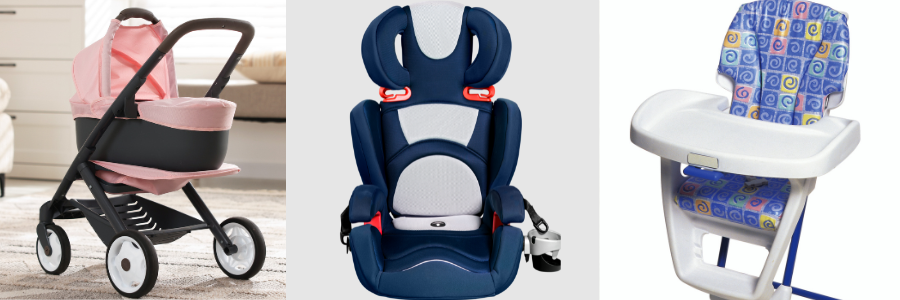
baby products

These requirements can truly influence how a certain product is designed and manufactured. Several features like stability, restraints, folding systems, structural strength, locking mechanisms, and spaces that could certainly create entrapment hazards are all needed to be considered during the process of development.

What is ASTM F963 and when does it apply?

ASTM F963 is a consumer safety standard, which is highly known for enforcing requirements for toy design services that are mainly intended for children 12 years old and younger. It is one of the several safety standards that are considered when designing and manufacturing applicable children’s toys in the United States. This standard is mainly intended to address potential hazards that may occur during normal use and any reasonably foreseeable misuse. 

ASTM F963 may address areas such as:

ASTM F963 Area What It Covers
Mechanical and Physical Requirements Sharp points, sharp edges, small parts, and other potential injury hazards
Chemical Requirements Certain restricted substances and other accessible materials
Flammability Fire-related risks that are associated with applicable toy materials
Sound-Producing Toys Potential risks or concerns from excessive sound levels
Battery-Operated Toys Safety considerations which involve batteries, battery compartments, and other related components

For new product designers, ASTM F963 can really influence decisions about specific features like material, construction, dimensions, components, and how a certain toy is expected to be used. Considering all these requirements early can really help in reducing potential risks of design and testing problems later. Other ASTM standards are not automatically federal law because they are published by ASTM International. Certain requirements of ASTM F963 become mandatory only when it is incorporated into federal regulations and established under applicable U.S. consumer product safety laws. 

RELATED: The Importance of Iteration in Product Development & Working with Product Design Companies

ASTM standards or provisions may also remain voluntary unless there is another regulation, industry practice, or legal requirement that makes them applicable. Therefore, manufacturers must identify different requirements that specifically apply to their product instead of just expecting that every ASTM standard is legally mandatory.

Is JPMA certification required for baby products?

JPMA certification is basically not required by federal law for baby and juvenile products. The Juvenile Products Manufacturers Association (JPMA) significantly operates as a voluntary certification program intended for eligible products, which helps manufacturers by giving them an additional way to demonstrate their specific products as it is evaluated against applicable safety standards. Although certification is not a universal legal requirement, it can still provide practical benefits in the market world. For manufacturers, participating in this kind of voluntary certification program greatly helps in demonstrating product commitment to safety and quality, all while strengthening its relationships with consumers and retailers.

JPMA certification may help several manufacturers:

  • Build market credibility by showing a real commitment to product safety and quality.
  • Increase retailer confidence when certain products are considered for distribution.
  • Strengthen consumer confidence through delivering additional signal which helps in product safety.
  • Differentiate the product in the front baby and juvenile product marketplace.
  • Support brand reputation, especially when marketing products to several parents and caregivers. 

However, voluntary JPMA certification must not be confused with any mandatory regulatory compliance as it doesn’t function as a replacement for federal safety requirements that are established by the CPSC, CPSIA, or other applicable laws and regulations. It highly depends on the product, and the design for manufacturing firms still need to meet mandatory safety standards, complete all required third-party testing, and issue the appropriate certifications before they sell the product in the United States. The distinction of both is very important since a product can have a voluntary certification while still being subject to another federal requirements.

RELATED: Why Prototype DFM Services Are Useful for Product Design at Companies and Firms

Manufacturers must first determine and satisfy all the needed mandatory requirements that best apply to their product. And once everything is addressed, they can already consider whether JPMA certification or another voluntary program could be added as an additional value. In short, JPMA certification is only an optional addition to compliance, not a requirement or a substitute for it. It helps in strengthening credibility and trust, but meeting mandatory safety requirements remains the very essential foundation of bringing children’s product into the market.
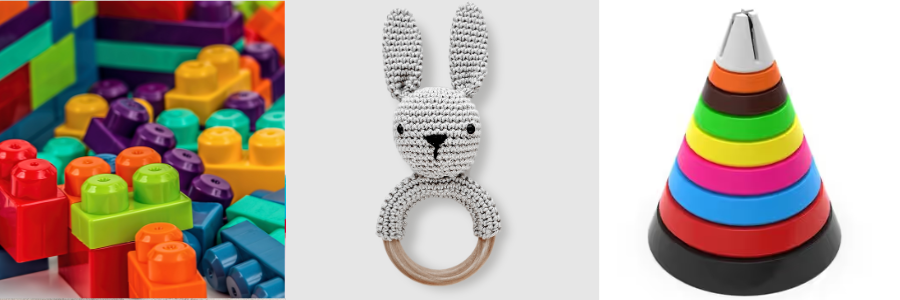
baby toys

PRODUCT CATEGORY AND AGE REQUIREMENTS

Which baby product standards apply to which product categories?

Different baby and juvenile products are subject to several safety requirements that are significantly based on their design, specific use, and target age group. Manufacturers must determine and identify the specific rules that best apply to their product during the early process of the product design and development process, since requirements can really affect the product’s materials, dimensions, construction, and components.

Product Category Applicable Standards / Requirements Key Design Considerations
Cribs Applicable CPSC requirements Entrapment, structure, mattress fit
High chairs Applicable CPSC requirements Stability, restraints, pinch points
Strollers Applicable CPSC requirements Folding, stability, restraints
Play yards Applicable CPSC requirements Entrapment, locking, structure
Toys ASTM F963 and applicable federal rules Small parts, chemicals, mechanical hazards
Child care articles CPSIA and applicable rules Lead, phthalates, materials
Other juvenile goods Product-specific requirements Verify applicable rules

The table above provides a general overview of some of the common product categories and the types of requirements that are appropriately apply. It is only for educational purposes and not a complete compliance checklist. Requirements depend on specific products and its intended use. Prototype design engineers must verify current CPSC, applicable federal regulation, and essential standards for their specific products before they begin testing and manufacturing. 

How does age grading affect baby product requirements?

Age grading significantly plays an essential role in designing a children’s product, and it is more than just deciding how it will be marketed. The specific age range that is assigned to a certain product can influence the regulations that apply, the required testing, and the warnings that should be provided. Also, the types of possible hazards designs that are needed to be considered. 

RELATED: Child-Resistant Packaging: Design Tips for Your Company’s New Product

A product’s intended age must be based on several factors like:

  • Physical development – focuses on child’s strength, coordination, size, and motor abilities.
  • Cognitive development – it is all about the child’s ability to understand different instructions and recognize specific potential hazards. 
  • Intended use – how a specific product is expected to be used by children within the specified age range.
  • Marketing and advertising – it’s mainly about how a product is presented and the age group it intends to target. 
  • Packaging– images, language, and specific instructions that must communicate who it’s intended for. 

Age grading also affects toy classification, testing procedures, small parts requirements, and safety warnings. Therefore, product concept designers must make sure to consider how a child within the specific target age range would interact with the product realistically, including several foreseeable use and misuse.

HOW REGULATIONS AFFECT PRODUCT DESIGN

How should small parts and choking risks influence product design?

In designing products for babies and young children, every little thing or small component must be treated as a potential safety concern. Whether it’s a small or detachable parts like buttons, caps, wheels, knobs, fasteners, decorative elements, battery compartment components, and any removable accessories are considered hazardous once they break or detach during use. 

Designers must put into mind these questions before designing a specific product: 

  1. Can the specific component I am using come loose during repeated use or even normal use?
  2. Could wear and tear possibly weaken the connection over time? 
  3. Could the part possibly detach after it’s dropped or impacted? 
  4. Can a child possibly pull, twist, or pry the specific component away? 
  5. Could a broken component lead to a small part hazard? 

These potential risks should be addressed while the specific product is still being designed. CAD allows CAD drafting designers to determine and examine how individual components interact and connect, while material and fastening choices can help in improving durability and reduce the potential cases of certain parts to be detached. It is also very essential to consider any foreseeable use and misuse. It is inevitable that children may chew, pull, shake, twist, or drop products in ways that adults may not expect.

RELATED: What Files and Specifications Do You Need for a Successful Freelance CAD Project?
baby product design firms

That is why if a product is only designed for ideal use, it can therefore leave important hazards undiscovered later. When considering potential choking hazards before tooling and prototyping, manufacturers can have a lot of opportunities to strengthen its connections, redesign components, and select materials that are safer and reliable without the need to face expensive changes in the long run.

How can designers prevent pinch points and entrapment?

Pinch points and entrapment hazards must be considered by the product engineering professional whenever a children’s product has parts that fold, slide, adjust, move, or rotate. Features like joints, gaps, openings, folding mechanisms, hinges, and locking systems can possibly create potential hazards if not designed carefully. This is highly important since products like high chairs, strollers, convertible juvenile products, and cribs, since these are examples of products where components may change position in everyday use. 

During the design process, CAD help teams in examining how every component interact and identify potential problem areas, such as spaces where a child’s fingers could possibly be trapped, gaps or openings that could somehow create an entrapment hazards, interfaces between moving components of a product, areas around hinges and joints, which could create pinch points, how parts interact as they are adjusted, rotate, slide, or fold, whether locking mechanisms properly engaged and remain as secure as it needs to be. 

Prototype designers must also evaluate several foreseeable misuses instead of just considering only the product’s intended operation. A child may climb onto a product, pull on a component, place their fingers into an opening, or even push against a moving part. That is why reviewing these possible scenarios early on with CAD and physical prototypes they can be able to adjust clearances, improve mechanisms, refine component geometry, and eliminate hazardous gaps before they enter the production. Identifying these challenges and issues early is beneficial as it provides efficient workflow and less costly than applying changes after tooling or manufacturing has already begun.

RELATED: Designing Prototypes: 3D Design Services for Inventors and Companies

TESTING AND MANUFACTURING

How should use-and-abuse testing influence CAD design?

Children may interact with certain products in ways that go far beyond what it’s intended to be. They may drop, bite, twist, pull, climb, shake, or repeatedly operate components and mechanisms. CAD designers must account these foreseeable behaviors before the product reaches its final testing or manufacturing.

Designers must consider:

  • Fastener retention
  • Material fatigue
  • Joint and connection strength
  • Product stability
  • Repeated operating cycles
  • Structural loads and impact forces

Its main goal is to properly evaluate how a product will perform during realistic conditions, including any foreseeable misuse. CAD models help in identifying weak connections, stress points, and other areas that may require any redesigning or reinforcement. The principle is basically simple; design for foreseeable abuse, not just ideal use. 3D modeling designers must anticipate how children would interact with specific product since it can be helpful in reducing potential failures, improve its durability, and address potential safety concerns earlier rather than making costly revisions when finally launched.

Planning to design a juvenile product? Need a helping hand that could guarantee a smooth flow of having safety requirements and create an easier way to build a design before prototyping, testing, and expensive tooling begin? Worry no more! Cad Crowd can help you by connecting you with the right CAD designers, engineers, and 3D modeling professionals who are expert in turning your concepts into manufacturable products, all while supporting product development right from the early stages of design through the prototyping and production stage.

RELATED: CAD Design and 3D Modeling Rundown

FREQUENTLY ASKED QUESTIONS:

  1. Who is mainly responsible for children’s product compliance? The manufacturer or the designer? 

It’s the manufacturer or importer since they are responsible in ensuring that the product complies with all the applicable requirements. Designers, though, play an important role in making sure that the safety considerations are incorporated into the product’s design.

  1. Can a product be sold in the U.S. before it passes required testing? 

Mainly no. When it comes to children’s products, it needs to be tested since it is generally subjected to mandatory testing requirements that must be applicable before they are legally imported, distributed, or marketed. 

  1. What happens if a children’s product fails the required safety test?

If cases like this happens, the product must be redesigned or tested before it can be legally marketed. Some failures may also result in recalls or even regulatory action. 

  1. Do imported baby products have to meet the same U.S. safety requirements? 

Yes. Children’s products that are imported into the United States must comply with the same U.S. safety requirements regardless of where they were manufactured.

How Cad Crowd can assist

In designing a safe and successful baby or juvenile product, a proper compliance must be considered long before it reaches the final testing laboratory or production line. Every process from age grading to material selection to entrapment risks and safety requirements can significantly shape the critical design decisions. That is why it is very important to address these factors early so that any potential or costly redesigns will be prevented along the way. 

If you are developing a children’s product, especially for the U.S. market, Cad Crowd can help you best in connecting with the right and experienced CAD designers and engineers to help in turning your requirements into a thoughtfully designed product that is not just visually pleasing but also right to be manufactured with the proper accordance of standard requirements. Contact us for a free quote.

Disclaimer: This article is intended for educational purposes only and must not be considered legal, regulatory, or compliance advice. Children’s product requirements depend specifically on certain product category and can possibly change over time. Before manufacturing or selling juvenile product in the United States, make sure to confirm all the required standard requirements with CPSC-accepted third-party testing laboratory and qualified legal counsel.

author avatar

MacKenzie Brown is the founder and CEO of Cad Crowd. With over 18 years of experience in launching and scaling platforms specializing in CAD services, product design, manufacturing, hardware, and software development, MacKenzie is a recognized authority in the engineering industry. Under his leadership, Cad Crowd serves esteemed clients like NASA, JPL, the U.S. Navy, and Fortune 500 companies, empowering innovators with access to high-quality design and engineering talent.

Connect with me: LinkedIn ✦ X ✦ Cad Crowd

How to Create a Prototype: A Step-by-Step Guide From Idea to Manufacturing-Ready Model


How do you create a prototype? In product development, A vision, idea, and concept can sometimes clash. It can be both overwhelming and exciting, yet when it is carried out in practice, it can be a problem. To make it all worthwhile, the ideas should be turned into something valuable, worthy, and, to top it off, real, functional, and ready for the competitive market. Prototypes play a major role in the product development process. They make a difference when considered. With prototype design services one can test their concept to see if there are still things that need improvement, and it is a necessary step in manufacturing the product. 

In creating prototypes, you must understand their significance, because only then will you identify the necessary steps in creating one. In this blog, you’ll discover the secrets to creating prototypes for your product. From the initial concepts to the production phase, until the product launch.

RELATED: Designing Prototypes: 3D Design Services for Inventors and Companies

What is prototype?

A prototype is a version of a product created to see and gain perspective on it. The product will be tested to determine whether it is ready for mass production or if any components still need to be fixed or improved later on. A prototype does not need to be perfect at first trial, it needs to be perfect at the end. It is a foundation that helps identify what is not suited to the one being processed. Mostly, prototypes are just the draft version of the final product and are not meant for selling. Sometimes they are simple and just a fast draft, made for a trial-and-error purpose.

Why is prototyping important? 

Prototyping is a vital phase because it focuses on improving the product and making it ready for mass production. Before mass production begins, it is necessary that all necessary parts and components are in their best condition, so they will not cause any delays in development. Rapid prototyping is good when you are not able to express the concepts that you would want to happen. It is a phase where you can improve because you can identify flaws and errors early, which means you still have time to think and improve on them. As you gather feedback from each prototype that you create, you can improve and add features for you product’s performance.

On the other hand, you can have all the materials tested to ensure they are suited to what you are building and can withstand any environmental conditions or challenges that might disrupt their function. Gaining feedback from real users can also serve as a guide to make the products at their best; they can change and develop the product further. They can use the criticisms to build on something any customer or client would want. 

Without prototyping, it would be very hard to achieve all the goals and objectives in mind, as there would be no basis for refining what they are building. It will result in a confusing product that is ill-suited to its functions and materials. It will be a product that is not even useful, despite the resources invested in it. Here are step-by-step instructions from conceptualization to the production process to help you succeed with your product.

RELATED: What Are The Main Prototypes Used By Companies in Industrial Design Prototyping?

Step 1: Have an idea and concept that is clearly defined

Ask yourself, what do you want to happen? Is this prototype helpful for what I am looking for? Is it something that can be useful not just for oneself but also to others? Have a foundation of what you are trying to achieve. Define what you want, because a clear understanding of the plan can make it easier to carry out what you want. Make sure that products are useful to everyone, or for the target users. Think about how it will be needed, and what features are necessary to make it work.

This can help you answer a problem for potential users. Don’t forget that being intentional with your plan can be reflected in how you project your product, such as its 3D exterior rendering design, and unique design that separates it from the current market. Most importantly, it is important for you, as a creator, to be intentional with your product because this can make or break your product. You must understand the people’s needs, and understand why they need it so you can plan accordingly.

industrial product design services

Step 2: Research and understand the market

Do research; read more of the available resources online or in everyday life. Research is a vital step because it helps you understand what makes your product unique. Look at similar products on the market to get an idea of what to improve in your product. Study users’ preferences to gain insight, so you can refine your product. In addition, you must identify the problems and gaps in the market, as this will allow you to address and leverage them for your prototype. A prototype helps close the gap between your ideas and the final result. Using a prototype designer lets you identify the product’s shortcomings and mistakes so you can make improvements. One might come up with ideas or better ones that have previously been committed.

Owners and founders may have an idea or notion for their prototype that is too difficult or impossible to implement in a real-world setting. It is essential to have a project that is both feasible and appealing to the founders and to potential and target consumers. Iterating prototypes is expensive; it is necessary to have everything set up to prevent mistakes, which can be quite costly.

RELATED: Complete Guide to Prototyping Methods Used in Product Development Services for Companies and Firms

Step 3: Sketch the designs

Begin sketching the ideas and concept you have in mind. Start drawing on a piece of paper or even with the digital equipment you have. Associate all the things you would want to see in your prototype. Make sure to label all parts and components and include how and where they will be used to minimize confusion. Even if you are not creative enough or someone who is not an expert in sketching, as long as you are able to express what you want to achieve in a process, it is already a good start. It does not need to be perfect; it just needs all your ideas.

One thing is that you have to focus more on the product’s foundation and structure, not on the designs and decorations you want to see. Make it possible for the product you are designing to be neither overly complicated nor costly. The budget may not be able to cover the high cost of a complex design. Always remember ,with product development services, it is much better to have a simple design that aligns with your goal. 

Step 4: Choose what type of prototype 

One course of action is to develop a product and test the prototype as soon as possible. This way, you can determine what needs improvement. It can be easier to identify desired improvements when one can see the shortcomings and errors that have been made. It is not necessary to have a product that is not ready for launch, and delays should be avoided, as they can impact the product’s overall performance. Aside from sketches, a prototype can help you visualize the functionality of a product before any market launch. This includes the product’s concept, features, design and overall texture. Having a prototype ensures your product meets the final standard and is ready for the final production and product launch.

Known to all professionals are the different types of prototypes used in product development. We have low-fidelity prototypes, mid-fidelity prototypes and high-fidelity prototypes. A low-fidelity prototype mainly uses basic sketches and cardboard models to observe the foundational base design. A mid-fidelity prototype uses 3D visualization and 3D printing services that allow you to see the details clearly. Lastly, a high-fidelity prototype mimics the final product, as it shows texture, movements, and electrical functions that need to be tested before the final batch manufacturing. Additionally, a prototype acts as a link between conceptualization and all of the concepts. By doing this, it ensures that both the designs and the final product are ready for the manufacturing stage.

RELATED: 10 Tips on How To Find the Best Prototype Engineering Firm Services

Step 5: Have a low fidelity prototype 

Start with the low-fidelity prototype, as it acts as the first physical version of the one you are building. You can use simple materials to do this, such as paper, foam, clay, basic 3D prints, bottles, and even cardboard. To have a low-fidelity prototype means using only what you already have and not splurging just to do it.  Mistakes are expected to happen; it cannot be perfect. This is a helpful step because it focuses on the product’s basic functions, as well as its shape and size. 

Step 6: Test the prototype

Test and check whether the first prototype you made is working in real life. Testing would mean that you would try the product firsthand and start keeping track of whether it is good or needs further refinement. After you try it, let others use it as well, so you do not have any personal bias toward your product. Observe all the problems that you have both encountered. If others tell you that there is something wrong, do not be offended by it, but rather make it a foundation that you or the prototype manufacturer can improve on. Let this be a stepping stone. You can also ask them questions, such as whether the product is easy to use, whether it is functional, and whether it solves the problem you are facing in a certain type of problem. Is it also confusing to use, or is it accessible? Be receptive to criticism. One of the most important aspects of prototyping is feedback.

consumer product design services

Step 7: Improve and redesign

Some would say that recommendations and word of mouth are the best advertising techniques for any product. That’s why it is important to improve and redesign any product that shows any defective features or parts, as these can influence the consumer’s experience and feedback in recommending your product to their friends and colleagues. If a user has previously used your product and is dissatisfied with it, they can simply advise others not to purchase it, calling it useless and a waste of money. Since this is where the improvements begin, constructive criticism must be treated lightly.

When target sales are met, customers are encouraged to keep making purchases and recommend your product to others. When a consumer feels heard, they are likely to be pleased with how you resolve the issue, and they will continue to purchase and trust the product you are making. The product designer can also change the sizes, even the shape, if it is not suitable. You can add or remove features, making sure that all functions are working properly and robust enough to withstand any potential effects. A successful product is not made overnight; it is built through many changes and improvements to ensure it is something people will love and continue to support. 

RELATED: Adaptive and Iterative Prototyping: Iterate on Your Product Design With Industrial Design Firms

Step 8: Build a functional prototype

Low- fidelity prototype serves as the design foundation of your product. These kinds of prototypes do not reflect final revisions yet or even the actual materials. After creating a base prototype, what you might want to do now is to create a high-fidelity prototype that looks like the final product, as it reflects your ideal vision of your product. Most of the time, high-fidelity prototypes include sensors, batteries, and other circuit boards, for it to demonstrate its actual capability. The goal is a prototype that closely demonstrates how the finished product will look, feel, and function

Step 9: Create a high fidelity prototype

As you have explored all the prototype options, you can now choose one that leans towards resembling the final product you want to achieve. The purpose of this version is to make it easier to lay it out for the investor who wants to see the project and to make marketing much more efficient. As well as that, you can have clear communication with the manufacturing company, which could help create a successful product. This final prototype, the high-fidelity prototype, should include all dimensions that have already been finalized, and the materials should be well-suited to what is being made. All the features should be functional and durable, so there will be no problems making it work. All the errors must already be fixed, because it takes time if they are not. At this step, the product should be realistic already. 

Step 10: Prepare for the manufacturing

After all testing is complete, ensure the prototype is ready for production. You must finalize and decide on all the materials, whether you want them to be simple and properly suited for mass production. Make sure materials are easily sourced so you won’t encounter any problems. When it comes to manufacturing methods, you should choose from the methods available. It should be something that can really help, is functional, and offers longevity. May it be injection molding, as this is for plastic products, and when you need a precise part, you can use CNC machining services; there is also an electronics manufacturing method when you need it. One should also consider the costs that might be necessarily needed. It should be taken into note the production cost per unit, as well as the packaging and designing costs.

RELATED: Benefits of Outsourcing CNC Machining Services for Your Company’s Prototype Design

You must make a list of every component you will need, including supplies, packaging, and logistics. Listing the product from start to finish might assist in determining how much it will cost the product. Sometimes it’s not a good idea to stick to the budget. Planning ahead is crucial, but it is best to anticipate unforeseen expenses. You are making money and not losing it when you are aware of and verify the cost of your goods. All the steps taken should be documented so it will be easy to track them when things need to be found. Have an organized file that includes all the drawings and measurements of the product, the list of materials, and the bills and expenses. Instructions should also not be forgotten, as they serve as the guide for making the product functional to use. All of these are being utilized by manufacturers so they do not miss any points and avoid errors and risks. 

Step 11: Final testing before mass production

Finalize everything, and make sure that all the designs and parts are intact and consistent with what you, as a client, want to achieve. Before producing in large quantities, the consumer product design company must run a test first to check. Guarantee that it meets the standards one would prefer. Check the durability, materials, and performance of the product under stress, and make sure the product is safe to use and won’t harm anyone. Have the first-hand experience, and if there are still things that need to be repaired, issues that must be fixed, it must be done already. Doing this final step of testing ensures there will be no problems when the time comes. One tip is to test the product in batches so you can see whether it is performing consistently and whether overall performance is still at the best quality. 

Common mistakes to avoid

Early testing of the products is not necessary, but making a low-fidelity prototype is a must, as it serves as the foundation for all subsequent steps. Mistakes and errors need to happen because they are needed for improvements. Feedback is necessary to identify the consumer’s wants and needs, as this will help you succeed in the product that you are developing. Most of the time, consumers want a simple but functional product. They trust brands that appreciate their feedback and actually listen to their recommendation since they are the ones who will be buying the product.

new product expert designers

RELATED: Prototype Design Engineering: How Well Should Your Company’s Prototype Function?

Another common mistake to avoid is rushing any product launch to meet seasonal sales. Product development and prototyping are not something you can perfect overnight, they need careful planning, and careful conceptualization to avoid impactful malfunctions in their longevity. Prototyping is a crucial phase as it is used as a basis for learning and improving what you have. Every version you make tells a story; it makes you want to achieve more as you learn each phase. Do not rush to make it; plan it wisely, test when necessary, and never forget to improve and refine it. It is not something that needs to be rushed; it takes time to have a successful product in this competitive market. 

Cad Crowd is a platform where you can connect with pre-screened experts who specialize in drafting and manufacturing files. They can focus on engineering and design services, or on any help you want, aligning with your product and making a prototype. There are also procedures that actually filter the freelancers who are appropriate for your projects or preferences. It is the best option if you value professionalism and want an effective company. You can even run a contest on this platform where they can show you their work, offer the best quote for it, or hire someone for your projects.

Not only does this approach produce the best talent, but it also imposes requirements that must be met to avoid disappointing its customers. They prioritize quality above all else. It really plays a big role in shaping the products into something that can already be produced in large quantities. 

RELATED: How to Quickly Cut Prototype Design Costs in 2026 for Product Design & Engineering Firms

Conclusion

Choosing an appropriate prototype for every stage of your product development is important to achieve ideal results for product launching. That’s why connecting with skilled professionals and experts who are pre-screened and filtered by specialized services becomes a big help as it lessens the stress on project handling. Honestly, you can all find these at Cad Crowd, a freelancing platform that helps you transform your idea into a reality by connecting you with experts.

You can hire these CAD drafting experts at any stage of your product development, be it from producing prototypes, idea sketching, gathering raw materials, conceptualization up until the final development. This is the easiest option that you can have that reduces the stress from hiring to interviewing long-term teams. Customers’ trust in a product is a must because they are the reason why the progress and the continuation of the product’s development are still going on. Contact Cad Crowd for a quote.

author avatar

MacKenzie Brown is the founder and CEO of Cad Crowd. With over 18 years of experience in launching and scaling platforms specializing in CAD services, product design, manufacturing, hardware, and software development, MacKenzie is a recognized authority in the engineering industry. Under his leadership, Cad Crowd serves esteemed clients like NASA, JPL, the U.S. Navy, and Fortune 500 companies, empowering innovators with access to high-quality design and engineering talent.

Connect with me: LinkedIn ✦ X ✦ Cad Crowd

Best 38 Websites To Hire Pet Product Design Service Freelancers for Dog and Cat Products


Today’s post highlights the best websites to hire pet product design freelancers for dog and cat products. The pet industry isn’t just growing – it’s booming. And honestly,  the demand for it allows for growth and competition in the market, and it should be noted that pets are like family. They’re the friend who’s always there, and for some, they are just like a child. Creating products for animals like cats and dogs is different from designing for humans. It needs careful planning since you’re creating these things that people deeply care about.

To make your product stand out, it’s not just about how it looks on a shelf. You need a creative idea that grabs the attention of pet owners and makes them want to know more. It will not just be about the design but also the matter of how it works in real life. Along with being aesthetically pleasing, a great pet product guarantees that pets can play, eat, relax, and live safely.

Why is there a need to hire freelancers specialized in pet product design? 

Hiring product design freelancers is due to the fact that they have the expertise and know what they are doing, building real expertise, not just learning the job when it comes to pet product design. When there is access to these professionals and freelancers, the product becomes high-quality. Instead of managing a full in-house team, training them, paying long-term salaries, basically managing all the costs. Companies can just hire freelance professionals. It’s more flexible and easier to manage since it’s project-based.

Here is a list of 38 platforms that are easy to comprehend. Each website is broken down into its component parts in order to assist you in selecting the appropriate platform and assess you for your pet product design requirements. Clients should be able to think thoroughly and do the research, as it can greatly affect the lives of any pet, and avoid any risk to them. 

RELATED: Exciting Pet Product Designs and Innovations for Your Company’s Next Design Project

Niche & emerging platforms

cadcrowd-logo

1. Cad Crowd (startup matching)

If you’re starting from scratch with a product idea, Cad Crowd is here to help. They specialize in turning concepts into life and manufacturable goods for pet product design companies, introducing new ideas, and creating products that are safe, functional, and comfortable for the animals. Cad Crowd’s key feature is matching startups with the right people who have the necessary experience. They also offer the technical guidance and support for prototyping and CAD 3D modeling services. As Cad Crowd supports the entire product development process, this platform is among the best choices for dedicated product developers because it does not only focus on one aspect. 

2. Cad Crowd (enterprise services)

Offers full scale solutions for larger companies, such as whole product development teams and production assistance more than hiring a single designer. Cad Crowd gives you an entire team of carefully selected experts who know their craft, this team can collaborate with each other thus developing a product that a client would want.

Website: Cadcrowd.com

bark logo

3. Bark  

Bark offers a great way to find the right professionals for your project. You just tell them what you need, goals, and any other important details. From there, it will lead to a design that matches and is suitable for it. With Bark, you can get connected with someone who really understands what you’re looking for, whether it’s dog harnesses or cat furniture. You don’t need to search through lots of profiles because the platform matches you with the right freelancers based on their expertise, location, and availability. It’s very useful because it allows clients to quickly receive multiple quotes without having to go through profiles by hand.

Website: Bark.com

designrush logo

4. DesignRush

DesignRush is not your average freelance marketplace. It features a lot of agencies made up of professionals that offer services like pet product designs. Instead of hiring freelancers and experts, clients can connect full service product design companies that handle everything – from initial concept to branding and production, making the whole process way more efficient. DesignRush gives you time by offering portfolios and studies that have already been reviewed and verified. This saves time throughout the hiring process and makes it much easier to find companies that focus on consumer goods, lifestyle products, or pet-related designs.

Website: DesignRush

RELATED: 24 of the Best Pet Gadgets for Your Furry Friend

Clutch logo

5. Clutch  

Clutch is a review-driven platform that helps companies find trustworthy agencies, experts and 3D design freelancers. Clutch focuses more on transparency and reliability compared to a typical freelance platform. In pet product design, Clutch is significant because it avoids freelancers that are unreliable, and because of this, they make sure that the work of the designers are professionals who can deliver successful results.

Website: Clutch.com

hubstaff talent logo

6. Hubstaff Talent

Hubstaff Talent stands out as one of the most affordable platforms because it is completely a freelance directory that is totally free. Unlike most marketplaces, clients can employ directly because it does not charge commissions or other fees. One of the key advantages of this is that clients can have access to global skilled talents and freelancers. One thing to note about Hubstaff Talent is that it doesn’t have a built-in payment method system like escrow. This means, you’ll need to handle all payments directly on your own. However, Hubstaff Talent is ideal for companies that want to be in charge of everything and don’t want to pay extra platform fees.

Website: Hubstaff.com

Working not working

7. Working Not Working

It’s a platform for top creative professionals and is quite exclusive, since it’s only accepting a small percentage of participants. If you are applying for this platform, there will be a small chance that you will be accepted. This platform is especially suited for premium pet product brands or you would want to have a unique project that stands out among the rest product designs. Working not Working is the best place and the right option. If clients tend to develop a high end or distinctive pet product that would most likely succeed. 

Website: Magazine.workingnotworking.com

ServiceScapecom

8. ServiceScape

ServiceScape is a specialized platform that offers high quality creative services—such as writing, editing, translation, and design. Unlike bidding-based platforms, clients can directly choose the freelancers who they want to collaborate with by browsing through their profiles. The platform is focusing on having a long-term partnership with the professionals, focusing more on quality work rather than quantity. Even though ServiceScape might be a bit pricier, it gives you assurance that you’re working with experienced product designers who deliver experienced results. 

Website: Servicescape.com

RELATED: Tips for Pet Toy Design, New Product Development at Prototype Manufacturing Services at Companies 

Creative and design focused platforms

Dribbble

9. Dribbble

It’s a platform where clients can explore the portfolios of freelancers who are specialized in innovative pet product design. They have a work project that centers on the needs of every client, by utilizing this one seeking for the right platform will be made easier. Designers often showcase creating work–like branding, pet product designs, and user interfaces for pet apps.

Website: Dribbble.com

Behance.net-logo

10. Behance

Behance, a platform by Adobe, allows designers to showcase their work and portfolios for the clients to explore. It’s a great place to make sure that the right designers are being hired, especially in making products like pet product designs, and accessories. When creating pet products, it’s important to see if a designer’s understands how things should work, what materials to use, and what user needs. By doing this, it reduces the chances of misunderstanding that could happen while in the process of developing the product.

Website: Behance.net

99designs-logo

11. 99designs

99designs is a platform that allow clients to run design competitions among different designers. By having this type of competition, designers and new product design freelancers are able to submit and post their work ideas about the product. This is a company where creativity and visual appeal are important factors.

Website: 99Designs.com

Designhill logo

12. Designhill

Design offers a platform for freelancers that focuses on services such as logo creation, packaging and product design services. This is an excellent company to consider for businesseses that are preparing to launch new products.

Website: Designhill.com

RELATED: 10 Simple Products That Made Millions for Inventors

crowdspring logo

13. Crowdspring

Crowdspring works in a similar way than a design competition platform. It helps in gathering different work ideas for pet products. After creating a project and selecting a package, clients receive a large number of unique, varied, and creative design submissions to choose from.

Website: Crowdspring.com

DesignCrowd logo

14. DesignCrowd

DesignCrowd allows multiple designers to submit proposals for a specific product. This offers fresh ideas and a wide range of creative concepts for the pet product design industry. It’s a great option for companies who want their product designs to stand out and who want to create a varied range of products.

Website: Designcrowd.com

Coroflot

15. Coroflot

Coroflot is a good option for companies looking for industrial design experts and product engineering professionals. It highlights industrial design portfolios, which makes it great for physical products like pet items. You can find designers who already have experience in product engineering and building real, usable products.

Website: Coroflot.com

carbonmade logo

16. Carbonmade

Carbonmade is an excellent platform for designers to show off their work in a portfolio. It’s not just about entering contests, but about sharing their designs with others. Clients can also use the site to explore different ideas and find the perfect concept for their product.

Website: Carbonmade.com

RELATED: Virtual Product Visualisation: Benefits, Challenges & Future Trends at 3D Rendering Firms

Artstation

17. ArtStation

ArtStation is well-known for high-quality 3D and concept designs, ArtStation can be of great help to guarantee quality performance during the early stages of product development. This allows visualization about a given product which can be a great move.

Website: Artstation.com

Cargo

18. Cargo

This is another platform that allows portfolios to be showcased for clients to see, where it searches good places to find creative and unique ideas. Through Cargo, you can unleash the unique and creative talents and minds of the designers about a particular product such as pet product designs. 

Website: Cargo.site

Specialized freelance and tech platforms

cadcrowd-logo

19. Cad Crowd

You can connect with a wide range of skilled new concept product design professionals who can handle different tasks that a company needs to have in their product by using the Cad Crowd platform. This is important when choosing a product that depends a lot on design. Cad Crowd is worth the investment because it helps turn ideas or any prototype into something meaningful and well-developed ideas. Additionally, Cad Crowd provides a safe payment option that can retain the money where the client is happy with the task completed, at which point it will be released to the independent contractors.

Website: Cadcrowd.com

Turing logo

20. Turing

Turing is a platform that focuses on connecting companies with remote experts. It is an AI powered site that enables companies to look for professionals that could match their needs from the massive pool of talents. 

Website: Turing.com

RELATED: The Importance of Iteration in Product Development & Working with Product Design Companies

lemonio logo 2

21. Lemon.io

Lemon.io makes sure that the professionals on the platform are carefully checked and selected before working with clients. It’s more than just a marketplace, but a platform that priotizes quality above all else. Before they are introduced to any clients, they must provide the greatest and high standards and prove their skills. By choosing Lemon.io, companies can have confidence in the quality they’ll receive, making it an excellent option for those looking to create amazing products for pet owners.

Website: Lemon.io

Gunio logo

22. Gun.io

Gun.io is a great place to find top experts for business needs. They have a strong hiring process that makes sure you get the best people for the job. The 3D design professionals on this platform have the knowledge and skills needed for any complicated and challenging world that businesses might encounter. This is a great platform because it has excellent designers and talents in a variety of fields.

Website: Gun.io

twine logo

23. Twine

Twine is a marketplace where it connects every business to the experts and freelancers that are already vetted as they have a highly skilled work, easier for clients to find experts who can deliver high-quality work. By using Twine, clients can achieve a product that is inclined with what they would like to have and expectations.

Website: Twine.net

contracom logo

24. Contra

A modern, commission-free platform for independent professionals, especially in creative design, such as IT and marketing fields. Freelancers may keep 100% of their earnings since there are no service fees thanks to our all-in-one platform for project management, professional portfolio creation, and safe payment. By using this platform, it will enable the clients to have designers that has projects that offer quality and are standardized.

Website: Contra.com

kolabtree logo

25. Kolabtree

Kolabtree is a platform that helps clients find and work with scientists, researchers, and other academic experts. These product development professionals have a deep understanding and can provide detailed insight for complex projects, useful for pet product design that requires technical understanding and careful research.

Website: Kolabtree.com

RELATED: Wearable Product Development: 6 Key Challenges for Product Development Companies

Catalant logo

26. Catalant

Catalant primarily focuses on having business-level freelancers and professional consultants. It’s ideal for companies that need expert support or fast solutions. When there’s urgency, Catalant offers a quick and flexible way to connect with and manage for locating, employing, and managing skilled personnel that is quick and adaptable to address complex problems.

Website: Catalant.com

mayple logo

27. Mayple

Mayple is a top platform to consider because it is helpful for any business. Apart from offering product marketing together with product design, it also offers busiensses with company branding for the new products.

Website: Mayple.com

CloudPeeps Logo

28. CloudPeeps

CloudPeeps is a curated marketplace where to offer services for clients that are suitable for their specific needs. It focuses on enabling remote work by offering hiring project management, and payment options. The website caters to freelancers, independent contractors seeking experience, and business owners reliable talent. 

Website: Cloudpeeps.com

General freelance marketplaces

Upwork

29. Upwork

Upwork is one of the most well-known platforms for freelancers out there. Upwork can connect clients with freelancers from different industries for whatever project they may need help with. This platform is a great option for hiring pet product design freelancers, CAD professionals, and industrial designers. Clients can either post jobs, browse, or check the different portfolios of the available freelancers. Payment is secure since Upwork uses a secure payment method called escrow. This will avoid fraud as well as make sure that reliable talents and services can be given to the clients, so that the ratings will not fluctuate.

Website: Upwork.com

fiverr logo

30. Fiverr

Fiverr, also referred to as “gig-based” services, is a perfect option for startups who have limited resources and would want to have guidance that is still within a limited budget. Fiverr is an affordable platform and offers fast design services. The designers that can be found on this platform are those who offer packages for pet accessories like toys, packaging design services, and company branding. However, even if it’s budget-friendly, it is still necessary for the client to review all the work submitted by the freelancers they are considering to hire to avoid any misunderstandings. 

Website: Fiverr.com

RELATED: Important Benefits of Industrial Product Design – Using Industrial Product Design Services 

freelancer-logo

31. Freelancer.com

It allows clients to run contests where multiple freelancers can submit their ideas and designs. This is helpful and efficient if you are a client that seek the perspective and works of multiple designers for a project. It’s a great platform to see their work about a certain topic or product, such as, a pet products. This will ensure that you are choosing the best option that is available in the market. Freelancer is an excellent platform for brainstorming and generating creative ideas. But still, it is important to carefully check the projects and portfolios of the freelancers that a client would want to work with to avoid technical errors that could lead to delays in product development.

Website: Freelancer.com

peopleperhour logo

32. PeoplePerHour

As the name suggests, freelancers at PeoplePerHour can be paid either hourly or per project. The platform is commonly used in Europe and supports remote work in different industries and their platform employs a payment system known as escrow. It is easier to browse the packages that are related to pet product design. 

Website: Peopleperhour.com

Guru logo

33. Guru

Guru is a platform known for its secure project management system. This is significantly useful for those clients who are looking for a long-term partnership in developing pet product designs. This would also include collaboration and revisions to clients from expert consumer product development services. 

Website: Guru.com

toptal

34. Toptal

Toptal guarantees the services provided by top professionals, but it is typically more costly than those mentioned above. Top designers with extensive expertise in their field have been carefully screened and have strong experience in their fields. This would be ideal if you would want to have a high end product design. 

Website: Toptal.com

RELATED: Why 3D Product Models Are Replacing Traditional Photography for Product Design Companies

FlexJobs logo

35. FlexJobs

Experts are typically located throughout the world. The professionals can work remotely and yet provide excellent service by using FlexJobs. Because the specialists on this platform have previously been carefully screened to prevent the risk of fraud, clients must subscribe. They get access to trusted and reliable experts. 

Website: Flexjobs.com

solidgigs logo

36. SolidGigs

At SolidGigs freelancers are selected based on their skills and experience rather than bidding on the tasks or projects. This means that they are tasked with doing a good job. SolidGigs is a premium service that is tailored to your qualifications. Since the freelancers on this platform already have experience, you can trust that your project is in good hands.

Website: Solidgigs.com

Workana logo

37. Workana

Workana is intended for entrepreneurs who are on a tight budget and want to avoid taking significant financial risks. In Latin America, this is typically the most well-liked and prominent freelance platform who are working with budgets in mind. In order to make it easier for clients to find affordable new product design freelancers they want to collaborate with, Workana is useful for finding affordable pet product design services.

Website: Workana.com

Truelancer logo

38. Truelancer

Truelancer is a good option for startups or small businesses that don’t have a big budget but they do desire advice that will help their products become well-known and functional. This is where you may find priced freelancers but making it useful for minor jobs like basic product designs or first idea sketches. Through screening is required to ensure quality, even at modest prices.

Website: Truelancer.com

RELATED: How 3D Modeling is Beneficial in Product Manufacturing & New Product Development Services

Selecting the best platform for successful pet product design

Hiring the right freelancer or expert is not always easy, especially when working on products about animals like dogs and cats. From the websites given, you can be able to find skilled designers from all over the world who specialize in making pet items that are safe and useful. This can be accomplished by using websites like Upwork, Fiverr, Freelancer, and Cad Crowd. Whether you are starting a new business or improving your existing pet brand, these 38 platforms provide you with a range of options, from affordable novices to highly qualified product engineering specialists.

When combining all of these platforms, they offer a potent arsenal for creating cutting-edge, secure, and commercially viable pet products, regardless of the type of business. Turning an idea on pet product innovation into something real takes more than just creativity. There are a lot of things that need to be considered. It is more than just the creativity that must be instilled. It takes a combination of technical accuracy, good design sense, an understanding of how pets behave, and knowledge of how the products are made.

Each platform may be different, but they all share the same goal in making sure that the clients are served well with the best services that they can offer. Price and flexibility are two factors that a customer could take into account. Creative platforms can provide and provide the clients with ideas and connections to talented design for manufacturability (DFM) freelancers who can enhance the look and the brand of the product.

On the other hand, some platforms help companies and businesses recruit and hire experienced and focused resources in order to find the right teams for larger and more complex projects. Businesses and companies now have better opportunities to find the best talent that they can locate. By getting to know each platform, they can come up with better ideas for products that are safe and fun for dogs and cats. One thing is that safety and precautions must be instilled because everyday life is a factor to consider, thus, it is a must to have a product that can be functional yet brings safety to the animals. 

RELATED: Tips for Product Design Firms: Validate New Product Ideas & Squash Launch Failures

Why is Cad Crowd the best platform to use

What makes Cad Crowd different is that it’s more than just a typical freelance marketplace. While other platforms only focus on finding designers, Cad Crowd focuses on providing a more complete product development solution. It’s beneficial for companies because there are certain factors that others do not have. Cad Crowd stood out the most since it gives each client access to a large number of skilled professionals with specialized knowledge that enhances any product.

These days, many freelancers and product modeling experts are turning their attention to designing things for pets, which means they really get what cats and dogs need, like being able to use products easily and safely. Therefore, projects may be completed with the help of Cad Crowd, which will satisfy clients and earn their trust, allowing them to succeed in the market.

The following are some factors that should be taken into consideration:

1. Cad Crowd is specialized in technical & manufacturable design

Cad Crowd allows you to have a connection with the different engineers, CAD professionals and industrial designers who are skilled in transforming concepts into real items, workable products, in contrast to general platforms where you could find a mix of unrelated expertise. In pet products, it is very important that designs are not just considered to be aesthetically pleasing, it should be safe for animals, durable, and made with the appropriate materials. 

2. Perfect for pet product complexity

Designing pet products can be challenging. The materials used should be robust, able to withstand chewing, and safety and cleanliness should be considered. Professionals in Cad Crowd’s directory understand these difficulties and can create goods that satisfy the demands of both pet owners and pets. Because of this, it is particularly useful for more complex and functional pet goods rather than just simple designs.

Safety should always be a priority because some materials might not be suitable for them. It is crucial in developing a product, to be guided by product modeling professionals who ensure the proper protocols are followed, if there are any. It is not just a practice that everyone should have; it is significantly essential because pets cannot express discomfort, therefore it is the responsibility of the producers, designers, and manufacturers to ensure that all the products are protecting the well-being of the animals at all times.

RELATED: How Successful Companies Utilize 3D Product Modeling Services for Compelling Product Imagery

3. Availability of vetted and superior talent

Cad Crowd carefully screens its freelancers to make sure you’re working with knowledgeable and skilled experts. This lessens the dangers that are frequently connected to employing people online and a lack of technical expertise. You have access to pre-screened professionals who are prepared to produce outcomes rather than having to go through hundreds of profiles.

4. Cad Crowd is ideal for startups and scaling businesses

Startups often have limited resources, which means limited accessibility. Startups would want to design their products using experienced professionals who have the specialties in making the products come to life, without spending a lot of money. Cad Crowd offers flexibility and scalability where clients hire 2D and 3D experts based on their needs, and who would prefer to build an entire product that is consistent from start to finish with quality in mind, while complying with the standards.

5. Focus on innovation and real-world application

Cad Crowd helps create products that actually work in real-life situations, going beyond simple design. Prototypes that are guaranteed to be functional and economical in terms of production are the most crucial. What really distinguishes it from other platforms is its emphasis on practical usage and innovation.

Conclusion

Using Cad Crowd as the platform helps ensure that the output being produced and processed is of the highest quality, adheres to standards, and benefits the business or any client in the long run. Choosing the right platform must match the goals and visions of the company and the product. Our platform offers a wide-range of portfolios made by the experts, showing different styles and creative approaches. Cad Crowd is the ideal site to use if your objective is to create a pet product that is high-quality, useful, and ready for the market.

It is the strong choice as it has a serious product designer arsenal that combines technological know-how, screened talent, and complete product development support. Whether a client is designing a small pet toy, goods, or planning to launch the next big product in the pet industry, Cad Crowd provides the tools and expertise to turn your idea into a reality that could sell in the competitive market.

How Cad Crowd can help

In a competitive field where quality and functionality are top priority, choosing the right platform could make a big difference in ensuring your company thrives with high-quality and well-designed products. Cad Crowd is a unique platform that lets you do more than just creating, they provide support and security to the needs of the clients. Contact us for a free quote.

author avatar

MacKenzie Brown is the founder and CEO of Cad Crowd. With over 18 years of experience in launching and scaling platforms specializing in CAD services, product design, manufacturing, hardware, and software development, MacKenzie is a recognized authority in the engineering industry. Under his leadership, Cad Crowd serves esteemed clients like NASA, JPL, the U.S. Navy, and Fortune 500 companies, empowering innovators with access to high-quality design and engineering talent.

Connect with me: LinkedIn ✦ X ✦ Cad Crowd

How CAD Modernizes Product Concept Design at Industrial Design Services Companies


The classic napkin drawing has finally found its match. What used to begin with scribbled concepts and hours spent taking things back to the drawing board is today an extremely digitized, lightning-paced, and amazingly accurate process – and all thanks to Computer-Aided Design, or CAD design services. Today’s industrial designer does not need to struggle through trial-and-error fiddling or cumbersome prototypes that require weeks of rewriting. They use the digital might of CAD to visualize, simulate, and optimize ideas prior to making a single part.

Here comes the revolution. CAD and industrial design coming together is not a trend, but a complete paradigm shift in bringing ideas to product reality. Whether it’s consumer electronics, medical devices, wearables, or smart kitchen appliances, CAD tools are turning sketches into complex, production-worthy products quicker than ever before.

And when it comes to staying ahead in this fast-moving design world, Cad Crowd has emerged as the go-to company. More than just a talent pool, Cad Crowd is a global hub of elite CAD designers and industrial engineers who are rewriting the rules of concept development – one digital model at a time.

But how, precisely, is CAD fueling this revolution? Let’s take a closer look at the sexy, streamlined, and unexpectedly human face of computer-aided design.


🚀 Table of contents


From Scribbles to solids: CAD as the designer’s superpower

Concept design is both thrilling and agonizing. It’s the design rollercoaster where imagination gallops full-speed ahead, only to be brought back into check by the harsh realities of cost, manufacturability, and schedule. Not so long ago, this process was driven by crumpled-up pencil mark-ups, clumsy foam models, and the prayer that you got the first guess right. Those analog mockups were tangible, no doubt – but also slow, delicate, and agonizingly unforgiving when it came to redrawing.

Then, computer-aided design (CAD) emerged on the scene like a superhero cape-clad crusader for industrial designers.

With the powerhouse software of SolidWorks, Rhino, AutoCAD, and Fusion 360, the industrial design expert’s crude sketch can morph into a stunning, precise 3D model in the blink of an eye. Need to carve an ideal curve? Adjust the thickness of a casing? Try out if the design can withstand a drop? CAD makes all these possible on your screen – with the added advantage of undo keys and unlimited iterations. It’s almost like going from charcoal sketch to sculpting with light.

What used to take days using clay or cardboard now takes hours or even minutes. But more significantly, it means that designers have the liberty to experiment without fear. If it does not work, it is a quick fix – not a complete redo.

CAD didn’t simply update concept design – it’s turbocharged it. It takes nebulous ideas and turns them into proven, buildable concepts, closing the gap between imagination and manufacturing. Now, designers don’t only imagine – now, they model, simulate, and iterate those imaginations with speed and accuracy. That’s the true superpower.

3D product design of a luxury necklace and headphones by Cad Crowd design experts

RELATED: How to reduce new product development risks for design services companies

Speed, precision, and no guesswork: How CAD is redefining product design

There’s that magic moment in the life of every product – when it transitions from a crude drawing or delicate prototype into something you can actually produce. That used to take an exhausting period of time. Weeks of revisions. Months of reworks. But CAD (Computer-Aided Design) has entirely revamped the playbook.

Now, once an idea is captured digitally, the actual work starts – quickly. Designers can try out immediately how a hinge will function after 10,000 cycles. Want to test airflow through a snug casing full of sensitive electronics? Model it in minutes. Wonder how the product will appear in chrome versus matte black under lighting in the showroom? Render it and observe every nuance of the reflection.

This is not a time-saver – it’s a power shift. CAD provides industrial design companies with accuracy and authority unimaginable in the past. No more assumptions, no more “wait and see.” Each design decision is supported by actual data, virtual simulations, and testing that reveal flaws before anything physical is created.

The result? Improved products. Improved decisions. Fewer surprises.

Rather than responding to issues after prototyping or production, designers are actually addressing them ahead of time in the concept stage. They’re not only creating products – they’re creating confidence in the process. CAD enables groups to see further in advance, to construct smarter from the beginning, and to optimize that pivotal process from idea to real-world innovation.

That’s not evolution. That’s brainy design – and a significant step up in how we give ideas life.

CAD + collaboration = Creative firepower

Contemporary product design isn’t the isolated, lone genius scribbling concepts on a napkin anymore. Now, it is a complex interplay between industrial designers, mechanical engineering experts, UX specialists, marketers, and even users who will ultimately be utilizing the product. That is, it’s a team effort – one that requires perpetual communication, quick iteration, and accommodation.

But in the past, concept design was not exactly a workshop of collaboration. Legacy tools – such as static sketches, foam mockups, and unnecessary email chains – were buggy and unwieldy. They were slow to accommodate the speed of innovation and the demand for real-time commentary. Designers could spend weeks honing a concept, only to discover the engineers couldn’t implement it – or that marketing had a whole different idea.

Then CAD came along – and the world changed.

Computer-Aided Design transformed the way teams ideate, iterate, and bring to life. Particularly today, with cloud-based CAD software and collaborative spaces, the design process has gone truly global. A Toronto designer can model the outside of a product while a Berlin engineer works on the internal features. Meanwhile, a Seoul UX consultant is testing how it handles in a user’s hand. It all occurs in real time, with changes automatically tracked, revisions stacked effortlessly, and no one excluded from the loop.

It’s not only efficient – it’s lightning in a bottle. This kind of transparency and integration stimulates creativity. With less siloing and more collaborative input, teams can share out-there, unconventional ideas and actually pursue them without missing deadlines. CAD unleashes diverse thinkers to collaborate in a common digital sandbox, where walls come down and innovation blooms.

This collective magic not only speeds things up. It improves things. It provides a window of opportunity for multidisciplinary innovations and brings design to the people. You no longer have to have everyone in the same room – or even on the same continent – to form something remarkable.

And this is precisely where Cad Crowd becomes the secret weapon. Cad Crowd is not merely a freelance platform. It’s a network of premium CAD designers and engineers at your disposal. Want a team that can turn your napkin sketch into a fully realized, ready-to-manufacture prototype? Done. Want someone to craft a beautiful enclosure or 3D print-optimize your product? Someone in the Cad Crowd community has already figured out a better way to do it.

With Cad Crowd, you’re not just outsourcing tasks – you’re building a remote dream team that’s already aligned with the pace and expectations of modern design. They speak the language of collaboration, and they live inside the CAD ecosystem. That’s the new creative firepower – and it’s lighting up the future of product development.

Digital twins: CAD as the secret behind smarter, sleeker products

From voice-activated thermostats to palm-top drones that deploy midair, products these days are supposed to be geniuses straight out of the box. But all that smarts – sensors, circuit boards, batteries, Bluetooth modules – must be shoehorned into increasingly slender, more ergonomic packages. Getting that magic to work without the product burning up, frying itself, or shaking apart is no small thing.

This is where CAD comes in as the silent hero.

With CAD, designers don’t simply draw good-looking shells – they create digital twins: precise virtual replicas that replicate how the real product will perform. Such models do much more than depict dimensions. They model real-world stress, thermal flow, electromagnetic interference, and even how consumers may touch the product.

Suddenly, designers and product design engineers aren’t operating in the dark anymore. They’re not guessing if a new case will heat up too much or whether a button will be easy to press. They’re trying it – all of it – before any prototype is even created.

For companies providing industrial design services, this makes all the difference. Function and design no longer need to battle for supremacy; they’re created simultaneously. Redesigns are fewer, development cycles are quicker, and a lot more confidence entering manufacturing is the new reality.

In short, CAD-enabled digital twins are making smart product design a precision engineering endeavor – and the outcomes are simply nothing short of brilliant.

Goodbye silos, hello synergy: How CAD unites design, engineering, and manufacturing

In the past, product development was a disconnected experience between designers, engineers, and manufacturers. Designers would design something wonderful, engineers would struggle with making it feasible to produce, and manufacturers would be left to figure it out – oftentimes from nothing more than a sketchy drawing and a hopeful smile. The outcome? Miscommunication, redesigns, blown budgets, and much frustration.

That antiquated model is rapidly disappearing, thanks to CAD. By beginning the design process in computer-aided design software, groups now share the same digital language. CAD files can be seamlessly transferred from design to engineering to manufacturing. A 3D model is more than an idea – it’s a living, breathing data source that everyone can collaborate on in real time.

Now, designers don’t have to speculate whether their concepts are manufacturable – they can check for manufacturability in an instant. Engineers can get involved early, making important adjustments on the fly. And manufacturing design experts? They receive accurate, detailed geometry that drives tooling and production without the need for a complete rework. What once was three disconnected steps now becomes one intelligent, integrated workflow.

This is where Cad Crowd excels. Their independent CAD professionals don’t work independently – they communicate and work with engineers and production staff to produce designs that are not just beautiful but also feasible to build. Whether prototyping or gearing up for full-on manufacturing, Cad Crowd keeps everyone on the same page and moving fast.

No more silos. No more cumbersome hand-offs. Just unadulterated synergy – concept to creation.

3d rendering of products by Cad Crowd design and manufacturing experts

RELATED: The simple secret to unlocking new product innovation at design services companies

Iteration without the price tag: Why CAD makes experimentation affordable

Money speaks in product development – and at the concept phase, it screamed. Each design adjustment came with physical prototypes, delayed times, and material expenses. A single miscalculation could land you back to square one, losing thousands on tooling or replicating costly molds. It was a heart-pounding, wallet-emptying procedure.

Enter CAD, and all of this is different. Suddenly, testing six various housing arrangements doesn’t take six prototypes. Want to know how a new grip texture will feel? Model it and calculate the results – no injection mold needed. Need to test out another material? Replace it virtually and compare performance characteristics, all in a virtual space.

This is more than a change in workflow – it’s a radical redefinition of what iteration is. CAD eliminates the cost barrier to play. You can experiment without breaking the bank by committing to an expensive physical process each time. It converts “What if?” from a cost risk into a creative invitation.

That’s where Cad Crowd excels. Their seasoned product design services celebrate this CAD-fueled freedom, working in tandem through speedy back-and-forth iterations to hone your idea into a refined, production-critical masterpiece. They don’t only provide a design – They co-evolve it with you.

And since Cad Crowd’s talent base works remotely and on demand, you’re not financing overhead – you’re financing results. That means every development step remains affordable, scalable, and totally in sync with your project objectives.

So go ahead: push the boundaries. With CAD and Cad Crowd, iteration is no longer a cost; iteration is a step forward.

Where aesthetic meets engineering brilliance

Industrial design is not simply a matter of producing something that functions – it’s a matter of producing something that people will actually use. It’s the skill of finding a balance between beauty and performance, between emotion and accuracy. If a product is stylish but fails on day one, it’s bound for the landfill. If it’s sturdy but ugly and uninspired, it sits on store shelves in retirement. The magic occurs when form and function become one – and that’s precisely where CAD and engineering design services enter the scene.

Computer-Aided Design (CAD) turns design from guesswork to computed creativity. Those sleek curves and lines? With CAD, they’re not only pretty – they’re designed. Surfacing software allows designers to shape forms that are as functional as they are lovely. Vent holes are part of the design language, not an afterthought. An ergonomically tested smartwatch can be designed digitally, without a single prototype being produced, while internal layout and strength are optimized.

CAD bridges the gap between engineering reality and design intent. It is no longer a fight of wills to make a product visually pleasing or functional. You can do both now – and you should.

That’s why Cad Crowd is a game-changer. Their network of freelancers consists not only of CAD drafters and engineers, but also industrial designers who know that visual beauty isn’t icing on the cake – it’s in the recipe. These professionals design products that make eyes pop, hands reach out, and work perfectly. With Cad Crowd, your design doesn’t have to sacrifice style for function. You get both – engineered to perfection.

How CAD gives industrial design firms a manufacturing jandoff boost

In industrial design, a great idea is worthless if it can’t be transferred seamlessly to the production floor. That’s where CAD (Computer-Aided Design) really rocks – it closes the gap between the design studio and the factory floor with speed and accuracy, especially with design for manufacturability services.

When designers design models in CAD, they’re not merely creating something that is pretty. They’re creating digital products that are producible day one. These files can be exported directly into CNC machines, 3D printers, or injection molds without interference. This is because CAD preserves data fidelity so high that what is produced is precisely what was created, down to the micron.

Which means less surprise when parts arrive on the factory floor. With design-for-manufacturing principles integrated into the CAD process, expensive production mistakes are cut down to size, and time-to-market receives a significant improvement. From creating a prototype smart device in San Francisco to producing a large quantity of custom enclosures in Shenzhen, you can count on the same CAD file to produce reliable results.

This flexibility is a game-changer for industries like consumer electronics device companies and medical devices, where speed, precision, and quality are non-negotiable. Industrial design firms can now adopt distributed manufacturing strategies – printing or molding across multiple locations – all seamlessly powered by CAD.

And if you need CAD designs production-ready from the get-go? Cad Crowd brings you in contact with veteran designers who know the entire pipeline. These are not merely artists – they are engineers who create models developed to conform to actual manufacturing. From racing a deadline to ramping up a product launch, Cad Crowd provides you with the CAD know-how that keeps production moving smoothly.

Crowdsourced design, solution-oriented: How Cad Crowd is revolutionizing the game

Crowdsourcing isn’t what it used to be – and that’s a good thing. What once had a reputation for being a fast-and-cheap shortcut is now a powerful engine for innovation, especially in the world of CAD and industrial design. At the forefront of this transformation is Cad Crowd, a platform that’s turned the typical design process on its head by tapping into a global network of brilliant minds.

Cad Crowd offers more than just freelance help – it brings a hybrid approach that combines open design challenges with curated, one-on-one collaboration. Companies can launch design contests to spark a flurry of inventive ideas, then choose the standout designer from the crowd to bring the concept to life. It’s a clever blend of creativity and execution, where fresh perspectives meet serious engineering muscle.

For startups, entrepreneurs, and fast-scaling businesses, Cad Crowd offers a vital shortcut through the expensive and time-consuming world of in-house design. Hiring a full team isn’t always realistic – especially when agility matters. Cad Crowd acts as your virtual product design department, ready when you are, no overhead required. Whether you’re working on a consumer gadget, medical device services, or rugged industrial equipment, you get access to pre-vetted CAD professionals who understand your goals and work seamlessly to deliver stunning, functional results.

This isn’t just about slashing budgets – it’s about leveling up. Cad Crowd empowers you to pursue cutting-edge product ideas without sacrificing quality or speed. You don’t have to choose between affordability and excellence. You get both – plus the added benefit of working with a team that’s laser-focused on solving your specific design problem.

By merging global collaboration with top-tier engineering, Cad Crowd is reshaping how great products get made. It’s not just a design platform. It’s a launchpad for the next big thing.

CAD is the future – and the now

Computer-Aided Design is more than a tool of the future – it’s redefining the product development game today. With innovation hurtling ahead, CAD technology is being powered by AI-assisted design recommendations, generative modeling, real-time simulation, and even topology optimization. Product development experts don’t have to do it alone anymore; they’re working alongside smart systems that process millions of data points and design iterations within seconds.

Nevertheless, in this maelstrom of progress, there is one thing that does not waver: technology is just as strong as the minds that direct it. The human element – creative instinct, hands-on know-how, and a gut feeling for what works – is irreplaceable. AI can propose forms, but it can’t comprehend market forces or emotional design. It can refine a shape, but it can’t sense the gravity of a customer’s expectation.

That’s where Cad Crowd is different. It’s not merely a venue to hire a person who has the capability to work with CAD software – it’s where businesses encounter innovative professionals who understand how to leverage these tools strategically and creatively. These are the engineers-turned-designers who think like them, create like entrepreneurs, and mold like artists.

CAD is the driving force behind contemporary design. But visionaries continue to drive. Cad Crowd is not only a part of the CAD revolution – it’s a leader in it. When you want designs that look great on the screen but translate into the real world, this is where you’ll discover the talent that can get that done.

RELATED: Speeding up product development with new product design services companies

Wrapping it up: Why Cad Crowd leads the pack

It’s easy to use CAD. It’s not so easy to master it.

The top industrial design experts understand that CAD is not merely about quicker drafting or more glamorous renders. It’s about revolutionizing how product ideas are developed, tested, tweaked, and released. It’s about accelerating time to market, increasing design excellence, and minimizing waste – all while extending creative horizons.

Cad Crowd doesn’t just ride this wave – they help build it. By connecting companies with elite CAD professionals around the globe, they empower businesses of all sizes to modernize their product concept design workflows. Whether you’re launching a revolutionary wearable or refreshing an existing product line, Cad Crowd makes it smarter, faster, and more scalable.

From concept sketches to manufacturable 3D files, from photorealistic rendering to functional prototyping, they’ve got the talent and tools to transform even the roughest idea into something market-ready.

In a world where the next big idea could come from anywhere, Cad Crowd ensures you’re ready to design it, model it, and bring it to life – with CAD precision and creative fire. This isn’t something that you can just find or get anywhere. It’s a result of years of expertise and well-honed skills from being in the industry. 

So go ahead – dream big. CAD’s got your back. And Cad Crowd is ready to help. Get a free quote today.

author avatar

MacKenzie Brown is the founder and CEO of Cad Crowd. With over 18 years of experience in launching and scaling platforms specializing in CAD services, product design, manufacturing, hardware, and software development, MacKenzie is a recognized authority in the engineering industry. Under his leadership, Cad Crowd serves esteemed clients like NASA, JPL, the U.S. Navy, and Fortune 500 companies, empowering innovators with access to high-quality design and engineering talent.

Connect with me: LinkedIn ✦ X ✦ Cad Crowd