Tips for Strategic Product Briefs that Prevent Costly Rework with Top Design Firms


Rework is one of the costliest setbacks in any project. It not only causes a delay in the whole production but also weakens the client’s confidence in the output. The way the hours are extended beyond the committed ones, and the efforts being doubled, is indeed a challenge, as it may or may not be agreed on. 

Sometimes, reworks do not really happen because the product design firm is incapable or lacks resources, or it could be because the product brief is not clear. It is important that the intention is set clearly so the working team wouldn’t have to assume, since revisions or rework happen when there are a lot of assumptions. 

A properly structured brief could’ve prevented this. With this, it has a clear depiction and a structured direction of what’s expected to be delivered. Cad Crowd connects businesses to screened professionals, CAD specialists, and designers. This way, you can be assured that rework can be prevented. 


🚀 Table of contents


The real cost of rework

Rework does not seem like a big deal at first. It starts with a simple scale request, like a color or a material change. It could also be an adjustment to sizing or a further request for a different scale. The request seemed minor, and it was often overlooked. From this, all adjustments have to be made for another duration, and all models would then have to be updated. These small things may look menial at first, but once stacked, their impact would be dramatic. It costs not only the time extensions, the resources, the efforts, but also the team’s morale. 
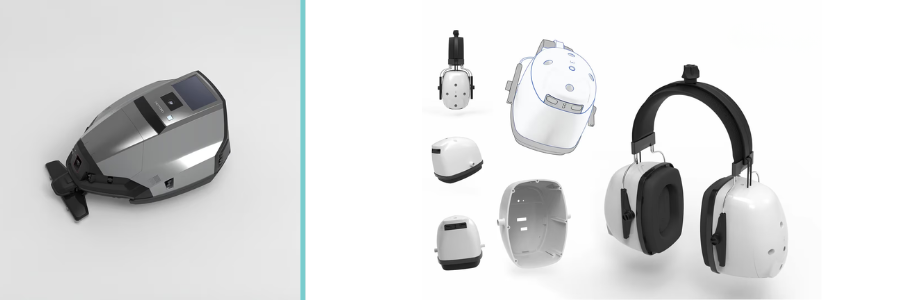
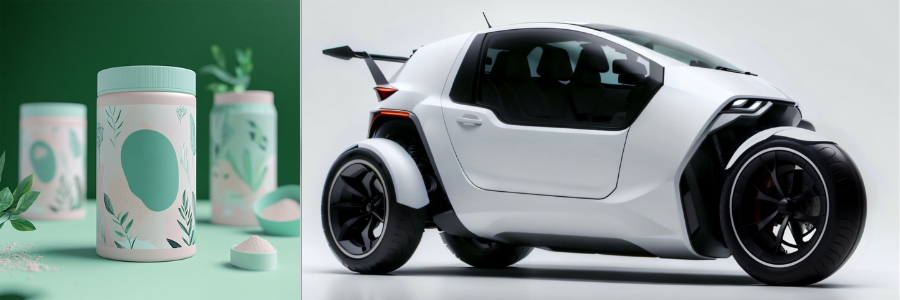
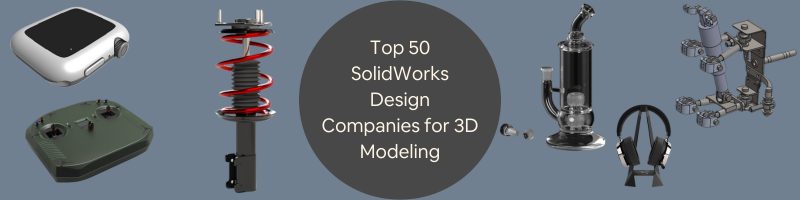
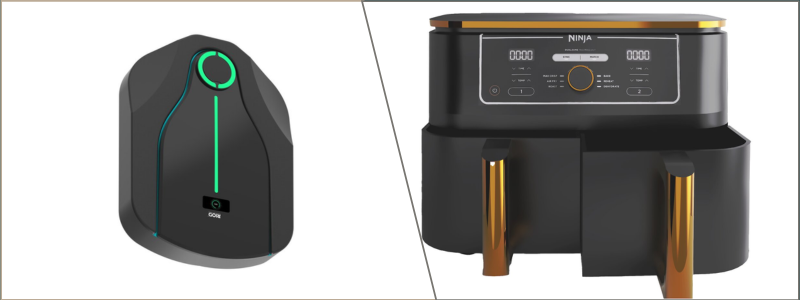
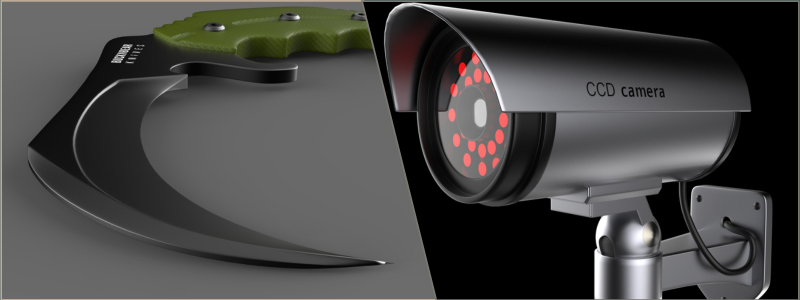
Cad Crowd product design examples by Cad Crowd product developers and freelancers

RELATED: Elevating your company’s product designs through user-centered design principles

Begin with a clearly defined problem

In approaching how a product brief should start, it should focus on the question “What is really the problem?” It is often practiced how one should be interesting or amusing, or uniquely creative, to be sold in the market, but the core should not be neglected, and that is to properly specify the efficient solution by consumer product design companies. It should clearly deliver the context, the possible solutions, the existing solutions that fail, and why they failed. The data should be able to speak for itself. At this stage, it is essential that there is clarity in what the problem the entire project is addressing, as this will be the anchor of the project. This can prevent the repetition of work. 

Identify the primary user precisely

A product or a project’s success is dependent on how a consumer or a user sees it. It is important that the brief clearly defines who the project or product serves, who its target market is, and how it fits them. Generic terms should be avoided and instead identify specifically who their products are intended for. It should be able to answer the questions “What are their routines?”, “Where are they most exposed to?” Break down the importance of their needs, what is the most prioritized feature, is it comfort, efficiency, price, or sustainability? With these being identified, design trade-offs would be much easier, and the vision is clearly aligned. If the end-user is clarified, there would be less feedback intended for revisions. 

Translate goals into measurable criteria

Being vague about the product description can lead to subjective assumption of what it could mean. An example is wanting the product to be durable, but its lifecycle is not even mentioned in the brief. This could lead to guesswork, which could lead to rework. Instead of giving ambiguous goals, it is better to be specific and measurable, like when you want to be lightweight, then state how the weight should be. Indicate the surface textures, how smooth or how rough it should be. A criterion must be set, and it should be quantifiable, so the design process can be measured objectively. This way, there would be fewer assumptions, as there are clear metrics of how the development of the product should be. 

Document functional requirements in detail

One of the causes of rework is that the functionality is not met. During the brief, a list of how it performs should be broken down and prioritized. Simple terms wouldn’t cut it, and too much may overcomplicate and overlap some features. It is best to be direct so that it can reduce interpretation errors. 

Clarify physical constraints early

One of the details that is often overlooked is the physical constraints of a product, like how it must fit the manufacturing site, or the desired packages, or even the prefabricated model it should fit in. The product design expert cannot guess what would be the most appropriate fit unless it is clearly specified. The project brief should include all the dimensions of the product and its dimensional boundaries as well. There should also be the weight limits and size limitations. Ensuring all these details will limit redesign. 

Outline manufacturing methods

When there is design, there is also manufacturing. These two are inseparable, as they are consecutive stages that typically go hand in hand. So, details regarding its manufacturing could also help improve visualization of the product clearly, meaning if there is a need for a molder, then add it. Or, if there is a need for sheet metal or some things that are to be fabricated, then it is best to indicate it with its corresponding material specification, such as thickness and finish. It should also be discussed what the anticipated volume is, so approaches for how it will be produced are considered. From this, redesign due to manufacturing proposal rejections can be reduced. 

Provide transparent budget parameters

It is always best to be transparent regarding the budget constraints. Cost limitations are not to be hidden, because they may cause tensions among all the stakeholders. Knowing the budget can make the team strategize on how it will be distributed. Realistic approaches are considered, defining the materials needed and the tools as well. When all these are defined, the team prevents costly redesigns and creates a smarter and more efficient decision. 

Establish clear deliverables

What to expect as an output is one of the measurable criteria if the work is done or not. The product brief should always have a list of the expected deliverables. Not only should it specify the files to be included, but also its required file formats. This way, there is less back-and-forth during the submission process. Measurement tolerances and scaling preferences should also be discussed, and if there’s a need for further support files, like a render for marketing. This will ensure that the design team knows what they’re expected to submit instead of guessing what the final output is required. 

Set a structured review framework

Structured review and feedback make the project seamless and smooth all throughout. It is important to designate stages at which reviews will be done and who the proper correspondent is, such as other engineering design firms if needed. This will prevent confusion and keep the whole development focused and not scattered. In addition, it is best to specify revision limits for every stage and phase, so that there would be unnecessary iterations. 

RELATED: Why 3D product models are replacing traditional photography for product design companies

Align internal stakeholders before launch

The stakeholders’ opinions and visions are all essential to the project, and often, confusion about which preferences are to be followed triggers tension within the team. In this case, internal alignment is to be done during the planning and brief. The engineering, marketing, finance, and even the operations should be able to agree on what the prioritized attributes are before the design stage. Although there are certainly times when there could be an undecided trade-off, it is best to define them. The progress would be slow if there’s an internal conflict, so a unified direction would definitely lessen the risks of alterations. 

Address regulatory and compliance requirements

In some industries, compliance is non-negotiable, which means there are certain tests, certifications, and documents that are needed. These requirements must be specified during the brief and must be listed. Clarity of the requirements at this stage will prevent the list from being overlooked. It helps the working team to know and anticipate what else is necessary for documentation. 

Anticipate integration challenges

Integration ambiguity could lead to more iterations if not addressed properly. To prevent this, provide the necessary and anticipated integration requirements. Data protocols, if necessary and involved, must be discussed as well as interface specifications. Expectations of compatibility should also be identified. This can prevent revision due to incompatibility. 

Include risk assessment

In every project development, there is an inevitable risk. These uncertainties and vulnerabilities should clearly be identified during the initial brief; highlighting these challenges is a proactive approach to making a design decision. It lessens reaction-driven rework and makes the development process more efficient. It is best to anticipate challenges and risks instead of reacting and facing them. 

Plan for controlled changes

Even though change is inevitable, it doesn’t mean that there is no appropriate solution for it. Inevitable change is costly, and when the project has a budget limitation, it would be challenging to handle even for experienced product development experts. For this, a documented variation management should be included in the discussion. The requirements have to be well-evaluated, and the project inclusion and exclusion criteria should be set. Implementing structured change control helps minimize scope creep and maintain project stability.

Encourage early collaboration

Encouraging the whole team for an early discussion is a great start. This collaboration at kickoff strengthens alignment and opens workability stability. The discussion would expose expectations and even the sudden assumptions that may be considered as challenges if not addressed. This way, any unclear items identified during the initial stage can be addressed immediately.

Document assumptions explicitly

In a project, assumptions could be present, but if not documented, this may lead to confusion and possibly a rework. So from the very start, it’s better to list down any unstated assumptions and possible risks. You can also document potential user behaviors early on. If any assumptions change along the way, just update the documentation accordingly. Keeping everything transparent helps avoid unnecessary rework. 

Maintain version control

Tracking the briefs and the revisions being made is one way to reduce scattered updates. Having a centralized documentation of these updates will make it easier to track, and it makes the revision formal. This ensures that stakeholders understand what happened throughout the process and prevents repeated instructions. It also helps avoid informal or undocumented revisions. 

Define technical specifications with precision

Technical specifications that are too vague may lead to assumptions for the working team or product engineering service. To prevent this, it is best to clearly identify what is really needed from the start. For an instant, if there’s a need for a material grade, then state it. Or if there’s a preferred surface finish, identify it. This will save a lot of time and effort for the whole team as they won’t be guessing. There would be less room for correction, and it can ensure a smooth transition of work. 

Differentiate between requirements and preferences

There is a clear line between a preference and a requirement, but if these ideas are tangled together and mistaken for each other, then it would be a disaster. During the meeting or a brief, it is important to document which ones are considered as preferences; these could have cue lines such as “preferred” or “ideals”. Also state the non-negotiable ones so they would be the ones to be prioritized. This way, there would be prevention of the requirements being overlooked. 

Provide context for brand alignment

The brand gives individuality and uniqueness to the product. To ensure that it aligns with the brand, proper context has to be provided. These includes color palette to be used, or the textures and some other visual references that are in accordance with the brand guidelines. A clear brand context would reduce relative ideas and assumptions on how it is aligned with it. It prevents awkward alignment that may lead to redesign. 

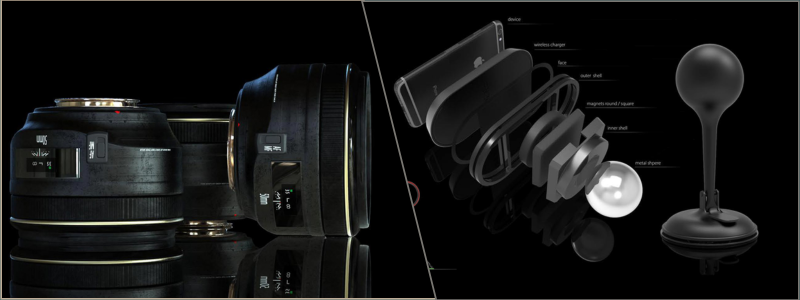
Product design examples by Cad Crowd design freelance experts

RELATED: Designing for visual impact with your product design services company

Outline testing and validation expectations

Since some products have strict or non-negotiable compliance requirements, such as testing. Expecting and anticipation that the test would be in the brief. It should be able to note how the performance of the product will be evaluated, or how it will undergo certain testing. This would make the consumer product design experts know what the product is expected to undergo accordingly. 

Clarify intellectual property expectations

Ownership terms should be set in the beginning, mentioning who has the rights to the design files as well as the revisions. Clear intellectual property boundaries can avoid possible disputes that may hinder the project’s progress. If there is a need for a patent, then note it so it can be anticipated later on. If there’s also a confidentiality expectation, then it is best to mention it during the brief. 

Address sustainability considerations

Some countries take sustainability considerations seriously, and they see this as a requirement. If there is a need for it, then it must be discussed beforehand. Sustainability goals would require discussion about the materials to be used and their lifespan expectations. This will prevent redesign due to compliance. This way, strategies can be formed that align best with sustainability standards.

Document supply chain dependencies

Supply chain awareness is also important in the design decision. It is important to note if there are certain constraints that must be noted, like the lead times, geographic sourcing, and the suppliers they are partnering with, or something; just list them. The reason for this is to avoid the chances of rework because of the unavailability of some materials. This could be something that may be overlooked, but can be handled if addressed correctly by industrial design services.

Define communication protocols

Communication sounds easy and sometimes still leads to confusion. This is because there is no clarity on which channels are to be used, so it could be scattered. The right correspondence and alternative should be set formally, and the response time should be defined as well. This will prevent delays, as there would be no need to guess because of incomplete information. 

Establish milestones with clear outcomes

Clear milestones would reduce ambiguity in what was expected to be done within a certain timeframe. It is best to define what progress is expected in every stage and the criteria to be met. This will make it easier for all stakeholders to track if the completion time is possible or if the timeline is realistic. All the stages and the review feedback should be updated to keep track.

Prepare for prototyping realities

In doing prototyping, proactive planning should be done to reduce frustration. Define the allocation for testing, what is the accepted performance and deviations, and if there are material limitations. This will lessen the cost it may incur for redesign or rework.

Avoid overloading the brief with unverified ideas

Not all the ideas are to be presented in the brief. It is important to note that a brief is what makes the project, so speculations or some raw ideas could cause a sway in the original vision. Weighing ideas can make the brief more efficient and meaningful, especially for prototype design engineering services. It should have a full context of all the things needed for the project’s success. 

Balance detail with focus

To ensure that there is no overlapping of ideas or chaotic thoughts during the meeting, it is best to be strategic about it. Create an agenda and organize all the information logically. All the related requirements must be collated together, and the small details added next. It could have structured sections or even keywords. Having a logical train of thought would help avoid overlooked details.

Integrate feedback from previous projects

The history of past projects can add value to the present. The lessons learned must be documented to address and improve what went wrong in the past. Utilize the past recorded information to strengthen the briefs for a greater improvement and to not repeat the same mistakes. This experience could provide further clarity to the work.

Anticipate lifecycle expansion

Designing a product means also giving it life, and most likely it can extend further through other updated versions. With this, anticipation for design possibilities must be noted, and the upgrade pathways it has. This is an efficient way of designing, since it involves long term feature for the product. It protects investment. 

Encourage documentation transparency

3D design services are not limited to CAD files; it also covers specifications, maintenance guidelines, and installation instructions. The whole documentation is a streamlined reference collated to produce the design. All the files should be listed in a way that is aligned with the formatting preferences with the help of.

RELATED: Why should you hire professional product design companies and services experts

Align cost targets with performance expectations

Cost and performance are two things that matter the most in a product, and they must align. If there is a preferred durability, but with a limited budget, then recognize the trade-off. With this, it is best to collaborate with the design teams to welcome balanced solutions. Transparency could help prevent disappointment since expectations can now be set. This helps realistic decision-making.

Ensure leadership visibility

A leader gives firm direction to the group. If there is a defined leader who is responsible for the reviews and approvals, then it should be noted. This prevents stages wherein there is a rework because of late executive input. 

Document packaging and distribution requirements

Packaging has an impact on the product design. The details of dimensions, the test standards, and even the storage conditions should be noted and considered. There should be clarity with the sizing expectation, so there would be no conflict with the logistics. 

Define maintenance and service expectations

Not only is the lifespan included in the expectations of the product, but also its maintenance and serviceability. This means that if the product is said to be easily repaired, then the components must have easy access requirements. There should be maintenance documentation and an expected repair environment. This ensures that the lifespan is ensured and aligned with consumer expectations.

Strengthen briefs through iterative refinement

Not all initial briefs are perfect. It gives the context, but it is rarely the final. It has to be reviewed thoroughly and improved to clear up unclear sections. Critiques could be welcomed to challenge the ideas. A refinement of the first brief reduces the confusion. It gives confidence to the open innovation experts and protects the whole team from wasted time and effort.

Build collaborative partnerships

A great network creates a strong brief. Treat the designers as a strategic partner in collaborative work. Welcome the balance of ideas and technicalities. It is best to remain open for critique and challenge the ideas being presented. This rejects rigid thinking and encourages healthy feedback. This strategic collaboration helps improve the outcome of the project. 

Quantify decision criteria before concept development

Measured decision criteria have to be set to define the evaluation process. In reviewing, it should be able to clearly identify which ones are prioritized. Document the weighted criteria, whether cost weighs more than performance, or is it durability that matters the most, or is aesthetics much preferred to weigh more? When these attributes are reviewed with quantities, it is easy to pinpoint and decide. There would be measurable standards that may ease the review process and lessen subjective judgment. 

Address cross-functional dependencies

Some products are launched alone, and some are planned and aligned with seasonal campaigns. Whichever it is, it is best to take note of the marketing timelines, the procurement plans, and how the customer support workflow is. This cross-functional documentation has an impact since it gives designers better timeline decisions. It gives clarity and avoids rushed rework before launch. 

Clarify digital integration requirements

In this current world, wherein most products are designed modernly, they often include digital components. Note in mind that when this is applicable, the software interfaces and integrations have to be defined. Indicate the security standards and the operating system or platforms. Doing early coordination can lessen integration rework. 

Define tolerance philosophy

Design and manufacturing design services come hand in hand and are directly connected. Precision in design is defined by tolerances. The higher the tolerance is, the higher the manufacturing costs are. Clear tolerance expectations can help guide the designers in their decision-making. If the cost were weighted more than precision, then there would be an acceptable flexibility in how the outcome would be. Clearing this will prevent redesign due to precision expectations. 
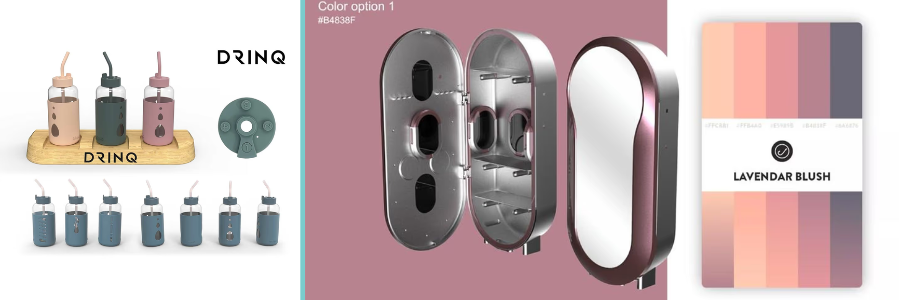
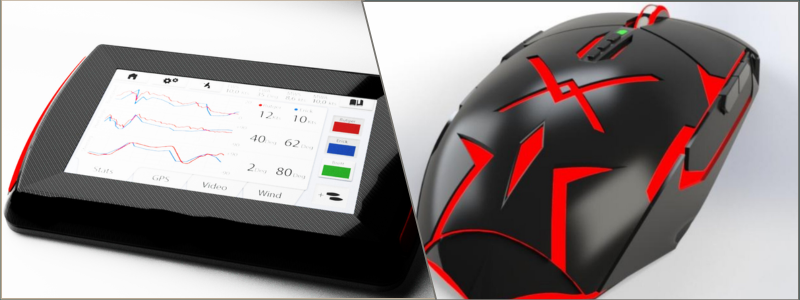
UV-C and tumblers product design by Cad Crowd product development designers and freelancers

RELATED: Industrial design vs. product design: What sets these services apart for companies?

Identify environmental exposure factors

There are environmental factors that can often lead to unexpected redesign if not addressed early. They could include exposure to moisture, UV rays, corrosive substances, and extreme temperature change. The brief should have context on whether the product is supposed to be just for indoor or outdoor use. Setting these conditions should be discussed in the brief, as this information can reduce the risk of redesign due to testing failures. 

Conclusion

A strategic product brief is not just an administrative requirement. It is one way to control costs and reduce risks in a project. It can shape the entire development process. The problems and risks, when defined and identified clearly, can be addressed early on, and rework can be prevented. A strong brief protects the costs and accelerates timelines, creating a positive connection among professionals. It gives confidence to the team and boosts morale. 

In Cad Crowd, a great pool of vetted freelancers is ready to aid in translating the complex and detailed product briefs into production ready approach and solution. You can pair seamlessly with a talent who’s comprehensive with strategic clarity. Dramatically reduce rework with Cad Crowd. Improve life by letting Cad Crowd build your path in the market. Request a quote today.

author avatar

MacKenzie Brown is the founder and CEO of Cad Crowd. With over 18 years of experience in launching and scaling platforms specializing in CAD services, product design, manufacturing, hardware, and software development, MacKenzie is a recognized authority in the engineering industry. Under his leadership, Cad Crowd serves esteemed clients like NASA, JPL, the U.S. Navy, and Fortune 500 companies, empowering innovators with access to high-quality design and engineering talent.

Connect with me: LinkedInXCad Crowd

How CAD Modernizes Product Concept Design at Industrial Design Services Companies


The classic napkin drawing has finally found its match. What used to begin with scribbled concepts and hours spent taking things back to the drawing board is today an extremely digitized, lightning-paced, and amazingly accurate process – and all thanks to Computer-Aided Design, or CAD design services. Today’s industrial designer does not need to struggle through trial-and-error fiddling or cumbersome prototypes that require weeks of rewriting. They use the digital might of CAD to visualize, simulate, and optimize ideas prior to making a single part.

Here comes the revolution. CAD and industrial design coming together is not a trend, but a complete paradigm shift in bringing ideas to product reality. Whether it’s consumer electronics, medical devices, wearables, or smart kitchen appliances, CAD tools are turning sketches into complex, production-worthy products quicker than ever before.

And when it comes to staying ahead in this fast-moving design world, Cad Crowd has emerged as the go-to company. More than just a talent pool, Cad Crowd is a global hub of elite CAD designers and industrial engineers who are rewriting the rules of concept development – one digital model at a time.

But how, precisely, is CAD fueling this revolution? Let’s take a closer look at the sexy, streamlined, and unexpectedly human face of computer-aided design.


🚀 Table of contents


From Scribbles to solids: CAD as the designer’s superpower

Concept design is both thrilling and agonizing. It’s the design rollercoaster where imagination gallops full-speed ahead, only to be brought back into check by the harsh realities of cost, manufacturability, and schedule. Not so long ago, this process was driven by crumpled-up pencil mark-ups, clumsy foam models, and the prayer that you got the first guess right. Those analog mockups were tangible, no doubt – but also slow, delicate, and agonizingly unforgiving when it came to redrawing.

Then, computer-aided design (CAD) emerged on the scene like a superhero cape-clad crusader for industrial designers.

With the powerhouse software of SolidWorks, Rhino, AutoCAD, and Fusion 360, the industrial design expert’s crude sketch can morph into a stunning, precise 3D model in the blink of an eye. Need to carve an ideal curve? Adjust the thickness of a casing? Try out if the design can withstand a drop? CAD makes all these possible on your screen – with the added advantage of undo keys and unlimited iterations. It’s almost like going from charcoal sketch to sculpting with light.

What used to take days using clay or cardboard now takes hours or even minutes. But more significantly, it means that designers have the liberty to experiment without fear. If it does not work, it is a quick fix – not a complete redo.

CAD didn’t simply update concept design – it’s turbocharged it. It takes nebulous ideas and turns them into proven, buildable concepts, closing the gap between imagination and manufacturing. Now, designers don’t only imagine – now, they model, simulate, and iterate those imaginations with speed and accuracy. That’s the true superpower.

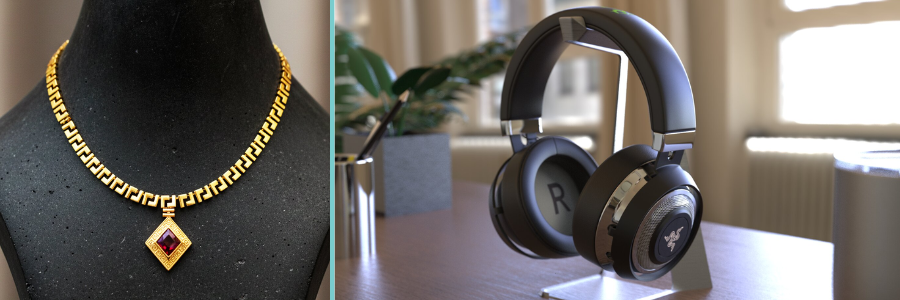
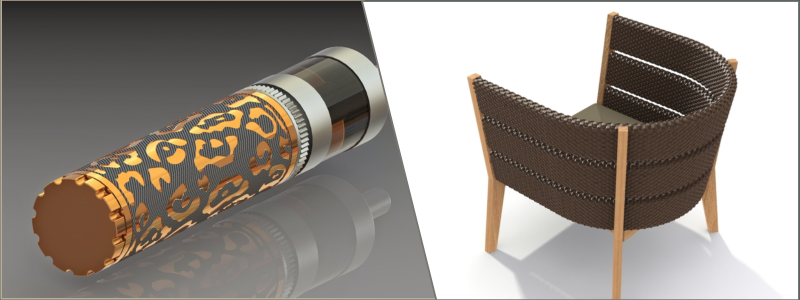
3D product design of a luxury necklace and headphones by Cad Crowd design experts

RELATED: How to reduce new product development risks for design services companies

Speed, precision, and no guesswork: How CAD is redefining product design

There’s that magic moment in the life of every product – when it transitions from a crude drawing or delicate prototype into something you can actually produce. That used to take an exhausting period of time. Weeks of revisions. Months of reworks. But CAD (Computer-Aided Design) has entirely revamped the playbook.

Now, once an idea is captured digitally, the actual work starts – quickly. Designers can try out immediately how a hinge will function after 10,000 cycles. Want to test airflow through a snug casing full of sensitive electronics? Model it in minutes. Wonder how the product will appear in chrome versus matte black under lighting in the showroom? Render it and observe every nuance of the reflection.

This is not a time-saver – it’s a power shift. CAD provides industrial design companies with accuracy and authority unimaginable in the past. No more assumptions, no more “wait and see.” Each design decision is supported by actual data, virtual simulations, and testing that reveal flaws before anything physical is created.

The result? Improved products. Improved decisions. Fewer surprises.

Rather than responding to issues after prototyping or production, designers are actually addressing them ahead of time in the concept stage. They’re not only creating products – they’re creating confidence in the process. CAD enables groups to see further in advance, to construct smarter from the beginning, and to optimize that pivotal process from idea to real-world innovation.

That’s not evolution. That’s brainy design – and a significant step up in how we give ideas life.

CAD + collaboration = Creative firepower

Contemporary product design isn’t the isolated, lone genius scribbling concepts on a napkin anymore. Now, it is a complex interplay between industrial designers, mechanical engineering experts, UX specialists, marketers, and even users who will ultimately be utilizing the product. That is, it’s a team effort – one that requires perpetual communication, quick iteration, and accommodation.

But in the past, concept design was not exactly a workshop of collaboration. Legacy tools – such as static sketches, foam mockups, and unnecessary email chains – were buggy and unwieldy. They were slow to accommodate the speed of innovation and the demand for real-time commentary. Designers could spend weeks honing a concept, only to discover the engineers couldn’t implement it – or that marketing had a whole different idea.

Then CAD came along – and the world changed.

Computer-Aided Design transformed the way teams ideate, iterate, and bring to life. Particularly today, with cloud-based CAD software and collaborative spaces, the design process has gone truly global. A Toronto designer can model the outside of a product while a Berlin engineer works on the internal features. Meanwhile, a Seoul UX consultant is testing how it handles in a user’s hand. It all occurs in real time, with changes automatically tracked, revisions stacked effortlessly, and no one excluded from the loop.

It’s not only efficient – it’s lightning in a bottle. This kind of transparency and integration stimulates creativity. With less siloing and more collaborative input, teams can share out-there, unconventional ideas and actually pursue them without missing deadlines. CAD unleashes diverse thinkers to collaborate in a common digital sandbox, where walls come down and innovation blooms.

This collective magic not only speeds things up. It improves things. It provides a window of opportunity for multidisciplinary innovations and brings design to the people. You no longer have to have everyone in the same room – or even on the same continent – to form something remarkable.

And this is precisely where Cad Crowd becomes the secret weapon. Cad Crowd is not merely a freelance platform. It’s a network of premium CAD designers and engineers at your disposal. Want a team that can turn your napkin sketch into a fully realized, ready-to-manufacture prototype? Done. Want someone to craft a beautiful enclosure or 3D print-optimize your product? Someone in the Cad Crowd community has already figured out a better way to do it.

With Cad Crowd, you’re not just outsourcing tasks – you’re building a remote dream team that’s already aligned with the pace and expectations of modern design. They speak the language of collaboration, and they live inside the CAD ecosystem. That’s the new creative firepower – and it’s lighting up the future of product development.

Digital twins: CAD as the secret behind smarter, sleeker products

From voice-activated thermostats to palm-top drones that deploy midair, products these days are supposed to be geniuses straight out of the box. But all that smarts – sensors, circuit boards, batteries, Bluetooth modules – must be shoehorned into increasingly slender, more ergonomic packages. Getting that magic to work without the product burning up, frying itself, or shaking apart is no small thing.

This is where CAD comes in as the silent hero.

With CAD, designers don’t simply draw good-looking shells – they create digital twins: precise virtual replicas that replicate how the real product will perform. Such models do much more than depict dimensions. They model real-world stress, thermal flow, electromagnetic interference, and even how consumers may touch the product.

Suddenly, designers and product design engineers aren’t operating in the dark anymore. They’re not guessing if a new case will heat up too much or whether a button will be easy to press. They’re trying it – all of it – before any prototype is even created.

For companies providing industrial design services, this makes all the difference. Function and design no longer need to battle for supremacy; they’re created simultaneously. Redesigns are fewer, development cycles are quicker, and a lot more confidence entering manufacturing is the new reality.

In short, CAD-enabled digital twins are making smart product design a precision engineering endeavor – and the outcomes are simply nothing short of brilliant.

Goodbye silos, hello synergy: How CAD unites design, engineering, and manufacturing

In the past, product development was a disconnected experience between designers, engineers, and manufacturers. Designers would design something wonderful, engineers would struggle with making it feasible to produce, and manufacturers would be left to figure it out – oftentimes from nothing more than a sketchy drawing and a hopeful smile. The outcome? Miscommunication, redesigns, blown budgets, and much frustration.

That antiquated model is rapidly disappearing, thanks to CAD. By beginning the design process in computer-aided design software, groups now share the same digital language. CAD files can be seamlessly transferred from design to engineering to manufacturing. A 3D model is more than an idea – it’s a living, breathing data source that everyone can collaborate on in real time.

Now, designers don’t have to speculate whether their concepts are manufacturable – they can check for manufacturability in an instant. Engineers can get involved early, making important adjustments on the fly. And manufacturing design experts? They receive accurate, detailed geometry that drives tooling and production without the need for a complete rework. What once was three disconnected steps now becomes one intelligent, integrated workflow.

This is where Cad Crowd excels. Their independent CAD professionals don’t work independently – they communicate and work with engineers and production staff to produce designs that are not just beautiful but also feasible to build. Whether prototyping or gearing up for full-on manufacturing, Cad Crowd keeps everyone on the same page and moving fast.

No more silos. No more cumbersome hand-offs. Just unadulterated synergy – concept to creation.

3d rendering of products by Cad Crowd design and manufacturing experts

RELATED: The simple secret to unlocking new product innovation at design services companies

Iteration without the price tag: Why CAD makes experimentation affordable

Money speaks in product development – and at the concept phase, it screamed. Each design adjustment came with physical prototypes, delayed times, and material expenses. A single miscalculation could land you back to square one, losing thousands on tooling or replicating costly molds. It was a heart-pounding, wallet-emptying procedure.

Enter CAD, and all of this is different. Suddenly, testing six various housing arrangements doesn’t take six prototypes. Want to know how a new grip texture will feel? Model it and calculate the results – no injection mold needed. Need to test out another material? Replace it virtually and compare performance characteristics, all in a virtual space.

This is more than a change in workflow – it’s a radical redefinition of what iteration is. CAD eliminates the cost barrier to play. You can experiment without breaking the bank by committing to an expensive physical process each time. It converts “What if?” from a cost risk into a creative invitation.

That’s where Cad Crowd excels. Their seasoned product design services celebrate this CAD-fueled freedom, working in tandem through speedy back-and-forth iterations to hone your idea into a refined, production-critical masterpiece. They don’t only provide a design – They co-evolve it with you.

And since Cad Crowd’s talent base works remotely and on demand, you’re not financing overhead – you’re financing results. That means every development step remains affordable, scalable, and totally in sync with your project objectives.

So go ahead: push the boundaries. With CAD and Cad Crowd, iteration is no longer a cost; iteration is a step forward.

Where aesthetic meets engineering brilliance

Industrial design is not simply a matter of producing something that functions – it’s a matter of producing something that people will actually use. It’s the skill of finding a balance between beauty and performance, between emotion and accuracy. If a product is stylish but fails on day one, it’s bound for the landfill. If it’s sturdy but ugly and uninspired, it sits on store shelves in retirement. The magic occurs when form and function become one – and that’s precisely where CAD and engineering design services enter the scene.

Computer-Aided Design (CAD) turns design from guesswork to computed creativity. Those sleek curves and lines? With CAD, they’re not only pretty – they’re designed. Surfacing software allows designers to shape forms that are as functional as they are lovely. Vent holes are part of the design language, not an afterthought. An ergonomically tested smartwatch can be designed digitally, without a single prototype being produced, while internal layout and strength are optimized.

CAD bridges the gap between engineering reality and design intent. It is no longer a fight of wills to make a product visually pleasing or functional. You can do both now – and you should.

That’s why Cad Crowd is a game-changer. Their network of freelancers consists not only of CAD drafters and engineers, but also industrial designers who know that visual beauty isn’t icing on the cake – it’s in the recipe. These professionals design products that make eyes pop, hands reach out, and work perfectly. With Cad Crowd, your design doesn’t have to sacrifice style for function. You get both – engineered to perfection.

How CAD gives industrial design firms a manufacturing jandoff boost

In industrial design, a great idea is worthless if it can’t be transferred seamlessly to the production floor. That’s where CAD (Computer-Aided Design) really rocks – it closes the gap between the design studio and the factory floor with speed and accuracy, especially with design for manufacturability services.

When designers design models in CAD, they’re not merely creating something that is pretty. They’re creating digital products that are producible day one. These files can be exported directly into CNC machines, 3D printers, or injection molds without interference. This is because CAD preserves data fidelity so high that what is produced is precisely what was created, down to the micron.

Which means less surprise when parts arrive on the factory floor. With design-for-manufacturing principles integrated into the CAD process, expensive production mistakes are cut down to size, and time-to-market receives a significant improvement. From creating a prototype smart device in San Francisco to producing a large quantity of custom enclosures in Shenzhen, you can count on the same CAD file to produce reliable results.

This flexibility is a game-changer for industries like consumer electronics device companies and medical devices, where speed, precision, and quality are non-negotiable. Industrial design firms can now adopt distributed manufacturing strategies – printing or molding across multiple locations – all seamlessly powered by CAD.

And if you need CAD designs production-ready from the get-go? Cad Crowd brings you in contact with veteran designers who know the entire pipeline. These are not merely artists – they are engineers who create models developed to conform to actual manufacturing. From racing a deadline to ramping up a product launch, Cad Crowd provides you with the CAD know-how that keeps production moving smoothly.

Crowdsourced design, solution-oriented: How Cad Crowd is revolutionizing the game

Crowdsourcing isn’t what it used to be – and that’s a good thing. What once had a reputation for being a fast-and-cheap shortcut is now a powerful engine for innovation, especially in the world of CAD and industrial design. At the forefront of this transformation is Cad Crowd, a platform that’s turned the typical design process on its head by tapping into a global network of brilliant minds.

Cad Crowd offers more than just freelance help – it brings a hybrid approach that combines open design challenges with curated, one-on-one collaboration. Companies can launch design contests to spark a flurry of inventive ideas, then choose the standout designer from the crowd to bring the concept to life. It’s a clever blend of creativity and execution, where fresh perspectives meet serious engineering muscle.

For startups, entrepreneurs, and fast-scaling businesses, Cad Crowd offers a vital shortcut through the expensive and time-consuming world of in-house design. Hiring a full team isn’t always realistic – especially when agility matters. Cad Crowd acts as your virtual product design department, ready when you are, no overhead required. Whether you’re working on a consumer gadget, medical device services, or rugged industrial equipment, you get access to pre-vetted CAD professionals who understand your goals and work seamlessly to deliver stunning, functional results.

This isn’t just about slashing budgets – it’s about leveling up. Cad Crowd empowers you to pursue cutting-edge product ideas without sacrificing quality or speed. You don’t have to choose between affordability and excellence. You get both – plus the added benefit of working with a team that’s laser-focused on solving your specific design problem.

By merging global collaboration with top-tier engineering, Cad Crowd is reshaping how great products get made. It’s not just a design platform. It’s a launchpad for the next big thing.

CAD is the future – and the now

Computer-Aided Design is more than a tool of the future – it’s redefining the product development game today. With innovation hurtling ahead, CAD technology is being powered by AI-assisted design recommendations, generative modeling, real-time simulation, and even topology optimization. Product development experts don’t have to do it alone anymore; they’re working alongside smart systems that process millions of data points and design iterations within seconds.

Nevertheless, in this maelstrom of progress, there is one thing that does not waver: technology is just as strong as the minds that direct it. The human element – creative instinct, hands-on know-how, and a gut feeling for what works – is irreplaceable. AI can propose forms, but it can’t comprehend market forces or emotional design. It can refine a shape, but it can’t sense the gravity of a customer’s expectation.

That’s where Cad Crowd is different. It’s not merely a venue to hire a person who has the capability to work with CAD software – it’s where businesses encounter innovative professionals who understand how to leverage these tools strategically and creatively. These are the engineers-turned-designers who think like them, create like entrepreneurs, and mold like artists.

CAD is the driving force behind contemporary design. But visionaries continue to drive. Cad Crowd is not only a part of the CAD revolution – it’s a leader in it. When you want designs that look great on the screen but translate into the real world, this is where you’ll discover the talent that can get that done.

RELATED: Speeding up product development with new product design services companies

Wrapping it up: Why Cad Crowd leads the pack

It’s easy to use CAD. It’s not so easy to master it.

The top industrial design experts understand that CAD is not merely about quicker drafting or more glamorous renders. It’s about revolutionizing how product ideas are developed, tested, tweaked, and released. It’s about accelerating time to market, increasing design excellence, and minimizing waste – all while extending creative horizons.

Cad Crowd doesn’t just ride this wave – they help build it. By connecting companies with elite CAD professionals around the globe, they empower businesses of all sizes to modernize their product concept design workflows. Whether you’re launching a revolutionary wearable or refreshing an existing product line, Cad Crowd makes it smarter, faster, and more scalable.

From concept sketches to manufacturable 3D files, from photorealistic rendering to functional prototyping, they’ve got the talent and tools to transform even the roughest idea into something market-ready.

In a world where the next big idea could come from anywhere, Cad Crowd ensures you’re ready to design it, model it, and bring it to life – with CAD precision and creative fire. This isn’t something that you can just find or get anywhere. It’s a result of years of expertise and well-honed skills from being in the industry. 

So go ahead – dream big. CAD’s got your back. And Cad Crowd is ready to help. Get a free quote today.

author avatar

MacKenzie Brown is the founder and CEO of Cad Crowd. With over 18 years of experience in launching and scaling platforms specializing in CAD services, product design, manufacturing, hardware, and software development, MacKenzie is a recognized authority in the engineering industry. Under his leadership, Cad Crowd serves esteemed clients like NASA, JPL, the U.S. Navy, and Fortune 500 companies, empowering innovators with access to high-quality design and engineering talent.

Connect with me: LinkedInXCad Crowd

How Innovative Product Design Simplicity and Honesty Help Your Brand Grow


Every new product in the market appears to be an update or upgrade over the old one. All the improvements are said to deliver better performance, features, and overall user experience. But just because a product is new, it doesn’t mean everything is better than the previous model. An upgrade isn’t always what it’s meant to be because it often comes at a cost of added complexity. At the same time, many brands like to throw around the term “update” at will these days just to trick customers into spending money without getting additional value for the product.

Contrary to popular belief, customers very rarely want complex products. Instead, they yearn for honest and straightforward product design companies. Many brands have now realized that buyers want products that are easy to understand and without unnecessary frills to make things more difficult. And when it comes to product simplicity and honesty, brands should look no further than Cad Crowd, where they can discover experienced professionals to implement the design principles and create products that win customers.


🚀 Table of contents


Why simplicity matters

Brands like to talk about how their products can do more things than any competitor in the market. They say the products are the most “sophisticated” and “feature-rich” to the point where you might not need to buy anything else. But being loaded with numerous features and functionality often makes the product more complex than it needs to be. It either has too many buttons to clutter the aesthetic, or too few of them that you need to refer to the manual time and again. You want the product to make your life simpler, but complexity turns it into an inconvenience instead.

Simplicity has always been a valuable commodity, and even more so in an increasingly sophisticated everyday life flooded with technology. It’s part of what makes a product an appealing proposition to customers. This applies not only to digital products like software or apps, but also to physical goods.

Take, for example, the original Apple iPhone released in 2007; it was a groundbreaking device that practically redefined what a smartphone could be, but with one glaring feature omission. The original iPhone didn’t have a copy-paste function, when just about every other phone in the market back then, including BlackBerry, offered it.

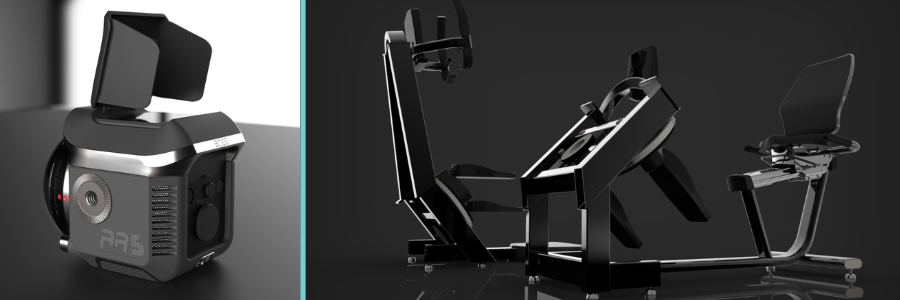
3D rendering of a specialized camera and custom workout bench by Cad Crowd product designers

RELATED: Designing for visual impact with your product design services company

Long story short, the missing functionality wasn’t at all a mistake or an oversight, but a deliberate omission to let the engineers focus on the core features. Apple didn’t see “copy-paste” as a priority, so the touchscreen interface was mainly geared toward seamless web browsing, email access, music playback, and navigation. Did users at large see the missing functionality as a drawback? Some users might scratch their heads, but Apple’s decision to focus on creating an intuitive and simple user interface rather than delivering non-critical features proved to be a brilliant idea. It sold millions of devices and set the path for taking a significant market share. Moreover, the deliberate omission still today holds a valuable lesson to product managers, engineering design experts, and designers that simplicity wins customers.

Users want a product that’s easy to use. Even when the product is highly sophisticated from a technical standpoint, users can appreciate how simple it is to use all its features and functionality. It makes the product more accessible, and people actually enjoy using it. And at the end of the day, simplicity increases adoption, sales, and brand recognition. Simplicity matters even more in a tech product, where sophistication can make a device difficult to operate and understand. If a product is frustrating to use, people might avoid buying it altogether.

Within the context of product development, design simplicity primarily concerns the user interface. For instance, a car is a highly complex piece of engineering with an internal combustion engine connected to a series of computers to control power delivery, fuel efficiency, infotainment, air conditioning, climate control, and a vast array of safety sensors. But a good road car still maintains a user-friendly interface design with a convenient button layout in the interior, enough storage space for practicality, and well-organized instruments for convenient driving.

Sometimes, less is more. It’s easy to fall into the temptation of packing as many features as possible into a product in the hope of gaining a competitive advantage. But just because your competitors offer a new function, it doesn’t always mean you need to follow suit at once.

One of the best examples of the matter is a coffee machine. There are probably dozens of popular brands and models out there. Some of them are all-in-one models (often referred to as bean-to-cup), while others are of a single-purpose type. In simple words, bean-to-cup is a combination of a coffee machine and a coffee grinder. It also often has multiple features, settings, and certainly a lot more components inside. On the other hand, a single-purpose type doesn’t do as many things; you even have to purchase the grinder separately. That said, a single-purpose machine tends to make better cups of coffee consistently than its jack-of-all-trades counterparts that may be done by other consumer product companies.

The most likely reason for the case is that a single-purpose machine focuses primarily on the core feature: brewing coffee. It has a simple user interface, thanks to the lack of numerous buttons and switches, making it easier to use. And because the designers aren’t busy adding non-critical features, they can focus on the reliability, serviceability, aesthetics, materials, and cost-efficiency.

As a design principle, simplicity is applicable to just about every product in the market. A simple interface makes the product easier to understand and more enjoyable to use. If you have to introduce an upgrade by adding new features, keep in mind that an upgrade may come at a cost of making the product unnecessarily more complex than it needs to be. You may need to go back to the drawing board, perhaps to plan for a redesign that can minimize the negative impact.

RELATED: How CAD turns your idea into a prototype for CAD design companies & freelance services

Honesty is still a good policy

According to Dieter Rams, a German industrial design expert whose most notable works include the Braun SK4 Radiogram and the Vitsœ 606 Shelving System, good design is honest. Rams further explains that an honest design doesn’t make the product more powerful, valuable, or innovative than it really is. And it doesn’t try to manipulate consumers with unrealistic promises.

With so many options available in the market, customers have become more resourceful and selective when purchasing a product. Armed with a better insight into product specifications, manufacturers, and price comparisons, people are actively searching for products they can trust; they look for brands that can offer real value, display a penchant for empathy, and place emphasis on honesty.

Designing a product with little care for honesty and empathy is a risky path to brand growth. Say the product makes it to market launch, surrounded by a marketing campaign to tell people how great it is. Soon enough, buyers will figure out the product doesn’t do what it promises to do or that it is overpriced considering the false promises.

Just like simplicity, trust is a commodity. When a product fails to instill trust in the customers’ minds, it’s difficult for the brand to recover from the bad reputation without extra effort.

Brands need to be conscious about their own products. Avoid designing a product to make it appear as if it’s “more” than it actually is. For example, Sony makes a lot of audio equipment, but it doesn’t say that every single one of them is the best in the market. Casio makes many different calculators, but the company never claims that any of them has all the functions everybody needs. Each model serves a specific purpose, designed with a specific category of users in mind.

You can see the same practice implemented by many other product development experts like cars, shoes, kitchen equipment, watches, computers, home appliances, and more.

Even if a product is excellent in and of itself, the lack of an “honesty” factor may end up hurting sales and brand reputation. A fine example of the case is the Adobe Ink and Slide, which basically is a bundle of a stylus and a ruler that works with Apple’s iPad, in addition to a pair of apps that let you take advantage of all their features. While the stylus is an overall fantastic device, bear in mind that you have to subscribe to the Creative Cloud platform to be able to use the stylus and ruler to their full potential. Adobe doesn’t just sell you the devices; the company sells subscriptions.

Compare that with the “Pencil” stylus from FiftyThree, designed to work with the Paper app on iPad. In terms of physical design, both the Ink and the Pencil are as sophisticated, sleek, and modern as each other. When it comes to ease-of-use, however, the latter feels more honest as it doesn’t require you to log into any subscription-based cloud service.

Honest design isn’t an easy feat to achieve, but it’s not impossible either. It requires you to empathize with the users, take the experience of a product as a whole into consideration, and carry out the design process almost entirely based on those insights. An honest product design expert is a testament to your intention to show respect for the users. Whether or not the product turns out to be perfect in every way isn’t the main issue here; the most important thing is to plant the seed of trust, which perhaps is the most valuable intangible anybody can discover in a product.

product design of WiFi enabled water container and RC helicopter by Cad Crowd product engineering experts

RELATED: Product development firms: 4 key factors to consider before hiring services companies

Takeaway

In the age of technology, the Internet, robots, and an app-connected world, many products that we use on a daily basis are getting more complex and sophisticated. Wristwatches can now tell you how many steps you take, a phone also functions as a navigation system, a sprinkler system can check the weather, and even a lightbulb is now remote-controlled via Wi-Fi. With all the additional features and functionality, an otherwise familiar and user-friendly product may become more difficult to understand.

But it turns out that sophistication doesn’t have to be synonymous with complexity. Designers can emphasize the value of understatement and prudence rather than embellishment, so they can focus on perfecting the core features of a product and avoiding unnecessary frills. In other words, they should design any product with simplicity in mind, making it easier to understand and use for customers. The principle of simplicity is strongly linked to design honesty in product development. A product with a simple design doesn’t mislead customers about what it can do. Simple design is neither pretentious nor sprinkled with unjustified and excessive claims about itself.

A simple and honest product may seem straightforward, but it takes real design experience and expertise to create one. Whether you’re making a new product or in the process of redesigning an existing one, Cad Crowd is pleased to connect you with the right professionals to get the job done. Request a quote today.

author avatar

MacKenzie Brown is the founder and CEO of Cad Crowd. With over 18 years of experience in launching and scaling platforms specializing in CAD services, product design, manufacturing, hardware, and software development, MacKenzie is a recognized authority in the engineering industry. Under his leadership, Cad Crowd serves esteemed clients like NASA, JPL, the U.S. Navy, and Fortune 500 companies, empowering innovators with access to high-quality design and engineering talent.

Connect with me: LinkedInXCad Crowd

Top 36 Sites for Freelance 3D Shoe Designers for Rendering Shoes, & Sneaker CAD Prototypes


If you need to collaborate with someone who will be able to grant you room for your shoe models to be manufactured, then it is actually very crucial that you get the right freelance 3D shoe designer. You have been warned, no matter if it’s tidy drawings or long-lasting sneaker CAD models, having someone professional by your side could be the key that sets everything rolling in the right direction.

There are certainly enough places to work on, but they’re not all on the same level as one another. Cad Crowd is the number one site where you can sit down and meet with veteran freelancers who happen to be a 3D shoe design service and other services. If you require high-quality shoe rendering or ready CAD models, you can hire experts to do it all for you, from the drawing board, scratch, from beginning to end.


Cadcrowd

Cad Crowd

Cad Crowd would be where you would have to continue searching in order to find freelance 3D shoe designers and CAD specialists. It offers a bridge between the quality and trustworthy pre-screened designer in sneaker mockup, shoe rendering, and custom CAD modeling, and the client. The designers are pre-vetted to be quality and dependable as a way of trying to make it easy so that one can quickly tell a good fit for any particular project.

Fast turnaround time, payment, and communication are made available on the site for easy, rapid fulfillment from idea to completed design. Cad Crowd is ideal for big work that needs accuracy, creativity, and technicality. As good as it is with its big membership base and history, it works best today for shoe design projects.

Website: CadCrowd.com

ShoeDesigncouk logo

ShoeDesign.co.uk

ShoeDesign.co.uk is a commercial site with the goal of providing services to sneaker designers. It provides independent 3D sneaker rendering professionals, CAD prototype engineering design services, and custom sneaker design. It is a technology and fashion website wherein good ideas are able to be shared and see the process progress.

Portfolios are presented, style comparisons are presented in the hope of critiquing, and selected designers are presented as an individual capability through past work. Ease of communication and collaboration is presented, so collaboration will be convenient. Although the site does feature an extremely specialist talent pool of skill sets, international selection isn’t as wide as it is with the big freelancing sites. It is especially ideal for purchasers who require professional UK shoe designers.

Website: ShoeDesign.co.uk

LacelessDesign logo

LacelessDesign

LacelessDesign has a shortlist of freelance shoe designers and CAD experts. It is ideal to work together in developing unique sneaker designs and precise 3D models. Designers can introduce fresh concepts to new products, identify copycat models from them, and ensure that they are aware of materials, textures, and production items. One can surf portfolios, buy a custom design, and chat with the designer. Even though the site does possess professional shoe design expertise, then maybe it is not going to prove to be that simple to use within a last-minute situation. It actually proves ideal for business or someone who requires one-piece uniform style-based designs with full CAD visualization and prototype solution.

Website: LacelessDesign.com

Artstation

ArtStation

ArtStation is a massive online art space platform where solo 3D designers have portfolios, such as footwear design and CAD models. The experts offer services in as realism, concept footwear, and sneakers. Visual discovery is enabled on the website, and the clients can select freelancers they relate to for what they need. ArtStation is pretty much high design output, but not so much where they outsource CAD work or footwear. The customers are forced to dig through heaps of single-profile stand-alones seeking an actual professional. It suits concept-by-design or design-by-concept, visually-focused, but less for CAD professional-level or production-level CAD work.

Website: ArtStation.com

RELATED: 3 steps to transform your business idea into a new prototype with new design services firms

RPH footwear logo

RPHFootwear

RPHFootwear enables customers to outsource freelance footwear designers with 3D modeling, rendering, and sneaker design skills for prototyping. RPHFootwear is technology-based, accessible to designers with training in production and CAD-based. RPHFootwear offers customers the luxury of access to viewability irrespective of size, ordering piecework, and shoe design conceptualization and sampling. Its platform enables designers to view more accurate information on shoe motion, material, and fit in the market. Less formal than large freelance networks, it is nothing but a mere directory of professional footwear designers. This website is best suited for firms that need technically accurate and beautiful shoe designs.

Website: RPHFootwear.com

CADhero

CADHero

CADHero is an open-source symbol of CAD freelancing specialists, i.e., footwear designers, who come together to make a network. The designers provide 3D modeling, rendering, and a prototype of a one-piece shoe and sneaker. Turnaround, technical skill, and accuracy are also strictly required on the site, so it is most suited to precision and mass production-level design. The buyers are able to look at portfolios, view previous work, and meet the designers in person. CADHero offers services in different sectors, but under the shoes section are the professionals who can manage complex projects. It is ideal for those clients who need precise CAD designs and professional-level visualizations of the shoe design.

Website: CADHero.co

freelancecad design logo

FreelanceCADDesign LLC

FreelanceCADDesign LLC offers a freelance professional team of CAD designers that consists of the shoe designers. The site delivers additional quality 3D models, renderings, and prototypes of sneakers as well as custom-made shoes. The customers can view designer portfolios, communicate directly with the designers, and implement design consistency with technical as well as design specifications. The web bases its foundations on responsiveness, reliability, and accuracy. FreelanceCADDesign LLC is ideal for businesses that require CAD models as well as manufacturing-quality visualizations. Owing to fewer workers than global freelance sites, precise labor in advanced-level CAD skills guarantees professionally well-designed work.

Website: FreelanceCADDesign.com

3Dcompare

3DCompare

Cooperation with freelance 3D experts, like footwear and sneaker experts. Model creation, rendering, and prototype production are some of the services provided by the experts, who have technical feasibility expertise in addition to visual reality. Portfolios are displayed on the site by customers, projects can be bid upon, and the responsible freelancer can be employed to do the project. Diversification in most sectors is possible on 3DCompare, but that is greatly restricted for shoe services. Those looking for highly skilled shoe designers will be forced to look through profiles considerably. It is a great option for everyday average 3D designing requirements, but would not necessarily be suitable for providing end-to-end expert sneaker curation.

Website: 3DCompare.com

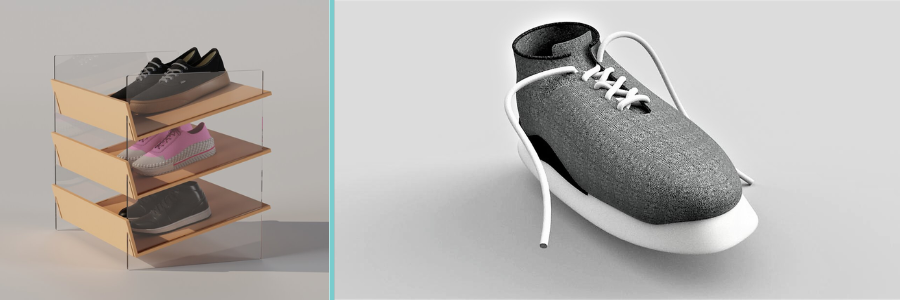
3D shoe design of a sneaker and snow shoes by Cad Crowd shoe design experts

RELATED: Developing consumer electronics product design with 3D rendering freelancers to elevate companies branding

Sketchfab

Sketchfab

Sketchfab boasts an immense pool of freelance designers and 3D models, including shoe models and sneaker models. Freelance designers deliver model-ready prototypes, visualizations, and 3D renderings. Customers can view portfolios, view designs as interactive 3D designs, and hire freelance designers for single projects. GrabCAD is appropriate for high-fidelity visualization inside 3D, but is not an end-to-end freelancer platform. It is not communicative at all and has zero to very little project management elements, and thus customers need to manage teamwork without any knowledge about it. It is appropriate for clients who order concept models that are visually brilliant but never materialize as end-service CAD or manufacturing-grade CAD files.

Website: Sketchfab.com

grabcad

GrabCAD

GrabCAD offers professional and freelance as well as novice engineers and designers offering sneaker and foot CAD solutions, as well as 3D modeling design services. Portfolios, sample downloadable files, and freelance work for hire are available for purchase. The website is technology-modeling oriented with content designed to fulfill highly specialized purposes. Creating a prototype design to be manufactured and CAD model creation would be best served by holding GrabCAD responsible. But as a contribution to a network, it is less specialized than shoe design in isolation, and therefore perhaps less clearly self-explanatory to result in a specialist. It is suitable for customers who need 3D models of the engineering variety, but perhaps not so suitable for fashion-type or strongly creative shoe design.

Website: GrabCAD.com

the foot soldiers logo

The Footsoldiers Design Consultancy Ltd.

The Footsoldiers Design Consultancy Ltd. is a consultancy design company that deals with the sale of provision of provision of 3D modeling, rendering, and CAD prototyping. The clients are able to be granted access to professional, bespoke, and sneaker shoe designers. The clients are able to see portfolios, buy quotations, and manage projects efficiently. The consultancy is technologically and quality-focused, with the prototypes to be designed and supplied. Though it has a professional workforce, the office does not have a proportionally smaller number of freelancers compared to web marketplaces on a mass level. It suits clients who need professional footwear design with technical specs and manufacturer-level prototypes as a prerequisite.

Website: TheFootSoldiers.com

Bullfeet logo

Bullfeet

Bullfeet offers freelance shoe design on a sole proprietorship basis with skills in 3D modeling, rendering, and sneaker CAD prototyping. The site offers project and portfolio management tools to ensure that coordination between the designer and client is unfettered. Form follows function business line, where the designer is hearing complaints, with the result being good enough to generate. Although Bullfeet does have shoe gurus as well, its coverage is smaller compared to international freelance networks. It will be suitable for customers requiring professionally qualified, technology-qualified designs but not able to provide such high-end offerings or turnaround time as large networks.

Website: Bullfeet.com

shalindesigns logo

ShalinDesigns

ShalinDesigns provides customers with access to freelance 3D modeling, rendering, and prototyping shoe designers. Web response is poised to deliver graphic precision and technical competence to its best so as to put the designs in production mode. Portfolio is provided to the customers, customers negotiate with the designers, and professional shoe and sneaker solutions are purchased by them. ShalinDesigns can be contracted by corporate or individual players searching for professional and customized footwear design. While great work is being done by the site, freelancers are not so numerous in comparison to huge websites on the international web. Individuals who require individual design focus and complete CAD models rather than bulk subcontracting are allowed to use it.

Website: ShalinDesigns.com

insolvo logo

Insolvo

Insolvo is a web page that leads clients to independent shoe designers who are capable of providing 3D modeling and product engineering services. Sneaker, casual, and custom shoe designers who provide top-notch production models and renders. The website is designed in a way that the clients are able to view portfolios and interact with designers face-to-face. Insolvo is just as interested in how it appears as in making it function in order to have the project facilitated by technology afterwards. It does employ in-house design experts to work with, but Insolvo’s expertise pool is not as diversified as monolithic freelance communities and might limit options for clients with deadline or quantity-demand projects. It is best suited for clients having professional, skilled shoe design requirements.

Website: Insolvo.com

Shoemaster logo

Shoemaster

Shoemaster is a web-based facility through which in-house as well as freelance footwear design experts may be employed. Designers offer CAD rendering, prototype shoe design, and 3D modeling. The site is technology-friendly and, therefore, best suited to be used in manufacturing-level designs. Shoemaster gives users a platform through which they can get access to portfolios, place orders for custom products, and interact with designers in order to meet a client’s specific needs. Shoemaster would suit best those companies whose manufacturing feasibility and accurate modeling are a concern. Although there are no freelance websites on the planet as a result of technology, there being technically shoe design-biased, do not fear, work will be industry-level and quality-level when prototyping and designing is in question.

Website: Shoemaster.com

zellerfeld logo

Zellerfeld

Freelance shoe designing is provided by Zellerfeld as 3D modeling, rendering, and CAD prototyping. The designers are sneaker, sports shoe, and customized shoes experts, so that the work becomes technically and aesthetically done. Portfolios are easily accessible, designers are contacted anonymously, and project information is handled. High-grade and professional-grade design is excellently done by the platform. Zellerfeld is not as much of a freelancer broker as a monolith platform, but it is ideal for high-grade, professional-grade shoe design by expert professionals. Its technicality in focus and precision make it the ideal platform for businesses that require the best shoe models.

Website: Zellerfeld.com

KiK laboratory logo

KiK Laboratory

KiK Laboratory is an independent team of 3D modelers and shoe designers. Designers exchange CAD files, 3D renderings, and production-quality high-resolution sneaker designs. Clients can browse portfolios, commission a custom design, and interview the designers on the platform. KiK Laboratory focuses on technical precision and material possibilities for the designs to be manufacturable and stunning. It is less resource-intensive than for big freelance platforms, but a suitable choice for consumers wanting to be matched with a shoe design capability with professionalism.

Website: KikLaboratory.com

RELATED: Build your 3D product rendering team with freelance service experts & design companies

dribbble.com-logo

Dribbble

Dribbble is a community of freelance designers possessing 3D shoe model design skills. Customers can view portfolios, view shoe pre-production renderings, and purchase freelance services from designers. Dribbble is fashion- and looks-quality-oriented, where the designer’s fashion sense and creativity are without boundaries. Dribbble is for concept design ideas and visual designs instead of manufacturing-quality CAD models. The customers would be convinced to seek manufacturing quality specs elsewhere than on Dribbble. It is appropriate for the brands that require inspirational inspiration or surveillance of new original visual trend patterns, but not real manufacturing-grade designs.

Website: Dribbble.com

99Designs

99Designs

99Designs connects customers with freelance designers by bringing them together through contests and freelance projects. It has 3D modeling design experts and shoe design experts on the site. The customers have some concept of their work already, and they also have a chance to choose the most suitable design among those. 99Designs is idea-based and even more idea-based and is appropriately responsive to idea sneakers and shoes. Although it has an amazing roster of designers to choose from, the website itself is not tech-friendly and CAD prototype-based. Clients looking for high-level detail of production support can be asked to provide additional information or work closely with committed designers.

Website: 99Designs.com

DesignCrowd logo

DesignCrowd

DesignCrowd is a group of freelancers providing shoe design services with 3D modeling and rendering. Freelance or hosted competition designers can be hired on behalf of clients. Global accessibility of skill ensures an enormous workload of skill and style. Detail sketch and concept sketches uploading is fine for designers. DesignCrowd can manage, but not CAD prototypes or custom shoes. Clients that are high-technical or manufacturing-level will be asked to upload full specs. Fine for concept design and research visualization studies, but not manufacturing-level finishing work.

Website: DesignCrowd.com

kolabtree logo

Kolabtree

Kolabtree provides the clients with freelance professionals, such as 3D designers and shoe professionals. 3D designers provide CAD modeling, 3D visualization, and prototype design. Specialization is the largest problem of the company, providing the clients with experts of specialization. Kolabtree is most appropriate for creating technical and scientific design output like precise shoe modeling. Even though there are a couple of fine designers in the network, the network isn’t really such a big average freelancer site. The clients can be motivated to ask to have design requirements from them scripted out in detail. Unicorn Factory is for clients who would prefer technical know-how and hands-on manipulation of an activit,y but not necessarily the biggest fashion-sized shoe design portfolio.

Website: Kolabtree.com

unicorn factory logo

Unicorn Factory

Unicorn Factory is a freelance site utilized during the recruitment of 3D modelers and sneaker design specialists. Rendering, CAD prototyping, and bespoke sneaker design are provided by designers. Portfolios are available, freelancers are hired directly, and work is bargained for on the site. Unicorn Factory is capable of providing experienced design work, but has yet to become worldwide in scope like freelance sites. Possible clients who must employ a superior quality of talent or obtain quicker turnaround will be let down. Ideal for specialty work where professional designer contact and custom design is an issue.

Website: UnicornFactory.nz

X Pro Cad

X-Pro CAD Consulting

X-Pro CAD Consulting is an independent CAD consulting company that focuses on the footwear and shoe design industry. Designers provide 3D models, renders, and prototype-ready services. The site is technical, skillful, and information-rich and therefore ideal for production-level and manufacturing design services. The clients can see portfolios, meet designers face-to-face, and trust that designs will function as well as be stunningly attractive. The site is professional but considerably less of a network than giant freelance sites. It is best suited for customers who require precise, technical design service with additional project guarantees, but it is avoided altogether when there is fashion testing or high volume.

Website: X-ProCad.com

Toptal-logo

Toptal

Toptal provides customers with excellent freelance designers, including those who develop 3D models and CAD designs of footwear. Properly filtered in advance, the designers are able to provide quality and professional work. Clients are guaranteed production-level, tight designs and work without teamwork. Toptal could be just the thing for such businesses that have to recruit the best of freelancers with technical as well as creative skills. The platform may enjoy access to cream talent for more bucks with lesser availability for rush or low-volume work. It will work best for customers who value reliability and quality, but at higher speed or quantity, ideal for advanced shoe design jobs.

Website: Toptal.com

contracom logo

Contra

Contra is an open platform where clients are paired with freelance designers, such as 3D shoe designers. The designers provide rendering, CAD mockup, and custom shoe design. It is excellent for collaborative design and tailored terms. Contra has skilled staff, but not that knowledgeable with shoes or tech CAD mockups. Clients might need to sort through profiles thoroughly and supply them with good specs. It is appropriate for concept design and visual discovery, but not the best source to use when making production-quality models of shoes or high-level projects.

Website: Contra.com

peopleperhour

PeoplePerHour

PeoplePerHour is a freelancing platform on which clients are keen to outsource designers as part of their business of designing 3D shoes and CAD prototyping. Portfolios, customer feedback, and direct interaction with the freelancer are provided through the platform. The designers are technically skilled and experienced. Freelancer is certainly full of much talent, but shoe designing talent is not one of them. Buyers will need to spend time sorting through possible leads and disqualifying talent. It is sufficient for day-to-day use, but not the best source to find most technically adept solutions to technically advanced or fashion-forward shoe design.

Website: PeoplePerHour.com

freelancercom

Freelancer

Freelancer is a global platform with buyers and other designers, such as 3D shoe designers, in communication. It supports bid surfing, job posting, and team management to collaborate. Prototyping, 3D rendering design services, and CAD modeling fall on the shoulders of designers. As enormous as Freelancer has a ridiculously gigantic talent pool, sometimes there are expertise sneakers from time to time. Customers can browse portfolios and be diligent. The platform is decent enough for all freelance design needs, but lacks the ability to find quality designers that can deliver quality, production-level sneaker designs.

Website: Freelancer.com

ZipRecruiter Logo

ZipRecruiter

ZipRecruiter is a job search website, but it can also be used for freelancing shoe designer searches. Sell prototyping in CAD, 3D modeling, and rendering to end customers. Some of the veterans will surely take the bait, but ZipRecruiter is not perfect for creative or design freelancers. The site is better for full-time or contract work than for a one-day stint freelancer. It does not perform better with customers seeking instant access to veteran shoe designers or an industry-screened list of freelancers.

Website: ZipRecruiter.com

LinkedIn logo

LinkedIn

LinkedIn enables clients to find freelance 3D shoe designers who may be potentially hired through profile searching and communication. LinkedIn can be used to obtain skilled freelancers as well as for networking. LinkedIn is neither a niche freelance website, nor a project manager, nor is it not a payment protection network. The clients may be left on their own to negotiate, sign the contracts, and work in teams separately. It is best to use to find designers and match, but it is not best to do all the freelance shoeing work from the development stage to the delivery date.

Website: LinkedIn.com

Behance-logo-small

Behance

Behance maintains professional creatives’ portfolios like 3D shoe designers. The client may look at prior portfolios of view designers and contact them. Behance is great for style discovery and visual inspiration, but not good enough for technical CAD prototyping. Communication, project management, and manufacturability need to take place elsewhere. Behance is great for conceptual design and exploratory work, but perhaps not suited for customers who require fully realized, manufacturable models of shoes.

Website: Behance.net

RELATED: Important tips for hiring new pdevelopment services firms & freelance design experts

kwork logo

Kwork

Kwork is an online outsourcing website offering diversified design services from shoe rendering to 3D modeling services. Low-res CAD files and concept work are contracted out to designers. Inexpensive and nice as the site is, however, it is not nearly so directly footwear design-focused. There will always be shoppers to sift through who are actual freelancers with production-level skills and technical knowledge. Kwork will be useful for hobby or concept design, but not nearly so for production-level sneaker prototyping at its strongest or production in good seriousness.

Website: Kwork.com

CGtrader

CGTrader

CGTrader is actually a storehouse of new men’s 3D models and not a freelancer. Although it has so many designers providing shoe models, pre-made buy is the most vital step prior to engaging freelancers to create original works. All those clients making custom 3D shoe models, iPad-fashion original sneaker designs, or prototype-level CAD works would be disappointed on this platform. There is no collaboration option, project management option integrated, or quality control procedure in CG:Trader. There is no coordination between the designers and little or no communication. There is a disillusionment link as well because technical, along with aesthetic design specifications, are met. Custom shoe design projects can be executed on other sites in a fine, professional, and accurate manner.

Website: CGTrader.com

Guru logo

Guru

Guru is an independent general website where clients are matched with independent freelance designers from a huge pool of talent, i.e., 3D modeling. Fewer specialist sneaker designers to discover on the platform. Luxury sneakers or highly detailed 3D shoe designs are what customers need, but lack good freelancers. There are fewer project management features to discover, and quality is hugely biased among freelancers. Payment functionality and communication functionality are not strong on specialty sites. For technologically precise, strictly shoe projects, Guru is not appropriate because it does not have a filtered list of qualified sneaker designers with the right credentials in 3D shoe design.

Website: Guru.com

Varied 3d shoes designs by Cad Crowd prototype design professionals

RELATED: A comprehensive guide to engineering product development services for companies & startups

Creativepoolcom logo

Creativepool

Creativepool has a talent pool of creative professionals, but not freelance CAD modelers and not freelance sneaker designers to that degree. Although the customers would be employing the general 3D designers, no experience or practice in sneaker designing, prototype technology, or manufacturing CAD can be seen. The software is nearly employed just for editing, creative marketing, and visual design purposes. Fewer workflow and collaboration tools and higher-order footwear designing activities are harder to handle. For real shoe design tasks, customers requesting luxury quality 3D shoe models or a prototype to be designed, Creativepool can not. It lacks the capability and reliability needed. It is, hence, an incorrect choice.

Website: Creativepool.com

Upwork-logo

Upwork

Upwork is a general freelance platform with numerous designers to select from. There are also some freelance services for product design companies, such as 3D shoe models and rendering, offered through the website, though the website is not a footwear design or CAD prototype specialty. Highly qualified, production-focused footwear designers need to be carefully recruited since the level of experience for freelancers varies widely. Just technical skills of footwear can be acquired through the hiring project management software. For quality-conscious customers seeking assured delivery and quality CAD output, Upwork is as good as specialty shoe design websites. As there are a lot of experts to choose from, it is not the ideal website to obtain professional sneaker design services.

Website: Upwork.com

fiverr logo

Fiverr

Freelance of any type can be provided by Fiverr, upon which 3D shoe pictures and concept art can be created. It isn’t that specialized in CAD designs or shoe design, though. Technical skill, professionalism, and the quality of freelance designers are extremely variable. There are no communication tools used and provide,d nor project management, and finished product designs aren’t available. Fiverr is perhaps sufficient for infinitesimal or pilot-design purposes, but certainly not professionally grade, commercially driven sneaker CAD work or shoe design manufacturing quality. Customers of well-crafted, technologically precise, and revolutionary 3D shoe designs must be referred to professional sites, and certainly not Fiverr.

Website: Fiverr.com

The Bottom Line

It is not such a daunting task anymore to buy the best 3D shoe designer. Thanks to sites like Cad Crowd, it is now easy to browse through seasoned freelancers offering sneaker CAD design and shoe designs on the Internet. Cad Crowd is the best platform to find vetted engineering and product design talents from all over the globe.

Develop your ideas to professional levels and partner with individuals who understand the business from top to bottom. Visit Cad Crowd and choose the ideal freelance 3D shoe designer and have your ideas brought to a fashionable, professional level. Get a free quote today.

author avatar

MacKenzie Brown is the founder and CEO of Cad Crowd. With over 18 years of experience in launching and scaling platforms specializing in CAD services, product design, manufacturing, hardware, and software development, MacKenzie is a recognized authority in the engineering industry. Under his leadership, Cad Crowd serves esteemed clients like NASA, JPL, the U.S. Navy, and Fortune 500 companies, empowering innovators with access to high-quality design and engineering talent.

Connect with me: LinkedInXCad Crowd

How to Save Money On New Product Design and Development Services for Company Prototypes


With competition in the modern market, coming up with innovative products is critical for business development. The process from idea generation to prototype can be expensive and time-consuming.

Organizations frequently fail to make appropriate quality versus budget trade-offs when investing in product design services. Knowing how to streamline the process can easily cut down on costs without affecting the end result.

Cad Crowd is the leading agency in CAD services that helps you connect over 106,200 experts in product design and development so you can have your prototypes done in no time.

This article discusses effective money-saving strategies for new product design and development services while guaranteeing the successful development of company prototypes.


🚀 Table of contents


Define clear objectives and specifications

Among the most successful approaches to product design cost-cutting is defining a clear project scope at the start. When requirements are unclear or continuously change, companies tend to encounter expensive revisions, longer development periods, and inefficiencies that can sabotage budgets. By clearly defining objectives and specifications from the start, companies can make the design process more streamlined and avoid avoidable costs.

In order to do so, companies should first identify the purpose of the product and for whom it is intended. Knowing who will consume the product and how it will work ensures the design is focused on customer demand and market expectations. Second, outlining key features and functions enables designers to define key elements so that scope creep and unnecessary changes are avoided by product development experts.

Also, defining the materials, dimensions, and requirements for performance gives the engineering group a clear format to work by, minimizing opportunities for design misunderstanding that can drive rework. Defining actual budgetary restraints and time for development equally ensures that the project is viable from a financial standpoint and meets its deadlines.

Yet another key consideration is recognizing potential compliance and regulatory standards at the onset of the process. Not providing for industry rules can lead to redesigns and product failures, which cost valuable time-to-market.

Product design of a luxury chair and tactical flashlight by Cad Crowd design experts

RELATED: Important tips for hiring new product development services firms & freelance design experts

Select the appropriate product design services partner

Choosing the proper consumer product design services partner is a key decision that has a direct effect on cost, efficiency, and the success of your project. An optimal partner can facilitate development, minimize costs, and deliver high-quality outcomes.

In assessing prospective providers, begin by determining their experience within your industry. An organization or freelancer who knows your industry will be aware of typical challenges and regulatory requirements, minimizing expensive blunders. Look over their portfolio and determine if they have already completed similar projects. This assists in measuring their ability to provide the particular design solutions that you are searching for.

Another important consideration is pricing transparency. Hidden charges and ambiguous cost structures can result in surprise costs. Choose partners who offer transparent cost breakdowns, enabling more effective budgeting and financial planning. Also, check client reviews and reputation in the industry. Good word-of-mouth from previous clients is a good sign of reliability and quality service.

An extensive design partner must be capable of handling various aspects of product development in-house, ranging from concept development services to prototyping and testing. This reduces the outsourcing requirement, lowering overall costs and making the process smoother.

In order to make a wise decision, get several quotations and compare rates, skills, and services. Hire freelancers or small design houses, which may offer specialist expertise at competitive rates compared to large agencies, but retain high standards.

By selecting the proper design collaborator wisely, you can minimize costs, maximize efficiency, and guarantee an effective product development process.

Adopt digital prototyping

Digital prototyping is revolutionizing the product development process by enabling designers to create, test, and refine products virtually before investing in costly physical prototypes. Utilizing advanced 3D CAD modeling and simulation software, businesses can visualize every aspect of a product’s design, assess its functionality, and identify potential flaws early in the development cycle.

One of the most important benefits of digital prototyping is its potential to speed up iteration cycles. Conventional prototyping involves lengthy physical production, while digital models can be easily changed and simulated in real time. This helps reduce decision time and time-to-market. Furthermore, firms can significantly cut down on material costs by limiting the number of physical prototypes required.

Another key advantage is the early identification of design defects. Through virtual simulations, engineering design experts are able to perform stress tests, thermal analysis, and performance testing without building a single physical prototype. Finding and fixing problems at this point avoids expensive rework and production downtime. In addition, realistic images created by digital prototyping enhance communication with stakeholders, enabling them to see the end product and offer valuable input prior to manufacturing.

Investing in product design solutions specializing in digital prototyping enhances the development process and maximizes the use of resources. It saves waste, decreases costs, and improves cooperation. Digital prototyping enables organizations to get good products to the market quickly and economically. Adopting this technology is a prudent step for companies to innovate and yet be economically responsible.

RELATED: How to improve product development for your company with engineering firms & design consultants

Prioritize necessary features and prevent overdesigning

The best method of containing product development costs is to prioritize key features and eschew unnecessary complexity. Feature creep and having too many functions too soon may result in higher cost, longer development time, and higher technical risk. It is better to aim for core capabilities in the first prototype phase. This way, the product will effectively fulfill its essential function and still be cost-effective.

By focusing on merely the most important features, companies can greatly reduce design complexity. Simple designs make technical problems less likely, rendering the development phase easier and more predictable. Second, restricting features in the early stages reduces the time spent prototyping and producing, enabling earlier market entry. A streamlined methodology also results in reduced material and production costs because unnecessary parts and customizations contribute to higher prices, especially for manufacturing design companies.

In order to strike this balance, it is necessary to work closely with a trusted product design services provider. These experts can provide valuable input on what features are absolutely necessary and what can be delayed or skipped. Customer feedback collected from an initial release can then inform subsequent enhancements, with only the most pertinent additions being made.

Steering clear of overdesigning not only reduces the cost of production but also results in a product that is simpler to scale and refine. A well-prioritized, concentrated design strategy ultimately results in improved resource utilization and a successful market launch.

Apply modular design principles

Modular design is a product development strategy that centers on the development of standardized, interchangeable parts to be applied to several products or configurations. Implementing modularity enables companies to attain huge cost reductions, increase efficiency in production, and design scalable solutions to meet future demands.

One of the key benefits of modular design is cost reduction in manufacturing. Standardised components facilitate mass purchase, reducing material costs and simplifying manufacture. As the same parts are used in various products, businesses can simplify inventory and improve supply chain optimisation, as well as prototyping design services for future products.

In addition, modularity makes it easier to carry out assembly procedures and reduces errors during production. With clearly defined, reproducible modules, workers are able to rapidly and correctly assemble products with lower labor expenses and better quality control overall. The uniformity of modular components also facilitates quicker detection and replacement of faulty components, resulting in lower maintenance and higher product dependability.

Aside from saving costs, modular design makes products more scalable and flexible. Companies can roll out new product variants or updates without having to redesign entire systems. For instance, in the manufacturing of furniture, modular pieces make it possible for customers to tailor configurations while maintaining production efficiency. In electronics, modular circuit boards facilitate quick upgrading and fixing.

In order to use modular design principles to their maximum potential, sit down with your design team to come up with opportunities where standardization can be done. Think of how the modularity can help optimize efficiency, reduce wastage, and enhance flexibility. Properly thought-out modular thinking not only enhances your competitive edge but also facilitates long-term product development and sustainability.

Outsource specific work to freelancers or specialized firms

Outsourcing non-core design work is a strategic decision that yields huge cost benefits without sacrificing efficiency and quality. Most talented freelancers and specialized agencies provide competitive pricing for product design experts, and this makes it easy for companies to avail themselves of expert talent without the overhead of full-time employees.

Major design activities to be outsourced involve CAD modeling and 3D rendering, which are critical for product concept visualization, and PCB and electrical circuit design for electronics product development. User interface (UI) and user experience (UX) design are also important aspects of product usability, and market research and customer analysis give vital inputs for wise decision-making.

However, to fully capitalize on outsourcing, it is vital to ensure that outsourced work meets your project’s quality standards and deadlines. Poorly managed outsourcing can lead to costly revisions, so clear communication and quality control are essential for success.

Utilize open-source and cost-effective design tools

Utilizing open-source and cost-effective design tools is an excellent way to minimize expenses without compromising functionality. Several low-cost or free tools come with feature-packed capabilities that compare with commercial products, which is perfect for small-scale projects, startups, or early-stage prototyping. In 3D modeling, FreeCAD and Blender offer advanced features in parametric design and rendering. KiCad is an advanced tool for designing electronic circuits, providing schematic capture, PCB layout, and 3D visualization services.

On the other hand, cloud CAD software like Onshape allows real-time collaboration and instant sharing of designs with no need for costly licenses. With these tools incorporated into your workflow, you can have high accuracy and efficiency while keeping the costs of software low. Open-source solutions also get the community’s support and ongoing improvements, so designers and engineers can utilize industry-leading features. Capitalizing on these resources provides more flexibility and creativity without extra costs.

Use rapid prototyping methods

Selecting rapid prototyping methods can streamline your product development process by cutting time, cost, and risk. Techniques like 3D printing and CNC machining allow companies to make functional prototypes very quickly, enabling them to thoroughly test form, fit, and function prior to investing in costly production molds. These state-of-the-art methods have a number of benefits over conventional prototyping.

First, they enable quicker turnaround times, allowing companies to speed up their design iterations and get products to market sooner. Second, rapid prototyping design services reduce material waste, so it is a cost-saving method for product design refinement. It also offers the flexibility to test various design variations without having to make significant upfront investments in tooling.

To get the most from these benefits, work with your product design services partner to incorporate rapid prototyping into your development schedule. Through the use of these new manufacturing methods, you can simplify your design validation process and facilitate a smoother transition from concept to production.

Work with manufacturers early in the process

Working with manufacturers from the inception of the design process is an important tactic for facilitating a seamless move from concept to production. By including them early on, designers can prevent expensive errors later that could stem from limitations in materials, inefficient assembly processes, or scalability. Manufacturers provide valuable insights in a number of areas critical to production feasibility and cost.

First, they offer advice on material selection, assisting designers in selecting materials that are not only appropriate for the desired function but also easily accessible and cost-effective. They also recommend sourcing alternatives to avoid supply chain interruptions. Second, manufacturers assist in streamlining assembly methods, proposing methods of simplifying production and reducing labor expenses. This can result in streamlined workflows, quicker turnaround times, and less waste.

Fashion rendering and design by Cad Crowd product designers

RELATED: How to reduce costs on 3D product development with remote CAD experts for companies

Use design for manufacturability (DFM) principles

Design for manufacturability services (DFM) are an important methodology in product design that ensures certain designs are suitable for effective and economical manufacturing. By incorporating DFM principles early in the design process, firms can greatly enhance product quality while minimizing manufacturing complexities.

One of the key goals of DFM is to reduce the cost of production by simplifying design, using fewer components, and selecting cost-effective materials. Streamlined design also minimizes inefficiency and error, ensuring manufacturing becomes more predictable and consistent. This, subsequently, increases the overall product’s reliability and durability since there are fewer components that can fail.

To effectively capitalize on DFM, businesses can work with product design companies specialized in manufacturability analysis. These specialists are responsible for assuring prototypes will be functional as well as meet economic criteria for a more viable end product. Applying the concept of DFM at the inception of the designing process is needed to gain that balance of performance, cost, and manufacturing effectiveness.

Plan for scalability and future production efficiency

While creating a product, scalability planning is crucial to make way for a smooth shift from prototype to mass production. A proper approach reduces the necessity for large-scale redesigns, lowering costs and accelerating time to market.

One of the main strategies is to create molds and tooling appropriate for large-volume production. Spending on high-quality, precision-made molds guarantees consistency of quality and decreases the possibility of defects when manufacturing at large volumes. In a similar vein, choosing materials that are cost-effective and considering compatibility with high-volume manufacturing processes is also vital. Materials should be easy to handle, be readily available, and work satisfactorily in actual conditions.

Manufacturing processes should also be selected with scalability in consideration. Processes like injection molding services, CNC machining, or assembly lines need to be tested for their effectiveness and long-term sustainability. Also, packaging and logistics optimization have an important role in keeping costs minimal. Effective packaging solutions not only secure products in transit but also ensure maximum utilization of space, which minimizes storage and transport costs.

The second most important area of scalability is the rigorous testing of prototypes. Performing actual durability and performance tests makes it easy to spot weaknesses early in the design stage, avoiding expensive adjustments down the road. By making products wear-resistant, manufacturers cut down on failure rates and ensure customer satisfaction.

By incorporating these techniques from the beginning, companies can optimize production, save money, and deliver consistent product quality as demand increases.

Conclusion

Cost savings on new product design and development services involve strategic planning, teamwork, and the use of cost-effective technologies by engineering firms. By setting clear goals, choosing the appropriate design partner, and making use of digital tools, businesses can produce quality prototypes without going over budget.

Investing in affordable product design services not only minimizes development costs but also speeds up the process of getting from concept to market-ready product. By adopting the proper methodology, companies can achieve innovation without compromising on financial sustainability and be successful in the long term in an ever-growing, competitive market.

RELATED: The simple secret to unlocking new product innovation at design services companies

How Cad Crowd can help?

At Cad Crowd, you don’t have to worry about investing in cost-effective technologies for your prototypes, especially digital tools – we are the top freelance platform to find the best CAD design and product development services.

Our extensive pool of experts of your choosing can deliver quality product designs and prototypes without going over the budget. Don’t forget to contact Cad Crowd today to learn more about our services. Request a quote today.
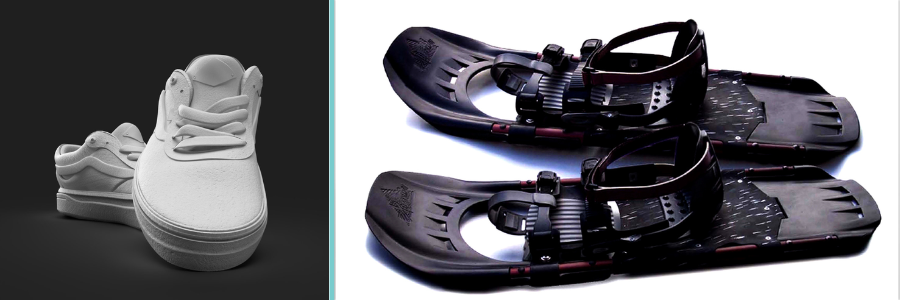
author avatar

MacKenzie Brown is the founder and CEO of Cad Crowd. With over 18 years of experience in launching and scaling platforms specializing in CAD services, product design, manufacturing, hardware, and software development, MacKenzie is a recognized authority in the engineering industry. Under his leadership, Cad Crowd serves esteemed clients like NASA, JPL, the U.S. Navy, and Fortune 500 companies, empowering innovators with access to high-quality design and engineering talent.

Connect with me: LinkedInXCad Crowd

Product-Centric vs. Customer-Centric: Which Is Best for Consumer Product Design Companies?


Picture yourself as a ship captain navigating a ship through the vast expanse of consumer product design services. Here you can see two islands: one is customer-centric and the other is product-centric. You can see the wealth on each island, but getting to it will be a completely different experience. Where would you like to dock then? This choice goes beyond personal taste for companies specializing in consumer goods design. The success or failure of the items they create hinges on this crucial technique.

Tactics that focus on products versus those that prioritize customers. Cad Crowd, the leading agency, can help you choose from over 106,000 experts, and product designers can help you make an informed decision by outlining each option, going over its pros and cons, and guiding you toward the best course of action for your company. These experts don’t simply help bring concepts to fruition; their help actually plays an imperative role in helping speed the overall product creation process along.


🚀 Table of contents


Establishing the backdrop: What does each strategy entail?

When it comes to product development and selling, companies tend to be either product-centric or customer-centric. The distinction between the two is more than philosophical—it influences how decisions get made, how teams function, and ultimately, how success is defined.

A product-centric approach is all about the product itself. Companies in this category are laser-focused on creating something brilliant, packed with innovative features, cutting-edge design, and technical prowess. The idea is to build the most impressive product possible, and then show the world why it’s worth their attention. In this setup, the product is the hero. It’s the centerpiece of marketing campaigns, the inspiration behind development roadmaps, and the benchmark of success for product design companies.

Now, compare that with a customer-focused mentality. This mindset turns the script on its head. Rather than inquiring, “What can our product do?” the question now is, “What does our customer need?” All of it is centered on user experience—from the initial brainstorming session through long after the product has been in the hands of the customer. Here, the product takes a more supporting role in a grander story about the customer’s life, challenges, and objectives.

Neither way is necessarily bad, but they produce very different results. Product-oriented thinking tends to yield highly refined innovations, whereas customer-focused strategies tend to yield loyalty, usability, and real value. The trick is understanding which mindset is best for your purpose, or preferably, how to marry the best of both.

product packaging design and electro-powered motor vehicle by Cad Crowd product engineering experts

RELATED: A comprehensive guide to engineering product development services for companies & startups

The product-centric charm: Crafting the masterpiece

The product-first philosophy originated deeply in engineering design services and innovation cultures. Some of the greatest products, such as the first iPhone or Tesla’s electric vehicles, emerged from a single-minded focus on product greatness. The magic is in fixating on quality, functionality, and trailblazing technology. Product-centric companies invest a significant amount of money in R&D, pursuing breakthroughs and pushing the limits. Their credo is “build it, and they will come.” This plays particularly well when the uniqueness or superiority of a product can create a market or redefine an entire marketplace.

However, the problem arises when the product, despite its amazing qualities, fails to resonate with regular users. Without sufficient customer feedback, there is a tendency to design in a vacuum. The outcome? Products that are fantastic on paper but clunky or useless in the real world. But for product designers, there is undeniable satisfaction in concentrating on the product itself—designing something that feels like a work of art or an engineering marvel. The ego satisfaction of extending the boundaries can be overwhelming.

Customer-centric focus: The heartbeat of design

Changing your focus from product to customer is about knowing people deeply. What troubles them at night? What small things do they tolerate on a daily basis? What dreams or aspirations might your product unleash?

Customer-focused organizations are masters of empathy. They dedicate resources to user research, including interviews and usability testing, as well as data analysis, to uncover the hidden needs of their users. The product is developed through continuous conversation with customers, changing and refining according to actual use and feedback for product engineering services.

This way builds loyalty and trust, as customers feel valued and heard. Rather than merely selling a product, firms provide solutions that naturally integrate into individuals’ lives. The reward? Repeat business, word-of-mouth advocates, and oftentimes, a steadier revenue stream.

But it’s not always easy. Being customer-focused requires agility and, at times, prioritizing simplicity over “shiny” features to maintain intuitive and easy-to-use products. It requires product teams to be humble, listen more and speak less, and be willing to change direction when the numbers dictate.

When product-centric wins the day

Envision a startup conceiving a revolutionary wearable health product. Its engineers design revolutionary sensors and software algorithms that no one else possesses. Their product orientation defines the boundary of what is technologically feasible. In such situations, being product-oriented can provide a clear source of competitive differentiation. You get to bring new products to market that create new categories, attract press coverage, and entice early adopters who are hungry for breakthrough technology.

Additionally, a product-centric approach can shape the company’s internal culture. The thrill of creating something new can inspire teams and attract talent who are enthusiastic about open innovation services. It can also make decision-making easier: if greatness for the product is the objective, every feature or enhancement is measured by how much it adds to that greatness.

RELATED: How to visualize consumer products using 3D rendering services for your company and firm

When customer-centric takes the crown

Compare that to a firm producing daily household appliances. Reliability, ease, and value are what customers demand. Preferences may vary regionally or by life situation. Customer-centricity is a strategic imperative here.

Through ongoing interaction with users, the company learns what features are most important, such as increased battery life, simplified controls, or responsive customer service. Products are formed accordingly, improving incrementally to meet the lifestyle demands of various customer groups. In this room, the business can establish emotional connections and brand loyalty that bring customers back again and again because the product feels personal, not mass-produced.

Bridging the gap: Is one better than the other?

This one tends to generate lively arguments. Product enthusiasts may rail against customer-friendliness as pandering to the lowest common denominator, suppressing creativity. Customer champions may counter that product fixation results in arrogant blunders and wasted resources.

But the reality is more complicated. Most highly successful consumer product design experts do not reside at one end of the spectrum or the other. Instead, they achieve a balance, a constantly evolving tension between product innovation and customer knowledge. Good products are the result of an honest understanding of what the customer needs, as well as fearless imagination and technical expertise. Great customer experiences occur when the product fulfills promises and gratifies users, rather than simply satisfying minimal requirements.

How to find your company’s best fit

Selecting your island relies on many variables:

  • Market type: Are you moving into an emerging market where innovation can drive demand? Product-centric may be your guiding star. Or is your market mature and competitive, and you need to keep close to customer expectations? Then, customer-centric may be your way station.
  • Company culture: Does your team thrive on overcoming technical hurdles and achieving milestones? Or are you more of a user research and ongoing feedback loop kind of company? Match what pumps your team up.
  • Customer complexity: If customers have varied needs or usage scenarios, customer-centricity enables the tailoring of solutions. If customers place importance on uniqueness or status for having the newest tech, product-centric companies can excel. Consider how design for assembly services can fit into the equation.
  • Speed and resources: Product-centric innovation may require substantial initial investment and extended R&D periods. Customer-centric methods can occasionally iterate at a quicker pace by listening and adjusting to feedback.

Combining both: The hybrid model

Why not take advantage of both? Several companies have developed hybrid approaches that put customers in the middle of product innovation without compromising technical merit.

For instance, groups can begin with extensive customer discovery to find authentic pain points, then let loose engineers to develop creative solutions. Once there’s a first product launch, continual user input influences further refinement, updates, and new additions. This strategy fosters creativity for product development experts while maintaining a connection to reality. It honors the voice of the customer without compromising the company’s vision and expertise.

product design of a perfume container and health device by Cad Crowd product experts

RELATED: How to reduce costs on 3D product development with remote CAD experts for companies

Real-world examples to inspire

Take Apple, for instance, which is frequently referred to as a product-focused company. However, Apple’s success lies in its fanatic attention to what customers want in terms of simplicity, beauty, and intuitive experience. Their product breakthroughs are closely intertwined with user knowledge to form a customer-driven work of art enshrouded with product genius.

Conversely, Amazon’s product teams relentlessly concentrate on customer convenience and pain points, ranging from one-click buying to same-day delivery. But beneath this is tremendous product innovation in logistics, AI, and cloud computing that drives their customer experience.

What consumer product design companies can learn

If you’re leading a consumer product design company, here’s the playful reality check: obsess over your product and obsess over your customers. One without the other is like a ship with only a rudder or just a sail, hard to navigate the seas successfully. Concept design services fuel innovation and differentiation. Customer design fuels relevance and loyalty. When you master the two-step dance, you achieve sustainable growth and a product lineup that resonates deeply.

Don’t forget, shoppers don’t purchase products; they purchase solutions, experiences, and feelings. Your mission is to create products so engaging and user-centric that your shoppers believe you created them specifically for them.

RELATED: The simple secret to unlocking new product innovation at design services companies

Cad Crowd is here to help?

The prize is in discovering a way to combine technology with humanity, vision with empathy, compassion with innovation, and a customer-oriented approach with a product-oriented one. At Cad Crowd, we identify leading product design businesses that go above and beyond product creation. They create memorable experiences that clients adore. A free quote is available when you contact us today.

author avatar

MacKenzie Brown is the founder and CEO of Cad Crowd. With over 18 years of experience in launching and scaling platforms specializing in CAD services, product design, manufacturing, hardware, and software development, MacKenzie is a recognized authority in the engineering industry. Under his leadership, Cad Crowd serves esteemed clients like NASA, JPL, the U.S. Navy, and Fortune 500 companies, empowering innovators with access to high-quality design and engineering talent.

Connect with me: LinkedInXCad Crowd

How to Reduce Costs on 3D Product Development with Remote CAD Experts for Companies


In order to stay competitive in today’s market, businesses are always seeking ways to reduce expenses and increase production speed. One affordable approach is to use freelancing websites to discover CAD professionals who can work remotely. By contracting out 3D product design, businesses may potentially cut costs on salaries, software licensing, and employee training. In addition to tapping into global expertise, they may tailor their resource allocation to match the unique requirements of each project.

Cutting expenses without sacrificing quality is becoming more of a need as competition in product development heats up. Having in-house skills, particularly for specialized fields like 3D and CAD modeling, may be rather costly. Companies now have a state-of-the-art option for outsourcing the employment of remote CAD professionals thanks to the proliferation of dispersed work, even as freelance platforms continue to grow in popularity. You may acquire the results you need without breaking the bank by utilizing their services instead of recruiting full-time employees or big corporations.

Cad Crowd is an excellent platform that can put you in touch with freelance professionals in 3D product design and CAD solutions. It is also one of the most reliable and easy-to-use websites for locating reliable freelance CAD experts. Their product development processes may be streamlined, and they can save a ton of money with the help of remote CAD experts. This article takes a look at several tried-and-true ways for cutting costs when working with remote CAD specialists, and how platforms like Cad Crowd may be an integral part of your strategy.


🚀 Table of contents


Understanding the need for cost reduction in 3D product development

Before discussing the strategies, let’s understand why cost-saving during 3D product development is important. Conventional product development costs can be high, especially for organizations involved in areas such as consumer electronics, automobiles, or furniture design, where design intricacy is high and product development time windows are short.

Traditional in-house development challenges

  • Salaries and benefits: Paying the entire CAD staff on a full-time basis has fixed benefits, salaries, and long-term liabilities for product design companies. These turn out to be extremely expensive for organizations that need expert talent for a short term or just a single project.
  • Training and maintenance: CAD software is continually updated. To accommodate this, in-house personnel require regular training, which is both expensive and time-consuming.
  • Overhead costs: Maintaining an in-house team incurs significant costs, including office space, machinery, software licenses, and other administrative expenses. These costs are compounded in those firms that have large, full-time design teams.

By utilizing remote CAD experts, these firms can eliminate these problems and have a less costly alternative to 3D product development.

Product design of camera lenses and wireless phone charger by Cad Crowd product development designers

RELATED: A guide to electronic product design for manufacturing with PCB design firms & engineers

Cost-saving strategies utilizing remote CAD experts

In today’s rapidly evolving and competitive corporate world, businesses are constantly seeking cost-reduction methods without compromising on output quality. One area where this holds true is in product development for businesses that are CAD-intensive. Utilizing remote CAD experts has tremendous potential for cost savings and improved project outcomes. By utilizing the services of freelance websites and remote working, companies can access superior talent without incurring the costs associated with traditional recruiting. The following are some methods that companies can use to reduce costs by hiring remote CAD experts.

Utilize freelance websites as a pool of global talent

The most effective method of reducing the cost of product development is by utilizing freelance platforms like Cad Crowd. The websites fill the gap between companies and a worldwide community of specialists to whom they might outsource and assign work on their projects. Through these locations, companies can hire 3D CAD design services of various skill levels and experience, and thereby have the option to select experts whose certification precisely matches the project requirements. This reluctance to flexibility reduces the dangers of unnecessary fixed costs of staff.

  • Expertise in reserve: Rather than employing generalists, companies can have the appropriate CAD professionals with the proper skills for every phase of the project in reserve. To perform tasks such as prototyping, high-level design, or testing, the appropriate specialist can be employed.
  • Pay-as-you-go model: Freelancers are compensated on a project-by-project basis, allowing the company to scale up or down resources based on project demands. It is much less expensive than paying an employee’s full-time salary, which might not be required in the long term.
  • World talent pool: Freelance platforms provide the opportunity to hire experts from around the world. Most often, experts from countries with lower living costs can offer competitive prices without compromising quality.

By accessing this large pool of talent worldwide, companies can be confident they are obtaining the maximum value for the exact skills they require. By doing so, they can cut costs without sacrificing quality.

Streamline project scopes and timelines

One benefit of employing remote CAD professionals is that resources can be quickly scaled to meet the precise requirements of a given project. A remote specialist works on specific steps in a product development cycle, thus avoiding wasteful costs for consumer product design companies. For instance, a firm may need the services of a CAD professional during the conceptual design or prototyping stage, but not for the entire process.

How to make the most out of scopes?

  • Split projects into stages: Breaking the whole product development process into phases, such as creating ideas, elaborately designing, and prototyping, enables companies to hire freelancers to outsource easily for the specific phases where they are needed.
  • Specify specific project milestones: Clearly defined project milestones for all stages enable distant CAD professionals to work in unison and deliver results on time, eliminating opportunities for delays that can lead to additional costs.
  • Limit project scope: Avoid broadening the project scope. Once firms accomplish what needs to be done to push the product ahead, they can acquire laborers specifically for such projects and avoid unnecessary expenses.

The remote work nature enables businesses to take a project-based approach, where they only pay for the work that must be done, without over-scaling resources.

Minimize software and equipment costs

CAD hardware and software may be quite costly, especially when purchasing licenses and hosting software for an in-house staff. Remote CAD professionals typically own their own subscription for commercial software such as AutoCAD, SolidWorks, or Rhino. Thus, product engineering companies don’t need to make regular payments for software subscriptions and hardware upgrades, which could be extremely costly in the long run.

Benefits of freelancers’ tools

  • Software license costs saved: Freelancers have their own licenses for software, and thus, companies are able to save on the exorbitant initial expenditure of purchasing and maintaining licenses for costly CAD software.
  • Upgraded tools: Freelance CAD professionals are generally keen to update their tools to the latest versions, enabling them to utilize the best available tools for creating high-quality designs.
  • Tailor Your Skills: The majority of freelancers choose tools based on their working style. Therefore, companies are working with individuals who can provide the majority of the productivity through tools they are familiar with and have mastered. Even some freelancers utilize open-source CAD packages or specialty equipment to reduce costs. Enjoying the benefit of it, companies can cut even more from their equipment and software expenses.

RELATED: How 3D CAD modeling is transforming design and manufacturing industries at design companies

Reduce overhead with remote work infrastructure

One of the most significant benefits of outsourcing remote CAD experts is avoiding the overheads associated with maintaining an office setup. With remote work, organizations can avoid the expense of expensive real estate, office space, and office supplies. Remote work also enables organizations to recruit specialists from regions with lower living expenses, allowing them to hire top professionals without incurring a premium.

3D product rendering of an advanced scout and vital tracker and a gaming mouse

Points of relevance for cost minimization

  • No office space: Freelance CAD engineers work from their respective locations, thus avoiding the expense of office space, utility bills, and office equipment, which are very high recurring expenses.
  • Lower administrative costs: Working remotely means companies do not need to bear costs on HR personnel, office management, and physical equipment. This results in lean operations with less overhead expense.
  • Lower-cost-of-living locations: Remote employment enables your company to hire CAD professionals outside your home country. This represents a savings in labor costs without compromising quality and expertise.

The ability to hire anywhere provides companies with the flexibility to strategically reduce operating expenses, enabling them to offer competitive pricing without compromising on design quality.

Take advantage of collaboration and communication tools

Advances in project management software and virtual communications technology have enabled remote work to be easier and more efficient than ever. Ease of collaboration despite different time zones is facilitated by tools like Slack, Zoom, Trello, and Google Drive, which ensure instant communication, feedback, and file exchange. Proper utilization of these instruments ensures that companies can ensure their remote workers are collaborating effectively, thereby providing faster project timelines and lower costs for design engineering companies.

Proper utilization of tools

  • Slack and Zoom: Communication and regular check-ins are easy with these tools, keeping remote CAD experts on the same page with objectives and project timelines.
  • Trello and Asana: Project management applications keep projects well-organized, tasks assigned with clarity, and deadlines respected, without unnecessary delays or misunderstandings.
  • Version control and file sharing: Cloud programs like Google Drive, Dropbox, and GitHub provide a straightforward method for storing, sharing, and versioning project files. Such programs have the capacity to monitor changes and recover the most recent version of a project at any time.

By utilizing these collaboration and communication tools effectively, businesses can enhance productivity and minimize time wastage due to delays, making the remote working process more cost-effective and efficient.

Take advantage of expertise with minimum commitment

One of the greatest advantages of using web-based services such as Cad Crowd is that organizations are able to tap into the services of experts without necessarily committing to having long-term in-house staff. This kind of flexibility in human resources enables organizations to hire the services of 3D product design experts for short-term projects or specific endeavors without committing to full-time employment.

Benefits to organizations

  • Flexibility: Businesses can hire freelancers on a project-by-project basis, tailored to the level of work and specific needs. This maintains the expenses associated with a full-time in-house team at a minimum.
  • On-demand talent: Offsite CAD professionals have high levels of experience and specialisation, so businesses can tap into the talent they need without losing time to conduct lengthy recruitment processes.
  • Cost predictability: With freelancers, businesses have a clear upfront cost because they are only paying for the work that has been completed. This eliminates the need to budget for employees’ wages, benefits, or other long-term costs.

This flexibility is particularly useful for companies with project requirements that vary or require specialized skill sets on an ad-hoc basis. The capability of accessing remote specialists on an ad-hoc basis enables the company to pay for what they consume, with variable costs kept to a minimum and in check.

Having CAD professionals at their disposal remotely provides companies with multiple options to reduce their payments without compromising the quality of the design. By utilizing freelance sites, reducing project scope, minimizing software and equipment costs, reducing overhead, and leveraging collaboration tools, businesses can achieve significant savings.

Secondly, having the ability to hire on-demand talent also enables businesses to remain flexible through open innovation services and not make long-term commitments, which remote working makes all the more appealing in today’s competitive age. By embracing these tactics, businesses can streamline operations, reduce costs, and access the best talent at every stage of product development.

RELATED: 10 design principles for product development & industrial design services teams

Why Cad Crowd is the best tool for reducing costs in 3D product development

In 3D product design, it is not always quite so easy to balance quality and cost. Cad Crowd is very convenient in such situations, as it is the first port of call for companies that want to cut costs without sacrificing quality. Cad Crowd provides companies with access to a worldwide pool of highly skilled freelance CAD experts, making it easy to find the best skill set for the task at hand.

Most valuable, perhaps of all, is the pre-screened talent pool of Cad Crowd. Every freelancer on the platform is thoroughly screened and assessed to ensure they possess the proper qualifications and experience required to complete the job. This cuts down on the time wasted by businesses poring over dozens of resumes or portfolios—Cad Crowd has done the legwork for you, so it is easier to find the correct person to do the job in front of you. If you need help from seasoned 3D modeling experts, prototypers, or design-for-manufacturing experts, Cad Crowd can provide that assistance.

The second reason businesses employ Cad Crowd is that it provides an affordable price option. With worldwide access to top talent, companies can recruit exceptional candidates at a lower cost than they can through local hiring or traditional recruitment agencies. This makes businesses accessible because they receive high-quality work, which is crucial in today’s economy.

Cad Crowd also offers convenience in collaboration. The website features built-in communication, file transfer, and project management facilities, enabling companies and freelancers to collaborate seamlessly. Such an effective process not only saves time but also reduces the risk of delays, ensuring the project remains on track and within budget.

In brief, whether you need an expert for one job or long-term cooperation, Cad Crowd makes it possible to get the best CAD expert to fulfill your requirement easily and save money and gain more.

Product design of an electric cigarette and wicker chair

RELATED: How much does NPD cost? Rates & pricing for services at top design companies

Conclusion

Reducing the cost of 3D product rendering and design services is not a matter of compromise; it is a question of creative financial management and leveraging the benefits of the flexibility and expertise offered by independent specialists. With the types of services that exist, such as Cad Crowd, companies can now access the best CAD brains at an affordable price, which is often too costly with the in-house option.

Either by utilizing flexible staffing, efficient software, or by being able to ramp up resources independently, remote CAD professionals offer a cost-effective solution for companies to stay competitive in this fast-paced economy.

With the right strategies in place, such as best-practice project scoping, the smart application of collaboration tools, and the controlled deployment of freelance resources, companies can save a significant amount of money without sacrificing the quality and operational efficiency required to successfully deliver 3D product design.

Cad Crowd is here to help

Collaboration with technologies such as CadCrowd exposes firms to the best freelance CAD engineers and designers in the market, who offer sector-specialized expertise and customized solutions. Whether you’re a new start-up that must get a new product out to market quickly or an established company looking to streamline your design process, working with experienced professionals ensures you receive high-quality work at a small fraction of what it would cost to have in-house personnel on the payroll.

For more information on how Cad Crowd can assist with your 3D product design and to receive a personalized quote, contact our dedicated experts who are committed to making your dreams a reality. Get your free quote today!

author avatar

MacKenzie Brown is the founder and CEO of Cad Crowd. With over 18 years of experience in launching and scaling platforms specializing in CAD services, product design, manufacturing, hardware, and software development, MacKenzie is a recognized authority in the engineering industry. Under his leadership, Cad Crowd serves esteemed clients like NASA, JPL, the U.S. Navy, and Fortune 500 companies, empowering innovators with access to high-quality design and engineering talent.

Connect with me: LinkedInXCad Crowd

Top 50 SolidWorks Design Companies for 3D Modeling, CAD Services & Engineering in the US


3D modeling design services and CAD engineering have their giants, and when you’re talking about achieving mastery in SolidWorks design, the United States has no shortage of extraordinary companies delivering exquisite digital designs, precision-forged components, and revolutionary product solutions. But when there are hundreds of companies out there saying they’re specialists in SolidWorks, how do you distinguish the experts from the pretenders?

Well, you’re in the right place. We’ve set out on a cross-country search for the crème de la crème of the CAD world. Whether you’re a startup founder with a prototype to build yesterday or a Fortune 500 corporation shopping around for a reliable design partner, this list is your definitive guide to 3D modeling excellence. So strap in and don your digital calipers, let’s take a tour of the top 50 SolidWorks design firms in America!


🚀 Table of contents


Cad Crowd (Nationwide)

Cadcrowd

The undisputed community hub for freelance design wizards? That would be Cad Crowd. This is where companies, from nimble startups to global giants, team up with vetted SolidWorks designers and engineers. Need rapid prototyping design services? No problem. Tackling a complex industrial system? Covered.

Whether you’re designing a game-changer product or perfecting the ergonomics of your next wearable, Cad Crowd matches you with the expertise needed to turn your idea into reality. Their designers don’t simply model in 3D; they turn ideas into reality with precision and panache. If innovation is your forte, Cad Crowd is where the magic takes place, one great design at a time.

https://www.cadcrowd.com

TriMech (Nationwide)

trimech group logo

TriMech is the one teaching everyone else how to become a master. With a reputation that goes back decades, this CAD force to be reckoned with provides a whole lot more than software instruction. They provide top-level engineering, automation, and design solutions customized for a variety of industries.

From aerospace breakthroughs to common consumer items, TriMech’s staff has collaborated with clients from all sectors. Their capabilities span the country, supported by a deep bench of professionals who understand what it takes to make complex projects a reality. No surprise they are a go-to resource for business leaders driving the edges of design.

https://trimech.com

Fikst (Massachusetts)

fikst product evelopment logo

Boston’s innovation ecosystem would not be as robust as it is without top-shelf engineering companies like Fikst. Reputed for having a keen eye towards product development, they specialize in producing high-precision medical equipment and advanced lab automation systems. With SolidWorks as their mainstay tool, Fikst converts intricate concepts into working, testable prototypes meeting the highest standards.

For businesses battling FDA approval, their technical rigor and design skills are precious. Fikst produces solutions that meet strict regulatory requirements for compliance. If your next innovation must pass the toughest critics, Fikst has the expertise and ability to help you achieve your goals

https://fikst.com

StudioRed (California)

studiored logo

Out here in sunny Silicon Valley, StudioRed is creating waves by combining industrial design sophistication with hardcore mechanical engineering expertise. This isn’t your typical design company; these are the visionary creatives behind award-winning enclosures and streamlined, user-focused products that achieve a perfect harmony between function and form.

Their designs not only look great, but they feel right and function seamlessly. Marketing groups adore them because their modeling makes products come alive in a manner that sells the concept right away. Behind the scenes, SolidWorks is their top tool, driving concept to creation. With StudioRed, innovation is foundational.

https://www.studiored.com/

M3 Design (Texas)

m3 logo

Located in the eclectic city of Austin, M3 Design combines sophisticated engineering with purpose-designed products to design products that capture attention. Their skilled designers excel at taking early-stage, rough ideas and refining them into high-performance, sleek solutions. They don’t simply make products, they design experiences.

Armed with SolidWorks design services as their go-to solution, they combine precision and creativity with each design. This commitment to both function and form has led to Red Dot Awards and put their designs at the forefront in competitive markets. For customers wanting innovative results that are as great to look at as they are to perform, M3 Design delivers consistently in style, substance, and engineering mastery.

https://www.m3design.com/

Pivot International (Kansas)

pivot international logo

Global expertise blends with Midwestern hospitality at Pivot International, where innovation is complemented by ease of use. This one-stop powerhouse does it all, from product design and prototyping to large-scale manufacturing, simplifying the entire development process under one roof.

What makes them special? Their smooth marriage of SolidWorks modeling with real-world supply chain knowledge. That translates to your ideas not languishing on the drawing board, but advancing productively and cost-effectively. Whether it’s releasing a new consumer device or ramping up production on a medical device, Pivot’s seasoned team applies high-tech accuracy along with a human touch. It’s intelligent design, clever execution, and service you can actually speak with.

https://www.pivotint.com/

IPS (Integrated Product Solutions) (Illinois)

IPS logo

From CAD modeling to large-scale manufacturing design services, IPS is a trusted partner for businesses in need of reliable engineering solutions. Their staff provides accuracy and innovation at each stage, moving ideas smoothly from design through production. SolidWorks is a central part of their process, particularly in the industrial and automation markets where functionality and accuracy are crucial.

With the powerful tool, IPS develops intelligent, efficient designs that fulfill the special requirements of today’s engineering. Whether it’s enhancing a prototype or informing long-term manufacturing, IPS applies technical knowledge and pragmatism to enable companies to achieve exceptional outcomes.

https://ips.live

RELATED: A guide to electronic product design for manufacturing with PCB design firms & engineers

Intelligent Product Solutions (New York)

IPS logo 2

At IPS, the coming together of mechanical engineers, industrial designers, and software coders produces product innovation that’s as sophisticated as a Michelin-starred meal. This group doesn’t merely design, they build, intertwining technology and product engineering into smooth solutions that transform mundane experiences.

From cutting-edge medical equipment to intelligent consumer and IoT devices, IPS breaks limits with precision and imagination. Their go-to software? SolidWorks. It’s the virtual canvas where imaginations are born, evolve, and become tangible. Whether it’s enhancing lives with healthcare technology or injecting intelligence into home appliances, IPS provides engineering excellence with flair that’s almost gastronomic in its attention to detail and delicacy.

https://www.intelligentproduct.solutions/

Mindtribe (California)

Mindtribe logo

Based in San Francisco and now part of Accenture, this innovative firm has become a driving force behind many of today’s most exciting hardware startups. Their team brings bold ideas to life, working on everything from smart connected devices to complex electromechanical systems.

With a deep understanding of the product design and development services, they rely heavily on SolidWorks, one of the industry’s most trusted tools for 3D design and engineering. It’s this blend of technical acumen and innovative energy that makes them stay ahead of the times. Their work continues to build the future of hardware in both intelligent and practical ways.

Engenious Design (Kansas)

Engenious Design logo

Engenious Design is a medtech innovation specialist, but their process extends well beyond mere product development. They design solutions with a purpose: to enhance and secure human life. Each detail counts, and that’s why SolidWorks lies at the heart of their design.

From complex mechanical assemblies to tough, user-friendly enclosures, everything they do is based on precision. They even make verification-grade prototypes that are up to the strict standards of medical regulations, maintaining safety and performance from day one. Engenious Design isn’t only constructing devices, they’re defining the healthcare future with each design, prototype, and build they craft.

https://www.engeniousdesigns.com/

Hatch Duo (California)

hatchduo logo

Hatch Duo is a Bay Area design and engineering boutique with a reputation for fusing sleek industrial looks with genuine mechanical function in the real world. Their designs always turn heads at product launches, owing in great part to the firm’s expertise in SolidWorks modeling.

The software is more than just a utility to them; it’s their creative vocabulary. Though they work across a broad spectrum of industries, Hatch Duo is particularly excited about robotics and consumer electronics design services. Their creative, attention-grabbing designs show that good design is not only about aesthetics, it’s about innovation for the long haul.

https://www.hatchduo.com

Synectic Product Development (Connecticut)

synectic product development logo

Synectic is unique in the field of product design by focusing on one essential area: medical product development. With decades of practical experience, their staff has learned the accuracy and dependability the healthcare sector requires. What really distinguishes them is their flawless application of SolidWorks.

From initial concept drawings to finished injection-molded components, each aspect is meticulously crafted with this formidable CAD software. Their approach isn’t merely about design; it’s about providing life-saving functionality with assurance. For businesses in search of reliable partners in medical innovation, Synectic delivers both know-how and keen execution.

https://synectic.net/

Goddard Inc. (Massachusetts)

goddar product development logo

At Goddard, engineering doesn’t merely mean precision; it means designing products that actually function in the real world. From surgical robots to wearable health monitors, the engineers marry extensive technical knowledge with an emphasis on usability and human-factors design. Armed with powerful software such as SolidWorks, they attack challenging mechanical problems without compromising elegance or efficiency.

Each product is engineered with a purpose, so it will work perfectly in all-day conditions while also being sleek and stylish. The outcome? Products that not only pass rigorous engineering requirements but also make a difference in people’s lives. That’s the sweet spot where innovation, functionality, and design meet in perfect harmony.

https://www.goddardtech.com

Blue Dolphin Engineering (California)

blue dolphin logo

Blue Dolphin is a trusted design for manufacturability services for mid-sized businesses and fast-moving startups who want to get their product concepts off the ground. This company specializes in designing functional, manufacturable designs that function in the real world, not only on paper. Their strengths in mechanical design, stress analysis, and simulation enable customers to transition from concept to production with confidence.

Each detail is meticulously engineered with SolidWorks at the core of the process. Whether you’re perfecting a mature prototype or creating something from the ground up, Blue Dolphin brings the type of intelligent, solid engineering that keeps the momentum going. No surprise they’ve established such a solid reputation.

https://bluedolphinengineering.com/

Simplexity Product Development (Washington & California)

Simplexity Product Development logo

Simplexity has earned a loyal following among those who value electromechanical genius. Whether it’s crafting sophisticated automation systems, life-saving medical equipment, or stylish consumer electronics, this team lives for unscrambling tough engineering brain teasers. Their specialty? Anything that moves, blinks, or whirs. From concept to manufacturing, they infuse motion and intelligence into products that people touch every day.

What holds it all together is their go-to design software: SolidWorks. Similar to a Swiss Army knife in the hands of masters, SolidWorks allows its engineers to conceive, hone, and fine-tune each mechanism with accuracy. At Simplexity, innovation and motion come together, and the outcome is far from the norm.

https://www.simplexitypd.com/

Zewski Corporation (Michigan)

Zewski Corporation logo

Zewski Corp has been a well-respected name in the automotive and mobility markets for many years, with a reputation for designing high-performance components and sophisticated mechanical assemblies. Their effort is more than mere fabrication; it includes precision, durability, and defying limits on what cars can do.

From SolidWorks’ early days, Zewski Corp saw its potential and integrated it into the very fabric of their design process. They’ve utilized the software over the years to turn innovative concepts into reality, maximize performance, and maximize production. That commitment to quality and consistency, supported by the strength of SolidWorks, is what keeps their reputation as a design engineering firm strong.

https://www.zewskicorp.com/

SGW Designworks (Idaho)

sgw logo

SGW Designworks is the type of flexible team that feeds off a challenge, particularly when it is designing rugged, outdoors-ready products. For the military or the industrial world, they’ve proven themselves capable of offering rugged solutions, garnering them serious credibility in both arenas. Their secret sauce? SolidWorks.

This high-powered program is the key to how they rapidly prototype and iterate through designs, ensuring all is constructed to survive the real world. From conception to field testing, their system is streamlined, accurate, and reliable. When durability and speed are most critical, SGW Designworks knows how to make it happen—and make it happen right.

https://www.sgwdesignworks.com

Bresslergroup (Pennsylvania)

Bresslergroup logo

An East Coast design institution, Bresslergroup, where bold innovation and serious engineering come together. Their product design experts aren’t just doodling concepts; they’re developing product breakthroughs and then getting down to business to build them. From stylish smart home gadgets to cutting-edge biometric scanners, Bresslergroup’s portfolio is filled with contemporary solutions that feel ahead of the game by one step.

It begins with SolidWorks, the CAD software that gives their ideas life with accuracy. The team’s capacity to transition effortlessly from concept to prototype has established them as a go-to name for the industrial design community. Where design must do more, Bresslergroup is already doing it.

https://www.delve.com

D&K Engineering (California)

DK Engineering logo

This San Diego giant excels in the business of full-stack product development, turning groundbreaking ideas into reality in the areas of healthcare, printing, and consumer markets. With dozens of successful high-tech product launches to their credit, the team has established a reputation for resolving complicated issues with precision and creativity.

The firm’s mechanical engineering experts rely predominantly on SolidWorks, employing it for everything from initial feasibility studies to comprehensive DFM (design for manufacturing) processes. Clients engage their hands-on expertise and technical know-how to convert concepts into production-ready designs. Whether it’s developing prototypes or perfecting designs for high-volume manufacturing, this team delivers at each step.

https://www.dkengineering.com

RELATED: Best 50+ product design companies & new prototype development services firms in the US

Product Creation Studio (Washington)

product creation studio logo

Product Creation Studio is a Seattle-based design company renowned for turning creative ideas into concrete, high-performance products. Focused on medtech and wellness devices, this team doesn’t merely draw ideas out; they produce reality. With razor-sharp attention to functionality and user interface, they design every product to feel intuitive and work faultlessly.

Their go-to software? SolidWorks. It’s the virtual backbone supporting their precision-based process, allowing them to craft complex mechanisms and intuitive user interfaces. From rough sketches to fully formed manufacturing-ready models, Product Creation Studio takes the leap between creative vision and mechanical realization, setting the bar high for innovation in healthcare and wellness product design.

https://www.productcreationstudio.com

BlackHägen Design (Florida)

Blackhagen design logo

BlackHägen Design is unique within the medtech and medical device services due to its intense emphasis on human factors and usability engineering. Each product they develop is not only functional but also designed specifically for actual humans with actual needs. Their staff is expert at creating devices that are intuitive, comfortable, and safe to operate.

Behind the scenes, they depend on accurate SolidWorks workflows that couple technical performance with ergonomic design. Whether it’s ensuring a device fits naturally in the human hand or meeting rigorous FDA requirements, BlackHägen’s approach is as practical as it is innovative. It’s thoughtful engineering with the end-user always in mind.

https://www.blackhagendesign.com

Nectar Product Development (California)

Nectar Product Development logo

Nectar is where engineering precision meets that laid-back Southern California vibe, and the result is nothing short of exceptional. This high-energy design house has built a portfolio reputation for designing award-winning products that balance innovation and practicality flawlessly.

Whether collaborating with nimble startups or iconic global brands, Nectar produces solutions based on serious SolidWorks know-how. From complex surfacing to solid mechanical engineering and manufacturability-driven design (DFM), the staff knows how to make ideas a reality. It’s not only about making things look great, it’s about making them function gorgeously too, with that unmistakable SoCal creativity zing.

https://nectarpd.com/

Mako Design + Invent (Texas)

Mako Design + Invent logo

Ideal for small businesses and inventors, Mako is your one-stop destination for bringing big ideas into tangible, shelf-life products. Napkin sketch of an idea? Don’t worry. Mako’s skilled CAD design team understands just how to bring raw ideas into polished, production-ready models. They use expert software such as SolidWorks to bring your ideas to reality, with all the details ready to go into production.

From your initial brainstorming through final prototype design engineering services, Mako takes you through every step of product development. It’s an effortless process designed for innovators who wish to watch their ideas go from spark to store without the customary stress or confusion.

https://www.makodesign.com/

Concept Design Group (Colorado)

Concept Design Group logo

For ruggedized industrial equipment and streamlined, heavy-duty mechanical enclosures, Concept Design Group is a premier designer in the Rockies. This group understands how to design an idea and move it all the way through to production so that it is effortless for their customers. With the use of SolidWorks, they create both aesthetic and functional accuracy.

If it’s a rugged tool designed for durability in harsh conditions or a crisp enclosure crafted for technical functionality, their products deliver. Concept Design Group combines technical expertise with a practical approach, ensuring that all designs meet the practical needs of today’s industries.

https://cdgrco.com

Evolve Design Solutions (Ohio)

Evolve Design Solutions logo

Hidden away but talent-packed, this compact design house packs more than a punch in consumer and industrial product design. Its strength is in marrying creative thinking with technical expertise, particularly in plastics and ergonomic casing. Whatever it is, be it a compact handheld gadget or a sophisticated mechanical device, every aspect is carefully designed.

They live by ingenious mechanical solutions that not only are aesthetically pleasing but also work perfectly. They use the whole process on SolidWorks, enabling them to make accurate 3D designs and quick iterations. With years of industry experience, they provide intelligent, manufacturable designs that meet and then surpass expectations without the expense of a big company.

https://www.evolve-designsolutions.com/

Flomio Inc. (Florida)

flomio logo

Flomio exists to make technology smarter and more seamless. As IoT and RFID-based product experts, they provide end-to-end solutions that bridge the physical and digital worlds. From simplifying access control to asset tracking, their innovations make interactions more efficient every day. One important aspect of their workflow? SolidWorks.

This mighty design software enables Flomio to transform complex tech into slim, portable devices that can fit comfortably in your pocket. It’s not just one service—it’s style, functionality, and user experience. Fusing sophisticated design tools with intelligent technology, Flomio develops products that are as easy to use as they are stunning.

https://flomio.com

Realize Design (Utah)

realize structural engineering logo

This agile team specializes in creating sharp, cutting-edge products, particularly for wearables and electronics. Their product is a mesh of creativity and technicality, and it is evident in each detail they deliver. With the renewed enthusiasm of a startup, they approach every project with passion and flexibility, and this makes them popular among businesses that want innovative solutions.

SolidWorks is their trusty tool for taking ideas and making them workable designs, allowing them to glide smoothly from concept to confirmation. Their method is quick, focused, and driven by a passion for bleeding-edge technology. It is this combination of innovation and enthusiasm that differentiates them in the product development space.

https://www.realize.design

Arcus Technology (California)

Arcus Technology logo

Arcus Technology excels in the realm of motion control systems and automation due to its masterful application of SolidWorks to model precision linear actuators and robotic parts. Their engineers don’t merely design, they hand-craft every component with painstaking attention to detail. This level of attention to detail guarantees every system operates dependably even under the most challenging conditions.

Known for their reliable solutions, Arcus’ SolidWorks engineers always provide high-performance motion control components. Through concept to completion, their utilization of advanced CAD software such as SolidWorks ensures consistency, accuracy, and efficiency. It’s this commitment that makes Arcus a name of confidence in automation.

https://arcus-technology.com/

Boyce Design & Contracting (Georgia)

boyce design contracting logo

Even the most opulent environments need precision, and that’s where SolidWorks is needed. Boyce is not a design company; they marry architecture with product design to create bespoke installations that stretch the limits of creativity and practicality. From complex lighting systems to bespoke moving walls or concealed mechanisms, their installations require the level of detail only high-level modeling can provide.

With ultra-high-end residences, each piece has to fit perfectly both visually and mechanically. SolidWorks allows Boyce to visualize and simulate complex systems long before construction begins, ensuring nothing is left to chance. Because in luxury design, perfection isn’t optional, it’s expected.

https://www.boycedesign.com/

Crossfire Group Design Engineering (Michigan)

Crossfire Group Design Engineering logo

Crossfire is a trusted design engineering team rooted in the heart of the Midwest, where automotive and manufacturing innovation thrive. With an emphasis on mechanical assemblies, tooling, and part development, they bring serious expertise to each project. Their engineers work exclusively in SolidWorks, providing precision and quick turnaround that perfectly match the fast-paced needs of today’s industry.

From creating intricate mechanical systems to tweaking a single component, Crossfire provides practical, effective solutions supported by extensive experience. SolidWorks engineering firms throughout the region rely on them due to their dependability, technical knowledge, and capability to translate ideas into high-performance mechanical realities.

https://www.xfiregroup.com/

RELATED: 10 design principles for product development & industrial design services teams

Sprout Studios (Massachusetts)

sprout logo

Sprout is a branding and product design company that’s famous for its clean style and commitment to user experience. Their team has the ability to make drastic industrial ideas turn into real-world products, combining creativity with accuracy. A central component of that process is SolidWorks, the robust CAD software they trust to turn ideas into production-ready focus.

With SolidWorks, they refine each curve and angle, ensuring the end product isn’t only stunning but also functional and production-ready. Sprout’s methodology combines innovation with engineering, delivering a client product that’s sleek-looking, flows smoothly, and bests the competition in the marketplace both for form and function.

https://sprout.cc/

Forma Medical Device Design (California)

forma medical logo

Forma is a surgical instrument and medical device specialist, and they don’t merely design equipment; each product is beautifully, simply designed to perform perfectly for both patients and clinicians. From the ergonomic handle on an instrument to the satisfying snap of a well-designed latch, every detail counts.

Behind the scenes, they model every curve using SolidWorks with great precision to ensure that the final product does exactly what it is supposed to do in actual medical use. Forma’s strategy combines extensive industry expertise with intelligent design and technical expertise to deliver instruments that not only work perfectly but feel good in the hands of those who depend on them.

https://www.formamedical.com/

Left Field Labs (California)

left field labs logo

Left Field Labs is where wild ideas meet real-world engineering. They blur the lines between design, interaction, and hardware to create experiences that feel like they’re from the future. Working with some of the biggest names in tech, this inventive team doesn’t shy away from pushing limits for open innovation services. Their projects often look experimental, but they’re grounded in solid feasibility.

That’s where SolidWorks comes in. The company employs it to test drive intelligent mechanisms and make sure designs are sound before they reach the physical realm. Whether it’s an ambitious new interface or an interactive exhibit, Left Field Labs brings imagination into reality with accuracy and panache.

https://www.leftfieldlabs.com

Kickr Design (Georgia)

kickr design logo

This Atlanta-based company is all about transforming audacious ideas into products that exist in the physical world. Whether consumer electronics, stylish car accessories, or the newest wearables, they’re heavily invested right from the beginning. With their strong proficiency in SolidWorks, they translate early-stage ideas into reality with precision and ingenuity.

They love brainstorming time—when ideas are unpolished and options are limitless. Working with them means receiving a collaborator who’s got innovation ingrained in them and isn’t hesitant to venture into the unknown. For whoever wants to build the next big thing, this team combines vision and technical muscle.

https://www.kickrdesign.com/

Speck Design (California)

Speck Design logo

Where design and technology meet, Speck is reimagining innovation into shape. This innovative company easily converges product development, brand narrative, and digital experience into memorable, user-driven solutions. From stylish AR glasses to advanced IoT hubs, their portfolio is a testament—every product meticulously designed with intent and exactness. Speck’s go-to? SolidWorks design engineers.

The robust CAD program is the spark for their imagination and the key that makes intricate concepts come together with breathtaking precision. It’s this command over form and function that enables them to release award-winning products that not only work perfectly but make a lasting impact in the rapidly moving tech world today.

https://www.speckdesign.com

Motivo Engineering (California)

motivo logo

Motivo Engineering is not just any design firm; it’s where performance and raw engineering artistry collide. For motorsports, aerospace, and other high-performance markets, Motivo takes innovative ideas and converts them into functional reality. With SolidWorks, they turn radical mechanical concepts into precision-crafted machines.

Their designs aren’t merely quick, they’re intelligent, efficient, and fanatically engineered right down to the last detail. From sketchy ideas on paper to real-world prototypes, Motivo’s team takes the limits of what’s possible and shatters them. It’s innovation at full speed, fueled by a love of speed, technology, and translating the most outrageous ideas into high-performance reality. Buckle up, business is afoot.

https://www.motivo.com/

Priority Designs (Ohio)

Priority Designs

This best-in-class product development company has a stellar resume, having developed everything from revolutionary Nike equipment to precision surgical tools. Their experience cuts across industries, and it reflects in the richness of their capabilities. What truly differentiates them is their vast library of SolidWorks—a repository based on decades of design victories and engineering triumphs.

It’s not a set of files; it’s a honed toolkit forged over years of cracking tough design problems. Whether it’s innovation in sportswear or life-critical medical solutions, this group approaches each project with both imagination and technical expertise. That’s the magic of genuine, tried experience.

https://www.prioritydesigns.com/

Design Central (Ohio)

design central logo

Design Central offers a welcome combination of creative flair and precision. Their cross-disciplinary team effortlessly fuses industrial design services with high-quality engineering to create outcomes that are both aesthetically pleasing and functionally oriented. From stylish water filtration systems to top-notch bicycles and intricate industrial systems, they’ve done it all with panache and precision.

What truly distinguishes them, however, is their steady adherence to using SolidWorks, their favorite platform for modeling, prototyping, and perfecting every aspect. It’s not simply about sketching out nice drawings; it’s about bringing tangible solutions to life that function flawlessly. At Design Central, form and function are synonymous every time.

https://designcentral.com

LUNAR (California)

As part of the McKinsey Design family, LUNAR has established itself as an industrial design heavyweight with a solid reputation. The team is renowned for combining creativity and precision to address everything from cutting-edge tech wearables to stylish electric scooters. Their approach is fueled by continuous prototyping and iteration, utilizing SolidWorks to create each idea with precise attention to detail.

LUNAR’s dedication to innovation and user experience has established the firm as a go-to collaborator for organizations seeking to extend the limits of product design. From a high-tech gadget to an innovative mobility solution, LUNAR’s work continues to break new ground in product development.

Catalyst Product Development Group (Indiana)

catalyst product development group logo

Seeking a team that will bring your concept from sketch to shelf? This full-service company is a leader in engineering, prototyping engineering services, and testing, all of which are conducted in-house. They have expertise in a broad scope of industries, including consumer electronics, healthcare devices, and industrial rugged solutions. From sharpening a concept to mass production, they have the equipment and know-how to get the job done.

At the center of their workflow is SolidWorks, a reliable platform that delivers precision and efficiency in each step of development. It’s not designing awesome products, it’s delivering practical results clients can depend on. At the center of their workflow is SolidWorks, a reliable platform that delivers precision and efficiency in each step of development. It’s not designing awesome products, it’s delivering practical results clients can depend on.

https://catalystpdg.com/

Helix Design (New Hampshire)

helix design logo

An excellent option for inventors and startups, Helix Design offers agility and creativity. This team is known for being nimble and highly responsive, making them ideal partners for early-stage product development. Their expertise with SolidWorks allows for rapid iterations, helping ideas evolve from rough concepts into refined, manufacturable products in record time.

Whether you’re prototyping a new device or refining a whether you’re prototyping a new device or refining a breakthrough innovation, Helix Design keeps the process moving smoothly. Their teamwork approach and technical accuracy make an actual impact when every little thing matters. For startups willing to go at high speed, Helix Design provides the thrust to keep up innovation, Helix Design keeps the process moving smoothly. Their teamwork approach and technical accuracy make an actual impact when every little thing matters. For startups willing to go at high speed, Helix Design provides the thrust to keep up.

https://helixdesign.com/

Gossamer Design (California)

gossamer design logo

This small design house has perfected the art of balancing sustainability with sophistication. Each product they produce is not just aesthetically pleasing but also carefully designed to reduce the environment’s footprint. Beneath the smooth lines and elegant curves is a universe of shining technical precision.

With SolidWorks, their engineering design experts create the underlying complexity that gives birth to every idea. From the inside out, they are clever and chic, evidence that eco-friendly solutions can be extravagant as well. It’s not merely a matter of appearance; it’s a matter of doing good, while still upholding a level of craftsmanship that’s simply a rarity in contemporary design.

https://gossameradmindesign.com/

Datum3D (Minnesota)

datum3d design logo

When design teams are confronted with sophisticated mechanical challenges, Datum3D intervenes with heavy-duty engineering clout. Their capabilities don’t merely enhance value; they revolutionize the entire development process. They’re particularly proficient in SolidWorks simulation, predicting how designs will behave under actual conditions before anything is even made.

That kind of understanding saves time, money, and a great deal of frustration. Datum3D is also manufacturability-minded. They don’t simply design models that look great; rather, they make sure the designs can be built effectively. With Datum3D, it’s not about ideas; it’s about transforming innovative ideas into productive, production-qualified solutions that perform from the very first day.

https://www.datum3d.com/

PDG (Product Development Group) (Pennsylvania)

product development group beyond expectations logo

PDG has established itself as a go-to partner for reliable engineering support in the medical, electronics, and consumer product markets. Businesses come to them when they require trustworthy, effective solutions that marry creativity with technical skill. One of the highlights of PDG’s strengths is its SolidWorks group, particularly plastics and mechanism design.

Whether they are creating detailed assemblies or optimizing fine components, their engineers have a knack for delivering precision and performance. Customers enjoy how smoothly PDG works with internal teams, speeding up development cycles without sacrificing quality. Their consistent record has won them long-term trust in several industries.

https://www.performdev.com/

RELATED: Common structural design mistakes to avoid when hiring engineering design firms

SKG Engineering (Texas)

SKG provides you with the freedom to select just what you want, whether that’s complete turnkey product development or à la carte engineering services customized to your project. Not only is their team skilled, but they’re SolidWorks-certified engineers who breathe and live complex assemblies. From initial concept design services through ultimate production files, they’re dedicated to ensuring your designs aren’t only great-looking but also completely manufacturable.

Whether you’re beginning with a blank slate or simply require assistance with one piece of the puzzle, SKG’s engineers come to the rescue with the proper know-how. Their attention to detail and precision result in fewer rounds of revision, more streamlined processes, and a product that’s ready to launch.

Alchemy Product Development (Colorado)

Located in the lively town of Boulder, Alchemy is a design company that excels at taking intricate product concepts and turning them into concise, functional realities. They’ve developed an impressive reputation as SolidWorks professionals, leveraging the tool to infuse every project with accuracy and ingenuity.

But what makes them truly unique is their passion for sustainability and long-term value. Every product they create is designed with the future in mind, reducing waste and increasing durability. This considerate process doesn’t just help the environment; it also creates products that are timeless. For businesses looking for clarity, expertise, and sustainable design, Alchemy is an intelligent partner.

https://www.alchemy.cloud

Evolve Collaborative (Oregon)

evolve collaborative logo

They’re not only designers or storytellers, they’re also experience engineers. At Evolve Collaborative, creativity and precision meet in a manner that few design studios are capable of. Their experts create with SolidWorks, a robust 3D CAD design solution that enables them to craft engaging, haptic product experiences.

It’s not simply about how something appears; it’s about how it feels, works, and engages people. Whether designing the next consumer technology to drive market dominance or a streamlined medical device, Evolve Collaborative marries form and function with deep thoughtfulness. Each project is a process from idea to existence, and they design that process with intention.

https://www.evolve.agency/

Synapse Product Development (Washington)

synapse-e

Synapse, a cutting-edge company owned by Capgemini, is deeply immersed in the world of connected hardware innovation. Their work revolves around pushing technology to new frontiers, blending creativity with advanced engineering. SolidWorks plays a crucial role in this journey, serving as a powerful design tool that allows Synapse to explore bold ideas in both form and function.

Through its use of SolidWorks, the team is able to prototype, iterate, and optimize their hardware designs so that they’re not just good-looking but extremely functional. This partnership of innovative ideation and powerful software enables Synapse to produce products that really push the boundaries of what’s possible in the connected hardware world.

https://www.synapse.com/

Breadboard Product Development (California)

breadboard product development logo

Breadboard’s engineers and designers are experts at electronics-intensive products with limited space and where precision is paramount. With SolidWorks, they confront the most challenging tasks, such as combining many small parts to form tiny assemblies through SolidWorks assembly design services. The software allows them to visualize and perfect all the details, making mechanical tolerances precise and fitting just right.

Such delicate designs are handled not only by technical skills but also by creative problem-solving capabilities. By utilizing SolidWorks, Breadboard’s team effectively works within these limitations, delivering trustworthy and high-quality products that meet stringent requirements. Their methodology guarantees smooth integration of electronic and mechanical elements, finally providing creative solutions in small form factors.

https://www.linkedin.com/company/breadboard-software

Zulu Product Design (California)

Zulu is a strategic design powerhouse with a keen eye for strategy, famous for creating elegant and ingenious design solutions. Their designs transcend common engineering as they turn SolidWorks modeling into a work of art. This philosophy beams brightly in wearable technology, lifestyle products, and consumer electronics, where style blends with function.

Zulu’s creations are not merely a pretty face; they are also innovative and functional, expanding the limits of what can be done. By bringing technical expertise and an artist’s eye together, Zulu continues to create products that leap out of a very competitive marketplace, demonstrating that intelligent design can be as lovely as it is useful.

https://www.zulustack.co

RELATED: How to improve product development for your company with engineering firms & design consultants

In summary

And there you have it, the best 50 SolidWorks design firms in the US. Whether you require genius prototyping, genial mechanical engineering, or a suite-of-all-trades product launch partner, one of these design teams is probably your ideal fit.

If you’re really serious about design, it’s time to go pro with SolidWorks and a team that understands how to make it sing. Cad Crowd has worked with hundreds of certified SolidWorks professionals, companies, and clients across a multitude of products, serving as the leading platform to find exceptional engineers. Request a free quote today.

author avatar

MacKenzie Brown is the founder and CEO of Cad Crowd. With over 18 years of experience in launching and scaling platforms specializing in CAD services, product design, manufacturing, hardware, and software development, MacKenzie is a recognized authority in the engineering industry. Under his leadership, Cad Crowd serves esteemed clients like NASA, JPL, the U.S. Navy, and Fortune 500 companies, empowering innovators with access to high-quality design and engineering talent.


Connect with me: LinkedInXCad Crowd

Best Practices for New Product Design & Development with Services Companies & Freelancers


Launching new products to the market requires a combination of creativity, functionality, and accuracy. New product design and development is the core of this process, converting concepts into actual, marketable products. From conceptual drawings to prototyping to production, CAD and 3D modeling design services are crucial in finalizing designs effectively. If you don’t have any idea how to turn your draft project into a successful one, you should consider CadCrowd, which brings together professional freelance designers you can choose from to carry out your plan with effectiveness and professionalism.

When designing a product, companies have to consider creativity, practicality, and affordability. Whether you’re a start-up company or a well-established multinational brand, the product design services will make a big difference. However, success has a strategy to it. In this blog, you’ll be able to identify the best practices you need to know before you work with design services companies and freelancers to design products effectively.


🚀 Table of contents


Stand with your vision and identify strategy

Before contacting a firm or freelancer for product design, it’s essential to have a clear vision and stick to it. A solid foundation ensures that your project remains on course and fulfills your expectations. Here are some key concepts you should be familiar with.

  • Knowing the main purpose of your product guides its design and functionality, and also creates an identity for your product.
  • Identify your target market and their needs, wants, and weaknesses
  • Determine the unique feature and function of the product. Knowing the must-haves will help your team avoid vague design concepts and maintain development effectiveness.
  • Accurately estimate the budget and timeline. Having a sense of your monetary and realistic timeline will help you set realistic expectations for your product and designer.
  • Identify your brand identity and incorporate it into your product. The aesthetics and values of your brand must support the design of your product in order to ensure a harmonious customer experience.

By establishing these elements from the beginning, you provide a framework that your CAD service provider will work with, resulting in an easier and more successful collaboration. Through a well-thought-out vision, designers will be able to execute your idea with accuracy and ensure that your end product achieves your desired objective.

product design example of an EV charger and luxury air fryer

RELATED: Validating new product design ideas: 5 questions every CAD and 3D modeling firm should ask

Selecting the proper partner: Firm or freelancer

Deciding whether to hire a firm or a freelancer for product design is based on the size, complexity, and budget of your project. Both have their merits, and the best option will depend on what you require.

Employing a product design firm

If your project is complicated—requiring engineering, prototyping, branding, and testing—contracting a product design firm could be the optimal solution. Companies offer a methodical process, with specific project managers maintaining coordinated processes and steady output. They also possess better tools, test labs, and pre-existing vendor relationships, which can help shorten the manufacturing time. This extent of skill and equipment, though, costs more due to overhead costs.

Hiring freelancers

Freelancers provide a cost-effective and more flexible option, which makes them suitable for small-scale projects and startups. You can hire specialized skills for individual purposes, such as 3D rendering, CAD modeling, or UX/UI design, without having to retain an entire team. What’s more, you can scale your team up or down as required. Nevertheless, managing freelancers takes more hands-on project management to ensure that everything stays on track for product design firms.

Regardless of your choice, evaluate potential partners based on their portfolio, industry experience, and client reviews to ensure they align with your project goals.

Establish clear communication & expectations

Clear communication is the backbone of any successful product design project. Whether you’re working with a design firm or a freelance CAD professional, setting the right expectations upfront can save time, reduce frustration, and ensure a smooth workflow.

Begin by outlining the project scope, major milestones, and deliverables in writing. A written plan keeps everyone on the same page and avoids the creep of scope. Second, utilize visual aids such as sketches, mood boards, or reference images to help clarify your thoughts—design is a visual medium, and words might be insufficient to express your vision.

It’s also critical to determine how you’ll communicate. Email, Slack, or Zoom? How frequently should updates be posted? Having these details on record from the start ensures that feedback loops are effective. Second, be specific about expectations around revisions, intellectual property rights, and confidentiality. Getting these terms out of the way in advance safeguards both parties and sidesteps misunderstandings later on.

Take advantage of prototyping & iteration

An open communication plan not only prevents misunderstandings but also establishes trust between you and your product design experts. If everyone knows what to expect, the project gets done with fewer bumps and a greater likelihood of success.

Prototyping is an important part of product design since it enables you to experiment with ideas, hone details, and steer clear of expensive errors prior to proceeding to mass production. Rather than leaping directly to a finished product, the process is one of building and refining numerous iterations in light of feedback and testing.

The good process begins with low-fidelity drawings and mockups—primitive drawings or quick models that bring the idea into perspective. Here, 3D CAD models enter the fray, facilitating computer simulations and testing for performance. It ensures errors in design at the initial phase itself, with savings on both time and dollars.

After the digital model appears viable, it’s time for physical prototypes. Rapid prototyping design services such as 3D printing, CNC machining, or injection molding bring designs to life, enabling hands-on testing of form, fit, and function. User feedback at this point is priceless—seeing how actual people use the prototype can uncover unforeseen problems or areas for improvement.

The key is to keep iterating. Each version should be better than the last, fine-tuning the design based on insights gathered. If you’re not handling prototyping yourself, work with freelancers or design firms that specialize in your product category to ensure an efficient, high-quality development process.

RELATED: Tips to optimize new invention development and product development for companies

Focus on user experience (UX) and aesthetics

When it comes to design, striking the right balance between aesthetics and usability is key. A beautiful product might catch the eye, but if it’s difficult to use, frustration will quickly set in. Whether you’re working with a design firm or an independent freelancer, focusing on User Experience (UX) should be a top priority.

Begin by using intuitive design concepts that allow seamless navigation and ease of interaction. Properly formatted layouts, transparent calls to action, and usable interfaces can bring the biggest positive impact. Conducting usability testing is also imperative—determining pain points beforehand allows the redesign before launch, which saves money and time down the line.

Apart from functionality, aesthetics also play a vital part in leaving an enduring impression. Synchronizing the design with your brand identity provides uniformity across platforms, promoting trust and familiarity. However, aesthetics should never come at the expense of usability. A beautiful, cutting-edge interface is wonderful, but if it puzzles users, it serves no purpose.

Ultimately, excellent UX design increases customer satisfaction and makes your product stand out from the rest. By focusing on both form and function, you design an experience that not only appears good but also functions smoothly, engaging users and keeping them loyal.

Plan for manufacturing & production in advance

Another of the most frequent mistakes in product development experts is creating a product that is wonderful to design but impossible to produce. In order to prevent expensive redesigns and production setbacks, it is necessary to plan manufacturing feasibility from the outset.

Begin by talking about material choice and manufacturing methods with your design company or independent engineer. The materials you use can affect cost, longevity, and even compliance with regulations. Likewise, various manufacturing processes—whether injection molding, CNC machining, or 3D printing—each have their own constraints and cost profiles. A discussion of these considerations early on in the process helps your design match up with actual manufacturing capabilities.

Another key step is optimizing your design for mass production and cost efficiency. A product that’s too complex or expensive to manufacture in large quantities can hurt your bottom line. Engineers experienced in design for manufacturability (DFM) services can help refine your product to reduce waste, improve assembly speed, and minimize errors.

It’s also a good idea to establish suppliers and manufacturers upfront. Finding the right production partner can have an impact on everything from lead time to end-product quality. Lastly, don’t forget compliance, safety, and sustainability considerations, which can have an impact on market entry and long-term success.

By utilizing professionals who speak manufacturing-ready design, you save time and money and ensure a smoother journey from concept to production.

Safeguard your intellectual property (IP)

If you’re creating something proprietary, protecting your intellectual property (IP) is crucial to staying competitive. Your creative designs or ideas could be stolen, copied, or even assumed by another party if you don’t have proper protections in place. Here’s how to protect your concepts:

  • Employ Non-Disclosure Agreements (NDAs): Have the potential partners, manufacturing design firms, or investors sign an NDA before sharing sensitive information with them. This binds them legally to confidentiality, minimizing the chances of leaks.
  • Specify ownership in contracts: When collaborating with freelancers or design companies, specify who owns the rights to the end product. Does the freelancer have some rights, or is everything yours? Clarify it to prevent future disputes.
  • Think of patents: If your product is uniquely designed, functions in a unique way, or involves unique technology, patenting it will keep others from duplicating it. Note that patents are time- and money-consuming, but they protect you in the long run.
  • Avoid design repurposing: Make sure any outside designers or companies you work with are contractually barred from reusing or reselling your designs to third parties.

When in doubt, ask an IP lawyer. They can advise you on the best legal protections to keep your hard-won innovations.

3d rendering of products including a karambit knife and cctv camera

RELATED: Complete costs of injection molding design, DFM engineering rates, & manufacturing pricing for CAD services

Trade-off among cost, quality, and speed

In product design, a balance among cost, quality, and speed is an ongoing dilemma. This has also been known as the “project management triangle” or the “design trade-off triangle.” The truth is that emphasizing one of these factors tends to require compromise on the others.

If quality is your number one priority, be prepared to spend additional time and money. High-quality products take painstaking design, tough testing, and high-quality materials, all of which are time-consuming and expensive. This method is best for products where durability, precision, or innovation is paramount.

On the other hand, if speed is crucial—perhaps due to a tight market window or an urgent launch—you’ll likely pay extra for expedited work. Rushing a project may also mean cutting corners in testing or material selection, potentially impacting quality for consumer product design services.

If budget is the biggest issue, you might need to streamline your design, employ cheaper materials, or eliminate features to contain costs. This approach is practical for cost-conscious projects but could necessitate a compromise in durability or appearance.

A good freelancer or design agency can assist in balancing these trade-offs to achieve the optimal blend based on your priorities. The most important thing is finding that optimal mix that supports your project’s objectives.

Test, iterate, and validate the market

Even the most groundbreaking designs need to be tested in the real world before they can really make it. Regardless of how good an idea may seem on paper, the true test is how real users respond to it. That’s why focus groups and beta testing are important to do before a full launch. These initial tests give great feedback on how users respond to the product, what is good, and what can be improved.

Feedback from users is pure gold when it comes to fine-tuning functionality, especially for electronic device design firms. Users tend to use goods and services in a manner that designers never thought possible, so getting feedback from actual users fine-tunes features and weeds out potential problems. Small-batch manufacturing is another savvy approach—it enables companies to test market demand without committing to high-volume production. By introducing limited batches, firms can monitor sales performance and discover areas for enhancement prior to mass production.

Market validation does not end with customer input. Competitor research is an important part of seeing what is working in the space. If there’s a similar product that’s succeeding, it’s worth learning why. Similarly, if a competitor didn’t work, learning from their failure can be incredibly valuable.

Iterative design—testing, refining, and improving continuously—minimizes the risk of expensive errors and maximizes the likelihood of market success.

Plan for scaling and future development

When your product is ready to be launched, it’s now time to prioritize the larger picture—scalability. Great design is not merely about addressing a short-term need; it’s also about building in long-term flexibility and expansion.

Begin by thinking about whether your design can be modified to accommodate various markets or price points. Can you provide a high-end version with more features or an affordable version without sacrificing quality? This adaptability enables you to appeal to a broader audience and achieve maximum profitability.

Then consider future upgrades. Technology and consumer tastes change, and your product must as well. Are there opportunities for new features that might enhance functionality or appeal? A good design allows these additions to be seamless instead of necessitating a total overhaul through open innovation services.

Your product also needs to align with your brand’s long-term vision. Does it fit well within your current lineup, or does it lead to opportunities for future breakthroughs? Design consistency and branding support customer loyalty and recognition.

Last, think about design support after the fact. Working with an agency or individual, having people on hand to do refinements, debugging, or adding to your design as your product evolves, ensures a clean transition as your product matures.

By taking an iterative path, you minimize expensive errors and continually optimize your product for a better market fit.

RELATED: Why 3D product visualization and asset customization is crucial for e-commerce company success

Final thoughts

Partnering with design agencies and freelancers can drive innovation, lower development expenses, and introduce new ideas to your product design cycle. By adopting these best practices—selecting the right partners, focusing on user experience, safeguarding IP, and considering production—you can develop products that appeal to customers and build your brand.

Cad Crowd is here to help

Turning an idea into a new product is not only innovation—it’s making a solution that works, is ready for market, and is aesthetically appealing. By applying the correct CAD and 3D modeling methodologies, design companies can sharpen ideas, perfect functionality, and reduce development timelines. For companies seeking to improve their product design process, having access to qualified professionals is crucial.

CadCrowd provides businesses with the best freelance CAD designers who have expertise in turning concepts into production-ready designs. Whether you require concept sketching, prototyping assistance, or detailed 3D renderings, you can hire the appropriate expert for your project. Request a quote today and move forward on bringing your next best product to market.

author avatar

MacKenzie Brown is the founder and CEO of Cad Crowd. With over 18 years of experience in launching and scaling platforms specializing in CAD services, product design, manufacturing, hardware, and software development, MacKenzie is a recognized authority in the engineering industry. Under his leadership, Cad Crowd serves esteemed clients like NASA, JPL, the U.S. Navy, and Fortune 500 companies, empowering innovators with access to high-quality design and engineering talent.

Connect with me: LinkedInXCad Crowd