Top 33 Platforms to Hire Freelance Marine Engineering Experts for Design & Manufacturing


Today’s post shine the light on the top 33 platforms to hire marine engineering experts for design and manufacturing. Just this week alone, on your way to the coffee shop in the mornings, you’ve probably met some realtors, salespeople, cops, tailors, maybe a few politicians, and certainly more than enough influencers. And when you actually get there, at least a couple of scriptwriters have been sitting in the corner since the day before. But how many marine engineers have you seen today, or in the last several weeks, or months?

Probably zero. Not many people are looking to hire marine engineers. It’s not a particularly common profession you come across every day on the streets. So you’re forgiven for not knowing what exactly a typical marine engineer does on the job. And in case you get it mistaken with ship engineers, whose main job is to supervise all kinds of machinery on a ship, let’s see what the BLS has to say.

What does a marine engineer do?

Instead of supervising the operation of a ship’s machinery, marine engineers actually design the machinery. They also design a ship’s propulsion system, power supply, and all related equipment. BLS further explains that, as of May 2024, the median wage for marine engineers was approximately $105,000 per year. Some marine engineering designers work for the federal government, designing and testing ships and ocean-based technologies for the military. Boat-building firms employ many people to design smaller, non-military vessels, such as rowboats, ferries, cruise ships, and freighters. 

Depending on the project, the duties of a marine engineer include one or more of the following:

  • Evaluate design proposals of marine vessels
  • Develop and oversee the installation of marine equipment
  • Determine the general specification of a ship, for instance, the size, speed, and weight
  • Create technical drawings of a ship’s system layout
  • Conduct performance tests of marine vessels and related equipment
  • Prepare a schedule and cost estimation of a ship construction project
  • Produce project documentation and reports

Marine engineers almost always work with naval architects on every big project. They may provide services directly to the public only if they hold a Professional Engineer (PE) license. According to the Department of Energy, marine engineers and naval architects must have at least 4 years of work experience and a Fundamentals of Engineering license to be eligible for the PE exam. Needless to say, you don’t want to hire any marine engineer who has no PE license. They might charge you a little bit cheaper than their fully-licensed counterparts, but you’d be breaking the law.

RELATED: What are Boat Design Costs & Naval Engineering Rates for Marine Services Companies?

And that makes you a criminal. Imagine what your neighbors will say. It’s a good thing that Cad Crowd has what it takes to connect you with some of the most talented marine engineers from all around the world to help you design, build, and test ships and marine equipment of all sorts. The freelancing platform covers just about every sector in the AEC industry to make sure that there are always perfectly qualified specialists to help you with any project, regardless of how plain and simple or intimidatingly complex it is.

Finding the right experts

Freelancers might not be the first word to come to mind when you think about hiring a professional to design a ship, the machinery and utilities on a cruise liner, offshore wind turbines, a tidal power plant, or any other ocean-based technology. Chances are you’ll be looking immediately for established companies with unquestionable histories, or at least mid-sized firms with reputable portfolios attached to their names.

Although you’re not entirely wrong to pivot to that viewpoint, you might be pleasantly surprised to figure out the sheer amount of independent marine engineers offering their services online, often at competitive rates as well. Here are some of the best places on the web to find serious marine engineering talent to handle projects of any size. We’ll divide the platforms into several sections based on how they manage the hiring processes.

Specialized platforms

Nothing is more reassuring than seeing the word “specialized” slapped onto a name, a brand, a product, or a service. These are the recruitment platforms to go to because you can’t be bothered with browsing through too many barely relevant skill categories.

Cadcrowd-2

1. Cad Crowd

Just as long as your project has something to do with AEC (architectural, engineering design services, and construction), Cad Crowd can’t be too far away from the top recommendations. Admittedly, the platform doesn’t limit itself to marine engineering; it covers the entire AEC industry. The great thing is that Cad Crowd ensures every engineering specialization is recognized and treated with the utmost respect for expertise and experience. It goes without saying that the platform comes with nothing but the most talented pool of pre-vetted marine engineering professionals, each with their own specializations, from bilge and ballast systems, shafting and propellers, hydrodynamics, and hull designs to ancillary equipment and all else in between.

Website: Cadcrowd.com

RELATED: The Cost to Hire a Naval Architect and Marine Engineering Service Rates for Companies

Matchtech

2. Matchtech

Having been around since 1984 and connecting more than 10,000 clients with engineering and technology experts, Matchtech is what the kids today would call the “OG” of the industry, whatever that means. Backed with decades of experience not only in marine engineering but also naval defense and maritime infrastructure, just to name a fraction of its in-depth expertise, this is the place to get in touch with someone who knows the nitty-gritty of ocean-based technologies like the back of their hand. The platform is also well-known for its extensive network of engineers who cover projects across North America and Europe.

Website: Matchtech.com
Navis Consulting

3. Navis Consulting

An even more specialized recruitment platform, Navis Consulting, offers services in only four sectors: marine engineering, shipping, superyachts, and seagoing. Also, they’re not kidding around with the name “consulting” here. The platform is as consultative as they come. They don’t just send you a big pile of resumes and call it a day. In fact, you’ll probably get more help than you bargained for. They make the effort to figure out exactly what you want, so that they can provide you with the skills you actually need. Whether you need a no-nonsense fishing boat or a floating five-star hotel with its own tennis court and an aquarium for an excessive measure, Navis Consulting is at your service. 

Website: Navis-consulting.com

Faststream Recruitment

4. Faststream Recruitment

When it comes to outsourced talent for the maritime sectors, there aren’t too many agencies out there to match the scope of services you can get from Faststream Recruitment. Whether you’re a small design engineering firm in search of a temporary brainpower reinforcement or a superyacht builder looking to bring a senior naval architect into the team, Faststream has you covered. In addition to the usual affair of making a perfect match between your demand for a professional and the best qualified talent, they also offer salary data benchmarks to save you from the embarrassment of offering a ridiculously small amount of money to an experienced marine engineer. Faststream operates wherever a ship can sail, from the Americas to Asia-Pacific to Europe, the Middle East, and Africa.

Website: Faststream.com

Select Offshore

5. Select Offshore

So long as your project happens somewhere at sea, and you need a marine engineer to tick some boxes on a clipboard, among other much more complex things, Select Offshore knows a thing or two about finding the right professional for the role. Select Offshore has quite a reputation for being an extremely picky recruitment agency. Sometimes you wonder if they simply care too much about the talents they send or if they just like to make things harder for themselves. Either way, you get the best out of the deal.

 Website: Selectoffshore.com

Holt Engineering

6. Holt Engineering

What do you think is the most effective way to make sure that an outsourced engineer is indeed as qualified as the paperwork says? Have them recruited by their peers. Holt Engineering has been doing exactly that for years. Many (if not most) of their recruiters were trained as engineers or have relevant engineering backgrounds to improve accuracy in matching an open position with a candidate. In the “marine engineering” sector, Holt focuses largely on shipbuilding, marine technologies, and offshore energy systems. To put it simply, it helps to have a recruiter who understands that even a small ship needs a proper plumbing system, not just a tank with a hatch to dump sewage into the water. 

Website: Holtengineering.co.uk

RELATED: The 10 Highest Paid Jobs in the Engineering Services Industry

Worldwide Recruitment Solutions

7. Worldwide Recruitment Solutions (WRS)

In terms of specialization, the WRS is quite specific, focusing on only three industries: Oil & Gas, Offshore & Maritime, and Renewable Energy. They don’t seem to do anything radically differently from competitors, except in the boring administrative work. It might seem boring to most people, but it is nevertheless very important in offshore recruitment. Uninteresting stuff like visas, international payroll, non-permanent staffing management, and compliance can be real headaches. WRS handles everything in their Managed Services Programme, so you can worry about anything else. Not to mention, they have loads of experienced professionals in FPSO (floating production, storage, and offloading) design and marine engineering in their database.

Website: Worldwide-rs.com
Marine Resources

8. Marine Resources

Say you’re running a shipbuilding project in England or somewhere else in the UK, and suddenly you remember the best marine engineer is a local one. It’s not that an American, German, Japanese, Canadian, or Chinese engineer isn’t a capable professional. The problem is that the English sometimes speak an entirely different English from most people. The current engineer has had enough of begging everybody’s pardon in every conversation, so you need a replacement at once. Marine Resources is the recruitment agency to turn to. Run and managed by people with real boat-building backgrounds, they’ve built a good reputation by genuine industry know-how rather than the usual and often pushy sales talk. 

Website: Marineresources.co.uk

Spinnaker Global

9. Spinnaker

For when you need to outsource a technical role of all sorts, look no further than Spinnaker. Whether you need a marine engineer, technical design engineering expert, machinery specialist, or even operations manager, the recruitment agency has just the right pool of talent to fill the positions, no matter where the project is. Spinnaker was first established in 1997 and has since specialized in the maritime sector. And despite having an impressive recruitment record in more than 80 countries worldwide, they don’t even bother diversifying into other industries. It has always been the maritime sector, and that’s about it. 

Website: Spinnaker-global.com

Intermarine UK

10. Intermarine UK

One of the biggest and most reputable global recruitment agencies across the European continent, Intermarine UK specializes in turnkey project management and was heavily involved in the construction of HMS Queen Elizabeth and HMS Prince of Wales. “Being involved” is a bit of an understatement here because they actually handled some of the most challenging engineering tasks in both projects. Emphasis on the word “turnkey” because the agency separates itself from all others by actually providing an all-around comprehensive solution, from the recruitment itself and visas to transport and housing. If you need simpler outsourcing work, Intermarine UK has recently entered into a partnership with the Marine People recruitment agency.

Website: Intermarineuk.com

Oneocean

11. OneOcean

In 2022, One Ocean officially became part of Lloyd’s Register, a name associated with the standards and rules of naval architecture and marine engineering worldwide. OneOcean is primarily known as a marine digital service company. They build software to transform the maritime sector’s old-school practices into something more sophisticated. In addition, OneOcean is a turnkey onboarding company to help you hire the right marine engineers and prepare them for career development via high-tech management and data monitoring.

Webiste: Oneocean.com

RELATED: How Much Does it Cost to Design a Yacht, Engineering Rates, & Pricing for Companies?

DNV Det Norske Veritas

12. DNV (Det Norske Veritas)

Let this sink in for a minute: DNV provides services for about 21% of the global market share of vessels and mobile offshore units. Granted, naval architecture and marine engineering aren’t the only types of services they offer, but that’s still an impressive number, no matter how you put it. As a matter of fact, DNV’s range of services covers nearly the entirety of maritime operations, from building new ships to performance optimizations, cyber security, digital solutions, certifications, and compliance. Specifically in marine engineering, DNV focuses on the consulting side of the industry, including structural analysis and SIM (structural integrity management).

Website: Dnv.com

Maritime marketplaces

Nobody thinks that procurement marketplaces, or B2B platforms, would be a good idea to find freelance marine engineers. But it turns out people can be wrong.

Shipserv

13. ShipServ

Think of it as the Amazon of the maritime sector. And no, we’re not talking about the world’s largest river, “Amazon,” but the world’s largest online retailer that just happens to go by the same name. ShipServ is a digital marketplace where you can discover not only pumps and valves but also marine engineering services. Many of the suppliers registered on the site sell spare parts and offer shipbuilding expertise. Make sure you limit your search to “suppliers” rather than “products” to find the engineering services you need.

Website: Shipserv.com

Procureship

14. Procureship

Things are more clearly laid out in Procureship. In addition to facilitating product procurement for buyers and suppliers, the marketplace has a separate section for service providers. The platform has a worldwide reach and allows you to communicate directly with service providers. ProcureShip makes handling multiple RFQs and POs a simple matter with just a few clicks. Keep in mind that Procureship isn’t a recruitment agency, so while it doesn’t help you screen resumes and interview candidates, the platform gives you the much-needed exposure from qualified marine engineers all over the world.

Website: Procureship.com

bid2board

15. Bid2board

In some respects, bid2board works in the same way as Procureship, perhaps even more straightforwardly. It’s a global online marketplace for service providers, where you can specify exactly what parts of your project activities need attention and invite qualified 3D engineering professionals to send their proposals. Such a method is identical to many general freelancing platforms, which we’ll cover later, ensuring a competitive environment so you can get the best deal for your dollars.

Website: Bid2board.com

Eastlinkeu

16. EastLink

Another maritime procurement platform, EastLink, appears to specialize in connecting buyers with suppliers instead of service providers. That said, it doesn’t mention anything about limiting the type of shipbuilding project you can post to the site, either. As for how it works, EastLink is pretty much identical to bid2board: you detail the project and receive bids from sellers. EastLink is a premium platform, but there’s a trial period, so it can’t hurt to try to use it to search for your marine engineer. 

Website: Eastlink.eu

RELATED: What Are Ship Design Costs, Naval Architect Rates & Company Service Pricing?
Mariapps

17. MariApps

More than just a platform, MariApps is a collection of software solutions (or modules) for ship management, design, and operations. And each module contains an assortment of features that allow you to access everything at your fingertips. For instance, the “cruisePAL” app serves as a communication hub between onshore and offshore teams to ensure effective coordination. It also has streamlined crew deployment management and a “New Applicant” feature to facilitate a digital recruitment process. Since every app is mobile-friendly, you can certainly use all the features while listening to a Moby-Dick audiobook.

Website: Mariapps.com

Industry directories

Online platforms where you can search for marine engineering services and communicate directly with them. Some directories offer a premium membership for access to full features and benefits.

IMarEST

18. IMarEST

The Institute of Marine Engineering, Science, and Technology is, without a doubt, a reassuring place to find qualified marine engineers for small and big projects alike. It’s often regarded as the gold standard because the service providers listed in the directory have been peer-reviewed for competence and compliance. IMarEST is a serious platform among dozens of other professionally-managed alternatives. For a no-nonsense option to get in touch with some of the world’s most talented engineering designers, you really can’t do much better than starting your search here.

Website: Imarest.org

Seaplant

19. Seaplant

Sometimes you just want to go straight to the point and browse a collection of marine engineering services you can hire. Seaplant, as it happens, gives you exactly that. Not only is it a directory of maritime sector services, but it also lists everything in plain, simple alphabetical order. Just go for “Marine Engineering” and enjoy your time browsing. Seaplant is one of those websites that makes you wonder why don’t all the others look and behave like this one.

Website: Seaplant.com

TRUSTEDDOCKS

20. TRUSTEDDOCKS

A maritime sector directory has only one job to do: provide a list of reputable suppliers and service providers to anyone in need, including shipbuilding firms, shipping companies, or just about anybody with enough money to own a yacht. TRUSTEDDOCKS does the job very well. It’s basically a search engine (and a properly outlined one indeed), where you can browse dozens of categories from shipbuilding to maintenance, repairs, classification, terminal operations, and radio equipment. It has everything in one tidy place.

Website: Trusteddocks.com

Royal Institution of Naval Architects RINA

21. Royal Institution of Naval Architects (RINA)

Unlike a typical maritime industry directory, RINA acts as a networking platform. Most members are naval architects, marine engineers, and associate professionals. Although the institution is based in the UK, it’s frequented by maritime professionals and organizations from all over the world. There’s no direct recruitment option here, but you’ll be able to establish communications with marine engineers based in more than 140 countries. Who knows, perhaps you can find an opportunity there for pitching an engineering project to some industry leaders. Working with RINA-accredited engineering firms and experts is in itself an assurance of quality. 

Website: Rina.org.uk

RELATED: Innovative Floating Home Design: Architectural Design Ideas for Companies & Firms

Maritime Technology Society MTS

22. Maritime Technology Society (MTS)

Another networking platform for maritime professionals, MTS focuses heavily on the sector’s tech side. It promotes the implementation of marine technology and education programs related to the trade. Furthermore, the platform has its own job board. Professionals seeking work can upload their resumes, while companies and organizations can post jobs and projects. In case you need a design engineering firm instead of individual freelancers, MTS has a “Corporate Members” section to help you find what you’re looking for. And as with any networking platform, being a registered member gives you access to more features. 

Website: Mtsociety.org

Society of Naval Architects and Marine Engineers SNAME

23. Society of Naval Architects and Marine Engineers (SNAME)

The name says it all. SNAME is an online community created specifically for naval architects and marine engineers to mingle with like-minded people and expand their networks. The platform currently has more than 5,000 members from all around the world. Because it holds multiple events and meetings from time to time, you’ll get the chance to meet face-to-face with some CAD engineers and do an informal job interview on-site. In case you’re not fond of the idea of socializing onshore, the “Members Only Directory” comes with a direct contact option. 

Website: Sname.org

Asia Marine Offshore Industries Directory

24. Asia Marine & Offshore Industries Directory

About 85% of the world’s shipbuilding activities are concentrated in South Korea, Japan, and China. The remaining 15% occur in countries such as Italy, Germany, the United States, France, the Philippines, the Netherlands, and Vietnam. In case you’re currently in a shipyard somewhere in Asia and wondering where to get a marine engineer as quickly as possible, the Asia Marine & Offshore Industries Directory has all the answers. It’s based in Singapore, arguably one of the busiest shipping ports in the world.

Website: Mgmarineindustries.com

Marinelink

25. Maritime Directory

Looking for a marine engineering firm doesn’t get any simpler than with the aptly named Maritime Directory. The website has a straightforward, perhaps borderline outdated interface that makes the very act of searching nothing but a breeze. In the search bar, just type in “marine engineering” and you’ll immediately get a list of potential partners with their contact information as well. Apart from contact information, however, there’s barely any detail about any of the firms. 

Website: Marinelink.com

Marinejournal

26. Maritime Journal Industry Database

The main site of “Maritime Journal” is filled with industry news and reports (some are even called special reports). Their publications cover everything from marine constructions and equipment to exhibition and insurance. The good thing is that under a category simply called “More,” there is a “Industry Database” section that functions like a massive directory of maritime service providers. This directory is neatly grouped into a number of categories to make it easier to search for whatever you’re looking for. And if that’s still not good enough, there’s always the search bar.

Website: Maritimejournal.com

RELATED: Top 9 design engineering tips for reducing manufacturing costs on new product designs & prototypes

Thomasnet.com_

27. Thomasnet

You can’t talk about an industry directory without at least mentioning Thomasnet, presumably the most popular platform of its kind in North America. Thomasnet isn’t maritime-specific; it’s more like a broad directory of suppliers and service providers across nearly every known industrial sector, from architectural design services to mechanical engineering firms. An easy workaround for filtering the search is to use the search bar with relevant queries such as marine engineering, shipbuilding, naval architects, and so forth. 

Website: Thomasnet.com

Industrynet.com_

28. IndustryNet

In some respects, IndustryNet works the same way as Thomasnet. Both are general industry directories with a large enough database to always give you an answer, regardless of the business sector. IndustryNet is free to use, not only for searching but also for requesting bids from service providers. They claim the database is refreshed multiple times every year to ensure accuracy. Like in Thomasnet, the search bar is your best friend here. So long as you know what to look for, the platform should generate relevant results.

Website: Industrynet.com

us.kompass.com_

29. Kompass

A global, data-rich directory of suppliers and service providers from more than 70 countries, Kompass is, thankfully, as straightforward as it comes. Once you enter a search query, the page generates all relevant results in seconds. You can then filter the results by country, company type (suppliers, service providers, or producers), classification, and even number of employees. The interface might not be the easiest on the eyes, but the site works just fine for the purpose.

Website: Kompass.com

Freelance marketplaces

Perhaps the easiest way to find a freelancer is, well, through freelancing platforms. Keep in mind that these platforms often function like recruitment agencies, acting as intermediaries between clients and freelancers. However, things are a little bit more laid-back for the most part because you’re likely dealing with individual freelancers rather than big engineering firms.

kolabtree logo

30. Kolabtree

It wouldn’t be an exaggeration to say that Kolabtree is a hidden gem in the freelancing world. The marketplace makes clear that most (if not all) 3D design freelancers registered to the platform are verified scientists with PhD-level expertise in their respective fields. Kolabtree is the site to use when your project needs an experienced professional for in-depth engineering analysis and a solution. 

Website: Kolabtree.com

toptal

31. Toptal

What separates Toptal from the vast majority of freelancing platforms is its high barrier to entry. Toptal claims to accept no more than 3% of the thousands of applicants each month, ensuring that every client gets to work with only the most qualified professional. Here is a potential issue: “marine engineering” isn’t explicitly listed as a category on the site. That said, Toptal says it’s ready to provide bespoke service and deliver the talents you need, no matter the skills and specialization required. 

Website: Toptal.com

RELATED: Top 30 sites for crowdsourcing design and engineering product innovation

fiverr logo

32. Fiverr

A freelancing platform at its simplest, Fiverr gives you access to thousands of freelancers who sell “packaged” services. There are plenty of categories and specializations listed on the site, so be sure to look for the most relevant skills. Fiverr has no project-bidding mechanism. The only way to purchase services is to contact the freelancers directly (via the platform’s messaging feature) and ask them to make an offer. Since most freelancers on Fiverr work online, you might only want to consider the option if you need a 3D design service rather than on-site engineering.

Website: Fiverr.com

Upwork

33. Upwork

One of the top freelancing platforms on the entire web, Upwork has millions of professionals ready to provide services at affordable rates. Upwork uses a simple bidding system that requires freelancers to submit their best offers for projects or jobs posted by buyers. It’s a time-tested system to ensure you get the best bang for your buck every time. Similar to Fiverr, it’s probably best to use Upwork for naval architecture design services rather than applied marine engineering activities, given the nature of remote hiring.

Website: Upwork.com

Wrapping it up

Marine engineering is a highly specialized field. You might think that it’s almost like the typical architectural engineering, but there’s a tiny bit of a difference between the professions: the ocean. A marine engineer has to worry about whether the ship/boat structure, the machinery, the equipment, the electrical installation, and the toilet and plumbing will work and actually stay afloat when they’re many miles away from the nearest shore. The more specialized the trade, the more difficult it is to find the right person to do it.

How Cad Crowd can help

Any of those platforms can guarantee that you’ll discover the ideal professional, but at the very least, they can make it a little bit easier for you to narrow down the search. Every directory, marketplace, and freelancing platform has its own strengths and weaknesses. Yet, Cad Crowd still stands out thanks to its balanced mix of flexible hiring options, talent pre-screening process, and guarantee of accuracy. Another point of the platform is how it handles IP rights and NDAs, so you have one less thing to worry about.

author avatar

MacKenzie Brown is the founder and CEO of Cad Crowd. With over 18 years of experience in launching and scaling platforms specializing in CAD services, product design, manufacturing, hardware, and software development, MacKenzie is a recognized authority in the engineering industry. Under his leadership, Cad Crowd serves esteemed clients like NASA, JPL, the U.S. Navy, and Fortune 500 companies, empowering innovators with access to high-quality design and engineering talent.

Connect with me: LinkedInXCad Crowd

Top 38 Platforms to Hire Electronic Enclosure Design Freelancers and Electronics Engineers


It is not a matter of sifting through hundreds of CVs of experienced electronic enclosure design freelancers and electronics designers. It is a matter of where. Your favourite platform can halve your time, eliminate the irrelevant, and put you face-to-face with the people who actually know what your project’s all about. Cad Crowd is where you begin, from talent pool to help with making technical ideas into working designs. And in case that’s not said explicitly enough, we sorted through 38 sites so that you can get the cream ready for your next project.

Cadcrowd logo

1. Cad Crowd

Cad Crowd is where you get the top electronic enclosure design freelancers and electronics engineers. It delivers the company’s pre-screened CAD design professionals, PCB design professionals, prototype designers, and case designers. Cad Crowd is among the freelance platforms in overall management of engineering and design, and therefore, it is easy to locate technical professionals. Businesses can post an ad, run a contest, or employ directly. Intellectual property rights and safe project management software are available on the platform. Regardless of the kind of top-level enclosure design modeling or overall product design assistance you need, Cad Crowd assures quality delivery by the world’s top professionals. 

Website: Cadcrowd.com

Gofreelancecom

2. GoFreelance

GoFreelance is a simple gateway providing matching freelance experts with employers for work assignments across different industries, from electronics to engineering. It is a job posting service by which firms can hire selected candidates on a project or part-time basis. It is less internet-based compared to those websites available, but more than you would employ in looking for generic technical freelancers. Since so many are passing through, there is a relatively good chance that you will be able to cover all your leads pretty well, with the expectation of getting that one that can help in fulfilling your project needs. Although GoFreelance brings you to a majority of individuals, it is for small projects and small work, but not massive engineering projects. 

Website: Gofreelance.com

RELATED: Electronic Enclosure Design Tips: A Complete Guide from Freelance Engineers and Design Services Firms

twine logo

3. Twine.net

Twine.net is well-known for freelance 3D designers but has expanded to technical disciplines like electronics and engineering. You can list and accept bids from freelancers worldwide. Twine is never electronics or designing enclosures, but if you can shove people who are not necessarily going to be using the same skill set, then it is still out there. The platform is fun to work with, and the talent pool of seasoned veterans and up-and-coming star freelancers is there. Firms willing to outsource hiring specialized expertise on contractual terms need to wade through the CVs of job applicants carefully, but Twine can readily serve as an intermediary while recruiting engineering freelancers. 

Website: Twine.net

Naukri logo

4. Naukri

Naukri is India’s leading job portal and largest recruitment website, catering to professionals and organizations across industry sectors. It is an open-bid job board and a smaller job board site, and thus it would be optimal for businesses that are able to employ full-time or long-term electronics engineers. There are set advert sizes, employers are able to sort by experience, and they are able to reach out to a mass of talent made up of technical design engineering professionals and engineers. It is not a freelance design enclosure, but Naukri will be useful to companies working with in-house staff regardless. 

Website: Naukri.com

Integra Sources

 5. Integra Sources

Integra Sources isn’t an engineering firm or a freelancer site, but also a design firm of custom electronics and software. They hire professional technical electronics engineers to work on projects from case design up to embedded system manufacturing. Through the services of Inegra Sources, one gets enhanced experience, efficient project management, and assured delivery compared to freelance personnel. The business can be utilized by firms with end-to-end engineering solutions as opposed to ad-hoc freelance solutions. The clients can leverage expert advisory services, success track, and proven process. It is appropriate for businesses that would like a company to have work done on their behalf rather than freelancing specialists.

Website: Integrasources.com

RELATED: What to Consider in Developing the Enclosure Design of Your Company’s Electronic Products

Freelancermap logo

6. Freelancermap

Freelancermap is a technology-enabled IT project marketplace and therefore the best place to look for freelance electronics design engineers. It also has an international pool of talents ranging from product design skills to PCB and embedded system design skills. Even freelancers can post the job themselves and receive applicants. It also boasts open profiles with experience, rate, and skill to screen through. Even though technologically capable experts are not particularly invested in constructing enclosures, technologically capable experts seem to be flooding in. Freelancermap is ideal for companies that need engineers accustomed to freelancing and IT certified. 

Website: Freelancermap.com

Freelancer International

7. Freelancer.international

Freelancer.international uses the directory system in a bid to find experts around the globe in such specialized areas as electronics and engineering. The freelancers’ CV are made accessible to the clients where they can check the described proficiency, and talk to them directly about a possible job. Unlike bidding websites, it is done through direct one-on-one communication that can actually be a business time-saver since they already have an idea of what type of talent they require in advance. Not too specialized in enclosed construction, electrical engineers just so happen to be a part of its members. This website would be perfect for clients who are fed up with having to sift through lists of qualified leads rather than deals. To the point and ought to be perfected as much as practicing power and project feasibility. 

Website: Freelancer.international

ElevateX Solutions

8. ElevateX

ElevateX is a platform that matches businesses with pre-screened freelance masters, and most of them are technology and engineering masters. It is all about giving business companies an opportunity to fill skills gaps in the future through exposure to seasoned experts. It is the quality and compatibility that the site offers that offer smoother access to opening markets. ElevateX is design-focused for enclosures, not technical, but it is a satisfactory niche to search for electronics engineers with the right skill sets. Clients are graced with a filtered choice to aid in project risk delivery mitigation. ElevateX is best for companies that need experienced engineering design freelancers to be involved in order to undertake middle-order to high-degree technical work.

Website: Elevatex.solutions

Electrohire

9. ElectroHire

ElectroHire is a niche platform focusing on electronics engineering and is best placed to carry out enclosure design work. It is ideal for companies that require circuit design specialists, PCB layout design specialists, embedded system developers, and case modelers. Capabilities refine it from any other freelancing website because the customers not only save time but also don’t spend time searching for the best candidate. ElectroHire is for businesses that most prioritize technical correctness and expertise in their business niche. It is the second-best way to use engineers to design tailored electronics projects. 

Website: Electrohire.com

RELATED: Electronics Enclosures Design: 8 Powerful Tips for Companies and Firms Hiring Freelancers

Freelance Electronics

10. Freelance Electronics SRL

Freelance Electronics SRL is distinct from any other freelance website. It is not a business run by freelancers, but an employee-owned company offering electronics engineering services. Companies such as these can hire Freelance Electronics SRL to conduct product design, electronics design, and enclosure work. It gives the customer the experience of experts without bidding. It will be appropriate for a company that would rather have professional labor structured than hire freelance employees to work. It does offer generic know-how, but without the necessary adaptability for actually small one-time tasks. It would be handy in serving gargantuan regular tech requirements. 

Website: Freelance-electronics.com

CADlane

11. CADLane

CADLane is an online business that brokers companies with. CAD experts, from experienced professionals in enclosure design and drafting electronics. It allows clients to post work and receive bids from global freelance experts. CAD background on CADLane makes it an improved choice for enclosure modeling than standard freelance websites. The website is user-friendly, and experience, portfolios, and rates appear on profile pages. Since it is not electronics itself but its talent pool in the form of CAD experts that makes it qualified to be hired for working in such high-end design firms, it is most appropriately suited for technology-driven projects with high design content and no detailed engineering activity. 

Website: Cadlane.com

insolvo logo

12. Insolvo

Insolvo is a website-based freelance site whose customers can list work in quite broad categories, e.g., electronics and engineering. Its platform is simple and gives clients immediate feedback from freelancers once they have posted an ad for bidding. Insolvo has a few other tools, but has access to enclosure design experts who may be limited on specialty websites. The platform is low-cost and thus appropriate for small- and medium-sized projects. Firms that require hiring electronics engineers have to read between the lines and portfolios in selecting the best CAD engineering freelancer. Insolvo is best suited for complete freelance needs compared to technical specialist services. 

Website: Insolvo.com

altium 2 logo

13. Altium

Altium is a highly rated PCB designing software and electronic design automation software. Altium also has a professional community on which one can engage a professional electronics engineer and PCB designer. It is unique compared to other freelance platforms in the sense that this is a pool of highly skilled professionals with an exclusive focus on electronic projects only. It is a goldmine for those businesses that need the best minds, for board work and enclosures, as such. Clients. They become associated with masterminds of high-end equipment utilized in business. Not a traditional freelance website per se, Altium puts customers directly in touch with master engineering minds. 

Website: Altium.com

RELATED: Design Strategies for Radar Enclosures with Electronics Enclosure Design Companies

Taskerplatformcom logo

14. Tasker

Tasker is an on-demand, real-time freelancing platform to accomplish various kinds of work. You can hire a freelancer and post an advertisement too in working industries ranging from labor work to professional work. Even though it includes technical training classes, technically, it is not technical or enclosure design work. Those that require skilled manpower will have their time to look for alternatives. Tasker will be most appropriate for minor or smaller-than-monolithic engineering projects. It will be of greatest worth to rush-hire the ones that are needed to be hired immediately, but is least likely to create electronics at a higher level or enclosures. 

Website: Taskerplatform.com

EngineerBabu logo

15. EngineerBabu

EngineerBabu is a tech-oriented business-to-hire freelance developer, designer, and engineer. While more IT- and software development-focused, it is still electronics engineering specialist-requiring. Provides business and startup technical consulting on-demand access. Engineer- and tech-oriented, it is a specialist and not a general freelancer site, and clients will need to be anonymous when looking for enclosure design experts. Elastic labor is handled by EngineerBabu and constitutes the perfect fit. More suitable where freelance engineers with varied technical capabilities are needed. 

Website: Engineerbabu.com

Allaboutcircuits

16. AllAboutCircuits

AllAboutCircuits is one of the live web forum sites for professionals in electronics, providing tutorials, business news, and facts. In addition to being an info site, the site also features a job board where electronics firms can list job ads for electronics engineers and specialists. Not a general freelance site for everyone, but the specialty group is niche-based, i.e., not that hard to get qualified leads. These companies need the services of an enclosure designer and can leverage their own talent pool. Working for them may not be as crucial as freelance websites. AllAboutCircuits will best fit companies needing experienced engineers for high-tech, complex, or long-term projects. 

Website: Allaboutcircuits.com

gigster logo

17. Gigster

Gigster is an outsourcing platform that is a project completion platform wherein one attempts to match technology projects with pools of pre-screened talent. It provides pools of experts who have the ability to complete projects in artificial intelligence, programming, and software developers. Gigster is electronics-based in orientation, but provides engineers who can provide enclosure-based services if there are any completed product development projects. Quality is provided by the website but perhaps not by small companies. Gigster is suited for companies seeking completed projects with some kind of administration and thus best for high-cost, high-tech, large projects, and not completely freelance. 

Website: Gigster.com

RELATED: Cost to Design a New Electronic Product, Develop PCB Hardware & Prototype Rates at Firms

Fivesquid

18. Fivesquid

Fivesquad is a British freelance website where professionals can offer fixed prices for their services. Although primarily utilized by web services providers and decorators, they are actually utilized by tech-nature freelancers in the electronics design business. But professional enclosure design people are worse than professional engineer websites. Fivesquid is fine for low-priced work and very tiny budgets, but would never be the best page for more complex electronics projects. Companies have to sift through profiles and services offered completely before they opt to buy services. It is okay with customers ordering low-cost fixes over engineering services. 

Website: Fivesquid.uk

Ziptask logo

19. ZipTask

ZipTask is an internet medium through which business firms are able to recruit freelance employees temporarily. It is time-based and therefore best suited for the completion of small technical jobs. Although it provides a customized list of services, the platform itself is generic electronics and enclosure engineering. Companies need to spend time arranging the electronic enclosures design freelancers for professional staff. The ZipTask method is suitable for small orders with single technical coordination. It is sufficient for common outsourcing orders, but pointless in orders with intricate electronics engineering or accurate enclosure design. 

Website: Ziptask.in

TaskRabbit logo

20. TaskRabbit

TaskRabbit is best known for offering customers access to local community freelance workers to handle daily tasks such as assembly, delivery, and handyman work. It does offer some specialized technical skills, just not electronics engineers or enclosure design specialists. No, here, where companies would utilize professional-grade engineering staff. TaskRabbit works best for middle hands-on positions, but is not perfectly suited for highly technical positions that require more experience. Businesses that require electronics design or enclosure must offer higher-experience jobs. TaskRabbit is incredibly convenient for beginner in-home positions but not perfectly suited for businesses requiring engineering design experts or enclosure design professionals. 

Website: Taskrabbit.com

FlexJobs logo

21. FlexJobs

FlexJobs is a web-based job listing website for flexible work postings committed to a complete range of different industries. It is widely known to be most worthy of its strict filtering of work posted to allow clients to filter out spam and low-quality work postings. It does not include electronics or enclosure design, but includes engineering types of work employment. Employers are still able to recruit good professionals through it, but with greater effort compared to specialist websites. FlexJobs is better suited for part-time or long-term work agreements, and not short-term freelance short-contracts. It is suited to the requirements of companies that would like to have continuous recruitment procedures but lack technical enclosure design job advertisements. 

Website: Flexjobs.com

RELATED: What are the Costs for New Hardware Product Design, PCB Prototyping Rates, and Services Pricing?

AngelList logo

22. AngelList

AngelList is a popular means for startups to identify investors, partners, and even employees by startups. It can also hire engineers, developers, and other startup entrepreneurs for new positions. It does have electronic engineers that they can employ and contract them there, but AngelList is a right startup application in the employees’ hiring process and not contract employment of freelancers. It will be easier to use in building longer-term technical staff, but harder to use in contract employment freelancers to perform enclosure design tasks. AngelList will best fit companies seeking early-stage work talent. A single one-off short-term enclosure design will utilize more specialized freelancer websites; it will, however. 

Website: Angellist.com

Pic-control

23. Pic-Control

Pic-Control is a Singapore professional engineering solutions company with product development services, electronics design, and embedded systems solutions. Pic-Control is not another freelancer site to be used in conjunction with other freelancer sites, but a business company with end-to-end solutions. Companies requiring the enclosures to be made from scratch can hire the services of its engineers who provide work from scratch to a fully developed prototype. Process orientation provides quality and reliability sufficient for firms ready to utilize experienced masters rather than stand-alone freelancer experts. Pic-Control is a hardware integrator and developer. It is less price-sensitive than freelancer sites, but sufficient for professional high-complexity engineering work.

Website: Pic-control.com

SimplyHired logo

24. SimplyHired

SimplyHired is a job search engine that provides contract, full-time, and freelance job listings on the entire web. It is not engineering-targeted, but in the general sense, electronics engineers are spidered and can be found with targeted searches. Companies can post an advertisement and receive a large sample of likely employees. Because it is an open system with numerous posts, rigorous filtering is used in searching so that they can acquire competent enclosure design professionals. Since it is a platform that retains companies only on a commitment to attempt Slack hiring strategies, SimplyHired is not a great tool to reach quality freelancers, but it reaches an enormous number of individuals. 

Website: Simplyhired.com

DesignCrowd logo

25. DesignCrowd

DesignCrowd is an online design market where firms can outsource work or run competitions for freelance design. More ideal for web graphic designers, branding, and graphics rather than electronics and engineering. Although. Extremely high level of creative work. But certainly not for technical electronics design and enclosures design. Firms looking for engineers won’t be well served. DesignCrowd would be for businesses that require logos, packaging, or advertising content but not product design. If the engineering design of electronics or enclosures is a requirement, some websites must be attempted first. DesignCrowd is for creative work and not project development. 

Website: Designcrowd.com

RELATED: Complete Cost Estimates for An Electronic Product – Design Services Rates and Pricing for Your Company

peopleperhour logo

26. PeoplePerHour

PeoplePerHour is a worldwide pool of freelance experts from which the company can hire remote specialists in all but extremely selective niches like design and engineering. It is in tune with going hand-in-hand with hourly compensation and project work with economic convenience. There are electronics specialists and CAD drafting specialists, but the site is more suitable for a generalist. Companies that need enclosures to be made will need to scan portfolios and profiles to determine the required experience. Good payment facilities, grading facilities, and messaging facilities make it easy to work on PeoplePerHour. Medium-sized projects are ideal, but specialist sites are fine for high-end electronics projects. 

Website: Peopleperhour.com

Arc.dev

27. Arc.dev

Arc.dev aligns technology and business professionals with professional developers. It uses software and engineering concepts with capable hands to unlock full-time job opportunities as well as freelancing opportunities. While, like any other electronics engineers, there are a few possessing relevant certificates. Sorting keeps clients from receiving services from inexperienced hands, thereby mitigating project-creation risks. Arc.dev is suitable for companies requiring skilled technical engineering freelancers. It is not suitable for the normal enclosure design task. It is best suited for big companies requiring more than product engineering and design technical expertise. 

Website: Arc.dev

Guru logo

28. Guru

Guru is a very ancient freelancing site with broad industry variations like electronics and engineering. It provides customers with the services of publishing a project, browsing through freelancers’ portfolios, and negotiating fees in secrecy. The site possesses an elastic payment arrangement on a milestone, hourly, or fixed-price. Enclosure design experts would be more difficult to obtain than specialty sites, although electronics engineers exist at Guru. Overbaggage of talent pool on the site is a double-edged sword as exclusivity must be the minimum. Companies that need room and liberty to sort through candidates are best served on Guru. 

Website: Guru.com

LinkedIn logo

29. LinkedIn

LinkedIn is the world’s biggest professional networking site and claims to have a clean site for professional hiring of any quality. There’s a job posting, there’s one-to-one interaction with electronics engineers, assured, experience-based, and skill-based search profiling. Not a contract website, yet LinkedIn has professionals offering contract and project work-based services. Best to utilize on LinkedIn for job application purposes because of the freedom when it comes to actual verbal communication with leads and complete background information. Companies seeking long-term or senior workers can utilize it. Best to utilize when applying for hiring, but a good source to utilize when in search of professional product engineering staff

Website: Linkedin.com

RELATED: Guide to New Electronics Prototyping for Hardware Startups & Design Companies

indeedcom logo

30. Indeed

Indeed is among the most viewed career search sites utilized by companies while searching for work professionals with specialization in their field of business. It allows companies to post work and discover professionals who are prepared to work full-time or on contract. Electronics engineers can be discovered on Indeed, but not freelancers, and enclosure specialists will be less available. The platform is ideal for companies when they need to hire in-house engineers or build technical teams. Indeed, there is no worse or faster way to do fast, small freelancer jobs than specialist platforms. 

Website: Indeed.com

Workana logo

31. Workana

Workana is a website of product design freelancers who previously were distributed in a traditional way across Latin America, but now anywhere in the world. They provide any kind of service from engineering to technical departments. The customers provide projects, which are picked by freelancers as proposals, upon which they perform profiles, portfolios, and reputations to make decisions. Workana is technology-unfocused, but they may have space to grow into technology-specialized engineers. Employers would need to weed through more of them to choose an enclosure design freelancer, but the service is affordable and prompt. Workana can work on small to medium-sized projects, but not engineering specifications. 

Website: Workana.com

ZipRecruiter Logo

32. ZipRecruiter

ZipRecruiter is a job board that involves matching with potential employer. It also boasts syndication and job posting functionality, and employers benefit from access to a large pool of talent. There are electronics engineers at ZipRecruiter, but it does not promote freelance or direct-hire contracts. Companies seeking to hire enclosure design professionals can find the desired professional, but it takes more time than on freelancing websites specifically intended for this purpose. ZipRecruiter would be suitable for companies seeking employees to perform more than or more specialized sites for 3D design freelancers. Enclosure design short-term would be suitable for more engineer sites or specialty sites. 

Website: Ziprecruiter.ie

toptal

33. Toptal

Toptal is said to provide skilled freelancers with finance, design, and software development expertise to clients. It is not suitable for electronic engineering or enclosure design work. It is not electrically biased towards electronics and might not necessarily be smart enough to provide master skill sets that a business company can gain in hardware design or enclosure modeling. Its rates are also too high and not that reasonable for small jobs. While Toptal excels in business and software consulting, companies needing electronics engineers must also consider sites that are technically biased. Some kinds of enclosure design projects will be suitable for other sites.

Website: Toptal.com

RELATED: A Guide to Electronic Product Design for Manufacturing with PCB Design Firms & Engineers

Truelancer logo

34. Truelancer

Truelancer is a website offering online freelancing services in all categories, such as IT, general engineering, and product concept design services. It is not suitable for professional electronics like enclosure design, though. The website is generic and not easy to hire quality electronics engineers. It is easy for small general or design freelancing, but technical specifications will be matched better elsewhere. Truelancer is good for customers who are looking for low-priced services for simple non-tech work, but not sophisticated electronics engineering. Professional websites are employed as a fallback technique to provide design services.

Website: Truelancer.com

fiverr-logo

35. Fiverr

Fiverr is a large freelance platform where professionals offer services in packages with the lowest price tag. It is appropriate for digital and creative services but not for electrical engineering or enclosure design. Electronics services are of low quality and not in demand, and companies therefore struggle to realize repeat business. Fiverr would be appropriate for small and fast jobs, but technical skill and accuracy are necessary if one is to create enclosures. It is therefore not ideal for companies looking for electronics engineers. Companies will be subjected to more filtered human resources by engineering-based websites. 

Website: Fiverr.com

freelancercom

36. Freelancer

Freelancer is among the top global freelance websites and serves almost all industries. Fair scale to provide the appropriate number of experts, but not an optimum fit in the area of enclosure designing or electronics engineering. Its open bidding process on its website will ensure random quality and technical inputs by technical freelancers. Electronics is a technical engineering skill and won’t be simple to provide here. While Freelancer might be adequate for low-level projects or small-level enclosure design, organizations that require top-level enclosure design or quality electrical engineering freelancers will have to seek other avenues to technologically more advanced, engineering-type websites. 

Website: Freelancer.com

kolabtree logo

37. Kolabtree

Kolabtree is a site where there is a room for organizations to place orders for freelance scientists and researchers. While it is simple to work on using it to do research work or a research study, it is the wrong platform to use to create products or hardware. Such organizations would be wasting their time in hiring electronics engineers from Kolabtree since Kolabtree experts have interests in biotechnology, data analysis, and biological science, but not in product design or hardware design. Electronics engineers would be useless or redundant for such companies that induct them through these websites. Research work through Kolabtree is an investment, but not technical designing or engineering. Business organizations related to electronics can try those websites first using engineering talent. Kolabtree is not a place where such work gets outsourced. 

Website: Kolabtree.com

RELATED: Consumer Electronic Product Design Services: All You Need To Know About Costs, Rates, and Prices for Freelancers

Upwork-logo

38. Upwork

Upwork is a very well-visited freelance platform with an unfathomable set of professional skills of masters of any form of varied business. There are some electronic engineers on it, but it is not a platform that is recommended upon which to carry out enclosure design work. The trend of the platform as a whole is shifting away from assigning highly specialist professionals to specific locations, and quality is extremely skewed among freelancers. It will not be an hour or two to acquire the experts, and high-end electronics demand experience and urgency that will or will not be found on Upwork. Ideal for fly-by-night freelancing work, time-pressed companies to select some enclosure design services will do best on engineering and tech-savvy service platforms. 

Website: Upwork.com

How Cad Crowd can help

It should not be an act of guessing to find the best engineer or freelancer to do your electronic enclosure project. Since there are very few good websites to select from, the experience that you are seeking is closer than you imagine. Cad Crowd is where you should go because you can negotiate with experienced professionals who are electronics technical specialists and electronics enclosure design specialists. If you are not opposed to allowing your project to remain on the drawing board into the hands of the finish line, then head on over to Cad Crowd and request a free quote today.

author avatar

MacKenzie Brown is the founder and CEO of Cad Crowd. With over 18 years of experience in launching and scaling platforms specializing in CAD services, product design, manufacturing, hardware, and software development, MacKenzie is a recognized authority in the engineering industry. Under his leadership, Cad Crowd serves esteemed clients like NASA, JPL, the U.S. Navy, and Fortune 500 companies, empowering innovators with access to high-quality design and engineering talent.

Connect with me: LinkedInXCad Crowd

Trends Shaping the Future of Product Design for Industrial Design Services


A water bottle streamlined to remind you to drink, earbuds that adapt to your environment, a standing desk that adapts based on your posture—these are no longer science fiction props. They’re real products born out of an exciting combination of creativity, technology, and user obsession that’s transforming the world of product design.

Behind every product lies a team of expert product designers who understand the balance between creativity and functionality. At Cad Crowd, we’ve built a unique platform that connects forward-thinking businesses with top-tier industrial design talent from around the globe. Our network of designers doesn’t just create products; they craft experiences that blend cutting-edge aesthetics, precise engineering, and transformative innovation. Businesses navigate the complex landscape of evolving user needs, sustainability challenges, and rapid technological advancement, and have become more than a service.

So what’s new in the world of product design? Buckle up—because we’re going to take you on the most exciting trends shaping the future of industrial product design.


🚀 Table of contents


The age of human-centered everything

Let’s begin with the big one—human-centered design. Industrial design services have been all about usability for a long time, but now they’re going deeper. It’s no longer just about ergonomics—it’s about empathy. Designers are becoming a part of their users’ lives—sitting, watching, and listening. The result? Products that speak to the heart and brain. Think wearables that capture your stress level, kitchen appliances that are user-friendly for people with arthritis, or travel packs designed for neurodiverse consumers. Perfection is not the goal. It’s a connection.

So, what does it mean for design studios: Splurging on behavioral research and UX professionals is no longer an indulgence—now it’s a requirement.

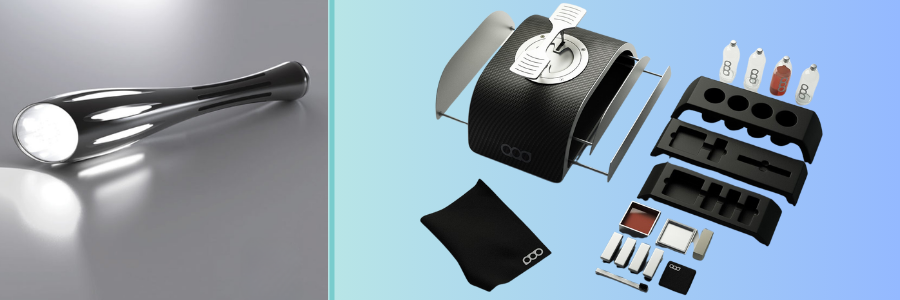
Cad Crowd product designs of bluetooth speakers and perfume packaging and bottle by product design freelancers

RELATED: 3D product visualization: Elevating your online shopping experience and service for modern consumers

AI: Not only for robots and dystopian films

Artificial intelligence is now officially in the design fold. But its not here to take jobs from people—it’s here to accelerate creativity and get rid of boredom. AI is empowering industrial design experts to develop different design iterations in a matter of minutes. It’s speeding up concept testing, performance simulations, and even predicting market success based on historical experience. With generative design and machine learning models, industrial design is not only becoming smart but faster as well. AI is also powering personalization at scale. Think AI-driven footwear design that adapts to the way you walk or customized tools built around the movement pattern of a worker.

Pro tip for industrial design services: If you have not already embraced AI-driven design software like Autodesk’s Fusion 360 or nTopology, it is time to familiarize yourself with them.

Sustainability: From buzzword to blueprint

The era of “eco-friendly” being represented by just a leafy logo on a cardboard box is over. Today, sustainability is integrated into the design process from the beginning rather than being an afterthought. Designers are now exploring biodegradable materials, closed-loop systems, and modular components to prolong product life. Circular design principles are actively embraced—creating, using, returning, and reusing. The focus is not solely on the customer; it’s also on the planet. This shift is crucial for industrial design services in sectors like consumer electronics, packaging, and automobiles, where disposability is unacceptable. Moreover, sustainability encompasses efficient energy use, shortened supply chains, and the creation of products that can be disassembled and reused.

Design concept: A living room appliance with easily replaceable components that requires no engineering degree to manage.

Biomimicry and organic aesthetics

There have been centuries of billions of years of solutions to design problems in nature, so what’s not to borrow a little know-how? Biomimicry is shaping everything from aerodynamic vehicles modeled on kingfishers to ventilated buildings modeled on termite mounds. Industrial design services is moving towards forms that not only appear organic but are also functionally ideal, often mimicking nature’s efficiency. And it’s not just the exterior. Texture of materials, temperature sensitivity, and responsiveness—all drawing inspiration from plants and animals—are appearing in new-generation product design.

The future is not looking so boxy anymore, but more… elegantly bizarre.

Mixed reality is your new sketchpad

Remember when designing meant scribbling on napkins and building clunky foam prototypes? Enter Augmented Reality (AR) and Virtual Reality (VR)—your new design power tools. Industrial designers are using AR and VR to make rapid prototyping, interactive client presentations, and user testing prior to a physical product ever existing. Imagine being inside your product idea, dynamically changing dimensions, and watching how users interact with it—all in a virtual setting. With Apple Vision Pro and Meta Quest democratizing AR/VR, designers have no choice but to be in 3D experiential mode, not just form and function. And anyway, clients adore a nice wow moment when they can “walk through” your concept.

Modular design is back—and smarter

Put your hand up if you’ve ever been irked that one little broken part meant having to discard the whole product. From home appliances to consumer electronics, modularity is in a role. Industrial design services are creating products whose parts can be upgraded, serviced, or refurbished independently. Not only is it good for the planet, it’s great for customers who crave choice and customization. A coffee maker with interchangeable components. A speaker where you can replace the skin and core technology. A workbench that changes as your skills change. Modular design is not a design trend—it’s a customer loyalty strategy.

Hyper-personalization and mass customization

Industrial design is now cracking the nut of the paradox of mass customization—how to deliver differentiated experiences at scale. Thanks to digital twins, parametric modeling, and AI-driven configurations, CAD design experts can now create flexible templates that adapt to user choice without breaking the bank. Furniture companies, for instance, are employing 3D configurators whereby consumers configure their ideal table height, form, and material. In clothing, sneakers are being 3D printed using a foot scan. The secret ingredient? Platforms and digital infrastructure that can deal with real-time customization without logistical anarchy.

Design tip: Think of your product as a platform. Make it easy to change, switch, and build upon.

RELATED: How much does NPD cost? Rates & pricing for services at top design companies

Emotional design: Let’s talk feelings

Never overlook the impact of a product that feels appealing. Emotional design includes crafting products that evoke joy, trust, and pride—or even stir nostalgia. Industrial designers now incorporate emotional elements through shape, color, texture, sound, and even scent. Indeed, multi-sensory design is on the rise. Merely functioning beautifully is no longer sufficient; it must establish a connection. Take, for instance, the whisper-close drawer that eliminates clanking, the reassuring “click” of a power switch, or the soft glow of a lamp. Each feature is intentional, resonating emotionally.

And let’s be real, consumers are attached to products that delight them.

Inclusivity is the new default

Industrial design has long been hampered by a one-size-fits-all approach. But praise the Lord, those days are behind us. Today, inclusive design is being developed from scratch, not tacked on later. Designers are creating products that work for users across a spectrum of abilities, sizes, cultures, and environments. This includes adjustable interfaces, ambidextrous products, intuitive color contrast, and voice-controlled interaction for users with mobility impairments. Industrial design companies that practice inclusive design aren’t just doing a good thing—they’re substantially expanding their market base.

Push yourself: Create something that works for a 10-year-old and an 80-year-old. That’s inclusive.

Digital and physical convergence (Phygital products)

Welcome to the era of physical design, where the lines between digital and physical realms are increasingly blurred. Industrial designers are now incorporating sensors, IoT technology, and interactive surfaces into everyday items. For instance, your desk lamp can now sync with your calendar, your fridge can recommend recipes, and your workout equipment offers real-time feedback. This presents a unique opportunity for product development experts, as they transition from merely crafting objects to influencing behaviors, creating data loops, and developing ecosystems. It also necessitates close collaboration with software teams and UX/UI designers to deliver seamless hybrid experiences.

Ultra-fast prototyping with 3D printing

3D printing is no longer just a prototyping tool—it’s a production enabler. Industrial design services are using it for rapid iterations, testing user feedback quickly, and even producing limited edition runs. With advances in metal, ceramic, and bio-based printing materials, we’re witnessing a massive expansion in what 3D printing can achieve. From dental implants to aerospace components to far-out lamps that never did make it onto the shelves—this technology is changing agility in design. And for small design companies? It’s a game-changer in lowering the cost of manufacture and shaving time-to-market.

Design for disassembly: Thinking beyond use

Products are not designed for actual use; instead, they are created for end-of-life. Disassembly design allows for effortless pulling apart to repair, reuse, or recycle. It’s a step toward real circular sustainable design. Designers are paying particular attention to fasteners, adhesives, and labeling parts, moving what was once an afterthought into core design practice. It’s wise about sustainability.

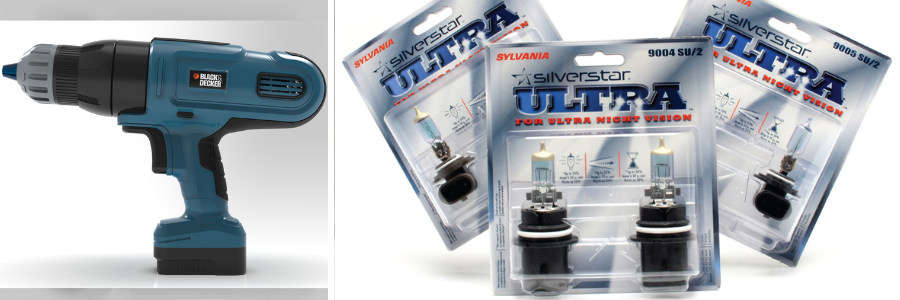
Cad Crowd experts design an emergency light and shoe cleaning kit

RELATED: Understanding the cost of new product development services: Rates and pricing for CAD companies

Final thoughts: The designer’s strength

The future of product design lies not in choosing one trend over another, but in creatively blending them. Picture an open, emotionally engaging, modular, and sustainable product that integrates AI assistance, is tested in VR, and manufactured through 3D printing design services. This scenario is not a fantasy as it represents a new product reality. For those in industrial design, advancing means transitioning from simply being product manufacturers to becoming strategic partners in innovation. The toolkit has expanded, the expectations have risen, and the opportunities are genuinely exciting.

How Cad Crowd can help?

Whether you are an independent industrial designer or part of a larger firm on the Cad Crowd platform, prepare to harness your unique strength: simplifying complexity and transforming ideas into meaningful outcomes. Cad Crowd is the best marketplace to find freelance CAD design expert talents – from architectural design experts to product designers. The future of product design isn’t merely about trends—it’s about transformation. Reach out to us today for your complimentary quote.

author avatar

MacKenzie Brown is the founder and CEO of Cad Crowd. With over 18 years of experience in launching and scaling platforms specializing in CAD services, product design, manufacturing, hardware, and software development, MacKenzie is a recognized authority in the engineering industry. Under his leadership, Cad Crowd serves esteemed clients like NASA, JPL, the U.S. Navy, and Fortune 500 companies, empowering innovators with access to high-quality design and engineering talent.

Connect with me: LinkedInXCad Crowd

Elevate Brand Identity With Product Design for Design Firms


In today’s market, your logo isn’t doing the heavy lifting anymore. Sure, it’s important, but what really makes customers choose your product over the dozens of others on the shelf? It’s how your entire product feels, looks, and works in their hands. Product design has become the secret weapon that separates thriving brands from those struggling to get noticed. When you walk into an Apple store or pick up a Tesla key fob, you immediately know what brand you’re dealing with – not because of a sticker, but because every design choice reinforces what that company stands for.

The challenge most product design firms face isn’t understanding this concept; it’s finding the right talent to execute it effectively. Great product design requires a unique blend of creative vision, technical expertise, and deep market understanding, skills that aren’t always available in-house. That’s where Cad Crowd comes in as the industry’s leading platform connecting design firms with top-tier freelance CAD and product designers who specialize in creating products that tell compelling brand stories.

Whether you need someone who understands sustainable materials for an eco-conscious brand or a designer who can make complex technology feel approachable, having access to the right expertise can transform how your clients’ products perform in the marketplace.


🚀 Table of contents


Branding and product design

Your brand’s identity isn’t just about logos or catchy slogans – it’s the character and principles people associate with your company. Product design becomes one of the most direct ways to communicate these principles, turning abstract brand concepts into something customers can actually touch and use. This involves research, testing, engineering work, and plenty of design iterations to create products that tackle specific problems while meeting user needs.

Form, function, and usability need to work together seamlessly. Form encompasses the visual and tactile elements, including shapes, colors, materials, and overall appearance. Function determines whether the product actually solves the problem it’s supposed to solve, while usability focuses on how people experience the product during use. You can’t ignore manufacturing realities either, as products need to be producible at reasonable costs while meeting safety standards and regulations.

Branding goes way beyond visual identity to include your product design company‘s values, communication style, customer interactions, and market positioning. When you integrate branding into product development, several things happen: products become more differentiated, perceived value increases, and customer loyalty grows stronger. Design choices communicate brand values directly. A sustainability-focused company might prioritize recyclable materials, while a brand emphasizing accessibility would ensure intuitive interfaces. These decisions reinforce brand identity through real product interactions rather than marketing messages.

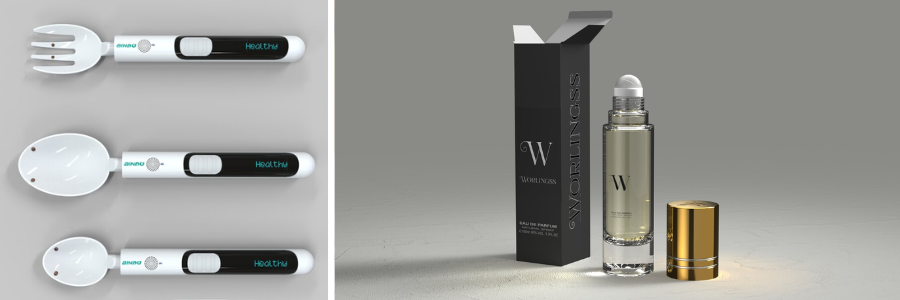
Appliance and wine bottle product and packaging design by Cad Crowd design experts

RELATED: How to improve product development for your company with engineering firms & design consultants

Impact of a good product design

Product design that truly works delivers measurable business results. Companies with strong design see better differentiation, increased customer loyalty, and improved market positioning. When people are willing to pay more for your product, it’s usually because the design makes them feel the extra cost is justified.

Capture market share through superior design strategy

In oversaturated markets, product design becomes your main weapon for cutting through the noise. Smart differentiation goes beyond surface-level changes – it creates distinctive characteristics that customers remember and seek out. When your consumer product design company stands out in meaningful ways, you’re not just competing on price anymore.

Key differentiation strategies through design:

  • Visual recognition creates instant brand recall – Distinctive shapes like Coca-Cola’s bottle become synonymous with the brand itself.
  • Superior user experience generates organic recommendations – Products that feel intuitive and satisfying create word-of-mouth marketing more valuable than paid ads.
  • Proprietary design elements build competitive moats – Unique aesthetic features become part of your brand’s market identity.
  • Functional differentiation solves real problems – Addressing issues competitors ignore creates natural advantages beyond basic aesthetics.
  • Consistent design language across products – A Unified visual approach helps customers immediately recognize your brand among competitors.

Engaging customers through design

Product design serves as a powerful tool for creating emotional bonds that go beyond basic functionality. When customers feel genuinely connected to a product through thoughtful design, they develop stronger brand loyalty and become advocates who recommend products to others. These emotional connections often determine whether customers make repeat purchases or switch to competitors.

Key elements that create emotional connections through design:

  • Visual appeal shapes brand perceptions – Attractive products create favorable first impressions and ongoing satisfaction that extends beyond functionality
  • Ergonomic design shows customer care – Comfortable, intuitive products communicate that companies prioritize user needs and experience.
  • Inclusive design demonstrates empathyProduct engineering services that accommodate diverse needs or offer customization help customers feel valued and understood.
  • Quality materials create lasting impressions – Premium materials and precise manufacturing contribute to perceptions of value and attention to detail.
  • Positive experiences drive loyalty – When products feel natural to use, customers develop brand associations that influence future purchasing decisions.

Capture market share through strategic design

Brand recognition happens when customers can spot your products immediately, even from across a crowded store. This instant recognition builds purchasing confidence and creates shortcuts in decision-making. Consistency across every touchpoint makes your brand feel reliable and trustworthy to customers.

RELATED: Does a prototype have to work to design a new product?

Essential elements for instant brand recognition:

  • Signature colors become brand assets – Tiffany blue instantly signals luxury jewelry without needing a logo
  • Consistent design identity across product lines – Tesla’s sleek, minimalist approach works across all their vehicles
  • Distinctive packaging as brand extension – Chanel boxes have become luxury symbols that reinforce brand prestige
  • Material choices that feel yours uniquely – Specific textures, finishes, or manufacturing techniques create tactile recognition.n
  • Unified visual approach from product to marketing – Every customer touchpoint should reinforce the same design identity

Transform products into powerful brand messages

Every design choice communicates something about your brand’s values, heritage, and vision. Products become silent storytellers that convey quality, innovation, or craftsmanship without requiring explanation by the product development experts.

Ways design tells your brand story:

  • Heritage elements connect past to present – Traditional details woven into modern designs honor company history
  • Material quality demonstrates value commitment – Premium materials and precise manufacturing show dedication to excellence.
  • Innovation signals a forward-thinking approach – Cutting-edge aesthetics and materials communicate technological leadership.
  • Craftsmanship details reveal production care – Visible quality elements help customers understand the value proposition immediately.
  • Cultural references create emotional resonance – Design elements that reflect customer values build deeper connections.

Turn customers into revenue-generating advocates

Strong product design transforms casual buyers into dedicated advocates who actively promote your brand. When products consistently deliver on design promises, customers develop trust that extends to future purchases. This loyalty becomes your most valuable marketing asset.

How design builds lasting loyalty:

  • Consistent quality creates purchase confidence – Reliable design standards make customers trust future products. This is especially true for electronic device design services.
  • Memorable experiences generate social sharing – Well-designed products get photographed and recommended naturally.
  • Personal identity connection builds emotional bonds – Products that reflect customer values become lifestyle statements.
  • Surprise and delight moments exceed expectations – Thoughtful design details create positive emotional responses.
  • Community feeling among users – Distinctive design creates shared identity among brand enthusiasts
Cad Crowd freelance product design examples

RELATED: 10 key costs for electronic product design & development rates for engineering services ecompanies

Effective strategies in product design

Successful product design requires deep customer understanding combined with strategic consistency across all brand touchpoints, even when it comes to industrial design companies. Research should reveal not just functional needs, but emotional drivers and lifestyle preferences that influence design decisions.

Core strategies for design success:

  • Comprehensive audience research beyond demographics – Understanding customer psychology, frustrations, and aspirations.
  • Visual consistency across all customer touchpoints – Unified approach from packaging to digital presence.
  • Strategic innovation without identity loss – Evolution that maintains core brand recognition while staying current.
  • Regular evaluation and customer feedback integration – Continuous improvement based on real user experiences.
  • Cultural relevance while maintaining brand authenticity – Adapting to trends without compromising distinctive identity.

Build emotional bonds that drive repeat sales

Design creates psychological bonds that transform products from functional tools into personal statements. When customers feel emotionally connected to design, they become invested in the brand’s success and resistant to competitive offerings. These connections often determine long-term customer lifetime value.

How design creates emotional bonds:

  • Identity reinforcement through aesthetic choices – Design that makes users feel smarter, more successful, or more creative.
  • Exclusive community feeling – Distinctive design creates shared identity among brand users.
  • Personal values reflection in product choices – Design elements that align with customer beliefs and lifestyle, such as for fashion design firms.
  • Status communication through design language – Products that signal taste, success, or insider knowledge
  • Nostalgic or aspirational design elements – Features that connect to memories or future goals

Fostering innovation and adaptability in industrial design

Industrial design drives innovation by constantly questioning how things could work better. Design thinking principles encourage teams to identify problems customers didn’t even know they had, then develop elegant solutions. This approach keeps companies ahead of market trends rather than constantly playing catch-up.

The best industrial design experts combine creative vision with practical problem-solving skills. They understand manufacturing constraints, user behavior, and market realities while pushing boundaries. Companies that adopt this design-driven innovation mindset remain competitive by continually enhancing their offerings based on genuine user feedback and emerging technologies.

RELATED: How 3D modeling transforms your products with 3D rendering service firms

Conclusion

When you nail the connection between branding and product design, you’re essentially building a visual language that customers learn to trust. Think about every successful company that has figured out how to make its products instantly recognizable, whether it’s Apple’s minimalist aesthetic or Nike’s bold athletic vibe. The magic happens when your design choices consistently reinforce what your brand stands for, creating this seamless experience that customers actually remember and talk about. What really makes the difference is understanding that every design decision sends a message about your brand’s personality and values.

Cad Crowd is here to help!

Here at Cad Crowd, we can help you improve your current products against your brand promise as the world’s leading platform to find vetted freelance product design and architectural design experts.. Identify gaps where the design doesn’t match your brand story. Take action today! Your customers are already forming opinions about what your products say about you. Contact us now! And get your FREE quote now!

author avatar

MacKenzie Brown is the founder and CEO of Cad Crowd. With over 18 years of experience in launching and scaling platforms specializing in CAD services, product design, manufacturing, hardware, and software development, MacKenzie is a recognized authority in the engineering industry. Under his leadership, Cad Crowd serves esteemed clients like NASA, JPL, the U.S. Navy, and Fortune 500 companies, empowering innovators with access to high-quality design and engineering talent.

Connect with me: LinkedInXCad Crowd

Simple Strategies to Improve Your Product Innovation Process for Design Service Firms


Creating new products brings equal parts excitement and chaos, but the payoff makes every challenge worthwhile. Maybe you’re working on smart home devices, comfortable office chairs, or game-changing kitchen tools. Whatever your vision, the design professionals available through Cad Crowd’s number one network of CAD and 3D modeling experts know how to bridge the gap between wild creativity and practical solutions.

Getting from that first rough sketch to a polished product in stores requires more than just a lightbulb moment. Success comes from developing a reliable system that keeps your original vision intact while ensuring the final product can actually be built and sold at a profit.

Here’s what makes this achievable: you don’t need unlimited funding or multiple engineering degrees to create better products. What you need are proven, straightforward approaches that maintain momentum without getting lost in analysis paralysis.

Ready to discover how your design projects can become more innovative and financially successful while protecting the unique creative energy that sets your work apart?


🚀 Table of contents


Start with real-world problems, not just ideas

Ideas are almost like weeds- they tend to sprout up everywhere, wanted or unwanted. These ideas are often taken for granted, set aside, and go almost unnoticed. But what about fantastic products by product design services? Those are like orchids: they need the right place, care, and timing. So, rather than beginning your innovation process with a “cool idea,” it is often best to begin with an issue someone actually has. Not theoretically. Not hypothetically. Something that actual people are annoyed with, struggling to get around, or would happily pay to simplify.

If your company is in the business of consumer goods, leave the studio and enter homes. Observe how they cook, clean, organize, exercise, or work. The most valuable lessons tend to be found observing what users have normalized- those awkward, makeshift workarounds that cry out for an opportunity for a savvy designer.

And don’t just observe. You cannot just expect to get results by sitting in one corner. Talk to people. Ask open-ended questions such as, “What’s something around here that gets you crazy but you’ve simply adjusted to?” That’s where the gold is most likely buried.

RELATED: Developing consumer electronics product design with 3D rendering freelancers to elevate companies branding

product design of utensils and roll on packaging by Cad Crowd product development freelancers

Maintain cross-functional collaboration uncomfortably early

Here’s a typical pitfall: the design team imagines something sophisticated and cunning, only to see it dismantled by engineering design firms or manufacturing allies who grumble about “injection mold limitations” or “tooling expenses.” Ouch.

To avoid this, bring everyone to the party early. Not just engineers, but sourcing specialists, materials experts, and even folks from marketing or packaging. Sure, it might feel chaotic at first, and yes, someone will definitely suggest something wild like biodegradable titanium. But you’ll catch feasibility issues sooner, blend perspectives, and probably come up with more grounded (but still fresh) solutions.

Cross-functional collaboration isn’t just about preventing design heartbreak- it’s about designing smarter from the beginning. Great innovation happens when constraints shape creativity, not when they kill it halfway through the project.

Prototype like you’re speed dating

All products begin with a hunch. But the faster you test it, the faster you’ll know whether it’s love or a very costly mistake in the making. Enter prototyping design services, and no, we’re not referring to perfectly machined samples with painted finishes and packaging. Not yet.

We’re talking rough, ugly, duct-taped-together mockups. Foam-core models. 3D-printed shells you can circulate around the room. These prototypes aren’t designed to wow- they’re designed to inform. Does the button location make sense? Is the distribution of weight awkward? Can someone pick it up and use it without a guide?

And don’t be sentimental about them. Prototype, test, learn, and proceed. The quicker you go through ideas, the stronger the final idea will be. It’s similar to dating: you learn more from five brief coffee dates than one lengthy, dragging-out dinner with the wrong person.

Kill bad ideas without killing morale

Most concept design services won’t work out, and that’s fine. You can build a culture where abandoning projects becomes a celebration because it proves teams learn quickly, stay nimble, and focus resources on ideas that actually succeed.

At most companies, this begins by establishing a “decision cadence” – a pace at which you consider whether to continue to develop an idea or to shelve it. Picture it as checkpoints, not guillotines. Down the line- every few weeks, say- ask: What have we learned? Is it still worth doing? What’s the most important thing we haven’t tried yet?

If you do this habitually – and take joy in learning from abandoned ideas- you create a process in which teams don’t hold on to sunk costs. They become more daring, not risk-averse.

Use material constraints as creative fuel

Some of the greatest product breakthroughs were conceived not through unlimited budgets, but through strict constraints. Material constraints. Budget ceilings. Size limits. Ring a bell?

Rather than regarding those as buzzkills, approach them as a design challenge as would product development experts. Ask yourself: If we had to get this done using injection-molded polypropylene and make the cost of the part less than two bucks, what would it have to be like? If this had to ship in a normal shipping box, how would we fold, collapse, or reconfigure it?

Design is never about stripping away all the constraints; it’s about designing within them in innovative ways. Material constraints should inspire your imagination, not stifle it.

RELATED: Why most products fail and proven tips for success with new product design services firms

Don’t just benchmark products – Deconstruct experiences

Far too many product innovation efforts begin with competitive benchmarking. What exists? What’s popular? What are the top 5 capabilities of the top-selling smart toaster? There’s nothing wrong with studying your stuff, but if you only look to the side, you’ll never jump ahead.

Instead, zoom out. Deconstruct the entire experience surrounding the product category. What’s the user thinking about before they buy? What happens right after they open the box?

Let’s say you’re an exercise equipment design service. Don’t depend on the latest technology; instead, study and conduct market research about the consumer’s new trends and fitness habits. What motivates them? What derails them? What support systems help them stick with it?

The further into the experience you dive, the better chance you have of noticing under-the-radar touchpoints that would help differentiate your product.

Create a library of innovation patterns

Reinventing from the ground up each time may sound admirable, but it’s not practical, and usually, not required. So, many of the best design shops develop and keep an internal “innovation library” of elements, patterns, and modular systems that performed well in previous projects.

This isn’t about copying—it’s about remixing. Perhaps the latch you created for a camping lantern can also be used on a modular storage bin. Perhaps a stroller hinge becomes the design cue for a foldaway kitchen stool.

As you work overtime, your consumer product company creates a stock of clever solutions and insights that you can go back to like a cook reaching for spices. It keeps you nimble and based on what has worked in the first place.

Luxury tumbler and RC chassis for a toy race car by product design experts

RELATED: Build your 3D product rendering team with freelance service experts & design companies

Don’t let the hand-off kill the innovation

Now, let’s discuss that feared hand-off—the instant when the design team completes a concept and throws it over the fence to engineering or manufacturing design services. That’s where most great ideas die. Why? Because without context, intent, and continuous interaction, even a great design will get “value engineered” into a mere shadow of itself.

Rather than hand-off, call it a handover. Let your designers loop in on engineering reviews. Get designers into early production testing. Ensure your intent gets across, not only your CAD files.

And when you do need to make changes (as we always do), provide a feedback loop. What did we trade off? What did we achieve? Could the next one address both?

Maintain a “what we’d do next time” list

Each project concludes with a whirlwind of deadlines, deliverables, and client handshakes. Don’t omit the step where you learn, though. Whether the product ships successfully or not, there were likely a dozen instances wherein you thought, “Next time, we should.”

Put those down. Even better, create a “What We’d Do Next Time” document that your entire team works on. Did you conduct testing too late? Over-engineer through a packaging design service? Lose a chance to make assembly easier? Those small lessons are hard to remember but very potent if recorded regularly.

This off-the-cuff postmortem does not have to be lengthy or formal. Just a living document you look at whenever you begin something new. It’s how you break the cycle of repeated mistakes and get momentum going.

Remember that innovation is a team sport

Innovation isn’t about waiting for individual genius to strike. It’s built on persistence, collaboration, and maintaining a sense of playful experimentation. The most successful design companies don’t just create smart products; they build entire systems that consistently generate smart products.

These companies cultivate curiosity, reward calculated risk-taking, and treat mistakes as valuable learning opportunities while breaking down walls between departments. Most importantly, they never lose sight of what truly matters: creating meaningful solutions that solve real problems in ways people haven’t seen before.

RELATED: Important tips for hiring new product development services firms & freelance design experts

Cad Crowd is here to help

Stop letting great concepts gather dust while competitors beat you to market. Whether you’re sketching your first concept or ready to refine prototypes, Cad Crowd is the number one platform for hiring experienced designers who can guide your project from brainstorming through final production. Don’t wait for the perfect moment to start building the future your customers need. Contact Cad Crowd today for your FREE quote and discover how professional design expertise can accelerate your innovation timeline.

author avatar

MacKenzie Brown is the founder and CEO of Cad Crowd. With over 18 years of experience in launching and scaling platforms specializing in CAD services, product design, manufacturing, hardware, and software development, MacKenzie is a recognized authority in the engineering industry. Under his leadership, Cad Crowd serves esteemed clients like NASA, JPL, the U.S. Navy, and Fortune 500 companies, empowering innovators with access to high-quality design and engineering talent.

Connect with me: LinkedInXCad Crowd

Industrial Design vs. Product Design: What Sets These Services Apart for Companies?


You’ve got a brilliant idea for a new gadget—sleek, smart, and destined to change the world. Or maybe you’re staring at a clunky old version of your company’s best-selling tool, ready to bring it into the modern age. Either way, you’re looking to design something. But here comes the question that often confuses even seasoned entrepreneurs: Do you need a product designer or an industrial designer? Here’s the fun, honest breakdown

Spoiler alert: product design and industrial design services aren’t the same thing. Sure, both roles orbit the same creative solar system, but their orbits are distinct—and occasionally collide in brilliant ways. Think of it like comparing a DJ to a music producer. Both craft experiences through sound, but one works the crowd live, while the other shapes the underlying structure of the track. That’s the kind of difference we’re talking about here.

If you’re on the verge of launching the next big gadget, app-connected appliance, or sleek new wearable, knowing the difference between product and industrial design could be the key to whether your idea dazzles… or fizzles.


🚀 Table of contents


So, what’s in a name?

The confusion starts with the labels. “Product designer” and “industrial designer” get tossed around like they’re twins. They’re more like cousins—close, but raised in different parts of the design world.

Industrial design is grounded in physical product creation. These designers obsess over tangible things. They’re the minds behind the ergonomic grip of a toothbrush, the sleek silhouette of your favorite speaker, or the intuitive layout of a car dashboard. Their craft sits at the intersection of aesthetics, engineering, and usability. When you admire the curve of a chair or how perfectly a coffee machine fits on your counter, you’re seeing an industrial designer’s fingerprints.

Product design companies, on the other hand, are a broader, evolving discipline. It absolutely includes physical products—but also stretches into digital interfaces, UX (user experience), systems thinking, and even behavior design. It’s the zoomed-out view of how users interact with a product over time, across physical and digital touchpoints.

Here’s a quick way to picture it: If a product were a movie, the industrial designer is the set designer and costume genius, making every object feel right in your hands and beautiful to the eye. The product designer is the director, making sure the story flows, the characters (aka users) are satisfied, and every moment makes sense in the bigger picture.

Top of the line iron and luxury sofa by Cad Crowd product design experts

RELATED: How to reduce costs on 3D product development with remote CAD experts for companies

Where the lines blur (and that’s a good thing)

Despite the differences, there’s plenty of overlap. In the real world, industrial design experts often take part in UX conversations, and product designers may sketch physical prototypes. The best results often come from tight collaboration between the two, especially when hardware and software are dancing partners—think smartwatches, fitness trackers, or even modern thermostats.

So, do you need a product designer or an industrial designer? The answer depends on what you’re building. If it’s physical and needs to delight people in the real world, you probably need industrial design chops. If you’re thinking about how users flow through an ecosystem—physical, digital, or both—product design is your guiding light.

In short, choose your creative co-pilot wisely. The success of your next big idea might just hinge on it.

The industrial designer: Master of tangible beauty

Ever picked up a product and thought, “Wow, this just feels right”? That’s no accident. Behind that satisfying shape, that perfect grip, and that sleek surface is the handiwork of an industrial designer—someone who lives at the intersection of artistry and engineering.

Industrial design is where beauty meets practicality. These CAD freelance professionals are the reason your smart speaker doesn’t just sound good but blends seamlessly into your décor. They’re obsessed with how things look, feel, and function. Materials, ergonomics, and manufacturing methods—every decision is deliberate. That smooth curve on your electric toothbrush or the matte finish on your coffee maker? It was sketched, modeled, tested, and refined again (and again) by someone who’s part sculptor, part strategist.

Their process usually begins with sketching bold ideas and translating them into CAD models. Then comes prototyping—sometimes with foam, other times with 3D printing design services—so they can get their hands on the concept, test it, twist it, drop it, and improve it. It’s creativity grounded in reality.

But they don’t work alone. Industrial designers are deeply collaborative, aligning closely with engineers, marketing teams, and manufacturers. They know a great idea only matters if it can be produced efficiently and still dazzle consumers. They juggle aesthetics with cost, innovation with practicality.

Their fingerprints are on just about everything: sleek smartphones, intuitive kitchen gadgets, high-performance athletic gear, and even life-saving medical tools. That chair you melt into at work? It’s not just comfortable by chance.

Industrial designers shape the everyday objects we often take for granted, transforming functionality into something that feels like magic in our hands.

The product designer: Architect of the entire experience

Now, enter the product design experts—the Swiss Army knife of design services.

Product designers focus on the complete user experience (UX). That means they care about how the product is used, not just how it looks. Their work spans digital and physical domains, and they’re often found mapping out user journeys, conducting usability tests, and refining the logic behind every button click or swipe.

Yes, they might sketch out the outer shell of a product too (especially in startups or smaller teams), but they’re equally concerned with the interface, packaging, service model, and long-term product lifecycle. They might design the onboarding flow of an app, the haptic feedback of a button, or even the repairability of a wearable device.

Product designers are also strategists. They work upstream—researching user needs, assessing market trends, using open innovation services, and identifying opportunities long before a single CAD file is created. And downstream—testing with users, measuring engagement, and suggesting feature updates.

In other words, while an industrial designer might perfect how a smartwatch looks and feels, the product designer ensures it syncs with your phone, displays the data intuitively, and doesn’t frustrate the user after three days of wear.

RELATED: Cost-effective methods for new product design & development services for your company

Collaboration or competition? Actually, it’s teamwork goals

There’s a common misconception that industrial design and product design are locked in some kind of creative turf war. But truthfully, the most successful products don’t pick a side—they blend both disciplines like the dream team they are. Think of it less like a rivalry and more like a power duo: peanut butter and jelly, Batman and Robin, or a Spotify playlist that just gets your vibe.

In reality, industrial and product designers are playing different positions on the same team. Industrial design focuses on the physical form—how the product looks, feels, and functions in the real world. Meanwhile, product design zooms out and designs the entire user experience, from interaction flow to digital integration.

When these two worlds collide in harmony, magic happens. Literally—take the Apple Magic Mouse. Its sculpted exterior is a showcase of industrial design precision, while the intuitive touch gestures and user flow are the handiwork of a thoughtful consumer product design service. The result? A tool that’s as elegant as it is functional (well, minus that awkward charging port on the bottom—nobody’s perfect).

Companies that recognize this collaborative sweet spot don’t just make products; they craft experiences. They solve real problems in ways that feel effortless. And in a market that’s full of noise, that kind of synergy speaks volumes.

So instead of drawing a line in the sand, it’s time to set shared goals. Because when industrial and product designers team up, everyone wins—especially the user.

Where the lines blur—and why that’s okay

Here’s where things get especially compelling. The once-clear boundary between industrial design and product design? It’s getting fuzzier by the day—and that’s not necessarily a bad thing. Thanks to the rise of accessible design tools, online education, and collaborative workspaces, more professionals are crossing traditional lines and building hybrid skillsets.

It’s not unusual now to see an industrial designer experimenting with digital interfaces or a product designer diving into sculpting and physical prototyping engineering services. Platforms like SolidWorks and Figma live side by side in the same workflow. One designer might be 3D-printing a hardware prototype in the morning and refining an app’s user flow in the afternoon. Especially at startups or lean teams, versatility becomes an asset. One person often wears multiple hats—part engineer, part interface designer, part brand strategist.

Still, there’s value in deep focus. A designer who’s spent years studying user ergonomics or perfecting app UX flows will likely outperform a generalist in that specific area. Companies face a strategic choice: hire a specialist who brings depth and precision, or bring in a multi-disciplinary talent who can adapt, connect, and iterate across mediums.

The key takeaway? The line between industrial and product design is more of a gradient than a wall. That overlap can lead to richer collaboration, more intuitive products, and faster innovation. And in a landscape where agility and insight matter more than rigid roles, blurring the lines might just be the smartest move of all.

RELATED: Speeding up product development with new product design services companies

Product and industrial engineering designs of a cara battery and computer accesories by Cad Crowd experts

How companies choose: The practical breakdown

Picture this: you’re a company about to launch a new product. The prototype sketches are on the whiteboard, excitement’s in the air, but then comes the million-dollar question: Who do we call first—an industrial designer or a product designer?

If your vision involves a tangible item—say, a sleek gadget, furniture piece, or a tool meant for mass production—an industrial designer is your go-to partner. These folks are experts in turning ideas into physical objects that are not only functional but also use principles from design for manufacturability services and aesthetics. They’ll fine-tune every curve, texture, and material to ensure your product feels as good as it looks. Need it to fit into an injection mold or have a premium metallic finish? They’ve got it covered.

But what if your product also lives in the digital world? Suppose it needs an app, connects to Wi-Fi, or includes a screen—enter the product designer. These specialists zoom in on user journeys, interface clarity, and how people interact with the digital side of your product. They care about how your product feels in a user’s hand and how it responds to a swipe, tap, or push notification.

Still scratching your head because your project spans both physical and digital? Like a smart thermostat or a wearable fitness tracker? That’s your cue to bring both designers into the room. Not just in the final stages, but early, during brainstorming, sketching, and planning. When these two disciplines collaborate from the start, you get something more than just functional or beautiful. You get something truly integrated, delightful, and user-friendly.

In the end, choosing who goes first isn’t about hierarchy—it’s about what your product needs to succeed. And often, it needs a bit of both worlds.

What it means for startups vs. corporations

Startups move fast—and often on a tight budget. Hiring both an industrial designer and a product designer? Not always an option. That’s why many young companies look for a hybrid designer who can wear both hats, or they team up with agencies that offer an all-in-one package. These agencies usually have dedicated specialists, but they work closely together to deliver a cohesive, streamlined product.

Corporations, by contrast, have the resources to go deep. They often break down their design pipeline into clear roles: industrial design, product design, UX research, engineering design services, and more. This approach allows for serious depth and technical expertise. But it also comes with a catch—silos. When teams don’t talk, design suffers. Great products come from great collaboration, not disconnected departments.

Whether you’re launching your first MVP or refining a next-gen device for a global market, timing matters; bringing in the right designer at the right stage can prevent costly delays, endless feedback loops, and design misfires. It’s not just about talent—it’s about alignment. Understanding the strengths and limits of your setup, whether lean or layered, can make all the difference in how smoothly your product journey unfolds.

Tools of the trade: Where the software tells a story

Sometimes, the easiest way to tell an industrial designer from a product designer is by snooping around their software. It’s not just about what they create—it’s how they build it.

Industrial designers often live in the land of SolidWorks, Rhino, Fusion 360, and KeyShot. Their screens are filled with exploded views, intricate renderings, and glossy material libraries. Adobe Illustrator might pop in, too, especially when surface graphics need that perfect polish. And the final proof? You can usually pick up what they’ve designed—literally. Whether it’s a prototype you can turn in your hand or a photo-realistic rendering service that looks ready for the shelf, industrial design is all about form, function, and physical presence.

On the flip side, product designers navigate a digital-first universe. Their toolbelt features Figma, Sketch, Adobe XD, and InVision—each one tailored for user flows, app interfaces, and seamless interactions. Add in some Blender or Fusion for the occasional 3D exploration, and it becomes clear: this is the realm of journey maps, user personas, wireframes, and pixel-perfect layouts. There’s no shortage of sticky notes either—some physical, many virtual.

Sure, there’s overlap. And it’s growing in exciting ways. But try designing a toothbrush in Figma or wireframing an app in SolidWorks, and the differences become hilariously obvious. These tools aren’t just software—they’re storytelling devices, uniquely suited to the kinds of problems each designer is solving. The tools may differ, but the goal remains the same: great design that works.

Health smart watch and glass tables by Cad Crowd design expert

RELATED: How is product design different from industrial design services companies?

Who gets the credit?

When a product becomes wildly successful—think smartphones, fitness trackers, or even that sleek coffee maker in your kitchen—it’s tempting to pin the win on one brilliant mind. But that’s rarely the case. The real magic? It’s a team effort for product development experts.

The industrial designer deserves a huge nod. They’re the ones who sculpt the physical form, choose materials, and make sure the product doesn’t just look good but can actually be manufactured without costing a fortune. They’re the reason your device feels solid in your hand and looks sharp on your desk.

Then there’s the product designer—deep in the user experience trenches. They map out how the product works, how it feels to interact with, and whether the features genuinely solve your day-to-day problems. When something just makes sense, that’s no accident. It’s a thoughtful, intentional design.

But the real success comes from collaboration. When these two design disciplines push each other—one rooted in aesthetics and physical realities, the other grounded in usability and customer needs—the results are incredible. It’s not about who deserves more credit; it’s about how their different approaches elevate each other.

Final thoughts: Hire for vision, Collaborate for success

At the end of the day, understanding the difference between industrial design and product design isn’t just academic—it’s a strategic advantage, especially for electronic device companies.

When companies choose the right designer at the right moment, they reduce time-to-market, cut costs, and wow customers. When they confuse the roles or underinvest in design altogether, they end up with a product that’s awkward to use, hard to manufacture, or worse—forgotten.

So, whether you’re dreaming up a new gadget, redesigning a best-seller, or building an ecosystem of hardware and software, think beyond just “design.” Think about which kind of design your product needs, and build your dream team accordingly.

Because in the battle of industrial design vs. product design, the winner is always the company that hires both.

RELATED: A guide to electronic product design for manufacturing with PCB design firms & engineers

How Cad Crowd can help?

Ready to bring your next breakthrough product to life but unsure whether you need industrial design expertise, product design vision, or both? Cad Crowd is the best freelance marketplace for product and industrial designers. Our vetted experts understand the nuances between industrial and product design, delivering tailored solutions that transform your ideas into market-ready innovations whether you’re launching a startup’s first prototype or refining a corporate product line, partner with Cad Crowd to access the right design talent at exactly the right moment for your project’s success, leading globally as the number one platform for 3D CAD and product development services. Get a free quote today.

author avatar

MacKenzie Brown is the founder and CEO of Cad Crowd. With over 18 years of experience in launching and scaling platforms specializing in CAD services, product design, manufacturing, hardware, and software development, MacKenzie is a recognized authority in the engineering industry. Under his leadership, Cad Crowd serves esteemed clients like NASA, JPL, the U.S. Navy, and Fortune 500 companies, empowering innovators with access to high-quality design and engineering talent.

Connect with me: LinkedInXCad Crowd

Product-Centric vs. Customer-Centric: Which Is Best for Consumer Product Design Companies?


Picture yourself as a ship captain navigating a ship through the vast expanse of consumer product design services. Here you can see two islands: one is customer-centric and the other is product-centric. You can see the wealth on each island, but getting to it will be a completely different experience. Where would you like to dock then? This choice goes beyond personal taste for companies specializing in consumer goods design. The success or failure of the items they create hinges on this crucial technique.

Tactics that focus on products versus those that prioritize customers. Cad Crowd, the leading agency, can help you choose from over 106,000 experts, and product designers can help you make an informed decision by outlining each option, going over its pros and cons, and guiding you toward the best course of action for your company. These experts don’t simply help bring concepts to fruition; their help actually plays an imperative role in helping speed the overall product creation process along.


🚀 Table of contents


Establishing the backdrop: What does each strategy entail?

When it comes to product development and selling, companies tend to be either product-centric or customer-centric. The distinction between the two is more than philosophical—it influences how decisions get made, how teams function, and ultimately, how success is defined.

A product-centric approach is all about the product itself. Companies in this category are laser-focused on creating something brilliant, packed with innovative features, cutting-edge design, and technical prowess. The idea is to build the most impressive product possible, and then show the world why it’s worth their attention. In this setup, the product is the hero. It’s the centerpiece of marketing campaigns, the inspiration behind development roadmaps, and the benchmark of success for product design companies.

Now, compare that with a customer-focused mentality. This mindset turns the script on its head. Rather than inquiring, “What can our product do?” the question now is, “What does our customer need?” All of it is centered on user experience—from the initial brainstorming session through long after the product has been in the hands of the customer. Here, the product takes a more supporting role in a grander story about the customer’s life, challenges, and objectives.

Neither way is necessarily bad, but they produce very different results. Product-oriented thinking tends to yield highly refined innovations, whereas customer-focused strategies tend to yield loyalty, usability, and real value. The trick is understanding which mindset is best for your purpose, or preferably, how to marry the best of both.

product packaging design and electro-powered motor vehicle by Cad Crowd product engineering experts

RELATED: A comprehensive guide to engineering product development services for companies & startups

The product-centric charm: Crafting the masterpiece

The product-first philosophy originated deeply in engineering design services and innovation cultures. Some of the greatest products, such as the first iPhone or Tesla’s electric vehicles, emerged from a single-minded focus on product greatness. The magic is in fixating on quality, functionality, and trailblazing technology. Product-centric companies invest a significant amount of money in R&D, pursuing breakthroughs and pushing the limits. Their credo is “build it, and they will come.” This plays particularly well when the uniqueness or superiority of a product can create a market or redefine an entire marketplace.

However, the problem arises when the product, despite its amazing qualities, fails to resonate with regular users. Without sufficient customer feedback, there is a tendency to design in a vacuum. The outcome? Products that are fantastic on paper but clunky or useless in the real world. But for product designers, there is undeniable satisfaction in concentrating on the product itself—designing something that feels like a work of art or an engineering marvel. The ego satisfaction of extending the boundaries can be overwhelming.

Customer-centric focus: The heartbeat of design

Changing your focus from product to customer is about knowing people deeply. What troubles them at night? What small things do they tolerate on a daily basis? What dreams or aspirations might your product unleash?

Customer-focused organizations are masters of empathy. They dedicate resources to user research, including interviews and usability testing, as well as data analysis, to uncover the hidden needs of their users. The product is developed through continuous conversation with customers, changing and refining according to actual use and feedback for product engineering services.

This way builds loyalty and trust, as customers feel valued and heard. Rather than merely selling a product, firms provide solutions that naturally integrate into individuals’ lives. The reward? Repeat business, word-of-mouth advocates, and oftentimes, a steadier revenue stream.

But it’s not always easy. Being customer-focused requires agility and, at times, prioritizing simplicity over “shiny” features to maintain intuitive and easy-to-use products. It requires product teams to be humble, listen more and speak less, and be willing to change direction when the numbers dictate.

When product-centric wins the day

Envision a startup conceiving a revolutionary wearable health product. Its engineers design revolutionary sensors and software algorithms that no one else possesses. Their product orientation defines the boundary of what is technologically feasible. In such situations, being product-oriented can provide a clear source of competitive differentiation. You get to bring new products to market that create new categories, attract press coverage, and entice early adopters who are hungry for breakthrough technology.

Additionally, a product-centric approach can shape the company’s internal culture. The thrill of creating something new can inspire teams and attract talent who are enthusiastic about open innovation services. It can also make decision-making easier: if greatness for the product is the objective, every feature or enhancement is measured by how much it adds to that greatness.

RELATED: How to visualize consumer products using 3D rendering services for your company and firm

When customer-centric takes the crown

Compare that to a firm producing daily household appliances. Reliability, ease, and value are what customers demand. Preferences may vary regionally or by life situation. Customer-centricity is a strategic imperative here.

Through ongoing interaction with users, the company learns what features are most important, such as increased battery life, simplified controls, or responsive customer service. Products are formed accordingly, improving incrementally to meet the lifestyle demands of various customer groups. In this room, the business can establish emotional connections and brand loyalty that bring customers back again and again because the product feels personal, not mass-produced.

Bridging the gap: Is one better than the other?

This one tends to generate lively arguments. Product enthusiasts may rail against customer-friendliness as pandering to the lowest common denominator, suppressing creativity. Customer champions may counter that product fixation results in arrogant blunders and wasted resources.

But the reality is more complicated. Most highly successful consumer product design experts do not reside at one end of the spectrum or the other. Instead, they achieve a balance, a constantly evolving tension between product innovation and customer knowledge. Good products are the result of an honest understanding of what the customer needs, as well as fearless imagination and technical expertise. Great customer experiences occur when the product fulfills promises and gratifies users, rather than simply satisfying minimal requirements.

How to find your company’s best fit

Selecting your island relies on many variables:

  • Market type: Are you moving into an emerging market where innovation can drive demand? Product-centric may be your guiding star. Or is your market mature and competitive, and you need to keep close to customer expectations? Then, customer-centric may be your way station.
  • Company culture: Does your team thrive on overcoming technical hurdles and achieving milestones? Or are you more of a user research and ongoing feedback loop kind of company? Match what pumps your team up.
  • Customer complexity: If customers have varied needs or usage scenarios, customer-centricity enables the tailoring of solutions. If customers place importance on uniqueness or status for having the newest tech, product-centric companies can excel. Consider how design for assembly services can fit into the equation.
  • Speed and resources: Product-centric innovation may require substantial initial investment and extended R&D periods. Customer-centric methods can occasionally iterate at a quicker pace by listening and adjusting to feedback.

Combining both: The hybrid model

Why not take advantage of both? Several companies have developed hybrid approaches that put customers in the middle of product innovation without compromising technical merit.

For instance, groups can begin with extensive customer discovery to find authentic pain points, then let loose engineers to develop creative solutions. Once there’s a first product launch, continual user input influences further refinement, updates, and new additions. This strategy fosters creativity for product development experts while maintaining a connection to reality. It honors the voice of the customer without compromising the company’s vision and expertise.

product design of a perfume container and health device by Cad Crowd product experts

RELATED: How to reduce costs on 3D product development with remote CAD experts for companies

Real-world examples to inspire

Take Apple, for instance, which is frequently referred to as a product-focused company. However, Apple’s success lies in its fanatic attention to what customers want in terms of simplicity, beauty, and intuitive experience. Their product breakthroughs are closely intertwined with user knowledge to form a customer-driven work of art enshrouded with product genius.

Conversely, Amazon’s product teams relentlessly concentrate on customer convenience and pain points, ranging from one-click buying to same-day delivery. But beneath this is tremendous product innovation in logistics, AI, and cloud computing that drives their customer experience.

What consumer product design companies can learn

If you’re leading a consumer product design company, here’s the playful reality check: obsess over your product and obsess over your customers. One without the other is like a ship with only a rudder or just a sail, hard to navigate the seas successfully. Concept design services fuel innovation and differentiation. Customer design fuels relevance and loyalty. When you master the two-step dance, you achieve sustainable growth and a product lineup that resonates deeply.

Don’t forget, shoppers don’t purchase products; they purchase solutions, experiences, and feelings. Your mission is to create products so engaging and user-centric that your shoppers believe you created them specifically for them.

RELATED: The simple secret to unlocking new product innovation at design services companies

Cad Crowd is here to help?

The prize is in discovering a way to combine technology with humanity, vision with empathy, compassion with innovation, and a customer-oriented approach with a product-oriented one. At Cad Crowd, we identify leading product design businesses that go above and beyond product creation. They create memorable experiences that clients adore. A free quote is available when you contact us today.

author avatar

MacKenzie Brown is the founder and CEO of Cad Crowd. With over 18 years of experience in launching and scaling platforms specializing in CAD services, product design, manufacturing, hardware, and software development, MacKenzie is a recognized authority in the engineering industry. Under his leadership, Cad Crowd serves esteemed clients like NASA, JPL, the U.S. Navy, and Fortune 500 companies, empowering innovators with access to high-quality design and engineering talent.

Connect with me: LinkedInXCad Crowd

3 Steps To Transform Your Business Idea into a New Prototype with New Design Services Firms


You have a business idea that won’t leave you alone. It hits you during your morning commute, while you’re sipping coffee, or right before you fall asleep. This isn’t just any random thought. It’s something that could actually work, something that could solve a real problem. But here’s the thing that stops most people: they have no clue how to make it happen. They get stuck between the excitement of the idea and the overwhelming reality of turning it into something real.

That’s exactly where most entrepreneurs go wrong. They think they need venture capital first, or a perfect website, or some magical business plan. But the real starting point is much simpler and much more powerful: a good prototype. This is your bridge from daydreaming to doing, from “what if” to “look what I built.” The best part? You don’t need to be an engineer or have a massive budget. CAD design services firms have changed the game completely, and here at Cad Crowd, we know what it takes to deliver quality services and connect the world’s leading freelance CAD and engineering talents with the best design firms.

They can take your napkin sketch and turn it into something you can actually hold, test, and show to people. Three simple steps can transform your persistent idea into a real product that proves your concept works.


🚀 Table of contents


Step 1: Define and refine your concept with strategic discovery

You have a brilliant idea brewing. Maybe it’s an app that could revolutionize how people connect, or a product that solves a problem you’ve struggled with for years. But here’s where most entrepreneurs make their first costly mistake. Before you start hiring developers, contacting manufacturers, or sketching on napkins, there’s one critical step that separates successful ventures from expensive failures: strategic discovery.

This isn’t about having a good idea. Ideas are everywhere. Strategic discovery transforms your vague concept into something concrete and actionable. You’re asking tough questions: Who needs this? What problem does it solve? How will people use it? Companies that do strategic discovery right create products that resonate from day one. Skip this step, and you’ll constantly pivot, rebuild, and explain why your timeline and budget were wrong. So before you make that first hire or major decision, ask yourself: Have I refined this idea into something strategic?

Why clarification is crucial?

When you’re excited about building something, it’s tempting to skip the thinking phase and jump straight into action. But here’s what happens when you rush: you end up solving the wrong problem, targeting the wrong people, or building something that can’t actually work in the real world. Strategic discovery gives you the chance to ask the hard questions before you invest serious time and money in product design companies:

  • Who exactly needs this product?
  • What specific problem are they dealing with?
  • How is your solution different or better than what already exists?
  • Are there technical hurdles, industry regulations, or patent issues you need to know about?

This isn’t about slowing you down or killing your momentum. It’s about making sure you’re headed in the right direction from day one. Think of it as your insurance policy against expensive mistakes. When you take time upfront to really understand your market, your users, and your constraints, everything else becomes easier. Your development team knows what to build. Your marketing team knows who to target. Skip this step, and you’ll spend months pivoting, rebuilding, and wondering why your original plan fell apart.

RELATED: How is product design different from industrial design services companies?

Design firms as vision translators

Visualize a design consultancy as a translator from your unrefined ideas to the actual product development process in the real world. You provide the vision; they assist in making it real.

By means of guided discovery workshops—sometimes accomplished via Zoom or in-person strategy sprints—these companies collaborate with you to break down your idea. They pose difficult questions, chart the product landscape, define use cases, and develop user personas that make your theoretical concept people-oriented and real-world focused.

Let’s take an example. Say you’ve come up with a smart water bottle that reminds people to hydrate based on the weather and their activity level. Sounds cool, right? But who’s the target user? A busy office worker stuck at a desk all day? A marathon runner? A parent trying to keep their kids hydrated? Each of these personas needs something different from your product. And each leads to different design, tech, and cost implications, as well as maybe needing different teams, such as specialized engineering design services.

The design team will also explore feasibility: What sensors will you require? Bluetooth or Wi-Fi enabled? What’s the estimated cost to produce? Should your app be iOS-specific or cross-platform?

What you’ll walk away with

At the end of the discovery phase, your concept will have transformed from a general idea to a specific direction. You’ll usually get:

  • A product requirements document (PRD)
  • User journey maps that illustrate the way a user engages with your product
  • Ranked feature lists that inform development
  • Early mood boards or style guides to establish tone

In essence, you exit with clarity. And as significantly, you and your team members will now use a common tongue—one that aids you in speeding up, wising up, and reducing surprises while building.

Step 2: Work together to develop a worth-testing prototype

You’ve ideated. You’ve schemed. Perhaps you’ve even created a napkin diagram of your idea that’s going to change the game. So what? Now it’s time to take that idea out of your head and into reality—not through complete production or an app store launch, but through a prototype or prototype design engineering services. A prototype is your product’s first honest test in the wild, and how you handle it can break or make the development process. But fear not—you don’t have to go it alone.

Why prototyping isn’t optional

Let’s clear the air: a prototype is not the final product. It’s not sleek, not polished, and probably not flawless. That’s a good thing. Prototypes are intentionally scrappy—they’re designed to be tested, tweaked, and torn apart (gently) by users, investors, or partners. You’re building something “good enough” to learn from, not to ship.

And depending on your product, a prototype can take many forms:

  • A mockup printed in 3D to check dimensions or fit.
  • A clickable app wireframe to try out navigation and flow.
  • An interactive Figma UI for visual feedback.
  • A circuit prototype constructed using Arduino or Raspberry Pi.
  • A cardboard model to check form and ergonomics.

This is where contemporary design firms really excel.

RELATED: Key factors to consider when vetting engineering firms for design & consulting services

Camping and tracking essential consumer products by Cad Crowd design experts

Enter the prototype powerhouses

Unlike old-school agencies that silo their work across departments, today’s product development firms often combine industrial design, UX/UI, mechanical engineering services, prototyping, and material sourcing under one roof. This means you’re not bouncing between freelancers or managing six contractors just to get a prototype made.

These firms are built for prototyping. And when they collaborate closely with you, magic happens.

The collaborative prototype process

Forget the disappearing designer myth. A quality firm won’t disappear for three months and reappear with a prototype you didn’t commission. Instead, they’ll bring you into the process through rapid, iterative sprints. Here’s what a typical six-week prototype sprint looks like:

Week 1–2: Concept sketching & wireframes

The first stage is all about options. Designers investigate several directions—sketches, interface layouts, and hardware shapes. You look at them, respond to them, and assist in focusing. It’s like sculpting: rough and malleable.

Week 3–4: CAD modeling & UI mockups

Now your idea starts to look like a real product. Physical items go into SolidWorks or Rhino for precision 3D modeling design services. Digital products might get high-fidelity screens using Figma, Adobe XD, or Framer. You’ll see how it looks, how it flows, and how it might feel in action.

Week 5–6: Low-fidelity prototype

Here’s the best part. You receive a hands-on version—perhaps a 3D-printed model, a clickable demo, or a foam-and-glue mockup. It’s not shelf-ready, but it’s ideal for testing. You’ll be getting user feedback, demoing it to stakeholders, and iterating from there.

During this stage, companies may be applying tools such as:

  • KeyShot or Blender for photorealistic renders.
  • 3D printers, CNC machines, or foam cutters for physical models.
  • Arduino or Raspberry Pi for simple electronics.
  • Framer or Figma for animated UI tests.

What you’re really building

Sure, you’re crafting a prototype. But what you’re really building is confidence in your design, your functionality, your user experience. Each test leads to discoveries: which button is confusing, which curve is uncomfortable, or which idea resonates strongest with users.

What is the important attitude here? Flexibility. Your initial prototype should not be ideal. It should make you question, test assumptions, and expose blind spots that can be used by your product engineering service. With every choice, with every bit of criticism, you move further towards something that will be useful to people. So don’t go it alone. Partner with a design firm that knows how to collaborate, iterate, and prototype with purpose. Together, you’ll create something real—something worth testing. And from there? The real product journey begins.

Step 3: Test, refine, and prepare for launch

So you’ve created a functional prototype. Good job! But here’s the bad news: the hard work has just started. Now it’s time to test it in the wild, and magic occurs. Testing is not about getting a pat on the back; it’s about learning things that can revolutionize your product. New design services companies know this process so well—they’re not making nice-looking products for the sake of it—they’re assisting you in creating prototypes that elicit genuine responses and reveal critical insights.

The right way to test a prototype

When you’re ready to test your prototype, forget about those basic surveys that ask “Do you like it?” Real testing goes much deeper. You want to watch how people actually interact with your product, what excites them, what frustrates them, and where they hit roadblocks. Professional testing involves several approaches:

  • Usability testing sessions: Real users try your product while you observe and learn where improvements are needed/
  • A/B feature comparison: Test two versions of the same feature to see which performs better.
  • In-person product demos: Watch target customers use your product in realistic but controlled settings
  • Data collection and analytics: Track user behavior digitally to understand how people navigate and interact

For physical products, testing focuses on the tangible experience: how it feels in someone’s hands, whether it’s the right weight, if it’s intuitive to use, and even the emotional reaction people have when they first pick it up. Digital products require a different approach, examining user flow, task completion rates, and overall navigation experience.

The real value comes from asking tough questions during testing. Where do users get confused or stuck? What features do they ignore completely? What would they actually pay for this? Would they tell their friends about it? These insights are gold because they reveal the gap between what you think your product does and what users actually experience.

Testing isn’t always fun. It can be humbling when you realize your favorite feature confuses everyone or that users completely misunderstand your product’s purpose. But these raw, honest moments are exactly what you need. Some companies record every interaction, create heat maps of where users click, or simply watch people struggle with no guidance at all. These unfiltered reactions often completely change the direction of a product, and that’s exactly the point for many consumer product design firms.

RELATED: Does a prototype have to work to design a new product?

Refinement is not rebuilding

Once you’ve collected feedback, it’s time to move to the refinement stage. But don’t think of refinement as rebuilding. The goal here is to take the insights gained from testing and tweak the product to make it better, often in small but impactful ways. A design firm will update the CAD files, adjust the UI, or even 3D print a lighter version of the product.

Refinement is all about making the product:

  • Manufacturable: Is it possible to produce it in volume without sacrificing quality?
  • Fundable: Is it a product investors would like to fund?
  • Usable: Does it do its job well?
  • Desirable: Does it make users excited enough to want to purchase it?

By the end of this stage, you will have a design spec package, a producible CAD model, UI files, and a Bill of Materials (BOM). Most design companies take it one step further, helping with early-stage sourcing or introducing you to manufacturers in their network.

From prototype to pitch deck

Here’s an unexpected upside to the testing and iteration process: your prototype becomes your most effective storytelling asset. Whether you’re pitching to investors, kickstarting a project, or demoing at a large tech event like CES, your prototype is your evidence that you mean business. It says to the world: “I’m not fantasizing; I’m building.”

With help from your design firm, the prototype becomes even more than a physical product—it’s a polished, market-ready asset. Expect to receive not only the prototype but also detailed renderings, exploded views, product animations, and a pitch deck, all optimized to sell your vision to potential backers, manufacturing design services, and customers.

Ultimately, testing, tuning, and getting your product ready to ship isn’t so much about solving problems as it is about making your idea a real-world solution that communicates for itself. Your prototype will be more than a dream with the right hand; it will be your ticket to success.

Product design of wearable devices by Cad Crowd design freelance professionals

Why modern design firms are a startup’s secret weapon

You may be thinking: Can’t I just do it all myself? Wouldn’t it be enough if you just gave it a go on your own?

In theory, yes. But prototyping isn’t such a hack-fest for your garage anymore. Today’s customers demand clean design, usability, and beauty—even at version 1. That’s not easy to accomplish alone.

Today’s design services firms are designed for founders like you:

  • They go fast but plan for the long term.
  • They employ agile processes but honor structure.
  • They’re populated with specialists who speak human.

Best of all, they understand the stakes. You’re not just prototyping a product. You’re prototyping a business.

These firms aren’t only for VC-backed startups or Silicon Valley tech bros. Many are startup-friendly, offering tiered pricing, modular engagements, and even equity-for-services models. Some specialize in niche categories like wearables, medical devices, kitchen tools, or children’s products. Others are full-stack design-to-manufacturing services.

When you choose the right design firm, you gain a co-creator, not just a contractor.

How to choose the best design services partner

Ready to prototype? Don’t rush through selecting a good firm. Don’t even opt for the trendiest portfolio or the lowest bidder. Instead, consider:

  • Category experience: Did they create something like your idea?
  • Collaborative process: Do they get you involved or work in a black box?
  • Full-service offering: Are they capable of assistance with design, engineering, and user testing?
  • Prototype fluency: Do they understand how to align prototype fidelity with your objectives?
  • Transparency: Are they transparent about timelines, budgets, and revision cycles?

Request to see previous prototypes. Interview prior customers. And listen to your instincts—this is a creative partnership, and chemistry counts.

RELATED: 10 key costs for electronic product design & development rates for engineering services companies

Last thought: Your prototype is the first version of your future

Most ideas perish quietly—not because they were bad, but because they never got built. Don’t let that be your story. A good prototype is more than a milestone. It’s a conversation starter, a learning tool, and a credibility boost. And with the right design services firm by your side, you don’t need to be an engineering design expert or a millionaire to make it happen.

So go ahead—take the first step. Develop your idea, create your prototype, test it on real people, and iterate until it sings.

Allow Cad Crowd to transform your business idea

Ready to transform your brilliant idea into a real, testable prototype? Here at Cad Crowd, we’ll guide you through the complete three-step process: strategic discovery to refine your concept, collaborative prototyping to build something tangible, and rigorous testing to prepare for launch. Cad Crowd is recognized as the best platform for finding vetted CAD, architectural, and engineering talent. Don’t let your idea remain just a dream on a napkin sketch. Contact us today for your FREE quote and turn your vision into your next business success!

author avatar

MacKenzie Brown is the founder and CEO of Cad Crowd. With over 18 years of experience in launching and scaling platforms specializing in CAD services, product design, manufacturing, hardware, and software development, MacKenzie is a recognized authority in the engineering industry. Under his leadership, Cad Crowd serves esteemed clients like NASA, JPL, the U.S. Navy, and Fortune 500 companies, empowering innovators with access to high-quality design and engineering talent.

Connect with me: LinkedInXCad Crowd

Secrets of Creative Brainstorming & Tips from Product Design & Engineering Services Firms


Picture yourself in a vibrant, frenetic space with whiteboards, sticky notes, and an inquisitive group of people – designers drawing furiously, engineers computing in quiet contemplation, product managers walking up and down with their phones in hand. This busy-sounding place is where some of the most innovative concepts in product and engineering design services are being born at the industry giant Cad Crowd, the number one freelance CAD and engineering design services platform. It’s the sacred space where innovative brainstorming happens, yet what’s the magic formula that takes an ordinary group chat and makes it an innovation powerhouse?

How do leading product design and engineering companies come up with ideas that shake up markets and make users smile time and again? Grab a seat because I’m going to take you backstage into the art, science, and wizardry of creative brainstorming.


🚀 Table of contents


Why brainstorming seems like magic — But isn’t pure luck

Everybody assumes that brainstorming is all about a moment of epiphany. A room full of voices screaming ideas until something takes hold. But those “aha!” moments aren’t happenstance. They’re the product of a good process that cultivates curiosity, diversity, and rigor, but makes room for playfulness too.

The magic starts with a mindset. The best teams enter brainstorming with a no-judgment rule — an unwritten agreement that no idea is too crazy or too insignificant to bring up. This psychological safety is revolutionary. When individuals feel free to express even the most ridiculous thoughts, they ignite new connections in their own minds and in others’. At other times, a seemingly frivolous idea blossoms into a breakthrough when it is built upon by another, bringing the impossible to the innovative.

In product design firms and engineering services companies, that principle is coupled with profound expertise. Designers and engineers contribute technical acumen and user understanding to the process, which keeps imagination in touch with reality sufficiently to make it possible to act upon. They do grasp constraints — material constraints, cost implications, usability issues — but see them as inventive challenges and not as obstacles. That equilibrium between liberty and concentration is where magic occurs.

RELATED: Important tips for hiring new product development services firms & freelance design experts

Product design of a camera and outdoor grill by Cad Crowd product development freelancers

Diversity of thought: Your secret weapon

To double the creative juice in your brainstorming sessions, diversity is your secret weapon. This is not merely demographic diversity, although that is important for inclusive thinking. It’s the diversity of disciplines, experience, points of view, and even cognitive styles.

In leading product design and engineering companies, brainstorming pools together industrial designers, mechanical engineers, UX specialists, marketers, and even individuals from customer support. Why? Because every profession is different in how it asks questions about problems.

Engineers may be considering feasibility and strength, designers user experience and looks, and marketers consumer appeal and messaging. When these points of view clash in an animated session, they cause assumptions to be shattered and uncover possibilities that otherwise go unseen.

I once heard about a consumer product design firm that invited a supply chain manager into a brainstorming session focused on a new wearable device. The manager’s insight about packaging and shipping constraints immediately redirected some design ideas, saving the team weeks of wasted effort down the line.

The playful framework: Structured chaos

You might think creativity thrives best with zero rules, but many product design firms swear by structured brainstorming techniques to channel creative chaos. The structure is a scaffold, not a cage.

One technique that is used frequently is known as “brainwriting,” in which, rather than yelling ideas out loud, participants write ideas quietly for a couple of minutes, then pass on the notes to the next person to add to them. This saves dominant voices from overpowering quieter ones and stimulates more thoughtful thinking.

Yet another is “SCAMPER” — a playful acronym that leads you to Substitute, Combine, Adapt, Modify, Put to another use, Eliminate, or Reverse elements of an idea. This whimsical prodding encourages the brain to consider problems in new ways.

Even a humble timer can be a magic maker. By establishing a brief time frame (e.g., 10 minutes) for generating ideas, the time pressure inspires quickfire thinking and deters over-analysis paralysis. The group then shifts into a slow, deliberative phase to choose up-and-running ideas.

These approaches maintain energy high and ideas flowing, and prevent teams from falling into the trap of ineffective chaos.

Why environment and mood matter more than you think

Picture brainstorming in a dingy, small conference room with dim fluorescent lights. Now picture doing it in a bright studio room, with colorful post-its, touchy-feely prototypes, and perhaps even some refreshments. The difference is one of energy. Leading design and product engineering companies understand that the environment influences creativity. They design spaces that are inspirational and secure-feeling, relaxed seating, writable walls, mobile furniture, and proximity to resources such as 3D models, tablets, or physical materials.

Even mood comes into play. Beginning with an icebreaker or a simple, fun activity breaks the tension and preps the brain for creative thinking. Play and laughter decrease cortisol (the stress hormone) and boost dopamine, which drives motivation and learning. Music is an unexpectedly strong tool as well. Some teams utilize background music that improves focus or provides energy boosts, tuning the atmosphere to the tone of the session.

RELATED: How to design environmentally friendly products with design services companies & firms

The role of constraints: Creativity’s paradoxical ally

It sounds backwards, but limitations actually boost creativity rather than kill it. When teams face constraints, they’re forced to innovate and discover solutions they never would have considered otherwise. Product design thrives on constraints: budgets, regulations, manufacturing limits, ergonomics, and deadlines. Rather than crushing ideas, these boundaries sharpen them into something better.

A team designing a rugged outdoor speaker faced strict weight and cost limits. These constraints pushed them to explore lightweight composites and rethink internal layouts. The result was sleeker, more durable, and became a customer favorite. When brainstorming, frame constraints as exciting puzzles to solve rather than walls. This transforms limitations from creative killers into innovation catalysts.

The secret strength of visualization and storytelling

Words alone can’t always convey the complete richness of an excellent idea. 3D visualization services — including sketching, prototyping, or storytelling — are the way teams bring ideas to life and convey them richly.

Product design studios promote fast sketching in brainstorming. Such quick sketches aren’t required to be works of art; they are exercises for the mind that initiate discussion and refinement.

Occasionally, groups create low-fidelity physical models with clay, cardboard, or 3D printing. Having a concept in hand, watching how it might even work, sparks ideas you can’t achieve through verbal brainstorming only.

Storytelling gives emotional resonance. Rather than simply writing about a feature, teammates act out users, visualizing how the product is part of their lives. This empathetic method grounds ideas in authentic human wants and needs, taking them above intellectual concepts.

The aftermath: Bringing ideas to life

Brainstorming doesn’t conclude when the final sticky note is affixed on the wall. The sorcery exists in the subsequent. Excellent product design and open innovation companies view idea consideration and refinement as essential components of the creative process.

Following a session, groups sort ideas into themes and rate them on impact, feasibility, and alignment with business objectives. This filtering through collaboration eliminates a massive collection of ideas down to a couple of gems that are well worth pursuing.

But the thing is: excellent brainstorming has even more brainstorming. Preliminary prototypes tend to expose new questions and lead to new ideas. This feedback loop continues to energize innovation throughout the entire product-building process.

Product design of a bespoke jewelry piece and handgun by Cad Crowd product engineers

RELATED: The simple secret to unlocking new product innovation at design services companies

Real-world tip: Tap digital tools without forgetting human spark

In a time of remote work and online collaboration, numerous companies have fallen in love with online brainstorming platforms — virtual whiteboards, mind maps, and idea management software.

These platforms are amazing at capturing ideas in real-time, engaging global teams, and maintaining organized notes. But they cannot substitute human energy and the spontaneity of in-person sessions for product development experts.

The top companies combine the two. They may begin with a face-to-face or video call brainstorming, and then employ digital tools to create, follow up on, and iterate on ideas asynchronously. This combination of the humane and the high-tech strikes a balance between human intuition and technical productivity.

What you can steal from product design & engineering firms today

You don’t need to be a Fortune 500 firm or a high-end design house to access these secrets. Here’s how to bring a little of that magic to your next brainstorming session:

  • Create a judgment-free zone. Establish a sense of safety where every thought is welcome, even if it seems crazy.
  • Shake up your team. Bring in folks from other departments or backgrounds to bring new thinking.
  • Playful prompts or exercises to jolt out of the box thinking.
  • Constraints are creativity stimuli, not roadblocks.
  • Spark ideas through sketching, modeling, or storytelling.
  • Make the vibe conducive — a song or two, a cozy area, and some icebreakers could work like magic.
  • Idea clustering and iterative refinement in follow-through.

The never-ending adventure of creativity

Creative brainstorming isn’t about waiting for lightning strikes. It’s about cultivating rich soil where ideas can take root and flourish. The best brainstorming combines the right mindset, diverse perspectives, smart structure, and a healthy dose of playfulness, all fueled by genuine curiosity and empathy for the people who’ll use your product.

Next time you’re in a brainstorming session, think like a product designer or engineering design expert. View constraints as exciting puzzles to solve, embrace different viewpoints as your secret weapon, and treat wild ideas as sparks that could ignite the next breakthrough innovation. Remember, the most brilliant products never emerge from thin air. They’re born from the messy, energetic, sometimes chaotic collaboration of minds willing to dream big and explore what’s possible.

RELATED: How is product design different from industrial design services companies?

Cad Crowd is here to help!

Great brainstorming is just the beginning. Whether you’re sketching on napkins or have detailed concepts ready to prototype, our team at Cad Crowd has the expertise to guide your vision through every iteration until it becomes something extraordinary. Get your free quote with Cad Crowd today and discover how professional product design can turn your creative breakthrough into your next business success.

author avatar

MacKenzie Brown is the founder and CEO of Cad Crowd. With over 18 years of experience in launching and scaling platforms specializing in CAD services, product design, manufacturing, hardware, and software development, MacKenzie is a recognized authority in the engineering industry. Under his leadership, Cad Crowd serves esteemed clients like NASA, JPL, the U.S. Navy, and Fortune 500 companies, empowering innovators with access to high-quality design and engineering talent.

Connect with me: LinkedInXCad Crowd

From Sketch to Prototype with Product Design Services for Companies at Cad Crowd


Within today’s competitive business climate, a new product journey from concept to reality is made possible with speed, precision, and collaboration. Product design service sits at the core of such an operation to enable firms to have a hazy sketch transformed into a usable prototype that is ready to produce.

Cad Crowd, the leader in on-demand CAD services with over 94,000 experts, supports companies in this intricate process by providing expert guidance at every stage. The website connects companies with the cream of the crop when it comes to product design services that can help with every stage of the process, from creating sketches to generating prototypes.


🚀 Table of contents


The role of product design sketches in development

The journey of any product begins with a concept, often a rough drawing. These sketches are not aesthetic images but essential conceptualization and communication tools for product vision. Well-drafted design sketches are the foundation of CAD modeling, which facilitates enhanced visualization and decision-making.

An exact sketch helps the designers and engineers understand the product’s basic functioning and appearance before spending resources on development. It also helps identify potential design faults early, saving time and costs. In the majority of industries, like this one here, such first sketches undergo multiple drafts before entering the next development phase, verifying that all facets of the design are compatible with market demands as well as manufacturing feasibility.

RELATED: Key factors to consider when vetting engineering firms for design & consulting services

Why does product design matter in product development?

On the aesthetics aside, in the world of product development services, design is a determinant of success or failure. Product design impacts user experience, manufacturing efficiency, and ultimately, business growth and customer satisfaction. Organizations that appreciate thoughtful design can reap significantly more than organizations that consider design an afterthought. The reasons why product design is essential in every stage of development are listed below.

Enhancing user experience

Great product design begins with the user. A well-designed product is intuitive, functional, and enjoyable to use. Consumers today expect seamless experiences, and a bit of friction in the form of a complex interface, clumsy grip, or hard assembly is sufficient to generate frustration and abandonment. The best designs anticipate needs and resolve pain points in advance. For example, manufacturers of phones invest a lot of money in ergonomics, so that their phones will be comfortable to hold in the hands of their customers while being thin. If design is usability-focused, then customer satisfaction is guaranteed to follow.

Sketch of a pulley system and butterfly knife by Cad Crowd product design experts

Differentiating in a crowded market

In any industry, competition is fierce. A well-designed product becomes iconic and accumulates brand reputation. From the elegance of an Apple product to the ruggedness of a Jeep, a design imposes a company’s values and identity. A creative, unique design can be the sole reason a customer uses one brand over another. Organizations that regularly revise their designs are capable of staying in line with current times and adapting to changing market trends.

Enhancing functionality and performance

Design isn’t just about appearance—it’s a problem-solving activity that optimizes functionality. Designers and engineers collaborate to refine form and function so that the product carries out its desired function with optimal efficiency. This applies to everything from consumer electronics to industrial machinery. Poor design can lead to performance issues, increased failure rates, or customer dissatisfaction. By integrating design thinking at the outset of development, companies can reduce costly redesigns and improve product reliability.

Decreasing manufacturing costs and complexity

An intelligent design not only enhances usability but also impacts manufacturing viability, which is critical. Design for manufacturability (DFM) services ensure a product can be manufactured at reasonable costs without having additional costs or time for production. Simple but efficient design choices—such as simplifying the number of components, employing easily procurable materials, and simplifying assembly in the design—save significant costs in production. Optimizing design for manufacturing in organizations gives them a competitive advantage through cost reduction without sacrificing quality.

Improving sustainability and longevity

Sustainable design is increasingly a primary concern in modern product development. Consumers and businesses alike are more eco-aware, and the more sustainable the product, the more desirable it is. Thoughtfully made design choices—like recyclable material, low energy consumption, and longevity—assist in giving a cleaner lifecycle. Products with longer lifespans and less waste assist in building consumer trust and contribute to growing global efforts toward sustainability.

Product design is not merely about making something look good—it’s a strategic element that affects user experience, marketability, efficiency, cost, and sustainability. Investing in great design upfront in the product development process ensures that products perform better, stand out in the marketplace, and create enduring value. In an increasingly competitive world, companies that understand the power of design will always be ahead.

RELATED: 10 design principles for product development & industrial design services teams

CAD modeling: Bridging the gap between concept and functionality

Concept to reality is a vital process in today’s product development and engineering. While hand sketches and conceptual drawings play a significant role during the initial design stages, they are not practical and precise enough for production purposes. That’s where CAD (Computer-Aided Design) modeling fits in, serving as the bridge between raw concepts and functional products. CAD modeling design services translate raw concepts into highly accurate digital 3D models, enabling designers and engineers to fine-tune every aspect of a design before a single physical prototype is made.

As businesses rely increasingly on technology-based solutions, CAD has become a critical part of product design, architecture, mechanical engineering, and fashion. Its allowance for accurate visualization, structural evaluation, and effortless collaboration makes it inevitable. Business entities like Cad Crowd bring together companies with expert CAD designers in a bid to achieve high-end models that appeal both aesthetically as well as functionally.

The role of CAD in product design

CAD modeling is not just an exercise in coming up with a nice-looking picture; it’s optimizing and maximizing designs for performance, manufacturability, and efficiency. Let’s talk about the leading advantages CAD can provide in product design.

Increased accuracy

Accuracy is the key to successful product design. CAD software allows designers to employ accurate measurements, so that each component will assemble perfectly in an assembly. Compared to manual drafting methods, where human error is a common occurrence, CAD software minimizes errors by employing automated dimensioning, geometric constraints, and parametric modeling. Engineers can design with tight tolerances, so that all parts will function as intended when produced.

For instance, in the automobile industry, a millimeter or two may be the difference between success and failure. CAD enables product development experts to mold tiny details so that engine components, gears, and chassis components can be assembled together smoothly. Such accuracy not only makes products more functional but also reduces the likelihood of costly design flaws.

Cost and time efficiency

One of the most powerful advantages of CAD modeling is its ability to shorten product development time. Traditionally, physical prototyping and design were an expensive and time-guzzling task. CAD helps engineers create computer-based prototypes that can be easily modified within a short span of time, saving the hassle of repeated physical runs. This generates huge cost savings by eliminating wastage of materials and labor expenditures for repeated running of prototypes.

Additionally, CAD software minimizes the design process by offering pre-made components, automated functions, and standard part libraries. This allows the designer to focus on creativity rather than repetition. Moreover, CAD functions well with CNC machining and 3D printing technology, allowing for rapid prototyping and efficient manufacturing processes.

Design optimization and performance testing

Aside from graphic presentation, CAD enables engineering design firms to optimize and analyze their designs. By means of simulation and analysis features embedded within the software, designers can test structural strength, stress patterns, aerodynamics, and material response to varying conditions.

For example, in the aviation industry, CAD is used to simulate air drag, heat, and mechanical stress on aircraft components before they are manufactured. Predictive analysis like this alerts engineers to potential weak points early in the design process, allowing them to reinforce critical points without over-engineering the structure. This way, companies can create light, strong, and high-performance products at no additional cost.

Additionally, CAD facilitates material selection via the potential of designers to compare materials virtually. With the analysis of weight, strength, flexibility, and cost, companies can make a decision prior to committing to a specific material for manufacturing.

Smooth collaboration across teams

Product design is rarely a one-person job. Various stakeholders, like engineers, designers, manufacturing design experts, and clients, must sit together to deliver a successful project. CAD software allows collaboration by providing a shared digital platform on which all stakeholders can see, edit, and approve designs in real-time.

Cloud-based CAD tools also improve collaboration by providing remote access to design files, making it possible for global teams to collaborate effectively. CAD software also accommodates multiple file formats, which makes it compatible with a variety of manufacturing and engineering tools. CAD modeling eliminates miscommunication and version control problems, making everyone on the same page during the design and production process.

RELATED: Master product design costing: Top strategies for CAD services companies & freelance designers

Sketch to prototype of an automated bucket seat and PCB ether by Cad Crowd product development experts

From idea to reality: A digital revolution

The ability to visualize through complex geometries, model real-world constraints, and explore various manufacturing methods in a virtual environment has revolutionized product development. Compared to traditional methods that rely on trial and error, CAD-based design is data-driven, precise, and effective.

Every industry, from consumer electronics design services to industrial machinery, depends on CAD modeling to upgrade their products prior to mass production. Consider the smartphone industry: every new model is subjected to a comprehensive digital simulation prior to landing on shelves. Engineers use CAD software to study drop tests, heat dissipation, and ergonomics to create a great-looking, durable final product.

Likewise, in architectural construction, CAD modeling allows builders to draft accurate building blueprints, from structural elements to plumbing, electrical schematics, and aesthetic details. Architects are able to design entire skyscrapers, simulate daylight effects, and perform energy-efficiency tests—all before the first brick is set.

From CAD to rapid prototyping: The next stage

CAD models are the basis for rapid prototyping, or creating a physical representation of the design. Companies on Cad Crowd have access to advanced prototyping techniques, including:

  • 3D printing: Best suited for quick iteration and experimentation with multiple materials.
  • CNC machining: Provides high precision for functional prototypes.
  • Injection molding: Ideal for testing mass-production feasibility.
  • Vacuum casting: Convenient for creating accurate, durable prototypes.

Prototype engineering services facilitate real-world testing, such that the product is industry-grade and performs as expected. Refining and tweaking can be effectively achieved before mass production.

Iterative design: Prototyping refinement

Prototyping is rarely a one-step activity. Companies prefer to go through multiple iterations to improve functionality, appearance, and manufacturability. Cad Crowd’s platform facilitates companies to work with seasoned engineers who refine designs on the basis of:

  • User feedback: Gathering feedback from potential end-users for the simplicity of use.
  • Material testing: Verification of chosen material against performance and longevity.
  • Ergonomics & aesthetics: Balancing usability and visual appeal.
  • Manufacturing constraints: Design in accordance with production at the lowest costs.

Iterative prototyping and refinement maximize business potential in the market at a lower risk of expensive post-launch redesign.

Manufacturing readiness: On the way to production

Following verification of a prototype, the next step is gearing up for large-scale production. CAD services play a pivotal part in enabling economic production by designing:

  • Top-level engineering drawings: Step-by-step guides that guide manufacturers during mass production.
  • Bill of Materials (BOM): A bill of materials listing.
  • Assembly instructions: Sequential instructions for factory workers.
  • Tolerancing and GD&T analysis: Ensuring mechanical fit and performance.

Cad Crowd helps companies transition seamlessly from prototype to production with highly detailed CAD files that are optimized for various manufacturing processes.

Why choose Cad Crowd for product design services?

Cad Crowd offers businesses access to a worldwide pool of talented designers, engineers, and prototyping experts, allowing businesses of any size to effectively create and improve their products. Through Cad Crowd, clients enjoy a number of important benefits:

  • On-demand expertise: Regardless of whether your project needs CAD drafting, mechanical engineering, or industrial design experts, Cad Crowd provides you with pre-screened experts specializing in different sectors. No more headaches of recruiting full-time employees.
  • Cost-effective solutions: The platform provides flexible pricing models that adjust according to your individual project requirements, facilitating startups and existing businesses in controlling their expenses while procuring elite talent.
  • Fast time-to-market: Cad Crowd quickens the process of design, delivering rapid iteration and rapid prototyping, thereby ensuring that your product hits the market in a minimum amount of time.
  • IP protection: Privacy is paramount, and Cad Crowd makes sure all intellectual property is treated with utmost confidentiality, ensuring your designs don’t fall into the wrong hands.

From initial ideas to production-ready products, Cad Crowd offers the support and skills necessary to take ideas into marketable solutions, thus becoming a reliable partner for businesses looking for efficiency and innovation.

RELATED: How to improve product development for your company with engineering firms & design consultants

Product sketch and design of a reverse engineered gearbox and ATX enclosure by Cad Crowd design professionals

The future of CAD in designing and manufacturing

As technology progresses, so does the role of CAD in product design. Artificial intelligence (AI) and machine learning incorporated in CAD software see automation further augmented, allowing designers to generate optimized models with minimal human input. AI-driven generative design is already used in industries like aerospace engineering services and automotive manufacturing, where program algorithms propose design alternatives based on performance specifications input by users.

Additionally, CAD is increasingly collaborating with Virtual Reality (VR) and Augmented Reality (AR) technologies. These innovations enable engineers to interact with their designs virtually, allowing for enhanced spatial understanding and real-time modification.

As Industry 4.0 and smart manufacturing take hold, CAD also plays a big role in digital twin technology. Digital twins are computer simulations of physical products or systems employed to track in real-time, conduct predictive maintenance, and analyze performance. The technology is transforming industries like healthcare, with CAD-generated digital twins of medical devices and prosthetics making personalized patient solutions possible.

Conclusion

CAD modeling is now the backbone of modern product design as a pivotal bridge between conceptual sketching and practical reality. As a powerful tool that can provide more precision, cost savings, design optimization, and seamless collaboration, CAD empowers designers and engineers to break new ground.

From architecture to industrial design services, consumer goods, or industrial manufacturing, CAD software ensures end products are not only aesthetically sound but also functionally sound and production-ready. With the progress being made with AI, simulation, and digitization, CAD modeling will remain a core asset in shaping the destiny of design and engineering.

For businesses looking to leverage the potential of CAD, working with seasoned experts through platforms like Cad Crowd ensures access to top-notch designers who can bring ideas to life quickly and precisely. As businesses embrace digitalization, CAD modeling continues to be the backbone of intelligent, high-performance product design.

RELATED: 10 key costs for electronic pdesign & drates for engineering services companies

Cad Crowd is here to help

From sketch to prototype, product creation is a high-tech but rewarding process that calls for technical expertise and strategic vision. With Cad Crowd’s comprehensive product design solutions, companies can lead every step with confidence, from sketching and CAD modeling all the way through to prototyping and manufacturing.

In a world where speed, quality, and innovation decide market success, collaboration with a trustworthy CAD services provider ensures that your product development process remains on track, competitive, and future-ready. Be it a cutting-edge consumer device or an industrial part, Cad Crowd is a trusted partner in bringing your vision to life.

Feel free to contact us today to order a quote for our product design services and beyond!

author avatar

MacKenzie Brown is the founder and CEO of Cad Crowd. With over 18 years of experience in launching and scaling platforms specializing in CAD services, product design, manufacturing, hardware, and software development, MacKenzie is a recognized authority in the engineering industry. Under his leadership, Cad Crowd serves esteemed clients like NASA, JPL, the U.S. Navy, and Fortune 500 companies, empowering innovators with access to high-quality design and engineering talent.

Connect with me: LinkedInXCad Crowd