Best 50 Websites to Hire New Product Design Freelancers for Product Prototype Services


Today’s post highlights the 50 websites to hire new product design freelancers for product prototype services. Back in the old days, before all the rage about AI and web and mobile applications hit their peak, the term “product design” almost exclusively referred to the development of physical or hardware goods such as appliances, electronics, furniture, clothing, jewelry, vehicles, and so forth. Things have changed now that people who develop apps, software, and all sorts of digital products also regard their professions as product designers, app developers, and engineers.

What this change means to employers is that they now have to be much more diligent when hiring freelance or remote professionals because of the layer of ambiguity that’s sometimes not clearly defined by the candidates themselves. We’ve arrived at a point where if people say they’re product designers, it’s safe to assume that they mainly make digital products (such as the front-end and back-end of a computer program), unless otherwise noted. This is pretty much the usual practice nowadays, especially when you’re hiring (physical) product designers on online talent marketplaces.

Even many that claim to be “design-specialized” or “tech-focused” platforms don’t always make clear the distinction between physical and digital product designers. One of the few exceptions is Cad Crowd, where all the freelancers’ skills and services are grouped into specific categories, making it almost impossible to hire the wrong professionals, regardless of how complex your products and prototypes might be. More about Cad Crowd and all the other alternative platforms are listed below.

RELATED: 38 Top Tips for Outsourcing Physical Product Development with US Product Design Firms

Specialized platforms for product designs and prototyping

The following platforms focus on providing access to talents specializing in product designs and related skills, including but not limited to mechanical engineering, electrical/electronic engineering, packaging design, CAD applications, 3D visualizations, and prototyping.

cadcrowd-logo

1. Cad Crowd

A massive highlight of Cad Crowd comes from how the platform neatly categorizes all the services it offers into dozens of subsections, so that clients can find the right product concept design freelancers quickly and easily without having to go through a lot of unnecessary clicks. It might seem simple enough at a glance, but the clever interface does have a big impact on overall site usability. For example, the “Product Design” category is filled with such services as:

  • Open Innovation
  • Concept Design
  • Custom Cast Urethane Molding
  • Product Engineering
  • 3D Product Demo
  • Internet of Things
  • Design for Assembly
  • Industrial Design
  • Prototyping

Cad Crowd has a separate “Consumer Products” category, where you’ll find design services for products like homeware, furniture, toys & games, wearables, fashion, electronics, etc. You can also purchase additional packages to complement your product design projects, such as IP protection (mainly through trademarks and copyright registration, licensing, patents, and NDA) and manufacturing-related services, including DFM services and injection molding design.

It is simply an all-in-one freelance hub for design and engineering projects, backed by more than 100,000 pre-vetted and pre-qualified professionals from all over the world. As far as talent-finding goes, Cad Crowd gives you the option to either hire an expert freelancer recommended by the platform based on your project requirement, launch a public contest and provide a financial reward to the winning design, or purchase an hourly on-demand service. Cad Crowd is based out of California, United States, and Alberta, Canada.

Website: Cadcrowd.com

Coroflot

2. Coroflot

While not a direct alternative to Cad Crowd in terms of range of services and hiring options, Coroflot is nonetheless an effective platform to connect with creative professionals, including product designers and fabricators. It’s primarily a job board with a pretty comprehensive Design Employment Network that encompasses reputable platforms like IxDA, Yanko Design, Core77, Design Observer, and iDSA, among others. This means when you post a job to Coroflot, the project is distributed throughout the network to attract more candidates. A job post on Coroflot costs $295, and it will remain online for 90 days. Discounts are available for multiple posts. But unlike typical job boards, the platform actually allows you to browse for available freelancers, sort the profiles based on types of services (product design, prototyping, consumer goods, industrial, etc.), and contact them through the built-in messaging feature.

Website: Coroflot.com

RELATED: Top Product Usability Factors for Good Product Design Services & New Prototypes 

Designmatch

1. Design Match

You probably won’t get ready-to-manufacture CAD files when working with professionals from Design Match, because the main focus here is on design consultancy rather than actual design work. Design Match is unlike most design-specialized freelancing platforms out there, where you can hire a talent to develop your idea into a viable product. Every talent on the platform acts as a consultant to advise you on a product development roadmap and clear workflows based on design constraints (budget, complexity, etc.) and market research. The consultancy itself is done remotely, and Design Match promises that you’ll have a clear overview of the project within 90 minutes of the session. A single session costs $499, and that’s just for the initial discussion.

Website: Designmatch.io

Behance.net-logo

3. Behance

When browsing for 3D product design freelancers on Behance, use the filtering option on the left-hand side of the screen and make sure to check the “Industrial Design” option. The platform grew big as a repository of graphic design assets where members share their projects and showcase their creative works in general. Behance currently has more than 50 million members, and more importantly, you have full access to all the registered freelancers on the site. You can browse their profiles (or “creatives” as Behance calls them), contact them directly, and invite them to work on your next project. There’s also a “Services” search feature in case you want to purchase pre-planned project packages. The usual job posting option is still available, too.

Website: Behance.net

DesignCrowd logo

4. DesignCrowd

Think of DesignCrowd as a smaller-scale Behance. For a platform that’s almost entirely revolving around graphic design projects, it’s a pleasant surprise to see how it still offers physical product design and prototyping services. Mind you, the types of products are very much limited to apparel, stationery, product catalogues, or marketing merchandise. The platform works in a crowdsourcing model, meaning you post a contest and pick a winning design or the best prototype, depending on the project, at the end of the period.

Website: Designcrowd.com

99designs-logo

5. 99Designs

Running in the same vein as crowdsourcing as DesignCrowd, the priority projects in 99Designs are graphic designs. Both DesignCrowd and 99Designs might not be the product design freelancing platforms for everyone, but if what you need is something along the lines of business cards, tote bags, stickers, or product packaging design services, you probably don’t need a more complex platform in the first place. Mind you that the prototypes will be in the forms of CAD files, images, illustrations, or even PDF documents. If you want to skip the public contest part, 99Designs allows you to pick/invite a designer or two to work on your design project.

Website: 99Designs.com

Crowdspring

6. Crowdspring

If you’re fond of crowdsourcing-based design projects, Crowdspring can make for a viable alternative platform. The platform promises that any design you receive (in digital format, of course) is original and editable. Posting a design contest costs at least $299, for which you should receive up to 60 original designs. The price already includes a $200 award for the winning design. Crowdspring promises to deliver dozens of original designs within 7 days or less, and there’s a full money-back guarantee, too.

Website: Crowdspring.com

RELATED: How Can Accurate 3D CAD Modeling Benefit to the Design Process of Your Firm

Direct design and prototyping services

All the names listed in this category aren’t exactly freelancing platforms, but businesses offering product design and prototyping services on a per-project or contractual basis. And if you think about it, these are essentially freelancers; they work for you as external employees, although most of them are composed of teams rather than one-person business entities like many freelancers are. Direct services might, in fact, be some of the best choices for product development thanks to their in-house design expertise and prototyping capabilities. But at the same time, direct services are often much more expensive than hiring freelancers for the same projects.
kickr design logo

7. Kickr Design

Like a lot of product design and prototype design firms, Kickr Design offers turnkey product development services as a freelance partner. It takes rough sketches, or even a mere idea of a product, and develops it further through CAD modeling, design analysis, virtual prototyping, and physical prototyping. There’s no fixed price for any of the services, which makes sense because the cost always depends on product complexity. It can be either pretty affordable for a simple mechanical product or extensively pricey for a sophisticated device. Kickr Design guarantees the confidentiality of all your conversations about product ideas with the company through an NDA, and that you get to keep 100% of the IP throughout the process. Kickr Design is based in Atlanta, Georgia.

Website: Kickrdesign.com

Cadmore

8. CADmore

The main design services from CADmore include all the major steps in product development: research, ideation, physical mockups, three-dimensional visualization, and prototyping. CADmore can work with just about every product category, even electronics. If you already have a CAD file generated, they re-analyze everything to make sure that the design is indeed ready for prototyping and production. As for the prototyping, the company will first produce initial models for testing and evaluation before moving on to low-volume production intended for pilot runs. It even offers post-launch support to help you address any issues that may arise once the product enters the market. 

Website: Cadmore.com

fictiv logo

9. Fictiv

Custom manufacturing is the only service Fictiv provides. This includes 3D printing, injection molding, compression molding, die casting, urethane casting, sheet metal, and CNC machining. It all sounds business as usual, until you realize that Fictiv has no minimum order quantity, meaning you can have any physical product design prototyped without having to pay the full price of low-volume manufacturing. Fictiv doesn’t generate CAD or offer design services of any sort, but it can connect you with professional engineers and industrial designers in case you need design help.

Website: Fictiv.com
protolabs-e

10. Protolabs Network

There isn’t much of a difference between Fictiv and Protolabs Network, as both are primarily prototyping services that offer limited assistance in product design. In essence, they don’t generate the CAD file or work on the design from the ground up on your behalf. You have to provide a ready-to-fabricate design in the first place, but they may recommend minor changes to streamline the workflow for efficiency. Protolabs Network has a DFM tool to help analyze your design and optimize it for manufacturing purposes. The idea is to retain the intended design features and function while minimizing production cost as much as possible. In addition, the platform makes sure that at every stage of the prototyping or manufacturing process, you always have access to a team of mechanical engineers and technicians in case you need project-related advice.

Website: Hubs.com

RELATED: How Design for Manufacturability (DFM) Services Help with New Product Design at Your Startup

Sybridge

11. SyBridge

A design-to-manufacture company, SyBridge takes your product ideas and runs them through a whole series of optimization processes, all the way to production and quality control. Parts of this optimization include simulation analysis (such as computational fluid dynamics and finite element analysis), DFM approach, and prototyping. The company doesn’t specify in detail the extent of its product design capabilities, but you can book a consultation with their in-house expert to get assistance in matters related to your design, materials, or manufacturing. Whether SyBridge considers this part of the prototyping workflow or a separate service isn’t explicitly mentioned. The scope of services covers such product categories as consumer goods, health and beauty, industrial, life sciences, and aerospace.

Website: Sybridge.com

Star Rapid

12. Star Rapid

Among the few differences between Star Rapid and SyBridge is that the former also caters to the agricultural industry (although this might be covered in the latter’s Life Science category). Everything else is just about the same. Both are mainly prototyping or low-volume manufacturing companies that also offer an assortment of additional services, such as surface finishing or light assembly, to refine the final prototype. Star Rapid also doesn’t provide a stand-alone product design service, but it does offer DFM (Design for Manufacturing) reviews to optimize the CAD file and improve manufacturability. Star Rapid is based in Guangdong, China, so you can probably get cheaper prices for plastic injection and CNC-machined parts compared to suppliers in North America or Europe.

Website: Starrapid.com

More Design and Prototyping Firms You Might Want to Check Out:

Ideo

13. IDEO

With more than 40 years of experience, IDEO has now positioned itself as a top product development and prototyping firm that specializes in industrial design and mechanical engineering. One of the firm’s biggest strengths is the ability to quickly produce prototypes and blaze through the entire iterative process while ensuring manufacturability. 

Website: Ideo.com

Frog Design

14. Frog Design

A global product design firm, Frog Design, has its studios located in major cities all across the United States, Europe, Asia, and Australia. Most (if not all) projects are handled with a true adaptive approach by implementing client-specific development methodologies that work best for your products, your business, and your customers. Frog Design is known for its tendency to test product design early on in the process, often involving real users, as a guide to implement iterative improvements over the original idea.

Website: Frog.co
Speck Design logo

15. Speck Design

Based in Silicon Valley among dozens of well-established tech companies, Speck Design specializes in the product development of consumer electronics and medical devices. It provides an end-to-end service including industrial design, mechanical engineering, prototyping, and manufacturing support. Speck Design has been around for more than 25 years, collaborating with clients from all backgrounds, including startups and Fortune 500 companies alike.

Website: Speckdesign.com

RELATED: Virtual Product Visualisation: Benefits, Challenges & Future Trends at 3D Rendering Firms
Delve logo

17. Delve

A multidisciplinary design firm with over 55 years of experience in the business, Delve has so far earned 200 design awards and, along with them, 1,500 patents to its name. It offers turnkey product development services, which include a whole range of prototyping processes done inside a massive 7,000 square feet facility filled with a fleet of the latest manufacturing tools. 

Website: Delve.com
Design1st

18. Design 1st

It’s a pretty modest 3D design firm powered by no less than 35 professional engineers and designers. Design 1st specializes in the development of consumer electronics, especially those that require advanced sensor technologies and wireless connectivity features. Over the last 25 years, the firm has managed to transform at least 1,000 ideas into manufacture-ready products, partly thanks to its state-of-the-art rapid prototyping techniques.

Website: Design1st.com

19. MAKO Design + Invent

Now part of the TriMech Group, MAKO Design + Invent remains a reliable option to handle your product development project. It also maintains a full suite of services, including industrial design, mechanical engineering, electrical engineering, prototyping, and manufacturing liaison. It’s good to know that the firm still retains its business focus on collaborating with inventors and startups rather than with big corporations. 

Website: Makodesign.com

Product Ventures

20. Product Ventures

Here’s something a little bit different. Product Ventures doesn’t actually develop physical products of any kind, but it designs product packaging. If your product is categorized under food and beverage, household goods, personal care items, cleaning supplies, or basically consumables of any sort, the packaging is just as important as what’s inside. While the design process might not sound as complicated as the development of wearable devices or consumer electronics, it still takes a great deal of market insight and engineering to create innovative and effective packaging. Product Ventures especially focuses on creating sustainable packaging solutions. 

Website: Productventures.com

beyond-design-logo-2

21. Beyond Design

Every product development firm is supposed to excel at CAD implementation, and Beyond Design is no exception. The firm highlights its expertise in SolidWorks and PTC Creo, more specifically in their Design for Manufacturing (DFM) applications, Finite Element Analysis (FEA), and Computational Fluid Dynamics (CFD). All those software tools are among the best to help engineers determine material selection, design simulation, test environments for the products, and optimize performance in general. Beyond Design also has an in-house rapid prototyping facility for 3D printing and CNC machining purposes.

Website: Beyonddesign.com

RELATED: Tips for Strategic Product Briefs that Prevent Costly Rework with Top Design Firms
Smart Design

22. Smart Design

Starting out in 1980, Smart Design has now completed more than 1,000 successful projects. The vast majority of those projects are physical product developments, but the firm is no stranger to digital designs as well. Much of their product development process emphasizes in-depth research, engineering design services, and rapid prototyping. 

Website: Smartdesignworldwide.com

Newdealdesign

23. NewDealDesign

If you’ve been keeping up with the news from the design world for the last several decades or so, the name Gadi Amit should probably ring a bell. Regarded as a “Master of Design” by Fast Company Magazine, he’s the person behind the designs of Fitbit, PalmOne Zire 21, and Netgear Platinum II, among others. Gadi Amit, who received a National Design Award in 2013, is currently the President and Principal Designer of NewDealDesign.

Website: Newdealdesign.com

RKS-logo

24. RKS Design

Every product development project in the hands of RKS Design is handled with a “Psycho-Aesthetics” approach. In essence, the principle revolves around the idea of understanding how a design affects human emotion and perception to the point where it doesn’t just attract consumers, but also fosters trust and long-term adoption. According to RKS design, the method also minimizes the risk of loss throughout the product development process. 

Website: Rksdesign.com

Porticos

25. Porticos Inc.

An all-encompassing design firm, Porticos provides new product development services that include post-production support. As part of the package, the firm also delivers failure analysis, cost engineering, design review, and even component obsolescence. It collaborates with Porticos Asia to source any custom part and subassembly (in case your product needs them). 

Website: Porticos.net

Teague-logo

26. Teague

The integrated design services from Teague span from initial concept development and prototyping to virtual design simulations and final production. Teague caters to the development of physical products as well as transformative digital services, or a hybrid design that integrates both forms. Over the course of its long history, Teague has partnered with such major brands as Kodak, Texaco, Microsoft, Boeing, and even NASA to develop a broad range of innovative, sophisticated design solutions.

Website: Teague.com

RELATED: How 3D Modeling is Beneficial in Product Manufacturing & New Product Development Services

Ammunition Group Industrial Design

27. Ammunition

The recipient of the Cooper Hewitt National Design Award for Product Design in 2016, Ammunition developed a range of notable designs, such as the Polaroid Cube, UNICEF’s Kid Power Band, and Beats by Dr. Dre, among others. You can find more samples of the firm’s designs on their Behance page. Ammunition is best known for its creative ways to connect with clients and innovative methods to develop meaningful products. 

Website: Ammunitiongroup.com

Karten-design-logo

28. Karten Design

The first thing you need to know about Karten Design is that it specializes in medical device design & development services and digital health solutions. Unless your product has anything to do with the health industry or medical application of any sort, look elsewhere. On the other hand, if the product in question can be categorized as a medical device, Karten Design should be one of the first firms you need to consider.

Website: Kartendesign.com

Nectar-Product-Development

29. Nectar Product Development

An appealing aspect of Nectar is that it always prioritizes cost-efficiency when creating a design meant to be mass-produced. This is not because the design firm skimps on quality assurance, but thanks to its ability to implement a DFM approach while expertly navigating the supply chain intricacies. Nectar’s facility is situated in Long Beach, California, and equipped with cutting-edge rapid prototyping technologies, including laser cutting tools, 3D printers, and CNC machines.

Website: Nectarpd.com

Pensa-logo

30. PENSA

The NYC-based design firm has so far accumulated more than 100 design awards to its name as a testament to its professionalism and quality. PENSA is composed of an integrated team of engineers, researchers, and designers with a combined expertise to assist you with mechanical engineering, electrical engineering, design for manufacturing and assembly, manufacturing strategy, and design analysis. 

Website: Pensa.co

Brash Inc

31. Brash Inc.

For more than a decade now, the team at Brash Inc. has helped startups, inventors, entrepreneurs, and even established companies develop physical products, especially IoT devices and consumer electronics. The design firm currently has more than 40 patents registered in its name. Its fields of expertise include mechanical design, part analysis, PCB layout and schematics, component sourcing, rapid prototyping, and product certification. 

Website: Brashinc.com

RELATED: Why Your Business Needs Product Engineering Services to Innovate & Accelerate 

ajprotech logo

32. AJProTech

The team behind AJProTech is composed of 45 full-time engineers, who have so far executed 55 projects with a 100% success rate. Known for its IoT designs, the firm excels at developing consumer electronics, including wearable devices, audio equipment, and electric vehicles. In 2025, the firm is recognized as a Top Product Design Company and a Top IoT Company by Clutch. AJProTech is situated in Calabasas, California.

Website: Ajprotech.com

synapse logo

33. Synapse

A turnkey product development firm, Synapse provides such expert services as industrial design, mechanical engineering, electrical engineering, software for embedded systems, and manufacturing support. It has been around for more than 20 years with over 1,500 completed projects in its portfolio. The firm is based out of Seattle, Washington, and San Francisco, California.

Website: Synapse.com

Design job boards

Most job boards do not specialize in any type of profession or skill set. They only provide a space for employers to post projects and allow job seekers to apply for the required roles. That said, the job boards below focus on tech and creative talents, albeit broadly, and may include product designers.

the dots logo

34. The Dots

A point of highlight for The Dots is how it claims to maintain a database of more than 750,000 candidates from diverse professional backgrounds, all related to the creative and tech industries. But posting a job here isn’t free. A single job post costs £195 (around $265), for which the post remains active for 30 days. You can extend the post afterward, but then you have to pay the same amount for it. Almost all other features, such as advanced profiles search and filtering, direct messaging, custom shortlist, and availability view, are part of the premium subscription package that costs £75 (slightly more than $100) per month

Website: The-dots.com

Archinect

35. Archinect

You can tell by the name that Archinect is a platform that focuses on the architectural industry. It brings you news about the latest developments in the field of study, architectural competitions, events, and emerging trends. Archinect also has a job board, although nearly every feature is locked behind a paywall. And you should only consider this option if your product ideas are architecture-related, for example, 3D furniture rendering services, home fixtures, HVAC equipment, and so forth. Posting a job on the platform costs $125 per project; it will remain online until a maximum of 90 days, after which you must renew the listing. The “Talent Finder” feature is available only to subscribed members, but it doesn’t clearly say how much the subscription fee is, at least without logging in.

Website: Archinect.com

RELATED: 101 Best Modern Inventions that Changed the World with Design Innovation & Product Ideas 

engineeringcom logo

36. Engineering.com

It’s a digital publisher whose main site is filled with news of the latest advances in the world of manufacturing and product innovations. The “Communities” section hosts a few links leading to other forums for design and electrical/electronic professionals; one of those links takes you to the “Engineering Jobs” page. Registered users are welcome to post a job to the site, although it’s unclear whether the feature is available for free. Based on the currently available listing, it might serve you well to be very specific about the role you seek when posting a job. Instead of using the terms “product designer” and “prototype fabricator,” try some other relevant keywords like mechanical engineer, electrical/electronic engineer, industrial designer, or even engineering manager, depending on the type of product you’re making.

Website: Jobs.engineering.com

grabcad

37. GrabCAD Community

Posting a job to the GrabCAD Community doesn’t cost any money. It’s a free and open forum, frequented by professional engineers, STEM students, manufacturers, and designers to share CAD files, take part in design challenges, post tutorials, and essentially build their online networks. Unfortunately, the “Jobs and Career Opportunities” section doesn’t have separate sections for job posts by clients looking to hire CAD design freelancers and threads by members promoting their services. But it isn’t all that bad, considering the fact that everything is free, and you get to collaborate with the freelancers directly without having to worry about service and commission fees at all.

Website: Grabcad.com

General freelancing platforms and job boards

As far as talent diversity and availability are concerned, general freelancing platforms almost always have someone in their database willing to take your project. And you can probably say the same thing about job boards. One of the biggest concerns about many (but not all) of these general talent marketplaces is the low barrier to entry, meaning anyone can register as a freelancer and apply to your projects.

While it’s not actually a problem because you can always review their profiles and portfolios before you make the hiring decision, the fact that the platform offers very little assistance in screening the candidates isn’t best for employers. Some platforms, especially the premium ones, promise to only approve the most qualified, experienced, and skillful freelancers with proven track records. Among the most popular general freelancing platforms and job boards are as follows.

toptal

38. Toptal

A big selling point of Toptal is the claim that it only accepts fewer than the top 3% of the thousands of talents registering on the platform every month. This ensures that regardless of whom you end up hiring, you get some of the best available freelancers specializing in the skills you need. It currently focuses on six different profession categories, including new product designers, Product Managers, Project Managers, Marketing Experts, Developers, and Management Consultants. As of 2023 (the latest available data from the platform itself), Toptal had more than 2.7 million talents in its database. It’s not a free platform; you need to pay a flat monthly subscription of $79 to gain full access to the talent search feature. And that’s only for the search, excluding the pay rate charged by the freelancer if you end up hiring one from the platform. But there’s a refund offer in the event you can’t find the talent you need from the database.

Website: Toptal.com

RELATED: Prototype Cost Vs. Production Cost – Prototyping Services Rates and R&D Pricing for Firms

kolabtree logo

39. Kolabtree

Nearly all freelancers in Kolabtree have a PhD in their respective fields of expertise. While the platform largely focuses on scientific research and writing in the medical industry, it also has a respectable number of experts on product designs and prototyping who offer their services for relatively affordable prices. Most freelancers charge an hourly rate. Apart from that, Kolabtree works pretty much the same way as any typical freelancing platform. You can post a project and wait for the freelancers to apply to the job, or invite individual freelancers to provide quotes.

For every project, there’s a dedicated account manager to help you throughout the process. Kolabtree says you will get guaranteed quotes within 24 hours of posting the job on the platform. As for the candidate screening process, you can ask the platform to conduct a profile verification before you hire any freelancer for a project. Everything sounds like a premium feature, but Kolabtree is actually a free platform for employers. It doesn’t even charge you a payment processing fee when the project is done.

Website: Kolabtree.com

freelancer-logo

40. Freelancer

There are more than 82.5 million clients and freelancers registered on the platform. The number of jobs posted to the site thus far has reached over 24 million. It certainly is a massive talent marketplace, but with a fairly low usage fee. For every project done through the platform, there’s a processing fee of 3% or $3 (whichever is greater) on every payment to the freelancer, and that’s about it. All other features are available free of charge. This means you can post jobs, receive bids from freelancers, and review their portfolios at zero cost. Freelancer (the platform) also provides a Live Chat feature to help you communicate directly with freelancers, and a mobile app to manage your projects on the go. 

Website: Freelancer.com

Truelancer logo

41. Truelancer

All communications between clients and product modeling freelancers on the platform are manageable from the “Workflow” dashboard. This is where you post projects, receive bids or proposals from freelancers, review freelancers’ profiles, and monitor progress. Truelancer is free to use, but it charges a processing fee of anywhere from 2% to 3.9% on payments you send to freelancers. If you’re using a bank transfer in USD currency, the platform waives this fee.

Website: Truelancer.com

Upwork-logo

42. Upwork

One of the world’s largest general freelancing platforms, Upwork offers access to a massive talent database containing millions of freelancers’ profiles from a broad range of skill categories. While there’s no monthly subscription fee, the platform takes a commission fee of anywhere from 3% to 10% on every payment to the freelancers. Upwork also charges a contract initiation fee of $0.99 to $14.99 for every project valued under $100. There are two basic client account options, including Marketplace and Business Plus; the former allows you to send up to 30 invites per project post, whereas the latter comes with 60 invites that you can send to freelancers to bid on your project.

Only if you opt for the Enterprise account with a custom pricing structure will you get all the premium features, zero commission, and no contract initiation fee. You also get to purchase pre-planned service packages directly from product concept development freelancers, allowing you to hire them without going through the back and forth between bidding, proposal reviewing, and screening processes.

Website: Upwork.com

RELATED: 3D Rendering Artists: What Sets Apart CGI Specialists & Talented Freelance Experts

Other General Talent Marketplaces to Consider:

As mentioned earlier, many general talent marketplaces operate in a similar fashion to each other. Here are some additional platforms you might want to consider.

Guru logo

43. Guru

Yet another alternative in the general freelancing platform category, Guru operates in a largely the same business model as Truelancer. You get to post an unlimited number of jobs and receive quotes from freelancers at no cost at all. There’s a 2.9% processing fee, but you’ll receive a full refund of the fee if you’re using a wire transfer or an eCheck. 

Website: Guru.com

peopleperhour logo

44. PeoplePerHour

You’ll find a lot of similarities between Guru and PeoplePerHour. Both are general freelancing platforms, connecting clients with freelancers from all over the world to collaborate on projects of any category, including product designs and prototyping. Even the hiring workflow is pretty much the same, in which you post a project and choose a freelancer based on the incoming proposals/bids. 

Website: Peopleperhour.com

remotehubcom logo

45. RemoteHub

You’d probably think of RemoteHub as just another job board where you can post a project and expect 3D product rendering freelancers to apply for it within the next few days. RemoteHub does provide all the features you can expect from a typical job board, but it also allows you to purchase services directly from freelancers. The basic membership plan is free.

Website: Remotehub.com

Allremote

46. All Remote

It’s a job board that operates more like a staffing agency. Once you post a job and receive applications from job seekers, you have the option to “only” shortlist the candidates and ask All Remote to step in for the pre-screening process. The platform works together with you to prepare the technical assessment based on the project requirements and questions for the candidates’ interview. All Remote can also help you negotiate salary with the candidates.

Website: Allremote.jobs

Worksome logo

47. Worksome

The entirety of Worksome encompasses a pretty comprehensive talent management platform. Among all the solutions it offers, the “Omni-Channel Sourcing” is the one that works most similarly to a job board. It allows you to post a job and distribute it to a range of talent marketplaces, including staffing agencies, from a single central place. The feature (or rather the app) comes with advanced skill filtering and a built-in messaging system to communicate with the candidates in real-time.

Website: Worksome.com

RELATED: How to Choose Between Competing Concept Design Proposals with Product Design Firms

fiverr logo

48. Fiverr

The most notable distinguishing factor of Fiverr is that the platform doesn’t actually let you post a project. It doesn’t allow freelancers to send bids, but they can offer pre-planned service packages. Clients browse for freelancers’ profiles (of gigs) and purchase any package for a fixed price. However, you can contact a freelancer and ask for a custom offer (like a proposal filled with the scope of work and price). The standard service fee is 5.5% of the project purchase price and an additional $3.5 for projects or orders under $100; all billed to the client.

Website: Fiverr.com

contracom logo

49. Contra

You might want to try searching for industrial designers (instead of product designers) in Contra for the reason mentioned in the very first part of this list. You can post a project on the platform or browse and hire freelancers directly via the built-in messaging feature. Posting a job is free, but there is an optional $199 boost feature to highlight your project on the platform.

Website: Contra.com

jooble logo

50. Jooble

An international job board visited by 90 million job seekers every month, Jooble makes for a nice alternative to help spread the word about your hunt for qualified product designers and prototype makers. While direct job posting isn’t available for businesses based in the US, you can share the XML link (of the original job post) to the platform.

Website: Jooble.org

Takeaway

Physical Product designers and prototype makers are highly specialized fields of expertise that require multidisciplinary skills, including industrial design, mechanical engineering, electrical engineering, embedded software, design analysis with CAD applications, and prototyping experience. Certain products, for example, medical devices and consumer electronics, might also need safety certification support. Direct services are always good options, especially if you have the budget to cover the typically high price tag.

This is part of the reason why specialized platforms like Cad Crowd remain the most recommended option to source the right talent for your product development projects. Not only does it provide access to pre-vetted design talents, but it also offers complementary services, including IP protection, certification assistance, and manufacturing support at a relatively affordable rate. Get a quote today!

author avatar

MacKenzie Brown is the founder and CEO of Cad Crowd. With over 18 years of experience in launching and scaling platforms specializing in CAD services, product design, manufacturing, hardware, and software development, MacKenzie is a recognized authority in the engineering industry. Under his leadership, Cad Crowd serves esteemed clients like NASA, JPL, the U.S. Navy, and Fortune 500 companies, empowering innovators with access to high-quality design and engineering talent.

Connect with me: LinkedInXCad Crowd

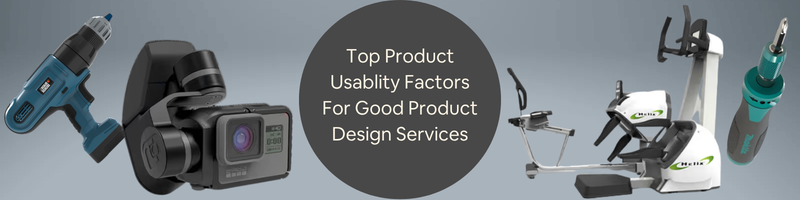
Top Product Usability Factors for Good Product Design Services & New Prototypes


Today’s post covers the top product usability factors for good product design services and new prototypes. A successful product is not only based on how well it is designed or perfectly created, but also on how usable it is for the users. It is important to note that their needs and interests must be the top priority, making sure it is not complicated to use and will not confuse them in any way. No matter how impressive a certain product may be, if it’s not relatable and aligned with the users’ interests, then it will surely lose its essence. 

That is why, in designing a product, it is very crucial to consider its usability right from the earliest stages of the process. Every designer should keep in mind how a certain product will work in real situations with the real users. Through thinking ahead, they could easily identify potential problems and come up with solutions that could improve the entire experience. In fact, many companies seek professional help in terms of product design services through platforms such as Cad Crowd, as they connect businesses with real, skilled product design experts who’ll help them in developing practical, efficient, and user-friendly products.

Understanding Product Usability in Physical Product Design

The main point of usability in designing a physical product is to create products that are easy for people to use and can be functional enough to accomplish their needs. It ensures a simple and convenient outcome in which people can interact without difficulty. When usability is integrated and considered in the design process, it would be a lot easier for users to know how a certain product works without needing to dig deeper into complex instructions. 

RELATED: How 3D Modeling is Beneficial in Product Manufacturing & New Product Development Services

That is why designers must keep in mind how the users of a certain product can benefit from it, considering all the expectations during production. Regardless of what kind of product it may be, whether a household appliance, a kitchen tool, or if it requires wearable product design services, it should really be designed to be easy for the user. If usability is affiliated, then everything will become easier and can provide a more enjoyable experience for the people who use it. 

What’s amazing about usability is that it really is centered on the idea of making everything clear and concise for the users. Its approach centralizes on creating and designing products that best align with the needs of the people who will use them. And when usability is properly incorporated, it mainly helps reduce errors when users are already using it, because it ensures clear labels, prevents misuse of a product, and avoids frustration throughout the experience.

And all throughout the designing process, designers also considered every side and factor just to clearly provide a product that will not cause any discomfort. Through this process, the final output of the product is not only guaranteed to be functional, but also something that is efficient and comfortable for all kinds of users who will consume the specific product.

RELATED: Why Your Business Needs Product Engineering Services to Innovate & Accelerate 

Ergonomics and human comfort

In designing a product, ergonomics plays a very important role since it ensures that every product is aligned with how the human body reacts or works well with it. It’s really crucial for new product designers not to skip its importance since a certain product must be comfortable to use and will not lead to any possible discomfort for any users, especially when it’s used for a long period of time. When the product that is being created is designed with proper ergonomics, it would be a lot safer for people to use it, especially in everyday life. 

For example, in designing a chair for the living room, designer must take into consideration the proper grips of every part, the size of it, and how its design supports a person’s back, either it is formed for comfort, since a chair is something we, people would sit, where we use as an important thing, where you can relax or in resting. So, it really is vital to look into the fact that it is safely designed because if it is poorly ergonomic, then there is a high risk of injuries or discomfort when the product is repeatedly used by the user. 

And in order to avoid these kinds of potential issues in the long run, product designers should be able to refine the design so that they can provide comfort and efficiency to any kind of product that could meet the user’s needs for the entire usability of the product. To add on, ergonomic is very important to consider with new product concept design firms since it aims to lessen or maybe diminish any physical stress on a person’s body when they use the certain product, especially when we design products that requires a lot of force or complex position or posture, and even more when it needed a repetitive use since it could possibly lead to body strains or any worse health issues in the long run.

RELATED: The True Cost of Injection Molding vs. 3D Printing for Product Prototyping Services

By integrating good ergonomics into product design, people can use the product more safely and with greater relaxation, maintaining the natural tone of their bodies without difficulty or discomfort, even after prolonged use or being on that specific thing. And as we know, a lot of products are really meant for a longer period of time, such as wearable items or equipment that needs to be handheld.

product engineering designers

Thus, applying ergonomics in any design ensures that these products give comfort rather than discomfort, so it could prevent possible injuries and any problems that could be a cause of a serious matter if not taken seriously in the early stages of designing. One thing for the product designer to keep in mind is that when a certain product feels natural to use and comfortable to be into, then users are most likely trustworthy and would probably use it most of the time and keep on buying that certain product without second-guessing because it’s finally proven to be good as they used it regularly.

Simple and intuitive product use

An effective product is something that is easy to understand right from the very start of using it. It is something that is easy for users to use without needing to think for a longer period of time about how it could be used. A product that is intuitive is what makes it a well-designed one, since users no longer need to be confused and just simply know how to use it easily, just by looking at it. It means its look already explains how it’s used or how it will function even before starting to use it. And it really is very beneficial for the users because it just quickly gives them clues without the need to be taught or for in-depth instructions.

RELATED: 3D Visualization Design Experts for Architecture & Product Design

Also, for designers, it will be beneficial to consider the importance of usability, as it helps them see how it could affect the user’s experience and gives them time to spot potential difficulties that may arise if they do not apply it in the early stages. Every small detail in the design of the product really matters. Whether how its placed or positioned, it all greatly comes with a great significance in the usability of the product. This is where the services of an expert product engineering designer are invaluable. If these intricate details were placed in very complex positions or poorly designed, then it could make the users confused and find it a little too hard to understand and use.

That is why prioritizing a product’s simplicity is important because it could make things easier and make it smoother for everyone to understand why it’s built like it and how it could be used. It would leave them with a positive impression as well, since as soon as they use that certain product, they will get to experience its function, and can prove how easy it is to use and how convenient it is in everyday use. After all, it’s not always how nice it looks, but also how usable and durable the thing is. It’s what makes the product last longer in the market, when it’s guaranteed to provide convenience and comfort to the users, especially when it is a product that is meant for repetitive or long-term use. 

Accessibility for different users

A well-designed product is something that considers the diversity of users and accommodates their differences. Something that is designed not just for a single scope of people, but rather a scope that is not limited to one area of potential consumers. That is why consumer product designers must really keep in mind how important it is to acknowledge the differences in every user, varying from physical abilities, since not all people are capable of handling or using a specific product, especially when it is too difficult to use.

RELATED: 3D Rendering Artists: What Sets Apart CGI Specialists & Talented Freelance Experts

In order for it to be extra accessible, not just for one person, but rather for anyone, they must consider creating it in a way that is more usable for as many people as possible that can use it, regardless of who and what they are. A design that is inclusive centralizes on making everyone able to use and try it in everyday use. So with this approach, you could produce products that can reach a lot of potential customers and don’t just limit in a certain age range of people and can even exceed common interests.

It is also very important because if a product is more accessible, then it can be effectively used and experienced. People, even the first-timers, can be encouraged to keep on using it in the long run. And one thing to note is, if the product modeling designer designs a certain product for accessibility, then it doesn’t just keep on encouraging a wide range of people, but also improves the entire usability and quality of a certain product that best suits everyone.

If a product is easy to understand, people can operate and use it more practically, which encourages more people to use the same kind of product, since it doesn’t require much effort or special assistance to apply and use. Just like, for example, if a certain shirt is built with something that has a very small button, then it can be very challenging for old people to close it, especially when they only have limited strength in their hands to close it. So, in order for it to be easier and more accessible for them to use, designers must reconsider designing it with larger buttons or easy-to-insert ones, and with labels that are easy to comprehend. 

RELATED: How to Choose Between Competing Concept Design Proposals with Product Design Firms

Choosing the right materials

In designing a product that specializes in its usability, it is important for the 3D product rendering design firm to choose the right materials for it. And the materials that best suit product designing are materials that are not just durable, but also consider how they could affect the comfort and the effectiveness of a certain product, especially when it is built for everyday use. It is really necessary to be careful in selecting the proper materials since the product must be reliable and strong for it to perform well and function efficiently, so as not to let the users feel any discomfort and frustration while using it. 

If a product is not carefully built with the right materials, then it will probably not deliver the quality and proper function that it is supposed to. It will lead to a lot more issues and potential errors that could surely impact the product’s longevity and the brand dignity of the business. Also, it could be somewhat costly in choosing the right and appropriate materials for it, but it could be a lot more costly if you choose the materials that aren’t appropriate for a certain product, since if it fails during the production process, then it will surely not succeed, especially if you have already launched it to the public. 

3D product modeling designers

For instance, in creating a product that is frequently handheld, then it is just right for the 3D product designers to choose materials that are non-slip, just like textured rubber or silicone, since these kind of materials helps in maintaining the right amount of grip and security, especially when it is used during wet or sweaty hands. It makes the experience safer and more comfortable for the users, ensuring that it won’t fall down or slip from their hands, making the whole experience more secure and keeping them from any frustrations and problems while using it.

RELATED: How Innovative Product Design Simplicity and Honesty Help Your Brand Grow

That is why, during the early stages of the production process, it is a must to select the right ones that would best fit into the specific function of the product to attain its durability and provide the best experience for the users in the long run.

Common usability mistakes in new products

In reality, a lot of products, especially the newly developed ones, have difficulties in the market because during the design process, usability was never given enough attention. And sometimes new product development designers skipped this very vital approach throughout the production. And a lot of cases happen where designers focus mostly on innovation or the aesthetic side of the creation process and overlook how users will actually use the product in the real world. And most of the reasons why new products fail are that usability isn’t considered during the development.

Although the idea is there and the creativity is present, when this very important approach is not given a chance to integrate, then the product would most likely be thrown on its downfall. That is why it is really important to give usability the right amount of process since a product’s success isn’t just all about how nice it looks or how well designed it is, but of course, they must put prioritization as well to the fact that the real essence of the A to the D will be gone when its usability isn’t put into a serious note.

Some common mistakes of usability that product design and development experts make, are that they don’t use the right materials, have uncomfortable designs, and even have complex controls. These problems are most likely seen only when users are starting to use the products or have just been released to the public. If usability isn’t applied in the early stages of production, then it would be a lot more problematic since the errors and issues will just be evident if it is already used by consumers.

RELATED: How CAD Modernizes Product Concept Design at Industrial Design Services Companies

That is why, by applying the principles of usability, they could test the prototypes with actual users, detect issues early, and provide solutions to mitigate these potential problems. And they could be able to identify the challenges early and can come up with solutions that could successfully resolve any issues before launching a certain product.

How product design services improve usability

Moreover, that is why having a professional help in designing a product is very important, especially when you aim to have a product that is not just top-notch in quality, but also in usability and durability. Seeking expert designers can greatly help, especially when the designers are well-equipped with knowledge that could provide the perfect balance of functionality and practicality in creating your dream product and bringing it to life. With the help of professional 3D designers, you can have a new selection of ideas that can contribute well to your own ideas and help refine them into a better and more successful one.

These professionals have enough knowledge and experience that could be of great help in developing your product for it to become more accessible to the users. These experts don’t just create your ideas, but also provide you with better solutions in times of identifying problems during the production process because these people know what they are doing, and they know how to spot errors early on and improve them right before you have your launching stage. Professional designers apply their research abilities to the usability testing of your product.

They do thorough research on how this certain product interacts with real users in the real world. They provide you with feedback and create effective solutions and improvements that will surely guarantee the best experience for the users. That is why working with professional new product designers, especially in the usability aspect of designing a product, is very important, as they develop your product in a way that is fast and organized, leaving you with satisfaction since they are very efficient in moving forward to provide you with a product that will be one of the successful products in the market.

RELATED: How to Reduce Costs on 3D Product Development with Remote CAD Experts for Companies

Although it can be costly to hire professionals for a specific product, if you aim to have a product that would succeed in the market, then you need to really invest in hiring professionals who could help you in achieving what’s best for your product. And the fact that you invested so much in your product just means how much you love making it the best and providing your potential customers with a product that is highly functional and accessible. 

One thing also to note in mind is that investing into these professionals will truly save you from a lot of possible expenses in the long run if you don’t apply it early on since this approach really helps you in spotting potential errors that arise after the launching process, it keeps you from spending more than how much you spent while applying usability and hiring professionals that could help you not spend much more.

Conclusion

Getting into the final thoughts of this article, it simply boils down to the fact that creating an effective product is a must to go beyond the idea of innovation and aestheticism. Developing a product, after all, isn’t just about its look and its facade, but most importantly, getting deeper into every intricate detail of it. A truly successful and well-designed product is something that provides accessibility and comfort for every user who gets to experience it.

RELATED: Guide for the New Product Design Process When Hiring a Design Services Firm

It is important to note that prioritizing usability factors in the development process is something every product rendering designer must not overlook, since it greatly helps them in the long run, especially in meeting the needs of the users. However, to be able to have this level of usability, it technically requires great help, as every best thing needs to be taken care of in the best way possible, and it must be handled with extra care and guidance by the best people, of course. 

Thus, in order to achieve its proper usability, it must be well-created by skillful professionals who are experts in a certain field, because when usability is built during the early stages of the process, then everything would surely come up as good as it can be, and can surely perform best and gain the trust of the users the moment they experience it. So, for every business that aims to have a product that is both functional and practical, they must collaborate with professional designers who have the right training and experience that could truly contribute a big difference in achieving the goal that they have in mind. 

How Cad Crowd can help

With the help of product designers, your product won’t only look good, but also be something that is efficient and practical to produce for the public. These highly skilled design for manufacturability (DFM) experts apply high-tech methods and integrate their technical skills to enhance the usability of your product, so that it performs successfully and effectively while not compromising its visual appeal. And though there are a lot of platforms that provide skillful experts, none of them provides the best among the best as Cad Crowd does. Cad Crowd provides and matches you with expert designers who are trained enough to develop prototypes that are functional and user-friendly. Contact us for a quote.

author avatar

MacKenzie Brown is the founder and CEO of Cad Crowd. With over 18 years of experience in launching and scaling platforms specializing in CAD services, product design, manufacturing, hardware, and software development, MacKenzie is a recognized authority in the engineering industry. Under his leadership, Cad Crowd serves esteemed clients like NASA, JPL, the U.S. Navy, and Fortune 500 companies, empowering innovators with access to high-quality design and engineering talent.

Connect with me: LinkedInXCad Crowd

The Importance of 3D Lifestyle Rendering and How Renderings Can Drive Your Company’s Sales


Why is 3D lifestyle rendering important for driving your company’s sales? First, some ground rules. We’re not here to bash silo (white background) rendering in any way, shape, or form. The fact that anybody can produce 3D modeling of a product and render it into high-quality imagery, albeit against the backdrop of absolutely nothing at all, is commendable in and of itself. Creating a 3D model from scratch is hard, and that’s why many people choose to buy ready-made assets. But buying isn’t always a feasible option, especially if your product comes with a lot of new features and has a peculiar enough shape that you can’t find anything even remotely close to it in the marketplace.

So you spend hours and days clicking every little icon in the CAD software to build the model. After a lot of complaining and likely some procrastinating now and then, the model is finally ready, and you generate a silo rendering of it to see the product in all its digital beauty. As promised, we won’t say silo rendering is bad. Silo rendering has its place in marketing, such as for straightforward diagrams, simple cutaway views, feature callouts, and the like. And then you realize that you can also do all of that, and then some, with lifestyle 3D rendering services. Instead of just putting the product in the image, you use complementary objects to fill the space.

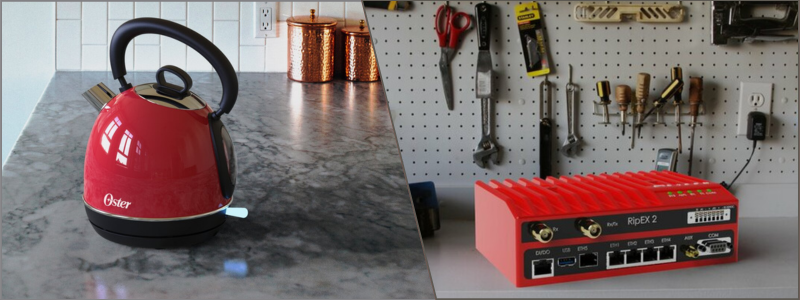
The idea is to place the product (the main object) within a curated yet realistic scene where it naturally belongs. For example, if your product is a claw hammer, the lifestyle rendering may also include other hand tools neatly arranged on a workbench. In general, lifestyle rendering aims to simulate an environment that both the product and the user may find agreeable. It doesn’t make much sense to depict a claw hammer being inside a fish tank or sitting on a nightstand, does it? Unless, of course, you’re recreating a scene from CSI.

RELATED: Top 51 3D Product Rendering Design & Best 3D Visualization Services Companies in the US

Mind you that because you may have anywhere from two to dozens of objects in the scene, the lighting work of a lifestyle rendering tends to be much more tedious than what you’d typically see in the silo kind. But will it be worth the extra effort? We’d argue yes, it very much will be, considering the sheer number of potential benefits you get from it. And even more so if you manage to hire an experienced 3D artist for the job at an affordable rate. You’d think that a specialist charging a wallet-friendly fee is hard to come by these days, in which case you’re only “mostly” correct.

If affordability is a must but you also need it done right the first time, a freelancing platform is a safe bet to strike a good balance between affordability, speed, and quality. Still, like everything else in the world, not every platform is created equal. And when it comes to 3D modeling, high fidelity rendering, and product visualization in general, nothing comes close to Cad Crowd. Positioning itself as a niche freelancing platform focused on product design and development, it has become home to thousands of talented 3D modelers and render artists with impressive portfolios. No matter the product, there’s always an experienced professional ready to take on even the most complex lifestyle rendering project any day of the week.

What you can get from a 3D lifestyle rendering

Give or take, with very few exceptions noted by the police, you can buy just about every kind of product online. This means relying solely on product pictures on the webpage to at least get an idea of what you’re buying. Some sellers use actual product photographs, which they take using the cameras built into the back of their fancy phones, while the smart ones let 3D lifestyle rendering do all the persuasion. Admittedly, a rendering is quite a lot more expensive than taking a simple snapshot, but it’s also quite a lot more versatile, so you can frame the final image any way you want.

RELATED: 3D Product Rendering Styles that Elevate Marketing with Design Companies & Freelance Services

Because a rendering doesn’t need a physical object at all, it’s almost wizardry to know that you can come up with a perfectly good imagery of a product, along with all other stuff around it, without staging a cumbersome photo op. There’s no camera involved, or unwieldy lighting umbrellas, chaotic cables on the floor, and props. All you need is a laptop to render a product. Sometimes, and we do have to whisper it, you can render a product even when it’s not yet produced or prototyped as a form of early marketing. Had somebody produced a rendering of an intricate clock 500 years ago, he would’ve been called Da Vinci.

But you don’t have to go back centuries in time and change your name to Leonardo to make a rendering of a product or perhaps just a concept of it. Product design companies today use lifestyle renderings as product images on online marketplaces, for social media campaigns, and, maybe, in brochures if there’s still such a thing. While many people assume, correctly, that the main purpose of computer-generated imagery is to make a product look better than it really is, marketing departments everywhere use lifestyle rendering for some other very good reasons as well.

Visualization with a context

Let’s refer back to our previous example of a claw hammer. When you see a visualization of a claw hammer on a webpage, there’s little question about what the product is for. It’s a hammer. You hit a nail squarely on the head with it, and sometimes pull a nail out with the claw. But then comes a question about how big it is, or whether the handle’s color looks fashionable as it hangs from the hammer loop of carpenter jeans. The easiest way to do this is to annotate the image with dimension callouts, including text that explains the product’s size and weight.

Although this makes the visualization informative indeed, it’s also not very interesting to look at. We don’t say that you shouldn’t add annotations; it’s just that there might be a better approach to achieve the same result. A lifestyle rendering places the claw hammer, amongst other products, in the same product category: workshop tools. The claw hammer is the main object, the focal point of the 3D visualization. Still, you can also see some complementary objects all around it, such as a bench vice, a monkey wrench, a power drill, a tape measure, a pair of pliers, screwdrivers, a handsaw, some chisels, spanners, and probably some more hammers.

product modeling services

RELATED: Freelance 3D Rendering Or Photography For Architecture: Which Is Better?

What makes the visualization even more convincing is that everything appears to have been thrown carelessly on a workbench in the corner of a garage. This gives the image a context and easy reference points for product dimensions. Lifestyle rendering doesn’t just present the product; it also conveys the product’s value. It shows you that the product looks good sitting in its intended environment.

Storytelling without words

Not every picture is worth a thousand words, but in the case of a product lifestyle rendering from a professional rendering artist, you can really tell a story without saying much at all. Imagine a picture of a claw hammer with its filthy rubber handle lying on the floor next to a half-done coffee table in a basement. There are some bar clamps and a few bottles of wood glue in the background, where you also see a jumble of 2x4s in varying lengths next to the stairs. So, what does such an image tell you? Everybody has a subjective opinion, and so what comes to your mind when you see the image might be completely different from what the next person thinks.

But one thing is certain: the hammer has been busy at work, perhaps in the hands of an enthusiastic DIYer who’s not exactly good at carpentry. Still, the claw hammer puts up with all the mistakes and soldier on despite incorrect measurements and user frustrations. This DIY person blames the tools all the time, but the hammer is such a good product that it withstands every single random blow to the head in good spirits. Although the user is an amateur, your claw hammer is a true professional. The claw hammer understands nobody wants to admit that they’re a terrible carpenter, so it just tries to do what it does best: hammer everything in sight.

The point is that a lifestyle rendering lets you craft an “imagined” situation where everyone can connect on an emotional level. As a 3D visualization designer, you’re in complete control of this digital environment. You get to decide what objects are visible on the frame and where they’re positioned in the scene. Selling a hammer is pretty difficult. Everyone already has one, and there’s only so much redesign you can do to make it functionally better than it already is.

And this is true for many other products, like paperclips, teapots, barbed wire, bubble wrap, spoons, and a whole range of hand tools. However, 3D lifestyle rendering opens the door to aspirational marketing, in which you sell not just a hammer, but the idea of using it and the excitement of working on a weekend carpentry project that never gets done.

RELATED: How To Visualize Consumer Products Using 3D Rendering Services For Your Company and Firm

Bulk marketing

If you’re selling a claw hammer, chances are you also sell other tools, from cutters and circular saws to butt chisels and electric hand planers. You might even sell rubber mallets and dead blow hammers, too. The good thing about lifestyle rendering is that the product rendering artist can place multiple products in the same scene without them stealing each other’s spotlight. It only makes perfect sense if a claw hammer is displayed on a pegboard alongside pliers, screwdrivers, a power drill, and a level.

Despite being full of product placements, the visualization doesn’t seem peculiar, as it is a common sight in a typical workshop. It appears so organic and realistic that it offers an excellent opportunity for an obvious yet stealthy bulk marketing. Rather than saying “Every customer who purchased a claw hammer also ordered some spanners and a toolbox to keep them” on an annoying pop-up on the webpage, the lifestyle rendering carries a set of “frequently bought together” items in a much more visually pleasing format.

Showcasing a collection of products from the same lineup in a cohesive aesthetic might encourage customers to spend more per transaction, boosting AOV (Average Order Value). Even if they don’t buy multiple products right away, with a lifestyle rendering the rendering 3D designer can at least give them an idea of how good their pegboards would look with a whole set of tools from the same brand. When all the tools have the same design language, colors, and logos, they can then tell every visiting neighbor that they’re card-carrying members of your company’s fan club. It might even persuade the neighbor to jump on the bandwagon.

RELATED: 10 Tips to Improve Photorealistic 3D Renderings for Design Companies & Freelance 3D Artists

Keeping up with the seasons

Any season except the snowy winter is perfect for outdoor activities, including perhaps light woodworking in the backyard. Regardless of the season, however, the only thing on your mind is to sell some more hammers and spanners. Being an experienced seller, you understand that people love to see a marketing effort that’s relevant to current events. For example, a lifestyle rendering of tools on a backyard bench looks good on a warm summer evening in July, but not on a snowy winter day before Christmas. Thankfully, a rendering doesn’t really care what season it is today, tomorrow, or next month.

You can have the product visualized to match any season, any day of the week. Seasonal product image is a nightmare in the world of traditional photography. Of course, a photographer can use fake snow for a Christmas marketing campaign or maybe a camera lens filter to mimic the orange sunset for an autumn sale. It’s at least a cumbersome job that involves a lot of props and studio equipment, not to mention being expensive. Photorealistic rendering services don’t need any of that. A professional render artist can generate any product image of any visual style to match any seasonal marketing campaign without even touching a camera or a prop of any sort.

product rendering services

It doesn’t really matter if you want to depict the hammer and spanner in a pouring rain near a fence of a cabin in the middle of a jungle, next to a frozen hose bib in the winter, inside a cozy garage full of Christmas decoration, in a toolbox at a construction site, underwater at SpongeBob’s house, hanging from Batman’s belt, or used by an astronaut fixing the Hubble telescope.

Nothing is impossible with lifestyle rendering. People are more likely to purchase a product when the imagery feels enticing, imaginative, and sometimes excessively exaggerated. With a creative product rendering designer on your side, you can help customers remember your product and give them a reason to keep coming back for more, to see if you have something new in store.

RELATED: Best 50 Sites to Hire Freelance 3D Modeling Experts and Remote 3D Designers for Companies

Put a stop to the scroll

We don’t know for sure if the average person today has a shorter attention span than a goldfish, but it’s probably safe to say they do. This assumption has everything to do with people’s tendency to give themselves a constant bombardment of short, endless, unimportant information from social media through their smartphones. People just keep scrolling through images and videos, they know they will forget within the next 10 seconds or so. That said, social media marketing is essential for establishing an online presence, launching targeted marketing campaigns, and gaining new customers.

A standard product photo shot in a small box with overly bright lighting would just be another drop of water in an ocean of ads on Facebook, YouTube, X, and whatever other platforms you use. A properly done lifestyle rendering, meaning one that’s made by a real 3D design professional rather than a sloppy AI, stands a good chance of being a scroll-stopper for one good reason: it looks more like real content rather than a typical ad. Two points need to be made here. First, everyone hates ads and is more likely to skip them as soon as they appear in a social media feed. It’s actually quite impressive how people can recognize an ad almost instantly each time they see one.

Second, we’re living in an attention economy where “human attention to product marketing” is a scarce commodity. In other words, if you want to drive sales, the right thing to do is to make people pay more attention to what you’re selling. Quality rendering appears on screen like high-end photography. It looks so realistic, with its precise geometry and lighting, that people think your hammer is the right tool to fix a space telescope. One thing to remember is that even if the storytelling is way over the top, the product imagery itself has to remain accurate in all its aspects, including materials, colors, dimensions, textures, etc.

When people stop scrolling to take a closer look at the rendering, they reward your effort with those invaluable seconds of attention, leading to increased engagement (comments, shares, or likes). This will then tell the algorithm that your content is worth greater exposure on the platform. Although it doesn’t immediately mean a boost in sales numbers, the additional exposure opens the door to better brand recognition. 

RELATED:  3D Modeling vs. 3D Rendering Services

Easy localization and personalization

Say you’re selling the hammer not only in the United States, but also in other countries as well. In every country where the product is available, it has a distinctive mark that depicts a national flag. For instance, the hammer sold in the US has the Star-Spangled Banner laser-etched on the head, the UK version features the Union Jack, the Japan model comes with the Flag of the Sun, and so forth. You have two typical options here: hire a photographer to shoot every version, or have everything rendered by a 3D product designer. The former might seem like the obvious, easy choice, but the latter certainly is the smarter thing to do.

The problem is that you don’t want just a product image with only a hammer on it. What you need is true, localized imagery, with cultural touches that match each country. For the visualization aimed at American buyers, you might want the imagery to depict a bald eagle carrying a hammer in its massive talons while eating an apple pie. At the same time, the lifestyle rendering for Japanese customers includes a bladesmith forging a katana using your hammer while cooking ramen. In any case, the hammer looks crisp with a clear view of a national flag on it. Are those images realistic?

Probably not in the strictest sense of the word, but the hallmark of a good rendering is “photorealistic,” meaning it needs to look as if it is a photograph. The scenario depicted in the lifestyle rendering doesn’t have to be plausible. It just has to look like a photograph. And not just location-based visualization. The specific target demographic also matters. A hammer isn’t a tool exclusive to carpentry. A wide variety of trades need a claw hammer on the job, such as blacksmiths, bricklayers, roofers, electricians, and even auto mechanics, especially the less skilled ones.

Digital visualization makes it easy to do lifestyle rendering for every target demographic. A photorealistic render artist can put the hammer together with the most common tools of a specific trade to appeal to a certain target consumer. The problem is not that photography cannot achieve the same result. It’s just that lifestyle rendering makes the process much more practical.

RELATED: 3D Product Visualization: Elevating Your Online Shopping Experience and Service for Modern Consumers

Wrapping it up

Making the switch from traditional photography and white background visualization to 3D lifestyle rendering isn’t merely about following a marketing trend. Creative lifestyle rendering has become a fundamental necessity today to differentiate your product from competitors and create a memorable campaign in a world where customers are quick to forget. Professional photography is expensive and impractical, whereas silo rendering can appear too generic to most people. Lifestyle rendering, on the other hand, helps you produce high-fidelity photography-like imagery without the limitation of props and equipment. You can create any atmosphere you want and deliver storytelling most imaginatively, while keeping costs down.

How Cad Crowd can help

The only real challenge with lifestyle rendering is finding the right person to do it in the first place. At Cad Crowd, we have thousands and thousands of the world’s most talented render artists who offer their services at competitive rates. The vast majority of the freelancers on the platform have quite the experience working with clients, big and small, from all over the world, on a broad range of product visualization projects, from simple all-mechanical toys and household appliances to complex electronics and sophisticated engineering marvels. Contact us for a free quote!

author avatar

MacKenzie Brown is the founder and CEO of Cad Crowd. With over 18 years of experience in launching and scaling platforms specializing in CAD services, product design, manufacturing, hardware, and software development, MacKenzie is a recognized authority in the engineering industry. Under his leadership, Cad Crowd serves esteemed clients like NASA, JPL, the U.S. Navy, and Fortune 500 companies, empowering innovators with access to high-quality design and engineering talent.

Connect with me: LinkedInXCad Crowd

What Are Proven Product Design Principles when Working with Companies & Freelancers?


Dieter Rams’ 10 principles of good design, introduced in the late 1970s, are arguably the most influential product design guidelines still implemented today. The principles basically outline the specific traits that make a product “good” from the perspective of both the product designers and the consumers. According to Rams, a good design must be innovative, useful, aesthetic, understandable, unobtrusive, honest, long-lasting, thorough down to the last detail, environmentally-friendly, and actually have as little design as possible. Considering the all-encompassing nature of the principles, it is likely that industrial design teams and agencies everywhere in the world implement them as part of the standard approach to new product development. 

That said, when you commission a new product to a design agency or a freelance industrial designer, you may need to reinforce those principles with some additional guidelines to keep the development process practical, target-oriented, and aiming at the right objectives. Before you take this the wrong way, let’s make it clear that no one says Rams’ design principles are lacking; however, it’s important to make sure that the product development professionals you hire don’t stray too far from your original product idea. 

At Cad Crowd, all the product designers have been thoroughly vetted for experience, expertise, professionalism, and communication skills before they can offer their services on the platform. This is to make sure that you always end up hiring professionals who are willing to listen to your ideas of a product, work solely based on your specific design requirements, and materialize the concept into something tangible in accordance with the project brief.

RELATED: Why Design for Manufacturability (DfM) is Essential for Product Success When Hiring a Design Firm

Design principles when commissioning an NPD project

Working with design agencies or freelance industrial designers for a new product development can be a challenging task. Much of the collaborative process is about maintaining good communication to keep everyone on the same page. And that’s why it’s necessary to put the following principles into practice.

Usefulness is the highest priority

It makes complete sense that usefulness is the most important indicator of a successful design. If people just cannot find any good use for the product, well then, you can say the design has failed miserably. “Usefulness” in this case means that the product can be utilized to help people achieve its intended benefits and earn the values it promises to deliver.

Values through usefulness could be functional, social, emotional, environmental, or financial. For example, a BIC pen lets you take notes comfortably without worries of ink-bleeding (functional); an exquisite Montblanc fountain pen impresses your coworkers (social); your Parker fineliner holds special place on your desk because it’s a gift from your kid (emotional); a wooden Pilot ballpoint pen serves an environmental value thanks to its sustainable material; a custom-made gold fountain pen might be a good investment. In any case, the product must offer certain values that consumers can understand and benefit from.

RELATED: The Importance of Iteration in Product Development & Working with Product Design Companies

A solution to an existing problem

In an attempt to be innovative, however, it’s sometimes easy for product concept design firms to fall into the trap of designing a product to solve a problem that doesn’t actually exist. For example, a company can probably create a backpack that opens from the bottom, an L-shaped TV remote, a computer mouse with touchscreen buttons, an all-steel acoustic guitar, and the like. 

One of the keys to market success is the product’s ability to provide a solution to a specific problem. For instance, the LifeStraw is widely popular as it gives you near instant access to clean water even in the wild; the iRobot Roomba has sold tens of millions of units as it makes cleaning much easier; the LED lamp has now become standard everywhere thanks to its energy-saving benefits. Those products thrive in the market simply because they deliver real benefits to consumers.

A good product focuses on the core features

There’s a reason why most companies create divisions or categorizations for their products. It’s almost always a bad idea to design a product that tries to be good at everything. Let’s say you hire a 3D design company to create footwear that’s supposed to be good for both hiking and running. While it’s certainly possible to invent a new kind of soles and materials to cater to each purpose, the design company has a monumental challenge to create a pair of shoes that performs great at both. This is why Adidas, Nike, and all other shoe brands group their products in various categories.

RELATED: Why Should You Hire Professional Product Design Companies and Services Experts

Instead of trying to create a master of none, it’s wise to build a product that excels at a specific purpose. To some extent, the approach projects the impression that your product is a specialized object designed for a particular task. Some say it’s counterintuitive to target only a small portion of the market, but the journey to broader recognition and popularity starts with a small success first. 

product design and development team

User experience is the product itself

Every single interaction someone has with the product becomes a user experience. While the two are technically different things, don’t be surprised if people think of them as one and the same. A product can be aesthetically pleasing, made of high-quality materials, and designed to be a sophisticated alternative to the competitors. But as soon as consumers realize the product is difficult to use with a confusing button layout and complex operation, they will associate it with inconvenience.

A prime example of the case is the Apple Magic Mouse. As far as the physical device is concerned, the mouse has a striking visual appeal with smooth design lines and curves all across the surface. Not only does the mouse look sleek and futuristic, but it also works well with macOS and iPadOS. The user experience, however, tells a different story. A resounding criticism concerns Apple’s design choice to put the charging port at the bottom, rendering the mouse useless when plugged into power. Even if the device itself is useful and does offer a good solution to use a mouse with an iPad, the overall user experience is ruined by the poorly positioned charging port. This is a frustrating interaction and ultimately what forces people to look for an alternative.

RELATED: Simple Strategies to Improve Your Product Innovation Process for Design Service Firms

You make the products for users, not for the designers

The main reason behind simplicity in design is to make the product as understandable as possible for users. The product designers need to try to see things from users’ perspectives, so the resulting product can meet (or even exceed) consumers’ expectations. It’s worth noting that users are entitled to have endless opinions about your product. They’ve bought it, giving them the right to share their experience of using the product with others; they can praise, criticize, and scrutinize the design any way they want.

It’s not uncommon for people to say there’s something wrong with the product and that it doesn’t work as intended for them. As a designer, you take the statement as constructive criticism. When users tell you there’s something wrong, they’re usually right. However, when they tell you how to fix the problem, more often than not, they’re wrong. Either way, don’t be so quick to dismiss any report of an issue. Instead, investigate the matter thoroughly and figure out the underlying issue. At the same time, never blindly follow users’ suggestions because they’re not professional consumer product designers.

Fit and finish are important

Attention to aesthetic details, including fit and finish, is just as crucial as functionality and usability. Consumers like to see well-made visual design, quality materials, and professional-looking branding elements. Proper fit and finish carry an implicit message that the people behind the product care about their consumers. Functionality does matter a lot. More than anything else, users want the product to be functional as intended and that it’s worth the money.

RELATED: Product Design Tips: How to Avoid Poorly Designed Products

But the market today is flooded with a lot of things with similar functionality, attempting to outdo each other. Unless your product is entirely new, so that you can’t position it under an existing category, an effective way to stand out in the crowd is to make it as aesthetically pleasing as possible. While it’s not a guarantee of success, good visual impact should earn you a reasonable chance to attract potential buyers.

Good expectations come from good products

A new product development is becoming like a race these days, where 3D design teams rush to reach market release as soon as possible just to be the first to get to store shelves. The idea is to release quickly and then refine the products based on the immediate feedback. It might seem an easy workaround to win the race, but it is laudable as far as the design workflow is concerned. Refinements and improvements based on feedback are advisable, as it’s a good method to discover and address issues raised by the users at large. That said, it doesn’t mean you can release a product solely for the purpose of gaining feedback.

consumer product design

No matter the product you release, make sure it’s the manifestation of your best attempt to provide a solution. If you release a halfway-finished product, consumers can only expect that it won’t deliver a satisfactory user experience. They have lower expectations for the product and lose trust in the brand. 

RELATED:  Ways 3D Product Rendering Services Can be Used for Marketing Products

Takeaway

Product designers do not work in a vacuum. To have the chance at success, they need people with ideas and consumers to appreciate their creations. Within the context of industrial design, a product comes into existence with the purpose of conveying values to the buyers and bringing profits to the companies/brands. They don’t just design a product for the sake of designing; they’re professionals who sell design services in the hope of delivering real benefits, not only to their employers but also to consumers who end up purchasing the product.

How Cad Crowd can help

You need to supplement the Rams’ good design principle with additional guidelines because you also have to think about various constraints, mainly the project timeline and budget. The extra guidelines aren’t meant to undermine the significance of Rams’ principles, but to keep the new product development within practical business perspectives. At Cad Crowd, you can find hundreds of industrial designers specializing in new product development as a whole, from early concept to ideation, all the way to market launch. Get a free quote today.

author avatar

MacKenzie Brown is the founder and CEO of Cad Crowd. With over 18 years of experience in launching and scaling platforms specializing in CAD services, product design, manufacturing, hardware, and software development, MacKenzie is a recognized authority in the engineering industry. Under his leadership, Cad Crowd serves esteemed clients like NASA, JPL, the U.S. Navy, and Fortune 500 companies, empowering innovators with access to high-quality design and engineering talent.

Connect with me: LinkedInXCad Crowd

Why 3D Product Models Are Replacing Traditional Photography for Product Design Companies


Why are 3D product models replacing traditional photography for product design companies? There was a time when the launch of a new product meant bringing in the whole crew: photographers, lighting experts, models, stylists, and even a studio cat who liked to nap in the lightbox. Each button, bottle, and bracelet needed to be photographed from every angle, then touched up and re-shot if someone sneezed near the set. It was a glamorous mess that often siphoned both time and budget.

Why 3D product models as opposed to traditional photography?

Today, product design firms quietly ditch the cameras and tripods for something far more precise, flexible, and futuristic: 3D product modeling. Instead of fighting with reflections, props, and post-production headaches, today’s brands turn to digital artists who can compose photorealistic product visuals with little more than special software and a keen eye for detail. Results? Absolutely stunning at times, such that even seasoned designers stop and squint, trying to tell whether they’re looking at a render or a photograph.

And finding those experts to make that magic happen isn’t tough either. Cad Crowd connects businesses with professional freelancers in 3D modeling services to create products in vivid digital designs of jewelry and electronics, to furniture and fashion accessories. A ready global pool of talented freelancers is just waiting for the opportunity to create models that will raise eyebrows even among the most ardent photographers. But how did we get here? Why are product design companies choosing 3D renders over traditional photography? What’s so irresistible about the digital shift that even old-school creatives have decided to take the leap? Let us dive in.

RELATED: Pros and Cons of Hiring a Freelance 3D Modeler

From cameras to code

Traditional product photography has always had a certain artistic flair to it. It’s difficult to deny the beauty in real-world lighting, textures, and the overall tactile sense that comes with capturing something tangible. The process that goes behind it, however, is not quite so romantic.

Think of what it takes to get just one great product photo:

  • Creating or renting a suitable studio setup.
  • Camera and lens hire and sale; lighting.
  • Constant adjustments of light to avoid reflections.
  • Coordinate with photographers, stylists, and retouchers.
  • Extensive image editing to make every shot perfect.

Now, do that whole process for each color, size, or packaging-style variation of that same product. The costs multiply faster than you can say “retouching fee.” 3D modeling designers flips that process on its head. Instead of capturing light bouncing off of a real object, artists build the product inside a computer. And when that digital version exists, it can be rotated, retextured, resized, and lit in infinite ways. No new photo shoot. No rescheduling. No misplaced USB drives full of RAW files.

What makes this powerful to product design companies is the level of control involved: traditional photography gets you what the camera sees; 3D product models get you what your imagination wants. Every angle, every shadow, every shine can be precisely tuned. It is like going from marble sculpture to pixel editing-no marble dust, chipped edges, or angry clients asking for a new photo shoot because the lighting looks too moody.

RELATED: How to Balance Product Manufacturing Cost and Product Features for Profitability

Unlimited creative flexibility

But one major reason 3D product modeling services is taking over in product photography is quite simple: it removes limitations. In the studio, there are practical boundaries: there is gravity, light bounces in very inconvenient ways, and glass reflects everything, including the elbow of the photographer. With 3D product models, goodbye to all that.

  • Want to make your new smartwatch air-levitate in midair with elegance? Easy.
  • Want the latest sneaker with lightning bolts and smoke around it? Done.
  • Want a jewelry collection on the surface of the moon for a campaign? Sure thing-no rocket fuel needed.

Nothing provides quite as much creative freedom as 3D modeling. Companies can visualize products in environments that, logistically, are impossible or just financially insane to shoot in real life. In lieu of renting a tropical island to photograph a bottle of sunscreen, a 3D artist can recreate one down to the last palm leaf. This really helps in the case of concept products that are not even manufactured yet.

Product design companies create prototypes, showcase upcoming launches, and use totally realistic 3D renders. This gives a head start to the marketing team in rolling out campaigns when the actual product is not available, hence saving time and creating a buzz much in advance.

3D product models

That is where platforms like Cad Crowd step in: many of the freelance 3D designers there have industrial design and engineering backgrounds, so they can make the product look good while also knowing how to make it accurate. This makes a big difference in cases when a company needs visuals reflecting true dimensions and materials, rather than pure artistic imagination. That would involve hiring a freelancer to render a diamond ring, complete with correct stone cuts, metal finishes, and lighting reflections, by a jewelry designer. The output would be similar to that in a luxury photo shoot with no diamond under the camera lens.

RELATED: The Importance of Iteration in Product Development & Working with Product Design Companies

Quicker production with lower costs

Anyone who has ever managed a photo shoot knows how quickly the costs mount up: studio rentals, photographer fees, catering, transportation, props, and retouching add up to a small mountain of bills. And that’s before anybody decides the product should be reshot with “softer lighting” or “more energy.” With the help of 3D modelers, nearly all of these types of costs are sidestepped. Once 3D product models are created, companies can reuse it endlessly: change the background, update the packaging, or show seasonal variants without a single new shoot.

Want a Christmas version of your product? Slap some digital snowflakes on it. Want to make a summer edition? Use a different color palette, refresh the textures, and adjust the lighting to make it feel like a sunny beach: A 3D model is cheaper than a professional photo session, especially when the reusability aspect is factored in. The output can be repurposed further for marketing campaigns, listing on e-commerce websites, investor presentations, and even AR applications and VR showrooms.

That level of efficiency has made 3D rendering services particularly popular with startups and small brands that want high-quality visuals without breaking the bank. Even with smaller budgets, they can be just as visually competitive as much bigger companies. Again, websites like Cad Crowd make this possible: businesses are directly connected with skilled freelancers who can work within whatever a particular budget is. Whether it be a hyper-realistic render of jewelry or just a simple mockup for a prototype, you can find someone to fit your style and budget.

RELATED: How to Use 3D Product Modeling and 3D Product Photography for Company Advertising

Realism in competition with reality

For a long time, 3D renders carried some kind of stigma with them: they looked “too digital.” The surfaces looked plastic, the shadows too sharp, and the reflections felt fake. Any person who saw one could tell straightaway that it was computer-generated. Advanced rendering technologies erase the line from real to digital, enabling today’s 3D renderers to simulate with uncanny precision how light will interact with every surface, from brushed aluminum to velvet fabric. This is made possible through a series of advanced, physically based rendering techniques that calculate how materials would really act in the real world under given conditions of lighting.

The results are 3D product models that don’t lie, not even to the most persnickety of eyes. That bottle of perfume gleaming under soft studio lights? It may never have existed in the physical world. That watch, with its faint glint of sunlight reflecting off its metal case? Completely virtual. These days, even droplets of condensation on a can of soda can be rendered so lifelike that you might instinctively reach for a napkin. That realism is revolutionary in product design firms in that one does not have to wait for prototypes to be made before starting to market the products. Materially real visuals can be presented anytime during their development and be showcased to investors, clients, and customers.

If perfection is the goal, well, it is achievable with 3D product design experts. A photographer can shoot only what is there to be shot, blemishes and all. A 3D artist has the capability to make perfect symmetry, ideal lighting, and even adjust the angle of reflection on a gemstone until it looks like magic. This is the level of detail at which freelancers on Cad Crowd really shine. Many use industry-standard enhancement software like Blender, KeyShot, or SolidWorks to take visuals to a level that often leaves clients wondering if they are looking at photographs.

RELATED: Product-Centric vs. Customer-Centric: Which Is Best for Consumer Product Design Companies?

Scalability for every product line

Now, try to imagine having to deal with a brand producing dozens or hundreds of different products in just one year. Shooting each one individually is a logistical nightmare: scheduling, lighting, editing, and storing all those thousands of high-resolution images will sap the energy of your team-and yours. Because 3D product models are infinitely scalable, once a product has been modeled by the product rendering designer, its variations need only a few clicks to be complete. Want that handbag in a dozen colors? Swap out the texture maps. Want the bottle design with three different cap styles? Swap them digitally.

This scalability is especially useful for e-commerce brands-online shoppers want to see all the options before making a purchase: color variant, material finish, packaging style-you name it. Physically shooting all those variations would take weeks; digitally rendering them takes hours, sometimes minutes. Better still, once the digital assets exist, they can be used across numerous channels: the same 3D model that appears on a website can feature in social media videos, virtual catalogs, or even in augmented reality shopping apps where customers can virtually “try” out products.

3d product rendering designers

Brands like IKEA, Nike, and Apple have already made this shift. The reason they use a 3D CAD modeling professional is that the result is consistency across the world, not because it saves time. Each product is exactly the same, irrespective of the language or region. Indeed, for product design companies that have been taking the lead in this direction, 3D modeling has been found to be not only quicker in yielding results but also more reliable at keeping the standards of aesthetics. Besides, through freelance sites such as Cad Crowd, it’s easy to scale up by bringing in a number of artists who work within the same specifications and style guidelines.

RELATED: Why Product Design Services Use Photorealistic Rendering for Marketing New Products

Sustainability: a digital green revolution

For all its charm, photography is not an especially eco-friendly profession. Photo shoots require transportation and electricity, sets are made of material, and disposable props-and often a fair amount of waste. Even simple things, like product packaging design services for a shoot-boxes, bottles, display stands-can sometimes add up to a surprising environmental footprint. Meanwhile, the 3D modeling of a product is neat and green, with props on the computer, no printing of backdrops, no packaging wasted, and no carbon emissions from hauling equipment across cities.

Moving into 3D modeling is an easy way for brands, most of which today are focused on sustainability, to lessen the ecological footprint of their work without sacrificing quality visuals in their communications. It really fits in with the eco-conscious image many consumers expect from modern brands. This is more than a marketing angle; this is full-on evolution as to how creative production is taking place. An entire catalog of imagery, which once required a crew, studio, and truckload of props, can now be designed by one artist at a desk.

Even revision is greener. Rather than reshooting a product for no other reason than its package has changed, even to the slightest degree, a company can update a digital file in just minutes. Less waste. More flexibility. Better for everyone. Most of the 3D CAD freelancers, like Cad Crowd, work remotely. That means a global network of artists further streamlines the creative pipeline by reducing unnecessary travel and overhead, contributing to its efficiency and sustainability.

RELATED: How Successful Companies Utilize 3D Product Modeling Services for Compelling Product Imagery

Ideal for marketing and pre-launch campaigns

Timing means everything in marketing, and very often the firm needs visuals well in advance of when such a product exists. This is impossible with photography without a prototype, but it’s a standard practice within 3D modeling. Product design firms create anticipation via 3-D renders many months in advance. This means high-quality images and videos can circulate through all digital ads, websites, and social platforms long in advance of any actual date of manufacture, and customers talk about and may even desire something that technically doesn’t exist.

The same is true with crowdfunding. In the case of crowdfunding campaigns, it was mostly impossible to afford physical prototypes, let alone full photo shoots. They went live on Kickstarter or Indiegogo with detailed 3D renders showing what their future product would look like. Many times, those visuals make all the difference between getting ignored and reaching full funding. It doesn’t hurt that 3D renders can be animated with the help of 3D animation designers. Rather than static photos, dynamic visuals can show rotating views, exploded component animations, or lifestyle scenes-all digital in their creation.

It really lets the consumer understand the features of the product way better than any photo could. Let’s be upfront: today, digital runs on visuals that can stop scrolling in a second. It is about scroll-stopping content, period. And for that, no conventional photo can ever compete with a photorealistically rendered 3D view of a sparkling perfume bottle or a luxury ring, simply because it offers creative control over composition, lighting, and mood. Now, most brands use a mix of 3D assets and photography; both are utilized in one campaign, the difference being that the 3D renders will do much of the heavy lifting, while, sparingly, photography is used for lifestyle shots.

RELATED: Sustainable Product Design and Product Development Principles for Firms to Consider

This hybrid approach gives flexibility without sacrifice in quality. This is a marketing advantage that freelancers from Cad Crowd understand full well, as they design models with promotional materials, social ads, and product launch visuals in mind. It’s in the blending of technical skill and creative direction where they are really so valued in the work of a product design team in need of speed and artistry.

Boundaryless collaboration

Another reason product design and development firms are embracing 3D modeling is that collaboration has gotten so much easier. Traditional photography requires everyone to be in the same place at the same time. Trying to coordinate the schedules of designers, photographers, and marketing teams for days of travel and shooting can quickly turn into one big logistical headache. 3D modeling removes this obstacle altogether. A designer based in London collaborates perfectly with a 3D artist operating from Milan, while the marketing manager based in Manchester sees the result in real time. Files can be transmitted immediately, and feedback loops can be significantly reduced; changes become much faster.

Due to the fact that the entire creative process has taken place in the digital space, projects don’t slow down. This means firms can establish a long-term relationship with trusted freelance professionals. In the case of product modeling, updates for the same model can be assigned to the same artist when there are new releases, adjustments in packaging, or seasonal collections. Continuity like this will ensure that there is consistency and professionalism in the visual branding. Most firms find their go-to freelancers at Cad Crowd, where they can set milestones and collaborate directly to ensure creative control from start to finish.

RELATED: Differences Between 3D Rendering and 3D Visualization Services

The future of product visualization

It can safely be said that 3D modeling is no longer the future but is, in fact, the present. As virtual and augmented reality, together with AI-powered rendering, continue to develop, so does the future of product visualization. But soon, thanks to augmented reality apps, customers will be able to do more on a website than just see 3-D models-they’ll rotate them, test colors, and visualize them inside their homes.

The same artists and photorealistic rendering designers doing today’s photorealistic renders are laying the groundwork for that future. It is this investment in 3D modeling that keeps these product design companies ahead of the game. This does not replace photography but is a redefinition of how products will be designed, marketed, and experienced.

Conclusion

Although classic product photography may have some sort of nostalgic value to it, 3D modeling has surely taken over in the case of modern product design companies. It ensures precision, flexibility, and creative control impossible with any camera. Digital models let businesses experiment freely, from concept to launch, in ways that save on costs while showcasing their products in stellar detail well before their actual manufacture.

If your company is ready to make that leap into the future of product visualization services, Cad Crowd is the avenue through which to take it. Cad Crowd provides a rock-solid platform that connects businesses with highly qualified freelancers in the 3D product models, rendering, and visualization field. Find expert talent to help bring your ideas to life with everything from hyper-realistic prototypes to fully cataloged collections of digital assets. Consider Cad Crowd today and discover how the right 3D expert can transform how your brand conceptualizes, markets, and shines online. Get a quote today.

author avatar

MacKenzie Brown is the founder and CEO of Cad Crowd. With over 18 years of experience in launching and scaling platforms specializing in CAD services, product design, manufacturing, hardware, and software development, MacKenzie is a recognized authority in the engineering industry. Under his leadership, Cad Crowd serves esteemed clients like NASA, JPL, the U.S. Navy, and Fortune 500 companies, empowering innovators with access to high-quality design and engineering talent.

Connect with me: LinkedInXCad Crowd

Top 35 Websites to Hire Freelance Fusion 360 Experts for CAD Design & 3D Modeling Services


Do you need to hire and collaborate with a Fusion 360 specialist? Not only a CAD aficionado but a master who will make your sketch, napkin doodle, or product idea beautiful 3D magic? You’ve found your spot. Whether you’re concepting a drone, dental instrument, or desk lamp, this top 35 websites to hire freelance Fusion 360 experts has you covered. We’ve burrowed deep beneath the surface selections to provide you with the best-kept secrets and the heavy hitters. No fluff, please, no duplication. Simple and pure, carefully researched platforms that provide real modeling brawn for your next Fusion 360 showpiece.

cadcrowd-logo

1. Cad Crowd

Cad Crowd is the queen of freelance Fusion 360 masters. All of the masters are thoroughly screened to high standards to bring clients the best of the best. The site provides personalized matching, and it will pair you with engineering design professionals or designers who suit your project requirements. If you want to create a new prototype or refine an existing one, Cad Crowd supports flat-rate or hourly arrangements. With industry-leading CAD and CAM collaboration tools, it’s where to access product design at all levels. Businesses are able to access a global talent pool with technical expertise and creativity, all supported by a secure platform.

Website: Cadcrowd.com

RELATED: 3D Modeling Software or CAD Programs: What Should My Designer Use?

contracom logo

2. Contra

Contra is a new freelance design and tech talent platform. Its tidy, web-based interface shows the portfolio of each freelancer instead of resumes, so clients can quickly scan Fusion 360 skills. Contra accommodates direct contracts with no commission fee on either party, which allows open, clear collaboration. Freelancer profiles on Contra emphasize deliverables, previous clients, and specialty areas, making it easy to find a person whose expertise matches the complexity of your project. Ideal for small businesses and startups wanting to experiment or grow quickly. Although comparatively more recently launched into the market, Contra’s approach is designer-centric, appealing to professional, autonomous workers who provide 3D design services on competitive fees and terms.

Website: Contra.com

guru.com-logo

3. Guru

Guru is a highly established marketplace of freelancers that has flexibility married with accountability. Its adaptable project management tools accommodate everything from fixed-cost CAD projects right through to regular hour-by-hour projects. Guru excels in engineering services, and you’ll find many Fusion 360 pros ready for complex modeling, drafting, or CAM work. Employers can review work samples, collaborate through secure workrooms, and set up payment through milestone agreements. The platform’s emphasis on verified skills and long-term engagement makes it attractive for repeat collaboration. It’s especially ideal for businesses with multiple layers of projects in one building, with the additional promise of built-in quality assurance.

Website: Guru.com

Toptal-logo

4. Toptal

Toptal is the go-to name when it comes to crème de la crème talent. The platform claims to have the top 3% of freelance experts – ideal for businesses and mission-critical Fusion 360 projects. Every one of the 3D design freelancers is put through a series of tests involving languages, technical abilities, and sample projects. Toptal stands out by offering dedicated support throughout the hiring process and ongoing engagement. Ideal for companies seeking high-precision modeling, simulation, or manufacturing design work, the platform charges premium rates but delivers equally premium results. With its concierge-style matching, you’re paired with freelancers who meet both technical and industry-specific needs. It’s an enterprise-level solution for challenging CAD tasks.

Website: Toptal

99designs-logo

5. 99designs

It’s most well-known for its graphical design competitions, but 99designs also hosts occasional 3D and CAD-based competitions. Companies seeking concept product design services or rapid visualizations can crowdsource several ideas from international designers. You upload your brief, receive submissions, and only pay for the winning submission. It’s an effective way to gain exposure to many points of view and creative spins, particularly at the early stages of product development. Though not a typical CAD website, you’ll be able to discover skilled Fusion 360 users with visual sensibility and technical skill. It is most valuable when you need variety, not only execution, and are willing to consider outside the usual avenues for creative talent.

Website: 99Designs.com

RELATED: What is the Best Clothing Design Software for 3D Rendering & Modeling Apparel?

DesignCrowd logo

6. DesignCrowd

DesignCrowd provides an open-source approach to creative outsourcing, both difficult and direct hiring. Though best known as a platform for 2D and graphic design experts, there is also a small but talented group of Fusion 360 freelancers. You can do a design challenge or hire based on a portfolio review. The design format is conducive to creative innovation and quick iteration, ideal for initial design stages, mockups, and product concepts. Clients like the freedom to come up with multiple ideas prior to committing to a full build. For those at ease with dealing with creative freelancers and willing to break away from conventional CAD paradigms, DesignCrowd has surprises in store.

Website: Designcrowd.com

Aquent

7. Aquent

Aquent offers a recruiting agency model to the freelance space. It employs a hybrid combination of AI-enabled tools and human recruiters to pair talent with assignments, perfect for big companies that require top-quality Fusion 360 work. Aquent filters 3D modeling design freelancers on technical competence, communication, and cultural alignment. It’s usually applied to long-term contract jobs, staff augmentation, or enterprise-sized projects where quality and deadline are most critical. While not Fusion 360-specific, Aquent’s quality reputation both in design and technology ensures you’ll be able to get skilled CAD experts who know what you’re seeking. It’s an elite solution for teams that prioritize performance and reliability.

Website: Aquent.com

CGHERO logo

8. CGHero

CGHero is a hidden gem of a niche 3D freelance marketplace that matches customers with a screened group of model-making professionals, animators, and renderers, such as Fusion 360 specialists. CGHero is unique in that it is a specialist in the gaming, product design services, and architectural spaces. Freelancers on this site who specialize in Fusion 360 tend to have compound skill sets that combine mechanical design with photorealism rendering or animation. Projects are managed through CGHero’s platform, ensuring speedy building, timeline tracking, and milestone monitoring. Whether creating a prototype or animating a CAD assembly, CGHero ensures technical artistry with professional-grade execution.

Website: Cghero.com

RELATED: Important Benefits of Industrial Product Design – Using Industrial Product Design Services 

CGtrader

9. CGTrader

CGTrader is a highly rated 3D model marketplace where you can also source talented Fusion 360 freelancers for bespoke design work. Aside from access to a huge library of pre-existing 3D models, the site also has a freelance component where you can commission designers to produce custom CAD models. Fusion 360 professionals listed here are probably specialists in everything from architectural visualization to machinery components. You can sift through portfolios, set terms, and examine proposals before committing to work. CGTrader is suitable for both one-time modeling projects and longer-term product development work. Its robust rating system and mature community ensure quality and trust in freelance employment.

Website: Cgtrader.com

Truelancer logo

10. Truelancer

Truelancer is an international freelance site with an increasing number of CAD and engineering resources available, including Fusion 360 experts. Location filtering is offered, and through the use of this, it is simple to engage product engineering freelancers in certain locations, ideal for those who require local experts. Projects are listed, competitive offers are received, and communication with freelancers is done through a simple interface. Secure payments through escrow are facilitated by Truelancer, and both short-term tasks and long-term engagements are offered. It is particularly useful for startups or businesses requiring affordable yet technically competent experts. Truelancer unites businesses with emerging CAD professionals from around the world with flexible employment formats and open profiles.

Website: Truelancer.com

Prolinker

11. ProLinker

ProLinker is a hand-curated search engine for freelance CAD engineers and CAD drafting professionals who use Fusion 360. It boasts of assisting clients in finding an appropriate freelancer through matched availability, skill set, and professional network. Unlike the job of being a standard gig marketplace, it algorithmically ranks results with high-priority, high-quality matches. ProLinker is ideal for individuals who wish to have a hands-on search experience with minimal distraction from unrelated bids. The lean platform design promotes rapid decision-making, allowing freelancers to work without incurring commission fees. If you have expertise in the management of freelance collaboration, ProLinker makes it easy to find talent for complicated design needs.

Website: Prolinker.com

RELATED: What Is Product Design and Why Is It Important?

Cadjobshunter

12. CADjobs.com

CADjobs.com is a specialist job board for CAD professionals and thus a preferred source among employers looking for freelance or contract Fusion 360 designers. It deals in engineering, drafting, and architecture design employment, so each listing pertains to the field. Recruiters can post job ads with particular software requirements, and freelancers search and apply. Unlike broad-based websites, CADjobs.com has a targeted audience with often intense experience working in Fusion 360 and the like. It’s particularly useful for consultancies, design firms, and contractors who want access to serious, career-focused CAD professionals without having to sift through meaningless resumes.

Website: Cadjobs.com

Autodesk-Fusion-360

13. Fusion 360 Forums (Autodesk Community)

Autodesk’s Fusion 360 forums are another good place to find freelance 3D product rendering specialists to hire. In addition to technical forums, the site features a collaboration and services posting section. Experienced users will post notifications of freelance work availability or reply to requests for assistance. It’s a cost-effective, high-trust environment for finding professionals who already think and breathe Fusion 360. You can search post histories to gauge someone’s expertise before contacting them. While the lack of integrated contracts or payment protection might turn off some, it’s an excellent place to find qualified freelancers who have a background in community service and troubleshooting.

Website: Forums.autodesk.com

grabcad

14. GrabCAD Community & Job Board

GrabCAD boasts an enormous repository of shared CAD models and engineering tools, but also sports an active job board, where Fusion 360 freelancers are in touch with employers. GrabCAD serves product developers, industrial designers, and mechanical engineers. Its peer-based approach allows it to be simple to carry on a discussion with individuals who appreciate peer respect as much as technical proficiency. The job board can be used for direct listing of freelancing positions, while discussion forums can be used as unofficial networking platforms. If you must source someone possessing technical skills together with community involvement, GrabCAD provides an exclusive pool of working talent.

Website: Grabcad.com

RELATED: Best 50 Sites to Hire Freelance Mechanical Engineers & Mechanical Designers for Your Company

Slashdot

15. Slashdot CAD Libraries

Slashdot’s CAD libraries have good open-source design materials, and its user forums have postings referencing freelance work, most of it a Fusion 360 task. Not technically an actual freelance site, per se, but due to Slashdot’s developer- and engineer-friendly culture, it’s fertile ground for technical partnerships. It’s perfect for firms looking for open-source visibility, hacker mentality, or software-specific skill freelancers. Fusion 360 experts here usually arrive with a combination of street-level ingenuity and good engineering. To locate suitable participants for specialist tasks or proof-of-concept product design assignments, reaching out via Slashdot forums may connect to fairly qualified and active partners.

Website: Slashdot.org

Weworkremotely

16. We Work Remotely

We Work Remotely is another well-known remote work board, one utilized by tech startups and conglomerates alike. Though it’s full-time employment-specialized, the site does list freelance CAD jobs occasionally, some of which involve Fusion 360. The hiring managers list complete project postings, and 2D & 3D freelancers simply apply. With its global reach and select listings, it’s a good fit for companies that wish to have dedicated remote staff without using bidding sites. You will not see hundreds of CAD jobs on this site, but those that are will be from solid companies seeking honest design assistance on flexible schedules.

Website: Weworkremotely.com

FlexJobs logo

17. FlexJobs

FlexJobs provides carefully screened job listings for home work and flexible work, including freelance design and engineering projects. It’s a subscription website, so fewer spam resumes and improved talent sit on both sides. Fusion 360 employment will sometimes appear, particularly in prototype design services, consumer goods, and custom engineering services. Employers receive a focused bunch of serious professionals, and freelancers view filtered opportunities. If you need a part-time or full-time Fusion 360 job and don’t have time to sort out the mess of open marketplaces, ZipRecruiter is worth it.

Website: Flexjobs.com

RELATED: Designing Prototypes: 3D Design Services for Inventors and Companies

ZipRecruiter Logo

18. ZipRecruiter

While ZipRecruiter’s widest fame is for full-time jobs, it’s being utilized by businesses to advertise freelance and contract employment – CAD and Fusion 360 gigs, too. It syndicates employment advertisements to 100+ affiliate sites, giving them excellent exposure. You can categorize jobs as freelance, project work, or remote, which draws the right kind of candidate. Fusion 360 freelancers scanning job boards for openings might notice your ad even beyond ZipRecruiter’s platform. It is not ideal for small, short-term design projects, but may be suitable for bigger-scope freelance work or businesses scaling CAD operations.

Website: Ziprecruiter.ie

solidgigs logo

19. SolidGigs

SolidGigs hand-picks freelance job leads and sends them to your inbox. It’s not specific to Fusion 360, though CAD work is consistently featured, especially for product designers, engineers, and industrial creatives. Freelancers have live leads without having to search platforms daily. For employers, it’s a way to reach motivated and ready-to-hire professionals. If you’re posting a Fusion 360 role on a major freelance site, there’s a good chance SolidGigs will pick it up and deliver it to niche specialists. It’s a clever add-on resource for locating vetted people without conventional search burnout.

Website: Solidgigs.com

kolabtree logo

20. Kolabtree

Kolabtree originally focused on providing a platform for researchers and PhDs to link to technical freelance projects and has since grown to include engineers and CAD professionals, particularly in med-tech and consumer goods. Fusion 360 experts on Kolabtree have good academic or scientific backgrounds, perfect for intricate modeling, simulations, or prototype development needing analytical depth. You can upload comprehensive briefs and get bids from freelancers whose credentials have been checked. It’s particularly well-suited to biotech, industrial R&D, and electronic product startups. When accuracy is important and paperwork matters, Kolabtree provides a rare combination of engineering and academic talent.

Website: Kolabtree.com

RELATED: CAD Consulting Services by Freelance Contractors on Cad Crowd

Codeable logo

21. Codeable

Codeable is an expert in its WordPress development field, but its own verification system is the norm for freelance matching. While it does not currently provide Fusion 360 talent for hire, its concept is intriguing: pre-screened freelancers, screened project descriptions before they are posted, and clients paired up by themselves. Codeable’s model-based sites could be the way of the future for CAD freelancing – quality over quantity. It’s a blueprint for how specialist marketplaces can begin to engage design engineering professionals, designers, and land developers. Not yet ready for work on Fusion 360, but an idea to keep an eye on.

Website: Codeable.io

peopleperhour

22. PeoplePerHour

UK-based freelance platform with a vast range of technical and creative professionals, from CAD modeling designers with qualifications to industrial engineers and product visualization artists, PeoplePerHour offers Fusion 360 experts. AI is used for optimum recommendations and flexible hiring options, from hourly to full projects. Payments are secured through its escrow system, and collaboration is made possible using project boards. You may scan “Hourlies,” pre-priced jobs, or post bespoke briefs. A combination of flexibility, screening, and a Europe-bounded talent pool renders PeoplePerHour a great choice for organizations requiring mid-level to expert CAD services.

Website: Peopleperhour.com

Behance-logo-small

23. Behance

Behance is Adobe’s portfolio-sharing platform where numerous CAD and Fusion 360 experts post finished work. It’s less of a job board and more of a discovery tool: you browse portfolios and reach out directly to freelancers whose style or technical execution matches your needs. While there’s no built-in contract or payment system, the quality of showcased work is often top-notch. You’ll find 3D rendering designers who combine artistic vision with technical CAD skills, ideal for product aesthetics, conceptual rendering, or branding-driven design. Behance is particularly worthwhile if visual narration is a major aspect of your Fusion 360 project.

Website: Behance.net

RELATED: 3D Modeling vs. 3D Rendering Services

dribbble.com-logo

24. Dribbble

Dribbble is a design-focused platform on which visual creatives—some of whom use Fusion 360 – share their work. While it is most densely populated with UI/UX, branding, and illustration, it also has a smaller but increasing subsection of industrial designers and 3D artists. Freelance projects are either listed on the job board or initiated through direct solicitation. While not perfect for technical CAD work, you do find Fusion 360 modelers who have an eye for design and presentation. Intentionally created for beauty to be just as important as engineering precision, Dribbble is used to discover talent that walks the line between form and function.

Website: Dribbble.com

Freelancer

25. Freelancer.com Forums

In addition to its bidding website, Freelancer.com has user forums where freelancers post availability and clients post specific projects. Fusion 360 experts typically have this platform to post specialty jobs, exchange design problems, or answer contract queries. It’s a less structured, chatty method of hiring than the site. Without the formality of an ad posting, forum conversations can result in quick turnaround and productive working relationships. Apply it to connect with the human aspect of freelancing, where passion and the personal touch are revealed.

Website: Freelancer.com

Instructables

26. Instructables / Hackaday

Instructables and Hackaday are maker platforms comprised of tinkerers and engineers posting DIY projects, some of which they create with Fusion 360. Both sites host contests and challenges where professional CAD engineering freelancers are drawn in. Launch your own design challenge or search top contributors for talent with practical problem-solving ability. Though neither site was designed for job hiring, both sites’ design communities provide a unique platform for finding freelance professionals who like to do hands-on product development. Excellent for oddball, high-creativity projects or when you want freelancers who don’t pay attention to the CAD interface.

Website: Instructibles.com / Hackaday.com

RELATED: 7 Steps of the Engineering Design Process Used by Freelance Engineers & Companies

Fab Labs

27. Maker / Fab Lab Boards

Local maker spaces and Fab Labs often host online job boards or newsletters that list freelance and contract CAD work. Fusion 360 is a common tool in these communities, making them prime spots to find hands-on 3D engineering designers with workshop experience. Whether you’re looking for someone to help with 3D printing prep, CAM setup, or iterative prototyping, maker spaces offer access to talent who understand both design theory and fabrication. These freelancers can contribute pragmatic knowledge that classical engineers might miss. Look up Fab Labs in the area or local hackathons, and for special postings.

Websites: Makerspace.com / Fablab.com

AngelList logo

28. AngelList (startup job board)

AngelList is the startup and founder favorite job board. Occasionally, it will list freelance and contract Fusion 360 job opportunities, particularly from early-stage businesses developing physical products. The founders and product leads communicate instantaneously through this platform and are easy to hire. Entrepreneurial freelancers have access to lucrative projects here that stretch beyond design into strategy and iteration. Startups are able to tap into experienced CAD drafting and design experts who understand agile development and rapid pivoting. If you want to work on or create something that is going to disrupt, this is where you can engage like-minded individuals.

Website: Angellist.com

Upwork-logo

29. Upwork

Upwork is famous for its vast talent pool and flexible employment models. With 20–30 Fusion 360 professionals on board at any given point in time, the platform provides easy review of detailed profiles, reviews, and job satisfaction scores. You can post and create your own custom job descriptions, interview shortlisted applicants, and work on an hourly or fixed-price basis. Their time-reporting functionality, milestone system, and safe payment protection make it easy to manage projects. Though the screening is up to you, careful sorting typically results in fruitful collaborations, perfect for those seeking greater cost and choice control for their Fusion 360 design projects.

Website: Upwork.com

RELATED: The Benefits of Outsourcing Custom CAD Drafting Services for Manufacturing Firms

Freelancer

30. Freelancer.com

Freelancer.com is an international behemoth with more than 82 million members, and it’s a busy marketplace for Fusion 360 experts. Whether one piece or mass industrial product design services, the site holds a great range of requirements. List your project and get a bunch of bids, frequently in minutes. It also features real-time messaging, milestone payments, and performance monitoring. You may also view freelancer portfolios, percentage completions, and past reviews to determine fit. It’s ideal for those who want to get a range of prices and skill sets upfront. From concept renders to final CAM files, Freelancer.com offers flexibility and timeliness.

Website: Freelancer.com

fiverr-logo

31. Fiverr

Fiverr turns the script around by offering pre-priced Fusion 360 gigs. You purchase from a service catalog at set rates – the ideal destination for well-defined tasks such as 3D part redesign, fast renders, or CAD file conversion services. All sellers provide tiered packages with set deliverables and timelines, so it’s ideal for newcomers. Fiverr is great at fast turnaround, low-cost solutions, and good communication. Though less optimal for mass engineering work, its ease and fast payment system make it perfect for beginners. Startups and design entrepreneurs adore it for fast, low-cost work. Fiverr offers freelance CAD services with transparency and efficiency.

Website: Fiverr.com

32. University & engineering lab job boards

A few universities and technical schools maintain job boards that link their students with freelance, part-time, or internship work. Fusion 360 is normally covered in engineering design classes, so contacting the CAD or mechanical engineering department at a university might be a good means of finding potential openings. Though less skilled, student freelancers are enthusiastic, software-savvy, and budget-friendly. A win-win for budget-friendly startups or design agencies seeking long-term relationships with upcoming designers. Bonus: it assists future design engineering expert designers with the opportunity to get real-world experience.

RELATED: How To Hire a Product Design Engineer: Top 3 Considerations for Your Business

33. Meetup groups in the area

Local Meetup groups devoted to CAD, Fusion 360, or simply product design in general can be a great pool of freelance talent. These face-to-face or online meetups draw on dedicated hobbyists, professional designers, and instructors. Utilize the events or forums to discover talent within a casual setting prior to making formal agreements. Meetup groups are the human-to-human, network-driven alternative to the soulless job site. They’re the ideal solution for founders who desire chemistry and communication as well as technical ability. And members are typically already demonstrating ongoing learning and innovative experimentation.

34. Design engineering agencies

Small design engineering firms will outsource a single Fusion 360 professional for high-end or overflow work. If you require a professional software and industry access CAD designer, contract with a small agency instead of a single freelancer. Small agencies will have a stable roster of contractors to draw from and can turn up or down depending on your load. Pay more, sure, but receive also a finished, multi-faceted response to your project. It’s an excellent option for firms in need of professional, full-service design assistance.

35. Small scale CAD recruiters

There are some placement firms that are CAD rendering specialists with freelance talent with expertise to work with Fusion 360. Boutique agency recruiters are knowledgeable about the software, the market, and the nuances of design work. They’re well worth the investment when internal teams don’t have time to find or vet candidates. These recruiters offer pre-vetted shortlists of professionals and can help negotiate contracts and make the hires. More costly than hiring directly, they save time and reduce risk, perfect for high-risk product development or compressing design schedules. Hire them when discretion, speed, and quality rank highest.

RELATED: How Is 3D Product Rendering and Visualization Used by Manufacturers and Retailers?

Wrapping up

From hand-selected brilliance at Cad Crowd to international marketplaces and local professionals, these 35 sites have you covered for sourcing Fusion 360 specialists. From innovation, accuracy, or affordability, there’s a match made in heaven just waiting to happen. You don’t need to go and look that far just so you can get the right specialist who can turn your projects into reality. So don’t waste any minute. Now is the time to get elbow-deep, start connecting up, and make your 3D models come alive.

How Cad Crowd can help

Cad Crowd can connect you with a vast network of Fusion 360 design specialists, product design companies, and 3D modeling freelancers. Contact us today for a free quote.

author avatar

MacKenzie Brown is the founder and CEO of Cad Crowd. With over 18 years of experience in launching and scaling platforms specializing in CAD services, product design, manufacturing, hardware, and software development, MacKenzie is a recognized authority in the engineering industry. Under his leadership, Cad Crowd serves esteemed clients like NASA, JPL, the U.S. Navy, and Fortune 500 companies, empowering innovators with access to high-quality design and engineering talent.

Connect with me: LinkedInXCad Crowd

Top 25 Best 3D Furniture Design, Rendering & CAD Modeling Services Companies in the US


Furniture doesn’t speak, but goodness does it enter with pomp – particularly when designed with state-of-the-art 3D rendering and CAD modeling services.  That’s where the firms on this list excel.  From richly hyper-realistic sofas that invite you to nap to office chairs resembling space-age thrones, these firms bring wood, metal, and fabric to pixel-perfect reality.

At the top of the heap is Cad Crowd, a site that is less concerned with hiring designers than with providing inventors, startups, and furniture makers with access to the talent horsepower of global workers.  Open, democratic, and perfectionistic, Cad Crowd brings businesses together with skilled 3D CAD furniture designers to draw out, model, and render rock-ribbed rockers and high-tech meeting tables. And now, sit down (better still, sit down in a well-designed chair), and let’s go on a tour of the top companies making furniture for tomorrow – starting virtually.

RELATED: Revit Modeling Benefits for Furniture Manufacturers When Hiring CAD Design Firms

cadcrowd-logo

1. Cad Crowd

If you’d rather avoid playing the freelancing game of “is this designer real?” and cut straight to the talent, then Cad Crowd is where you are. It’s one-stop shopping that puts the most talented 3D modelers, CAD gurus, and rendering experts who breakfast on perspective grids in the same room.  Whether you’re envisioning a Scandinavian sofa set, bookcases that double as wall art, or café tables that require Instagram-perfect photos, Cad Crowd puts you in touch with 3D designers who make it happen.  They peddle custom design competitions, solo jobs, and screened specialists. If there ever was a backstage ticket to furniture design, Cad Crowd would be in charge.

Website: Cadcrowd.com

HermanMiller Design

2. Herman Miller Design Services (US)

You can’t imagine Herman Miller without imagining the Aeron chair – the office equivalent of the Rolls-Royce.  But what Herman Miller uniquely does differently is how it continues to reinvent furniture with emphatic 3D CAD modeling. Their designers make virtual versions of lounge chairs, sit-stand desks, and other products that can be quickly iterated and tested in the real world.  The payoff?  Design icons that blur the lines between comfort, sustainability, and design.  Herman Miller doesn’t merely make furniture; it designs experiences. Whether Fortune 500 corporate headquarters or ordinary houses, its computer modeling guarantees every hinge, every lever, and every tilt moves flawlessly before they’re constructed.

Website: Hermanmiller.com

Knoll

3. Knoll Design Studio (US)

Another US furniture giant, Knoll, is essentially the Beyoncé of modernist interiors. Its in-house twin design studios manage CAD-based modeling and 3D visualization services.  Imaginable: sleek glass tables, modular seating systems, and chairs that won’t look out of place in a museum. Knoll designers specialize in proportion, scale, and material finish, and their 3D modeling ensures that each client can see exactly how a bit of furniture will transform a room. They’re particularly genius at commercial projects, where hundreds of alternatives need to be imagined before committing. At Knoll, furniture is never “just a chair” – it’s a carefully designed cultural artefact.

Website: Knoll.com

RELATED: How Freelance CAD Designers Create Custom Smart Furniture for Modern Living Spaces

Haworth

4. Haworth Design Studio (US)

Haworth takes modular office design to dizzying new heights. Their 3D architectural rendering designers create 3D designs for everything from open-plan workstations to cozy breakout pods so that every component fits client spaces like a puzzle. One of the pleasant aspects of Haworth’s CAD approaches is that they not only check the way things look, but whether a chair will spin and whether a table can support a spilled cup of coffee. Their products are more than glitzy marketing – they’re about bringing furniture to life in the tactlessness of everyday life.  With the capability of space-age but human-centered designs, Haworth demonstrates furniture design is not so much about wood and metal, but about digital imagination.

Website: Haworth.com

NBBJ logo

5.  NBBJ (US)

NBBJ is better known as an architecture and design firm, but their design-focused teams design mouth-dropping 3D models and CAD designs. They create custom furniture for corporate campuses, healthcare, and education.  Picture wave-shaped benches excavated, tech space modular lounge clusters, or comfortable healthcare seating that is not too breakable. Their 3D design studios employ virtual modeling so clients can “walk through” space before a piece of furniture is even constructed. With a sense of form and flow, as well, NBBJ demonstrates that furniture modeling is not isolated objects – it’s the way the objects change human behavior in space.

Website: Nbbj.com

gensler logo

6.  Gensler Product Design (US)

Gensler is the sort of design behemoth one can’t help but question whether they’ve cloned their designers. While they’re renowned for their buildings, they also design great furniture using CAD modeling and virtual rendering. Gensler furniture is usually bespoke for mega-projects, so their furniture 3D modeling designers create everything from executive office furniture to modular work pods. Rendering is used to match customer expectations, display a range of finish options, and simulate durability in the digital realm.  They go from hyper-contemporary to tastefully worn, depending on the client. Gensler furniture design is less of a matter of purchasing a chair and more of a matter of ordering a piece of work that works.

Website: Gensler.com

RELATED: CAD Services: Transforming Hotel Furniture Designs for Hospitality Companies

Bernhardt

7.  Bernhardt Design (US) 

You can’t imagine Bernhardt without imagining fashionable chairs.  But what Benhardt uniquely does differently is how it continues to reinvent furniture with emphatic 3D CAD modeling. Their designers make virtual versions of lounge chairs, sit-stand desks, and other products that can be quickly iterated and tested in the real world.  The payoff?  Design icons that blur the lines between comfort, sustainability, and design. Bernhardt doesn’t merely make furniture; it designs experiences. Whether Fortune 500 corporate headquarters or ordinary houses, its computer modeling guarantees every hinge, every lever, and every tilt moves flawlessly before they’re constructed.

Website: Bernhardt.com

HOK product design

8. HOK Product Design (US)

HOK doesn’t just design structures, but customised furniture systems, sometimes the center of attention.  Their designers offer 3D rendering services to create single-instance reception counters, modular lounge suites, and much more. Imagine futuristic waiting clusters for airport terminals or sculptural benches for civic plazas – all first realized in high-resolution CAD models. Their strength is collaboration: HOK furniture designers will sometimes sit alongside architects and clients in open dialogue to guarantee every detail contributes to unleashing the best from the narrative of the spaces. The result is furniture less “add-on” and more an extension of the environment. That electronic precision translates into functional application.

Website: Hok.com

Humanscale

9.  Humanscale (US)

Where Herman Miller is the Rolls-Royce of office chairs, Humanscale is the Tesla – sexy, ergonomic, and eco-driven.  Famous for their ergonomically designed chairs, Humanscale uses computer-aided design modeling and 3D visualization to test motion mechanics in a virtual sense prior to manufacturing.  Not only do their products look high-tech, but they perform like it, as well. From sit-stand desk to monitor arm, and then an auto-shifting chair in proportion to your weight, Humanscale’s products demonstrate precisely how each component adjusts to individuals in real-world environments. Sustainable design is one of the company’s core commitments, and its 3D pipelines ensure that it eliminates waste by getting it right the first time.

Website: Humanscale.com

RELATED: How to Get the Best 3D Rendering Services for Furniture Design

Design within reach

10. Design Within Reach (US)

Design Within Reach may be the Apple Store of furniture – austere, lean, and beautifully rendered. Under the spartan exterior is a team making mock-ups with 3D furniture rendering services to design from Eames-inspired chairs to sleek dining tables. Their rendering isn’t technical, though; it’s narrative, assisting shoppers with envisioning how a walnut sideboard would appear under pendant lighting or a sectional sofa that fills out a loft room. CAD capabilities at DWR also enable them to make changes to finishes and proportions before they’re locked in. They’re not simply dressing up furniture; they’re dressing up the dreams of “modern made easy” – and their modeling technology facilitates it.

Website: Dwr.com

Teknion

11. Teknion (US)

Teknion is office furniture incarnate, constructing desks, chairs, and collaboration pods to facilitate productivity (or at least appearances with a bit of pretending). Their CAD work guarantees each product functions ergonomically within parameters of flexible configurations. Their 3D renderings demonstrate how a piece of furniture responds to lighting, texture, and circulation. For high-end business customers needing spaces that shout “innovation,” Teknion is the ideal design collaborator. They also emphasize eco-friendliness, employing computer simulation to avoid redundant prototypes and waste. Teknion office furniture doesn’t swing nice – it’s computer-engineered to get offices more productive, flexible, and sophisticated.

Website: Teknion.com

Zuo modern

12. Zuo Modern

Zuo Modern plays with the words “modern furniture” and gives them a really outgoing personality. Reknowned for creating fashion-forward furniture collections that look equally at home in a startup office, trendy loft, or lobby of an upmarket hotel, Zuo’s furniture 3D rendering designers have mastered 3D visualization design to engage customers as early as the planning stage.  Their computer-aided design models allow the entire virtual walkthrough of an arrangement of a room prior to even a single chair leg’s being produced. Whatever you are shopping for, leatherette bar stools or next year’s lounge chairs, Zuo’s rendering technology makes you not only dream it – but see it. They have commodified interior dreaming into interior previewing successfully.

Website: Zuomod.com

RELATED: How to Avoid 3D Furniture Modeling Blunders with 3D Furniture Modeling Services

Modsy Studio LA logo

13. Modsy (US-based Design Platform)

Modsy is the “try before you buy” champion of home and office furniture design. Even though they don’t design furniture themselves, their 3D modeling and rendering tool lets you see furniture in your space before you purchase it. Modsy 3D modeling designers work with CAD-modeled furniture – sofa tables, bookshelves, etc. – and position them in accurate replicas of the space you want to design, so you can try out style pairings you never thought you’d be able to get away with. Want to know whether a neon-green recliner will complement that walnut dining table? Modsy can tell you. Their site is basically the Tinder of furniture – but less swiping, more rendering, and hopefully less remorse.

Website: Modsy.com

BDI Furniture

14.  BDI Furniture

BDI Furniture is the paragon of form following function resembling modern sculpture. Consider high-tech media cabinets, massive office centers, and modular shelving units – all CAD crafted and refined. Their designers all worry about cable concealment and access to hidden storage space without coolness in the drawings, rendering them worthy of a design magazine. What sets BDI apart in 3D modeling is their manic attention to detail: a wood grain is not just applied on top, but digitally re-simulated with actual texture. The company takes on manufacturers, architects, and clients who require renderings, not just selling a product – they sell a whole lifestyle based on the new modernity.

Website: Bdiusa.com

Room Board logo

15. Room & Board

Room & Board is known for handcrafted American furniture with streamlined style, but the hand-finished veneer is concealing a furiously high proportion of CAD drafting services and 3D design. From couch and coffee table to bedroom and patio set, each is modeled, tweaked, and rendered for proportion, balance, and visual stability. Their designers marry classic craft techniques with forward-thinking visualization to give customers an excellent idea of what they are buying. High-definition rendering lets their catalog sing, bringing texture, finish, and configuration into high relief. For anyone seeking solid, American-made furniture design with intelligent 3D modeling support, Room & Board is the place.

Website: Roomandboard.com

RELATED: Custom Furniture Design – How Firms Use 3D Models and 3D Rendering Services

Design within reach

16. Design Within Reach (DWR)

Design Within Reach puts high-design, cutting-edge design within reach – at least for those who are willing to pay. Its offerings are a museum-worthy procession of furniture, each piece meticulously designed in 3D before it is produced. DWR works with master designers, and computer modeling designs that they have commissioned guarantee that each Eames lounge chair or modern dining table is not only breathtaking to look at but technically flawless too. What they do differently is the way they juxtapose legacy designs with current visualization and come up with sketches that emphasize every bend and stitch. It’s an example of how 3D modeling of furniture makes high design accessible.

Website: Dwr.com

HOK product design

17.  HOK

HOK is a giant architecture and design firm, but its furniture design bureau must be highlighted on its own merit. As corporate interior design experts, they create fashion office chairs, modular workstations, and reception furniture that turn lobby areas into something ripped right off the cover of a magazine. Their 3D visualization team makes sure clients visualize how a space is going to turn out before anything is even installed – no expensive surprises. From ergonomic seating to power boardroom sessions to collaborative furniture pods designed to inspire creativity, HOK’s designs strike the perfect balance between form and function. If you’re after furniture that’s both beautiful and business-minded, HOK’s CAD modeling pros won’t disappoint.

Website: Hok.com

Studio O+A

18.  Studio O+A 

San Francisco-based Studio O+A has a cult status for making offices into spaces human beings want to be.  Their 3D furniture design does not just create tables and chairs – it creates conversation pieces. They create lounge seating that doubles as ad hoc meeting rooms and bespoke office furniture pieces that appear to have been pulled from the future. Each piece they draw is full of personality and solid character. Their CAD abilities make even out-there geometry and esoteric materials potentially be drafted up with precision. You’ve most likely entered a quirky startup office with unconventional yet practical furniture, and O+A’s got it covered. 

Website: O-plus-a.com

RELATED: How to Select a 3D Furniture Rendering Services Company for Photorealistic Results

AvroKO

19. AvroKO

AvroKO is the design house you call when you need your furniture to have a story. They design custom one-of-a-kind 3D-modelled furniture for restaurants, hotels, and boutique hideaways. Their banquettes are not banquettes – they’re carved moments that are mixed with cultural references, masterwork, and functionality. Their 3D design artists collaborate with clients to transform mood boards into fully realized photorealistic models with light and texture. AvroKO is particularly renowned for bespoke banquettes and dining furniture that elevate the dining experience with each meal. Their CAD modeling ensures that all stitches, all angles, and all contours are choreographed for manufacturing. They design furniture to endure.

Website: Avroko.com

PerkinsWill logo

20. Perkins+Will

Perkins+Will is a symphony of furniture design where each individual piece is choreographed to interior balance. Their masterful CAD modeling in 3D involves sustainable design with recyclable materials and ergonomic design. Their 3D engineering designers design office workstations, lobbies, and college furniture that aren’t just put in a space – they take it to the ceiling. Key renderings are the best way to do that, so clients can visualize material color palettes and finishes prior to production. They’re go-to consultants for celebrity corporate developments, but with talented one-off furnishings as well. A typical office chair by Perkins+Will is a statement of innovation, sustainability, and engineering accuracy.

Website: Perkinswill.com

rockwell group logo

21. Rockwell Group

David Rockwell Group from Rockwell is justly famous for its combination of interior design and theater, but its furniture designs have earned the respect it should receive. It’s all produced in-house, from the warm hospitality seating to sculptural test projects for sophisticated boutique hotels. They have a cinematic presence – furniture isn’t designed, but placed in context with flair.

Website: Rockwellgroup.com

RELATED: 3D Furniture Modeling Services, Costs, Rates, and Pricing for Companies

Arcadis

22. CallisonRTKL

CallisonRTKL takes furniture modeling to a new level with an emphasis on retail and hospitality spaces. Their product design studio creates lounge chairs, café tables, and display furniture that offer brand expression and guest experience. CAD modeling guarantees all dimensions are perfect – whether shelving is also sculpture or ergonomic seating elevates an upscale hotel lobby to new heights. Their line work creates depth, texture, and light in the photo so that clients don’t just see a chair; they experience the atmosphere it creates. CallisonRTKL is all about combining elegance with functionality; that furniture is both statement and solution. They design with precision and unmistakable style.

Website: Arcadis.com

gensler logo

23. Gensler

Gensler is the behemoth whose name is brought up when one speaks of design perfection, but its furniture modeling department receives equal attention. They produce everything from office chairs to collaborative work pods, all 3D modeled and rendered in order to thoroughly understand them before manufacturing. Their approach to design is to be intentional about flexible, modular workplace furniture systems that improve with time. CAD modeling streamlines production and easy adjustments without sacrificing style. Gensler’s designs are sleek and elegant, allowing clients to stroll through virtual stores before signing off. If you would like furniture that grows with your business but not with tired designs, Gensler is a bet that just cannot lose.

Website: Gensler.com

Design within reach

24. Design Within Reach (DWR Studio Services)

Design Within Reach has made a name for itself providing high-end modern furniture to the masses, but studio services provide even more appealing: bespoke CAD modeling and rendering. They don’t merely sell reproduction copies of iconic chairs – they assist in designing new ones. With their design process, individuals and businesses are able to visualize furniture according to their function, from elaborate dining chairs to innovative coffee tables. Their 3D models detect wood grain, cushion texture, and light effects with dramatic accuracy. DWR customers can access DWR’s experienced product modeling team and reap the benefits of designers who are accustomed to discovering the balance between function and form in every custom furnishing.

Website: Dwr.com

RELATED: 3D Furniture Visualization: How to Create Premium Furnitures for your Company

fiverr-logo

25. Fiverr, Upwork & Freelancer

No list would be complete without giving a tip of the hat to freelancing behemoths Fiverr, Upwork, and Freelancer, but here’s the thing – they are not the best places to use for custom 3D furniture modeling design services. Yes, you could pay someone to design a rough mockup of a chair for you, but you’d have to trudge through thousands of generalists before you find someone who’s a master. Unlike rendering companies, rendering specialists and CAD modelers, these websites are untargeted and have no quality control and reliability. It is then that furniture designing companies hire industry experts. Although Fiverr and the likes are convenient, they cannot be replaced with experts who breathe and live furniture design accuracy.

Websites: Fiverr.com / Upwork.com / Freelancer.com

Conclusion

If you wish to learn where the best talent can be found to realize your dream furniture ideas, Cad Crowd is a sandbox where you can interact with pre-screened 2D & 3D designers and CAD modelers who are product innovation specialists. Whether you are a startup creating a new table setting design or an established company looking to refine a new seating system, Cad Crowd allows you to turn “what if” into “what’s next.”

So, if you’re ready to give shape to your next furniture idea – whether it’s elegant, quirky, futuristic, or downright practical – Cad Crowd is your go-to resource for developing new products, designing bold inventions, and creating digital models that shine long before they’re built.

How Cad Crowd can help

Cad Crowd can connect you with a vast network of CAD design experts and furniture modeling professionals. Contact us here for a free quote.

author avatar

MacKenzie Brown is the founder and CEO of Cad Crowd. With over 18 years of experience in launching and scaling platforms specializing in CAD services, product design, manufacturing, hardware, and software development, MacKenzie is a recognized authority in the engineering industry. Under his leadership, Cad Crowd serves esteemed clients like NASA, JPL, the U.S. Navy, and Fortune 500 companies, empowering innovators with access to high-quality design and engineering talent.

Connect with me: LinkedInXCad Crowd

How CAD Turns Your Idea into a Prototype For CAD Design Companies & Freelance Services


Transformation of an idea into a working model is one of the first processes of product development, and CAD designing services help in this process, whether a new home appliance, a single mechanical component, or a groundbreaking piece of furniture. CAD computer-aided design software helps to model accurately with the assistance of computers before the actual production process.

Professional designers maximize 3D visualization services and computer-aided engineering design software to simplify ideas, identify defects, and minimize errors. Like Cad Crowd, the number one freelance CAD design marketplace, you can hire an experienced freelance CAD professional to deliver quality designs that satisfy project demands with flexibility and affordability.

In the fast-changing landscape of product design, ideas are tangible, effective, and functional in a tangible, effective, and functional manner. Whether you’re developing a groundbreaking consumer gadget, a complex mechanical part, or a custom piece of furniture, transforming your concept into a prototype is a critical step. This is where Computer-Aided Design (CAD) steps in. CAD technology has become an industry norm for translating creative thinking into real-world, three-dimensional reality and into a design and development process to a level never before attainable.

CAD design services, either by a design house or freelance designers, are the key for small businesses and large corporations alike to bridge the gap of trust between the working model and the idea. But how does CAD actually work, and why must designers use it in order to take your idea and turn it into a working prototype? In this article, we will outline the process of product design with CAD, the CAD services you can hire, and how professional design firms and freelancing services can walk you through it.


🚀 Table of contents


The basics of CAD in product design

CAD stands for computer software used in designing accurate 2D or 3D representations of actual objects. In product design services, CAD software helps model, analyze, and simulate a product’s form, shape, and behavior before actual production. CAD provides the designer with complete control over the process, allowing for quick iterations, detailed modifications, and functional testing in a manner that would be practically impossible with traditional methods.

The elegance of CAD lies in its ability to transition from idea to reality through a series of flexible, precise, and highly detailed steps. These design steps of test, refine, and prototype are all accelerated and streamlined by the application of CAD.

Design examples of bearing and rat dome by Cad Crowd design experts

RELATED: How much does NPD cost? Rates & pricing for services at top design companies

The role of CAD in turning ideas into prototypes

Among all the processes involved in developing a creative concept and turning it into an actual product, the concept-to-prototype stage stands out as the most critical. Among the most groundbreaking technologies that designers employ to advance along the way is Computer-Aided Design (CAD). CAD software equips designers with the ability to shift from sketching all the way to fully modeled digital prototypes, detailing, simulating, and eventually printing physical prototypes. Here is a step-by-step explanation of how CAD has an effect.

Conceptualization and design

Every great product starts off as an idea, a good-looking one. But if that idea is to materialize a real, functional product, then it needs to be designed into something much harder. That is where CAD is needed. From the very beginning of the design, CAD enables the product design expert to take their sketch and scribbled notes and bring them into a computer system, where they have a better and clearer understanding of the product. CAD magic software does its trick, where it all comes to life, transforming abstract ideas into something real and visible.

The idea phase is typically initiated by rough shapes, measurements, and forms. For simpler designs, CAD may allow the designer to sketch 2D blueprints that establish the size and overall specifications of the product. They may be similar to blueprints or schematics, containing all the pertinent details like measurements and material usage. But for more complicated designs, 3D modeling is required. A 3D CAD model is a far more realistic and accurate representation of a product, encompassing not only its exterior form but also its internal structure and the interaction of its internal components with each other. A degree of detail such as this is required when designing products with complex functions, such as machines, domestic appliances, or even automobiles.

The advantage of 3D modeling is that one is able to reproduce a replica of the product in the virtual space. This way, one gets to view the product in three dimensions, and their idea becomes concrete in the shape of an interactive digital model. This not only enables designers to see their idea materialize right before their eyes but also gives them the chance to identify any faults in the design and correct them beforehand.

Refining and simulation

Once the initial design is established on CAD, refinement is then performed. The refinement of the design is made easy by the CAD software, which allows the designer to execute it efficiently. Compared to the past, when it could take days or even weeks to make changes to a model, CAD makes it easy to modify computer models with just one click of the mouse button or a maximum of two clicks. With one or more clicks of the mouse buttons, a product design engineering expert can change the shape of a part, resize objects, or change the material.

The most valuable advantage of CAD software is that it enables the simulation of the product’s actual usage. With advanced analysis software such as Finite Element Analysis (FEA) and Computational Fluid Dynamics (CFD), designers can plan how a product will function before it is even constructed. For instance, FEA is able to model the strength of a product structure, mimicking how it’s going to disperse stress and pressure. Additionally, CFD also simulates the movement of fluids, such as air or water, within or around the product, allowing for the quantification of the product’s aerodynamic or heat properties.

These tests are time and cost-effective in the sense that they enable potential defects to be detected early in the design process. These, apart from CAD, would include the construction of costly physical models, which could easily translate into costly mistakes where the design proves impractical. CAD is money-saving in the sense that such mistakes can be caught prior to actually doing something physically, thereby saving money as well as delaying things.

Prototyping: Converting virtual models into physical objects

The final and possibly the most exciting part of the CAD design services process is to have the virtual model converted into a physical prototype. Here, the power of CAD is utilized to the fullest. CAD technology is typically used in conjunction with rapid prototyping technologies, such as 3D printing, CNC milling, or injection molding, to produce extremely detailed physical models directly from the computer-aided design. The combination streamlines the prototyping process and speeds up the product development cycle.

The most up-to-date prototyping technology available is 3D printing. In 3D printing, designers may layer-print prototypes in a material similar to that of the final product. That means real-time testing, iteration, and providing the designer with an actual prototype within a specified timeframe if a conventional process is used. 3D printing also boasts better material and design freedom, allowing for the easy printing of complex pieces.

Where there is a need for commercially oriented programs, CNC machining takes up the slack. With CNC equipment capable of milling metals, plastics, and other materials with high accuracy, prototypes are developed that are not only highly accurate but also as robust as any sample that could possibly survive testing under actual conditions. Then comes CNC machining as the issue of most concern to industries like auto or aircraft manufacturing, where models will need to endure harsh tests under harsh conditions.

For production designers, processes like injection molding enable the creation of prototypes that can be produced in large quantities. This is achieved by filling a mold with molten material to create the prototype, and it is extremely convenient when designers wish to see a physical model for assessing the feasibility of mass production.

It is here that the services of a freelancer or CAD design firm can prove to be effective. They can give professional advice on which prototype method would be most effective for the given product above, help in developing accurate 3D models, and help manufacturing design firms prepare the prototype as well.

In product design, taking an idea to a model is a costly and labor-intensive endeavor. CAD technology, however, has changed all that with the ability to offer rich thinking tools for imagining, developing, and bringing one’s ideas to reality in a far more effective and affordable way.

By providing virtual models that emulate actual motion and facilitating integration with future-generation prototyping technology, CAD enables faster and more effective communication of ideas to working models than ever before. As technology continues to evolve on a daily basis, CAD applications in the idea-to-prototype conversion process will become increasingly vital, driving innovation across various industry sectors.

RELATED: How to integrate CAD seamlessly into your firm’s workflow of engineering, design & services

Why CAD services are important to product design companies

For companies, having access to CAD services represents a milestone in product development. The reason why is this:

Smooth development process

CAD services also possess a highly efficient design process. Re-editing, re-drawing, and fine-tuning a design would take time if done using manual drawing processes, but CAD is time-saving when making these changes. Because the person can write, edit, and visualize real-time 3D models, the prototyping design engineering service process is streamlined and accommodates each subsequent copy to be improved.

Accuracy and precision

Accuracy is everything for most businesses, especially those with highly technical or mechanical products. CAD software turns impossible measurements and calculations into reality, ensuring that every component fits together seamlessly and operates as efficiently as possible. Slippage or miscalculation during design can mean costly mistakes down the line, and CAD eliminates these risks.

Cost efficiency

While purchasing CAD services may seem like an enormous initial investment, in reality, it can prove to be a cost-saver for companies in the long run. By identifying mistakes early, improving design before physical prototyping, and reducing product-to-market time, CAD reduces production cost. CAD enables manufacturers to create rapid and low-cost prototypes, saving money again.

Collaboration and communication

CAD enables easy communication with groups regardless of location. Designers, engineers, and product managers can send and receive comments and make changes to a single model, enabling feedback and live editing. For geographically separated or departmentalized organizations, these capabilities can be a godsend for keeping everyone informed.

Freelance CAD services: The flexibility and expertise you need

While major product design companies can retain CAD professionals on their payroll, freelance CAD professionals offer a valuable alternative for small companies or start-ups that need high-quality work without the expense of an in-house team.

Expertise

Freelance CAD designers are experts in their area. If you need help with 3D modeling, prototyping, or simulation, you can hire someone who has the very skill set to bring your idea to life. This will open you up to a pool of talent anywhere in the world, and you can choose a designer who is an expert in your market, automotive, industrial, consumer electronics, or custom furniture.

Economic solution

Freelancers are typically hired on a project-by-project basis, which can be less expensive than hiring an in-house full-time employee or a large CAD design firm. If you will only need CAD work for one project, it is efficient and economical to hire a freelancer. Freelance CAD designers tend to charge competitive fees, which can be beneficial to small organizations with limited budgets.

Flexibility and adaptability

Freelancers offer a level of flexibility that large, traditional corporations simply cannot provide. They can complete your project at your pace, provide more customized effort, and adapt to any changes in specifications during the process. More to the point, they are generally able to come up with more outside-the-box solutions to design issues because they don’t carry the burden of someone laying on them the constraint of having to be outside the box, but rather a very small one.

Cad design examples of engines for a variety of mechanical designs

RELATED: How to create a marketable product design for your new invention idea with design agencies

How to choose the right CAD design services for your needs

Whether you’re working with a CAD design company or a freelance CAD designer, choosing the right service is essential to achieving the best results for consumer product design companies. Here are some factors to consider when selecting a provider:

Experience and portfolio

Seek out a designer or agency that has experience in your industry and a portfolio of their work. You want someone who is familiar with the technical aspects of your product and can design a usable tool that you will need.

Communication skills

Good communication is essential when working with CAD designers. Choose a service provider that responds rapidly to calls, listens, and is able to express intricate design concepts in your frame of mind. Good communication ensures that your idea comes through exactly as you envision it, and you are on the same page throughout the project.

Tools and technologies

Ensure that the CAD vendor you hire is utilizing the latest software and hardware that are standard in their industry. Commercial product design and prototyping are most typically executed with SolidWorks, AutoCAD, and Fusion 360. Also, ensure that they have the capability to interface with rapid prototype technologies such as 3D printing design services or CNC machining.

Cost and timeline

Finally, make the service fit your pocket and time. CAD services are not gratis, but they must be in proportion to your project size and complexity. Finding out how much it costs and choosing an open delivery period before will avoid unpleasant surprises down the line.

Conclusion: The future of CAD in product design

As technology continues to evolve, CAD designing will be the fulcrum around which product designing revolves.

Designing back-and-forth virtually the capability to test and prototype, then to iterate in design at notice, lends itself perfectly well for designers to deliver better products at pennies on the dollar with fewer days’ worth. Whether you’re working with a design company or a freelance CAD professional, the ability to turn your idea into a prototype with CAD is one of the most powerful tools available to product designers today.

With the age of speed for product development experts, CAD’s precision, speed, and accuracy make it the perfect tool for realizing your dream. Whether it is developing the next breakthrough product or a custom piece, employing CAD design services will guarantee that your proof of concept is not an idea, but a functional, tangible piece that can be driven to the development stage.

RELATED: Tips to optimize new invention development and product development for companies

Cad Crowd is here to help

Your idea for a prototype requires accuracy, imagination, and professional expertise.

CAD design transforms pencil-based concept sketches right through to functioning working models of your vision. Freelance CAD design units are able to offer flexibility and expertise at specialist levels to achieve the ideal finish to order, specially crafted to meet your needs.

On Cad Crowd, the best marketplace to find the best product development experts, you can outsource the best freelance professionals to bring your ideas to life in the form of precise, detailed prototypes. Whether you need assistance in end product 3D modeling, end product prototype optimization, or design completion, the right professional will be the difference-maker. Contact us today and start bringing your ideas to life with a free quote.

author avatar

MacKenzie Brown is the founder and CEO of Cad Crowd. With over 18 years of experience in launching and scaling platforms specializing in CAD services, product design, manufacturing, hardware, and software development, MacKenzie is a recognized authority in the engineering industry. Under his leadership, Cad Crowd serves esteemed clients like NASA, JPL, the U.S. Navy, and Fortune 500 companies, empowering innovators with access to high-quality design and engineering talent.

Connect with me: LinkedInXCad Crowd

Trends Shaping the Future of Product Design for Industrial Design Services


A water bottle streamlined to remind you to drink, earbuds that adapt to your environment, a standing desk that adapts based on your posture—these are no longer science fiction props. They’re real products born out of an exciting combination of creativity, technology, and user obsession that’s transforming the world of product design.

Behind every product lies a team of expert product designers who understand the balance between creativity and functionality. At Cad Crowd, we’ve built a unique platform that connects forward-thinking businesses with top-tier industrial design talent from around the globe. Our network of designers doesn’t just create products; they craft experiences that blend cutting-edge aesthetics, precise engineering, and transformative innovation. Businesses navigate the complex landscape of evolving user needs, sustainability challenges, and rapid technological advancement, and have become more than a service.

So what’s new in the world of product design? Buckle up—because we’re going to take you on the most exciting trends shaping the future of industrial product design.


🚀 Table of contents


The age of human-centered everything

Let’s begin with the big one—human-centered design. Industrial design services have been all about usability for a long time, but now they’re going deeper. It’s no longer just about ergonomics—it’s about empathy. Designers are becoming a part of their users’ lives—sitting, watching, and listening. The result? Products that speak to the heart and brain. Think wearables that capture your stress level, kitchen appliances that are user-friendly for people with arthritis, or travel packs designed for neurodiverse consumers. Perfection is not the goal. It’s a connection.

So, what does it mean for design studios: Splurging on behavioral research and UX professionals is no longer an indulgence—now it’s a requirement.

Cad Crowd product designs of bluetooth speakers and perfume packaging and bottle by product design freelancers

RELATED: 3D product visualization: Elevating your online shopping experience and service for modern consumers

AI: Not only for robots and dystopian films

Artificial intelligence is now officially in the design fold. But its not here to take jobs from people—it’s here to accelerate creativity and get rid of boredom. AI is empowering industrial design experts to develop different design iterations in a matter of minutes. It’s speeding up concept testing, performance simulations, and even predicting market success based on historical experience. With generative design and machine learning models, industrial design is not only becoming smart but faster as well. AI is also powering personalization at scale. Think AI-driven footwear design that adapts to the way you walk or customized tools built around the movement pattern of a worker.

Pro tip for industrial design services: If you have not already embraced AI-driven design software like Autodesk’s Fusion 360 or nTopology, it is time to familiarize yourself with them.

Sustainability: From buzzword to blueprint

The era of “eco-friendly” being represented by just a leafy logo on a cardboard box is over. Today, sustainability is integrated into the design process from the beginning rather than being an afterthought. Designers are now exploring biodegradable materials, closed-loop systems, and modular components to prolong product life. Circular design principles are actively embraced—creating, using, returning, and reusing. The focus is not solely on the customer; it’s also on the planet. This shift is crucial for industrial design services in sectors like consumer electronics, packaging, and automobiles, where disposability is unacceptable. Moreover, sustainability encompasses efficient energy use, shortened supply chains, and the creation of products that can be disassembled and reused.

Design concept: A living room appliance with easily replaceable components that requires no engineering degree to manage.

Biomimicry and organic aesthetics

There have been centuries of billions of years of solutions to design problems in nature, so what’s not to borrow a little know-how? Biomimicry is shaping everything from aerodynamic vehicles modeled on kingfishers to ventilated buildings modeled on termite mounds. Industrial design services is moving towards forms that not only appear organic but are also functionally ideal, often mimicking nature’s efficiency. And it’s not just the exterior. Texture of materials, temperature sensitivity, and responsiveness—all drawing inspiration from plants and animals—are appearing in new-generation product design.

The future is not looking so boxy anymore, but more… elegantly bizarre.

Mixed reality is your new sketchpad

Remember when designing meant scribbling on napkins and building clunky foam prototypes? Enter Augmented Reality (AR) and Virtual Reality (VR)—your new design power tools. Industrial designers are using AR and VR to make rapid prototyping, interactive client presentations, and user testing prior to a physical product ever existing. Imagine being inside your product idea, dynamically changing dimensions, and watching how users interact with it—all in a virtual setting. With Apple Vision Pro and Meta Quest democratizing AR/VR, designers have no choice but to be in 3D experiential mode, not just form and function. And anyway, clients adore a nice wow moment when they can “walk through” your concept.

Modular design is back—and smarter

Put your hand up if you’ve ever been irked that one little broken part meant having to discard the whole product. From home appliances to consumer electronics, modularity is in a role. Industrial design services are creating products whose parts can be upgraded, serviced, or refurbished independently. Not only is it good for the planet, it’s great for customers who crave choice and customization. A coffee maker with interchangeable components. A speaker where you can replace the skin and core technology. A workbench that changes as your skills change. Modular design is not a design trend—it’s a customer loyalty strategy.

Hyper-personalization and mass customization

Industrial design is now cracking the nut of the paradox of mass customization—how to deliver differentiated experiences at scale. Thanks to digital twins, parametric modeling, and AI-driven configurations, CAD design experts can now create flexible templates that adapt to user choice without breaking the bank. Furniture companies, for instance, are employing 3D configurators whereby consumers configure their ideal table height, form, and material. In clothing, sneakers are being 3D printed using a foot scan. The secret ingredient? Platforms and digital infrastructure that can deal with real-time customization without logistical anarchy.

Design tip: Think of your product as a platform. Make it easy to change, switch, and build upon.

RELATED: How much does NPD cost? Rates & pricing for services at top design companies

Emotional design: Let’s talk feelings

Never overlook the impact of a product that feels appealing. Emotional design includes crafting products that evoke joy, trust, and pride—or even stir nostalgia. Industrial designers now incorporate emotional elements through shape, color, texture, sound, and even scent. Indeed, multi-sensory design is on the rise. Merely functioning beautifully is no longer sufficient; it must establish a connection. Take, for instance, the whisper-close drawer that eliminates clanking, the reassuring “click” of a power switch, or the soft glow of a lamp. Each feature is intentional, resonating emotionally.

And let’s be real, consumers are attached to products that delight them.

Inclusivity is the new default

Industrial design has long been hampered by a one-size-fits-all approach. But praise the Lord, those days are behind us. Today, inclusive design is being developed from scratch, not tacked on later. Designers are creating products that work for users across a spectrum of abilities, sizes, cultures, and environments. This includes adjustable interfaces, ambidextrous products, intuitive color contrast, and voice-controlled interaction for users with mobility impairments. Industrial design companies that practice inclusive design aren’t just doing a good thing—they’re substantially expanding their market base.

Push yourself: Create something that works for a 10-year-old and an 80-year-old. That’s inclusive.

Digital and physical convergence (Phygital products)

Welcome to the era of physical design, where the lines between digital and physical realms are increasingly blurred. Industrial designers are now incorporating sensors, IoT technology, and interactive surfaces into everyday items. For instance, your desk lamp can now sync with your calendar, your fridge can recommend recipes, and your workout equipment offers real-time feedback. This presents a unique opportunity for product development experts, as they transition from merely crafting objects to influencing behaviors, creating data loops, and developing ecosystems. It also necessitates close collaboration with software teams and UX/UI designers to deliver seamless hybrid experiences.

Ultra-fast prototyping with 3D printing

3D printing is no longer just a prototyping tool—it’s a production enabler. Industrial design services are using it for rapid iterations, testing user feedback quickly, and even producing limited edition runs. With advances in metal, ceramic, and bio-based printing materials, we’re witnessing a massive expansion in what 3D printing can achieve. From dental implants to aerospace components to far-out lamps that never did make it onto the shelves—this technology is changing agility in design. And for small design companies? It’s a game-changer in lowering the cost of manufacture and shaving time-to-market.

Design for disassembly: Thinking beyond use

Products are not designed for actual use; instead, they are created for end-of-life. Disassembly design allows for effortless pulling apart to repair, reuse, or recycle. It’s a step toward real circular sustainable design. Designers are paying particular attention to fasteners, adhesives, and labeling parts, moving what was once an afterthought into core design practice. It’s wise about sustainability.

Cad Crowd experts design an emergency light and shoe cleaning kit

RELATED: Understanding the cost of new product development services: Rates and pricing for CAD companies

Final thoughts: The designer’s strength

The future of product design lies not in choosing one trend over another, but in creatively blending them. Picture an open, emotionally engaging, modular, and sustainable product that integrates AI assistance, is tested in VR, and manufactured through 3D printing design services. This scenario is not a fantasy as it represents a new product reality. For those in industrial design, advancing means transitioning from simply being product manufacturers to becoming strategic partners in innovation. The toolkit has expanded, the expectations have risen, and the opportunities are genuinely exciting.

How Cad Crowd can help?

Whether you are an independent industrial designer or part of a larger firm on the Cad Crowd platform, prepare to harness your unique strength: simplifying complexity and transforming ideas into meaningful outcomes. Cad Crowd is the best marketplace to find freelance CAD design expert talents – from architectural design experts to product designers. The future of product design isn’t merely about trends—it’s about transformation. Reach out to us today for your complimentary quote.

author avatar

MacKenzie Brown is the founder and CEO of Cad Crowd. With over 18 years of experience in launching and scaling platforms specializing in CAD services, product design, manufacturing, hardware, and software development, MacKenzie is a recognized authority in the engineering industry. Under his leadership, Cad Crowd serves esteemed clients like NASA, JPL, the U.S. Navy, and Fortune 500 companies, empowering innovators with access to high-quality design and engineering talent.

Connect with me: LinkedInXCad Crowd