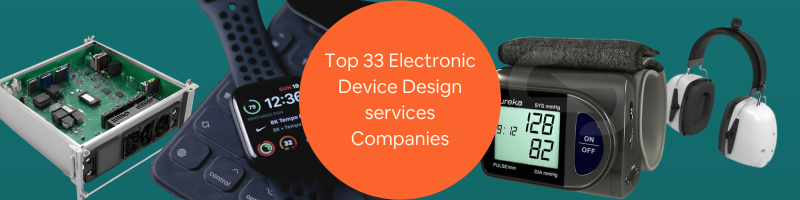
Top 33 Electronic Device Design Services Companies for Engineering & Product Design Firms


It’s easier than ever to develop and introduce a new electronic device to the market. Don’t get this wrong, the work itself remains a complex undertaking that most likely involves a multidisciplinary team of engineers and designers, but of course, now you have easy access to those design engineering professionals, right from your laptops. You can find hundreds of product development companies and firms, offering their services to design and build new electronic devices at competitive rates with a promise of quality to boot. Design service firms are different from freelancing platforms or job boards.

However, there are a few exceptions where a freelancing platform also functions as an agency or project manager to bridge communication between the professionals and the clients. Take, for example, Cad Crowd; although the platform is primarily a freelance marketplace that specializes in the product design and engineering sector, you can post invitation-only contests and private projects, or use the platform to outsource engineering help on an ongoing basis.

Think of Cad Crowd as a one-stop shop for all your electronic device development service needs, where you’re spoiled with a selection of resources to improve your chances of developing a successful product. An electronic product needs at least two major assemblies: the PCB to manage power delivery as well as control or signal processing, and the hardware enclosure. Not everyone has the resources to bring a product idea to market, let alone handle the entire development process on their own. And that’s where design companies swoop in to offer assistance. Some of the finest of such companies are listed below.

cadcrowd-logo

1. Cad Crowd

Hailing from Canada and now with several offices in the United States, Cad Crowd is a leading freelance marketplace that sets itself apart from the competitors by focusing heavily on the design, engineering design services, and product development sectors. It’s a highly specialized platform that serves as a hub to connect clients with design and engineering professionals from all over the globe. Cad Crowd serves as both an agency and a project manager to ensure an ideal match between talent and roles and hassle-free collaboration throughout the project. Populated by hundreds of thousands of industrial design freelancers, Cad Crowd is among the most trusted platforms used by clients of all backgrounds, including everyday inventors and major corporations alike, to accelerate electronic device development.

Website: Cadcrowd.com

synapse logo

2. Synapse Product Development

A technology and engineering consulting firm offering robust product development services – takes pride in helping clients bring innovative consumer electronics, such as medical devices and IoT solutions, to market. Synapse is known for its unparalleled expertise in electrical/electronic engineering, embedded firmware, and hardware fabrication to transform abstract concepts into manufacturable products. A good number of electronic products in their portfolio implement advanced sensor integration, ultra-low power requirements, and high-frequency wireless connectivity. Clients range from tech startups to Fortune 500 giants. The company is part of Capgemini Invent, a design and innovation powerhouse that primarily focuses on developing intelligent hardware devices.

Website: Synapse.com

Softeq

3. Softeq

Assuming your project has anything to do with IoT design services, robotics, wearables, machine learning, or blockchain, Softeq has just the right services to cater to your needs. The firm provides end-to-end custom software development (front-end, back-end, DevOps), embedded systems, digital transformation, and electronics device design, covering both PCB engineering and enclosure fabrication.

Website: Softeq.com

Cardinal Peak

4. Cardinal Peak

A Colorado-based engineering firm- boasts a capable team with indisputable expertise in embedded software, cloud integration, and, of course, hardware engineering. Cardinal Peak specializes in developing IoT solutions (smart home products, connected devices, and other Internet-enabled products) and in designing audio hardware (as a member of the Qualcomm Advantage Network).

Its market scope encompasses such a broad range of industries as consumer electronics, robotics design, automotive, healthcare, security control, audio streaming, and even the aerospace industries. With a multidisciplinary team of experts behind every service, Cardinal Peak excels at end-to-end product development, from initial concept generation and feasibility studies to prototyping, certifications, and mass production.

Website: Cardinalpeak.com

Voler systems logo

5. Voler Systems

Located in Silicon Valley, alongside tens of thousands of other tech companies, has made a name for itself in the IoT, wearable product design, and medical device sectors, particularly in hardware and firmware engineering. Unlike the vast majority of tech startups in the area, however, Voler Systems has a long 40+ years of experience working on sophisticated projects involving crucial technologies such as wireless connectivity, advanced sensors, ultra-low-power management, and motion control. It offers a comprehensive range of services for electronic device projects, including FPGA, circuit design, prototype fabrication, and DFM. If your new electronic device is supposed to be battery-powered or equipped with gesture sensors and requires proper validation, Voler Systems is an easy recommendation.

Website: Volersystems.com

Arira Design

6. Arira Design

The primary fields of expertise of Arira Design are system-level design and PCB engineering services. The company employs a team of seasoned professionals with in-depth knowledge of high-speed circuitry, signal integrity, and complex power delivery. A collaboration with Arira reinforces your project with decades of combined firsthand experience in electronic hardware engineering, performance analysis, validation testing, and DFM practices. Their services cover such advanced industries as battery management systems, storage networks, IoT, telecommunication, and networking. Arira Design is a veteran in electronic device development, capable of handling complex requirements for successful commercial release. 

Website: Ariradesign.com

Simplexity Product Development logo

7. Simplexity Product Development

You can get a full spectrum of electronic device design services from Simplexity, whose expertise covers mechatronics, power management, IoT, fluidics and microfluidics, and embedded motion solutions. The engineering firm’s core capabilities include robotics, automation, biotech, wearables, commercial equipment, and consumer devices. Backed by 20 years of experience in the business, it offers a turnkey product development service that encompasses everything from hardware design and system engineering to prototyping and the entire project management. Simplexity is easily among the top choices if you want to develop a complex and complete product rather than a specific part or component alone. The company has three offices in San Diego (California), Portland (Chicago), and Seattle (Washington).

Website: Simplexitypd.com

Brash Inc

8. Brash

There isn’t much to say about Brash Product Development that hasn’t already been highlighted elsewhere. The firm offers four major services: Design, Engineering, Software, and Manufacturing. But most importantly, they can do it all exceptionally well. Brash was involved in the development of such sophisticated electronics as B-Temia biorobotic (which basically is a state-of-the-art exoskeleton), the BreathSuite inhaler add-on, the Intrex wearable, and the DOMONO smart camera, to name a few. 

Website: Brashinc.com

Design1st

9. Design 1st

One of Canada’s most recognizable hardware engineering firms, Design 1st has established a respectable place in the industry thanks to its comprehensive end-to-end product design service. A key to the firm’s long-standing reputation for quality is its ability to navigate the tricky balance between practical engineering (manufacturability, functionality, durability, etc.) and surface details like aesthetics and ergonomics. Design 1st places heavy emphasis not only on DFM services but also on DFA, with a holistic approach to concept development to improve cost efficiency. Powered by a cross-functional team of mechanical engineers, prototype fabricators, PCB designers, and firmware developers, Design 1st is among the true specialists in electronic product development all across North America.

Website: Design1st.com

Promwad

10. Promwad

Here’s just a few of the services Promwad offers: hardware design (such as PCB schematic/layout and mechanical engineering for electronic device enclosures), embedded software development, FPGA, SoC, and manufacturing support. In short, all that you need to build an entirely new modern electronic device from scratch. Promwad is headquartered in Essen, Germany. Over the past two decades, Promwad has built a capable team of more than 100 CAD engineers and managers, with combined expertise in FPGA design, industrial automation, adaptive computing, telecommunications, and audio/video streaming. As for manufacturing capabilities, you’ll be pleased to know the firm offers both small-batch and large-volume production, whether you need specific components, enclosures, or fully assembled devices.

Website: Promwad.com

NYL Technology

11. NYL Technology

Generative AI services make up a good chunk of what NYL Technology does, such as LLM and chatbots. Having said that, the firm doesn’t hold back when it comes to hardware engineering either. It provides a full-scale custom software development and is equipped with a cutting-edge rapid prototyping technology to turn your electronic device ideas into reality under one roof.

Website: Nyl.technology

Embevity

12. Embevity

Although primarily known as a specialist in embedded system development, Embevity has no lack of expertise in electronic hardware design either. Much of what they do centers on delivering a comprehensive service across the entire device design cycle, which typically encompasses complex tasks such as feasibility studies, multi-layer PCB schematics, advanced FPGA design, enclosure engineering, prototype design services, and validation. Based in Poland, they’re currently a Nordic Semiconductor Design Partner, an AMD Embedded Partner, a Zephyr Ecosystem Vendor, and a Microchip Authorized Design Partner. It’s a pretty impressive achievement considering how Embevity’s core team consists of just 25+ professionals.

Website: Embevity.com

Elsys

13. ELSYS Design

Headquartered in the heart of France and with branch offices all over the country, ELSYS is one of Europe’s major engineering firms specializing in electronic design services. The firm is currently an ARM Approved Design Partner and a member of the Intel Partner Alliance. Its range of expertise covers PCB design, FPGA, SoC, ASIC, embedded software development, mechanical engineering designers, IC layout, and analog mixed-signal verification. You can also tap into the firm’s “intervention” modes, which include consultancy as well as turnkey design service for small and mid-volume manufacturing. ELSYS even has a dedicated design center that basically allows you to hire the whole company to implement your own development methodology. 

Website: Elsys-design.com

Ex Dynamics

14. Ex Dynamics

Collaborating with an experienced firm affords you the much-needed peace of mind, which is often hard to find in a high-stakes project. It’s good to know that Ex Dynamics is willing to lend you the expertise of an interdisciplinary team with 60 years of combined experience in product development, manufacturing, and industrial design. The firm’s comprehensive electronic device development service covers the entire design process, from early conceptualization and feasibility analysis through physical prototyping, performance analysis, and compliance assurance. Furthermore, Ex Dynamics has in-house capabilities and the necessary facilities to implement an iterative approach to design verification.

Website: Ex-dynamics.com

Tessolve

15. Tessolve

Positioning itself as a semiconductor solutions provider, Tessolve’s work mainly revolves around chip design, analog & mixed signal engineering, and FPGA emulation. That being said, the firm also offers a respectable range of post-silicon services, including PCB design and manufacturing services, New Product Introduction (NPI), and volume production. It’s basically an in-house, end-to-end advanced electronic device development firm.

Website: Tessolve.com

ajprotech logo

16. AJProTech

It’s the company behind the design and development of the Nvidia Jetson Carrier Board, the Sound Oasis Sleep Therapy Device, and the AcquaTap portable water generator, just to name a few. AJProTech takes pride in its straightforward way of product development that comprises in-depth feasibility research, rapid prototyping, enclosure engineering, embedded firmware and software, and PCB designers. It’s essentially a turnkey service, kicking off with problem identification and going all the way to mass production. The firm’s largest client base comprises startups and mid-sized companies seeking to accelerate time-to-market while keeping the design optimized for mass manufacturing.

Website: Ajprotech.com

Wizlogix

17. Wizlogix

Most electronic devices, whether consumer-grade or those intended for use in professional environments, consist of an internal PCB and hardware enclosure. Thanks to the proliferation of rapid prototyping, it’s now easy to fabricate your own enclosure using a commercially available 3D printer; sometimes, you only need the PCB made by experts. In such cases, the Singapore-based design engineering firm Wizlogix makes for an excellent partner. It offers a full turnkey PCB design, fabrication, and assembly for various applications, including consumer electronics, automotive components, military equipment, etc.

Website: Wizlogix.com

Speck Design logo

18. Speck Design

Based in Silicon Valley with a strong background in UX and industrial design, Speck is well-known for its ability to create a seamless blend between excellent hardware quality and an intuitive digital experience. Their portfolio is the ultimate testament to an unquestionable expertise in transforming creative ideas into innovative electronic devices. And it’s not just consumer electronics; Speck is well-versed in navigating the complex landscape of robotics and medical technologies as well. Another one of the firm’s points of highlight is how the team takes the client onboard throughout the product development process, from concept generation to the actual engineering phase to performance analysis. 

Website: Speckdesign.com

Smart Design

19. Smart Design

The guiding principle at Smart Design has always been to drive innovation by leveraging emerging technologies. The firm doesn’t clearly distinguish among its services, which primarily include mechanical engineers, product development, and industrial design. The idea behind the lack of compartmentalization is to ensure that every project receives equal attention across all fields of expertise, to build a product born of seamless integration across multiple branches of knowledge. Every electronic device design process is guided by DFM and DFA to reach the final prototype stage as soon as technical feasibility allows.

Website: Smartdesignworldwide.com

studiored logo

20. StudioRed

A clear-cut new product development firm- focuses on four major services to bring ideas into reality: industrial design, mechanical engineering, prototype fabrication, and UI/UX maturation. DFM starts early on in the design process, which means design efficacy (both for cost reduction and smooth transition into manufacturing) takes its place at the top of the priority list. Additionally, with in-house prototype fabrication capabilities, new concept design & product development services can proceed through rapid iteration regardless of complexity. StudioRed has been in operation since the early 1980s and now has extensive experience across consumer electronics, autonomous vehicles, medical devices, and robotics.

Website: Studiored.com

Very Technology

21. Very

While the core competency of Very lies in enterprise-level AI solutions, the firm is also capable of developing more conventional electronic devices, covering both hardware engineering and embedded software development. They have the expertise to build custom PCBs, develop firmware, design the enclosure, and provide manufacturing support, ensuring a seamless transition from the final prototype to a market-ready product.

Website: Verytechnology.com

Byte-Lab

22. Byte Lab

When looking for an electronic product development partner, chances are you focus the search mostly on firms based in North America and Western Europe in the hope of finding quality services. Byte Lab might just be the firm to change your mind. Based in Zagreb, Croatia, the firm played a significant role in the development of popular products such as Philips’ Connected Airfryer, sanSirro’s Qus-Smart Sportswear, Crossbox High Accuracy GPS Lap Timer, and Signify’s HVAC Control Module, among others. Byte Lab specializes in end-to-end electronic product development, including engineering designers and manufacturing services that transform ideas into reality and bring them to market.

Website: Byte-lab.com

Prevas

23. Prevas

Throughout Prevas’ long 40 years of history, it has participated in the developments and launches of more than 8,000 products, both electronics and mechanical, or a combination of both. Employing a multidisciplinary team of diverse skill sets and backgrounds, the firm takes pride in its ability to handle the full spectrum of product development, including post-launch support.

Website: Prevas.com

Nuvation-engineering

24. Nuvation Engineering

The way Nuvation Engineering describes what they do is just about as straightforward as you can expect. The firm primarily deals with the design and development of electronic devices, turnkey-style. Included within the services are hardware engineering, embedded software/firmware development services, FPGA design, system architecture, certifications, and pilot builds. In other words, they have what it takes to learn about your ideas and turn them into tangible electronics. Nuvation is backed by enough engineering power to serve such industries as industrial automation, AI, telecom, data management, medical devices, imaging systems, energy storage solutions, life sciences, and consumer electronics.

Website: Nuvation.com

Lemberg Solutions

25. Lemberg Solutions

Although the firm doesn’t explicitly mention electronic device designers, it does offer an “embedded engineering” package that covers firmware development, FPGA programming, hardware fabrication, and rapid prototyping. Lemberg employs a sizable team of more than 200 engineering experts, and the firm itself has 15 years of experience in the business with an impressive 94% customer satisfaction rate.

Website: Lembergsolutions.com

Goddard Technologies

26. Goddard Technologies

Assuming your idea of a new electronic product is a medical device, Goddard Technologies should be on the shortlist. The firm is well positioned to provide a full range of services, including electronic and mechanical engineering, industrial design services, prototyping, product validation, and eventual transfer to manufacturing. In fact, it also offers low-volume manufacturing, which often is the first right step to take immediately after the final production prototype is ready and approved, before moving to a bigger scale. In addition to specializing in medical device design, Goddard also develops life sciences products and industrial instruments.

Website: Goddardtech.com

Delve logo

27. Delve

A product development firm that does it all, Delve has just the right skills and facilities to be a reliable firm for clients looking to build medical devices, commercial or industrial equipment, and consumer electronics. As far as product development expertise is concerned, Delve hits the mark of a competent partner with skills in industrial design, embedded software, prototype fabrication, and electrical engineering firms. One thing that separates Delve from the competitors is the implementation of what’s known as “human factors engineering,” which basically puts into context the importance of safety (risk-mitigation) for products meant to be used not just by humans but also “on” humans. This is especially relevant when developing medical devices. 

Website: Delve.com

Battelle

28. Battelle

It might not be entirely accurate to define Battelle as an engineering firm. It’s more like a vast community of more than 1200 scientists and 3D engineers operating in eight state-of-the-art laboratories all across the United States. Battelle has a long history of working for the U.S. government on national security projects, medical technologies, and infrastructure. That said, the firm is no stranger to collaboration with private entities, including educational institutions, organizations, and industries. A partnership with Battelle can deliver nearly a century of engineering experience to your projects. Their capabilities span the full spectrum of product development, from in-depth technical research for feasibility to advanced electronic product certification.

Website: Battelle.org

Fidus

29. Fidus

Everything about Fidus screams advanced electronic device development. They offer an extensive assortment of services, covering FPGA, embedded software, ASIC, PCB layout designers, mechanical engineering, thermal design, and signal integrity. You don’t even have to choose which services you receive, as the firm can provide all of them to support a full product lifecycle. Fidus is among the top-tier partners of major tech vendors such as Intel and AMD, known for pushing the boundaries of what’s technically possible while maintaining compliance with current standards.

Website: Fidus.com

Integra Sources

30. Integra Sources

A turnkey electronic device design service- Integra Sources has both the engineering expertise and advanced equipment to handle even the most demanding product development projects. It doesn’t really matter whether the new product is a consumer electronics device, a medical instrument, or an industrial device; they can take you through the full development cycle, from research and development through prototyping to mass production.

Website: Integrasources.com

Tri-star-Design

31. Tri-Star Design

Based in Massachusetts and with more than 30 years of product development experience, has long been a prominent name in robotics technology, medical device design, biosensors, consumer electronics, military products, and warehouse automation. They’re a turnkey engineering firm, providing a full range of services from concept generation to a ready-to-launch, certified product. In the context of electronic device development, this means comprehensive expertise in PCB design and rapid prototyping services, embedded software, advanced FPGA design, DFM, compliance qualification, and project management.

Website: Tristardes.com

Hemargroup

32. Hemargroup

Say you’re running a startup or a small group of tech enthusiasts with a vague idea of an innovative electronic device, but still unsure about taking it to the next level. What you need is a reputable firm, but with startup-friendly processes where you can accelerate the research, design, and production timeline. Hemargroup, a Swiss-based engineering firm, might be the right partner in this situation. Keep in mind that most design firms in Europe do not provide full support to small businesses, startups, or individual clients for product developers. Hemargroup is one of the few willing to do so and even provides mass-production support, marketing, and logistics management.

Website: Hemargroup.ch

Intechhouse

33. InTechHouse

Of all the services provided by InTechHouse, you’ll be focusing mainly on three departments for electronic device design: hardware engineering design and prototyping, embedded software development, and low-volume production. The firm separates itself from competitors by offering several collaboration models. You can hire the firm in its entirety to handle a project at a fixed rate, hire specific professionals as extensions of your existing team, or use the usual and flexible hourly rate for when it’s difficult to specify project cost from the get-go.

Website: Intechhouse.com

Takeaway

The development of a new electronic device involves not only electrical know-how, but also industrial design, firmware development, and mechanical engineering as well. It is, and has always been, an interdisciplinary project in which team members combine the expertise of their respective fields to build a device that’s both technically feasible and financially viable.

Sometimes the difference between a failed and successful product lies in the 3D design firm you hire to take on the development project. A capable firm should find no problem in navigating the fragile balance between quality and production cost, which ultimately determines the sales figure and profit. A qualified team of professionals can provide strategic guidance through the likely complex part sourcing, DFM approach, and regulatory compliance requirements.

How Cad Crowd can help

Of all the companies listed above, Cad Crowd earns the distinction as the only non-traditional design firm, thanks to its versatile hiring method. It’s a freelancing platform, alright, but a highly specialized one, to the point where the quality of service is just about identical to (if not better than) that of a full-blown design firm. Furthermore, you’re also provided with IP protection through an NDA and everything else related to patent applications. Cad Crowd bridges the gap between hiring a full-service design firm and 3D design freelancers, and in the process, delivers the best of both worlds in one go. Contact us for a free quote today.

author avatar

MacKenzie Brown is the founder and CEO of Cad Crowd. With over 18 years of experience in launching and scaling platforms specializing in CAD services, product design, manufacturing, hardware, and software development, MacKenzie is a recognized authority in the engineering industry. Under his leadership, Cad Crowd serves esteemed clients like NASA, JPL, the U.S. Navy, and Fortune 500 companies, empowering innovators with access to high-quality design and engineering talent.

Connect with me: LinkedInXCad Crowd

How Innovative Product Design Simplicity and Honesty Help Your Brand Grow


Every new product in the market appears to be an update or upgrade over the old one. All the improvements are said to deliver better performance, features, and overall user experience. But just because a product is new, it doesn’t mean everything is better than the previous model. An upgrade isn’t always what it’s meant to be because it often comes at a cost of added complexity. At the same time, many brands like to throw around the term “update” at will these days just to trick customers into spending money without getting additional value for the product.

Contrary to popular belief, customers very rarely want complex products. Instead, they yearn for honest and straightforward product design companies. Many brands have now realized that buyers want products that are easy to understand and without unnecessary frills to make things more difficult. And when it comes to product simplicity and honesty, brands should look no further than Cad Crowd, where they can discover experienced professionals to implement the design principles and create products that win customers.


🚀 Table of contents


Why simplicity matters

Brands like to talk about how their products can do more things than any competitor in the market. They say the products are the most “sophisticated” and “feature-rich” to the point where you might not need to buy anything else. But being loaded with numerous features and functionality often makes the product more complex than it needs to be. It either has too many buttons to clutter the aesthetic, or too few of them that you need to refer to the manual time and again. You want the product to make your life simpler, but complexity turns it into an inconvenience instead.

Simplicity has always been a valuable commodity, and even more so in an increasingly sophisticated everyday life flooded with technology. It’s part of what makes a product an appealing proposition to customers. This applies not only to digital products like software or apps, but also to physical goods.

Take, for example, the original Apple iPhone released in 2007; it was a groundbreaking device that practically redefined what a smartphone could be, but with one glaring feature omission. The original iPhone didn’t have a copy-paste function, when just about every other phone in the market back then, including BlackBerry, offered it.

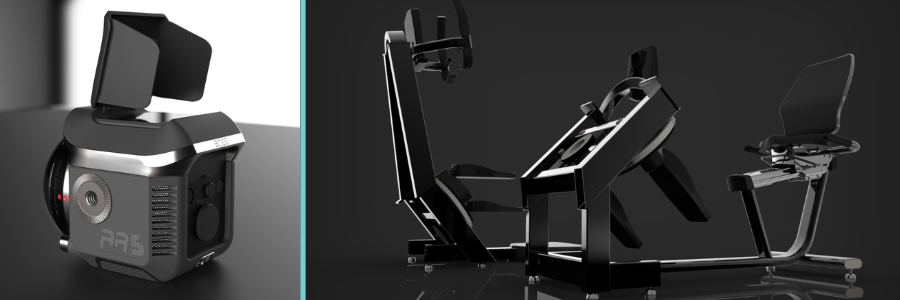
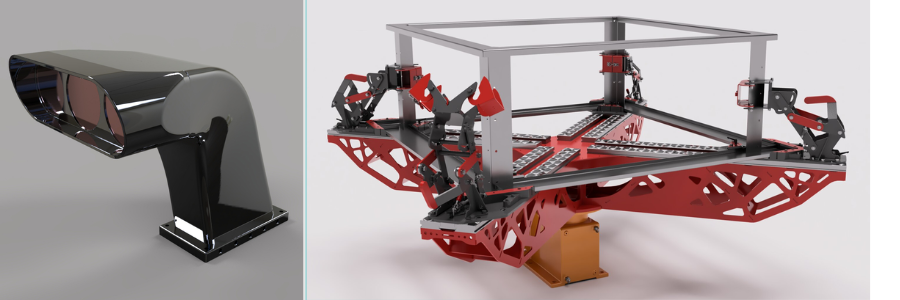
3D rendering of a specialized camera and custom workout bench by Cad Crowd product designers

RELATED: Designing for visual impact with your product design services company

Long story short, the missing functionality wasn’t at all a mistake or an oversight, but a deliberate omission to let the engineers focus on the core features. Apple didn’t see “copy-paste” as a priority, so the touchscreen interface was mainly geared toward seamless web browsing, email access, music playback, and navigation. Did users at large see the missing functionality as a drawback? Some users might scratch their heads, but Apple’s decision to focus on creating an intuitive and simple user interface rather than delivering non-critical features proved to be a brilliant idea. It sold millions of devices and set the path for taking a significant market share. Moreover, the deliberate omission still today holds a valuable lesson to product managers, engineering design experts, and designers that simplicity wins customers.

Users want a product that’s easy to use. Even when the product is highly sophisticated from a technical standpoint, users can appreciate how simple it is to use all its features and functionality. It makes the product more accessible, and people actually enjoy using it. And at the end of the day, simplicity increases adoption, sales, and brand recognition. Simplicity matters even more in a tech product, where sophistication can make a device difficult to operate and understand. If a product is frustrating to use, people might avoid buying it altogether.

Within the context of product development, design simplicity primarily concerns the user interface. For instance, a car is a highly complex piece of engineering with an internal combustion engine connected to a series of computers to control power delivery, fuel efficiency, infotainment, air conditioning, climate control, and a vast array of safety sensors. But a good road car still maintains a user-friendly interface design with a convenient button layout in the interior, enough storage space for practicality, and well-organized instruments for convenient driving.

Sometimes, less is more. It’s easy to fall into the temptation of packing as many features as possible into a product in the hope of gaining a competitive advantage. But just because your competitors offer a new function, it doesn’t always mean you need to follow suit at once.

One of the best examples of the matter is a coffee machine. There are probably dozens of popular brands and models out there. Some of them are all-in-one models (often referred to as bean-to-cup), while others are of a single-purpose type. In simple words, bean-to-cup is a combination of a coffee machine and a coffee grinder. It also often has multiple features, settings, and certainly a lot more components inside. On the other hand, a single-purpose type doesn’t do as many things; you even have to purchase the grinder separately. That said, a single-purpose machine tends to make better cups of coffee consistently than its jack-of-all-trades counterparts that may be done by other consumer product companies.

The most likely reason for the case is that a single-purpose machine focuses primarily on the core feature: brewing coffee. It has a simple user interface, thanks to the lack of numerous buttons and switches, making it easier to use. And because the designers aren’t busy adding non-critical features, they can focus on the reliability, serviceability, aesthetics, materials, and cost-efficiency.

As a design principle, simplicity is applicable to just about every product in the market. A simple interface makes the product easier to understand and more enjoyable to use. If you have to introduce an upgrade by adding new features, keep in mind that an upgrade may come at a cost of making the product unnecessarily more complex than it needs to be. You may need to go back to the drawing board, perhaps to plan for a redesign that can minimize the negative impact.

RELATED: How CAD turns your idea into a prototype for CAD design companies & freelance services

Honesty is still a good policy

According to Dieter Rams, a German industrial design expert whose most notable works include the Braun SK4 Radiogram and the Vitsœ 606 Shelving System, good design is honest. Rams further explains that an honest design doesn’t make the product more powerful, valuable, or innovative than it really is. And it doesn’t try to manipulate consumers with unrealistic promises.

With so many options available in the market, customers have become more resourceful and selective when purchasing a product. Armed with a better insight into product specifications, manufacturers, and price comparisons, people are actively searching for products they can trust; they look for brands that can offer real value, display a penchant for empathy, and place emphasis on honesty.

Designing a product with little care for honesty and empathy is a risky path to brand growth. Say the product makes it to market launch, surrounded by a marketing campaign to tell people how great it is. Soon enough, buyers will figure out the product doesn’t do what it promises to do or that it is overpriced considering the false promises.

Just like simplicity, trust is a commodity. When a product fails to instill trust in the customers’ minds, it’s difficult for the brand to recover from the bad reputation without extra effort.

Brands need to be conscious about their own products. Avoid designing a product to make it appear as if it’s “more” than it actually is. For example, Sony makes a lot of audio equipment, but it doesn’t say that every single one of them is the best in the market. Casio makes many different calculators, but the company never claims that any of them has all the functions everybody needs. Each model serves a specific purpose, designed with a specific category of users in mind.

You can see the same practice implemented by many other product development experts like cars, shoes, kitchen equipment, watches, computers, home appliances, and more.

Even if a product is excellent in and of itself, the lack of an “honesty” factor may end up hurting sales and brand reputation. A fine example of the case is the Adobe Ink and Slide, which basically is a bundle of a stylus and a ruler that works with Apple’s iPad, in addition to a pair of apps that let you take advantage of all their features. While the stylus is an overall fantastic device, bear in mind that you have to subscribe to the Creative Cloud platform to be able to use the stylus and ruler to their full potential. Adobe doesn’t just sell you the devices; the company sells subscriptions.

Compare that with the “Pencil” stylus from FiftyThree, designed to work with the Paper app on iPad. In terms of physical design, both the Ink and the Pencil are as sophisticated, sleek, and modern as each other. When it comes to ease-of-use, however, the latter feels more honest as it doesn’t require you to log into any subscription-based cloud service.

Honest design isn’t an easy feat to achieve, but it’s not impossible either. It requires you to empathize with the users, take the experience of a product as a whole into consideration, and carry out the design process almost entirely based on those insights. An honest product design expert is a testament to your intention to show respect for the users. Whether or not the product turns out to be perfect in every way isn’t the main issue here; the most important thing is to plant the seed of trust, which perhaps is the most valuable intangible anybody can discover in a product.

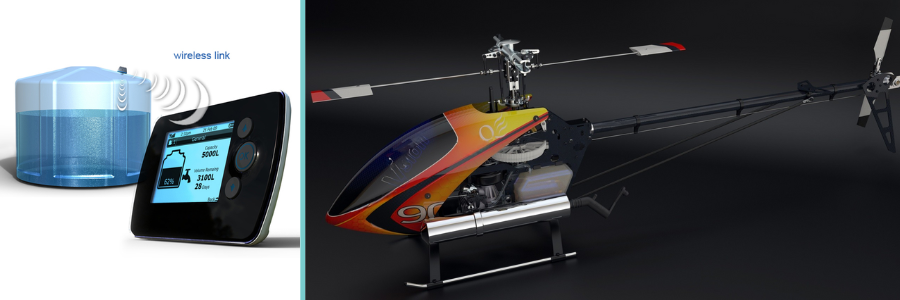
product design of WiFi enabled water container and RC helicopter by Cad Crowd product engineering experts

RELATED: Product development firms: 4 key factors to consider before hiring services companies

Takeaway

In the age of technology, the Internet, robots, and an app-connected world, many products that we use on a daily basis are getting more complex and sophisticated. Wristwatches can now tell you how many steps you take, a phone also functions as a navigation system, a sprinkler system can check the weather, and even a lightbulb is now remote-controlled via Wi-Fi. With all the additional features and functionality, an otherwise familiar and user-friendly product may become more difficult to understand.

But it turns out that sophistication doesn’t have to be synonymous with complexity. Designers can emphasize the value of understatement and prudence rather than embellishment, so they can focus on perfecting the core features of a product and avoiding unnecessary frills. In other words, they should design any product with simplicity in mind, making it easier to understand and use for customers. The principle of simplicity is strongly linked to design honesty in product development. A product with a simple design doesn’t mislead customers about what it can do. Simple design is neither pretentious nor sprinkled with unjustified and excessive claims about itself.

A simple and honest product may seem straightforward, but it takes real design experience and expertise to create one. Whether you’re making a new product or in the process of redesigning an existing one, Cad Crowd is pleased to connect you with the right professionals to get the job done. Request a quote today.

author avatar

MacKenzie Brown is the founder and CEO of Cad Crowd. With over 18 years of experience in launching and scaling platforms specializing in CAD services, product design, manufacturing, hardware, and software development, MacKenzie is a recognized authority in the engineering industry. Under his leadership, Cad Crowd serves esteemed clients like NASA, JPL, the U.S. Navy, and Fortune 500 companies, empowering innovators with access to high-quality design and engineering talent.

Connect with me: LinkedInXCad Crowd

How CAD Turns Your Idea into a Prototype For CAD Design Companies & Freelance Services


Transformation of an idea into a working model is one of the first processes of product development, and CAD designing services help in this process, whether a new home appliance, a single mechanical component, or a groundbreaking piece of furniture. CAD computer-aided design software helps to model accurately with the assistance of computers before the actual production process.

Professional designers maximize 3D visualization services and computer-aided engineering design software to simplify ideas, identify defects, and minimize errors. Like Cad Crowd, the number one freelance CAD design marketplace, you can hire an experienced freelance CAD professional to deliver quality designs that satisfy project demands with flexibility and affordability.

In the fast-changing landscape of product design, ideas are tangible, effective, and functional in a tangible, effective, and functional manner. Whether you’re developing a groundbreaking consumer gadget, a complex mechanical part, or a custom piece of furniture, transforming your concept into a prototype is a critical step. This is where Computer-Aided Design (CAD) steps in. CAD technology has become an industry norm for translating creative thinking into real-world, three-dimensional reality and into a design and development process to a level never before attainable.

CAD design services, either by a design house or freelance designers, are the key for small businesses and large corporations alike to bridge the gap of trust between the working model and the idea. But how does CAD actually work, and why must designers use it in order to take your idea and turn it into a working prototype? In this article, we will outline the process of product design with CAD, the CAD services you can hire, and how professional design firms and freelancing services can walk you through it.


🚀 Table of contents


The basics of CAD in product design

CAD stands for computer software used in designing accurate 2D or 3D representations of actual objects. In product design services, CAD software helps model, analyze, and simulate a product’s form, shape, and behavior before actual production. CAD provides the designer with complete control over the process, allowing for quick iterations, detailed modifications, and functional testing in a manner that would be practically impossible with traditional methods.

The elegance of CAD lies in its ability to transition from idea to reality through a series of flexible, precise, and highly detailed steps. These design steps of test, refine, and prototype are all accelerated and streamlined by the application of CAD.

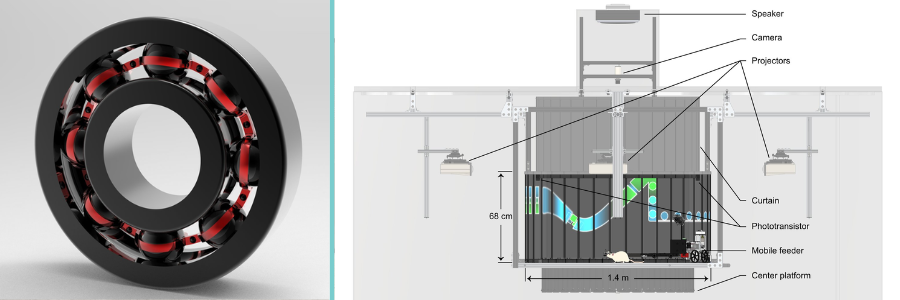
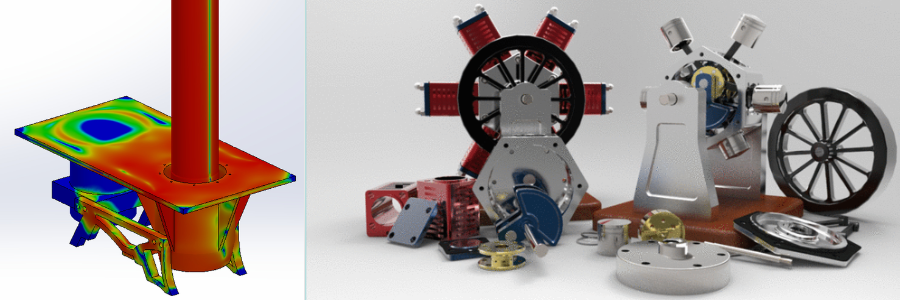
Design examples of bearing and rat dome by Cad Crowd design experts

RELATED: How much does NPD cost? Rates & pricing for services at top design companies

The role of CAD in turning ideas into prototypes

Among all the processes involved in developing a creative concept and turning it into an actual product, the concept-to-prototype stage stands out as the most critical. Among the most groundbreaking technologies that designers employ to advance along the way is Computer-Aided Design (CAD). CAD software equips designers with the ability to shift from sketching all the way to fully modeled digital prototypes, detailing, simulating, and eventually printing physical prototypes. Here is a step-by-step explanation of how CAD has an effect.

Conceptualization and design

Every great product starts off as an idea, a good-looking one. But if that idea is to materialize a real, functional product, then it needs to be designed into something much harder. That is where CAD is needed. From the very beginning of the design, CAD enables the product design expert to take their sketch and scribbled notes and bring them into a computer system, where they have a better and clearer understanding of the product. CAD magic software does its trick, where it all comes to life, transforming abstract ideas into something real and visible.

The idea phase is typically initiated by rough shapes, measurements, and forms. For simpler designs, CAD may allow the designer to sketch 2D blueprints that establish the size and overall specifications of the product. They may be similar to blueprints or schematics, containing all the pertinent details like measurements and material usage. But for more complicated designs, 3D modeling is required. A 3D CAD model is a far more realistic and accurate representation of a product, encompassing not only its exterior form but also its internal structure and the interaction of its internal components with each other. A degree of detail such as this is required when designing products with complex functions, such as machines, domestic appliances, or even automobiles.

The advantage of 3D modeling is that one is able to reproduce a replica of the product in the virtual space. This way, one gets to view the product in three dimensions, and their idea becomes concrete in the shape of an interactive digital model. This not only enables designers to see their idea materialize right before their eyes but also gives them the chance to identify any faults in the design and correct them beforehand.

Refining and simulation

Once the initial design is established on CAD, refinement is then performed. The refinement of the design is made easy by the CAD software, which allows the designer to execute it efficiently. Compared to the past, when it could take days or even weeks to make changes to a model, CAD makes it easy to modify computer models with just one click of the mouse button or a maximum of two clicks. With one or more clicks of the mouse buttons, a product design engineering expert can change the shape of a part, resize objects, or change the material.

The most valuable advantage of CAD software is that it enables the simulation of the product’s actual usage. With advanced analysis software such as Finite Element Analysis (FEA) and Computational Fluid Dynamics (CFD), designers can plan how a product will function before it is even constructed. For instance, FEA is able to model the strength of a product structure, mimicking how it’s going to disperse stress and pressure. Additionally, CFD also simulates the movement of fluids, such as air or water, within or around the product, allowing for the quantification of the product’s aerodynamic or heat properties.

These tests are time and cost-effective in the sense that they enable potential defects to be detected early in the design process. These, apart from CAD, would include the construction of costly physical models, which could easily translate into costly mistakes where the design proves impractical. CAD is money-saving in the sense that such mistakes can be caught prior to actually doing something physically, thereby saving money as well as delaying things.

Prototyping: Converting virtual models into physical objects

The final and possibly the most exciting part of the CAD design services process is to have the virtual model converted into a physical prototype. Here, the power of CAD is utilized to the fullest. CAD technology is typically used in conjunction with rapid prototyping technologies, such as 3D printing, CNC milling, or injection molding, to produce extremely detailed physical models directly from the computer-aided design. The combination streamlines the prototyping process and speeds up the product development cycle.

The most up-to-date prototyping technology available is 3D printing. In 3D printing, designers may layer-print prototypes in a material similar to that of the final product. That means real-time testing, iteration, and providing the designer with an actual prototype within a specified timeframe if a conventional process is used. 3D printing also boasts better material and design freedom, allowing for the easy printing of complex pieces.

Where there is a need for commercially oriented programs, CNC machining takes up the slack. With CNC equipment capable of milling metals, plastics, and other materials with high accuracy, prototypes are developed that are not only highly accurate but also as robust as any sample that could possibly survive testing under actual conditions. Then comes CNC machining as the issue of most concern to industries like auto or aircraft manufacturing, where models will need to endure harsh tests under harsh conditions.

For production designers, processes like injection molding enable the creation of prototypes that can be produced in large quantities. This is achieved by filling a mold with molten material to create the prototype, and it is extremely convenient when designers wish to see a physical model for assessing the feasibility of mass production.

It is here that the services of a freelancer or CAD design firm can prove to be effective. They can give professional advice on which prototype method would be most effective for the given product above, help in developing accurate 3D models, and help manufacturing design firms prepare the prototype as well.

In product design, taking an idea to a model is a costly and labor-intensive endeavor. CAD technology, however, has changed all that with the ability to offer rich thinking tools for imagining, developing, and bringing one’s ideas to reality in a far more effective and affordable way.

By providing virtual models that emulate actual motion and facilitating integration with future-generation prototyping technology, CAD enables faster and more effective communication of ideas to working models than ever before. As technology continues to evolve on a daily basis, CAD applications in the idea-to-prototype conversion process will become increasingly vital, driving innovation across various industry sectors.

RELATED: How to integrate CAD seamlessly into your firm’s workflow of engineering, design & services

Why CAD services are important to product design companies

For companies, having access to CAD services represents a milestone in product development. The reason why is this:

Smooth development process

CAD services also possess a highly efficient design process. Re-editing, re-drawing, and fine-tuning a design would take time if done using manual drawing processes, but CAD is time-saving when making these changes. Because the person can write, edit, and visualize real-time 3D models, the prototyping design engineering service process is streamlined and accommodates each subsequent copy to be improved.

Accuracy and precision

Accuracy is everything for most businesses, especially those with highly technical or mechanical products. CAD software turns impossible measurements and calculations into reality, ensuring that every component fits together seamlessly and operates as efficiently as possible. Slippage or miscalculation during design can mean costly mistakes down the line, and CAD eliminates these risks.

Cost efficiency

While purchasing CAD services may seem like an enormous initial investment, in reality, it can prove to be a cost-saver for companies in the long run. By identifying mistakes early, improving design before physical prototyping, and reducing product-to-market time, CAD reduces production cost. CAD enables manufacturers to create rapid and low-cost prototypes, saving money again.

Collaboration and communication

CAD enables easy communication with groups regardless of location. Designers, engineers, and product managers can send and receive comments and make changes to a single model, enabling feedback and live editing. For geographically separated or departmentalized organizations, these capabilities can be a godsend for keeping everyone informed.

Freelance CAD services: The flexibility and expertise you need

While major product design companies can retain CAD professionals on their payroll, freelance CAD professionals offer a valuable alternative for small companies or start-ups that need high-quality work without the expense of an in-house team.

Expertise

Freelance CAD designers are experts in their area. If you need help with 3D modeling, prototyping, or simulation, you can hire someone who has the very skill set to bring your idea to life. This will open you up to a pool of talent anywhere in the world, and you can choose a designer who is an expert in your market, automotive, industrial, consumer electronics, or custom furniture.

Economic solution

Freelancers are typically hired on a project-by-project basis, which can be less expensive than hiring an in-house full-time employee or a large CAD design firm. If you will only need CAD work for one project, it is efficient and economical to hire a freelancer. Freelance CAD designers tend to charge competitive fees, which can be beneficial to small organizations with limited budgets.

Flexibility and adaptability

Freelancers offer a level of flexibility that large, traditional corporations simply cannot provide. They can complete your project at your pace, provide more customized effort, and adapt to any changes in specifications during the process. More to the point, they are generally able to come up with more outside-the-box solutions to design issues because they don’t carry the burden of someone laying on them the constraint of having to be outside the box, but rather a very small one.

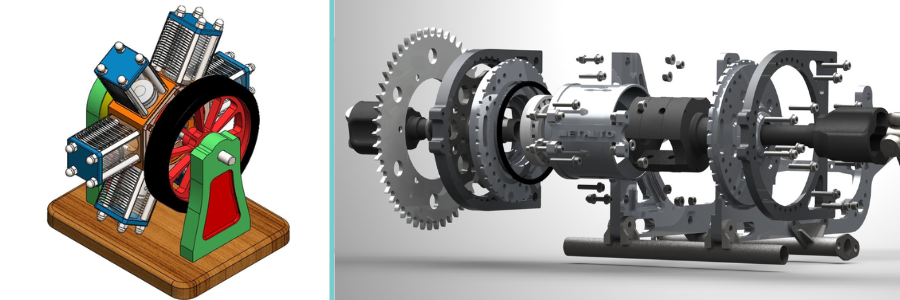
Cad design examples of engines for a variety of mechanical designs

RELATED: How to create a marketable product design for your new invention idea with design agencies

How to choose the right CAD design services for your needs

Whether you’re working with a CAD design company or a freelance CAD designer, choosing the right service is essential to achieving the best results for consumer product design companies. Here are some factors to consider when selecting a provider:

Experience and portfolio

Seek out a designer or agency that has experience in your industry and a portfolio of their work. You want someone who is familiar with the technical aspects of your product and can design a usable tool that you will need.

Communication skills

Good communication is essential when working with CAD designers. Choose a service provider that responds rapidly to calls, listens, and is able to express intricate design concepts in your frame of mind. Good communication ensures that your idea comes through exactly as you envision it, and you are on the same page throughout the project.

Tools and technologies

Ensure that the CAD vendor you hire is utilizing the latest software and hardware that are standard in their industry. Commercial product design and prototyping are most typically executed with SolidWorks, AutoCAD, and Fusion 360. Also, ensure that they have the capability to interface with rapid prototype technologies such as 3D printing design services or CNC machining.

Cost and timeline

Finally, make the service fit your pocket and time. CAD services are not gratis, but they must be in proportion to your project size and complexity. Finding out how much it costs and choosing an open delivery period before will avoid unpleasant surprises down the line.

Conclusion: The future of CAD in product design

As technology continues to evolve, CAD designing will be the fulcrum around which product designing revolves.

Designing back-and-forth virtually the capability to test and prototype, then to iterate in design at notice, lends itself perfectly well for designers to deliver better products at pennies on the dollar with fewer days’ worth. Whether you’re working with a design company or a freelance CAD professional, the ability to turn your idea into a prototype with CAD is one of the most powerful tools available to product designers today.

With the age of speed for product development experts, CAD’s precision, speed, and accuracy make it the perfect tool for realizing your dream. Whether it is developing the next breakthrough product or a custom piece, employing CAD design services will guarantee that your proof of concept is not an idea, but a functional, tangible piece that can be driven to the development stage.

RELATED: Tips to optimize new invention development and product development for companies

Cad Crowd is here to help

Your idea for a prototype requires accuracy, imagination, and professional expertise.

CAD design transforms pencil-based concept sketches right through to functioning working models of your vision. Freelance CAD design units are able to offer flexibility and expertise at specialist levels to achieve the ideal finish to order, specially crafted to meet your needs.

On Cad Crowd, the best marketplace to find the best product development experts, you can outsource the best freelance professionals to bring your ideas to life in the form of precise, detailed prototypes. Whether you need assistance in end product 3D modeling, end product prototype optimization, or design completion, the right professional will be the difference-maker. Contact us today and start bringing your ideas to life with a free quote.

author avatar

MacKenzie Brown is the founder and CEO of Cad Crowd. With over 18 years of experience in launching and scaling platforms specializing in CAD services, product design, manufacturing, hardware, and software development, MacKenzie is a recognized authority in the engineering industry. Under his leadership, Cad Crowd serves esteemed clients like NASA, JPL, the U.S. Navy, and Fortune 500 companies, empowering innovators with access to high-quality design and engineering talent.

Connect with me: LinkedInXCad Crowd

Trends Shaping the Future of Product Design for Industrial Design Services


A water bottle streamlined to remind you to drink, earbuds that adapt to your environment, a standing desk that adapts based on your posture—these are no longer science fiction props. They’re real products born out of an exciting combination of creativity, technology, and user obsession that’s transforming the world of product design.

Behind every product lies a team of expert product designers who understand the balance between creativity and functionality. At Cad Crowd, we’ve built a unique platform that connects forward-thinking businesses with top-tier industrial design talent from around the globe. Our network of designers doesn’t just create products; they craft experiences that blend cutting-edge aesthetics, precise engineering, and transformative innovation. Businesses navigate the complex landscape of evolving user needs, sustainability challenges, and rapid technological advancement, and have become more than a service.

So what’s new in the world of product design? Buckle up—because we’re going to take you on the most exciting trends shaping the future of industrial product design.


🚀 Table of contents


The age of human-centered everything

Let’s begin with the big one—human-centered design. Industrial design services have been all about usability for a long time, but now they’re going deeper. It’s no longer just about ergonomics—it’s about empathy. Designers are becoming a part of their users’ lives—sitting, watching, and listening. The result? Products that speak to the heart and brain. Think wearables that capture your stress level, kitchen appliances that are user-friendly for people with arthritis, or travel packs designed for neurodiverse consumers. Perfection is not the goal. It’s a connection.

So, what does it mean for design studios: Splurging on behavioral research and UX professionals is no longer an indulgence—now it’s a requirement.

Cad Crowd product designs of bluetooth speakers and perfume packaging and bottle by product design freelancers

RELATED: 3D product visualization: Elevating your online shopping experience and service for modern consumers

AI: Not only for robots and dystopian films

Artificial intelligence is now officially in the design fold. But its not here to take jobs from people—it’s here to accelerate creativity and get rid of boredom. AI is empowering industrial design experts to develop different design iterations in a matter of minutes. It’s speeding up concept testing, performance simulations, and even predicting market success based on historical experience. With generative design and machine learning models, industrial design is not only becoming smart but faster as well. AI is also powering personalization at scale. Think AI-driven footwear design that adapts to the way you walk or customized tools built around the movement pattern of a worker.

Pro tip for industrial design services: If you have not already embraced AI-driven design software like Autodesk’s Fusion 360 or nTopology, it is time to familiarize yourself with them.

Sustainability: From buzzword to blueprint

The era of “eco-friendly” being represented by just a leafy logo on a cardboard box is over. Today, sustainability is integrated into the design process from the beginning rather than being an afterthought. Designers are now exploring biodegradable materials, closed-loop systems, and modular components to prolong product life. Circular design principles are actively embraced—creating, using, returning, and reusing. The focus is not solely on the customer; it’s also on the planet. This shift is crucial for industrial design services in sectors like consumer electronics, packaging, and automobiles, where disposability is unacceptable. Moreover, sustainability encompasses efficient energy use, shortened supply chains, and the creation of products that can be disassembled and reused.

Design concept: A living room appliance with easily replaceable components that requires no engineering degree to manage.

Biomimicry and organic aesthetics

There have been centuries of billions of years of solutions to design problems in nature, so what’s not to borrow a little know-how? Biomimicry is shaping everything from aerodynamic vehicles modeled on kingfishers to ventilated buildings modeled on termite mounds. Industrial design services is moving towards forms that not only appear organic but are also functionally ideal, often mimicking nature’s efficiency. And it’s not just the exterior. Texture of materials, temperature sensitivity, and responsiveness—all drawing inspiration from plants and animals—are appearing in new-generation product design.

The future is not looking so boxy anymore, but more… elegantly bizarre.

Mixed reality is your new sketchpad

Remember when designing meant scribbling on napkins and building clunky foam prototypes? Enter Augmented Reality (AR) and Virtual Reality (VR)—your new design power tools. Industrial designers are using AR and VR to make rapid prototyping, interactive client presentations, and user testing prior to a physical product ever existing. Imagine being inside your product idea, dynamically changing dimensions, and watching how users interact with it—all in a virtual setting. With Apple Vision Pro and Meta Quest democratizing AR/VR, designers have no choice but to be in 3D experiential mode, not just form and function. And anyway, clients adore a nice wow moment when they can “walk through” your concept.

Modular design is back—and smarter

Put your hand up if you’ve ever been irked that one little broken part meant having to discard the whole product. From home appliances to consumer electronics, modularity is in a role. Industrial design services are creating products whose parts can be upgraded, serviced, or refurbished independently. Not only is it good for the planet, it’s great for customers who crave choice and customization. A coffee maker with interchangeable components. A speaker where you can replace the skin and core technology. A workbench that changes as your skills change. Modular design is not a design trend—it’s a customer loyalty strategy.

Hyper-personalization and mass customization

Industrial design is now cracking the nut of the paradox of mass customization—how to deliver differentiated experiences at scale. Thanks to digital twins, parametric modeling, and AI-driven configurations, CAD design experts can now create flexible templates that adapt to user choice without breaking the bank. Furniture companies, for instance, are employing 3D configurators whereby consumers configure their ideal table height, form, and material. In clothing, sneakers are being 3D printed using a foot scan. The secret ingredient? Platforms and digital infrastructure that can deal with real-time customization without logistical anarchy.

Design tip: Think of your product as a platform. Make it easy to change, switch, and build upon.

RELATED: How much does NPD cost? Rates & pricing for services at top design companies

Emotional design: Let’s talk feelings

Never overlook the impact of a product that feels appealing. Emotional design includes crafting products that evoke joy, trust, and pride—or even stir nostalgia. Industrial designers now incorporate emotional elements through shape, color, texture, sound, and even scent. Indeed, multi-sensory design is on the rise. Merely functioning beautifully is no longer sufficient; it must establish a connection. Take, for instance, the whisper-close drawer that eliminates clanking, the reassuring “click” of a power switch, or the soft glow of a lamp. Each feature is intentional, resonating emotionally.

And let’s be real, consumers are attached to products that delight them.

Inclusivity is the new default

Industrial design has long been hampered by a one-size-fits-all approach. But praise the Lord, those days are behind us. Today, inclusive design is being developed from scratch, not tacked on later. Designers are creating products that work for users across a spectrum of abilities, sizes, cultures, and environments. This includes adjustable interfaces, ambidextrous products, intuitive color contrast, and voice-controlled interaction for users with mobility impairments. Industrial design companies that practice inclusive design aren’t just doing a good thing—they’re substantially expanding their market base.

Push yourself: Create something that works for a 10-year-old and an 80-year-old. That’s inclusive.

Digital and physical convergence (Phygital products)

Welcome to the era of physical design, where the lines between digital and physical realms are increasingly blurred. Industrial designers are now incorporating sensors, IoT technology, and interactive surfaces into everyday items. For instance, your desk lamp can now sync with your calendar, your fridge can recommend recipes, and your workout equipment offers real-time feedback. This presents a unique opportunity for product development experts, as they transition from merely crafting objects to influencing behaviors, creating data loops, and developing ecosystems. It also necessitates close collaboration with software teams and UX/UI designers to deliver seamless hybrid experiences.

Ultra-fast prototyping with 3D printing

3D printing is no longer just a prototyping tool—it’s a production enabler. Industrial design services are using it for rapid iterations, testing user feedback quickly, and even producing limited edition runs. With advances in metal, ceramic, and bio-based printing materials, we’re witnessing a massive expansion in what 3D printing can achieve. From dental implants to aerospace components to far-out lamps that never did make it onto the shelves—this technology is changing agility in design. And for small design companies? It’s a game-changer in lowering the cost of manufacture and shaving time-to-market.

Design for disassembly: Thinking beyond use

Products are not designed for actual use; instead, they are created for end-of-life. Disassembly design allows for effortless pulling apart to repair, reuse, or recycle. It’s a step toward real circular sustainable design. Designers are paying particular attention to fasteners, adhesives, and labeling parts, moving what was once an afterthought into core design practice. It’s wise about sustainability.

Cad Crowd experts design an emergency light and shoe cleaning kit

RELATED: Understanding the cost of new product development services: Rates and pricing for CAD companies

Final thoughts: The designer’s strength

The future of product design lies not in choosing one trend over another, but in creatively blending them. Picture an open, emotionally engaging, modular, and sustainable product that integrates AI assistance, is tested in VR, and manufactured through 3D printing design services. This scenario is not a fantasy as it represents a new product reality. For those in industrial design, advancing means transitioning from simply being product manufacturers to becoming strategic partners in innovation. The toolkit has expanded, the expectations have risen, and the opportunities are genuinely exciting.

How Cad Crowd can help?

Whether you are an independent industrial designer or part of a larger firm on the Cad Crowd platform, prepare to harness your unique strength: simplifying complexity and transforming ideas into meaningful outcomes. Cad Crowd is the best marketplace to find freelance CAD design expert talents – from architectural design experts to product designers. The future of product design isn’t merely about trends—it’s about transformation. Reach out to us today for your complimentary quote.

author avatar

MacKenzie Brown is the founder and CEO of Cad Crowd. With over 18 years of experience in launching and scaling platforms specializing in CAD services, product design, manufacturing, hardware, and software development, MacKenzie is a recognized authority in the engineering industry. Under his leadership, Cad Crowd serves esteemed clients like NASA, JPL, the U.S. Navy, and Fortune 500 companies, empowering innovators with access to high-quality design and engineering talent.

Connect with me: LinkedInXCad Crowd

How to Save Money On New Product Design and Development Services for Company Prototypes


With competition in the modern market, coming up with innovative products is critical for business development. The process from idea generation to prototype can be expensive and time-consuming.

Organizations frequently fail to make appropriate quality versus budget trade-offs when investing in product design services. Knowing how to streamline the process can easily cut down on costs without affecting the end result.

Cad Crowd is the leading agency in CAD services that helps you connect over 106,200 experts in product design and development so you can have your prototypes done in no time.

This article discusses effective money-saving strategies for new product design and development services while guaranteeing the successful development of company prototypes.


🚀 Table of contents


Define clear objectives and specifications

Among the most successful approaches to product design cost-cutting is defining a clear project scope at the start. When requirements are unclear or continuously change, companies tend to encounter expensive revisions, longer development periods, and inefficiencies that can sabotage budgets. By clearly defining objectives and specifications from the start, companies can make the design process more streamlined and avoid avoidable costs.

In order to do so, companies should first identify the purpose of the product and for whom it is intended. Knowing who will consume the product and how it will work ensures the design is focused on customer demand and market expectations. Second, outlining key features and functions enables designers to define key elements so that scope creep and unnecessary changes are avoided by product development experts.

Also, defining the materials, dimensions, and requirements for performance gives the engineering group a clear format to work by, minimizing opportunities for design misunderstanding that can drive rework. Defining actual budgetary restraints and time for development equally ensures that the project is viable from a financial standpoint and meets its deadlines.

Yet another key consideration is recognizing potential compliance and regulatory standards at the onset of the process. Not providing for industry rules can lead to redesigns and product failures, which cost valuable time-to-market.

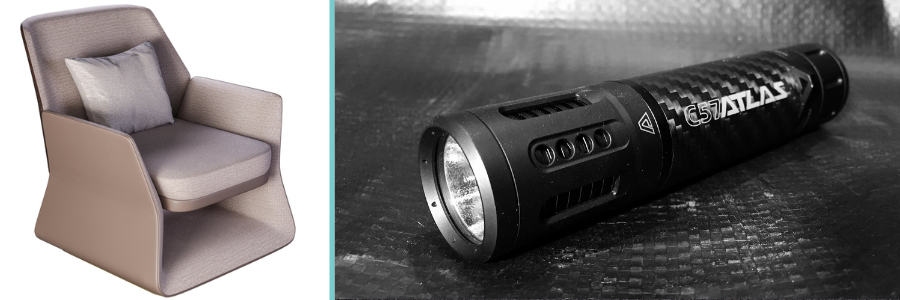
Product design of a luxury chair and tactical flashlight by Cad Crowd design experts

RELATED: Important tips for hiring new product development services firms & freelance design experts

Select the appropriate product design services partner

Choosing the proper consumer product design services partner is a key decision that has a direct effect on cost, efficiency, and the success of your project. An optimal partner can facilitate development, minimize costs, and deliver high-quality outcomes.

In assessing prospective providers, begin by determining their experience within your industry. An organization or freelancer who knows your industry will be aware of typical challenges and regulatory requirements, minimizing expensive blunders. Look over their portfolio and determine if they have already completed similar projects. This assists in measuring their ability to provide the particular design solutions that you are searching for.

Another important consideration is pricing transparency. Hidden charges and ambiguous cost structures can result in surprise costs. Choose partners who offer transparent cost breakdowns, enabling more effective budgeting and financial planning. Also, check client reviews and reputation in the industry. Good word-of-mouth from previous clients is a good sign of reliability and quality service.

An extensive design partner must be capable of handling various aspects of product development in-house, ranging from concept development services to prototyping and testing. This reduces the outsourcing requirement, lowering overall costs and making the process smoother.

In order to make a wise decision, get several quotations and compare rates, skills, and services. Hire freelancers or small design houses, which may offer specialist expertise at competitive rates compared to large agencies, but retain high standards.

By selecting the proper design collaborator wisely, you can minimize costs, maximize efficiency, and guarantee an effective product development process.

Adopt digital prototyping

Digital prototyping is revolutionizing the product development process by enabling designers to create, test, and refine products virtually before investing in costly physical prototypes. Utilizing advanced 3D CAD modeling and simulation software, businesses can visualize every aspect of a product’s design, assess its functionality, and identify potential flaws early in the development cycle.

One of the most important benefits of digital prototyping is its potential to speed up iteration cycles. Conventional prototyping involves lengthy physical production, while digital models can be easily changed and simulated in real time. This helps reduce decision time and time-to-market. Furthermore, firms can significantly cut down on material costs by limiting the number of physical prototypes required.

Another key advantage is the early identification of design defects. Through virtual simulations, engineering design experts are able to perform stress tests, thermal analysis, and performance testing without building a single physical prototype. Finding and fixing problems at this point avoids expensive rework and production downtime. In addition, realistic images created by digital prototyping enhance communication with stakeholders, enabling them to see the end product and offer valuable input prior to manufacturing.

Investing in product design solutions specializing in digital prototyping enhances the development process and maximizes the use of resources. It saves waste, decreases costs, and improves cooperation. Digital prototyping enables organizations to get good products to the market quickly and economically. Adopting this technology is a prudent step for companies to innovate and yet be economically responsible.

RELATED: How to improve product development for your company with engineering firms & design consultants

Prioritize necessary features and prevent overdesigning

The best method of containing product development costs is to prioritize key features and eschew unnecessary complexity. Feature creep and having too many functions too soon may result in higher cost, longer development time, and higher technical risk. It is better to aim for core capabilities in the first prototype phase. This way, the product will effectively fulfill its essential function and still be cost-effective.

By focusing on merely the most important features, companies can greatly reduce design complexity. Simple designs make technical problems less likely, rendering the development phase easier and more predictable. Second, restricting features in the early stages reduces the time spent prototyping and producing, enabling earlier market entry. A streamlined methodology also results in reduced material and production costs because unnecessary parts and customizations contribute to higher prices, especially for manufacturing design companies.

In order to strike this balance, it is necessary to work closely with a trusted product design services provider. These experts can provide valuable input on what features are absolutely necessary and what can be delayed or skipped. Customer feedback collected from an initial release can then inform subsequent enhancements, with only the most pertinent additions being made.

Steering clear of overdesigning not only reduces the cost of production but also results in a product that is simpler to scale and refine. A well-prioritized, concentrated design strategy ultimately results in improved resource utilization and a successful market launch.

Apply modular design principles

Modular design is a product development strategy that centers on the development of standardized, interchangeable parts to be applied to several products or configurations. Implementing modularity enables companies to attain huge cost reductions, increase efficiency in production, and design scalable solutions to meet future demands.

One of the key benefits of modular design is cost reduction in manufacturing. Standardised components facilitate mass purchase, reducing material costs and simplifying manufacture. As the same parts are used in various products, businesses can simplify inventory and improve supply chain optimisation, as well as prototyping design services for future products.

In addition, modularity makes it easier to carry out assembly procedures and reduces errors during production. With clearly defined, reproducible modules, workers are able to rapidly and correctly assemble products with lower labor expenses and better quality control overall. The uniformity of modular components also facilitates quicker detection and replacement of faulty components, resulting in lower maintenance and higher product dependability.

Aside from saving costs, modular design makes products more scalable and flexible. Companies can roll out new product variants or updates without having to redesign entire systems. For instance, in the manufacturing of furniture, modular pieces make it possible for customers to tailor configurations while maintaining production efficiency. In electronics, modular circuit boards facilitate quick upgrading and fixing.

In order to use modular design principles to their maximum potential, sit down with your design team to come up with opportunities where standardization can be done. Think of how the modularity can help optimize efficiency, reduce wastage, and enhance flexibility. Properly thought-out modular thinking not only enhances your competitive edge but also facilitates long-term product development and sustainability.

Outsource specific work to freelancers or specialized firms

Outsourcing non-core design work is a strategic decision that yields huge cost benefits without sacrificing efficiency and quality. Most talented freelancers and specialized agencies provide competitive pricing for product design experts, and this makes it easy for companies to avail themselves of expert talent without the overhead of full-time employees.

Major design activities to be outsourced involve CAD modeling and 3D rendering, which are critical for product concept visualization, and PCB and electrical circuit design for electronics product development. User interface (UI) and user experience (UX) design are also important aspects of product usability, and market research and customer analysis give vital inputs for wise decision-making.

However, to fully capitalize on outsourcing, it is vital to ensure that outsourced work meets your project’s quality standards and deadlines. Poorly managed outsourcing can lead to costly revisions, so clear communication and quality control are essential for success.

Utilize open-source and cost-effective design tools

Utilizing open-source and cost-effective design tools is an excellent way to minimize expenses without compromising functionality. Several low-cost or free tools come with feature-packed capabilities that compare with commercial products, which is perfect for small-scale projects, startups, or early-stage prototyping. In 3D modeling, FreeCAD and Blender offer advanced features in parametric design and rendering. KiCad is an advanced tool for designing electronic circuits, providing schematic capture, PCB layout, and 3D visualization services.

On the other hand, cloud CAD software like Onshape allows real-time collaboration and instant sharing of designs with no need for costly licenses. With these tools incorporated into your workflow, you can have high accuracy and efficiency while keeping the costs of software low. Open-source solutions also get the community’s support and ongoing improvements, so designers and engineers can utilize industry-leading features. Capitalizing on these resources provides more flexibility and creativity without extra costs.

Use rapid prototyping methods

Selecting rapid prototyping methods can streamline your product development process by cutting time, cost, and risk. Techniques like 3D printing and CNC machining allow companies to make functional prototypes very quickly, enabling them to thoroughly test form, fit, and function prior to investing in costly production molds. These state-of-the-art methods have a number of benefits over conventional prototyping.

First, they enable quicker turnaround times, allowing companies to speed up their design iterations and get products to market sooner. Second, rapid prototyping design services reduce material waste, so it is a cost-saving method for product design refinement. It also offers the flexibility to test various design variations without having to make significant upfront investments in tooling.

To get the most from these benefits, work with your product design services partner to incorporate rapid prototyping into your development schedule. Through the use of these new manufacturing methods, you can simplify your design validation process and facilitate a smoother transition from concept to production.

Work with manufacturers early in the process

Working with manufacturers from the inception of the design process is an important tactic for facilitating a seamless move from concept to production. By including them early on, designers can prevent expensive errors later that could stem from limitations in materials, inefficient assembly processes, or scalability. Manufacturers provide valuable insights in a number of areas critical to production feasibility and cost.

First, they offer advice on material selection, assisting designers in selecting materials that are not only appropriate for the desired function but also easily accessible and cost-effective. They also recommend sourcing alternatives to avoid supply chain interruptions. Second, manufacturers assist in streamlining assembly methods, proposing methods of simplifying production and reducing labor expenses. This can result in streamlined workflows, quicker turnaround times, and less waste.

Fashion rendering and design by Cad Crowd product designers

RELATED: How to reduce costs on 3D product development with remote CAD experts for companies

Use design for manufacturability (DFM) principles

Design for manufacturability services (DFM) are an important methodology in product design that ensures certain designs are suitable for effective and economical manufacturing. By incorporating DFM principles early in the design process, firms can greatly enhance product quality while minimizing manufacturing complexities.

One of the key goals of DFM is to reduce the cost of production by simplifying design, using fewer components, and selecting cost-effective materials. Streamlined design also minimizes inefficiency and error, ensuring manufacturing becomes more predictable and consistent. This, subsequently, increases the overall product’s reliability and durability since there are fewer components that can fail.

To effectively capitalize on DFM, businesses can work with product design companies specialized in manufacturability analysis. These specialists are responsible for assuring prototypes will be functional as well as meet economic criteria for a more viable end product. Applying the concept of DFM at the inception of the designing process is needed to gain that balance of performance, cost, and manufacturing effectiveness.

Plan for scalability and future production efficiency

While creating a product, scalability planning is crucial to make way for a smooth shift from prototype to mass production. A proper approach reduces the necessity for large-scale redesigns, lowering costs and accelerating time to market.

One of the main strategies is to create molds and tooling appropriate for large-volume production. Spending on high-quality, precision-made molds guarantees consistency of quality and decreases the possibility of defects when manufacturing at large volumes. In a similar vein, choosing materials that are cost-effective and considering compatibility with high-volume manufacturing processes is also vital. Materials should be easy to handle, be readily available, and work satisfactorily in actual conditions.

Manufacturing processes should also be selected with scalability in consideration. Processes like injection molding services, CNC machining, or assembly lines need to be tested for their effectiveness and long-term sustainability. Also, packaging and logistics optimization have an important role in keeping costs minimal. Effective packaging solutions not only secure products in transit but also ensure maximum utilization of space, which minimizes storage and transport costs.

The second most important area of scalability is the rigorous testing of prototypes. Performing actual durability and performance tests makes it easy to spot weaknesses early in the design stage, avoiding expensive adjustments down the road. By making products wear-resistant, manufacturers cut down on failure rates and ensure customer satisfaction.

By incorporating these techniques from the beginning, companies can optimize production, save money, and deliver consistent product quality as demand increases.

Conclusion

Cost savings on new product design and development services involve strategic planning, teamwork, and the use of cost-effective technologies by engineering firms. By setting clear goals, choosing the appropriate design partner, and making use of digital tools, businesses can produce quality prototypes without going over budget.

Investing in affordable product design services not only minimizes development costs but also speeds up the process of getting from concept to market-ready product. By adopting the proper methodology, companies can achieve innovation without compromising on financial sustainability and be successful in the long term in an ever-growing, competitive market.

RELATED: The simple secret to unlocking new product innovation at design services companies

How Cad Crowd can help?

At Cad Crowd, you don’t have to worry about investing in cost-effective technologies for your prototypes, especially digital tools – we are the top freelance platform to find the best CAD design and product development services.

Our extensive pool of experts of your choosing can deliver quality product designs and prototypes without going over the budget. Don’t forget to contact Cad Crowd today to learn more about our services. Request a quote today.

author avatar

MacKenzie Brown is the founder and CEO of Cad Crowd. With over 18 years of experience in launching and scaling platforms specializing in CAD services, product design, manufacturing, hardware, and software development, MacKenzie is a recognized authority in the engineering industry. Under his leadership, Cad Crowd serves esteemed clients like NASA, JPL, the U.S. Navy, and Fortune 500 companies, empowering innovators with access to high-quality design and engineering talent.

Connect with me: LinkedInXCad Crowd

Best 35 Sites for Engineering Design Challenges and Contests for Crowdsourcing Design


It’s said that the obvious advantage of using a design contest, as you’re looking for an engineering design partner, is the quick access to a large pool of talent. There are two likely scenarios where I may find such an engineering contest an excellent idea:

  • First, I’m posting a challenge for a specific design work because I want to identify and hire the most qualified professional (i.e., the winner of the challenge) for a project. In this case, I already know how the work should be done; the contest is just like a test to figure out the most qualified participant.
  • Second, I’m in the middle of a project and in need of an engineering concept. So, I set up a contest and invited a group of engineers to compete against each other. The best engineer wins a specific amount of prize money, but I own the concept. It’s as if the prize money is some sort of payment to buy the concept.

The question is, where can I post the contest? Social media might be a good place to start, but what if I have no idea whether the participants are actual professionals or students still honing their skills? Cad Crowd has been working with professional freelancers and AEC firms to connect them with the best talent for their engineering challenges as the leading marketplace for vetted expertise.

Best sites for design contests

Well, my quick research on the web has led me to a list of the most recommended sites where everybody can post design challenges and contests, crowdsourcing-style.

Cadcrowd

Cad Crowd

Let’s not beat around the bush, there aren’t many websites out there that do engineering/design contests better than Cad Crowd, in terms of both ease-of-use and quality. There’s no jack of all trades here, either. Cad Crowd is built specifically to provide assistance for AEC (Architecture, Engineering, and Construction) companies and individual clients as they deal with challenges in their projects. While design contests are often most effective for relatively small projects like interior design, floor plan, 3D character animation services, 3D printable designs, and animations, I’ve seen competitions for basic designs in Cad Crowd with prizes up to $6,000. In general, contests range from a little over $300 for a simple challenge to more than $50,000 for a highly complex one.

Cad Crowd offers three different contest options, including public (visible to everyone), private (available for select designers), and invite-only (accessible for united professionals only). Every contest also comes with a guarantee of accuracy, which means Cad Crowd makes sure that all the submitted designs follow the specified requirements. Cad Crowd also handles the NDA and IP paperwork for clients to avoid issues with the matters at a later date. Depending on the budget you’re willing to spend, you can receive as many as 50 submissions within just a few days.

Website: CadCrowd.com

ninesigma logo

NineSigma

If you’ve been in the “open innovation” industry long enough, you should know that NineSigma is among the first companies to offer such a service. In fact, it has become famous precisely because of the crowdsourcing approach. Things have changed quite a big deal in the company in recent years, so that most of its clients today prefer the more discreet crowdsourcing, which sounds like an oxymoron, but the basic principle stands. While about half of all the design challenges and exploratory projects have never been made public, NineSigma boasts that nearly 80% of the respondents have at least a Master’s degree. So, that’s reassuring, I assume. One of its most famous past clients was the BMW Group when the automaker was searching for a solution to reduce IR transmission through car glazing to improve in-car connectivity.


Website: NineSigma.com

wazoku logo

Wazoku

Since its foundation in 2011, Wazoku claims to have managed over 2,500 innovation challenges worth more than $6 million in award prizes. From those challenges, the company has seen and captured about 200,000 innovations from all around the world. One of the distinguishing factors of Wazoku is that it doesn’t limit submission only to professionals. The term “problem solvers” is used in a very loose sense to encourage all individuals to participate in every challenge and make positive contributions. One of its latest projects was an innovation challenge to devise a simple and easy-to-use enclosure system for pipe repair collars, with a total award of $30,000.

Website: WazokuCrowd.com

RELATED: A comprehensive guide to engineering product development services for companies & startups

autoharvest logo

AutoHarvest

If your business is in the automotive design industry, AutoHarvest might be the right place for you. It’s also a rather unique entry because the website doesn’t actually post challenges, but it offers an Intellectual Property library for members. At least there are a few crowdsourcing elements there. The idea behind AutoHarvest is to reveal some old (and potentially obscure) patents to help companies and inventors transfer their IP to others in need.

Think of it as a marketplace where buyers, patent holders, and companies can collaborate to solve engineering issues using existing technologies. It’s worth mentioning that the website isn’t the most visually appealing one; it seems that it hasn’t received any updates in years, so the interface isn’t exactly what you can describe as intuitive. The fact that it exists at all should be good enough for the industry.

Website: AutoHarvest.org

grabcad

GrabCAD

One of the better-known sites for engineering challenges, GrabCAD, is pretty straightforward about its engineering design contest feature. You define the type of contest, determine the prize money, and pay the site an administration fee. GrabCAD can manage everything for you, from the contest launch date, duration, and even the judging schedule. Also, you’re allowed to pick the jury, so it shouldn’t be too difficult to ask a member of your engineering team or an expert from the community to take part. In case you haven’t noticed, GrabCAD likes to boast about how it hosted a few competitions for NASA in relation to the agency’s space missions.

Website: GrabCad.com

yet2 logo

yet2

In the old days, yet2 was solely a crowdsourcing platform. Now, it has expanded the business offerings to include open innovation consultancy as well. You can’t simply register and post an engineering design contest on the site; you need to use a custom portal software, with which you can launch and manage the innovation challenge. An internal team from yet2 claims to filter all submissions to make sure that you’ll only have to deal with and communicate with worthy ideas. Not so long ago, the site launched a design challenge to search for an innovation in the form of 3D-printed food, in an attempt to increase food production flexibility.

Website: Yet2.com

HeroX

HeroX

I’ll go straight to the point: HeroX is an outright crowdsourcing platform where you can post design competitions about anything, including engineering. You have two contest options: a pay-per-challenge model with an 18% fee taken from the prize amount, or the unlimited model, where you pay an annual fee to use the platform as many times as you like. HeroX says that the latter is often used by engineering consultants and the more established companies, which makes sense because they may have to post challenges pretty often in any given year. The pay-per-challenge is better for startups, small engineering firms, or SMEs in general. Another good thing is that there’s no barrier to participation.

Website: HeroX.com

designboom-logo

Designboom

If the engineering innovation you need is related to architectural design services, you might want to take a look at Designboom. For an upfront fee of $179, you’re allowed to post a design challenge and set the rules. Not only can you define the objectives and parameters of the challenge, but you can also determine who’s going to be the jury members. It’s a good thing that you can upload an image or two to illustrate the idea or concept that will help participants understand the objective better. Designboom also offers a higher-tier membership, where you pay $500 to have the platform promote or highlight the challenge on the website banner.

Website: DesignBoom.com

99Designs

99designs

Most of the contests on the platform, or the entire site for that matter, is intended for graphic designs, such as logos, web UI, business cards, labels, book covers, etc. It’s not really about engineering, but there is a category for art and illustration that you might find useful if you need to have some architectural sketches done. Most design contests run for seven days, and by the end of the process, you get to select a winner. All the files are transferred along with the copyright. In the event that no sketches and illustrations submitted meet your requirements, 99designs has a money-back guarantee, too.

Website: 99Designs.com/contests

designcontest logo

DesignContest

It’s similar to 99designs in the sense that it focuses on graphic design. The good thing is that DesignContest has a packaging design services category, which is actually also a big part of the engineering process in product development. You get to select three winners in every competition to potentially attract more participants. DesignContest handles the deliverables, payments, communications, NDAs, and copyrights on your behalf. Unless there’s something wrong along the way, it should be a streamlined process with the platform standing between you and the participants. The platform boasts a more than 95% satisfaction rate and claims to have helped more than 10,000 clients over the years.

Website: DesignContest.com

engineering design of car blower intake and positioner by Cad Crowd design experts

RELATED: What you need to know when hiring a product design firm & designer for new prototypes

hackaday logo

Hackaday.io

This is the site that claims to have the largest collaborative hardware development community and also the biggest online repository of open hardware projects. I have no idea if those are entirely true, but Hackaday does allow you to post engineering contests or projects, including the descriptions you think necessary, and set the prizes. You can even set the requirements for the entries, so there’s little chance that somebody out there will submit irrelevant ideas. Hackaday also has features to submit a “tip” that helps promote the contest and highlight it on the site.

Website: Hackaday.io

Bustler

Bustler

It’s the sister site of Archinect, so you can probably guess what the site is all about: architectural design. Think of Bustler as an Architect’s trusted online publication platform for events and competitions revolving around the architectural industry. You can’t post a contest as a guest user on Bustler; you need to register for an account or use an existing Archinect account if you have one already to publish a competition, news, or events. There are two options for competitions, including basic, standard, and featured.

The BASIC option is a free entry, meaning you don’t have to pay a dime to post the contest, whereas the STANDARD option is a paid listing. When you post a contest via the BASIC/free option, Bustler takes the liberty to review the details and retains the full right to either publish or decline it. Competitions posted via the STANDARD or FEATURED option never have to go through the internal reviewing process. If you want to make sure that your engineering design contest gets added to the list, the latter option is the way to go.

Website: Bustler.net

110Designs

110Designs

Although the site is mainly for graphic design competitions, it still has a reasonably busy room for engineering and technical design stuff, especially in the automotive, architectural planning and design services, technology, and product packaging industries. A competition in the 110Designs typically takes about seven days from initial posting to completion. There’s no mention of whether you can extend the timeframe, for example, when you need to wait for more submissions, or rush it if you’re in a hurry. The site promises to give a 100% refund in case you don’t like any of the submitted designs at the end of the contest.

Website: 110designs.com

Adesign award competition logo

A’ Design Award & Competition

It’s all in the name. The A’Design Award and Competition is meant for designers, engineers, and innovators to launch contests and increase exposure to their businesses. You can either sponsor a competition hosted by the site or launch your own via the Grand Award Prize option. You can define the competition’s objectives and submission requirements, but you can’t determine the prize money. Instead, you have to choose from several different packages starting from around $2000 for a Silver Grand Award to a little more than $5000 for the Platinum prize. Here’s the deal with A’Design Award and Competition: all ideas, innovations, and designs submitted for any contests hosted by the site belong to the creators. You don’t own the IP rights, but you should be able to purchase the IP from the winner afterward.

Website: Adesignaward.com

crowdspring logo

Crowdspring

Most competitions in Crowdspring are in the graphic design category, but there’s one category that might interest you – product design services. This is great for startups and small companies in need of a fresh design, but who just can’t afford to spend thousands of dollars on brand-new, creative, ready-to-market product ideas. All designs submitted to the contest will be digital web files, such as PNG or PDF, but everything is editable in case you need to make some changes at a later date. Most projects run for seven days, and according to Crowdspring, you should receive dozens of ideas within this period. There’s also a 100% money-back guarantee if you can’t find any idea you’d like to use.

Website: Crowdspring.com

openideo logo

OpenIDEO

One of the most confusing things about OpenIDEO is the IP rights issues. While you can indeed post an engineering design contest on the site, all the submissions come with no copyright protections. They’re in the public domain for everyone to share, re-use, and modify. It’s kind of problematic because sometimes you need to include some sensitive details or technical information in the project description. However, OpenIDEO is still a perfectly good place to elicit ideas from members or participants. Just give a conceptual explanation about what you need, so that the community can share useful feedback. OpenIDEO specializes in crowdsourcing solutions for societal problems such as waste management and innovative, eco-friendly products.

Website: OpenIdeo.com

Designcrowd

DesignCrowd

Everything about DesignCrowd might not look as prestigious as A’ Design Award & Competition, but at least the former is much easier to manage on the client’s side, and you get full copyright of the ideas and design files that win your contest. There’s nothing complicated about the process, either. You create the project brief, publish the competition, and let the participants present their best ideas. DesignCrowd allows you to choose the timeframe, but it has to run for at least three days before the submission window is over. If you still haven’t found the design you like after 10 days, you can ask for a refund.

Website: DesignCrowd.com

Quirky

Quirky

As far as design competition is concerned, Quirky wants to have the cake and eat a portion of it, too. Here’s how I think it works: you post a concept about a product or an invention, and let the website manage every single submission from the members. You’re allowed to add more ideas to the original post. It’s basically a discussion to determine the best method to materialize the concept into a tangible product. And if Quirky finds the idea good enough and actually profitable, it connects you with a factory partner to manufacture the product in question. Once again, Quirky takes over the marketing and sells the product on the platforms and stores of its own choosing. When the product makes money, you get royalties. It’s like a competition between yourself and the other users to churn out the best ideas and potentially earn the right to royalties at the end of a lengthy process.

Website: Quirky.com

ideaconnection logo

IdeaConnection

This platform is best described as an engineering design contest organizer, such as for electrical engineering services. IdeaConnection is pretty flexible in its offerings. For example, it allows you to supply the contest brief or let their internal team assist you with the details; you can host it on your own website or let it run on theirs; it gives you the option to run the marketing by yourself or let them handle everything; the platform also offers to function as your customer service, but only if you want it to. With so many things to choose from, it looks (although I don’t know for sure) that the cost should be flexible as well.

Website: IdeaConnection.com

GoPillar-Logo-2

GoPillar

First things first, GoPillar is a pleasing platform to post architectural design contests. With the most basic option, you’re only allowed to post a contest for a finished floor plan and description. Price starts at $1200 for a residential project, $1600 for an outdoor structure, and $2200 for a commercial building. You can add more options like indoor/outdoor plans, sections, 3D images, interior designs, and even virtual tours for an additional amount of money. In general, you pay more for every single design file you request. GoPillar claims to have more than 50,000 designers ready to compete to win every contest posted on the website. There’s also a message board to help you communicate with participants.

Website: GoPillar.com

brandsupply logo

Brandsupply

As an online marketplace for graphic design, Brandsupply offers plenty of unique logos, illustrations, and digital art for various purposes. But it also allows you to post design contests as well, such as in the stationery category. Mind you that most of the existing contests are asking for logos, and there’s no clear explanation whether the “stationery” in question includes office supplies or just letterheads and envelopes. That said, it still looks like a good place to invite design submissions for everyday items like pens, pencils, hoodies, umbrellas, or other souvenir items. You can give feedback to every design submitted by participants and even ask for revisions if needed.

Website: Brandsupply.com

Designhill logo

Designhill

Nearly everything about Designhill is similar to other graphic design contest sites out there. You’re welcome to post design competitions for logos, posters, brochures, CD covers, and so on. The good thing is that Designhill also has a “clothing and merchandise” category where you can invite participants to create unique designs for hats/caps, tote bags, personalized mugs, and t-shirts. Most contest packages come with a full-refund guarantee. The price for each contest is listed clearly, and the site mentions that there’s no hidden fee at all. The money you spend on publishing a contest already covers the cost of copyright ownership of the winning design.

Website: Designhill.com

RELATED: Low-volume, cost-effective alternatives to injection molding with manufacturing firms & product designers

Thingiverse

Thingiverse

Whether you’re looking for a 3D-printable design or 3D-printed objects, Thingiverse has you covered. While it’s mainly an online marketplace for 3D printing design services, it has a contest feature where you can specify exactly what you need and set the amount of money you’re willing to pay for that. If you only want a file to be printed in the future, make sure to specify the file format you need and the deadline for submissions. It might be easier if you could provide an image or an illustration (of the object you want to print) in the contest description.

Website: Thingiverse.com

Hyvecrowd

HYVE Crowd

For a site that claims to have (so far) organized 133 contests with total prize money of more than a million dollars in engineering, social, and services categories, HYVE Crowd is certainly more than qualified enough to host your design competition. For all those contests, the site has attracted 98,000 participants who submitted more than 125,000 ideas for big and small companies, as well as government projects. Among the biggest highlights are Volkswagen, as the automaker was trying to discover new concepts for car bodies with minimal joint complexity. BMW was also once a client in a contest to improve the luggage compartment of its cars. Henkel, the adhesive manufacturer, has also published a design contest in HYVE Crowd to look for a better packaging design.

Website: HyveCrowd.com

Cults 3D

Cults 3D

In many respects, Cults 3D is just like Thingiverse. Both platforms offer services to host contests for 3D-printable designs and 3D-printed objects for everyone. The biggest difference is that Cults 3D actually has spots to help you launch competitions for objects made using CNC machining and laser cutting technologies as well. Unfortunately, there isn’t an instant way to publish a contest in Cults 3D. You need to send an inquiry to the administrator and let them decide whether your idea/proposal is good enough to warrant an actual contest.

Website: Cults3D.com

Arcbazar

Arcbazar

It’s all about architectural design contests in Arcbazar. There are three major categories provided: Home & Garden, Commercial, and Institutional. For each type, you can specify the scope of the project, such as remodeling, interior design services, landscape, or even new buildings. Arcbazar allows you to add further details in the contest description, such as the type of rooms to be renovated and the overall square footage of the project. Once you finish with the basic description, you get an estimate. Everything is very simple and straightforward – Arcbazar doesn’t even do anything else, only architectural contests.

Website: Arcbazar.com

innoget logo

Innoget

At first glance, Innoget doesn’t really look like a place where you can publish a design contest. It’s more like a network for innovators to communicate with each other rather than a platform to host a competition, but you can treat it as such if you want. The idea behind Innoget is to let companies, stakeholders, designers, engineers, and the public at large make positive contributions to future innovative products and technologies. However, every conversation starts with a basic idea – it takes a conceptual design to start the conversation, and that’s where the competitive mindset seeps in. Head to the “Innovation Needs” directory on the site, and you’ll see some of the latest active challenges posted.

Website: Innoget.com

enel logo

Enel

With a presence in more than 120 countries worldwide, the Open Innovability platform by Enel helps make sure that your engineering design competition gets the exposure it needs to crowdsource the most efficient solution. Every contest proposal has to go through the in-house team of experts for evaluation, and they can actually help you formulate the contest so that it meets their requirements for sustainability and innovative aspects. And if you haven’t published any challenge or competition of any sort on the site, you’ll be eligible for a 100% discount. In other words, your first contest is free of charge.

Website: Enel.com

Contest watchers

Contest Watchers

There are multiple categories in Contest Watchers, from industrial design services to visual arts. The platform is mostly geared towards innovators, creative thinkers, and freelancers looking to get broader recognition in the industries at large, but it also opens the door to companies in search of innovative solutions. You have the freedom to determine the prize money and the specific requirements for each competition, but Contest Watchers will only publish your challenge if you accept international participation.

Website: ContestWatchers.com

Archoutloud.com_

Arch Out Loud

As the name suggests, Arch Out Loud specializes in architectural designs. The platform allows you to either sponsor a competition or run your own design challenge. Over the course of its history, Arch Out Loud has collaborated with partners from various backgrounds, including individual homeowners and even the United States government. Some of the most impressive design contests in its portfolio include the Open Ideas for a Floating House in Miami, a Multi-Purpose Stadium in Nigeria, a Hurricane Shell Design Competition in Collaboration with Deltec Homes, and the Design Contest for the New White House.

Website: ArchOutLoud.com

parasail actuator stress test and gear engineering by Cad Crowd design experts

RELATED: Key factors to consider when vetting engineering firms for design & consulting services

Ennomotive

Ennomotive

All the contests organized by Ennomotive fall under one of the following categories: (1) development of new products using new innovative materials, mechanical designs, and electronics, (2) improvement in manufacturing and construction operations with robotics and automation, and (3) environment-focused projects by the revaluation of industrial waste. Ennomotive promises to be pretty involved throughout the contest by providing feedback on submissions and evaluations, too.

Website: Ennomotive.com

instructables logo

Instructables

One of the most popular websites for DIY projects, Instructables, unfortunately, offers no direct route to post design competitions. Instructables actually makes a distinction between contests (typically run for eight weeks), challenges (four weeks), and speed challenges (two weeks). Everything is all too casual with the site, as it informs users to notify them about an idea for a contest via social media like Instagram or Twitter. And there’s no guarantee it will publish (or even review) your ideas at all. But it’s a well-known site for everyday inventors, so you might want to give it a go nevertheless.

Website: Instructables.com

agorize logo

Agorize

You don’t get to publish a contest on the Agorize website. Instead, it offers you a premium competition management platform that you can use to launch design challenges and connect with a massive community of 10 million innovators and startups. Agorize promises to stay involved throughout the process, helping you identify possible solutions. The platform isn’t free; the subscription fee is calculated based on the number of participants or contributors of your contest and the number of contest administrators. It doesn’t say what the base price is, but there’s a free trial available.

Website: Agorize.com

Desall

Desall

The “industrial design” contest on Desall focuses on projects expected to go into mass production, “craft design” is about small production items like artisan products, whereas the “interior design” covers 3D furniture rendering services and space planning. A contest might be done as a single phase or a sequential phase. The former means you publish a design contest for only one aspect of a project, such as a product design or the internal mechanism of a product. In the sequential phase, the contest might include more aspects, including idea generation, new design, branding, and packaging.

Website: Desall.com

freelancercom

Freelancer

Probably one of the most widely known platforms to launch a design contest on the web, Freelancer opens the door to companies and individual clients to organize a specific challenge, set the prize money, and determine the winner. Anyone can publish a contest in any industry category, from a simple logo design to a complex engineering design. Freelancer also promises to give the prize money back if, at the end of the contest, you still haven’t found the design you want, or are basically unhappy with the result.

Website: Freelancer.com

RELATED: A guide to electronic product design for manufacturing with PCB design firms & engineers

Conclusion

Whether you find yourself overwhelmed with workload in a project or have an idea that isn’t fully developed yet, a design contest can be an effective solution to either problem. This is where you can collect ideas to solve specific engineering issues, accelerate the development of a unique product design, and maybe, put your approach to engineering design into a much wider perspective. In addition, design contests help support design culture by helping winners with monetary incentives (prize money), professional feedback, or publicity aid (if you want, you can actually publish the winning design after the contest).

Cad Crowd is the number one platform for finding freelance 3D design and engineering design professionals, both for vetted hires and through contests, proven and trusted by AEC firms all across the globe. Get a free quote today.

author avatar

MacKenzie Brown is the founder and CEO of Cad Crowd. With over 18 years of experience in launching and scaling platforms specializing in CAD services, product design, manufacturing, hardware, and software development, MacKenzie is a recognized authority in the engineering industry. Under his leadership, Cad Crowd serves esteemed clients like NASA, JPL, the U.S. Navy, and Fortune 500 companies, empowering innovators with access to high-quality design and engineering talent.

Connect with me: LinkedInXCad Crowd

Product-Centric vs. Customer-Centric: Which Is Best for Consumer Product Design Companies?


Picture yourself as a ship captain navigating a ship through the vast expanse of consumer product design services. Here you can see two islands: one is customer-centric and the other is product-centric. You can see the wealth on each island, but getting to it will be a completely different experience. Where would you like to dock then? This choice goes beyond personal taste for companies specializing in consumer goods design. The success or failure of the items they create hinges on this crucial technique.

Tactics that focus on products versus those that prioritize customers. Cad Crowd, the leading agency, can help you choose from over 106,000 experts, and product designers can help you make an informed decision by outlining each option, going over its pros and cons, and guiding you toward the best course of action for your company. These experts don’t simply help bring concepts to fruition; their help actually plays an imperative role in helping speed the overall product creation process along.


🚀 Table of contents


Establishing the backdrop: What does each strategy entail?

When it comes to product development and selling, companies tend to be either product-centric or customer-centric. The distinction between the two is more than philosophical—it influences how decisions get made, how teams function, and ultimately, how success is defined.

A product-centric approach is all about the product itself. Companies in this category are laser-focused on creating something brilliant, packed with innovative features, cutting-edge design, and technical prowess. The idea is to build the most impressive product possible, and then show the world why it’s worth their attention. In this setup, the product is the hero. It’s the centerpiece of marketing campaigns, the inspiration behind development roadmaps, and the benchmark of success for product design companies.

Now, compare that with a customer-focused mentality. This mindset turns the script on its head. Rather than inquiring, “What can our product do?” the question now is, “What does our customer need?” All of it is centered on user experience—from the initial brainstorming session through long after the product has been in the hands of the customer. Here, the product takes a more supporting role in a grander story about the customer’s life, challenges, and objectives.

Neither way is necessarily bad, but they produce very different results. Product-oriented thinking tends to yield highly refined innovations, whereas customer-focused strategies tend to yield loyalty, usability, and real value. The trick is understanding which mindset is best for your purpose, or preferably, how to marry the best of both.

product packaging design and electro-powered motor vehicle by Cad Crowd product engineering experts

RELATED: A comprehensive guide to engineering product development services for companies & startups

The product-centric charm: Crafting the masterpiece

The product-first philosophy originated deeply in engineering design services and innovation cultures. Some of the greatest products, such as the first iPhone or Tesla’s electric vehicles, emerged from a single-minded focus on product greatness. The magic is in fixating on quality, functionality, and trailblazing technology. Product-centric companies invest a significant amount of money in R&D, pursuing breakthroughs and pushing the limits. Their credo is “build it, and they will come.” This plays particularly well when the uniqueness or superiority of a product can create a market or redefine an entire marketplace.

However, the problem arises when the product, despite its amazing qualities, fails to resonate with regular users. Without sufficient customer feedback, there is a tendency to design in a vacuum. The outcome? Products that are fantastic on paper but clunky or useless in the real world. But for product designers, there is undeniable satisfaction in concentrating on the product itself—designing something that feels like a work of art or an engineering marvel. The ego satisfaction of extending the boundaries can be overwhelming.

Customer-centric focus: The heartbeat of design

Changing your focus from product to customer is about knowing people deeply. What troubles them at night? What small things do they tolerate on a daily basis? What dreams or aspirations might your product unleash?

Customer-focused organizations are masters of empathy. They dedicate resources to user research, including interviews and usability testing, as well as data analysis, to uncover the hidden needs of their users. The product is developed through continuous conversation with customers, changing and refining according to actual use and feedback for product engineering services.

This way builds loyalty and trust, as customers feel valued and heard. Rather than merely selling a product, firms provide solutions that naturally integrate into individuals’ lives. The reward? Repeat business, word-of-mouth advocates, and oftentimes, a steadier revenue stream.

But it’s not always easy. Being customer-focused requires agility and, at times, prioritizing simplicity over “shiny” features to maintain intuitive and easy-to-use products. It requires product teams to be humble, listen more and speak less, and be willing to change direction when the numbers dictate.

When product-centric wins the day

Envision a startup conceiving a revolutionary wearable health product. Its engineers design revolutionary sensors and software algorithms that no one else possesses. Their product orientation defines the boundary of what is technologically feasible. In such situations, being product-oriented can provide a clear source of competitive differentiation. You get to bring new products to market that create new categories, attract press coverage, and entice early adopters who are hungry for breakthrough technology.

Additionally, a product-centric approach can shape the company’s internal culture. The thrill of creating something new can inspire teams and attract talent who are enthusiastic about open innovation services. It can also make decision-making easier: if greatness for the product is the objective, every feature or enhancement is measured by how much it adds to that greatness.

RELATED: How to visualize consumer products using 3D rendering services for your company and firm

When customer-centric takes the crown

Compare that to a firm producing daily household appliances. Reliability, ease, and value are what customers demand. Preferences may vary regionally or by life situation. Customer-centricity is a strategic imperative here.

Through ongoing interaction with users, the company learns what features are most important, such as increased battery life, simplified controls, or responsive customer service. Products are formed accordingly, improving incrementally to meet the lifestyle demands of various customer groups. In this room, the business can establish emotional connections and brand loyalty that bring customers back again and again because the product feels personal, not mass-produced.

Bridging the gap: Is one better than the other?

This one tends to generate lively arguments. Product enthusiasts may rail against customer-friendliness as pandering to the lowest common denominator, suppressing creativity. Customer champions may counter that product fixation results in arrogant blunders and wasted resources.

But the reality is more complicated. Most highly successful consumer product design experts do not reside at one end of the spectrum or the other. Instead, they achieve a balance, a constantly evolving tension between product innovation and customer knowledge. Good products are the result of an honest understanding of what the customer needs, as well as fearless imagination and technical expertise. Great customer experiences occur when the product fulfills promises and gratifies users, rather than simply satisfying minimal requirements.

How to find your company’s best fit

Selecting your island relies on many variables:

  • Market type: Are you moving into an emerging market where innovation can drive demand? Product-centric may be your guiding star. Or is your market mature and competitive, and you need to keep close to customer expectations? Then, customer-centric may be your way station.
  • Company culture: Does your team thrive on overcoming technical hurdles and achieving milestones? Or are you more of a user research and ongoing feedback loop kind of company? Match what pumps your team up.
  • Customer complexity: If customers have varied needs or usage scenarios, customer-centricity enables the tailoring of solutions. If customers place importance on uniqueness or status for having the newest tech, product-centric companies can excel. Consider how design for assembly services can fit into the equation.
  • Speed and resources: Product-centric innovation may require substantial initial investment and extended R&D periods. Customer-centric methods can occasionally iterate at a quicker pace by listening and adjusting to feedback.

Combining both: The hybrid model

Why not take advantage of both? Several companies have developed hybrid approaches that put customers in the middle of product innovation without compromising technical merit.

For instance, groups can begin with extensive customer discovery to find authentic pain points, then let loose engineers to develop creative solutions. Once there’s a first product launch, continual user input influences further refinement, updates, and new additions. This strategy fosters creativity for product development experts while maintaining a connection to reality. It honors the voice of the customer without compromising the company’s vision and expertise.

product design of a perfume container and health device by Cad Crowd product experts

RELATED: How to reduce costs on 3D product development with remote CAD experts for companies

Real-world examples to inspire

Take Apple, for instance, which is frequently referred to as a product-focused company. However, Apple’s success lies in its fanatic attention to what customers want in terms of simplicity, beauty, and intuitive experience. Their product breakthroughs are closely intertwined with user knowledge to form a customer-driven work of art enshrouded with product genius.

Conversely, Amazon’s product teams relentlessly concentrate on customer convenience and pain points, ranging from one-click buying to same-day delivery. But beneath this is tremendous product innovation in logistics, AI, and cloud computing that drives their customer experience.

What consumer product design companies can learn

If you’re leading a consumer product design company, here’s the playful reality check: obsess over your product and obsess over your customers. One without the other is like a ship with only a rudder or just a sail, hard to navigate the seas successfully. Concept design services fuel innovation and differentiation. Customer design fuels relevance and loyalty. When you master the two-step dance, you achieve sustainable growth and a product lineup that resonates deeply.

Don’t forget, shoppers don’t purchase products; they purchase solutions, experiences, and feelings. Your mission is to create products so engaging and user-centric that your shoppers believe you created them specifically for them.

RELATED: The simple secret to unlocking new product innovation at design services companies

Cad Crowd is here to help?

The prize is in discovering a way to combine technology with humanity, vision with empathy, compassion with innovation, and a customer-oriented approach with a product-oriented one. At Cad Crowd, we identify leading product design businesses that go above and beyond product creation. They create memorable experiences that clients adore. A free quote is available when you contact us today.

author avatar

MacKenzie Brown is the founder and CEO of Cad Crowd. With over 18 years of experience in launching and scaling platforms specializing in CAD services, product design, manufacturing, hardware, and software development, MacKenzie is a recognized authority in the engineering industry. Under his leadership, Cad Crowd serves esteemed clients like NASA, JPL, the U.S. Navy, and Fortune 500 companies, empowering innovators with access to high-quality design and engineering talent.

Connect with me: LinkedInXCad Crowd

Secrets of Creative Brainstorming & Tips from Product Design & Engineering Services Firms


Picture yourself in a vibrant, frenetic space with whiteboards, sticky notes, and an inquisitive group of people – designers drawing furiously, engineers computing in quiet contemplation, product managers walking up and down with their phones in hand. This busy-sounding place is where some of the most innovative concepts in product and engineering design services are being born at the industry giant Cad Crowd, the number one freelance CAD and engineering design services platform. It’s the sacred space where innovative brainstorming happens, yet what’s the magic formula that takes an ordinary group chat and makes it an innovation powerhouse?

How do leading product design and engineering companies come up with ideas that shake up markets and make users smile time and again? Grab a seat because I’m going to take you backstage into the art, science, and wizardry of creative brainstorming.


🚀 Table of contents


Why brainstorming seems like magic — But isn’t pure luck

Everybody assumes that brainstorming is all about a moment of epiphany. A room full of voices screaming ideas until something takes hold. But those “aha!” moments aren’t happenstance. They’re the product of a good process that cultivates curiosity, diversity, and rigor, but makes room for playfulness too.

The magic starts with a mindset. The best teams enter brainstorming with a no-judgment rule — an unwritten agreement that no idea is too crazy or too insignificant to bring up. This psychological safety is revolutionary. When individuals feel free to express even the most ridiculous thoughts, they ignite new connections in their own minds and in others’. At other times, a seemingly frivolous idea blossoms into a breakthrough when it is built upon by another, bringing the impossible to the innovative.

In product design firms and engineering services companies, that principle is coupled with profound expertise. Designers and engineers contribute technical acumen and user understanding to the process, which keeps imagination in touch with reality sufficiently to make it possible to act upon. They do grasp constraints — material constraints, cost implications, usability issues — but see them as inventive challenges and not as obstacles. That equilibrium between liberty and concentration is where magic occurs.

RELATED: Important tips for hiring new product development services firms & freelance design experts

Product design of a camera and outdoor grill by Cad Crowd product development freelancers

Diversity of thought: Your secret weapon

To double the creative juice in your brainstorming sessions, diversity is your secret weapon. This is not merely demographic diversity, although that is important for inclusive thinking. It’s the diversity of disciplines, experience, points of view, and even cognitive styles.

In leading product design and engineering companies, brainstorming pools together industrial designers, mechanical engineers, UX specialists, marketers, and even individuals from customer support. Why? Because every profession is different in how it asks questions about problems.

Engineers may be considering feasibility and strength, designers user experience and looks, and marketers consumer appeal and messaging. When these points of view clash in an animated session, they cause assumptions to be shattered and uncover possibilities that otherwise go unseen.

I once heard about a consumer product design firm that invited a supply chain manager into a brainstorming session focused on a new wearable device. The manager’s insight about packaging and shipping constraints immediately redirected some design ideas, saving the team weeks of wasted effort down the line.

The playful framework: Structured chaos

You might think creativity thrives best with zero rules, but many product design firms swear by structured brainstorming techniques to channel creative chaos. The structure is a scaffold, not a cage.

One technique that is used frequently is known as “brainwriting,” in which, rather than yelling ideas out loud, participants write ideas quietly for a couple of minutes, then pass on the notes to the next person to add to them. This saves dominant voices from overpowering quieter ones and stimulates more thoughtful thinking.

Yet another is “SCAMPER” — a playful acronym that leads you to Substitute, Combine, Adapt, Modify, Put to another use, Eliminate, or Reverse elements of an idea. This whimsical prodding encourages the brain to consider problems in new ways.

Even a humble timer can be a magic maker. By establishing a brief time frame (e.g., 10 minutes) for generating ideas, the time pressure inspires quickfire thinking and deters over-analysis paralysis. The group then shifts into a slow, deliberative phase to choose up-and-running ideas.

These approaches maintain energy high and ideas flowing, and prevent teams from falling into the trap of ineffective chaos.

Why environment and mood matter more than you think

Picture brainstorming in a dingy, small conference room with dim fluorescent lights. Now picture doing it in a bright studio room, with colorful post-its, touchy-feely prototypes, and perhaps even some refreshments. The difference is one of energy. Leading design and product engineering companies understand that the environment influences creativity. They design spaces that are inspirational and secure-feeling, relaxed seating, writable walls, mobile furniture, and proximity to resources such as 3D models, tablets, or physical materials.

Even mood comes into play. Beginning with an icebreaker or a simple, fun activity breaks the tension and preps the brain for creative thinking. Play and laughter decrease cortisol (the stress hormone) and boost dopamine, which drives motivation and learning. Music is an unexpectedly strong tool as well. Some teams utilize background music that improves focus or provides energy boosts, tuning the atmosphere to the tone of the session.

RELATED: How to design environmentally friendly products with design services companies & firms

The role of constraints: Creativity’s paradoxical ally

It sounds backwards, but limitations actually boost creativity rather than kill it. When teams face constraints, they’re forced to innovate and discover solutions they never would have considered otherwise. Product design thrives on constraints: budgets, regulations, manufacturing limits, ergonomics, and deadlines. Rather than crushing ideas, these boundaries sharpen them into something better.

A team designing a rugged outdoor speaker faced strict weight and cost limits. These constraints pushed them to explore lightweight composites and rethink internal layouts. The result was sleeker, more durable, and became a customer favorite. When brainstorming, frame constraints as exciting puzzles to solve rather than walls. This transforms limitations from creative killers into innovation catalysts.

The secret strength of visualization and storytelling

Words alone can’t always convey the complete richness of an excellent idea. 3D visualization services — including sketching, prototyping, or storytelling — are the way teams bring ideas to life and convey them richly.

Product design studios promote fast sketching in brainstorming. Such quick sketches aren’t required to be works of art; they are exercises for the mind that initiate discussion and refinement.

Occasionally, groups create low-fidelity physical models with clay, cardboard, or 3D printing. Having a concept in hand, watching how it might even work, sparks ideas you can’t achieve through verbal brainstorming only.

Storytelling gives emotional resonance. Rather than simply writing about a feature, teammates act out users, visualizing how the product is part of their lives. This empathetic method grounds ideas in authentic human wants and needs, taking them above intellectual concepts.

The aftermath: Bringing ideas to life

Brainstorming doesn’t conclude when the final sticky note is affixed on the wall. The sorcery exists in the subsequent. Excellent product design and open innovation companies view idea consideration and refinement as essential components of the creative process.

Following a session, groups sort ideas into themes and rate them on impact, feasibility, and alignment with business objectives. This filtering through collaboration eliminates a massive collection of ideas down to a couple of gems that are well worth pursuing.

But the thing is: excellent brainstorming has even more brainstorming. Preliminary prototypes tend to expose new questions and lead to new ideas. This feedback loop continues to energize innovation throughout the entire product-building process.

Product design of a bespoke jewelry piece and handgun by Cad Crowd product engineers

RELATED: The simple secret to unlocking new product innovation at design services companies

Real-world tip: Tap digital tools without forgetting human spark

In a time of remote work and online collaboration, numerous companies have fallen in love with online brainstorming platforms — virtual whiteboards, mind maps, and idea management software.

These platforms are amazing at capturing ideas in real-time, engaging global teams, and maintaining organized notes. But they cannot substitute human energy and the spontaneity of in-person sessions for product development experts.

The top companies combine the two. They may begin with a face-to-face or video call brainstorming, and then employ digital tools to create, follow up on, and iterate on ideas asynchronously. This combination of the humane and the high-tech strikes a balance between human intuition and technical productivity.

What you can steal from product design & engineering firms today

You don’t need to be a Fortune 500 firm or a high-end design house to access these secrets. Here’s how to bring a little of that magic to your next brainstorming session:

  • Create a judgment-free zone. Establish a sense of safety where every thought is welcome, even if it seems crazy.
  • Shake up your team. Bring in folks from other departments or backgrounds to bring new thinking.
  • Playful prompts or exercises to jolt out of the box thinking.
  • Constraints are creativity stimuli, not roadblocks.
  • Spark ideas through sketching, modeling, or storytelling.
  • Make the vibe conducive — a song or two, a cozy area, and some icebreakers could work like magic.
  • Idea clustering and iterative refinement in follow-through.

The never-ending adventure of creativity

Creative brainstorming isn’t about waiting for lightning strikes. It’s about cultivating rich soil where ideas can take root and flourish. The best brainstorming combines the right mindset, diverse perspectives, smart structure, and a healthy dose of playfulness, all fueled by genuine curiosity and empathy for the people who’ll use your product.

Next time you’re in a brainstorming session, think like a product designer or engineering design expert. View constraints as exciting puzzles to solve, embrace different viewpoints as your secret weapon, and treat wild ideas as sparks that could ignite the next breakthrough innovation. Remember, the most brilliant products never emerge from thin air. They’re born from the messy, energetic, sometimes chaotic collaboration of minds willing to dream big and explore what’s possible.

RELATED: How is product design different from industrial design services companies?

Cad Crowd is here to help!

Great brainstorming is just the beginning. Whether you’re sketching on napkins or have detailed concepts ready to prototype, our team at Cad Crowd has the expertise to guide your vision through every iteration until it becomes something extraordinary. Get your free quote with Cad Crowd today and discover how professional product design can turn your creative breakthrough into your next business success.

author avatar

MacKenzie Brown is the founder and CEO of Cad Crowd. With over 18 years of experience in launching and scaling platforms specializing in CAD services, product design, manufacturing, hardware, and software development, MacKenzie is a recognized authority in the engineering industry. Under his leadership, Cad Crowd serves esteemed clients like NASA, JPL, the U.S. Navy, and Fortune 500 companies, empowering innovators with access to high-quality design and engineering talent.

Connect with me: LinkedInXCad Crowd

Important Tips for Hiring New Product Development Services Firms & Freelance Design Experts


Designing a brand-new product isn’t exactly a walk in the park, especially if you intend to mass-produce and sell it at a profit, too. It takes meticulous planning, some serious budget considerations, and an almost obsessive level of devotion to the undertaking just to get the product properly designed and made to begin with.

And even when the product is finally here and ready to market, there’s little guarantee that it’s going to hit the ground running. Unless you have designed, produced, and released a product before, chances are you’ll bump into a number of perplexing challenges and get caught off guard by some hurdles you never knew existed in the first place. Even if this isn’t your first run, it doesn’t mean you won’t come across some difficulties, either. The difference is that you’ve gained some experience now, meaning you’ve gone through the intricacies before and become more prepared to face what’s coming next.

Either way, help isn’t always hard to come by. Like every other challenging task, designing a product is best left to the professionals. In this case, you have the option to seek assistance from a product development firm or a freelance design expert to provide guidance throughout the process. For example, you can find plenty of design forms and experienced freelance 3D design experts on freelancing platforms like Cad Crowd. However, not all design firms and experts are created equal; each has a distinct specialization in product categories, varying experience levels, a track record in the industry, and a history of successful projects. The following tips should help you discover the best possible partner for your specific needs and circumstances.


🚀 Table of contents


Be crystal clear about your goals

This first tip actually has little to do with hiring a professional design expert. Instead, it concerns your vision of the product and how you want to achieve it. Every product starts its existence as an idea. However, it takes work to turn the idea into a tangible product. A significant portion of this “work” involves identifying the nature of the product itself, including what it does, how it works, where it can be manufactured, why people would want it, who the target buyers are, and when it will be ready for sale.

You need to set a series of measurable goals, such as the target research and development cost, maximum production cost, estimated time to market, and expected profit margin, among others. Everything must be well-articulated from the beginning. All those targets and product descriptions will likely change throughout the development process, but at least you start with something definable, so you can keep track of those changes.

Research potential partners

Now that you’ve clearly defined everything there is to know about the product (or rather the idea of a product), you’ll come to realize that a collaboration with a professional design expert, or perhaps a product design firm, should go a long way to help you turn the idea into reality. The next step is to research potential partners. Because it makes little sense to just browse every single firm you can find online, you need to set the search criteria in advance to narrow down the options.

For example, limit the search to design experts who specialize in physical products rather than apps, UI, firmware, or other digital objects. Ensure the specialization includes the product category relevant to your idea. Focus on specific regions or areas, as well as a price range. The level of experience should also be included as a requirement, as seasoned product designers are more likely to understand the task’s complexities and guide you through the process.

Take a closer look at their portfolio

This is a no-brainer, really. Product development firms and freelance design experts often highlight their previous successful projects, prototype designs, collaborations with notable individuals, partnerships with prominent companies, and current ongoing projects. Don’t be surprised if their portfolios are filled with a broad variety of designs or products from entirely different categories. The key step here is to determine if any of them have experience working on a product similar to your design. It doesn’t have to be exactly the same, however.

As long as the product in the portfolio is in the same category as yours, it’s a huge plus. That being said, a diverse portfolio actually indicates versatility, a wide range of expertise, and proficiency in the trade. Don’t forget to read the case studies, if available, as they often provide valuable insights into problem-solving methods, client interactions, design workflows, and other project-related information.

RELATED: How 3D printing for rapid manufacturing is pushing boundaries at product design services firms

wheelchair and sous vide cooker product design by Cad Crowd experts

Pay attention to the team members’ skill set

When looking for design firms, it’s advisable to pay close attention not only to the principal engineer’s qualifications but also to those of the other team members. Partnering with a design firm doesn’t always mean you’ll be working directly with all the senior engineers. A design team typically comprises a project leader (manager), a product design experts, and two or more junior engineers. Of course, every firm has a different approach to a project, but the description generally holds true for the vast majority of small to medium-sized companies.

What you want is a diverse team comprised of professionals from various backgrounds. For instance, for the development of a complex mechanical product, the ideal team should consist of a mechanical engineer, an electrical engineer (for electronic products), and industrial/product designers. It’s essential that the team’s combined expertise encompasses a broad enough range of knowledge to develop your design into a viable product.

Take a long look at the pricing model

Some product development firms do not provide clear pricing information on their websites, but they’re willing to email it if you ask. If you opt for the freelancer route, pricing information is often more readily available. The most common pricing models include fixed-fee (a single fee that covers their services for the entire duration of the project) and hourly rate (based on the time they spend working on the project). A fixed fee is predictable, but it likely involves a large upfront payment; an hourly rate is more flexible, but it may lead to a significant expense if the project takes longer than expected.

Understand the design process and QA practices

The product development workflow is just about the same, no matter the design expert or the firm you hire. It begins with the ideation step, followed by market research, and then proceeds to prototype making, testing, documentation, and ultimately, mass production. But this is a generalization because they always have their own unique perspectives and approach to the design process.

Even if the basic workflow is the same across the board, they might employ different methodologies, such as Agile (focusing on iterative processes and flexibility), Waterfall (emphasizing linear and sequential development), or Design Thinking (focused on meeting users’ needs). Each methodology also has its own strong and weak points, so get yourself familiar with the matter before making a choice for your consumer product design firm. QA practices are just as important; ask the firms and design experts about their product testing procedures, how much of the design budget goes to quality assurance activities, who is involved in product reviews, and so forth. The more questions you ask, the more answers you get.

Place emphasis on project management

The cornerstone of a successful project is effective management. The term “management” is used in the broadest possible sense of the word and should encompass communication, collaboration practices, budget efficiency, and the extent of your involvement, among other aspects. A good product development firm should always keep you informed by providing timely updates on progress and timeline reports.

Poor communication often leads to design clashes, multiple runs of revisions, and misunderstandings, all of which can result in increased cost. It can be quite tricky to assess how exactly a firm manages a project unless you’ve hired them before. But it shouldn’t stop you from inquiring about their project management tools and preferred communication methods or channels. You may also be able to gauge their responsiveness during the initial consultation phase. In general, you should prioritize a firm or design expert who demonstrates strong collaborative effort, provides prompt answers to inquiries, responds to feedback, and uses a robust project management platform.

Get to know their manufacturing considerations

The ultimate goal of designing a physical product is to have it mass-produced in a cost-effective manner and sell it for profit. This is why you should be persistent with your inquiries about the production considerations. Product development experts are not inexpensive. You’ll be making a pretty substantial investment, so you need to know what you’re getting even before you make that hiring decision. Ask as many questions as you can muster about the firm’s strategies to prepare the product for mass production.

The question can be about injection molding, CNC machining, electronic product assembly, and 3D printing. If your product needs to be environmentally friendly, ensure the firm can provide you with satisfactory answers regarding material selection, product recyclability, end-of-life management, and other relevant aspects. A significant aspect of production consideration is DFM (Design for Manufacturability), which involves design optimizations to prepare the product for practical manufacturing. A product designed with the DFM approach in mind typically has a lower production cost as well.

Ask for well-defined deliverables

Developing a product from scratch isn’t something you can do in a matter of days. It may take weeks or even months, depending on design complexity and requirements. You shouldn’t expect any firm or design expert to get the job done in record time, but you can ask for details about project scope, realistic timelines, and a schedule for deliverables. All this information should help you track progress easily, address potential issues as they arise, and ensure proper collaboration throughout the project. If there are changes to the schedule due to unexpected challenges, the firm must provide prompt and clear updates, as delays may ripple through the project timeline.

RELATED: 10 design principles for product development & industrial design services teams

electronic device and wireless charger by Product design experts from Cad Crowd

Discuss the issues regarding confidentiality and intellectual property

The idea is yours, and you hire the product development firm or design expert to help you materialize that idea into reality. Whether you like it or not, collaboration means sharing every single detail about the idea with the professionals you hire. You practically present a potential invention to them, and you have to pay for it. Ideally, all the inventions and innovations that may come to the surface during the collaboration, along with the documentations related to the project, should be yours, because it’s your project, and you merely hire them to help you. But sometimes, things are not always that simple. This is why it’s essential to have a proper discussion about IP ownership and confidentiality in advance with product engineering services. The usual solution is to enforce an NDA.

Consider cultural fit

When people say “cultural fit” in hiring, it typically refers to the alignment of values between the employer and the employee. For example, if you want to design an eco-friendly product, then you should collaborate with a firm or design expert who also demonstrates an inclination for reducing harm to the environment; if you’d like to be heavily involved in the day-to-day activity in the project, you should hire a team with a dedicated project manager. When both parties share similar values and prefer the same approach to working, it’s easier to avoid misunderstandings, reduce conflicts, and tackle all possible challenges. In short, cultural fit improves productivity.

Check testimonials

A reliable method for gaining insight into a firm’s capabilities, communication style, collaborative efforts, and project management skills is to review testimonials. If possible, reach out to previous clients and ask them to describe their experience hiring the design firm. Please understand that it can be difficult to track down every single client who hired the firm in the past because of the NDA in their contracts. Seeking information from unofficial sources, such as through a professional network, can also reveal the quality of the services. The reputations of freelance design experts are likely easier to verify by simply looking at their ratings and clients’ feedback on freelancing platforms.

Avoid the common pitfalls

You’ll be surprised to know how many mistakes you can possibly make when hiring a design firm. For example, you decide to hire a firm or a design expert simply because the services are cheap. While price is always an important consideration, making a decision based solely on price often leads you to a design firm that may not have the necessary expertise and experience to complete the job. In some cases, cheap prices also indicate a long completion time; even if the firm has the professionals to deliver a quality product, the low price may suggest that your project is not a priority.

Another common mistake is choosing a design expert whose specialization is entirely different from your product category. Say you want to build a relatively simple yet robust desk ornament made of stainless steel; it makes little sense if you hire a design expert known for fashion accessories services. Even if the price is good and the designer has years of experience in the clothing industry, you can find a much better fit for the project.

Overemphasizing experience or reputation over creativity and fresh ideas can also be a mistake. It wouldn’t be a stretch to say that there are hundreds, if not thousands, of new design professionals out there eager to showcase their skills and unique visions to clients everywhere. Just because they’re new, it doesn’t always mean they’re any less capable than the others. Consider giving them a pilot project for simple product development, just to see how they handle the job. Like all pilot projects, don’t spend too much money on it; keep it a low-risk investment, but make sure the project allows you to assess its overall performance.

Conclusion

Whether you end up partnering with a freelance design expert or a full-blown product development company, the decision likely comes with quite a sizable investment for good reasons. They lend some specialized skills to help materialize an idea, bring an objective viewpoint to your design preferences, and offer a fresh perspective to keep everything on track. Believe it or not, much of that investment actually goes to something a little less tangible: experience. Now that you have experienced professionals on your team, the product development process has every chance to run more efficiently; they should know which strategies will work to your advantage and what to avoid, to prevent a waste of resources.

But the investment is not without risk, either. The right product development firm can open the door to brilliant ideas, help execute every action plan with good accuracy, and lead you to a hassle-free path toward a successful venture. On the other hand, choosing the wrong one can lead to a significant waste of time and money. The problem is, sometimes there’s no way to know if you’re making the wrong decision before it’s too late.

RELATED: Prototype design engineering: How well should your company’s prototype function?

How Cad Crowd can help?

While the tips above may not cover everything, treat them as essential guidelines for finding reliable design professionals in your product category. To kick-start your search, explore freelancing platforms like Cad Crowd, which are well-regarded for their impressive product design portfolios, with Cad Crowd being the premier place to find these talents. Don’t hesitate! Start your journey now to discover the perfect designer for your needs! Request your FREE quote now!

author avatar

MacKenzie Brown is the founder and CEO of Cad Crowd. With over 18 years of experience in launching and scaling platforms specializing in CAD services, product design, manufacturing, hardware, and software development, MacKenzie is a recognized authority in the engineering industry. Under his leadership, Cad Crowd serves esteemed clients like NASA, JPL, the U.S. Navy, and Fortune 500 companies, empowering innovators with access to high-quality design and engineering talent.

Connect with me: LinkedInXCad Crowd

Key Factors to Consider When Vetting Engineering Firms for Design & Consulting Services


Here’s the thing about choosing an engineering firm: it’s nothing like picking a restaurant based on Google reviews. You’re not going to find testimonials saying, “Amazing structural analysis, would collapse bridges with them again!” But whether you’re developing the next breakthrough medical device, planning a LEED-certified skyscraper, or yes, even perfecting that game-changing smart toaster everyone’s been waiting for, the stakes are absolutely massive. Get this decision wrong, and you’re not just dealing with a disappointing meal; you’re looking at blown budgets, missed deadlines, and watching your brilliant concept turn into an expensive lesson in what not to do.

Make one misstep and you’re not only working with mushy tacos; you’re dealing with busted budgets, blown deadlines, and projects that go from vision to catastrophe quicker than you can say “Request for Proposal.

So, how do you screen an engineering design firm from industry giant Cad Crowd that won’t merely check the boxes but will actually advance your project with brains, boldness, and brilliance? Grab yourself a coffee (or something more potent, if your budget allows), and let’s dive deep into the most important factors you actually need to think about when selecting the perfect firm for your design and consulting needs.


🚀 Table of contents


Experience is more than a number on their website

All engineering companies have experience, typically with a neat round number on their website, such as “50+ years of combined experience.” Sounds great, but what does that actually mean? It might be one veteran engineer who’s been around since rotary phones, accompanied by two recent graduates who still call their professors for guidance. The number doesn’t tell you much.

What is more important is pertinent experience. If you’re designing a wearable health monitor, a group with expertise in aerospace work may not be the best fit, even if they assisted in putting a satellite into orbit. The technical proficiency may be similar, but context, user requirements, and regulatory requirements are all different.

Dig into the portfolio of engineering design experts. Have they solved similar problems before? Have they worked in your space? Look for evidence they’ve handled challenges like FDA approvals, LEED certifications, or tight form-factor constraints. If your idea involves smart sensors, advanced materials, or custom simulation work, make sure their experience supports that, not just on paper, but in practice. Flashy CAD models are nice, but they won’t help if your final product can’t function outside the render.

RELATED: Drafting vs. design of interior projects: What’s the difference for CAD design companies?

Silent diesel generator and advanced engine system CAD and engineering design through Cad Crowd

Team dynamics: The secret chemistry that counts

This is where the real narrative starts, the human beings behind the project. You’re not contracting a firm; you’re partnering with real human beings who’ll be sweating it out alongside you. So, just who are they? Who’s at the helm? Who will you be talking to each week? These aren’t little questions. Indeed, they can make or break your whole experience. Other companies present their A-players during the pitch, then assign your project to junior staff after you sign on the dotted line.

That’s a bait-and-switch you can do without. It’s chemistry, too. You’ll be working a lot of hours with this team on calls, in meetings, and in the trenches. If the chemistry doesn’t work in the early stages, it probably won’t improve. You require a team that listens, challenges constructively, and understands what you’re trying to create. If the talks already feel strained or stilted, it could be time to go somewhere else. A good working relationship based on trust and communication can save you considerable time, money, and anguish later on.

Pick wisely.

Technical breadth and depth: The engineering buffet

Today’s engineering is more of a smorgasbord than an individual course of action. Contemporary products don’t confine themselves to a single discipline; today’s products tend to integrate mechanical design, electrical engineering, embedded systems, industrial design services, software development, and even fluid dynamics. When you bring on a company that excels in only one area, it leaves you scrambling to coordinate a multitude of specialists. Now you’re having to juggle vendors like you’re bowling pins, praying nothing falls on the floor. And no, there’s no standing ovation for that show.

That’s why it is worth searching for engineering companies that have a complete range of experience to draw upon. Do they provide finite element analysis (FEA) and computational fluid dynamics (CFD)? Are they able to rapidly transition from concept sketches to working prototypes? Are they able to take you all the way to the manufacturing hand-off?

The more of these services that reside under one roof, the less bumpy your ride will be. It cuts down on miscommunication, accelerates development, and helps keep your vision from getting lost in translation. In the modern era of product development, technical breadth and depth are no longer an added value; they’re the entrée.

Communication: The underrated superpower

One of the most underappreciated assets of an amazing engineering company isn’t the tech stack, talent, or timelines—it’s communication. Transparent, no-surprises communication. If you’ve ever spent hours refreshing your inbox waiting for updates that never arrived, or gotten a project status email that reads like a Klingon-language novel from the planet Sto-Vo-Kor, you know exactly how infuriating poor communication can be.

Excellent engineering design firms don’t only construct, they clarify. They understand how to take complicated technical language and make it accessible to all, from investors to product managers, so everyone can comprehend it and take action. That is not merely politeness; it’s an art, and one that separates the great from the good.

High-end companies also adopt tools that allow staying in the know to be a breeze for all. Real-time collaboration environments, transparent Gantt charts that truly reflect tangible progress, and weekly updates that advance the project, not clutter up your calendar, are indicators of a team mindful of your time and priorities.

Amidst a sea of buzzwords and grandiose promises, actual communication remains the superpower that keeps everything on course.

Flexibility & problem-solving skills

Engineering isn’t a straight road. It’s a twisting road with potholes, detours, and the occasional missing bridge. Projects hit snags, pieces of equipment magically go out of stock, and timelines stretch like taffy. The true measure of an excellent engineering partner isn’t whether or not they encounter potholes, because they will, but how they react when things go wrong.

There are some companies that collapse at the first sign of trouble. Others return with a plan: “Here’s the problem, and here are three good ways to fix it.” That’s what you want to have in your head. The right team isn’t panicking or stalling. They adapt with confidence, troubleshoot quickly, and move the project forward.

It’s not about solving for X—it’s about welcoming flexibility from day one. Consider iterative design, rapid prototyping design services, and agile processes. These are not buzz terms—they’re indicators of a company that can change course in real time. You don’t require a company that gathers in a room for a week to get a bolt moved. You require engineers who spot an issue, roll up their sleeves, and fix it without skipping a beat.

Prototyping abilities: From napkin drawing to something you can drop

Renderings can charm souls on a screen, but in real-world performance, they tend to fall short. Similar to a dream date profile picture, a computer model can be filtered and polished far from the real thing. That’s where prototyping pays its dividends.

Whether a crude foam-core mockup taped together with duct tape, a machined part on a CNC, or a smooth 3D print, a prototype brings an idea to life in something you can touch, test, and yes, accidentally drop on the floor.

It’s not just about building something once. It’s about learning what works, what doesn’t, and iterating fast. When choosing a product design firm, ask about their prototyping capabilities. Do they build in-house or work with partners they trust? How quickly can they go from CAD model to physical object? Can they crank out multiple versions in a short time frame?

Faster, more accurate, and more flexible prototyping can be the key to a wow-inspiring investor presentation versus an opportunity lost. Particularly when there is little time, a company that can mock up, iterate, and refine in a hurry becomes your best friend.

Project management skills: The glue that holds it all together

Ever seen a project unravel because no one was clearly in charge? It happens more often than you’d think. Engineering firms may have top-tier technical expertise, but without strong project management, things can fall apart fast. Brilliant designs don’t mean much if they get buried under missed deadlines and ever-expanding scope.

That’s where project management expertise comes in—not a nice-to-have but the backbone of effective delivery. A competent firm should know what they are doing before anything starts. Are they tracking progress using tools such as Jira, Asana, or MS Project? Do you get milestone check-ins so that things are on track? Is there a roadmap that actually works from beginning to end?

Good project management doesn’t merely avoid chaos. It creates clarity, accountability, and order. A strong project manager anticipates issues ahead of time, keeps teams on track, and ensures deliverables are on schedule and of high quality. When these abilities are ingrained in a design engineering services company’s culture, they’re not constructing projects. They’re constructing trust.

RELATED: Best 50+ product design companies & new prototype development services firms in the US

Engineering design of a V12 engine and power batteries through Cad Crowd design services

Reputation & references: The Yelp review of the engineering world

Before booking a restaurant, you probably read three Yelp reviews, check the photos, and maybe even skim the menu. So why wouldn’t you do at least that much due diligence before hiring an engineering firm for your next big project?

Begin with customer testimonials, but don’t confine yourself to the carefully selected quotes on their website. Those are carefully edited for effect. Request the firm’s actual references, individuals you can speak with directly. Legitimate firms won’t mind introducing you to previous clients who can give you an accurate picture of what working together was like. You’ll want to ask: Were deadlines met? Was the project within budget? How was communication? If there were issues, how were they resolved?

Aside from customer testimonials, seek industry cred. Are they presenting at engineering conferences, writing opinion pieces, or receiving awards? That’s generally a good indicator that they’re not only effective marketers but committed engineering professionals well-regarded by their peers.

In an age where your project’s success rests on your ability to trust, don’t leave the background check behind. Research now can prevent a lot of regret later.

Cost structure & transparency: Show me the money (and the fine print)

Ah, yes, the infamous money talk. It’s not necessarily anyone’s highlight of initiating an engineering project, but it’s one of the most significant. Whether you’re introducing a new product or undertaking a structural rework, it’s wise to understand how your, say, for example, structural engineering company bills. Are they charging by the hour or quoting a flat fee? Are change orders readily including unexpected expenses? And what if a project extends beyond its expected duration or goes over budget?

A company that can’t articulate its price or won’t even talk about it is waving a giant red flag. You’re not merely contracting for brains and blueprints. You’re entering into a business arrangement, and transparent cost projections are essential to preventing drama down the road.

Seek out companies that are transparent with full-fledged proposals and itemize the “why” of each fee. They should also assist you in making decisions, such as between expensive components and less expensive options.

And don’t forget, the cheapest bid isn’t always the wisest. Bad engineering will end up costing you exponentially more in the end. Honest pricing may not be sexy, but it spares your wallet and your head.

Compliance and industry knowledge: Can they play by the rules?

If your product must navigate safety certifications, environmental requirements, or international compliance, working with a company that makes it up as it goes along is not a possibility. Understanding the rules is paramount. It makes sense to inquire beforehand which regulations they have experience with. Whether it’s submitting to FDA standards, ISO certification, UL testing, or even your local zoning regulations, the know-how counts.

Having worked through these processes before with a company saves you time, money, and grief. Bonus points if they’ve worked on projects in the highly regulated fields of medical devices, aerospace engineering services, or automotive. These don’t brook errors—one misstep may result in regulatory hell or government notices you don’t want to receive.

A compliance-savvy firm will more likely steer your product safely through the approval maze and inspection gauntlet. This skill not only guarantees that your product complies with regulations but also instills trust and customer confidence. In product development, following the rules isn’t simply intelligent, it’s a necessity.

RELATED: Why electronics product prototyping is important for successful product development at PCB design companies

Cultural fit: The x-factor you can’t ignore

It’s more than locating a capable engineering firm by skills and expertise. This is where you’ll know that cultural compatibility is a big deal. It’s all about how much you mesh with their organization and whether they really respect your company’s values, tempo, and vision. When dealing with an outside firm, it’s not just a matter of handing off work; it’s a collaboration. If the team makes you feel like a nuisance every time you have a question or doesn’t fit your working style, that tension can slow the whole thing down.

A company that feels like an extension of your own team makes the process smoother and, really, more fun. Communication works better, trust develops organically, and issues get resolved quicker. Pay close attention to those initial conversations, how they react, their demeanor, and vibe. If anything seems off, it likely is. You don’t have to accept just “meh” when there are amazing engineering companies that really resonate with your vibe. That special somebody can make the difference in your project’s success and your sanity.

Post-project support: Will they ghost you after launch?

When your product does finally ship or your build is complete, it’s tempting to believe that the hard work is behind you. But oftentimes, that’s when it really starts for consumer product design companies. Once the initial rush wears off, unexpected bugs will erupt, and what appeared to be a flawless version will require adjustments. Documentation updates become imperative, and suddenly, stakeholders have “just one more question” that no one saw coming.

After checking the dotted line, it’s wise to inquire about support after the project. Do they have warranty periods that will cover those inevitable repairs? Do they have maintenance packages that will keep things running in tip-top condition? It’s also good to know whether they’re prepared to assist with subsequent versions or upgrades, version 2.0 and all the rest. Expansion usually means new problems, so see whether the team can grow with your changing needs.

Having a company that doesn’t vanish after shipping is worth its weight in gold. A partner who hangs in there with you through the rough spots and iterates can spare you headaches and keep your project going strong long after it’s launched. Reliable help isn’t a nice-to-have; it’s frequently the difference between a good project and a great one.

Satellite camera and engine exhaust engineering designs from Cad Crowd design professionals

RELATED: 10 design principles for product development & industrial design services teams

Final thoughts: You’re not just hiring a vendor—You’re choosing a co-pilot

Choosing an engineering company isn’t like buying a product from a shelf. It’s more like choosing a co-pilot for a long flight across thunderclouds, time zones, and occasional rough air. You need someone to know how to fly, certainly, but also someone you don’t mind being stuck beside when things get rocky.

So ask the tough questions. Get into the weeds. Don’t rush it. The right partner will not only help you deliver your vision, but they’ll stretch it, test it, and make it better.

And when that prototype becomes a reality, when that system fits together like a puzzle, when your product starts shipping or your building opens to the public, you’ll know:

Partner with Cad Crowd Now!

Ready to find your engineering co-pilot? Don’t settle for just any firm when you could partner with a team that actually gets it. At Cad Crowd, we’ve helped countless innovators turn wild ideas into market-ready products. Let’s chat about your project, reach out today for your FREE quote!

author avatar

MacKenzie Brown is the founder and CEO of Cad Crowd. With over 18 years of experience in launching and scaling platforms specializing in CAD services, product design, manufacturing, hardware, and software development, MacKenzie is a recognized authority in the engineering industry. Under his leadership, Cad Crowd serves esteemed clients like NASA, JPL, the U.S. Navy, and Fortune 500 companies, empowering innovators with access to high-quality design and engineering talent.

Connect with me: LinkedInXCad Crowd