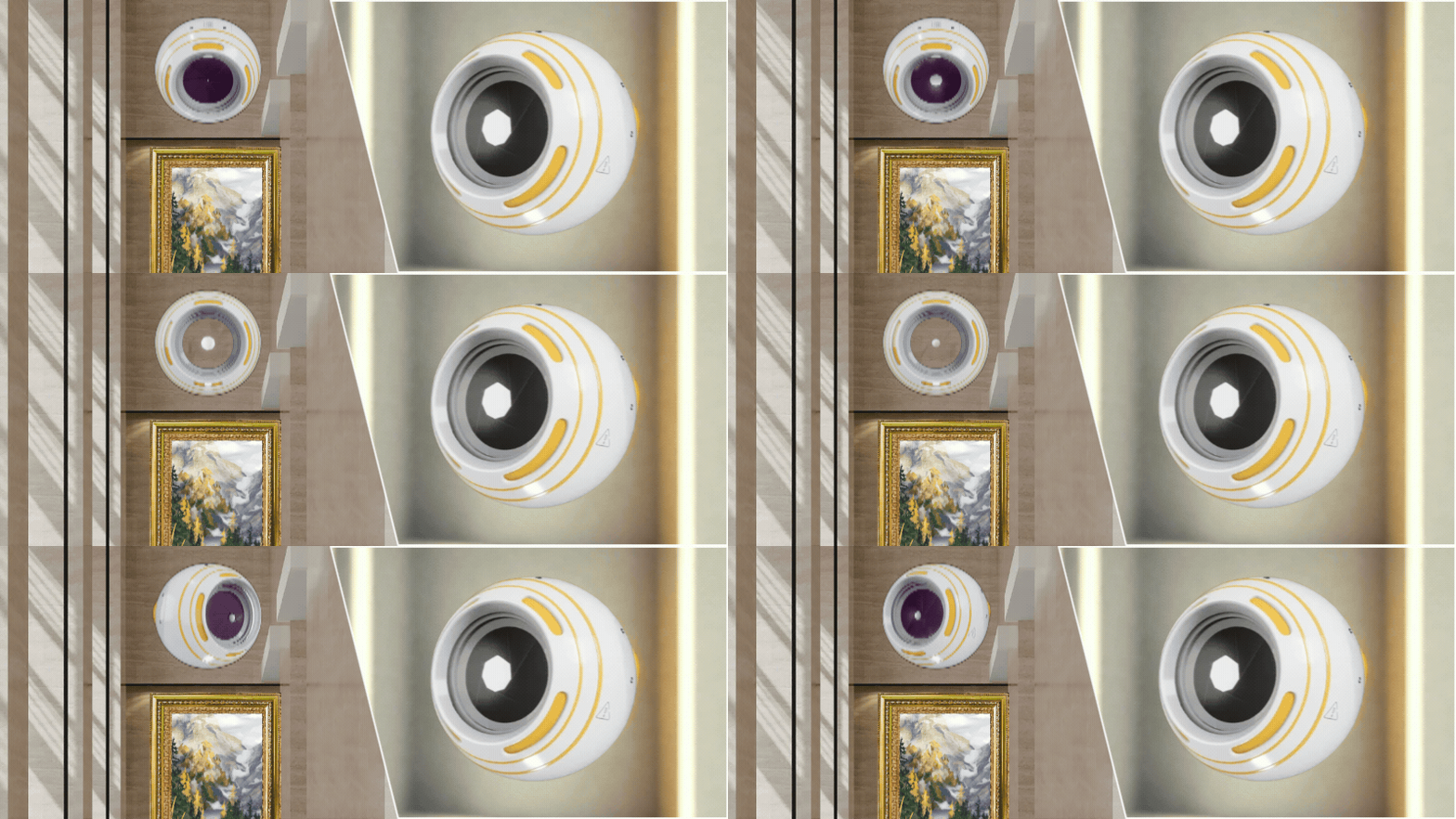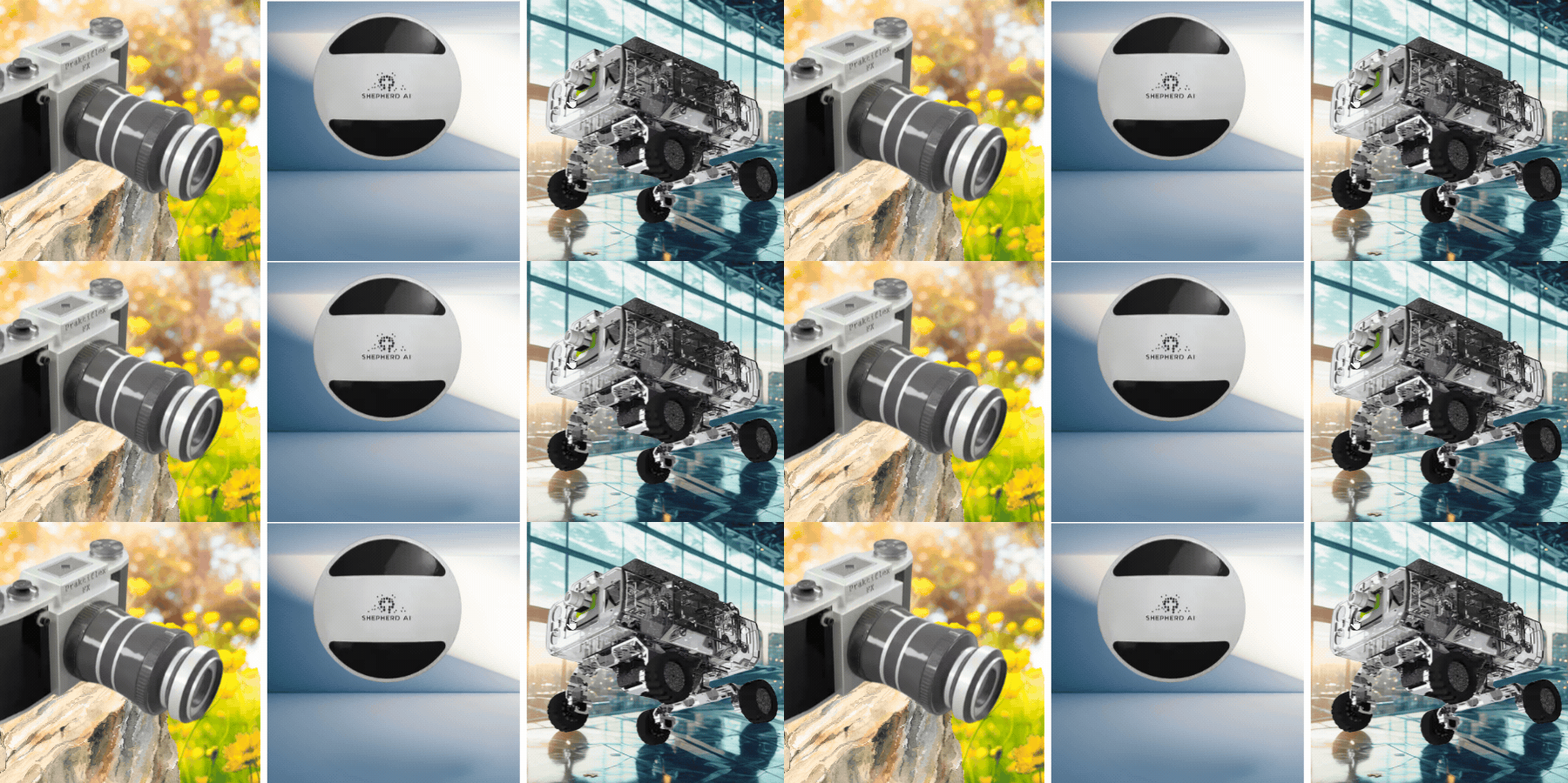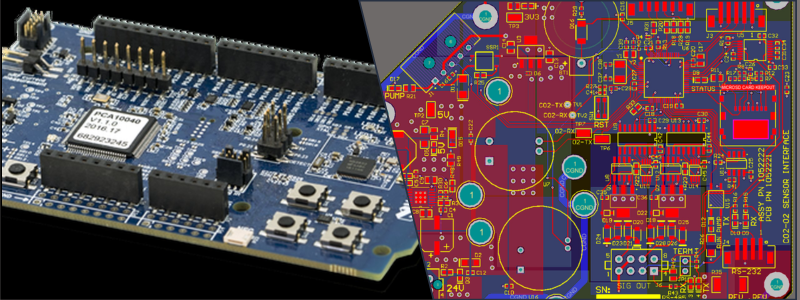
Top 51 Websites to Hire Freelance Eagle PCB Designers & CAD Engineers for Electronics Design


The world of electronics just keeps going. Either you’re sprinting to create the next-generation IoT proof-of-concept or debugging a future-proof PCB for consumer electronics, and need the right 3D designer who knows Eagle CAD and the trace dance, ground planes, and component pads. But where are they? Where exactly are you going to meet that wizard who makes your fantasy circuits real? Cad Crowd has been connecting the top product design and engineering companies with highly skilled freelancers and engineering professionals.

Buckle up. We’ve cut through the hype and made the ultimate list of top 51 sites to find freelance Eagle PCB design services and CAD engineers that are battle-hardened and breadboard-genius. From needing someone to pound out a schematic from scratch to refining a multi-layer board or turning a napkin sketch into Gerber files, these sites have the know-how.

Let’s begin with a big gun.

Cad Crowd

Cadcrowd

Cad Crowd is not only a generic freelance site—it’s a filtered design and engineering network. On Cad Crowd, Eagle PCB experts are vetted and individually matched to your project. If you’re designing wearable tech, a drone sensor board, or just have a 4-layer power management PCB you want done just so, Cad Crowd finds experts who don’t guess—they calculate. All the freelance engineers here are familiar with electrical integrity, board miniaturization, and EMI reduction. Bonus: you can invite private projects or competitions, and even long-term contractors to work. Cad Crowd is good to tame the NDAs and IP issues, real sensitivity, a big bonus for both corporate innovators and hardware startups.

Website: CadCrowd.com

EngineerX

EngineerX logo

EngineerX has only engineering experts, like electrical engineers who possess skills in Eagle PCB. Their platform allows you to assemble a crack design team or engage a contractor to do short-term design bursts. Freelancers on the platform generally have a strong technical background—some who are transitioning from aerospace, automotive electronics, or medical device prototyping industries. Their vetting process will ensure you don’t end up with a hobbyist who has only been through a schematic but someone who is familiar with current density, through placement, and high-speed routing. If your project requires a designer who also understands systems engineering, then this is a goldmine.

Website: EngineerX.com

Kolabtree

kolabtree logo

Kolabtree caters to science and engineering freelancers, which makes it an excellent fit for R&D-intensive electronics projects. Require an FDA-compliant medical device PCB? Or an Eagle-designed circuit for lab equipment? Your PhDs, postdocs, and experienced engineering design firms here recite trace width calculations as if they were poetry. Some of our Kolabtree freelancers are researchers, so they’re quite familiar with data acquisition, sensor integration, and precision analog design. If your electronics project is more toward biotech, academia, or science research, leave Kolabtree for later.

Website: Kolabtree.com

SolidGigs

solidgigs logo

SolidGigs technically is a job aggregator, not a pure freelance platform, but it does contain high-end freelance assignments — including electronics design and Eagle PCB projects. Rather than sifting through a thousand profiles, you receive hand-screened job proposals. So, although this site is gold for design-seekers looking for clients, savvy firms can turn the model on its head: provide gigs in which excellent freelancers just happen to gather. Look to find engineers moonlighting from salaried jobs with some real industry chops to offer.

Website: SolidGigs.com

CrowdSpring

crowdspring logo

CrowdSpring is usually linked with design contests, but it has a surprisingly deep reservoir of engineers and technical creatives. While not dedicated solely to hardware, you’ll find Eagle PCB designers by creating a technical project that includes detailed specs and layout requirements. CrowdSpring’s contest model shines if you’re open to getting multiple board designs from different freelancers before choosing the best. It’s best suited for electronic creative projects—consider wearables, art-tech screens, or LED matrices—where looks are as important as electronics. You maintain the last rights to the design, and the platform encourages open deliverables upfront.

Website: CrowdSpring.com

Workana

Workana logo

Workana is employed in Latin America but is expanding internationally—and so is the talent pool of experienced Eagle PCB designers and electronics CAD engineers. If you are building a smart farm system, consumer product prototype, or IoT product, Workana can put you in touch with freelancers who are familiar with layout and embedded systems. Workana offers hourly and fixed-price projects and has milestone tracking and payment functionality. There are some of the listed engineers who are bilingual, others with experience in manufacturing operations, cost routing, or local certification. It’s especially useful if your project is targeting Spanish-speaking stakeholders or the South American market.

Website: Workana.com

CadCade

Gopillar-academy

CadCade is a boutique platform and is only focused on freelance CAD and PCB design freelancers. It quietly draws high-caliber Eagle designers who prefer focused technical projects over mass freelance sites. Here, you’ll encounter freelancers who are fluent in EMC compliance, PCB panelization, and complex power electronics. They’re primarily cross-software friendly—i.e., they can co-design or convert Eagle, KiCAD, Altium, or OrCAD designs. It is especially handy if your business employs multiple platforms and needs seamless interoperability. The site is simple but effective, and you’re dealing with engineers who value technical correctness, accuracy, and simplicity more than glitzy portfolios.

Website: CadCade.com

RELATED: What you need to know when hiring a product design firm & designer for new prototypes

PCBWay’s Partner Hiring Section

PCBWay logo

PCBWay, the popularly used board manufacturing hub, even has a dedicated PCB designer recruitment section. They are primarily Eagle users and instructed to send production-ready files optimized for PCBWay’s manufacturing requirements. The most important aspect of this platform is close integration with fabrication realities—designers here have tolerances, layer stack-ups, and DFM in their minds. You’re not being given a schematic—you’re being given a buildable, tested outlay. Particularly well-suited for prototyping customers who will prototype within a short time of design. You can view portfolios, read reviews, and reach engineers directly through PCBWay’s community.

Website: PCBway.com

Hirable

Hirable

Hirable is a marketplace that’s responsive in that talented Eagle PCB designers post a listing of their availability. It’s a dating site for engineering geniuses—you have direct access to who’s on board, how many years of experience they have, industry-specific, and when they’re available. Hirable is not flooded with scores of profiles, and hence, quantity is not better than quality. The engineers hired here belong to various domains, ranging from robotics to consumer electronics to RF design of high frequency. Most of the applicants have hardware and firmware experience and, therefore, become perfect candidates for projects where microcontroller pin mapping and board design are complementary.

Website: Hirable.FYI

DesignCrowd

DesignCrowd logo

Even though they are more famous for graphic and web design, DesignCrowd has also ventured into more technical fields lately—such as electronic design and CAD engineering. Eagle PCB engineers here are likely to possess cross-over skill sets in product development or industrial design. That flexibility is well worth it if your board will be housed within a consumer product with space-constrained form factor restrictions. DesignContest on DesignCrowd can return multiple concept-level Eagle schematics or layout ideas. Ideal for early discovery or where appearance and operation need to be identical—smartwatches, rugged healthcare devices, or home-automation devices organized into systems.

Website: DesignCrowd.com

Moonlight Work

Moonlight Work

Moonlight Work is a setting where startup-smart-watchers are matched with individual developers and engineers, such as Eagle PCB specialists. Some here have worked in startups or hardware accelerators, so they know rapid prototyping, agile sprints, and MVP hardware creation.

They are also engineering design experts who have exported actual-world products, such as Bluetooth gadgets, environmental sensors, robotics PCBs, and so on. Tasks are usually short-term but high-impact, which makes them a good choice for companies with an urgent deadline or a demo day plan. Moonlight values openness and sharing, and its engineers are usually just as content in Discord servers or GitHub repositories.

Website: MoonlightWork.com

TaskRabbit (Engineering & Tech Services)

TaskRabbit logo

It’s unconventional, but TaskRabbit now has something other than home assistance—its Engineering & Tech division has its own independent contractors who can do Eagle CAD projects, particularly in tech centers. Even when the talent pool is local, there are usually multidisciplinary hardware freelancers who happen to be makers, hackers, and electrical engineers themselves. Ideal for solo operations or small boutiques that want to have someone on hand to sit down, glance at a schematic, and debug or co-design ad hoc. Not great for long-term staffing, but quite useful for in-person work or deadline design salvage.

Website: TaskRabbit.com

Polywork

polywork logo

Polywork is a more professional collaboration community and not so much of an actual job board—but it’s alive with high-capability Eagle PCB designers showcasing their side projects, personal boards, and open-source designs. There are engineers at tech companies working full-time but taking on side work to assist others with prototyping, iterating, or debugging.

It’s great to establish real connections and network with someone who shares the same passion as you in technical activities. Whatever it is that you do—low-power applications, wearables, sensor networks—you discover that rather than merely hiring someone off a job posting, you initiate a partnership. Polywork is especially rich in up-and-coming engineers and hacker-transcendent engineers.

Website: Polywork LinkedIn

EEWeb Freelancer Directory

EEweb logo

EEWeb is an antiquated watering hole, if you please, of electrical engineers, and its freelancer directory is the hangout of the gurus who think and breathe Eagle PCB. These aren’t freelance writers in the classical sense—these are engineers who author tutorials, blog about new PCB technology, and post to professional forums. There are signal integrity gurus, power electronics experts, EMI shielding masters, and even RF matching networks aficionados. They’ve written articles or worked on open board projects, so don’t hesitate to take a look at their technical credentials prior to hiring them. EEWeb also includes community rankings and references to your GitHub page or personal site, a snap to the screen.

Website: EEweb.com

Bark

bark logo

Bark matches companies with freelancers offering services in all the major industries—e.g., electronics and Eagle PCB design. Bark is a concierge-level matchmaking service: you put in what you need (e.g., Eagle CAD schematic, 2-layer PCB, IoT board), and Bark returns a shortlist of freelance matches. Most Bark engineers also prototype, install, or do systems integration, so you will likely find individuals with field experience and not simply layout skills alone. The website is ideal to use on a solo project or whenever you need to locate someone to review a design prior to going into production. It’s fast, local-friendly, and incredibly well-stocked with tech freelancers.

Website: Bark.com

Truelancer

truelancercom logo

Truelancer is blowing up for freelance tech work, particularly in South Asia—and that includes PCB designers who know Eagle CAD. Electrical design experts here provide end-to-end design: schematic capture, board layout, DRC cleanup, and fab-ready Gerber/Excellon file export. Since most freelancers are familiar with low-cost manufacturing, Truelancer is ideal for low-budget hardware projects such as a home automation system, a power supply unit, or simple robotics. The site has escrow payment support and time tracking, making it a good choice for quick gigs as well as longer projects. Truelancer’s global reach means you’ll find engineers familiar with both metric and imperial board design standards.

Website: Truelancer.com

99Designs (by Vista)

99Designs

At first glance, 99Designs may seem like a haven for logos and branding—but it also supports custom design categories, including tech and product design. There, you have the ability to initiate a contest or project for one lone Eagle PCB layout–handy if the board design must be consistent with a product’s physical shape or case. Designers possess industrial or mechanical design backgrounds, and as a result, they know how the electronics are stuffed into enclosures, wearable straps, or odd-shaped cases. It’s a strange but profitable route when your project is more about combining art with precise engineering.

Website: 99Designs.com

Remote OK

RemoteOK logo

Remote OK caters to digital freelancers and remote-first companies—but don’t be fooled by its dev-heavy vibe. It also hosts freelance electrical engineers who offer remote Eagle PCB design services. If you’re building hardware for smart homes, robotics, or embedded Linux platforms, you’ll find someone here who speaks your tech language. Remote OK is suited for startups that want to work asynchronously in time zones with PCB experts who know Git, GitLab, or collaborative version control. Profiles are cross-matched with GitHub, personal websites, and Notion portfolios, so one understands better the tech scope of the engineer.

Website: RemoteOK.com

RELATED: Cost-effective methods for new product design & development services for your company

X-Team

X-Team Logo 2

X-Team is marketed as an on-demand “developers” company, yet they utilize hardware-focused technologists with hands-on PCB layout skills. You can also rent Eagle CAD designers with experience in Arduino shields, Raspberry Pi HATs, and ARM-based microcontroller custom dev boards.

X-Team engineers are community and open-source driven, with the majority of them being open-source contributors or operating out of DIY maker spaces. Their highly screened matching engine enables you to see freelancers who suit your technical stack and work environment. It’s a great one to use when you’re a high-speed hardware firm with immediate needs for smart partners who can come aboard and start routing immediately.

Website: X-Team.com

We Work Remotely

Weworkremotely

We Work Remotely is another website that’s tailored to digital nomads, but its job board has serious engineering freelancers—such as Eagle PCB veterans. Mention a complex project, and you can receive responses from experts with drone electronics, power systems, or consumer-grade product-development experience for product design companies. Since the site is for remote work for the long term, it’s an appropriate choice if you’re engaging someone to iterate on several iterations of a board or have them collaborate with your internal team for several months. Treat it as more of an agency that employs remote full-cycle design engineers as repeat clients.

Website: WeWorkRemotely.com

Archslate

Archslate logo

Archslate works with architecture and engineering professionals—those who work with electronics incorporated into structural or industrial design. Go here to find Eagle PCB designers with expertise in constraints such as heat dissipation within confined spaces, incorporation with smart building systems, or control interface boards. The platform is especially useful for clients designing complex systems at the intersection of spaces, hardware, and control. If you are designing smart light panels, HVAC board control, or industrial monitoring circuitry, Archslate’s engineering bias hybridity will be of benefit to you.

Website: Archslate

Gigster

gigster logo

Gigster builds entire project teams—including difficult developers—so you can deliver your product with an Eagle PCB designer of the highest quality as part of a team. The platform is used for enterprise-level projects that typically have firmware developers, product managers, and UI/UX designers for IoT products or smart hardware products.

Eagle CAD designers on this platform are likely collaborating with app developers or server-side engineers, thus your board designs would seamlessly integrate into digital interfaces. Great for sophisticated products such as medical wearables, home automation controllers, or industrial control, where one would desire fast prototyping and mass manufacturable processes.

Website: Gigster.com

CloudDevs

Clouddevs logo

CloudDevs is among the emerging stars of hand-vetted freelance coding talent, and though developer-focused, it boasts a good roster of embedded systems and PCB designers—and Eagle-versed ones, to boot. Communication skills, technical expertise, and experience with agile workflow procedures come into play in screening. If your product is going to interact with firmware teams or cloud control panels, CloudDevs makes collaboration possible. Designers here are more than happy to do more than just lay out—processor selection, power management, and parts purchasing are all up for discussion. Perfect for startups releasing MVP products with a focus on intelligent integrations.

Website: CloudDevs.com

Gun.io

gunio logo

Gun.io is not your average freelance website—it’s a headhunter for the best technical freelancers. Though it’s suffering from software bias, there is a niche of embedded systems engineering experts with exposure to working with Eagle PCB who are squarely in the running for mission-critical jobs.

Where Gun.io varies is the concierge model: you specify your requirement (e.g., a wearable ECG sensor with analog front-end and microcontroller), and the platform finds and matches you with the respective-skilled experts who’ve done the same or something closely related before. Engineers in these instances usually work in safe environments, so if your board contains proprietary IP, encryption, or regulated markets, Gun.io connects you to secure, experienced hands.

Website: Gun.io

Lemon.io

Lemonio logo

Lemon.io is speed-quality oriented, a freelance platform connecting startups with skilled engineers, such as those who are super skilled with Eagle PCB and embedded hardware. Their freelancers normally act as full-stack makers, providing schematic capture, layout design, and firmware integration under one umbrella. Lemon’s team pairs you within 48 hours or less, usually with engineers who are familiar with Bluetooth wearables, consumer electronics, or medical-related devices. It’s particularly a good fit if you want someone to quickly prototype and iterate. With vetted workers and up-front pricing, Lemon.io is perfect for fast-paced startups that desire hardware outcomes without having to micromanage.


Website: Lemon.io

Indy

indy logo

Indy positions itself as an independent pro platform, but its job board aggregates a specialized talent pool of electronics designers and CAD engineers—many of whom have a background in Eagle. In contrast to the huge-volume marketplaces, Indy is light, community-focused, and promotes long-term co-creation. The platform also includes productivity features (like contracts, invoicing, and file sharing), so it’s easy to manage one-off PCB projects or iterative board iterations. You’ll find freelancers who specialize in efficient board real estate usage, DFM (design for manufacturability), and even Eagle-to-KiCAD conversions. If you’re tired of chaotic platforms, Indy offers calm, professional precision for electronics work.

Website: WeAreIndy.com

Clutch.co (Freelancers & agencies)

Clutch logo

Clutch is well-known for agency reviews, but it also lists highly specialized engineering freelancers and boutique firms offering Eagle PCB services. These aren’t gig economy players-they’re typically small, tight-knit groups of engineers with decades of experience in electronics design services ranging from automotive control modules to aerospace-spec PCBs. You’ll see diligent ratings, thorough reviews, and technical portfolios with deep multilayer boards, sensor fusion, and power optimization. When your business needs to recruit registered firms or engineers offering official NDAs and design reports, Clutch matches you with veteran experts who approach board layout as a job—not a pastime.

Website: Clutch.co

Geomagic Freelance Network

geomagic logo

Geomagic is less popular but a gem for customers designing at the crossroads of mechanical and electronics design. They offer a community of engineers that combine Eagle PCB layout with mechanical CAD accuracy—ideal for high-density boards in industrial sensors, wearables, or drones. Designers here are familiar with tolerance stacks, enclosure integration, and placing connectors in tight areas. It’s the go-to when you want your board to not only function but fit, breathe, and cool well inside a product. Best for joint ventures where electrical and mechanical design need to intersect for the first time.

Website: Geomagic (now part of Hexagon)

MarketerHire (Hardware Design Category)

MarketerHire logo

While originally designed for growth marketers, MarketerHire currently has a “Hardware Design” niche within technical services. They possess Eagle CAD engineers who perform board design for connected products—such as GPS trackers, wearables, or smart retail beacons. They are good at working closely with marketers, so they’re aware of product lifecycles, rapid iteration, and form factor constraints. If you are creating an Internet of Things product for the mass market, MarketerHire is quite good at identifying hardware engineers who understand how to design sexy, manufacturable, and sellable boards neatly and efficiently.

Website: MarketerHire.com

Catalant

Catalant logo

Catalant collaborates with companies and innovation labs—and its talent pool features experienced electrical engineers, with most of them having some experience in Eagle PCB design. No weekend warriors; typically consultants from Fortune 500 firms or hardware firms. Ideal for high-budget, high-complexity projects such as medical devices design services, power systems, or industrial automation hardware. The platform enables working project-by-project with scopes and deliverables, typically with engineers having extremely vertical experience in compliance, signal integrity, and long-term reliability. If you are doing corporate-level R&D or high-scale product development, Catalant provides the platform to access experienced consultants with the heavy lifting already accomplished.

Website: Catalant.com

Mayple

mayple logo

Mayple works directly with eCommerce companies, but its platform has recently shifted to include technical consultants and hardware engineers with accreditations such as Eagle PCB design for retail hardware, IoT inventory sensors, and smart packaging technology. If you’re designing electronics that plug directly into eCommerce infrastructure—such as POS peripherals, digital signage, or in-store analytics hardware—Mayple’s highly experienced team is an intelligent choice. Half a dozen or so. Some of the freelancers here have even worked with consumer-grade electronics directly and have ideas about things such as product certification, device pairing, and low-cost manufacturing needs. Mayple brings business and engineering together in a data-driven lean process.

Website: Mayple.com

RELATED: Key factors to consider when vetting engineering firms for design & consulting services

Hired.com

hiredcom logo

Hired is generally considered a site to hire low-level, low-paid developers, but it can have a low yet substantial percentage of these kinds of freelance and contract hardware engineers, with Eagle PCB skills too. After putting up a hiring profile and defining the nature of PCB you’re doing, the site generates candidates with verified experience in embedded electronics, firmware co-design, and master-level layout work. Freelancers here tend to have experience at startups or small-to-medium-sized firms and can fit into existing dev cycles. When you’re hiring an interdisciplinary engineering team with hard deadlines, Hired offers you depth of talent and speed.

Website: Hired (now part of LHH Recruitment Studios)

Bark

bark logo

Bark is a specialized freelance platform that brings off-the-radar engineering talent, such as remote electronics engineers who develop with Eagle. While smaller than mainstream freelance hubs, Barkl’s talent pool is filled with hands-on designers who’ve built everything from power monitoring PCBs to battery protection circuits. Many have their own test labs or 3D printers for rapid validation. Barkl emphasizes personal service—so you’re not sifting through hundreds of generic profiles. It’s ideal for businesses that need a hardware freelancer who will be part of the team, more of an insider type than a solo gig worker. Prepare yourself for some hardcore small talk and end-to-end design services, no matter the level, from concept to fabrication-ready layouts.

Website: Bark.com

Field Engineer

Fieldengineer

Field Engineer was originally a community portal for IT and telecom techs, and now it has electrical engineering services that are experienced in PCB design, even those familiar with Eagle. What sets it apart is that it has a hybrid approach—you can hire off-site freelancers or purchase on-site engineers for a specific task. This is a godsend if your job includes lab testing, equipment installations, or face-to-face design meetings. Engineers here are often proficient in RF circuits, industrial boards, and test fixture design. Best for businesses that manufacture networked electronics, wireless equipment, or telecomm gear that needs precise layouts and quality engineering.

Website: FieldEngineer.com

Working Not Working

workingnotworking-logo

Thanks to its curated creative talent, Working Not Working diversified into technology-specialized work, such as hardware freelancers with Eagle PCB design skills. The site tilts towards the individuals who find themselves at the middle point in the creative and technical world, which is why it is perfectly suited for product design and consumer electronics. The engineers who graduated from here do so in fashion technology, interactive installation, and art-driven electronics. If you’re building something marvelous, wearable, or simply fantastic (consult smart rings or interactive badges), this is where you’ll get the correct brain power. Working Not Working will pair you up with freelancers who give as much emphasis to looks and ingenuity as they do to trace widths and routing layers.

Website: WorkingNotWorking.com

Twine

twine logo

Twine is great at pairing creatives with firms—but surprisingly great engineering and technology team as well. Eagle PCB designers on Twine tend to overlap with audio engineers, LED technology designers, or multimedia electronics engineers. Freelancers create boards for light installations, interactive musical instruments, or kinetic sculptures. Twine is ideally suited for creative studios, event tech companies, or product makers who create electronics with creativity. The platform is equipped with project storytelling support, by which freelancers can reveal their workflow, so it’s better to lay hands on their work for your diagram. It is the best choice for hiring designers who value useful circuitry as much as they value good, expressive design.

Website: Twine.net

Flexing It

Flexing It logo

Flexing It is a site targeted towards highly qualified Asia-Pacific freelancers. Among the best professionals on its list are Eagle CAD design engineers who have worked in industrial design, embedded electronics, and hardware prototypes. Most freelancers also have experience from large manufacturing or OEM environments, offering real-world experience with component sourcing, test fixture design, and cost-reduction techniques. You’ll find experts in SMPS circuits, battery charging systems, and PCB thermal optimization. This platform suits medium-sized companies requiring contract experts well-versed in design and pre-production. Flexing It offers good portfolio access and prospects of short-term assistance or more substantive consulting work.

Website: FlexingIt.com

SourcingGuides

sourcing guides logo

SourcingGuides unites product engineers and manufacturers with engineering and manufacturing specialists, specifically electronics and OEM. The freelancers provided by this platform are Eagle PCB experts who are familiar with both design and production situations. Hundreds of thousands are familiar with working with collaborating factories or have a background in developing concepts for contract manufacturers. Ideal for small batches of consumer electronics, health wearables, or education kits, this service is particularly valuable if you’re on a deadline and wish to get from concept to a hard-working prototype. You can reach out to engineers who offer layout, BOM verification, and vendor-ready documentation that fills the very useful gap between CAD design and ultimate assembly.

Website: SourcingGuides.com

Codementor (Hardware Design Category)

Codementor

Codementor is well known to match software programmers with students—but they also have hardware gurus, including Eagle PCB designers who work part-time as consultants or instructors.

If you are a junior founder or engineer who needs to consult on layout, Codementor is a great place to get one-on-one counsel. Freelancers will be able to walk you through schematic best practices, grounding techniques, or debugging an EMI problem. Others will even co-design your layout in real-time over a live video call. Great for solo inventors, student capstone projects, or startups that need to onboard new hires. Tech support + instant prototyping advice.

Website: Codementor.io

Worksome

Worksome logo

Worksome marries enterprise-level project management with freelance recruitment. Perfect for high-risk engineering work, and has Eagle PCB experts experienced in automation, robotics, and industrial control boards. You’ll find professionals here who’ve worked on motor drivers, real-time sensor networks, and systems integration—often delivering schematics, layouts, and firmware handoff. Worksome vets each applicant before permitting them to take on offers, meaning quality is high. This project dashboard on this site holds milestones, documents, and feedback in one location, making it easy to keep track of complex hardware deliverables in progress. A high-end solution for high-expectation companies with stringent technical workflows.

Website: Worksome.com

RELATED: A guide to electronic product design for manufacturing with PCB design firms & engineers

CircuitDigest Job Board

Circuit Digest logo

CircuitDigest is a premier source of hardware engineers, and its job board attracts dedicated Eagle PCB designers who are electronics enthusiasts.

They are freelancers who write tutorials, tinker with open hardware projects, or design breakout boards of their own. They are makers with skill sets ranging from RF layout to low-noise analog design. They are hands-on tinkerers with their own test benches. Whether you’re designing power supply modules, Arduino boards, or signal processing gadgets, CircuitDigest freelancers possess that unusual combination of theory, experience, and DIY passion. It is gold dust for hobby-to-pro and startup engineers who require actual engineering discipline.

Website: CircuitDigest.com

PCB Design Forum Job Boards

Places like All About Circuits, EEVblog, or Reddit’s r/PrintedCircuitBoard have job ads and hire-me threads from veteran Eagle PCB designers regularly.

These sites aren’t the traditional places, but they hold some of the most active and enthusiastic electrical engineers on the web. There are freelancers who have fixed hundreds of thousands of schematics, routed hundreds of power buses, and worked on open-source electronics projects. If you share a good job posting or go through their gigs for sale, you can find someone with extensive domain expertise. These communities provide peer credibility—a system that will be critiqued, criticized, and refined by peers.

IndieHackers Community

IndieHackers logo

IndieHackers has bootstrapped founders, hobbyist programmers, and design engineering services—freelance PCB designers themselves, who would be eager to co-found companies.

It’s not a marketplace, but a good earth on which to link people, hardware-addicted, and they know Eagle inside and out. If you visit the “Projects,” “Products,” or “Looking to Collaborate” forums, then you can discover co-founder circuit designers looking to co-found, consult, or freelance. They usually design wearable tech, IoT sensors, or custom keyboard PCBs. You’re a hardware startup founder with a product in development and would like a similarly passionate co-founder; this is where hustle meets tech.

Website: IndieHackers.com

Hackaday.io (Collaborations)

hackaday logo

Hackaday.io is a paradise for electronics designers and hardware hackers, and its Collaborations section is overflowing with Eagle CAD users seeking projects.

They’re masters of PCB reflow, quick prototyping, and debugging circuits—and most of them are posting full layouts of their projects. You can find designers and contact them directly, or sift through their open-source board files and try to find someone whose skills and aesthetic would be appropriate for your application. It’s best for low-volume production, robots, or bleeding-edge technology projects. The catch? There are many who are truly passionate and willing to innovate. Collaborating with a Hackaday individual is collaborating with a hardware enthusiast in every sense.

Website: Hackaday.io

Tindie Creator Network

tindie logo

Tindie is a standalone hardware creator marketplace, but its network comprises a broad range of designers who are ready to do freelance work.

Most of them upload Eagle-made projects—dev boards ready for use, microcontroller shields, RF kits—and reference their GitHub or personal sites. Reach out directly to these creators and you’ll often find someone willing to customize a board, consult on layout improvements, or build a new design entirely. Since they already sell proven hardware, you’re hiring someone with practical, market-ready experience. The Tindie community is ideal for makers who desire a designer who has a creator’s soul, not only a technician, but an actual collaborator.

Website: Tindie.com

PeoplePerHour

peopleperhour logo

PeoplePerHour is geared towards freelance technical experts, such as Eagle PCB and electronics design experts. Its European roots imply you can likely find PCB suppliers who are familiar with the CE certification guidelines or ROHS-approved design practices. From motor control PCBs to audio processing boards, the list of expertise is staggering. The site also offers fixed-price work, which might be useful if you need a tight budget. You can search for “hourlies” (fixed services) or create a bespoke project description and invite bids from engineers around the globe.

Website: PeoplePerHour.com

Guru

guru.com-logo

Guru’s been established long enough to have its stripes earned, and it has a reasonable stable of experienced CAD design experts and PCB designers, including Eagle groupies. Their WorkRoom feature is an added value—it isolates communication, milestones, and file sharing in a clean space. You’ll see freelancers who’ve worked on everything from sensor interfacing to power supply design, and freelancers who can perform thermal management and routing of small boards. Some of the Guru freelancers also perform simulation tool integration using LTspice or Altium, so you can virtually simulate designs before you build them.

Website: Guru.com

Fiverr

fiverr logo

Fiverr initially centered around $5 gigs, but today it’s an international marketplace for talent—bustling with a healthy roster of Eagle PCB design experts. There are specialists who offer schematic development, layout optimization, and even full PCB fabrication bundles. Fiverr is different because of the “gig” model: fixed-scope, fixed-fee, transparently-rated work. Perfect for low or medium-complexity tasks—a small sensor board, LED driver circuit, or simple power module. Just be sure to do your homework by reading reviews, have your deliverables in writing, and select sellers who have a background in PCB work and some samples of their portfolio pieces.

Website: Fiverr.com

Toptal

Toptal-logo

Toptal’s notoriously picky—and that is to your benefit. Only the best 3% of technical talent passes through their doors, so Eagle PCB designers who work here are not only qualified but at a global level. If you require someone to perform multilayer RF layouts, high-frequency boards, or anything involving signal integrity to the hundredth, then Toptal is your premium choice. They also screen for solid communication skills, so you’re getting someone who can describe their design philosophy without the techno-babble. From power electronics to embedded systems, Toptal freelancers can deliver high-end, enterprise-level design needs.

Website: Toptal.com

Freelancer.com

freelancercom

Freelancer.com provides an ocean of possibilities—and that includes cheap Eagle PCB specialists. The project bid system permits you to post your rate and deadline, and freelancers submit bids for them. You can also organize contests if you wish to have many design outcomes. Buckle up for designers worldwide—some are analog circuits experts, some are power conversion experts, battery management experts, or digital control system experts. It’s a good site, too, if you require a designer with firmware experience matched with board layout skills. Just be prepared to screen communication skills and portfolios heavily; quality is really uneven.

Website: Freelancer.com

Upwork

Upwork-logo

Upwork’s largeness is both its blessing and curse—but if you know where to look, you’ll find gems. Look for Eagle PCB designers or CAD engineers, including new invention development services with solid portfolios, and you’ll find freelancers with experience in Arduino, STM32, ESP32, Raspberry Pi hats, and much more. Most of them offer simulation, DRC optimization, and schematic capture in their packages. Some Upwork freelancers also provide turnkey production prep—up to creating BOMs, Gerbers, and pick-and-place files. Perfect for startups or solo entrepreneurs with a deadline to meet.

Website: Upwork.com

RELATED: Drafting firms: Steps to always choose great outsourced drafting services

Wrapping it up: Getting the right Eagle PCB Designer

It’s worth more than a body that can push traces forward to hire a freelance Eagle PCB designer—what you need is someone with your product vision, working within your constraints, and assisting you in creating something that is functional, manufacturable, and scalable.

You could be designing the next IoT home run, debugging a picky wearable, or getting a specialty industrial device into production. Whatever it is, the sites below bring you face-to-face with your perfect match. From vetted talent environments such as Cad Crowd, leading the way as the best freelance CAD design platform, to get-your-hands-dirty communities such as Hackaday and Tindie, each site on this list has a particular requirement. Pick carefully, vet thoroughly, and you will transform that schematic fantasy into a working, flashing, tested work of art. Get a free quote today.

author avatar

MacKenzie Brown is the founder and CEO of Cad Crowd. With over 18 years of experience in launching and scaling platforms specializing in CAD services, product design, manufacturing, hardware, and software development, MacKenzie is a recognized authority in the engineering industry. Under his leadership, Cad Crowd serves esteemed clients like NASA, JPL, the U.S. Navy, and Fortune 500 companies, empowering innovators with access to high-quality design and engineering talent.

Connect with me: LinkedInXCad Crowd

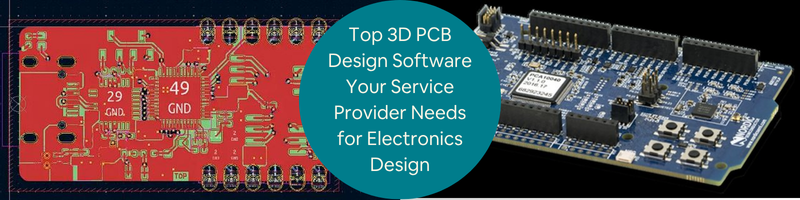
Top 3D PCB Design Software Your Service Provider Needs for Electronics Design


Electronics design isn’t all about traces, layers, and component footprints these days. Hardware must be compact, fast, and visually striking both inside and out. The days of using only 2D PCB designs are over. Whether you’re building a smartwatch, a drone controller board, or the circuit board for a smart coffee maker, your service provider had better be armed with some serious 3D design technology.

Today’s 3D PCB design software is more than mere eye candy. It allows your electronics design house to see how your circuit board will be housed in the end product, before it’s ever produced. Fewer mistakes before production even starts. Mechanical clashes, misaligned ports, or oversized components that won’t fit? Caught early, thanks to 3D visualization.

So, if you’re collaborating with a leading CAD design services firm like Cad Crowd, you’re assured that they’re working with the best tools for the task at hand. From system visualization of multi-board systems to 3D product rendering that resembles being taken straight out of a sci-fi film, these tools have the ability to sink or swim your next electronics project.

Ready for the inside scoop? Let’s take a look at the best 3D PCB design software your service provider should have in their digital arsenal.


🚀 Table of contents


Altium Designer – The gold standard for 3D PCB and electronics design

You don’t become known as the Ferrari of PCB software without having some serious chops. Altium Designer is what happens when high-end electronics design is combined with aggressive 3D visualization—all wrapped up in one seamless, integrated package.

Why is it a must-have?

Altium is not only another PCB layout tool; it’s an entire environment. You have schematic capture, layout, simulation, and one of the most capable 3D PCB engines around. And when we say capable, we mean realistic 3D views of the whole board, components, and all, with mechanical clearance checking and ECAD-MCAD co-design that is integrated right into SolidWorks and Autodesk Inventor.

That allows your design services partner to:

  • Identify fit problems prior to manufacturing
  • See boards in actual enclosures with 3D product rendering services
  • Minimize back-and-forth between electrical and mechanical teams
  • Cloud-enabled (high-version control and team collaboration)
  • Accommodates flex/rigid-flex designs, multi-board assemblies
  • Access real-time BOM (Bill of Materials) management

Best for:

  • High-end consumer electronics
  • Wearables, IoT devices
  • Mission-critical or space-constrained products

If your PCB vendor arrives with Altium Designer in their kit, that’s a good sign that they take seriously producing high-quality electronics design and excellent product images.

PCB design engineering by Cad Crowd PCB design experts

Fusion 360 and Eagle – The dynamic duo of 3D PCB and mechanical design

Autodesk Fusion 360 is the hip Swiss Army knife of product development, design, engineering design services, simulation, manufacturing, and all that in one cloud-based powerhouse. Add Eagle to the mix, and you have a PCB software and 3D design marriage in maker heaven.

Why is it a must-have?

Autodesk’s brilliant decision to merge Eagle into Fusion 360 provided an integrated environment for electrical-mechanical co-design. That is a fancy way of saying: your circuit board no longer needs to live in a vacuum.

Instead, your electronics services company can:

  • Design your PCB layout in Eagle
  • See and edit the 3D layout instantly within Fusion 360
  • Make sure every component fits snugly inside the product casing
  • Perform simulations, stress tests, and even thermal analysis

And as a bonus, Fusion 360 boasts a modern user interface and an active community. So whether it’s a startup prototype or a smooth production run, your product receives that pro-level finish.

Perfect for:

  • Startups, makers, and innovators
  • Projects with close ECAD/MCAD integration
  • Businesses that require cloud collaboration and revision control

If your architectural design company is a Fusion 360 user, look for speedy prototyping and stunning 3D product rendering built into the process. That’s a twofer for electronics design and visual narrative.

KiCad 7 – Open source joins 3D design coolness

Open-source can’t hold a candle to the giants, right? Wrong. KiCad has come of age as a legitimate 3D PCB design player, and the new release (KiCad 7) is taking things to an entirely new level.

Why is it a clever choice for agile teams?

KiCad isn’t merely free, it’s absurdly packed with features. It has a schematic editor, an effective layout editor, and a steadily more capable 3D viewer. The wizardry is in its 3D integration: you can see fully-rendered boards, turn and examine components, and even export your design for product rendering or enclosure design in third-party software.

The most recent versions also have STEP file export support, which makes working with mechanical engineers easy. Services that adopt KiCad aren’t only cost-friendly, they’re efficient, flexible, and community-focused.

And, KiCad accommodates:

  • Specialized 3D component modeling
  • Scripting for automation and efficiency
  • Integration with tools such as FreeCAD for enclosure prototyping

Best fit for:

  • Open hardware initiatives
  • Freelance engineers and agile startups
  • Anyone who prioritizes transparency and customization

If your design house is leveraging KiCad design experts, they’re probably agile, quick, and not hesitant to dig deep into customization. Throw in nice 3D visualization, and it’s a very compelling package, particularly for cost-sensitive projects.

Other 3D PCB design software: Worth a glance

Although the top three are at the head of the pack, some other 3D PCB design software packages are worth a look based on your project’s complexity, schedule, or cost:

OrCAD/Allegro by Cadence

Heavy-duty, industry-level performance meets detailed 3D modeling. Ideal for aerospace and automotive, but probably overkill for wearables or IoT gadgets. If your provider uses it, you’re likely working on a very sophisticated design.

DipTrace

User-friendly interface and decent 3D modeling make this a favorite for small businesses and individual designers. It’s not Altium, but it delivers solid results for many mid-range electronics projects.

CircuitStudio

Altium-designed, but cheaper and lighter. Has good 3D visualization service capabilities and is an excellent transition point before fully using Altium.

The importance of 3D PCB design tools for your business

Let’s be real, you don’t have to know all the technical ins and outs of how your electronics are designed. That’s what your design team is for. But knowing the kind of tools they’re using, particularly sophisticated ones like 3D PCB design software, can make a huge difference in what you end up with.

And that makes everything move faster. Rather than having to do several sets of prototypes, you have a real preview upfront in the process. It’s less painful to approve a design when you can actually see how it will look and perform. That reduces iteration time, which generally translates into faster delivery and less pain.

The use of 3D PCB design tools significantly enhances the visual appeal of your product for design engineering services. These advanced tools allow for features such as perfectly aligned USB ports, meticulously fitted components, and an overall look that is much cleaner and more professional. It’s this level of sophistication and attention to detail that can truly captivate customers, investors, and stakeholders alike. Moreover, when discussing stakeholders, it’s important to note that these tools often facilitate the creation of high-quality 3D product renderings.

Such renderings are invaluable for a variety of purposes, whether you are pitching your innovative idea to potential investors, launching an engaging crowdfunding campaign, or developing marketing materials that truly impress your audience. The ability to present a stunning visual representation of your product can make all the difference in showcasing its features and benefits, ultimately contributing to its success in the competitive market.

Better tools mean better results at the end of the day. When your design partner is working with design-for-manufacturing-enabled software and precise real-world geometry alignment, you get rapid development, reduced errors, and a product ready for prime time.

No, you don’t have to be a software guru, but understanding what happens behind the scenes is beneficial.

3D product rendering: Prettiest pictures, too

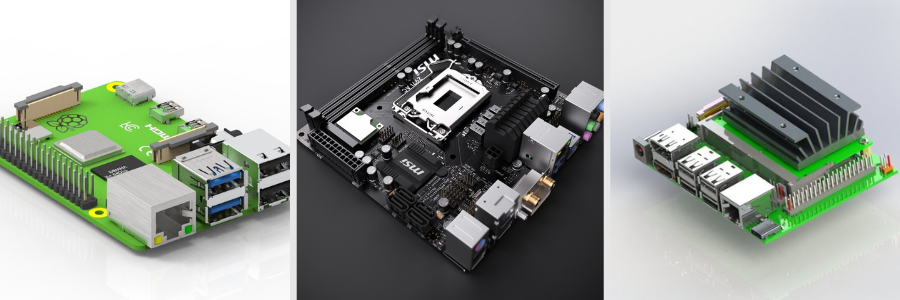
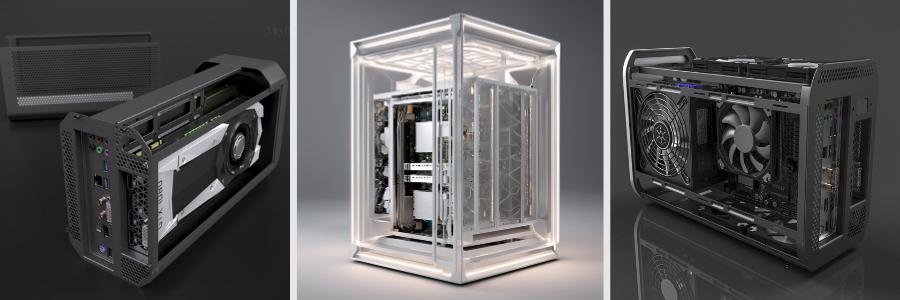
Envision a photorealistic rendering of your product, complete with the circuit board, even before creating a single prototype. This isn’t just for show; it’s a strategic approach. Services employing 3D PCB software with photorealistic rendering services are able to display precisely what your board will look like in your enclosure. They can model cable routing, connector locations, thermal spacings, and clearances. Additionally, they assist marketing organizations in producing sleek images long before a product launch and develop immersive presentations for stakeholders or pre-sales campaigns. So the next time a provider sends you a stunningly well-lit 3D rendering of your electronics module, don’t roll your eyes.

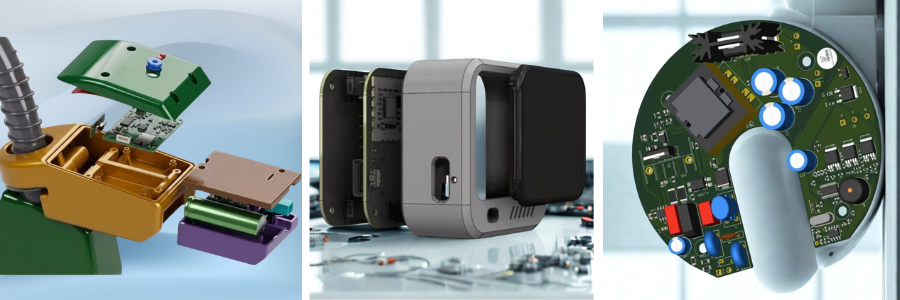
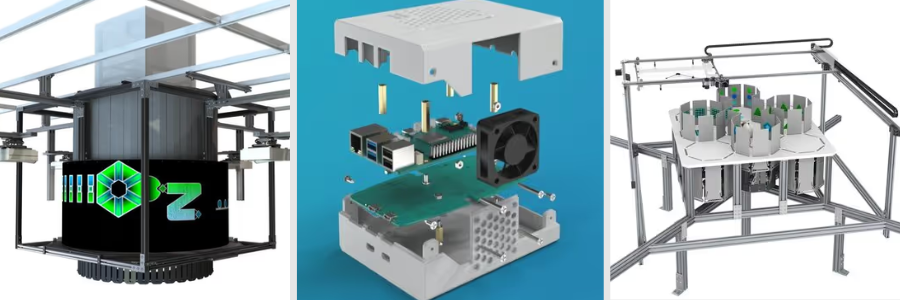
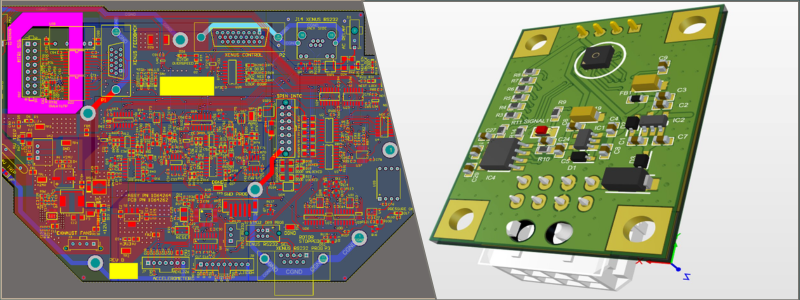
PCB of a centrifuge and IoT board by engineering experts in Cad Crowd

Conclusion

Selecting the proper 3D PCB design software is more than a technical preference—it’s a strategic choice that impacts the entire product development cycle. You are assured that any best service providers understand this and choose a design software tool that combines electronics and mechanical design in a single workflow, enabling accurate, realistic previews via 3D product rendering, enabling improved communication with clients, engineers, and marketers, and reducing expensive surprises at production time.

How Cad Crowd can help?

Because when your electronics look as good as they function, you’ve officially hit the mark. So, whether it’s Altium’s powerhouse engine, Fusion 360’s sleek fusion of form and function, or KiCad’s open-source liberty, ensure your design team has software that helps your vision take shape—layer by layer, pad by pad, and pixel by pixel.

Call Cad Crowd today and get your free quote!

author avatar

MacKenzie Brown is the founder and CEO of Cad Crowd. With over 18 years of experience in launching and scaling platforms specializing in CAD services, product design, manufacturing, hardware, and software development, MacKenzie is a recognized authority in the engineering industry. Under his leadership, Cad Crowd serves esteemed clients like NASA, JPL, the U.S. Navy, and Fortune 500 companies, empowering innovators with access to high-quality design and engineering talent.

Connect with me: LinkedInXCad Crowd

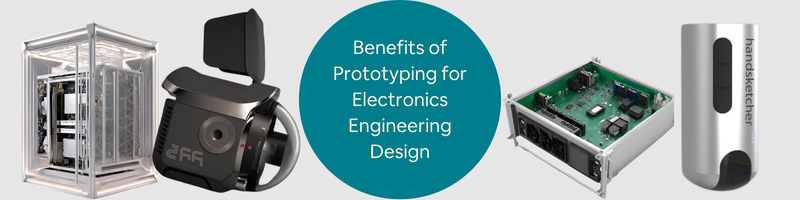
Why Electronics Product Prototyping Is Important for Successful Product Development at PCB Design Companies


During the development phase of an electronic product, PCB design firms that are part of the industry-leading platform Cad Crowd are confronted with a myriad of challenges. The terrain is littered with considerations, ranging from attaining design accuracy and functionality to making sure that the end product is industry-compliant and user-friendly. Among the most crucial steps in this process is the prototyping stage. The prototype is not only an initial version of the product, but it is also a very important tool that determines the path of the entire product development process.

Prototyping is one of the steps between the initial idea and final product, enabling PCB design firms to prototype, streamline, and modify the design prior to mass production. To an uninitiated eye accustomed to how electronics are made, prototyping is a hands-on way to prove design decisions, identify errors, and guarantee that the end product will meet the original design. In this article, we’ll explore why electronics product prototyping is essential for successful product development and how it directly influences efficiency, cost-effectiveness, and overall product success.

RELATED: How to Find an Electronic Design Company for Outsourcing New Product Engineering

1. Testing feasibility and functionality

At the very foundation of any successful electronics product is the need for proper functionality. If there is no working prototype, then the most well-thought-out concept can fail in practical applications. Prototyping offers a chance to verify the feasibility of the design—whether it functions as intended and satisfies all technical requirements. PCB designers must ensure that the designs are well-compatible with other components such as processors, sensors, and power systems.

Using prototypes will help them to visualize that the circuit is working properly, detect possible connectivity issues, and test for power supply or signal integrity problems. It is also not unusual for initial designs to fall into unexpected traps, such as voltage drops, interference, or misplaced signal routing. With a prototype, these faults can be spotted and fixed in the early stage of production to avoid expensive reworking in later stages of manufacturing.

RELATED: The Future of Electronic Design Engineering: Innovations and Trends for CAD Services Companies

For example, a prototype may simulate real-world conditions so that all components work well together. Testing under different environmental conditions such as temperature fluctuations or humidity can also ensure long-term reliability. If the prototype does not pass these tests, the design can be modified to make sure it works under the most demanding conditions without major failures.

2. Iterative improvement and design refinement

Prototyping design services with electronics present PCB design businesses with a very valuable chance to iterate on designs. Although computer-aided design (CAD) and simulation software are tools for the early stages of design, they cannot always foresee every problem that will occur in the real world. For instance, simulations do not always simulate every possible interaction between components, resulting in unexpected surprises during implementation. Through prototyping and detailed testing, design teams can identify errors that require modification.

When a component runs too hot or the physical cover of the PCB is too dense, degradation can happen, affecting performance. Prototypes can isolate such problems in a concrete, quantifiable manner, allowing for exact, data-driven decisions regarding how to optimize the design. Iteration of the product can result in an improved, more cost-efficient, and user-friendly final product. Additionally, it also provides the design team the opportunity to gauge and incorporate the feedback of the stakeholders—either from internal testers, clients, or actual users—so that the product is optimized from various angles.

pcb design specialists

3. Reducing costs and minimizing risk

One of the greatest strengths of electronics prototyping is that it can lower the overall risks linked to product design and development services. The sooner problems are found in the development process, the less expensive and time-consuming it will be to correct them. If a flaw is detected during prototyping, engineers can modify the design before investing in costly manufacturing or mass production runs. This can be cost-saving, particularly when using costly materials or when dealing with special sourcing or custom fabrication components.

RELATED: How to Find an Electronic Design Company for Outsourcing New Product Engineering

Cost-effectiveness in prototyping is not just about avoiding problems that may come up during manufacturing. It also enables PCB design companies to gain a better understanding of the cost structure, including component sourcing and assembly. By refining the design during the prototype stage, they can optimize the design for lower production costs without sacrificing quality.

The prototype provides a tangible roadmap for scaling up the design, allowing companies to forecast the costs more accurately and prepare for mass production with a clearer financial understanding. Identifying design flaws early in the process can save electronic design businesses from expensive recalls, warranty claims, and tarnished reputations. These can be a disaster for businesses, especially businesses with limited resources or tighter margins. Prototypes serve as a safety net against such an expensive fall.

4. Improved communication and cooperation

Effective communication between service providers and clients is crucial to a project’s success. Prototypes provide an excellent medium for communication in that they offer an actual and understandable representation of the end product to all parties concerned. Instead of relying on diagrams or conceptual talk, a prototype provides clients, manufacturers, and engineers with an actual object to engage with, experiment on, and review.

RELATED: How to Develop a New Electronic Hardware Prototype & Products for Your Company

Such a physical and visual model has the potential to make decision-making more efficient, synchronize expectations, and encourage a more cooperative development process. Prototyping also enhances in-house communication between the design team. Developers, designers, and engineers can collaborate to discuss the physical product, find out areas where there are likely to be design flaws, and suggest possible solutions through first-hand testing.

The process instills a collaborative attitude, stimulating the sharing of knowledge and promoting the chances of developing innovative solutions to design issues. In addition, prototypes allow the design team to run more focused user testing. The end-user or client can get their hands directly on a product, and give useful feedback from which design improvements can be made. This results in a more user-needs-satisfying product, bringing increased customer satisfaction and a higher market success rate.

5. Validate market readiness and customer acceptance

Finally, the success of any electronic device is dependent on how well it will be accepted in the market. Customers and end-users expect high-quality, functioning products that fulfill their requirements and expectations. Prototyping offers an initial chance to check if the design is ready for the market, not only from a technical perspective but also with regard to user experience. Prototype testing by potential customers or target markets gives PCB design companies the opportunity to gain valuable insights into the appeal, usability, and functionality of the product.

electrical design firm

RELATED: Top 100 Electronics Design Companies to Create Prototypes for Hardware Startups

Intuitive features or hard-to-use features, easily misunderstood components, or issues related to ergonomics or aesthetics can be resolved before actual production is carried out. Through prototype market testing, organizations are able to confirm whether products appeal to intended customers. Opinions regarding design elements, ease of handling, and overall usability can assist in refining the product to achieve ultimate value and satisfaction for clients. This is important in determining product success when released to the marketplace and competing against industry rivals.

6. Conformance to industry practices and requirements

Numerous electronics products have to comply with industry standards and regulatory standards, including safety approvals, electromagnetic compatibility (EMC) testing, and environmental studies. Prototyping provides electronic designers a chance to validate that their products comply with these regulations prior to mass production.

Prototype testing against regulatory requirements ensures that the product will not have legal issues or delays in the approval process. For instance, in sectors such as healthcare or consumer electronics, where certifications like CE, UL, or FCC compliance are mandatory, a prototype can ensure that the product meets such standards. This avoids expensive design reworks later and allows the product to be legally marketed and sold.

RELATED: How Much Does It Cost to Outsource PCB Design Services & Electronics Engineering Complete Prices for Companies

7. Speeding up time-to-market

In sectors with strong innovation, time-to-market is a key indicator of a product’s success. Electronics prototyping serves to speed up the product creation process by allowing quicker detection of design errors and more rapid iteration.

Instead of devoting long hours to trial-and-error work in mass production, PCB design firms can utilize prototypes to effectively pinpoint problems, fix them, and proceed with a streamlined process of development. This quick cycle of development enables firms to get to market sooner, providing them with a competitive advantage and the capacity to react to customer demands or new trends.

Conclusion

Prototyping is a necessary process in developing electronic products, especially for firms that specialize in PCB design. It offers an invaluable chance to test functionality, improve designs, reduce costs, enhance communication, and prepare the market. Through enabling engineers to solve potential problems early in development, prototypes help facilitate a less bumpy mass production transition and a greater probability of delivering a product that either meets or even surpasses customers’ expectations.

How Cad Crowd can help

For PCB companies looking for a design product service in a fast-paced and competitive business environment, adopting the prototyping process is essential. Cad Crowd can help you develop your PCB design through prototyping, which not only produces more functional and dependable products but also increases efficiency, minimizes risks, and ultimately leads to the long-term success of the company. Contact us today for your free quote!

author avatar

MacKenzie Brown is the founder and CEO of Cad Crowd. With over 18 years of experience in launching and scaling platforms specializing in CAD services, product design, manufacturing, hardware, and software development, MacKenzie is a recognized authority in the engineering industry. Under his leadership, Cad Crowd serves esteemed clients like NASA, JPL, the U.S. Navy, and Fortune 500 companies, empowering innovators with access to high-quality design and engineering talent.

Connect with me: LinkedInXCad Crowd

How Much Does PCB Assembly Cost? 5 Expert Tips to Reduce Rates and Pricing for Design Companies


Joining electronic components to a wiring circuit board by PCB assembly thus turns a bare PCB into a working product. The cost of PCB assembly and design services is highly variable and depends on differing materials, complexity, volume, and even assembly technology used. Knowing this going in helps ensure that you’re neither a struggling startup nor an established design company fighting to stay black.

This article will delve into PCB assembly costs and identify five expert tips that help design companies reduce rates while maintaining high standards.


🚀 Table of contents


Understanding PCB assembly costs

To effectively manage the cost of PCB assembly, it is important to understand the factors that influence it. The major contributors to the overall cost for engineering companies include:

  • Board complexity: The complexity of the PCB design, for example, the number of layers, component density, and type of components directly influence the cost of assembly.
  • Component costs: There is a huge range of electronic component prices due to the myriad of specifications and sourcing of these devices. The most expensive and hard-to-source components contribute significantly to the cost.
  • Type of assembly: There are two general types of PCB assembly available: Surface Mount Technology (SMT) and Through-Hole Technology (THT). For the same application, the performance of SMT is better, with shorter lead times and lower overall costs. THT has greater labor content and, therefore, increases the cost.
  • Volume of assembly: Large volume orders are generally more economical because higher volume runs keep economies of scale in effect; smaller runs are normally associated with higher per-unit costs.
  • Lead times: A longer lead time often means a higher price. Excellent lead times often translate to better savings for non-time-sensitive projects.
  • Testing and quality control: Quality and functionality are ensured with thorough testing like ICT and FCT, which entails additional costs but is required to avoid expensive mistakes or recalls.
  • Labor and overhead: Costs for PCBs to be assembled depend on the labor rates in different regions. Surprisingly, cheap labor is mostly available in countries like China, India, and Vietnam, and Western countries are more costlier.

Now that we have all that out of the way, here are five best practices that design houses can use to see lower-cost PCB assembly without cutting into quality.

PCB design examples

Design your PCB for DFM

Design for manufacturability (DFM) services is an engineering practice aimed at making designs that are not only easy to manufacture but also low in cost. An improperly designed PCB can cost the assembly process a lot while resulting in higher rates.

Some of the DFM best practices are:

  • Minimize layers: Multi-layer PCBs offer numerous layers; however, that also can increase the manufacturing cost by many folds. Try to minimize the number of layers. This might be achieved by optimizing route paths and proper utilization of board space.
  • Standardize components: This will reduce lead times and costs. Avoid proprietary or hard-to-source components that can push up the procurement costs.
  • Optimal space: Always keep enough space between components to allow the automatic assembly machines to put them in without any effort. A design that is too dense requires extra hand labor, meaning that the PCB assembly cost will be higher.
  • Panelization: If your PCB design is very small, then you can panelize several boards together into a single larger board. Panelizing makes it more efficient to assemble the boards, and it also cuts down the setup.

Investing in a well-thought-out design upfront helps avoid costly mistakes and also saves considerable amounts of time in the assembly process.

Source the components wisely

The components you use may represent the biggest cost driver when it comes to PCB assembly. Hence, proper sourcing of components is considered an essential smart strategy.

Key strategies comprise the following:

  • Bulk purchase: Supply procurement in bulk leads to lower prices from suppliers. Design houses can further reduce costs by partnering with good assembly houses and suppliers.
  • Use alternative parts: Use other parts or equivalents that have long lead times and are expensive. If there is a match between the two for performance, then it can be considered an alternative. Now, some of the EDA tools help find alternative parts during the design cycle.
  • Check component lifecycles: Choose components that are not near the tail end of their production lifecycle. Such products are usually costlier and less accessible than others. More modern components with longer lifecycles will save you money on redesigns.
  • Partner with a turnkey PCB manufacturer: Turnkey PCB manufacturers manage all aspects of production, which includes component sourcing. Of course, with huge volumes being bought, purchasing can become cheaper, and therefore, component costs may reduce the total assembly costs.

Manage your component sourcing process actively; you can dramatically reduce the overall assembly costs for your product design company.

Use assembly automation

Automation in PCB assembly mainly reduces labor costs and increases accuracy and efficiency. Automated assembly lines, including SMT-based ones, are faster and require fewer labor hours than manual assembly.

These are some of the factors to exploit automation:

  • SMT over THT: Surface Mount Technology is less costly than Through-Hole Technology because of its highly automated nature. If your design allows SMT components, then go for this technology to reduce labor costs.
  • Pick-and-Place machines: The machine could make absolutely precise placements of the component onto the board automatically. Reducing manual placements lowers human errors, which get translated into costly rework or scrap.
  • Automated inspection: AOI and X-ray inspection systems can quickly and accurately detect defects or misalignments in assembly, reducing costly post-production testing and rework.

Investing in assembly automation is particularly profitable in high-volume production where savings earned from automation far outweigh the cost of initial setup. Consider using design for assembly services to make sure that you’re getting expert help on your project.

Leverage production volume

Production volume has a direct impact on the cost of assembling PCBs. Generally, increasing the volume of production brings down the cost per unit more for the sake of economies of scale.

Here’s how you may take advantage of the production volume to leverage cost reduction:

  • Batch orders: Where a number of designs are ordered together, all under one large batch run, it saves on the setup fees and increases the efficiency of the assembly process. This is very suitable for companies where several different PCBs are being produced.
  • Negotiate with manufacturers: Volumes of larger sizes can usually be negotiated with manufacturers for better rate reductions. Be clear with the manufacturer about future production plans since manufacturers are generally open to accepting companies with long-term production needs at better prices.
  • Plan for scalability: If you know you need high volumes in the future, it is helpful to communicate this to your assembly partner up front. They can then help ensure your design is scalable and ready to be manufactured in large volumes without significant redesign.

By optimizing your volume of production, you can greatly reduce the cost per unit for your PCB assembly for your manufacturing firm.

PCB design example including a C02 gas sensor circuit board

Consider offshore manufacturing for cost reduction

The labor cost is among the primary reasons for the assembly of PCB. Offshore manufacturing based on regions having lower labor costs can be a good practice to avoid high expenses. Asia has such regions, including China, Vietnam, and India, which provide competitive pricing for the assembly of PCBs due to their full manufacturing infrastructure and low rates of labor.

The following are the determinants for offshore manufacturing you should opt for:

  • Labor: Since the labor rate for countries like China or India is a fraction of that in Western countries, it can really help you save a lot of money if an assembly process is labor-intensive.
  • Shipping and import duties: Offshore manufacturing helps reduce production costs; however, shipping costs, taxes, and import duties applicable to the completed PCBs will have to be considered while shipping them back to your location.
  • Communication and time zones: Offshore manufacturing may create communication problems because of language and different time zones. It is always best to look for a manufacturer who maintains clear communication methods and keeps you updated regularly.

When finding an offshore manufacturer, always do very thorough research and look to work with a manufacturer who has a history of producing quality and reliability.

Wrapping it up

The cost of PCB assembly depends on the board’s complexity, the source of components, the type of assembly methods used, and the production volume. By following the five expert tips discussed in this article—optimizing your design for manufacturability, sourcing components wisely, leveraging automation, optimizing production volume, and considering offshore manufacturing— consumer product design companies can significantly reduce their rates and pricing without sacrificing quality.

Proper handling of the cost of PCB assembly will impact a firm in the long run as demand for electronic products increases. Changes in the PCB industry and keeping abreast of the latest manufacturing techniques will benefit a design company and help it stay competitively ahead of others in the market.

By employing all these strategies on your PCB assembly, you will end up saving a lot, increasing efficiency, and delivering quality products to your clients at more competitive rates.

How Cad Crowd can help

The cost of PCB assembly is always a big turnoff for most clients. Good thing that there are several tips that can help design companies lower their pricing and rates. Cad Crowd will be happy to connect you with trusted and reliable designers who can keep your PCB assembly costs easy on the pocket. Request a quote today.

author avatar

MacKenzie Brown is the founder and CEO of Cad Crowd. With over 18 years of experience in launching and scaling platforms specializing in CAD services, product design, manufacturing, hardware, and software development, MacKenzie is a recognized authority in the engineering industry. Under his leadership, Cad Crowd serves esteemed clients like NASA, JPL, the U.S. Navy, and Fortune 500 companies, empowering innovators with access to high-quality design and engineering talent.

Connect with me: LinkedInXCad Crowd