How Custom Enclosure Design Companies Help House Your New Electronics and PCB Products


When people take apart devices like smartwatches, fitness trackers, or smart thermostats, they usually notice two main components inside. The first is the PCB, which controls the electronic functions and processing of the device. The second is the enclosure that holds and protects those internal parts. Companies help businesses develop custom electronics enclosures that are designed specifically for their PCB layouts, product requirements, and manufacturing goals.

A well-designed enclosure does much more than simply cover the electronics. It helps protect sensitive components from dust, moisture, impact, and overheating. It also improves usability and plays a major role in how the final product looks and feels to customers. Through its network of experienced CAD designers and engineers, supports startups, manufacturers, and technology companies with custom enclosure design services for a wide range of PCB-based products. Cad Crowd connects startups, manufacturers, inventors, and technology companies with specialized enclosure design experts who create custom housing solutions for a wide range of PCB-based products, from consumer electronics to industrial equipment.

For many electronics products, enclosure design becomes one of the most important stages of development. The housing needs to match the PCB layout accurately while also supporting airflow, durability, manufacturing requirements, and overall product design. Even small issues with spacing, materials, or thermal management can create problems later during testing or production.

RELATED: Electronic Enclosure Design Tips: A Complete Guide from Freelance Engineers and Design Services Firms


🚀 Table of contents


Why your electronics need a custom enclosure

Designing a PCB can take weeks or even months of development, testing, and refinement. Every component, circuit trace, and connection is carefully planned to support the performance of the final product. However, one important part of product development that is often overlooked is the enclosure that will house those electronics.

While off-the-shelf enclosures may seem convenient during the early stages of development, they are rarely designed to fit a specific PCB layout or product requirement. Companies often encounter issues such as misaligned ports, restricted airflow, poor cable management, weak durability, or limited internal space. In some cases, generic electronics enclosures can interfere with antennas, trap excess heat, or make the final product appear less polished.

This is where custom enclosure design becomes valuable. A custom electronics enclosure is designed specifically around the PCB and the intended function of the device. Whether the product is a wearable device, industrial sensor, medical instrument, or IoT system, the enclosure should support both performance and long-term reliability. A properly designed enclosure does more than protect electronics.

It can improve airflow and thermal management, simplify assembly and maintenance, support waterproofing requirements, and reduce stress on internal components. Custom enclosure design also allows products to be optimized for different manufacturing processes, including 3D printing, CNC machining, sheet metal fabrication, and injection molding process.

RELATED: What to Consider in Developing the Enclosure Design of Your Company’s Electronic Products

In addition to functionality, enclosure design also affects the appearance and usability of electronics product. The shape, materials, surface finish, and overall construction all influence how users interact with the device and how the product is perceived in the market. Investing in a custom enclosure helps companies create electronics products that are more reliable, easier to manufacture, and better suited for real-world use.

Cad Crowd: your custom enclosure design dream team

Custom enclosure design is one of those things people often think is simple until they actually need to do it. If you are not a mechanical engineer, or your team is already busy with other tasks, turning an idea into a proper manufacturable enclosure can get overwhelming pretty quickly.

That is where Cad Crowd comes in. It is not just a freelance platform. It works more like a curated network that connects you with experienced CAD professionals who actually focus on custom enclosure design instead of general 3D modeling. Whether you are a startup building your first prototype or a company refining a product for production, Cad Crowd helps you find designers who understand what a real enclosure needs. This includes PCB housing, electronics casing, and full industrial product design.

What makes it useful is that you are not just hiring someone to draw a basic shape. You are working with designers who think about real engineering details like heat management, durability, waterproofing, internal spacing, and how the product will be manufactured later on. If your enclosure needs injection molding, CNC machining, 3D printing, or materials like aluminum, plastic, or sheet metal, you can find someone who already has experience with that. If your product is customer facing, they also know how to balance functionality with a clean and professional look.

RELATED: Why Electronics Product Prototyping Is Important for Successful Product Development at PCB Design Companies

Another helpful part is how guided the process feels. You do not have to figure everything out alone. You get support in defining the project, choosing the right designer, and making sure the design is ready for manufacturing from the start. This helps reduce mistakes and saves time later on.

At the end of the day, custom enclosure design is not just about creating a shell for components. It is about making sure your product works properly, can be manufactured efficiently, and still looks good. With Cad Crowd, you are working with specialists who understand that balance and can help bring your idea from concept to production in a smoother way.

Custom enclosures: engineering meets storytelling

A product enclosure often gets treated like it is just a simple shell. Something that holds the electronics and keeps everything safe. But in reality, it plays a much bigger role than that. In a market where people form opinions in seconds, the enclosure can actually shape how a product is perceived before it is even turned on.

Think about the first time you hold something like an Apple device. You notice the smooth finish, the clean edges, the way everything feels intentional. Nothing feels random. That is not accidental at all. Those small details quietly signal quality and care, even before you use the device. That is what thoughtful enclosure design does. It communicates something without saying a word.

Not every company has that kind of design budget, but the idea still applies. A good enclosure can make a product feel more trustworthy, more refined, and more complete. It sets the tone for the entire experience.

RELATED: A Guide to Electronic Product Design for Manufacturing with PCB Design Firms & Engineers

This is why custom enclosure design is not just a technical step in development. It is more of a collaboration between engineering and design. Professional electrical engineers, industrial designers, and enclosure specialists working together to make sure the product does not just function properly, but also feels right in the hand and fits the brand it represents.

When it is done well, the enclosure stops being just a cover. It becomes part of the product’s identity. Something users notice even if they cannot always explain why. So instead of thinking of the enclosure as the final step, it helps to treat it as part of the first impression. Because for most users, it literally is the first real interaction they will have with your product.

The real-world benefits of custom enclosures

When people talk about bringing an electronics product to market, the focus usually goes to processors, sensors, or PCB design, while the enclosure is often treated as just the outer shell. In reality, custom enclosures do much more than “house” electronics. They directly affect how a product performs, how well it holds up in real-world conditions, and how professional it feels when someone actually uses it.
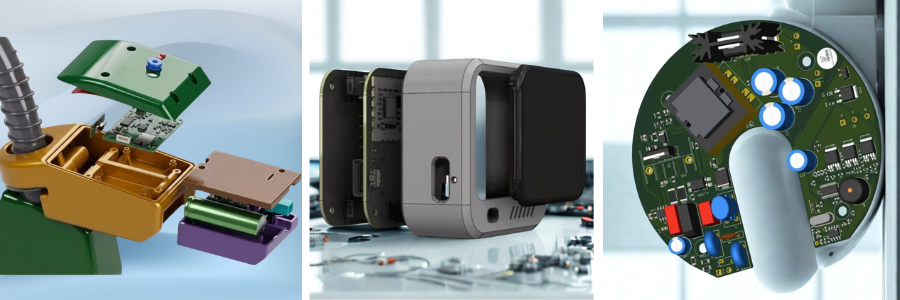
Pcb-design-fundamentals-for-hardware-product-development

A well-designed enclosure protects sensitive components from dust, moisture, heat, and impact, while also helping everything fit and function properly inside the device. It can also make manufacturing smoother by simplifying assembly and reducing issues when scaling from prototype to production. This is why companies often work with specialists, and platforms like Cad Crowd are trusted to connect businesses with experienced enclosure design professionals who understand both engineering and real-world product development.

RELATED: PCB Design Engineering Rates, Costs & Freelance Service Prices for New Company Products

Keeping electronics safe in the harshest environments

Whether it is a rugged IoT device deployed in a dusty warehouse, a medical scanner handled daily by gloved technicians, or a sensor box mounted on a windy construction site, electronics go through a lot in real-world conditions. Printed circuit boards (PCBs) are sensitive by nature, and without a properly designed enclosure, they are exposed to moisture, dust, impact, and everyday wear.

This is where custom enclosures really prove their value. Designers can add features like shock-absorbing ribs, watertight gasket grooves, and reinforced mounting points, all based on how the product will actually be used. It is not a one-size-fits-all solution. It is targeted protection built for durability and long-term reliability.

Heat management that keeps products performing

High-performance electronics all have one thing in common, they generate heat. If that heat is not managed properly, it can lead to reduced performance, sudden shutdowns, or even permanent damage. In many cases, enclosure design becomes one of the most important factors in keeping things stable.

Engineers design enclosures that support airflow, integrate heat sinks, or use thermally conductive materials and pads. Some designs even help move heat away from sensitive components through the enclosure walls themselves. A well-designed enclosure can be the difference between a product that performs reliably and one that fails under pressure.

RELATED: 3D Models of Electronic Enclosures by Freelance Designers on Cad Crowd

Blocking unwanted electromagnetic interference

In a highly connected world, electromagnetic interference (EMI) is more than just a minor issue. It can disrupt performance or even cause devices to fail compliance testing. Poor shielding or grounding can turn a device into an unintended source of interference.

Smart enclosure designers account for this from the start. Shielding layers, conductive coatings, and properly designed grounding paths are built into the structure of the enclosure itself. The result is a product that behaves consistently and passes important regulatory tests without surprises.

Supporting certification and compliance goals

Custom enclosures are also essential when it comes to meeting certification requirements. Standards like FCC, CE, UL, and IP ratings are often mandatory before a product can be released commercially.

Material selection, wall thickness, sealing methods, and even finishing details can all affect whether a product passes these tests. Off-the-shelf enclosures usually fall short here. A purpose-built custom enclosure is what helps a product meet regulatory requirements with confidence.

Streamlining the manufacturing process

One thing people often overlook is that the enclosure is usually one of the most complex physical parts of a device to manufacture. Whether it is injection molding, 3D printing, or CNC machining, every method requires careful design decisions. Good enclosure design includes details like draft angles for clean mold release, internal ribs for strength without extra weight, and properly placed bosses for screws and PCB mounting. These details may seem small, but they make manufacturing smoother and more cost-effective at scale.

All of this requires more than basic CAD skills. It takes designers who understand thermal behavior, compliance standards, and real-world product use. That is where Cad Crowd comes in. Their global network includes experienced enclosure design professionals who are matched to your specific project, whether you are prototyping a wearable device or scaling an industrial controller for production. They focus not just on how a product looks, but on how it performs, passes certification, and succeeds in manufacturing.

RELATED: From Sketch to Prototype with Product Design Services for Companies at Cad Crowd

In the end, a custom enclosure is more than just a protective shell. It acts as a thermal manager, a compliance enabler, and a manufacturing tool all in one. With Cad Crowd, you are not just enclosing electronics, you are setting them up for real-world success.

How the custom enclosure design process works

Designing a custom enclosure is not just about placing electronics inside a plastic case. There is a structured process behind every well-fitting, functional, and production-ready design. If you have never worked with a custom enclosure design company before, the process is actually more detailed and collaborative than most people expect.

Here is how it typically unfolds, and how a platform like Cad Crowd helps make it more efficient from start to finish.

Phase 1: diving deep into your electronics

Everything starts with the electronics themselves. Before any modeling begins, the designer studies your PCB layout, component placement, and overall system requirements. This includes ports, buttons, vents, mounting points, and display cutouts.

This stage is highly collaborative. The enclosure designer works closely with electrical engineers to make sure everything fits correctly and functions properly. Even small details like connector positions or LED placement matter. If this step is rushed, the final enclosure may not fit or could cause performance issues.

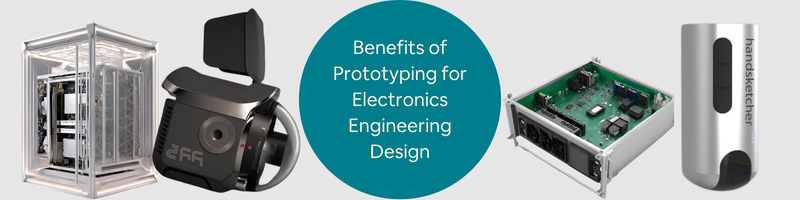
RELATED: Benefits of Prototyping for Electronics Engineering Design for Improving New PCB Hardware

Phase 2: from circuits to concepts

Once the technical details are clear, the enclosure starts to take shape in 3D CAD. This is where the idea becomes a real design.

At this stage, both function and form are considered. Designers think about internal spacing, ergonomics, branding, and overall product feel. They also decide on materials like ABS plastic or aluminum, along with wall thickness, fastening methods, and assembly approach. It is a mix of engineering logic and industrial design thinking, and it is a very important stage in the process.

Phase 3: bringing the design to life

After the CAD model is ready, it is time to test it in the real world. Prototypes are created using 3D printing or CNC machining.
Pcb-design-guide-for-product-manufacturing-success

This step is not just about appearance. It is about function. Does everything fit properly? Can it be assembled easily? Do buttons feel right? Are tolerances accurate enough for manufacturing? These tests often reveal improvements that are made before moving forward.

Phase 4: design for manufacturing (DFM)

Once the prototype is validated, the design is refined for production. This step is known as Design for Manufacturing or DFM process.

The CAD model is adjusted to match the chosen production method, whether that is injection molding, die casting, machining, or low-volume additive manufacturing. Features like draft angles, wall thickness, and structural supports are optimized to make production smooth and reliable.

RELATED: How the Engineering Design Process Helps You Craft New Products for Consumer Goods Firms

Phase 5: supporting production like a pro

Even after the design is finalized, many enclosure designers continue supporting the production phase. This can include helping with manufacturers, preparing technical drawings, or working with mold tool designers.

With Cad Crowd, you gain access to vetted enclosure design professionals who guide you through every stage. From early sketches to production-ready files, the process stays flexible and focused on getting your product to market without unnecessary delays or overhead. So when you are building your next electronic product, the enclosure is not just a final step. It is a critical part of the entire journey.

Startups and big players: who is actually using custom enclosure designers?

Custom enclosure design is not limited to large corporations. In fact, many startups get some of the most value out of it because they need to move fast and make every design decision count. At Cad Crowd, clients range from solo inventors working on early prototypes to large companies refining mass-market electronics. Startups often use custom enclosure design for rapid prototyping and fast iteration, especially when working with 3D printing and early product testing.

Mid-sized companies usually rely on Cad Crowd as an extension of their engineering teams. When deadlines are tight or specialized expertise is needed, external designers help keep projects moving without slowing down internal workflows. Larger companies often bring in enclosure specialists for more advanced challenges, such as thermal optimization, waterproofing, or redesigning enclosures for new internal hardware. What connects all of these groups is flexibility. There are no long hiring processes or long-term commitments. Just access to experienced designers who can support projects from idea to production.

RELATED: Best 50 Platforms to Hire PCB Designers and Freelance Electronics Engineers for Startups

What materials are used in custom enclosures?
Pcb-design-strategies-for-production-ready-products

Not every enclosure is plastic, and the material chosen has big implications for durability, aesthetics, cost, and manufacturing.

Some of the most common choices include:

  • ABS/Polycarbonate Plastics – Great for consumer electronics, easy to mold, also impact-resistant.
  • Aluminum – Ideal for heat dissipation and rugged devices; often CNC machined or die cast.
  • Sheet Metal – Cost-effective for industrial enclosures, especially in low to mid volumes.
  • 3D-Printed Resins or Nylons – Perfect for prototyping or low-volume runs.
  • Silicone or Rubber Overmolds – Used for grips, buttons, or waterproofing features.

A skilled enclosure designer doesn’t just make the part fit, they understand what materials are best suited to the form and function of your product. With Cad Crowd, you can specify your material needs upfront and be matched with someone experienced in that medium.

RELATED: Cost to Design a New Electronic Product, Develop PCB Hardware & Prototype Rates at Firms

Custom enclosure design costs can vary quite a bit depending on the product, materials, and manufacturing requirements. A simple enclosure for an early prototype may only cost a few thousand dollars to design, while a production-ready enclosure often requires additional work such as CAD modeling, thermal analysis, prototyping, and manufacturing preparation. The table below provides a general idea of what companies can expect to invest when developing custom electronics enclosures for PCB-based products.

Service Typical Cost (USD) Includes
Concept design $500 – $2,000 Initial sketches, product concepts, enclosure planning
3D CAD modeling $1,000 – $5,000 Detailed enclosure models based on PCB dimensions
Prototype development $300 – $5,000+ 3D-printed or CNC-machined prototype enclosures
PCB integration $1,000 – $7,500 Mounting features, port alignment, internal clearances
Thermal analysis $1,500 – $10,000 Airflow studies and heat management optimization
Waterproof design $2,000 – $15,000 Gaskets, seals, and IP-rated enclosure development
Manufacturing documentation $500 – $5,000 Technical drawings, assembly details, production files
Full enclosure development $5,000 – $50,000+ Complete design process from concept to production

Rapid prototyping: when speed matters

Let’s be honest, time-to-market can make or break a product. Whether you are trying to stay ahead of competitors or preparing for a big demo at CES, moving fast without sacrificing quality really matters. Custom enclosure designers working through Cad Crowd are used to this kind of pace. They work with rapid prototyping workflows and can prepare files optimized for SLA, SLS, FDM, or CNC manufacturing. In some cases, you can get physical prototypes in just a few days.

These prototypes are not just for show. They let you hold the design, test it in real conditions, share it with investors, and make improvements early. Because many Cad Crowd designers come from real product development backgrounds, they also think ahead about manufacturability, not just how the model looks on screen.

The bonus: IP protection and confidentiality

One thing that often holds companies back from outsourcing design work is intellectual property protection. That concern is valid, especially when you are working on something new.

Cad Crowd addresses this by requiring freelancers to sign non-disclosure agreements and offering options for fully confidential projects. This means your ideas, product details, and branding stay protected throughout the process, just as they would with an in-house team.

Future-proofing your product with modularity

Another growing trend in custom enclosure design is modularity. Instead of building a fixed, one-time-use design, more products are being created with flexibility in mind.

Custom enclosure designers can integrate features such as swappable backplates for sensors or batteries, snap-fit systems for easier servicing, and modular compartments for future upgrades or accessories. This kind of design thinking helps extend the lifespan of a product and makes it easier to evolve over time.

RELATED: Top 3D PCB Design Software Your Service Provider Needs for Electronics Design

Why DIY does not usually work

It can be tempting to design an enclosure in-house using basic CAD tools or off-the-shelf templates, especially in the early stages. For simple mockups, that approach can work fine. But when you are building a real product that needs to perform well, look professional, and be ready for manufacturing, templates are usually not enough. You need someone who understands how to translate a PCB layout and product vision into a proper enclosure that works in the real world.

That is where Cad Crowd helps. It connects you with experienced enclosure design professionals who already understand the challenges of turning concepts into production-ready products, helping reduce guesswork and avoid costly redesigns later on.

Wrapping it all up: from circuit to shelf

At the end of the day, custom enclosure design is not just packaging. It is the part that quietly turns an idea into something real. You can have a great circuit board, great components, great everything, but until it has a proper enclosure, it does not really feel like a product yet. That final shell is what people actually touch, hold, and judge first.

And honestly, this is where things can either go really well or fall apart. When enclosure design is done right, everything just feels solid. The product fits together properly, it looks intentional, and it works in real conditions without constant issues. With Cad Crowd, you are working with designers who have done this kind of thing before, so you are not starting from scratch or guessing your way through it.

RELATED: From Sketch to Prototype with Product Design Services for Companies at Cad Crowd

How Cad Crowd can help

A good product should not feel like it was rushed into whatever box was available. It should feel like someone actually thought about how it would be used in real life. A proper custom enclosure helps with that in a big way. It protects the electronics, improves usability, and honestly just makes the whole thing feel finished. That is really the point of Cad Crowd. Helping turn early ideas into something that feels real, works properly, and is ready to go out into the world without feeling half done. Contact us now for a free quote!

author avatar

MacKenzie Brown is the founder and CEO of Cad Crowd. With over 18 years of experience in launching and scaling platforms specializing in CAD services, product design, manufacturing, hardware, and software development, MacKenzie is a recognized authority in the engineering industry. Under his leadership, Cad Crowd serves esteemed clients like NASA, JPL, the U.S. Navy, and Fortune 500 companies, empowering innovators with access to high-quality design and engineering talent.

Connect with me: LinkedInXCad Crowd

Benefits of Prototyping for Electronics Engineering Design for Improving New PCB Hardware


Today’s post explores the benefits of prototyping for electronics engineering design to improve new PcB hardware. In every hardware electronic development, the prototyping phase always comes early in the process because it really is that important. It doesn’t really matter if you’re planning to develop a complete device or just the PCB; you have to build a physical prototype right after finalizing the concept. The first form of physical prototype is typically known as Proof of Concept (PoC). The main purpose of a PoC, as the name suggests, is to prove that the design can indeed provide solutions to problems in the way you expect it to do.

Because this is an early prototype, you’re allowed to build it using off-the-shelf parts and components. Development kits like Raspberry Pi or Arduino are more than capable of getting you through this phase. PoC prototypes, in most cases, are not meant for mass production because the cost is too high and the design is just too ugly to attract buyers. From this point on, the prototype undergoes an iterative process to improve its appearance and functionality. Easier said than done, of course.

All the work that such a project entails can easily overwhelm anybody, unless they get the right help from the right electronics design professionals, and that’s where Cad Crowd comes in. It’s a specialized freelancing platform with thousands of hardware development experts from around the world. Whether you need electrical/electronics engineers or industrial designers, Cad Crowd has the specialists to connect you for any hardware development project.

RELATED: Electronic Enclosure Design Tips: A Complete Guide from Freelance Engineers and Design Services Firms

Why Prototype at all?

On the surface, prototyping may appear to be a simple task of creating a product sample. Dig deeper, and you’ll be glad to discover the myriad of benefits it offers for improving the PCB design.

Schematics do sometimes lie

You’ve missed dinner and worked overtime to get every line on the PCB schematic as close to perfection as possible. It eventually looks great just after midnight, and you immediately go to bed knowing that you’ve actually finished something. Specialized CAD software allows you to build a complete “virtual” PCB without even touching a single component or solder. It all happens on a computer screen, and the schematic itself does look pretty realistic. That’s why it’s commonly referred to simply as “virtual prototyping.”

The problem with virtual prototyping is that you never really know if the schematic will work as intended in the real world. What appears to be a flawless schematic from an expert schematic designer on the screen can turn into a troubleshooting nightmare once you build a physical version. Nobody expects the worst, but you should still consider that possibility. And to be frank, many things can go wrong even when the schematics look perfect. What if you’re using an incorrect pin on the USB connector? What about a mirrored footprint, incorrect voltage draw, or logic level shifter issue? 

Virtual prototyping is great and all, but nothing beats having a physical PCB and testing it yourself. If nothing goes wrong, think of it as having a clear verification that the design is correct. And if things do go wrong, at least the board and the components aren’t so expensive that you lose sleep over them. Grab a multimeter and have a good hunt. The idea is to catch and fix the mistakes early on when it’s still cheap to make them. Don’t worry about botched repairs and jump connections using soldered wires and hot glue. Aesthetics is the least of your concerns at this point. You can afford some more boards and components. The important thing is you know where the mistakes are and how to do better next time.

RELATED: Top 33 Electronic Device Design Services Companies for Engineering & Product Design Firms

Datasheets can be misleading, too

We’re not saying the specification sheets from the manufacturers are wrong. It’s just that when the electronic components are already installed on the board, with all their connections and interactions, the numbers can be smaller or larger than what you see on the datasheets. Manufacturers and PCB design companies test their chips and sensors in a controlled facility, an ideal environment with minimum interference. Some portions of your project may take place in a lab-like room, but the final product (the finished device) is meant to be used in the real world, where very few things are close to ideal. Interferences come from every corner, and voltage fluctuations happen more often than you think.

Physical prototyping is where you put the specification sheet to the test. You’ll find out whether the microcontroller can stand its ground despite interruptions, or whether the amplifier gets along with the switching regulators. Many electronic components can go haywire under heavy load. The buck converter gets hotter than the numbers suggest, the capacitor delivers only half of what it needs to give, or the supposedly compatible chips develop weird timing issues if you look at it funny.

Testing a physical prototype helps reveal at least a majority of these unexpected problems. Because you’re still in the prototyping stage, no one will complain if you experiment with different parts and revise the list of components. You probably need half a dozen prototypes until you get every single detail right, but it’s still the best way to produce an accurate Bill of Materials later on.

design engineering services

RELATED: The Future of Electronic Design Engineering: Innovations and Trends for CAD Services Companies

Let’s not be overengineering

You’ve heard people say how old devices are better because they were overengineered to last a lifetime. It’s always a bit annoying, as the statement basically implies that modern products can never be as good because nobody cares enough to put in any real effort. How often have you come across someone pointing out “they don’t make ‘em like they used to,” as if no ancient gadget ever broke even once? No one is against overengineering. But everyone knows it’s not a very efficient way to develop electronics, especially since design engineering services are all about efficiency. People overengineered things in the past, maybe not because they wanted to, but because they lacked the right tools to do things efficiently.

Nowadays, you have CAD software, PCB simulation tools, and 3D printers, among others, to keep the work as efficient as possible. The tendency to overengineer is still very much alive today, whether you realize it or not. When designing a new PCB, it’s only common to want to use higher-priced components. You think that a $5 resistor (instead of the $0.1 alternative) will boost your confidence and somehow lower the chances of failures. There’s probably some truth to that, although it doesn’t mean that the cheaper resistor won’t work. Physical prototyping is where you’ll figure out whether the more affordable components do their jobs just as well as the more expensive counterparts.

If your plan involves creating no more than a couple of dozen devices, sure, it’s fine to use the premium parts. However, for a product to be mass-produced (5,000 units or more), even a small price difference for a single component can amount to hundreds of thousands of dollars. Assuming the cheaper resistor works just fine, there’s no need to overengineer the board and for the new product design company to spend extra money on the more expensive option. You can only confirm this with a physical prototype. If a specialized, costly “military-grade” resistor doesn’t actually make your device run noticeably better, then the standard, cheaper option should be the one you pick.

RELATED: Electronics Enclosures Design: 8 Powerful Tips for Companies and Firms Hiring Freelancers

In some cases, you can also avoid overengineering by removing excess, for example, reducing the number of capacitors, so long as it doesn’t affect performance. It’s an iterative process to reduce production cost per unit as much as possible while maintaining the board’s functions and features. Every good PCB designer needs a reasonable degree of obsession over this matter. They want to create the best design with the fewest resources, aiming to build an efficient, utterly functional design that makes good financial sense.

Do you need an enclosure?

To keep things simple, let’s assume you do. Say you’re designing a PCB hardware to build an electronic device. Like many other electronics in the market, it’s certainly not a PCB with exposed parts. The board is fitted into an enclosure to protect all working components from the elements, including occasional water splashes, drops, and general rough handling by users. More importantly, the enclosure is usually an insulator, preventing hands and fingers from coming into contact with live electrical parts. This is where electronic enclosure design services come in.

But it’s also about aesthetics. One of the main reasons big companies spend millions of dollars on their design departments is to ensure that the next products will appeal to buyers. Think about it: if you remove the back cover of two calculators from two different brands, they probably appear pretty much the same. Well, they won’t be identical, but quite similar. From the outside, however, those devices should be easily distinguishable, whether from the size and color of the buttons or the form factor. Curb appeal plays a factor in every buying decision. You want to make the enclosure as attractive as possible to draw people’s attention.

That being said, strictly from engineering viewpoints, ensuring a good fit is the priority. An enclosure doesn’t have to be fancy, but it almost definitely needs to be perfectly compatible with the PCB inside. Being “compatible” means that all the screws going through the PCB to secure it to the enclosure don’t disrupt functionality in any way, the holes line up with the hardware interfaces, and everything feels snug with zero rattling. Although the enclosure designer can, of course, design the enclosure almost entirely in CAE, the only way to be 100% sure it will fit the PCB is to physically prototype it.

RELATED: What Certifications are Used for New Electronic Hardware Products & PCB Design Services?

Given that nowadays you can even build a highly complex plastic enclosure with a 3D printer, not much can get in the way of fabrication. In the event the printed enclosure doesn’t fit perfectly, it won’t take more than a piece of sandpaper and a file to make corrections. Perhaps a capacitor is blocking the lid mechanism, the power switch feels too stiff because the hole is misaligned, the screen slot is too wide, or the ventilation is too small to dissipate heat quickly. Remember, you’re still in an early prototyping phase at this point, so having some rough edges here and there isn’t a big deal. You can’t tinker with the digital file, print it again, and repeat until you discover zero issues. 

Hot spots are not cool

When an item gets too hot, you usually pour cold water to bring the temperature down quickly. The problem with electronics and basically all things with a working PCB in them, is that they don’t like heat and hate getting drenched even more. Heat has never been on speaking terms with electronics since forever. High temperature always lurks around the corner, but electronics always try to keep it as far away as possible. Sometimes, actually more often than you think, the electronics have to succumb, accept their fate, throttle, fail, and in the worst-case scenario, literally melt.

Not every square millimeter or component on a PCB generates the same amount of heat. Physical prototype design engineering services allow you to easily identify any hot spots by putting the board under a thermal camera. This, of course, necessitates the board to fully function in the first place. Switch it on, and begin testing every single feature you have. At some point, you have to run the board at full load to see which parts generate the most heat. Just a reminder, hot spots are nothing unusual in electronic devices. If you see all your devices at home through a thermal camera, you’d be surprised to witness the presence of glowing red entities everywhere.

PCB design services

Heat is normal as long as the temperature remains within the device’s safe limit. For instance, a laptop’s CPU can operate happily at 90 °C during intensive tasks like 3D rendering or heavy multitasking. The good thing is that advanced devices, such as computer processors and motherboards, include safety measures to maintain a healthy operating state. Think of it as a “kill switch” of some sort. It will reduce the workload, so it won’t break itself. It’s going to run a little slow, but at least it stays cool.

RELATED: How to Find an Electronic Design Company for Outsourcing New Product Engineering

Your PCB may not have a similar kill switch, but knowing where the hot spots are can at least give a clue about how to minimize the issue. Perhaps you can use a passive heat sink, a thermal pad, larger ventilation holes in the enclosure, or, in extreme cases, redesign the entire board. From a PCB designer’s perspective, a complete redesign seems daunting, though not unlikely, especially when the hot spots are all over the place, and the temperatures are so high that using the device is uncomfortable. For instance, the PCB is intended for a handheld device such as a smartphone or a satnav. Imagine having to hold a device that’s constantly burning at 50° Celsius. Gloves might help, but do you know how unpleasant it is to operate a small device with them?

Electricity is money

We won’t try to make the case for how cheap electricity can be if not for data centers, tariffs, inflation, and all that. We’re just going to admit: yes, electricity is getting more expensive. But why bring this up at all? PCB and electronics do consume electricity. You might argue that some PCBs need no electricity, such as those in computers and tablets in a car, and you’d be very wrong. They do consume electricity, produced by the fuel. Also, every modern car has a battery, and just about everything in it is an electronic device with a circuit board. Even the cars themselves are literally called electric vehicles.

Because electronic devices require electricity to operate, the PCB must manage power consumption. It regulates the input, stops recharging when the battery reaches full capacity, delivers the power to the components, and puts some functions to sleep as soon as it’s safe to do so. If the PCB is for a device with a battery, power consumption (how efficient it is) can be the feature that makes or breaks the product. Say the PCB assembly designer’s new device is a smartwatch with basic features like an always-on display, Bluetooth connectivity to a smartphone, and a vibration alarm.

This new shiny device is supposed to last five days (120 hours) on a single charge. But when a user finds out it dies after just 12 hours, that person becomes an angry customer with the power of all of Facebook and Twitter to tell everyone to stay away from your product. Virtual simulation offers a workaround for monitoring power consumption without a physical prototype. As good as simulations are, they’re not exactly the best option when you need to predict “current leakages” coming from chips or resistors that decide to just go stubborn and refuse to sleep, which they’re supposed to, as soon as they stop doing anything. To detect and see this in real time, you can connect a physical prototype to a power profiler.

RELATED: Top 32 Sites for Freelance PCB Designer Jobs & Remote Electronics Engineer Work Projects 

This way, you’ll be able to identify instances of phantom drain or precisely how many milliamps the board is using in different scenarios. Perhaps the unnecessary drain comes from the Bluetooth radio staying on longer than it needs to, Wi-Fi keeping search for new networks after establishing a connection, GPS running in the background, etc. High temperatures also affect battery life. And voltage drop is an annoyance each time the battery almost runs out of juice. In many cases involving power draw, the underlying problem may be the firmware rather than the hardware, which is important to remember with electronics design services. Tweaking the code and better heat management can help optimize battery life. All this data is also useful to create an accurate battery indicator for end users. 

Firmware trial

In an ideal PCB development process, the hardware is ready just about the same time as the firmware is. But because “ideal” almost never happens, the firmware developers often have to wait until the engineers send the board for a test run. It only makes sense to develop at least the early versions of drivers using a prototype. Instead of sitting around and endlessly browsing GitHub while waiting for the perfect board, testing the firmware on a prototype would be a better use of time. An ugly PCB prototype with janky solder joints and jumpers is more than good enough to get firmware development started.

Guaranteed, it won’t be a pleasant experience writing code for hardware that you know is still going through multiple changes in the near future. The idea here is to cover the basics first, such as power management, sensor communication, and the user interface. Developers will find bugs and issues in so many places, and that’s exactly the point. Perhaps the way the PCB is wired makes it impossible to implement energy-saving sleep mode, or certain components don’t support high-speed communication. And in every product development, discovering problems on a prototype is much less worrying than bumping into issues on the final version.

Parallel development isn’t always easy, and sometimes downright impossible without effective project management. There needs to be an intermediary (DevOps or the like) to bridge communication between hardware and firmware teams. When done properly, however, it’s a huge time-saver. Every physical prototype iteration must be tested for firmware. For every step forward in the hardware department, the firmware refinement keeps pace closely behind. As the hardware reaches the final stage, the software should be around 90% complete.

RELATED: Cost to Design a New Electronic Product, Develop PCB Hardware & Prototype Rates at Firms

Get the investors ready to spend

Remember about prototyping being an iterative process? As development nears the end of that process, the hardware should be functional. A functional prototype is almost like a production version, except that it has not been perfected for mass production. That being said, there won’t be any major differences between the two versions, especially if the development follows DFM (Design for Manufacturing) services. A functional prototype is the version to showcase when you’re presenting the product to investors. Will this improve the hardware?

Not in the strictest sense of the word. But you’ll get accurate feedback from all those stakeholders. Feedback, you can then analyze and implement to get the design more in line with their expectations. Because stakeholders aren’t usually professional engineers, much of the feedback will most likely concern practical matters such as aesthetics, ease of use, water resistance, durability, and so forth. Although you’ve probably already thought about all that during the development process, all kinds of feedback are always welcome.

engineering design firms

FCC test practice run

Just about everything with a PCB inside needs to pass the FCC test before you can send it to market. FCC wants to ensure the device doesn’t emit excessive RF noise that could interfere with other communication devices. The whole procedure is expensive and potentially takes forever. Any prototype designer in their right mind will not send a product for certification testing unless they’re 100% certain it won’t fail. You can improve your chances of getting certified by first sending the device, either bare electronics or with its enclosure, to an independent lab for a preliminary test. It still costs money, but at least you don’t have to wait months for the result.

Assuming the test discovers problems, fix them and send it for a second test. Consider the prototype a practice run to prepare you for the official certification procedure. The FCC test mostly concerns the electrical components, but the certification applies to the product as a whole. In other words, you need to get the finished device (PCB and enclosure, along with accessories such as a charging adapter if you plan to include it in the box) certified. A lot of people on the internet like to talk about the importance of DFM services when developing a product, but equally crucial is to build the device with certification in mind.

RELATED: 10 Key Costs for Electronic Product Design & Development Rates for Engineering Services Companies

It’s good to have the design made for mass production, and even better when it’s also built to pass the FCC test. Thankfully, you can do both simultaneously. The general recommendation is to apply for the certification as late as possible, maybe while setting up the manufacturing. Only certify the product when you’re sure there won’t be any further design changes. 

Closing thoughts

Hardware development is difficult. It takes real engineering expertise to build a custom PCB from scratch and design a brand-new enclosure. One good programmer can probably create entirely new software, but hardware development is a different beast. Not only do you need electrical and electronic engineering skills, but also firmware know-how. Realistically, a hardware development team includes at least one of the following: an electronics engineer, an industrial designer, or a firmware programmer. Much of what they do, as mentioned earlier, is to build multiple iterations of a physical prototype based on the PoC.

How Cad Crowd can assist

At the end of the development process, you expect the prototype designer to deliver a fully functional PCB (preferably with an enclosure) ready for mass production. Finding the right professionals for some highly specific task doesn’t have to be a struggle. Cad Crowd, with more than 15 years of experience in the industry, can take you to the center of a massive engineering and design hub, where you can collaborate with some of the most qualified hardware development experts. Contact us for a quote today!

author avatar

MacKenzie Brown is the founder and CEO of Cad Crowd. With over 18 years of experience in launching and scaling platforms specializing in CAD services, product design, manufacturing, hardware, and software development, MacKenzie is a recognized authority in the engineering industry. Under his leadership, Cad Crowd serves esteemed clients like NASA, JPL, the U.S. Navy, and Fortune 500 companies, empowering innovators with access to high-quality design and engineering talent.

Connect with me: LinkedInXCad Crowd

Top 38 Platforms to Hire Electronic Enclosure Design Freelancers and Electronics Engineers


It is not a matter of sifting through hundreds of CVs of experienced electronic enclosure design freelancers and electronics designers. It is a matter of where. Your favourite platform can halve your time, eliminate the irrelevant, and put you face-to-face with the people who actually know what your project’s all about. Cad Crowd is where you begin, from talent pool to help with making technical ideas into working designs. And in case that’s not said explicitly enough, we sorted through 38 sites so that you can get the cream ready for your next project.

Cadcrowd logo

1. Cad Crowd

Cad Crowd is where you get the top electronic enclosure design freelancers and electronics engineers. It delivers the company’s pre-screened CAD design professionals, PCB design professionals, prototype designers, and case designers. Cad Crowd is among the freelance platforms in overall management of engineering and design, and therefore, it is easy to locate technical professionals. Businesses can post an ad, run a contest, or employ directly. Intellectual property rights and safe project management software are available on the platform. Regardless of the kind of top-level enclosure design modeling or overall product design assistance you need, Cad Crowd assures quality delivery by the world’s top professionals. 

Website: Cadcrowd.com

Gofreelancecom

2. GoFreelance

GoFreelance is a simple gateway providing matching freelance experts with employers for work assignments across different industries, from electronics to engineering. It is a job posting service by which firms can hire selected candidates on a project or part-time basis. It is less internet-based compared to those websites available, but more than you would employ in looking for generic technical freelancers. Since so many are passing through, there is a relatively good chance that you will be able to cover all your leads pretty well, with the expectation of getting that one that can help in fulfilling your project needs. Although GoFreelance brings you to a majority of individuals, it is for small projects and small work, but not massive engineering projects. 

Website: Gofreelance.com

RELATED: Electronic Enclosure Design Tips: A Complete Guide from Freelance Engineers and Design Services Firms

twine logo

3. Twine.net

Twine.net is well-known for freelance 3D designers but has expanded to technical disciplines like electronics and engineering. You can list and accept bids from freelancers worldwide. Twine is never electronics or designing enclosures, but if you can shove people who are not necessarily going to be using the same skill set, then it is still out there. The platform is fun to work with, and the talent pool of seasoned veterans and up-and-coming star freelancers is there. Firms willing to outsource hiring specialized expertise on contractual terms need to wade through the CVs of job applicants carefully, but Twine can readily serve as an intermediary while recruiting engineering freelancers. 

Website: Twine.net

Naukri logo

4. Naukri

Naukri is India’s leading job portal and largest recruitment website, catering to professionals and organizations across industry sectors. It is an open-bid job board and a smaller job board site, and thus it would be optimal for businesses that are able to employ full-time or long-term electronics engineers. There are set advert sizes, employers are able to sort by experience, and they are able to reach out to a mass of talent made up of technical design engineering professionals and engineers. It is not a freelance design enclosure, but Naukri will be useful to companies working with in-house staff regardless. 

Website: Naukri.com

Integra Sources

 5. Integra Sources

Integra Sources isn’t an engineering firm or a freelancer site, but also a design firm of custom electronics and software. They hire professional technical electronics engineers to work on projects from case design up to embedded system manufacturing. Through the services of Inegra Sources, one gets enhanced experience, efficient project management, and assured delivery compared to freelance personnel. The business can be utilized by firms with end-to-end engineering solutions as opposed to ad-hoc freelance solutions. The clients can leverage expert advisory services, success track, and proven process. It is appropriate for businesses that would like a company to have work done on their behalf rather than freelancing specialists.

Website: Integrasources.com

RELATED: What to Consider in Developing the Enclosure Design of Your Company’s Electronic Products

Freelancermap logo

6. Freelancermap

Freelancermap is a technology-enabled IT project marketplace and therefore the best place to look for freelance electronics design engineers. It also has an international pool of talents ranging from product design skills to PCB and embedded system design skills. Even freelancers can post the job themselves and receive applicants. It also boasts open profiles with experience, rate, and skill to screen through. Even though technologically capable experts are not particularly invested in constructing enclosures, technologically capable experts seem to be flooding in. Freelancermap is ideal for companies that need engineers accustomed to freelancing and IT certified. 

Website: Freelancermap.com

Freelancer International

7. Freelancer.international

Freelancer.international uses the directory system in a bid to find experts around the globe in such specialized areas as electronics and engineering. The freelancers’ CV are made accessible to the clients where they can check the described proficiency, and talk to them directly about a possible job. Unlike bidding websites, it is done through direct one-on-one communication that can actually be a business time-saver since they already have an idea of what type of talent they require in advance. Not too specialized in enclosed construction, electrical engineers just so happen to be a part of its members. This website would be perfect for clients who are fed up with having to sift through lists of qualified leads rather than deals. To the point and ought to be perfected as much as practicing power and project feasibility. 

Website: Freelancer.international

ElevateX Solutions

8. ElevateX

ElevateX is a platform that matches businesses with pre-screened freelance masters, and most of them are technology and engineering masters. It is all about giving business companies an opportunity to fill skills gaps in the future through exposure to seasoned experts. It is the quality and compatibility that the site offers that offer smoother access to opening markets. ElevateX is design-focused for enclosures, not technical, but it is a satisfactory niche to search for electronics engineers with the right skill sets. Clients are graced with a filtered choice to aid in project risk delivery mitigation. ElevateX is best for companies that need experienced engineering design freelancers to be involved in order to undertake middle-order to high-degree technical work.

Website: Elevatex.solutions

Electrohire

9. ElectroHire

ElectroHire is a niche platform focusing on electronics engineering and is best placed to carry out enclosure design work. It is ideal for companies that require circuit design specialists, PCB layout design specialists, embedded system developers, and case modelers. Capabilities refine it from any other freelancing website because the customers not only save time but also don’t spend time searching for the best candidate. ElectroHire is for businesses that most prioritize technical correctness and expertise in their business niche. It is the second-best way to use engineers to design tailored electronics projects. 

Website: Electrohire.com

RELATED: Electronics Enclosures Design: 8 Powerful Tips for Companies and Firms Hiring Freelancers

Freelance Electronics

10. Freelance Electronics SRL

Freelance Electronics SRL is distinct from any other freelance website. It is not a business run by freelancers, but an employee-owned company offering electronics engineering services. Companies such as these can hire Freelance Electronics SRL to conduct product design, electronics design, and enclosure work. It gives the customer the experience of experts without bidding. It will be appropriate for a company that would rather have professional labor structured than hire freelance employees to work. It does offer generic know-how, but without the necessary adaptability for actually small one-time tasks. It would be handy in serving gargantuan regular tech requirements. 

Website: Freelance-electronics.com

CADlane

11. CADLane

CADLane is an online business that brokers companies with. CAD experts, from experienced professionals in enclosure design and drafting electronics. It allows clients to post work and receive bids from global freelance experts. CAD background on CADLane makes it an improved choice for enclosure modeling than standard freelance websites. The website is user-friendly, and experience, portfolios, and rates appear on profile pages. Since it is not electronics itself but its talent pool in the form of CAD experts that makes it qualified to be hired for working in such high-end design firms, it is most appropriately suited for technology-driven projects with high design content and no detailed engineering activity. 

Website: Cadlane.com

insolvo logo

12. Insolvo

Insolvo is a website-based freelance site whose customers can list work in quite broad categories, e.g., electronics and engineering. Its platform is simple and gives clients immediate feedback from freelancers once they have posted an ad for bidding. Insolvo has a few other tools, but has access to enclosure design experts who may be limited on specialty websites. The platform is low-cost and thus appropriate for small- and medium-sized projects. Firms that require hiring electronics engineers have to read between the lines and portfolios in selecting the best CAD engineering freelancer. Insolvo is best suited for complete freelance needs compared to technical specialist services. 

Website: Insolvo.com

altium 2 logo

13. Altium

Altium is a highly rated PCB designing software and electronic design automation software. Altium also has a professional community on which one can engage a professional electronics engineer and PCB designer. It is unique compared to other freelance platforms in the sense that this is a pool of highly skilled professionals with an exclusive focus on electronic projects only. It is a goldmine for those businesses that need the best minds, for board work and enclosures, as such. Clients. They become associated with masterminds of high-end equipment utilized in business. Not a traditional freelance website per se, Altium puts customers directly in touch with master engineering minds. 

Website: Altium.com

RELATED: Design Strategies for Radar Enclosures with Electronics Enclosure Design Companies

Taskerplatformcom logo

14. Tasker

Tasker is an on-demand, real-time freelancing platform to accomplish various kinds of work. You can hire a freelancer and post an advertisement too in working industries ranging from labor work to professional work. Even though it includes technical training classes, technically, it is not technical or enclosure design work. Those that require skilled manpower will have their time to look for alternatives. Tasker will be most appropriate for minor or smaller-than-monolithic engineering projects. It will be of greatest worth to rush-hire the ones that are needed to be hired immediately, but is least likely to create electronics at a higher level or enclosures. 

Website: Taskerplatform.com

EngineerBabu logo

15. EngineerBabu

EngineerBabu is a tech-oriented business-to-hire freelance developer, designer, and engineer. While more IT- and software development-focused, it is still electronics engineering specialist-requiring. Provides business and startup technical consulting on-demand access. Engineer- and tech-oriented, it is a specialist and not a general freelancer site, and clients will need to be anonymous when looking for enclosure design experts. Elastic labor is handled by EngineerBabu and constitutes the perfect fit. More suitable where freelance engineers with varied technical capabilities are needed. 

Website: Engineerbabu.com

Allaboutcircuits

16. AllAboutCircuits

AllAboutCircuits is one of the live web forum sites for professionals in electronics, providing tutorials, business news, and facts. In addition to being an info site, the site also features a job board where electronics firms can list job ads for electronics engineers and specialists. Not a general freelance site for everyone, but the specialty group is niche-based, i.e., not that hard to get qualified leads. These companies need the services of an enclosure designer and can leverage their own talent pool. Working for them may not be as crucial as freelance websites. AllAboutCircuits will best fit companies needing experienced engineers for high-tech, complex, or long-term projects. 

Website: Allaboutcircuits.com

gigster logo

17. Gigster

Gigster is an outsourcing platform that is a project completion platform wherein one attempts to match technology projects with pools of pre-screened talent. It provides pools of experts who have the ability to complete projects in artificial intelligence, programming, and software developers. Gigster is electronics-based in orientation, but provides engineers who can provide enclosure-based services if there are any completed product development projects. Quality is provided by the website but perhaps not by small companies. Gigster is suited for companies seeking completed projects with some kind of administration and thus best for high-cost, high-tech, large projects, and not completely freelance. 

Website: Gigster.com

RELATED: Cost to Design a New Electronic Product, Develop PCB Hardware & Prototype Rates at Firms

Fivesquid

18. Fivesquid

Fivesquad is a British freelance website where professionals can offer fixed prices for their services. Although primarily utilized by web services providers and decorators, they are actually utilized by tech-nature freelancers in the electronics design business. But professional enclosure design people are worse than professional engineer websites. Fivesquid is fine for low-priced work and very tiny budgets, but would never be the best page for more complex electronics projects. Companies have to sift through profiles and services offered completely before they opt to buy services. It is okay with customers ordering low-cost fixes over engineering services. 

Website: Fivesquid.uk

Ziptask logo

19. ZipTask

ZipTask is an internet medium through which business firms are able to recruit freelance employees temporarily. It is time-based and therefore best suited for the completion of small technical jobs. Although it provides a customized list of services, the platform itself is generic electronics and enclosure engineering. Companies need to spend time arranging the electronic enclosures design freelancers for professional staff. The ZipTask method is suitable for small orders with single technical coordination. It is sufficient for common outsourcing orders, but pointless in orders with intricate electronics engineering or accurate enclosure design. 

Website: Ziptask.in

TaskRabbit logo

20. TaskRabbit

TaskRabbit is best known for offering customers access to local community freelance workers to handle daily tasks such as assembly, delivery, and handyman work. It does offer some specialized technical skills, just not electronics engineers or enclosure design specialists. No, here, where companies would utilize professional-grade engineering staff. TaskRabbit works best for middle hands-on positions, but is not perfectly suited for highly technical positions that require more experience. Businesses that require electronics design or enclosure must offer higher-experience jobs. TaskRabbit is incredibly convenient for beginner in-home positions but not perfectly suited for businesses requiring engineering design experts or enclosure design professionals. 

Website: Taskrabbit.com

FlexJobs logo

21. FlexJobs

FlexJobs is a web-based job listing website for flexible work postings committed to a complete range of different industries. It is widely known to be most worthy of its strict filtering of work posted to allow clients to filter out spam and low-quality work postings. It does not include electronics or enclosure design, but includes engineering types of work employment. Employers are still able to recruit good professionals through it, but with greater effort compared to specialist websites. FlexJobs is better suited for part-time or long-term work agreements, and not short-term freelance short-contracts. It is suited to the requirements of companies that would like to have continuous recruitment procedures but lack technical enclosure design job advertisements. 

Website: Flexjobs.com

RELATED: What are the Costs for New Hardware Product Design, PCB Prototyping Rates, and Services Pricing?

AngelList logo

22. AngelList

AngelList is a popular means for startups to identify investors, partners, and even employees by startups. It can also hire engineers, developers, and other startup entrepreneurs for new positions. It does have electronic engineers that they can employ and contract them there, but AngelList is a right startup application in the employees’ hiring process and not contract employment of freelancers. It will be easier to use in building longer-term technical staff, but harder to use in contract employment freelancers to perform enclosure design tasks. AngelList will best fit companies seeking early-stage work talent. A single one-off short-term enclosure design will utilize more specialized freelancer websites; it will, however. 

Website: Angellist.com

Pic-control

23. Pic-Control

Pic-Control is a Singapore professional engineering solutions company with product development services, electronics design, and embedded systems solutions. Pic-Control is not another freelancer site to be used in conjunction with other freelancer sites, but a business company with end-to-end solutions. Companies requiring the enclosures to be made from scratch can hire the services of its engineers who provide work from scratch to a fully developed prototype. Process orientation provides quality and reliability sufficient for firms ready to utilize experienced masters rather than stand-alone freelancer experts. Pic-Control is a hardware integrator and developer. It is less price-sensitive than freelancer sites, but sufficient for professional high-complexity engineering work.

Website: Pic-control.com

SimplyHired logo

24. SimplyHired

SimplyHired is a job search engine that provides contract, full-time, and freelance job listings on the entire web. It is not engineering-targeted, but in the general sense, electronics engineers are spidered and can be found with targeted searches. Companies can post an advertisement and receive a large sample of likely employees. Because it is an open system with numerous posts, rigorous filtering is used in searching so that they can acquire competent enclosure design professionals. Since it is a platform that retains companies only on a commitment to attempt Slack hiring strategies, SimplyHired is not a great tool to reach quality freelancers, but it reaches an enormous number of individuals. 

Website: Simplyhired.com

DesignCrowd logo

25. DesignCrowd

DesignCrowd is an online design market where firms can outsource work or run competitions for freelance design. More ideal for web graphic designers, branding, and graphics rather than electronics and engineering. Although. Extremely high level of creative work. But certainly not for technical electronics design and enclosures design. Firms looking for engineers won’t be well served. DesignCrowd would be for businesses that require logos, packaging, or advertising content but not product design. If the engineering design of electronics or enclosures is a requirement, some websites must be attempted first. DesignCrowd is for creative work and not project development. 

Website: Designcrowd.com

RELATED: Complete Cost Estimates for An Electronic Product – Design Services Rates and Pricing for Your Company

peopleperhour logo

26. PeoplePerHour

PeoplePerHour is a worldwide pool of freelance experts from which the company can hire remote specialists in all but extremely selective niches like design and engineering. It is in tune with going hand-in-hand with hourly compensation and project work with economic convenience. There are electronics specialists and CAD drafting specialists, but the site is more suitable for a generalist. Companies that need enclosures to be made will need to scan portfolios and profiles to determine the required experience. Good payment facilities, grading facilities, and messaging facilities make it easy to work on PeoplePerHour. Medium-sized projects are ideal, but specialist sites are fine for high-end electronics projects. 

Website: Peopleperhour.com

Arc.dev

27. Arc.dev

Arc.dev aligns technology and business professionals with professional developers. It uses software and engineering concepts with capable hands to unlock full-time job opportunities as well as freelancing opportunities. While, like any other electronics engineers, there are a few possessing relevant certificates. Sorting keeps clients from receiving services from inexperienced hands, thereby mitigating project-creation risks. Arc.dev is suitable for companies requiring skilled technical engineering freelancers. It is not suitable for the normal enclosure design task. It is best suited for big companies requiring more than product engineering and design technical expertise. 

Website: Arc.dev

Guru logo

28. Guru

Guru is a very ancient freelancing site with broad industry variations like electronics and engineering. It provides customers with the services of publishing a project, browsing through freelancers’ portfolios, and negotiating fees in secrecy. The site possesses an elastic payment arrangement on a milestone, hourly, or fixed-price. Enclosure design experts would be more difficult to obtain than specialty sites, although electronics engineers exist at Guru. Overbaggage of talent pool on the site is a double-edged sword as exclusivity must be the minimum. Companies that need room and liberty to sort through candidates are best served on Guru. 

Website: Guru.com

LinkedIn logo

29. LinkedIn

LinkedIn is the world’s biggest professional networking site and claims to have a clean site for professional hiring of any quality. There’s a job posting, there’s one-to-one interaction with electronics engineers, assured, experience-based, and skill-based search profiling. Not a contract website, yet LinkedIn has professionals offering contract and project work-based services. Best to utilize on LinkedIn for job application purposes because of the freedom when it comes to actual verbal communication with leads and complete background information. Companies seeking long-term or senior workers can utilize it. Best to utilize when applying for hiring, but a good source to utilize when in search of professional product engineering staff

Website: Linkedin.com

RELATED: Guide to New Electronics Prototyping for Hardware Startups & Design Companies

indeedcom logo

30. Indeed

Indeed is among the most viewed career search sites utilized by companies while searching for work professionals with specialization in their field of business. It allows companies to post work and discover professionals who are prepared to work full-time or on contract. Electronics engineers can be discovered on Indeed, but not freelancers, and enclosure specialists will be less available. The platform is ideal for companies when they need to hire in-house engineers or build technical teams. Indeed, there is no worse or faster way to do fast, small freelancer jobs than specialist platforms. 

Website: Indeed.com

Workana logo

31. Workana

Workana is a website of product design freelancers who previously were distributed in a traditional way across Latin America, but now anywhere in the world. They provide any kind of service from engineering to technical departments. The customers provide projects, which are picked by freelancers as proposals, upon which they perform profiles, portfolios, and reputations to make decisions. Workana is technology-unfocused, but they may have space to grow into technology-specialized engineers. Employers would need to weed through more of them to choose an enclosure design freelancer, but the service is affordable and prompt. Workana can work on small to medium-sized projects, but not engineering specifications. 

Website: Workana.com

ZipRecruiter Logo

32. ZipRecruiter

ZipRecruiter is a job board that involves matching with potential employer. It also boasts syndication and job posting functionality, and employers benefit from access to a large pool of talent. There are electronics engineers at ZipRecruiter, but it does not promote freelance or direct-hire contracts. Companies seeking to hire enclosure design professionals can find the desired professional, but it takes more time than on freelancing websites specifically intended for this purpose. ZipRecruiter would be suitable for companies seeking employees to perform more than or more specialized sites for 3D design freelancers. Enclosure design short-term would be suitable for more engineer sites or specialty sites. 

Website: Ziprecruiter.ie

toptal

33. Toptal

Toptal is said to provide skilled freelancers with finance, design, and software development expertise to clients. It is not suitable for electronic engineering or enclosure design work. It is not electrically biased towards electronics and might not necessarily be smart enough to provide master skill sets that a business company can gain in hardware design or enclosure modeling. Its rates are also too high and not that reasonable for small jobs. While Toptal excels in business and software consulting, companies needing electronics engineers must also consider sites that are technically biased. Some kinds of enclosure design projects will be suitable for other sites.

Website: Toptal.com

RELATED: A Guide to Electronic Product Design for Manufacturing with PCB Design Firms & Engineers

Truelancer logo

34. Truelancer

Truelancer is a website offering online freelancing services in all categories, such as IT, general engineering, and product concept design services. It is not suitable for professional electronics like enclosure design, though. The website is generic and not easy to hire quality electronics engineers. It is easy for small general or design freelancing, but technical specifications will be matched better elsewhere. Truelancer is good for customers who are looking for low-priced services for simple non-tech work, but not sophisticated electronics engineering. Professional websites are employed as a fallback technique to provide design services.

Website: Truelancer.com

fiverr-logo

35. Fiverr

Fiverr is a large freelance platform where professionals offer services in packages with the lowest price tag. It is appropriate for digital and creative services but not for electrical engineering or enclosure design. Electronics services are of low quality and not in demand, and companies therefore struggle to realize repeat business. Fiverr would be appropriate for small and fast jobs, but technical skill and accuracy are necessary if one is to create enclosures. It is therefore not ideal for companies looking for electronics engineers. Companies will be subjected to more filtered human resources by engineering-based websites. 

Website: Fiverr.com

freelancercom

36. Freelancer

Freelancer is among the top global freelance websites and serves almost all industries. Fair scale to provide the appropriate number of experts, but not an optimum fit in the area of enclosure designing or electronics engineering. Its open bidding process on its website will ensure random quality and technical inputs by technical freelancers. Electronics is a technical engineering skill and won’t be simple to provide here. While Freelancer might be adequate for low-level projects or small-level enclosure design, organizations that require top-level enclosure design or quality electrical engineering freelancers will have to seek other avenues to technologically more advanced, engineering-type websites. 

Website: Freelancer.com

kolabtree logo

37. Kolabtree

Kolabtree is a site where there is a room for organizations to place orders for freelance scientists and researchers. While it is simple to work on using it to do research work or a research study, it is the wrong platform to use to create products or hardware. Such organizations would be wasting their time in hiring electronics engineers from Kolabtree since Kolabtree experts have interests in biotechnology, data analysis, and biological science, but not in product design or hardware design. Electronics engineers would be useless or redundant for such companies that induct them through these websites. Research work through Kolabtree is an investment, but not technical designing or engineering. Business organizations related to electronics can try those websites first using engineering talent. Kolabtree is not a place where such work gets outsourced. 

Website: Kolabtree.com

RELATED: Consumer Electronic Product Design Services: All You Need To Know About Costs, Rates, and Prices for Freelancers

Upwork-logo

38. Upwork

Upwork is a very well-visited freelance platform with an unfathomable set of professional skills of masters of any form of varied business. There are some electronic engineers on it, but it is not a platform that is recommended upon which to carry out enclosure design work. The trend of the platform as a whole is shifting away from assigning highly specialist professionals to specific locations, and quality is extremely skewed among freelancers. It will not be an hour or two to acquire the experts, and high-end electronics demand experience and urgency that will or will not be found on Upwork. Ideal for fly-by-night freelancing work, time-pressed companies to select some enclosure design services will do best on engineering and tech-savvy service platforms. 

Website: Upwork.com

How Cad Crowd can help

It should not be an act of guessing to find the best engineer or freelancer to do your electronic enclosure project. Since there are very few good websites to select from, the experience that you are seeking is closer than you imagine. Cad Crowd is where you should go because you can negotiate with experienced professionals who are electronics technical specialists and electronics enclosure design specialists. If you are not opposed to allowing your project to remain on the drawing board into the hands of the finish line, then head on over to Cad Crowd and request a free quote today.

author avatar

MacKenzie Brown is the founder and CEO of Cad Crowd. With over 18 years of experience in launching and scaling platforms specializing in CAD services, product design, manufacturing, hardware, and software development, MacKenzie is a recognized authority in the engineering industry. Under his leadership, Cad Crowd serves esteemed clients like NASA, JPL, the U.S. Navy, and Fortune 500 companies, empowering innovators with access to high-quality design and engineering talent.

Connect with me: LinkedInXCad Crowd