How to Find the Right Industrial Design Company for Successful Product Development


One of the most crucial stages in creating a product is to find the right industrial company. It is very important, since the right partner or team will truly help you develop a design that doesn’t just look good but also works well and is efficient to produce. In contrast, if you work with the wrong company, it would most likely lead to multiple delays, higher costs,  and, worse, unsatisfactory outcomes.

In the process of building a successful product, selecting the right industrial company is crucial. And since there are a lot of companies to consider nowadays, it really can be so challenging to decide where to begin. Good thing services like Cad Crowd exist; it’s a platform that simplifies your search by connecting you with skilled design experts who can surely turn every idea into a reality.

RELATED: How Successful Companies Use Industrial Design Services for Product Development & CAD Design

🚀 Table of contents

What does an industrial design company do?

An Industrial design company mainly aims to develop products that focus not just on their visual look but also on usability and practicality. It makes sure to create a product that functions well, is user-friendly, and is efficient to manufacture. The services these firms offer often include idea development, 3D Modeling, Prototype building, and final product refinement. They work closely with clients who transform ideas into real designs, ensuring they align with both customer expectations and manufacturing standards.

Having a better understanding of what these companies do allows you to make a clearer decision and set a significant expectation on how the process will be. It also helps avoid misunderstandings, as you get to know more about who you work with as you achieve your product goals.

Why hiring the right industrial design company is critical

Choosing the right industrial design company really plays a significant role in the success of your product. It helps you get an idea of product design that doesn’t focus solely on appearance but also considers its usability and importance in the competitive market. It streamlines manufacturing processes by addressing design issues early, saving time and money along the way.

On the contrary, if you select the wrong partner, there would be a lot of problems that would happen later on. It can result in multiple revisions, wasted materials, delays, and a final outcome that is far from what was expected. And if this happens, everything would slow down, especially your designated launch schedule, and you would possibly lose your chances of success.

RELATED: How CAD Modernizes Product Concept Design at Industrial Design Services Companies

Because of this, thorough selection is really essential. Taking ample time to evaluate your options before making a decision helps big time. With the help of the right expertise, you and your team can move along with more confidence since you have a partner that would back you in every aspect throughout its stages as you all go through the process of achieving your product goals.

​Steps in finding the right industrial design company

Step 1: Define product requirements clearly

Before starting to search for the right industrial design company, it is important to clearly define your product design first.  It simply means you need to understand your product’s purpose, who your target users are, and outline its key features. It helps best when you already have a clear direction right from the very beginning; then the entire design process becomes more efficient and focused.

Being able to set your vision early on gives you a clearer idea about user experience. You get to consider how your target users will interact with the product that you are trying to create. Thinking deeper about the certain challenges that they might face and how your product design can address those specific concerns. These are very important details that must be included in your project brief so that designers are aware of the solutions they will create, not just visually appealing but also practical and meaningful.

Step 2: Look for relevant industry experience

Every industrial design company has its own level or type of expertise. There are some who focus more on consumer goods, while others specialize in areas like electronics, furniture design, or medical devices. And each of them has its own set of standards, requirements, and challenges. You must be mindful when selecting the one who aligns best with what you plan to build.

RELATED: Important Benefits of Industrial Product Design – Using Industrial Product Design Services

Finding a company that has experience with the same kind of industry that you have can significantly make a difference. Since they already know and understand the common design issues, product limitations, and even user expectations. Through this, you can both work more effectively and efficiently since there would be less chance of expensive mistakes and even delays along the way.

Step 3: Evaluate portfolios

In assessing an industrial design company, it is important to thoroughly review its portfolio, as it is one of the most valuable tools a client should consider before deciding to hire. With the help of this portfolio, you get to have a clear view of that specific company’s design approach, skills, and level of experience. Having reviewed their previous work, you can better understand their capabilities in delivering a project.

It helps you decide best, especially when you focus on projects that are the same as yours. This helps confirm that the designer has strong experience understanding the standards and requirements for the type of product you are trying to build. It is very important to also evaluate not just the visual of their previous work, but also the functionality of their designs. Remember to always note that just because it looks good, it doesn’t mean it also performs well in real-life use.

Step 4: Check client feedback, reviews, and testimonials

Aside from portfolios, it is very important to check feedback, reviews, and testimonials from previous clients. This feedback from clients is very helpful since it provides you with real user insights as to how the designer works in certain projects. They reflect reliability and the overall experience of what it actually feels like working with them. Always pay attention to both positive and negative feedback, as they indicate a significant message and can really help you decide whether they are worth partnering with. If they do have consistent positive reviews, then it’s a good sign.

RELATED: Trends Shaping the Future of Product Design for Industrial Design Services

However, if there are multiple complaints, then potential issues would surely arise during collaboration. If it is possible, try to always look for comments about matters like handling revisions, meeting deadlines, and, most importantly, good communication. With the help of client review feedback, you get to gain a lot of understanding about how a certain company works and what it’s really like to collaborate with a certain designer beyond their design output. It greatly helps you become more confident and informed as you arrive at your final decision and move forward with your project goals.

Step 5: Assess technical skills and tools

Technical expertise plays an essential role in industrial design. It means designers really need a strong level of proficiency in CAD software and other tools used to create detailed, precise models. These tools are very important in developing designs, so it would be easier to visualize project concepts and prepare their designs, ensuring they’re ready for production.

Avoid-costly-errors-in-design-company-selection

Apart from software skills, designers are also expected to have a solid understanding of certain materials and the manufacturing process. Having this knowledge strengthens the product’s efficiency, making sure it is made with the right materials and methods while reducing unnecessary complexity or higher cost. It also helps in avoiding design issues that could possibly arise during production.

Step 6: Check communication and responsiveness

In any industrial design project, strong communication is really one of the major key factors in order for it to succeed. From the very first inquiry to its final delivery, the design company should be responsive, clear, and easy to work with. It is important to have good communication with both ends, as it helps ensure that the ideas you give are understood and properly executed. As a client, you should pay close attention to how the company replies and how quickly they are to pick up your ideas and concepts as they grasp your project requirements.

If, in any case, there are misunderstandings or delays, especially during the early stages of communication, it could lead to bigger issues along the process. So it’s important to note and weigh things right before proceeding into the actual work collaboration. Clear and timely responses are a good sign of a company’s professionalism and reflect how reliable they are as a partner. Do not settle for potential; make sure to make careful decisions to prevent problems as the project progresses.

RELATED: Top Industrial Design Challenges from Cad Crowd

Step 7: Compare pricing the right way

Pricing is one of the most important bases before you decide who to hire as your industrial design partner. Many clients opt for the lowest-priced option to be more practical, but it is important to remember that the value of the work is more important than the cost. Choosing the cheaper option, though practical at first, can possibly result in a poor quality of work, multiple revisions, and even higher expenses as the project progresses.

The best approach you need to consider is to really focus on the entire value, not just on the pricing alone. Look at the designer’s work experience, capabilities, technical skills, and track record in delivering project results. If you invest more in a skilled professional, you are more likely to guarantee a smoother process, a better-designed outcome, and to lessen or even avoid costly revisions later on.

Step 8: Understand workflow and process

When you hire an industrial design company, it is important to note how they manage their design process from the very beginning up until the very end. Every designer or company has their own workflow and process, so it really differs from one company to another. So, by understanding their specific approach, you will be able to see whether it aligns with your expectations. You must ask how they operate at every stage of the process, from research, prototyping, concept development, revisions, to the final delivery. Through this, you get to gain a clear picture of their structure and organization.

RELATED: Product Development Guide: How an Industrial Design Company Develops Your Idea

When a company has a well-defined process, it simply means that they centralize a smoother collaboration between all the people involved in that specific task. And by understanding this kind of structure, you can anticipate what to expect, including when to expect updates and feedback, and how they make decisions throughout the process. A designer who strictly follows a certain workflow is likely to deliver high-quality and consistent results. This step also helps you in identifying potential gaps during the early stages so that you can prevent any confusion or delays once everything begins.

Evaluate-industrial-design-company-portfolio-and-work

Step 9: Ask the right questions before hiring

Before you fully decide who to hire as your industrial design partner, make sure to really ask questions in order to confirm that the specific designer is really the right fit for your project goals. Through this, you get to set clear expectations and avoid the potential risk of misunderstandings along the process. Make sure to ask about their previous experiences with similar projects. Through it, you get to have an idea of how knowledgeable they are with your project type and see how they would handle things and deliver according to your standards. You should also not forget to provide project timelines, including how long you would want each stage of the project to take, and if there are cases of delays, how strategically you would handle them.

Another one to clarify is ownership. Remember to confirm who will own the final design files once everything is done. Ask as many questions as possible, as long as they’re related to the project that you are trying to create, especially in terms of possible additional fees for certain changes or specific details that can affect the overall experience and success of the product that you are aiming to build. Getting clear and direct answers really helps you as you decide who to hire.

RELATED: 5 Tips For Successful Product Design

Freelancers vs industrial design firms

Choosing to hire either a freelancer or a design firm mainly depends on your project’s needs, complexity, budget, and even the level of support that it needs. If you opt to hire a freelancer, it’s a good choice, as they are a very flexible and budget-friendly option. It is ideal for startups and smaller projects with limited resources. Freelancers adapt easily to change, communicate directly, and often offer rates that are more affordable than those of larger firms. It is a practical choice, especially for simple designs or early-stage product development for startup businesses seeking a wise option.

On the other hand, design firms provide a more structured and smarter approach. They have a full team of specialists, designers, and engineers with extensive knowledge and experience in handling complex projects that require expertise across multiple areas. They manage complex workloads, offer a range of services, and ensure consistency throughout the project design process.

Whether your decision would be, it really just depends on your project’s size, since you all have the advantage of who to choose from, both freelancers and design firms. With all the platforms that connect experts, Cad Crowd really gives you the flexibility to find the right partner for your project goals. It’s a matter of decision and thorough evaluation, since regardless of what you decide, Cad Crowd still provides you with easier access to both options, making sure you get to select the professional that meets your specific standards.

RELATED: Innovation is Ongoing: Next-Gen Product Design Strategies with Industrial Design Firms

Where to find reliable industrial design companies

In today’s modern world, we have various ways to find industrial design companies, such as searching online, using professional networks, or asking for referrals. A lot of methods can really be helpful, but don’t always guarantee that the companies you find online or are referred to are qualified, experienced, or perfectly fit with your project’s goals. Through online searching, we can get a wide range of options, but the results they deliver, most of the time, don’t meet our specific standards. Sometimes, you find designers who really excel in the specific field, but lack the expertise you actually need. There are others who don’t have proven strong experience in the specific industry but deliver top-notch quality.

This is what makes the selection process more time-consuming and really overwhelming, especially for those startups. For this reason, selecting a trusted and reliable platform becomes essential. Cad Crowd simplifies the process by offering access to a carefully curated network of skilled, vetted industrial design professionals. This helps clients avoid spending more hours filtering through uncertain or unqualified options, since you can quickly connect with expert designers carefully selected for their experience and capabilities, who meet your professional standards and have the potential to turn your ideas into reality.

Common mistakes to avoid when hiring

It is inevitable to commit mistakes in any project design, especially when you are in the process of looking for and hiring  the best industrial design company. However, these mistakes are preventable and can be avoided in order to avoid big damage as your project progresses. Of course, you do not want to deal with major damage along the way, so, as much as possible, be extra mindful when selecting the right company, since they are the ones who will be accountable at every stage of the process.

One common mistake in choosing a designer is basing your decision on price alone. Although lower costs may seem attractive at first and practical, they don’t guarantee a good quality result. Instead, it often leads to repeated revisions, poor quality, and higher expenses throughout the process. And no client would ever want to deal with multiple revisions again and again in the long run. So, as much as possible, consider the overall value rather than focusing on the attractiveness of cheaper costs. There are a lot of clients who are blinded by the idea of lower-cost pricing without realizing how it often negatively affects the overall performance of the manufacturing process.

RELATED: 8 Impressive Industrial Design Portfolios on Cad Crowd

Avoid-costly-mistakes-in-design-company-selection

Another is failing to review the designer’s portfolio. If you don’t check their previous work and experience, it will be more difficult for you to evaluate the skills and capabilities they deliver. You will not be able to look through their design styles and level of experience, and you will not be able to confirm if it fits best with your project needs. A portfolio provides you with all the important insights into whether that specific designer can handle the type of project you are trying to aim for. It must not be overlooked and taken for granted since it’s a very helpful guide as you go through the process of building the product of your dreams.

Also, poor communication and unclear project requirements are two of the major issues that most clients deal with. If you don’t set your expectations early, misunderstandings are likely to occur. Without clear project standards and requirements, the project would most likely result in delays and unsatisfactory outcomes. You should always take time to prepare clear standards and provide questions that can help in avoiding problems early on. There are a lot of clients who hop into the process right away without confirming every little detail, assuring every potential complication and possible challenge along the way.

Final checklist before hiring an industrial design company

Before you make your final decision, it is really essential to make sure that you have carefully reviewed all the options you have and ensure that everything is clear and settled. You may start by confirming that your product requirements are properly defined, including its purpose, key features, and target users. In this way, you get to stay focused while making sure that the designer you choose really understands the vision you have in mind.

Next, evaluate the designer’s portfolio to see whether their style and methods really match what you’re looking for. Make sure that you get to check their previous work so that you can confirm it really reflects the kind of quality and functionality you want to have in your own product.

Also, do not overlook the importance of communication. Always make sure the designer is responsive, easy to talk to, and clearly explains the project details. You must work collaboratively and establish a professional relationship, ensuring you get to exchange ideas comfortably while making sure everything is settled and clear before proceeding into the next stages of the process. At the same time, also remember to check the transparency of the pricing just to see to it that it has no hidden fees or unclear charges.

RELATED: How 3D CAD Modeling is Transforming Design and Manufacturing Industries at Design Companies

Lastly, you must ensure that every deliverable, timeline, and expectation is clearly set and agreed upon between both ends before confirming the start of the project. When you have everything properly set up from the very start of the process, misunderstandings or challenges are less likely to occur, making everything run smoothly.

Applying all these steps increases your chances of having a successful partnership with the chosen design company, while ensuring you receive and achieve a high-quality final product that not only looks good but is also manufacturable and meets your project requirements.

The cost of hiring an industrial design company varies depending on the product’s complexity, project scope, and the level of expertise required. While simple product concepts may only require a few thousand dollars, more advanced projects involving prototyping, engineering, and manufacturing support can cost significantly more. The table below provides a general overview of typical industrial design pricing ranges.


Service Level Typical Project Cost (USD) Best For
Freelance industrial designer $1,000 – $10,000 Simple products, startups, concept development
Small industrial design studio $5,000 – $30,000 Consumer products, product refinement
Mid-sized industrial design firm $20,000 – $100,000 Complex products requiring research and prototyping
Full-service product development firm $50,000 – $250,000+ End-to-end development, engineering, manufacturing support
Enterprise-level design consultancy $100,000 – $1,000,000+ Large-scale commercial products and innovation projects

Conclusion

In choosing the right industrial design company, a lot of patience, clarity, and careful decision-making are really needed. Having all this just means how much you value your products and how you want things to run smoothly as the project progresses. Having a better understanding of your product and evaluating company portfolios and expertise means you get to open a strong foundation for your project’s success. Every step you take in choosing the best partner helps you reduce potential risks and issues, ensuring that all your ideas are transformed into a well-designed and manufacturable product.

If you want to find the right professional who can help you turn your ideas into reality without wasting hours searching, try Cad Crowd, a platform proven to simplify your search. It has access to a wide pool of experienced and vetted designers who are guaranteed to help you move forward with your project goals. They are carefully chosen since they have the quality and ability to develop a product that is sure to meet your goals and will really stand out in the competitive market.

RELATED: Trends Shaping the Future of Product Design for Industrial Design Services

How Cad Crowd can help

If you’re impressed by Cad Crowd’s freelance industrial designers, considering hiring one of them for your design project. We can connect you with some of the best product designers in the industry. Just contact us with your information and we’ll give you a free quote!

author avatar

MacKenzie Brown is the founder and CEO of Cad Crowd. With over 18 years of experience in launching and scaling platforms specializing in CAD services, product design, manufacturing, hardware, and software development, MacKenzie is a recognized authority in the engineering industry. Under his leadership, Cad Crowd serves esteemed clients like NASA, JPL, the U.S. Navy, and Fortune 500 companies, empowering innovators with access to high-quality design and engineering talent.

Connect with me: LinkedInXCad Crowd

Tips for Product Design Firms: Validate New Product Ideas & Squash Launch Failures


When launching a new product in the market, it is important to understand how risky itcould get. It is a competitive approach, but it is prone to risks if not handled carefully. Haste and rushing launching are what make it fail. When the production team did not go through the process of validating and testing the product, it fell into a trap, and it may be hard to reverse it now. Launch failures are costly. It costs time, resources, effort, and budget, and weakens client confidence. 
To reduce these risks and direct product launch to success, it is best to combine smart research, testing, and repeated cycles of prototyping design engineering services. It is better to invest in validating the product first before releasing it to the public. Cad Crowd makes it possible to connect vetted professionals to businesses that can aid in strengthening all development stages. They are a pool of experts that understands the importance of effective and strategic validation to ensure launch success.


🚀 Table of contents


Why most product launches fail

There are a lot of factors that impact failure in product launch. Most of the failures stem from the idea of an impulsive approach without confirming the demand. When the team only focused on assumptions, trends, internal interest, and excitement, and limited feedback, they were taking a subjective approach. Lack of testing real customer demand puts the product at risk. Not knowing what the consumers really want or what they think could be improved affects the whole outcome. Missteps could cause poor decision-making, letting impulsiveness increase the risks of failure.

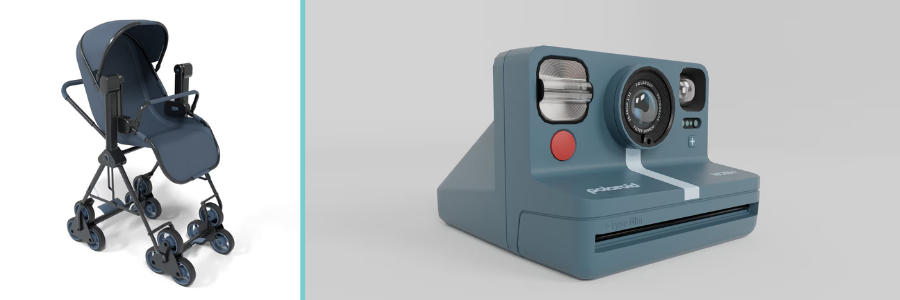
Product design of a stroller with adjustble height and polaroid camera by Cad Crowd product designers and experts

Start with a clearly defined problem

Success always starts with identifying the problem first. Being clear about the goal of providing a solution to the problem is the best professional way to achieve success. Product design companies should be able to articulate all the pain points and lesson learnt to come up with the proper solutions. If the problems are too vague, the solution wouldn’t feel intentional and may be prone to overdesign. This will make customers confused and overwhelmed with features they don’t really think are necessary. 

Identify a narrow target market

Designing for “everyone” looks like a warm accommodation to encourage everyone to try. But this approach is almost like a trap. It is a vague attempt at trial and error. Instead of being open to all, firms should narrow down and be specific to their target markets. Identify what these target users are looking for and collect relevant insight and feedback. This makes the whole validation measurable and makes the product launching intentional. It gives genuine solutions and makes users think they are considered in the design process.

Conduct structured customer interviews

One way to collect relevant insights is to receive feedback from real customers. Not all conversations or exchanges are considered relevant or useful. Strategic and systematic interviews are best to uncover what the users are expecting and looking forward to. Interviews could be documented to see and monitor patterns and trends, so there would be data to look back on to build an even stronger opportunity.

Analyze existing alternatives

In launching a new product, being prepared is one way to success. This includes knowing any existing alternatives to what the company is planning to launch. This makes them identify and understand competitors. It is expected that there would be comparisons conducted by customers. If a product has already existed and been used, it already has an edge since its functionality has been proven. It already serves its purpose. Then what makes the new one worth a try? Studying the existing alternatives would uncover what the customers want to improve. It could also help with the benchmarking of the costs. 

Build a minimum viable concept

Before doing a full-blast development, consumer product design firms should consider that it could fail on the first try. It is best to do an early prototype to test its functionality first without compromising extensive resources. Doing a minimum viable concept would focus on gathering reactions and feedback, as these will expose flaws. Detecting flaws on the early stage would make it easier to fix. 

Use landing pages to measure interest

A landing page makes it easier and faster to gauge consumer interest. Once presented to the public, there would be reactions towards it and insights as well. This is where firms would know whether there is hesitation and what rates and features are to be expected. From this stage, refinement could be done before it is produced. 

Test with pre-orders or deposits

Pre-order makes the whole launch intentional, offering pre-orders secures not only demand interest but also early funding. This boosts morale in the team and makes it a lot easier to move around. It could also help understand the consumers who committed willingly. 

Launch a smoke test campaign

Smoke testing is one way to measure interest based on the clicks and conversion rates. This is done by advertising the product before it fully exists. To know if the public is interested, there would be a lot of engagement. If there is low engagement, then the firms can make adjustments to turn it around. Smoke testing is a cost-effective tool that can protect production from failure. 

Leverage surveys strategically

Aside from interviews, surveys add value to what the consumers want. Quantitative feedback supplements behavioral patterns exposed in qualitative research. The surveys should not only ask questions about checking if the user would be interested in buying the product, since it would lead to misleading optimism. Instead, the questions should be able to provide valuable insights about behavioral patterns, which can be useful for many companies, such as fashion design companies.

Prototype early and iterate often

Conducting rapid prototyping accelerates validation. While the users are able to experience the concept, feedback was documented to catch any flaws and readjusted early on. This iteration cycle would lead to a more concrete design tailored to the target audience, making it less likely to receive negative feedback during full release. Early alterations are of much lesser value than making a change on the last design stage. This mitigates risks. 

Conduct usability testing

Validation is a combination of demand and usability. Consumers can express demand, but if it’s not user-friendly, it could backfire. Knowing how it functions and how it fits the users would be beneficial and lessen pain points. To check on this, testing regarding the product usability is recommended. This will reveal insights about the product and help the team align the design with user expectations. 

Validate pricing early

Pricing influences product value and profitability. There are different thresholds in the market, and observing price points could reveal whether it’s a hit or not. Firms can explore pricing by using a tiered pricing model. Conducting these collects insights whether the product is considered underpriced or overpriced. From this, firms can check the revenue potential of the product. 

Evaluate market size realistically

An accurate estimate of the target market size protects long-term viability. Product design experts should be able to assess the realistic number of demand leads. Having an overestimated number would lead to an inflated projection, resulting in an increase in wastage of resources. Being conservative in the number makes it intentional and sustainable. 

watch and kettle design by Cad Crowd product design engineers

Measure engagement, not just interest

Anyone can say they are interested, but not all are really committed. There’s a way to gauge the number, and this is by the engagement metrics. It reveals deeper insights and information as it uncovers behaviors. Genuinely curious and committed users would spend a lot of time on the landing page, engaging a lot more, and leaving comments. Those who are passive and do not engage much rarely purchase. Tracking engagements strengthens validation. 

Use crowdfunding as validation

Crowdfunding not only serves as a validation tool but also ensures market readiness. Successful campaigns show that the message is delivered clearly and expresses demand. The comments could add information through quantitative feedback. 

Users often express their insights and honest feedback on online communities. Sharing early concepts in these forums would earn real-time feedback and comments. Their constructive critiques could expose some blind spots and flaws that may be hard to fix in late design stages. Knowing this strengthens alignment with user needs, which is especially useful for engineering design firms

Assess technical feasibility alongside demand

Being realistic in design is one way to launch success. To know if the concept will thrive makes the whole production smooth. Early feasibility check-ins avoid unrealistic timelines and could help in finding out cost implications. Technical feasibility can be conducted through a strategic collaboration between designers and engineers. 

Set clear validation benchmarks

There should be a measurable criterion to know the metrics of success before validation begins. This helps in analyzing the data and removing ambiguities in decision-making. It is important that there are pre-determined standards to ensure rationality and prevent weak assessments.

Recognize when to pivot

Not all good and unique ideas are meant to thrive and be invested in. When the validation data says that it consistently fails, then it is time to pivot. There could be adjustments to be made to improve the data, and that could involve the target market, features, design, or usability. Resiliency doesn’t always solve the problem; sometimes, flexibility is the answer. 

The input sometimes comes from the internal team’s work. They naturally tend to favor ideas that they have invested their time and effort in. This could distort validation interpretation, as the insights could be just internal optimism. This is why a more objective stream of approaches is much more reliable.

Incorporate cross-functional collaboration

Cross-functional collaboration collects diverse perspectives. This exposé overlooked challenges and lets everyone share their input. Being a unified team of engineers, marketers, designers, and even financial analysts could create an impactful view to execute stronger launches. 

Document every insight

It is important to take note and document all insights and reviews received to ensure that all these are not lost. Recording the results and outcomes of interviews, iterations build historical data for the product, making it easier to track patterns in the future, and it also strengthens transparency and supports data-driven decision-making for product engineering companies.

Align validation with brand positioning

Not all validation approach is to be done hastily. It still should be aligned with the branding. Being consistent with the brand identity makes validation intentional. It strengthens market trust and enhances long-term success. 

Leverage External Expertise

Fresh insights from the external specialists are always welcome. These inputs could sometimes be overlooked and may be a blind spot later on. Having an independent expert to check on the product reduces bias and ambiguity, strengthening validation accuracy and quality. 

Validate the core assumption first

Every core assumption made to develop a product should have validation. It justifies the need and strengthens the concepts. Focusing on this core saves time and effort and ensures that there will be no scattered and messy experimentation. 

Map the customer journey

Analyzing and understanding how consumers navigate the purchasing process exposes their behavior patterns and adds value to validation opportunities. Mapping their full journey can identify friction points that are beyond the product, which could be critical knowledge for product development experts. These issues are sometimes inevitable, but still, they can be lessened. Validation is a continued stage-by-stage examination and analysis, not only of the product but also of the whole production process. 

Create problem-solution fit before product-market fit

Sometimes, firms tend to overlook solutions as they prioritize mass production. Firms should not chase it hastily and focus first on the problem. It is best to address a specific verified pain point, one that is urgent and recurring already, to ensure that customers feel like it fits. Doing this strengthens trust and a stable foundation for future scaling. 

Quantify the cost of the problem

Customers are most likely to incline towards the offered solution if the problem is costly. Being costly does not only involve money, but it could also be about time, convenience, or the ease of mind. In validation, assess all the factors affecting the problem and compare them with production and revenue. The data will tell how the product positions itself in the market, whether it can really solve the problem or not. Once products are proven to solve expensive problems, it definitely increases purchase conversions. 

Use rapid experiments instead of long development cycles

Doing a lot of rapid experiments looks costly at first, but it helps compress timelines. The small and controlled tests are able to collect insights in a short period of time, enough to adjust exposed flaws before full production. The traditional product development tends to be delayed since it would take months before receiving feedback. Taking controlled, scaled experiments reduces risks for large-scale failure. 

Test distribution channels early

A product could interest a lot of users, but it may be difficult to distribute. In validation, testing distribution channels should also be accounted for. This included channels such as paid ads, parentship, or direct outreach. Understanding this during the early stages, with the help of new invention development services, reveals a lot of potential and risks. It gives insights into what an effective marketing strategy is fitted to address it. 

Observe real behavior over stated intent

Not all who express the intent of buying are committed. It is still best to observe behavioral patterns to ensure there really is a genuine interest. The evidence could be checked in clicks, downloads, and payments provided. Consistency in all of these validates enthusiasm for the product. It is a measurable approach to know performance and satisfaction instead of relying on survey responses.

Validate retention, not just acquisition

Not all interests last. This meant that acquiring an initial interest meant it could guarantee long-term value. It could be deterred due to dissatisfaction with the product. There should be retention metrics to know whether the product delivers sustainability efficiency. This ensures that the product remains relevant and not just an impulsive decision to feed on initial curiosity. 

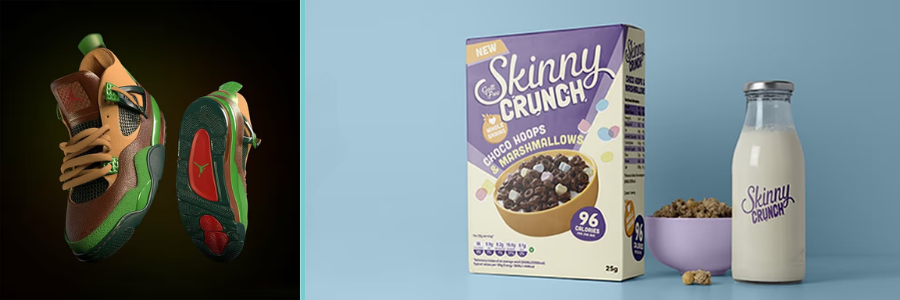
3D shoes rendering and product packaging design by Cad Crowd design experts

Assess manufacturing and supply chain risks

Production feasibility should also be checked. This includes how the sourcing of materials is done and knowing the estimated lead times. It gives information about pain points to prevent delays in the timeline. Briefing with suppliers could help expose cost implications and limitations. These could help reduce manufacturing surprises and slips during the production process. Being ready ensures a smooth launch. 

Incorporate cost modeling into early testing

Cost modeling should be done to accompany validation experiments. This ensures that the product not only caters to demand in the market but also sustains profitability. Financial modeling protects the product and industrial design firm in long term stability and clarifies viability. It should have data to which it can deliver without compromising the firm’s margins. 

Develop clear success metrics

A clear success metric can objectively define benchmarks. Metrics that can help identify success include engagement, retention, and conversion rates. Success in pre-order could also be measured. Establishing these metrics makes it easier to track success. A clear standard removes ambiguities in results interpretation and strengthens decision-making. 

Conduct competitive positioning analysis

Knowing where the new product positions itself along with its competitors gives a clear understanding of the product’s selling points and weak points. Spotting this early could help adjust to strengthen its launch success. In validation, rooms for improvement and opportunities can be identified and fixed for customers to recognize value addition, and would make them switch. This strong approach reduces the risks of production failure. 

Test messaging with multiple audiences

Testing does not end in engagements. It could be furthered with messaging across varied demographics to refine target markets. Focused messaging improves marketing efficiency and helps with clear reasoning. 

Run limited beta programs

Having a beta program is popular to provide structured feedback from real users, even when you begin with open innovation design services. From this, more detailed feedback about the experiences of the beta users helps correct issues before the public release. It uncovers real challenges users can face. 

Document objections and concerns

It is inevitable to receive objections and raised concerns during the validation process, and it is important to document all of it as it adds valuable information. These concerns could be about the pricing, usability, reliability, and long-term functionality. When these are documented, patterns can be exposed. Addressing the concerns builds user trust and strengthens the final feature and offer of the product. 

Monitor emotional reactions

While there is technicality in feedback, emotional feedback also matters. It is important to take into consideration the feelings of the users. Monitor and track whether they express excitement, frustration, or indifference with the new product. These signals indicate validation, which could have positive or negative implications. Understanding this supports and adds value to quantitative data. 

Avoid feature creep during validation

It is important to stay aligned with simplicity instead of adding features midway. It will only complicate testing and may obscure the outcomes. When the process stays at its core and focuses on one hypothesis, it produces clear and coherent insights. 

Test scalability assumptions

Knowing the limits of scaling in crisis management. This means that something that worked for 100 users may not be applicable to 100,000. It does not fully mean success even if it did on a small scale. This should be easily identifiable by concept design services. Validation should thoroughly analyze the support, capacity, and production limitations to project a realistic outcome to secure the firm’s reputation. 

Evaluate legal and compliance factors

There are products that have to follow strict regulatory compliance. An early review and brief regarding the necessary tests, standards, and certification will avoid extensive rework. Legal validation is then considered, combined with the technical assessments. This ensures being market-ready and proactive in reducing unexpected challenges. 

Measure customer acquisition cost

Understanding the cost implications to secure a customer determines long-term sustainability. This means there have to be marketing tests that provide benchmarks to project lifetime value. Knowing margins would help analyze its growth potential. The data could tell whether it’s a success or not or if there’s anything that needs to be focused on. Seeing unfavorable numbers during the early stages could be a cue to revise strategies before production. 

Refine based on data, not ego

Validation results encourage data-driven decision-making. It lets the team focus more on the measurable evidence instead of personal preferences. This lessens ambiguity and biased insights. Prioritizing numbers instead of emotional attachment decreases the risk and improves outcomes. 

Plan a phased launch

Planning a phased launch with design engineering services is a strategy to control and test a smaller market first before going into full production. This allows additional validation and lessens risks. Gradual and phased launching is more controlled and allows fine-tuning. It strengthens stability. 

Encourage honest internal feedback

Although the internal team tends to provide biased insights, it is still a safe space to collect ideas. This can be done by encouraging them to speak up and provide honest feedback. Since they know more about the product, they have the best pool of insights that can be helpful. Having constructive skepticism boosts a healthy culture of open feedback. Diverse perspectives can reduce blind spots and flaws, making it a refined strategy. 

Maintain transparent client communication

The client wouldn’t want transparency. Providing and sharing information regarding validation results openly, including challenges and risks, would make them feel involved. An honest and transparent communication lessens conflict and promotes healthy discourse. This communication builds confidence and trust between the client and the team, as the client was assured of the proper professionalism and diligence shown by the team. 

Build validation into the standard workflow

Validation shouldn’t just be transitional or a one-time effort. It should be incorporated and integrated into the standard workflow. Having structured testing makes it more reliable and viable. Integrating validation strengthens the firm’s reputation, increasing user and client trust. Having a systematized and reliable workflow process ensures long-term results and outcomes. 

Leverage specialized freelance talent

To add value to validation, sometimes a specialized professional isneeded and encouraged to discuss with. There is confidence when a professional is involved, as they contribute their experience to the concept. With them, technical accuracy is achieved, and it improves the overall performance of the product for consumer product design experts. It aligns the product rationally in the market, aligned with the project intent and the firm’s goals. 

Strengthen prototyping capabilities

Investing in advanced prototyping makes it easier to attract strong user feedback. Having advanced modeling and visualization tools makes it feel real and clear. A reliable prototype makes it a strong representation. It enhances trust and confidence with the stakeholders. It gives them a clear picture of what was to be expected.

Build long-term learning systems

Every validation effort is a continued documentation of valuable knowledge. It establishes a reliable database on pain points, lessons learned, and opportunities. It gives patterns that can be useful for future production. It encourages data-driven decisions and transforms the workflow to reduce ambiguity. 

Conclusion

Innovation should always be backed by numbers and data. It operates in an environment where it should be balanced and done cautiously. Validation secures new product concepts before they are released on a full scale to the public. 

Conducting thorough feasibility studies, rapid and controlled experiments, prototype testing, and incorporating measurable criteria significantly lessens financial loss and reputational damage. It also promotes sustainable and intentional production. It strengthens not only its connection with the users but also the client’s interest. 

For firms and businesses that seek connection with vetted experts, specialized in product design, modeling, and even rapid prototyping, browsing the Cad crowd is a great start. Check it out now and turn your next product launch into a success, backed with reliable numbers and validation. Ensure confidence in success with Cad Crowd. Request a quote today.

author avatar

MacKenzie Brown is the founder and CEO of Cad Crowd. With over 18 years of experience in launching and scaling platforms specializing in CAD services, product design, manufacturing, hardware, and software development, MacKenzie is a recognized authority in the engineering industry. Under his leadership, Cad Crowd serves esteemed clients like NASA, JPL, the U.S. Navy, and Fortune 500 companies, empowering innovators with access to high-quality design and engineering talent.

Connect with me: LinkedInXCad Crowd

How CAD Modernizes Product Concept Design at Industrial Design Services Companies


The classic napkin drawing has finally found its match. What used to begin with scribbled concepts and hours spent taking things back to the drawing board is today an extremely digitized, lightning-paced, and amazingly accurate process – and all thanks to Computer-Aided Design, or CAD design services. Today’s industrial designer does not need to struggle through trial-and-error fiddling or cumbersome prototypes that require weeks of rewriting. They use the digital might of CAD to visualize, simulate, and optimize ideas prior to making a single part.

Here comes the revolution. CAD and industrial design coming together is not a trend, but a complete paradigm shift in bringing ideas to product reality. Whether it’s consumer electronics, medical devices, wearables, or smart kitchen appliances, CAD tools are turning sketches into complex, production-worthy products quicker than ever before.

And when it comes to staying ahead in this fast-moving design world, Cad Crowd has emerged as the go-to company. More than just a talent pool, Cad Crowd is a global hub of elite CAD designers and industrial engineers who are rewriting the rules of concept development – one digital model at a time.

But how, precisely, is CAD fueling this revolution? Let’s take a closer look at the sexy, streamlined, and unexpectedly human face of computer-aided design.


🚀 Table of contents


From Scribbles to solids: CAD as the designer’s superpower

Concept design is both thrilling and agonizing. It’s the design rollercoaster where imagination gallops full-speed ahead, only to be brought back into check by the harsh realities of cost, manufacturability, and schedule. Not so long ago, this process was driven by crumpled-up pencil mark-ups, clumsy foam models, and the prayer that you got the first guess right. Those analog mockups were tangible, no doubt – but also slow, delicate, and agonizingly unforgiving when it came to redrawing.

Then, computer-aided design (CAD) emerged on the scene like a superhero cape-clad crusader for industrial designers.

With the powerhouse software of SolidWorks, Rhino, AutoCAD, and Fusion 360, the industrial design expert’s crude sketch can morph into a stunning, precise 3D model in the blink of an eye. Need to carve an ideal curve? Adjust the thickness of a casing? Try out if the design can withstand a drop? CAD makes all these possible on your screen – with the added advantage of undo keys and unlimited iterations. It’s almost like going from charcoal sketch to sculpting with light.

What used to take days using clay or cardboard now takes hours or even minutes. But more significantly, it means that designers have the liberty to experiment without fear. If it does not work, it is a quick fix – not a complete redo.

CAD didn’t simply update concept design – it’s turbocharged it. It takes nebulous ideas and turns them into proven, buildable concepts, closing the gap between imagination and manufacturing. Now, designers don’t only imagine – now, they model, simulate, and iterate those imaginations with speed and accuracy. That’s the true superpower.

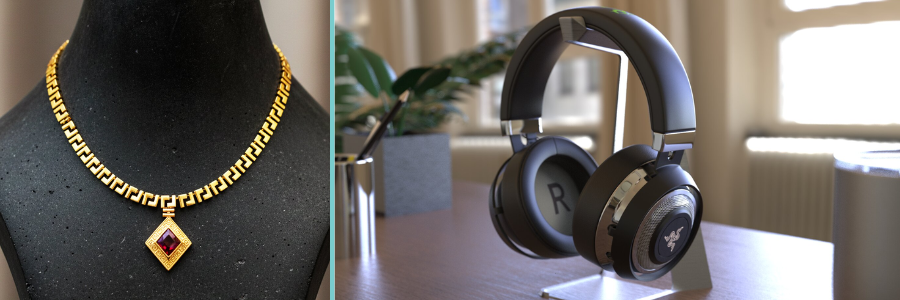
3D product design of a luxury necklace and headphones by Cad Crowd design experts

RELATED: How to reduce new product development risks for design services companies

Speed, precision, and no guesswork: How CAD is redefining product design

There’s that magic moment in the life of every product – when it transitions from a crude drawing or delicate prototype into something you can actually produce. That used to take an exhausting period of time. Weeks of revisions. Months of reworks. But CAD (Computer-Aided Design) has entirely revamped the playbook.

Now, once an idea is captured digitally, the actual work starts – quickly. Designers can try out immediately how a hinge will function after 10,000 cycles. Want to test airflow through a snug casing full of sensitive electronics? Model it in minutes. Wonder how the product will appear in chrome versus matte black under lighting in the showroom? Render it and observe every nuance of the reflection.

This is not a time-saver – it’s a power shift. CAD provides industrial design companies with accuracy and authority unimaginable in the past. No more assumptions, no more “wait and see.” Each design decision is supported by actual data, virtual simulations, and testing that reveal flaws before anything physical is created.

The result? Improved products. Improved decisions. Fewer surprises.

Rather than responding to issues after prototyping or production, designers are actually addressing them ahead of time in the concept stage. They’re not only creating products – they’re creating confidence in the process. CAD enables groups to see further in advance, to construct smarter from the beginning, and to optimize that pivotal process from idea to real-world innovation.

That’s not evolution. That’s brainy design – and a significant step up in how we give ideas life.

CAD + collaboration = Creative firepower

Contemporary product design isn’t the isolated, lone genius scribbling concepts on a napkin anymore. Now, it is a complex interplay between industrial designers, mechanical engineering experts, UX specialists, marketers, and even users who will ultimately be utilizing the product. That is, it’s a team effort – one that requires perpetual communication, quick iteration, and accommodation.

But in the past, concept design was not exactly a workshop of collaboration. Legacy tools – such as static sketches, foam mockups, and unnecessary email chains – were buggy and unwieldy. They were slow to accommodate the speed of innovation and the demand for real-time commentary. Designers could spend weeks honing a concept, only to discover the engineers couldn’t implement it – or that marketing had a whole different idea.

Then CAD came along – and the world changed.

Computer-Aided Design transformed the way teams ideate, iterate, and bring to life. Particularly today, with cloud-based CAD software and collaborative spaces, the design process has gone truly global. A Toronto designer can model the outside of a product while a Berlin engineer works on the internal features. Meanwhile, a Seoul UX consultant is testing how it handles in a user’s hand. It all occurs in real time, with changes automatically tracked, revisions stacked effortlessly, and no one excluded from the loop.

It’s not only efficient – it’s lightning in a bottle. This kind of transparency and integration stimulates creativity. With less siloing and more collaborative input, teams can share out-there, unconventional ideas and actually pursue them without missing deadlines. CAD unleashes diverse thinkers to collaborate in a common digital sandbox, where walls come down and innovation blooms.

This collective magic not only speeds things up. It improves things. It provides a window of opportunity for multidisciplinary innovations and brings design to the people. You no longer have to have everyone in the same room – or even on the same continent – to form something remarkable.

And this is precisely where Cad Crowd becomes the secret weapon. Cad Crowd is not merely a freelance platform. It’s a network of premium CAD designers and engineers at your disposal. Want a team that can turn your napkin sketch into a fully realized, ready-to-manufacture prototype? Done. Want someone to craft a beautiful enclosure or 3D print-optimize your product? Someone in the Cad Crowd community has already figured out a better way to do it.

With Cad Crowd, you’re not just outsourcing tasks – you’re building a remote dream team that’s already aligned with the pace and expectations of modern design. They speak the language of collaboration, and they live inside the CAD ecosystem. That’s the new creative firepower – and it’s lighting up the future of product development.

Digital twins: CAD as the secret behind smarter, sleeker products

From voice-activated thermostats to palm-top drones that deploy midair, products these days are supposed to be geniuses straight out of the box. But all that smarts – sensors, circuit boards, batteries, Bluetooth modules – must be shoehorned into increasingly slender, more ergonomic packages. Getting that magic to work without the product burning up, frying itself, or shaking apart is no small thing.

This is where CAD comes in as the silent hero.

With CAD, designers don’t simply draw good-looking shells – they create digital twins: precise virtual replicas that replicate how the real product will perform. Such models do much more than depict dimensions. They model real-world stress, thermal flow, electromagnetic interference, and even how consumers may touch the product.

Suddenly, designers and product design engineers aren’t operating in the dark anymore. They’re not guessing if a new case will heat up too much or whether a button will be easy to press. They’re trying it – all of it – before any prototype is even created.

For companies providing industrial design services, this makes all the difference. Function and design no longer need to battle for supremacy; they’re created simultaneously. Redesigns are fewer, development cycles are quicker, and a lot more confidence entering manufacturing is the new reality.

In short, CAD-enabled digital twins are making smart product design a precision engineering endeavor – and the outcomes are simply nothing short of brilliant.

Goodbye silos, hello synergy: How CAD unites design, engineering, and manufacturing

In the past, product development was a disconnected experience between designers, engineers, and manufacturers. Designers would design something wonderful, engineers would struggle with making it feasible to produce, and manufacturers would be left to figure it out – oftentimes from nothing more than a sketchy drawing and a hopeful smile. The outcome? Miscommunication, redesigns, blown budgets, and much frustration.

That antiquated model is rapidly disappearing, thanks to CAD. By beginning the design process in computer-aided design software, groups now share the same digital language. CAD files can be seamlessly transferred from design to engineering to manufacturing. A 3D model is more than an idea – it’s a living, breathing data source that everyone can collaborate on in real time.

Now, designers don’t have to speculate whether their concepts are manufacturable – they can check for manufacturability in an instant. Engineers can get involved early, making important adjustments on the fly. And manufacturing design experts? They receive accurate, detailed geometry that drives tooling and production without the need for a complete rework. What once was three disconnected steps now becomes one intelligent, integrated workflow.

This is where Cad Crowd excels. Their independent CAD professionals don’t work independently – they communicate and work with engineers and production staff to produce designs that are not just beautiful but also feasible to build. Whether prototyping or gearing up for full-on manufacturing, Cad Crowd keeps everyone on the same page and moving fast.

No more silos. No more cumbersome hand-offs. Just unadulterated synergy – concept to creation.

3d rendering of products by Cad Crowd design and manufacturing experts

RELATED: The simple secret to unlocking new product innovation at design services companies

Iteration without the price tag: Why CAD makes experimentation affordable

Money speaks in product development – and at the concept phase, it screamed. Each design adjustment came with physical prototypes, delayed times, and material expenses. A single miscalculation could land you back to square one, losing thousands on tooling or replicating costly molds. It was a heart-pounding, wallet-emptying procedure.

Enter CAD, and all of this is different. Suddenly, testing six various housing arrangements doesn’t take six prototypes. Want to know how a new grip texture will feel? Model it and calculate the results – no injection mold needed. Need to test out another material? Replace it virtually and compare performance characteristics, all in a virtual space.

This is more than a change in workflow – it’s a radical redefinition of what iteration is. CAD eliminates the cost barrier to play. You can experiment without breaking the bank by committing to an expensive physical process each time. It converts “What if?” from a cost risk into a creative invitation.

That’s where Cad Crowd excels. Their seasoned product design services celebrate this CAD-fueled freedom, working in tandem through speedy back-and-forth iterations to hone your idea into a refined, production-critical masterpiece. They don’t only provide a design – They co-evolve it with you.

And since Cad Crowd’s talent base works remotely and on demand, you’re not financing overhead – you’re financing results. That means every development step remains affordable, scalable, and totally in sync with your project objectives.

So go ahead: push the boundaries. With CAD and Cad Crowd, iteration is no longer a cost; iteration is a step forward.

Where aesthetic meets engineering brilliance

Industrial design is not simply a matter of producing something that functions – it’s a matter of producing something that people will actually use. It’s the skill of finding a balance between beauty and performance, between emotion and accuracy. If a product is stylish but fails on day one, it’s bound for the landfill. If it’s sturdy but ugly and uninspired, it sits on store shelves in retirement. The magic occurs when form and function become one – and that’s precisely where CAD and engineering design services enter the scene.

Computer-Aided Design (CAD) turns design from guesswork to computed creativity. Those sleek curves and lines? With CAD, they’re not only pretty – they’re designed. Surfacing software allows designers to shape forms that are as functional as they are lovely. Vent holes are part of the design language, not an afterthought. An ergonomically tested smartwatch can be designed digitally, without a single prototype being produced, while internal layout and strength are optimized.

CAD bridges the gap between engineering reality and design intent. It is no longer a fight of wills to make a product visually pleasing or functional. You can do both now – and you should.

That’s why Cad Crowd is a game-changer. Their network of freelancers consists not only of CAD drafters and engineers, but also industrial designers who know that visual beauty isn’t icing on the cake – it’s in the recipe. These professionals design products that make eyes pop, hands reach out, and work perfectly. With Cad Crowd, your design doesn’t have to sacrifice style for function. You get both – engineered to perfection.

How CAD gives industrial design firms a manufacturing jandoff boost

In industrial design, a great idea is worthless if it can’t be transferred seamlessly to the production floor. That’s where CAD (Computer-Aided Design) really rocks – it closes the gap between the design studio and the factory floor with speed and accuracy, especially with design for manufacturability services.

When designers design models in CAD, they’re not merely creating something that is pretty. They’re creating digital products that are producible day one. These files can be exported directly into CNC machines, 3D printers, or injection molds without interference. This is because CAD preserves data fidelity so high that what is produced is precisely what was created, down to the micron.

Which means less surprise when parts arrive on the factory floor. With design-for-manufacturing principles integrated into the CAD process, expensive production mistakes are cut down to size, and time-to-market receives a significant improvement. From creating a prototype smart device in San Francisco to producing a large quantity of custom enclosures in Shenzhen, you can count on the same CAD file to produce reliable results.

This flexibility is a game-changer for industries like consumer electronics device companies and medical devices, where speed, precision, and quality are non-negotiable. Industrial design firms can now adopt distributed manufacturing strategies – printing or molding across multiple locations – all seamlessly powered by CAD.

And if you need CAD designs production-ready from the get-go? Cad Crowd brings you in contact with veteran designers who know the entire pipeline. These are not merely artists – they are engineers who create models developed to conform to actual manufacturing. From racing a deadline to ramping up a product launch, Cad Crowd provides you with the CAD know-how that keeps production moving smoothly.

Crowdsourced design, solution-oriented: How Cad Crowd is revolutionizing the game

Crowdsourcing isn’t what it used to be – and that’s a good thing. What once had a reputation for being a fast-and-cheap shortcut is now a powerful engine for innovation, especially in the world of CAD and industrial design. At the forefront of this transformation is Cad Crowd, a platform that’s turned the typical design process on its head by tapping into a global network of brilliant minds.

Cad Crowd offers more than just freelance help – it brings a hybrid approach that combines open design challenges with curated, one-on-one collaboration. Companies can launch design contests to spark a flurry of inventive ideas, then choose the standout designer from the crowd to bring the concept to life. It’s a clever blend of creativity and execution, where fresh perspectives meet serious engineering muscle.

For startups, entrepreneurs, and fast-scaling businesses, Cad Crowd offers a vital shortcut through the expensive and time-consuming world of in-house design. Hiring a full team isn’t always realistic – especially when agility matters. Cad Crowd acts as your virtual product design department, ready when you are, no overhead required. Whether you’re working on a consumer gadget, medical device services, or rugged industrial equipment, you get access to pre-vetted CAD professionals who understand your goals and work seamlessly to deliver stunning, functional results.

This isn’t just about slashing budgets – it’s about leveling up. Cad Crowd empowers you to pursue cutting-edge product ideas without sacrificing quality or speed. You don’t have to choose between affordability and excellence. You get both – plus the added benefit of working with a team that’s laser-focused on solving your specific design problem.

By merging global collaboration with top-tier engineering, Cad Crowd is reshaping how great products get made. It’s not just a design platform. It’s a launchpad for the next big thing.

CAD is the future – and the now

Computer-Aided Design is more than a tool of the future – it’s redefining the product development game today. With innovation hurtling ahead, CAD technology is being powered by AI-assisted design recommendations, generative modeling, real-time simulation, and even topology optimization. Product development experts don’t have to do it alone anymore; they’re working alongside smart systems that process millions of data points and design iterations within seconds.

Nevertheless, in this maelstrom of progress, there is one thing that does not waver: technology is just as strong as the minds that direct it. The human element – creative instinct, hands-on know-how, and a gut feeling for what works – is irreplaceable. AI can propose forms, but it can’t comprehend market forces or emotional design. It can refine a shape, but it can’t sense the gravity of a customer’s expectation.

That’s where Cad Crowd is different. It’s not merely a venue to hire a person who has the capability to work with CAD software – it’s where businesses encounter innovative professionals who understand how to leverage these tools strategically and creatively. These are the engineers-turned-designers who think like them, create like entrepreneurs, and mold like artists.

CAD is the driving force behind contemporary design. But visionaries continue to drive. Cad Crowd is not only a part of the CAD revolution – it’s a leader in it. When you want designs that look great on the screen but translate into the real world, this is where you’ll discover the talent that can get that done.

RELATED: Speeding up product development with new product design services companies

Wrapping it up: Why Cad Crowd leads the pack

It’s easy to use CAD. It’s not so easy to master it.

The top industrial design experts understand that CAD is not merely about quicker drafting or more glamorous renders. It’s about revolutionizing how product ideas are developed, tested, tweaked, and released. It’s about accelerating time to market, increasing design excellence, and minimizing waste – all while extending creative horizons.

Cad Crowd doesn’t just ride this wave – they help build it. By connecting companies with elite CAD professionals around the globe, they empower businesses of all sizes to modernize their product concept design workflows. Whether you’re launching a revolutionary wearable or refreshing an existing product line, Cad Crowd makes it smarter, faster, and more scalable.

From concept sketches to manufacturable 3D files, from photorealistic rendering to functional prototyping, they’ve got the talent and tools to transform even the roughest idea into something market-ready.

In a world where the next big idea could come from anywhere, Cad Crowd ensures you’re ready to design it, model it, and bring it to life – with CAD precision and creative fire. This isn’t something that you can just find or get anywhere. It’s a result of years of expertise and well-honed skills from being in the industry. 

So go ahead – dream big. CAD’s got your back. And Cad Crowd is ready to help. Get a free quote today.

author avatar

MacKenzie Brown is the founder and CEO of Cad Crowd. With over 18 years of experience in launching and scaling platforms specializing in CAD services, product design, manufacturing, hardware, and software development, MacKenzie is a recognized authority in the engineering industry. Under his leadership, Cad Crowd serves esteemed clients like NASA, JPL, the U.S. Navy, and Fortune 500 companies, empowering innovators with access to high-quality design and engineering talent.

Connect with me: LinkedInXCad Crowd

How CAD Turns Your Idea into a Prototype For CAD Design Companies & Freelance Services


Transformation of an idea into a working model is one of the first processes of product development, and CAD designing services help in this process, whether a new home appliance, a single mechanical component, or a groundbreaking piece of furniture. CAD computer-aided design software helps to model accurately with the assistance of computers before the actual production process.

Professional designers maximize 3D visualization services and computer-aided engineering design software to simplify ideas, identify defects, and minimize errors. Like Cad Crowd, the number one freelance CAD design marketplace, you can hire an experienced freelance CAD professional to deliver quality designs that satisfy project demands with flexibility and affordability.

In the fast-changing landscape of product design, ideas are tangible, effective, and functional in a tangible, effective, and functional manner. Whether you’re developing a groundbreaking consumer gadget, a complex mechanical part, or a custom piece of furniture, transforming your concept into a prototype is a critical step. This is where Computer-Aided Design (CAD) steps in. CAD technology has become an industry norm for translating creative thinking into real-world, three-dimensional reality and into a design and development process to a level never before attainable.

CAD design services, either by a design house or freelance designers, are the key for small businesses and large corporations alike to bridge the gap of trust between the working model and the idea. But how does CAD actually work, and why must designers use it in order to take your idea and turn it into a working prototype? In this article, we will outline the process of product design with CAD, the CAD services you can hire, and how professional design firms and freelancing services can walk you through it.


🚀 Table of contents


The basics of CAD in product design

CAD stands for computer software used in designing accurate 2D or 3D representations of actual objects. In product design services, CAD software helps model, analyze, and simulate a product’s form, shape, and behavior before actual production. CAD provides the designer with complete control over the process, allowing for quick iterations, detailed modifications, and functional testing in a manner that would be practically impossible with traditional methods.

The elegance of CAD lies in its ability to transition from idea to reality through a series of flexible, precise, and highly detailed steps. These design steps of test, refine, and prototype are all accelerated and streamlined by the application of CAD.

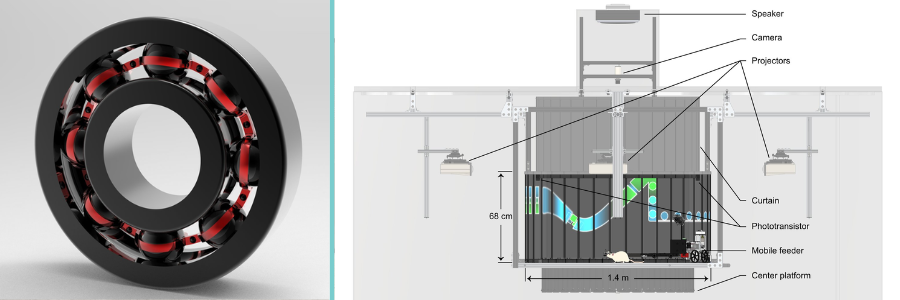
Design examples of bearing and rat dome by Cad Crowd design experts

RELATED: How much does NPD cost? Rates & pricing for services at top design companies

The role of CAD in turning ideas into prototypes

Among all the processes involved in developing a creative concept and turning it into an actual product, the concept-to-prototype stage stands out as the most critical. Among the most groundbreaking technologies that designers employ to advance along the way is Computer-Aided Design (CAD). CAD software equips designers with the ability to shift from sketching all the way to fully modeled digital prototypes, detailing, simulating, and eventually printing physical prototypes. Here is a step-by-step explanation of how CAD has an effect.

Conceptualization and design

Every great product starts off as an idea, a good-looking one. But if that idea is to materialize a real, functional product, then it needs to be designed into something much harder. That is where CAD is needed. From the very beginning of the design, CAD enables the product design expert to take their sketch and scribbled notes and bring them into a computer system, where they have a better and clearer understanding of the product. CAD magic software does its trick, where it all comes to life, transforming abstract ideas into something real and visible.

The idea phase is typically initiated by rough shapes, measurements, and forms. For simpler designs, CAD may allow the designer to sketch 2D blueprints that establish the size and overall specifications of the product. They may be similar to blueprints or schematics, containing all the pertinent details like measurements and material usage. But for more complicated designs, 3D modeling is required. A 3D CAD model is a far more realistic and accurate representation of a product, encompassing not only its exterior form but also its internal structure and the interaction of its internal components with each other. A degree of detail such as this is required when designing products with complex functions, such as machines, domestic appliances, or even automobiles.

The advantage of 3D modeling is that one is able to reproduce a replica of the product in the virtual space. This way, one gets to view the product in three dimensions, and their idea becomes concrete in the shape of an interactive digital model. This not only enables designers to see their idea materialize right before their eyes but also gives them the chance to identify any faults in the design and correct them beforehand.

Refining and simulation

Once the initial design is established on CAD, refinement is then performed. The refinement of the design is made easy by the CAD software, which allows the designer to execute it efficiently. Compared to the past, when it could take days or even weeks to make changes to a model, CAD makes it easy to modify computer models with just one click of the mouse button or a maximum of two clicks. With one or more clicks of the mouse buttons, a product design engineering expert can change the shape of a part, resize objects, or change the material.

The most valuable advantage of CAD software is that it enables the simulation of the product’s actual usage. With advanced analysis software such as Finite Element Analysis (FEA) and Computational Fluid Dynamics (CFD), designers can plan how a product will function before it is even constructed. For instance, FEA is able to model the strength of a product structure, mimicking how it’s going to disperse stress and pressure. Additionally, CFD also simulates the movement of fluids, such as air or water, within or around the product, allowing for the quantification of the product’s aerodynamic or heat properties.

These tests are time and cost-effective in the sense that they enable potential defects to be detected early in the design process. These, apart from CAD, would include the construction of costly physical models, which could easily translate into costly mistakes where the design proves impractical. CAD is money-saving in the sense that such mistakes can be caught prior to actually doing something physically, thereby saving money as well as delaying things.

Prototyping: Converting virtual models into physical objects

The final and possibly the most exciting part of the CAD design services process is to have the virtual model converted into a physical prototype. Here, the power of CAD is utilized to the fullest. CAD technology is typically used in conjunction with rapid prototyping technologies, such as 3D printing, CNC milling, or injection molding, to produce extremely detailed physical models directly from the computer-aided design. The combination streamlines the prototyping process and speeds up the product development cycle.

The most up-to-date prototyping technology available is 3D printing. In 3D printing, designers may layer-print prototypes in a material similar to that of the final product. That means real-time testing, iteration, and providing the designer with an actual prototype within a specified timeframe if a conventional process is used. 3D printing also boasts better material and design freedom, allowing for the easy printing of complex pieces.

Where there is a need for commercially oriented programs, CNC machining takes up the slack. With CNC equipment capable of milling metals, plastics, and other materials with high accuracy, prototypes are developed that are not only highly accurate but also as robust as any sample that could possibly survive testing under actual conditions. Then comes CNC machining as the issue of most concern to industries like auto or aircraft manufacturing, where models will need to endure harsh tests under harsh conditions.

For production designers, processes like injection molding enable the creation of prototypes that can be produced in large quantities. This is achieved by filling a mold with molten material to create the prototype, and it is extremely convenient when designers wish to see a physical model for assessing the feasibility of mass production.

It is here that the services of a freelancer or CAD design firm can prove to be effective. They can give professional advice on which prototype method would be most effective for the given product above, help in developing accurate 3D models, and help manufacturing design firms prepare the prototype as well.

In product design, taking an idea to a model is a costly and labor-intensive endeavor. CAD technology, however, has changed all that with the ability to offer rich thinking tools for imagining, developing, and bringing one’s ideas to reality in a far more effective and affordable way.

By providing virtual models that emulate actual motion and facilitating integration with future-generation prototyping technology, CAD enables faster and more effective communication of ideas to working models than ever before. As technology continues to evolve on a daily basis, CAD applications in the idea-to-prototype conversion process will become increasingly vital, driving innovation across various industry sectors.

RELATED: How to integrate CAD seamlessly into your firm’s workflow of engineering, design & services

Why CAD services are important to product design companies

For companies, having access to CAD services represents a milestone in product development. The reason why is this:

Smooth development process

CAD services also possess a highly efficient design process. Re-editing, re-drawing, and fine-tuning a design would take time if done using manual drawing processes, but CAD is time-saving when making these changes. Because the person can write, edit, and visualize real-time 3D models, the prototyping design engineering service process is streamlined and accommodates each subsequent copy to be improved.

Accuracy and precision

Accuracy is everything for most businesses, especially those with highly technical or mechanical products. CAD software turns impossible measurements and calculations into reality, ensuring that every component fits together seamlessly and operates as efficiently as possible. Slippage or miscalculation during design can mean costly mistakes down the line, and CAD eliminates these risks.

Cost efficiency

While purchasing CAD services may seem like an enormous initial investment, in reality, it can prove to be a cost-saver for companies in the long run. By identifying mistakes early, improving design before physical prototyping, and reducing product-to-market time, CAD reduces production cost. CAD enables manufacturers to create rapid and low-cost prototypes, saving money again.

Collaboration and communication

CAD enables easy communication with groups regardless of location. Designers, engineers, and product managers can send and receive comments and make changes to a single model, enabling feedback and live editing. For geographically separated or departmentalized organizations, these capabilities can be a godsend for keeping everyone informed.

Freelance CAD services: The flexibility and expertise you need

While major product design companies can retain CAD professionals on their payroll, freelance CAD professionals offer a valuable alternative for small companies or start-ups that need high-quality work without the expense of an in-house team.

Expertise

Freelance CAD designers are experts in their area. If you need help with 3D modeling, prototyping, or simulation, you can hire someone who has the very skill set to bring your idea to life. This will open you up to a pool of talent anywhere in the world, and you can choose a designer who is an expert in your market, automotive, industrial, consumer electronics, or custom furniture.

Economic solution

Freelancers are typically hired on a project-by-project basis, which can be less expensive than hiring an in-house full-time employee or a large CAD design firm. If you will only need CAD work for one project, it is efficient and economical to hire a freelancer. Freelance CAD designers tend to charge competitive fees, which can be beneficial to small organizations with limited budgets.

Flexibility and adaptability

Freelancers offer a level of flexibility that large, traditional corporations simply cannot provide. They can complete your project at your pace, provide more customized effort, and adapt to any changes in specifications during the process. More to the point, they are generally able to come up with more outside-the-box solutions to design issues because they don’t carry the burden of someone laying on them the constraint of having to be outside the box, but rather a very small one.

Cad design examples of engines for a variety of mechanical designs

RELATED: How to create a marketable product design for your new invention idea with design agencies

How to choose the right CAD design services for your needs

Whether you’re working with a CAD design company or a freelance CAD designer, choosing the right service is essential to achieving the best results for consumer product design companies. Here are some factors to consider when selecting a provider:

Experience and portfolio

Seek out a designer or agency that has experience in your industry and a portfolio of their work. You want someone who is familiar with the technical aspects of your product and can design a usable tool that you will need.

Communication skills

Good communication is essential when working with CAD designers. Choose a service provider that responds rapidly to calls, listens, and is able to express intricate design concepts in your frame of mind. Good communication ensures that your idea comes through exactly as you envision it, and you are on the same page throughout the project.

Tools and technologies

Ensure that the CAD vendor you hire is utilizing the latest software and hardware that are standard in their industry. Commercial product design and prototyping are most typically executed with SolidWorks, AutoCAD, and Fusion 360. Also, ensure that they have the capability to interface with rapid prototype technologies such as 3D printing design services or CNC machining.

Cost and timeline

Finally, make the service fit your pocket and time. CAD services are not gratis, but they must be in proportion to your project size and complexity. Finding out how much it costs and choosing an open delivery period before will avoid unpleasant surprises down the line.

Conclusion: The future of CAD in product design

As technology continues to evolve, CAD designing will be the fulcrum around which product designing revolves.

Designing back-and-forth virtually the capability to test and prototype, then to iterate in design at notice, lends itself perfectly well for designers to deliver better products at pennies on the dollar with fewer days’ worth. Whether you’re working with a design company or a freelance CAD professional, the ability to turn your idea into a prototype with CAD is one of the most powerful tools available to product designers today.

With the age of speed for product development experts, CAD’s precision, speed, and accuracy make it the perfect tool for realizing your dream. Whether it is developing the next breakthrough product or a custom piece, employing CAD design services will guarantee that your proof of concept is not an idea, but a functional, tangible piece that can be driven to the development stage.

RELATED: Tips to optimize new invention development and product development for companies

Cad Crowd is here to help

Your idea for a prototype requires accuracy, imagination, and professional expertise.

CAD design transforms pencil-based concept sketches right through to functioning working models of your vision. Freelance CAD design units are able to offer flexibility and expertise at specialist levels to achieve the ideal finish to order, specially crafted to meet your needs.

On Cad Crowd, the best marketplace to find the best product development experts, you can outsource the best freelance professionals to bring your ideas to life in the form of precise, detailed prototypes. Whether you need assistance in end product 3D modeling, end product prototype optimization, or design completion, the right professional will be the difference-maker. Contact us today and start bringing your ideas to life with a free quote.

author avatar

MacKenzie Brown is the founder and CEO of Cad Crowd. With over 18 years of experience in launching and scaling platforms specializing in CAD services, product design, manufacturing, hardware, and software development, MacKenzie is a recognized authority in the engineering industry. Under his leadership, Cad Crowd serves esteemed clients like NASA, JPL, the U.S. Navy, and Fortune 500 companies, empowering innovators with access to high-quality design and engineering talent.

Connect with me: LinkedInXCad Crowd

How to Save Money On New Product Design and Development Services for Company Prototypes


With competition in the modern market, coming up with innovative products is critical for business development. The process from idea generation to prototype can be expensive and time-consuming.

Organizations frequently fail to make appropriate quality versus budget trade-offs when investing in product design services. Knowing how to streamline the process can easily cut down on costs without affecting the end result.

Cad Crowd is the leading agency in CAD services that helps you connect over 106,200 experts in product design and development so you can have your prototypes done in no time.

This article discusses effective money-saving strategies for new product design and development services while guaranteeing the successful development of company prototypes.


🚀 Table of contents


Define clear objectives and specifications

Among the most successful approaches to product design cost-cutting is defining a clear project scope at the start. When requirements are unclear or continuously change, companies tend to encounter expensive revisions, longer development periods, and inefficiencies that can sabotage budgets. By clearly defining objectives and specifications from the start, companies can make the design process more streamlined and avoid avoidable costs.

In order to do so, companies should first identify the purpose of the product and for whom it is intended. Knowing who will consume the product and how it will work ensures the design is focused on customer demand and market expectations. Second, outlining key features and functions enables designers to define key elements so that scope creep and unnecessary changes are avoided by product development experts.

Also, defining the materials, dimensions, and requirements for performance gives the engineering group a clear format to work by, minimizing opportunities for design misunderstanding that can drive rework. Defining actual budgetary restraints and time for development equally ensures that the project is viable from a financial standpoint and meets its deadlines.

Yet another key consideration is recognizing potential compliance and regulatory standards at the onset of the process. Not providing for industry rules can lead to redesigns and product failures, which cost valuable time-to-market.

Product design of a luxury chair and tactical flashlight by Cad Crowd design experts

RELATED: Important tips for hiring new product development services firms & freelance design experts

Select the appropriate product design services partner

Choosing the proper consumer product design services partner is a key decision that has a direct effect on cost, efficiency, and the success of your project. An optimal partner can facilitate development, minimize costs, and deliver high-quality outcomes.

In assessing prospective providers, begin by determining their experience within your industry. An organization or freelancer who knows your industry will be aware of typical challenges and regulatory requirements, minimizing expensive blunders. Look over their portfolio and determine if they have already completed similar projects. This assists in measuring their ability to provide the particular design solutions that you are searching for.

Another important consideration is pricing transparency. Hidden charges and ambiguous cost structures can result in surprise costs. Choose partners who offer transparent cost breakdowns, enabling more effective budgeting and financial planning. Also, check client reviews and reputation in the industry. Good word-of-mouth from previous clients is a good sign of reliability and quality service.

An extensive design partner must be capable of handling various aspects of product development in-house, ranging from concept development services to prototyping and testing. This reduces the outsourcing requirement, lowering overall costs and making the process smoother.

In order to make a wise decision, get several quotations and compare rates, skills, and services. Hire freelancers or small design houses, which may offer specialist expertise at competitive rates compared to large agencies, but retain high standards.

By selecting the proper design collaborator wisely, you can minimize costs, maximize efficiency, and guarantee an effective product development process.

Adopt digital prototyping

Digital prototyping is revolutionizing the product development process by enabling designers to create, test, and refine products virtually before investing in costly physical prototypes. Utilizing advanced 3D CAD modeling and simulation software, businesses can visualize every aspect of a product’s design, assess its functionality, and identify potential flaws early in the development cycle.

One of the most important benefits of digital prototyping is its potential to speed up iteration cycles. Conventional prototyping involves lengthy physical production, while digital models can be easily changed and simulated in real time. This helps reduce decision time and time-to-market. Furthermore, firms can significantly cut down on material costs by limiting the number of physical prototypes required.

Another key advantage is the early identification of design defects. Through virtual simulations, engineering design experts are able to perform stress tests, thermal analysis, and performance testing without building a single physical prototype. Finding and fixing problems at this point avoids expensive rework and production downtime. In addition, realistic images created by digital prototyping enhance communication with stakeholders, enabling them to see the end product and offer valuable input prior to manufacturing.

Investing in product design solutions specializing in digital prototyping enhances the development process and maximizes the use of resources. It saves waste, decreases costs, and improves cooperation. Digital prototyping enables organizations to get good products to the market quickly and economically. Adopting this technology is a prudent step for companies to innovate and yet be economically responsible.

RELATED: How to improve product development for your company with engineering firms & design consultants

Prioritize necessary features and prevent overdesigning

The best method of containing product development costs is to prioritize key features and eschew unnecessary complexity. Feature creep and having too many functions too soon may result in higher cost, longer development time, and higher technical risk. It is better to aim for core capabilities in the first prototype phase. This way, the product will effectively fulfill its essential function and still be cost-effective.

By focusing on merely the most important features, companies can greatly reduce design complexity. Simple designs make technical problems less likely, rendering the development phase easier and more predictable. Second, restricting features in the early stages reduces the time spent prototyping and producing, enabling earlier market entry. A streamlined methodology also results in reduced material and production costs because unnecessary parts and customizations contribute to higher prices, especially for manufacturing design companies.

In order to strike this balance, it is necessary to work closely with a trusted product design services provider. These experts can provide valuable input on what features are absolutely necessary and what can be delayed or skipped. Customer feedback collected from an initial release can then inform subsequent enhancements, with only the most pertinent additions being made.

Steering clear of overdesigning not only reduces the cost of production but also results in a product that is simpler to scale and refine. A well-prioritized, concentrated design strategy ultimately results in improved resource utilization and a successful market launch.

Apply modular design principles

Modular design is a product development strategy that centers on the development of standardized, interchangeable parts to be applied to several products or configurations. Implementing modularity enables companies to attain huge cost reductions, increase efficiency in production, and design scalable solutions to meet future demands.

One of the key benefits of modular design is cost reduction in manufacturing. Standardised components facilitate mass purchase, reducing material costs and simplifying manufacture. As the same parts are used in various products, businesses can simplify inventory and improve supply chain optimisation, as well as prototyping design services for future products.

In addition, modularity makes it easier to carry out assembly procedures and reduces errors during production. With clearly defined, reproducible modules, workers are able to rapidly and correctly assemble products with lower labor expenses and better quality control overall. The uniformity of modular components also facilitates quicker detection and replacement of faulty components, resulting in lower maintenance and higher product dependability.

Aside from saving costs, modular design makes products more scalable and flexible. Companies can roll out new product variants or updates without having to redesign entire systems. For instance, in the manufacturing of furniture, modular pieces make it possible for customers to tailor configurations while maintaining production efficiency. In electronics, modular circuit boards facilitate quick upgrading and fixing.

In order to use modular design principles to their maximum potential, sit down with your design team to come up with opportunities where standardization can be done. Think of how the modularity can help optimize efficiency, reduce wastage, and enhance flexibility. Properly thought-out modular thinking not only enhances your competitive edge but also facilitates long-term product development and sustainability.

Outsource specific work to freelancers or specialized firms

Outsourcing non-core design work is a strategic decision that yields huge cost benefits without sacrificing efficiency and quality. Most talented freelancers and specialized agencies provide competitive pricing for product design experts, and this makes it easy for companies to avail themselves of expert talent without the overhead of full-time employees.

Major design activities to be outsourced involve CAD modeling and 3D rendering, which are critical for product concept visualization, and PCB and electrical circuit design for electronics product development. User interface (UI) and user experience (UX) design are also important aspects of product usability, and market research and customer analysis give vital inputs for wise decision-making.

However, to fully capitalize on outsourcing, it is vital to ensure that outsourced work meets your project’s quality standards and deadlines. Poorly managed outsourcing can lead to costly revisions, so clear communication and quality control are essential for success.

Utilize open-source and cost-effective design tools

Utilizing open-source and cost-effective design tools is an excellent way to minimize expenses without compromising functionality. Several low-cost or free tools come with feature-packed capabilities that compare with commercial products, which is perfect for small-scale projects, startups, or early-stage prototyping. In 3D modeling, FreeCAD and Blender offer advanced features in parametric design and rendering. KiCad is an advanced tool for designing electronic circuits, providing schematic capture, PCB layout, and 3D visualization services.

On the other hand, cloud CAD software like Onshape allows real-time collaboration and instant sharing of designs with no need for costly licenses. With these tools incorporated into your workflow, you can have high accuracy and efficiency while keeping the costs of software low. Open-source solutions also get the community’s support and ongoing improvements, so designers and engineers can utilize industry-leading features. Capitalizing on these resources provides more flexibility and creativity without extra costs.

Use rapid prototyping methods

Selecting rapid prototyping methods can streamline your product development process by cutting time, cost, and risk. Techniques like 3D printing and CNC machining allow companies to make functional prototypes very quickly, enabling them to thoroughly test form, fit, and function prior to investing in costly production molds. These state-of-the-art methods have a number of benefits over conventional prototyping.

First, they enable quicker turnaround times, allowing companies to speed up their design iterations and get products to market sooner. Second, rapid prototyping design services reduce material waste, so it is a cost-saving method for product design refinement. It also offers the flexibility to test various design variations without having to make significant upfront investments in tooling.

To get the most from these benefits, work with your product design services partner to incorporate rapid prototyping into your development schedule. Through the use of these new manufacturing methods, you can simplify your design validation process and facilitate a smoother transition from concept to production.

Work with manufacturers early in the process

Working with manufacturers from the inception of the design process is an important tactic for facilitating a seamless move from concept to production. By including them early on, designers can prevent expensive errors later that could stem from limitations in materials, inefficient assembly processes, or scalability. Manufacturers provide valuable insights in a number of areas critical to production feasibility and cost.

First, they offer advice on material selection, assisting designers in selecting materials that are not only appropriate for the desired function but also easily accessible and cost-effective. They also recommend sourcing alternatives to avoid supply chain interruptions. Second, manufacturers assist in streamlining assembly methods, proposing methods of simplifying production and reducing labor expenses. This can result in streamlined workflows, quicker turnaround times, and less waste.

Fashion rendering and design by Cad Crowd product designers

RELATED: How to reduce costs on 3D product development with remote CAD experts for companies

Use design for manufacturability (DFM) principles

Design for manufacturability services (DFM) are an important methodology in product design that ensures certain designs are suitable for effective and economical manufacturing. By incorporating DFM principles early in the design process, firms can greatly enhance product quality while minimizing manufacturing complexities.

One of the key goals of DFM is to reduce the cost of production by simplifying design, using fewer components, and selecting cost-effective materials. Streamlined design also minimizes inefficiency and error, ensuring manufacturing becomes more predictable and consistent. This, subsequently, increases the overall product’s reliability and durability since there are fewer components that can fail.

To effectively capitalize on DFM, businesses can work with product design companies specialized in manufacturability analysis. These specialists are responsible for assuring prototypes will be functional as well as meet economic criteria for a more viable end product. Applying the concept of DFM at the inception of the designing process is needed to gain that balance of performance, cost, and manufacturing effectiveness.

Plan for scalability and future production efficiency

While creating a product, scalability planning is crucial to make way for a smooth shift from prototype to mass production. A proper approach reduces the necessity for large-scale redesigns, lowering costs and accelerating time to market.

One of the main strategies is to create molds and tooling appropriate for large-volume production. Spending on high-quality, precision-made molds guarantees consistency of quality and decreases the possibility of defects when manufacturing at large volumes. In a similar vein, choosing materials that are cost-effective and considering compatibility with high-volume manufacturing processes is also vital. Materials should be easy to handle, be readily available, and work satisfactorily in actual conditions.

Manufacturing processes should also be selected with scalability in consideration. Processes like injection molding services, CNC machining, or assembly lines need to be tested for their effectiveness and long-term sustainability. Also, packaging and logistics optimization have an important role in keeping costs minimal. Effective packaging solutions not only secure products in transit but also ensure maximum utilization of space, which minimizes storage and transport costs.

The second most important area of scalability is the rigorous testing of prototypes. Performing actual durability and performance tests makes it easy to spot weaknesses early in the design stage, avoiding expensive adjustments down the road. By making products wear-resistant, manufacturers cut down on failure rates and ensure customer satisfaction.

By incorporating these techniques from the beginning, companies can optimize production, save money, and deliver consistent product quality as demand increases.

Conclusion

Cost savings on new product design and development services involve strategic planning, teamwork, and the use of cost-effective technologies by engineering firms. By setting clear goals, choosing the appropriate design partner, and making use of digital tools, businesses can produce quality prototypes without going over budget.

Investing in affordable product design services not only minimizes development costs but also speeds up the process of getting from concept to market-ready product. By adopting the proper methodology, companies can achieve innovation without compromising on financial sustainability and be successful in the long term in an ever-growing, competitive market.

RELATED: The simple secret to unlocking new product innovation at design services companies

How Cad Crowd can help?

At Cad Crowd, you don’t have to worry about investing in cost-effective technologies for your prototypes, especially digital tools – we are the top freelance platform to find the best CAD design and product development services.

Our extensive pool of experts of your choosing can deliver quality product designs and prototypes without going over the budget. Don’t forget to contact Cad Crowd today to learn more about our services. Request a quote today.

author avatar

MacKenzie Brown is the founder and CEO of Cad Crowd. With over 18 years of experience in launching and scaling platforms specializing in CAD services, product design, manufacturing, hardware, and software development, MacKenzie is a recognized authority in the engineering industry. Under his leadership, Cad Crowd serves esteemed clients like NASA, JPL, the U.S. Navy, and Fortune 500 companies, empowering innovators with access to high-quality design and engineering talent.

Connect with me: LinkedInXCad Crowd

Top 51 Websites to Hire Freelance CATIA Designers & Engineers for 3D Modeling Services


Whether you are designing your next space wonder, designing a stylish car part, or fashioning exacto parts for heavy machinery, CATIA freelance experts are the behind-the-scenes heroes responsible for many of the world’s most innovative designs. But where do you really find these CAD masters when you need them? Here.

We’ve tracked down 51 of the top websites for hiring freelance CATIA designers and engineers – categorized for clarity and peppered with personality. No fluff, no repeats. Just a fresh list of power-packed platforms starting with the royalty of CAD freelance marketplaces.

Premium engineering design platforms (Where CATIA freelancers reign supreme)

Cadcrowd

Cad Crowd

Cad Crowd is the heavyweight champ of freelance CAD matchmaking, especially for CATIA users. Businesses visit here when they require actual design brawn, not weekend warriors. You can put up a project, initiate a design competition, or get matched with a qualified CATIA expert with experience in V5, V6, and 3DEXPERIENCE. The site eliminates the gamble by hand-selecting top-of-the-line engineers, so you won’t spend time with low-quality applicants. Whether you require automotive component surfacing or aerospace assemblies, Cad Crowd is a CATIA-focused goldmine if you desire quality without being micromanaged.

Website: CadCrowd.com

Toptal-logo

Toptal

Toptal is not your run-of-the-mill freelancer platform – it’s the Ivy League of remote engineering skill. It takes only the top 3% through their intense screening process, and that includes CATIA experts who’ve worked on jet engines, satellite housings, and robotics assemblies. With Toptal, you’re getting an experienced pro who not only knows parametric modeling but also the physics and mathematics behind what they create. This top-shelf service does cost extra, but if you’re creating critical infrastructure, extremely detailed products, or defense-level components, Toptal guarantees you’re working with the crème de la crème of the freelance world.

Website: Toptal.com

freelancercom

Freelancer.com

Freelancer.com boasts a global community of eager engineers, including those fluent in CATIA V5 and V6. If you’re dealing with aerospace frames, medical device design services, or composite tooling, you’ll find someone who’s done it before. The bidding system of the platform provides you with budget control, and the “Preferred Freelancer” label allows you to search for upper-level designers. Milestone payment and communication tools make it perfect for milestone-based projects. Though it will take some browsing to locate your CATIA unicorn, Freelancer.com pays off when you’re accurate in your job descriptions and specifications.

Website: Freelancer.com

guru.com-logo

Guru

Guru is not the most glamorous platform, but it’s a decent sleeper hit for niche engineering talent. Lots of veteran CATIA freelancers from the aerospace and defense industries moonlight on here. Look for precision modeling, surfacing expertise, and extensive PLM integration experience. Its WorkRoom feature keeps all communication, invoicing, and document sharing in one place – ideal for multi-phase or lengthy contracts. Guru is especially attractive if you’re looking to build relationships with engineers who prefer consistency over the gig-hopping lifestyle. While the talent pool isn’t as massive as other platforms, the depth and technical experience often make up for it.

Website: Guru.com

Upwork-logo

Upwork

Upwork is the Swiss army knife of freelance platforms, offering a huge pool of talent across industries, including a solid lineup of CATIA designers. You’ll find freelancers who can handle everything from 2D-to-3D conversions to tolerance-sensitive aerospace components. Upwork’s intuitive dashboard, work logs, and rating system help streamline long-term engagements. But there’s a catch: not every applicant is CATIA-certified. You’ll need to carefully vet portfolios and test candidates. Still, with hourly and fixed-price options, it’s a flexible place to scale your design needs while maintaining control of your budget and project milestones. Upwork is the Swiss army knife of freelance platforms, offering a huge pool of talent across industries, including a solid lineup of CATIA designers. You’ll find freelancers who can handle everything from 2D-to-3D conversions to tolerance-sensitive aerospace components. Upwork’s intuitive dashboard, work logs, and rating system help streamline long-term engagements. But there’s a catch: not every applicant is CATIA-certified. You’ll need to carefully vet portfolios and test candidates. Still, with hourly and fixed-price options, it’s a flexible place to scale your design needs while maintaining control of your budget and project milestones.

Website: Upwork.com

RELATED: Developing consumer electronics product design with 3D rendering freelancers to elevate companies branding

Engineering-only platforms (No graphic designers allowed)

engineeringcom logo

Engineering.com Talent Network

If you’re allergic to fluff and want nothing but hardcore engineering firepower, Engineering.com’s Talent Network delivers. This isn’t a place where logo designers accidentally wander into mechanical projects. Instead, you’ll find battle-tested CATIA professionals with backgrounds in robotics, precision tooling, product design, and aerospace engineering services. Many are ex-senior engineers from top-tier companies who’ve gone freelance to focus on real problem-solving. The platform itself is purpose-built for technical teams, with job listings and collaboration tools designed for complex workflows. If your project requires someone who can think in FEA, surfacing logic, or kinematic constraints, this is your CATIA sweet spot.

Website: Engineering.com

engreco logo

Engre.co

Engre is more than a freelance site – it’s an international network of engineers. This is where you’ll discover serious CATIA professionals, from independent experts to full-scale freelance engineering design services. Require V5 for an aerospace model? Or 3DEXPERIENCE integrated with a PLM system? Engre’s got you covered. Engineers here specialize in high-stakes industries: think automotive R&D, precision tooling, aerospace documentation, and even rail systems. Projects range from startup concepts to large-scale industrial assemblies. The vetting process ensures you’re not getting someone who just installed CATIA yesterday – you’re getting talent that lives and breathes Dassault Systèmes tech every day.

Website: Engro.co

Designcrowd

DesignCrowd (Engineering Division)

DesignCrowd may be renowned for graphic design competitions, but its engineering department is working in stealth mode, and CATIA designers are jumping on board. If crowdsourced design is your cup of tea, you can initiate a CATIA-specific competition here and receive several iterations on a modeling challenge. The crowd consists of freelancers with expertise in NURBS surfacing, GSD (Generative Shape Design), and automotive Class-A workbenches. Though still expanding, the engineering department is a great arena for minor modeling activities, concept verification, or even in-house design benchmarking. Simply make your project brief supernaturally clear and watch CATIA users rise to the challenge.

Website: DesignCrowd.com

Fieldengineer

Field Engineer (for CATIA Electrical & Systems Work)

For CATIA jobs dealing with systems architecture, electrical schematics, or harness design, Field Engineer is the expert’s playground. This platform zeroes in on engineering fields that blend hardware, systems logic, and CAD modeling, making it perfect for ECAD-MCAD integration or aerospace electrical work. You’ll find freelancers who are fluent in CATIA Electrical modules, have tackled avionics wiring layouts, or designed electromechanical assemblies with signal flow constraints. It’s an excellent match for companies working on control panels, cable routing, or embedded systems. While generic job boards can be next to useless for technical collaboration on high-stakes CATIA electrical work, Field Engineer is engineered specifically for just that.

Website: FieldEngineer.com

examples of CATIA work by Cad Crowd design experts

RELATED: A comprehensive guide to engineering product development services for companies & startups

High-traffic marketplaces with undiscovered CATIA talent pools

peopleperhour logo

PeoplePerHour

Don’t be misled by the name – PeoplePerHour is not just about fast gigs. This UK-based market connects access to European CATIA design services for short-deadline projects and intricate design briefs. Its “Hourlies” function allows you to buy pre-scheduled services, such as 3D model creation from drawings, file conversions, or stress-prep for simulation. The available talent base contains engineers with expertise in anything from consumer electronics to aerostructures. With its reputation system and direct messaging integrated, it’s perfect for clients desiring quality modeling work at an honest rate, particularly when timeframes are urgent and you need someone to get to work on modeling straight away.

Website: PeoplePerHour.com

Workana logo

Workana

If your CATIA project needs South American affordability and energy, Workana is where you’ll want to shop. Strong in Latin America, Workana provides highly competitive CATIA designers on this platform. Some have industrial design experience or hands-on factory and tooling experience. From lower-level assembly tasks through sophisticated mechanical designs, dependable, cost-conscious results are available. Communication is usually good, although some projects involve some patience with time zones or bilingual conversations. Nonetheless, for companies working on multiple modeling projects or prototyping on the cheap, Workana can prove to be a smart way to get your engineering bucks further.

Website: Workana.com

truelancercom logo

Truelancer

Truelancer is a lively marketplace based in India, and it’s full of technically savvy CATIA freelancers. These aren’t just drafters – they’re engineers with a strong grasp of mechanical design, GD&T, and design-for-manufacture principles. Truelancer’s standout feature is affordability without compromising skill. Whether you’re modeling heavy machinery components, automotive parts, or prepping files for CNC, you’ll find someone who gets it. It’s an excellent platform for long-term CAD support, especially for repetitive or batch-style modeling tasks. With milestone payments and portfolio previews, Truelancer provides you with just the right amount of structure to hire with confidence, even on short deadlines or tight budgets.

Website: Truelancer.com

fiverr pro logo

Fiverr Pro (Engineering design category)

Fiverr may cry “quick gigs,” but the Pro level is a whole different beast. Here, you’ll discover vetted CATIA experts who provide industrial-strength modeling, high-precision assemblies, and render-ready 3D files for prototyping, manufacturing, and more. The secret is to filter down to “Engineering Design” and dive deep into Pro-level services such as simulation prep, STL generation, and even sheet metal unfoldings. Fiverr Pro is ideal for quick-turn projects that still require quality and responsibility. If you require a small part to be modeled with utmost precision, or a visual idea for investor presentations, this is bite-sized outsourcing at its most effective.

Website: Fiverr.com

Corporate job networks with freelance potential

LinkedIn logo

LinkedIn Services Marketplace

LinkedIn is no longer just a corporate networking site – it’s a free market for freelancers too. Thanks to its Services feature, you can now directly employ CATIA designers who showcase their skills, endorsements, and complete professional background. Need someone who’s modeled gear assemblies for Siemens or worked on F1 car chassis? You can check that. This is perfect for sensitive or high-compliance projects where credentials, references, and prior experience really count. And, to boot, you can bypass third-party sites and communicate with freelancers directly. It’s social networking combined with CATIA headhunting – baked-in transparency and trust from the very beginning.

Website: LinkedIn.com

AngelList logo

AngelList Talent

In Startupland, speed is life, and AngelList Talent (now Wellfound) introduces you to CATIA experts who live and breathe in high-velocity environments. These freelancers are accustomed to creating functional prototypes, iterating at high speed, and delivering tight assemblies under startup conditions. Need someone to model and iterate parts between calls with investors? They’re here. The site is designed for high-speed product development – drones, robotics, and wearables, anyone? – where CADs change nearly daily. Bonus: plenty of these engineers have a startup background of their own, so they’re as adept at design pivots as they are at dimensional requirements.

Website: AngelList.com

wellfound logo

Wellfound (formerly AngelList)

Wellfound takes off where AngelList Talent left on, with a more streamlined interface and even more startup-friendly freelancers. CATIA designers working here frequently double as product engineers who can ideate, model, and iterate all within one sprint cycle. They’re accustomed to the scrappy, make-it-work mentality, particularly for early-stage hardware products. If you’re a founder in need of high-quality CATIA modeling without the formality of traditional hiring, this platform is your jam. Whether casing design for Internet of Things devices or consumer electronics packaging, Wellfound is where entrepreneurial spirit and rapid prototyping meet – one parametric model at a time.

Website: Wellfound.com

jobspresso logo

Jobspresso

Jobspresso is an off-site job board familiar primarily in the tech community, but don’t rule it out for engineering work. Its intelligent filters enable you to seek out remote CATIA freelancers around the world, perfect for when you need actual talent but don’t want geographic restrictions. The site is home to more and more engineering positions, particularly from hybrid hardware-software solution providers. Look for CATIA designers eager to work across platforms and time zones. It’s ideal for remote teams designing international prototypes or product lines where flexibility, remote collaboration tools, and 3D design meet.

Website: Jobspresso.co

Niche communities & specialized job boards for CATIA experts

Grabcad-1

GrabCAD workbench + Community

GrabCAD is not only a file-sharing utility – it’s an active community of hardcore 3D modeling designers, many of whom have come from CATIA-land. Engineers can share design files, revisions, and markups in real-time via the Workbench platform. But the biggest goldmine? The job board and forums are where design contests and freelance work are continuously posted. You can flip through portfolios, exchange design tips, and have direct access to freelancers who live and breathe parametric modeling. GrabCAD is where CATIA professionals congregate to learn, exchange, and win meaningful projects, most notably if you require intricate assemblies or complex surfacing projects done by the best.

Website: GrabCAD.com

Coroflot

Coroflot

Coroflot combines work postings with glossy design portfolios, and it’s one of the prime spots to locate CATIA freelancers who think like industrial designers and model like mechanical engineers. If your project combines design with engineering – such as consumer electronics, high-end furniture, or revolutionary product casings – this is your hunting ground. CATIA users on Coroflot tend to post work that’s been put through the design-for-manufacturing wringer. It’s also where customers discover designers who speak both geometry and market fashion. Bonus: you’re able to search by software skill, so you can quickly target CATIA-fueled talent that will elevate your product visuals to the next level.

Website: Coroflot.com

dribbble.com-logo

Dribbble (Industrial Design Channel)

You likely think of Dribbble as a UI/UX design haven – and you’d be largely correct. But dig into the industrial design channel and you’ll discover a secret stash of CATIA-savvy designers who blend photorealistic renders with mechanical precision. They’re often hybrid freelancers – engineers with a creative twist – who use CATIA alongside visualization tools like KeyShot and Rhino. This is a sweet spot for early-stage product ideas that need visual punch along with technical feasibility. If you’re developing sleek hardware, stylish wearables, or unique enclosures, Dribbble’s design-first mindset mixed with CAD depth is worth exploring.

Website: Dribbble.com

SolidSmack Logo

SolidSmack Job Board

SolidSmack has long been a trusted voice in the CAD and product design space, and its job board attracts the type of freelance engineers who know every nook of CATIA, from surfacing to systems design. This is where technically fluent, creatively inclined engineers gather to land serious gigs. Many freelancers here have multi-platform experience, making it easy to blend CATIA work with SolidWorks, Siemens NX, or Autodesk tools. The listings attract readers of SolidSmack’s in-depth CAD content, so you’re connecting with folks who keep their modeling skills sharp and stay updated on every Dassault Systèmes release.

Website: SolidSmack.com

TechCareers

TechCareers logo

If your CATIA project involves hardcore industries – like defense, medical devices, or robotics – TechCareers is your secret weapon. Though it’s historically employed for full-time engineering positions, there are quietly increasing contract and freelance job postings in TechCareers. You can put up projects that solicit CATIA V5, V6, and even 3DEXPERIENCE specialists with PLM skills. You can expect to hire freelancers who have worked on anything from missile housings to robot arms. It’s a targeted community of credentialed professionals, several with security clearance or special certifications, for assignments where compliance, documentation, and technical detail count. TechCareers is the perfect place to hire battle-tested CATIA engineers.

core77 logo

Core77 Design Directory

Core77 is a fixture in the world of industrial design, and its Design Directory is full of independent designers. CATIA modelers here are likely to have an aesthetic advantage – perfect for marrying form and function. Whether you’re creating a consumer tech device or something extremely ergonomic, Core77 freelancers get design intent and engineering limitations. The job directory and board tilt more toward product development companies, startups, and manufacturing companies that are design-centric. CATIA designers working here are experts in high-fidelity surfacing, design iteration, and pre-manufacturing detailing. If your models need to be as beautiful as they are functional, this is the CATIA resource to bookmark.

RELATED: How to visualize consumer products using 3D rendering services for your company and firm

Europe & Asia-Focused freelance networks

Malt logo

Malt (France & Western Europe)

Malt is the go-to freelance platform for Western Europe, especially if you’re looking to hire vetted CATIA engineers fluent in French, English, and parametric modeling. Most freelancers here come from aerospace, automotive, or energy backgrounds and bring serious industry experience – think Airbus-level modeling standards. One standout feature? Freelancers on Malt are usually insured, meaning peace of mind for businesses tackling high-stakes projects. Whether you’re sourcing V5 part modeling, assembly optimization, or surface modeling for manufacturing, Malt’s roster is high-caliber and highly professional. For EU-based clients seeking frictionless contracts with EU-compliant engineers, Malt hits all the right notes.

twago logo

Twago (Germany & DACH Region)

Twago is a favorite in Germany, Austria, and Switzerland, offering access to CATIA freelancers who thrive on precision. This is where Eurozone businesses come to hire engineers with extensive DIN standards expertise, CE certification, and strict documentation procedures. The site’s interface is business-focused and secure, and it contains tools for contract, NDA, and VAT document management. Twago’s CATIA specialists tend to hold industrial machinery, automation, and German automotive design backgrounds. If you require a 3D modeler proficient in reading a technical spec in German or complying with stringent EU certification workflows, Twago is a customized, reliable platform.

Website: TwagoFreelance.com

Worksome (UK & Nordics)

Worksome logo

Worksome excels at matching UK and Nordic companies with high-quality, pre-screened freelancers – and yes, CATIA engineers are part of that. It’s especially effective in Denmark, Sweden, and the UK, where businesses insist on technical proficiency and business-level communication. CATIA freelancers in these regions may have expertise in mechatronics, offshore systems, and even wind energy parts. Whether you’re hiring for a quick 3D assembly service or a months-long R&D project, Worksome ensures you’re working with professionals who know their software and your compliance needs. Plus, the platform handles contracts and payments, making cross-border collaboration smoother than a filleted edge.

Worksome logo

Zeerk (Asia-Pacific Freelancers)

Zeerk flies under the radar, but don’t let that fool you – it’s teeming with Asia-Pacific CATIA talent. This micro-jobs platform boasts freelancers mainly from Southeast Asia and India, providing specialized services at very competitive prices. Though it will not support large corporate undertakings, Zeerk is excellent for quick, small jobs such as 3D part conversion, file fixing, or producing CATIA-ready prototypes from sketches. Gigs commonly begin at $15–$30, so it is an affordable pilot testing ground for newly established freelancers. If you know precisely what you require and require fast turnaround without the red tape, Zeerk could well be your surprise CATIA shortcut.

remotehubcom logo

RemoteHub

RemoteHub is one of the newer stars on the global freelance horizon, and it’s already drawing a big pool of technically proficient CAD designers, particularly from the Eastern European and South Asian regions. CATIA experts here tend to possess multi-disciplinary backgrounds, ranging from mechanical design to simulation, product testing, or manufacturing documentation. The platform emphasizes community engagement, so profiles feel more transparent than generic listings. If you’re looking for someone familiar with ISO or ASME standards, tight tolerances, and multilingual collaboration, RemoteHub has the depth to deliver. It’s a great option for companies managing global teams who need both skill and adaptability.

Startup & innovation hubs with engineering talent

IndieHackers logo

IndieHackers (Hiring Threads)

IndieHackers is where bootstrapped makers and founders exchange stories – and sometimes exchange talent. The community posts and hiring threads are goldmines for locating engineers, such as CATIA freelancers who enjoy creating things from scratch. These individuals are accustomed to rolling up their sleeves and fixing mechanical design issues without red tape and bloated teams. If your project includes hardware prototyping, electromechanical builds, or bare-bones R&D projects, you’ll find freelancers here who share your vocabulary. You can expect excellent dialogue and solution-oriented thinking. It’s not a conventional job board – it’s a builders’ community. And sometimes, that’s what you’re looking for.

product hunt logo

Product Hunt (Makers Community)

Product Hunt is not only a launchpad for software products – it’s also a beacon for makers of physical products. Dig into the community profiles and you’ll find CATIA freelancers who excel at converting napkin sketches to manufacturable prototypes. These designers live in startup worlds where design velocity, visual potency, and rapid prototyping design services are the norms. If your product is going to a pitch deck, a crowdfunding initiative, or an investor meeting, Product Hunt’s maker network is a treasure trove of talent. Bonus: You can engage with freelancers via launches, conversations, and project showcases. It’s low-pressure access to talent that actually “gets” innovation.

Website: ProductHunt.com

cofounders lab logo

CoFoundersLab

CoFoundersLab is where you turn when your CATIA modeling requires a strategic spin. This site links technical talent with founders and startups wanting to create something tangible. CATIA freelancers here tend to have entrepreneurial sensibilities and may even come aboard as part-time co-founders or long-term freelancers. From prototyping Internet of Things devices to sharpening robotic exoskeletons, they’ve had some crazy startup escapades. It’s perfect for hardware-focused founders who need more than a model – they need somebody who gets iterative product development, tight budgets, and the slog of getting something physical off the ground.

Website: CoFoundersLab.com

Academic & research portals for freelance collaboration

ResearchGate logo

ResearchGate Jobs

ResearchGate is a haven for academic minds, but its job board is a goldmine for technically gifted CATIA freelancers, many of whom hold PhDs or advanced engineering degrees. Whether you’re dealing with finite element modeling, aerodynamic structures, or simulation-heavy CATIA V5 assemblies, you’ll find experts here who know the math behind the models. ResearchGate is where freelancers moonlight between contract jobs and university research, so grant-funded projects, experimental prototyping, or heavy-compliance documentation is their forte. If you’re looking to have your model peer-reviewed (and perhaps even cited), this is where rocket scientists and biomechanical wizards moonlight.

Website: ResearchGate.net

academiaedu logo

Academia.edu Job Listings

Although it’s not a gigantic freelance site, Academia.edu operates in the background with job posting features for academic and institutional work – the ideal way to reach out to CATIA users steeped in research communities. There are freelance engineers who develop for laboratory configurations, wind tunnel testing, medical instruments, and high-end manufacturing prototypes. These individuals think inside simulation parameters, comprehend stress testing at the molecular scale, and handle their 3D models like published articles. It’s particularly handy for scholarly partnerships or technology firms developing university-contracted grants. To enable theory-and-CAD integration, this specialty portal can successfully conjure ultra-specialized endeavors into being.

Website: Academia.edu

kolabtree logo

Kolabtree

Kolabtree is where researchers and design engineering services work as consultants on the side, so it’s a great place to locate CATIA freelancers packing heavy scholarly ammunition. Consider biomedical engineers creating orthopedic implants or aerospace PhDs engineering drone components to precision aerodynamic specifications. Most of the freelancers here are postgraduate holders and are accustomed to delivering intricate, regulated, or research-based projects. Whether your job entails simulation, compliance, or hardcore data integration with 3D models, Kolabtree has the brains to support it. It’s perfect for organizations in need of precision modeling with a scientific background – and perhaps even a white paper included for kicks.

Website: Kolabtree.com

RELATED: The simple secret to unlocking new product innovation at design services companies

3D printing & manufacturing platforms with CATIA experts

Treatstockcomsitehire-designer logo

Treatstock

Treatstock is famous for its on-demand 3D printing marketplace, yet in the background, there exists a silent army of freelance CATIA designers willing to prepare your files for production. Whether you deal with SLA, FDM, or CNC, Treatstock links you to engineers who know how to optimize your models, set print tolerances, wall thicknesses, and convert files. Require CATIA files tidied up for DfAM (Design for Additive Manufacturing)? You’re at the right location. You can view designer portfolios, look at reviews, and ask for customized quotes prior to committing. It’s ideal for companies that want to close the loop from design, model, and manufacture without having to leave the site.

Website: Treatstock.com

3d Hubs logo

Hubs (Now Hubs by Protolabs)

Hubs – previously 3D Hubs and now part of Protolabs – connects CAD and manufacturing in a way that few others do. Though most famous for instant quoting and part fulfillment, Hubs also provides direct access to professional freelancers to optimize and design. That means a stable network of CATIA engineers who know how to prepare models for CNC machining, injection molding, and additive manufacturing. These experts speak the language of manufacturability – your designs won’t just look great on the screen, but they’ll be easy to make too. If you’re producing a sophisticated part and require CATIA skills infused into the early process, Hubs does the trick.

Website: Hubs.com

makexyz logo

MakeXYZ

MakeXYZ couples local production with freelance CAD design services – and that means skilled CATIA operators too. This site allows you to hire engineers who specialize in turning raw concepts into production parts. CATIA freelancers working through MakeXYZ tend to specialize in design-for-manufacture, which is the ability to model to draft angles, shell structures, and tooling constraints. Whether you’re preparing files for 3D printing or honing a concept for metal manufacturing, this is a site that combines hands-on skills with CAD accuracy. It’s perfect for small businesses and entrepreneurs wanting to turn a physical product from drawing to prototype with the aid of CATIA-informed brains.

Website: MakeXYZ.com

Xometry

Xometry

Xometry’s instant quote system is the stuff of legend, but their Experts Marketplace is where you encounter the minds behind the models. CATIA freelancers here aren’t just CAD jockeys – they’re manufacturing-savvy engineers who know how to model parts that play well with CNC, DMLS, and molding processes. Expect professionals who can optimize your CATIA files for everything from tight tolerances to part consolidation. Bonus: Many freelancers have already worked with Xometry customers, so they know what kind of file quality and documentation you’ll need to meet specs. It’s plug-and-play accuracy for anyone in need of production-level design output.

Website: Xometry.com

Freelancer cooperatives & talent collectives

Clouddevs logo

CloudDevs

CloudDevs isn’t a typical gig site – it’s an invite-only talent collective for high-quality freelancers. And although it’s stacked with full-stack developers, it also has elite engineers who part-time moonlight in mechanical design and product development. That means CATIA experts with expertise in robotics, consumer hardware, and smart devices. What distinguishes CloudDevs? Cross-functional collaboration. You’ll find freelancers who can design a product in CATIA, sync it with embedded systems, and even prep it for smart manufacturing. This is the platform for startups or product teams needing high-caliber modeling talent that can operate alongside electronics engineers and software developers.

Website: CloudDevs.com

braintrust logo

Braintrust

Braintrust flips the script on freelance platforms – it’s owned by its talent network, not investors. That is, no middlemen charging a commission of your CATIA freelancer’s fee, which keeps prices competitive and relationships clear. The engineers here tend to have Fortune 500 experience and understand complicated modeling, assembly logic, and digital twin workflows. Braintrust is great for long-term projects or enterprise projects where commitment and quality are essential. Bonus: many of their CATIA gurus also speak PLM platforms and remote engineering tools, so cross-team integration is easy. It’s trust-first, bureaucracy-last – and that’s a breath of fresh air.

Website: Braintrust.com

topcoder logo

Topcoder

Most famous for its coding contests, Topcoder also features intense competitions for 3D design and mechanical engineering services – and yes, that means CATIA modeling too. If you need unorthodox design solutions or wish to try out several different design concepts, creating a CAD challenge on Topcoder might surprise you with unexpectedly innovative solutions. The international community consists of engineers with excellent modeling skills and a competitive spirit that powers speed and quality. Whether you want a complex case modeled or want ideas crowdsourced on a new mechanism, Topcoder produces innovation through community-driven hustle. It’s a CAD gameified, and that’s half the fun.

Website: Topcoder.com

the flock logo

The Flock

The Flock is a nascent freelance group with strong roots in Latin America, providing bilingual, highly communicative talent, and CATIA engineers are part of it. What distinguishes this platform is its boutique nature: they screen every freelancer and allocate work carefully, pairing skillsets with your particular design objectives. CATIA experts at The Flock tend to be seasoned in industrial design, mechatronics, or manufacturing processes and have previously worked for international clients. Their excellent English proficiency and team-oriented culture render them particularly well-suited for distributed teams requiring engineers in different time zones. Professional, polished, and actually human.

Website: TheFlock.com

CATIA designs of a racing steering wheel and lateral raise machine by Cad Crowd product designers

RELATED: Cost-effective methods for new product design & development services for your company

Final 9: Best-Kept Secrets, CATIA-Dedicated Niche & Community-Centric Freelance Sites

FlexJobs logo

FlexJobs

FlexJobs is freelance heaven – each posting is pre-vetted for legitimacy, including contract jobs for CATIA experts. Not flashy like some others, but great for clients who value professionalism, flexibility, and scam-free hiring. There are CATIA specialists standing by to take on part modeling, assembly optimization, or technical documentation, all within the limits of flexible remote employment. Most of them originally worked in corporate settings and now enjoy freedom based on projects. Whether you need help on a part-time basis for a few hours a week or a multi-month marathon, FlexJobs provides a no-frills, extremely secure setting for CAD-intensive work.

Website: FlexJobs.com

SimplyHired logo

SimplyHired (Engineering freelance section)

SimplyHired may be regarded as a job aggregator, yet it contains a treasure trove of freelance CATIA skills – if you know the right way to sift through. Make use of the contract/freelance switches, and before long, you’re surfing listings for product development engineers, part designers, and manufacturing design consultants who know CATIA V5 and V6. The platform scouts several sources, so you tend to find listings that slip through other job boards. It’s especially helpful for North American and Indian clients, where demand for senior-to-mid-level CAD talent is high. SimplyHired isn’t flashy – it’s a broad net that sometimes catches just the expert you require.

Website: SimplyHired.com

Weworkremotely

We Work Remotely (Engineering Design Jobs)

If you’re building an async-friendly design team remotely and need CATIA freelancers accustomed to async work, We Work Remotely is a deep dive worth your time. The site is favored by digital nomads and technology-driven professionals, with more mechanical engineers joining their ranks. Their engineering design category features freelancers with expertise in 3D modeling, technical writing, and cross-functional work. Most of these engineers are already part of distributed teams and understand how to meet deadlines without requiring micromanaging. Perk: The job board acts as a magnet for worldwide talent, which makes it simpler to recruit talented CATIA users who fit your ideal time zone and project approach.

Website: WeWorkRemotely.com

RemoteOK logo

Remote OK

Remote OK is sort of the hip coffee shop of remote job listings – relaxed, international, and full of individuals who are productive. Though it’s famous for software jobs, it also quietly lists a growing number of freelance engineering positions, such as mechanical designers well-versed in CATIA. Freelancers are often very self-sufficient and accustomed to Slack-based communication, cloud file collaboration, and having their own productivity techniques. CATIA specialists on Remote OK tend to be product-focused and work best in startup cultures or dev teams that are agile. It’s a fantastic platform to find designers who are able to model smartly, work quickly, and pivot without skipping a beat.

Website: RemoteOK.com

WorkMarketcom

WorkMarket (ADP Talent Network)

ADP-owned WorkMarket applies big-company polish to the freelance hiring space. It’s designed to assist businesses with managing dispersed workforces, making it an awesome choice if you have to onboard CATIA contractors securely and at scale. The independent contractors here tend to come with Fortune 500 resumes and are accustomed to working on precise modeling assignments, BOM management, and compliance-ready documentation. WorkMarket takes care of tax forms, worker classification, and milestone tracking, so you can devote your attention to the CAD work, not the HR tape. It’s corporate-level control with freelancer agility – ideal for businesses with quality, budget, and compliance to balance.

Website: WorkMarket.com

contracom logo

Contra

Contra is a new star in the freelance platform field with a clean design, rich freelancer profiles, and in-line collaboration tools – all commission-free. It’s ideal for today’s CATIA freelancers who also play with visual storytelling, technical illustration, or 3D product animation services. The website focuses on portfolios, so you can view every engineer’s previous work and even bundle offers (such as a CATIA model + render). Contra appeals to multidisciplinary designers who excel at combining form and function, perfect for startups or design-driven companies creating their next-generation product line. If you’re looking for substance and style in a CATIA-aware bundle, this is where it’s at.

Website: Contra.com

Moonlight Work

Moonlight Work

Moonlight is a selective community of developers and designers, but nestled between them are mechanical engineers and product experts who work on prototyping and R&D with CATIA. Here, the platform emphasizes close-knit collaboration, so projects are less transactional and more like long-term relationships. The freelancers here who work in CATIA are usually experienced in hardware development, med-tech design, and iterative modeling processes. It’s best for teams that want to establish a relationship with a single devoted engineer instead of switching between several gigs. Messages are exchanged via profiles and common objectives – ideal for design studios or founders creating real things using real tools.

Website: MoonlightWork.com

work style logo

Work Style

Work Style is a new but promising player in the freelance space, bringing top-notch technical and creative talent with a boutique flavor. Whereas the pool of talent is expanding, it already consists of CATIA professionals with hybrid capabilities, such as mechanical engineers, part-time prototyping aesthetically, or doing visual design. The platform prioritizes quality over quantity, so anticipate refined portfolios and concise deliverables. This is perfect for firms that don’t need to sift through dozens of generic resumes and instead want to be matched with two or three high-match professionals. For niche CATIA jobs, Work Style offers a personalized, high-signal approach.

Website: Workstyle.io

IndieByChoice

IndieByChoice is more than a freelance platform – it’s a community built around independent creators and innovators. While it leans toward the creative side, you’ll find CATIA designers here with strong crossover skills, like industrial design services, product branding, or UX for hardware. It’s particularly well-suited for boutique design shops or startups in their early stages searching for visionaries, rather than simply modeling talent. You won’t see thousands of CATIA users, but the ones on IndieByChoice have gutsy ideas, a design collaborative approach, and can help create products with character. Perfect for test-and-try or design-driven projects with soul.

RELATED: How to improve product development for your company with engineering firms & design consultants

Closing thoughts: Why this list matters for your CATIA projects

It’s not merely about hiring someone to work with CATIA. It’s hiring a collaborator who knows the mechanics, the expectations of the industry, and the nuance of how design intent and manufacturability intersect. Whatever you’re creating – parts for aerospace, automotive, consumer goods, or medical devices – this list provides you with 51 sites where actual talent resides.

For serious technical work (simulation-ready components, tolerance-critical modeling): Begin with Cad Crowd, the best platform there is for such skilled work, or you can also explore Toptal or Engineering.com. Look at Truelancer, Workana, or Zeerk for budget-conscious prototyping. For design-related product design + CATIA: Don’t rule out Dribbble, Core77, or Coroflot. For qualified, long-term freelance recruits, Braintrust, Contra, or Malt are good bets.

One last tip: Always review portfolios, test with a trial task, and check if your CATIA freelancer knows your preferred version (V5, V6, or 3DEXPERIENCE). These little things can make or break your project timeline. And now you’re armed with 51 fantastic places to find your next freelance CATIA engineer. Good luck building that next big thing, whether it’s flying, floating, folding, or fully 3D printed. Get a free quote today.

author avatar

MacKenzie Brown is the founder and CEO of Cad Crowd. With over 18 years of experience in launching and scaling platforms specializing in CAD services, product design, manufacturing, hardware, and software development, MacKenzie is a recognized authority in the engineering industry. Under his leadership, Cad Crowd serves esteemed clients like NASA, JPL, the U.S. Navy, and Fortune 500 companies, empowering innovators with access to high-quality design and engineering talent.

Connect with me: LinkedInXCad Crowd

Elevate Brand Identity With Product Design for Design Firms


In today’s market, your logo isn’t doing the heavy lifting anymore. Sure, it’s important, but what really makes customers choose your product over the dozens of others on the shelf? It’s how your entire product feels, looks, and works in their hands. Product design has become the secret weapon that separates thriving brands from those struggling to get noticed. When you walk into an Apple store or pick up a Tesla key fob, you immediately know what brand you’re dealing with – not because of a sticker, but because every design choice reinforces what that company stands for.

The challenge most product design firms face isn’t understanding this concept; it’s finding the right talent to execute it effectively. Great product design requires a unique blend of creative vision, technical expertise, and deep market understanding, skills that aren’t always available in-house. That’s where Cad Crowd comes in as the industry’s leading platform connecting design firms with top-tier freelance CAD and product designers who specialize in creating products that tell compelling brand stories.

Whether you need someone who understands sustainable materials for an eco-conscious brand or a designer who can make complex technology feel approachable, having access to the right expertise can transform how your clients’ products perform in the marketplace.


🚀 Table of contents


Branding and product design

Your brand’s identity isn’t just about logos or catchy slogans – it’s the character and principles people associate with your company. Product design becomes one of the most direct ways to communicate these principles, turning abstract brand concepts into something customers can actually touch and use. This involves research, testing, engineering work, and plenty of design iterations to create products that tackle specific problems while meeting user needs.

Form, function, and usability need to work together seamlessly. Form encompasses the visual and tactile elements, including shapes, colors, materials, and overall appearance. Function determines whether the product actually solves the problem it’s supposed to solve, while usability focuses on how people experience the product during use. You can’t ignore manufacturing realities either, as products need to be producible at reasonable costs while meeting safety standards and regulations.

Branding goes way beyond visual identity to include your product design company‘s values, communication style, customer interactions, and market positioning. When you integrate branding into product development, several things happen: products become more differentiated, perceived value increases, and customer loyalty grows stronger. Design choices communicate brand values directly. A sustainability-focused company might prioritize recyclable materials, while a brand emphasizing accessibility would ensure intuitive interfaces. These decisions reinforce brand identity through real product interactions rather than marketing messages.

Appliance and wine bottle product and packaging design by Cad Crowd design experts

RELATED: How to improve product development for your company with engineering firms & design consultants

Impact of a good product design

Product design that truly works delivers measurable business results. Companies with strong design see better differentiation, increased customer loyalty, and improved market positioning. When people are willing to pay more for your product, it’s usually because the design makes them feel the extra cost is justified.

Capture market share through superior design strategy

In oversaturated markets, product design becomes your main weapon for cutting through the noise. Smart differentiation goes beyond surface-level changes – it creates distinctive characteristics that customers remember and seek out. When your consumer product design company stands out in meaningful ways, you’re not just competing on price anymore.

Key differentiation strategies through design:

  • Visual recognition creates instant brand recall – Distinctive shapes like Coca-Cola’s bottle become synonymous with the brand itself.
  • Superior user experience generates organic recommendations – Products that feel intuitive and satisfying create word-of-mouth marketing more valuable than paid ads.
  • Proprietary design elements build competitive moats – Unique aesthetic features become part of your brand’s market identity.
  • Functional differentiation solves real problems – Addressing issues competitors ignore creates natural advantages beyond basic aesthetics.
  • Consistent design language across products – A Unified visual approach helps customers immediately recognize your brand among competitors.

Engaging customers through design

Product design serves as a powerful tool for creating emotional bonds that go beyond basic functionality. When customers feel genuinely connected to a product through thoughtful design, they develop stronger brand loyalty and become advocates who recommend products to others. These emotional connections often determine whether customers make repeat purchases or switch to competitors.

Key elements that create emotional connections through design:

  • Visual appeal shapes brand perceptions – Attractive products create favorable first impressions and ongoing satisfaction that extends beyond functionality
  • Ergonomic design shows customer care – Comfortable, intuitive products communicate that companies prioritize user needs and experience.
  • Inclusive design demonstrates empathyProduct engineering services that accommodate diverse needs or offer customization help customers feel valued and understood.
  • Quality materials create lasting impressions – Premium materials and precise manufacturing contribute to perceptions of value and attention to detail.
  • Positive experiences drive loyalty – When products feel natural to use, customers develop brand associations that influence future purchasing decisions.

Capture market share through strategic design

Brand recognition happens when customers can spot your products immediately, even from across a crowded store. This instant recognition builds purchasing confidence and creates shortcuts in decision-making. Consistency across every touchpoint makes your brand feel reliable and trustworthy to customers.

RELATED: Does a prototype have to work to design a new product?

Essential elements for instant brand recognition:

  • Signature colors become brand assets – Tiffany blue instantly signals luxury jewelry without needing a logo
  • Consistent design identity across product lines – Tesla’s sleek, minimalist approach works across all their vehicles
  • Distinctive packaging as brand extension – Chanel boxes have become luxury symbols that reinforce brand prestige
  • Material choices that feel yours uniquely – Specific textures, finishes, or manufacturing techniques create tactile recognition.n
  • Unified visual approach from product to marketing – Every customer touchpoint should reinforce the same design identity

Transform products into powerful brand messages

Every design choice communicates something about your brand’s values, heritage, and vision. Products become silent storytellers that convey quality, innovation, or craftsmanship without requiring explanation by the product development experts.

Ways design tells your brand story:

  • Heritage elements connect past to present – Traditional details woven into modern designs honor company history
  • Material quality demonstrates value commitment – Premium materials and precise manufacturing show dedication to excellence.
  • Innovation signals a forward-thinking approach – Cutting-edge aesthetics and materials communicate technological leadership.
  • Craftsmanship details reveal production care – Visible quality elements help customers understand the value proposition immediately.
  • Cultural references create emotional resonance – Design elements that reflect customer values build deeper connections.

Turn customers into revenue-generating advocates

Strong product design transforms casual buyers into dedicated advocates who actively promote your brand. When products consistently deliver on design promises, customers develop trust that extends to future purchases. This loyalty becomes your most valuable marketing asset.

How design builds lasting loyalty:

  • Consistent quality creates purchase confidence – Reliable design standards make customers trust future products. This is especially true for electronic device design services.
  • Memorable experiences generate social sharing – Well-designed products get photographed and recommended naturally.
  • Personal identity connection builds emotional bonds – Products that reflect customer values become lifestyle statements.
  • Surprise and delight moments exceed expectations – Thoughtful design details create positive emotional responses.
  • Community feeling among users – Distinctive design creates shared identity among brand enthusiasts
Cad Crowd freelance product design examples

RELATED: 10 key costs for electronic product design & development rates for engineering services ecompanies

Effective strategies in product design

Successful product design requires deep customer understanding combined with strategic consistency across all brand touchpoints, even when it comes to industrial design companies. Research should reveal not just functional needs, but emotional drivers and lifestyle preferences that influence design decisions.

Core strategies for design success:

  • Comprehensive audience research beyond demographics – Understanding customer psychology, frustrations, and aspirations.
  • Visual consistency across all customer touchpoints – Unified approach from packaging to digital presence.
  • Strategic innovation without identity loss – Evolution that maintains core brand recognition while staying current.
  • Regular evaluation and customer feedback integration – Continuous improvement based on real user experiences.
  • Cultural relevance while maintaining brand authenticity – Adapting to trends without compromising distinctive identity.

Build emotional bonds that drive repeat sales

Design creates psychological bonds that transform products from functional tools into personal statements. When customers feel emotionally connected to design, they become invested in the brand’s success and resistant to competitive offerings. These connections often determine long-term customer lifetime value.

How design creates emotional bonds:

  • Identity reinforcement through aesthetic choices – Design that makes users feel smarter, more successful, or more creative.
  • Exclusive community feeling – Distinctive design creates shared identity among brand users.
  • Personal values reflection in product choices – Design elements that align with customer beliefs and lifestyle, such as for fashion design firms.
  • Status communication through design language – Products that signal taste, success, or insider knowledge
  • Nostalgic or aspirational design elements – Features that connect to memories or future goals

Fostering innovation and adaptability in industrial design

Industrial design drives innovation by constantly questioning how things could work better. Design thinking principles encourage teams to identify problems customers didn’t even know they had, then develop elegant solutions. This approach keeps companies ahead of market trends rather than constantly playing catch-up.

The best industrial design experts combine creative vision with practical problem-solving skills. They understand manufacturing constraints, user behavior, and market realities while pushing boundaries. Companies that adopt this design-driven innovation mindset remain competitive by continually enhancing their offerings based on genuine user feedback and emerging technologies.

RELATED: How 3D modeling transforms your products with 3D rendering service firms

Conclusion

When you nail the connection between branding and product design, you’re essentially building a visual language that customers learn to trust. Think about every successful company that has figured out how to make its products instantly recognizable, whether it’s Apple’s minimalist aesthetic or Nike’s bold athletic vibe. The magic happens when your design choices consistently reinforce what your brand stands for, creating this seamless experience that customers actually remember and talk about. What really makes the difference is understanding that every design decision sends a message about your brand’s personality and values.

Cad Crowd is here to help!

Here at Cad Crowd, we can help you improve your current products against your brand promise as the world’s leading platform to find vetted freelance product design and architectural design experts.. Identify gaps where the design doesn’t match your brand story. Take action today! Your customers are already forming opinions about what your products say about you. Contact us now! And get your FREE quote now!

author avatar

MacKenzie Brown is the founder and CEO of Cad Crowd. With over 18 years of experience in launching and scaling platforms specializing in CAD services, product design, manufacturing, hardware, and software development, MacKenzie is a recognized authority in the engineering industry. Under his leadership, Cad Crowd serves esteemed clients like NASA, JPL, the U.S. Navy, and Fortune 500 companies, empowering innovators with access to high-quality design and engineering talent.

Connect with me: LinkedInXCad Crowd

Simple Strategies to Improve Your Product Innovation Process for Design Service Firms


Creating new products brings equal parts excitement and chaos, but the payoff makes every challenge worthwhile. Maybe you’re working on smart home devices, comfortable office chairs, or game-changing kitchen tools. Whatever your vision, the design professionals available through Cad Crowd’s number one network of CAD and 3D modeling experts know how to bridge the gap between wild creativity and practical solutions.

Getting from that first rough sketch to a polished product in stores requires more than just a lightbulb moment. Success comes from developing a reliable system that keeps your original vision intact while ensuring the final product can actually be built and sold at a profit.

Here’s what makes this achievable: you don’t need unlimited funding or multiple engineering degrees to create better products. What you need are proven, straightforward approaches that maintain momentum without getting lost in analysis paralysis.

Ready to discover how your design projects can become more innovative and financially successful while protecting the unique creative energy that sets your work apart?


🚀 Table of contents


Start with real-world problems, not just ideas

Ideas are almost like weeds- they tend to sprout up everywhere, wanted or unwanted. These ideas are often taken for granted, set aside, and go almost unnoticed. But what about fantastic products by product design services? Those are like orchids: they need the right place, care, and timing. So, rather than beginning your innovation process with a “cool idea,” it is often best to begin with an issue someone actually has. Not theoretically. Not hypothetically. Something that actual people are annoyed with, struggling to get around, or would happily pay to simplify.

If your company is in the business of consumer goods, leave the studio and enter homes. Observe how they cook, clean, organize, exercise, or work. The most valuable lessons tend to be found observing what users have normalized- those awkward, makeshift workarounds that cry out for an opportunity for a savvy designer.

And don’t just observe. You cannot just expect to get results by sitting in one corner. Talk to people. Ask open-ended questions such as, “What’s something around here that gets you crazy but you’ve simply adjusted to?” That’s where the gold is most likely buried.

RELATED: Developing consumer electronics product design with 3D rendering freelancers to elevate companies branding

product design of utensils and roll on packaging by Cad Crowd product development freelancers

Maintain cross-functional collaboration uncomfortably early

Here’s a typical pitfall: the design team imagines something sophisticated and cunning, only to see it dismantled by engineering design firms or manufacturing allies who grumble about “injection mold limitations” or “tooling expenses.” Ouch.

To avoid this, bring everyone to the party early. Not just engineers, but sourcing specialists, materials experts, and even folks from marketing or packaging. Sure, it might feel chaotic at first, and yes, someone will definitely suggest something wild like biodegradable titanium. But you’ll catch feasibility issues sooner, blend perspectives, and probably come up with more grounded (but still fresh) solutions.

Cross-functional collaboration isn’t just about preventing design heartbreak- it’s about designing smarter from the beginning. Great innovation happens when constraints shape creativity, not when they kill it halfway through the project.

Prototype like you’re speed dating

All products begin with a hunch. But the faster you test it, the faster you’ll know whether it’s love or a very costly mistake in the making. Enter prototyping design services, and no, we’re not referring to perfectly machined samples with painted finishes and packaging. Not yet.

We’re talking rough, ugly, duct-taped-together mockups. Foam-core models. 3D-printed shells you can circulate around the room. These prototypes aren’t designed to wow- they’re designed to inform. Does the button location make sense? Is the distribution of weight awkward? Can someone pick it up and use it without a guide?

And don’t be sentimental about them. Prototype, test, learn, and proceed. The quicker you go through ideas, the stronger the final idea will be. It’s similar to dating: you learn more from five brief coffee dates than one lengthy, dragging-out dinner with the wrong person.

Kill bad ideas without killing morale

Most concept design services won’t work out, and that’s fine. You can build a culture where abandoning projects becomes a celebration because it proves teams learn quickly, stay nimble, and focus resources on ideas that actually succeed.

At most companies, this begins by establishing a “decision cadence” – a pace at which you consider whether to continue to develop an idea or to shelve it. Picture it as checkpoints, not guillotines. Down the line- every few weeks, say- ask: What have we learned? Is it still worth doing? What’s the most important thing we haven’t tried yet?

If you do this habitually – and take joy in learning from abandoned ideas- you create a process in which teams don’t hold on to sunk costs. They become more daring, not risk-averse.

Use material constraints as creative fuel

Some of the greatest product breakthroughs were conceived not through unlimited budgets, but through strict constraints. Material constraints. Budget ceilings. Size limits. Ring a bell?

Rather than regarding those as buzzkills, approach them as a design challenge as would product development experts. Ask yourself: If we had to get this done using injection-molded polypropylene and make the cost of the part less than two bucks, what would it have to be like? If this had to ship in a normal shipping box, how would we fold, collapse, or reconfigure it?

Design is never about stripping away all the constraints; it’s about designing within them in innovative ways. Material constraints should inspire your imagination, not stifle it.

RELATED: Why most products fail and proven tips for success with new product design services firms

Don’t just benchmark products – Deconstruct experiences

Far too many product innovation efforts begin with competitive benchmarking. What exists? What’s popular? What are the top 5 capabilities of the top-selling smart toaster? There’s nothing wrong with studying your stuff, but if you only look to the side, you’ll never jump ahead.

Instead, zoom out. Deconstruct the entire experience surrounding the product category. What’s the user thinking about before they buy? What happens right after they open the box?

Let’s say you’re an exercise equipment design service. Don’t depend on the latest technology; instead, study and conduct market research about the consumer’s new trends and fitness habits. What motivates them? What derails them? What support systems help them stick with it?

The further into the experience you dive, the better chance you have of noticing under-the-radar touchpoints that would help differentiate your product.

Create a library of innovation patterns

Reinventing from the ground up each time may sound admirable, but it’s not practical, and usually, not required. So, many of the best design shops develop and keep an internal “innovation library” of elements, patterns, and modular systems that performed well in previous projects.

This isn’t about copying—it’s about remixing. Perhaps the latch you created for a camping lantern can also be used on a modular storage bin. Perhaps a stroller hinge becomes the design cue for a foldaway kitchen stool.

As you work overtime, your consumer product company creates a stock of clever solutions and insights that you can go back to like a cook reaching for spices. It keeps you nimble and based on what has worked in the first place.

Luxury tumbler and RC chassis for a toy race car by product design experts

RELATED: Build your 3D product rendering team with freelance service experts & design companies

Don’t let the hand-off kill the innovation

Now, let’s discuss that feared hand-off—the instant when the design team completes a concept and throws it over the fence to engineering or manufacturing design services. That’s where most great ideas die. Why? Because without context, intent, and continuous interaction, even a great design will get “value engineered” into a mere shadow of itself.

Rather than hand-off, call it a handover. Let your designers loop in on engineering reviews. Get designers into early production testing. Ensure your intent gets across, not only your CAD files.

And when you do need to make changes (as we always do), provide a feedback loop. What did we trade off? What did we achieve? Could the next one address both?

Maintain a “what we’d do next time” list

Each project concludes with a whirlwind of deadlines, deliverables, and client handshakes. Don’t omit the step where you learn, though. Whether the product ships successfully or not, there were likely a dozen instances wherein you thought, “Next time, we should.”

Put those down. Even better, create a “What We’d Do Next Time” document that your entire team works on. Did you conduct testing too late? Over-engineer through a packaging design service? Lose a chance to make assembly easier? Those small lessons are hard to remember but very potent if recorded regularly.

This off-the-cuff postmortem does not have to be lengthy or formal. Just a living document you look at whenever you begin something new. It’s how you break the cycle of repeated mistakes and get momentum going.

Remember that innovation is a team sport

Innovation isn’t about waiting for individual genius to strike. It’s built on persistence, collaboration, and maintaining a sense of playful experimentation. The most successful design companies don’t just create smart products; they build entire systems that consistently generate smart products.

These companies cultivate curiosity, reward calculated risk-taking, and treat mistakes as valuable learning opportunities while breaking down walls between departments. Most importantly, they never lose sight of what truly matters: creating meaningful solutions that solve real problems in ways people haven’t seen before.

RELATED: Important tips for hiring new product development services firms & freelance design experts

Cad Crowd is here to help

Stop letting great concepts gather dust while competitors beat you to market. Whether you’re sketching your first concept or ready to refine prototypes, Cad Crowd is the number one platform for hiring experienced designers who can guide your project from brainstorming through final production. Don’t wait for the perfect moment to start building the future your customers need. Contact Cad Crowd today for your FREE quote and discover how professional design expertise can accelerate your innovation timeline.

author avatar

MacKenzie Brown is the founder and CEO of Cad Crowd. With over 18 years of experience in launching and scaling platforms specializing in CAD services, product design, manufacturing, hardware, and software development, MacKenzie is a recognized authority in the engineering industry. Under his leadership, Cad Crowd serves esteemed clients like NASA, JPL, the U.S. Navy, and Fortune 500 companies, empowering innovators with access to high-quality design and engineering talent.

Connect with me: LinkedInXCad Crowd

Product-Centric vs. Customer-Centric: Which Is Best for Consumer Product Design Companies?


Picture yourself as a ship captain navigating a ship through the vast expanse of consumer product design services. Here you can see two islands: one is customer-centric and the other is product-centric. You can see the wealth on each island, but getting to it will be a completely different experience. Where would you like to dock then? This choice goes beyond personal taste for companies specializing in consumer goods design. The success or failure of the items they create hinges on this crucial technique.

Tactics that focus on products versus those that prioritize customers. Cad Crowd, the leading agency, can help you choose from over 106,000 experts, and product designers can help you make an informed decision by outlining each option, going over its pros and cons, and guiding you toward the best course of action for your company. These experts don’t simply help bring concepts to fruition; their help actually plays an imperative role in helping speed the overall product creation process along.


🚀 Table of contents


Establishing the backdrop: What does each strategy entail?

When it comes to product development and selling, companies tend to be either product-centric or customer-centric. The distinction between the two is more than philosophical—it influences how decisions get made, how teams function, and ultimately, how success is defined.

A product-centric approach is all about the product itself. Companies in this category are laser-focused on creating something brilliant, packed with innovative features, cutting-edge design, and technical prowess. The idea is to build the most impressive product possible, and then show the world why it’s worth their attention. In this setup, the product is the hero. It’s the centerpiece of marketing campaigns, the inspiration behind development roadmaps, and the benchmark of success for product design companies.

Now, compare that with a customer-focused mentality. This mindset turns the script on its head. Rather than inquiring, “What can our product do?” the question now is, “What does our customer need?” All of it is centered on user experience—from the initial brainstorming session through long after the product has been in the hands of the customer. Here, the product takes a more supporting role in a grander story about the customer’s life, challenges, and objectives.

Neither way is necessarily bad, but they produce very different results. Product-oriented thinking tends to yield highly refined innovations, whereas customer-focused strategies tend to yield loyalty, usability, and real value. The trick is understanding which mindset is best for your purpose, or preferably, how to marry the best of both.

product packaging design and electro-powered motor vehicle by Cad Crowd product engineering experts

RELATED: A comprehensive guide to engineering product development services for companies & startups

The product-centric charm: Crafting the masterpiece

The product-first philosophy originated deeply in engineering design services and innovation cultures. Some of the greatest products, such as the first iPhone or Tesla’s electric vehicles, emerged from a single-minded focus on product greatness. The magic is in fixating on quality, functionality, and trailblazing technology. Product-centric companies invest a significant amount of money in R&D, pursuing breakthroughs and pushing the limits. Their credo is “build it, and they will come.” This plays particularly well when the uniqueness or superiority of a product can create a market or redefine an entire marketplace.

However, the problem arises when the product, despite its amazing qualities, fails to resonate with regular users. Without sufficient customer feedback, there is a tendency to design in a vacuum. The outcome? Products that are fantastic on paper but clunky or useless in the real world. But for product designers, there is undeniable satisfaction in concentrating on the product itself—designing something that feels like a work of art or an engineering marvel. The ego satisfaction of extending the boundaries can be overwhelming.

Customer-centric focus: The heartbeat of design

Changing your focus from product to customer is about knowing people deeply. What troubles them at night? What small things do they tolerate on a daily basis? What dreams or aspirations might your product unleash?

Customer-focused organizations are masters of empathy. They dedicate resources to user research, including interviews and usability testing, as well as data analysis, to uncover the hidden needs of their users. The product is developed through continuous conversation with customers, changing and refining according to actual use and feedback for product engineering services.

This way builds loyalty and trust, as customers feel valued and heard. Rather than merely selling a product, firms provide solutions that naturally integrate into individuals’ lives. The reward? Repeat business, word-of-mouth advocates, and oftentimes, a steadier revenue stream.

But it’s not always easy. Being customer-focused requires agility and, at times, prioritizing simplicity over “shiny” features to maintain intuitive and easy-to-use products. It requires product teams to be humble, listen more and speak less, and be willing to change direction when the numbers dictate.

When product-centric wins the day

Envision a startup conceiving a revolutionary wearable health product. Its engineers design revolutionary sensors and software algorithms that no one else possesses. Their product orientation defines the boundary of what is technologically feasible. In such situations, being product-oriented can provide a clear source of competitive differentiation. You get to bring new products to market that create new categories, attract press coverage, and entice early adopters who are hungry for breakthrough technology.

Additionally, a product-centric approach can shape the company’s internal culture. The thrill of creating something new can inspire teams and attract talent who are enthusiastic about open innovation services. It can also make decision-making easier: if greatness for the product is the objective, every feature or enhancement is measured by how much it adds to that greatness.

RELATED: How to visualize consumer products using 3D rendering services for your company and firm

When customer-centric takes the crown

Compare that to a firm producing daily household appliances. Reliability, ease, and value are what customers demand. Preferences may vary regionally or by life situation. Customer-centricity is a strategic imperative here.

Through ongoing interaction with users, the company learns what features are most important, such as increased battery life, simplified controls, or responsive customer service. Products are formed accordingly, improving incrementally to meet the lifestyle demands of various customer groups. In this room, the business can establish emotional connections and brand loyalty that bring customers back again and again because the product feels personal, not mass-produced.

Bridging the gap: Is one better than the other?

This one tends to generate lively arguments. Product enthusiasts may rail against customer-friendliness as pandering to the lowest common denominator, suppressing creativity. Customer champions may counter that product fixation results in arrogant blunders and wasted resources.

But the reality is more complicated. Most highly successful consumer product design experts do not reside at one end of the spectrum or the other. Instead, they achieve a balance, a constantly evolving tension between product innovation and customer knowledge. Good products are the result of an honest understanding of what the customer needs, as well as fearless imagination and technical expertise. Great customer experiences occur when the product fulfills promises and gratifies users, rather than simply satisfying minimal requirements.

How to find your company’s best fit

Selecting your island relies on many variables:

  • Market type: Are you moving into an emerging market where innovation can drive demand? Product-centric may be your guiding star. Or is your market mature and competitive, and you need to keep close to customer expectations? Then, customer-centric may be your way station.
  • Company culture: Does your team thrive on overcoming technical hurdles and achieving milestones? Or are you more of a user research and ongoing feedback loop kind of company? Match what pumps your team up.
  • Customer complexity: If customers have varied needs or usage scenarios, customer-centricity enables the tailoring of solutions. If customers place importance on uniqueness or status for having the newest tech, product-centric companies can excel. Consider how design for assembly services can fit into the equation.
  • Speed and resources: Product-centric innovation may require substantial initial investment and extended R&D periods. Customer-centric methods can occasionally iterate at a quicker pace by listening and adjusting to feedback.

Combining both: The hybrid model

Why not take advantage of both? Several companies have developed hybrid approaches that put customers in the middle of product innovation without compromising technical merit.

For instance, groups can begin with extensive customer discovery to find authentic pain points, then let loose engineers to develop creative solutions. Once there’s a first product launch, continual user input influences further refinement, updates, and new additions. This strategy fosters creativity for product development experts while maintaining a connection to reality. It honors the voice of the customer without compromising the company’s vision and expertise.

product design of a perfume container and health device by Cad Crowd product experts

RELATED: How to reduce costs on 3D product development with remote CAD experts for companies

Real-world examples to inspire

Take Apple, for instance, which is frequently referred to as a product-focused company. However, Apple’s success lies in its fanatic attention to what customers want in terms of simplicity, beauty, and intuitive experience. Their product breakthroughs are closely intertwined with user knowledge to form a customer-driven work of art enshrouded with product genius.

Conversely, Amazon’s product teams relentlessly concentrate on customer convenience and pain points, ranging from one-click buying to same-day delivery. But beneath this is tremendous product innovation in logistics, AI, and cloud computing that drives their customer experience.

What consumer product design companies can learn

If you’re leading a consumer product design company, here’s the playful reality check: obsess over your product and obsess over your customers. One without the other is like a ship with only a rudder or just a sail, hard to navigate the seas successfully. Concept design services fuel innovation and differentiation. Customer design fuels relevance and loyalty. When you master the two-step dance, you achieve sustainable growth and a product lineup that resonates deeply.

Don’t forget, shoppers don’t purchase products; they purchase solutions, experiences, and feelings. Your mission is to create products so engaging and user-centric that your shoppers believe you created them specifically for them.

RELATED: The simple secret to unlocking new product innovation at design services companies

Cad Crowd is here to help?

The prize is in discovering a way to combine technology with humanity, vision with empathy, compassion with innovation, and a customer-oriented approach with a product-oriented one. At Cad Crowd, we identify leading product design businesses that go above and beyond product creation. They create memorable experiences that clients adore. A free quote is available when you contact us today.

author avatar

MacKenzie Brown is the founder and CEO of Cad Crowd. With over 18 years of experience in launching and scaling platforms specializing in CAD services, product design, manufacturing, hardware, and software development, MacKenzie is a recognized authority in the engineering industry. Under his leadership, Cad Crowd serves esteemed clients like NASA, JPL, the U.S. Navy, and Fortune 500 companies, empowering innovators with access to high-quality design and engineering talent.

Connect with me: LinkedInXCad Crowd

Secrets of Creative Brainstorming & Tips from Product Design & Engineering Services Firms


Picture yourself in a vibrant, frenetic space with whiteboards, sticky notes, and an inquisitive group of people – designers drawing furiously, engineers computing in quiet contemplation, product managers walking up and down with their phones in hand. This busy-sounding place is where some of the most innovative concepts in product and engineering design services are being born at the industry giant Cad Crowd, the number one freelance CAD and engineering design services platform. It’s the sacred space where innovative brainstorming happens, yet what’s the magic formula that takes an ordinary group chat and makes it an innovation powerhouse?

How do leading product design and engineering companies come up with ideas that shake up markets and make users smile time and again? Grab a seat because I’m going to take you backstage into the art, science, and wizardry of creative brainstorming.


🚀 Table of contents


Why brainstorming seems like magic — But isn’t pure luck

Everybody assumes that brainstorming is all about a moment of epiphany. A room full of voices screaming ideas until something takes hold. But those “aha!” moments aren’t happenstance. They’re the product of a good process that cultivates curiosity, diversity, and rigor, but makes room for playfulness too.

The magic starts with a mindset. The best teams enter brainstorming with a no-judgment rule — an unwritten agreement that no idea is too crazy or too insignificant to bring up. This psychological safety is revolutionary. When individuals feel free to express even the most ridiculous thoughts, they ignite new connections in their own minds and in others’. At other times, a seemingly frivolous idea blossoms into a breakthrough when it is built upon by another, bringing the impossible to the innovative.

In product design firms and engineering services companies, that principle is coupled with profound expertise. Designers and engineers contribute technical acumen and user understanding to the process, which keeps imagination in touch with reality sufficiently to make it possible to act upon. They do grasp constraints — material constraints, cost implications, usability issues — but see them as inventive challenges and not as obstacles. That equilibrium between liberty and concentration is where magic occurs.

RELATED: Important tips for hiring new product development services firms & freelance design experts

Product design of a camera and outdoor grill by Cad Crowd product development freelancers

Diversity of thought: Your secret weapon

To double the creative juice in your brainstorming sessions, diversity is your secret weapon. This is not merely demographic diversity, although that is important for inclusive thinking. It’s the diversity of disciplines, experience, points of view, and even cognitive styles.

In leading product design and engineering companies, brainstorming pools together industrial designers, mechanical engineers, UX specialists, marketers, and even individuals from customer support. Why? Because every profession is different in how it asks questions about problems.

Engineers may be considering feasibility and strength, designers user experience and looks, and marketers consumer appeal and messaging. When these points of view clash in an animated session, they cause assumptions to be shattered and uncover possibilities that otherwise go unseen.

I once heard about a consumer product design firm that invited a supply chain manager into a brainstorming session focused on a new wearable device. The manager’s insight about packaging and shipping constraints immediately redirected some design ideas, saving the team weeks of wasted effort down the line.

The playful framework: Structured chaos

You might think creativity thrives best with zero rules, but many product design firms swear by structured brainstorming techniques to channel creative chaos. The structure is a scaffold, not a cage.

One technique that is used frequently is known as “brainwriting,” in which, rather than yelling ideas out loud, participants write ideas quietly for a couple of minutes, then pass on the notes to the next person to add to them. This saves dominant voices from overpowering quieter ones and stimulates more thoughtful thinking.

Yet another is “SCAMPER” — a playful acronym that leads you to Substitute, Combine, Adapt, Modify, Put to another use, Eliminate, or Reverse elements of an idea. This whimsical prodding encourages the brain to consider problems in new ways.

Even a humble timer can be a magic maker. By establishing a brief time frame (e.g., 10 minutes) for generating ideas, the time pressure inspires quickfire thinking and deters over-analysis paralysis. The group then shifts into a slow, deliberative phase to choose up-and-running ideas.

These approaches maintain energy high and ideas flowing, and prevent teams from falling into the trap of ineffective chaos.

Why environment and mood matter more than you think

Picture brainstorming in a dingy, small conference room with dim fluorescent lights. Now picture doing it in a bright studio room, with colorful post-its, touchy-feely prototypes, and perhaps even some refreshments. The difference is one of energy. Leading design and product engineering companies understand that the environment influences creativity. They design spaces that are inspirational and secure-feeling, relaxed seating, writable walls, mobile furniture, and proximity to resources such as 3D models, tablets, or physical materials.

Even mood comes into play. Beginning with an icebreaker or a simple, fun activity breaks the tension and preps the brain for creative thinking. Play and laughter decrease cortisol (the stress hormone) and boost dopamine, which drives motivation and learning. Music is an unexpectedly strong tool as well. Some teams utilize background music that improves focus or provides energy boosts, tuning the atmosphere to the tone of the session.

RELATED: How to design environmentally friendly products with design services companies & firms

The role of constraints: Creativity’s paradoxical ally

It sounds backwards, but limitations actually boost creativity rather than kill it. When teams face constraints, they’re forced to innovate and discover solutions they never would have considered otherwise. Product design thrives on constraints: budgets, regulations, manufacturing limits, ergonomics, and deadlines. Rather than crushing ideas, these boundaries sharpen them into something better.

A team designing a rugged outdoor speaker faced strict weight and cost limits. These constraints pushed them to explore lightweight composites and rethink internal layouts. The result was sleeker, more durable, and became a customer favorite. When brainstorming, frame constraints as exciting puzzles to solve rather than walls. This transforms limitations from creative killers into innovation catalysts.

The secret strength of visualization and storytelling

Words alone can’t always convey the complete richness of an excellent idea. 3D visualization services — including sketching, prototyping, or storytelling — are the way teams bring ideas to life and convey them richly.

Product design studios promote fast sketching in brainstorming. Such quick sketches aren’t required to be works of art; they are exercises for the mind that initiate discussion and refinement.

Occasionally, groups create low-fidelity physical models with clay, cardboard, or 3D printing. Having a concept in hand, watching how it might even work, sparks ideas you can’t achieve through verbal brainstorming only.

Storytelling gives emotional resonance. Rather than simply writing about a feature, teammates act out users, visualizing how the product is part of their lives. This empathetic method grounds ideas in authentic human wants and needs, taking them above intellectual concepts.

The aftermath: Bringing ideas to life

Brainstorming doesn’t conclude when the final sticky note is affixed on the wall. The sorcery exists in the subsequent. Excellent product design and open innovation companies view idea consideration and refinement as essential components of the creative process.

Following a session, groups sort ideas into themes and rate them on impact, feasibility, and alignment with business objectives. This filtering through collaboration eliminates a massive collection of ideas down to a couple of gems that are well worth pursuing.

But the thing is: excellent brainstorming has even more brainstorming. Preliminary prototypes tend to expose new questions and lead to new ideas. This feedback loop continues to energize innovation throughout the entire product-building process.

Product design of a bespoke jewelry piece and handgun by Cad Crowd product engineers

RELATED: The simple secret to unlocking new product innovation at design services companies

Real-world tip: Tap digital tools without forgetting human spark

In a time of remote work and online collaboration, numerous companies have fallen in love with online brainstorming platforms — virtual whiteboards, mind maps, and idea management software.

These platforms are amazing at capturing ideas in real-time, engaging global teams, and maintaining organized notes. But they cannot substitute human energy and the spontaneity of in-person sessions for product development experts.

The top companies combine the two. They may begin with a face-to-face or video call brainstorming, and then employ digital tools to create, follow up on, and iterate on ideas asynchronously. This combination of the humane and the high-tech strikes a balance between human intuition and technical productivity.

What you can steal from product design & engineering firms today

You don’t need to be a Fortune 500 firm or a high-end design house to access these secrets. Here’s how to bring a little of that magic to your next brainstorming session:

  • Create a judgment-free zone. Establish a sense of safety where every thought is welcome, even if it seems crazy.
  • Shake up your team. Bring in folks from other departments or backgrounds to bring new thinking.
  • Playful prompts or exercises to jolt out of the box thinking.
  • Constraints are creativity stimuli, not roadblocks.
  • Spark ideas through sketching, modeling, or storytelling.
  • Make the vibe conducive — a song or two, a cozy area, and some icebreakers could work like magic.
  • Idea clustering and iterative refinement in follow-through.

The never-ending adventure of creativity

Creative brainstorming isn’t about waiting for lightning strikes. It’s about cultivating rich soil where ideas can take root and flourish. The best brainstorming combines the right mindset, diverse perspectives, smart structure, and a healthy dose of playfulness, all fueled by genuine curiosity and empathy for the people who’ll use your product.

Next time you’re in a brainstorming session, think like a product designer or engineering design expert. View constraints as exciting puzzles to solve, embrace different viewpoints as your secret weapon, and treat wild ideas as sparks that could ignite the next breakthrough innovation. Remember, the most brilliant products never emerge from thin air. They’re born from the messy, energetic, sometimes chaotic collaboration of minds willing to dream big and explore what’s possible.

RELATED: How is product design different from industrial design services companies?

Cad Crowd is here to help!

Great brainstorming is just the beginning. Whether you’re sketching on napkins or have detailed concepts ready to prototype, our team at Cad Crowd has the expertise to guide your vision through every iteration until it becomes something extraordinary. Get your free quote with Cad Crowd today and discover how professional product design can turn your creative breakthrough into your next business success.

author avatar

MacKenzie Brown is the founder and CEO of Cad Crowd. With over 18 years of experience in launching and scaling platforms specializing in CAD services, product design, manufacturing, hardware, and software development, MacKenzie is a recognized authority in the engineering industry. Under his leadership, Cad Crowd serves esteemed clients like NASA, JPL, the U.S. Navy, and Fortune 500 companies, empowering innovators with access to high-quality design and engineering talent.

Connect with me: LinkedInXCad Crowd