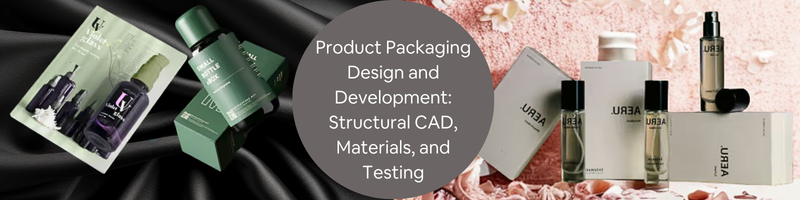
Product Packaging design services undergoes a thorough process other than just creating to make it visually appealing. It taps different factors to protect it, improve shipping, and supports customer satisfaction. A good packaging design needs the right materials, accurate and detailed structures, and testing to ensure it works properly. From the developing CAD dielines stage to building detailed prototypes, every step significantly contributes to creating packaging that is not just beautiful, but also strong, practical, and ready for the market.
In this article, we’ll walk you through the complete structural packaging design process, starting from planning, selection of materials, CAD development, testing, and production preparation. We’ll also highlight how packaging engineers and designers, especially the experienced professionals available through Cad Crowd, help businesses in creating effective and market-ready packaging.
RELATED: 3D Rendering for Product Packaging Design: The Full Guide for Consumer Product Companies
🚀 Table of contents
Why does structural packaging matter?
Structural packaging is important simply because it serves as the main determinant of how well a certain product is protected, transported, and presented. While graphics mainly focus on the product’s visual appeal, packaging structure takes more into account the influence on product storage efficiency, packaging durability, strength, and manufacturing process. A well-designed package helps in reducing product damage, control material costs, and supports efficiency and manufacturing.
What are the key steps in the structural packaging design workflow?
The structural packaging design process involves multiple stages, which guide a product from the very start until its final production. Each stage plays an essential role in making sure that every packaging delivered is efficient, protective, and suitable for its intended use.
| Requirements Planning | Establishes the foundation for packaging decisions based on product needs and shipping conditions. |
| Format Selection | Determines the most suitable packaging structure for protection, usability, and presentation. |
| Structural CAD Design | Creates accurate digital packaging designs needed for prototyping and manufacturing. |
| Material Selection | Ensures the package has the right balance of strength, cost, and performance. |
| Prototyping and 3D mockups | Allows designers to evaluate fit, function, and appearance before production. |
| Testing and validation | Confirms that packaging can withstand handling, transportation, and environmental conditions. |
| Print production handoff | Prepares final files and specifications for efficient manufacturing. |
What needs to be considered before designing structural packaging?
Before developing a packaging structure, designers must first keep in mind the importance of careful requirement planning, understand handling conditions, and distribution needs. Planning early helps determine the right level of protection, structural approach, and material needed for the specific package. Factors like size, weight, fragility, and shipping method affect how packaging will be designed and tested.
RELATED: Improving Packaging Design with 3D Product Rendering Services that Elevate Your Company Brand
Stage 1. Requirements planning
This stage defines the foundation of the overall process of packaging design. This is where designers start to evaluate the product’s dimension, fragility, mass, and how it will move through the supply chain before finalizing the packaging solution.
Key considerations include:
- Product mass and dimension. Products that are larger or heavier require stronger structures and materials that are more durable in order to prevent any potential damage during carrying and transport.
- Product fragility. Items that are soft and delicate require additional protection for internal support, cushioning, or reinforced packaging structures.
- Retail vs. DTC shipping path. Retail packaging should consider shelf presentation, customer interaction, and stacking. Direct-to-consumer packaging, on the other hand, should handle shipping and delivery conditions.
By identifying these important requirements early, designers can make packaging that meets the standards and balances cost efficiency, protection, and Manufacturing design services practicality before finally moving into the next stage, which is format selection.
RELATED: Functional and Creative Packaging Designs for New and Existing Products for Companies
How do designers choose the right packaging format?
Choosing the right packaging format is an essential step in the process of structural packaging since different products require different materials and levels of protection, functionality, and presentation. Designers must consider several factors like weight, type, durability, shipping requirements, and customer experience when selecting the most appropriate structure for the product. By applying the right format, designers can ensure that the package performs effectively while also meeting the standard manufacturing and market needs.

Stage 2. Format selection
Format selection stage mainly determines what type of packaging suitable for the specific product and its requirements. Designers evaluate options according to its cost, appearance, protection, and production feasibility.
Common packaging formats:
- Folding cartons- It is commonly used for retail products like food, cosmetics, and consumer goods since it is made with lightweight paperboard.
- Corrugated packaging- It’s appropriate for heavier products and shipping applications since it provides stronger protection, especially for e-commerce and transportation.
- Rigid boxes- It offers quality presentation and durability, which is mostly appropriate for high-value items and luxury products.
- Blister packaging- It’s a packaging that uses a transparent plastic cavity with a backing material, which displays and protect small products.
- Pouches- It is often used for products that require portability, lightweight, or resealable designs since it is flexible.
Choosing the right packaging format helps in ensuring that the delivery of final design balances its visual appeal, product protection, and cost efficiency.
RELATED: How Packaging Design Services Can Help Your Product Stand Out
How are structural CAD and dielines used in packaging design?
After choosing the most suitable packaging format for a specific product, designers then create the structural design services that best defines how the package will be presented and produced. This stage converts concepts into a detailed and precise digital model that manufacturers can use for folding, cutting, and production. It is best to create accurate structural design since it significantly affects the entirety of the package, and we ensure that it fits the product properly and functions accordingly.
Stage 3. Structural CAD design
Structural CAD is used to create accurate packaging layouts, which is also known as dielines, that define the package shape and construction. The digital drawings specifically include flaps, folds, panels, and cutlines that are needed to manufacture the final product package.
Key elements of a packaging dieline include:
- Panels. It is the main surface that forms the exterior part of the package.
- Flaps. Extensions that are used for securing, closing, or assembling the package.
- Cut lines. They indicate where the material will specifically be cut during production.
- Crease or fold lines. It marks where the packaging material will be folded and shaped accordingly.
Industry standard software like ArtiosCAD is mostly used for professional packaging structure development. Freelance packaging designers that are experienced in the field are allowed to create production-ready dielines that significantly meet its required manufacturing standards. This way, businesses can smoothly move from concept to production.
RELATED: How-to Guide: New Product Design, Engineering and Prototyping Your Idea for Mass Manufacturing
How do materials influence structural packaging performance?
Material selection is a very crucial stage in the process of packaging design since the material must be suitable to the product as it affects its protection, strength, appearance, cost, and sustainability. Designers are encouraged to select materials that support product during transportation, shipping, and manufacturing, and satisfy customers’ expectations. With the help of the right material, packaging stays durable and performs effectively throughout the life cycle.
Stage 4. Material selection
In this stage, designers evaluate several materials according to the product’s fragility, weight, usage, and distribution standard requirements. Most of the packaging materials are chosen to properly provide the balance between flexibility, visual quality, and durability.
Common material considerations include:
- Paperboard. It is usually measured by GSM or grams per square meter, with higher GSM generally provides greater thickness and strength for retail packaging and folding cartons.
- Corrugated board. It uses various flute types like E, V, and BC flutes, which provides different levels of stacking strength, cushioning, and protection.
- Coatings and finishes. Different options like gloss, matte, and protective coatings significantly improve packaging’s appearance, durability, and resistance to moisture.
RELATED: How 3D Modeling is Beneficial in Product Manufacturing & New Product Development Services
It’s really a must to appropriately select a material design services that’s best for a specific product so it can guarantee quality protection, support manufacturing needs, and deliver customer satisfaction appropriately.
Examples of packaging materials and specifications:
| Paperboard | SBS (Solid Bleached Sulfate) | Premium product boxes, cosmetics, electronics, |
| Paperboard | Kraft | Shipping cartons, co-friendly packaging, food boxes, |
| Specification | GSM | Used for selecting paperboard thickness and strength |
| Corrugated flute | E-flute | Small retail boxes, electronics, display packaging |
| Corrugated flute | B-flute | Shipping boxes, retail packaging |
| Corrugated flute | C-flute | Heavy products, protective shipping cartons |
| Coating | Matte finish | Luxury packaging, cosmetics, specialty products |
| Coating | Gloss ifnish | Retail boxes, promotional packaging |
| Coating | Aqueous coating | Food cartons, product packaging |
| Coating | Soft touch finish | Premium cosmetics, electronics packaging |
Need help in designing production-ready packaging?
Worry no more as Cad Crowd packaging designers can help you in creating detailed die lines, optimized packaging structures, and designs that are equipped for production. Creating effective packaging requires not just structural design knowledge, but also proper CAD expertise and manufacturing understanding, where you can find at Cad Crowd. Through professional CAD services, Cad Crowd teams can guarantee in transforming packaging concepts into a real functional digital model that don’t just meet your standards, but also market requirements.
Why are prototypes and 3D mockups important before production?
Before a package proceeds into the production, designers create accurate prototypes and 3D mock-ups so they can evaluate how the design performs in real-world applications. This stage is very helpful in a way that it verifies if the design is fit and functional, and identifies possible issues that can be corrected before manufacturing. Early validation is very important since it helps reducing costly revisions and improves overall confidence in the production of final design.
RELATED: Product Development Considerations that Can Make or Break New Product Ideas Before Launch
Stage 5. Prototyping and 3D mock-ups
These two allow designers, stakeholders, and manufacturers to review the final packaging before mass production. Both virtual and physical models help in confirming that the specific structure meets the standard design and production requirements accordingly.
Common uses of prototypes and 3D mock-ups:
- Checking product fit. It ensures that the package is secured enough to hold product with the correct clearances.
- Evaluating assembly. It verifies that the package locks, folds, and assembles appropriately.
- Reviewing appearance. This allows teams to assess the package’s proportions, structure, and entire presentation.
- Gathering feedback. It supports design reviews with manufacturers, clients, and other stakeholders before launching.

Through proper validation, teams can have better time allowance to improve any issues before investing in tooling and large-scale manufacturing design services. In this way, they can save both time and energy while ensuring it fits best to the appropriate product standards and requirements.
RELATED: Tips for Physical Product Development: How to Design & Develop Concepts at Design Studios
How is packaging tested before production?
To ensure a package can significantly protect a product, it must be tested throughout the process since it needs to handle transportation, storage, and carrying. Validation testing mainly helps in identifying structural weaknesses before leading to production, reducing the potential risk of product damage, costly redesigns, and returns. Industry testing standards are also helpful in verifying that a package meets its standard performance requirements.
Stage 6. Testing and validation
Engineers and designers perform several tests in evaluating how a package will perform in the real-world application despite unpredictable conditions. These tests simulate the stresses a particular package may deal and experience throughout the supply chain.
Common packaging validation tests:
- Drop testing. It evaluates how a specific package will protect a product from potential drops and impacts.
- Vibration testing. It simulates movement during product transportation to identify possible damage from continued vibrations.
- Compression testing. It measures how a specific product packaging will hold against heavy stacking loads during shipping and storage.
- Climate cycling. It tests packaging under the unstable temperature and humidity conditions to secure its long-term performance.
A lot of companies follow a recognized testing standards like ASTM D4169 and ISTA in validating packaging for distribution and transportation. By completing these tests, proper packaging is ensured to be reliable, durable, and ready for production.
RELATED: How to Render a Product Design with Freelance Experts
How does packaging move from design to production?
The final stage of the process of product packaging is a very crucial part as it prepares the overall complete design for manufacturing. After significant testing and validation, designers finalize everything, the packaging structure, specification, and production files, making sure that the package is ready to be manufactured and delivered consistently and accurately. A prepared handoff helps in preventing major errors during cutting, printing, and assembly.
Stage 7. Print production handoff
In this final stage, designers provide manufacturers with all the necessary files and specifications required in producing the final packaging. In this stage, CAD design experts connects with the large-scale manufacturing.
Key elements of the production handoff:
- Final dielines. It provides the detailed folding, cutting, and assembly instructions that serve as a reference for the manufacturers.
- Artwork files. It includes all the branding elements, graphics, and print-ready designs.
- Material specifications. It defines the selected kind of paperboard, coatings, corrugated type, and finishes to avoid mistakes in attaching everything together.
- Production guidelines. It provides the entire details about the printing methods, quality expectations, and assembly requirements.
Providing detailed and complete production handoff ensures that the packaging design can be manufactured efficiently while also maintaining its intended structure, performance, and appearance.
RELATED: 3D Modeling and Design: How Companies Can Utilize it for Better Product Development
What common packaging design mistakes should be avoided?
| Loose panel fit | Weak structure and poor assembly |
| Weak crease geometry | Folding issues and reduced strength |
| Complicated locking | Difficult production and usability |
| Oversized boxes | Higher material and shipping costs |
| Dimensional weight shipping | Increased transportation expenses |
| Poor material selection | Reduced protection and durability |
Loose panel fit: why is structural accuracy important?
Loose panel fit usually happens when packaging components do not properly align because of dimension inaccuracy or poor planning of packaging structure. These can possibly result in gaps, unstable package, and weak connections that negatively affects both the appearance and the protection of the product.
One effective thing to do to avoid this is by using accurate CAD design process and creating detailed prototypes before production, since it ensures that every panel fit correctly and the final product package would perform properly as intended.
Weak crease geometry: how folding design affects packaging strength?
Weak crease geometry mostly happens when fold lines are not appropriately designed based on the thickness of the material and packaging structure. Incorrect placement of crease or excessive stress on folding points can lead to uneven folds, cracking, or weakened areas that mainly affects the package’s appearance and durability.
RELATED: Why Phase 0 Is Crucial for New Product Development and Physical Product Design Firms
One thing designers must do is analyze folding behavior during the CAD stage and testing prototypes before finalizing into production. Suitable materials, manufacturing-friendly designs, and proper crease placement help best in creating clean folds while also maintaining its structural strength.
Complicated locking: why should packaging closures be simple?
Complicated locking on product packaging mostly happens when its design prioritizes security without taking into consideration the user’s experience. Overly complicated closures really increase production time, make the assembly more difficult, and create confusion for customers when opening the package.
What’s best to do is to develop locking systems that are not just secure but also simple to manufacture and use. Designers should evaluate several closure methods of prototypes in finding a balance between efficiency, protection, and ease of use.
RELATED: Top Product Usability Factors for Good Product Design Services & New Prototypes
Oversized boxes: why can excess packaging be a problem?
Over-packaging happens when the package design is significantly larger than the product it is designed to hold. This kind of mistake leads to wasted materials, inefficient storage, and increased shipping costs. Through this excess space, the product may also shift during handling, which increases the risk of damage.
What designers do to avoid this kind of mistake is develop packaging that relatively matches the product’s size and shape. Using structural design services and proper cushioning, they can invent a more efficient package that balances sustainability, protection, and cost-effectiveness.
Dimensional weight issues: why does package size affect shipping costs?
Dimensional weight issues mostly happen when a certain package takes up more shipping space than it requires. A lot of carriers calculate shipping fees based on its package volume, which means oversized designs may result in higher transportation costs even when it’s a lightweight product.
RELATED: A Guide to Concept Design with Product Design & Engineering Companies
To help reduce these costs, designers must consider shipping requirements during the early packaging process by optimizing package dimensions, ensuring no unnecessary space, and choosing efficient structures, which helps improve shipping performance and lower their transportation expenses.
Poor material selection: why is choosing the right material important?
Poor material choice occurs when packaging materials do not appropriately match the product’s fragility, environment, weight, or shipping conditions. When the materials being used are too weak, it can possibly lead to product damage, while overly strong materials can also increase their costs and waste.
The most effective solution for this kind of problem is to properly evaluate material performance before proceeding to the product development services, and consider its cost, durability, strength, and sustainability. Selecting the right corrugated board, paper board, coatings, or other materials ensures the reliability of the packaging as it meets standard business requirements.
RELATED: Rugged Product Design Strategy: How Product Development Firms Can Deliver for Startups
Are you now ready to turn your packaging ideas into reality?
Successful packaging goes beyond creativity; it requires a significant combination of expertise and a thorough process of planning. Here at Cad Crowd, we connect you with experienced packaging designers who are experts in realistic 3D rendering design services, accurate dielines, and structural CAD.
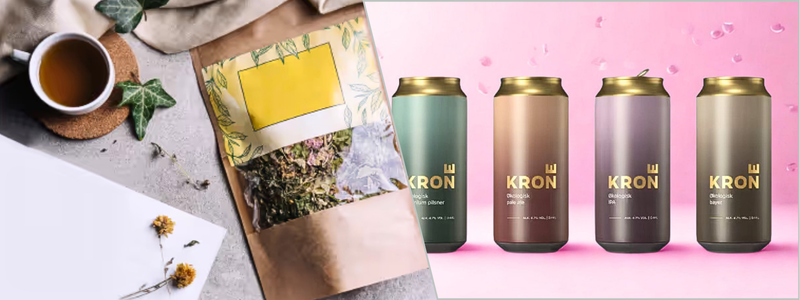
Don’t waste your time; bring your packaging vision to life with the help of the right expert design support.
Frequently asked questions
- What is a packaging dieline?
It is a technical layout showing cut lines, crease lines, and folding areas, which are significantly needed in product manufacturing.
- What is the difference between graphic and structural packaging design?
It differs in a way that graphic design is more focused on designing visual elements like branding and artwork, while structural design, on the other hand, focuses on the package’s construction, functionality, and strength.
- How does structural packaging reduce product damage?
By using proper materials, dimensions, and protective features to ensure products handle handling, transportation, and storage conditions.
- Can structural packaging design help reduce costs?
Yes, it can. Designing packaging structures can reduce material waste, optimize shipping space, and improve manufacturing processes, helping lower overall costs.
RELATED: How to Quickly Cut Prototype Design Costs in 2026 for Product Design & Engineering Firms
Conclusion
Product packaging design is not just about creating a container for a specific product. It involves careful planning, engineering, and testing to successfully develop solutions that both protect and support the product. With the help of structural CAD, designers can create accurate and detailed packaging models, and selecting appropriate materials ensures its durability, strength, and cost efficiency. Through testing, package performance is guaranteed before production, leading to fewer risks during handling and shipping. With the support of experienced and professional packaging designers, businesses can deliver functional and market-ready packaging solutions. That is why it is very important to partner with the right CAD professionals like Cad Crowd, who help in transforming packaging ideas into realistic and reliable designs that are thoroughly created for real-world manufacturing.
How Cad Crowd can help
Cad Crowd connects businesses with experienced packaging designers and CAD professionals who specialize in structural packaging, production-ready dielines, material selection, prototyping, and manufacturing support. Our experts help create durable, cost-effective packaging that is optimized for production, shipping, and real-world performance. Contact Cad Crowd today for a free quote and bring your packaging design to market with confidence.