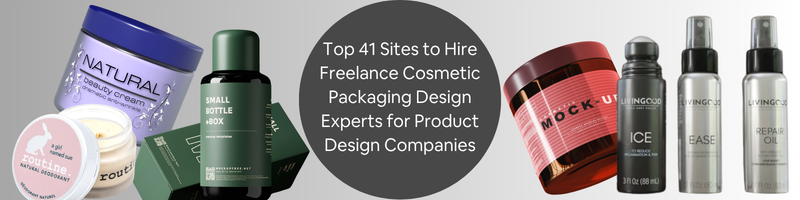
Product design companies previously made it very difficult to distinguish one brand or product from another because of the lack of individuality and visual impact. But because of consumer needs and innovation, cosmetic packaging has evolved to the point where every design speaks for itself, whether it’s in a bottle, jar, or plastic container. These kinds of designs need a skilled designer who can help you translate your vision into reality.
The list below provides you with the best platform for your product design business, where experts understand your vision, function, and product goals.
1. Cad Crowd
Cad Crowd is a platform that offers a place of curated pre-screened experts and professionals who are best at its own game, which is industrial design services and photorealistic rendering. As hard as it may seem, these professionals are at their own expense as they can do what you want them to, as long as it is in their field of expertise. Which includes complex glass bottle structures, sustainable cardboard outer shells, not only this, but the platform also provides technical precision, which is required for the success of the manufacturing.
Here at Cad Crowd, freelancers are flexible as they provide hourly contracts, fixed-price assignments, and design challenges for a variety of options. The platform also eradicates the element of uncertainty of conventional hiring by evaluating each 3D designer and expert. This helps ensure that the development of each product pipeline continues to be at its best and most efficient, where no one could ever regret using this site. It’s no surprise that this is the top option of any brand that specializes in reliability and world-class innovation in a competitive market.
Website: Cadcrowd.com
2. Pacdora
Specializing in an online toolset that centers on the complex world of 3D packaging design for any cosmetic brand and businesses, Pacdora is a vast library that contains the most recent and real-time rendering of the 3D engine. Pacdora allows freelance designers to develop blueprints and realistic 3D designs without the need for sketches. The packaging design that we see now, such as labels on containers, tubes, jars, and spray bottles, is a useful tool in starting an engagement with potential consumers. With the need to alter and modify the packaging design, such as materials, lighting, and textures, 3D visualization allows you to envision your product even before production.
By bridging the gap between structural engineering and visual design, the team is able to significantly speed up the prototype process. It is also a crucial resource for every profession that values speed and accuracy when producing a product that is utilized for both marketing and physical production and through the use of Pacdora, clients and designers or experts can work hand in hand to create a packaging that can sell every product. This helps ensure that the development of each product pipeline continues to be at its best and most efficient, where no one could ever regret using this site
Website: Pacdora.com
RELATED: Designing Attractive Cosmetic Packaging & Beauty Packaging for Your Company’s Brand
3. Freelance Yard
Providing an environment for business that connects with independent 3D artists and experts who focus on visualization of every product, Freelance Yard is a go-to platform that can be used by these designers. This serves as a focused hub where professionals can showcase their portfolios centered on industrial and cosmetic sectors that can easily be viewed by the clients. This website provides easy navigation across many specializations, ensuring that every company will find its specialists with the appropriate technical skills for difficult packaging projects needed.
By having direct interaction and communication with clients and creators, this will focus on the projects’ transparent work processes. Having this interaction, users appreciate the uncomplicated process of advertising jobs and assessing proposals from skilled and qualified global talent. Overall, it is a feasible choice for those dedicated experts who understand the nuances of the brand aesthetics and technicalities in the industry of modern packaging. This helps guarantee that each product pipeline is developed optimally and efficiently, ensuring users never regret using this site.
Website: Freelanceyard.com

4. Freelancehunt
A flexible marketplace that links European and global companies and organizations with expert 3D designers that specializes in product and industrial graphics, Freelancehunt, is a well-known platform. It focuses on project management tools and safe payment mechanisms, providing a tranquil mind and harmony between the client and designers. Product design companies can easily spot experts who are experts in creating intricate 3D models for the cosmetic industry, which ranges from primary samples to the packaging itself.
It also allows a transparent rating system and detailed portfolios, which allow clients to check on the expertise of the freelancer before they go through the process. Having clear communication while fostering professionalism, it will be easier for every client, together with its brand, to make the vision real that also aligns with your project’s goal. Freelancehunt is just a click, may you need it for quick rendering for a pitch, or maybe for a full load structural design for any lineup of products, the experts here are highly competent, they really offer you a solution to anything that you want. Absolutely no one can go wrong with this one; it is a wonderful alternative for anyone seeking low-cost but high-quality design assistance.
Website: Freelancehunt.com

5. Superhive Market (formerly Blender Market)
The creation of this site was inspired by the empowering freelance and indie artist. As it is now transitioning to Superhive, it still remains as one of the top sites for hiring a cosmetic packaging design specialist. They use softwares like Auto-Rig Pro for character rigging or RetopoFlow for retopology work. They can also incorporate pre-built textures, environmental effects and other material settings that can depict a real-life situation.
This helps ensure that the development of each product pipeline continues to be at its best and most efficient, where no one could ever regret using this site. Another good thing about them is that they support Blender Development Fund, where they have a built-in feature that allow their specialist to automatically donate a portion of their earning directly to fund.
Website: Superhivemarket.com
RELATED: Luxury Beauty Packaging and Cosmetic Packaging Design Trends for Companies and Firms

6. Perfectlancer
A new in-the-flesh platform steps into the competitive world of cosmetic packaging design services. Perfectlancer is well-known for its user-friendly experience and competitive company cost structure, and it flourishes in the industry. Attracting a diverse selection of 3D design talents that excel at creating extreme and efficient packaging designs for the cosmetics and skincare industries. Perfectlancer provides a recruiting environment with competitive pay and compensation, ensuring that the stage of the design process fulfills what the client really wants and expects. It also has search criteria, allowing product design businesses to simply explore and discover the appropriate freelancer with the exact 3D modeling and CGI photography talents they require.
With this search filter, they may easily determine whom to hire from the pool of freelancers. Perfectlancer does not pressure you on whether to commit to full-time work with them; it is much more important that you have the creativity on the project that needs to be accomplished. One thing a company or platform must never forget is professionalism and the desire to be effective in all aspects of business, since they are critical for attracting clients and establishing the organization. It is a trustworthy place for anyone looking for novel ideas and high-quality technical execution for their forthcoming product releases.
Website: Perfectlancer.com

7. Unity Connect
A professional networking hub that specializes for experts and creators who work within the Unity ecosystem, which also includes those who specialize in real-time 3D visualization, Unity Connect is a weapon not widely known to everyone, but it is used for product design by companies who are in need of 3D packaging models. Experts in creating assets which can be seen in an augmented reality or even in the high-fidelity 3D environments, freelancers give the edge that is different to other cosmetic brands. Unity Connect allows companies to have the freedom to specific job postings, or just like the others explore into the portfolios of every creative artist until they discover one that suits their company or brand.
Unity connect is useful for firms that are seeking to create immersive unboxing experiences of their physical products, by using this one, it can awe every consumer as packaging really brings a good impression to any. The talent available here in this platform is often at the forefront of the technology, with the expertise of the artist in the 3D optimization and shader creation, it acts as a perfect arena for those companies who still prefers to have the touch of the tradition to the latest innovation now in the technology, and with that, consumer engagement can be certainly attained.
Website: Learn.unity.com

8. Sketchfab
This site is widely chosen for the purpose of publishing and sharing 3D content online, especially if you plan to hire package designers. You can see here that 3D viewer is widely utilized as each project and design is thoroughly observed from any point of view. There are a lot of professionals who make use of Sketchfab as their site for their primary portfolio, showcasing their ability to handle complex materials such as glass, plastic, and metallic foils, which are all common in cosmetics. By using this platform, not only can you search and use it for artists’ portfolios, but you can also purchase high-quality 3D models of jars and bottles to jumpstart the design process.
With this, clients may simply find their top talents and artists whose expertise aligns with their business branding and vision. It is also necessary to know artists who are compatible with the brand’s offerings, since they will be the ones that pique consumers’ attention through the usage of packaging. It is also necessary to know artists who are compatible with the brand’s offerings, since they will be the ones that pique consumers’ attention through the usage of packaging.
Having the chance to explore and evaluate models in a web browser without the use of specialized software provides a seamless review for every project manager. It is an excellent location to find visualizers that specialize in creating physical, interactive representations of luxury package designs. This helps ensure that the development of each product pipeline continues to be at its best and most efficient, where no one could ever regret using this site
Website: Sketchfab.com
RELATED: Company Beauty and Cosmetic Packaging Designs that are Designed for Sustainability

9. Polycount
Polycount is an excellent and a known network full of skilled 3D artists that served for a long period of time already. Despite having a strong roots in the world of game creation and development, the forum and job boards are frequently used by some of the world’s best 3D modelers. The design product companies can take advantage and utilize it as a platform to seek and identify professionals that are knowledgeable on the intricacies of topology and lossless rendering. The community that can be found here has a high standard of work as teams and artists give technique and critique on one another, having a helping hand that can boost support for each other.
Polycount is an excellent place to look for freelancers for complex and difficult packaging assignments that really require a solid understanding of 3D geometry and accurate material modeling. It also delivers direct access to a global elite for brands that are appreciative of technological expertise and has a track record of excellence in terms of arts. This ensures that each product pipeline remains optimized and efficient, leaving users satisfied with their experience on this site.
Website: Polycount.com

10. ManyPixels
Offering a subscription-based method that gives businesses reliable, that is giving consistent access to experienced designers. ManyPixels covers an extensive spectrum of graphic design services, and is suited for brands who are in the process of 3D mockups and packaging visuals. This platform is at best for product design companies who need a consistent supply of marketing materials and ideas without the need to supervise individual freelancers. As the firm charges a fixed price paid monthly, it gives room for budgeting and modifications, making sure that the finished product is at best and fits with the clients’ standard.
Website: Manypixels.co
11. 3Plastics
A proficient industry leader that focuses on the manufacturing and structural design of customized plastic containers for beauty brands is what distinguishes plastic from the others. This form is not just focused on the visual concept but to the overall making and production. The company has extensive expertise making bottles, jars, and closures from a variety of recyclable materials, including PET and PCR. In a few span of time, the in-house design team can transform a brand concept into a 3D visual.
By addressing the gap within artistic ingenuity and industrial realities, 3Plastics ensures that each cosmetic packaging concept serves a function other than being visually appealing to the eyes. Clients can benefit from a thorough grasp of restrictions in manufacturing, which ensures that in every design it is approved and ready for the mass production from the start. For those who haven’t tried, 3Plastics is an appropriate partner for organizations and enterprises looking for a market-proven supplier of top global cosmetic brands. This ensures that the development of each product pipeline remains optimal and efficient, making sure no one regrets using this site.
Website: 3Plastics.com
12. Spline
It is preferable for those product designers who want to construct product mockups and animations without learning and applying the traditional software. In the cosmetic industry Spline allows the making of colorful 3D packaging visuals embedded in the websites or even in the mobile phone, which makes it more accessible. Spline also offers collaboration where you can work and communicate together in one project in real-time manner. To achieve a trendy look for lines of make-up and skincare, designers make use of those pre-built materials.
Packaging brought into the real world, from immersive digital making makes the product shine in the crowded e-commerce landscape. Persons that want modern teamwork, value quickness, and are able to work interactively may use spline. This helps ensure that the development of each product pipeline continues to be at its best and most efficient, where no one could ever regret using this site
Website: Spline.design
RELATED: Complete Guide to Cosmetic Label Design and Packaging for Beauty Product Companies

13. TurboSquid
Used by professional 3D makers, TurboSquid, acts as an extensive library where you can look for exceptional containers for your brand of cosmetics. It is a source where product design companies and organizations look to speed up their visualized workflow, which is utilized using pre-made, industry-standard geometry. Discovering a piece that can be suited in the product, product packaging designers make use of TurboSquid in all different forms of materials or container for example, from the complex bottles to conventional pumps.
This platform also features Checkmate, which is a quality certification process that ensures that all materials, from start to finish, are appropriate and fulfill the client’s criteria and standards. By utilizing TurboSquid, it allows one to focus on more complex tasks such as custom branding than using scratch to build simple and basic shapes. Not only does TurboSquid have widespread participants with a pool of creative minds behind it, it also functions as a dependable packaging project with technical perfection, notably in 3D rendering jobs.
Website: Turbosquid.com

14. BOXLAB
Delivering an environment where it focuses on the creation of 3D packaging and dielines, BOXLAB, offers editing, 3D rendering services and viewing all of which can be combined into a single product, eliminating the need for costly installations. To have an accurate template for boxes, and set up containers, which are usually used in cosmetic kits, product design companies use this platform. This allows the designers to work on with 3D shapes, giving them a hint on what the product would look like when it is made right after visualizing, hence from minds to reality.
BOXLAB also delivers fewer faults in production due to its simplified process that includes concepts for manufacturing files. This is suitable for people who are just starting out in business, as small and medium-sized firms mostly utilize it. This platform acts and ensures that every layout of the box is very useful and appealing to the clients’ eyes, hence attracting them to purchase the goods.
Website: Boxlab.cc
15. Jarsking
A goal setter in the industry of cosmetic packaging, Jarsking is in the world of designers and manufacturers for beauty brands, as it offers end to end solutions, from 3D concepts to reality and production of packages such containers may it be glass or in plastic. Fast and quick, in a span of 3 hours, detailed 3D drawings can be given to clients who wouldn’t want that. For product design companies, this is a big deal in the phase of the new line for skincare and fragrance. Jarsking oversees factories for both huge companies and small businesses, yet it maintains great quality control while being cost-effective for everyone who works with it.
This also results in distinctive packaging with high-end finishing. Jarsking is an all-in-one for brands and businesses looking to be inventive and expand their packaging by producing it in actual life. This helps guarantee that each product pipeline is developed to its highest standard and most efficiently, ensuring users never regret using this site.
Website: Jarsking.com
16. Blender Artists
A hub for the most talented creators, it is a community who use the open source Blender software suite. It is where you can look and recruit who are experts in photorealistic rendering and modeling 3D experts. This has an active board for employment and galleries where experts can promote and show their work and design mainly focusing on product visualization designers and packaging. Due to this, all are thriving in peer review, wherein you can tell and express the skills required in a project. Also, this is used to filter artists by their portfolios that specialize in certain methodologies, such as basic or intricate simulation for brands or cosmetics. This website gives an in-depth understanding of an artist’s workflow prior to recruiting. It is really beneficial for anyone looking to connect with competent designers.
Website: Blenderartists.org
RELATED: Create Better Packaging Designs For Cosmetic And Beauty Product Companies
17. Supnova
They specialize in designing 3D models for a variety of industries. Product design companies can anchor skills in order to make precise, high-quality packages that are needed to have a professional touch. This agency focuses on not just the beauty but also the function where one dream can be put into reality and accurately. Working with customers allows enigmatic concepts to be embodied in blueprints, which are then transformed into actual pictures. This allows them to give quality services before production begins, reducing mistakes and associated costs. This company is ideal for organizations searching for high-quality, top-tier 3D assets that will not disappoint from beginning to end as they guide in the development of each product pipeline for it to continues to be at its best and most efficient.
Website: Supnovaco.com
18. Kospack Packaging
As part of a wide industrial network, Kospack Packaging specializes in commercial transportation solutions. This focuses on firms who desire a single provider that can perform and handle everything from engineering services to transportation. They take great care to ensure that the items arrive in pristine shape, with no damage or faults during transportation. They guarantee to be productive and successful for their clients, guaranteeing that everything is stapled while yet offering high-quality service at lowest possible cost and environmental impact. It is suitable for those who look for options for companies that appreciate a simplified, client-oriented approach. This helps ensure that the development of each product pipeline continues to be at its best and most efficient, where no one could ever regret using this site
Website: Kospack.com

19. Atelier Studio
A house that centers with lifestyle and product design, that gives a stylistic and lively external view in the eyes. Companies reach to this studio as they can make your ideas become reality, assisting you with every step, guiding you as a client to create feasible projects before launching in the market. This consists of graphic designers and stylists who have their own forte in creating patterns that can leave them in awe as they have trained eyes that methodically work on every design that they are assigned to. The strategies employed reduce mistakes and costs. If the firm wants something that will make their customers’ jaws drop, this is the one for them.

20. Artstation
Acts as a platform for artists in the media and entertainment industry, by its name, 3D product designers can be found and hired here if you are in need. Portfolios by top 3D artists can be located here, as this platform has a high chance of finding the perfect freelancers who specialize in certain areas such packaging and visualization of it. By viewing the portfolios, clients may readily identify the artist’s competence. Some are already professionals in industry-leading technologies like Maya, ZBrush, and Substance Painter, all of which are required for producing realistic results. If you are a visionary, or maybe a futuristic one for your product packaging, the creative quality here and the pool of experts here are breathtaking. For those who would want to elevate their simple look to a lavish one, Artstation might be for your company.
Website: Artstation.com

21. EasyRender
When it comes to high-end 3D rendering, Easyrender provides a platform where artists may showcase their ability, particularly in the realm of photorealistic graphics. In the field of cosmetic packaging, this is used to create spectacular graphics, mostly on glasses and bottles. Not only can professional artists utilize this site, but clients can also publish what they are searching for, making it easier for professionals to contact clients as long as the information is still relevant to what the clients are looking for, which includes estimates, rates, and preferences. It also works in tandem with file sharing, which allows for active cooperation and facilitates communication. It focuses not only on meeting requirements, but also on ensuring market quality. This is ideal for organizations that want to view their packaging in 3D design before going into manufacturing since it reduces costs.
Website: Easyrender.com
RELATED: Cosmetic Packaging Design & Package Design Services Costs and Pricing: Complete Breakdown
22.YunoJuno
YunoJuno, a management system that links artists to various agencies across the world, employs artists who are professionals in 3D design and packaging design services and are ready to clients when they arrive. Portfolios that are available for clients to see can also be evaluated to filter those that fall into each specialism. YunoJuno uses deadlines for freelancers to keep their name fresh with clients. It not only hires but also handles administrative chores such as ensuring that items arrive in excellent condition.
Website: Yunojuno.com
23. CGTrader
Same with the other platforms who have a feature of artists uploading or posting job offers who are being availed by clients such as animators. If a client wants a customized project, artists in this area can do it satisfying the standards of the clients. Seeking for artists that meet the client’s criteria guarantees that professionalism is maintained and that quality may be served while paying less. This helps ensure that the development of each product pipeline continues to be at its best and most efficient, where no one could ever regret using this site
Website: Cgtrader.com

24. Workana
Known in Latin America, frequently used by them is the Workana which is a freelance platform where companies can tap into a lot of experts specializing in 3D models, rendering, and a lot more. Workana allows remote collaborations among different time zones, clients can also explore the portfolios of the artists in order for them to find the right artist that is suited to what they are looking for. Mostly, clients can look up works inclined with skincare and make up products and if they wish to avail of this they can avail it and pay once the project is done. Making the payment at the end reduces risk for both clients and artists as long as they communicate and collaborate together. Seeking for artists that meet the client’s criteria guarantees that professionalism is maintained and that quality may be served while paying less.
Website: Workana.com

25.Dribble
Hiring the best artist for a brand never goes wrong because it brings out the visual effects that must be experienced by one. Dribble allows you to socialize with premier digital designers and be able to look for their portfolio anonymously, or as an aspiring client. This is like a market for your digital design needs, as you can select designers based on their commitment to do work, such as full-time or freelancing. It doesn’t matter if you want to hire a freelancer, build your own project history, look for some digital design inspiration, or browse the illustration projects, you can easily find and share content at Dribble.
Website: Dribbble.com

26. 99designs
By Vistaprint, 99designs is an approach where a company can launch a project by just giving out a brief information about their needs in cosmetic packaging. This is a contest where new product artists can show off their works and through this, clients can easily view their preferred design before releasing who is the winner. There is also an option to choose whether a client prefers to stay on the traditional side wherein recruitment happens to the freelancers. Seeking for artists that meet the client’s criteria guarantees that professionalism is maintained and that quality may be served while paying less.
Website: 99Designs.com
RELATED: How 3D Packaging Design From Cad and Freelance Services Can Help Your Company Stand Out

27. Toptal
Included in the top three percent of freelance talent in the world, Toptal, makes room for those who have undergone a lot of screening processes where they are really screened for a team to work on a client. This platform is for those who are complex, meticulous in packaging projects having to work on a critical level of minds and expertise. One thing about Toptal is that it communicates and interacts with clients personally, having a touch of what the client might be, which is helpful for embodying and providing them their needs and demands.
Despite the high cost, no one would ever regret utilizing this platform because of the quality it provides to its clients. It is ideal for firms that want to make their brand known through packaging design and, of course, the team that generates the design. Seeking for artists that meet the client’s criteria guarantees that professionalism is maintained and that quality may be served while paying less.
Website: Toptal.com

28. We Work Remotely
All throughout the time, We Work Remotely is standing as the largest remote work community in the world. Companies utilize this site as a hub where they can upload and post roles that are needed to perform certain projects, and can do it remotely. Working remotely helps individuals to ensure that, while being away, they have the freedom to conduct their work wherever they want while still meeting agreed deadlines. As simple as it is, it is a significant step that can assist 3D modeling artists in producing high-quality work at their own pace while maintaining professionalism and catering to a wide number of consumers.
Communicating with the artists helps for future purposes such as new job opportunities for them. Many businesses utilize this site to build teams since it promotes a productive effort in which designs may be effectively achieved which is ideal for brands that allow creative minds to work remotely while maintaining quality and standards. Seeking for artists that meet the client’s criteria guarantees that professionalism is maintained and that quality may be served while paying less.
Website: Weworkremotely.com

29. DesignCrowd
Consisting of over a million freelance designers, DesignCrowd makes way for businesses to post contests for 3D packaging. Through this contest, there are a lot of options to choose from and helps the brands have unique identity. Despite having this contest, companies can still contact and hire artists to work for them in a certain project they would like to have. While being professional, it is critical to provide a feedback session in which clients can comment on the artists’ work in order for the project to be improved. Pricing is modest and perfect for individuals who are just starting out with a brand or for small to medium organizations, as long as quality surpasses expectations and requirements are satisfied, you can never go wrong. This is suitable for clients who have the idea of their own but still would like to have artists touch on their product.
Website: Designcrowd.com

30. X-PROCAD
X-PROCAD, provides mechanical engineering specialists, 3D modeling, and project management services, presents a system that allows clients and designers to address issues under one roof. This mostly focuses on what can be brought to life from the perspectives of an artist, client, and reality, while ensuring that it meets standards and quality. Communicating in a single strand saves time and reduces errors since it has its own purpose, which is to build a product that demands a technical and precise approach to overseeing and designing the packaging
Website: X-procad.com
31. Vollna
Used by companies to launch freelancers and allows hiring and recruitment for those companies who need to do the job. It allows one to find the exact and relevant things that a client would want in designers for making the 3D packaging design. Not only that but it also allows those who are seeking for projects in the line up of the cosmetic industry. Vollna provides a real time notification where companies can easily communicate and react to what the professional artists make, whether they may have changes to the designs or they approve it. Vollna also gives way to the new generation in a sense that traditional search methods are rarely used. In order to be in the top of the line in the competition, Vollna is really helpful for project managers to have the best artist.
Website: Vollna.com
RELATED: Improving Packaging Design with 3D Product Rendering Services that Elevate Your Company Brand
32. Glassdoor
It is most known as a corporate review site, but it also serves as a recruiting site where job vacancies can be posted. This helps us to attract applicants that value a strong culture. Clients may use this to find suitable artists because each product rendering artist showcases their expertise. Glassdoor enables for long-term collaborations since it is transparent with its clients and gives outstanding artists at the top of their game.
Website: Glassdoor.com

33. Indeed.com
Indeed.com is a site where recruiting is streamlined; companies may provide keywords or ideas for what they need, such as packaging models and rendering. Screening allows them to easily distinguish between the best or most qualified applicants and those who are not. With the use of a resume, which is one of these artists’ requirements, clients may interact with them, particularly those who meet their qualifications, which are professionals in the beauty and retail industries. It also offers the option of hiring applicants in-person or remotely. This will allow flexibility in both ways. Finding the best for each company makes the business thrive.
Website: Indeed.com

34. Contra
Contra focuses on the needs of independent artists and companies that hire them. This portfolio may contain works that are readily appraised based on the visual style. It is also secure and compliant, indicating that it is not a hoax and that all parties involved are acting with integrity. This attracts clients since it demonstrates transparency as well as the quality of work being done. For those who want accessible, do not need a traditional approach, Contra.com is the solution to your needs.
Website: Contra.com
35. Truelancer
With a vast range of 2D & 3D designers, this platform allows experts to have the idea on the technicalities of the packaging, may it be still in render or in actual output. In a span of minutes, while posting all the necessary needs of the client in terms of what they are hiring, artists, designers, freelancers can easily respond to it showcasing their specialities together with their portfolio and also quotations regarding the project or job posted. While clients can review the work of freelancers before starting the work, payments can only be released when the project or contract are done 100% with the use of “Safepay”ensuring safe transactions. By being professional in this field, it allows access to quality and standards in 3D and structural designs and packaging. Furthermore, for firms who want to design packages quickly, the “Buy Service” option on truelancer allows them to purchase these design packages at a fixed fee.
Website: Truelancer.com
36. Behance
A leading platform for those who would like to showcase their portfolios, Behance, as owned by Adobe, is where high-quality 3D packaging designers can be found. Through exploring this site and by filtering out what a company would really like to find in an expert this way makes it possible to locate these artists. Behance focuses mostly on the processes and procedures developed by creative minds. Allowing for cooperation, companies looking to interact with and tap these creators may quickly approach them for opportunities. Many examples of cosmetic packaging are displayed here, as well as opportunities for talent acquisition.
Website: Behance.net
RELATED: Latest Food and Beverage Packaging Design Trends for Companies and Firms

37. PeoplePerHour
Centers on custom project proposals PeoplePerHour is a site where recruitment for 3D artists are made. Just like the other firms, you can also explore and browse and filter out what one is really looking for. On the other hand, PeoplePerHour uses an artificial intelligence system in order to find the suitable artists which saves a lot of time in hiring and screening applicants. Companies looking to recruit can do so on an hourly or project basis at a predetermined cost. This section makes use of a “work stream” where one may interact, query, exchange a file, or pay fees, guaranteeing that it adheres to certain compliance and professionalism. PeoplePerHour can meet your demands if you want a secure and smooth transaction.
Website: Peopleperhour.com

38. Guru
Allowing for flexibility and long term collaboration, companies who are seeking experts in rendering 3D design experts can utilize this. There is a feature named “WorkRoom” where it maintains communication and allows for interactions with co artists. It also ensures that former clients or specialists stay on track based on their past performance.
Website: Guru.com
39. Freelancer.com
An active marketplace worldwide, this gives access to 3D design artists to showcase their talents. Companies can make use of this site by evaluating the performances or by having options to the different artists who are much inline to what the company is looking for. CAD and photorealistic rendering specializations of artists can also be found here. With this, it allows real time access to the work of artists making sure that it reaches what the client wants while still ensuring quality and standard. There is also a feature called Preferred Freelancer where one can have access to the top photorealistic rendering talents found in this site. If a company is seeking quick, efficient artists with real-time updates this might be the one for you.
Website: Freelancer.com

40. Fiverr
The utilization of this price provides organizations who want to use it with a defined budget from which to plan. There is also a section in Fiverr where you may filter out the vision you produced, giving you more alternatives for designs. This is mostly use by companies who have a clear vision and specific wants of what they prefer in their marketing
Website: Fiverr.com
RELATED: Functional and Creative Packaging Designs for New and Existing Products for Companies

41. Upwork
From a pool of experts, recruitment can be seen here in Upwork where they can be paid by the project they make as long as it passes the standards of what the company or the client wants. There are also options where a client can pay per hour or by project depending on what they have been agreed to. Time tracking facilitates communication between the client and the artist so that a design can be completed. In addition, there is a feature called Top Rated and Expert Vetted where those who excel in their field or the one who stands out the best can be found.
Website: Upwork.com
Why choose Cad Crowd?
Beauty lies on the beholder but what if it does not even attract one. Sometimes it’s the packaging that attracts the consumers or the clients, making them reliable despite what the product is. Having the right business partner makes the dream work, reduces stress, and saves time and money. While many are still seeking, Cad Crowd is still the top tier, it brings out the best in product design, allowing creativity to happen, trusting what the creative mind does of the 3D cosmetic packaging design. Contact us for a free quote.