3D Rendering for Product Packaging Design: The Full Guide for Consumer Product Companies


Packaging is the first and easiest way to differentiate your product from all others displayed on store shelves. Want an easy example? Bottled water. There’s no way you can tell if the water contained in any particular bottle is any different from the next, unless you read the labels and do a taste comparison. Even by then, you probably won’t notice if one is just tap water put into a clear bottle or vapor distilled and kept in a slightly fancier container. Some people swear they can tell which is which without looking at the brands, but we’re never sure who these people are. Worse still is the pH level. It turns out that pH (apparently is short for Potential Hydrogen, who knew?) indicates the acidity. The lower the number, the higher the acidity. But have you seriously given it a thought before picking up a bottle from a convenience store? Unlikely. Chances are, you choose one with a greater number and feel proud of yourself as you walk to the cashier.

That, in a nutshell, is how important packaging design services are. The same thing applies to shampoo, soap, liquid detergent, foods and beverages, cosmetics, wristwatches, smartphones, pencils, and just about every other consumer product in the market. People choose a product because the packaging makes them feel confident about their purchase. Although other considerations, such as cost, brand loyalty, and whether their favorite movie star endorses it, also influence the buying decision, packaging plays a significant role. Some products sell better just because companies slap a photo of a K-pop idol on the box.

On a more serious note, packaging is almost just as important as the product it contains. Businesses have recognized this importance for a long time and invest substantial resources in the design and development of packaging as part of their marketing strategy. Along the way, 3D CAD modeling and photorealistic rendering software were introduced to streamline the design process. As technologies advance and the market becomes more competitive, it turns out that effective packaging visualization is a complex undertaking.

As more people shop online, companies are in a race to develop the most impressive, convincing, and persuasive product packaging renderings to attract these customers. Which makes perfect sense, because when people see products on a smartphone or laptop screen, a photorealistic visualization becomes a powerful tool for turning lookers into actual buyers.

But creating an accurate, high-fidelity CGI for product packaging isn’t a skill anybody can learn and master overnight. It takes an experienced CAD professional or perhaps a team of digital artists to develop the design, transform it into a 3D model, and render it into photorealistic visuals. Cad Crowd, a freelancing platform specializing in product development, helps you connect with thousands of design professionals and render artists who offer a broad range of CGI services at affordable rates. All the talents on the platform have been pre-vetted to ensure you’ll only collaborate with the most talented and qualified freelancers from around the world.

What to know about packaging rendering

First things first, rendering is different from designing, but the two can be parts of the same process. Let’s put it this way: not every design process ends up with a rendering, but every rendering workflow definitely involves design and 3D modeling services. Perhaps an example can clear things up a bit better:

  • Say you plan to sell a homemade car air freshener product in a blister card packaging during the upcoming county fair. You ask a graphic designer friend to create an illustration for the otherwise blank card. Because, for some reason, you give this friend complete freedom of approach, you end up with a bold image of some sort of Batmobile on the card. The designer sends you the printable file, and the job is done. No rendering required.
  • Your next-door neighbor has the same idea, only better. Instead of limiting sales to fairgoers, the plan involves listing the product on an online marketplace. To make the product look better on screen, this neighbor of yours has the packaging rendered and optimized for digital screens by the same graphic designer. The project is covered by an NDA, so even if the designer is your friend, you know nothing about it. The workflow involves not only designing the blister pack but also converting the design into a 3D model and rendering it. In this case, the final deliverables include a fully rendered image file and the 3D model for future use.

To compete in the online marketplace, you decide to use photographs (instead of rendering) to display the air freshener product. It’s from this instance that you realize that a rendering can look so much better and more creative than photos when used for a product display on the web. Oh, and the Batmobile appears a lot more realistic than yours.

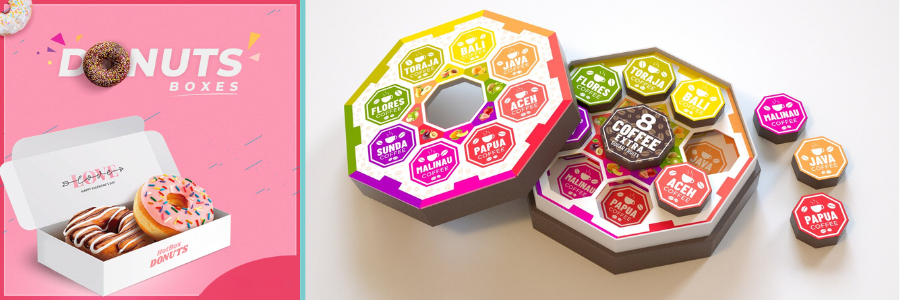
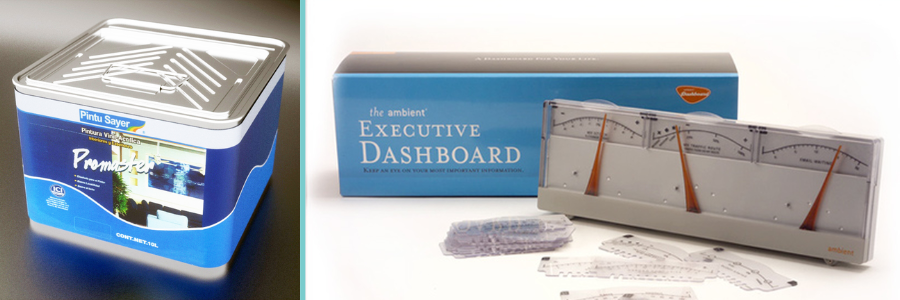
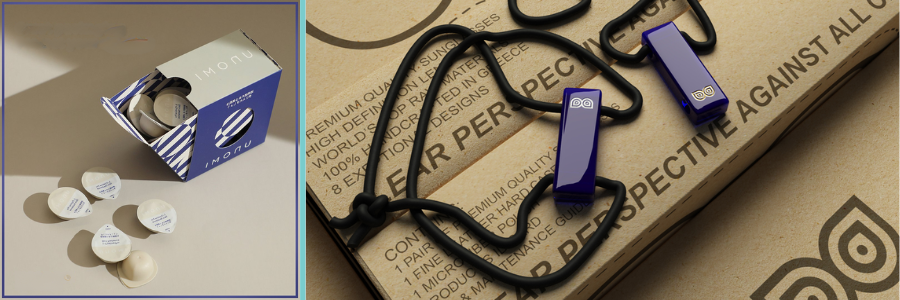
Packaging design of a donut box and aratisinal coffee box by Cad Crowd freelance Cad Designers

RELATED: Top 101 sites for freelance engineering jobs, mechanical design projects, & remote work

How a rendering happens

The design part always comes first. It may involve brainstorming or ideation, drawing sketches, or consulting references from existing product packaging. What comes next is the real deal: powering up the computer and tinkering with the design in a 3D CAD software. Modeling accounts for the bulk of the task, as the result can determine whether you end up with a poorly executed rendering or a high-quality one. The more detailed and accurate the models are, the better the rendering will be for the product design firm.

Unprocessed 3D models are plain, sometimes colorless, and have less obvious boundaries between one another. Every object needs textures, material properties, color, and surface patterns to define its characteristics. The models must also be positioned in specific arrangements in the scene, just as a professional photographer determines the right composition. When the grayscale scene is ready, the lighting setup and shadows are configured in a rendering software to give the scene a photorealistic look.

At this point, the 3D models (and, by extension, the entire scene) are converted into an image file. Some post-processing, such as color adjustment or other final touch-ups, might be necessary to improve the realism. If the resulting image needs corrections, the render artist must return to the 3D models to make the changes and repeat the process. Everything about it sounds very complicated indeed, but the rendering process gives you an advantage that no photograph can: the 3D models can be reused as many times as you need and redone with different visual properties. You can give them different colors and labels, place them in a new scene, apply animations, etc. All can be done on a computer screen; no photographs or props are needed, so it saves time and money.

So many rendering types to choose from

Well, there are only a few types mentioned here, which should be more than enough to offer the variety you need for every product packaging.

At the same time, the most useful and useless packaging rendering of all. Also, its usefulness comes only from the fact that it’s likely low-fidelity and therefore quick to generate. Packaging concept design services cannot care less about high resolution, texture detail, lighting accuracy, and everything else that makes a packaging visualization good. The most important thing is that you can produce many of them in a time-efficient manner, so you can check if any particular design works well to your liking. Low-fidelity rendering lets you experiment with shapes, colors, composition, typography, artwork placement, and other elements without spending too much time processing the work. It’s also useless, since you should never put conceptual renderings on the product page. Think of it as glorified rough sketches. It looks good as a concept, but terrible for actual use.

Packaging concept designs by Cad Crowd product design experts

RELATED: What are proven product design principles when working with companies & freelancers?

If a conceptual rendering is merely experimental and meant to test ideas, a photorealistic rendering is where things get serious. It’s the continuation of a concept, or a refined version of the best concept you chose earlier. But just because the concept is good and you have an image rendered, it doesn’t always mean the result will be photorealistic. Product packaging rendering, or any kind of photorealistic visualization, is a job best left to a professional. For a rendering to achieve photorealism, almost every visual aspect has to be correct. Visual aspects aren’t limited to geometry, dimension, and color, but also include material textures and lighting. The CGI is so precise that it does represent what the human eye can see. Everything has to be as realistic as a photograph, just like what the term says. Photorealistic rendering can be static or animated, with animated rendering among the most complex to generate.

Although not to the point where you can interact with the rendering like in a video game, an interactive visualization lets you explore the packaging design a bit more closely. Take, for example, the rendering of the car air freshener. When presented in an interactive format, there is usually a slider to zoom in, rotate, flip, or move the image around on the screen. A static rendering might show the Batmobile on the card, with a small label in Comic Sans that reads “It Smells Good” underneath. By the way, it remains unclear if the label refers to the Batmobile or the air freshener itself. But when presented in an interactive format, you can flip the whole image and find another label on the back that admits the product is not made in Gotham. You can, of course, make two static renderings to showcase both the front and back sides of the packaging, but the interactive type is just a lot more fun and satisfying.

Also known as white background rendering, the packaging in a silo visualization is presented as a stand-alone object. There’s nothing else to distract your attention from it, allowing you to see every detail in all its glory. At the same time, this prevents the CGI render expert from making any excuses for putting out poorly made CGI. This is not to say that mistakes are tolerable when the scene has multiple objects; it’s just that you may have a harder time noticing that some portions of the shadows are either too bright or overly dark, unless, of course, you’re an eagle-eyed observer yourself.

The vast majority of lifestyle rendering is meant for product visualization, not the packaging. That said, lifestyle rendering makes sense if you want to display the product still inside the container, like most things are. Which brings us back to the previously used example of bottled water. There’s just no workaround. You’re selling water, and the only way to showcase everything that’s good about the product is when it’s still in the bottle. And believe it or not, bottled water isn’t the only product that fits this category. A lot of collectible toys and action figures are sold on online marketplaces with the box still unsealed, and so are perfumes, liquid supplements, etc. In lifestyle rendering, the product is displayed with complementary objects in the scene. For example, bottled water might be displayed alongside a lunchbox, fruits, and in some cases, a mountain in the background, although everyone knows the water is processed in a factory. 

Every type of rendering can be formatted as static or animated. As the name suggests, static rendering is still imagery, like a photograph. You can’t interact with the image either, except for probably zooming in and out. An animated rendering, on the other hand, is formatted like a video and can use every visual effect imaginable, from a plain and simple rotation played in a loop to an outrageous Michael Bay-style. Advanced 3D modeling and rendering software enables companies to present their products and packaging in the most creative and imaginative ways while maintaining good accuracy. They can simulate physical details, add movements, create unique characters, and be playful with packaging design. The only limit is the imagination. Maybe the bottled water can burst out of the cap all of a sudden, or the Batmobile produces the rumbling sound of a muscle car in an animated rendering. 

RELATED: The importance of iteration in product development & working with product design companies

A prototype in the virtual world

With so many people purchasing products online, rendering has become an increasingly popular alternative to product photography. Rendering doesn’t need physical objects, and is much more flexible in case you want to use animation or some level of interactivity.

But the biggest advantage of 3D rendering isn’t actually about the finished visualization itself, but the design process as a digital prototype. Back in the old days, the term “prototype” was almost exclusively used to describe a physical product yet to be manufactured by a manufacturing design firm, let alone launched. Now, thanks to 3D CAD technology, a prototype can be entirely virtual with no physical form.

Everybody and everything has a digital twin these days. In fact, some people seem to enjoy their lives in the virtual world more than in the real one. It turns out people and their avatars aren’t the only fans of the Matrix. Product packaging designs, too, are very pleased with the Tron environment, for good reasons.

Conventional prototyping is time-consuming because it requires physical samples for each design iteration. While samples for product packaging aren’t probably the most expensive things in the world, the time spent on creating each and every version can still overwhelm the design process. A packaging sample can be made from readily available materials, such as cardboard or plywood. A handy person might be able to fashion the shape of a bottle from those materials, too. It’s not going to look pretty, but then again, it doesn’t have to be. A physical prototype is meant to facilitate design reviews through an iterative process. But as you improve the design with each revision, you’ll need to make a production-ready prototype, and this is where things can get expensive.

Say you’re making decorative tin packaging for tea or tobacco products. Instead of the usual printed graphics, you choose laser-etched textures to give it a premium look and feel. It’s not likely that you’re going to produce an accurate sample using papers or bamboo. A production-ready prototype should be nearly identical to the final version (in terms of materials, dimensions, textures, features, and functionality). You need to review and test the packaging design before consumers even get to see it on store shelves. Only when you’re sure the packaging looks and functions exactly as intended can you afford to send it to the manufacturing line. 

With 3D modeling and rendering, it’s possible to design and build virtual prototypes without spending a dime on purchasing materials and hiring a CNC machinist for consumer product companies. All prototype versions, including the production-ready one, may exist as digital files on your laptop. Making design changes is no longer time-intensive, and the results are visible in an instant. You get to try countless graphic options for the tin, animate the model to see how the hinges work, fill it with water to test for leaks in simulation, and so forth. You can do all this on a screen to keep things efficient.

As a friendly reminder, only use high-quality 3D models. Nothing makes a packaging visualization look gloomier than low-poly models suffering from a terrible lack of detail. These low-poly models are cheap, sometimes even free, but certainly not cheerful. They should be reserved solely for conceptual rendering. On the other end of the spectrum, high-quality 3D models can be costly, should you decide to purchase them. However, there might be limitations on the models you can buy, especially if you’re making completely custom packaging. The only practical solution here is to create the models from scratch. It’s not the most time-efficient, but in most cases, building from scratch is the only way to get the job done. 

3D rendering provides a realistic and, more importantly, view of the packaging design long before production begins. The accuracy isn’t limited to geometry and dimensions, but also to textures and material finishes. If there are illustrations, brandings, logos, instructions, or labels of any kind, the render engine can process those as well. You can scrutinize the design as far as you want, down to the tiniest detail, at zero cost, except for the render artist’s hourly rate, for sure. Each time you discover room for improvement, making revisions is far quicker and cheaper than doing so on a physical prototype.

If you have to work with stakeholders who are as invested in the project, you can store virtual prototypes (including all their versions and modifications) in a centralized database for easy, simultaneous access. Everybody can see the latest prototype and its revision history for more streamlined, informed design decision-making.

Packaging design examples by Cad Crowd design freelance experts

RELATED: How innovative design techniques can supercharge your new product concept

Layers of packaging

Selling one unit of bottled water to a cyclist certainly needs a different approach than supplying dozens of boxes of the product for a cycling race. A cyclist probably notices that your bottled water has the exact pH level recommended by a random person on the Internet, and boys, it, but the logistics manager of a cycling race takes a deeper look and wonders if you have a nice, colorful, thick packaging box to ensure safety during transportation. Depending on the product and your buyers, you may need to provide multiple layers of packaging, especially for product engineering services.

Primary: the first layer of packaging of a product. For bottled water, the primary packaging is the bottle itself. Therefore, your primary concern is every individual buyer in every convenience store. Just a suggestion, perhaps it’s best not to include the blue color as it seems to have been overused to exhaustion by other companies. People want a refreshing design as much as they crave hydration. The use of recyclable material is always optional.

Secondary: This is the box we discussed earlier. It’s supposed to provide an extra layer of protection on top of the primary layer. Sometimes you can use the extra space on the box to display additional product information. The design of a secondary layer should primarily target bulk buyers. Secondary packaging often needs to be stackable and keep the individual products organized.

Tertiary: specifically designed for manufacturers (when the products are still fresh out of the production line) and warehouses. The main function is to protect the product during shipping and ensure easy handling. Appearance isn’t that important for this layer. So long as it’s rigid enough to withstand bumps and impacts, it’s good to go.

When you do need multiple layers of packaging for a product, it goes without saying that you must design them well (and preferably with a 3D modeling design expert), not only to impress passersby who glance at your billboard ad, but also to enhance the product’s safety and shelf life.

Takeaway

Packaging is, first and foremost, a container to protect the product inside. Now that we’ve discovered easy, affordable, and industrial ways to make protective packaging from a broad range of materials, the focus has expanded into the aesthetic territory as well. Thanks to modern manufacturing technology, companies can maintain and enhance the functionality of product packaging while deepening its visual appeal. For quite a while now, 3D rendering has been at the forefront of the new movement. Specialized visualization software enables companies to design effective product packaging almost entirely on a computer screen through virtual prototyping. They get to simulate physical details, experiment with materials, try an unlimited variety of designs, and analyze everything without the need for physical samples. Request a quote today.

author avatar

MacKenzie Brown is the founder and CEO of Cad Crowd. With over 18 years of experience in launching and scaling platforms specializing in CAD services, product design, manufacturing, hardware, and software development, MacKenzie is a recognized authority in the engineering industry. Under his leadership, Cad Crowd serves esteemed clients like NASA, JPL, the U.S. Navy, and Fortune 500 companies, empowering innovators with access to high-quality design and engineering talent.

Connect with me: LinkedInXCad Crowd

Industrial Design vs. Product Design: What Sets These Services Apart for Companies?


You’ve got a brilliant idea for a new gadget—sleek, smart, and destined to change the world. Or maybe you’re staring at a clunky old version of your company’s best-selling tool, ready to bring it into the modern age. Either way, you’re looking to design something. But here comes the question that often confuses even seasoned entrepreneurs: Do you need a product designer or an industrial designer? Here’s the fun, honest breakdown

Spoiler alert: product design and industrial design services aren’t the same thing. Sure, both roles orbit the same creative solar system, but their orbits are distinct—and occasionally collide in brilliant ways. Think of it like comparing a DJ to a music producer. Both craft experiences through sound, but one works the crowd live, while the other shapes the underlying structure of the track. That’s the kind of difference we’re talking about here.

If you’re on the verge of launching the next big gadget, app-connected appliance, or sleek new wearable, knowing the difference between product and industrial design could be the key to whether your idea dazzles… or fizzles.


🚀 Table of contents


So, what’s in a name?

The confusion starts with the labels. “Product designer” and “industrial designer” get tossed around like they’re twins. They’re more like cousins—close, but raised in different parts of the design world.

Industrial design is grounded in physical product creation. These designers obsess over tangible things. They’re the minds behind the ergonomic grip of a toothbrush, the sleek silhouette of your favorite speaker, or the intuitive layout of a car dashboard. Their craft sits at the intersection of aesthetics, engineering, and usability. When you admire the curve of a chair or how perfectly a coffee machine fits on your counter, you’re seeing an industrial designer’s fingerprints.

Product design companies, on the other hand, are a broader, evolving discipline. It absolutely includes physical products—but also stretches into digital interfaces, UX (user experience), systems thinking, and even behavior design. It’s the zoomed-out view of how users interact with a product over time, across physical and digital touchpoints.

Here’s a quick way to picture it: If a product were a movie, the industrial designer is the set designer and costume genius, making every object feel right in your hands and beautiful to the eye. The product designer is the director, making sure the story flows, the characters (aka users) are satisfied, and every moment makes sense in the bigger picture.

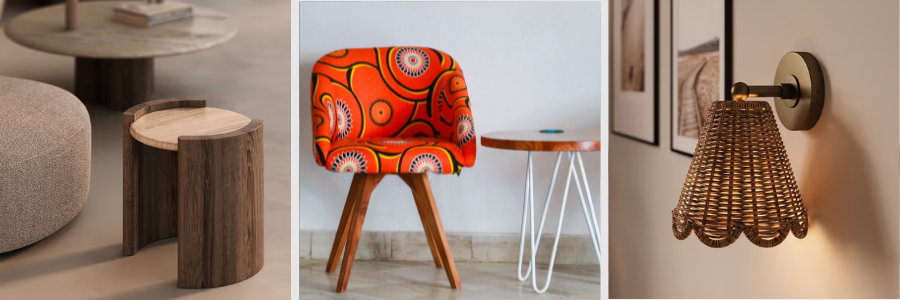
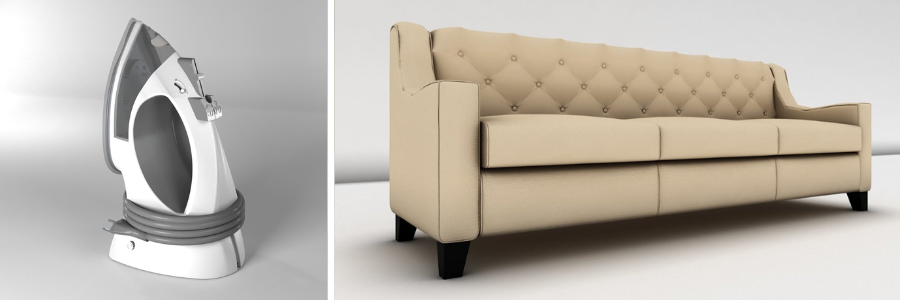
Top of the line iron and luxury sofa by Cad Crowd product design experts

RELATED: How to reduce costs on 3D product development with remote CAD experts for companies

Where the lines blur (and that’s a good thing)

Despite the differences, there’s plenty of overlap. In the real world, industrial design experts often take part in UX conversations, and product designers may sketch physical prototypes. The best results often come from tight collaboration between the two, especially when hardware and software are dancing partners—think smartwatches, fitness trackers, or even modern thermostats.

So, do you need a product designer or an industrial designer? The answer depends on what you’re building. If it’s physical and needs to delight people in the real world, you probably need industrial design chops. If you’re thinking about how users flow through an ecosystem—physical, digital, or both—product design is your guiding light.

In short, choose your creative co-pilot wisely. The success of your next big idea might just hinge on it.

The industrial designer: Master of tangible beauty

Ever picked up a product and thought, “Wow, this just feels right”? That’s no accident. Behind that satisfying shape, that perfect grip, and that sleek surface is the handiwork of an industrial designer—someone who lives at the intersection of artistry and engineering.

Industrial design is where beauty meets practicality. These CAD freelance professionals are the reason your smart speaker doesn’t just sound good but blends seamlessly into your décor. They’re obsessed with how things look, feel, and function. Materials, ergonomics, and manufacturing methods—every decision is deliberate. That smooth curve on your electric toothbrush or the matte finish on your coffee maker? It was sketched, modeled, tested, and refined again (and again) by someone who’s part sculptor, part strategist.

Their process usually begins with sketching bold ideas and translating them into CAD models. Then comes prototyping—sometimes with foam, other times with 3D printing design services—so they can get their hands on the concept, test it, twist it, drop it, and improve it. It’s creativity grounded in reality.

But they don’t work alone. Industrial designers are deeply collaborative, aligning closely with engineers, marketing teams, and manufacturers. They know a great idea only matters if it can be produced efficiently and still dazzle consumers. They juggle aesthetics with cost, innovation with practicality.

Their fingerprints are on just about everything: sleek smartphones, intuitive kitchen gadgets, high-performance athletic gear, and even life-saving medical tools. That chair you melt into at work? It’s not just comfortable by chance.

Industrial designers shape the everyday objects we often take for granted, transforming functionality into something that feels like magic in our hands.

The product designer: Architect of the entire experience

Now, enter the product design experts—the Swiss Army knife of design services.

Product designers focus on the complete user experience (UX). That means they care about how the product is used, not just how it looks. Their work spans digital and physical domains, and they’re often found mapping out user journeys, conducting usability tests, and refining the logic behind every button click or swipe.

Yes, they might sketch out the outer shell of a product too (especially in startups or smaller teams), but they’re equally concerned with the interface, packaging, service model, and long-term product lifecycle. They might design the onboarding flow of an app, the haptic feedback of a button, or even the repairability of a wearable device.

Product designers are also strategists. They work upstream—researching user needs, assessing market trends, using open innovation services, and identifying opportunities long before a single CAD file is created. And downstream—testing with users, measuring engagement, and suggesting feature updates.

In other words, while an industrial designer might perfect how a smartwatch looks and feels, the product designer ensures it syncs with your phone, displays the data intuitively, and doesn’t frustrate the user after three days of wear.

RELATED: Cost-effective methods for new product design & development services for your company

Collaboration or competition? Actually, it’s teamwork goals

There’s a common misconception that industrial design and product design are locked in some kind of creative turf war. But truthfully, the most successful products don’t pick a side—they blend both disciplines like the dream team they are. Think of it less like a rivalry and more like a power duo: peanut butter and jelly, Batman and Robin, or a Spotify playlist that just gets your vibe.

In reality, industrial and product designers are playing different positions on the same team. Industrial design focuses on the physical form—how the product looks, feels, and functions in the real world. Meanwhile, product design zooms out and designs the entire user experience, from interaction flow to digital integration.

When these two worlds collide in harmony, magic happens. Literally—take the Apple Magic Mouse. Its sculpted exterior is a showcase of industrial design precision, while the intuitive touch gestures and user flow are the handiwork of a thoughtful consumer product design service. The result? A tool that’s as elegant as it is functional (well, minus that awkward charging port on the bottom—nobody’s perfect).

Companies that recognize this collaborative sweet spot don’t just make products; they craft experiences. They solve real problems in ways that feel effortless. And in a market that’s full of noise, that kind of synergy speaks volumes.

So instead of drawing a line in the sand, it’s time to set shared goals. Because when industrial and product designers team up, everyone wins—especially the user.

Where the lines blur—and why that’s okay

Here’s where things get especially compelling. The once-clear boundary between industrial design and product design? It’s getting fuzzier by the day—and that’s not necessarily a bad thing. Thanks to the rise of accessible design tools, online education, and collaborative workspaces, more professionals are crossing traditional lines and building hybrid skillsets.

It’s not unusual now to see an industrial designer experimenting with digital interfaces or a product designer diving into sculpting and physical prototyping engineering services. Platforms like SolidWorks and Figma live side by side in the same workflow. One designer might be 3D-printing a hardware prototype in the morning and refining an app’s user flow in the afternoon. Especially at startups or lean teams, versatility becomes an asset. One person often wears multiple hats—part engineer, part interface designer, part brand strategist.

Still, there’s value in deep focus. A designer who’s spent years studying user ergonomics or perfecting app UX flows will likely outperform a generalist in that specific area. Companies face a strategic choice: hire a specialist who brings depth and precision, or bring in a multi-disciplinary talent who can adapt, connect, and iterate across mediums.

The key takeaway? The line between industrial and product design is more of a gradient than a wall. That overlap can lead to richer collaboration, more intuitive products, and faster innovation. And in a landscape where agility and insight matter more than rigid roles, blurring the lines might just be the smartest move of all.

RELATED: Speeding up product development with new product design services companies

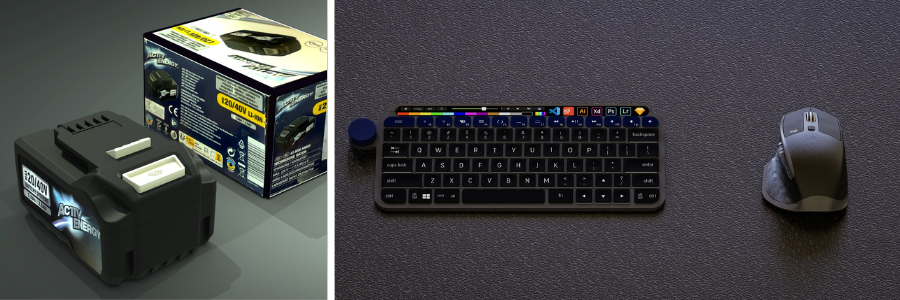
Product and industrial engineering designs of a cara battery and computer accesories by Cad Crowd experts

How companies choose: The practical breakdown

Picture this: you’re a company about to launch a new product. The prototype sketches are on the whiteboard, excitement’s in the air, but then comes the million-dollar question: Who do we call first—an industrial designer or a product designer?

If your vision involves a tangible item—say, a sleek gadget, furniture piece, or a tool meant for mass production—an industrial designer is your go-to partner. These folks are experts in turning ideas into physical objects that are not only functional but also use principles from design for manufacturability services and aesthetics. They’ll fine-tune every curve, texture, and material to ensure your product feels as good as it looks. Need it to fit into an injection mold or have a premium metallic finish? They’ve got it covered.

But what if your product also lives in the digital world? Suppose it needs an app, connects to Wi-Fi, or includes a screen—enter the product designer. These specialists zoom in on user journeys, interface clarity, and how people interact with the digital side of your product. They care about how your product feels in a user’s hand and how it responds to a swipe, tap, or push notification.

Still scratching your head because your project spans both physical and digital? Like a smart thermostat or a wearable fitness tracker? That’s your cue to bring both designers into the room. Not just in the final stages, but early, during brainstorming, sketching, and planning. When these two disciplines collaborate from the start, you get something more than just functional or beautiful. You get something truly integrated, delightful, and user-friendly.

In the end, choosing who goes first isn’t about hierarchy—it’s about what your product needs to succeed. And often, it needs a bit of both worlds.

What it means for startups vs. corporations

Startups move fast—and often on a tight budget. Hiring both an industrial designer and a product designer? Not always an option. That’s why many young companies look for a hybrid designer who can wear both hats, or they team up with agencies that offer an all-in-one package. These agencies usually have dedicated specialists, but they work closely together to deliver a cohesive, streamlined product.

Corporations, by contrast, have the resources to go deep. They often break down their design pipeline into clear roles: industrial design, product design, UX research, engineering design services, and more. This approach allows for serious depth and technical expertise. But it also comes with a catch—silos. When teams don’t talk, design suffers. Great products come from great collaboration, not disconnected departments.

Whether you’re launching your first MVP or refining a next-gen device for a global market, timing matters; bringing in the right designer at the right stage can prevent costly delays, endless feedback loops, and design misfires. It’s not just about talent—it’s about alignment. Understanding the strengths and limits of your setup, whether lean or layered, can make all the difference in how smoothly your product journey unfolds.

Tools of the trade: Where the software tells a story

Sometimes, the easiest way to tell an industrial designer from a product designer is by snooping around their software. It’s not just about what they create—it’s how they build it.

Industrial designers often live in the land of SolidWorks, Rhino, Fusion 360, and KeyShot. Their screens are filled with exploded views, intricate renderings, and glossy material libraries. Adobe Illustrator might pop in, too, especially when surface graphics need that perfect polish. And the final proof? You can usually pick up what they’ve designed—literally. Whether it’s a prototype you can turn in your hand or a photo-realistic rendering service that looks ready for the shelf, industrial design is all about form, function, and physical presence.

On the flip side, product designers navigate a digital-first universe. Their toolbelt features Figma, Sketch, Adobe XD, and InVision—each one tailored for user flows, app interfaces, and seamless interactions. Add in some Blender or Fusion for the occasional 3D exploration, and it becomes clear: this is the realm of journey maps, user personas, wireframes, and pixel-perfect layouts. There’s no shortage of sticky notes either—some physical, many virtual.

Sure, there’s overlap. And it’s growing in exciting ways. But try designing a toothbrush in Figma or wireframing an app in SolidWorks, and the differences become hilariously obvious. These tools aren’t just software—they’re storytelling devices, uniquely suited to the kinds of problems each designer is solving. The tools may differ, but the goal remains the same: great design that works.

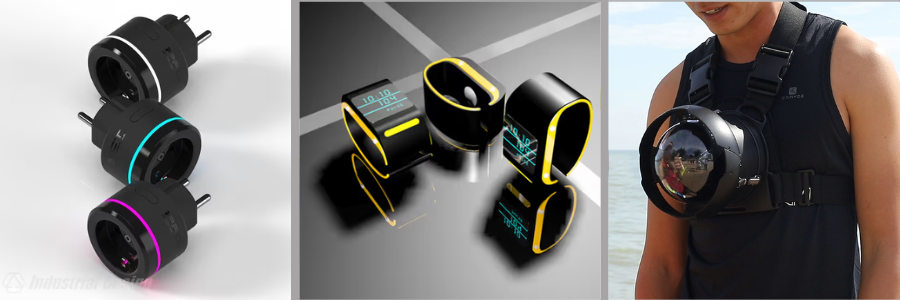
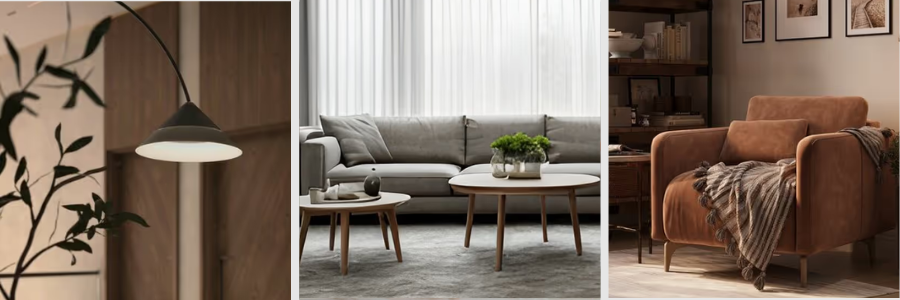
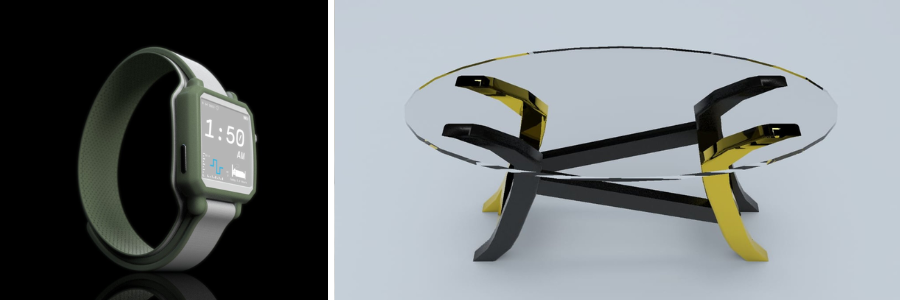
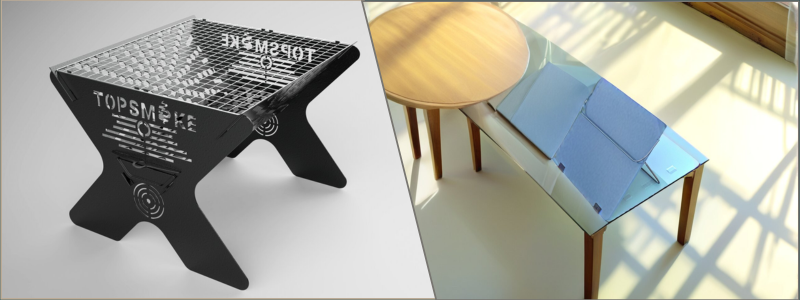
Health smart watch and glass tables by Cad Crowd design expert

RELATED: How is product design different from industrial design services companies?

Who gets the credit?

When a product becomes wildly successful—think smartphones, fitness trackers, or even that sleek coffee maker in your kitchen—it’s tempting to pin the win on one brilliant mind. But that’s rarely the case. The real magic? It’s a team effort for product development experts.

The industrial designer deserves a huge nod. They’re the ones who sculpt the physical form, choose materials, and make sure the product doesn’t just look good but can actually be manufactured without costing a fortune. They’re the reason your device feels solid in your hand and looks sharp on your desk.

Then there’s the product designer—deep in the user experience trenches. They map out how the product works, how it feels to interact with, and whether the features genuinely solve your day-to-day problems. When something just makes sense, that’s no accident. It’s a thoughtful, intentional design.

But the real success comes from collaboration. When these two design disciplines push each other—one rooted in aesthetics and physical realities, the other grounded in usability and customer needs—the results are incredible. It’s not about who deserves more credit; it’s about how their different approaches elevate each other.

Final thoughts: Hire for vision, Collaborate for success

At the end of the day, understanding the difference between industrial design and product design isn’t just academic—it’s a strategic advantage, especially for electronic device companies.

When companies choose the right designer at the right moment, they reduce time-to-market, cut costs, and wow customers. When they confuse the roles or underinvest in design altogether, they end up with a product that’s awkward to use, hard to manufacture, or worse—forgotten.

So, whether you’re dreaming up a new gadget, redesigning a best-seller, or building an ecosystem of hardware and software, think beyond just “design.” Think about which kind of design your product needs, and build your dream team accordingly.

Because in the battle of industrial design vs. product design, the winner is always the company that hires both.

RELATED: A guide to electronic product design for manufacturing with PCB design firms & engineers

How Cad Crowd can help?

Ready to bring your next breakthrough product to life but unsure whether you need industrial design expertise, product design vision, or both? Cad Crowd is the best freelance marketplace for product and industrial designers. Our vetted experts understand the nuances between industrial and product design, delivering tailored solutions that transform your ideas into market-ready innovations whether you’re launching a startup’s first prototype or refining a corporate product line, partner with Cad Crowd to access the right design talent at exactly the right moment for your project’s success, leading globally as the number one platform for 3D CAD and product development services. Get a free quote today.
author avatar

MacKenzie Brown is the founder and CEO of Cad Crowd. With over 18 years of experience in launching and scaling platforms specializing in CAD services, product design, manufacturing, hardware, and software development, MacKenzie is a recognized authority in the engineering industry. Under his leadership, Cad Crowd serves esteemed clients like NASA, JPL, the U.S. Navy, and Fortune 500 companies, empowering innovators with access to high-quality design and engineering talent.

Connect with me: LinkedInXCad Crowd

Developing Consumer Electronics Product Design with 3D Rendering Freelancers to Elevate Companies Branding


Due to advancing technology, every device and every appliance features its unique capabilities. Within your proximity, you can already identify five devices within your reach. But this goes beyond the usual things we see every day. Nowadays, we have electronic toothbrushes, electronic vehicles, robotic vacuums, etc. But of course, every good side has its downside. When you try to use a different battery for a camera, it doesn’t fit, or imagine cramming a heart rate sensor, GPS, cellular connectivity, and a day’s worth of battery life into something smaller than a traditional watch face.

It’s like playing Tetris, except the pieces are expensive, the consequences are high, and if you mess up, thousands of customers will roast you on social media.

Most of the time, this can be really overwhelming. To help you with the process and development, the leading agency for 3D professionals and experts, Cad Crowd, is here to help you. With over 102,000 pool of talents, you’ll have no hard time selecting the best team for you with an affordable budget, while still getting quality work.

Are you ready to know more about developing consumer electronics product design with 3D rendering? Let’s start.


🚀 Table of contents


The old days were expensive and slow

Here’s how product development used to work, and why it was such a pain. You’d have an idea for a new gadget – let’s say a fitness tracker. First, you’d sketch it out, maybe build a cardboard mockup to get a feel for the size. Then comes the expensive part: building actual prototypes.

Every single variation required its own physical prototype. Want to test three different button layouts? That’s three prototypes. Five different color schemes? Five more. Different battery sizes? You get the idea. Each one could cost anywhere from a few hundred to several thousand dollars, depending on complexity.

I remember talking to a startup founder who spent $50,000 just on prototype design services for a simple Bluetooth speaker. They went through dozens of iterations trying to get the acoustics right while keeping the size reasonable. Half of those prototypes never even got tested because they ran out of money.

Then there was the time factor. Building prototypes takes weeks. Shipping them between teams takes more time. Testing reveals problems, so you build new prototypes, which takes more weeks. Meanwhile, competitors are moving ahead, and that brilliant idea you had six months ago is starting to look less brilliant.

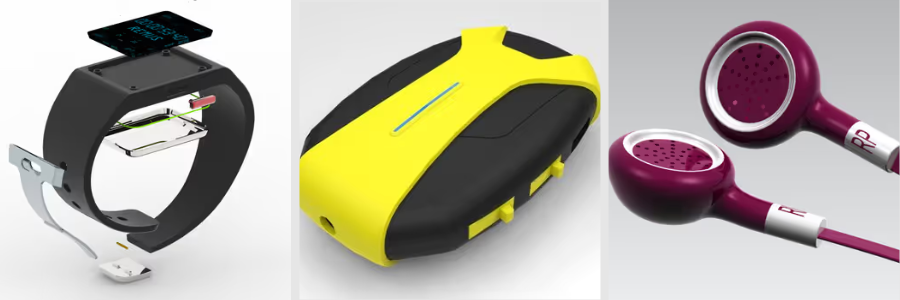
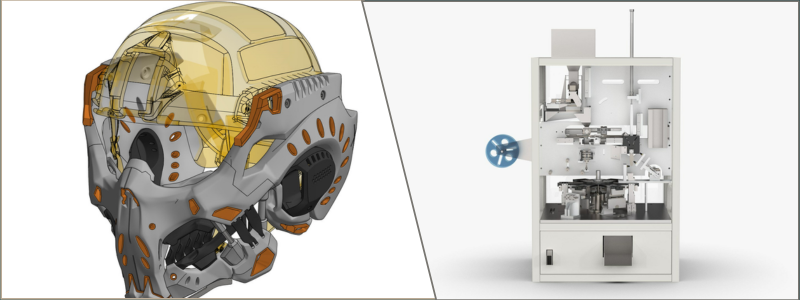
headphones camera and vending machine product design by Cad Crowd product designers

RELATED: The simple secret to unlocking new product innovation at design services companies

What is 3D rendering and its importance in consumer electronics

3D rendering basically lets you build incredibly detailed virtual prototypes instead of expensive physical ones. But calling it “virtual” makes it sound fake or simplified. These aren’t cartoon drawings – modern 3D renderings are so realistic that you literally can’t tell them apart from professional photographs.

A friend of mine works at a consumer electronics company, and she told me about their latest smartwatch project. Instead of building dozens of physical prototypes to test different internal layouts, they created everything digitally first. They could move components around, test different arrangements, even simulate how heat would flow through the device – all on a computer.

When they finally built their first physical prototype, it worked almost perfectly. No major surprises, no expensive redesigns, no scrambling to meet deadlines. The whole process took half the time and cost about a quarter of what it would have using traditional methods.

But here’s what really blew my mind: they were creating marketing materials before the product even existed. Professional-looking photos, 360-degree product views, and even videos showing how different features worked. All generated from 3D modeling design services.

Role of 3D rendering in consumer electronics

Last year, an automotive company needed approval from its board for a new dashboard design. Instead of building expensive physical mockups, they created photorealistic 3D renderings of three different options. Board members could see exactly how each design would look in different lighting conditions, how materials would age over time, and even how buttons would feel to press (through haptic feedback simulations).

They made their decision in a single meeting. No back-and-forth, no “let’s see another version,” no delays. The whole approval process took two weeks instead of two months.

Another example: a furniture company was developing a new line of office chairs. They needed to show potential investors how different color and material combinations would look in various office environments. Rather than producing dozens of physical samples, they used 3D visualization services to create scenes showing each chair variant in different settings – modern offices, traditional boardrooms, home workspaces, even outdoor patios.

The investors could see not just the chairs themselves, but how they’d actually look in real-world situations. It was more convincing than physical samples because they could visualize the complete picture.

How would you develop consumer electronics product design?

Creating these digital masterpieces starts with 3D modeling – basically sculpting with math instead of clay. Every surface, every curve, every tiny detail gets defined precisely. It’s tedious work that requires patience and an eye for detail.

In texturing, surfaces start looking like real materials instead of plastic computer graphics. Getting textures right is an art form. The difference between aluminum that looks fake and aluminum that looks real comes down to understanding how light behaves when it hits different surface finishes.

Lighting design services are where things get really complicated. Real-world lighting is messy and unpredictable. Light bounces off surfaces, creates reflections, and changes color based on what it hits. Good 3D artists spend years learning to recreate these effects digitally.

The actual rendering process is where powerful computers take over. Modern software can simulate incredibly complex physics – how different materials interact with light, how transparent objects distort what’s behind them, how metallic surfaces create reflections. Some renderings can take hours or even days to complete, but the results are worth it.

Why companies are going all-in

The cost savings are obvious, but they’re just the beginning. Traditional product photography requires physical samples, professional photographers, studio time, equipment rental, and extensive post-production work. For companies launching multiple product variants, these costs multiply quickly.

But the real advantage is speed. Need to change a product’s color? That’s a few hours of computer work instead of weeks of reshooting. Want to show how the product looks in different environments? Create new digital backgrounds instead of finding new locations.

The flexibility is incredible. Companies can create marketing campaigns for products that exist only as ideas. They can test market reactions to different designs before committing to manufacturing. They can even let customers customize products and see exactly what they’ll get before ordering.

I’ve seen companies use 3D rendering design services to create interactive experiences where customers can rotate products, zoom in on details, and even see exploded views showing internal components. It’s like having a showroom that fits on a website.

RELATED: How is product design different from industrial design services companies?

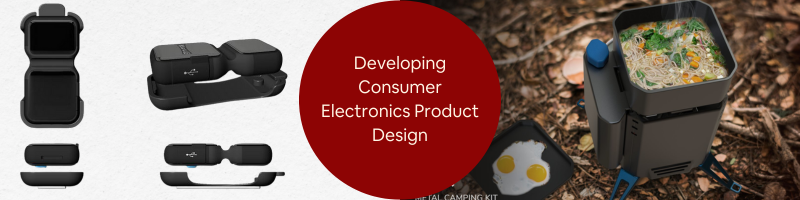
3D cooking device and smart bag rendering by Cad Crowd design professionals

2025 electronics trend

The electronics device design industry never sleeps, and 2025 is turning out to be particularly interesting. Artificial intelligence is getting smarter, but it’s being adopted unevenly across different types of products. Some applications are ready for mainstream use, while others are still experimental.

Energy costs keep climbing, which is creating demand for smart home products that help people track and reduce their power usage. Companies that can make energy management simple and intuitive are finding eager customers.

TV sizes keep getting bigger, which is pushing display technology in interesting directions. What started as a quest for larger screens has led to improvements in resolution, color accuracy, and energy efficiency that benefit lots of other products.

The computer market is experiencing some interesting shake-ups due to changes in processor technology. Companies that can adapt quickly to new chip architectures are gaining significant advantages over slower competitors.

Smart home devices are getting much better at understanding their environment thanks to advances in sensor technology. The latest products can detect subtle changes in temperature, humidity, air quality, and even human behavior patterns, then respond appropriately.

Developing a new consumer electronics product 

Companies that have figured this out are following more systematic approaches. Instead of jumping straight into design, they’re spending more time upfront researching markets, understanding customer needs, and identifying opportunities for genuine innovation rather than just copying what competitors are doing.

The concept development phase has become much more sophisticated. Teams can create detailed product concepts with realistic 3D visualizations services, test how components fit together, and identify potential problems before ordering expensive parts. Project timelines now account for the flexibility that 3D rendering provides. Companies can run multiple design tracks simultaneously, make rapid changes based on feedback, and compress development cycles without cutting corners on quality.

Testing has become more focused, too. Instead of discovering basic design flaws during physical testing, companies can use that time to validate performance characteristics and fine-tune user experience details. Even manufacturing benefits from better upfront design work. Production teams can review detailed 3D models to spot potential manufacturing challenges and suggest modifications that make products easier to build without compromising functionality.

RELATED: A guide to electronic product design for manufacturing with PCB design firms & engineers

Conclusion

3D rendering has transformed from a supplementary tool into a vital necessity for maintaining competitiveness. Firms that excel with these technologies can create products more swiftly, cost-effectively, and with fewer unexpected challenges. The most thriving companies will be those able to iterate rapidly, obtain valuable feedback early, and launch attractive products to market before their rivals. 3D rendering lays the groundwork for this type of fast-paced development cycle.

We’re still in the early stages of this transformation. As rendering technology continues improving and computers get more powerful, the line between digital prototypes and physical products will keep blurring. Companies that embrace this change now will have a significant advantage over those that wait. The future belongs to organizations that can move fast without breaking things – and 3D rendering is making that possible in ways we couldn’t have imagined just a few years ago.

author avatar

MacKenzie Brown is the founder and CEO of Cad Crowd. With over 18 years of experience in launching and scaling platforms specializing in CAD services, product design, manufacturing, hardware, and software development, MacKenzie is a recognized authority in the engineering industry. Under his leadership, Cad Crowd serves esteemed clients like NASA, JPL, the U.S. Navy, and Fortune 500 companies, empowering innovators with access to high-quality design and engineering talent.

Connect with me: LinkedInXCad Crowd

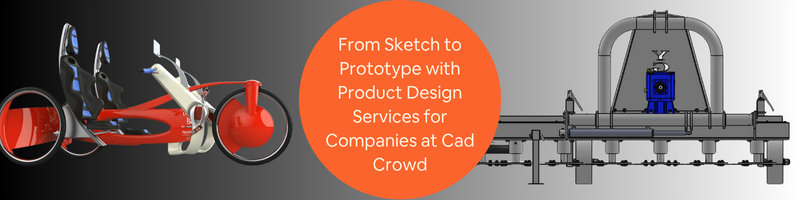
From Sketch to Prototype with Product Design Services for Companies at Cad Crowd


Within today’s competitive business climate, a new product journey from concept to reality is made possible with speed, precision, and collaboration. Product design service sits at the core of such an operation to enable firms to have a hazy sketch transformed into a usable prototype that is ready to produce.

Cad Crowd, the leader in on-demand CAD services with over 94,000 experts, supports companies in this intricate process by providing expert guidance at every stage. The website connects companies with the cream of the crop when it comes to product design services that can help with every stage of the process, from creating sketches to generating prototypes.


🚀 Table of contents


The role of product design sketches in development

The journey of any product begins with a concept, often a rough drawing. These sketches are not aesthetic images but essential conceptualization and communication tools for product vision. Well-drafted design sketches are the foundation of CAD modeling, which facilitates enhanced visualization and decision-making.

An exact sketch helps the designers and engineers understand the product’s basic functioning and appearance before spending resources on development. It also helps identify potential design faults early, saving time and costs. In the majority of industries, like this one here, such first sketches undergo multiple drafts before entering the next development phase, verifying that all facets of the design are compatible with market demands as well as manufacturing feasibility.

RELATED: Key factors to consider when vetting engineering firms for design & consulting services

Why does product design matter in product development?

On the aesthetics aside, in the world of product development services, design is a determinant of success or failure. Product design impacts user experience, manufacturing efficiency, and ultimately, business growth and customer satisfaction. Organizations that appreciate thoughtful design can reap significantly more than organizations that consider design an afterthought. The reasons why product design is essential in every stage of development are listed below.

Enhancing user experience

Great product design begins with the user. A well-designed product is intuitive, functional, and enjoyable to use. Consumers today expect seamless experiences, and a bit of friction in the form of a complex interface, clumsy grip, or hard assembly is sufficient to generate frustration and abandonment. The best designs anticipate needs and resolve pain points in advance. For example, manufacturers of phones invest a lot of money in ergonomics, so that their phones will be comfortable to hold in the hands of their customers while being thin. If design is usability-focused, then customer satisfaction is guaranteed to follow.

Sketch of a pulley system and butterfly knife by Cad Crowd product design experts

Differentiating in a crowded market

In any industry, competition is fierce. A well-designed product becomes iconic and accumulates brand reputation. From the elegance of an Apple product to the ruggedness of a Jeep, a design imposes a company’s values and identity. A creative, unique design can be the sole reason a customer uses one brand over another. Organizations that regularly revise their designs are capable of staying in line with current times and adapting to changing market trends.

Enhancing functionality and performance

Design isn’t just about appearance—it’s a problem-solving activity that optimizes functionality. Designers and engineers collaborate to refine form and function so that the product carries out its desired function with optimal efficiency. This applies to everything from consumer electronics to industrial machinery. Poor design can lead to performance issues, increased failure rates, or customer dissatisfaction. By integrating design thinking at the outset of development, companies can reduce costly redesigns and improve product reliability.

Decreasing manufacturing costs and complexity

An intelligent design not only enhances usability but also impacts manufacturing viability, which is critical. Design for manufacturability (DFM) services ensure a product can be manufactured at reasonable costs without having additional costs or time for production. Simple but efficient design choices—such as simplifying the number of components, employing easily procurable materials, and simplifying assembly in the design—save significant costs in production. Optimizing design for manufacturing in organizations gives them a competitive advantage through cost reduction without sacrificing quality.

Improving sustainability and longevity

Sustainable design is increasingly a primary concern in modern product development. Consumers and businesses alike are more eco-aware, and the more sustainable the product, the more desirable it is. Thoughtfully made design choices—like recyclable material, low energy consumption, and longevity—assist in giving a cleaner lifecycle. Products with longer lifespans and less waste assist in building consumer trust and contribute to growing global efforts toward sustainability.

Product design is not merely about making something look good—it’s a strategic element that affects user experience, marketability, efficiency, cost, and sustainability. Investing in great design upfront in the product development process ensures that products perform better, stand out in the marketplace, and create enduring value. In an increasingly competitive world, companies that understand the power of design will always be ahead.

RELATED: 10 design principles for product development & industrial design services teams

CAD modeling: Bridging the gap between concept and functionality

Concept to reality is a vital process in today’s product development and engineering. While hand sketches and conceptual drawings play a significant role during the initial design stages, they are not practical and precise enough for production purposes. That’s where CAD (Computer-Aided Design) modeling fits in, serving as the bridge between raw concepts and functional products. CAD modeling design services translate raw concepts into highly accurate digital 3D models, enabling designers and engineers to fine-tune every aspect of a design before a single physical prototype is made.

As businesses rely increasingly on technology-based solutions, CAD has become a critical part of product design, architecture, mechanical engineering, and fashion. Its allowance for accurate visualization, structural evaluation, and effortless collaboration makes it inevitable. Business entities like Cad Crowd bring together companies with expert CAD designers in a bid to achieve high-end models that appeal both aesthetically as well as functionally.

The role of CAD in product design

CAD modeling is not just an exercise in coming up with a nice-looking picture; it’s optimizing and maximizing designs for performance, manufacturability, and efficiency. Let’s talk about the leading advantages CAD can provide in product design.

Increased accuracy

Accuracy is the key to successful product design. CAD software allows designers to employ accurate measurements, so that each component will assemble perfectly in an assembly. Compared to manual drafting methods, where human error is a common occurrence, CAD software minimizes errors by employing automated dimensioning, geometric constraints, and parametric modeling. Engineers can design with tight tolerances, so that all parts will function as intended when produced.

For instance, in the automobile industry, a millimeter or two may be the difference between success and failure. CAD enables product development experts to mold tiny details so that engine components, gears, and chassis components can be assembled together smoothly. Such accuracy not only makes products more functional but also reduces the likelihood of costly design flaws.

Cost and time efficiency

One of the most powerful advantages of CAD modeling is its ability to shorten product development time. Traditionally, physical prototyping and design were an expensive and time-guzzling task. CAD helps engineers create computer-based prototypes that can be easily modified within a short span of time, saving the hassle of repeated physical runs. This generates huge cost savings by eliminating wastage of materials and labor expenditures for repeated running of prototypes.

Additionally, CAD software minimizes the design process by offering pre-made components, automated functions, and standard part libraries. This allows the designer to focus on creativity rather than repetition. Moreover, CAD functions well with CNC machining and 3D printing technology, allowing for rapid prototyping and efficient manufacturing processes.

Design optimization and performance testing

Aside from graphic presentation, CAD enables engineering design firms to optimize and analyze their designs. By means of simulation and analysis features embedded within the software, designers can test structural strength, stress patterns, aerodynamics, and material response to varying conditions.

For example, in the aviation industry, CAD is used to simulate air drag, heat, and mechanical stress on aircraft components before they are manufactured. Predictive analysis like this alerts engineers to potential weak points early in the design process, allowing them to reinforce critical points without over-engineering the structure. This way, companies can create light, strong, and high-performance products at no additional cost.

Additionally, CAD facilitates material selection via the potential of designers to compare materials virtually. With the analysis of weight, strength, flexibility, and cost, companies can make a decision prior to committing to a specific material for manufacturing.

Smooth collaboration across teams

Product design is rarely a one-person job. Various stakeholders, like engineers, designers, manufacturing design experts, and clients, must sit together to deliver a successful project. CAD software allows collaboration by providing a shared digital platform on which all stakeholders can see, edit, and approve designs in real-time.

Cloud-based CAD tools also improve collaboration by providing remote access to design files, making it possible for global teams to collaborate effectively. CAD software also accommodates multiple file formats, which makes it compatible with a variety of manufacturing and engineering tools. CAD modeling eliminates miscommunication and version control problems, making everyone on the same page during the design and production process.

RELATED: Master product design costing: Top strategies for CAD services companies & freelance designers

Sketch to prototype of an automated bucket seat and PCB ether by Cad Crowd product development experts

From idea to reality: A digital revolution

The ability to visualize through complex geometries, model real-world constraints, and explore various manufacturing methods in a virtual environment has revolutionized product development. Compared to traditional methods that rely on trial and error, CAD-based design is data-driven, precise, and effective.

Every industry, from consumer electronics design services to industrial machinery, depends on CAD modeling to upgrade their products prior to mass production. Consider the smartphone industry: every new model is subjected to a comprehensive digital simulation prior to landing on shelves. Engineers use CAD software to study drop tests, heat dissipation, and ergonomics to create a great-looking, durable final product.

Likewise, in architectural construction, CAD modeling allows builders to draft accurate building blueprints, from structural elements to plumbing, electrical schematics, and aesthetic details. Architects are able to design entire skyscrapers, simulate daylight effects, and perform energy-efficiency tests—all before the first brick is set.

From CAD to rapid prototyping: The next stage

CAD models are the basis for rapid prototyping, or creating a physical representation of the design. Companies on Cad Crowd have access to advanced prototyping techniques, including:

  • 3D printing: Best suited for quick iteration and experimentation with multiple materials.
  • CNC machining: Provides high precision for functional prototypes.
  • Injection molding: Ideal for testing mass-production feasibility.
  • Vacuum casting: Convenient for creating accurate, durable prototypes.

Prototype engineering services facilitate real-world testing, such that the product is industry-grade and performs as expected. Refining and tweaking can be effectively achieved before mass production.

Iterative design: Prototyping refinement

Prototyping is rarely a one-step activity. Companies prefer to go through multiple iterations to improve functionality, appearance, and manufacturability. Cad Crowd’s platform facilitates companies to work with seasoned engineers who refine designs on the basis of:

  • User feedback: Gathering feedback from potential end-users for the simplicity of use.
  • Material testing: Verification of chosen material against performance and longevity.
  • Ergonomics & aesthetics: Balancing usability and visual appeal.
  • Manufacturing constraints: Design in accordance with production at the lowest costs.

Iterative prototyping and refinement maximize business potential in the market at a lower risk of expensive post-launch redesign.

Manufacturing readiness: On the way to production

Following verification of a prototype, the next step is gearing up for large-scale production. CAD services play a pivotal part in enabling economic production by designing:

  • Top-level engineering drawings: Step-by-step guides that guide manufacturers during mass production.
  • Bill of Materials (BOM): A bill of materials listing.
  • Assembly instructions: Sequential instructions for factory workers.
  • Tolerancing and GD&T analysis: Ensuring mechanical fit and performance.

Cad Crowd helps companies transition seamlessly from prototype to production with highly detailed CAD files that are optimized for various manufacturing processes.

Why choose Cad Crowd for product design services?

Cad Crowd offers businesses access to a worldwide pool of talented designers, engineers, and prototyping experts, allowing businesses of any size to effectively create and improve their products. Through Cad Crowd, clients enjoy a number of important benefits:

  • On-demand expertise: Regardless of whether your project needs CAD drafting, mechanical engineering, or industrial design experts, Cad Crowd provides you with pre-screened experts specializing in different sectors. No more headaches of recruiting full-time employees.
  • Cost-effective solutions: The platform provides flexible pricing models that adjust according to your individual project requirements, facilitating startups and existing businesses in controlling their expenses while procuring elite talent.
  • Fast time-to-market: Cad Crowd quickens the process of design, delivering rapid iteration and rapid prototyping, thereby ensuring that your product hits the market in a minimum amount of time.
  • IP protection: Privacy is paramount, and Cad Crowd makes sure all intellectual property is treated with utmost confidentiality, ensuring your designs don’t fall into the wrong hands.

From initial ideas to production-ready products, Cad Crowd offers the support and skills necessary to take ideas into marketable solutions, thus becoming a reliable partner for businesses looking for efficiency and innovation.

RELATED: How to improve product development for your company with engineering firms & design consultants

Product sketch and design of a reverse engineered gearbox and ATX enclosure by Cad Crowd design professionals

The future of CAD in designing and manufacturing

As technology progresses, so does the role of CAD in product design. Artificial intelligence (AI) and machine learning incorporated in CAD software see automation further augmented, allowing designers to generate optimized models with minimal human input. AI-driven generative design is already used in industries like aerospace engineering services and automotive manufacturing, where program algorithms propose design alternatives based on performance specifications input by users.

Additionally, CAD is increasingly collaborating with Virtual Reality (VR) and Augmented Reality (AR) technologies. These innovations enable engineers to interact with their designs virtually, allowing for enhanced spatial understanding and real-time modification.

As Industry 4.0 and smart manufacturing take hold, CAD also plays a big role in digital twin technology. Digital twins are computer simulations of physical products or systems employed to track in real-time, conduct predictive maintenance, and analyze performance. The technology is transforming industries like healthcare, with CAD-generated digital twins of medical devices and prosthetics making personalized patient solutions possible.

Conclusion

CAD modeling is now the backbone of modern product design as a pivotal bridge between conceptual sketching and practical reality. As a powerful tool that can provide more precision, cost savings, design optimization, and seamless collaboration, CAD empowers designers and engineers to break new ground.

From architecture to industrial design services, consumer goods, or industrial manufacturing, CAD software ensures end products are not only aesthetically sound but also functionally sound and production-ready. With the progress being made with AI, simulation, and digitization, CAD modeling will remain a core asset in shaping the destiny of design and engineering.

For businesses looking to leverage the potential of CAD, working with seasoned experts through platforms like Cad Crowd ensures access to top-notch designers who can bring ideas to life quickly and precisely. As businesses embrace digitalization, CAD modeling continues to be the backbone of intelligent, high-performance product design.

RELATED: 10 key costs for electronic pdesign & drates for engineering services companies

Cad Crowd is here to help

From sketch to prototype, product creation is a high-tech but rewarding process that calls for technical expertise and strategic vision. With Cad Crowd’s comprehensive product design solutions, companies can lead every step with confidence, from sketching and CAD modeling all the way through to prototyping and manufacturing.

In a world where speed, quality, and innovation decide market success, collaboration with a trustworthy CAD services provider ensures that your product development process remains on track, competitive, and future-ready. Be it a cutting-edge consumer device or an industrial part, Cad Crowd is a trusted partner in bringing your vision to life.

Feel free to contact us today to order a quote for our product design services and beyond!

author avatar

MacKenzie Brown is the founder and CEO of Cad Crowd. With over 18 years of experience in launching and scaling platforms specializing in CAD services, product design, manufacturing, hardware, and software development, MacKenzie is a recognized authority in the engineering industry. Under his leadership, Cad Crowd serves esteemed clients like NASA, JPL, the U.S. Navy, and Fortune 500 companies, empowering innovators with access to high-quality design and engineering talent.

Connect with me: LinkedInXCad Crowd

What You Need to Know When Hiring a Product Design Firm & Designer for New Prototypes


So, you’ve got an idea. A product idea. Maybe it’s a game-changing kitchen gadget, a smart wearable for pets, or a sleek piece of exercise gear that folds into your coffee table. Whatever it is, one thing’s clear: you can’t build it alone. That’s where a product design firm or a skilled freelance product designer from the industry leader Cad Crowd comes in. But finding the right one? That’s kind of like dating. There’s chemistry, there’s trust, there’s the first awkward meetings, and hopefully no heartbreak.

It’s not about creating something that “looks good.” It’s about bringing your idea to life, making it manufacturable, functional, and desirable. It’s a path from sketchbook to prototype, and then on to something that sits on a shelf (or finds its way onto a TikTok shopping haul).

But don’t worry. You don’t have to be an engineer, an artist, or a Silicon Valley visionary. You just need to know what to look for. Here’s your whole guide to hiring a product design team that won’t ghost you after the first render.


🚀 Table of contents


Why you can’t skip the pro team

Product prototyping isn’t about cobbling things together with hot glue and prayer. It may be tempting to rely on a tech-savvy uncle who has a 3D printer, but there is a huge gap between a homemade mockup and a professionally designed prototype that can really sell. That’s where an experienced product design company comes in—and why bypassing them can be more expensive in the long term.

The pros bring more than just tools. They bring a multi-disciplinary team: industrial designers who focus on aesthetics and usability, mechanical engineers who obsess over structure and durability, CAD specialists who translate ideas into manufacturable models, and materials experts who know exactly what will work (and what will melt under pressure). If your idea includes electronics, electrical engineers are often part of the lineup, too.

But the greatest value isn’t merely technical expertise. It’s the critical thought that goes into each choice. An expert team understands how to ask the proper questions: Will this work in the real world? Is it safe? Can it be produced at scale and economically? And perhaps most importantly, will it delight users?

Collaborating with a professional product design company isn’t about delegating your concept; it’s about getting it right the first time. Since the journey from idea to reality is riddled with make-or-break moments, you want individuals in your corner who have successfully traveled that path and who know exactly where the potholes lie.

RELATED: How is product design different from industrial design services companies?

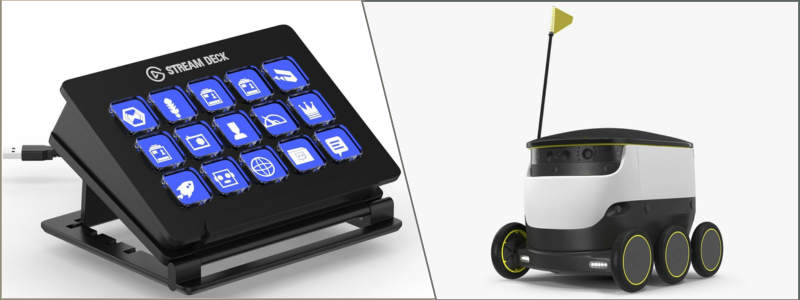
Product design of a elgato steam deck and robotized delivery machine by Cad Crowd product engineering experts

The big questions you should ask before you sign anything

Imagine this: you’re in a modern conference room, with an espresso cup nearby, surrounded by pristine sketches, polished prototypes, and excited designers who are obviously proud of what they’ve made. It’s easy to jump in headfirst, give the go-ahead on the project, and envision your product launch going viral. But before you become carried away with the euphoria, it’s time to put on the brakes and demand the hard questions, especially the ones that can make or break your project later on.

Q1. Have you developed products similar to mine?

Experience in your particular category of products is not a plus; it’s a necessity. Creating a smart wearable device is different from creating a new chair or kitchen gadget, even for product design firms. If your product has electronics, wearables, moving pieces, or has to meet exacting safety requirements, you need a partner who’s already familiar with that landscape. Request examples. Case studies. War stories, even. A team that has “been there, built that” will keep you out of expensive side roads.

Q2. Do you do everything in-house?

Not all design companies are equal. Some provide full-service solutions from ideation and sketching through prototyping and factory-ready files. Others might subcontract work such as CAD modeling or prototyping to outside vendors. That’s not necessarily a bad thing, but it’s important to know who’s actually performing the work. You don’t want to find halfway through a project that your prototype is being sent half around the world, or that essential design files are handled by some nameless freelancer. Transparency is essential.

Q3. What’s your prototyping process?

This question says a great deal about the company’s technical ability and how seriously they are taking your vision. Are they handing you 3D prints glued together with super glue, or are they giving you high-fidelity prototypes that closely represent the final product? If your project is being presented to investors or you are going for crowdfunding, appearance and function count big time. A professional prototype created with CNC-machined aluminum or molded plastics says you mean business.

Q4. Can I own the IP?

You’d be amazed how many business people sweep this one under the rug. Intellectual property is everything. Your name on the patent application, your brand on the design, and your rights locked in black and white. Contracts must be cut-and-dried: you own all IP created under the project. No gray language. No co-ownership. No “we retain rights on particular components” provisions. If the design company resists this, it’s a warning sign.

Q5. What is the DFM (Design for Manufacturing) plan?

A gorgeous prototype is only half the journey. The real magic happens when that design is ready to roll off the production line efficiently and cost-effectively. That’s where DFM services come in. If the design team can’t explain how your product will be manufactured at scale, or worse, they haven’t thought about it at all, they’re not building a business; they’re building a one-off model. Ask how they handle production constraints, material choices, and supplier communication.

Short and sweet, enthusiasm is wonderful, but preparation makes it perfect. Ask these questions, make notes, and don’t accept vague replies. Your product and your company deserve clarity and competence from the beginning.

RELATED: Key factors to consider when vetting engineering firms for design & consulting services

Behind the scenes: What product design firms actually do

When someone hears “product design firm,” they might envision a group of creatives rolling up their sleeves and batting out chic 3D drawings and presenting them with a flourish. That may be the superficial tip of the iceberg, but what actually goes on behind the scenes is an awful lot more complex, strategic, and team-based. A product design company doesn’t merely make things look nice; it assists in shaping ideas into producible, marketable products. Here’s a greater insight into what the entire process actually entails.

Phase 1: Discovery & concept development

This is the time your idea gets to take its first breath. You arrive with sketches, inspiration boards, or perhaps just a rough idea in your head. The concept design service team has its own weaponry, which includes whiteboards, post-its, coffee-fueled ideating, and lots of curiosity. The intent here is to understand user requirements, market voids, and product objectives. Don’t worry if your original concept gets remolded or questioned. The whole point of this phase is exploring and distilling down a vision that’s innovative and realistic.

Phase 2: Industrial Design

And now the party starts. This is when the visual identity of your product comes into being. Designers consider ergonomics, aesthetics, user interface, and visual effect. They create concept illustrations, create mood boards, and start modeling initial designs in CAD. But it’s not merely creating something pretty; however, it needs to be right and act naturally for the end user. It’s where form and function come together in an explicitly intentional and user-oriented manner.

Phase 3: CAD modeling & engineering

Design concepts are passed on and developed into precise 3D models. Engineers come aboard to sort out the nuts and bolts: materials, component location, load tolerances, and mechanical systems. CAD packages become the collaboration language of first resort. All the way down to screw holes and cable run, everything is carefully specified. This is the stage where the design team begins to answer the essential question: Can this even be built?

Phase 4: Prototyping

Now that the digital work is complete, it’s time to go physical. With additive manufacturing services, CNC machining, and other rapid prototyping tools, the product begins taking form in the physical world. This isn’t for display purposes alone—prototypes are examined for feel, fit, strength, and usability. Can the hinge withstand repeated use? Does the button provide proper tactile feedback? It’s all about checking the design and identifying what needs to be corrected before proceeding.

3D product rendering of an airsoft mask and tea bag automated packager by Cad Crowd product design engineers

Phase 5: Refinement & pre-production

Prototype is followed by a cycle of feedback and revision. Perhaps the material selection must be tailored, or the transformation could be more ergonomic. The team makes product refinements based on field testing and stakeholder feedback. Engineers validate that the design is suitable for mass manufacturing, streamlining assemblies, minimizing components, and maintaining cost-effectiveness while preserving performance.

Phase 6: Handoff to manufacturing

Lastly, the design is ready to face the world. Detailed CAD files, production drawings, and bills of material (BOM) are complete. Some companies even help with finding manufacturing design companies or taking orders from vendors. Everything is now ready to go smoothly from the design studio to the shop floor.

So no, it’s not all about fancy renders. It’s an intense development process, significant collaboration, and an infinite number of iterations all to create a product the correct way.

Red flags that shout “Run!” when selecting a product design agency

A beautiful portfolio or crisp website can be extremely convincing, but remember, do not be seduced. Even the most professional-looking design agencies can be a bad fit when you look beyond the surface. Before you sign the contract, here are some serious red flags that should make you reconsider the arrangement.

Number one: no physical prototyping abilities. Great digital renders, perhaps, but if a company can’t create and test physical prototypes, how will it determine true-world usability, longevity, or fit? A design that exists solely on a screen isn’t very helpful once consumers hold it.

Then there’s the abhorred one-size-fits-all strategy. Your product is specialized if it’s a niche or combination design, such as a smart lock with a skateboard attachment. If a company appears to be using the same process with each client, it probably means they’re not customizing for you.

Another dealbreaker is the lack of understanding of production. A stunning concept, in the minds of some designers, is the last step in their work. But if production is too expensive or impossible, then the design serves no use. From the very beginning, the top product engineering design companies think about production limits.

Listen to what they say, too. If every other sentence is full of industry jargon but you still don’t have a clue what they’re talking about, that’s an issue. Clean communication is important. If they can’t describe their process in simple English, then they probably don’t even know it well themselves.

Lastly, ambiguous pricing and schedules should cause you to pause. Experienced firms know how to estimate costs and timelines. If everything seems fuzzy or TBD, that’s a big red flag that they’re not yet prepared or inclined to commit.

Bottom line: trust your gut. If it doesn’t feel right, it likely isn’t.

RELATED: A guide to electronic product design for manufacturing with PCB design firms & engineers

How much does this actually cost?

Yes, the money talk. It’s not really anyone’s favorite subject matter, but if you’re truly determined to introduce a new product, you can’t afford to brush it under the rug. So, how much does product design and prototyping really cost?

If you’re creating a simple consumer product, like a kitchen appliance or a simple plastic box, the costs usually range between $15,000 and $50,000. That usually covers everything from preliminary concept drawings to a functional prototype. But it gets a little more serious (and costly) when you enter into complicated territory.

Products that encompass embedded electronics, specialty materials, or rigorous safety protocols, such as medical devices or wearable smart things, can easily drive the price to $75,000 to $150,000, and even higher at times. These are not merely frilly figures. They represent the broad engineering, prototype design engineering service, and regulatory hurdles involved.

Now, sure, freelancers tend to hit the market at more affordable price points. If you’re a startup struggling to get traction on a shoestring budget, you may see quotes ranging from $5,000 to $10,000. Sounding pretty good, right? Well, here’s the problem: that $5,000 design may never actually be produced. If it can’t be manufactured, or it doesn’t work when put to use in real-world applications, you’ve pretty much wasted money with nothing to show for it.

So what are you actually paying for? Not just doodles. It’s about expertise, productivity, and problem-solving. An experienced team understands how to avoid the types of errors that kill a project several months into the process. And where each delay costs more than dollars, time, opportunity, and momentum, it will become apparent that wise investment early on often translates to better returns down the line.

Short answer: Cost is important. But the value is more.

Should you hire a firm or a freelancer?

It’s a typical dilemma for anyone creating something new: do you hire a full-fledged design agency or a lean freelancer? The response isn’t one-size-fits-all. It actually depends on the scope of your project and how involved you want (or need) to get.

Design companies send a whole team along. Consider industrial design experts, CAD specialists, mechanical engineers, prototypers, and sometimes even supply chain experts. If your item is complicated or if you need someone to guide it from the first sketch to full production, this one-stop shop experience can be a big winner. You receive organization, accountability, and often an efficient process.

Freelancers, on the other hand, provide a concentrated and flexible solution. Perhaps you only require CAD drawings. Or a nice product rendering. Or an outside opinion on a mechanism that’s been stumping your team. Freelancers tend to be cheaper, and they typically are quicker to get up to speed. The catch? You’ll be responsible for coordinating other aspects of the project, such as electrical engineering, procurement, or end prototyping.

The third option is à la carte services, where you can access their expertise without purchasing the entire ticket. Need just a prototype? Or want a design audit before you invest in tooling? These companies can step in at a halfway point and provide specific support holes.

Ultimately, it’s all about connecting the right talent with the right point in your product journey. Whether that’s the power of a firm or the flexibility of a freelancer is a matter of what you’re building and how you want to build it.

RELATED: How to reduce painful product development costs for your company

Product design rendering of a portable firepit and laptop table by Cad Crowd engineering experts

What great designers and firms have in common

When you’re in the market for a design partner, whether it’s a freelance pro or a full-fledged consumer product design firm, it’s easy to get distracted by beautiful mockups and slick presentations. But great design isn’t just about looks. It’s about working with someone who truly gets what you’re building, why it matters, and how to make it real.

One thing that distinguishes good designers from great ones?

  • Curiosity: Great designers won’t simply nod and agree with anything you propose. They’ll ask intelligent questions regarding your users, your business objectives, and even your competition. That’s how they adapt solutions to what you really need, rather than what you believe you do.
  • Candor: If your idea has a hole in it, you want someone who’s honest enough to say so and skilled enough to offer better alternatives. No sugarcoating. No unnecessary flattery. Just useful, constructive feedback.
  • Collaboration: A good designer understands that this isn’t a one-and-done deal. They’ll listen attentively, articulate their decisions clearly, and shift their strategy as your project unfolds. It’s a two-way conversation, and the best ones ride with you each step of the way. Just as crucial is a production mentality. A design that appears stunning on the screen but is prohibitively expensive to produce is a dead end. Great designers know how things work in production and design accordingly.

Lastly, the results are not simply nice shots, but products in the real world, rave reviews, and case studies that speak to their effect. Specific client testimonials can say more than any portfolio ever could.

Bottom line: Brilliant designers pose intelligent questions, provide frank responses, collaborate like teammates, and realize your ideas in style and function.

How long does it take?

How long do products actually take to design? If you were thinking of getting it all done in a few weeks, think again. A full product design process from your first concept to production files is typically 3 to 9 months, and sometimes more. The timing depends on complexity, especially in the case of electronic device design firms.

For instance, a straightforward plastic product can be done in 3 or 4 months. But if you’re working on something more complex, such as a wearable device with electronics or several user interfaces, then you’re talking about 6 to 12 months or even longer. This is not a rush project; it’s about accuracy, testing, and polish.

After all, you’re not simply drawing a nice thing; you’re creating something that people will actually use, maybe on a daily basis. Taking the extra time to get it right the first time will save you from expensive errors later on. In product design, patience isn’t a virtue; it’s essential to success.

Working with a design firm: Tips for a smoother ride

Want to be a dream client? Here’s how to steer clear of the bumps.

  • Come with clarity. You don’t need a complete spec sheet, but have a sense of your objectives. What are you solving? Who’s your user? What’s your vision?
  • Be flexible. Your idea can shift. That’s not a failure, it’s evolution.
  • Provide good feedback. “I don’t like it” doesn’t tell us much. “It feels too heavy for a kid’s hand.
  • Patience is polite. Respect the process. Good design is iterative. Anticipate several rounds and expect some twists along the way.
  • Prototype planning. Budget and time must be allocated for not only one, but possibly several prototypes. It’s part of figuring out what works.

RELATED: What are industrial design rates & costs at product design services firms?

Design is where magic meets mechanics

There’s something thrilling about witnessing your product evolve from sketch to shelf. The best product design firm isn’t merely a team; you need to find your co-pilots on this wild journey. The process will test your patience, challenge your assumptions, and potentially reshape your initial idea through open innovation services.

But with the right partners, you’ll gain more than just a prototype. You’ll have a product ready to face the real world, with every curve, button, and detail meticulously considered by people who live and breathe design.

Cad Crowd is here to help!

So, don’t rush! Take your time to ask the tough questions and look beneath the surface. When it comes to bringing your idea to life, hiring an excellent product design team from Cad Crowd is not just the first step; it’s the most crucial one in transforming that “what if” into a “wow.” Don’t wait any longer—get in touch with us today for your free consultation and discover how we can help you turn your vision into reality! Request your FREE quote now!

author avatar

MacKenzie Brown is the founder and CEO of Cad Crowd. With over 18 years of experience in launching and scaling platforms specializing in CAD services, product design, manufacturing, hardware, and software development, MacKenzie is a recognized authority in the engineering industry. Under his leadership, Cad Crowd serves esteemed clients like NASA, JPL, the U.S. Navy, and Fortune 500 companies, empowering innovators with access to high-quality design and engineering talent.

Connect with me: LinkedInXCad Crowd

The Simple Secret To Unlocking New Product Innovation at Design Services Companies


You can have the greatest engineers, the most visionary designers, and a budget that would make a startup cry tears of happiness, and still get it wrong when it comes to product innovation. Ridiculous, right? But here’s the catch: most design services firms are searching in all the wrong directions for the next big thing. They follow trends, hold onto processes, overthink metrics, and overlook the one secret ingredient that really gets the innovation needle moving.

Cad Crowd, the leading agency, can help you choose from over 94,000 experts and product design experts. These experts don’t simply help bring concepts to fruition; their help actually plays an imperative role in helping speed the overall product creation process along. What could be an otherwise protracted, fat-bloated undertaking, these designers transform into streamlined, quick-line paths for reaching the marketplace as fast as possible. So, what’s this amazing fairy dust elixir that the top design services firms at Cad Crowd are using today? Is it some kind of AI magic? A creative brainstorming session? Or maybe a unique five-step approach with a catchy name?

Not so much. The trick is reassuringly straightforward: deep user insight.


🚀 Table of contents


Why “knowing your user” isn’t just UX fluff

Let’s get something straight right off the bat—when we talk about “knowing your user,” we’re not referring to those cookie-cutter personas scribbled on a whiteboard during a kickoff meeting. You know the ones: “Sarah, 32, lives in the suburbs, likes yoga, struggles with time management.” That’s surface-level. Decorative. It might look good on a slide deck, but it doesn’t move the needle when it comes to creating products that truly resonate.

What we’re actually discussing is an intimate, visceral knowledge of the people you’re designing for. We’re discussing understanding their pain points so well that you cringe when you consider them. About discovering wants they didn’t even know they had. It’s about listening to their irrational behaviors and unmet needs, the messy, inconsistent things that never materialize in surveys but always materialize in real-life behavior. That’s where the gold lies.

And yet, far too frequently, product design services firms succumb to an old temptation: they begin designing for the client, not for the client’s user. On paper, it seems innocent enough. You do want to please your client, don’t you? Naturally. But here’s the thing: if you leave it there, if your whole design process is based on stakeholder desires and business objectives without grounding those in actual user understanding, then all that “innovation” you’re peddling? It’s window dressing. Pretty. Polished. But fundamentally empty.

RELATED: Key factors to consider when vetting engineering firms for design & consulting services

hand orthosis and robot cleaner product design engineering by Cad Crowd experts

There’s a good reason why Airbnb is cited so frequently in discussions of design thinking; let’s take a step back and look at it. In their early, nascent days as a startup, Airbnb didn’t innovate by investing much in internet advertising or expanding its technology. They went door-to-door instead, which is far less tech-savvy. I mean it. They interacted with hosts in person, photographed houses to a professional standard, and, most crucially, had one-on-one conversations with users. Presumptions were not made by them. They got in touch with nature, lived through it, inquired, and listened intently to what others had to say and didn’t say.

That’s the sort of raw, boots-on-the-ground research that powers good design. It’s not sexy, and it doesn’t scale well, but it works. Why? Because actual users don’t act like spreadsheets or personas. They act like people. And if you want to design something they’ll care about, you need to know them on that level.

For consumer design services firms, especially those juggling multiple clients and deadlines, this kind of deep immersion might feel like a luxury. But here’s the truth: it’s not a luxury. It’s essential. Yes, it takes time. Yes, it might stretch your process. But the payoff is products that connect, experiences that matter, and clients who see real results.

Because ultimately, good design isn’t about guessing. It’s about knowing. And that knowledge is not fluff, it’s your foundation.

The innovation mirage: Why tech and tools aren’t enough

You’ve got the best CAD software on the market. Your team is packed with top-tier talent, PhDs, award-winning designers, and agile-certified project managers. By all accounts, you’re set up for groundbreaking innovation. But then, the results are just okay. Not bad, not brilliant. Just lukewarm.

So, what gives?

Here’s the uncomfortable truth: innovation is not born from tools. Innovation comes from a point of view. You can’t mechanize creativity. You can’t plan a lightbulb moment into a two-week sprint. But so many design services agencies fall into the trap of adoring their process. Agile, Scrum, Double Diamond, Lean UX—these are all great frameworks. But none of them will bail you out if you’re not actually curious about the problem that you’re solving.

Open innovation services aren’t just tasks on a Jira board. It exists in messy discussions, strange client responses, and casual mentions in user interviews. It happens in the resistance, the feeling, the things you can’t map out in a process chart.

Consider this: providing your team with the newest software and hoping for magic is similar to giving someone a top-of-the-line kitchen and insisting on a Michelin-starred meal, without ever instructing them on how to taste. If they have no idea what great food tastes like, all the fancy equipment in the world won’t matter.

It’s the same with product design. Without a true sense for your users, their weak points, their idiosyncrasies, their unstated wants—your high-powered tools aren’t going to do much for you.

So, yes, spend money on tech. Hire geniuses. But don’t ever forget that the source of true innovation lies not in what you use, but in how you look. And sometimes looking different is the most difficult skill of all.

RELATED: How to improve product development for your company with engineering firms & design consultants

The “Crawl into Their Lives” technique: How field immersion ignites genuine innovation

If your product development experts creative spark is on fumes, do this easy yet potent reboot: send your designers out into the actual world. No laptops, no questionnaires, and absolutely no scripted interview questions. Simply have them drop in where your users reside, work, or play—and listen.

This method, which we prefer to refer to as the “Crawl into Their Lives” technique, is about getting into another person’s day-to-day life and observing closely, not from a cubicle, but in the field. Watch how a person struggles with a hair dryer in a cramped hotel bathroom. Observe a warehouse worker on a 2 a.m. barcode-scanning shift. Notice the awkward stretches, the slight grimaces, the workarounds they’ve developed just to get the job done.

You’re not just collecting data, you’re absorbing context, pain points, and emotional cues. It’s investigative design empathy. And it changes how your team thinks.

Here’s a real-world example: a medical device design expert team building a portable medical device observed nurses in an ER by sitting in it. What they observed was not what they had anticipated. In that high-pressure, chaotic setting, nurses did not concern themselves with touchscreen beauty or immaculate button arrangements. They wanted something they could grab with one hand, use on the go, and yell over. That epiphanic moment didn’t result from a focus group. It resulted from being there.

So if you’re trying to unleash innovation, ditch the lab. Instead, crawl into the lives of the people you’re designing for. You’ll return with insights you never knew you needed—and solutions that actually make sense in the messiness of real life.

The layer cake of product innovation: Strategy, empathy, and iteration

In spite of all the moving pieces, inventing a product is really rather straightforward, like putting together a three-layer cake. The entire structure is dependent on each level; thus, its absence will cause it to collapse. So, how important is the “empathy” component, which entails developing a thorough familiarity with the user?

Let’s start with the foundation.

  • Strategic Alignment is the ground floor where you figure out market trends, define clear business objectives, size up the competition, and define a solid value proposition. This level addresses the big questions that answer the purpose of creating the product and its market leads.
  • Empathetic Design is the layer most frequently neglected. It is the human aspect of innovation. It changes the attention from numbers to individuals and questions Who are we designing for? What do they really need, not what they tell us they want? This layer brings emotional intelligence to the mix, which makes products engage on a true, human level.
  • Rapid Iterations happen quickly for designing, prototyping, testing, and refining. It gets to the “how,” but only if it’s based on the strategy and empathy that comes first. Without understanding, rapid iteration is just rapid guessing.

Most 3D and engineering design service providers excel at the upper and lower levels, but this is where they all fall short. Their actions are in sync with company goals, and they are swift. But what if they remove the layer of empathy? Assumptions, not reality, are what they’re iterating on. Plus, that always ends in failure.

So, remember that the intermediate layer is crucial if you want to create innovative products that truly connect with people. Your innovative cake might be visually appealing, but it will be tasteless if you lack empathy.

RELATED: A guide to electronic product design for manufacturing with PCB design firms & engineers

window and door cutter and skiving machine by Cad Crowd product design professionals

The power of brutal honesty in innovation

There is a painful reality in the realm of innovation that does not receive nearly as much discussion as it deserves: letting go. It is not glamorous, it is not enjoyable, and it hurts the ego, but it is absolutely necessary.

Ask any engineering design expert or designer, and they will most assuredly confess (perhaps with a sheepish smile) to having fallen a bit too hard for one of their own concepts. It’s natural. After all, creativity does take work, and when you do manage to come up with something that seems clever, original, or beautiful, you need to protect it. But here’s the twist: true innovation doesn’t care about your ego. It doesn’t care if your solution is beautiful or elegant. It only cares whether or not it works for the user.

And that’s precisely where brutal honesty comes in.

If you wish to innovate, you must become accustomed to throwing your pet ideas into the garbage. That’s the attitude behind the old journalism adage, “Kill your darlings.” In design, it translates to ditching favorite ideas when user feedback indicates they’re not performing. It means accepting feedback as a beacon of guidance, rather than a validation station. Each usability test, each surprise response, each moment of confusion is a chance to learn, and to shift.

That’s tough. Particularly in product engineering design services firms, where groups tend to spend weeks or months on a feature or a prototype. But here’s the reality: if your concept fails in real-world conditions, it wasn’t going to work anyway. The best you can do is admit the defects, learn from them, and proceed wiser.

The successful companies aren’t the ones that hold onto ideas because of pride. They’re the ones who create cultures in which ego gets pushed behind wisdom. In these cultures, the more feedback you gather, the less attached you get to any single solution. Ideas are not rigid but fluid. Teams are not defensive but adaptive.

So the next time a user test sinks your beloved feature, don’t panic. Rejoice. You just identified a blind spot before it became a failure. That’s progress. After all, innovation isn’t perfection, it’s evolution. And evolution requires one thing more than any other: the courage to slay your darlings. Are you ready?

Unlocking Innovation with “invisible collaboration”

Let’s discuss a practice that is below the radar but delivers the most difference: invisible collaboration. It isn’t the stereotypical cross-functional team with sticky-note walls. It’s more subtle and often more productive.

Invisible collaboration occurs when designers, engineers, manufacturing design experts, strategists, and researchers are all working from a shared user understanding, albeit working asynchronously or even across time zones. It’s a quiet sync. When everyone understands the user pain point in the gut, the solution is a shared thrust and not a task-oriented deliverable.

A few companies employ immersive onboarding, where each new hire of any type is required to spend a week conducting field research. Others include rotating customer support roles for direct exposure to complaints and requests. The payoff? Less time fighting at meetings, more time constructing the right things.

RELATED: Why electronics product prototyping is important for successful product development at PCB design companies

The magic of constraints

It’s interesting that creativity grows when there are limits. That’s right; you read that correctly. Your team’s creativity is sparked by things like time, money, materials, and rules. It’s crucial, though, to make sure that these limits are in line with what users want, not what the government wants. For example, IDEO’s method of constraint-led design. They typically change the way they look at problems from “solve this problem” to “solve this problem for an Indian 10-year-old who doesn’t have access to clean water and has $2 worth of materials.”

In that instant, innovation becomes a thoughtful act of compassion and engineering. Constraints are not roadblocks, but fuel for innovation. Constraint-based 3D CAD design service firms that adhere to this ideology do not look at constraints as restrictions, but as clarity.

The secret sauce: “innovation moments”

Deep user insight is the secret. With that insight lies what we’ll call “innovation moments”. These are small, often overlooked behaviors or frustrations that reveal an opportunity to delight. They’re not about building something huge; they’re about solving something tiny in a way that feels magical.

It may be the silent gasp of a train passenger when their app freezes as they are getting aboard, or the annoying wait when someone looks for their wallet at the register, or how someone tilts their phone to cut down on glare when reading. These are important times. They usually don’t show up in surveys or usability tests, but your team will learn to notice them as they learn to look for things that are easy to miss.

From insight to impact: Turning research into breakthroughs

One of the challenges for many new invention design services companies is translating rich user insights into changeable design. The insights are there, yet innovation seems like a chasm away.

Here’s a playbook that can help:

  • Synthesize, don’t summarize. Insights require interpretation. Don’t say “users struggle with onboarding,” say “users feel anxious because the app employs jargon during onboarding.”
  • Pose opportunity spaces as questions. Not “fix onboarding,” but “how could we make onboarding feel like a conversation rather than an exam?”
  • Use prototype design quickly, ugly, and frequently. Forgive perfection. Create something rough, expose it to a user, and do it again. Innovation is iterative clarity.
  • Use a narrative. Know-how sticks when it arrives in the form of a narrative. Rather than citing a statistic, recount the tale of a customer who hacked your product to fulfill a need that you did not foresee.

Innovation as a behavior, not a project

The following is a mental shift: cease to treat innovation as a project. It’s not a project stage. It’s a behavior.

Constantly innovative companies don’t do it because it’s on the agenda. They are innovators because their people are naturally perceptive, inquisitive, and user-centric. Ideas thrive in such a culture. Additionally, teams are encouraged to try new things, make mistakes, and take chances here since they understand that perfection isn’t the goal. Real value for users is the foundation of this advancement.

night vision goggles and state-of-the-art transportation case by Cad Crowd product design services

RELATED: 10 design principles for product development & industrial design services teams

The trap of the obvious idea

Occasionally, the nemesis of innovation isn’t a shortage of ideas, it’s too many obvious ones. Concept design experts, if not directed, will tend towards the same comfortable solutions. The initial idea is the safest. The third one is clever. But the sixth or seventh one? That’s where you begin to break the mold.

Make teams go beyond the obvious. Conduct ideation sessions where the objective is to generate intentionally terrible ideas. Then reverse-engineer the “badness” in order to find concealed insights. You’ll be surprised how frequently a joke solution creates an actual breakthrough.

Final thoughts: Make it emotional

To unlock product innovation, ditch the buzzwords. Avoid the gimmicks. Begin with emotion.

The greatest products don’t merely work—they feel right. They simplify people’s lives, make them faster, safer, or happier. And that emotional connection begins with a team that’s passionate about deeply understanding the people they’re designing for.

Definitely, the most important thing is to know your audience. This comprehension, however, extends beyond the scope of a short or survey. Being open to being shocked, challenged, and altered by the insights you acquire is essential, as is really experiencing their perspective, sometimes even physically.

Cad Crowd is here to help!

Innovation begins there. Everything else is mere tools and tactics. Transform your ideas into reality and unleash your full creative potential. Contact Cad Crowd today for a FREE, no-obligation quote and discover how our expert team can help you innovate, streamline your processes, and bring your projects to life. Don’t wait! Let us be your partner in innovation and success!

author avatar

MacKenzie Brown is the founder and CEO of Cad Crowd. With over 18 years of experience in launching and scaling platforms specializing in CAD services, product design, manufacturing, hardware, and software development, MacKenzie is a recognized authority in the engineering industry. Under his leadership, Cad Crowd serves esteemed clients like NASA, JPL, the U.S. Navy, and Fortune 500 companies, empowering innovators with access to high-quality design and engineering talent.

Connect with me: LinkedInXCad Crowd

How is Product Design Different From Industrial Design Services Companies?


Many of us are under the impression that “product design services” and “industrial design services” are simply two different terms to refer to the same exact thing, but the process of designing a product to be mass-produced and sold to the masses. However, some people insist that the terms are only similar to each other, and they do have some notable differences.

Among the most commonly cited differences is that only the latter has anything to do with mass manufacturing, whereas the former stops at the prototyping phase. But don’t be surprised to find an explanation about how product design has a broader scope that includes both digital and physical products, while its industrial counterpart focuses almost exclusively on physical products–the kind that requires actual mass production rather than something akin to software launch.

Some would go as far as claiming that any industrial designer can be a product development expert, but not the other way, just because a product designer has no need for the knowledge of manufacturing at all. The good thing is that regardless of where the actual difference lies, the vast majority of professional product designers are aware of DFM (Design for Manufacturing) approach, which basically requires the designer to consider the likelihood of a product being mass-produced, so it pays to put any potential factory constraints into account throughout the design stages.

If you want to know more, you can ask any product designer on Cad Crowd freelancing platform, which has over 94,000 freelancers you can choose from. You’ll be glad to know that they, too, are pretty darn knowledgeable about DFM and mass manufacturing processes.


🚀 Table of contents


Pinpointing the dissimilarities

With all of that in mind, we come to some inconclusive points as follows:

  • Differences between product design services and industrial design services are subtle.
  • No definitive answer that everybody can agree on.
  • It depends on who you ask and how they describe their professions.
  • To say that product design processes stop at the prototyping phase makes little sense these days, as many product design firms also offer manufacturing services.
  • While the terms may not be entirely interchangeable in every single situation, they refer to the same thing in most cases.

One more thing, BLS has no specific entry for “product designer,” but the site says industrial designers tend to specialize in different product categories. Some may design consumer electronics and medical devices, while others develop houseware, toys, clothing, footwear, cars, sporting equipment, etc.

Perhaps, all product designers are inherently industrial designers until they specialize in specific products. For instance, no one refers to Battista Pininfarina as an industrial designer; he was an automobile designer. However, James Dyson is an industrial designer because he works on multiple products such as the bagless vacuum cleaners, bladeless fans, and heatless hand dryers.

lighting fixture and gaming chair product design by Cad Crowd freelancers

Product design – Functionality, aesthetics, and beyond

Each time you hear someone mention “product design,” the first thing that comes to mind is the process of developing a product from idea into reality, sending it to mass production, and then selling it to the masses for profit. In fact, product design services may even encompass the entirety of a product life cycle, meaning it can go beyond product launch to also include marketing campaigns, customer service, maintenance, and end-of-life management (for example, when an old product is deemed obsolete due to the lack of updates or better technology from newer alternatives).

Consumer product design services are fundamentally revolving around users’ needs, placing heavy emphasis on (1) understanding the target users, (2) defining the problem those users have, and (3) devising an effective solution to the problem. At the end of the process, the final product should meet users’ expectations in all major aspects (functionality, aesthetics, usability, etc.), and because the product also has to achieve the creator’s business objectives, it needs to be commercially viable as well.

Every product is made to cater to specific demographics. A product intended to penetrate the luxury market might be designed with few compromises on build quality and customer support; on the other hand, if the product is marketed to be affordable, it makes little sense to design and build a product that’s too expensive for the target customers to buy. It’s all about why you make a product, how to build one, and who the product is for.

Industrial design – The pursuit of mass production

It’s said that the defining factor of industrial design is the fixation on mass production. Think of it as product design infused with DFM. Also, remember that you can only mass produce physical products. For instance, a manufacturing facility might be able to make millions of smartphones in a year, but it doesn’t actually create an operating system for every single device. The operating system itself is a digital product distributed by the developer.

Suppose the smartphone in question runs a version of Windows Mobile; does this mean Microsoft has to develop millions of the same operating system, too? No, the company only needs to build one and then distribute it to the devices. What about in the old days when Microsoft sold physical copies of the Windows OS? The media (CD or DVD) were mass-produced, but not the operating system they carried.

Except for digital products, there’s not much of a difference between product design and industrial design services, especially considering the fact that nearly all modern product design services implement DFM principles.

No clear-cut difference

You can’t even say that one offers a broader range of service than the other. Both product design and industrial design services follow a similar series of steps, from market research and ideation to prototyping and mass manufacturing.

According to the BLS, the work of industrial designers mainly involves the development of a concept for manufactured products. The development process requires them to consider such factors as function, usability, aesthetics, and production cost. In general, the work requires them to combine engineering, art, and business know-how. BLS further elaborates that industrial designers often collaborate with specialists like mechanical engineers and manufacturers to determine whether the product can be mass-produced in a cost-efficient manner and sold at a reasonable profit margin. Parts of the job include creating physical prototypes, examining the materials, evaluating safety, and defining the manufacturing requirements.

But here’s the catch: product designers offer pretty much the same services, except when the product is in digital form, like an app or software, a website, or a video game.

There doesn’t seem to be a clear-cut difference between the two. Perhaps, they’re indeed the same or at least cover the same kind of services; it’s just that they have slightly different ways to handle the tasks involved. Referring back to the smartphone example mentioned above, the analogy below might lead to a better understanding of the terms.

Imagine a scenario where a product designer and an industrial design experts are tasked with developing a new smartphone.

Product design services should involve:

  • Market research to understand the problems users have with the existing products.
  • Determining the target market.
  • Defining the functionality and features to provide solutions to the problems, such as improved communication apps, better camera capabilities, higher quality speakers, more durable touchscreens, overall better repairability, etc.
  • Developing an operating system for the smartphone, unless there’s already an existing mobile OS that the designers can use.
  • Designing the user interface for the smartphone. It might be based on the OS.
  • Designing the physical device itself, including ergonomics, positions of physical buttons, screen size, and resolution,
  • Researching the best possible materials for the hardware parts, taking manufacturability and production cost into account.
  • Prototyping and testing.
  • Establishing collaboration with parts suppliers and a manufacturing partner.
  • Planning for product launch and post-launch management.

Industrial design services would involve:

  • Everything that product design services include, except the parts that focus on operating systems, apps, and user interface. As a matter of fact, if you want to develop new software of any sort, you’d have a better chance at success by hiring software developers rather than industrial designers or product designers.
  • Design for manufacturability service approach for all the hardware parts of the smartphone.

The non-physical parts of the smartphone can’t be mass-produced, and that’s usually (but not always) beyond the scope of services provided by an industrial designer. And as far as DFM is concerned, there’s no rule to govern that only industrial designers are allowed to implement the approach to the job.

Some sources cite that industrial design services put heavy emphasis on the physical characteristics of a product, including the materials, the shape, the ergonomics, and so forth. But this is a brazen belittlement of what industrial designers do. Their scope of work is beyond determining the right dimension of a product, choosing the color and finishes, or deciding where to put the volume rocker. They transform mere concepts of a product into reality through a series of complex undertakings and plan the mass manufacturing process, so that people can purchase it at a reasonable price.

3D printer and electronic enclosure by product engineering services from Cad Crowd

Conclusion

So far, we’ve established that product design and industrial design services revolve around transforming an idea into a commercial product that can be mass-produced and sold at a profit. Also, industrial designers don’t develop software or any kind of digital product, and neither do product designers. Assuming a product, most likely an electronic, requires software, they should know better than to handle the task on their own; it’s a specialized job best left to a specialized professional, which in this case is a software developer.

If there’s a striking difference between product design and industrial design services, it only becomes apparent when the former fails to implement the DFM and/or DFA (Design for Assembly) approaches to the workflow. In this day and age, when DFM and DFA software are pretty commonplace (at least among professionals), there don’t seem to be any real differences between how product designers and industrial designers deliver their services.

Cad Crowd is a leading platform for hiring freelance product design, engineering, and manufacturing design services. Request a free quote for your project today.

author avatar

MacKenzie Brown is the founder and CEO of Cad Crowd. With over 18 years of experience in launching and scaling platforms specializing in CAD services, product design, manufacturing, hardware, and software development, MacKenzie is a recognized authority in the engineering industry. Under his leadership, Cad Crowd serves esteemed clients like NASA, JPL, the U.S. Navy, and Fortune 500 companies, empowering innovators with access to high-quality design and engineering talent.

Connect with me: LinkedInXCad Crowd