Why Your Business Needs Product Engineering Services to Innovate & Accelerate


Why does your business need product engineering services for innovation and acceleration? The irony is that the need for innovation in your business seems to disappear into thin air. On one side, it is as tame as your pet, and on the other side, it wanders into the woods, making you go whiteboarding, assuming that overall competition is three steps ahead of you with product innovation. This is exactly the need for product engineering services. It helps one not roam aimlessly in the woods with a foggy forest sense of innovation, with expert hands waiting to reach out to help with product engineering.

Product engineering services are the unsung heroes of making the business grow. It is what makes dreams come true, giving a person the chance to make his biggest dreams come true without losing his mind in the process. In a way, product engineering services are all linked up to a set of skills that are a deep knowledge base of how things work, markets, and people’s responses when interacting with things, all mixed with a dash of problem-solving skills, specifically a workflow that ensures design disasters don’t happen, which helps take your product from that cool, hot new gadget that can heat things up faster than a toaster to a software upgrade that crashes when someone sneezes on it.

It becomes even simpler when you have a solid platform such as Cad Crowd, and the best of the best rise to the top with relative ease, except for the freelancers who are, in fact, experts at what they do. Instead of embarking on a mission to scour profiles that are pretty much the same, almost, with your hopes resting on your second cousin’s friend probably being a design guru, Cad Crowd brings you people who actually know what they are talking about.

RELATED: How to Find an Electronic Design Company for Outsourcing New Product Engineering

The modern business battlefield

It’s a masochist obstacle course, and fun is had watching top executives break a sweat. The customer’s needs are never satisfied, with technologies that are changing on a daily basis and a new competitor that looms every night in the marketplace. Even the most stable industry is being forced along by an unseen power that urges, “Move faster, or be gone.” It is a certain degree of innovation is required to survive. It is not the loose innovation that is idle, but the sprinting innovation. This is essentially saying that one has to produce innovations, prototypes, execute prototypes, take feedback, design, and develop a product that customers are passionate about, all before the competition even gets in.

In fact, it is one of these problems that can turn even what appears to be a shy-looking squad into a desperate, frantic, and solution-seeking mob. Product engineering services are a way to give order to the chaos that is evident in product development experts. Through product engineering services, organizations are assisted in harnessing the force of pressure to their advantage in product development. It is not a situation where organizations have to grapple with competition, but are now the ones who derive advantage from outsmarting the competition. It is no longer a game of catch-up in the race for technological advancement, but a force that propels organizations towards faster development.

How to turn ideas into product reality without losing your mind

Every single human being has thoughts. Every thought is an idea. Ideas are cheap. They are, of course, stellar; some of them are a little dubious, but some of them are such that they should never see the light of day, safely locked in a bank vault. Then, the problem is to separate them, to see which ones are worth the trouble, to develop them into a product that is usable, that is marketable. And that is no easy trip, no easy ride. Most businesses forget how many decisions need to be made, not to talk of headaches that come with advancements in technology. It is no easy job to get a product together, yes, to make a multi-tiered cake with your eyes closed.

RELATED: Innovation Best Practices: Strategies for Better & Faster Product Design Services

The services delivered by product engineering expert designers make it easier for a person to remove the blindfold from his eyes, as they provide a real recipe for him. Being part of the development, they are aware of how your idea should be developed. They help develop your idea, assess its feasibility, and deliver it as per your vision, what the markets want, and a plan to avoid accidental disasters. Not only development, but they are experts in developing a balance between development and feasibility, which, when developed, is impressive as well as useful.

The second reason is that working with product engineering experts would eliminate a situation where something has been developed, that is, a product, where customers would tilt their head to say, “customers tilt their head to say, ‘Interesting, but why?’” The product engineering experts are going to make sure that what is being developed is what is desired and is worth a pretty penny.

Smarter, faster development with no corners cut

It is evident that one of the most dominant factors for every single business is to simply get going quickly in the marketplace, but it also has some really embarrassing product launches. There are reels and reels of instances of products that were launched quickly in the marketplace, which ended up with disastrous effects, as there were a number of reasons – some buggy, some are harmful, and some, although useless, are merely that. There is a thread that connects all these instances, which is the development that happened quickly with relatively less engineering input for engineering design firms.

RELATED: Trends Shaping the Future of Product Design for Industrial Design Services

In this way, these product engineering services are going to make the companies faster, smarter, more structured, and sustainable. The product engineering services offered accelerate company development by improving workflows, leveraging the latest technologies, and leveraging real knowledge. It is a process that helps a business cut no corners but go around them. It helps businesses cut no corners but eliminate the unnecessary waiting. This has geared the organizations towards achieving competitive advantage when launching new, innovative products and entering markets before rivals, with a promise to deliver high-quality products.

product engineering design firms

Speed with precision is one of the most significant advantages that come with partnering with experienced engineers. For instance, there is a website called Cad Crowd that connects businesses with the best engineers and designers in the world who are capable of handling the product from design to completion with efficiency. The website also connects businesses with freelancers who are capable of handling the timeline of a project with quality work.

Smarter engineering = lower prices

Additionally, most businessmen believe that the incorporation of freelance engineering experts would cost them a lot to carry out the task. Most of the time, this is contrary to the fact because professional engineers reduce costs by preventing problems from happening, which would be costly to repair if they occurred. It is many times more expensive to correct a design error in a mass-produced product than to correct it when the product is initially designed.

Product engineering services might be the solution to overcome such difficulties because they identify inefficiencies, indicate areas where costs could be optimized with respect to materials and processes, and highlight potential problems that could prove costly. Smart’s best engineering practices ensure the feasibility of this potentially costly development process through their solutions. The cost is used entirely for better product development, unlike repairing those errors that should have been prevented.

RELATED: Product-Centric vs. Customer-Centric: Which Is Best for Consumer Product Design Companies?
Prototyping & testing – The magic

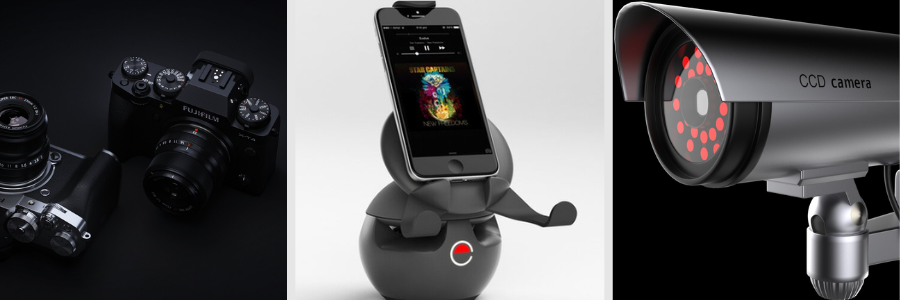
It is here that the most delicate stages of prototype design services and product development take place, before the launch of the product. It is here that dreams are made to change from success to failure within a short span of overnight success. It is because here the product prototype may realize that what seemed awesome on paper is, in fact, a temperamental product with buttons that are stuck together, things that fall apart, and software that hangs during the most critical stages. The product engineering service also takes into consideration the relevance of prototypes.

They go on with the development of prototypes, which are accurate representations of real life. The prototypes are also subjected to tests to identify their strengths, weaknesses, usability, safety, and speed. This is part of what is supposed to happen with a view to determining what is working out and what needs improvement. Prototyping is not a laughing matter; it is research, a trial, or a revelation of the truth. It is only after a set of tests that the engineers are confident that the final product is going to offer a user-friendly experience, unlike an experience that can make the user furious.

The product’s robustness is also tested by engineers with unpredictable scenarios likely to come from the customer, such as throwing, bending, poking, shaking, pushing, and even acting as a paperweight. The phases that go into the construction of prototypes can also be taken care of by freelancers on the Cad Crowd platform. The skills required to implement 3D modeling design services, prototypes, and mechanical testing, among others, are carefully considered by freelancers on the platform.

RELATED: Top 33 Electronic Device Design Services Companies for Engineering & Product Design Firms

Designing for a better user experience

User Experience is the feel that the customer experiences when they are actually using a product. If a product is engineered in a proper way, User Experience provides customers with a sense of trust, comfort, and happiness. On the other side, when it goes south, customers should feel that sense as if they have made a bad life choice. The product engineering service includes the idea of user experience design on various interfaces during the product development life cycle. Product engineers analyze the nature of product attributes, including ergonomic design, user interface design, usability, user comfort, and mechanisms that provide user feedback.

The aim is to develop a user-friendly, comfortable, and even delightful product to use. Such a user might find that the design engineering service brings him amazing satisfaction. They cannot resist the products that might be solutions for problems with such a lucid approach. A design that reads his mind really impresses such a user because it is surely user-centric. So what that means is it’s a lot of product engineering. It brings together technology, design, and behavior. The goal is to make a product, but on top of that, it’s critical that when people use it, it feels right.

Strategic risk-reduction approach

With every product, there is promise as well as danger. Every single business has had a trial by choice from the moment it started, a choice to produce a product, which means that even with the best design plan on earth, the path is fraught with hidden dangers waiting to strike in the background at every opportune moment. The hidden dangers are going to strike, whether in design, production, compatibility, regulatory, supply chain, or software. The product design services minimize such risks with careful planning and expert execution.

RELATED: A Comprehensive Guide to Engineering Product Development Services for Companies & Startups

Such problems that product engineers do not need to address themselves include those that are already in production. It is apparent that they can even predict potential problems before they happen. Other people, who are also non-experts, would be surprised to find out what might go wrong, which is already known to product engineers. This is the way that gives an individual a sense of confidence. Unlike pacing with a sense of care because of uncertainties that are bound to exist, organizations can progress with utmost confidence.

The sense that complexities will be handled by experts gives the top-level management enough scope to look after marketing, strategy, brand, and distribution. The overall effect is that there is a significantly more compact process from concept to completion, with significantly fewer nights of frantic calls, design changes, and unsalable inventory.

electronic device design services

Scalability for growing businesses

Not all growth, naturally, occurs in exactly this manner. It can sucker punch us in the face, ambush us when that welcome guest arrives with a welcome splash of panic, along with a splash of joy. Then, once a business is airborne, a call for more product and faster development cycles ensues. Product engineering services add scalability to businesses. This means that businesses can actually scale up in terms of development and growth, even though they might not have engineers for everything within the business.

RELATED: Secrets of Creative Brainstorming & Tips from Product Design & Engineering Services Firms

This is necessary for small- to medium-scale consumer product businesses, as they are interested in development but do not need a large engineering team within their establishment. Even more challenging tasks can now be accomplished with the assistance of engineers. Businesses can now determine whether to use such tasks to expand the product into other markets, including adopting the latest technologies. The whole development task can now take as long as a person wants, with a more consistent development process, unlike all over the place.

This is even more important in magnitude because Cad Crowd is going to expose this particular instance of the project to a worldwide freelance community. This may very well be what is required to make design inputs, temporarily at least, or even engineering inputs, but what is required is certainly more than what can be managed with the best people on board.

Innovation, innovation, innovation! 

Innovation is what playing the game of the modern customer is all about. Too much quality is ruining the customer. It finally gives them a realization that improvement, maximization, and innovation are necessary. Customers want more, better, faster, stronger, and smarter, irrespective of what is being offered to them. The moment a company reaches the pinnacle, something better is offered, which the customers switch to.

This would ensure that corporations have a constant need for innovation, as they upgrade existing products not only to provide new technologies but also to introduce changes that keep customers interested and maintain the brand in a fast-moving sector. The new product concept design companies that have the ability to maintain such innovation are mostly the ones that have a phenomenally high level of customer loyalty. This is because it provides customers with a sense of importance by listening to their feedback and delivering improved products, which is a promise of the product.

RELATED: Why Electronics Product Prototyping Is Important for Successful Product Development at PCB Design Companies

Technology: Source of competitive advantage

Technology is improved and upgraded uninterruptedly at a rate that seems, for some reason, vindictive. The minute one has learned what is happening, it is already replaced by another one that has been waiting in the wings, waving a flag and saying, “What is keeping you so long?” Artificial Intelligence, Digital Prototyping, Robotics, Smart Sensors, Machine Learning, and Materials Science are a few of the names from the dozens of technologies that have impacted how your products are made.

Product designers support the use of such technologies in businesses; otherwise, a business involving such a technology might end up being disrupted. In this context, product engineers employ such technologies in product development, enabling faster, more accurate development and creative problem-solving. Technologies such as 3D modeling, simulation, and generative design culminate in a certain competitive advantage for such businesses with a prototyping, simulative environment.

In contemporary engineering practices, organizations can respond faster with better decisions, yielding better products, compared to those that use the traditional engineering approach. It is considered competitive because technology is a requirement, not a complementary element. Cad Crowd connects clients with contractors who are some of the earliest to use developments in technological advancements. The contractors that they bring with them come with a set of perspectives that are highly advanced in terms of technological skills.

RELATED: 15 Engineering Design Constraints that Product Design Companies & Engineering Firms Can’t Avoid

Collaboration that empowers innovation

Product engineering is a team process. It is, of course, known to thrive when teamwork is desired. There are so many benefits to a fresh perspective, as engineers are forced to interact with designers, producers, marketers, managers, and customers. The skills are diverse, and once they come for the solution, this solution is optimized. This is probably the most creative piece, where different ideas conflict, melt, and coalesce into a full idea. The product engineering service minimizes this intersection point.

The partnerships that result from the corporations, through the design engineers, open an entirely different set of perspectives, thus a different level of innovation. The innovators come from different backgrounds, technologies, and design ideologies that, in themselves, might ignite innovations that would never occur in a closed environment. The most important strengths are that “great product engineering” has a synergistic effect on a team. It avoids tunnel vision from taking place.

Innovation as long-term strategy

Innovation is a commitment, not a moment. It is the hard work that takes businesses on a journey of growth when they are thinking of engineering as a strategic investment. It is a culture of improvement, experimentation, and innovation that businesses adopt over time. Contribution streams, on the other hand, are channeled through product engineering services that are known to be a good fit when it comes to the life cycles of different products.

Whether it is the development of “the first,” “the fiftieth,” or even “the hundredth” product for the business, the aim of product engineering, as far as its purpose is concerned, would remain the same, which is to make all products shine with intelligence and customers at the forefront. Investing in engineering is essentially investing in the future. The bottom line gives businesses what they need to react, compete, and succeed in a rapidly changing marketplace. It is these businesses that learn the significance of the bottom line, which culminates in giants in their own right.

RELATED: How Do Engineers Evaluate Different Design Ideas?

The future of innovation inside the enterprise

Product engineering services bring clarity, vision, as well as competitive advantage. This is with the aim of ensuring that workable solutions are developed. The development process would take a faster rate, with no compromise on the quality. It would also result in a better user experience in the long run, owing to the fact that it is set to reduce the cost of production complexity for the enterprises.

It has assisted enterprises in staying up to date with technological advancements, meeting client demands, and capitalizing on opportunities. This, in short, is a way of stating that product engineering services have matured to the point of being a matter of economic force, rather than a matter of economic choice, within an industry that is desperately seeking a means to innovate, never mind grow.

How Cad Crowd can help

What Cad Crowd brings to the table is taking it to a different level, thanks to the fact that there is a community of freelance 3D design talent that is comprised of the best that the world has to offer. Additionally, that is what gives every project a touch of distinction in terms of engineering, creativity, and professionalism. Now that you are set to turn your vision into fantastic products, benefits, and so on, it is high time for your considered input. Contact us for a free quote.

author avatar

MacKenzie Brown is the founder and CEO of Cad Crowd. With over 18 years of experience in launching and scaling platforms specializing in CAD services, product design, manufacturing, hardware, and software development, MacKenzie is a recognized authority in the engineering industry. Under his leadership, Cad Crowd serves esteemed clients like NASA, JPL, the U.S. Navy, and Fortune 500 companies, empowering innovators with access to high-quality design and engineering talent.

Connect with me: LinkedInXCad Crowd

Top 51 Medical Device Design Companies for New Prototype Engineering Services in the US


With few exceptions, new product development companies almost never specialize in just one product category. For example, if a prototype design firm develops medical devices, chances are it also provides similar services in other sectors, like consumer goods such as home appliances and electronics. Some even offer to develop more sophisticated industrial equipment, like robotics and laboratory instruments, as well. Medical device development is a complex undertaking, often a multidisciplinary effort involving user research, design engineering, safety and risk management, pre-clinical and clinical tests, and interactions with regulatory bodies (FDA in the United States, MDR in Europe, or their equivalents in other regions).

Even well-known medical device brands turn to new product development companies not only to transform ideas and concepts into real products but also to manage regulatory compliance. Apart from design firms, specialized freelancing platforms like Cad Crowd can be an excellent alternative, as they allow you to collaborate directly with pre-qualified engineers and designers at an affordable rate. To help find a competent partner, here is a list of 51 companies providing medical device development services.

RELATED: How to Design Medical Products that People Actually Want

In the United States

Working with an onshore design firm simplifies a lot of things in an otherwise intricate project. Maintaining good communication and collaboration isn’t always easy, but you can avoid potential difficulties throughout the partnership in the project by working with a domestic product development firm.

cadcrowd-logo

1. Cad Crowd

Perhaps a peculiar name in the list, yet the most likely option for everyday inventors, startups, and small businesses alike. Cad Crowd comes up at the top for its massive range of services, straightforward user interface, and affordability. This isn’t your run-of-the-mill medical device development company; instead, it’s a specialized freelancing platform to help you connect with multidisciplinary engineering and 3D design professionals of any product category.

The “professionals” in question may include mechanical engineers, electrical engineers, industrial designers, firmware developers, and project managers with proven track records in the field of product development. The design and manufacturing services cover such medical applications as surgical devices, dental equipment, orthopedic braces, veterinary equipment, and customized prosthetics. In short, the services are available for the development of medical instruments under FDA classifications, including Class I (low-risk), Class II (moderate-risk), or Class III (high-risk) devices.

One of Cad Crowd’s biggest strengths lies in its ability to match clients (or rather their projects) with 2D & 3D design professionals who have domain-specific expertise. Within the context of medical device development, you’ll be granted access to a massive database of engineers specializing in biocompatible materials, ergonomics design, microfluidics, regulatory-compliant systems, interoperability, user safety, CAD modeling, DFM (Design for Manufacturing), digital and physical prototyping, and so forth.

Cad Crowd gives the options to launch a design contest or work directly with the professionals you choose under NDA to ensure privacy and IP protection. If you want, the platform can function as a project manager to help you on an ongoing basis, practically facilitating an end-to-end medical device development service. Flexibility is another major reason why Cad Crowd makes for an excellent choice. The medical devices design service encompasses the entirety of the project workflow, from ideation and prototyping to product certification and manufacturing support.

But it doesn’t mean you can’t hire professionals from the platform to handle only certain portions of the development stage. Say you’ve already had a 3D model made, and now you need a qualified engineer to fabricate a physical prototype. Cad Crowd can step in at any point in the development and connect you with a professional to handle the task. It also provides complementary services such as patent finding and filing, product licensing, and invention marketing.

Website: Cadcrowd.com

RELATED: How Design Firms Use Prototypes to Develop Critical New Medical Devices

Karten-design-logo

2. Karten Design

An established medical device design company, Karten Design, maintains a long-term partnership with hospitals and clinicians to help inventors get the necessary funding and acknowledgement for their product development projects. The company also serves on boards at accelerators in various healthcare institutes and C-suite committees in the United States. Having been around for more than 30 years, Karten Design is among the most knowledgeable product design companies to recognise some of the biggest obstacles in medical device development overcome the challenges.

Thanks to its deep access into the healthcare landscape, the company has a unique insight into the market, ensuring quicker adoption across the ecosystem. Some of its best works include the Cardiac Science Automated External Defibrillator (AED), the Starkey Livio AI hearing aid, the MedVector Telemedicine Device, and the Bruin Biometrics OrthoSonos monitor. Karten Design is based in Los Angeles, California.

Website: Kartendesign.com

whipsaw logo

3. Whipsaw

Throughout 25 years of history, Whipsaw has completed more than 1,000 projects for clients of all sizes and accumulated over 700 patents to its name. Whipsaw also boasts a strong history of partnerships with early-stage companies as well as international corporations in popular projects like the Dell Precision computers, the Dropcam home security cameras, the Google Chromecast and OnHub router, and the TP-Link networking devices, among others. In the medical device category, some of Whipsaw’s project highlights include the Aescape Fully Automated Massage Experience, the Omnicell Syringe Dispenser, and the Empatica EmbracePlus Health Smartwatch. The company is situated in San Francisco, California. It’s spearheaded by Dan Harden, who, in 2014, was listed in Fast Company’s 100 Most Creative People in Business.

Website: Whipsaw.com

Starfish Medical

4. StarFish Medical 

Every new product development project must deal with the challenges in market adoption, and even more so if the product is a medical device from a relatively unknown brand. StarFish Medical is a new product design and development company with a strong focus on commercial launch. More than just creating a new product based on an idea, the company helps you tackle the potentially complex regulatory landscape and navigate the intricate path to compliance.

It provides a comprehensive range of services for clinical trials and even facilitates tech transfers if needed. Based in Irvine, California, StarFish Medical is powered by a multidisciplinary team of experienced product engineering professionals and in-house capabilities to transform a mere concept of a design into a fully functional product. It has state-of-the-art facilities in the United States and Canada, equipped with everything you need to handle not only rapid prototyping, but also Verification and Validation testing and pilot-scale manufacturing.

Website: Starfishmedical.com

RELATED: Manufacturing Materials for Medical Devices

Delve logo

5. Delve

For more than 55 years, Delve has been a prominent name in the product development sectors, specializing in medical devices, commercial and industrial equipment, and consumer products. Along the way, it has earned more than 200 design awards and more than 1,500 patents. Delve maintains four locations in the United States, including Boston (Massachusetts), Madison (Indiana), Philadelphia (Pennsylvania), and San Francisco (California). Some of its best-known works in the medical device category are the BK Ultrasound’s Sonic Window, the Dexco G6 Continuous Glucose Monitoring System, and the Phlex EDGE goggle-worn fitness tracker. In fact, the Sonic Window earned a gold recognition in the Radiological and Electromechanical Devices category from the Medical Design Excellence Award (MDEA) in 2016.

Website: Delve.com

Goddard Technologies

6. Goddard Technologies

As an industrial design and low-volume manufacturing company, Goddard Technologies provides new product development services not only for medical devices but also for consumer products, robotics, and automation as well. It caters to both an end-to-end 3D design service and an on-demand engineering assistance at any phase of the development of new medical devices and launching them to market. Goddard Technologies is an ISO 13485:2016 certified company, meaning it has put in place internationally recognized standards for safety, efficacy, and regulatory compliance in the design and manufacturing of medical devices. Some of its best works include the Guard Medical Negative Pressure Wound Therapy and the Arthrex MIS Hip Distractor System. Goddard Technologies is based in San Diego, California.

Website: Goddardtech.com

Battelle

7. Battelle

Gordon Battelle founded the institute in 1929. The institute initially focused on contract development and research projects in material science, but quickly expanded the specializations to cover the larger scope of applied science and technology. As it stands today, Battelle is a private nonprofit company that offers its services in the development and commercialization of technologies as well as the management of laboratories.

Around the 1960s, Battelle added medical technology to its service portfolio, offering expertise in medical device designs, life science research, and chemical and biological countermeasures. Since then, the institute has amassed over 100 patents (granted and pending) in related fields of study. Some of its most notable works in the medical field are the COVID rapid test equipment and the N95 respirator decontamination. Battelle is headquartered in Columbus, Ohio, with satellite offices across the United States.

Website: Battelle.org

RELATED: All You Need To Know About Medical Prototype Design Factors for Companies: Costs, Rates, and Pricing

Veranex

8. Veranex

Although a relatively new company founded in 2021, Veranex has a respectable history spanning more than 20 years in the industry. It has been around long enough to oversee the development of more than 1,000 products and get involved in over 2,500 preclinical and clinical trials. Veranex claims to be the industry’s first global Innovation Contract Research Organization (iCRO), which operates with a profoundly different approach compared to traditional CRO. In a typical medical device development workflow, there might be multiple companies involved in the process to handle separate stages of development, including design and engineering, preclinical research, clinical research, commercialization, regulatory affairs, pathology, quality management, and manufacturing.

Because each specific task is handled by a separate team, the entire workflow is interrupted by frequent handoffs that decelerate progress. Veranex takes care of all eight distinct phases under one roof for better efficiency. According to Veranex, an integrated team can cut development time by up to six months per phase compared to silo practices and increase the regulatory clearance rate to 96%. Veranex specializes in microfluidics, optics, sensing systems, artificial tissue, and advanced analytics. The company is based in Raleigh, North Carolina.

Website: Veranex.com

MED Institute

9. MED Institute

The medical device engineering experience of MED Institute’s medical device designers covers the studies of orthopedics, cardiology, urology, endoscopy, biologics, and endovascular. Its range of services includes concept development, product planning, and therapeutic device design. The company also offers comprehensive design controls for a range of Class II and Class III medical devices. Like many other product development companies specializing in medical devices, MED Institute is ISO 13485 certified. But the biggest promise revolves around the claim that the company has what it takes to help slim down the budget for early R&D phases to accommodate small businesses and startups, who often have limited funding. MED Institute is based in West Lafayette, Indiana.

Website: Medinstitute.com

DeviceLab logo

10. DeviceLab

Situated in Tustin, California, DeviceLab offers a comprehensive medical device development service that encompasses early research and study, design and engineering services, prototyping, and pre-production. The company is known for its expertise in developing medical devices and instruments for home use, point of care, and hospital environments. DeviceLab maintains a strategic collaboration with Microchip’s 32-bit MPU Design Partner Program, LabVIEW, and Texas Instruments to speed up product development in most projects. The ISO 13485 certified company is also a recipient of the gold medal from MDEA. Some of its best works include the Zoom Dental UV Lamp designed for Philips, the TracPatch developed for Consensus Orthopedics, and the ARGOS optical biometer built for Santec.

Website: Devicelab.com

RELATED: New Medical Device Development Life Cycle

RKS Design

11. RKS Design

While RKS Design doesn’t explicitly mention that it specializes in medical device development, it’s an industrial design company that builds physical products of various categories across all industries, including healthcare. The company is known for its “Psycho-Aesthetics” approach, which focuses on how a design makes users feel about themselves rather than asking users about how they feel about the product.

Having been around for more than 45 years, RKS Design has developed a number of innovative medical devices, including the ViSi Mobile wearable continuous vital monitoring platform for Sotera Wireless, a wearable stroke detector for StrokeDx, composite resin syringes for Dental Discuss, CleanTech EVO Automated Handwashing Station for Meritech, cardiac ablation platform for Synaptic, and Juvederm Syringe for Allergan. RKS Design makes clear that the clients have complete ownership of the IP of the device, unless the company makes a significant contribution to the final design, in which case there might be shared ownership of the patents. RKS Design is based in Thousand Oaks, California.

Website: Rksdesign.com

Paragon Medical

12. Paragon Medical

A turnkey medical device development company, Paragon Medical, boasts a massive rapid prototyping center and a separate manufacturing facility reserved for complex products. Apart from making high-precision surgical instruments, the company also caters to the development of drug delivery devices, implants, and cases and trays. The end-to-end service covers medical device design and development, testing and validation, contract design engineering services, contract manufacturing, and even product assembly and packaging. That being said, Paragon Medical is willing to lend its expertise at any stage of your product development project; whether you’re still in the early stages or already approaching the commercialization phase, the company can help bridge the milestones to reach full market launch. Paragon Medical is an ISO 9001:2015 and AS9100D certified company, situated in Pierceton, Indiana.

Website: Paragonmedical.com

Frog Design

13. Frog Design

An industrial design company with a long history, Frog Design made a name for itself in the business when the company developed its earliest works for WEGA, a German consumer electronics manufacturer that was later bought by Sony. It maintained partnerships with Sony and was involved in the development of a few renditions of the Walkman. Some of its more prominent design works include the case of the portable Apple IIc and several Macintosh models, the NeXT Computer, and Sun Microsystems’ SPARCstations.

In the ice category, Frog Design is known for such innovative products as the UV-C Enhanced Respiratory Protection for XCMR, the aScope Duodeno single-use sterile endoscopy device for Ambu, the Aixplorer Mach 30 Ultrasound platform for SuperSonic, a fully automated retinal imaging device for identifeye HEALTH, the Lumen CO2 tracker, and the MeMed Key portable multiplexed protein measurements device. In 2021, Frog Design became part of Capgemini Invent. Frog Design is headquartered in San Francisco, California.

Website: Frog.co

RELATED: What to Look for When Choosing a Medical Device Design Service for Your New Prototype or Product Design

Ideo-logo

14. IDEO

A global industrial design company, IDEO offers first-class product development services covering a broad range of industries and sectors, including but not limited to consumer goods design services and retail, climate, manufacturing, media and entertainment, mobility, technology, and health. The company has been around for more than 40 years, creating innovative products and providing creative capabilities for clients worldwide. In the health (medical device category), most of the products in IDEO’s portfolio are developed in collaboration with Eli Lilly and Company, a multinational pharmaceutical company operating out of Indianapolis, Indiana. Examples of such products include the HumaPen SAVVIO insulin injection pens, the refillable kid-friendly HGH injector, and a reconstitution device to mix Lilly’s liquid-and-powder HGH. IDEO is based in San Francisco, California.

Website: Ideo.com

Ammunition Group Industrial Design

15. Ammunition Design Group

Winner of the Cooper Hewitt National Design Award for Product Design (2016), the Ammunition Design Group is best known for its involvement in the development of such popular consumer electronics as Beats by Dr. Dre, the Polaroid Cube, the Square Stand, Adobe Ink and Slide (internet-enabled stylus compatible with iPad), Lyft Glowstache, the UNICEF’s Kid Power Band, and the packaging for NOOK e-book readers, to name a few. Ammunition has also created medical devices before, for example, the Larklife fitness tracker developed for Lark and an invisible hearing device for Fargo. The company is based in San Francisco, California, and Brooklyn, NYC.

Website: Ammunitiongroup.com

Smart Design

16. Smart Design

Another industrial design company in Brooklyn, New York City, Smart Design specializes in five industries, including technology, healthcare, consumer goods, financial services, sports and fitness, and mobility. In the healthcare category, the company works in several sub-sectors such as fitness, medical devices, consumer health and retail, nutrition, patient education, and mental health. Among the highlighted medical devices in the company’s portfolio are the AutoClicks disposable autoinjector pen developed for UCB, an acne-healing face mask for La Lumiere, and the Gx Sweat Patch for Gatorade. Smart Design’s product designers are popular for their tendency to produce prototypes quickly and iterate on them in rapid succession throughout the development process.

Website: Smartdesignworldwide.com

beyond-design-logo-2

17. Beyond Design

Since 1994, Beyond Design has been providing industrial design consultancy and engineering services for NPD (new Product Development) projects. It specializes in consumer electronics, commercial equipment, and, of course, medical devices. Some of the company’s best medical devices so far include the point and measure thermometers developed for 180 Innovations & CVS Health, the WP-600 Oral Hygiene Orator created for Waterpik, the AirGuard XP advanced aerosol guard for AirGuard Health, and the GUM Proxabrush Go-Betweens interdental brushes for SUNSTAR. Beyond Design is headquartered in Chicago, Illinois.

Website: Beyonddesign.com

RELATED: How Cutting-Edge Medical Prototyping Design Services Help Your Firm Design New Products

studiored logo

18. Studio Red

Situated in Palo Alto, California, Studio Red boasts an advanced prototyping facility capable of producing photorealistic models and high-tolerance parts for just about any physical product engineering project. The company is backed by a team of mechanical engineers with extensive experience in end-to-end product development of various complexity levels, from simple consumables to high-tech equipment. Thanks to the in-house expertise and prototyping capabilities, Studio Red has what it takes to implement the DFM approach from the get-go while ensuring tooling cost efficiency and safety compliance. A few examples of medical devices in the company’s portfolio include the LAP-BAND System developed for Allergan, the LifeChoice portable oxygen concentrator for Inova Labs, the Aluma skin renewal system for Lumenis, and the Heartstring III Proximal Seal System built for Getinge.

Website: Studiored.com

Newdealdesign

19. NewDealDesign

At the helm of NewDealDesign is Gadi Amit, who earned the National Design Award in 2013 for his commitment to building creative designs in everyday tech objects. The company has been around for more than 25 years, providing new product development services to consumer electronics, health and wellness, commercial equipment, robotics, and automation industries. NewDealDesign is probably best known for its long-running collaboration with Fitbit, which resulted in well-received products such as the Fitbit Zip and the sporty Fitbit Charge. It also played a pivotal role in the development of Avive’s connected AED (Automated External Defibrillator).

Website: Newdealdesign.com

Fuseproject logo

20. Fuseproject

Founded in 1999, Fuseproject has developed hundreds of new products for Fortune 100 brands and launched at least 90 early-stage ventures as well. The company is known for its many unique approaches to product design, often resulting in innovative solutions created on behalf of disruptive startups and established companies alike. In the medical device category, some of its best works include the Juno high-throughput DNA testing platform developed for Fluidigm, the mobility-enhancing robotics suit built for Seismic, and the Neural Sleeve bionic clothing for CIONIC. Fuseproject, in collaboration with CIONIC, also developed a modular, pneumatically driven ventilator during the COVID-19 pandemic. The company is based in San Francisco, California.

Website: Fuseproject.com

RELATED: Advancements in 3D Visualization Services for Medical Device Prototyping Companies

Bleck Design Group

21. Bleck Design Group

An end-to-end industrial design company, Bleck Design Group’s product developers specialize in the development of medical devices, consumer goods, office products, and industrial equipment. The range of services in the medical device category covers capital medical instruments, surgical tools, clinical test platforms, and consumer health products. Its portfolio includes such products as the PicoSure laser skin revitalization device developed for Cynosure, an app-controlled smart thermometer created for Kinsa Health, the PillStation for SentiCare, the Endo360° suturing device for EndoEvolution, and the Xhale medication adherence system for Xhale. Bleck Design Group is based in North Chelmsford, Massachusetts.

Website: Bleckdesigngroup.com

Speck Design logo

22. Speck Design

Yet another turnkey product development service, Speck Design transforms an idea into a fully functional product and provides manufacturing support for clients. The service covers major business sectors including consumer goods, retail, industrial, transportation, telecommunication, wearable, robotics, and medical devices. Speck Design has been around for more than 25 years, creating innovative medical devices such as the Intellisense Medical Drill and the Rainin Medical Pipettes. In collaboration with Providence Medical Technology, the company developed the DTRAX minimally invasive surgical tools for cervical spinal surgeries. Speck Design maintains three locations in the United States, including San Jose and San Francisco (California), and NYC.

Website: Speckdesign.com

Mako Design + Invent logo

23. MAKO Design

In the United States, you can find MAKO Design in Austin, Texas, and Oakland, California. The company is now part of the TriMech Group. They are industrial engineering specialists with the resources and expertise to help you develop products of just about any category in existence, from toys and office supplies to garden tools and medical devices. MAKO Design is known for its inventor-friendly services, in which the company sets up a client-specific approach and provides the necessary resources to transform ideas into tangible products. Its works in the medical device category include the crossbody training machine developed for Pro X and the MedTech Mobility Headrest for Adaptive Switch Labs & Invacare.

Website: Makodesign.com

Porticos

24. Porticos, Inc.

A turnkey industrial design company with post-production support, Porticos promises to stay engaged with your venture for as long as you need, even after market launch. The post-production support covers such services as component obsolescence, feature enhancements, and sustainable engineering throughout the entire life of the product. Porticos has handled more than 200 projects over the course of 20 years. Medical devices in its portfolio include the TelePatch cardiac monitoring device developed for Medicomp, the Optical Coherence Tomography (OCT) systems for Bioptigen, the adaptable medication-dispensing device for Livi, the Portray dental imaging system for Surround Medical, and the Cap Tube and Medication Dock for Sensal Health. Porticos is headquartered in Morrisville, North Carolina.

Website: Porticos.net

RELATED: The Faster, Easier Way to Develop New Medical Devices

Brash Inc

25. Brash Inc.

In the US, the Brash product development company is situated in Carlsbad, California. It also maintains a location in Ottawa, Canada. Their new product development team specializes in the development of consumer products, IoT, and medical and dental devices. For more than a decade now, the company has served startups, entrepreneurs, and well-known companies, transforming mere concepts and ideas into market-ready products. Its portfolio highlights various medical devices such as the touch-control patient lift developed for Handicare International, the Metered Dose Inhalers (MDIs) for Breathesuite, the SoloWalk movement recovery robotics for GaitTronics, and the robotic enclosure for the Kinarm Brain Injury Recovery device.

Website: Brashinc.com

More US-based medical device development companies to consider

MCRA

26. MCRA

One of the leading regulatory advisors for medical device industries in the United States, MCRA claims to have cultivated strategic relationships with government agencies and invaluable insights to help you go through the regulatory application clearance. The company understands all too well the typical lifecycle of medical devices, making it uniquely qualified to be a reliable partner all the way from conception to commercialization. MCRA is based in Washington, DC.

Website: Mcra.com

Emergo

27. EMERGO by UL

In 1997, Emergo first came into existence primarily to assist IVD (In Vitro Diagnostics) and medical device manufacturers with regulatory affairs. It has since grown into a full-scale product development company designing hardware medical devices, software interfaces, and instructional materials. Emergo is situated in Concord, Massachusetts, and Austin, Texas.

Website: Emergobyul.com

Flex

28. Flex

An end-to-end 3D product modeling company that’s willing to partner with you at any point of the product development stage. With more than 35 years of experience creating medical equipment and drug delivery systems for clients worldwide, Flex has what it takes to build any medical device and meet even the most stringent regulatory standards in the US. The company is based in Austin, Texas.

Website: Flex.com

RELATED: How 3D Modeling Is Revolutionizing the Healthcare Industry for Companies and Medical Experts

HS Design

29. HS Design

An ISO 13485 certified company and a Qmed qualified supplier, HS Design takes pride in its “common sense” approach to medical device development practices. This means the designers and engineers strive to build a product that’s both aesthetically pleasing and fully functional. The company says the approach makes it easier to uncover a lot of ergonomic concerns during the prototyping stage. HS Design is based in Morristown, New Jersey.

Website: Hs-design.com

Glassboard

30. Glassboard

Backed by an in-house team of specialists and generalists, Glassboard isn’t fixated on any specific approach to medical device development. Instead, everything is done in accordance with what’s best for the clients’ needs and business strategies, all the way from concept stage to market launch. Glassboard is headquartered in Indianapolis, Indiana.

Website: Glassboard.com

Plexus

31. Plexus

Primary services from Plexus include new invention development services, manufacturing, and supply chain solutions. Within the healthcare sector, it focuses on developing FDA Class II and III devices, including therapeutic technologies for point-of-use applications and at-home monitors. Plexus is known for the DFX (Design for Excellence) approach, where product development is optimized for manufacturing, testing, and cost efficiency. The company is based in Neenah, Wisconsin.

Website: Plexus.com

Kapstone Medical

32. Kapstone Medical

Since 2007, Kapstone Medical has developed and launched more than 150 products and filed over 75 regulatory submissions. It serves clients of all sizes, including individual inventors and large medical device OEMs. Kapstone Medical is an ISO 13485-certified and FDA-registered company, situated in Charlotte, North Carolina.

Website: Kapstonemedical.com

RELATED: Designing New Medical Products & Devices: A Step-by-Step Guide for Your Company

Biomerics

33. Biomerics

Every medical device development handled by Biomerics follows the established ISO requirements and standard operating procedures, including the validation protocols. Biomerics is a proponent of a proactive DFM service approach to bring clarity to product specification, confirm quality, and provide cost-effective pricing options. The company is located in Salt Lake City, Utah.

Website: Biomerics.com

Omnica

34. Omnica

Over the last 36 years, Omnica has worked on an average of 80 projects annually. It serves startups, medium-sized companies, and big corporations from all around the world. Omnica’s main office is in Irvine, California, but it has a separate engineering and industrial design facility situated in Los Angeles.

Website: Omnica.com

DK Engineering

35. D&K Engineering

The Total Commercialization Solutions by D&K Engineering provides support through the entire product lifecycle, from concept creation and system architecture to rapid prototyping services and post-launch. Apart from specializing in medical device development, it also serves the military and defense as well as the life science industries. D&K Engineering is based in San Diego, California.

Website: Dkengineering.com

Outside US

If you plan to sell medical devices in Europe or outside the United States in general, it might be a good idea to partner with offshore companies based in the target market location. Some of the best firms are as follows.

RELATED: Innovating Burn Patient Care: 3D Printed Masks and Medical Device Design for Healing 

PQ Design Group

36. PQ Design Group

Throughout 15 years of history, PQ Design Group has managed to handle more than 250 product development projects; every single one of them was an end-to-end effort, transforming an idea into a functioning design. The company specializes in medical devices, design services for wearable products, and toy design. For the medical device specialization, PQ narrows it down a little bit further to focus on consumer health, neonatal care, and hospital-based applications. Some of its best works so far include the smart drone or capsule intended as a medical product (medicines, organs, blood, etc.) delivery vehicle developed for ABZero, a distribution arm to be used in operating rooms for LM Medical, and the DOC.D saliva-monitoring toothbrush for AICube. PQ Design Group is located in Pisa, Italy.

Website: Pqdesign.com

CLEIO

37. CLEIO

Established in 2005, CLEIO has now completed more than 2,500 medical device and high-tech product development projects; most of them were end-to-end services. In the medical technology and healthcare category, the company focuses on developing wearable devices, RPM (remote patient monitoring) tools, surgical instruments, catheters, drug delivery systems, and medical imaging equipment. CLEIO also offers manufacturing support that covers supplier sourcing, manufacturability verification, lab testing, and cost estimation. Some of its best works include the osmolarity test device for dry eyes developed for I-MED Pharma, the tinnitus assessment device for Menodys, the veterinary anesthesia ventilator for Dispomed, and the FreeO2 medical oxygen therapy device for OxyNov. CLEIO is based in Quebec, Canada.

Website: Cleio.com

Wilddesign

38. WILDDESIGN

One of the best things about WILDDESIGN is the all-encompassing regulatory compliance medical device development services, whether you plan to market the product in the United States, Europe, or China. The company makes sure to integrate product requirements set by regulatory bodies such as the FDA, MDR, and NMPA into its development services from the outset to improve the chances of approval. WILDDESIGN’s range of services includes industrial design, rapid prototyping, DFM (Design for Manufacturing) services, ergonomics study, 3D visualization, packaging, labeling, and IFU design.

Some of the highlighted projects in the company’s portfolio include the Polaris operating light for Dräger, the PraluBase medication pens for SANOFI, the Magnos digital dermoscopy system for Magnosco, the Basic Orthopedic Instrument Set for Aesculap, the ELISA clinical intensive care ventilation systems for SALIVA (now Löwenstein Medical), and the laparoscopic instruments for Erbe. WILDDESIGN is based in Gelsenkirchen, Germany.

Website: Wilddesign.com

RELATED: Medical Device Design: A Guide to Service Pricing, Costs, and Rates for Companies

Design1st

39. Design 1st

One of the best things about Design 1st is the ability to transform or translate technical sophistication into user-friendly products. Simplification doesn’t mean reducing features; instead, the company identifies the product’s core functions and presents them in an approachable way so that users quickly recognize and master them without the need for extensive training. The approach proves to be useful, especially in the development of medical devices. The company’s portfolio includes the Universal High-Speed Dental Drill System developed for ProDrive, the pain and addiction therapy using neuromodulation for Nuraleve, the pharmaceutical tank cleaning device for Swabbot, and the therapeutic tool for myofascial release and trigger massage for SoloRolo. Design 1st is based in Ottawa, Canada.

Website: Design1st.com

Haughton Design

40. Haughton Design

Initially specializing in automotive design & engineering services and the aerospace sector when it was founded 25 years ago, Haughton Design gradually shifted focus to medical device development along the way. The UK’s Companies House listing describes the company’s nature of business as “specialized design activities” and “manufacture of medical and dental instruments and supplies.” It’s an ISO:9001 and 13485 certified company, with a flexible quality management system to make sure that all the product development projects under its roof are compliant with the EU MDR and the US FDA. Highlighted products in its portfolio include the Stomacher 400 laboratory paddle blender developed for Seward, a blood sampling device for Sirus Diagnostics, and various pharmaceutical testing instruments for Copley Scientific.

Website: Haughtondesign.co.uk

More design firms to consider

TTP

41. TTP

The medical device development services from TTP cover biosensors, neurotechnology, drug delivery systems, surgical instruments, ophthalmology, and optometry. Despite being situated in Cambridge, England, the company also offers services to US-based clients and builds products to meet FDA regulations. TTP is an ISO 13485-certified company.

Website: Ttp.com

RELATED: Freelance CAD Prosthetic Designer: Complete List of Cost, Rates, and Pricing for Individuals and Companies

Design-industry

42. D+I

The product development services from D+I include industrial design, mechanical engineering, hardware electronics, and software. Part of Capgemini, the company has been developing a range of complex medical devices for nearly four decades now. It has worked with such big-name clients as Siemens Healthcare, Chattanooga, and Trajan Scientific & Medical. The company is based in Melbourne, Sydney, and Newcastle (Australia).

Website: Design-industry.com.au

Celestica

43. Celestica

Besides developing medical devices, Celestica also specializes in the aerospace, defense, smart energy, and communications industries. The company focuses on rapid prototyping and supply chain management for its NPD services. The supply chain management solution would involve local and global sources to help optimize product design so that it meets the regulatory requirements. Celestica is headquartered in Toronto, Canada.

Website: Celestica.com

Marturion

44. Marturion

The main capabilities of Marturion are electronic device design and firmware for medical devices, but it also develops in-vitro diagnostic (IVD) readers. The services include on-site support at external test laboratories and device submission for regulatory compliance, such as the 510(k) to the FDA, and technical files for CE approval. Marturion is based in Lisburn, Northern Ireland.

Website: Marturion.co.uk

Nordson Medical

45. Nordson Medical

One of the biggest selling points of Nordson Medical is the PDP (Product Development Process) Service, which aims to develop medical devices in alignment with ISO and FDA regulations, standardized practices, and concurrent engineering. PDP also implements a flexible business model to cater to different project scopes. Nordon Medical is located in Boyle, Ireland.

Website: Nordsonmedical.com

RELATED: How The Healthcare Industry uses 3D Printing and 3D Bioprinting For Treating Patients

Cortex Design

46. Cortex Design

Working with Cortex Design means you’ll be connected to a vast network of product development partners for die casting, injection molding experts, metal forming, and PCBA to make sure that the final product comes out exactly as intended. You also receive assistance from a team of NPD advisors who operate under ISO 9001:2015 and ISO 13485:2016 standards. Cortex Design is headquartered in Toronto, Canada.

Website: Cortex-design.com

Fearsome

47. Fearsome

The full in-house team of product design & development expert designers and engineers at Fearsome all specialize in the development of high-risk medical devices, or the equivalent of FDA Class III. The company has been making ocular equipment, surgical instruments, drug delivery systems, neurosurgical tools, and diagnostic devices since 2002. Fearsome is based in Glasgow, Scotland.

Website: Fearsome.co.uk

Creation Technologies

48. Creation Technologies

An NPD company, Creation Technologies works in the aerospace, defense, and healthcare industries. The company boasts advanced manufacturing systems for the development of Class I, II, and III medical devices and pharmaceutical OEMs. Every product development process is done with the proprietary LEAP (Launch with Excellence to Advanced Production) approach. Creation Technologies is situated in Burnaby, Canada.

Website: Creationtech.com

Tiller Design

49. Tiller Design

The core product prototype team at Tiller Design is composed mainly of program managers with expertise in production, industrial design, regulatory compliance, and commercialization. In the development of medical devices, the company works with its CRO (Clinical Research Organization) partner, Mobius Medical. Tiller Design is based in Rozelle, New South Wales, Australia.

Website: Tillerdesign.com

RELATED: Cad Crowd 3D Design – Stay Healthy with Medical Product Development Services

Planet Innovation

50. Planet Innovation

A healthcare product specialist, Planet Innovation focuses its development services on medical devices such as wearables, consumables, and high-tech laboratory equipment. It’s a full-spectrum industrial design company with engineering and manufacturing capabilities to transform your concepts into commercialized products. Planet Innovation is headquartered in Melbourne, Australia, but it also maintains a US location in Irvine, California.

Website: Planetinnovation.com

Freudenberg Medical

51. Freudenberg Medical

The journey of Freudenberg Medical began in 2004 when it acquired Jenline Industries in Massachusetts. Since then, it has grown into a specialized medical and pharma development company boasting more than 800,000 square feet of manufacturing facility and 12 production sites worldwide. Freudenberg Medical is headquartered in Kaiserslautern, Germany.

Website: Freudenbergmedical.com

How Cad Crowd can help

Developing a new medical device and actually bringing it to market are rarely straightforward processes. A small oversight can lead to excessive delays and costly modifications. In most cases, you must work with a development and prototyping partner to help you navigate the technical, clinical, and regulatory challenges along the way.

An end-to-end industrial design company can be a good choice, but engineering-specialized freelancing platforms like Cad Crowd might be even better, as they allow you to assemble your own team of professionals while maintaining affordability. Cad Crowd also provides a comprehensive IP protection service through NDA, patent search, and filing, and product licensing. Contact us for a free quote.

author avatar

MacKenzie Brown is the founder and CEO of Cad Crowd. With over 18 years of experience in launching and scaling platforms specializing in CAD services, product design, manufacturing, hardware, and software development, MacKenzie is a recognized authority in the engineering industry. Under his leadership, Cad Crowd serves esteemed clients like NASA, JPL, the U.S. Navy, and Fortune 500 companies, empowering innovators with access to high-quality design and engineering talent.

Connect with me: LinkedInXCad Crowd

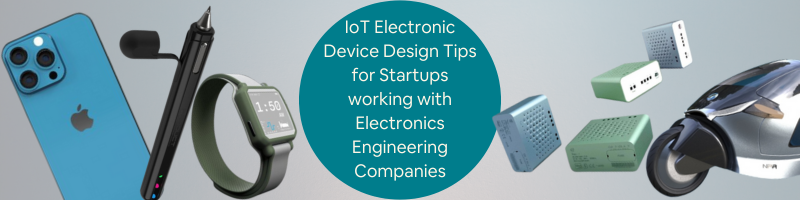
IoT Electronic Device Design Tips for Startups Working With Electronics Engineering Companies


Todays post covers IoT electronic device design tips for startups working alongside electronic engineering firms. If you’re a startup itching to show the world its next Internet of Things behemoth, getting from concept to working prototype can be hiking through a jungle in flip-flops. There are thick stands of technical decisions, shadowy swamps of cost estimates, and herds of design niceties that will bring you to a standstill. Salvation is at hand, though, in making the journey a much less painful one, and yes, enjoyable as well.

One of the smartest things that any IoT startup can ever do is marry the old with an established design engineering company. They’ve ridden out the storms that you have not yet. They’ve done it with the advantage of seeing an idea materialize with the limitations of tight deadlines and tighter budgets. A platform like Cad Crowd facilitates your ability to carry out such a search since you can connect with pre-screened electronics design firms for IoT devices. Rather than shooting in the dark as to which company has the potential to transform your idea into a product, you get to hire the services of people whose skills have already been vetted.

RELATED: What is the Internet of Things and What Does It Mean for the Economy?

Begin with a vision

Startups do their best to differentiate themselves to the world. Your idea is obvious to you, but there isn’t a living electronics engineer who can read your thoughts. Spend a few minutes before going to an electronics engineering company to put down your product’s mission, target audience, and primary functions. Plain English is good enough. Sketch out your ideas. Ridiculously horrible stick figures are okay.

When you arrive at a company via Cad Crowd or otherwise, an explicit brief will initiate a successful collaboration. A grimy concept can lead to costly reworking in the future. Think of providing a map to a man whose points of reference have been eliminated and then instructing him to find buried treasure. A great concept saves everyone a headache.

Love the prototype, do not be afraid

The prototype phase is intimidating, especially to shoestring business owners. But to bypass it or do it on the cheap is to skydive for the first time and try out a parachute. A thought-out prototype catches pitfalls early when they cost less to repair and sting less. Electronics engineering companies are proficient in quick prototyping. They will inform you on what to utilize, how to lay out your PCB, and how to get your IoT device to speak. Cad Crowd will identify designers who make things right in an effort to deliver functional prototypes that mimic actual usage.


That is where you get to have a look at your idea transition from napkin sketch to something that you can hold in your hands, press buttons on, and even maybe have the potential to take to investors. Budget frugal but not cheap startups are not short on dollars, and the quickest way to kill an IoT device is to cut corners financially. Cutting corners on electronics design services results in devices that burn out, have awful battery life, or are flaky with connectivity. IoT electronics designers can save money without losing functionality.

RELATED: Smart Manufacturing Using CAD Design is the Future for OEM’s

With Cad Crowd, you are paying the experts to guide you on what microcontrollers, sensors, and communication protocols will suit your product best. They are able to provide you with affordable solutions that don’t have to compromise on functionality. It is getting an experienced chef to inform you which costly ingredients to splurge on and which one can use cheap ingredients that won’t ruin the dish.

Respect the power of the PCB layout

Printed circuit boards are the brains of IoT stuff. A poorly done design will generate signal interference, unnecessary heat, or parts that won’t fit in your go-to enclosure. If your PCB is spaghetti on a bumpy road, you’re asking for disaster. PCB design companies spend years learning to design PCBs. They know how to route the traces, power distribution and electromagnetically design the board. Having experts locate experts to source through Cad Crowd is like hiring experts to turn your messy sketch into a functioning board. Good layout is obvious when it works but painfully obvious when it does not work.

Test like your startup’s life depends on it

Testing isn’t sexy. Nobody’s bragging about hours spent agitating products on a vibration table or baking them in humidity chambers. But testing prevents products that look fabulous on photo shoots from being products that merely endure real-world abuse. Your IoT product can get beaten up by temperature shock, radio frequency interference, or careless users who fiddle with devices as if they are stress balls. With a seasoned electronic enclosure design firm on your side, you will be able to design test cases that mimic abuse conditions. You can tap into teams that have abused a product to the nth degree and gained something from the experience via Cad Crowd. Solid testing is translated into fewer returns in warranty and ranting customer complaints. 

RELATED: Electronic Enclosure Design Tips: A Complete Guide from Freelance Engineers and Design Services Firms

3D Printing and Design Services for Wearable Technology

Security cannot be an afterthought

There simply are too many IoT devices appearing on store shelves with poor security. Uncured devices are catnip to cyber thieves, big open doors into networks and data. You don’t want your coffee machine to be part of a legion of botnets. Address encryption, authentication, and secure firmware updates with your engineers early in your design cycle. If you’ve got a solid team of engineers to work alongside using Cad Crowd, you’ll have access to engineers who are knowledgeable about today’s best practices in security and can bake those in from day one.

Security patches cost tens of times more dollars after you’ve shipped your product than before a breach made the headlines. Think about the User Experience. Even the most advanced device is pointless if it is hard to use. A poorly designed interface or misplaced button can kill your IoT device faster than a firmware flaw. The human element counts.

Design services for the Internet of Things (IoT) products can collaborate with user experience designers and industrial designers to detail every aspect. They can communicate the LED positions, choose tact switches, and make it easy to pair the product with an app. Cad Crowd also employs designers who understand design as well as they understand engineering. They can help you design a product that will make users enthusiastic and not drive them crazy.

RELATED: 7 Tips for Product Designers Creating IoT Products for Millennial Customers

Plan for scalability

Most start-ups develop a prototype and wish that scaling up were as easy as pie. The reality is that manufacturing thousands of units gets you issues you never even realized when hand-soldering. Parts obsolesce, assembly turns out to be more complex than expected, or certifying standards catch you off guard. Seasoned consumer electronics design experts will also consider manufacturability during design time. They can design your IoT product keeping the manufacturing process in mind and selecting volume available parts and assembly-friendly layouts. You can leverage experts who have guided products from idea to mass production without sour surprises using Cad Crowd.

Be open to criticism and flexibility

Startups become enamored with the fact that they innovated and won’t alter. There needs to be flexibility when developing IoT. Your initial testers or engineering collaborators may find better alternatives through feedback. Perhaps that costly sensor can be substituted with one that costs half as much but has equal efficacy. Perhaps some minimal adjustment to your casing renders it more robust. Engineering design companies survive on iteration. They’re not present to murder your idea but to refine it. Cad Crowd lets you get the experts easily who would adore your ideas and provide genuine feedback. Having an open mind, you can avoid expensive pivots in the future. 

Know regulatory requirements early on

IoT products most commonly need to get certified with CE, FCC, or UL in order to sell them. Holding them to the end will blow your budget and timeline. IoT-proven engineering expert designers will handle compliance testing and paperwork for you. They know what is current when it comes to standards and how to set up your hardware so that it will succeed on the first attempt. You can navigate your way through the regulatory thicket easily without getting lost with Cad Crowd’s pre-approved designers.

RELATED: The Future of Wearable Technology: Trends Impacting Business & Product Development

Let power management be at the forefront of your mind from day one

Battery drain is a real customer disappointment. Regardless of whether your IoT device is a fixed location or in motion, power management optimization must occur. Well-designed circuits and well-designed parts will maximize part selection for optimal battery life without feature compromise. Cad Crowd can assist you in hiring electrical engineering experts in low-power designing and provide suggestions for optimizations that you can implement. They can assist you in designing around different power sources, such as energy harvesting or solar panels, if these would be possible in your product application.

Documentation is dull, but it’s the future savior of debugging and development. Decent documentation allows for simple addition of new people, simple modification, and avoidance of costly mistakes. Electronics engineering firms typically have procedures for creating thorough documentation. With Cad Crowd, you will be assured of schematics, code, and assembly instructions for your IoT device to be as clear as day and understandable within seconds. Your future self and even investors will thank you.

Choose the appropriate connectivity protocol

Not everything needs Wi-Fi, and not everything will be happy to employ Bluetooth. Roller skating mountain climb is the wrong selection of protocol. Your CAD automation engineer will be able to weigh the trade-offs involved in such selections as Wi-Fi, Bluetooth Low Energy, Zigbee, LoRa, or cellular. When looking for Cad Crowd professionals, you find professionals familiar with how power consumption, range, and bandwidth affect the functionality of your product. They will save you from signing up for a protocol that will drain the battery or does not work in your desired environment. Sound decision-making here avoids you suffering and customer complaints down the line.

RELATED: Top 100 Electronics Design Companies to Create Prototypes for Hardware Startups

electronics design services

Do not underestimate industrial design

Electronics is half the battle. Your product’s case, controls, and overall interface lead into the experience. A great circuit board in a sloppy case is better than five-star dinner on a paper plate. Electrical engineering companies collaborate with industrial designers in most situations, and you can access their services within your fingertips at a single stop through Cad Crowd’s website. Enclosure aerodynamics can enable improved cooling, easier assembly, and optimization of your product once the market is saturated. Small design changes, tactile grip or well-placed LED, for example, can propel your device to the next level.

Firmware development deserves serious attention

Firmware is the hidden glue that should keep your IoT thing running. Shitty or sloppy firmware solution injects bugs, crashes, or security vulnerabilities. Do firmware development as well as you do your hardware design. Cad Crowd can locate design engineering designers with IoT firmware skills on your behalf. They can optimize low-power devices, securely deploy over-the-air software updates, and accomplish solid error handling. Solid firmware equals less customer support limbo and happier customers.

Budget for certification and compliance costs

Certification testing is costly and time-consuming, too. Startups consider it an afterthought in the majority of instances and fail to start early. Organize your engineering personnel and make an early choice about what certification you need. Cad Crowd introduces you to the professionals who have already overcome these issues. They will be designing your PCB and enclosure with minimal or zero redesign time so that they are ready for the test. On budget and timeline will make your investors happy and your timeline will be realistic.

RELATED: The Future of Electronic Design Engineering: Innovations and Trends for CAD Services Companies

Have open and frequent communication

The best alliances are based on communication. Regular reports, open questions, and open feedback stop small things from becoming catastrophes. Don’t be caught thinking everything is okay just because no one is complaining. When you employ engineering designers on Cad Crowd, you are confident that you are employing people who believe in clarity. They will catch and warn problems ahead of time and work together to resolve them. Communication prevents everyone’s stress and expense.

Get your team involved in the design process

Even if you’ve had that much work done by an electronics engineering company, your people need to be kept busy. Your sales, marketing, and support staff can recognize user requirements or business requirements that may not be obvious to engineers. Cross-function feedback is encouraged not to narrow down one’s mind. Cad Crowd allows one to search for designers willing to work with non-technical stakeholders. Their capacity to listen to various inputs can shape a product that suits your technical and market requirements.

Prototype multiple variations

Occasionally, the initial prototype is perfect, until you employ it and find bugs that never crossed your mind. With two or more iterations, you can compare usability, speed, and price compromises. It offers investors and potential customers choices to choose from as well. Cad Crowd prototype design experts are masters at prototyping inexpensively in iteration cycles. They can test various components, configurations, or shape variables so that you have the information you need to make more informed decisions. Messing around with other solutions too early will prevent you from expensive pivots down the road.

RELATED: Key Differences between Prototyping and Prototype Engineering for Companies & Firms

Control your supply chain early

The electronic global supply chain is as volatile as it is risky. Materials go out of stock, lead times stretch out, and overnight prices inflate. Anticipatory sourcing keeps your project from lagging behind. With Cad crowd product engineering experts, you will be able to tap into their spares and good supplier know-how. They can produce your IoT product in a flexible manner to stay away from production bottlenecks. Planning the supply chain ahead of time is boring, but it is the pathway to successful scaling. Do not compromise on aesthetics and branding.

IoT product is your heritage brand. Starting from color, form, and material you choose can establish the image you make for your customer. Branded product consideration ahead makes it happen and makes your product stand out from the rest. Cad Crowd will allow you to have the designers themselves, who are branding and engineering experts, work for you. They will have them design enclosures for you with your logo on them, choose LED colors within your color scheme, and make your product look as good as it performs.

Guard your intellectual property early

Your IoT idea must be sufficiently good to get noticed, i.e., sufficiently good to outsmart copycats too. Having your intellectual property established in advance will save you headaches later on legally. Talk to a patent lawyer or use something like Cad Crowd to submit your design to designers who have been educated about design secrecy. Publish your papers securely and with your engineering staff so that your idea gets published. Hire Freelance Experts on Demand

RELATED: How to Protect Your Intellectual Property: Alternatives to Patents

Startups don’t usually have in-house specialists to get things accomplished. You would need a Bluetooth sage for two weeks or a power management whiz for a month. Full-time hiring for a short period of time will ruin you. Cad Crowd is perfect for the job. Its single talent pool of electronics designers and engineers enables you to keep the crème de la crème project by project. It’s not expensive but will provide you with professional mentorship at each development phase.

product engineering services

Build a strong relationship with your engineering firm

A positive working relationship with your manufacturing engineer counterparty is better than the latest sensor technology. Respect and trust create positive feedback and innovative problem-solving. Sit down with them on a regular basis, share in milestone success, and consider engineers as part of your team, not suppliers. Cad Crowd Using is able to make this sort of connection since they have the trust that you are connecting with individuals who pride themselves on their reputation. They value the need for meeting and making long-term connections.

Prepare investor presentations

Good prototypes, immaculate white sheets, and a good marketing strategy are what investors want. The professionally created IoT device sends them a message that you are professional and entrepreneurial. Your engineering partner can help you create professional schematics, real photos, and working demos that will make your potential financiers gobsmacked. On Cad Crowd, you can outsource designers skilled enough to encapsulate your technical information in investor-grade material. They can provide you with photorealistic 3D visualization services or even interactive models that unleash the full value of your product.

RELATED: Top 25 Resources for Everyday Inventors

Your roadmap to IoT success

It can be intimidating to have an IoT product as a startup company, but you can do it with the right guidance. Having it designed by an experienced electronics design company is one of the best things that you can do. Sites like Cad Crowd eliminate the uncertainty of who to call to get trusted pros with experience with IoT issues and how to have each phase of development done.

How Cad Crowd can help

If you are ready to bring your IoT idea to a stable, dependable, and marketable product, visit Cad Crowd today. You can outsource electronics designers, engineering companies, architecture design companies, or freelance designers who will be able to turn your ideas into reality. Your next innovation revolution is closer than effective collaboration. Get a free quote today!

author avatar

MacKenzie Brown is the founder and CEO of Cad Crowd. With over 18 years of experience in launching and scaling platforms specializing in CAD services, product design, manufacturing, hardware, and software development, MacKenzie is a recognized authority in the engineering industry. Under his leadership, Cad Crowd serves esteemed clients like NASA, JPL, the U.S. Navy, and Fortune 500 companies, empowering innovators with access to high-quality design and engineering talent.

Connect with me: LinkedInXCad Crowd

Innovation Best Practices: Strategies for Better & Faster Product Design Services


If you’ve ever seen a product materialize — that instant when an idea draws itself from a pencil mark into a prototype and then into the very product you’re holding in your hands — you already understand that product design is a ride. But it’s not all about the ride. It’s about being intelligent, quick, and strategic. Product design innovation services you can find in industry giant Cad Crowd aren’t merely a buzzword; it’s a marketing advantage. The firms that perfect it don’t merely survive; they flourish.

But innovation has its quirks. How do you develop better ideas in less time, get the ideas to stick, and ship great products without the aggravation of back-and-forth forever? The solution is a combination of culture, strategy, tools, and attitude. Let’s break down what works, what doesn’t, and how you can take your product design game to the fast lane with style and substance.


🚀 Table of contents


Drop the linear mindset: Innovation is a loop, not a line

Product design innovation never happens in a linear fashion from idea to finished product. The familiar myth that you just begin with an idea, sketch it out, construct it, test it, and voila, it’s finished is more of a dream than a reality. Rather, the process is more of a dance—one step forward, then two back, and sometimes a wayward spin that reverses direction.

It’s widely known that being flexible is the key to success. This is where innovation comes in due to the fast-paced environment that requires quick prototyping, the need to improve every single time, and to achieve greatness in every product design. If ever you assume that everything you do is perfect and does not need any editing, you have to face the reality that every design process is a work of art that needs to undergo a series of refinements to achieve perfection.

The advent of agile methods, which first originated in software development, has greatly transformed the way design teams function. Segmentation of projects into brief sprints enables teams to prototype concepts rapidly and learn valuable lessons without having to wait for months to receive a completed product. Cross-functional team collaboration also energizes quicker problem-solving and innovation spurts by product design firms.

By stepping away from the old linear thinking, teams save time, cut down on wasted effort, and maintain their momentum. This cycle of creation, feedback, and refinement is what really fuels successful innovation in today’s rapid marketplace.

RELATED: A comprehensive guide to engineering product development services for companies & startups

CAD designs of unique products by Cad Crowd experts

Fuel innovation culture: People first, process second

Innovation doesn’t just pop from sophisticated tools or strict procedures—it’s all about people. It’s the attitude, inspiration, and collaboration within a business that most effectively sparks new possibilities in product design services. No procedure by itself can trigger imagination if the company culture discourages risk-taking or inquiry.

Innovative cultures have some common characteristics. They rejoice in curiosity and empower employees to experiment without the fear of failure. Rather than disciplining mistakes, they regard failure as a necessary stepping stone to triumph. Just imagine Apple or Tesla — their competitive advantage is not so much cutting-edge technology but the fearlessness, audacious culture that gives their teams the confidence to break rules.

Leadership is key to the creation of this type of culture. When leaders encourage experimentation and build environments where individuals are not intimidated to make mistakes, employees have the liberty to speak freely, even about their most outrageous ideas. That freedom is usually what produces the breakthrough innovations everyone envies.

Cooperation also stimulates innovation. When groups eliminate silos between departments—designers talking to engineering design experts, marketers, and even customers—innovative ideas begin to flow. Varied views provoke new ways of thinking and challenge old assumptions. When individuals link freely and exchange their own perspectives, innovation ceases to be a far-off dream and becomes an everyday occurrence in the company’s way of operating.

Tap open innovation: Don’t go it alone

The concept of the solo genius inventor developing revolutionary innovations independently is less a reality and more a myth. Real innovation often benefits when it’s a team effort, and one of the best partners could possibly be outside your organization or company itself. This method is referred to as open innovation.

Open innovation consists of embracing ideas, technologies, and alliances from outside your company walls. That might involve partnering with startups innovating in their space, accessing university research, engaging deeply with suppliers, or even speaking directly to customers. By inviting outside contributors, businesses dramatically increase the number of ideas and solutions available, accelerating problem-solving in ways an insular team could hardly hope to replicate.

Think of a consumer product design company designing smart home appliances. Rather than attempting to create each bit of technology in-house, they may partner with a startup company that is good at artificial intelligence or IoT sensor technology. This speeds up creation and makes the product more attractive and useful, providing customers with something revolutionary.

Yes, open innovation is not without risk. It requires sound coordination and trust. Intellectual property rights and confidentiality need to be well-defined to keep everyone safe. The organization also has to be flexible enough to implement outside ideas swiftly, lest the entire process become bogged down. When executed properly, open innovation makes collaboration a catalyst for greatness.

Customer-centric innovation: Listen harder, build smarter

Customer-led innovation transcends mere buzzword status; it serves as a highly effective strategy that transforms product development. Instead of guessing what customers may require, the most successful teams go directly to the source, engaging deeply with real customer experiences and needs. This approach involves leveraging feedback through diverse methods such as ethnographic research, where designers watch how individuals use products in their daily routines, as well as usability testing, surveys, and monitoring social media discussions.

The secret is to look beyond surface-level comments. The true gold is finding those buried frustrations and needs that customers themselves may not even be able to articulate. At times, individuals don’t even know what they require until they experience a product that fixes an issue they weren’t aware they possessed—a philosophy Steve Jobs famously believed in. Having the complete context of customers’ environments enables designers to design solutions that are intuitive and natural, not contrived or gimmicky.

Engaging with customers throughout development ensures products stay current and avoids costly missteps later. This process also creates a loyal group of champions who trust the brand and can’t wait to support new titles. When open innovation services are focused on careful listening combined with intelligent design, the result isn’t just better products. It’s healthier, longer-lasting relationships that fuel sustained success for both brands and their customers.

RELATED: How to visualize consumer products using 3D rendering services for your company and firm

Smart use of technology: Innovation tools that make a difference

Technology is transforming product design and industrial design services in amazing ways, from AI-facilitated creativity to virtual reality prototyping that animates concepts before there even is a first physical model. With a staggering number of tools at our disposal, it’s tempting to get lost in pursuing the new fad without direction. The wisest strategy is to adopt technology that helps the design process in meaningful ways—tools that inspire creativity, enhance precision, and ease collaboration.

For instance, 3D CAD tools integrated with simulations enable the testing and iteration of ideas virtually, conserving precious time and resources otherwise spent on physical prototypes. Not only does this virtual testing accelerate development, but it also minimizes costly errors early in the process.

Keeping all stakeholders integrated is another significant advantage. Digital collaboration tools allow designers, engineers, and stakeholders, wherever they are, to exchange ideas, documents, and live feedback easily. This improves communication flow and enables projects to continue flowing smoothly.

Data analytics also comes into play by unlocking patterns in product performance or how production can be optimized. Breakthroughs and intelligent innovations come from insights provided by this information.

Of course, technology alone doesn’t drive innovation. The magic only occurs when teams figure out how to incorporate these tools in a thoughtful way into their workstreams. Proper training and intended use are critical to make investments in technology pay off as meaningful progress and quantifiable returns.

Speed without sacrifice: Balancing fast iteration with quality

Quality and speed often conflict in product design, but finding the right balance is essential. Quick innovation is vital for competing in crowded markets, yet rushing can lead to the release of subpar or flawed products— a costly mistake that may damage reputation and erode customer trust.

A really smart product development expert incorporates quality assurance into all aspects of development. Rather than leaving it until the end, testing and validation occur all along, catching issues early. This keeps surprises from arising later on and ensures that every iteration is robust.

The trendy “fail fast” slogan is often used incorrectly. It does not equate to releasing defective products but is about learning quickly from small, controlled failures during prototyping. Fast prototyping and functional testing expose issues early when they’re easier and less expensive to fix, enabling teams to make changes and develop without massive delays.

Smart risk-taking also figures into this balancing act. By focusing on features and experiments that provide the most benefit at the least risk, teams stay centered and don’t waste time on expensive, low-impact initiatives. This approach keeps innovation agile and focused.

In the end, going fast without compromising on quality isn’t merely possible — it’s a requirement for product success. Adopting a tempo that combines fast iteration with intensive testing makes high-speed development a viable competitive advantage.

Data-driven decision making: Innovation meets analytics

Innovation and analytics may seem like opposing forces—creativity and intuition on one hand, and data-driven decision-making on the other. However, when combined, they are transforming modern product design. Creativity often starts with an instinctive spark or a bold idea, but lacking solid data, it can feel like aiming at a target in the dark.

Product teams today have data at their fingertips: knowledge about market trends, how people use products, what the competition is doing, and even granular material and supply chain information. All this information provides insights and patterns that may not otherwise be apparent. Take, for instance, customer usage data that draws attention to features that aren’t catching on and could be simplified or reenvisioned to create real value. Supply chain analytics may identify bottlenecks that prompt teams to be creative with alternative materials or modular designs that enhance efficiency.

When you start marrying creative vision with these deeper insights, something remarkable happens to your decision-making process. Instead of those endless debates based on personal preferences or gut feelings alone, teams can zero in on solutions rooted in actual user behavior and everyday contexts. This shift doesn’t just save everyone from spinning their wheels on ideas that’ll never fly—it dramatically improves your odds of building something that actually succeeds in the market. I’ve watched teams waste months on beautiful concepts that completely missed the mark because they never validated their assumptions with real people.

What’s exciting is how this blend of hard data and creative thinking transforms the entire approach to product engineering services. You’re no longer throwing ideas at the wall to see what sticks. Instead, you’re building on a foundation of evidence while still leaving room for those breakthrough moments that only come from imaginative thinking. The teams that master this balance—combining rigorous research with bold creative leaps—consistently deliver products that not only work well but genuinely surprise and delight users in ways they didn’t even know they needed.

RELATED: What you need to know when hiring a product design firm & designer for new prototypes

Build a strong innovation pipeline: Manage ideas like gold

Ideas fuel innovation, but treating them casually can mean missing out on game-changing opportunities. Thinking of ideas as valuable as gold changes the way a company approaches creativity, turning random sparks into real business wins. Many organizations falter simply because they don’t consistently capture ideas or let promising concepts fade away before they get the chance to grow.

A successful innovation pipeline behaves like a carefully designed funnel, walking ideas through step-by-step. It begins with discovery, progresses through concept refinement, prototyping, and ultimately launches the most promising ideas. This process eliminates the poorer concepts early on, allocating energy and resources to those that have the greatest promise.

Transparency is the key to making this system succeed. When each team member understands how to come up with ideas and what happens next, more people participate. Confidence in the process grows organically. Clear criteria for idea evaluation keep the pipeline focused on the company’s larger objectives and avoid distractions.

Technology plays a crucial role in this process. Modern innovation management tools help teams efficiently collect, evaluate, and track ideas and move through prototype design engineering services. They encourage collaboration by allowing for real-time feedback and improvements. By combining a structured innovation pipeline with smart technology, ideas are not just created; they are transformed into valuable products and services. This approach helps businesses stay ahead in a competitive market, turning innovation into an ongoing, manageable process instead of an unpredictable occurrence.

Celebrate small wins: Keep the momentum alive

Innovation is a marathon, not a sprint, and anyone who’s ever been involved knows how hard it is to maintain momentum over the long term. The secret to keeping that flame burning? Commemorating the small victories along the way. Whether it’s acing a prototype test or hearing a glowing word from a customer, these smaller celebrations are more important than we tend to think.

Recognizing these successes doesn’t need to involve much. Innovation awards or recognition programs are wonderful, but even a shout-out at a team meeting can be a strong message: creative effort matters here. When individuals are noticed and valued for their work, it fuels passion and the will to keep innovating.

Innovation is not an event but a continuous process for concept design services. Every minor victory creates momentum, making it simpler to overcome the subsequent obstacle. These victories embed a culture of experimentation wherein attempting new things is less risky because progress is consistently recognized. That confidence built through minor successes produces a positive feedback loop, encouraging more imagination and propelling the team ahead.

Through celebrating small victories, businesses turn innovation from a taxing challenge into an enthralling, ongoing journey. It’s these small wins that maintain morale high and the momentum going, so big breakthroughs have a strong base to build on.

medical scanner and customizable backpack designs by Cad Crowd product innovation services

RELATED: The simple secret to unlocking new product innovation at design services companies

Learning from failure: The innovation paradox

In the innovation world, there’s an interesting paradox surrounding failure. Failing quickly is often touted as necessary, yet failing and not learning is meaningless. The true value lies not in how fast you crash into a wall—it’s in what follows. Successful innovation product design teams know this at their core. They do not view failure as a stop sign; rather, they view it as a treasure chest of learning in waiting.

When a project didn’t deliver, spending time breaking down what did work, what didn’t, and why can be a turning point. This sort of honest self-reflection transforms failure from infuriating setbacks into valuable lessons. Each failure holds within it clues that, when revealed, result in wiser choices and improved solutions. It’s taking a stumble and turning it into a stepping stone toward triumph.

Too many workplaces discourage this method. When failure is punished, or errors are concealed out of fear, creativity comes to a halt. People are risk-averse, often concealing problems rather than confronting them. Companies that foster open and honest discussions about failures, on the other hand, produce a culture where learning can thrive. Employees feel comfortable experimenting, exchanging, learning, and constantly improving.

Innovation is not a linear path. It’s a process of attempting, stumbling, reflecting, and improving. The breakthrough happens when failure is viewed as a reliable guide rather than something to dread. Accepting failure as a usual aspect of the journey brings forth new ideas, fosters growth, and leads to ultimate success.

Sustainability as innovation: Designing for the future

Innovation nowadays is no longer just about adding new capabilities or accelerating product rollout. It’s becoming something more profound and significant — a responsibility. Designing for sustainability involves creating products that not only perform their function but also honor the environment and society. This thinking is transforming the way companies develop products.

Successful firms do not handle sustainability as an afterthought. Rather, they incorporate it explicitly into their innovation processes. Recycling materials, for instance, reduces the ecological impact, whereas making products repairable ensures that they last longer and minimizes waste. Streamlining production processes to minimize residual materials and energy usage also significantly contributes to this green strategy.

The genius of sustainability-fueled innovation is that doing good and doing well finally intersect. Consumers increasingly desire products that reflect their values, so environmental-conscious design is a powerful market differentiator. Indeed, firms that focus on sustainability frequently find that they capture customer loyalty and differentiate themselves in competitive markets.

Finally, sustainability is no longer a nice-to-have. It’s an integral part of innovation that future-proofs products and companies, demonstrating that responsibility and creativity are two sides of the same coin. The future is for those who think for both the planet and people.

The human element: Balancing tech and touch

The center of product design innovation pulses most when human touch and technology are brought together. It’s tempting to fall into the newest AI software, powerful CAD systems, and pyramids of data analytics — and they are without a doubt game-changers. They make designers able to work more quickly, see ideas in stunning clarity, and study user behavior in ways never seen before. But innovation is not simply a matter of number crunching or running algorithms. It’s about people.

Product design fundamentally addresses two distinct groups. On one side, there are the creative individuals such as designers, strategists, and product managers who continuously push boundaries and envision new possibilities. On the other side, we have the end users who simply seek solutions that integrate smoothly into their lives. The interesting thing is, without those distinctly human qualities like gut instinct, genuine empathy, and creative problem-solving, even the most sophisticated technology falls flat. It’s these softer skills that breathe life into what would otherwise be just another functional tool, turning it into something people actually want to use..

Finally, keeping the user at the center of every decision guarantees that products not only work well but also relate on a more personal level. The magic occurs when intelligent technology intersects with authentic human insight. That’s where innovation flourishes.

Wrapping up: Your innovation playbook

Product design innovation isn’t magic, but it’s close. It involves a mind shift, cultural buy-in, intelligent use of tools, fanatical customer obsession, and a properly managed process that celebrates failure and learns quickly. By making innovation a strategic habit — powered by collaboration, data, and a love of problem-solving — your product designs won’t be faster and better; they’ll be game-changers.

RELATED: How is product design different from industrial design services companies?

Partner with Cad Crowd now!

Ready to disrupt the norm? The most effective innovations don’t ask for permission — they run full speed, try bold things, and surprise customers in ways they never could have imagined. Innovation isn’t a place you arrive at. It’s your new work methodology. And it’s the advantage that keeps you ahead. Be at the top of the game with the assistance of Cad Crowd services, the world’s leading freelance platform to find CAD, engineering, and architectural design professionals. Get in touch with us today and ask for a quote for free.

author avatar

MacKenzie Brown is the founder and CEO of Cad Crowd. With over 18 years of experience in launching and scaling platforms specializing in CAD services, product design, manufacturing, hardware, and software development, MacKenzie is a recognized authority in the engineering industry. Under his leadership, Cad Crowd serves esteemed clients like NASA, JPL, the U.S. Navy, and Fortune 500 companies, empowering innovators with access to high-quality design and engineering talent.

Connect with me: LinkedInXCad Crowd