Simple Strategies to Improve Your Product Innovation Process for Design Service Firms


Creating new products brings equal parts excitement and chaos, but the payoff makes every challenge worthwhile. Maybe you’re working on smart home devices, comfortable office chairs, or game-changing kitchen tools. Whatever your vision, the design professionals available through Cad Crowd’s number one network of CAD and 3D modeling experts know how to bridge the gap between wild creativity and practical solutions.

Getting from that first rough sketch to a polished product in stores requires more than just a lightbulb moment. Success comes from developing a reliable system that keeps your original vision intact while ensuring the final product can actually be built and sold at a profit.

Here’s what makes this achievable: you don’t need unlimited funding or multiple engineering degrees to create better products. What you need are proven, straightforward approaches that maintain momentum without getting lost in analysis paralysis.

Ready to discover how your design projects can become more innovative and financially successful while protecting the unique creative energy that sets your work apart?


🚀 Table of contents


Start with real-world problems, not just ideas

Ideas are almost like weeds- they tend to sprout up everywhere, wanted or unwanted. These ideas are often taken for granted, set aside, and go almost unnoticed. But what about fantastic products by product design services? Those are like orchids: they need the right place, care, and timing. So, rather than beginning your innovation process with a “cool idea,” it is often best to begin with an issue someone actually has. Not theoretically. Not hypothetically. Something that actual people are annoyed with, struggling to get around, or would happily pay to simplify.

If your company is in the business of consumer goods, leave the studio and enter homes. Observe how they cook, clean, organize, exercise, or work. The most valuable lessons tend to be found observing what users have normalized- those awkward, makeshift workarounds that cry out for an opportunity for a savvy designer.

And don’t just observe. You cannot just expect to get results by sitting in one corner. Talk to people. Ask open-ended questions such as, “What’s something around here that gets you crazy but you’ve simply adjusted to?” That’s where the gold is most likely buried.
RELATED: Developing consumer electronics product design with 3D rendering freelancers to elevate companies branding

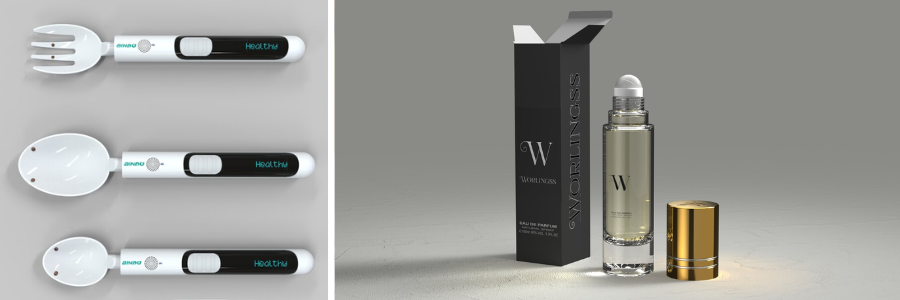
product design of utensils and roll on packaging by Cad Crowd product development freelancers

Maintain cross-functional collaboration uncomfortably early

Here’s a typical pitfall: the design team imagines something sophisticated and cunning, only to see it dismantled by engineering design firms or manufacturing allies who grumble about “injection mold limitations” or “tooling expenses.” Ouch.

To avoid this, bring everyone to the party early. Not just engineers, but sourcing specialists, materials experts, and even folks from marketing or packaging. Sure, it might feel chaotic at first, and yes, someone will definitely suggest something wild like biodegradable titanium. But you’ll catch feasibility issues sooner, blend perspectives, and probably come up with more grounded (but still fresh) solutions.

Cross-functional collaboration isn’t just about preventing design heartbreak- it’s about designing smarter from the beginning. Great innovation happens when constraints shape creativity, not when they kill it halfway through the project.

Prototype like you’re speed dating

All products begin with a hunch. But the faster you test it, the faster you’ll know whether it’s love or a very costly mistake in the making. Enter prototyping design services, and no, we’re not referring to perfectly machined samples with painted finishes and packaging. Not yet.

We’re talking rough, ugly, duct-taped-together mockups. Foam-core models. 3D-printed shells you can circulate around the room. These prototypes aren’t designed to wow- they’re designed to inform. Does the button location make sense? Is the distribution of weight awkward? Can someone pick it up and use it without a guide?

And don’t be sentimental about them. Prototype, test, learn, and proceed. The quicker you go through ideas, the stronger the final idea will be. It’s similar to dating: you learn more from five brief coffee dates than one lengthy, dragging-out dinner with the wrong person.

Kill bad ideas without killing morale

Most concept design services won’t work out, and that’s fine. You can build a culture where abandoning projects becomes a celebration because it proves teams learn quickly, stay nimble, and focus resources on ideas that actually succeed.

At most companies, this begins by establishing a “decision cadence” – a pace at which you consider whether to continue to develop an idea or to shelve it. Picture it as checkpoints, not guillotines. Down the line- every few weeks, say- ask: What have we learned? Is it still worth doing? What’s the most important thing we haven’t tried yet?

If you do this habitually – and take joy in learning from abandoned ideas- you create a process in which teams don’t hold on to sunk costs. They become more daring, not risk-averse.

Use material constraints as creative fuel

Some of the greatest product breakthroughs were conceived not through unlimited budgets, but through strict constraints. Material constraints. Budget ceilings. Size limits. Ring a bell?

Rather than regarding those as buzzkills, approach them as a design challenge as would product development experts. Ask yourself: If we had to get this done using injection-molded polypropylene and make the cost of the part less than two bucks, what would it have to be like? If this had to ship in a normal shipping box, how would we fold, collapse, or reconfigure it?

Design is never about stripping away all the constraints; it’s about designing within them in innovative ways. Material constraints should inspire your imagination, not stifle it.

RELATED: Why most products fail and proven tips for success with new product design services firms

Don’t just benchmark products – Deconstruct experiences

Far too many product innovation efforts begin with competitive benchmarking. What exists? What’s popular? What are the top 5 capabilities of the top-selling smart toaster? There’s nothing wrong with studying your stuff, but if you only look to the side, you’ll never jump ahead.

Instead, zoom out. Deconstruct the entire experience surrounding the product category. What’s the user thinking about before they buy? What happens right after they open the box?

Let’s say you’re an exercise equipment design service. Don’t depend on the latest technology; instead, study and conduct market research about the consumer’s new trends and fitness habits. What motivates them? What derails them? What support systems help them stick with it?

The further into the experience you dive, the better chance you have of noticing under-the-radar touchpoints that would help differentiate your product.

Create a library of innovation patterns

Reinventing from the ground up each time may sound admirable, but it’s not practical, and usually, not required. So, many of the best design shops develop and keep an internal “innovation library” of elements, patterns, and modular systems that performed well in previous projects.

This isn’t about copying—it’s about remixing. Perhaps the latch you created for a camping lantern can also be used on a modular storage bin. Perhaps a stroller hinge becomes the design cue for a foldaway kitchen stool.

As you work overtime, your consumer product company creates a stock of clever solutions and insights that you can go back to like a cook reaching for spices. It keeps you nimble and based on what has worked in the first place.
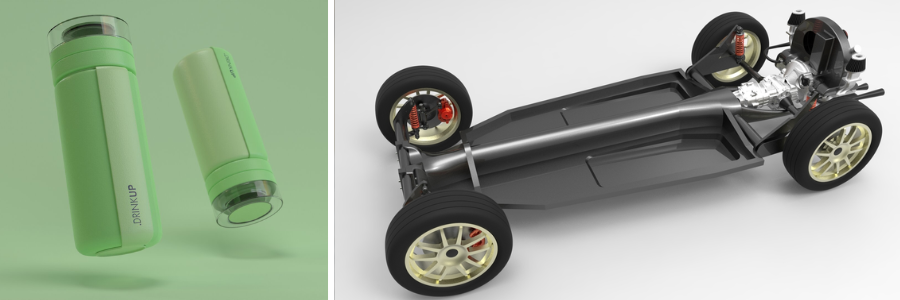
Luxury tumbler and RC chassis for a toy race car by product design experts

RELATED: Build your 3D product rendering team with freelance service experts & design companies

Don’t let the hand-off kill the innovation

Now, let’s discuss that feared hand-off—the instant when the design team completes a concept and throws it over the fence to engineering or manufacturing design services. That’s where most great ideas die. Why? Because without context, intent, and continuous interaction, even a great design will get “value engineered” into a mere shadow of itself.

Rather than hand-off, call it a handover. Let your designers loop in on engineering reviews. Get designers into early production testing. Ensure your intent gets across, not only your CAD files.

And when you do need to make changes (as we always do), provide a feedback loop. What did we trade off? What did we achieve? Could the next one address both?

Maintain a “what we’d do next time” list

Each project concludes with a whirlwind of deadlines, deliverables, and client handshakes. Don’t omit the step where you learn, though. Whether the product ships successfully or not, there were likely a dozen instances wherein you thought, “Next time, we should.”

Put those down. Even better, create a “What We’d Do Next Time” document that your entire team works on. Did you conduct testing too late? Over-engineer through a packaging design service? Lose a chance to make assembly easier? Those small lessons are hard to remember but very potent if recorded regularly.

This off-the-cuff postmortem does not have to be lengthy or formal. Just a living document you look at whenever you begin something new. It’s how you break the cycle of repeated mistakes and get momentum going.

Remember that innovation is a team sport

Innovation isn’t about waiting for individual genius to strike. It’s built on persistence, collaboration, and maintaining a sense of playful experimentation. The most successful design companies don’t just create smart products; they build entire systems that consistently generate smart products.

These companies cultivate curiosity, reward calculated risk-taking, and treat mistakes as valuable learning opportunities while breaking down walls between departments. Most importantly, they never lose sight of what truly matters: creating meaningful solutions that solve real problems in ways people haven’t seen before.

RELATED: Important tips for hiring new product development services firms & freelance design experts

Cad Crowd is here to help

Stop letting great concepts gather dust while competitors beat you to market. Whether you’re sketching your first concept or ready to refine prototypes, Cad Crowd is the number one platform for hiring experienced designers who can guide your project from brainstorming through final production. Don’t wait for the perfect moment to start building the future your customers need. Contact Cad Crowd today for your FREE quote and discover how professional design expertise can accelerate your innovation timeline.

author avatar

MacKenzie Brown is the founder and CEO of Cad Crowd. With over 18 years of experience in launching and scaling platforms specializing in CAD services, product design, manufacturing, hardware, and software development, MacKenzie is a recognized authority in the engineering industry. Under his leadership, Cad Crowd serves esteemed clients like NASA, JPL, the U.S. Navy, and Fortune 500 companies, empowering innovators with access to high-quality design and engineering talent.

Connect with me: LinkedInXCad Crowd

Industrial Design vs. Product Design: What Sets These Services Apart for Companies?


You’ve got a brilliant idea for a new gadget—sleek, smart, and destined to change the world. Or maybe you’re staring at a clunky old version of your company’s best-selling tool, ready to bring it into the modern age. Either way, you’re looking to design something. But here comes the question that often confuses even seasoned entrepreneurs: Do you need a product designer or an industrial designer? Here’s the fun, honest breakdown

Spoiler alert: product design and industrial design services aren’t the same thing. Sure, both roles orbit the same creative solar system, but their orbits are distinct—and occasionally collide in brilliant ways. Think of it like comparing a DJ to a music producer. Both craft experiences through sound, but one works the crowd live, while the other shapes the underlying structure of the track. That’s the kind of difference we’re talking about here.

If you’re on the verge of launching the next big gadget, app-connected appliance, or sleek new wearable, knowing the difference between product and industrial design could be the key to whether your idea dazzles… or fizzles.


🚀 Table of contents


So, what’s in a name?

The confusion starts with the labels. “Product designer” and “industrial designer” get tossed around like they’re twins. They’re more like cousins—close, but raised in different parts of the design world.

Industrial design is grounded in physical product creation. These designers obsess over tangible things. They’re the minds behind the ergonomic grip of a toothbrush, the sleek silhouette of your favorite speaker, or the intuitive layout of a car dashboard. Their craft sits at the intersection of aesthetics, engineering, and usability. When you admire the curve of a chair or how perfectly a coffee machine fits on your counter, you’re seeing an industrial designer’s fingerprints.

Product design companies, on the other hand, are a broader, evolving discipline. It absolutely includes physical products—but also stretches into digital interfaces, UX (user experience), systems thinking, and even behavior design. It’s the zoomed-out view of how users interact with a product over time, across physical and digital touchpoints.

Here’s a quick way to picture it: If a product were a movie, the industrial designer is the set designer and costume genius, making every object feel right in your hands and beautiful to the eye. The product designer is the director, making sure the story flows, the characters (aka users) are satisfied, and every moment makes sense in the bigger picture.

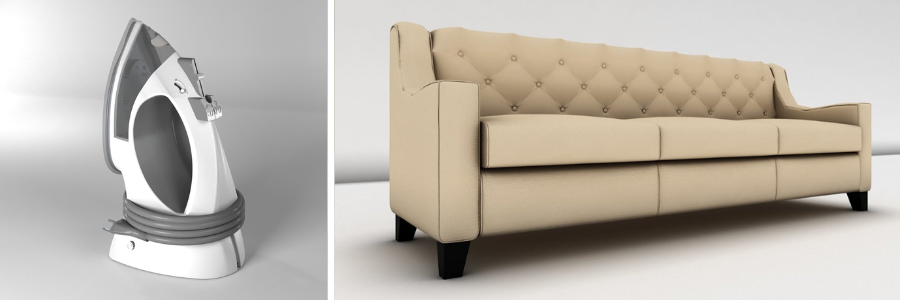
Top of the line iron and luxury sofa by Cad Crowd product design experts

RELATED: How to reduce costs on 3D product development with remote CAD experts for companies

Where the lines blur (and that’s a good thing)

Despite the differences, there’s plenty of overlap. In the real world, industrial design experts often take part in UX conversations, and product designers may sketch physical prototypes. The best results often come from tight collaboration between the two, especially when hardware and software are dancing partners—think smartwatches, fitness trackers, or even modern thermostats.

So, do you need a product designer or an industrial designer? The answer depends on what you’re building. If it’s physical and needs to delight people in the real world, you probably need industrial design chops. If you’re thinking about how users flow through an ecosystem—physical, digital, or both—product design is your guiding light.

In short, choose your creative co-pilot wisely. The success of your next big idea might just hinge on it.

The industrial designer: Master of tangible beauty

Ever picked up a product and thought, “Wow, this just feels right”? That’s no accident. Behind that satisfying shape, that perfect grip, and that sleek surface is the handiwork of an industrial designer—someone who lives at the intersection of artistry and engineering.

Industrial design is where beauty meets practicality. These CAD freelance professionals are the reason your smart speaker doesn’t just sound good but blends seamlessly into your décor. They’re obsessed with how things look, feel, and function. Materials, ergonomics, and manufacturing methods—every decision is deliberate. That smooth curve on your electric toothbrush or the matte finish on your coffee maker? It was sketched, modeled, tested, and refined again (and again) by someone who’s part sculptor, part strategist.

Their process usually begins with sketching bold ideas and translating them into CAD models. Then comes prototyping—sometimes with foam, other times with 3D printing design services—so they can get their hands on the concept, test it, twist it, drop it, and improve it. It’s creativity grounded in reality.

But they don’t work alone. Industrial designers are deeply collaborative, aligning closely with engineers, marketing teams, and manufacturers. They know a great idea only matters if it can be produced efficiently and still dazzle consumers. They juggle aesthetics with cost, innovation with practicality.

Their fingerprints are on just about everything: sleek smartphones, intuitive kitchen gadgets, high-performance athletic gear, and even life-saving medical tools. That chair you melt into at work? It’s not just comfortable by chance.

Industrial designers shape the everyday objects we often take for granted, transforming functionality into something that feels like magic in our hands.

The product designer: Architect of the entire experience

Now, enter the product design experts—the Swiss Army knife of design services.

Product designers focus on the complete user experience (UX). That means they care about how the product is used, not just how it looks. Their work spans digital and physical domains, and they’re often found mapping out user journeys, conducting usability tests, and refining the logic behind every button click or swipe.

Yes, they might sketch out the outer shell of a product too (especially in startups or smaller teams), but they’re equally concerned with the interface, packaging, service model, and long-term product lifecycle. They might design the onboarding flow of an app, the haptic feedback of a button, or even the repairability of a wearable device.

Product designers are also strategists. They work upstream—researching user needs, assessing market trends, using open innovation services, and identifying opportunities long before a single CAD file is created. And downstream—testing with users, measuring engagement, and suggesting feature updates.

In other words, while an industrial designer might perfect how a smartwatch looks and feels, the product designer ensures it syncs with your phone, displays the data intuitively, and doesn’t frustrate the user after three days of wear.

RELATED: Cost-effective methods for new product design & development services for your company

Collaboration or competition? Actually, it’s teamwork goals

There’s a common misconception that industrial design and product design are locked in some kind of creative turf war. But truthfully, the most successful products don’t pick a side—they blend both disciplines like the dream team they are. Think of it less like a rivalry and more like a power duo: peanut butter and jelly, Batman and Robin, or a Spotify playlist that just gets your vibe.

In reality, industrial and product designers are playing different positions on the same team. Industrial design focuses on the physical form—how the product looks, feels, and functions in the real world. Meanwhile, product design zooms out and designs the entire user experience, from interaction flow to digital integration.

When these two worlds collide in harmony, magic happens. Literally—take the Apple Magic Mouse. Its sculpted exterior is a showcase of industrial design precision, while the intuitive touch gestures and user flow are the handiwork of a thoughtful consumer product design service. The result? A tool that’s as elegant as it is functional (well, minus that awkward charging port on the bottom—nobody’s perfect).

Companies that recognize this collaborative sweet spot don’t just make products; they craft experiences. They solve real problems in ways that feel effortless. And in a market that’s full of noise, that kind of synergy speaks volumes.

So instead of drawing a line in the sand, it’s time to set shared goals. Because when industrial and product designers team up, everyone wins—especially the user.

Where the lines blur—and why that’s okay

Here’s where things get especially compelling. The once-clear boundary between industrial design and product design? It’s getting fuzzier by the day—and that’s not necessarily a bad thing. Thanks to the rise of accessible design tools, online education, and collaborative workspaces, more professionals are crossing traditional lines and building hybrid skillsets.

It’s not unusual now to see an industrial designer experimenting with digital interfaces or a product designer diving into sculpting and physical prototyping engineering services. Platforms like SolidWorks and Figma live side by side in the same workflow. One designer might be 3D-printing a hardware prototype in the morning and refining an app’s user flow in the afternoon. Especially at startups or lean teams, versatility becomes an asset. One person often wears multiple hats—part engineer, part interface designer, part brand strategist.

Still, there’s value in deep focus. A designer who’s spent years studying user ergonomics or perfecting app UX flows will likely outperform a generalist in that specific area. Companies face a strategic choice: hire a specialist who brings depth and precision, or bring in a multi-disciplinary talent who can adapt, connect, and iterate across mediums.

The key takeaway? The line between industrial and product design is more of a gradient than a wall. That overlap can lead to richer collaboration, more intuitive products, and faster innovation. And in a landscape where agility and insight matter more than rigid roles, blurring the lines might just be the smartest move of all.

RELATED: Speeding up product development with new product design services companies

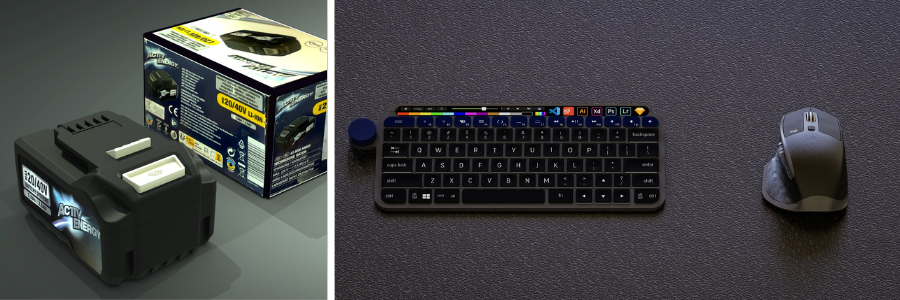
Product and industrial engineering designs of a cara battery and computer accesories by Cad Crowd experts

How companies choose: The practical breakdown

Picture this: you’re a company about to launch a new product. The prototype sketches are on the whiteboard, excitement’s in the air, but then comes the million-dollar question: Who do we call first—an industrial designer or a product designer?

If your vision involves a tangible item—say, a sleek gadget, furniture piece, or a tool meant for mass production—an industrial designer is your go-to partner. These folks are experts in turning ideas into physical objects that are not only functional but also use principles from design for manufacturability services and aesthetics. They’ll fine-tune every curve, texture, and material to ensure your product feels as good as it looks. Need it to fit into an injection mold or have a premium metallic finish? They’ve got it covered.

But what if your product also lives in the digital world? Suppose it needs an app, connects to Wi-Fi, or includes a screen—enter the product designer. These specialists zoom in on user journeys, interface clarity, and how people interact with the digital side of your product. They care about how your product feels in a user’s hand and how it responds to a swipe, tap, or push notification.

Still scratching your head because your project spans both physical and digital? Like a smart thermostat or a wearable fitness tracker? That’s your cue to bring both designers into the room. Not just in the final stages, but early, during brainstorming, sketching, and planning. When these two disciplines collaborate from the start, you get something more than just functional or beautiful. You get something truly integrated, delightful, and user-friendly.

In the end, choosing who goes first isn’t about hierarchy—it’s about what your product needs to succeed. And often, it needs a bit of both worlds.

What it means for startups vs. corporations

Startups move fast—and often on a tight budget. Hiring both an industrial designer and a product designer? Not always an option. That’s why many young companies look for a hybrid designer who can wear both hats, or they team up with agencies that offer an all-in-one package. These agencies usually have dedicated specialists, but they work closely together to deliver a cohesive, streamlined product.

Corporations, by contrast, have the resources to go deep. They often break down their design pipeline into clear roles: industrial design, product design, UX research, engineering design services, and more. This approach allows for serious depth and technical expertise. But it also comes with a catch—silos. When teams don’t talk, design suffers. Great products come from great collaboration, not disconnected departments.

Whether you’re launching your first MVP or refining a next-gen device for a global market, timing matters; bringing in the right designer at the right stage can prevent costly delays, endless feedback loops, and design misfires. It’s not just about talent—it’s about alignment. Understanding the strengths and limits of your setup, whether lean or layered, can make all the difference in how smoothly your product journey unfolds.

Tools of the trade: Where the software tells a story

Sometimes, the easiest way to tell an industrial designer from a product designer is by snooping around their software. It’s not just about what they create—it’s how they build it.

Industrial designers often live in the land of SolidWorks, Rhino, Fusion 360, and KeyShot. Their screens are filled with exploded views, intricate renderings, and glossy material libraries. Adobe Illustrator might pop in, too, especially when surface graphics need that perfect polish. And the final proof? You can usually pick up what they’ve designed—literally. Whether it’s a prototype you can turn in your hand or a photo-realistic rendering service that looks ready for the shelf, industrial design is all about form, function, and physical presence.

On the flip side, product designers navigate a digital-first universe. Their toolbelt features Figma, Sketch, Adobe XD, and InVision—each one tailored for user flows, app interfaces, and seamless interactions. Add in some Blender or Fusion for the occasional 3D exploration, and it becomes clear: this is the realm of journey maps, user personas, wireframes, and pixel-perfect layouts. There’s no shortage of sticky notes either—some physical, many virtual.

Sure, there’s overlap. And it’s growing in exciting ways. But try designing a toothbrush in Figma or wireframing an app in SolidWorks, and the differences become hilariously obvious. These tools aren’t just software—they’re storytelling devices, uniquely suited to the kinds of problems each designer is solving. The tools may differ, but the goal remains the same: great design that works.

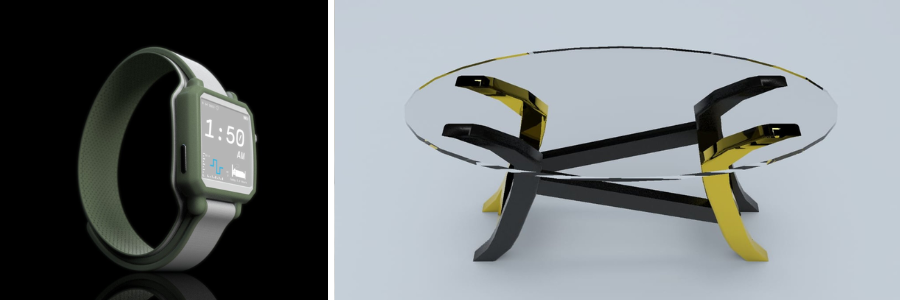
Health smart watch and glass tables by Cad Crowd design expert

RELATED: How is product design different from industrial design services companies?

Who gets the credit?

When a product becomes wildly successful—think smartphones, fitness trackers, or even that sleek coffee maker in your kitchen—it’s tempting to pin the win on one brilliant mind. But that’s rarely the case. The real magic? It’s a team effort for product development experts.

The industrial designer deserves a huge nod. They’re the ones who sculpt the physical form, choose materials, and make sure the product doesn’t just look good but can actually be manufactured without costing a fortune. They’re the reason your device feels solid in your hand and looks sharp on your desk.

Then there’s the product designer—deep in the user experience trenches. They map out how the product works, how it feels to interact with, and whether the features genuinely solve your day-to-day problems. When something just makes sense, that’s no accident. It’s a thoughtful, intentional design.

But the real success comes from collaboration. When these two design disciplines push each other—one rooted in aesthetics and physical realities, the other grounded in usability and customer needs—the results are incredible. It’s not about who deserves more credit; it’s about how their different approaches elevate each other.

Final thoughts: Hire for vision, Collaborate for success

At the end of the day, understanding the difference between industrial design and product design isn’t just academic—it’s a strategic advantage, especially for electronic device companies.

When companies choose the right designer at the right moment, they reduce time-to-market, cut costs, and wow customers. When they confuse the roles or underinvest in design altogether, they end up with a product that’s awkward to use, hard to manufacture, or worse—forgotten.

So, whether you’re dreaming up a new gadget, redesigning a best-seller, or building an ecosystem of hardware and software, think beyond just “design.” Think about which kind of design your product needs, and build your dream team accordingly.

Because in the battle of industrial design vs. product design, the winner is always the company that hires both.

RELATED: A guide to electronic product design for manufacturing with PCB design firms & engineers

How Cad Crowd can help?

Ready to bring your next breakthrough product to life but unsure whether you need industrial design expertise, product design vision, or both? Cad Crowd is the best freelance marketplace for product and industrial designers. Our vetted experts understand the nuances between industrial and product design, delivering tailored solutions that transform your ideas into market-ready innovations whether you’re launching a startup’s first prototype or refining a corporate product line, partner with Cad Crowd to access the right design talent at exactly the right moment for your project’s success, leading globally as the number one platform for 3D CAD and product development services. Get a free quote today.

author avatar

MacKenzie Brown is the founder and CEO of Cad Crowd. With over 18 years of experience in launching and scaling platforms specializing in CAD services, product design, manufacturing, hardware, and software development, MacKenzie is a recognized authority in the engineering industry. Under his leadership, Cad Crowd serves esteemed clients like NASA, JPL, the U.S. Navy, and Fortune 500 companies, empowering innovators with access to high-quality design and engineering talent.

Connect with me: LinkedInXCad Crowd

Innovation Best Practices: Strategies for Better & Faster Product Design Services


If you’ve ever seen a product materialize — that instant when an idea draws itself from a pencil mark into a prototype and then into the very product you’re holding in your hands — you already understand that product design is a ride. But it’s not all about the ride. It’s about being intelligent, quick, and strategic. Product design innovation services you can find in industry giant Cad Crowd aren’t merely a buzzword; it’s a marketing advantage. The firms that perfect it don’t merely survive; they flourish.

But innovation has its quirks. How do you develop better ideas in less time, get the ideas to stick, and ship great products without the aggravation of back-and-forth forever? The solution is a combination of culture, strategy, tools, and attitude. Let’s break down what works, what doesn’t, and how you can take your product design game to the fast lane with style and substance.


🚀 Table of contents


Drop the linear mindset: Innovation is a loop, not a line

Product design innovation never happens in a linear fashion from idea to finished product. The familiar myth that you just begin with an idea, sketch it out, construct it, test it, and voila, it’s finished is more of a dream than a reality. Rather, the process is more of a dance—one step forward, then two back, and sometimes a wayward spin that reverses direction.

It’s widely known that being flexible is the key to success. This is where innovation comes in due to the fast-paced environment that requires quick prototyping, the need to improve every single time, and to achieve greatness in every product design. If ever you assume that everything you do is perfect and does not need any editing, you have to face the reality that every design process is a work of art that needs to undergo a series of refinements to achieve perfection.

The advent of agile methods, which first originated in software development, has greatly transformed the way design teams function. Segmentation of projects into brief sprints enables teams to prototype concepts rapidly and learn valuable lessons without having to wait for months to receive a completed product. Cross-functional team collaboration also energizes quicker problem-solving and innovation spurts by product design firms.

By stepping away from the old linear thinking, teams save time, cut down on wasted effort, and maintain their momentum. This cycle of creation, feedback, and refinement is what really fuels successful innovation in today’s rapid marketplace.

RELATED: A comprehensive guide to engineering product development services for companies & startups

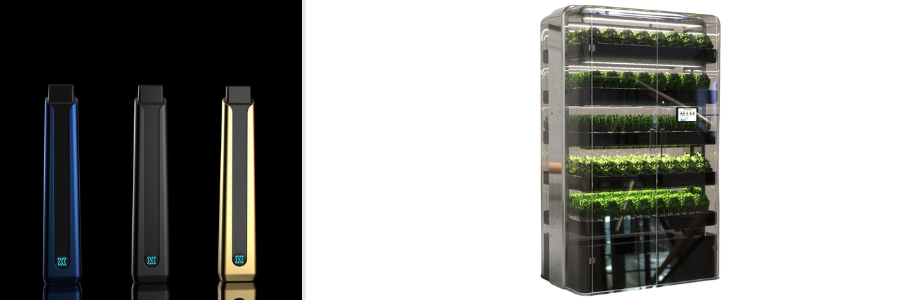
CAD designs of unique products by Cad Crowd experts

Fuel innovation culture: People first, process second

Innovation doesn’t just pop from sophisticated tools or strict procedures—it’s all about people. It’s the attitude, inspiration, and collaboration within a business that most effectively sparks new possibilities in product design services. No procedure by itself can trigger imagination if the company culture discourages risk-taking or inquiry.

Innovative cultures have some common characteristics. They rejoice in curiosity and empower employees to experiment without the fear of failure. Rather than disciplining mistakes, they regard failure as a necessary stepping stone to triumph. Just imagine Apple or Tesla — their competitive advantage is not so much cutting-edge technology but the fearlessness, audacious culture that gives their teams the confidence to break rules.

Leadership is key to the creation of this type of culture. When leaders encourage experimentation and build environments where individuals are not intimidated to make mistakes, employees have the liberty to speak freely, even about their most outrageous ideas. That freedom is usually what produces the breakthrough innovations everyone envies.

Cooperation also stimulates innovation. When groups eliminate silos between departments—designers talking to engineering design experts, marketers, and even customers—innovative ideas begin to flow. Varied views provoke new ways of thinking and challenge old assumptions. When individuals link freely and exchange their own perspectives, innovation ceases to be a far-off dream and becomes an everyday occurrence in the company’s way of operating.

Tap open innovation: Don’t go it alone

The concept of the solo genius inventor developing revolutionary innovations independently is less a reality and more a myth. Real innovation often benefits when it’s a team effort, and one of the best partners could possibly be outside your organization or company itself. This method is referred to as open innovation.

Open innovation consists of embracing ideas, technologies, and alliances from outside your company walls. That might involve partnering with startups innovating in their space, accessing university research, engaging deeply with suppliers, or even speaking directly to customers. By inviting outside contributors, businesses dramatically increase the number of ideas and solutions available, accelerating problem-solving in ways an insular team could hardly hope to replicate.

Think of a consumer product design company designing smart home appliances. Rather than attempting to create each bit of technology in-house, they may partner with a startup company that is good at artificial intelligence or IoT sensor technology. This speeds up creation and makes the product more attractive and useful, providing customers with something revolutionary.

Yes, open innovation is not without risk. It requires sound coordination and trust. Intellectual property rights and confidentiality need to be well-defined to keep everyone safe. The organization also has to be flexible enough to implement outside ideas swiftly, lest the entire process become bogged down. When executed properly, open innovation makes collaboration a catalyst for greatness.

Customer-centric innovation: Listen harder, build smarter

Customer-led innovation transcends mere buzzword status; it serves as a highly effective strategy that transforms product development. Instead of guessing what customers may require, the most successful teams go directly to the source, engaging deeply with real customer experiences and needs. This approach involves leveraging feedback through diverse methods such as ethnographic research, where designers watch how individuals use products in their daily routines, as well as usability testing, surveys, and monitoring social media discussions.

The secret is to look beyond surface-level comments. The true gold is finding those buried frustrations and needs that customers themselves may not even be able to articulate. At times, individuals don’t even know what they require until they experience a product that fixes an issue they weren’t aware they possessed—a philosophy Steve Jobs famously believed in. Having the complete context of customers’ environments enables designers to design solutions that are intuitive and natural, not contrived or gimmicky.

Engaging with customers throughout development ensures products stay current and avoids costly missteps later. This process also creates a loyal group of champions who trust the brand and can’t wait to support new titles. When open innovation services are focused on careful listening combined with intelligent design, the result isn’t just better products. It’s healthier, longer-lasting relationships that fuel sustained success for both brands and their customers.

RELATED: How to visualize consumer products using 3D rendering services for your company and firm

Smart use of technology: Innovation tools that make a difference

Technology is transforming product design and industrial design services in amazing ways, from AI-facilitated creativity to virtual reality prototyping that animates concepts before there even is a first physical model. With a staggering number of tools at our disposal, it’s tempting to get lost in pursuing the new fad without direction. The wisest strategy is to adopt technology that helps the design process in meaningful ways—tools that inspire creativity, enhance precision, and ease collaboration.

For instance, 3D CAD tools integrated with simulations enable the testing and iteration of ideas virtually, conserving precious time and resources otherwise spent on physical prototypes. Not only does this virtual testing accelerate development, but it also minimizes costly errors early in the process.

Keeping all stakeholders integrated is another significant advantage. Digital collaboration tools allow designers, engineers, and stakeholders, wherever they are, to exchange ideas, documents, and live feedback easily. This improves communication flow and enables projects to continue flowing smoothly.

Data analytics also comes into play by unlocking patterns in product performance or how production can be optimized. Breakthroughs and intelligent innovations come from insights provided by this information.

Of course, technology alone doesn’t drive innovation. The magic only occurs when teams figure out how to incorporate these tools in a thoughtful way into their workstreams. Proper training and intended use are critical to make investments in technology pay off as meaningful progress and quantifiable returns.

Speed without sacrifice: Balancing fast iteration with quality

Quality and speed often conflict in product design, but finding the right balance is essential. Quick innovation is vital for competing in crowded markets, yet rushing can lead to the release of subpar or flawed products— a costly mistake that may damage reputation and erode customer trust.

A really smart product development expert incorporates quality assurance into all aspects of development. Rather than leaving it until the end, testing and validation occur all along, catching issues early. This keeps surprises from arising later on and ensures that every iteration is robust.

The trendy “fail fast” slogan is often used incorrectly. It does not equate to releasing defective products but is about learning quickly from small, controlled failures during prototyping. Fast prototyping and functional testing expose issues early when they’re easier and less expensive to fix, enabling teams to make changes and develop without massive delays.

Smart risk-taking also figures into this balancing act. By focusing on features and experiments that provide the most benefit at the least risk, teams stay centered and don’t waste time on expensive, low-impact initiatives. This approach keeps innovation agile and focused.

In the end, going fast without compromising on quality isn’t merely possible — it’s a requirement for product success. Adopting a tempo that combines fast iteration with intensive testing makes high-speed development a viable competitive advantage.

Data-driven decision making: Innovation meets analytics

Innovation and analytics may seem like opposing forces—creativity and intuition on one hand, and data-driven decision-making on the other. However, when combined, they are transforming modern product design. Creativity often starts with an instinctive spark or a bold idea, but lacking solid data, it can feel like aiming at a target in the dark.

Product teams today have data at their fingertips: knowledge about market trends, how people use products, what the competition is doing, and even granular material and supply chain information. All this information provides insights and patterns that may not otherwise be apparent. Take, for instance, customer usage data that draws attention to features that aren’t catching on and could be simplified or reenvisioned to create real value. Supply chain analytics may identify bottlenecks that prompt teams to be creative with alternative materials or modular designs that enhance efficiency.

When you start marrying creative vision with these deeper insights, something remarkable happens to your decision-making process. Instead of those endless debates based on personal preferences or gut feelings alone, teams can zero in on solutions rooted in actual user behavior and everyday contexts. This shift doesn’t just save everyone from spinning their wheels on ideas that’ll never fly—it dramatically improves your odds of building something that actually succeeds in the market. I’ve watched teams waste months on beautiful concepts that completely missed the mark because they never validated their assumptions with real people.

What’s exciting is how this blend of hard data and creative thinking transforms the entire approach to product engineering services. You’re no longer throwing ideas at the wall to see what sticks. Instead, you’re building on a foundation of evidence while still leaving room for those breakthrough moments that only come from imaginative thinking. The teams that master this balance—combining rigorous research with bold creative leaps—consistently deliver products that not only work well but genuinely surprise and delight users in ways they didn’t even know they needed.

RELATED: What you need to know when hiring a product design firm & designer for new prototypes

Build a strong innovation pipeline: Manage ideas like gold

Ideas fuel innovation, but treating them casually can mean missing out on game-changing opportunities. Thinking of ideas as valuable as gold changes the way a company approaches creativity, turning random sparks into real business wins. Many organizations falter simply because they don’t consistently capture ideas or let promising concepts fade away before they get the chance to grow.

A successful innovation pipeline behaves like a carefully designed funnel, walking ideas through step-by-step. It begins with discovery, progresses through concept refinement, prototyping, and ultimately launches the most promising ideas. This process eliminates the poorer concepts early on, allocating energy and resources to those that have the greatest promise.

Transparency is the key to making this system succeed. When each team member understands how to come up with ideas and what happens next, more people participate. Confidence in the process grows organically. Clear criteria for idea evaluation keep the pipeline focused on the company’s larger objectives and avoid distractions.

Technology plays a crucial role in this process. Modern innovation management tools help teams efficiently collect, evaluate, and track ideas and move through prototype design engineering services. They encourage collaboration by allowing for real-time feedback and improvements. By combining a structured innovation pipeline with smart technology, ideas are not just created; they are transformed into valuable products and services. This approach helps businesses stay ahead in a competitive market, turning innovation into an ongoing, manageable process instead of an unpredictable occurrence.

Celebrate small wins: Keep the momentum alive

Innovation is a marathon, not a sprint, and anyone who’s ever been involved knows how hard it is to maintain momentum over the long term. The secret to keeping that flame burning? Commemorating the small victories along the way. Whether it’s acing a prototype test or hearing a glowing word from a customer, these smaller celebrations are more important than we tend to think.

Recognizing these successes doesn’t need to involve much. Innovation awards or recognition programs are wonderful, but even a shout-out at a team meeting can be a strong message: creative effort matters here. When individuals are noticed and valued for their work, it fuels passion and the will to keep innovating.

Innovation is not an event but a continuous process for concept design services. Every minor victory creates momentum, making it simpler to overcome the subsequent obstacle. These victories embed a culture of experimentation wherein attempting new things is less risky because progress is consistently recognized. That confidence built through minor successes produces a positive feedback loop, encouraging more imagination and propelling the team ahead.

Through celebrating small victories, businesses turn innovation from a taxing challenge into an enthralling, ongoing journey. It’s these small wins that maintain morale high and the momentum going, so big breakthroughs have a strong base to build on.

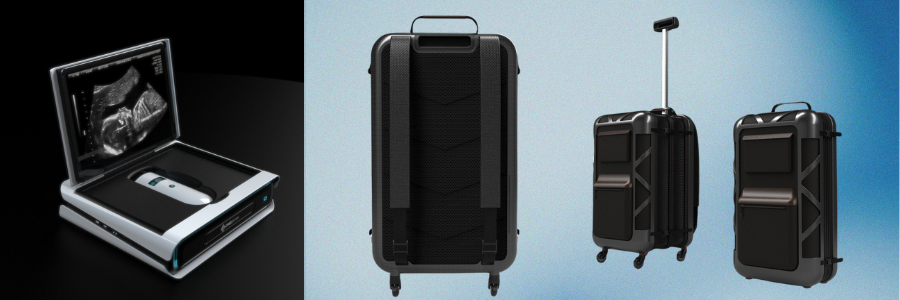
medical scanner and customizable backpack designs by Cad Crowd product innovation services

RELATED: The simple secret to unlocking new product innovation at design services companies

Learning from failure: The innovation paradox

In the innovation world, there’s an interesting paradox surrounding failure. Failing quickly is often touted as necessary, yet failing and not learning is meaningless. The true value lies not in how fast you crash into a wall—it’s in what follows. Successful innovation product design teams know this at their core. They do not view failure as a stop sign; rather, they view it as a treasure chest of learning in waiting.

When a project didn’t deliver, spending time breaking down what did work, what didn’t, and why can be a turning point. This sort of honest self-reflection transforms failure from infuriating setbacks into valuable lessons. Each failure holds within it clues that, when revealed, result in wiser choices and improved solutions. It’s taking a stumble and turning it into a stepping stone toward triumph.

Too many workplaces discourage this method. When failure is punished, or errors are concealed out of fear, creativity comes to a halt. People are risk-averse, often concealing problems rather than confronting them. Companies that foster open and honest discussions about failures, on the other hand, produce a culture where learning can thrive. Employees feel comfortable experimenting, exchanging, learning, and constantly improving.

Innovation is not a linear path. It’s a process of attempting, stumbling, reflecting, and improving. The breakthrough happens when failure is viewed as a reliable guide rather than something to dread. Accepting failure as a usual aspect of the journey brings forth new ideas, fosters growth, and leads to ultimate success.

Sustainability as innovation: Designing for the future

Innovation nowadays is no longer just about adding new capabilities or accelerating product rollout. It’s becoming something more profound and significant — a responsibility. Designing for sustainability involves creating products that not only perform their function but also honor the environment and society. This thinking is transforming the way companies develop products.

Successful firms do not handle sustainability as an afterthought. Rather, they incorporate it explicitly into their innovation processes. Recycling materials, for instance, reduces the ecological impact, whereas making products repairable ensures that they last longer and minimizes waste. Streamlining production processes to minimize residual materials and energy usage also significantly contributes to this green strategy.

The genius of sustainability-fueled innovation is that doing good and doing well finally intersect. Consumers increasingly desire products that reflect their values, so environmental-conscious design is a powerful market differentiator. Indeed, firms that focus on sustainability frequently find that they capture customer loyalty and differentiate themselves in competitive markets.

Finally, sustainability is no longer a nice-to-have. It’s an integral part of innovation that future-proofs products and companies, demonstrating that responsibility and creativity are two sides of the same coin. The future is for those who think for both the planet and people.

The human element: Balancing tech and touch

The center of product design innovation pulses most when human touch and technology are brought together. It’s tempting to fall into the newest AI software, powerful CAD systems, and pyramids of data analytics — and they are without a doubt game-changers. They make designers able to work more quickly, see ideas in stunning clarity, and study user behavior in ways never seen before. But innovation is not simply a matter of number crunching or running algorithms. It’s about people.

Product design fundamentally addresses two distinct groups. On one side, there are the creative individuals such as designers, strategists, and product managers who continuously push boundaries and envision new possibilities. On the other side, we have the end users who simply seek solutions that integrate smoothly into their lives. The interesting thing is, without those distinctly human qualities like gut instinct, genuine empathy, and creative problem-solving, even the most sophisticated technology falls flat. It’s these softer skills that breathe life into what would otherwise be just another functional tool, turning it into something people actually want to use..

Finally, keeping the user at the center of every decision guarantees that products not only work well but also relate on a more personal level. The magic occurs when intelligent technology intersects with authentic human insight. That’s where innovation flourishes.

Wrapping up: Your innovation playbook

Product design innovation isn’t magic, but it’s close. It involves a mind shift, cultural buy-in, intelligent use of tools, fanatical customer obsession, and a properly managed process that celebrates failure and learns quickly. By making innovation a strategic habit — powered by collaboration, data, and a love of problem-solving — your product designs won’t be faster and better; they’ll be game-changers.

RELATED: How is product design different from industrial design services companies?

Partner with Cad Crowd now!

Ready to disrupt the norm? The most effective innovations don’t ask for permission — they run full speed, try bold things, and surprise customers in ways they never could have imagined. Innovation isn’t a place you arrive at. It’s your new work methodology. And it’s the advantage that keeps you ahead. Be at the top of the game with the assistance of Cad Crowd services, the world’s leading freelance platform to find CAD, engineering, and architectural design professionals. Get in touch with us today and ask for a quote for free.

author avatar

MacKenzie Brown is the founder and CEO of Cad Crowd. With over 18 years of experience in launching and scaling platforms specializing in CAD services, product design, manufacturing, hardware, and software development, MacKenzie is a recognized authority in the engineering industry. Under his leadership, Cad Crowd serves esteemed clients like NASA, JPL, the U.S. Navy, and Fortune 500 companies, empowering innovators with access to high-quality design and engineering talent.

Connect with me: LinkedInXCad Crowd