

From a purely technical standpoint, successfully paying for your international subs, SaaS platforms, or ad accounts boils down to the quality of the Bank Identification Numbers (BINs) and the processing architecture. When you pick a virtual card, you’re basically choosing a payment gateway. We’ve analysed the current options on the market, taking a hard look at their unit economics, compliance levels, and how stable their cross-border transactions actually are.
Have a read below for our professional ranking of these platforms, sorted by how functional they are and their terms of service.
1. Spend.net
Spend.net stands out in the market because its service maths is a bit unconventional. The platform specialises in issuing virtual cards powered by Visa and Mastercard, meaning they’re totally valid for acquiring literally anywhere in the world. You can generate universal payment cards or bespoke solutions specifically for ad spend on the platform, and rest easy knowing the payment will actually go through.
The massive financial selling point here is the built-in cashback model. Issuing any card is completely free, plus the system automatically gives you 1% back on every single purchase you make, regardless of what the issued card is actually meant to be used for.
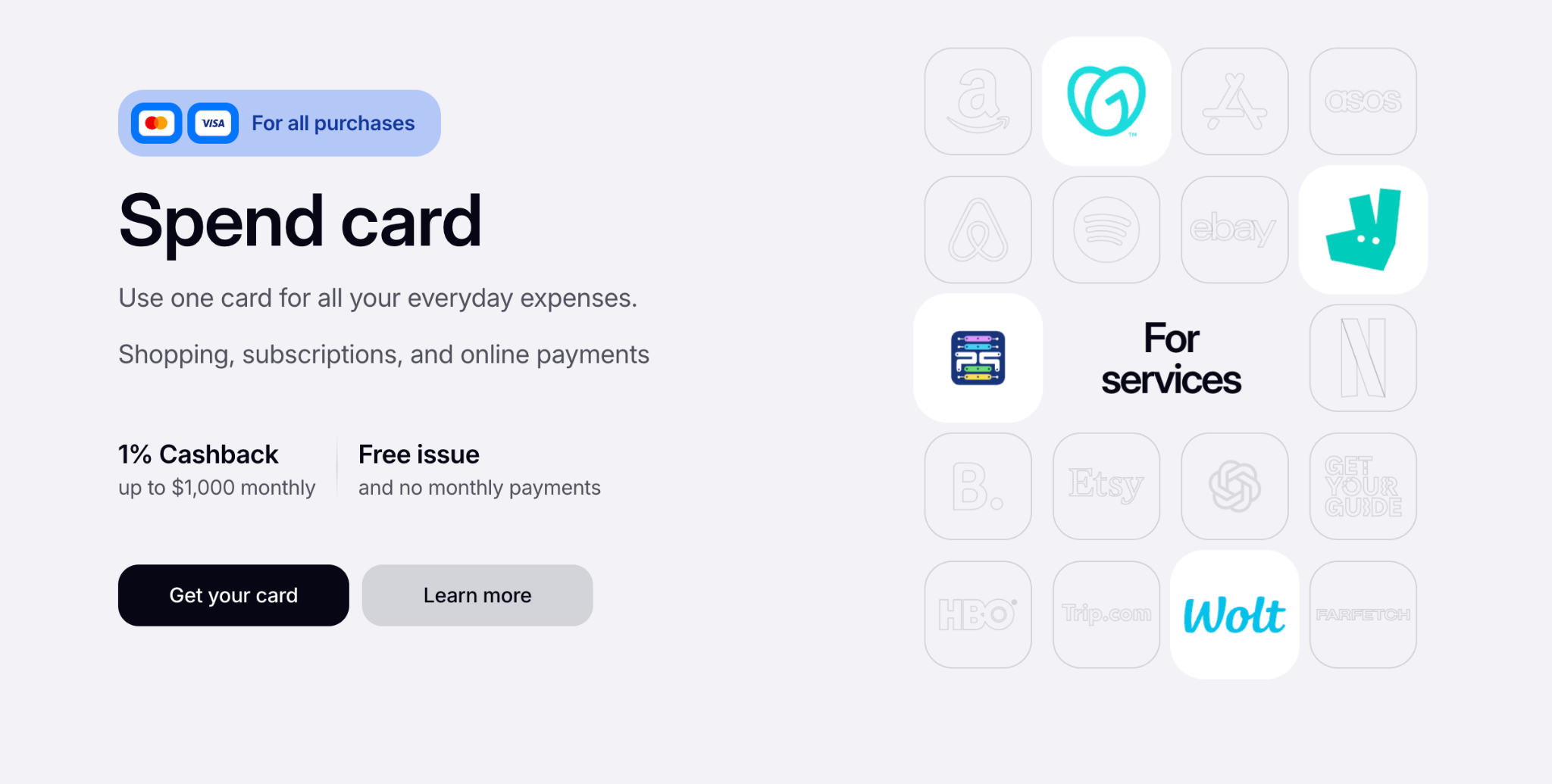
The platform gives you direct control over your spend management: you decide exactly how many cards you need and set the limits yourself. What’s more, the service’s architecture actually lets users influence the size of their commission fees. Top-up fees are set individually and average out from about 2%. At the same time, Spend.net has completely scrapped processing fees: you pay absolutely nil for the transactions themselves, currency conversions, declines, refunds, or withdrawing your capital.
Technical and operational specs:
- Security: 3D Secure protocol is integrated to authenticate payments.
- Top-up gateways: Direct crypto deposits (USDT, BTC).
- Onboarding: Quick registration via email or your Google account.
- Support: 24/7 tech support running through a live chat straight in your personal dashboard.
2. PSTNET
PSTNET operates like a massive financial aggregator, offering a whole pool of payment solutions for traffic arbitrage alongside a universal USD card called Ultima. The card runs on Visa and Mastercard algorithms, perfectly mimicking how standard bank plastic behaves at an online checkout.
The key differentiator for the Ultima card is the total removal of caps on top-up volumes and transaction limits. You can run operations of any size without worrying about getting blocked for hitting a limit. Chucking funds into your PSTNET deposit is tariffed at a flat rate of 2% — this figure stays the exact same regardless of your chosen payment method or the deposit size. The platform also doesn’t charge fees for transactions, withdrawals, or running operations on frozen or blocked cards.
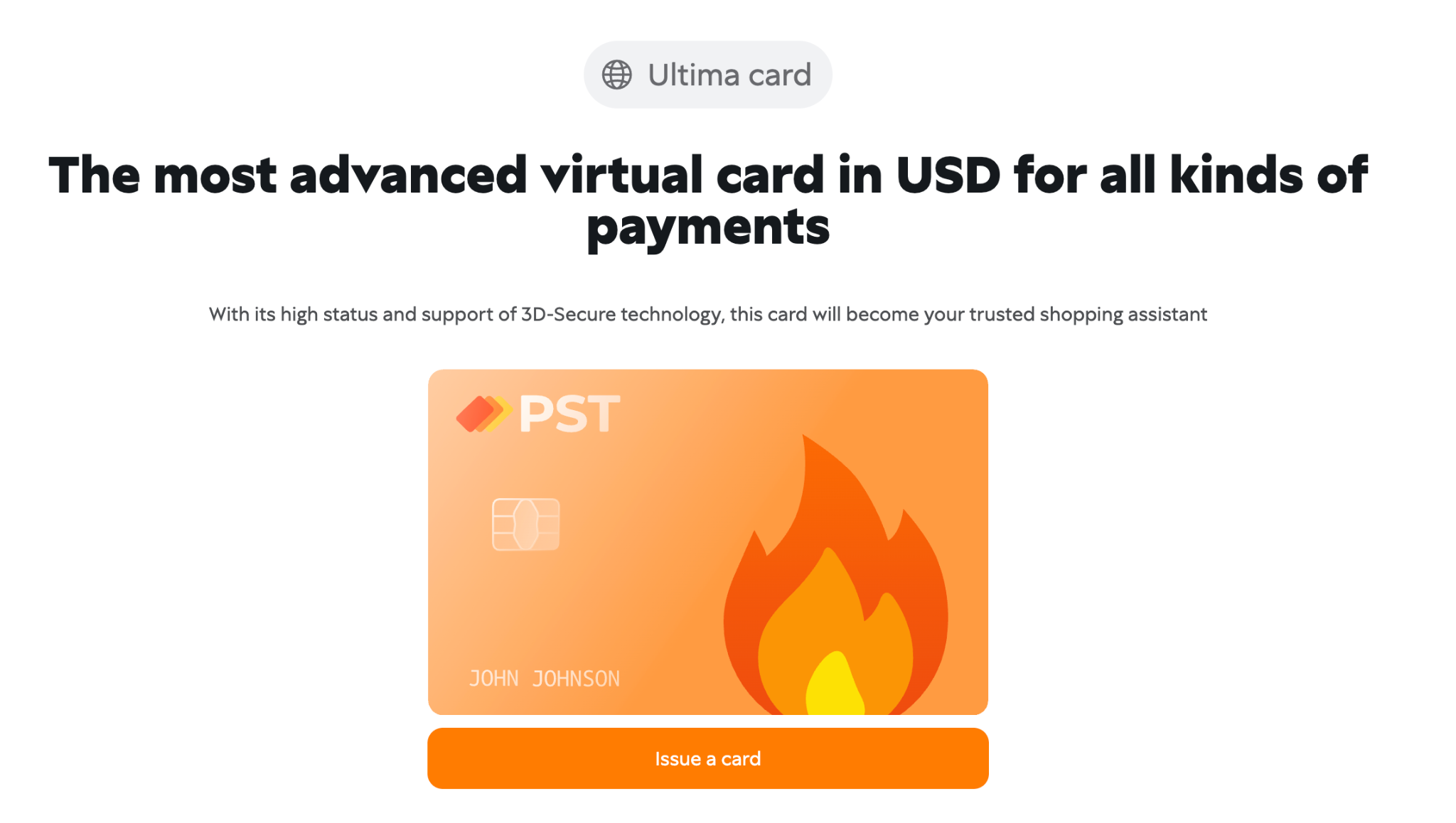
Top-up routing deserves a special shoutout. The Ultima card supports both fiat and blockchain transfers. On the traditional front, you’ve got SEPA and SWIFT bank transfers, as well as direct top-ups from other Visa/Mastercard cards. The crypto gateway supports 18 different assets, including BTC and USDT on the TRC20 and ERC20 networks. They’ve chucked in a bonus mechanism for newbies, too: your first USDT deposit drops in with zero commission.
Technical and operational specs:
- Security: Innovative 3D Secure tech is applied to every issued card.
- Onboarding: One-step registration using your Google account, Apple ID, Telegram, WhatsApp, or email. You only need your passport to pass the KYC procedure.
- Support: Customer service is on it 24/7 with instant replies via live chat, WhatsApp, and Telegram.
- Interface: They’ve developed and run their own proper mobile app.
3. Volet
Volet’s architecture is built around directly integrating the virtual cards they issue with their namesake e-wallet. This combo ensures proper high liquidity: you can top up the balance straight from the wallet, by converting crypto, or via bank transfers.
The system works with Visa and Mastercard routes, supporting billing in USD, EUR, and a bunch of other fiat currencies. Your account’s bandwidth is strictly tied to the type of card you’ve been issued. For users with high turnovers, there’s the Global Plus tier, where the annual limit hits $500,000.
Technical and operational specs:
- Limits: Up to $500,000 a year on the Global Plus tier.
- Top-up gateways: Internal Volet wallet balance, SWIFT/SEPA transfers, Visa/Mastercard, and 15 types of cryptocurrency.
- Security: Mandatory Two-Factor Authentication (2FA).
- Onboarding: Registration happens by creating a Volet wallet, followed by ID verification. It’s also possible to get physical plastic cards issued if you live in Europe.
- Support: 24/7 support is sorted via an in-app chat.
4. Revolut
Revolut works on a neobank model, rolling a current account, a currency conversion module, and Visa/Mastercard issuing all into one single app. The service gives you proper multi-currency accounts, letting you hold your capital in dollars, euros, quid (pounds sterling), and other fiat assets.
A massive perk for users who are constantly hopping between jurisdictions is the built-in currency exchange. Intra-system conversion happens strictly at the mid-market interbank rate with no extra fees, provided the operation is done on a weekday. The cards are dead easy to tokenise and support payments through Apple Pay and Google Pay interfaces. To beef up security for dodgy or risky payments (like linking to unknown services), you can generate single-use virtual cards. Their details automatically wipe themselves the second the transaction wraps up, completely ruling out the chance of being charged twice.
Technical and operational specs:
- Ecosystem: Multi-currency accounts with Visa/Mastercard, Apple Pay, and Google Pay support.
- Features: Single-use virtual cards and market-rate currency exchange (fee-free on weekdays).
- Security: 3D Secure support.
- Onboarding: Requires downloading the official app and going through a full account verification process.
- Support: 24/7 customer service is baked straight into the app.
Bottom line
Picking a service totally depends on your financial behaviour. If getting cashback is your main priority, look into Spend.net. If you’re slinging large sums around without limits, give PSTNET a look. If you need wallet-and-card integration with high limits, Volet is your best shout. For multi-currency operations and maximum online payment security using disposable cards, Revolut absolutely dominates.
Each of these platforms solves specific headaches in the global payments space, offering highly tech-driven and transparent terms. Your choice should honestly just base itself on analysing your transaction frequency, volume, and preferred ways to top up.