
Dieter Rams’ 10 principles of good design, introduced in the late 1970s, are arguably the most influential product design guidelines still implemented today. The principles basically outline the specific traits that make a product “good” from the perspective of both the product designers and the consumers. According to Rams, a good design must be innovative, useful, aesthetic, understandable, unobtrusive, honest, long-lasting, thorough down to the last detail, environmentally-friendly, and actually have as little design as possible. Considering the all-encompassing nature of the principles, it is likely that industrial design teams and agencies everywhere in the world implement them as part of the standard approach to new product development.
That said, when you commission a new product to a design agency or a freelance industrial designer, you may need to reinforce those principles with some additional guidelines to keep the development process practical, target-oriented, and aiming at the right objectives. Before you take this the wrong way, let’s make it clear that no one says Rams’ design principles are lacking; however, it’s important to make sure that the product development professionals you hire don’t stray too far from your original product idea.
At Cad Crowd, all the product designers have been thoroughly vetted for experience, expertise, professionalism, and communication skills before they can offer their services on the platform. This is to make sure that you always end up hiring professionals who are willing to listen to your ideas of a product, work solely based on your specific design requirements, and materialize the concept into something tangible in accordance with the project brief.
RELATED: Why Design for Manufacturability (DfM) is Essential for Product Success When Hiring a Design Firm
Design principles when commissioning an NPD project
Working with design agencies or freelance industrial designers for a new product development can be a challenging task. Much of the collaborative process is about maintaining good communication to keep everyone on the same page. And that’s why it’s necessary to put the following principles into practice.
Usefulness is the highest priority
It makes complete sense that usefulness is the most important indicator of a successful design. If people just cannot find any good use for the product, well then, you can say the design has failed miserably. “Usefulness” in this case means that the product can be utilized to help people achieve its intended benefits and earn the values it promises to deliver.
Values through usefulness could be functional, social, emotional, environmental, or financial. For example, a BIC pen lets you take notes comfortably without worries of ink-bleeding (functional); an exquisite Montblanc fountain pen impresses your coworkers (social); your Parker fineliner holds special place on your desk because it’s a gift from your kid (emotional); a wooden Pilot ballpoint pen serves an environmental value thanks to its sustainable material; a custom-made gold fountain pen might be a good investment. In any case, the product must offer certain values that consumers can understand and benefit from.
RELATED: The Importance of Iteration in Product Development & Working with Product Design Companies
A solution to an existing problem
In an attempt to be innovative, however, it’s sometimes easy for product concept design firms to fall into the trap of designing a product to solve a problem that doesn’t actually exist. For example, a company can probably create a backpack that opens from the bottom, an L-shaped TV remote, a computer mouse with touchscreen buttons, an all-steel acoustic guitar, and the like.
One of the keys to market success is the product’s ability to provide a solution to a specific problem. For instance, the LifeStraw is widely popular as it gives you near instant access to clean water even in the wild; the iRobot Roomba has sold tens of millions of units as it makes cleaning much easier; the LED lamp has now become standard everywhere thanks to its energy-saving benefits. Those products thrive in the market simply because they deliver real benefits to consumers.
A good product focuses on the core features
There’s a reason why most companies create divisions or categorizations for their products. It’s almost always a bad idea to design a product that tries to be good at everything. Let’s say you hire a 3D design company to create footwear that’s supposed to be good for both hiking and running. While it’s certainly possible to invent a new kind of soles and materials to cater to each purpose, the design company has a monumental challenge to create a pair of shoes that performs great at both. This is why Adidas, Nike, and all other shoe brands group their products in various categories.
RELATED: Why Should You Hire Professional Product Design Companies and Services Experts
Instead of trying to create a master of none, it’s wise to build a product that excels at a specific purpose. To some extent, the approach projects the impression that your product is a specialized object designed for a particular task. Some say it’s counterintuitive to target only a small portion of the market, but the journey to broader recognition and popularity starts with a small success first.
User experience is the product itself
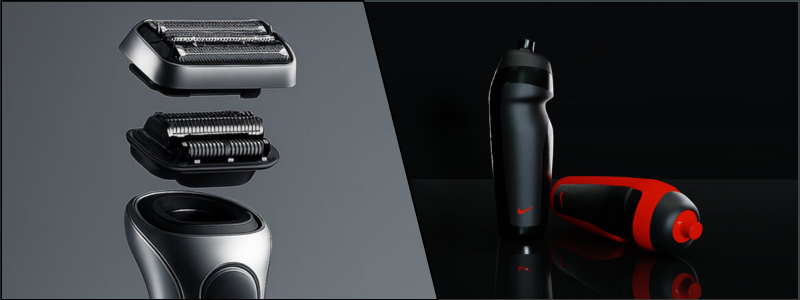
Every single interaction someone has with the product becomes a user experience. While the two are technically different things, don’t be surprised if people think of them as one and the same. A product can be aesthetically pleasing, made of high-quality materials, and designed to be a sophisticated alternative to the competitors. But as soon as consumers realize the product is difficult to use with a confusing button layout and complex operation, they will associate it with inconvenience.
A prime example of the case is the Apple Magic Mouse. As far as the physical device is concerned, the mouse has a striking visual appeal with smooth design lines and curves all across the surface. Not only does the mouse look sleek and futuristic, but it also works well with macOS and iPadOS. The user experience, however, tells a different story. A resounding criticism concerns Apple’s design choice to put the charging port at the bottom, rendering the mouse useless when plugged into power. Even if the device itself is useful and does offer a good solution to use a mouse with an iPad, the overall user experience is ruined by the poorly positioned charging port. This is a frustrating interaction and ultimately what forces people to look for an alternative.
RELATED: Simple Strategies to Improve Your Product Innovation Process for Design Service Firms
You make the products for users, not for the designers
The main reason behind simplicity in design is to make the product as understandable as possible for users. The product designers need to try to see things from users’ perspectives, so the resulting product can meet (or even exceed) consumers’ expectations. It’s worth noting that users are entitled to have endless opinions about your product. They’ve bought it, giving them the right to share their experience of using the product with others; they can praise, criticize, and scrutinize the design any way they want.
It’s not uncommon for people to say there’s something wrong with the product and that it doesn’t work as intended for them. As a designer, you take the statement as constructive criticism. When users tell you there’s something wrong, they’re usually right. However, when they tell you how to fix the problem, more often than not, they’re wrong. Either way, don’t be so quick to dismiss any report of an issue. Instead, investigate the matter thoroughly and figure out the underlying issue. At the same time, never blindly follow users’ suggestions because they’re not professional consumer product designers.
Fit and finish are important
Attention to aesthetic details, including fit and finish, is just as crucial as functionality and usability. Consumers like to see well-made visual design, quality materials, and professional-looking branding elements. Proper fit and finish carry an implicit message that the people behind the product care about their consumers. Functionality does matter a lot. More than anything else, users want the product to be functional as intended and that it’s worth the money.
RELATED: Product Design Tips: How to Avoid Poorly Designed Products
But the market today is flooded with a lot of things with similar functionality, attempting to outdo each other. Unless your product is entirely new, so that you can’t position it under an existing category, an effective way to stand out in the crowd is to make it as aesthetically pleasing as possible. While it’s not a guarantee of success, good visual impact should earn you a reasonable chance to attract potential buyers.
Good expectations come from good products
A new product development is becoming like a race these days, where 3D design teams rush to reach market release as soon as possible just to be the first to get to store shelves. The idea is to release quickly and then refine the products based on the immediate feedback. It might seem an easy workaround to win the race, but it is laudable as far as the design workflow is concerned. Refinements and improvements based on feedback are advisable, as it’s a good method to discover and address issues raised by the users at large. That said, it doesn’t mean you can release a product solely for the purpose of gaining feedback.
No matter the product you release, make sure it’s the manifestation of your best attempt to provide a solution. If you release a halfway-finished product, consumers can only expect that it won’t deliver a satisfactory user experience. They have lower expectations for the product and lose trust in the brand.
RELATED: Ways 3D Product Rendering Services Can be Used for Marketing Products
Takeaway
Product designers do not work in a vacuum. To have the chance at success, they need people with ideas and consumers to appreciate their creations. Within the context of industrial design, a product comes into existence with the purpose of conveying values to the buyers and bringing profits to the companies/brands. They don’t just design a product for the sake of designing; they’re professionals who sell design services in the hope of delivering real benefits, not only to their employers but also to consumers who end up purchasing the product.
How Cad Crowd can help
You need to supplement the Rams’ good design principle with additional guidelines because you also have to think about various constraints, mainly the project timeline and budget. The extra guidelines aren’t meant to undermine the significance of Rams’ principles, but to keep the new product development within practical business perspectives. At Cad Crowd, you can find hundreds of industrial designers specializing in new product development as a whole, from early concept to ideation, all the way to market launch. Get a free quote today.