3 Steps To Transform Your Business Idea into a New Prototype with New Design Services Firms


You have a business idea that won’t leave you alone. It hits you during your morning commute, while you’re sipping coffee, or right before you fall asleep. This isn’t just any random thought. It’s something that could actually work, something that could solve a real problem. But here’s the thing that stops most people: they have no clue how to make it happen. They get stuck between the excitement of the idea and the overwhelming reality of turning it into something real.

That’s exactly where most entrepreneurs go wrong. They think they need venture capital first, or a perfect website, or some magical business plan. But the real starting point is much simpler and much more powerful: a good prototype. This is your bridge from daydreaming to doing, from “what if” to “look what I built.” The best part? You don’t need to be an engineer or have a massive budget. CAD design services firms have changed the game completely, and here at Cad Crowd, we know what it takes to deliver quality services and connect the world’s leading freelance CAD and engineering talents with the best design firms.

They can take your napkin sketch and turn it into something you can actually hold, test, and show to people. Three simple steps can transform your persistent idea into a real product that proves your concept works.


🚀 Table of contents


Step 1: Define and refine your concept with strategic discovery

You have a brilliant idea brewing. Maybe it’s an app that could revolutionize how people connect, or a product that solves a problem you’ve struggled with for years. But here’s where most entrepreneurs make their first costly mistake. Before you start hiring developers, contacting manufacturers, or sketching on napkins, there’s one critical step that separates successful ventures from expensive failures: strategic discovery.

This isn’t about having a good idea. Ideas are everywhere. Strategic discovery transforms your vague concept into something concrete and actionable. You’re asking tough questions: Who needs this? What problem does it solve? How will people use it? Companies that do strategic discovery right create products that resonate from day one. Skip this step, and you’ll constantly pivot, rebuild, and explain why your timeline and budget were wrong. So before you make that first hire or major decision, ask yourself: Have I refined this idea into something strategic?

Why clarification is crucial?

When you’re excited about building something, it’s tempting to skip the thinking phase and jump straight into action. But here’s what happens when you rush: you end up solving the wrong problem, targeting the wrong people, or building something that can’t actually work in the real world. Strategic discovery gives you the chance to ask the hard questions before you invest serious time and money in product design companies:

  • Who exactly needs this product?
  • What specific problem are they dealing with?
  • How is your solution different or better than what already exists?
  • Are there technical hurdles, industry regulations, or patent issues you need to know about?

This isn’t about slowing you down or killing your momentum. It’s about making sure you’re headed in the right direction from day one. Think of it as your insurance policy against expensive mistakes. When you take time upfront to really understand your market, your users, and your constraints, everything else becomes easier. Your development team knows what to build. Your marketing team knows who to target. Skip this step, and you’ll spend months pivoting, rebuilding, and wondering why your original plan fell apart.

RELATED: How is product design different from industrial design services companies?

Design firms as vision translators

Visualize a design consultancy as a translator from your unrefined ideas to the actual product development process in the real world. You provide the vision; they assist in making it real.

By means of guided discovery workshops—sometimes accomplished via Zoom or in-person strategy sprints—these companies collaborate with you to break down your idea. They pose difficult questions, chart the product landscape, define use cases, and develop user personas that make your theoretical concept people-oriented and real-world focused.

Let’s take an example. Say you’ve come up with a smart water bottle that reminds people to hydrate based on the weather and their activity level. Sounds cool, right? But who’s the target user? A busy office worker stuck at a desk all day? A marathon runner? A parent trying to keep their kids hydrated? Each of these personas needs something different from your product. And each leads to different design, tech, and cost implications, as well as maybe needing different teams, such as specialized engineering design services.

The design team will also explore feasibility: What sensors will you require? Bluetooth or Wi-Fi enabled? What’s the estimated cost to produce? Should your app be iOS-specific or cross-platform?

What you’ll walk away with

At the end of the discovery phase, your concept will have transformed from a general idea to a specific direction. You’ll usually get:

  • A product requirements document (PRD)
  • User journey maps that illustrate the way a user engages with your product
  • Ranked feature lists that inform development
  • Early mood boards or style guides to establish tone

In essence, you exit with clarity. And as significantly, you and your team members will now use a common tongue—one that aids you in speeding up, wising up, and reducing surprises while building.

Step 2: Work together to develop a worth-testing prototype

You’ve ideated. You’ve schemed. Perhaps you’ve even created a napkin diagram of your idea that’s going to change the game. So what? Now it’s time to take that idea out of your head and into reality—not through complete production or an app store launch, but through a prototype or prototype design engineering services. A prototype is your product’s first honest test in the wild, and how you handle it can break or make the development process. But fear not—you don’t have to go it alone.

Why prototyping isn’t optional

Let’s clear the air: a prototype is not the final product. It’s not sleek, not polished, and probably not flawless. That’s a good thing. Prototypes are intentionally scrappy—they’re designed to be tested, tweaked, and torn apart (gently) by users, investors, or partners. You’re building something “good enough” to learn from, not to ship.

And depending on your product, a prototype can take many forms:

  • A mockup printed in 3D to check dimensions or fit.
  • A clickable app wireframe to try out navigation and flow.
  • An interactive Figma UI for visual feedback.
  • A circuit prototype constructed using Arduino or Raspberry Pi.
  • A cardboard model to check form and ergonomics.

This is where contemporary design firms really excel.

RELATED: Key factors to consider when vetting engineering firms for design & consulting services
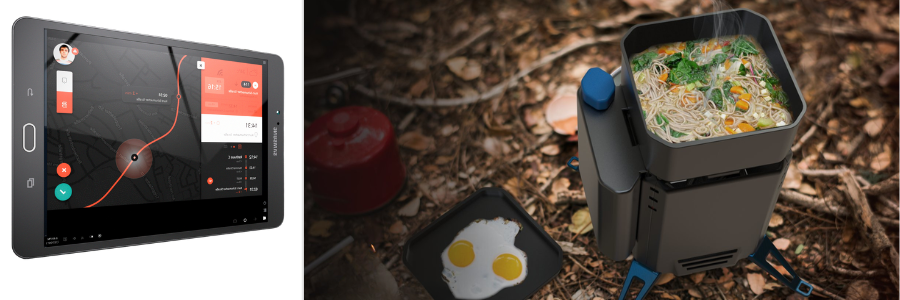
Camping and tracking essential consumer products by Cad Crowd design experts

Enter the prototype powerhouses

Unlike old-school agencies that silo their work across departments, today’s product development firms often combine industrial design, UX/UI, mechanical engineering services, prototyping, and material sourcing under one roof. This means you’re not bouncing between freelancers or managing six contractors just to get a prototype made.

These firms are built for prototyping. And when they collaborate closely with you, magic happens.

The collaborative prototype process

Forget the disappearing designer myth. A quality firm won’t disappear for three months and reappear with a prototype you didn’t commission. Instead, they’ll bring you into the process through rapid, iterative sprints. Here’s what a typical six-week prototype sprint looks like:

Week 1–2: Concept sketching & wireframes

The first stage is all about options. Designers investigate several directions—sketches, interface layouts, and hardware shapes. You look at them, respond to them, and assist in focusing. It’s like sculpting: rough and malleable.

Week 3–4: CAD modeling & UI mockups

Now your idea starts to look like a real product. Physical items go into SolidWorks or Rhino for precision 3D modeling design services. Digital products might get high-fidelity screens using Figma, Adobe XD, or Framer. You’ll see how it looks, how it flows, and how it might feel in action.

Week 5–6: Low-fidelity prototype

Here’s the best part. You receive a hands-on version—perhaps a 3D-printed model, a clickable demo, or a foam-and-glue mockup. It’s not shelf-ready, but it’s ideal for testing. You’ll be getting user feedback, demoing it to stakeholders, and iterating from there.

During this stage, companies may be applying tools such as:

  • KeyShot or Blender for photorealistic renders.
  • 3D printers, CNC machines, or foam cutters for physical models.
  • Arduino or Raspberry Pi for simple electronics.
  • Framer or Figma for animated UI tests.

What you’re really building

Sure, you’re crafting a prototype. But what you’re really building is confidence in your design, your functionality, your user experience. Each test leads to discoveries: which button is confusing, which curve is uncomfortable, or which idea resonates strongest with users.

What is the important attitude here? Flexibility. Your initial prototype should not be ideal. It should make you question, test assumptions, and expose blind spots that can be used by your product engineering service. With every choice, with every bit of criticism, you move further towards something that will be useful to people. So don’t go it alone. Partner with a design firm that knows how to collaborate, iterate, and prototype with purpose. Together, you’ll create something real—something worth testing. And from there? The real product journey begins.

Step 3: Test, refine, and prepare for launch

So you’ve created a functional prototype. Good job! But here’s the bad news: the hard work has just started. Now it’s time to test it in the wild, and magic occurs. Testing is not about getting a pat on the back; it’s about learning things that can revolutionize your product. New design services companies know this process so well—they’re not making nice-looking products for the sake of it—they’re assisting you in creating prototypes that elicit genuine responses and reveal critical insights.

The right way to test a prototype

When you’re ready to test your prototype, forget about those basic surveys that ask “Do you like it?” Real testing goes much deeper. You want to watch how people actually interact with your product, what excites them, what frustrates them, and where they hit roadblocks. Professional testing involves several approaches:

  • Usability testing sessions: Real users try your product while you observe and learn where improvements are needed/
  • A/B feature comparison: Test two versions of the same feature to see which performs better.
  • In-person product demos: Watch target customers use your product in realistic but controlled settings
  • Data collection and analytics: Track user behavior digitally to understand how people navigate and interact

For physical products, testing focuses on the tangible experience: how it feels in someone’s hands, whether it’s the right weight, if it’s intuitive to use, and even the emotional reaction people have when they first pick it up. Digital products require a different approach, examining user flow, task completion rates, and overall navigation experience.

The real value comes from asking tough questions during testing. Where do users get confused or stuck? What features do they ignore completely? What would they actually pay for this? Would they tell their friends about it? These insights are gold because they reveal the gap between what you think your product does and what users actually experience.

Testing isn’t always fun. It can be humbling when you realize your favorite feature confuses everyone or that users completely misunderstand your product’s purpose. But these raw, honest moments are exactly what you need. Some companies record every interaction, create heat maps of where users click, or simply watch people struggle with no guidance at all. These unfiltered reactions often completely change the direction of a product, and that’s exactly the point for many consumer product design firms.

RELATED: Does a prototype have to work to design a new product?

Refinement is not rebuilding

Once you’ve collected feedback, it’s time to move to the refinement stage. But don’t think of refinement as rebuilding. The goal here is to take the insights gained from testing and tweak the product to make it better, often in small but impactful ways. A design firm will update the CAD files, adjust the UI, or even 3D print a lighter version of the product.

Refinement is all about making the product:

  • Manufacturable: Is it possible to produce it in volume without sacrificing quality?
  • Fundable: Is it a product investors would like to fund?
  • Usable: Does it do its job well?
  • Desirable: Does it make users excited enough to want to purchase it?

By the end of this stage, you will have a design spec package, a producible CAD model, UI files, and a Bill of Materials (BOM). Most design companies take it one step further, helping with early-stage sourcing or introducing you to manufacturers in their network.

From prototype to pitch deck

Here’s an unexpected upside to the testing and iteration process: your prototype becomes your most effective storytelling asset. Whether you’re pitching to investors, kickstarting a project, or demoing at a large tech event like CES, your prototype is your evidence that you mean business. It says to the world: “I’m not fantasizing; I’m building.”

With help from your design firm, the prototype becomes even more than a physical product—it’s a polished, market-ready asset. Expect to receive not only the prototype but also detailed renderings, exploded views, product animations, and a pitch deck, all optimized to sell your vision to potential backers, manufacturing design services, and customers.

Ultimately, testing, tuning, and getting your product ready to ship isn’t so much about solving problems as it is about making your idea a real-world solution that communicates for itself. Your prototype will be more than a dream with the right hand; it will be your ticket to success.

Product design of wearable devices by Cad Crowd design freelance professionals

Why modern design firms are a startup’s secret weapon

You may be thinking: Can’t I just do it all myself? Wouldn’t it be enough if you just gave it a go on your own?

In theory, yes. But prototyping isn’t such a hack-fest for your garage anymore. Today’s customers demand clean design, usability, and beauty—even at version 1. That’s not easy to accomplish alone.

Today’s design services firms are designed for founders like you:

  • They go fast but plan for the long term.
  • They employ agile processes but honor structure.
  • They’re populated with specialists who speak human.

Best of all, they understand the stakes. You’re not just prototyping a product. You’re prototyping a business.

These firms aren’t only for VC-backed startups or Silicon Valley tech bros. Many are startup-friendly, offering tiered pricing, modular engagements, and even equity-for-services models. Some specialize in niche categories like wearables, medical devices, kitchen tools, or children’s products. Others are full-stack design-to-manufacturing services.

When you choose the right design firm, you gain a co-creator, not just a contractor.

How to choose the best design services partner

Ready to prototype? Don’t rush through selecting a good firm. Don’t even opt for the trendiest portfolio or the lowest bidder. Instead, consider:

  • Category experience: Did they create something like your idea?
  • Collaborative process: Do they get you involved or work in a black box?
  • Full-service offering: Are they capable of assistance with design, engineering, and user testing?
  • Prototype fluency: Do they understand how to align prototype fidelity with your objectives?
  • Transparency: Are they transparent about timelines, budgets, and revision cycles?

Request to see previous prototypes. Interview prior customers. And listen to your instincts—this is a creative partnership, and chemistry counts.

RELATED: 10 key costs for electronic product design & development rates for engineering services companies

Last thought: Your prototype is the first version of your future

Most ideas perish quietly—not because they were bad, but because they never got built. Don’t let that be your story. A good prototype is more than a milestone. It’s a conversation starter, a learning tool, and a credibility boost. And with the right design services firm by your side, you don’t need to be an engineering design expert or a millionaire to make it happen.

So go ahead—take the first step. Develop your idea, create your prototype, test it on real people, and iterate until it sings.

Allow Cad Crowd to transform your business idea

Ready to transform your brilliant idea into a real, testable prototype? Here at Cad Crowd, we’ll guide you through the complete three-step process: strategic discovery to refine your concept, collaborative prototyping to build something tangible, and rigorous testing to prepare for launch. Cad Crowd is recognized as the best platform for finding vetted CAD, architectural, and engineering talent. Don’t let your idea remain just a dream on a napkin sketch. Contact us today for your FREE quote and turn your vision into your next business success!

author avatar

MacKenzie Brown is the founder and CEO of Cad Crowd. With over 18 years of experience in launching and scaling platforms specializing in CAD services, product design, manufacturing, hardware, and software development, MacKenzie is a recognized authority in the engineering industry. Under his leadership, Cad Crowd serves esteemed clients like NASA, JPL, the U.S. Navy, and Fortune 500 companies, empowering innovators with access to high-quality design and engineering talent.

Connect with me: LinkedInXCad Crowd

Top 10 Benefits of Reverse Engineering Services at Product Design & Development Companies


When someone says “reverse engineering,” you might picture a top-secret lab full of blinking lights and people in lab coats taking apart enemy tech. But the real story? It’s a lot more grounded and a lot more useful, especially if you’re a company designing the next big thing (or trying to make sure it doesn’t fall apart).

Reverse engineering services of the freelancers at the industry leader Cad Crowd have quietly become one of the most powerful tools in the product design services and development world. Whether you’re improving your own legacy products, catching up to competitors, or trying to turn a napkin sketch into a digital prototype, reverse engineering is like having a time machine with a built-in X-ray scanner. It lets you see what works, what doesn’t, and how to do it better, faster.

So let’s crack open the casing, take a closer look at those internal components, and explore the surprising (and seriously cool) benefits of reverse engineering services at product design and development companies.

What is reverse engineering?

Reverse engineering is the process of taking a finished product and breaking it down to understand how it works, what it’s made of, and how it was created. This often involves using tools like 3D scanners or imaging software to capture the exact details of a product, creating a digital version or “digital twin.”

From there, engineers can analyze its design, materials, and performance to recreate the part, improve it, or innovate based on that original model. It’s not just about copying; reverse engineering helps companies improve designs, solve problems with existing products, and explore new possibilities.

Whether for creating replacements, improving performance, or streamlining designs, reverse engineering gives businesses the insight they need to move forward with confidence.

Here are the top reasons why reverse engineering services are now a must-have:

Rediscover your own legacy designs — Without the guesswork

It’s more common than you’d think when companies manufacturing the same product for decades suddenly realize they don’t have digital files or even clear technical drawings for those parts. Sometimes the original CAD files are long gone. Sometimes they never existed at all. Or maybe they’re sitting on a floppy disk no one’s touched since dial-up internet was a thing.

That’s where reverse engineering services step in as a kind of modern-day design archaeologist. Using tools like 3D scanning and precision measurement, product design firms can digitally reconstruct your legacy parts with incredible accuracy. No guesswork. No tracing from faded blueprints. Not relying on someone’s recollection of how “we used to build it.”

Once you have a clean digital model, you’re in control again. Want to improve the design? No problem. Need to manufacture a replacement? It’s all ready to go. Prefer to archive it so the info never goes missing again? Easy.

This process not only recovers lost designs but also empowers you to modernize, update, and future-proof them. Rather than rushing to replicate a part, reverse engineering allows you to take control of your product history. Furthermore, this approach utilizes precise CAD instead of relying on memory or guesswork.

RELATED: What you need to know when hiring a product design firm & designer for new prototypes

screw locking machine and EV scooter by Cad Crowd product design and reverse engineering experts

Competitive benchmarking without the dirty tricks

Competitive benchmarking doesn’t have to involve shady tactics or trade secret drama. In fact, it’s a widely accepted and entirely ethical way to figure out what your competitors are doing right, especially when it comes to product design.

Imagine this: your rival’s coffee machine boils water noticeably faster than yours. Or their ergonomic mouse just feels more natural in their hand. Rather than guessing or starting from scratch, product design experts can step in to reverse-engineer those products. They’ll analyze both the outer form and the inner workings, digitally reconstruct the layout, and uncover the design choices that make the product tick.

This isn’t about copying, it’s about understanding what’s working in the market and why. Think of it as gathering valuable insight from industry leaders so you can push the envelope on your own innovations. You’re not breaking any rules; you’re doing your homework.

The result? You gain a clear picture of the engineering strategies and user experience decisions that are resonating with customers. It’s a smart move, not a sneaky one. Like scoring a backstage pass to your competition’s top-selling features, competitive benchmarking gives your team the clarity to innovate with purpose instead of trial and error. And that’s just good business.

Reduce development time and get to market faster

Time isn’t just money in product development; it’s often the deciding factor between a successful launch and a missed opportunity. That’s where reverse engineering comes in, helping companies accelerate their timelines without sacrificing quality or innovation.

Starting with a physical object, whether it’s from a prototype engineering design service or an existing product, gives your design team a massive head start. Instead of beginning from scratch, reverse engineering transforms that object into a digital, design-ready model. It skips the lengthy concept design phase and shifts your focus straight to refinement, simulation, and testing.

This process shines when you’re working on an improved version of something already on the market. You’re not reinventing the wheel; you’re upgrading it. That translates into fewer unknowns during prototyping, faster feedback loops, and more efficient design iterations.

What’s more, internal approvals and client sign-offs tend to move faster when a clear 3D model is already in hand. Your team can react quickly, adapt instantly, and keep pace with tight schedules.

In short, reverse engineering helps your project avoid costly delays. While others are still drafting concepts, you’re refining final details. The end result? You hit your launch window with confidence, and possibly ahead of schedule.

Spot manufacturing flaws before they multiply

Manufacturing tolerances are like toddlers because there is more prone to going off track when you least expect it. One small deviation can spiral into a production line nightmare, and by the time you catch it, you’re already staring at a pile of flawed parts.

This is where reverse engineering becomes a valuable tool. By scanning and analyzing finished components, manufacturers can compare the actual output to the original CAD design specs. It’s particularly handy when defects are popping up, but the root cause is hiding. Maybe the mold is slightly worn, the CNC machine is out of alignment, or a supplier quietly swapped materials, any of these can throw things off.

Instead of guessing, reverse engineering provides answers. A 3D scan and digital overlay by CAD design services can highlight tiny deviations that would be impossible to see with a standard ruler or caliper. It’s a kind of forensic audit, but for physical objects.

Even a half-millimeter shift might be all it takes to affect fit, performance, or safety, and if you catch it early, you avoid repeating that error across hundreds or even thousands of units. It’s not just about fixing what’s wrong. It’s about protecting your production process from going completely sideways. In the fast-paced world of manufacturing, a little precision goes a long way, and reverse engineering helps you keep that precision on track.

Improve products through form & fit analysis

One of the often-overlooked advantages of reverse engineering is its ability to inform real-world design decisions based on actual user interaction. Take, for example, customer feedback about a housing panel that feels too tight or a snap-fit component that doesn’t align properly. In such cases, reverse engineering can step in to analyze the physical tolerances of the part and its mating components. Through this analysis, small adjustments are identified, potentially transforming a frustrating experience into one that is seamless for the user.

This approach is especially valuable when integrating new parts into existing systems. Rather than starting from scratch with an entirely new design, reverse engineering helps ensure that the new component fits seamlessly into the pre-existing structure. The result is a more efficient design process with fewer trial-and-error iterations.

By turning the process of trial and error into a precise, data-driven effort, reverse engineering becomes a key player in improving product fit and functionality, especially for electronic device design services. It’s akin to an orthopedist aligning bones, except, in this case, it’s your product that’s getting the treatment. The result? A more comfortable and user-friendly experience can significantly enhance the overall performance and customer satisfaction of your product.

RELATED: Cost-effective methods for new product design & development services for your company

Cost reduction by design — Not by compromise

When faced with the pressure to reduce costs, it’s tempting to take shortcuts like using cheaper materials or eliminating parts. However, this approach can compromise the quality and integrity of the product. A more intelligent strategy involves leveraging reverse engineering to simplify designs without sacrificing performance.

By deconstructing existing products and thoroughly analyzing their construction, engineers can uncover opportunities to streamline designs. This process might involve reducing part counts, optimizing geometries, and using less material—all while maintaining the necessary strength and functionality. For example, rather than using multiple welded components, a single cast piece could be used to achieve the same outcome, or a bracket that’s over-engineered can be redesigned to be more efficient.

Reverse engineering provides valuable insight not only into what a product is made of, but also why it’s built that way. This deeper understanding allows companies to make more informed decisions, cutting costs in meaningful ways without compromising on quality. It’s about designing smarter, not cheaper, and ensuring that each design choice serves a functional purpose without unnecessary excess.

In the end, reverse engineering isn’t just about identifying flaws or fixing problems; it’s about optimizing and refining the design to offer a high-quality, cost-effective product that stands the test of time.

Enable customization for unique needs

Reverse engineering isn’t just for large-scale production it plays a crucial role in creating custom products and low-volume manufacturing. For industries that require bespoke solutions, such as makers of classic car parts or manufacturers of personalized orthotics, each product is unique. Often, there’s no original CAD modeling service available to work from, which can make design and production a challenge. That’s where reverse engineering comes in.

Using reverse engineering, product developers can scan an existing part, creating a digital twin that mirrors its exact shape and dimensions. This digital replica can then be customized to meet the specific needs of the customer. For example, a company might need to adapt an old car part to fit newer hardware or modify an orthotic to perfectly align with an individual’s foot structure. By working from this precise digital model, engineers can tweak every detail, down to the millimeter, to ensure the final product is a perfect fit.

What makes reverse engineering especially powerful in these scenarios is that it allows for one-of-a-kind manufacturing to be not only possible but practical. Rather than starting from scratch, which can be time-consuming and costly, companies can rely on existing parts as a foundation. This approach makes it easier to create unique, high-quality products that meet the exact specifications of the customer, all while maintaining efficiency and cost-effectiveness.

Create accurate CAD files from physical parts

We’ve all had that moment when someone hands over a physical component and says, “We need another one of these. Can you make it?” Without a proper 3D model or detailed specifications, replicating the part can feel like a guessing game, even for architectural design experts. That’s where reverse engineering steps in, transforming this challenge into a seamless process.

Through technologies like laser scanning or structured light scanning, design firms can capture every minute detail of the physical part. These scans convert the object into a highly accurate digital file, known as a CAD (computer-aided design) model, that can be easily edited, analyzed, and simulated. Suddenly, what was once a mystery part is now a precise digital representation, ready for production.

But reverse engineering isn’t just about copying an existing part; it’s about laying a digital foundation for future innovation. Once you have the CAD file, it becomes a springboard for further development. You can refine the design, test it in virtual environments, and even make improvements that wouldn’t have been possible with the original part. This opens the door to experimentation and enhancement, allowing for new and improved versions of the product to be created faster and more efficiently.

In short, reverse engineering gives you the power to not only replicate but also innovate, turning a simple request for a duplicate into an opportunity for design evolution.

Streamline maintenance, repairs, and spare parts

Reverse engineering isn’t just about product development—it also plays a critical role in streamlining maintenance, repairs, and spare parts management. For industries relying on long-standing equipment, such as aerospace engineering services, defense, transportation, or energy, keeping machinery running smoothly is essential. However, when machines have been in operation for decades and the original manufacturer is no longer in business, finding replacement parts becomes a real challenge.

This is where reverse engineering steps in as a silent partner in your long-term maintenance strategy. Imagine running an industrial machine from the ’90s, and suddenly a key component, like a gear wears out. The original documentation is long gone, and finding an exact replacement seems impossible. With reverse engineering, that worn-out part can be meticulously recreated using advanced scanning technologies. A precise digital model of the part is generated, allowing engineers to produce an identical replica—or even improve the part’s durability and performance for future use.

For industries where equipment lifespans can span decades and unplanned downtime costs thousands, reverse engineering is a lifesaver. It doesn’t just enable repairs; it extends the life cycle of critical machinery, helping companies avoid the expense of full replacements or major overhauls. In essence, reverse engineering becomes an invaluable tool for keeping systems up and running, optimizing performance, and ensuring reliability for years to come.

product design and reverse engineering of a magnesium alloy wheel and cable car by Cad Crowd design experts

RELATED: Key factors to consider when vetting engineering firms for design & consulting services

Revive products that were ahead of their time

Some products disappear not because they were flawed, but because they were simply ahead of their time. They may have been innovative, but technology, materials, or the market itself weren’t quite ready for them. Today, however, 3D scanning and advanced design tools make it possible to resurrect these products and breathe new life into them.

Reverse engineering allows designers to revisit and digitize a discontinued product, transforming it into something that fits the demands of modern consumers. Imagine a camera from the early 2000s—once considered groundbreaking but limited by its tech at the time. Using reverse engineering, that camera could be reimagined with updated components, like USB-C charging or app connectivity, turning it into a retro cult favorite that appeals to today’s tech-savvy crowd.

These kinds of projects are a dream for consumer product design firms. It’s similar to taking a vintage car and replacing its outdated engine with something more powerful and efficient, like putting a Tesla engine into a classic muscle car. You keep the original character and appeal, but you upgrade the functionality to meet modern expectations.

Not only does this approach bring old ideas into the present, but it also taps into nostalgia while providing consumers with improved performance and features. Reviving these products through reverse engineering is a great way to turn yesterday’s vision into tomorrow’s must-have innovation.

Encourage sustainable design through material analysis

Sustainability isn’t just a buzzword anymore; it’s a necessity. As companies strive to reduce their environmental impact, reverse engineering provides a powerful tool for making smarter, more sustainable design decisions. By analyzing the materials used in existing products, engineers can identify areas for improvement and suggest greener alternatives that don’t compromise on quality or functionality.

Take, for example, an old product design that uses plastic resins now known to be inefficient or harmful to the environment. Using reverse engineering, product development experts can determine the exact specifications of the resin, including its strength, flexibility, and other key properties. Once those details are known, they can propose modern alternatives made from more sustainable materials, such as biodegradable plastics or more energy-efficient components.

This process allows design firms to optimize their supply chains with materials that are not only more environmentally friendly but also cost-effective and performance-driven. By choosing materials that are better for the planet without sacrificing product durability, companies can create more sustainable products from the ground up.

In the end, reverse engineering offers a clear pathway to a more sustainable future. It reduces waste, replaces harmful materials, and ensures that sourcing practices are more mindful. Sustainability in design isn’t just about ethical responsibility—it’s also about smart, forward-thinking engineering that benefits both the planet and the bottom line.

Fuel innovation with data-driven design

It may sound counterintuitive, but reverse engineering is often the spark that drives innovation forward. By transforming an existing product into a digital model, engineers gain a flexible platform to explore new concepts without the need for physical prototypes. Once digitized, the product model becomes a playground for testing ideas, whether that’s simulating stress, airflow, heat dissipation, or even kinematic motion. This allows engineers to run simulations and identify potential issues before spending a single dollar on physical testing.

The real power of reverse engineering lies in how it shifts the focus from merely replicating what has been done to exploring what could be done. It provides a foundation for bold, data-driven innovation. With the ability to analyze real-world data from the start, design teams can push boundaries and experiment with new solutions, whether it’s improving performance, enhancing functionality, or making the product more efficient.

Rather than starting from scratch, reverse engineering enables engineering design experts to stand on the shoulders of existing designs while envisioning something even better. It’s a catalyst for creativity, allowing designers to test their most innovative ideas in a virtual environment, all while ensuring the concepts are grounded in solid, real-world data. Reverse engineering, in essence, turns past knowledge into a stepping stone for future breakthroughs.

RELATED: A guide to electronic product design for manufacturing with PCB design firms & engineers

Wrapping it all up — The real power of reverse engineering

The magic of reverse engineering isn’t in copying what’s already out there. It’s in understanding, improving, and evolving ideas based on what works in the real world. Product design and development companies use it to turn physical products into digital blueprints, spot hidden flaws, extend lifecycles, benchmark competitors, reduce costs, and unlock completely new innovations. It’s part historian, part analyst, part creative partner, and entirely essential.

Partner with Cad Crowd now!

The next time someone hands you a component with no files, no drawings, and no context, just smile. You’ve got reverse engineering in your corner. And with the right product development firm from Cad Crowd right on your side, that mystery part could be the first step toward your next big breakthrough. Contact us today for your free quote!

author avatar

MacKenzie Brown is the founder and CEO of Cad Crowd. With over 18 years of experience in launching and scaling platforms specializing in CAD services, product design, manufacturing, hardware, and software development, MacKenzie is a recognized authority in the engineering industry. Under his leadership, Cad Crowd serves esteemed clients like NASA, JPL, the U.S. Navy, and Fortune 500 companies, empowering innovators with access to high-quality design and engineering talent.

Connect with me: LinkedInXCad Crowd