How 3D Modeling is Beneficial in Product Manufacturing & New Product Development Services


Everybody likes to talk about how rapid prototyping is now the new face in New Product Development (NPD) and touted to be the future of the manufacturing industry in its entirety. People seem to forget that rapid prototyping, whether by 3D printing or CNC machining, just doesn’t happen without 3D modeling (well, CNC machining doesn’t always need 3D modeling, but we’ll have to gloss over that for now). Don’t get us wrong, rapid prototyping is without a doubt a major breakthrough in product design and the development process.

But this doesn’t change the fact that no matter how advanced your 3D printers are, they’re nothing but overpriced paperweights if not for 3D modeling services. You don’t have to be an expert to do the printing, but you certainly need a skillful artist (sometimes a team of skillful artists) to produce high-quality 3D models of your product. No disrespect to all the 3D printers and CNC machines everywhere, but they’re only as good as the models fed into them. In other words, even the most sophisticated tool can still create a terrible prototype unless you give it an accurate 3D model to begin with. 

Before you even think about building a physical prototype, it’s always advisable to first figure out if you can build a digital version of it on a computer. You’re not living in the 1980s when powerful computers and CAD software cost a fortune and then some. Today, everyone can get a perfectly decent laptop capable of running the latest 3D modeling apps without breaking the bank. This also means that there are plenty of CAD design professionals out there offering their services at affordable rates.

RELATED: The Importance of Iteration in Product Development & Working with Product Design Companies

And if anything less than an experienced digital artist with a proven track record won’t tick your box, Cad Crowd is always a good place to start the search. Thanks to its rigorous vetting process and a heavy focus on NPD, the freelancing platform is home to thousands of the most talented 3D modelers from all around the world. 

What can a 3D model do?

It really does quite a lot for NPD and manufacturing processes. You can almost say that it’s the backbone of all manufactured products you find in the market today, from small toys and big cars to industrial equipment and skyscrapers. Let’s put it this way: every product begins as an idea, often an abstract one at that, too. An idea can be an improvement over an existing product or a brand-new invention. An idea is usually followed by a concept generation, where you draw ugly sketches on paper sprinkled with barely readable handwritten notes. Each sketch represents the shape and form of a possible product.

You can make as many sketches as you like, but you still have to discard most of them and pick only the best concept to develop further into a prototype, and eventually an actual product. While there’s nothing wrong with such a process, the journey from the moment a cartoonish yellow lightbulb appears above your head to the production line is typically riddled with mistakes and redesigns. If you have to use a physical sample every step of the way, the effort becomes impractical and unnecessarily expensive. 3D modeling designers move nearly the bulk of the design work into the screen, and this apparently offers more than a fair share of advantages to the NPD process.

RELATED: Why 3D Product Models Are Replacing Traditional Photography for Product Design Companies

A clear all-around view

Let’s assume that last night you dreamed about receiving an award for the best product design, say for an ergonomic computer mouse. You still remember very well in the morning when you wake up, about where the award ceremony was held and even the shoes you’re wearing, but strangely enough, you don’t remember anything about the mouse itself. Like any good inventor, you’re now determined to make that dream a reality. The idea has presented itself, convincingly, in a dream, and now it’s time to try to remember every single detail about the mouse design.

Being ergonomic, the mouse is likely a little bit curvy and made of high-quality material. It must be excellent for office and gaming purposes, with a great battery life thanks to reliable wireless connectivity. You have two options to approach the concept generation here. Either manual drawing on a sketchbook using a pencil or 3D modeling on a computer. The former, old-school method means you have to translate the design into two-dimensional sketches. It may take a dozen or so sketches to cover one big mouse, including its sleek wheel and contoured edges. Because they must all be drawn to scale, the award-winning dream quickly turns into a conceptual nightmare.

In contrast, the new-school approach with computerized 3D CAD design services allows you to visualize every aspect of the design on a single page (or window, technically speaking). The 3D model is inherently interactive, meaning you can zoom and rotate the design as you like. It lets you see how good or bad the design is from all sides by simply sliding a screen slider, rather than flipping through pages of black-and-white drawings. And making changes takes only a few clicks. Well, maybe more than a few clicks, and you definitely need at least two buttons, but you get the idea.

RELATED: How to Use 3D Product Modeling and 3D Product Photography for Company Advertising

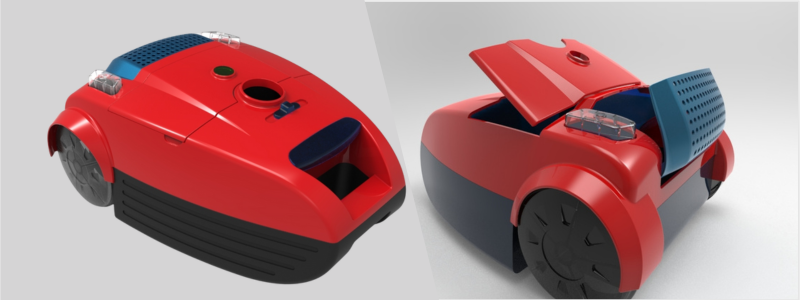
Once the model is finished, even if the design doesn’t look very ergonomic or worthy of any kind of award, at the very least, you have something that resembles a computer mouse, presented before your eyes in a 3D visualization. Whether or not the model actually comes close to the design in your dream is another question entirely. You don’t remember, remember? If you want, you can hire a render artist to turn the 3D model into a photorealistic visualization. Although rendering isn’t really necessary at this point, slightly more lifelike imagery can tell you a whole lot about the look and feel of the design.
electronic product design services 2

It gives textures and colors to the materials, fingerprint patterns on the left and right clicks, graphics on the body, tacky RGB lighting all over, the lot. Perhaps it might be even better if you also hire a professional to do the 3D modeling in the first place. As a matter of fact, many 3D artists at Cad Crowd excel at both 3D modeling and rendering, and offer a complete range of product visualization services to clients of all sizes, including individual inventors, small businesses, and large companies alike. 

All the details you need

The computer and the software cannot care less about the product you want to make. All they care about is the geometric data you use to build the model. In the simplest possible words, the machine translates the data into a visualization that you understand as shapes, dimensions, spatial relationships, and positions of objects in a virtual space. This means you can be decimal point accurate with the design process, and the software will generate the model based on the data you give. Mind you, the software doesn’t know if the data is correct or incorrect. It only does what you tell it to do.

RELATED: How Successful Companies Utilize 3D Product Modeling Services for Compelling Product Imagery

Such a system grants you the freedom to try and think of yourself as the most meticulous mouse designer to have ever walked the Earth, blessed by the ghost of Douglas Engelbart himself. It allows you to be very precise when deciding not only the overall dimension of the mouse, but also the size of every button, the enclosure thickness, the scroll wheel diameter, the gap between the left and mouse clicks, the tolerance between the battery compartment and the lid, the typeface for the laser-etched logo, the length of the screw, and just about every other variable you can think of. When 3D rendering services enter the scene, you have an even bigger range of options, such as enclosure materials, textures, and patterns.

The chances of the software being inaccurate are practically zero. Your chances of being inaccurate, on the other hand, are almost definite. Say you’ve successfully managed to model a battery compartment lid that’s 1mm longer and wider than it should be. You have a model that’s accurate to the data, but it still won’t be the right model in this case. The good thing is that you don’t have to wait until a physical sample confirms the mistake to identify the problem. If something doesn’t fit in the 3D model assembly, it won’t fit in the real world either, unless there’s a hammer involved. But don’t let this kind of mistake drag you down to discouragement. The fact that you can model a lid is an achievement in and of itself. Simply revise the dimension and let the software figure out the rest.

Putting the design to the test, virtually

What is it that everybody really wants in a computer mouse? An unmatched durability to the point where it’s still perfectly usable even after half a dozen drops from the desk. People, and especially gamers, can be careless and clumsy, but not computer mouse designers. All other features, like ergonomics, good battery life, a million DPI, and macros, come far second to being indestructible. And this is where design simulation comes in. First things first, for the simulation expert to run a design simulation, he needs a data-rich 3D model. You need a visualization that represents more than the shape and form of an object. It also needs to contain information about material specification (types, density, conductivity, thickness, etc.) and a typical usage scenario.

RELATED: Prototyping for Product Development & Investor Presentations

The method is technically known as Finite Element Analysis (FEA), a type of simulation to find out how a design withstands environmental forces like heat, vibration, changes in temperature, or other physical effects of any sort. Most products are designed to give what the target consumers want. Suppose your target demographic includes people who suffer from a condition known as “gamer rage.” Well then, the mouse should be able to withstand all the typical symptoms associated with it. One of the most common symptoms is throwing the mouse out the window after losing a game, or bashing it against the desk when the Internet isn’t working.

This doesn’t mean you need to design a mouse that’s easy to throw around. Instead, you have to make sure the mouse is still in good working order after many, many, many times of being thrown around. How do you figure this out without destroying hundreds of physical prototypes for testing? FEA engineering services, which essentially amount to torturing the product in a virtual environment. For the simulation to run correctly and produce accurate results, every part of the design must be specified in detail. Take the enclosure material, for example, and let’s assume you’re testing two competing designs. One mouse has an enclosure made from recycled plastic, while the other has a magnesium alloy body.

Remember that the simulation has to reflect the typical use case for the target demographic. Naturally, the simulation depicts the kind of damage to each design following an episode of gamer rage, and the result is probably as you expect. The plastic mouse shatters when it hits the neighbor’s fence, whereas the metal one survives with barely a scratch after hitting the same fence. For the sake of being obsessively thorough, you’re allowed to run the same test on other components, too.

RELATED: Designing Prototypes: 3D Design Services for Inventors and Companies

And it’s not just about a match between a mouse and brute force. Maybe the product engineer wants to test how durable the design is in extreme temperatures because some gamers do live in countries where normal, comfortable weather doesn’t exist. But not every test has to push the design to the limit of its strength. For instance, a simulation to see if the mouse is still usable after getting submerged for a few seconds in coffee or soda. Don’t forget that some people have a habit of spilling a drink on their desk as they find it soothing. A mouse is often a collateral victim of this surprisingly relaxing hobby. 

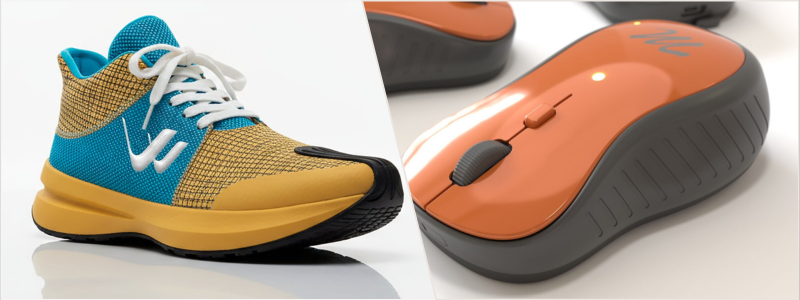
FEA is crucial in all NPD projects. The idea behind virtual testing is to optimize the design long before you bulk purchase the raw materials and fabricate a prototype. If the design needs refinement, you make the changes to the 3D models in the virtual environment as well. It’s certainly cheaper and more time-efficient than having to test a physical sample for each round of testing. And as a bonus, there are no bits of broken mice to clean up later. 
product modeling services

Prototyping made easy

Given the right models to work on, 3D printers can do wonders for your NPD. Imagine designing a computer mouse in a world devoid of rapid prototyping services. After you sketch the design in black and white, the first thing you do is to try to find a skillful handyperson to build a physical sample of the product. Because a lot of other people also develop their own products and have booked most of the competent craftspeople in town, which does happen more often than you think, you have to settle for the less experienced one. You send the sketches and wait for a few weeks until the prototype is done, only to realize that the scroll wheel won’t turn at all because somebody used too much superglue.

RELATED: Prototyping Techniques Utilized for Complex Products at New Product Design Companies

It’s a slow and expensive process, especially if you have to repeat the whole thing many times over. But we live in a world filled with an abundance of 3D printers. The only thing you need to make them work is, once again, a 3D model. So long as you have the model saved in the right format (usually STL for non-colored model, but other formats like 3MF and OBJ also work if you want to print the model in multiple types of materials and colors), the process is just as easy as printing a photo, except for the typically long waiting and the occasional mishap of a clogged nozzle.

If the product consists of multiple parts, for example, a computer mouse, obviously, the usual approach is to print all the individual parts first and then assemble them later. Depending on model complexity and how expensive your 3D printer is, the printing time may take several hours to a full day. Still, this is faster than manual fabrication. It’s worth mentioning that 3D printers are getting more affordable these days. Even if you don’t plan to buy one anytime soon, there are plenty of rapid prototyping professionals you can hire to help build your prototype. Most, if not all, of these services include post-processing as well.

This means that at the end of the printing process, you won’t have to deal with messy models with smudges and jagged edges. The trick for efficient rapid prototyping is to never print an unfinished model. Just because 3D printing is (relatively) affordable, at least for plastic parts, doesn’t mean you should rush it. Instead of spending resources on printing a model that you know won’t work, it’s always better to allocate the time and money on optimizing the model first. Scrutinize the details, check and double-check the dimensions, have the model rendered, run FEA, and then triple-check if you have to.

RELATED: How 3D Printing is Changing Product Design and Manufacturing

Launching a product to market is indeed a race, but it’s not a race where the winner is determined by the number of prototypes you make. One of the marks of a good NPD is resource efficiency. You don’t want to go back and forth from physical prototyping to fixing mistakes and spending valuable time and money in the process over and over again. An efficient NPD is marked by a thoughtful 3D modeling effort followed by a thorough virtual simulation. Only when you’re sure that the 3D model is exactly as you want it to be can you send the file for 3D printing services. You don’t need dozens of printed models throughout the project.

Two, maybe three physical prototypes should be plenty enough, unless you’re so careless that most of your 3D models turn out to be of poor quality. The same thing applies to CNC machining, which is probably more relevant here since your mouse is supposed to be made of metal. That said, 3D printing technologies have gone a long way from their early days of plastic-only fabrication to full-scale metal prototyping. The range of available materials is pretty decent, including aluminum, stainless steel, titanium, and even alloys.

Design for manufacture and assembly

On the subject of printing individual parts, 3D modeling and rapid prototyping also help confirm that your product is manufacturable and can run through an assembly line smoothly without frustrating factory workers. Sure, your computer mouse looks great on screen as a 3D model and with the help of photorealistic rendering experts, but are you really sure the design is also optimized for manufacturing and assembly? Let’s make this clear, first. Many product designs are harder and more expensive to mass-produce than others.

When the design is complex enough, the manufacturing facility may need to create new tooling just to produce a single part, significantly increasing costs. Design for Manufacture (DFM) services aims to minimize production costs while maintaining high quality. The easier a product is to manufacture, the cheaper it is to mass-produce. There are many factors at play here, from the availability of raw materials and tooling requirements to the number of parts and potential for automation. Just like with 3D printing, chances are a production line doesn’t make a complete product in a single run.

RELATED: Why Prototype DFM Services Are Useful for Product Design at Companies and Firms

It builds the individual parts first, then sends everything to an assembly line for the final processing. But unlike 3D printing, where every part can be fully customized, most factories aren’t very fond of creating and installing new tooling for every new design. They prefer using the existing equipment because this saves them time, money, and headaches. No wonder a lot of computer mice look very similar to the one you’re using right now.

When the time comes for you to work with a manufacturing firm, one of the first steps in the partnership is to entrust them with the final version of the 3D model, with an NDA attached for sure. They take a look at the 3D models and will never fail to propose some changes to the design. Bear in mind that these changes are not intended to modify the design, but only to make the parts more easily manufacturable. Say the top metal enclosure of your mouse design originally consists of multiple separate parts: left click, right click, and a body secured to a base plate using three titanium screws.
product engineering expert designers

The factory can fabricate all those individual parts, but it’s much easier just to make them into a single component. After another FEA simulation, the new design apparently makes the mouse even stronger. It’s, of course, a lot more complex in reality, but the example will do for the purpose. The factory workers will also find it easier to put the product together in an assembly line. Instead of installing multiple parts to build just the top enclosure, they now have to deal with just one component to fit the rest of the product.

RELATED: Why Design for Manufacturability (DfM) is Essential for Product Success When Hiring a Design Firm 

CGI for the marketing

Each time you bump into someone who tells you that product photography won’t work for a brochure, step away immediately and avoid confrontation at all cost. Product photography does work, only not as good as CGI for marketing purposes. CGI, or more specifically 3D product rendering services , allows you to create an imagery of your product in the most flattery fashion imaginable. Unlike photography where you actually need physical objects, otherwise the camera won’t focus, a rendering is a completely made-up picture that accurately depicts the actual design.

You don’t want to mislead some gamers into thinking that your mouse is made of sterling silver when in reality it’s just gold-plated. In all seriousness, make sure to be truthful with the product imagery. While it is possible to build a CGI of a computer mouse that can transform into a small robot or one with a design so futuristic it’s used by the Terminator, consumers always appreciate honesty in marketing, even gamers. A photorealistic rendering doesn’t happen without 3D models. A render artist takes the model, applies the right textures, sets the lighting, and runs them through a specialized software to produce a high fidelity image.

The product might be rendered against a plain white background for clarity, or alongside complementary objects to mimic a usage scenario. A rendering can be an animated video to show an exploded view of the design, or interactive to allow the audience to take a closer look at the design. Another benefit of rendering is that you can reuse the base 3D models as many times as it takes and apply different styling, colors, graphics, etc. This is particularly useful when you have a variety of aesthetic options for the same product. With 3D modeling, all this can happen without having to hire a photographer and using props of any sort.

RELATED: Top 51 3D Product Rendering Design & Best 3D Visualization Services Companies in the US

Wrapping up

3D modeling is much more than just a convenient tool in new product development projects and the manufacturing industry at large. It’s the foundation of modern product design services, where efficiency and accuracy are of the utmost importance. Virtual simulation, rapid prototyping, and photorealistic rendering open the door wide to getting down to the nitty-gritty of a design process. A 3D model makes for the perfect ground to experiment with everything about the design, from the single largest component to the tiniest parts of it, including the visual appeals of the finished product.

How Cad Crowd can help

Unsurprisingly enough, just like everything else, 3D modeling is easier said than done. Nobody in the history of 3D modeling could pick a laptop, download Blender cause it’s free, and master the trade overnight. No need to be alarmed. Cad Crowd can help you connect with tens of thousands of professional digital artists from all around the world. The platform is here to facilitate fruitful collaboration between experts and clients throughout all stages of the product development cycle. With strict vetting and screening, Cad Crowd ensures you’ll work only with the best-qualified 3D modelers in a bespoke, managed partnership that benefits all. Contact us for a quote.

author avatar

MacKenzie Brown is the founder and CEO of Cad Crowd. With over 18 years of experience in launching and scaling platforms specializing in CAD services, product design, manufacturing, hardware, and software development, MacKenzie is a recognized authority in the engineering industry. Under his leadership, Cad Crowd serves esteemed clients like NASA, JPL, the U.S. Navy, and Fortune 500 companies, empowering innovators with access to high-quality design and engineering talent.

Connect with me: LinkedInXCad Crowd

Top 31 Websites to Hire Toys & Games with CAD Design and 3D Modeling Freelancers


When you begin designing a toy or game—you know, a fantastical playset, a collectible figurine, or an interactive device—the design process itself can be like navigating a maze. Of course, you may envision the ideal form or ingenious mechanism, but how do you turn it into reality in three dimensions? That’s where professional CAD design and 3D modeling freelancers are here to help. 

They’re the translators who can take your creative concept and polish it into technical documents an engineer or 3D printer can work with. And while there are many generic freelance sites out there, these 31 websites are notable for specializations in kids’, toy-or game-themed CAD and 3D work.

RELATED: Rapid Prototyping & Design for New Toys

cadcrowd-logo

1. Cad Crowd

Cad Crowd is the place to go if you need refined 3D models—not only of toys but game items, child-friendly devices, and interactive components. The site works like a gallery meets a bazaar: you list your project and carefully screened freelancers bid on it. The bonus? You can also select contest mode and see several creative interpretations before deciding.

What users always mention as something they adore is the site’s strong vetting process. Whether snap-fit parts are being modeled for a toy or interchangeable game tokens are being designed, Cad Crowd’s pool of talents produces technical precision and visual appeal. There’s even a built-in copyright agreement so that what you pay for, you actually own.

Cadcrowd.com

Myminifactory

2. MyMiniFactory

MyMiniFactory is where imagination encounters 3D printing enchantment. It’s half social club, half store, and a toy enthusiast’s playground. Designers post printable toy files from funny puzzle cubes to bumpy fidget toys—and will happily accept custom orders. Need something completely original? There’s probably someone who’s already designed something similar and can modify it just for you. 

What truly makes this platform stand out is the way that its community thinks of “printability.” Models are designed with actual assembly in mind, so it’s simple to go directly from download to slicing without having to worry about finicky infill settings or support structures.

Myminifactory.com

Pinshape

3. Pinshape

Pinshape reigns supreme among leading 3D print design marketplaces such as MyMiniFactory and Cults, providing an STL file treasure trove of toys, gaming accessories, and attention-grabbing decorative items. It’s a colorful community where skilled designers exchange their creativity, and for many of them, it goes further by embracing requests for customization. 

Whether you’re building from the ground up or looking to modify an existing model, this kind of adaptability makes Pinshape a popular choice for hobbyists and makers. The site combines creative freedom with functional purpose, enabling users to realize custom projects effortlessly. It’s not merely downloads—it’s where collaboration fuels inspiration.

Pinshape.com

Elisetoydesign

4. Elise Toy Design (Boutique Studio)

London-based toy designer Elise creates imaginative, environmentally friendly toys for big-name brands such as Hasbro and WOW Toys. Her studio is not just about producing toys—it’s about creating the whole experience. From whimsical concept doodles and interactive play sequence ideas to designing unboxing experiences that kids will recall, Elise ensures every detail is considered.

She uses high-end CAD software such as SolidWorks and Rhino to make each piece secure, eco-friendly, and ready for production. If you’re looking for a full design solution for your toys that combines creativity with responsibility, her studio is a top recommendation for well-thought-out, future-proofed products.

Elisetoydesign.com

Shapeways-logo

5. Shapeways 3D Design Services

Employing 3D designers with toy, collectible, and fun gadget expertise is the wisest investment in bringing your next great concept to fruition. These imaginative experts are attuned to the distinctive mechanics, look, and safety requirements that children’s products entail. 

Whether you’re developing a wacky action figure or introducing an entire series of tabletop game characters, their skills bring serious worth. Best of all, many work seamlessly with platforms like Shapeways, making it easy to jump from digital models to physical products with on-demand 3D printing. It’s fast, flexible, and fun—just like the toys you’re dreaming up.

Shapeways.com

RELATED: New Product Design: How to Design Kid-Friendly Toys

3d Hubs logo

6. Hubs (formerly 3D Hubs)

Beyond just manufacturing, Hubs makes it easier for clients to bring children’s products to life by connecting them with expert CAD designers who understand more than just aesthetics. These experts specialize in product safety and early development stages—areas of utmost importance when designing for children. 

Whether a toy, learning tool, or child-friendly device, Hubs ensures all the minute details are carefully engineered. The platform provides peace of mind through access to professionals who not only model the product but also construct it with the intended user—children—in their minds, making the process from design to creation smoother and safer.

Hubs.com

Coroflot

7. Coroflot

If you’re hunting for serious design talent, this platform is a goldmine. It’s especially known for highlighting brilliant portfolios in industrial design and creative toy concepts. From futuristic gadgets to fun character toys, the variety is inspiring. 

What’s even better? You’re not just browsing—many of these designers are open to freelance gigs. Whether you require precise CAD models for your future product, show-stopping packaging mockups, or early-stage prototypes for toys and collectibles, you can reach out to them directly. It’s a refreshing means to connect with hands-on talent who turn bold ideas into reality through design and 3D modeling skills.

Coroflot.com

Designerhire

8. DesignerHire

DesignerHire is not another freelance website—it’s your insider’s guide to the world of CAD and 3D modeling. Rather than housing freelancers such as Upwork, it compares and reviews leading industry platforms, including niche markets for toys and game design. Whether you’re just taking ideas out of a hat or up to your neck in prototyping, it helps you sift through the detritus. 

It’s like a guidebook tailored to your taste that matches your budget, technical needs, and design phase with the optimal creative marketplace. It conserves time, removes guesswork, and provides you with a definite guide as to where to look first according to your project’s specific objectives

Designerhire.com

contracom logo

9. Contra

Contra is an energetic hub designed for creatives—designers, artists, and sculptors who live on imagination. Contrary to conventional freelance platforms, it bypasses the bidding wars and instead taps into presenting beautifully curated portfolios. It’s particularly attractive if you’re looking for specialized skills in ZBrush sculpting or 3D-printable character modeling. 

Want a bespoke action figure? A game piece to be stylish? A collectible mascot brought to life? You’ll be able to find artists here who truly adore small, character-focused commissions. It’s not just a job board—it’s where creativity streams and your concepts can be shaped into life by proficient hands.

Contra.com

guru.com-logo

10. Guru

Guru’s methodology is slightly more nuanced—it’s a complete freelance ecosystem, and you can filter down to toy or game modelers through astute keyword searches. Guru designers frequently post samples of stylized playsets, character models, and board game parts. SafePay guarantees that funds are held back and only paid out on milestone approval.

You’ll find a mix of portfolios—some geared toward industrial design, others with a strong sense of whimsy. The interface is straightforward, communicating expectations around deadlines, deliverables, and revisions from the get-go. It’s reliable, accessible, and perfect for collaborations at any scale.

Guru.com

RELATED: 8 Ways How Companies Use 3D Models and Prototypes in Toy Development

designbychey

11. DesignByChey (Independent Portfolio)

Cheyenne—”Chey”—combines industrial design with mechanical engineering to create fanciful 3D games and toy models that really work. She models with her own Creality and Ender printers, but she doesn’t stop there: she prototypes in-house, refines ideas, and brings them to life at scale. Perfect for projects that weekend between stylized render and real-world fit.

They not only design but also print models in-house—uniquely valuable if you’re working with rapid prototyping. She blends industrial rigor and playful aesthetics—great for iterative projects, physical testing, and achieving a balanced result.

Designbychey.com

CGtrader

12. CGTrader

CGTrader stands out as a massive 3D asset marketplace and a handy job board rolled into one. Though it’s used by a broad spectrum of industries, there’s a sweet spot here for anybody tracking down designers who do toy figurines, game pieces, or collectible model designs. This is not heavy-duty industrial CAD—think more like whimsical, stylized work. Artists on CGTrader tend to excel at playful, creative designs. Simply upload your project brief, and you’ll start receiving custom offers from talented modelers who know how to bring toys and games to life with flair and creativity.

Cgtrader.com

cults3d

13. Cults 3D

Cults brings together a global community of more than 12 million users and 200,000 designers, creating a vibrant space where creativity meets collaboration. It’s part digital gallery, part commission hub, and totally inspiring. Designers regularly post high-quality 3D models for toy and game designs—imaginary wall puzzles, collectible figures, and innovative interactive devices. 

Most of them are willing to be modified and requested specifically, so it’s great for anyone building something unique or starting a whimsical, small-batch toy brand. Whatever your stripe—maker, dreamer, or entrepreneur—Cults provides a fun platform to make your creative visions a reality with skilled designers globally.

Cults3d.com

Sketchfab

14. Sketchfab

Sketchfab may be a showcase hub, but it is more than an online gallery. It’s also a secret treasure trove for discovering top talent. A lot of artists post amazing toy sculpts, board game miniatures, and character models that not only demonstrate creativity but also genuine technical expertise. 

Since its acquisition by Epic Games, the site has been a bastion of stylized 3D modelers who absolutely love form, proportion, and playability. See a sculptor who sparks your interest? Send them a direct message. Odds are, they’re interested in collaborating, at least in discussing bringing your toy or game concept to life.

Sketchfab.com

Paperub

15. Paperub (Rising Platform)

Paperub may be a newer player in the freelance world, but it’s already carving out a niche with its dedicated 3D modeling section. It’s quickly becoming a hidden gem for toy and game designers searching for commission work. 

While it doesn’t have the massive reach of bigger platforms, that’s part of the charm—here, you’ll find fresh, passionate talent that isn’t buried under thousands of listings. It’s a great space to connect with solo creatives who bring a personal touch to every project. If you’re after originality and enthusiasm over mass production, Paperub is definitely worth a closer look.

Paperub.com

RELATED: Tips for Pet Toy Design, New Product Development at Prototype Manufacturing Services at Companies 

Tinkercad

16. Tinkercad Communities

Tinkercad may seem basic at first glance, but don’t be fooled—it’s a go-to platform for designing simple educational toys, clever puzzles, and even early LEGO-style prototypes. Its intuitive interface renders it a boon among freelancers who design easy-to-use CAD models for kids’ products. From sketching fun components to making rapid concept models using simple shapes, Tinkercad provides speed and ease of use. 

It’s a teacher’s favorite in the classroom as well, enabling teachers to introduce design thinking without subjecting students to overwhelming sophistication. If your interest is in fun, functionality, and basic geometry, this program is incredibly capable for its type—and fantastically user-friendly, even for novices.

Tinkercad.com

toptal

17. Toptal

Need to avoid the guesswork and hire the best CAD engineers upfront? Toptal says it employs the top 3% of freelance talent—and it shows. Their experts have worked on everything from mechanical toys and kids’ robotics to high-end collectible figurines. Yes, it’s expensive, but if your project requires tight tolerances, safety certifications, or intricate interlocking parts, the value lies in the precision and speed. These engineers aren’t only talented—they are team players. They’ll frequently assist with revisions and documentation, transforming the most ambitious toy concepts into refined, production-capable realities without the normal hassle.

Toptal.com

CGtrader

18. CGTrader

CGTrader isn’t only a 3D model marketplace—it’s a point of destination for toy designers and businesses that want to turn creative visions into reality. In addition to providing an extensive repository of pre-made toy assets, CGTrader also has a job board where clients and freelance designers interact directly. Whether one’s creating a fun character or constructing a complete product line, this site makes it simple to discover the correct asset or talent for the task. With a pool of skilled modelers and creatives within the community, CGTrader provides a convenient, cost-effective solution for anyone stepping into toy creation or game design with CAD.

Cgtrader.com

Indee Design

19. IndeeDesign

Need a creative spin in product development? This industrial design company brings newfound energy to toy and play development with a freelance-style experience that’s both open and innovative. Their design team is proficient at designing kid-friendly ideas with the latest CAD software, translating brilliant ideas into solid, mold-ready documents that manufacturers adore. 

From a cute learning toy to the next playset sensation, they mix safety, imagination, and precision in every project. It’s the best combination of fun and functionality—perfect for brands who desire award-winning designs created with kids (and quality) in mind from day one.

Indeedesign.com

Xometry

20. Xometry

Their network of on-demand manufacturing brings the possibilities to life with CAD design services optimized for plastic toys and mechanical assemblies. From imagining the next popular collectible figurine, hands-on robotics kit, or fidget toy that spins smoothly, this stage puts you in touch with experienced experts who turn ideas into reality with precision. 

The cycle is adaptable and quick, made for inventors, startups, and toy companies equally. From the first idea through to the completed prototype, every process is accompanied by advanced CAD aids and manufacturing possibilities that grow with your demands. It’s a savvy, efficient approach to designing and creating one-of-a-kind toy innovations.

Xometry.com

RELATED: 10 Simple Products That Made Millions for Inventors

Sketchfab

21. Sketchfab

Sketchfab is a popular destination for anyone who’s serious about presenting 3D models at their best—literally. What’s remarkable about it is its smooth, interactive viewer that allows you to rotate, zoom, and examine designs directly within the browser. That’s a big plus for portfolio spotters who can easily view the complete detail and handwork of a model without even downloading anything. If you’re a toy designer, character artist, or CAD modeler, Sketchfab brings your work professional-quality polish and accessibility. It’s not just a portfolio—it’s a platform where your 3D works of art become real.

Sketchfab.com

Little Investors

22. Little Inventors

In the UK, a brilliant platform is teaming up with designers and CAD modelers to bring children’s wildest toy ideas to life, turning youthful imagination into real, working prototypes. It’s a dream come true for kids and a goldmine of creativity for brands. By co-creating with young inventors, companies can tap into an unfiltered world of fun, quirky, and original concepts. This isn’t just design; it’s a playful collaboration that sparks innovation and gives children a voice in the toy-making process. For brands looking to stand out, there’s nothing quite like launching a product born from a child’s imagination.

Littleinventors.com

Tinkercad

23. Tinkercad

Tinkercad makes early-stage toy design surprisingly accessible, thanks to its intuitive block modeling system. Designers adore it for quickly brainstorming concepts—be it modular puzzles, flat-pack games, or ingenious mechanical constructions. The interface is fun but functional, making it a go-to for working out ideas that fit educational toy objectives. 

Want it 3D-printable? Most designers even offer refined output files, ready to be sent to the printer. It’s all about rapid prototyping without the learning curve, making Tinkercad a go-to tool for both seasoned creators and newcomers testing the waters of toy innovation.

Tinkercad.com

ZBrushcentral

24. ZBrushCentral

If you’re looking to bring your toy line, action figures, or fantasy-themed board game to life, hiring a character sculptor is a game-changer. These artists aren’t just skilled—they’re world-class digital sculptors who breathe personality into every creature, hero, or villain they model. From kinetic stances to detailed armor design, they sculpt for 3D printing with accuracy and panache. 

Be it creating collectible models or narrative miniatures, the appropriate sculptor will bring your idea to a breathtaking, production-ready work of art. For characters that jump off the screen and into the real world, these sculptors are the artistic forces behind the alchemy.

Zbrushcentral.com

peopleperhour

25. PeoplePerHour (3D Game Modeling)

If your work is more on the game props, UI objects, or toy digital material side, PeoplePerHour is one to check out. Most designers actively pursue 3D game modeling and texturing gigs—low-poly items, hard-surface items, or stylized characters—that seamlessly overlap with toy prototyping. PeoplePerHour is an open marketplace where most 3D artists label themselves as toy, game, or collectible designers. You can employ “by the hour” for brainstorming, or place a project and get fixed price quotes.

One of the most impressive features is being able to contact individuals who have shown playful work straight out of their portfolios: consider cartoon robot designs or prototype-friendly toy sets. Simply send a message, explain the project, and specify whether you require mechanical details (such as hinge mechanics) or merely character styling.

Peopleperhour.com

RELATED: Custom Miniature Design for Manufacturing, Cost, Rates, and Pricing for Companies: Complete Breakdown

fiverr-logo

26. Fiverr

Fiverr is great for fast-turnaround, bite-sized jobs. You can say things like: “3D model a board game meeple in STL,” or “mock up a wind-up toy character in Blender.” A lot of sellers give a clear preview of the gig, delivery time, and whether they include source files. I adore sending Fiverr for early prototyping: the designers are budget-friendly, lively, and usually happy to tweak a pair of typo-level adjustments or a few scale adjustments before making a print. And should you be really seeking quality, look up Fiverr Pro sellers for high-end craftspeople—and don’t be afraid to ask for a test STL first.

Fiverr.com

Upwork-logo

27. Upwork

Upwork is the sweetheart of freelance platforms for a reason: its size, talent range, and polished tools. Searching for “toy CAD,” “child safe design,” or “board game prop modeling” pulls up freelancers ranging from junior 3D artists to engineers with decades of experience. Need a 3D-printed prototype for a plush toy stuffed with play sensors? You’ll find folks who’ve done it.

The site assists you in screening candidates using filters for past experience, hours worked, and public feedback. Time tracking, milestone completion, and voluntary NDA contracts make it an easy place to work. The only small drawback: with so many profile types available, the proper niche fit requires slightly more specificity in your search.

Upwork.com

freelancercom

28. Freelancer.com 

Freelancer.com is a goldmine for anyone looking for bespoke toy designs, and if you’re looking for something intelligent, interactive, and long-lasting, it’s a great place to start. From wooden toys with educational value to Montessori-inspired play sets and interactive learning devices, there is no lack of new talent waiting to turn ideas into reality. As the site uses a bidding format, it’s also simple to compare portfolios, prices, and areas of expertise before selecting a freelancer. Be prepared to pay rates around $25–$50 AUD an hour, with a good cross-section of teachers, designers, makers, and 3D modelers all thrown into the mix. It’s a lively community where creativity and hands-on know-how combine.

Freelancer.com

Makers Row

29. Maker’s Row

Maker’s Row is an excellent go-to source for toy startups requiring CAD assistance with DFM—design for manufacturing. It matches you with experienced freelancers who understand the special hurdles of toy design. If you’re creating plastic components or looking to outsource from small toy workshops, the specialists here understand how to bridge the gap between idea and production. They are not designers alone; they understand the language of manufacturing and can modify your ideas so that they’re workable in the real world. For toy makers with aspirations to produce their first line, Maker’s Row provides the sort of realistic, factory-versed advice that makes it become a reality.

Makersrow.com

30. Kolabtree

Kolabtree is a source to turn to when your game or toy concept requires actual scientific oomph. If you’re making a STEM toy, an educational board game, or a device that teaches children to code, this platform links you up with freelance science, engineering, and product design experts. Why is it unique? You can work with experts in biomechanics or child psychology—ideal if you’re designing with functionality and fun in mind. Kolabtree is particularly convenient when CAD designs intersect with cognitive development, which makes it perfect for inventors who need educational toys to be supported by actual research.

Kolabtree.com

RELATED: Product Design Tips: How to Avoid Poorly Designed Products

kolabtree logo

31. Sewport

If you’re conjuring up the next big cuddly animal, Sewport is a good place to begin. This platform excels at bringing you together with talented freelancers who have experience with plush toy design and fabric CAD patterns. With a rough sketch or a detailed idea, these soft goods CAD pros can turn your concept into a professional, production-worthy design. From the softest teddy bears to out-there bespoke characters, Sewport’s team of skilled designers translates your cuddly vision into technical reality. It’s a first-stop destination for brands and creators seeking to turn soft toy concepts into actual products.

Sewport.com

Conclusion

This handpicked selection ranges from large-scale freelance platforms (Upwork, Freelancer, Fiverr), specialized toy-focused platforms (Cad Crowd, DesignByChey, Elise Toy Design), and community-driven marketplaces (Cults, Sketchfab, CGTrader)—each providing a toolkit that plays both ways: whether you have a precise idea of what you’re looking for or need to experiment creatively.

To get the most out of it, identify your requirement, ask for complete portfolios, experiment with a mix: Clearly define deliverables, and control your IP. With these 31 handpicked platforms at your disposal, you’re ready to discover just the right freelancer to bring your whimsical idea to colorful 3D life—and perhaps create the next generation of great toy experiences.

Cad Crowd is the go-to platform to connect with new toys and games design services. Contact us today for a free quote!

author avatar

MacKenzie Brown is the founder and CEO of Cad Crowd. With over 18 years of experience in launching and scaling platforms specializing in CAD services, product design, manufacturing, hardware, and software development, MacKenzie is a recognized authority in the engineering industry. Under his leadership, Cad Crowd serves esteemed clients like NASA, JPL, the U.S. Navy, and Fortune 500 companies, empowering innovators with access to high-quality design and engineering talent.

Connect with me: LinkedInXCad Crowd

How to Reduce Costs on 3D Product Development with Remote CAD Experts for Companies


In order to stay competitive in today’s market, businesses are always seeking ways to reduce expenses and increase production speed. One affordable approach is to use freelancing websites to discover CAD professionals who can work remotely. By contracting out 3D product design, businesses may potentially cut costs on salaries, software licensing, and employee training. In addition to tapping into global expertise, they may tailor their resource allocation to match the unique requirements of each project.

Cutting expenses without sacrificing quality is becoming more of a need as competition in product development heats up. Having in-house skills, particularly for specialized fields like 3D and CAD modeling, may be rather costly. Companies now have a state-of-the-art option for outsourcing the employment of remote CAD professionals thanks to the proliferation of dispersed work, even as freelance platforms continue to grow in popularity. You may acquire the results you need without breaking the bank by utilizing their services instead of recruiting full-time employees or big corporations.

Cad Crowd is an excellent platform that can put you in touch with freelance professionals in 3D product design and CAD solutions. It is also one of the most reliable and easy-to-use websites for locating reliable freelance CAD experts. Their product development processes may be streamlined, and they can save a ton of money with the help of remote CAD experts. This article takes a look at several tried-and-true ways for cutting costs when working with remote CAD specialists, and how platforms like Cad Crowd may be an integral part of your strategy.


🚀 Table of contents


Understanding the need for cost reduction in 3D product development

Before discussing the strategies, let’s understand why cost-saving during 3D product development is important. Conventional product development costs can be high, especially for organizations involved in areas such as consumer electronics, automobiles, or furniture design, where design intricacy is high and product development time windows are short.

Traditional in-house development challenges

  • Salaries and benefits: Paying the entire CAD staff on a full-time basis has fixed benefits, salaries, and long-term liabilities for product design companies. These turn out to be extremely expensive for organizations that need expert talent for a short term or just a single project.
  • Training and maintenance: CAD software is continually updated. To accommodate this, in-house personnel require regular training, which is both expensive and time-consuming.
  • Overhead costs: Maintaining an in-house team incurs significant costs, including office space, machinery, software licenses, and other administrative expenses. These costs are compounded in those firms that have large, full-time design teams.

By utilizing remote CAD experts, these firms can eliminate these problems and have a less costly alternative to 3D product development.

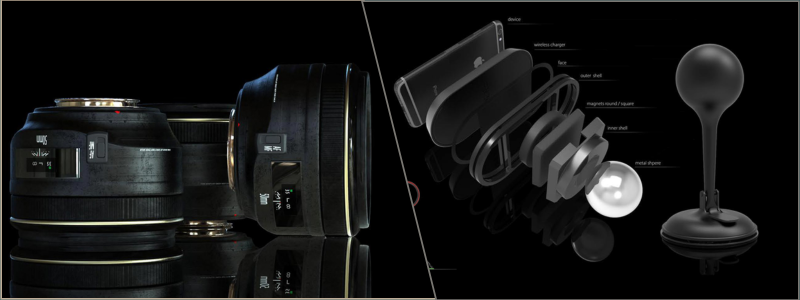
Product design of camera lenses and wireless phone charger by Cad Crowd product development designers

RELATED: A guide to electronic product design for manufacturing with PCB design firms & engineers

Cost-saving strategies utilizing remote CAD experts

In today’s rapidly evolving and competitive corporate world, businesses are constantly seeking cost-reduction methods without compromising on output quality. One area where this holds true is in product development for businesses that are CAD-intensive. Utilizing remote CAD experts has tremendous potential for cost savings and improved project outcomes. By utilizing the services of freelance websites and remote working, companies can access superior talent without incurring the costs associated with traditional recruiting. The following are some methods that companies can use to reduce costs by hiring remote CAD experts.

Utilize freelance websites as a pool of global talent

The most effective method of reducing the cost of product development is by utilizing freelance platforms like Cad Crowd. The websites fill the gap between companies and a worldwide community of specialists to whom they might outsource and assign work on their projects. Through these locations, companies can hire 3D CAD design services of various skill levels and experience, and thereby have the option to select experts whose certification precisely matches the project requirements. This reluctance to flexibility reduces the dangers of unnecessary fixed costs of staff.

  • Expertise in reserve: Rather than employing generalists, companies can have the appropriate CAD professionals with the proper skills for every phase of the project in reserve. To perform tasks such as prototyping, high-level design, or testing, the appropriate specialist can be employed.
  • Pay-as-you-go model: Freelancers are compensated on a project-by-project basis, allowing the company to scale up or down resources based on project demands. It is much less expensive than paying an employee’s full-time salary, which might not be required in the long term.
  • World talent pool: Freelance platforms provide the opportunity to hire experts from around the world. Most often, experts from countries with lower living costs can offer competitive prices without compromising quality.

By accessing this large pool of talent worldwide, companies can be confident they are obtaining the maximum value for the exact skills they require. By doing so, they can cut costs without sacrificing quality.

Streamline project scopes and timelines

One benefit of employing remote CAD professionals is that resources can be quickly scaled to meet the precise requirements of a given project. A remote specialist works on specific steps in a product development cycle, thus avoiding wasteful costs for consumer product design companies. For instance, a firm may need the services of a CAD professional during the conceptual design or prototyping stage, but not for the entire process.

How to make the most out of scopes?

  • Split projects into stages: Breaking the whole product development process into phases, such as creating ideas, elaborately designing, and prototyping, enables companies to hire freelancers to outsource easily for the specific phases where they are needed.
  • Specify specific project milestones: Clearly defined project milestones for all stages enable distant CAD professionals to work in unison and deliver results on time, eliminating opportunities for delays that can lead to additional costs.
  • Limit project scope: Avoid broadening the project scope. Once firms accomplish what needs to be done to push the product ahead, they can acquire laborers specifically for such projects and avoid unnecessary expenses.

The remote work nature enables businesses to take a project-based approach, where they only pay for the work that must be done, without over-scaling resources.

Minimize software and equipment costs

CAD hardware and software may be quite costly, especially when purchasing licenses and hosting software for an in-house staff. Remote CAD professionals typically own their own subscription for commercial software such as AutoCAD, SolidWorks, or Rhino. Thus, product engineering companies don’t need to make regular payments for software subscriptions and hardware upgrades, which could be extremely costly in the long run.

Benefits of freelancers’ tools

  • Software license costs saved: Freelancers have their own licenses for software, and thus, companies are able to save on the exorbitant initial expenditure of purchasing and maintaining licenses for costly CAD software.
  • Upgraded tools: Freelance CAD professionals are generally keen to update their tools to the latest versions, enabling them to utilize the best available tools for creating high-quality designs.
  • Tailor Your Skills: The majority of freelancers choose tools based on their working style. Therefore, companies are working with individuals who can provide the majority of the productivity through tools they are familiar with and have mastered. Even some freelancers utilize open-source CAD packages or specialty equipment to reduce costs. Enjoying the benefit of it, companies can cut even more from their equipment and software expenses.

RELATED: How 3D CAD modeling is transforming design and manufacturing industries at design companies

Reduce overhead with remote work infrastructure

One of the most significant benefits of outsourcing remote CAD experts is avoiding the overheads associated with maintaining an office setup. With remote work, organizations can avoid the expense of expensive real estate, office space, and office supplies. Remote work also enables organizations to recruit specialists from regions with lower living expenses, allowing them to hire top professionals without incurring a premium.

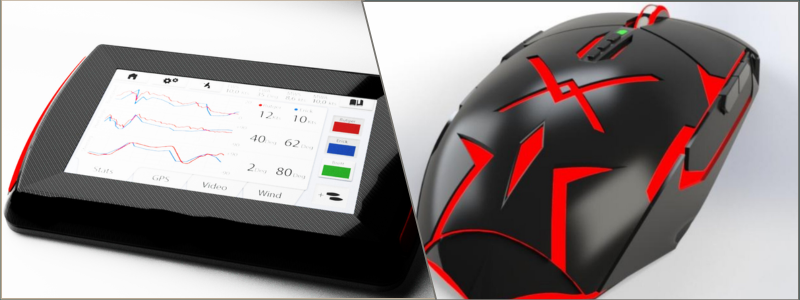
3D product rendering of an advanced scout and vital tracker and a gaming mouse

Points of relevance for cost minimization

  • No office space: Freelance CAD engineers work from their respective locations, thus avoiding the expense of office space, utility bills, and office equipment, which are very high recurring expenses.
  • Lower administrative costs: Working remotely means companies do not need to bear costs on HR personnel, office management, and physical equipment. This results in lean operations with less overhead expense.
  • Lower-cost-of-living locations: Remote employment enables your company to hire CAD professionals outside your home country. This represents a savings in labor costs without compromising quality and expertise.

The ability to hire anywhere provides companies with the flexibility to strategically reduce operating expenses, enabling them to offer competitive pricing without compromising on design quality.

Take advantage of collaboration and communication tools

Advances in project management software and virtual communications technology have enabled remote work to be easier and more efficient than ever. Ease of collaboration despite different time zones is facilitated by tools like Slack, Zoom, Trello, and Google Drive, which ensure instant communication, feedback, and file exchange. Proper utilization of these instruments ensures that companies can ensure their remote workers are collaborating effectively, thereby providing faster project timelines and lower costs for design engineering companies.

Proper utilization of tools

  • Slack and Zoom: Communication and regular check-ins are easy with these tools, keeping remote CAD experts on the same page with objectives and project timelines.
  • Trello and Asana: Project management applications keep projects well-organized, tasks assigned with clarity, and deadlines respected, without unnecessary delays or misunderstandings.
  • Version control and file sharing: Cloud programs like Google Drive, Dropbox, and GitHub provide a straightforward method for storing, sharing, and versioning project files. Such programs have the capacity to monitor changes and recover the most recent version of a project at any time.

By utilizing these collaboration and communication tools effectively, businesses can enhance productivity and minimize time wastage due to delays, making the remote working process more cost-effective and efficient.

Take advantage of expertise with minimum commitment

One of the greatest advantages of using web-based services such as Cad Crowd is that organizations are able to tap into the services of experts without necessarily committing to having long-term in-house staff. This kind of flexibility in human resources enables organizations to hire the services of 3D product design experts for short-term projects or specific endeavors without committing to full-time employment.

Benefits to organizations

  • Flexibility: Businesses can hire freelancers on a project-by-project basis, tailored to the level of work and specific needs. This maintains the expenses associated with a full-time in-house team at a minimum.
  • On-demand talent: Offsite CAD professionals have high levels of experience and specialisation, so businesses can tap into the talent they need without losing time to conduct lengthy recruitment processes.
  • Cost predictability: With freelancers, businesses have a clear upfront cost because they are only paying for the work that has been completed. This eliminates the need to budget for employees’ wages, benefits, or other long-term costs.

This flexibility is particularly useful for companies with project requirements that vary or require specialized skill sets on an ad-hoc basis. The capability of accessing remote specialists on an ad-hoc basis enables the company to pay for what they consume, with variable costs kept to a minimum and in check.

Having CAD professionals at their disposal remotely provides companies with multiple options to reduce their payments without compromising the quality of the design. By utilizing freelance sites, reducing project scope, minimizing software and equipment costs, reducing overhead, and leveraging collaboration tools, businesses can achieve significant savings.

Secondly, having the ability to hire on-demand talent also enables businesses to remain flexible through open innovation services and not make long-term commitments, which remote working makes all the more appealing in today’s competitive age. By embracing these tactics, businesses can streamline operations, reduce costs, and access the best talent at every stage of product development.

RELATED: 10 design principles for product development & industrial design services teams

Why Cad Crowd is the best tool for reducing costs in 3D product development

In 3D product design, it is not always quite so easy to balance quality and cost. Cad Crowd is very convenient in such situations, as it is the first port of call for companies that want to cut costs without sacrificing quality. Cad Crowd provides companies with access to a worldwide pool of highly skilled freelance CAD experts, making it easy to find the best skill set for the task at hand.

Most valuable, perhaps of all, is the pre-screened talent pool of Cad Crowd. Every freelancer on the platform is thoroughly screened and assessed to ensure they possess the proper qualifications and experience required to complete the job. This cuts down on the time wasted by businesses poring over dozens of resumes or portfolios—Cad Crowd has done the legwork for you, so it is easier to find the correct person to do the job in front of you. If you need help from seasoned 3D modeling experts, prototypers, or design-for-manufacturing experts, Cad Crowd can provide that assistance.

The second reason businesses employ Cad Crowd is that it provides an affordable price option. With worldwide access to top talent, companies can recruit exceptional candidates at a lower cost than they can through local hiring or traditional recruitment agencies. This makes businesses accessible because they receive high-quality work, which is crucial in today’s economy.

Cad Crowd also offers convenience in collaboration. The website features built-in communication, file transfer, and project management facilities, enabling companies and freelancers to collaborate seamlessly. Such an effective process not only saves time but also reduces the risk of delays, ensuring the project remains on track and within budget.

In brief, whether you need an expert for one job or long-term cooperation, Cad Crowd makes it possible to get the best CAD expert to fulfill your requirement easily and save money and gain more.

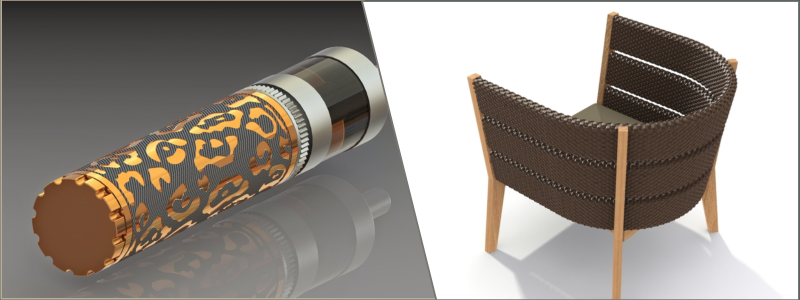
Product design of an electric cigarette and wicker chair

RELATED: How much does NPD cost? Rates & pricing for services at top design companies

Conclusion

Reducing the cost of 3D product rendering and design services is not a matter of compromise; it is a question of creative financial management and leveraging the benefits of the flexibility and expertise offered by independent specialists. With the types of services that exist, such as Cad Crowd, companies can now access the best CAD brains at an affordable price, which is often too costly with the in-house option.

Either by utilizing flexible staffing, efficient software, or by being able to ramp up resources independently, remote CAD professionals offer a cost-effective solution for companies to stay competitive in this fast-paced economy.

With the right strategies in place, such as best-practice project scoping, the smart application of collaboration tools, and the controlled deployment of freelance resources, companies can save a significant amount of money without sacrificing the quality and operational efficiency required to successfully deliver 3D product design.

Cad Crowd is here to help

Collaboration with technologies such as CadCrowd exposes firms to the best freelance CAD engineers and designers in the market, who offer sector-specialized expertise and customized solutions. Whether you’re a new start-up that must get a new product out to market quickly or an established company looking to streamline your design process, working with experienced professionals ensures you receive high-quality work at a small fraction of what it would cost to have in-house personnel on the payroll.

For more information on how Cad Crowd can assist with your 3D product design and to receive a personalized quote, contact our dedicated experts who are committed to making your dreams a reality. Get your free quote today!

author avatar

MacKenzie Brown is the founder and CEO of Cad Crowd. With over 18 years of experience in launching and scaling platforms specializing in CAD services, product design, manufacturing, hardware, and software development, MacKenzie is a recognized authority in the engineering industry. Under his leadership, Cad Crowd serves esteemed clients like NASA, JPL, the U.S. Navy, and Fortune 500 companies, empowering innovators with access to high-quality design and engineering talent.

Connect with me: LinkedInXCad Crowd