Avoid These Hardware Design & PCB Electronics Outsourcing Mistakes Made by New Startups


Outsourcing hardware design & PCB (printed circuit board) electronics refers to hiring a freelance firm or team of engineers, 3D designers, and developers to manufacture a product’s physical electronic system rather than creating it in-house. For different startups, outsourcing hardware design and PCB electronics is quite common and considered a best practice, especially for those that do not have any electrical engineers on the team. Outsourcing these processes to specialized experts can accelerate development while reducing overhead costs associated with hiring a full team. Also, experienced design firms and specialists can prevent costly trial and error. 

If you are in the business of consumer and industrial gadgets, smart home devices, wearables, medical electronics, digital automation systems, and more, outsourcing may just be what you need. There are numerous engineers and other specialized teams that offer outsourcing services to different startups. As an external service provider, Cad Crowd can connect you to a team of world-class quality engineering designers and contractors that will fit your specific design and manufacturing needs. But before you make the move to outsource for the first time, here are some mistakes that new startups typically make and how you can avoid them. 

1. Choosing the suppler with the lowest quote 

Big savings now may lead to bigger expenses later. There are many factors to consider when looking at the price. First is the experience, if the team can execute well according to your specifications. Second, cheap design does not necessarily mean good quality. You don’t want to end up with a product where everything was done haphazardly and rushed. Third, a quote can be very cheap because not all costs are upfront.

You may end up paying for a lot of hidden costs for any type of rework or troubleshooting.  Always keep in mind that redoing a product from scratch, as well as any delay, is more expensive than executing it correctly on the first run. Choosing the cheapest product design firm can affect your product, launch schedule, and most especially your budget, so always weigh your options carefully and choose wisely. 

RELATED: How to Price a New Consumer Electronic Product for Profit on Hardware Manufacturing Cost

2. Having no detailed product specifications 

Suppliers are not magicians. You cannot just order a product without clear, specific requirements and expect it to deliver exactly what you want. For a startup, it’s a rookie mistake to expect your supplier to know the ins and outs of your product, especially when it comes to technical electronic specifications like power consumption and requirements, outdoor or indoor usage, and even local regulations.

The moment there are gaps in the details, suppliers often tend to make their own adjustments. This can lead to possible multiple revisions and redesigns along the line. Remember,  every redo and rework and every week of delay will potentially cost you thousands of dollars, so always note down and document every single specification detail of the product. 

3. Not designing for mass production 

Design for Manufacturability (DFM) services are more important than you think. Your PCB prototype can work perfectly, but it may not work for mass production. The layout should always be fit for manufacturability. All the tiny specifications such as tight spacing, dense layouts, and poor planning of panels may result to issues that go beyond the capacity and capability of factories.

Also, if the proposed components are difficult to source, it becomes a major issue in the manufacturing process. Always keep in mind all manufacturing requirements when designing the layout and the system itself. If the PCB or hardware design is not scalable for mass production, this will cause delays in the product launch, increase per-unit costs, and reduce yield. 

RELATED: Guide to New Electronics Prototyping for Hardware Startups & Design Companies

4. Non-availability of all parts and components

Before going to production, startups need to ensure that the design prototype includes all parts and components that are readily available at any time. The supply chain is one of the key parts of the manufacturing process, and missing parts will stall the entire production for months on end. Make sure to verify that all parts are not obsolete, have a short lead time from order to delivery, and are sourced from a single, credible source. 

If parts are unavailable, the PCB design team must create a completely new PCB layout. Then, there’s the problem with reapplying for another round of certification, which will cause additional delays. Lastly, any additional parts would require a firmware rewrite to ensure compatibility with the entire system. Choose the right parts and make sure they are readily available anytime, at all times. 

PCB design services

5. Assuming that the first PCB prototype already works 

Any type of hardware always requires and needs several iterations. The first revision of any prototype is never perfect. Failing to plan for multiple revisions will prove very costly down the line. Never assume that the first one works immediately without any problems. The real scenario is that Revision No. 1 is when the electronics design team discovers major issues. Maybe there are faulty components, relay disconnections, gaps in the system, etc. Revision No. 2 is where any functional issues are fixed, such as parts not working together properly. Even that’s not enough, because Revision No. 3 is when the system’s performance can be optimized with additional tweaks.

These iterations are also when you can assess manufacturability and determine whether the product is ready for mass production. At the beginning of the design process, always include in the timeline and the overall budget considerations for multiple revisions and iterations. This ensures that your startup will either burn through funds or experience delays in the product launch, which can definitely result in your investors being frustrated or displeased. 

6. Lack of communication with outsourced suppliers

Before choosing the right team of external engineers and PCB designers to work with, make sure that you are prepared to communicate with them regularly. Have an organized communication system in place to share important files and documentation, update and review each other weekly, create logs for every approval and revision, and more. Creating a product requires very precise, no-fail coordination between the firmware and the hardware.

Clear communication must be maintained at all times to control the various revisions and iterations being applied. Also, having an open line between the startup team and the outsourced team will make it easier to quickly manage and resolve any issue that become escalated. It is critical to avoid any miscommunication to prevent major issues such as pin assignments out of place, incorrect voltage rails, or firmware that is completely incompatible with the hardware being designed. 

RELATED: Cost to Design a New Electronic Product, Develop PCB Hardware & Prototype Rates at Firms

7. Not securing ownership of the product source files 

It would be a massive problem if you do not gain ownership of the original design files. Here is a list of the important files you need to secure after working with any outsourced supplier: Full schematic design, PCB layout files, the Entire library of parts and components, and the Complete source code for all installed firmware. Why should you ensure that all these design files are in your possession? Because if you change suppliers or hire an entirely new design engineering team in the future, they do not need to create revisions or reworks from nothing.

Without the source file, revisions and redesigns would have to start from scratch, which can waste many months on rework on an existing product design. Even worse, if you try to request the original file from the previous supplier, you will likely have to pay very high fees to access it. Always ensure that ownership your own product’s design is very clearly stated in the contract to save yourself. 

8. Putting off compliance certifications 

All electronic products must be certified to ensure they operate safely and do not harm users or the environment. One thing about startups is that they always focus first and foremost on the design and remember to comply with necessary EMI/EMC and Certifications later on. One of the most important things that startups need before you can proceed to market a product is to comply with all necessary certifications that declare your product as up to global standards. 

But what if the product fails to meet EMI (electromagnetic interference), which ensures that the device does not produce unwanted emissions, or EMC (electromagnetic compatibility), which ensures that the product works properly? Then your product will have to undergo a major revision in the PCB layout and a total overhaul and redesign. Fixing these technical problems is a long, drawn-out process that costs a lot of money. So, even when planning the entire system from the beginning, always consider the compliance requirements.  

RELATED: Top 51 Websites to Hire Freelance Eagle PCB Designers & CAD Engineers for Electronics Design

9. Not planning for testing 

Designing a PCB with no plan for testing is a formula for disaster. Engineers should always design a PCB with a plan of how to test it, making sure that these are included in the initial prototype: multiple test points to check the signal, programming connectors where firmware can be uploaded, built-in access points to test chips, and plans on how to verify boards before they are shipped out. If you cannot test a board, it will be very difficult to identify faulty or defective boards, which part or component is defective, and why the defect occurred in the first place. This results in a lot of boards getting thrown away. Another problem is that it would be very difficult to troubleshoot and debug.

If there are no access points on how to check, the design engineering team would have to dismantle boards piece by piece, and waste so much time trying to guess what the issue is and where it is. Another worst-case scenario is that if boards are not tested before shipping, customers will discover the problems at home. This results in product returns, and in the end, the reputation of your startup and its products will feel the backlash.Always design your PCB’s schematics and layout with a plan to test it first. 

hardware design company

10. Not consolidating the firmware and hardware

The hardware is the physical board, while the firmware involves the software that runs inside the chip. Both are not independent of the other and must be taken together. It’s not uncommon for startups to outsource to different suppliers for hardware design and software development. This is not a problem if there is early communication and collaboration because anything related to hardware has a direct connection with how the firmware works. 

The problem with hardware and firmware not being in sync from the start is that when issues crop up, the PCB assembly team needs to make a new board, rewrite all the firmware, build totally new prototypes, which, of course, costs thousands of dollars. Even before actual layout design begins, both hardware and firmware teams must consolidate and integrate their work processes to ensure smooth outcomes. 

RELATED: Top 100 Electronics Design Companies to Create Prototypes for Hardware Startups

11. Setting unrealistic time schedules and deadlines  

Startup founders need to remember that software and hardware do not follow the same timelines. Hardware design involves many physical processes, such as planning the architecture, designing schematics and PCB layouts, procuring materials, fabricating prototypes, testing the product, and fixing and revising it. This process flow for the hardware alone takes months. Unlike software, which involves coding and testing, a physical PCB cannot be updated in a couple of minutes. Fabrication depends on the lead time provided by the manufacturer or factory.

This lead time also depends on the shipment schedule of the parts and components, which can be easily affected by climate and weather disturbances or by any problem in the supply chain, including political issues. Therefore, the timeline must always depend on the hardware schedule. Setting unrealistic timelines can result in the investors losing trust and confidence in your electronic product design company. If schedules are not laid out clearly, the teams will burn out from stress. Always plan accordingly based on the hardware design process. 

12. Lacking a sustainable manufacturing plan

Most startups focus a lot of energy on a successful, working prototype, but sometimes forget how to scale their product. The ability to transition to the manufacturing and mass-production stage is often overlooked. Thus, startups should remember that the actual product must be easily scalable, even when produced in the thousands. Some important things to keep in mind are to first choose the right manufacturing partner. Make sure that your partner’s factory is experienced in handling fine electronic components, assembling high-speed PCBs, and is able to maintain quality control despite the large-scale production.

Working with the right contract manufacturer is an important factor for success. Prototypes are sometimes assembled by hand, but mass production is created through automated machines. If your design easily falls apart on the assembly line, it means your manufacturing plan has suddenly become too costly. Lastly, don’t forget that particular parts and components might no longer exist in just a few years. Always plan for alternatives and secondary sources once the original ones become obsolete. 

RELATED: What are the Costs for New Hardware Product Design, PCB Prototyping Rates, and Services Pricing?

What makes a healthy outsourcing relationship?

Before outsourcing hardware design & PCB electronics to an external pcb layout design team, take note of these important guidelines to ensure positive outcomes.  

Scope of work and list of deliverables

You should always clearly indicate what the supplier will design, along with a complete list of features and performance goals. Also, the limitations and what is not to be included must also be stipulated. The number of prototype revisions should be clearly stated, taking into account the number of iterations and revisions required for the design (see section 5). The deliverables (schematics, PCB layout files, firmware files, test plans, etc.) must be clearly listed, along with a timeline with reasonable lead times and deadlines. Lastly, the ownership of the IP and design source files must already be identified at the beginning.  

Organized communication 

A strong and healthy relationship with the outsourced supplier is defined by regular updates. Having an open line of communication where all parties collaborate in a shared space is also critical for the engineering design team. There should be weekly coordination and review, as well as a platform to track and log all hardware and firmware decisions and approvals. 

Discussion of potential risks

Always bring up potential risks with your outsourced supplier, including the availability of the parts and components, any concerns about temperature, issues on EMI, compliance with regulations and requirements, and, of course, the cost versus the actual performance. Discuss these things openly and develop strategies to manage them immediately. 

Collaboration between hardware and firmware

If you outsource these two things separately, make sure coordination and collaboration start from Day 1. The software engineers responsible for the firmware should review the schematic design very closely. Technical details, such as pin assignments and even power modes, are reviewed early and approved together. Before the actual PCB layout, integration planning has already been done. 

RELATED: Best 49 Sites to Hire Altium Designers & Freelance Engineers for Electronics PCB Engineering

electronic device design services 3

Design for manufacturing

Make sure your outsourced supplier already has mass production and manufacturability in mind. The 3D engineering team needs to consider how to scale and produce in bulk even during the layout design stage. They know how to choose parts and components that are always available with a steady and stable supply. Test points are a must during prototyping, and that prototype must be ready to scale up and be mass-produced anytime. 

Clear breakdown of costs

To ensure a transparent relationship with your outsourced supplier, make sure that you understand the cost of engineering, the cost of prototype, and the costs of future revisions. Always ask for a breakdown of every single expense throughout the entire process. 

Turnover and ownership of files 

Your outsourced supplier must be willing to provide you with the following design source files: native schematics, PCB layouts, component library, source codes of firmware, and manufacturing files. You should never be held hostage by your supplier.

Outsourcing quick tips and checklist

  • Have a clear product specification. Be as detailed about the product as possible 
  • Know your target costs. Set them early to ensure achievable targets. 
  • Know the estimated volume of production. 
  • Understand certification requirements. Compliance is important to meet international standards. 
  • Set a realistic timeline. Make sure all schedules and deadlines defer to the physical design of hardware.
  • Check outsourcing suppliers’ previous experience. Have they previously designed something similar?
  • Ensure the supplier understands the process of contract manufacturing and mass production. Can they create a prototype that is ready for manufacturing and shipment? 
  • Clearly state ownership of source files. All files should be turned over to you.

RELATED: Best 31 Sites to Hire Freelance KiCAD Designers & PCB Electronics Engineers for Companies

Choosing the right outsourced team that fits your startup

Having a solid and reliable outsourcing partner for hardware design and PCB electronics is essential for every startup’s success. Outsourcing the product concept design services and development of your hardware can be very beneficial for your startup, saving you resources, time, and costs in the long-term. However, a successful partnership begins by selecting the right team of engineers and designers to fulfill your outsourcing needs. The solution to all your hardware design outsourcing problems is Cad Crowd.

They provide a one-stop shop for all the specialized expertise required who can help with electronics such as electrical engineers, PCB layout designers, software developers for firmware, consultants for manufacturing design, and more. You get access to a vast network of freelance experts and professionals whose skills and experience match exactly what your product requires to get from concept development to being ready to market. Cad Crowd vets and selects each one of their possible freelance candidates so that you won’t make the costly mistake of outsourcing to someone who does not fit your project.

Cad Crowd prevents that by giving you access to multiple engineer profiles and portfolios where you can review previous work, check feedback from other clients who have outsourced with them. Even better, you can communicate with CAD engineering candidates before actually going into a contract of commitment. Because sometimes it’s not just about choosing the team members with the best technical background, but also someone who can fit in with the culture of your startup.

At the early stages of any startup, being cost-efficient while maintaining a high standard of quality in every product is critical to long-term success and survival. Having a complete in-house team for hardware design & PCB electronics can be very expensive. Not only do you have to think of salaries, but licenses of software, as well as equipment for research & development is needed as well. That’s a lot of overhead costs when you’re in the early stages, where the budget is limited. 

RELATED: Hiring the Best Electrical Engineers & Freelance PCB Designers

How Cad Crowd can help

With Cad Crowd, you have access to all these resources for hardware design and firmware development without any requirement to provide them with permanent employment. This allows your startup to remain flexible yet effective, being able to pivot whenever needed as your startup evolves. The best thing about Cad Crowd, you are not limited to your region.

You can connect to skilled electronic engineers from all over the world, giving you more options to hire someone who has the exact experience with your product, whether it is something similar or even more complex or specialized. Transform your innovative product concept into a very real and reliable tangible electronic product with the right outsourced supplier from Cad Crowd’s network. Contact us for a free quote.

author avatar

MacKenzie Brown is the founder and CEO of Cad Crowd. With over 18 years of experience in launching and scaling platforms specializing in CAD services, product design, manufacturing, hardware, and software development, MacKenzie is a recognized authority in the engineering industry. Under his leadership, Cad Crowd serves esteemed clients like NASA, JPL, the U.S. Navy, and Fortune 500 companies, empowering innovators with access to high-quality design and engineering talent.

Connect with me: LinkedInXCad Crowd

A Startup Guide to Concept Design for Hardware with Product Design Services Companies


So you have an idea for the next “big” thing that will revolutionize the world. Maybe it struck you in the shower. Maybe it struck you in the wee hours of 3 in the morning when you’re half-awake and chatted with your cat. You drew something vaguely potato-wing-like on a napkin, and now you’re certain that it will shake up at least three markets. To the exhilarating and sometimes frightening world of hardware concept creation!

Hardware development is not a weekend hack-a-thon to build a new app. There are no quick patches or magical “undo” buttons when you find that your prototype’s battery roasts like a toaster oven on steroids. That is precisely why there are concept design services. It is the step that prevents your idea from becoming a costly paperweight.

Startups like to downplay how complicated this stage can be. There are drawings to figure out, user requirements to go over, materials to keep in mind, and prototyping techniques to schedule. Leave any of these behind, and you’ll have something lovely on Instagram but breakable in half when a toddler lays hands on it.

The best news is, you don’t have to do this on your own. Product design service firms are experts at taking goofy ideas and turning them into viable, manufacturable designs. Hiring professionals up front will protect you from unwarranted expense and torturous revisions. Places like Cad Crowd enable you to get in touch easily with seasoned product designers who both know how to be creative and also understand engineering. They’re your concept design safety net.

Here, we will take you through the basics of hardware concept design without blowing your mind with techno-jargon. We will also touch on why sketches matter more than you know, running tests on assumptions without spending a fortune, and what you can expect when working with design services companies. There will be some laughs, some cautionary tales, and plenty of real-world tips along the way. When you are finished, you will have a clear vision for taking your “potato with wings” and making it a polished product that has a legitimate chance at succeeding in the marketplace.


🚀 Table of contents


The thrill and terror of your first hardware idea

All entrepreneurs have experienced that shivery moment when a flash of inspiration hits you. Your mind leaps ahead to the media spotlights, the TED talk, and the yacht you will one day buy. But between your scribbling in the notebook and your first prototype, harsh reality will snap you back to attention with a large rubber glove.

Hardware does not play nice. While software may be a question of painting a virtual image, hardware is a question of sculpting marble. As soon as you take away too much, you can’t just hit “undo.” No, there is something about watching your “innovative” design splatter its initial drop test onto a cold concrete floor. It wobbles, flails, and then your brilliant idea is torn to smithereens like a disappointed LEGO set after a fit from a toddler.

This is where concept design saves your sanity. It has nothing to do with making pretty pictures. Concept design experts ask difficult questions before you invest hard money. It forces you to see options, consider functionality, and consider manufacturability. Good product design services companies will even shoot holes in your plan to prevent it from falling apart literally.

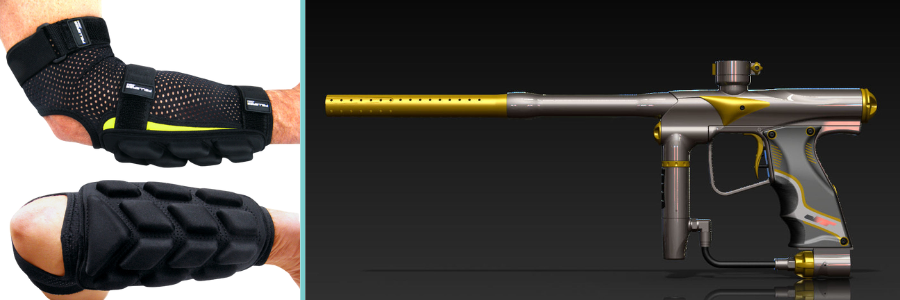
Product design of a sports and training sleeve and paintball gun by Cad Crowd design freelancers

RELATED: What are proven product design principles when working with companies & freelancers?

What concept design really is (Jargon-free)

Hardware concept design is really the translation office from your imagination to the factory floor. What you are doing here is taking your idea and making it something that can be translated, tested, and ultimately made.

It involves sketches, renderings, rough models, and lots of “what if” talking. Unlike industrial design, which is deeply interested in form and appearance, or engineering design, which drills into technical detail, concept design is the playpen where art and science meet.

Consider a Venn diagram where one of the circles is “Looks Cool,” and the other is “Actually Works.” Concept design is the lovely overlap. It is why your shiny toy won’t need duct tape to function.

Good concept design is also narrative. A business-grade rendering or mockup tells investors, fellow colleagues, and potential clients, “This exists. This is happening.” And when you use a service like Cad Crowd to source designers, you are not just hiring a pair of hands. You are getting access to people who understand how to take your idea and make them understand clearly without your needing to defend your napkin scribble in a boardroom.

Turning brain sparks into tangible plans

Do not rush off to your CAD software or 3D printing design service just yet. Step back and ask yourself: Does anyone actually need this thing? Founders are prone to falling in love with what they’ve created, only to discover later that no one else wants it either.

Begin with market research. It does not need to be a grueling spreadsheet endurance test. Interview prospective users. Blog. Observe what people grumble about in criticisms of products that already exist. If your device resolves a genuine pain point, you are already ahead of half the startups in the world.

Next, describe your product’s major functions. What is it solving for you? What sets it apart? Keep it brief. There is a temptation to pack it with every conceivable feature. Now your sleek smart toothbrush doubles as a music player, weather checker, and espresso machine. That is feature creep, and it is the bane of good hardware design.

Product design companies can help here, too. They’ve seen what works, what doesn’t, and what eats through a budget faster than “crowdfunding fiasco.” A company you find through Cad Crowd can help your idea flow into a tight, buildable idea without your laying out one dime on tooling.

Sketches, renderings, and rough models

Don’t underestimate the authority of a poor drawing. Some of the greatest products ever created were badly drawn. Perfection isn’t the goal here. Communication is the goal.

Start with pencil sketches. Even if your drawings in elementary school were better, you can still mark principal shapes and functions. Once you have a number of promising leads, go to digital media like CAD.

They enable you to experiment with proportions, dimensions, and mechanical components more accurately.

Your professional design team can bring it to life. They make it possible for stakeholders to see your product as real. Photo-realistic images are something that product design experts can do well. These can be used to entice investors or test consumer appeal on social media. Platforms like Cad Crowd introduce you to designers who can turn your gadget into a million-dollar product before manufacturing a prototype.

If you’re the do-it-yourself type, you can make crude models using foam, cardboard, or even clay. Low-cost models allow you to try out size and ergonomics without jeopardizing expensive materials. You may find that your hand-held device is child-proof but painful for an adult. Worse to find that out than after a complete production run.

Prototyping without burning your wallet

At some point, your sketches and CAD models must leave the virtual world. That is where prototyping fits in. It is like the ugly teenager phase of your product. It is not yet attractive, but it is growing really fast. Rapid prototyping is within surprisingly easy reach. 3D printing lets you make physical models rapidly and inexpensively. You can try out shapes, fit, and even primitive functions without selling your kidney for the price of production. Foam models are another inexpensive way to check ergonomics. They are the action figure figurine form of your product: inexpensive, small, and surprisingly enlightening.

CNC machining costs more but produces more accurate and durable prototypes. It’s convenient if you need to test-run mechanical pieces or stress areas. Regardless of what you choose to do, don’t fall into the thinking trap that your first prototype must be perfect. It is meant to fail where you did not expect it. That is what it is for.

It is at this point that most entrepreneurs fear, believing that defective prototypes will scare away investors or partners. Actually, the fact that you are working towards refining and testing your idea indicates that you are mature. Product design services companies, especially those you can access through Cad Crowd, can guide you through prototyping design services without resource wastage. They know what areas can be started with for trial purposes and what can be done on the next round.

RELATED: Designing for visual impact with your product design services company

Manufacturing and material considerations prior to pledge

Oh, materials. They are the unsung heroes and sometimes villains of hardware creation. Get it wrong, and your product cracks, warps, or costs more to make than you wanted. Get it right, and you can save money, increase longevity, and get your product to be more appealing.

Start by considering the environment in which your product will exist. Will it see moisture, heat, or abuse? A fashion plastic can be stylish-looking, but it could melt faster than an ice cream cone at the beach on a hot summer day if it’s exposed to high temperatures. Metals are strong but heavy, and some composites are light but stiff. There are always compromises with each.

Manufacturability is as much a consideration as appearance. Some materials are harder to machine, mold, or assemble. If your product requires exotic parts or impossible tolerances, factories will avoid you or charge you an outrageous sum. It is for this reason that hiring a product design services company in the beginning is a good idea. They can identify manufacturing nightmares in advance before you become infatuated with a design that cannot be produced in quantity.

Another thing to consider is sustainability. Consumers have become increasingly conscious of saving the environment (as we all should). By using recyclable materials on your product, you can attract consumers that promotes sustainability. Like the designers from Cad Crowd, they can help you and your engineering design firm find a balance between sustainability, quality, and price.

Designing with product design services firms

Working with a product design services firm is like leaving your baby with a babysitter for the first time. You worry that they will mess it up or, worse still, will attempt to make it “better” in a way you don’t like. But a good design partner will treat your conception carefully and react with proficiency that you can never reproduce by yourself.

Start by looking for prospective partners. Look for portfolios that match your product’s level of style and complexity. Check out reviews and testimonials. Don’t be afraid to ask for references or samples of similar projects.

In any aspect of life, communication is always the key. Always know what you want, especially regarding the project deadline and allocation of money. Ask for updates, even if it’s a drawing or scribbles. A professional designer can’t deliver your expected results if you can’t communicate clearly what you need.

Legal protection is also important. Use of non-disclosure agreements (NDAs) to protect your intellectual property. Most professional CAD design services will require it and will willingly sign.

Platforms like Cad Crowd make it easier for you to complete your team. They can connect you with screen-tested designers and engineers specializing in hardware concept design or CAD. Especially, if you require assistance in creating starting sketches, 3D modeling, or production-ready file preparation, you can find the perfect match for you without wasting months asking for recommendations.

Lastly, don’t forget cooperation is a two-way street. Hear criticism out. Experienced designers may propose changes that maximize usability, minimize cost, or ease manufacturing. While it stings to leave behind your original idea, the changes often are between a product that fails and a product that succeeds.

Common mistakes first-time founders make

Every new hardware startup founder has a horror story to tell. Some of them are funny in hindsight. Some of them are a nightmare. Listening to them can spare you the expensive mistakes.

One of the biggest mistakes in business is adding more features to a product. It all starts with a simple idea, let’s say you want to produce a cooler bottle that keeps drinks cold for longer hours. Next, you want to include a Bluetooth speaker, a cup warmer, and a built-in blender. Now, the final product is more expensive than the latest game console. This reminds you to keep your product simple and not add unnecessary features just because it’s in the latest trend.

Another common mistake is neglect of design for manufacturability services. You may create a beautiful product that looks wonderful, but is impossible to produce at an affordable price. Factories are not magic. If you specify super-tiny tolerances or unique parts never made before, expect stratospheric prices or pleasant rejection letters.

Forgetting to test is another classic repeat offender. You’re convinced your design is perfect, so you launch straight into manufacturing. And you discover that the battery lasts only twenty minutes, or the hinges collapse at slight pressure. Iteration is dull, but it’s much cheaper than recalling ten thousand dead units.

Finally, poor communication can swamp even a good project. When you are vague with your product design services company, you invite miscommunication. Specific instructions, attainable expectations, and regular feedback prevent frustration from both sides. Cad Crowd makes it a lot easier to locate communicative, talented designers, but you still need to speak up.

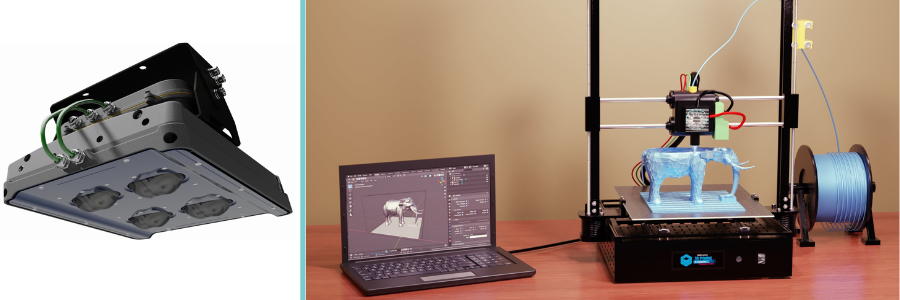
Product and hardware design of an LED lamp and 3D printer by Cad Crowd design freelancers

RELATED: How innovative design techniques can supercharge your new product concept

The magic of iteration and feedback loops

Iteration isn’t sexy, but this is where the magic happens. Every incredible piece of hardware you adore, from your favorite headphones to your appliances in the kitchen, had thousands of iterations before it went to market. Even Apple and Dyson, those industry giants, test and iterate furiously.

Each revision is picking up something new. Maybe your device is cumbersome to hold, or maybe one button’s placement is confusing for users. These small adjustments, repeated time and again, make a good product into a great product through prototype engineering services.

User testing is worth its weight in gold. Show your prototype to someone who has never seen it before and observe what they do. They will press the wrong button, flip it over, or use it in a way that you never dreamed. It’s an eye-opener, but it teaches you things that no spreadsheet ever could.

Never give up on failure. Treat every mistake as a veil for progress. The earlier your mistakes, the earlier your growth. Work with your product design services company to incorporate critiques, re-doing designs, and building improved prototypes. Cad Crowd’s network of designers can guide you through such loops efficiently and steer clear of wasteful setbacks.

Bonus tips for navigating the wild world of hardware design

Even with the best design, hardware development tends to surprise you. These are some other tricks to put in your regular bag and maybe avoid a surprise crash:

But packaging can shatter or create the first customer impression. Packaging design services decide shipping expenses, shelf life, and even safety. Involve your product design company in packaging decisions. Designers on sites like Cad Crowd can suggest functionalities that are affordable, aesthetic, and functional.

Don’t accept the first manufacturing offer at face value. Research alternatives like injection molding, vacuum forming, or die casting. Another option, usually, will be cheaper or improve the quality. A skilled designer will walk you through the pros and cons without getting bogged down with details.

Real-life situations

Just imagine the pet feeder; the first designs were stunning on paper. However, when the first batch of manufactured products arrived, the hinge on the lid failed after a few cycles. Customers posted videos of cats blissfully trashing the feeders like furry little engineers. The company recalled the product and re-engineered the hinge, an expensive lesson in testing in real-world environments.

And another founder wanted to create a wearable fitness tracker with a revolutionary clasp system. They skipped user testing because “everyone knows how to use a clasp.” But they didn’t. The clasp was so user-unfriendly that customers wore the tracker backwards or broke it attempting to buckle it. A single round of user testing could have avoided months of embarrassment and lost sales.

It’s because of anecdotes like these that iteration, open feedback, and collaboration with product development experts are so crucial. A good designer will not just provide you with neat files. They will burst bubbles in assumptions, suggest ways to make it better, and guide you around pitfalls that have swallowed up other founders whole.

RELATED: The 5 stages of prototyping for any new product idea for product design service companies

The role of branding in hardware concept design

It’s easy to take only care of the physical aspects of your product and neglect branding. Branding, however, is not merely logos and color schemes. Branding is what informs your design decisions from the start. Is your product sleek and futuristic? Friendly and playful? Outdoor-inspired and tough? These decisions determine everything from material selection to button shape.

Your designer can incorporate branding into the concept phase. If, for instance, your company is concerned about sustainability, that should guide your selection of materials and packaging. If your item is aimed at a high-end market, your concept design should be sophisticated and precise. Cad Crowd’s network has designers who know branding as part of the larger picture and will make sure your product and your brand are a natural fit.

Getting ready for manufacturing like a pro

Once you have already planned your product, you must prepare for large-scale production. This is the most underestimated phase for the first-time businessman. For them to create a successful product, they need detailed drawings, clear specifications, and clear illustrations. That’s why sloppy documentation and management can result in a very expensive failure.

Work with your product design services firm to create manufacturing-ready documents. Double-check every measurement, every tolerance, and every material specification. Don’t rely on the manufacturing design firm to “figure it out.” They will produce exactly what you give them, which can mean producing 10,000 pieces with a defect that could have been identified early on.

You ought also to think about production locations.  Home-country production can be easier in terms of communication and quality control, but foreign production can be less expensive, but needs to have great screening and perhaps longer lead times.  Think in terms of shipping, tariffs, and variations in communication styles.  A seasoned global manufacturing designer will make this easier to do.

Holding sanity together through the highs and lows

Hardware construction is a series of rollercoasters. There will be a time when you will wonder why in the world you ever thought that your plan was a good idea, but that’s fine. Remember to surround yourself with positive peers, mentors, or even online communities of fellow founders. Share your stories, and sometimes, a word of encouragement here and there from someone who has walked in your footsteps can make all the difference.

Failures are redirections. These are your long-term motivations. Keep in mind that you’re making something real, that people can hold, use, and keep close to their hearts. That’s worth the headaches. Knowing you’re leaving a legacy.

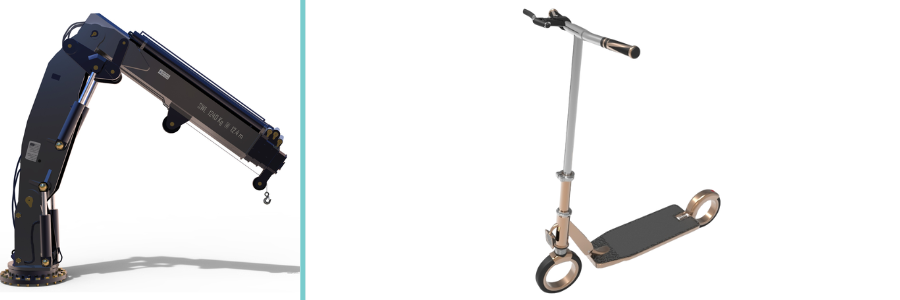
Hardware design of an operator crane and scooter by Cad Crowd product design experts and freelancers

RELATED: How CAD turns your idea into a prototype for CAD design companies & freelance services

One last push toward action

You now have information, game plans, and a little bit of sound advice. But information does not build a product. Action does. Start sketching. Research your market. Get in touch with a product design services company. Sites like Cad Crowd wait in the wings with a group of good designers who can transform your “someday” idea into a real, producible product.

Don’t wait until your concept is perfected because it won’t be. Perfection is the progress killer. The sooner you get your idea in motion, the sooner you can learn, adapt, and build something amazing. The world doesn’t need another napkin drawing that has been left behind. It needs your idea, refined, experimented with, and ready to take over the world. Request a quote today.

author avatar

MacKenzie Brown is the founder and CEO of Cad Crowd. With over 18 years of experience in launching and scaling platforms specializing in CAD services, product design, manufacturing, hardware, and software development, MacKenzie is a recognized authority in the engineering industry. Under his leadership, Cad Crowd serves esteemed clients like NASA, JPL, the U.S. Navy, and Fortune 500 companies, empowering innovators with access to high-quality design and engineering talent.

Connect with me: LinkedInXCad Crowd