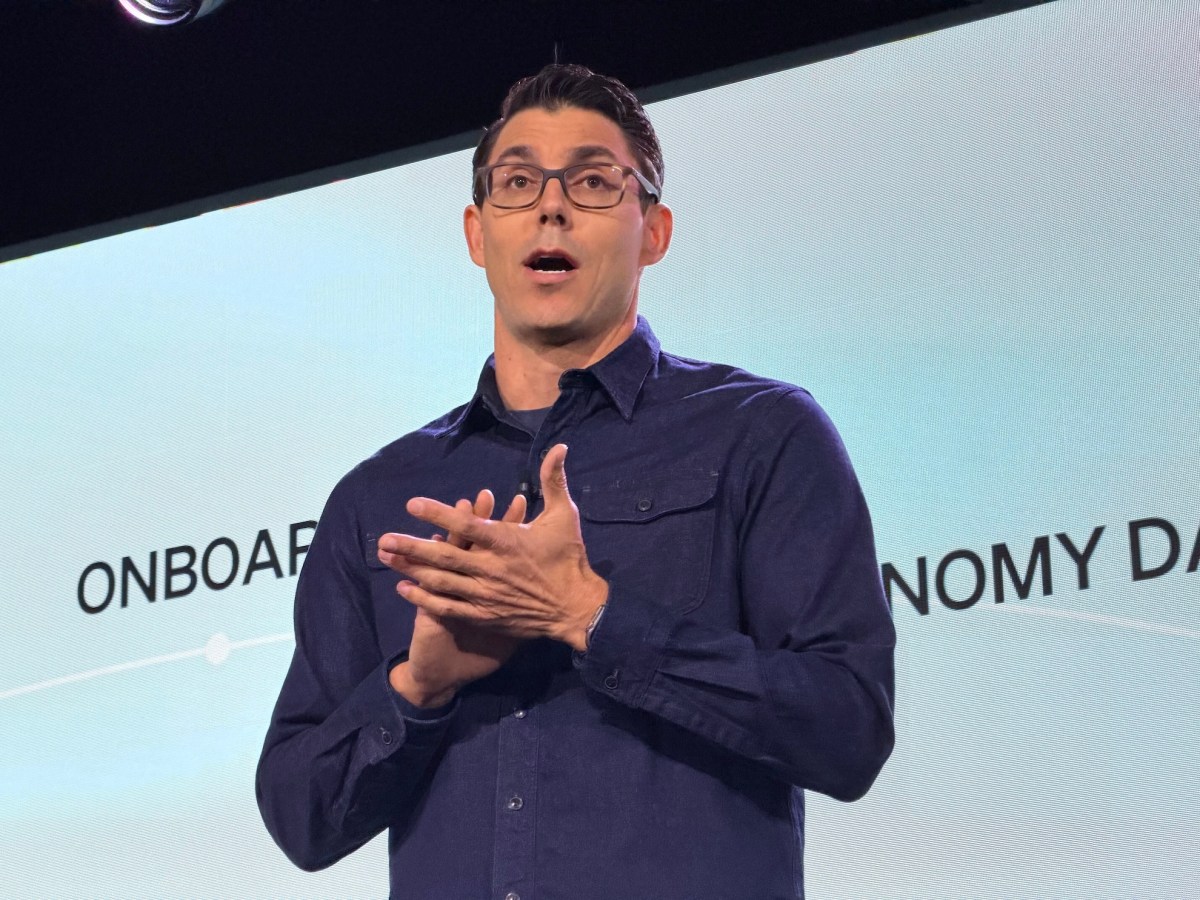
RJ Scaringe has raised more than $12 billion across three startups and investors still want more


Investors can’t seem to get enough of RJ Scaringe or his ideas.

In less than a decade, the serial entrepreneur best known for his EV company Rivian, has raised more than $12.3 billion from venture capital firms, as well as strategic and institutional investors for his three — and counting — startups. If the latest $400 million raise for his new venture Mind Robotics is an indicator, investors are still happily piling in.

Outsized raises for newly minted startups have become more common in recent years. But those hundred-million-plus seed rounds have generally been reserved for buzzy defense tech startups or AI companies founded by former OpenAI or Anthropic employees.

Those supersized seeds certainly weren’t flowing toward something as niche as an electric micromobility startup. And yet in 2025, Scaringe raised $105 million for exactly that — a startup called Also, which he founded that same year. The total has since surpassed $300 million, with DoorDash among its backers.

Jiten Behl, partner at Eclipse and former chief growth officer at Rivian, has spent years watching and learning from Scaringe. His firm is now one of Scaringe’s biggest backers, leading rounds in both Also and Mind Robotics — Scaringe’s industrial AI and robotics startup that he also founded last year.

Storytelling and communication are one of his superpowers, according to Behl, who joined Rivian when the company had just a handful of employees.

“When RJ explains a certain issue, topic, opportunity, vision, he just has this very unique ability to communicate it so effectively, and it comes across so credible,” Behl said. “He’s not trying to undersell the difficulty or oversell the opportunity, and that’s an art.”

Scaringe isn’t the only serial entrepreneur to repeatedly attract massive amounts of capital, but founders who can raise billions across multiple ventures remain rare. The self-professed car enthusiast who earned his doctorate in mechanical engineering from MIT, joins a small cadre of entrepreneurs that includes Tesla CEO and SpaceX co-founder Elon Musk, OpenAI CEO Sam Altman, Anduril and Oculus founder Palmer Luckey, and Jack Dorsey, who founded Square (now called Block) and Twitter.

The difference, at least in the view of some investors TechCrunch spoke to, is that he is able to separate selling the idea from selling himself. “He is very comfortable and confident in his own personality, and he’s not trying to be an Elon,” Behl said, noting that many have tried to make the comparison over the years.

“It’s not about him,” another insider familiar with Scaringe’s companies told TechCrunch. “When you talk to him, he has enthusiasm about the product that is completely external.”

Of course, there is confidence and even a little ego, the same source mused, but “it doesn’t weigh on you.” The source also added that Scaringe also has a unique ability to make you feel like the most special person in the room — a sentiment others echoed.

Giving that kind of undivided attention to an investor, supplier, or exec at a manufacturer is a challenge at the scale Scaringe is attempting. He is running three companies, often traveling between Palo Alto, Irvine, Rivian’s factory in Normal, Illinois, and a second factory soon to open in Georgia. And then there is family — Scaringe has three sons with his ex-wife.

Joe Fath, another partner at Eclipse, credits his open-mindedness and collaborative nature for helping him attract investment and juggle these connected, yet disparate businesses.

He noted that Scaringe also “has the rare combination of being a truly great engineer while also having an exceptional instinct for product design,” said Fath, who previously worked at a major Rivian backer T.Rowe Price. “Very few founders can operate at that level technically while also understanding what resonates emotionally with customers — both consumers and commercial buyers. That combination is incredibly uncommon and has clearly been part of what makes Rivian’s products (and now ALSO and Mind’s) so differentiated.”

The pace of Scaringe’s fundraising over the past eight years is particularly notable, and doesn’t seem to be slowing.

More than $11 billion, and by far the largest slice of VC and strategic capital, went into Rivian — most of it between 2018 and its blockbuster IPO in 2021. That’s a startling timeline especially considering the company, initially called Mainstream Motors, had existed since 2009. For years, Rivian operated as a small, unknown entity until its breakout moment in late 2018 at the Los Angeles Auto Show, when it revealed prototypes of its all-electric R1T truck and R1S SUV.

The money soon flowed, and from every direction. In early 2019 and just a couple of months after that reveal, Rivian raised a $700 million funding round led by Amazon. U.S. automaker Ford would invest $500 million and make plans to collaborate on a since-scrapped future EV program. Cox Automotive contributed $350 million. Rivian would close out the year with a $1.3 billion round — its fourth in 2019 — led by funds and accounts advised by T. Rowe Price Associates, with additional participation from Amazon, Ford, and funds managed by BlackRock.

In July 2020, Rivian raised $2.5 billion and another $2.65 billion six months later. As whispers of an IPO got louder, Rivian closed another $2.5 billion private funding round led by Amazon’s Climate Pledge Fund, D1 Capital Partners, Ford Motor and funds and accounts advised by T. Rowe Price Associates Inc. Third Point, Fidelity Management and Research Company, Dragoneer Investment Group and Coatue also participated.

Then the IPO came. Rivian raised nearly $12 billion in gross proceeds after locking in $78 per share. Its market cap hit $100 billion when it debuted on Nasdaq in November 2021. Today, it stands at $18.2 billion today, a significant comedown that also reflects the broader struggles of the EV sector.

The ability to raise that much capital, despite those headwinds, is exceptional. But Scaringe didn’t stop with Rivian. If anything, the pace has accelerated. Also and Mind Robotics have together raised more than $1.3 billion so far, with Mind Robotics moving especially fast: $115 million in its first year, $500 million in March, and another $400 million just this week.

Rivian also continues to land notable backers through high-profile deals like the $5.8 billion joint venture with Volkswagen Group and a robotaxi partnership valued at up to $1.25 billion with Uber.

“Now, the big question is, how much can he do?” Behl said. “That’s a question [that] already assumes that he’s reaching his limit. The thing is, he doesn’t look at it that way. His perspective is that there is huge value to be created, there is huge impact to be created, and I just have to do it.”

When you purchase through links in our articles, we may earn a small commission. This doesn’t affect our editorial independence.

Rivian downsizes DOE loan to $4.5B, while boosting capacity of Georgia factory


Rivian has reworked its loan deal with the Department of Energy and now expects to borrow $4.5 billion to build its new factory in Georgia, down from the original amount of $6.6 billion allocated under the Biden administration.

The company also announced Thursday that it will draw on the loan sooner than planned, in early 2027, and expects to increase the total capacity of the Georgia plant from 200,000 to 300,000 vehicles in its initial phase of operation — another sign that the company has high hopes for its upcoming R2 SUV.

The larger capacity — a 50% increase over its initial plans — will help lower its per unit costs, while also providing significant room for future expansion of capacity in later phases, the company said Thursday. 

Some of the factory’s capacity will be used to produce R2 robotaxis for Uber. Under a deal struck earlier this year, Uber is making an initial $300 million investment in Rivian and is expected to purchase 10,000 fully autonomous R2 robotaxis ahead of a planned rollout in San Francisco and Miami in 2028. That initial $300 million payment is expected to close in the second quarter, and another $250 million investment is planned for later this year, according to Rivian.

The ride-hailing company has the option to buy up to 40,000 more autonomous R2 SUVs from Rivian starting in 2030. Uber will has said it will invest up to $1.25 billion in Rivian through 2031 if the automaker meets a series of milestones.

Rivian broke ground on the Georgia factory late last year and is in the beginning stages of doing so-called vertical construction at the site located outside Atlanta. The company expects to start making vehicles by the end of 2028. Until then, Rivian will build R2 SUVs at its current factory in Normal, Illinois.

The company recently started production of the R2 despite the plant suffering damage from a tornado, and Rivian said Thursday it has made initial deliveries to employees. Deliveries to customers are expected to start “in the coming weeks, according to Rivian.

Techcrunch event

San Francisco, CA
|
October 13-15, 2026

The modifications to the DOE loan come as Rivian revealed financial results for the first quarter of 2026 on Thursday. The company generated $1.38 billion in revenue, with $908 million coming from vehicle sales and $473 million from software and services. The company lost $416 million in the quarter, down from a $541 million loss in the same period last year.

When you purchase through links in our articles, we may earn a small commission. This doesn’t affect our editorial independence.

Redwood Materials lays off 10% in restructuring to chase energy storage business


Redwood Materials has laid off around 135 employees, or roughly 10% of its workforce, as it restructures to better accommodate its growing energy storage business, TechCrunch has learned.

The cuts come just five months after Redwood cut 5% of its workforce, and three months after it closed a $425 million funding round that boosted the battery recycling company’s valuation to north of $6 billion, as TechCrunch previously reported.

It’s been a difficult time in the battery industry lately. Earlier this month, battery recycler Ascend Elements filed for Chapter 11 bankruptcy protection, citing “insurmountable” financial challenges. Some battery-makers have also restructured or gone out of business as the automotive industry in the U.S. has backed away from its most optimistic and ambitious plans to transition to electric vehicles.

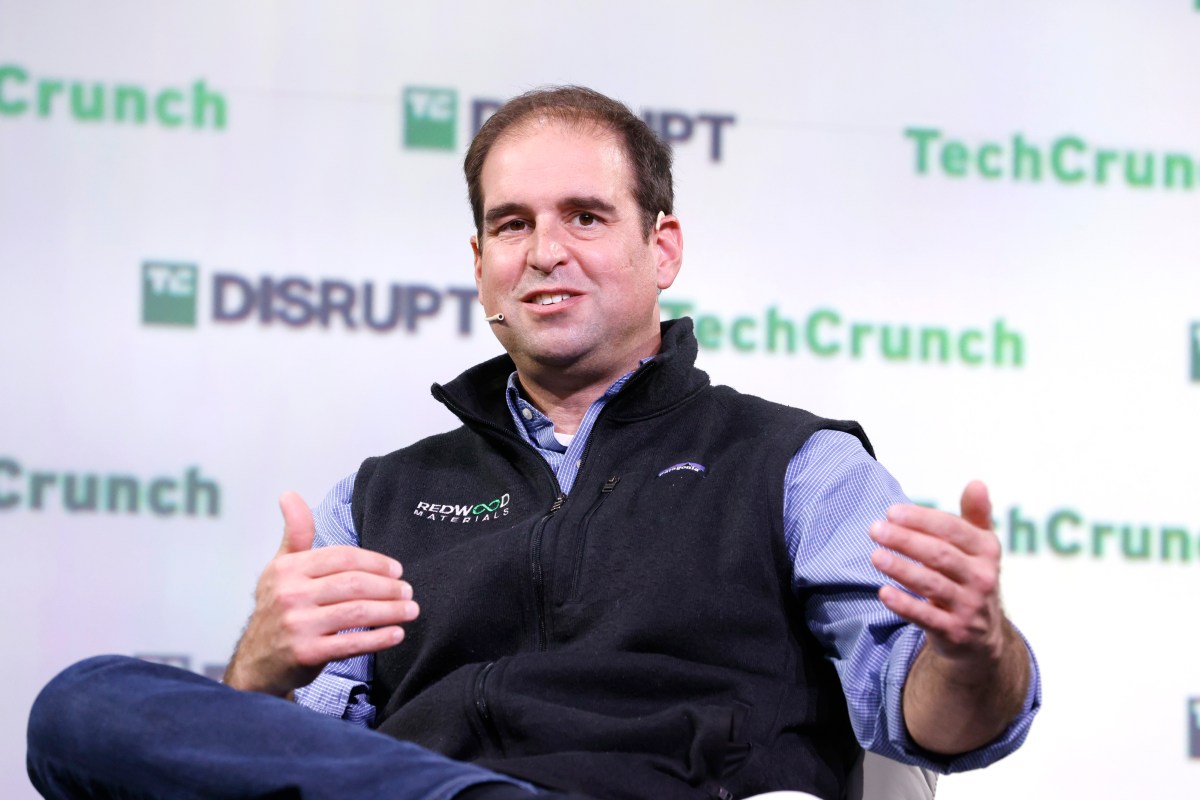
But Redwood Materials founder and CEO JB Straubel told employees that this new round of cuts is not a sign that the company is heading down the same path.

“Redwood today is the strongest it’s ever been,” Straubel wrote in an email to the workers who weren’t laid off, according to a copy viewed by TechCrunch. “The materials business is well on its way to profitability and has an exciting roadmap ahead.”

Straubel noted that Redwood “continue[s] to dominate the US battery recycling market” but also touted the company’s “great momentum” in its new energy storage business. Redwood has recently announced deals with Crusoe AI and, most recently, electric automaker Rivian to provide recycled batteries that can be used to power those companies’ facilities. The company declined to comment beyond the contents of Straubel’s email.

In his message, Straubel wrote that “parts of the company have expanded faster than needed to support the direction” of Redwood. As a result, he said Redwood is making cuts across multiple divisions, including the engineering and operations organizations, according to an employee who was granted anonymity to discuss the layoffs.

Techcrunch event

San Francisco, CA
|
October 13-15, 2026

“We are confident that we can deliver on our critical projects with a smaller team that is more focused,” he wrote. “We have successfully adapted to changes in the market that have bankrupted many of our competitors.”

Straubel went on to write that he is “more excited than ever with our path ahead as we build the most integrated and cost-effective critical materials and energy storage business in the world.”

“This is a self-sustaining business and will continue to make this company more valuable over time. We have the team and the technology to do what no other company can,” he wrote.

Workers who were laid off were told by Redwood’s chief HR officer that the layoffs were made “to sharpen our focus, our work and the size of our teams to support the direction Redwood is going in the future,” according to a copy of her email, which was viewed by TechCrunch.

Employees who were laid off are receiving severance and paid health benefits, according to Straubel’s email, as well as “career transition assistance.”

“I am grateful to the approximately 135 employees who we say goodbye to today — they’ve all contributed to building Redwood,” he wrote.

When you purchase through links in our articles, we may earn a small commission. This doesn’t affect our editorial independence.

A little-known Croatian startup is coming for the robotaxi market with help from Uber


Mate Rimac, the founder of Croatian electric vehicle maker Rimac Group, started working on electric robotaxis seven years ago. Now, part of his vision is coming to fruition through a strategic partnership between Uber, Chinese autonomous vehicle company Pony.ai, and his own robotaxi startup Verne.

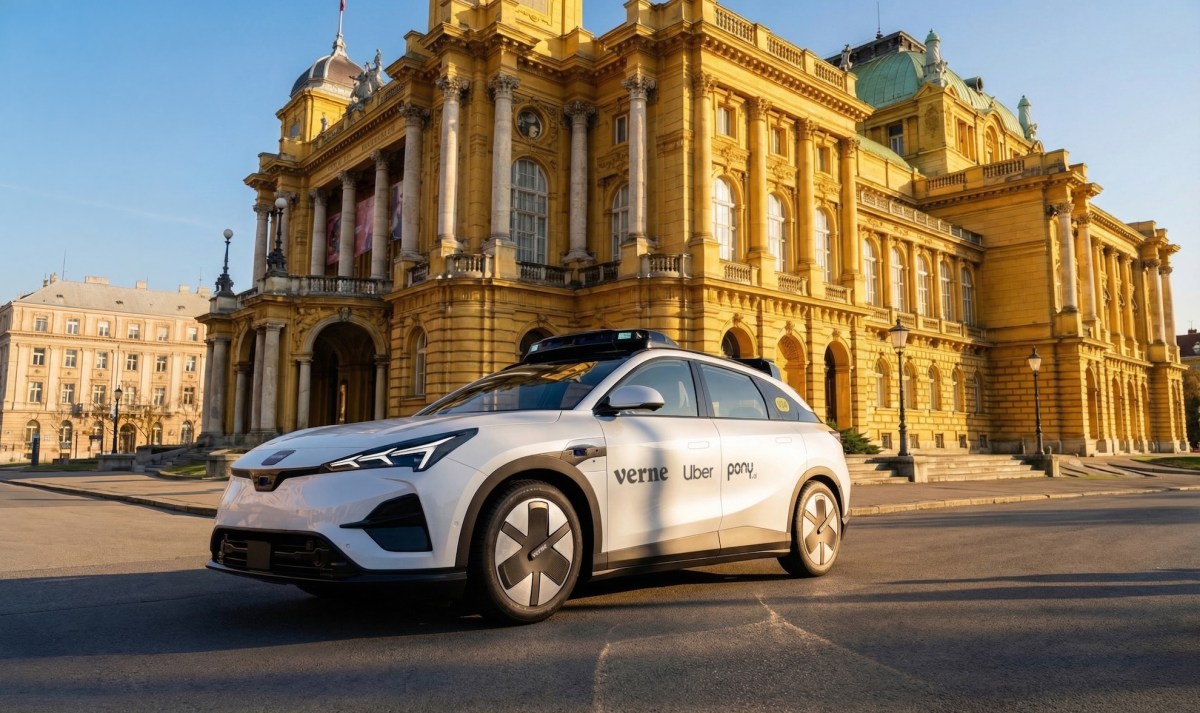
The three companies announced plans Thursday to launch a commercial robotaxi service in Europe, starting in Zagreb, Croatia. Pony.ai will supply the autonomous driving system and a robotaxi called the Arcfox Alpha T5 that was developed with Chinese automaker BAIC. Verne will own and operate the fleet, and Uber will provide its vast ride-hailing network.

The ride-hailing giant also indicated it intends to invest an undisclosed amount into Verne and support future expansion as a strategic partner.

The companies didn’t provide a specific launch date for the commercial service, though on-road testing in Zagreb — where Rimac Group is based — is already underway.

Verne doesn’t have the same name recognition as Waymo or Tesla — at least not in the United States. But it has the same outsized ambitions.

Verne started in 2019 as a project called Project 3 Mobility (or P3) within Rimac Group, a growing ecosystem of companies that includes hypercar maker Rimac Bugatti, Rimac Energy, and Rimac Technology. Mate Rimac holds a 23% stake in the group.

There were occasional updates about the project, but it wasn’t until July 2024 — when Verne launched with 100 million euros in funding — that the public got a more detailed look at its plans.

Techcrunch event

San Francisco, CA
|
October 13-15, 2026

Rimac’s vision has always been for Verne to operate an urban robotaxi service with purpose-built two-seater electric vehicles. That might sound like an odd mission for the person behind the Nevera, an electric hypercar that starts around $2.2 million. But as he explained to this reporter a couple of years ago, Rimac was never interested in making a high-volume EV that humans would drive — precisely because he believes that autonomous vehicle technology will make that business obsolete.

“It will take a while, but it’s coming; I’m sure about that,” he’d told me at the time.

Verne isn’t developing its own self-driving system. Instead, the company is focused on the urban electric vehicle, the ride-hailing app, and the back-end infrastructure to manage the fleet, including cleaning and maintenance.

Verne plans to produce its robotaxi EVs at a new factory in Lučko, Croatia, expected to begin operations later this year.

Verne hasn’t launched the two seaters yet, nor did it provide an update on the vehicles in its announcement with Uber and Pony.ai. The company said in November that it had produced and tested 60 verification prototypes.

For now, the Verne robotaxi service will use the Pony.ai-BAIC vehicle, the Arcfox Alpha T5. Users will be able to hail one via Uber as well as through Verne’s own app.

Verne is starting small with its commercial launch, but it has plans to scale to a “fleet of thousands of robotaxis over the next few years,” according to Thursday’s announcement. And its aspirations go far beyond the borders of Zagreb, the capital of Croatia and home to Rimac Group.

“Europe needs autonomous mobility that can move from testing to a real service,” said Verne CEO Marko Pejkovic, in a statement. “At Verne, we are bringing together the technology, platform, and operational capabilities required to make this a reality, starting in Zagreb before expanding to new markets.”

The SEC drops its four-year-old investigation into EV startup Faraday Future


The Securities and Exchange Commission has closed its investigation into electric vehicle startup Faraday Future, despite SEC staff on the case recommending an enforcement action last year, TechCrunch has learned.

Four sources familiar with the investigation, who were granted anonymity to speak about the government case, told TechCrunch that the SEC informed the company and people involved in the probe about the closure this past week.

The dismissal of the case comes amid a historic drop in enforcement actions by the SEC, which only initiated four cases against publicly-traded companies in its 2025 fiscal year, a recent report shows. The SEC did not respond to an after-hours request for comment.

The investigation into Faraday Future lasted for nearly four years. The SEC was looking at whether the EV startup made “false and misleading statements” when it went public in a 2021 merger with a special purpose acquisition company (SPAC), and was also probing whether Faraday Future faked the sales of its first electric vehicles in 2023 — a claim that’s been made by at least three former employee whistleblowers.

The financial regulator sent the startup multiple subpoenas, regulatory filings from Faraday Future show. The SEC also took depositions of multiple former employees and executives in 2024 and 2025, three of the people familiar with the case have told TechCrunch.

In July 2025, Faraday Future revealed the SEC had sent the company and multiple executives — including founder Jia Yueting — letters known as “Wells Notices.” The SEC sends Wells Notices when staff working a case have decided to recommend the agency take enforcement action.

“We can now put all our energy into strategy execution. Over the past five years, we had to spend a great deal of time, effort, and money on cooperating with the investigation,” Jia said in a statement Sunday. Faraday Future said the SEC informed the company that it won’t take action against any of its executives, either.

Techcrunch event

San Francisco, CA
|
October 13-15, 2026

It’s not clear if Faraday Future ever responded to the Wells Notices sent last year. As recently as February, the company disclosed in regulatory filings that it had not. “The Company and executives plan to engage with the SEC to explain why enforcement action is not warranted,” Faraday Future wrote in such a filing last month.

The Department of Justice also sent Faraday Future requests for information after the SEC opened its investigation in 2022. Faraday Future has referred to this as an “investigation” in regulatory filings; the DOJ has never confirmed if it opened a full probe, and it did not respond to an after-hours request for comment.

It is rare for the SEC to not pursue an enforcement action after sending a Wells Notice. One study done at the Wharton School in 2020 showed that around 85% of targets who receive a Wells Notice wind up in court with the SEC.

The SEC investigated nearly every electric vehicle startup that went public in a SPAC merger over the last six years. In almost all of those cases, the agency reached a settlement with the startups. It dismissed an investigation into Lucid Motors in 2023, and as TechCrunch first reported in February, the SEC ended a probe into bankrupt EV startup Fisker late last year.

Origins of the investigation

Faraday Future was founded in California in 2014 by Jia, a businessman who at the time was running a booming tech conglomerate in China known as LeEco. It was one of many new companies trying to become the “next Tesla” or, optimistically, a “Tesla killer.”

Faraday snapped up talent from Tesla, other automakers, and also tech companies like Apple, and at one point employed as many as around 1,400 employees. But things got bumpy quickly. The company turned heads, in both good and bad ways, at the 2016 Consumer Electronics Show, with a flashy concept car and the lofty goal of being as disruptive as the iPhone.

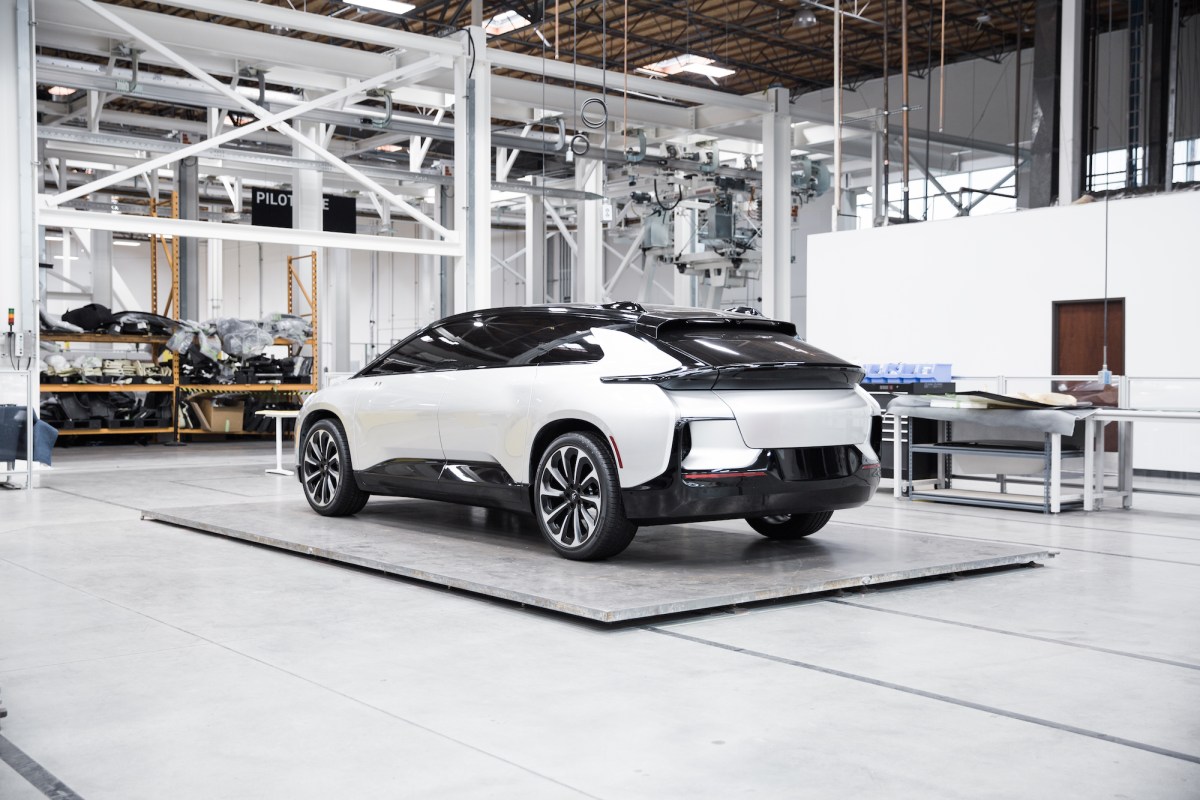
The company revealed its first vehicle the following year: a luxury electric SUV called the FF91. By the end of 2017, though the company was nearly out of cash and had laid off or furloughed hundreds of workers. Jia’s company in China had collapsed, and he self-exiled to California as the government in his home country placed him on a debtor blacklist. (It was at this time that a close business associate to Jeffrey Epstein pitched the sex criminal on investing in Faraday Future, as well as other EV startups, as TechCrunch recently revealed. Epstein never invested.)

Faraday Future was rescued by an investment from major Chinese real estate conglomerate Evergrande. But that relationship fell apart quickly, too, with Evergrande walking away by the end of 2018 and Faraday Future laying off even more employees.

Jia nominally stepped aside as CEO in 2019 and also filed for personal bankruptcy to settle billions of dollars of LeEco debt he had personally guaranteed. But behind the scenes, he was still largely in charge of the company.

This became an issue when Faraday Future went public in 2021 and raised about $1 billion. Members of the newly-appointed public company board believed that Faraday’s executives had misrepresented Jia’s control over the day-to-day operations — especially after a short seller report was published that scrutinized Faraday Future — and formed a special committee to investigate.

That committee hired an outside law firm and a forensic accounting firm, and within the first few months it started reporting its findings directly to the SEC, the three people familiar with the investigation told TechCrunch.

Between January and April 2022, Jia was sidelined as a result of the board’s investigation, a senior VP named Matthias Aydt (who is now co-CEO with Jia) was placed on probation for six months, and another VP named Jerry Wang (who is Jia’s nephew) was suspended. (Wang ultimately resigned after “failure to cooperate with the investigation,” according to company filings, but is now back with Faraday Future.)

The committee’s work also showed that Faraday Future had, in the two years before it went public, survived in part on multi-million-dollar loans made to the company by low-level employees with connections to Jia — known as “related party transactions” in legal parlance.

On March 31, 2022, Faraday Future disclosed that the SEC had opened its investigation. The startup revealed the requests for information from the DOJ in June.

Dodging another bullet

Through the rest of 2022, and amid the early stages of the SEC investigation, employees and people close to Jia waged a campaign to regain control of the board and his company. This eventually resulted in death threats against some directors, who ultimately resigned, paving the way for people close to Jia to run the company once more.

Faraday Future finally delivered the first few FF91 SUVs in early 2023. Former employees have sued the company alleging that these were not true sales, and that the company had misled investors. The SEC investigators working the case subpoenaed Faraday Future about issues related to these sales, filings show.

Former executives and employees were initially deposed by the SEC in 2024, according to the people familiar with the investigation. The SEC sat some of them for longer depositions in the first half of 2025, the people said.

The Wells Notice sent in July 2025 said SEC staff had made “a preliminary determination to recommend that the Commission file an enforcement action against the Company alleging violations of various anti-fraud provisions of the federal securities laws.”

Specifically, the Wells Notice referenced “purported false or misleading statements” made during the SPAC merger process about “related party transactions” and Jia’s “role in the Company.” Jia, his nephew Wang, and two other unnamed employees also received Wells Notices.

Faraday Future is still trying to sell the FF91, but it has also recently changed its business in a few ways. The company is importing more affordable hybrid and electric vans from China. It also appears to be selling re-badged versions of Chinese robots, and turned a publicly-traded biotechnology company into a firm focused on crypto.

Those efforts have not stopped the company’s struggles. On Friday, the company announced it had received a warning from the Nasdaq that its stock price was under the minimum of $1, which could eventually lead to the company being de-listed.

This story has been updated with a statement from Faraday Future.
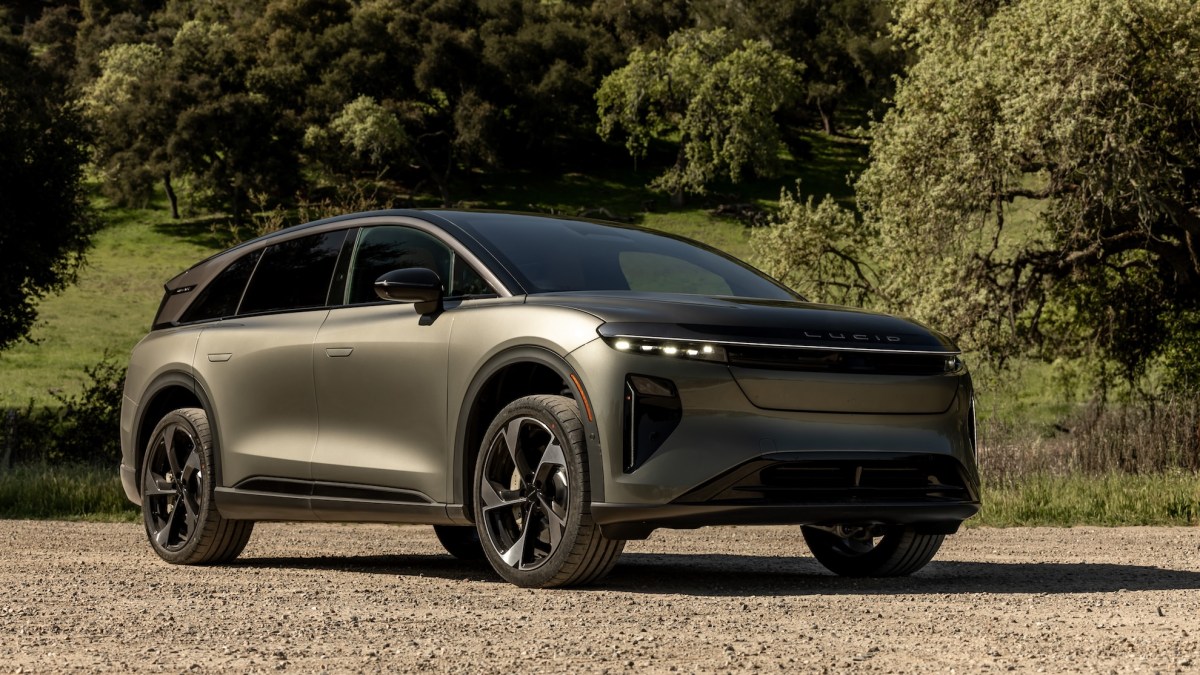
Lucid Motors sets record as Gravity sales pick up and tax credit expires


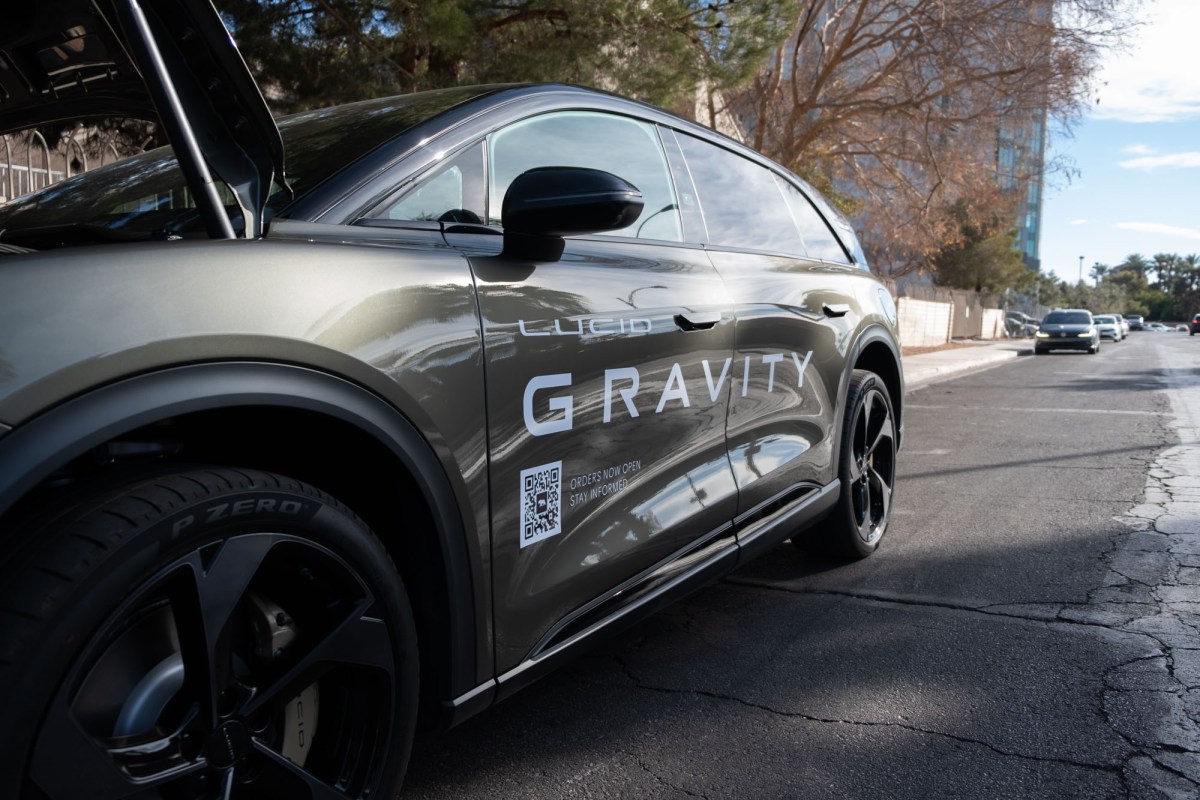
Lucid Motors delivered a record 4,078 vehicles in the third quarter, likely buoyed by a combination of more Gravity SUVs hitting the road and a rush of customers taking advantage of the expiring federal EV tax credit.

The Saudi-owned luxury EV startup is still way off the projections it used to go public in 2021 — a transaction that netted it $4 billion. But Lucid Motors has seen deliveries steadily climb over the last two years. The third-quarter delivery figures announced Monday mark the seventh consecutive quarter that Lucid Motors has seen sales increase.

Lucid Motors was not alone in seeing a big third-quarter bump in EV sales. Tesla recorded its best quarter in company history, and legacy automakers like Ford and General Motors saw big increases as well. Even Rivian, which is forecasting a worse overall year for total EV deliveries than 2024 or 2023, saw a boost in the third quarter.

Like Rivian, only customers who leased Lucid Motors vehicles were eligible for the federal EV tax credit, meaning the impact of its expiration is hard to quantify. It’s also unclear how many Gravity SUVs were delivered compared to the company’s first model, the Air sedan. Lucid Motors will reveal full financial results for the quarter on November 5.

Lucid Motors has struggled to generate interest for its luxury EVs since going public in 2021, with former CEO Peter Rawlinson openly admitting the company needed to beef up its marketing operations. Earlier this year, the company announced it signed actor Timothée Chalamet to be its first “global ambassador.” The company has also benefited from rental sales and company leases in some quarters, as TechCrunch previously reported.

The company is also increasingly looking to Saudi Arabia — which owns around 60% of the publicly traded company through its sovereign wealth fund — as a market for its vehicles. On Monday, Lucid Motors said it built more than 1,000 vehicles specifically for the Saudi market. (The company currently operates an assembly facility in the Kingdom and plans to open a full-fledged factory there.)

Lucid has also locked in future demand from an unlikely customer: Uber.

Techcrunch event

San Francisco
|
October 27-29, 2025

Uber announced last month plans to buy at least 20,000 Gravity SUVs over the next six years and use them as robotaxis on its network. For that deal, Lucid Motors will work to integrate autonomous vehicle company Nuro’s technology into the vehicles.

Elon Musk reportedly fired a key Tesla executive following another month of flagging sales


Elon Musk has reportedly fired Omead Afshar, Tesla’s head of manufacturing and operations in North America and Europe, according to Forbes. Both CNBC and Bloomberg corroborated the report. Afshar’s exit follows Milan Kovac, the head of engineering on Tesla’s Optimus robot, who left the company in early June.

Afshar was promoted to the role last year, Bloomberg reports, after working for multiple different Musk-owned companies since 2017. The timing of his exit isn’t particularly surprising given the trouble Tesla has faced selling cars. Sales in Europe have shrunk for a fifth consecutive month and the European Automobile Manufacturers’ Association reports that registrations of new Teslas dropped by nearly 41 percent in May. The company is also struggling in China, where sales fell 15 percent in the same month.

While Musk appears to be holding Afshar responsible, the blame clearly lies at Musk’s feet. Helping to fund President Donald Trump’s re-election in the US, running the destructive DOGE cost-cutting efforts after his election and just generally maintaining a noxious public presence have permanently tainted Musk and his companies. While SpaceX still benefits from government contracts, Tesla’s sales are vulnerable to public opinion, something the Tesla Takedown movement has been leveraging to its advantage with protests outside of the company’s dealerships.

Firing Afshar, leaving his position in the US government and launching Tesla’s robotaxi service in Austin are all different attempts from Musk to change the narrative around Tesla. It’s not clear yet whether they’ll actually help.

EV startup Canoo has filed for bankruptcy and stopped all operations


Canoo said on Friday night that it has and “will cease operations effective immediately,” after failing to secure enough funding to keep it going. The writing was on the wall for the EV startup leading up to the announcement; the company has lost multiple executives in recent months, and reported to the SEC in November that it had just $700,000 in the bank, per .

In a press release announcing the filing, Canoo said it was unable to get funding from the Department of Energy’s Loan Program Office or from “foreign sources of capital” that executives had been in talks with. “In light of the fact that these efforts were unsuccessful, the Board has made the difficult decision to file for insolvency,” it said. Canoo owes a total of over $164 million to hundreds creditors, and has about $126 million in assets, according to TechCrunch. Under the filing in Delaware, Canoo’s assets will be liquidated and the proceeds will be distributed to its creditors. In a statement, CEO Tony Aquila said, “We are truly disappointed that things turned out as they did.”

Canoo made a few electric vans for NASA and a prototype for the US Army, and had deals for larger fleets with the likes of USPS and Walmart, but only a small number of its vans appear to have ever materialized.

Hyundai is giving away free Tesla NACs adapters to its EV customers


Hyundai said Monday it will send customers who have bought or leased an EV before January 31 a free charging adapter that will let them access Tesla’s supercharging network.

The Hyundai-authorized adapter will give CCS-port-equipped Hyundai EV drivers access to more than 20,000 Tesla Superchargers in the United States, according to Hyundai. Free adapters will be available to eligible owners of the model-year 2024 and earlier Kona Electric, Ioniq hatchback, Ioniq 5, and Ioniq 6 vehicles. Hyundai said that model-year 2025 Ioniq 6, Ioniq 5 N, and Kona Electric vehicles are also eligible.

Customers have to request the free NACs adapter through the online MyHyundai owner portal.

Support for Tesla’s charging connector and charge port — called the North American Charging Standard — has accelerated since Ford and GM announced plans in 2023 to integrate the technology into the next generation of EVs and sell adapters for current EV owners to gain access. Up until then, every EV, with the exception of Tesla, used Combined Charging System (CCS) connectors.

Virtually every other automaker followed, making their own partnerships with Tesla to offer customers a NACs adapter. Some, including Lucid, have made plans to integrate the charging port into future EVs.

The rollout hasn’t been as smooth as some hoped, with many non-Tesla customers still waiting for the adapters. However, some automakers have started to ship the adapters in recent months.

The Pope gets his first electric Popemobile from Mercedes-Benz


Mercedes-Benz has delivered the first all-electric Popemobile to the Vatican: A modified version of the German automaker’s G-Class SUV.

Some of the biggest changes from the standard G-Class involve using the four electric motors at each wheel to carefully control the vehicle at low speeds as it travels around the Vatican grounds. There is also a dedicated height-adjustable swiveling seat so the Pope can address more of his audience.

While it’s an all new type of propulsion for the Pope’s dedicated ride, it’s not a new partner. Mercedes-Benz has built these types of vehicles for the Vatican for around 100 years, and a 2015 analysis by the Washington Post showed the automaker had built roughly one-third of all so-called Popemobiles to that point.

Mercedes-Benz says it’s been working with the Vatican on the vehicle for around a year. But it wasn’t the first company that wanted to electrify the Pope’s wheels. Now-defunct EV startup Fisker once claimed that it was working with the Vatican to create a special version of its Ocean SUV for the Pope. The validity of that claim always seemed suspect at best, though, and Fisker went bankrupt earlier this year.